
Cardiovascular & Longevity
NAD+ vs NMN: How the Precursors Differ and What Human Data Show
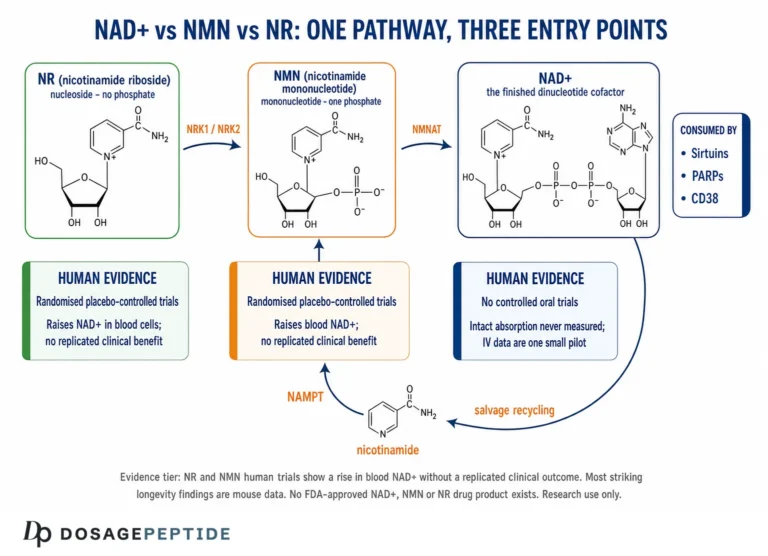
The short answer on NAD+ vs NMN is that they are not competing products but three different points on the same biochemical…
NAD+ Side Effects: What the Research Actually Documents
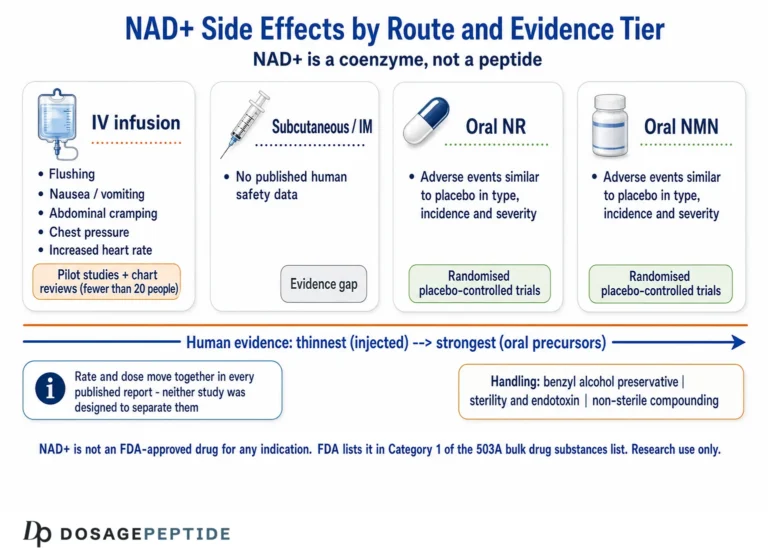
The adverse effects most reliably documented for NAD+ are infusion reactions during intravenous administration — abdominal cramping, nausea, vomiting, flushing, chest pressure…
Vesugen Dosage & Reconstitution: A Research Reference for the KED Peptide
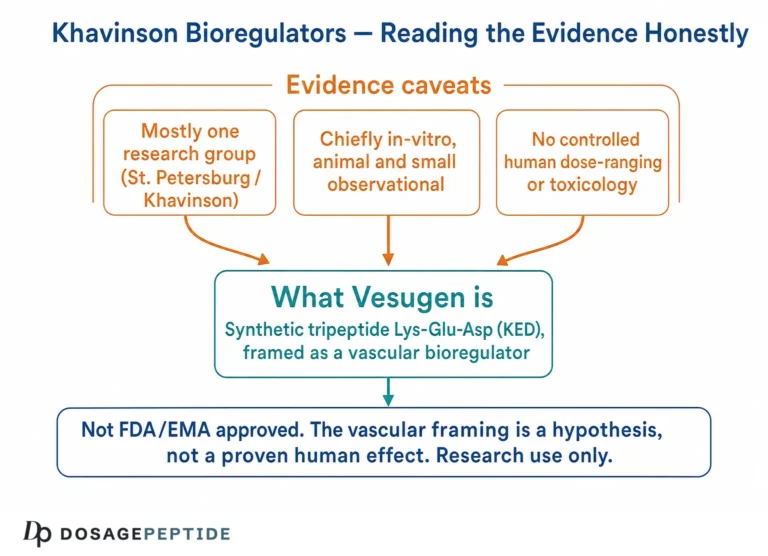
The central question behind almost every search for vesugen dosage is deceptively simple: if a laboratory holds a 20 mg lyophilized vial of…
SS-31 Dosage: How Much Per Day, Reconstitution & How It Compares to the Approved Drug
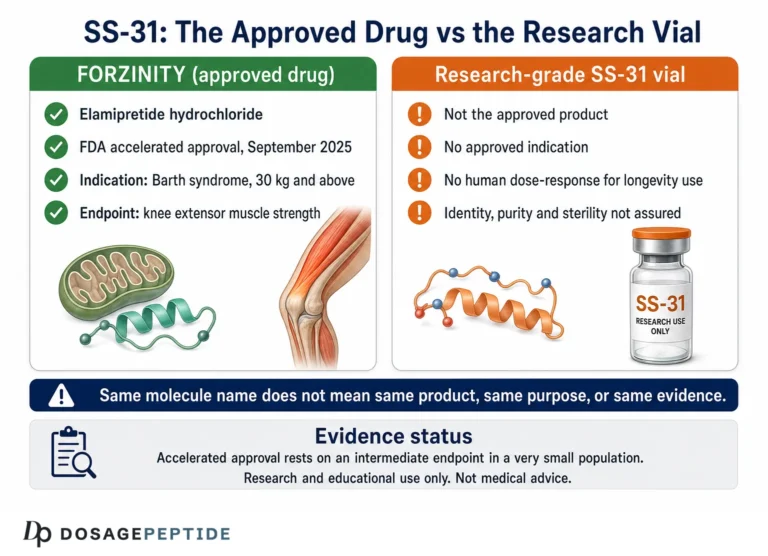
The only SS-31 dose a regulator has ever reviewed is 40 mg subcutaneously, once daily. That is the label dose for FORZINITY (elamipretide),…
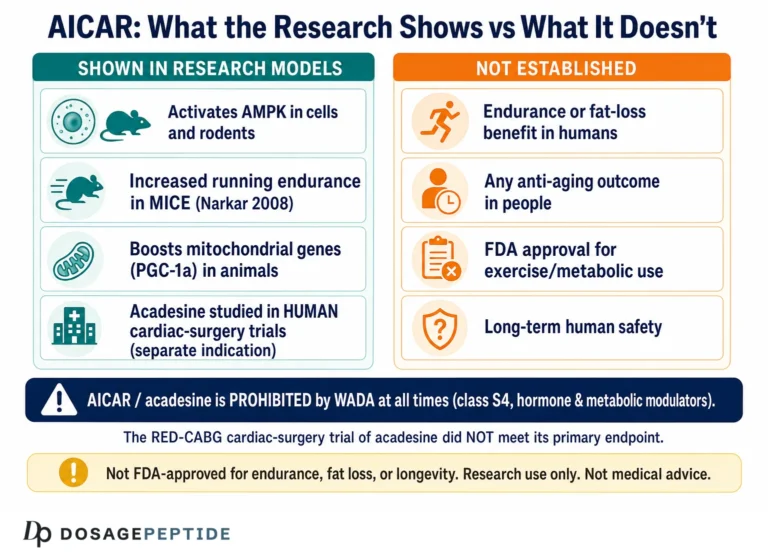
What Is AICAR? Effects, Evidence and Why It Is Banned
AICAR is not a peptide, despite being sold alongside them. It is a nucleoside analogue — a small molecule related to adenosine…
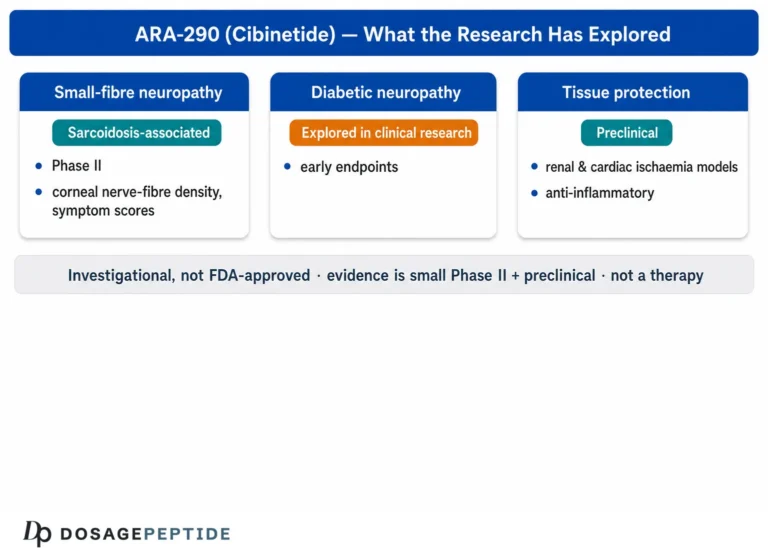
What Is ARA-290 (Cibinetide)? Mechanism, Trials and Evidence (2026)
Short answer: ARA-290, also called cibinetide, is an 11-amino-acid peptide engineered from the erythropoietin (EPO) molecule. It was built to keep EPO’s…
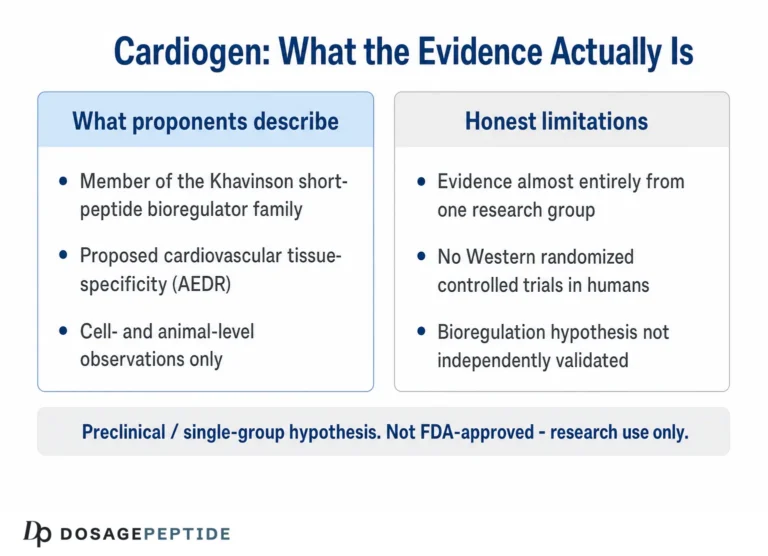
What Is Cardiogen? The Cardiovascular Peptide Bioregulator Explained
Cardiogen is a synthetic four-amino-acid peptide (Ala-Glu-Asp-Arg, or AEDR) from the Khavinson “bioregulator” family, named for the heart and proposed to act…

Is Impaired NAD+ Homeostasis Associated With Mitochondrial Myopathies in Research?
Yes — NAD+ is measurably depleted in myopathic muscle across several models, and restoring it improves mitochondrial function in animals. What has…
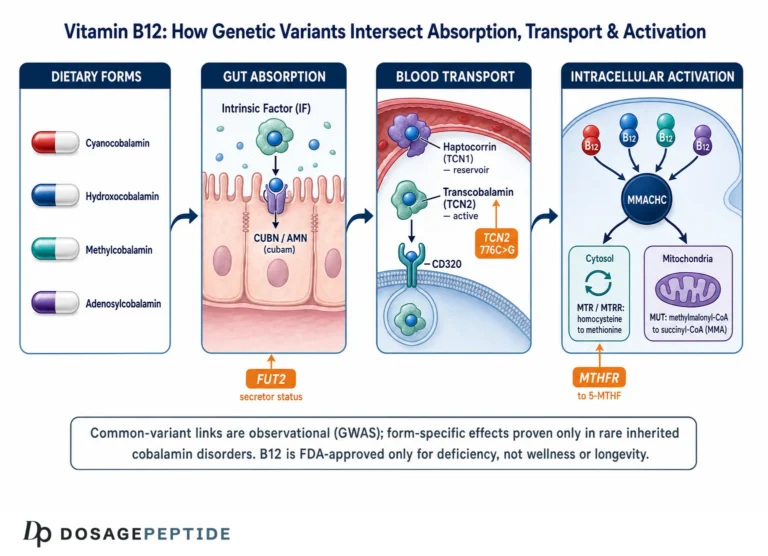
How Do Genetic Variants Influence Responses to Different Vitamin B12 Forms in Clinical Research?
Vitamin B12 (cobalamin) reaches the tissues through a long chain of specialized proteins, and almost every link in that chain is encoded…
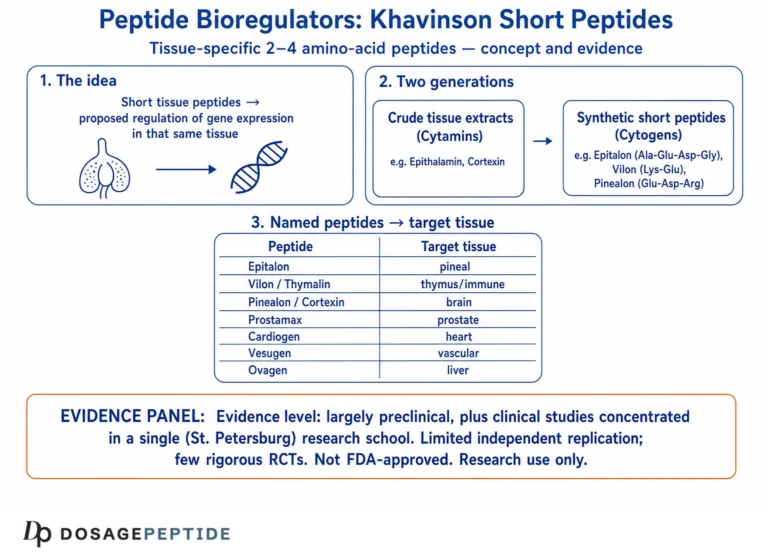
What Are Peptide Bioregulators? The Khavinson Short-Peptide Research Explained
Peptide bioregulators are very short peptides — usually two to four amino acids — that the Russian gerontologist Vladimir Khavinson’s group proposed…