Short answer: ARA-290, also called cibinetide, is an 11-amino-acid peptide engineered from the erythropoietin (EPO) molecule. It was built to keep EPO’s protective, anti-inflammatory signalling — delivered through the innate repair receptor rather than the classic EPO receptor — while shedding the red-blood-cell-building activity that makes EPO itself problematic. It has been studied mainly in small-fibre neuropathy and tissue protection.
The open question is how far that translates: most of the published evidence is preclinical or early-phase, and no regulator has approved it for any use. This reference maps the receptor biology, what each trial actually measured, and where the evidence genuinely stops. It is a research-use-only reference, not medical advice.
Research-use context: ARA-290 / cibinetide is an investigational compound. It is not approved by the U.S. Food and Drug Administration (FDA) or any comparable regulator for any indication. Everything described here reflects laboratory and clinical research, not medical guidance.
Research Context: Why an Erythropoietin Fragment Became a Peptide of Interest
Erythropoietin is best known as the hormone that drives red blood cell production, and recombinant EPO is a long-established, FDA-approved treatment for certain anemias. But over the past two decades, a separate line of research established that EPO also exerts “paracrine/autocrine” tissue-protective effects — locally produced EPO appears to shield neurons, cardiac cells, kidney tissue, and other cell types from injury, quite apart from its role in the bone marrow.[1] The problem for translational research was that giving recombinant EPO to protect tissue also raises hematocrit and platelet reactivity, carrying a meaningful risk of thrombosis. In other words, the very property that makes EPO useful for anemia becomes a liability when the goal is cytoprotection rather than erythropoiesis.[2]
This tension set up a clean research hypothesis: if the erythropoietic and tissue-protective actions of EPO could be separated at the molecular level, then a molecule capturing only the protective arm might offer the upside without the hematological risk. ARA-290 — cibinetide — is the most studied product of that effort. It belongs to a family broadly described as EPO-derived, non-erythropoietic, tissue-protective peptides, and its story is inseparable from the discovery that EPO’s two effects run through two different receptors.[1]
From a hematopoietic hormone to a repair signal
The intellectual thread that leads to ARA-290 runs through the same research group — Anthony Cerami, Michael Brines, and collaborators — that helped establish EPO’s neuroprotective and tissue-protective actions in the first place. Their key observation was that when tissue is injured, cells locally produce a form of EPO (in some models a hyposialated variant) that acts in a paracrine and autocrine manner to protect neighboring cells, dampen inflammation, and initiate repair. This is a fundamentally different biological role from the classical endocrine job of EPO, which is secreted by the kidney into the bloodstream to reach the bone marrow and regulate erythrocyte number. Recognizing that these two roles are physically and biochemically distinct opened the door to the idea that a drug could be built to mimic one and not the other.[2]
Several intermediate molecules preceded and paralleled ARA-290 in this quest, each attempting to strip EPO of its erythropoietic activity while keeping its protective signaling. Carbamylated EPO (CEPO), asialoerythropoietin, and various mutant EPO proteins all demonstrated in principle that the two functions could be uncoupled. However, these were still large, complex molecules with the manufacturing and immunogenicity challenges that come with recombinant proteins. The conceptual leap embodied by ARA-290 was to abandon the full protein entirely and reproduce only the small, specific surface of EPO believed to carry the tissue-protective message — a peptide small enough to synthesize chemically rather than express in cells. That reductionist strategy is what makes ARA-290 both scientifically elegant and, from a manufacturing standpoint, comparatively tractable.[1]
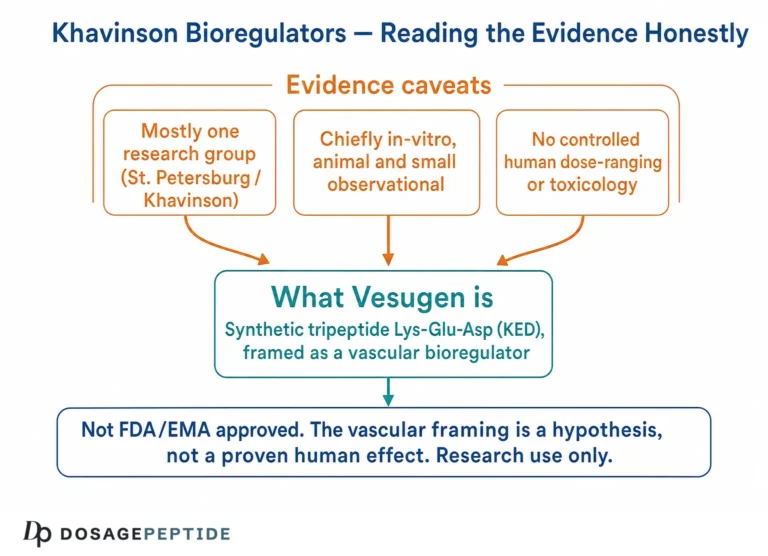
For readers building a broader picture of protective and regenerative signaling peptides, it is worth situating ARA-290 alongside the bioregulator and immune-modulatory peptides covered elsewhere in this library, such as the vascular bioregulator discussed in our Vesugen research overview and the immune-focused Thymosin Alpha-1 article. These are mechanistically distinct molecules, but they share the recurring research theme of trying to nudge endogenous repair and immune-balancing pathways rather than blunt them.
What Exactly Is ARA-290 (Cibinetide)?
ARA-290 is a short, linear synthetic peptide of 11 amino acids. Its design is not arbitrary: it reproduces the amino acid residues that form the aqueous-facing surface of “helix B” of the erythropoietin molecule — the part of helix B (residues 58–82 of EPO) that points outward into the surrounding fluid when EPO is docked onto its classical receptor. Researchers reasoned that this exposed face might carry tissue-protective information distinct from the erythropoietic binding surface, and they built peptides to test exactly that.[1]
Why helix B, and why the aqueous face?
Erythropoietin is a four-helix-bundle cytokine. When it binds the EPO receptor homodimer to drive erythropoiesis, certain surfaces of the molecule are buried in the receptor interface while others remain exposed to solvent. The insight behind ARA-290 was that the surface of helix B that faces away from the erythropoietic binding interface — the aqueous-exposed face — is available to interact with a different receptor arrangement and could therefore carry the tissue-protective signal without touching the machinery of red cell production. When investigators synthesized peptides corresponding to helix B and to just the 11-residue aqueous-facing strip, both proved neuroprotective in vitro and tissue-protective in vivo across models including ischemic stroke, diabetes-induced retinal edema, peripheral nerve trauma, and renal ischemia–reperfusion — while neither stimulated erythropoiesis.[1] That the fragment reproduces the protective activity of the whole hormone is a striking demonstration that a three-dimensional signaling “message” can be condensed into a handful of amino acids.
The pyroglutamate detail
The full chemical name pyroglutamate helix B surface peptide (pHBSP) reflects a specific modification: the peptide’s N-terminal glutamine is cyclized into a pyroglutamate residue. Pyroglutamation is a common stabilizing modification for peptides — it caps the N-terminus and can protect against certain aminopeptidases. This chemical detail matters because, as discussed later, ARA-290 is cleared from the circulation extraordinarily quickly, and any structural feature bearing on its stability is relevant to interpreting how such a transient molecule produces lasting effects.[2]
Names and synonyms
The same molecule appears in the literature under several labels, which can be a source of confusion. The most common are:
- ARA-290 (also written ARA 290 or ARA290) — the developmental designation used by Araim Pharmaceuticals.
- Cibinetide — the International Nonproprietary Name (INN) adopted for the compound in clinical research.
- pHBSP — “pyroglutamate helix B surface peptide,” a chemistry-driven name referring to the pyroglutamate-modified helix-B-surface sequence.
- HBSP — “helix B surface peptide,” used in some earlier reports.
Throughout the peer-reviewed record these terms are effectively interchangeable, and cibinetide is now the preferred name in the clinical literature.[2] Readers new to the terminology may find our peptide research glossary useful for cross-referencing the receptor and signaling terms used below.
The defining feature: non-erythropoietic
The single most important characteristic of ARA-290 is captured in the word “non-erythropoietic.” In the original characterization, neither the isolated helix B nor the 11-amino acid surface peptide stimulated red cell production in vitro or in vivo, yet both retained tissue-protective activity in models of ischemic stroke, renal ischemia–reperfusion, and peripheral nerve trauma.[1] This dissociation — protection without raising hematocrit — is the entire rationale for the peptide’s existence and the reason it attracted sustained research interest.
How Does ARA-290 Work? The Innate Repair Receptor Explained
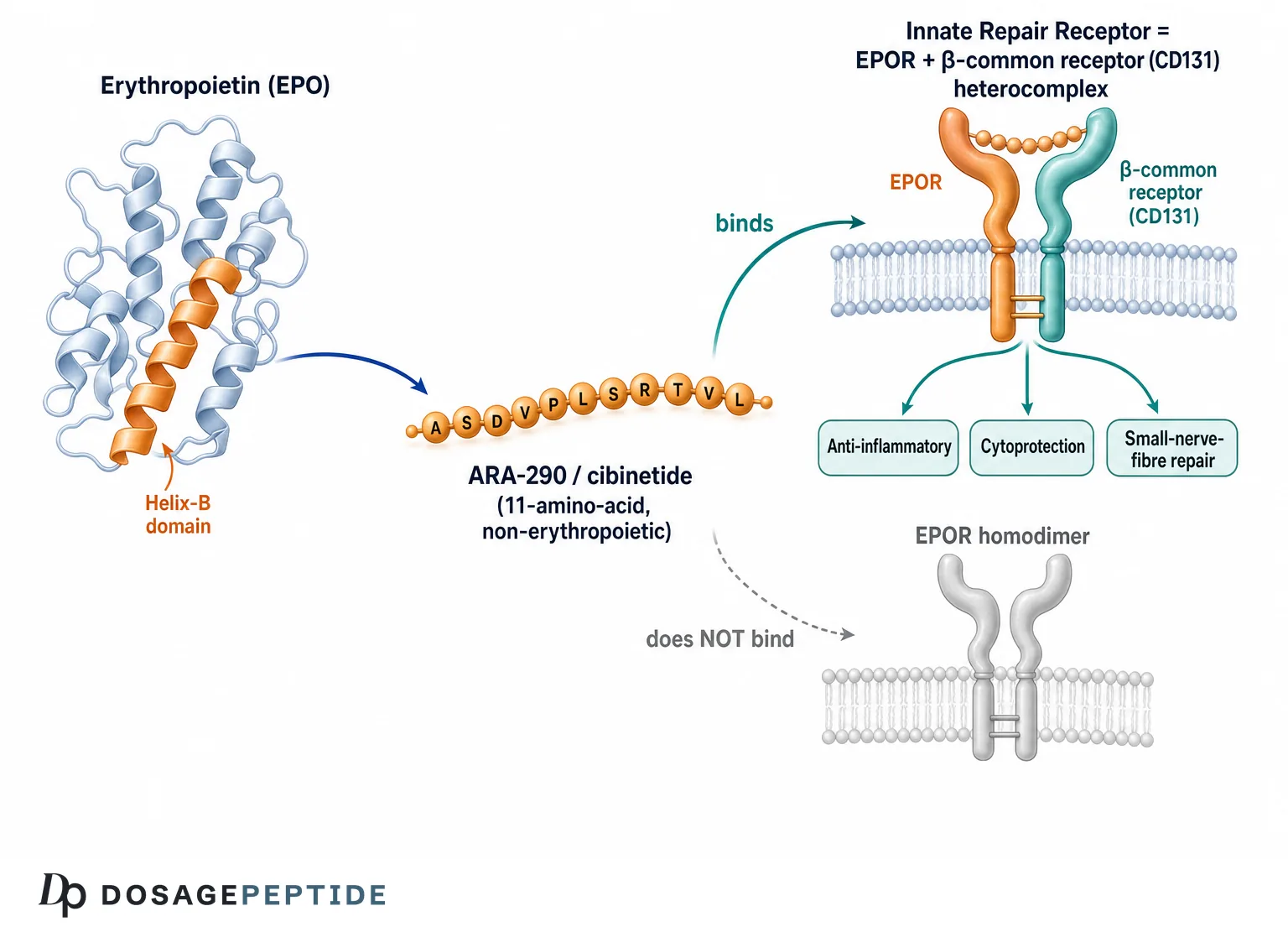
To understand ARA-290’s proposed mechanism, one has to understand that EPO does not signal through a single receptor. Research indicates that the two faces of EPO’s biology are handled by two structurally distinct receptor arrangements.[1]
Two receptors, two jobs
The first is the classical EPO receptor homodimer — two identical EPOR subunits — which is responsible for erythropoiesis, driving the maturation and survival of red blood cell progenitors. The second is a heterocomplex that pairs the EPO receptor (EPOR) with a second subunit called the β-common receptor (βcR, also known as CD131). This EPOR–CD131 heteroreceptor has been termed the innate repair receptor (IRR), and it is this receptor — not the erythropoietic homodimer — that mediates tissue protection.[1][2] ARA-290 was engineered to bind the IRR selectively while largely ignoring the EPOR homodimer, which is the molecular basis for its non-erythropoietic profile.
What is the β-common receptor?
The β-common receptor (CD131) is not unique to this pathway; it is a shared signaling subunit best known as the common β chain of the receptors for the cytokines GM-CSF, interleukin-3, and interleukin-5 — molecules central to myeloid and inflammatory cell biology. Its recruitment into a complex with EPOR is what appears to redirect EPO-family signaling away from erythropoiesis and toward the anti-inflammatory, pro-survival responses characteristic of tissue protection. Because CD131 is so intimately tied to innate immune cells such as macrophages, its participation in the IRR helps explain why so much of ARA-290’s reported activity centers on calming myeloid-driven inflammation rather than on classic hematopoiesis.[2] This shared-subunit biology is also a caution: a receptor component used by several cytokine systems is unlikely to have effects that are perfectly confined to one tissue, which is part of why careful pharmacology is needed.
A receptor that appears when tissue is stressed
One of the more elegant aspects of the IRR concept is its conditional expression. Reviews of the pathway describe the IRR as typically absent or low on healthy, resting tissue, but rapidly induced by injury, inflammation, hypoxia, or metabolic stress.[2] Because the receptor surfaces mainly where damage is occurring, an IRR-selective agonist would, in principle, act preferentially at sites of injury rather than broadcasting its effect indiscriminately. This “targeting by pathology” is part of why the pathway has been described in the literature as a molecular switch for protection and repair.
The requirement for CD131
The dependence on the β-common receptor is not merely theoretical. In a spared-nerve-injury model, ARA-290 relieved neuropathic allodynia in normal mice but had no effect in mice genetically lacking the β-common receptor (CD131) — direct genetic evidence that an intact IRR is required for the peptide’s anti-allodynic action.[3] That same study is instructive because it also showed that the general anesthetic ketamine, which relieves neuropathic pain by a completely different NMDA-receptor mechanism, likewise lost its anti-allodynic (though not its other) effects when CD131 was deleted — hinting that the innate repair pathway sits downstream of several protective interventions.
Downstream signaling
Once the IRR is engaged, the intracellular consequences studied in cell and animal models converge on well-known survival and anti-inflammatory pathways. In cardiomyocytes, the helix-B-surface peptide activated Akt, ERK1/2, and STAT3, with Akt shown by small-interfering-RNA knockdown to be essential for its anti-apoptotic effect.[4] In macrophage-driven inflammation, cibinetide’s anti-inflammatory action was reported to depend on CD131 and JAK2 and to work by inhibiting the NF-κB subunit p65 — a central hub of inflammatory gene expression.[5] The recurring theme across these studies is a shift away from pro-inflammatory, pro-apoptotic signaling and toward cell survival.
Mechanisms Studied: Anti-Inflammatory, Cytoprotective, and Pro-Repair Actions
Beyond the receptor biology, researchers have catalogued several overlapping mechanisms through which ARA-290 appears to act in experimental systems. It is worth stressing that these are mechanisms observed in research models, not established clinical effects.
Modulating innate immune cells
A consistent finding is that cibinetide dampens the activity of myeloid immune cells — macrophages and related populations — rather than broadly suppressing immunity. In a dextran-sulfate-sodium model of experimental colitis, cibinetide reduced infiltration of myeloid cells and lowered production of pro-inflammatory cytokines, chemokines, and nitric oxide synthase-2, improving weight gain and survival in the treated mice.[5] Mechanistic experiments in that study used LPS-activated primary macrophages to show that cibinetide’s anti-inflammatory effect required functional CD131 and the JAK2 kinase and operated by inhibiting the activity of the NF-κB subunit p65 — a transcription factor that acts as a master switch for pro-inflammatory gene programs. The distinction between dampening inflammation and broadly suppressing immunity matters: a molecule that recalibrates an overactive innate response, as opposed to one that immunosuppresses wholesale, would in theory carry a different risk profile, though that theoretical advantage remains to be demonstrated in humans. In an islet-transplantation model, cibinetide reduced maturation of bone-marrow-derived dendritic cells and the subsequent T-cell response, and when combined with low-dose tacrolimus it significantly improved long-term graft survival — pointing to effects on the interface between innate and adaptive immunity.[6]
Cytoprotection: fighting apoptosis and oxidative stress
Several in-vitro studies frame ARA-290 as a cytoprotective agent that blunts programmed cell death and oxidative damage. In renal cell lines (HEK-293 and ACHN) exposed to the chemotherapy drug cisplatin, ARA-290 pretreatment reduced DNA-damage markers in comet and micronucleus assays, lowered reactive oxygen species and malondialdehyde, restored antioxidant enzyme activity (glutathione peroxidase and superoxide dismutase), and shifted the balance of apoptosis regulators — down-regulating the pro-apoptotic proteins Bax and caspase-3 while up-regulating the anti-apoptotic protein Bcl-2 at both gene and protein levels.[7] These are cell-culture findings, and the concept of protecting healthy tissue from chemotherapy toxicity without shielding the tumor is itself an unresolved research challenge — but the results are internally consistent with the anti-apoptotic, antioxidant, Akt-linked signaling seen in the cardiac and wound-healing models.
Small-nerve-fiber repair
The most clinically developed line of ARA-290 research concerns small sensory nerve fibers. In sarcoidosis-associated small-fiber neuropathy, cibinetide has been associated with increases in corneal nerve fiber measures and in regenerating intraepidermal fibers marked by GAP-43, a growth-associated protein expressed by nerves that are actively regrowing — changes interpreted as consistent with genuine nerve-fiber repair rather than mere symptom masking.[8] The correlation reported between changes in corneal nerve fiber area, the GAP-43 regeneration marker, and a functional walk test is part of why investigators argued the effect was “disease-modifying” in character, meaning it may act on the underlying nerve damage rather than only on the perception of pain. This is an important but still-tentative claim, and it is the crux of the neuropathy evidence discussed in detail below.
A direct effect on pain channels?
Interestingly, not all of ARA-290’s reported analgesic activity may run through the IRR. One study reported that ARA 290 can directly inhibit the TRPV1 ion channel — the capsaicin-sensitive “heat and pain” receptor on sensory neurons — and relieve capsaicin-induced mechanical hypersensitivity, suggesting a possible receptor-independent contribution to its effects on nociception.[9] This finding is a useful reminder that a small peptide can have more than one molecular target, and that mechanism attribution in this field is still being worked out.
ARA-290 vs Erythropoietin and Related Tissue-Protective Peptides
Because ARA-290 is defined largely by what it is not (erythropoietic), a side-by-side comparison with its parent molecule and with the broader helix-B peptide family clarifies where it sits. The table below summarizes distinctions drawn from the research literature.
| Feature | Erythropoietin (EPO) | ARA-290 / Cibinetide (pHBSP) |
|---|---|---|
| Molecular class | ~165-residue glycoprotein hormone | 11-amino acid linear peptide |
| Primary receptor | EPOR homodimer (plus IRR) | Innate repair receptor (EPOR–CD131) selectively |
| Raises red cell count / hematocrit | Yes (its approved use) | No — non-erythropoietic in models[1] |
| Thrombosis / platelet activation risk | Documented concern at tissue-protective doses | Not observed in the same way in reported studies[2] |
| Plasma half-life | Hours | Very short (~2 minutes)[2] |
| Regulatory status | FDA-approved for specific anemias | Investigational; not approved for any indication |
The half-life comparison in that table points to one of the more intriguing puzzles in the field, discussed next: ARA-290 disappears from plasma within minutes, yet the biological effects attributed to it in animal models persist for days. A 2015 review framed this as “long-lasting effects of a short-lived peptide,” proposing that the peptide flips a self-sustaining cellular program rather than needing to occupy its receptor continuously.[2] Whether this “molecular switch” framing fully holds remains an open scientific question.
Within this library, the cardiovascular bioregulator context is explored further in our Cardiogen research overview; while Cardiogen is a peptide bioregulator of a different lineage, both illustrate the recurring interest in molecules that might protect vascular and cardiac tissue under stress. Researchers comparing candidates in this space should treat each on its own evidence rather than assuming class-wide effects.
What Does the Current Evidence Show in Neuropathy Research?
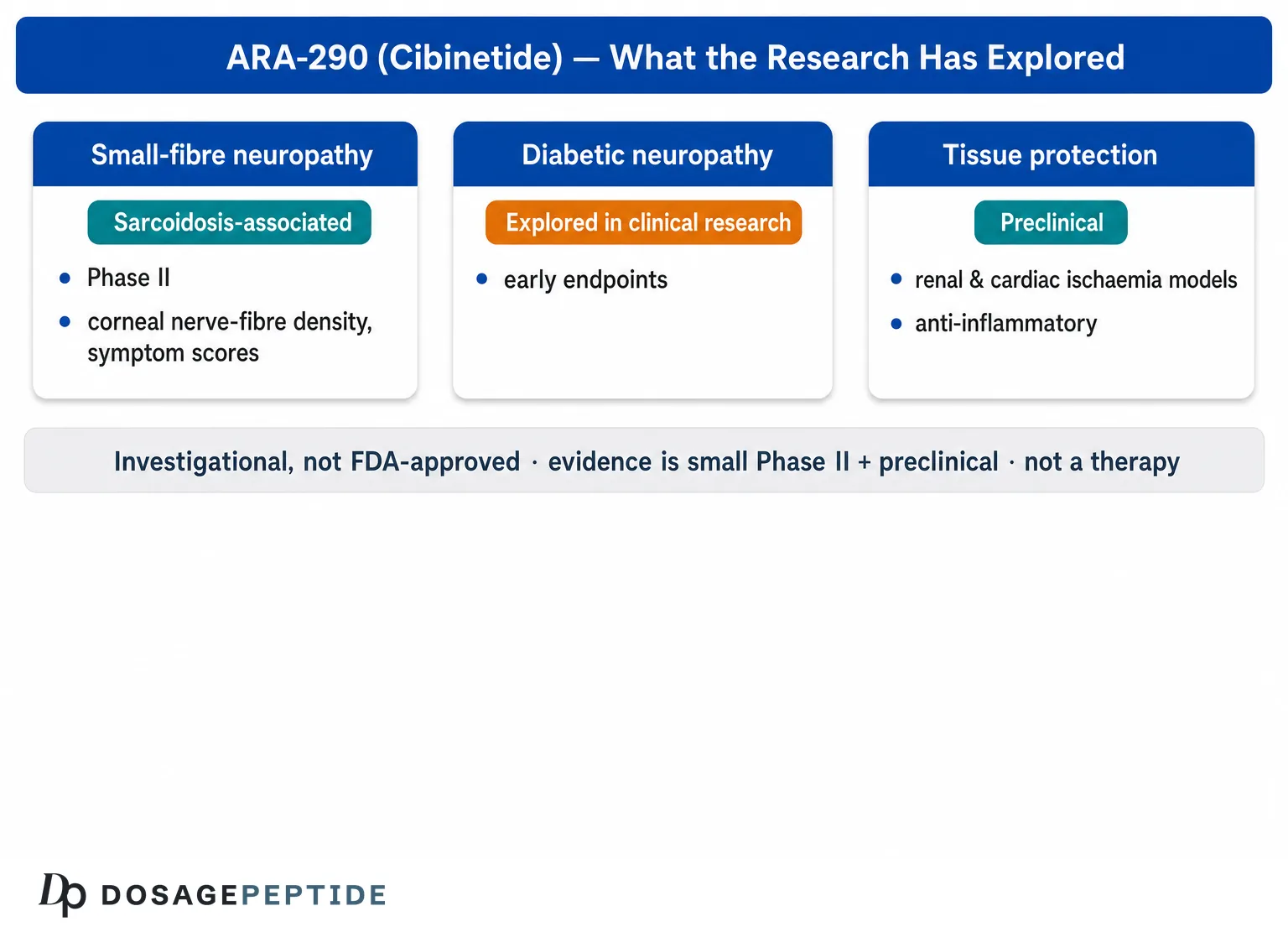
The neuropathy program is where ARA-290 has advanced furthest into human study, though still only through small Phase II trials. Two conditions dominate the record: sarcoidosis-associated small-fiber neuropathy and type 2 diabetes with painful neuropathy.
Understanding small-fiber neuropathy and how it is measured
Small-fiber neuropathy involves damage to the thinly myelinated and unmyelinated nerve fibers that carry pain, temperature, and autonomic signals. It produces burning pain, abnormal sensation, and autonomic disturbances that are frequently disabling and notoriously difficult to treat, and it is a common complication of both sarcoidosis and diabetes. Historically it was hard to quantify objectively, which is precisely why the ARA-290 trials leaned on two relatively modern, minimally invasive biomarkers. The first is corneal confocal microscopy (CCM), a non-invasive imaging technique that visualizes the dense small-nerve-fiber plexus in the cornea and yields quantitative measures such as corneal nerve fiber density and corneal nerve fiber area. The second is intraepidermal nerve fiber density (IENFD) from a small skin biopsy, with staining for GAP-43 used to identify actively regenerating fibers.[8] Alongside these structural readouts, the trials used validated symptom instruments — the Small Fiber Neuropathy Screening List, Brief Pain Inventory, Neuropathic Pain Symptom Inventory, and Fatigue Assessment Scale — plus the 6-minute walk test as a functional measure.[11] Understanding this measurement toolkit is essential to reading the results honestly: a rise in corneal nerve fiber area is a structural surrogate, hypothesized to reflect nerve repair, not a proven patient-centered outcome.
Sarcoidosis-associated small-fiber neuropathy
Sarcoidosis is an inflammatory disease that frequently damages small sensory nerve fibers, producing pain and autonomic symptoms that are hard to treat. This made it a logical proving ground for an anti-inflammatory, pro-repair peptide. In an early randomized, placebo-controlled study, 28 days of daily subcutaneous ARA 290 significantly improved neuropathic symptoms in patients with documented small-nerve-fiber loss, and was associated with an increase in corneal small-nerve-fiber density and improved exercise capacity on the 6-minute walk test.[10]
A larger, dose-ranging Phase 2b trial followed, enrolling 64 subjects with sarcoid-associated small-nerve-fiber loss and neuropathic pain and comparing 1, 4, and 8 mg/day against placebo over 28 days.[11] The published results reported that the placebo-corrected change in corneal nerve fiber area reached statistical significance in the 4 mg group (p = 0.012) but not in the 1 mg or 8 mg groups, with a parallel increase in intraepidermal GAP-43+ regenerating fibers in the 4 mg arm (p = 0.035); changes in nerve-fiber area correlated with the walk-test and regeneration markers.[8] The authors positioned corneal nerve fiber area as a candidate surrogate endpoint for disease modification. Notably, pain improved across all groups including placebo, and the moderate-to-severe-pain benefit in the 4 mg group did not reach statistical significance — a pattern that underscores both the promise and the fragility of these small-trial signals.
Type 2 diabetes and metabolic neuropathy
A separate Phase 2 study administered ARA 290 (4 mg) or placebo subcutaneously for 28 days in subjects with type 2 diabetes and painful neuropathy, following them for an additional month. The report described improvements in hemoglobin A1c and lipid profiles that persisted across the 56-day observation window — notably continuing even after the 28-day dosing period ended, which the authors linked to the peptide’s proposed durable “switch” effect — along with improvement in neuropathic symptoms by the PainDetect questionnaire. Mean corneal nerve fiber density was significantly reduced in these patients compared with healthy controls at baseline, and among the subjects who started with the most severe deficit, corneal nerve fiber density increased significantly versus no change in the placebo group; no safety issues were identified in the study.[12] The overlap of metabolic signals (glucose and lipid control) with neuropathic and nerve-structural signals is scientifically intriguing — it would fit a molecule acting broadly on inflamed, metabolically stressed tissue — but it rests on a small sample and short duration, and correlation across many measured endpoints in a small trial carries a real risk of chance findings. Type 2 diabetes and its neuropathy are areas where many promising early signals have failed to replicate, so restraint is warranted.
Because dosing regimens in these studies are frequently misquoted in secondary sources, readers seeking the study-reported parameters can consult our structured ARA-290 dosage protocol reference, which compiles what the published research describes rather than offering any personal recommendation. For the arithmetic of reconstituting a lyophilized research peptide, the peptide reconstitution guide explains the underlying concentration math in a general, educational way.
What did the trials report about tolerability?
Within the constraints of small, short studies, the reported tolerability of ARA-290 was a notable part of its research appeal. The type 2 diabetes Phase 2 study explicitly stated that no potential safety issues were identified over the 28-day dosing period and subsequent follow-up.[12] The sarcoidosis dose-ranging trial incorporated standard safety monitoring — adverse-event reporting, vital signs, electrocardiograms, laboratory panels, and testing for anti-ARA-290 antibodies — consistent with an early-phase peptide study.[11] Crucially, the theoretical safety advantage of a non-erythropoietic design is the absence of the hematocrit rise and thrombotic risk that constrain EPO, and the studies did not report the erythropoietic effects seen with EPO. None of this, however, amounts to an established long-term safety profile: the total number of humans exposed to the compound in controlled trials remains small, durations were short, and rare or delayed effects would not be detectable at this scale. Any statement that ARA-290 is “safe” would overreach what the data support.
Preclinical Tissue-Protection Research: Kidney, Heart, Gut, and Beyond
Away from neuropathy, the ARA-290 literature is overwhelmingly preclinical — cells and animals — spanning a striking range of organ systems from heart and kidney to gut, skin, retina, and transplanted tissue. This breadth follows logically from the mechanism: if the innate repair receptor is induced wherever tissue is injured or inflamed, then a selective IRR agonist would be expected to show activity across many injury models. The breadth is therefore part of what makes the pathway conceptually interesting. But it is essential to read this literature with the right calibration: breadth of animal data is not the same as proven human benefit, positive preclinical studies are more likely to be published than negative ones, and none of the indications below has established clinical use. The sections that follow describe what the models showed, not what the peptide does in people.
Cardiac protection
The parent helix-B-surface peptide was shown to protect cultured cardiomyocytes from TNF-α-induced apoptosis by roughly 80% — comparable to EPO itself — and to reduce apoptosis (by roughly 70%) and markers of heart failure in a cardiomyopathic hamster model, all through an Akt-dependent pathway and without EPO’s erythropoietic side effects.[4] In that dilated-cardiomyopathy model, the peptide also lowered serum creatine kinase activity and reduced cardiac expression of atrial natriuretic peptide, a molecular marker of chronic heart failure, and knockdown experiments confirmed that the Akt survival kinase was mechanistically necessary for the anti-apoptotic effect rather than merely correlated with it. This early cardioprotection work is frequently cited as a proof of concept that the peptide retains EPO’s pro-survival signaling in the heart while shedding the properties that make EPO risky in cardiovascular settings. It is important to frame this correctly: these are rodent and cell-based results establishing biological plausibility, and no human cardiac outcome trial of ARA-290 has demonstrated benefit. The cardiovascular-protection theme is one shared, mechanistically differently, by other peptides in the longevity literature such as the bioregulator discussed in our Cardiogen overview.
Kidney and organ toxicity
Renal models feature prominently, which makes sense given that the kidney is both the body’s main source of endocrine EPO and a tissue highly vulnerable to ischemic and toxic injury. Beyond the cisplatin-nephrotoxicity cell work already noted — where ARA-290 reduced oxidative stress, inflammation, and apoptosis via the EPO/CD131 heteroreceptor[7] — the original discovery paper demonstrated protection in renal ischemia–reperfusion injury, one of the model systems used to first establish that the 11-amino acid peptide was tissue-protective.[1] In a hemolytic-uremic-syndrome model driven by Shiga toxin, the non-hematopoietic analog pHBSP improved 7-day survival and attenuated renal oxidative and nitrosative stress in mice, and reduced tubular dedifferentiation, though it did not significantly reverse the overall kidney dysfunction and injury — a candid example of a partial effect that the authors reported transparently rather than overstating.[13] That same study found that endogenous EPO levels were elevated in humans, piglets, and mice with the syndrome, reinforcing the idea that the EPO/IRR axis is naturally engaged during this kind of injury and might be a rational target to amplify.
Wound healing and angiogenesis
In genetically diabetic (db/db) mice, which heal poorly, daily cibinetide improved re-epithelialization, angiogenesis, scar strength, and time to wound closure, alongside increased VEGF and eNOS signaling and reduced oxidative markers such as malondialdehyde — effects attributed to activation of the EPOR–β-common receptor complex.[14] The pattern is coherent: by restoring pro-angiogenic and pro-survival signaling that diabetes suppresses, the peptide appears to nudge a stalled repair process forward. Related work in an oxygen-induced retinopathy model found that ARA-290 activated pro-survival signaling and enhanced cell viability under oxidative stress in endothelial colony-forming cells in vitro, reduced pro-inflammatory IL-1β and TNF-α in the retina, and enhanced the reparative function of transplanted endothelial colony-forming cells — positioning it as a potential adjunct to cell therapy in ischemic-retinopathy research.[15] Interestingly, in that study the parent hormone EPO did not confer the same benefit on the cell-therapy approach, suggesting the peptide’s effects are not simply a weaker echo of EPO but may differ qualitatively. ARA-290 has also been taken into a small Phase 2 clinical trial in diabetic macular edema, in which nine patients self-administered 4 mg per day subcutaneously for 12 weeks. That trial found the peptide safe but reported no improvement in its primary endpoints of best-corrected visual acuity or central retinal thickness, with only an exploratory gain on a vision-related quality-of-life questionnaire — a candid reminder that encouraging preclinical retinal data have not, so far, translated into a human efficacy signal.[16]
Gut, immune, and transplantation models
The colitis and islet-transplant studies described earlier round out a consistent picture: across gut inflammation, transplant rejection, and diabetic tissue stress, cibinetide tends to reduce myeloid-driven inflammation and support tissue survival.[5][6] The convergence is scientifically encouraging, but it is also exactly the kind of broad preclinical enthusiasm that has, for many candidate molecules, failed to translate into approved therapies. Skepticism is warranted until larger, confirmatory human trials exist.
An emerging theme: ARA-290 as a potential adjunct
One pattern worth highlighting across these preclinical studies is that some of ARA-290’s most interesting effects appear when it is paired with another intervention rather than used alone. In the islet-transplantation work, cibinetide combined with low-dose tacrolimus produced significantly better long-term graft survival than either the peptide or a minimal immunosuppression regimen would suggest on its own, hinting at a role in reducing the initial inflammatory injury that undermines transplants.[6] In the retinopathy studies, ARA-290 enhanced the reparative performance of transplanted endothelial colony-forming cells, functioning as a conditioning adjunct to cell therapy rather than a standalone treatment.[15] This adjunctive framing — calming the inflammatory milieu so that another therapy or the body’s own repair can work better — may ultimately be a more realistic research direction than positioning the peptide as a monotherapy, though this too remains an untested hypothesis in humans.
How Is ARA-290 Studied in Laboratory and Trial Settings?
In the human studies conducted to date, ARA-290 was administered by daily subcutaneous injection over roughly 28-day courses, with participants in the sarcoidosis dose-ranging trial trained to self-inject supplied vials at doses of 1, 4, or 8 mg/day.[11] Preclinical work has used a wide range of routes and much smaller weight-based doses (for example, roughly 30 to 120 micrograms per kilogram in rodent studies), which is standard for translating between species and should not be read across to humans.[3][6]
The short-half-life paradox
A defining pharmacological feature is that ARA-290 has an extremely short plasma half-life — on the order of two minutes — and yet its measured biological effects in disease models persist far longer.[2] The prevailing research interpretation is that the peptide acts as a trigger: a brief engagement of the innate repair receptor initiates a downstream cascade (survival kinases such as Akt, and anti-inflammatory transcriptional changes such as suppression of NF-κB) that then sustains itself independently of ongoing drug exposure. This “hit-and-run” hypothesis is attractive and would explain both the once-daily dosing used in trials and the observation that metabolic improvements in the diabetes study continued after dosing stopped. It is worth appreciating why this is counterintuitive: most drugs must maintain a certain plasma concentration to keep working, so a molecule that clears in minutes yet produces effects lasting days implies that its job is to flip a cellular program rather than to occupy a receptor continuously. Compelling as the framing is, it remains a mechanistic model rather than a settled fact, and demonstrating it rigorously — with time-resolved molecular readouts — is one of the field’s open tasks.
Reagent and research-chemical status
Outside of formal clinical trials, ARA-290 that circulates in the wider peptide market is a research chemical / laboratory reagent. It has not passed the regulatory review required to be a medicine, and material sold for “research use only” is not manufactured, tested, or labeled to pharmaceutical standards. This is a crucial distinction: the clinical-grade cibinetide used in the trials cited here is not interchangeable with reagent-grade material of variable purity. In a laboratory setting, peptides like ARA-290 are typically supplied as a lyophilized (freeze-dried) powder that must be reconstituted with a suitable diluent before use, and the concentration achieved depends entirely on the mass of peptide and the volume of diluent added — a source of frequent error when figures are quoted loosely online. The general principles of that calculation, which are the same for any reconstituted research peptide, are explained in our reconstitution guide and companion tools, presented strictly as educational reference rather than a protocol for use.
Current Evidence Level and Regulatory Status
ARA-290 / cibinetide has been developed principally by Araim Pharmaceuticals, and its clinical evaluation has proceeded through a sequence of small early- and mid-phase trials rather than the large, pivotal programs that precede approval. Grading the evidence honestly is essential, because the gap between “has been studied in trials” and “is a proven treatment” is exactly where careless writing about research peptides tends to mislead. The following tiers apply to ARA-290 / cibinetide as of the current literature:
- Regulatory status — investigational, not approved. ARA-290 / cibinetide is not FDA-approved (nor EMA-approved) for any condition. It has been evaluated in a series of small early-phase clinical trials but has no marketing authorization.
- Neuropathy (sarcoidosis, diabetes) — early clinical. Evidence here rises to small randomized, placebo-controlled Phase II trials with surrogate endpoints (corneal nerve fiber measures, questionnaires, walk tests). Signals are promising but mixed across doses and not confirmed by large Phase III trials.[8][10][12]
- Cardiac, renal, wound, gut, and transplant protection — preclinical only. These are cell-culture and animal findings. They establish plausibility and mechanism, not human efficacy.[4][7][14] The one retinal indication carried into humans — a small Phase 2 trial in diabetic macular edema — found the peptide safe but did not meet its primary visual-acuity or central-retinal-thickness endpoints.[16]
- Mechanism (IRR / EPOR–CD131) — well characterized in models. The receptor biology is comparatively robust, supported by genetic knockout data, though the full pathway is still being mapped.[3]
In plain terms: the mechanism is interesting and reasonably well supported, the early neuropathy data are encouraging but preliminary, and the majority of the exciting tissue-protection claims rest on animal work that has not been validated in people.
What Are the Limitations and Open Questions in ARA-290 Research?
A responsible reading of ARA-290 has to foreground its limitations, several of which are structural rather than incidental.
Small samples and surrogate endpoints
The human trials are small — on the order of two to six dozen participants — and lean heavily on surrogate endpoints such as corneal nerve fiber measurements rather than hard, long-term clinical outcomes. Surrogates like corneal confocal microscopy are useful and non-invasive, but a change in a nerve-density number is not the same as a durable, meaningful improvement in a patient’s life, and the trials were not powered or long enough to demonstrate the latter.[8]
Inconsistent dose–response
The dose-ranging sarcoidosis trial produced a non-monotonic result: the middle 4 mg dose outperformed both the lower 1 mg and higher 8 mg doses on the primary endpoint.[8] An inverted-U dose–response is not impossible for a biological signaling peptide, but it complicates interpretation and makes it harder to be confident that any single effect is robust rather than a small-sample artifact.
Large placebo effects on pain
Pain endpoints in these trials improved substantially even in placebo groups, and some between-group pain differences did not reach significance.[8] Neuropathic pain is notoriously placebo-responsive, which is precisely why objective structural markers were emphasized — and why symptom claims should be treated cautiously.
Preclinical-to-clinical gap
The bulk of the organ-protection literature is animal-based. The history of tissue-protection pharmacology — including EPO itself in non-anemia indications — is littered with compounds that looked excellent in rodents and disappointed in large human trials. Neuroprotection after stroke is a particularly humbling example: dozens of agents that were unambiguously protective in animal models failed to show benefit in humans, for reasons ranging from species differences in physiology to the artificiality of the injury models and the difficulty of timing treatment in real patients. ARA-290’s wide preclinical footprint is therefore a reason for interest, not a substitute for confirmatory human data, and readers should resist the intuitive but unreliable leap from “protective in mice” to “works in people.”
Sponsor involvement and publication
Much of the pivotal clinical and mechanistic work involved the compound’s developers as authors or sponsors. This is entirely normal in drug development and does not invalidate the findings, but independent replication by unaffiliated groups strengthens confidence, and the ARA-290 record would benefit from more of it.
Product quality outside trials
Finally, research-grade ARA-290 sold on the open market is not the clinical product used in the trials. Purity, identity, and sterility can vary widely between suppliers, and even correctly identified peptide can carry synthesis-related impurities, endotoxin, or residual solvents that would never be tolerated in a clinical product. None of the trial safety data can be assumed to apply to such unregulated material, and a favorable tolerability report from a controlled trial says nothing about a vial of uncertain provenance. This alone makes any extrapolation from published trials to real-world non-clinical use scientifically unsound, and it is a large part of why this article is framed as a research reference rather than a how-to.
Open questions that will decide the peptide’s future
Beyond the limitations above, several forward-looking questions will determine whether ARA-290 moves from an interesting molecule to a validated one — questions that current research has not yet answered at scale. They are worth stating plainly, because the honest answer to “what does ARA-290 do?” is inseparable from “what do we still not know?”
Can the neuropathy signal be confirmed in a large trial?
The single most consequential open question is whether the corneal-nerve-fiber and symptom signals seen in the small sarcoidosis and diabetes studies survive a properly powered, multicenter Phase III trial with a hard clinical primary endpoint and long follow-up. Surrogate endpoints such as corneal nerve fiber area are attractive precisely because they are objective and non-invasive, but regulators and clinicians ultimately want to see durable, patient-meaningful benefit. Until such a trial exists, the honest description of ARA-290 in neuropathy is “promising early signal, unconfirmed.”[8]
Which preclinical indications, if any, will translate?
The wide preclinical footprint — cardiac, renal, retinal, gut, wound, transplant — is genuinely broad, but breadth in animals is a weak predictor of human success. The one preclinical retinal lead that did reach a human trial (diabetic macular edema) missed its primary endpoints, a concrete illustration of how often such leads stall.[16] A central task for the field is to identify which of these models best predicts a translatable human indication and to prioritize accordingly, rather than treating the entire preclinical catalogue as evidence of clinical utility.[14]
Is the “molecular switch” model correct?
The hypothesis that a two-minute peptide triggers self-sustaining repair programs is elegant and fits the dosing data, but it needs more direct mechanistic proof — time-course studies of the downstream transcriptional and epigenetic changes, and confirmation that the durable effect is truly IRR-initiated rather than an artifact of the model systems used.[2]
How much does off-target activity contribute?
The report that ARA 290 can directly antagonize TRPV1 raises the possibility that some of its observed effects are not IRR-mediated at all.[9] Dissecting how much of the peptide’s activity flows through the innate repair receptor versus other targets is important both for understanding its biology and for anticipating its side-effect profile. These are the kinds of questions that separate a durable therapeutic candidate from a molecule that merely looked good in early studies — and they remain, for now, unresolved.
Frequently Asked Questions
Is ARA-290 the same as cibinetide?
Yes. ARA-290 and cibinetide are two names for the same 11-amino acid peptide, which is also referred to as pHBSP (pyroglutamate helix B surface peptide) or HBSP. “ARA-290” is the developmental code and “cibinetide” is the International Nonproprietary Name used in the clinical literature. All refer to the same erythropoietin-derived, non-erythropoietic molecule engineered to activate the innate repair receptor.[2]
Does ARA-290 increase red blood cells like EPO?
No — that is the entire point of its design. Although ARA-290 is derived from erythropoietin, it was engineered to activate only the tissue-protective innate repair receptor and not the classical EPO receptor homodimer that drives red cell production. In the original characterization, neither helix B nor the 11-amino acid peptide was erythropoietic in cell or animal studies, which is why it is described as “non-erythropoietic.”[1]
What is the innate repair receptor?
The innate repair receptor (IRR) is a heterocomplex combining the erythropoietin receptor (EPOR) with the β-common receptor (CD131). Unlike the EPOR homodimer that governs erythropoiesis, the IRR mediates tissue protection and is thought to appear mainly on tissue that is injured, inflamed, or metabolically stressed. ARA-290 was designed to bind this receptor selectively, which underlies both its protective signaling and its lack of blood-building activity.[2]
Is ARA-290 FDA-approved?
No. ARA-290 / cibinetide is investigational and has not been approved by the FDA, the EMA, or any comparable regulator for any condition. It has been studied only in small early-phase clinical trials, chiefly for sarcoidosis-associated and diabetic small-fiber neuropathy, and material sold outside those trials is a research chemical, not a medicine.
What conditions has ARA-290 been studied for?
In humans, the most developed research is in small-fiber neuropathy associated with sarcoidosis and with type 2 diabetes, using nerve-fiber and symptom endpoints.[10] A small Phase 2 trial in diabetic macular edema was also conducted but did not meet its primary endpoints.[16] Preclinically, it has been examined in models of cardiac injury, kidney toxicity, diabetic wound healing, ischemic retinopathy, colitis, and islet transplantation. The preclinical breadth is wide, but only the neuropathy work has produced encouraging controlled human data.
Why does a peptide with a two-minute half-life have lasting effects?
This is an open research question. The leading hypothesis is that ARA-290 acts as a molecular “switch”: a brief interaction with the innate repair receptor triggers self-sustaining downstream programs — survival kinases such as Akt and anti-inflammatory transcriptional changes — that continue long after the peptide has cleared from plasma. This model is supported by the durability of effects in animal studies but has not been definitively proven.[2]
How does ARA-290 differ from erythropoietin as a research tool?
Erythropoietin is a large glycoprotein hormone that raises red cell counts and, at tissue-protective doses, carries thrombosis risk. ARA-290 is a tiny 11-amino acid peptide that reproduces only the tissue-protective surface of EPO’s helix B, engages the innate repair receptor selectively, and does not raise hematocrit in the reported studies. This separation of protection from erythropoiesis is the central reason researchers developed it.[1]
Does ARA-290 affect pain directly?
Possibly through more than one route. Most of its anti-neuropathic effect is attributed to reducing inflammation via the innate repair receptor, and genetic deletion of CD131 abolishes its anti-allodynic action in mice.[3] Separately, one study reported that ARA 290 can directly inhibit the TRPV1 pain channel, suggesting a possible receptor-independent contribution to its effects on nociception.[9]
Is over-the-counter “research” ARA-290 the same as trial-grade cibinetide?
No. The cibinetide used in clinical trials is a controlled, pharmaceutical-grade product manufactured and tested to defined standards. Peptide sold as a research chemical is labeled for laboratory use only, may vary in purity and identity, and has not been through the regulatory testing that trial material undergoes. The published safety data cannot be assumed to apply to such material.
References
- Brines M, Patel NS, Villa P, et al. Nonerythropoietic, tissue-protective peptides derived from the tertiary structure of erythropoietin. Proc Natl Acad Sci USA. 2008;105(31):10925–30.
- Collino M, Thiemermann C, Cerami A, Brines M. Flipping the molecular switch for innate protection and repair of tissues: long-lasting effects of a non-erythropoietic small peptide engineered from erythropoietin. Pharmacol Ther. 2015;151:32–40.
- Swartjes M, Niesters M, Heij L, et al. Ketamine does not produce relief of neuropathic pain in mice lacking the β-common receptor (CD131). PLoS One. 2013;8(8):e71326.
- Ueba H, Brines M, Yamin M, et al. Cardioprotection by a nonerythropoietic, tissue-protective peptide mimicking the 3D structure of erythropoietin. Proc Natl Acad Sci USA. 2010;107(32):14357–62.
- Nairz M, Haschka D, Dichtl S, et al. Cibinetide dampens innate immune cell functions thus ameliorating the course of experimental colitis. Sci Rep. 2017;7(1):13012.
- Yao M, Watanabe M, Sun S, et al. Improvement of islet allograft function using cibinetide, an innate repair receptor ligand. Transplantation. 2020;104(10):2048–2058.
- Ghassemi-Barghi N, Ehsanfar Z, Mohammadrezakhani O, et al. Mechanistic approach for protective effect of ARA290, a specific ligand for the erythropoietin/CD131 heteroreceptor, against cisplatin-induced nephrotoxicity. Inflammation. 2022;46(1):342–358.
- Culver DA, Dahan A, Bajorunas D, et al. Cibinetide improves corneal nerve fiber abundance in patients with sarcoidosis-associated small nerve fiber loss and neuropathic pain. Invest Ophthalmol Vis Sci. 2017;58(6):BIO52–BIO60.
- Zhang W, Yu G, Zhang M. ARA 290 relieves pathophysiological pain by targeting TRPV1 channel: integration between immune system and nociception. Peptides. 2016;76:73–9.
- Dahan A, Dunne A, Swartjes M, et al. ARA 290 improves symptoms in patients with sarcoidosis-associated small nerve fiber loss and increases corneal nerve fiber density. Mol Med. 2013;19(1):334–45.
- Araim Pharmaceuticals. A double-blind, placebo-controlled Phase 2 dose-ranging study of the effects of ARA 290 on corneal nerve fiber density and neuropathic symptoms of subjects with sarcoidosis (NCT02039687). ClinicalTrials.gov.
- Brines M, Dunne AN, van Velzen M, et al. ARA 290, a nonerythropoietic peptide engineered from erythropoietin, improves metabolic control and neuropathic symptoms in patients with type 2 diabetes. Mol Med. 2015;20(1):658–66.
- Dennhardt S, Pirschel W, Wissuwa B, et al. Targeting the innate repair receptor axis via erythropoietin or pyroglutamate helix B surface peptide attenuates hemolytic-uremic syndrome in mice. Front Immunol. 2022;13:1010882.
- Bitto A, Irrera N, Pizzino G, et al. Activation of the EPOR-β common receptor complex by cibinetide ameliorates impaired wound healing in mice with genetic diabetes. Biochim Biophys Acta Mol Basis Dis. 2018;1864(2):632–639.
- O’Leary OE, Canning P, Reid E, et al. The vasoreparative potential of endothelial colony-forming cells in the ischemic retina is enhanced by cibinetide, a non-hematopoietic erythropoietin mimetic. Exp Eye Res. 2019;182:144–155.
- Lois N, Gardner E, McFarland M, et al. A phase 2 clinical trial on the use of cibinetide for the treatment of diabetic macular edema. J Clin Med. 2020;9(7):2225.
Disclaimer: This article is for educational and research-reference purposes only. ARA-290 / cibinetide is an investigational compound that is not approved by the FDA or any other regulatory agency for the prevention, treatment, or cure of any disease. Nothing here is medical advice, a therapeutic claim, or a recommendation for human use or self-administration. Any laboratory use of research peptides should comply with all applicable institutional and legal requirements. Consult a qualified, licensed healthcare professional for any health-related decision.