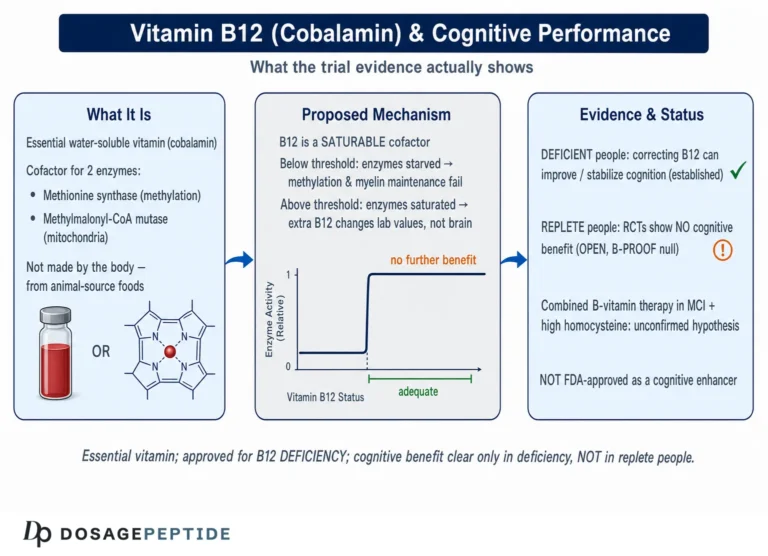
Vitamin B12 (cobalamin) reaches the tissues through a long chain of specialized proteins, and almost every link in that chain is encoded by a gene that varies from person to person. This raises a precise research question that sits at the intersection of nutrition science and pharmacogenomics: do common and rare genetic variants change how the body absorbs, transports, and activates the different chemical forms of B12 — cyanocobalamin, hydroxocobalamin, methylcobalamin, and adenosylcobalamin — and can genotype therefore predict which form a person should use? This article reviews the actual human genetics literature, separates what has been observed in blood biomarkers from what has been tested in controlled trials, and states plainly where the evidence stops.
Because this is an area where marketing frequently runs ahead of data, the framing matters. Vitamin B12 is a nutrient, and in medicine cobalamin preparations are approved only to correct or prevent B12 deficiency — not for general wellness, energy enhancement, or longevity. The question of whether a “methylated” versus a “cyano” form is better for someone carrying a particular single-nucleotide polymorphism (SNP) is scientifically legitimate, but the honest answer, as we will see, is that robust genotype-by-form trials in the general population do not yet exist. What does exist is a rich body of genome-wide association data, candidate-gene studies, and rare inborn-error research that together explain the biology in considerable detail.
What research question links genetic variants to vitamin B12 forms?
The core hypothesis can be stated in three parts. First, that individual differences in DNA sequence — in genes for intrinsic factor, the intestinal receptor complex, the circulating carrier proteins, the cellular uptake receptor, and the intracellular processing enzymes — measurably alter circulating B12 and its active fraction. Second, that because the four supplemental forms of B12 enter the same metabolic funnel but differ in their chemistry, some forms might bypass or better tolerate a genetically weakened step. Third, that a person’s genotype could, in principle, be read in advance to select the “right” form.
The first proposition is now firmly established: genome-wide association studies (GWAS) have identified more than a dozen loci that reproducibly associate with serum B12 concentration.[1] The second proposition has strong biochemical plausibility and is dramatically illustrated by rare monogenic disorders, but only weakly supported by common-variant data. The third proposition — the leap to actionable, genotype-guided form selection — is where the literature becomes cautious, and where a widely cited review concluded that the specific SNPs that would matter “are not currently reported in commercial tests,” making genotype-matched form selection impractical with today’s information.[16] Throughout, we keep those three propositions distinct, because conflating them is the most common error in popular writing on this subject. Readers who want plain-language definitions of terms such as holotranscobalamin, methylation, and secretor status can consult our research glossary of peptide and metabolic terms.
How does the body absorb, transport, and activate vitamin B12?
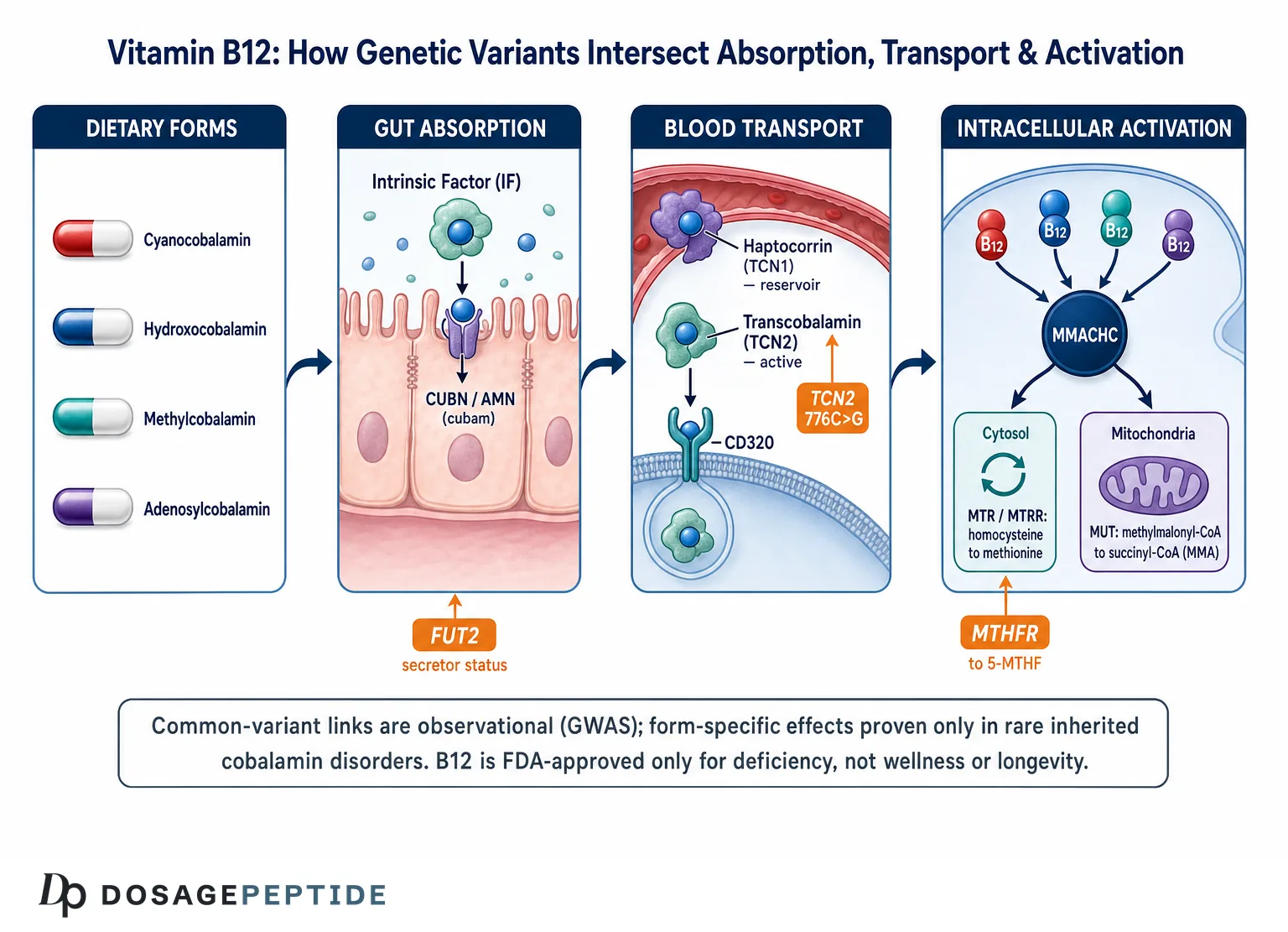
Understanding where genetic variants can act requires following a single molecule of cobalamin from the mouth to the mitochondrion. B12 is the largest and most structurally complex vitamin, and unlike most micronutrients it depends on a dedicated multi-protein handling system. Each protein in that system is a candidate site for genetic variation, so the pathway itself is effectively a map of where genotype can influence outcome.
Absorption: intrinsic factor and the cubam receptor
Dietary B12 is bound to food protein and released by gastric acid and pepsin. In the stomach it first binds haptocorrin (encoded by TCN1), a salivary and gastric carrier that protects it through the acidic environment. In the duodenum, pancreatic proteases degrade haptocorrin and B12 transfers to gastric intrinsic factor (encoded by GIF), a protein secreted by gastric parietal cells. The intrinsic-factor–B12 complex travels to the terminal ileum, where it is recognized by a receptor called cubam — a complex of two proteins, cubilin (encoded by CUBN) and amnionless (encoded by AMN). Cubilin binds the intrinsic-factor–B12 complex, while amnionless directs the receptor’s positioning and endocytosis into the enterocyte.[6] Loss-of-function mutations in either CUBN or AMN cause Imerslund–Gräsbeck syndrome, an autosomal-recessive B12 malabsorption with proteinuria that classically responds only to injected, absorption-bypassing B12.
Transport: haptocorrin and transcobalamin
Once B12 crosses the ileal cell and enters the portal blood, roughly two-thirds circulates bound to haptocorrin (holo-haptocorrin) and about one-third bound to transcobalamin (encoded by TCN2), forming holotranscobalamin (holo-TC). Only the transcobalamin-bound fraction is the biologically active pool that tissues can take up; holo-haptocorrin is largely a reservoir cleared by the liver. This distinction is central to the genetics story, because a variant can raise total serum B12 while leaving the active fraction unchanged — or vice versa.[3]
Cellular uptake and intracellular activation
Holotranscobalamin is captured at the cell surface by the transcobalamin receptor TCblR, encoded by CD320, and internalized.[15] Inside the lysosome, transcobalamin is degraded and free cobalamin is exported to the cytosol, where a trafficking and processing protein encoded by MMACHC (with a partner encoded by MMADHC) strips off whatever upper-axial ligand the incoming cobalamin carried — cyanide, hydroxyl, methyl, or adenosyl — and reduces the cobalt center. This “decyanation/dealkylation” step is critical: it means that regardless of which form was ingested, cobalamin is funneled to a common intermediate before being routed to its two coenzyme destinations.[16]
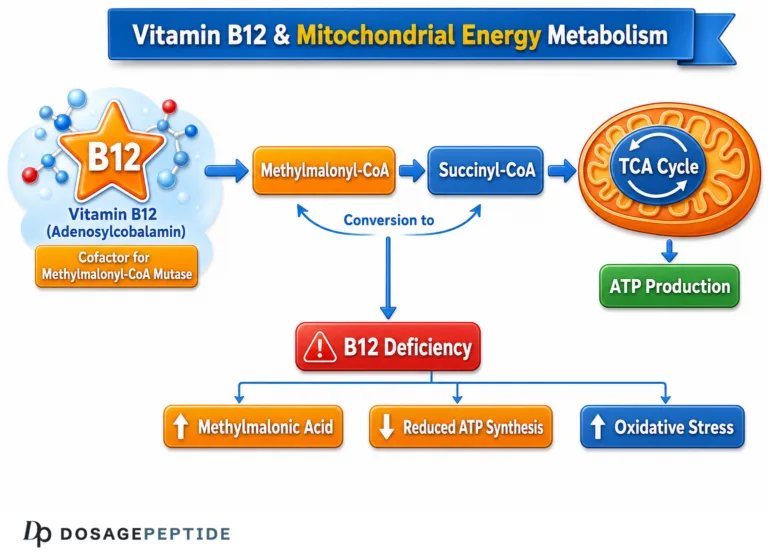
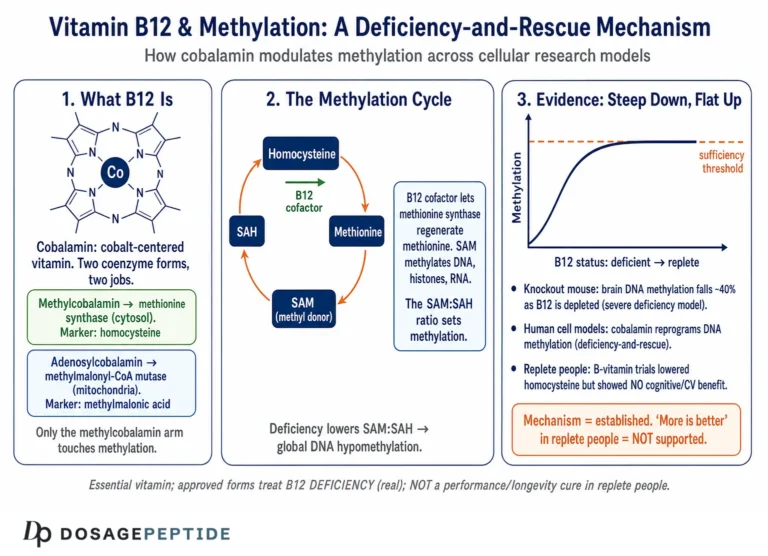
From that common pool, two active coenzymes are made. In the cytosol, methylcobalamin becomes the cofactor for methionine synthase (encoded by MTR), which remethylates homocysteine to methionine using a methyl group donated by 5-methyltetrahydrofolate. Methionine synthase is kept in its active reduced state by methionine synthase reductase (encoded by MTRR). In the mitochondrion, adenosylcobalamin is synthesized with the help of proteins encoded by MMAA and MMAB and serves as the cofactor for methylmalonyl-CoA mutase (encoded by MUT), which converts methylmalonyl-CoA to succinyl-CoA. When either arm fails, its upstream metabolite accumulates: impaired MTR raises homocysteine, and impaired MUT raises methylmalonic acid (MMA).[13] These two metabolites are the functional biomarkers researchers use to detect a genuine tissue-level B12 problem, and they anchor much of the genetic literature. Elevated homocysteine and MMA are what let investigators distinguish a variant that merely shuffles carrier proteins from one that truly starves the coenzyme reactions.
Two physiological features of this pathway shape how genetic variation expresses itself. First, the intrinsic-factor route saturates: only about 1.5 to 2 micrograms of B12 can be absorbed per meal through cubam, which is why any single receptor or carrier defect has a ceiling effect and why very large oral doses partly bypass the system through slow passive diffusion (roughly 1% of an oral dose). Second, B12 undergoes enterohepatic recirculation — cobalamin secreted in bile is reabsorbed in the ileum through the same intrinsic-factor pathway — so a genetic weakness in absorption is amplified over time by loss of the recycled pool. These features explain why absorption-side variants such as those in CUBN tend to manifest slowly and why bypassing absorption entirely (through injection) is the classic remedy when the ileal machinery is genetically compromised.
The single most important takeaway from this pathway is the convergence point at MMACHC. Because all four supplemental forms are stripped to a common cobalamin intermediate before activation, the theoretical basis for one form being categorically “more usable” than another is limited in people whose processing machinery is intact. Where the machinery is genetically impaired, however, the entry form and the downstream defect can interact in specific and clinically important ways — the theme we return to repeatedly below.
What are the four forms of vitamin B12, and how do they differ?
The word “cobalamin” refers to the corrin-ring cobalt complex; the four forms differ only in the group attached to the upper (beta) axial position of the cobalt. That single substituent changes the molecule’s stability, its behavior under light, its cost to manufacture, and the amount of processing the cell must perform before use — but not the ultimate coenzyme it becomes.
Cyanocobalamin
Cyanocobalamin (CNCbl) carries a cyanide group and is a wholly synthetic form that does not occur meaningfully in human tissue except as a trace consequence of cyanide exposure such as tobacco smoke. It is the most chemically stable and least expensive form, which is why it dominates fortification and many pharmaceutical injectables. To be used, the cell must remove the cyanide group at the MMACHC step, releasing a stoichiometrically tiny amount of cyanide that is negligible in healthy people. In the United States, cyanocobalamin injection is an FDA-approved drug for the treatment of B12 deficiency, including pernicious anemia.
Hydroxocobalamin
Hydroxocobalamin (OHCbl) carries a hydroxyl group and is a natural form produced by bacteria. Classic pharmacokinetic work found that after intramuscular injection, hydroxocobalamin produces a more sustained rise in serum cobalamin and less urinary loss than an equivalent dose of cyanocobalamin, because it binds plasma proteins more avidly and is retained longer.[18] This retention advantage is one reason hydroxocobalamin is the preferred injectable B12 in much of Europe. Hydroxocobalamin injection (1000 mcg/mL) is FDA-approved for B12 deficiency; separately, a high-dose hydroxocobalamin product (Cyanokit) is FDA-approved as an antidote for cyanide poisoning — a different indication entirely, exploiting the molecule’s avidity for cyanide.[21]
Methylcobalamin
Methylcobalamin (MeCbl) carries a methyl group and is one of the two coenzyme forms used directly by the body — specifically the cofactor for cytosolic methionine synthase. It is marketed heavily as the “active,” “bioidentical,” or “pre-methylated” form, on the reasoning that it does not require the cell to attach a methyl group. In the United States, methylcobalamin is sold as a dietary supplement and is not an FDA-approved drug. It is more light-sensitive and generally more costly than cyanocobalamin.
Adenosylcobalamin
Adenosylcobalamin (AdoCbl, also called coenzyme B12 or dibencozide) carries a 5′-deoxyadenosyl group and is the second coenzyme form, used by mitochondrial methylmalonyl-CoA mutase. Like methylcobalamin, it is sold in the United States as a dietary supplement rather than an approved drug. Advocates argue that supplying both coenzyme forms covers both the cytosolic and mitochondrial arms without relying on intracellular synthesis of adenosylcobalamin.
A crucial and often-overlooked point is that ingested methylcobalamin and adenosylcobalamin do not travel intact to their coenzyme destinations. Absorbed coenzyme forms are also processed through the common MMACHC intermediate; the methyl and adenosyl groups are not simply preserved end to end. This is why the theoretical “skip a step” argument for the coenzyme forms is weaker than it first appears — a nuance emphasized in comparative reviews of the four forms.[16]
| Form | Axial group | Natural in humans? | US regulatory status | Notable research property |
|---|---|---|---|---|
| Cyanocobalamin | Cyanide (–CN) | Trace only | FDA-approved drug (deficiency) | Most stable, lowest cost; requires decyanation |
| Hydroxocobalamin | Hydroxyl (–OH) | Yes | FDA-approved drug (deficiency; also cyanide antidote) | Longer retention after injection |
| Methylcobalamin | Methyl (–CH₃) | Yes (coenzyme) | Dietary supplement | Cofactor for methionine synthase (MTR) |
| Adenosylcobalamin | 5′-deoxyadenosyl | Yes (coenzyme) | Dietary supplement | Cofactor for methylmalonyl-CoA mutase (MUT) |
For readers comparing the practical handling of these forms — for example the difference between an oral tablet and a reconstituted injectable preparation used in research settings — our peptide and compound reconstitution reference explains the general chemistry of preparing injectable solutions in a neutral, educational way.
Which genetic variants most strongly influence circulating vitamin B12?
The clearest evidence that genotype shapes B12 comes from genome-wide association studies, which scan millions of variants across large populations without prior assumptions. A deeply sequenced GWAS of tens of thousands of individuals identified and confirmed loci at FUT2, FUT6, TCN1, TCN2, CUBN, CD320, MUT, MMAA, MMACHC, ABCD4, CLYBL, and MTHFR, among others.[1] A striking feature of this map is that most of the associated genes correspond directly to steps in the absorption, transport, and processing pathway described above — the genetics recapitulate the biochemistry. Unusually for a GWAS, a high proportion of the signals were coding variants that change protein sequence rather than distant regulatory variants, which strengthens the case that these genes act on B12 mechanistically rather than by chance linkage.
Two of the confirmed loci deserve a brief note because they extend the map beyond the classical carriers and receptors, and because their inclusion reinforces the central point that the associated genes cluster on the handling pathway rather than on any form-selection switch. ABCD4 encodes a lysosomal membrane transporter that works alongside the MMACHC processing machinery to move cobalamin out of the lysosome after transcobalamin is degraded; loss-of-function mutations cause a rare combined methylmalonic-aciduria and homocystinuria disorder (the cblJ group), which is why common variation at the same locus plausibly nudges circulating B12. CLYBL encodes a mitochondrial enzyme whose common loss-of-function allele is associated with modestly lower serum B12, an effect thought to act through the clearance side of cobalamin metabolism rather than through absorption. Neither locus points to a chemical-form preference; both simply add nodes to the same absorption-transport-processing-clearance network that the genome-wide data keep rediscovering, which is precisely why a variant can shift the B12 number a laboratory reports without implying that one axial form would serve the carrier better than another.
FUT2 and secretor status: the strongest common signal
The most reproducible common variant affecting serum B12 lies in FUT2, the gene for a fucosyltransferase that determines “secretor” status — whether a person secretes ABO blood-group antigens into mucosal fluids. The association was first reported in a genome-wide scan in 2008, where a FUT2 variant showed the strongest signal for plasma B12.[2] Non-secretors — homozygous for the inactivating allele — tend to have higher total serum B12, an effect frequently reported in the range of roughly 10–25%. The leading mechanistic explanation is that secretor status influences susceptibility to Helicobacter pylori colonization and chronic gastritis, which in turn affects B12 handling in the stomach.
A later study refined this in a way that is directly relevant to the “which form” question. It showed that the FUT2 non-secretor variant (p.Trp154Ter) raises B12 specifically in the holo-haptocorrin fraction — the metabolically inactive reservoir — while leaving holotranscobalamin, the active fraction, essentially unchanged.[3] In other words, a common variant can move the number on a standard B12 blood test without necessarily moving the amount of B12 actually reaching tissues. This is a cautionary example against inferring functional benefit — let alone a form preference — from total serum B12 alone. A related population-specific signal at FUT6 was identified in South Asian cohorts, underscoring that the genetic architecture of B12 differs across ancestries.[4]
CUBN, TCN1, and the transport and absorption genes
Common variants in CUBN (the ileal receptor) and TCN1 (haptocorrin) also associate with circulating B12 in GWAS.[1] TCN1 variants largely track the holo-haptocorrin reservoir, again illustrating that a portion of measured B12 variation reflects the carrier compartment rather than tissue delivery. A systematic review of B12-related polymorphisms catalogued 59 variants across these transport and metabolism genes and emphasized that associations are frequently ethnicity-specific and that most discovery work was done in populations of European ancestry — a limitation that constrains how broadly any single finding can be generalized.[5]
| Gene | Protein / role | Where in the pathway | Typical reported effect on B12 measures |
|---|---|---|---|
| FUT2 | Fucosyltransferase 2 (secretor) | Gastric mucosa / H. pylori interaction | Non-secretors higher total B12 (holo-haptocorrin) |
| FUT6 | Fucosyltransferase 6 | Glycosylation | Population-specific association (South Asian) |
| TCN1 | Haptocorrin | Reservoir carrier | Alters total/inactive fraction |
| TCN2 | Transcobalamin | Active-fraction carrier | Alters holotranscobalamin, tissue delivery |
| CUBN | Cubilin (cubam) | Ileal absorption | Alters absorption efficiency |
| CD320 | TCblR receptor | Cellular uptake | Rare variant linked to elevated MMA |
| MMACHC | Cobalamin processing | Intracellular convergence | Loss of function raises MMA + homocysteine |
| MTHFR | Methylenetetrahydrofolate reductase | Folate one-carbon cycle | 677TT raises homocysteine when folate low |
How does the TCN2 776C>G variant affect vitamin B12 delivery to tissues?
Among common variants, the transcobalamin polymorphism 776C>G (rs1801198), which substitutes proline for arginine at position 259 of the transcobalamin protein, is the one most directly tied to the delivery of active B12 to cells, because transcobalamin is the carrier of the bioavailable fraction. Multiple studies report that the 776G allele is associated with lower plasma holotranscobalamin, suggesting that the arginine-containing protein either binds or delivers B12 slightly less efficiently than the proline-containing version. Because holotranscobalamin is the pool tissues actually draw on, this variant is a plausible mechanism by which two people with identical intake could differ in functional B12 availability.
The functional consequences appear conditional rather than absolute. In subjects with already-low B12 status, the 776C>G genotype was associated with differences in homocysteine concentration — consistent with the variant mattering most when the system is under nutritional strain, and mattering little when B12 is abundant.[7] A systematic review and meta-analysis of rs1801198 across many one-carbon-metabolism outcomes confirmed measurable associations with B12-related biomarkers while noting substantial heterogeneity between studies and populations.[8] In one older cohort, the 776C>G variant was even associated with peripheral neuropathy in elderly individuals with high folate intake, hinting at gene–nutrient interactions that extend beyond simple biomarker shifts.[9]
Does this justify choosing a particular B12 form? Mechanistically, the TCN2 variant acts on the carrier protein, downstream of absorption but upstream of cellular processing — a step that is form-agnostic, since transcobalamin binds cobalamin regardless of its original axial group. There is no trial demonstrating that, say, methylcobalamin overcomes a TCN2 776G effect better than cyanocobalamin. The most defensible research interpretation is that carriers may be more sensitive to overall B12 sufficiency, not that they need a specific chemical form. Readers can explore how holotranscobalamin and total B12 relate to functional status in our broader overview of vitamin B12 and energy metabolism research.
What does the MTHFR C677T variant mean for B12 and methylation?
No B12-related variant is more discussed in consumer genetics than MTHFR C677T (rs1801133), which converts an alanine to a valine and produces a thermolabile enzyme with reduced activity. MTHFR itself is a folate-cycle enzyme, not a B12 enzyme — it generates 5-methyltetrahydrofolate, the methyl donor that methionine synthase uses together with methylcobalamin to remethylate homocysteine. The C677T variant is nonetheless woven into B12 discussions because the folate and B12 arms meet at methionine synthase, and because 677TT homozygotes tend to have higher homocysteine, especially when folate status is low.
The most informative human data come from a five-year randomized controlled trial (SU.FOL.OM3) that examined how genotype modified the homocysteine response to B-vitamin supplementation, including folate, B6, and B12. Overall homocysteine fell after supplementation, and the reduction was greater in 677TT homozygotes than in the other genotypes; the baseline homocysteine gap between TT and CC individuals narrowed over the study.[10] The authors interpreted this as evidence that people with the TT genotype can largely compensate for the enzyme’s reduced activity provided their B-vitamin status is adequate. This is a genuinely useful, trial-grade finding — but note carefully what it shows and what it does not. It shows that adequate B-vitamin status matters more for TT individuals; it does not show that any particular chemical form of B12, or of folate, is required. The supplementation in such trials typically used conventional forms, and the benefit was attributed to sufficiency rather than to a “methylated” formulation.
This distinction is important because MTHFR status is frequently marketed as a reason to prefer methylcobalamin and methylfolate specifically. The reasoning — that a person who makes less 5-methyltetrahydrofolate should be given the methylated end-products — is more compelling for folate (where 5-methyltetrahydrofolate is the direct product of the impaired enzyme) than for B12, whose activation does not depend on MTHFR at all. Companion variants in the same pathway, MTR A2756G and MTRR A66G, likewise influence homocysteine and interact with folate and B12 status, and combinations of these one-carbon variants can jointly raise the risk of functional folate shortfall.[11][12] The measured endpoint in that combined-genotype work was folate deficiency rather than a B12-specific outcome, so the fair reading is that stacking one-carbon-cycle variants strains the shared methylation machinery, not that it selectively depletes B12. Again, the robust message is about ensuring adequacy in genetically susceptible people, not about a proven form-by-genotype match.
Do inborn errors of cobalamin metabolism reveal genotype-specific form responses?
The strongest real evidence that genotype and B12 form interact comes not from common SNPs but from rare, single-gene disorders of cobalamin metabolism. These conditions are severe and uncommon, but they provide the clearest natural experiments in which a specific genetic defect changes which form of B12 works — and they are where the biology becomes genuinely form-specific.
cblC (MMACHC): the convergence-point defect
The most common inborn error of intracellular cobalamin metabolism is cblC, caused by biallelic MMACHC mutations. Because MMACHC is the convergence point that processes all incoming cobalamin, its failure blocks synthesis of both coenzyme forms, so both homocysteine and MMA rise. Clinically, cblC is generally managed with parenteral hydroxocobalamin, which is more effective than cyanocobalamin in these patients — a rational choice given that cyanocobalamin adds a decyanation burden at exactly the processing step that is already impaired.[13] This is perhaps the single best-established example of a genotype dictating a form preference — but it applies to a rare monogenic disease, not to the common variants carried by the general population.
cblA and cblB (MMAA, MMAB): B12-responsive methylmalonic acidemia
Defects in MMAA (cblA) and MMAB (cblB) impair the mitochondrial synthesis or handling of adenosylcobalamin, causing isolated methylmalonic acidemia. Notably, many cblA patients — and a subset of cblB patients — are “B12-responsive,” meaning high-dose cobalamin, typically hydroxocobalamin, lowers MMA and improves outcomes.[14] Here the genotype not only selects a form (hydroxocobalamin) but also predicts responsiveness itself, and newborn-screening and enzymatic testing are used to identify which children will benefit. This is genuine pharmacogenomics of B12 — but again confined to rare inborn errors.
CD320 (TCblR): a receptor defect found through screening
A defect in the cellular uptake receptor illustrates how sensitive metabolism is to each step. The first reported CD320 mutation was found in asymptomatic newborns flagged for elevated MMA on newborn screening; their fibroblasts showed reduced uptake of transcobalamin-bound B12, and intramuscular B12 normalized the MMA.[15] The lesson relevant to our question is that when uptake is genetically impaired, high-dose parenteral B12 — delivering enough substrate to force flux through a weakened receptor — is the operative strategy, and the specific axial group matters less than achieving sufficient delivery.
Taken together, the inborn-error literature supports a clear conditional statement: in rare monogenic defects of cobalamin processing or mitochondrial coenzyme synthesis, genotype can and does guide form choice (often toward hydroxocobalamin) and even predicts whether B12 will work at all. What it does not support is extrapolating that logic to the common FUT2, TCN2, or MTHFR variants carried by millions of otherwise healthy people, whose processing machinery is intact.
What does clinical research say about comparing the B12 forms head to head?
Setting genetics aside for a moment, it is worth asking what controlled research shows when the forms are simply compared in people. The answer is that differences exist but are modest, dose-dependent, and rarely decisive — and, importantly, the comparisons were generally not stratified by genotype.
Absorption and retention
Classic tracer studies found that at physiological oral doses (roughly 1–25 micrograms), cyanocobalamin, hydroxocobalamin, methylcobalamin, and adenosylcobalamin are absorbed at broadly similar fractional rates, with the absorbed fraction falling sharply as dose rises — from roughly half at 1 microgram to under 10% at 25 micrograms, reflecting saturation of the intrinsic-factor pathway.[19] The clearest form difference is in retention after injection: hydroxocobalamin is retained substantially longer than cyanocobalamin, which is excreted more rapidly in the urine.[18] This retention difference is a genuine, reproducible pharmacokinetic fact — but it is a property of the molecule, not an interaction with the recipient’s genotype.
Maintaining active B12 (holotranscobalamin)
Small intervention studies have compared how well the forms maintain holotranscobalamin, the active fraction. In one study of vegan adults, cyanocobalamin actually maintained holotranscobalamin at least as well as methylcobalamin, contrary to the popular assumption that the “active” methyl form is superior for building the active pool.[17] Such studies are small and cannot be over-interpreted, but they are a useful corrective: the marketing hierarchy (methyl > cyano) is not reliably borne out when active-fraction biomarkers are measured. Dosing frequency and total dose frequently emerge as bigger drivers of B12 status than the choice of form.
Larger supplementation trials reinforce that quantity and schedule often dominate the choice of chemical form. In studies of predominantly plant-based or low-status women, holotranscobalamin rose with oral methylcobalamin, and higher or more frequent dosing produced larger increases in the active fraction than lower dosing — a dose–response relationship that operated regardless of which form was chosen. Because the intrinsic-factor route saturates at each exposure, spreading intake across the day, or using a high enough dose to recruit passive diffusion, tends to move biomarkers more than switching among cyanocobalamin, hydroxocobalamin, methylcobalamin, and adenosylcobalamin does. From a research-design standpoint, this means any future genotype-by-form study must carefully hold dose and frequency constant, or those larger effects will swamp the subtler form-by-genotype signal it is trying to detect.
The overall picture from head-to-head research is that for people with normal absorption and processing, all four forms can restore and maintain B12 status, the practical differences are small, and no form has been shown to be universally superior. The most robust form-specific advantage — hydroxocobalamin’s longer retention after injection — is a reason it is favored for parenteral repletion, independent of any genetic testing.
Does the evidence support choosing a B12 form based on genotype?
This is the question the whole field ultimately points toward, and honesty requires separating three tiers of evidence that are often blurred together.
Tier 1 — monogenic disorders: yes, genotype guides form. In rare inborn errors such as cblC (MMACHC), cblA/cblB (MMAA/MMAB), and CD320 defects, the specific genetic lesion determines both whether B12 helps and which form (often hydroxocobalamin, given parenterally) is preferred. This is established clinical practice built on decades of complementation and enzymatic work.[13]
Tier 2 — common variants and biomarkers: real associations, but no form prescription. Common variants in FUT2, TCN1, TCN2, CUBN, and MTHFR reproducibly shift B12-related biomarkers.[1] But these variants act on carrier compartments, absorption efficiency, or the folate cycle — steps that do not discriminate between the four axial forms. The trial-grade data that exist, such as the MTHFR supplementation RCT, argue for ensuring sufficiency in susceptible genotypes, not for a specific chemical form.[10]
Tier 3 — genotype-directed form selection in the general population: not established. No adequately powered randomized trial has taken healthy people, genotyped them at these loci, assigned them to different B12 forms, and shown a genotype-by-form interaction on a hard functional outcome. A comparative review that specifically examined whether particular forms could “mitigate B12-related genetic polymorphisms” concluded that the relevant SNPs are not even reported in commercial genetic tests, and that in the absence of such data a pragmatic option is trial of a combination of naturally occurring forms — while explicitly acknowledging this “may or may not” offset any given polymorphism.[16] Systematic reviews of the wider polymorphism literature reach a similar verdict, emphasizing population-specific effects and the need for larger, more diverse studies before clinical translation.[5]
The honest synthesis, therefore, is that genotype meaningfully influences vitamin B12 status and can dictate form in rare disease, but current evidence does not support routine genotype-guided selection among cyanocobalamin, hydroxocobalamin, methylcobalamin, and adenosylcobalamin for the general population. Claims to the contrary outrun the data.
What types of studies inform this question, and how strong is each?
Because the field mixes very different kinds of evidence, it helps to rank them explicitly by design and by what each can and cannot prove.
Genome-wide association studies
GWAS are the backbone of the common-variant story. Their strength is unbiased, hypothesis-free discovery in very large samples, which is how loci such as FUT2, TCN2, and CUBN were reliably linked to serum B12.[1] Their limitation is that they associate variants with a measured trait — usually total serum B12 — and cannot tell whether the change reflects the active fraction or a mere reservoir shift, nor whether any intervention (let alone a specific form) would change an outcome. They generate hypotheses; they do not test forms.
Candidate-gene and biomarker association studies
These focus on a pre-specified variant such as TCN2 776C>G or MTHFR C677T and relate it to holotranscobalamin, homocysteine, or MMA.[7] They add mechanistic resolution — distinguishing active from inactive fractions — but are prone to small samples, population heterogeneity, and publication bias, which is why meta-analyses of the same SNP often report attenuated or heterogeneous effects.[8]
Inborn-error and cell-complementation studies
Studies of rare monogenic disorders — using patient fibroblasts, complementation grouping, and enzymatic assays — provide the most direct causal evidence that a specific gene defect changes cobalamin handling and form responsiveness.[13] Their limitation for our question is generalizability: they describe severe, rare biology and cannot be extrapolated to common variants in healthy people.
Randomized controlled trials and pharmacokinetic studies
RCTs and tracer/kinetic studies are the only designs that can establish causation about intake and outcome. They have shown, for example, the MTHFR genotype-by-supplementation interaction on homocysteine[10] and the retention differences between forms.[18] The critical gap is that essentially none of these trials were designed as genotype-stratified, form-versus-form comparisons in the general population — the exact design that would be needed to justify genotype-guided form selection.
Animal and in-vitro models
Knockout and knock-in animal models — for instance, mice lacking the CD320 receptor develop anemia and reproductive deficits on a B12-deficient diet — and cell-based assays clarify mechanism at each pathway step. These are preclinical and in-vitro by definition; they establish plausibility and mechanism, not human clinical efficacy, and their findings should never be described as proven in people.
What are the limitations, open questions, and safety-in-research framing?
Several limitations bound everything above and should temper any strong claims. First, most discovery genetics for B12 was performed in European-ancestry populations, and important signals such as FUT6 are population-specific, so genetic “rules” derived in one group may not transfer to another.[5] Second, the field leans heavily on serum B12 as an outcome, yet a substantial share of that measurement sits in the inactive holo-haptocorrin reservoir; holotranscobalamin, MMA, and homocysteine are better functional readouts and can move in different directions from total B12.[3] Third, common variants individually explain only a small fraction of B12 variance, so polygenic prediction of “your ideal form” is not supported by the effect sizes involved.
Open questions worth watching include whether combined genetic risk scores across several one-carbon and transport genes could identify people who need higher habitual intake; whether the retention advantage of hydroxocobalamin interacts with any common uptake variant; and whether the coenzyme forms offer any measurable benefit at the tissue level in people with intact MMACHC processing — a question current data answer largely in the negative.
On safety and regulatory framing, several points must stay explicit. In medicine, cobalamin is indicated to treat or prevent B12 deficiency; it is not approved for general “energy,” cognitive enhancement, weight, or longevity claims, and the genetics reviewed here do not change that. In the United States, cyanocobalamin and hydroxocobalamin injections are FDA-approved drugs for B12 deficiency, whereas methylcobalamin and adenosylcobalamin are sold as dietary supplements and are not FDA-approved drugs.[20] The high-dose hydroxocobalamin product approved as a cyanide antidote is a distinct medical indication and should not be conflated with nutritional B12.[21] Nothing in this article is medical advice or a dosing recommendation; it is an educational synthesis of research. Genotype-guided B12 form selection remains, for the general population, a research hypothesis rather than an evidence-based practice. Readers interested in the quantitative side of preparing and expressing concentrations of research compounds can review our neutral reconstitution and dosage calculator reference, used strictly for educational understanding of the arithmetic involved.
Frequently Asked Questions
Does having the MTHFR C677T variant mean I should take methylcobalamin instead of cyanocobalamin?
Current evidence does not establish that. MTHFR is a folate-cycle enzyme and does not participate in B12 activation, so the “pre-methylated” rationale applies more to folate than to B12. A five-year randomized trial found that 677TT individuals respond well to conventional B-vitamin supplementation and can compensate when their B-vitamin status is adequate. The research message is about ensuring sufficiency, not about a specific B12 form.
What is the difference between total serum B12 and holotranscobalamin?
Total serum B12 includes both the active fraction carried by transcobalamin (holotranscobalamin) and a larger, largely inactive reservoir carried by haptocorrin. Only holotranscobalamin is taken up by tissues. This distinction matters genetically, because some variants — notably FUT2 non-secretor alleles — raise total B12 mainly by increasing the inactive reservoir, without necessarily improving the amount reaching cells.
Why is hydroxocobalamin often preferred for injections?
Pharmacokinetic studies show that after intramuscular injection, hydroxocobalamin is retained in the body longer and lost in the urine less rapidly than cyanocobalamin, producing a more sustained rise in serum cobalamin. This is a property of the molecule itself, not an interaction with genotype, and it is one reason hydroxocobalamin is favored for parenteral repletion in many countries and in certain inborn errors of cobalamin metabolism.
Do FUT2 secretor variants cause B12 deficiency?
Not straightforwardly. Non-secretor FUT2 genotypes are associated with higher total serum B12 in many studies, an effect linked to reduced Helicobacter pylori–related gastritis. However, the increase falls largely in the inactive holo-haptocorrin fraction, so a higher total B12 number in non-secretors does not necessarily translate into greater tissue-level availability. The variant illustrates why total B12 alone can be misleading.
Can a commercial DNA test tell me which B12 form is best for me?
Based on current research, no. A comparative review noted that the specific polymorphisms that might, in theory, favor one form are generally not reported in commercial genetic tests, and no randomized trial has validated genotype-guided form selection in healthy people. Genome-wide studies identify variants that shift B12 biomarkers, but these act at steps that do not distinguish among the four chemical forms.
Are methylcobalamin and adenosylcobalamin FDA-approved medicines?
In the United States, methylcobalamin and adenosylcobalamin are marketed as dietary supplements, not FDA-approved drugs. Cyanocobalamin and hydroxocobalamin injections are FDA-approved for treating vitamin B12 deficiency. Separately, a high-dose hydroxocobalamin product is FDA-approved as an antidote for cyanide poisoning, which is a different medical indication and unrelated to nutritional supplementation.
Which genetic variant most directly affects how much active B12 reaches my cells?
Among common variants, the transcobalamin TCN2 776C>G polymorphism is the one most directly tied to tissue delivery, because transcobalamin carries the active fraction. The 776G allele is associated with lower holotranscobalamin and appears to matter most when overall B12 status is low. Even so, it acts on a carrier step that is the same for all four forms, so it does not by itself indicate a preferred chemical form.
What research would actually prove genotype-based form selection works?
It would take an adequately powered randomized controlled trial that genotypes participants at the relevant loci, randomly assigns them to different B12 forms, and measures functional outcomes such as holotranscobalamin, methylmalonic acid, and homocysteine over time, testing for a genotype-by-form interaction. No such trial currently exists in the general population, which is why genotype-guided form selection remains a hypothesis rather than established practice.
References
- Grarup N, et al. Genetic architecture of vitamin B12 and folate levels uncovered applying deeply sequenced large datasets. PLoS Genetics. 2013.
- Hazra A, et al. Common variants of FUT2 are associated with plasma vitamin B12 levels. Nature Genetics. 2008.
- Velkova A, et al. The FUT2 secretor variant p.Trp154Ter influences serum vitamin B12 concentration via holo-haptocorrin, but not holo-transcobalamin. Human Molecular Genetics. 2017.
- Nongmaithem SS, et al. GWAS identifies population-specific new regulatory variants in FUT6 associated with plasma B12 concentrations in Indians. Human Molecular Genetics. 2017.
- Surendran S, et al. An update on vitamin B12-related gene polymorphisms and B12 status. Genes & Nutrition. 2018.
- Fyfe JC, et al. The functional cobalamin (vitamin B12)–intrinsic factor receptor is a novel complex of cubilin and amnionless. Blood. 2004.
- Stanisławska-Sachadyn A, et al. The transcobalamin (TCN2) 776C>G polymorphism affects homocysteine concentrations among subjects with low vitamin B12 status. European Journal of Clinical Nutrition. 2010.
- Oussalah A, et al. Association of TCN2 rs1801198 c.776G>C polymorphism with markers of one-carbon metabolism and related diseases: a systematic review and meta-analysis of genetic association studies. American Journal of Clinical Nutrition. 2017.
- Sawaengsri H, et al. Transcobalamin 776C→G polymorphism is associated with peripheral neuropathy in elderly individuals with high folate intake. American Journal of Clinical Nutrition. 2016.
- Fezeu LK, et al. MTHFR 677C→T genotype modulates the effect of a 5-year supplementation with B-vitamins on homocysteine: the SU.FOL.OM3 randomized controlled trial. PLoS ONE. 2018.
- Laraqui A, et al. Influence of methionine synthase (MTR A2756G) and methionine synthase reductase (MTRR A66G) polymorphisms on plasma homocysteine and coronary artery disease risk. Acta Cardiologica. 2006.
- Li WX, et al. Homocysteine metabolism gene polymorphisms (MTHFR C677T, MTHFR A1298C, MTR A2756G and MTRR A66G) jointly elevate the risk of folate deficiency. Nutrients. 2015.
- Disorders of intracellular cobalamin metabolism. GeneReviews, NCBI Bookshelf.
- Dobson CM, et al. Identification of the gene (MMAA) responsible for the cblA complementation group of vitamin B12-responsive methylmalonic acidemia. PNAS. 2002.
- Quadros EV, et al. Positive newborn screen for methylmalonic aciduria identifies the first mutation in TCblR/CD320, the gene for cellular uptake of transcobalamin-bound vitamin B12. Human Mutation. 2010.
- Paul C, Brady DM. Comparative bioavailability and utilization of particular forms of B12 supplements with potential to mitigate B12-related genetic polymorphisms. Integrative Medicine. 2017.
- Zugravu C, et al. Efficacy of supplementation with methylcobalamin and cyanocobalamin in maintaining serum holotranscobalamin in plant-based (vegan) adults. Experimental and Therapeutic Medicine. 2021.
- Boddy K, King P, Mervyn L, Macleod A, Adams JF. Retention of cyanocobalamin, hydroxocobalamin, and coenzyme B12 after parenteral administration. Lancet. 1968.
- Adams JF, et al. Absorption of cyanocobalamin, coenzyme B12, methylcobalamin, and hydroxocobalamin at different dose levels. Scandinavian Journal of Gastroenterology. 1971.
- Hydroxocobalamin. StatPearls, NCBI Bookshelf.
- Cyanokit (hydroxocobalamin) prescribing information. U.S. Food and Drug Administration.