
Dr. Aimen Arij
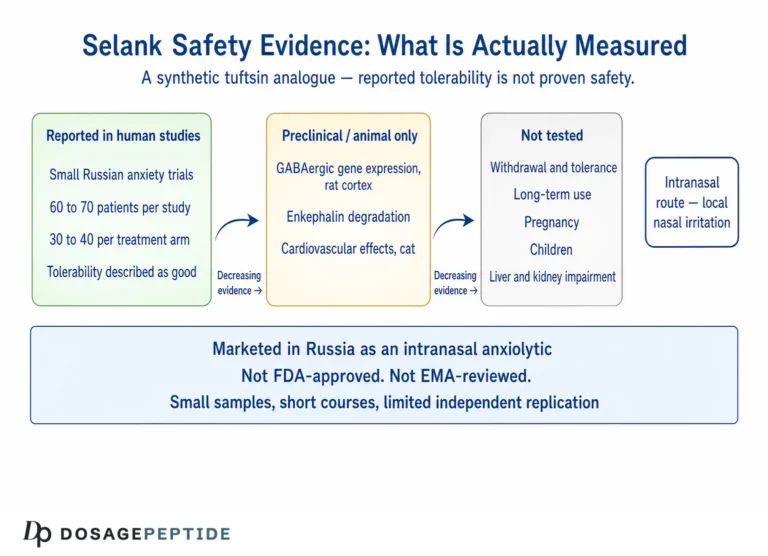
Selank Side Effects: What to Expect, and What Has Never Been Tested
Quick answerVery few side effects appear in the published literature, and that is weaker reassurance than it sounds. What the trials report:…
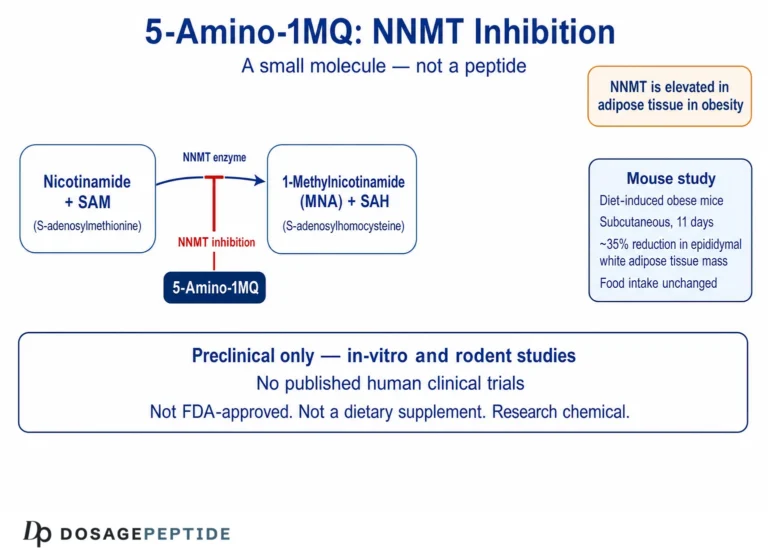
5-Amino-1MQ: Results, Side Effects and What the Research Actually Shows
Quick answerShort version: the fat-loss story is real in rodents and untested in people. It is not a peptide. It is a…
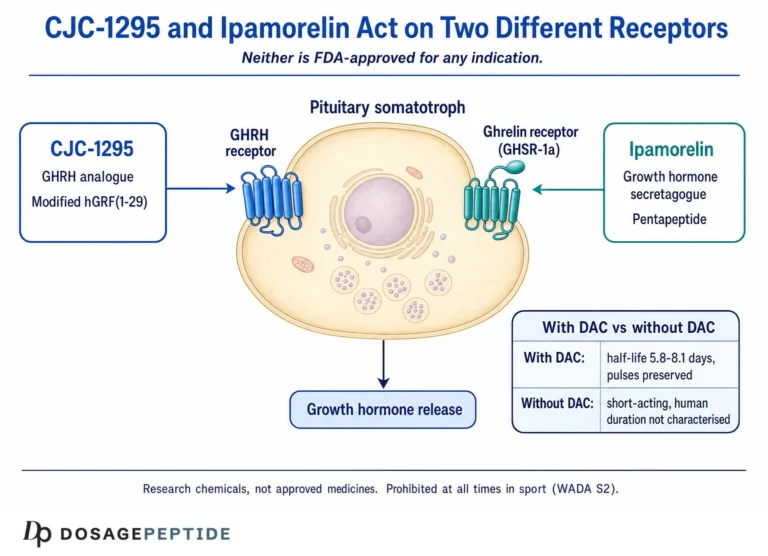
CJC-1295 vs Ipamorelin: What Actually Differs, and Why They Are Stacked
Quick answerThey are not two versions of the same thing, which is why protocols pair them instead of choosing between them. Different…
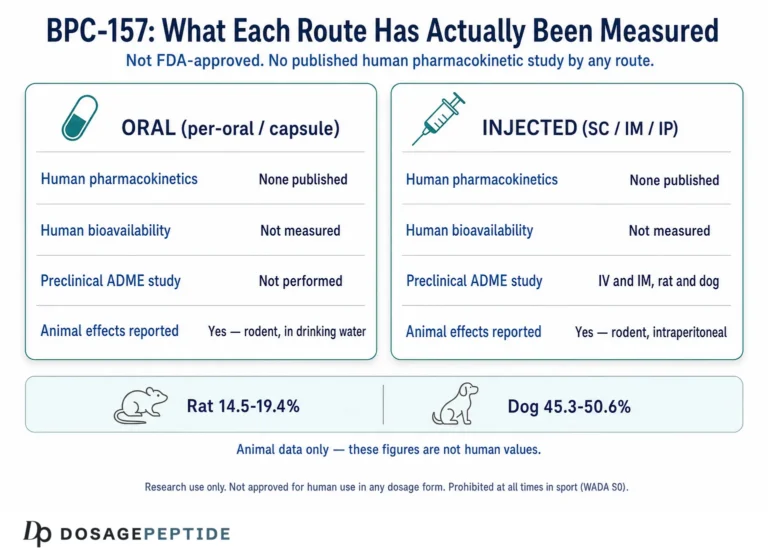
BPC-157 Oral vs Injection: What the Route Data Actually Show
The honest answer to “oral or injection?” is that neither route has been characterised in humans. BPC-157 is not approved by FDA,…
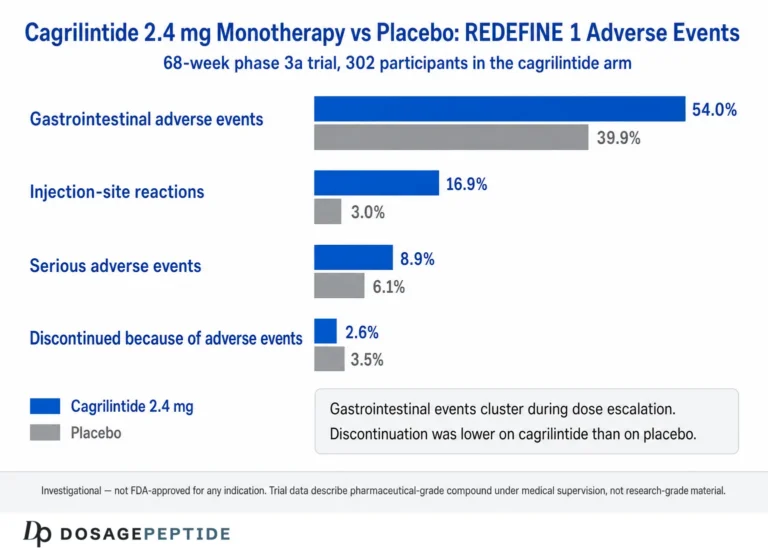
Cagrilintide Side Effects: What the Trial Data Actually Show
In randomised human trials, the dominant documented adverse events with cagrilintide are gastrointestinal and closely tied to dose escalation. In the largest…
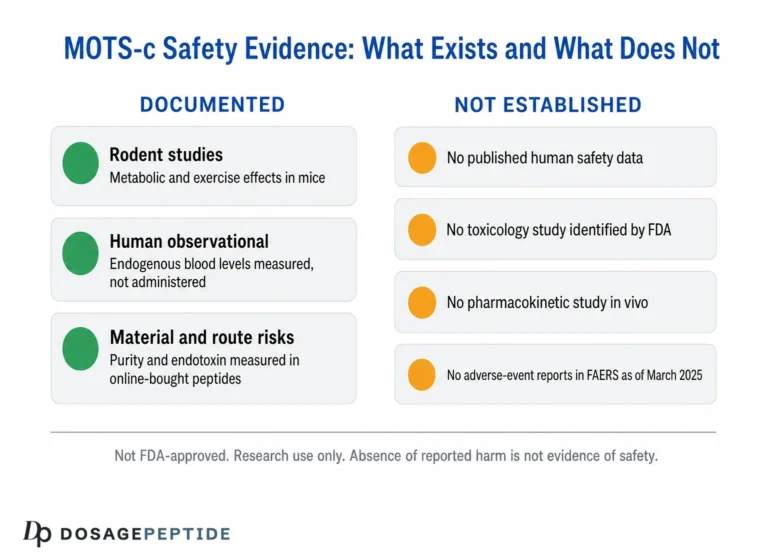
MOTS-c Side Effects: What the Research Actually Documents
There is no published human safety dataset for exogenously administered MOTS-c. No completed clinical trial has reported adverse events, the FDA Adverse…
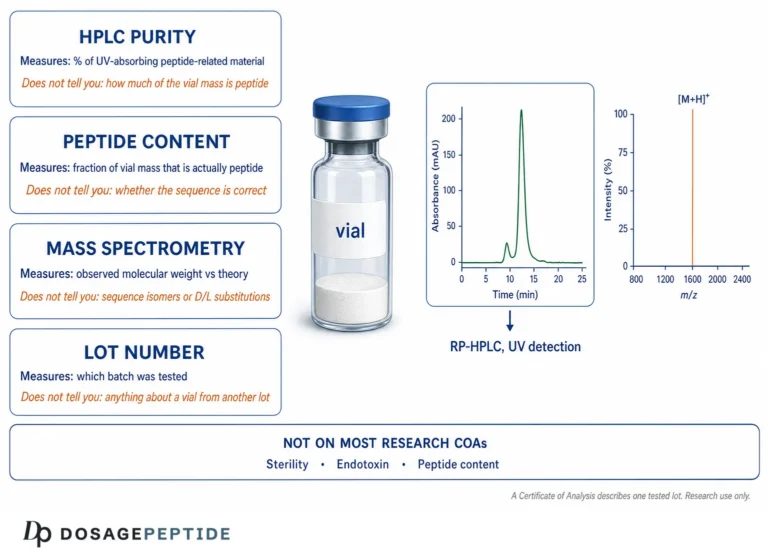
How to Read a Peptide COA: Purity, Identity and What the Numbers Mean
A peptide Certificate of Analysis (COA) is a lot-specific test report: it records what a laboratory measured on one manufactured batch, on…
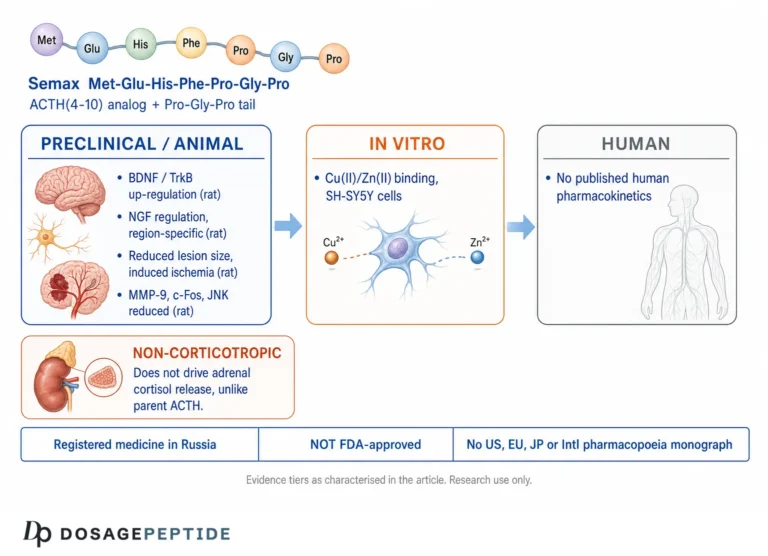
What Is Semax? The Russian Nootropic Peptide, Examined
Semax is a synthetic seven-amino-acid peptide — Met-Glu-His-Phe-Pro-Gly-Pro — built from the ACTH(4–10) fragment of adrenocorticotropic hormone, with a Pro-Gly-Pro tail added…
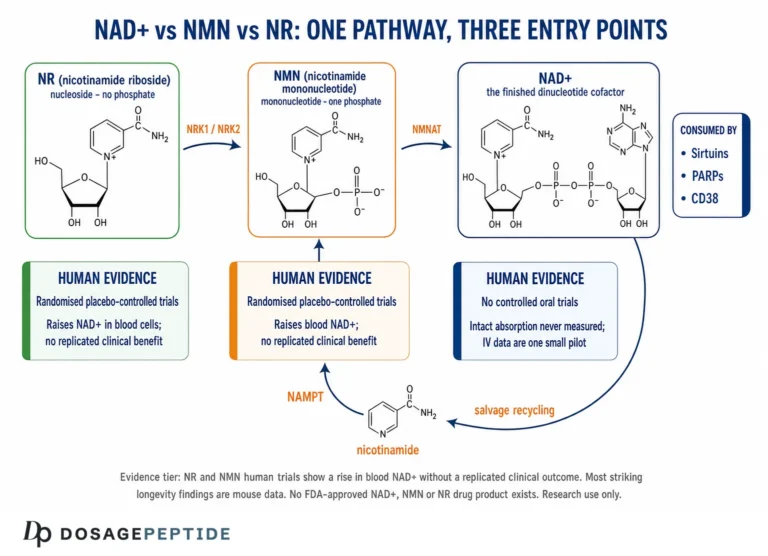
NAD+ vs NMN: How the Precursors Differ and What Human Data Show
The short answer on NAD+ vs NMN is that they are not competing products but three different points on the same biochemical…
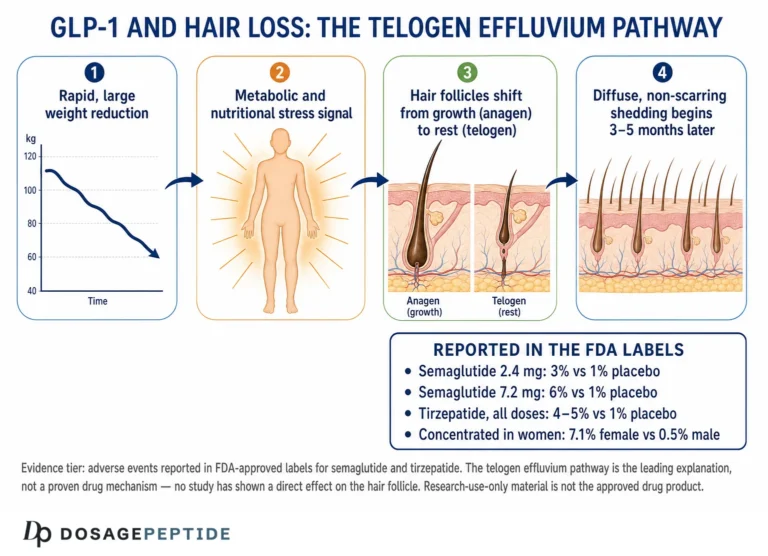
GLP-1 and Hair Loss: What the Trial Data Actually Show
The short answer is yes: GLP-1 hair loss is real, it is measurable, and it was in the FDA-approved labeling from the…