The honest answer first. Retatrutide has never been tested in a trial enrolling women with PCOS. Not one. Everything written about “retatrutide for PCOS” is an inference — drawn from what the drug does to insulin resistance in people with obesity and type 2 diabetes, and from what GLP-1 receptor agonists have done in actual PCOS trials.
The inference is not unreasonable. Insulin resistance sits at the centre of PCOS in most patients, lean ones included, and retatrutide is a triple agonist (GLP-1 + GIP + glucagon) built to attack exactly that mechanism. But an inference is not evidence, and this article keeps the two apart: what has actually been measured, in whom, how far the reasoning stretches, and what trial would have to be run before the question in the title has a real answer.
That reframing is not evasion. Retatrutide (development code LY3437943) is one of the most metabolically potent investigational agents in late-stage development, and its published phase 2 program produced genuinely striking improvements in the exact biomarkers that define insulin resistance — fasting insulin, HOMA-IR, hepatic fat, and body weight — in adults with obesity, type 2 diabetes, and metabolic dysfunction–associated steatotic liver disease (MASLD).234 Because insulin resistance sits at the mechanistic center of PCOS for the majority of affected women, there is a coherent, biologically plausible hypothesis that retatrutide would help. But a plausible hypothesis is not a demonstrated therapy, and the distance between those two things is precisely what this article is about.
This piece is written for researchers, clinicians, and scientifically literate readers who want an accurate map: what retatrutide is, why insulin resistance drives PCOS, what the compound has genuinely shown (and in whom), what the closest analog class — GLP-1 receptor agonists — has shown in actual PCOS trials, how much of any benefit is likely to be weight-mediated versus weight-independent, how it stacks up against the insulin-sensitizing tools PCOS guidelines already endorse, and where the safety and regulatory lines fall. Throughout, the discipline is the same one good science demands: state the evidence level plainly, never let mechanism masquerade as proof, and never imply that an investigational drug treats a condition it has not been studied to treat.
What Retatrutide Is: A Triple-Receptor Agonist Built for Weight and Glucose
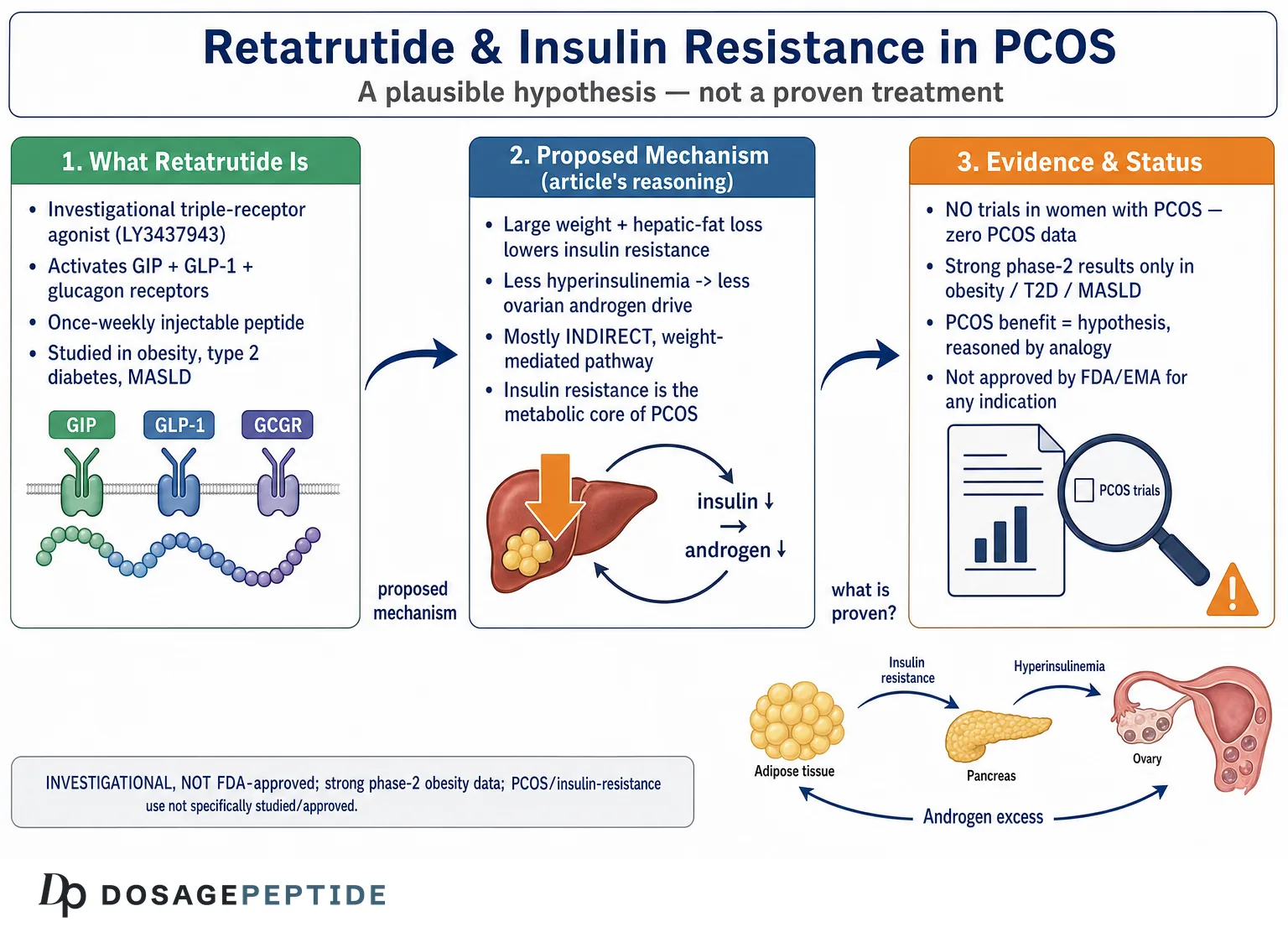
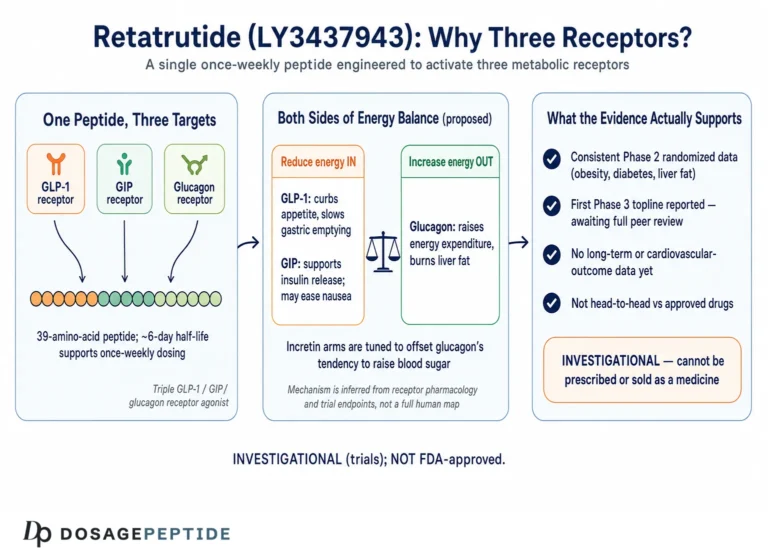
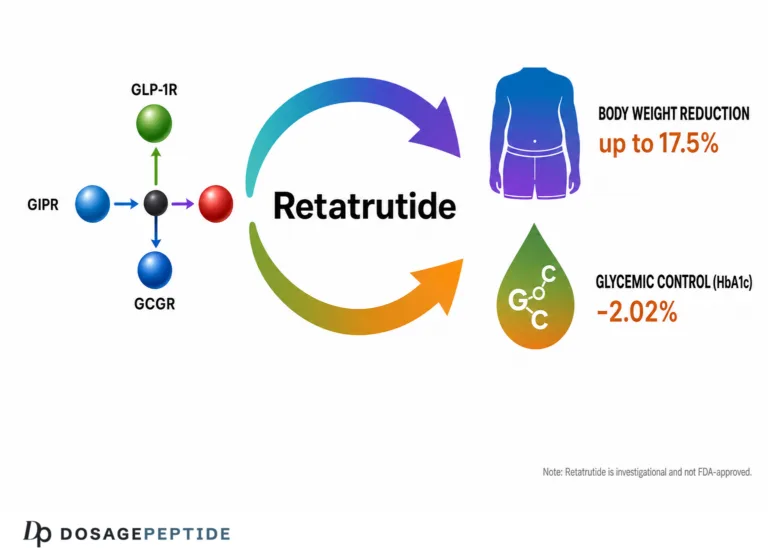
Retatrutide is a once-weekly, subcutaneously administered synthetic peptide engineered to activate three distinct receptors at once: the glucose-dependent insulinotropic polypeptide receptor (GIPR), the glucagon-like peptide-1 receptor (GLP-1R), and the glucagon receptor (GCGR).5 It is often described as a “triple agonist” or “triple G” molecule, and it represents the next conceptual step beyond single-incretin agonists such as semaglutide (GLP-1 only) and dual agonists such as tirzepatide (GIP + GLP-1). The molecule is structurally a modified peptide with a fatty-acid moiety that extends its half-life to support weekly dosing, and in vitro it shows balanced glucagon- and GLP-1-receptor activity with comparatively greater GIP-receptor potency.5
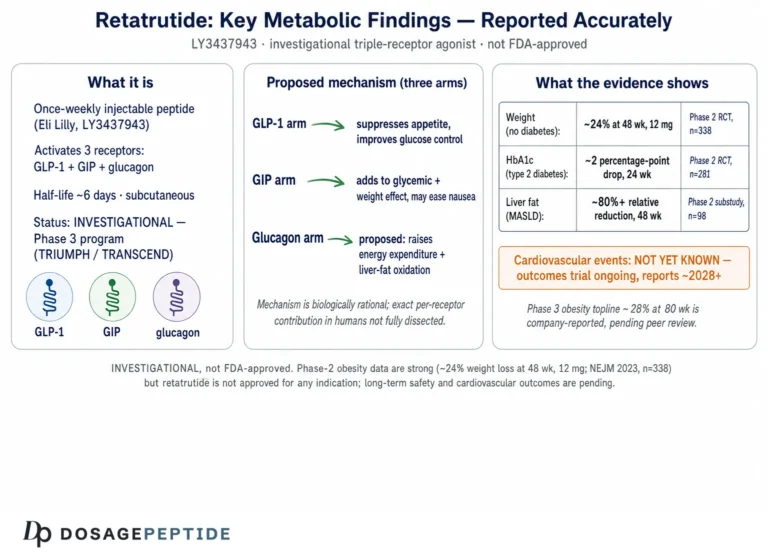
The rationale for combining these three signals is metabolic synergy. GLP-1-receptor agonism enhances glucose-dependent insulin secretion, slows gastric emptying, and suppresses appetite through central pathways. GIP-receptor agonism contributes additional insulinotropic effect and appears to modulate adipose-tissue metabolism and nausea tolerance. Glucagon-receptor agonism is the genuinely novel arm: while glucagon classically raises blood glucose, controlled glucagon-receptor activation also increases energy expenditure and drives hepatic fat oxidation, which is why the triple agonist produces such pronounced reductions in liver fat.45 The engineering challenge was to balance the glucagon arm so that its thermogenic and hepatic-lipid benefits are captured without provoking hyperglycemia — a balance the GLP-1 and GIP components help maintain by preserving glucose-dependent insulin release.
Crucially, retatrutide is investigational. It is not approved by the U.S. Food and Drug Administration, the European Medicines Agency, or any comparable regulator for any indication, and it remains under phase 3 evaluation in Eli Lilly’s TRIUMPH program as of 2026.111 Readers who want the full receptor-pharmacology and development-history picture can consult the site’s pillar overview, what retatrutide is and how the triple-receptor agonist works, which sets the broader context for the narrower question examined here.
Why does the receptor profile matter for a PCOS discussion? Because insulin resistance in PCOS is a whole-body phenomenon expressed most strongly in skeletal muscle, liver, and adipose tissue, and retatrutide’s three signals converge on exactly those tissues — indirectly, by driving large reductions in body weight and ectopic (especially hepatic) fat, and possibly directly, through incretin effects on the pancreatic islet and on adipose biology. That convergence is the source of the plausibility argument. It is also, as we will see, the reason it is so hard to separate a true PCOS-specific effect from the generic metabolic benefit of losing a great deal of weight.
Insulin Resistance in PCOS: The Engine Behind the Syndrome
To judge whether retatrutide could plausibly help, we first need a precise picture of what insulin resistance is in PCOS and why it is so central. PCOS is a heterogeneous endocrine disorder defined by some combination of ovulatory dysfunction, clinical or biochemical hyperandrogenism, and polycystic ovarian morphology. But beneath that reproductive definition sits a metabolic core: insulin resistance and compensatory hyperinsulinemia are present in a large majority of affected women — estimates commonly range from roughly 65% to 95% depending on the population and the assay used — and are now regarded as major drivers of the syndrome’s reproductive and metabolic features.6
The mechanistic story is a self-reinforcing loop. Peripheral tissues (muscle, fat) resist insulin’s action on glucose uptake, so the pancreas secretes more insulin to compensate. The resulting hyperinsulinemia does not, however, spare the ovary and other tissues that remain insulin-sensitive. In the ovarian theca cells, insulin acts synergistically with luteinizing hormone to stimulate androgen production, and it suppresses hepatic synthesis of sex hormone–binding globulin (SHBG), raising the fraction of free, biologically active testosterone.67 The elevated androgens, in turn, worsen the body-fat distribution and free-fatty-acid milieu that aggravate insulin resistance — closing a cycle in which hyperinsulinemia and hyperandrogenemia perpetuate one another.6
A subtle but important point, established in classic physiology work, is that the insulin-signaling defect in PCOS appears to be selective. The metabolic (glucose-transport) arm of insulin signaling — largely the PI3K/Akt pathway in muscle and fat — is impaired, while the mitogenic and steroidogenic arms remain intact or even amplified.78 This is why a woman with PCOS can be metabolically insulin-resistant yet have an ovary that responds vigorously to insulin’s steroidogenic signal. It also explains why simply lowering insulin resistance — whether through weight loss, metformin, or, hypothetically, an incretin-based agent — can improve both the metabolic and the reproductive dimensions of the syndrome: reducing hyperinsulinemia lowers the drive to ovarian androgen production and restores some SHBG, which is the biological basis for the interest in any potent insulin-sensitizing intervention.67
How insulin resistance is actually measured in PCOS matters for reading any drug data, because different tools capture different things. Fasting insulin and the homeostatic model assessment (HOMA-IR, derived from fasting glucose and insulin) are the most common and practical surrogates, and they are the measures that move so dramatically in the retatrutide trials.46 They are, however, indirect: they reflect predominantly hepatic insulin sensitivity and are sensitive to the assay and population used. The reference standard, the hyperinsulinemic-euglycemic clamp, directly quantifies whole-body (largely skeletal-muscle) glucose disposal, and oral glucose tolerance testing captures the dynamic, postprandial picture that is often abnormal in PCOS even when fasting values look acceptable.68 This methodological point becomes important later: a drug that lowers fasting insulin and HOMA-IR chiefly by unloading liver fat may be improving the hepatic component of insulin resistance more than the muscle component, and only clamp-based studies — none of which exist for retatrutide in PCOS — could disentangle the two.
Two further features of PCOS shape how we should read the retatrutide data. First, PCOS is strongly associated with, but not synonymous with, obesity. Many women with PCOS carry excess weight and visceral and hepatic fat, which amplifies insulin resistance; but lean women with PCOS also exhibit insulin resistance beyond what their body mass would predict, implying an intrinsic component that weight loss alone cannot fully explain.68 Second, the clinical consequences of the metabolic core are serious and long-term: impaired glucose tolerance, markedly elevated risk of type 2 diabetes, atherogenic dyslipidemia, MASLD, and cardiovascular risk factors cluster in PCOS.6 These are precisely the domains in which retatrutide has shown activity in non-PCOS populations, which is what makes the extrapolation tempting — and what makes rigorous, PCOS-specific testing so necessary before any claim of benefit is made.
Why the Question Is an Open One: No PCOS Trials Exist
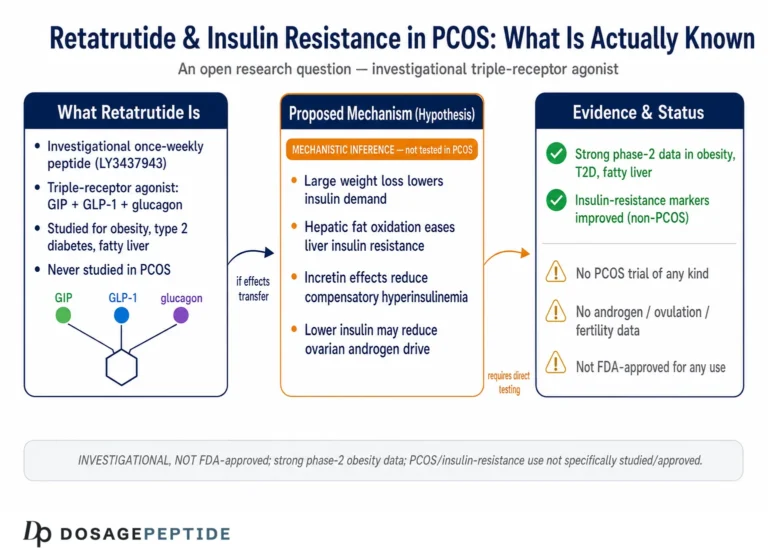
The most important sentence in this article is also the shortest: there are no completed, published clinical trials of retatrutide in women with PCOS. A search of the trial literature and registries finds retatrutide studied in obesity, in type 2 diabetes, in MASLD, in knee osteoarthritis with obesity, and in cardiovascular-disease populations — but not in a cohort defined by PCOS, and not with PCOS-specific reproductive or androgen endpoints.1234 This means that every statement connecting retatrutide to PCOS insulin resistance is, at present, an inference rather than a finding.
That distinction is not pedantic. Drug effects are notoriously population-specific. A compound can improve insulin sensitivity handsomely in adults with established type 2 diabetes and yet behave differently in younger, often non-diabetic women whose insulin resistance has a partly intrinsic, androgen-linked character. The reproductive endpoints that matter most in PCOS — ovulation rate, menstrual regularity, free-androgen index, SHBG, fertility — have simply never been measured in a retatrutide trial. Nor have PCOS-specific safety questions, above all the consequences of exposure around conception in a population where restored fertility is frequently a goal or an unintended result of metabolic improvement.
It is also worth being precise about the type of gap. This is not a case of weak or conflicting evidence that a reader must weigh. It is an absence of direct evidence. The correct scientific posture toward an untested indication is neither optimism nor dismissal but calibrated agnosticism: we assess mechanistic plausibility, we reason carefully by analogy from related compounds and related populations, and we hold the conclusion loosely, explicitly flagging it as hypothesis-generating. The remainder of this article does exactly that — building the strongest honest case for plausibility while refusing to let that case harden into a claim the data do not support.
The Mechanistic Case: How Retatrutide Could Plausibly Move Insulin Resistance
If retatrutide were to be studied in PCOS, what are the pathways through which it might improve insulin resistance? There are several, and they operate at different distances from the drug’s primary action.
Weight and ectopic-fat reduction (the dominant, indirect route). The single most reliable way to reduce insulin resistance in an overweight, insulin-resistant person is substantial weight loss, particularly loss of visceral and hepatic fat. Retatrutide produces weight loss of a magnitude previously seen mainly with bariatric surgery — up to a mean of roughly 24% of body weight at 48 weeks in phase 2 obesity data.2 Visceral and liver fat are direct contributors to hepatic and peripheral insulin resistance; unloading them improves insulin signaling in muscle and liver. In PCOS specifically, where excess adiposity and hepatic steatosis are common amplifiers of an already-present insulin-resistant state, this route alone would be expected to lower hyperinsulinemia and, by extension, reduce the insulin drive to ovarian androgen synthesis.6
Direct hepatic action via glucagon-receptor agonism. Retatrutide’s glucagon arm drives hepatic fat oxidation, and in the MASLD phase 2a trial it reduced liver fat content by up to about 86% at the highest dose, with 93% of participants on 12 mg reaching normal liver-fat levels.4 Because hepatic steatosis is mechanistically tied to hepatic insulin resistance, this pronounced de-fatting of the liver is a plausible contributor to improved whole-body insulin sensitivity that is at least partly distinct from generic weight loss.4
Incretin effects on the islet. Through GLP-1 and GIP receptor agonism, retatrutide augments glucose-dependent insulin secretion and improves the function of the pancreatic beta cell, while GLP-1 signaling also suppresses inappropriate glucagon secretion in the fed state. These effects improve glycemic control, as seen in the type 2 diabetes trial, and reduce the chronic hyperglycemic and lipotoxic stress that worsens insulin resistance over time.35 In PCOS, improved postprandial glucose handling and reduced fasting hyperinsulinemia would be the relevant readouts.
Appetite and energy balance. The central appetite-suppressing effects of GLP-1 (and the compound’s overall effect on energy intake and expenditure) create the sustained caloric deficit that underlies the weight loss, again feeding the indirect insulin-sensitizing route.5
Adipose-tissue effects via GIP. The GIP-receptor arm is the least intuitive of the three but may be relevant to the fat-tissue biology that is central to PCOS insulin resistance. GIP-receptor signaling appears to influence adipocyte function, lipid buffering, and blood flow to adipose tissue, and the incretin combination in retatrutide is thought to improve the capacity of fat tissue to store lipid appropriately rather than spilling free fatty acids into muscle and liver — ectopic lipid deposition being a proximate cause of insulin resistance in those tissues.5 In PCOS, where dysfunctional adipose tissue and elevated free fatty acids contribute to the insulin-resistant state and feed back onto androgen production, a genuinely favorable effect on adipose biology would be mechanistically desirable. This remains, however, an inference from the compound’s receptor pharmacology and from adjacent incretin research, not a PCOS finding.
The honest mechanistic summary is that most of retatrutide’s plausible benefit for PCOS insulin resistance would likely be indirect — mediated by dramatic weight and hepatic-fat loss — with a smaller, harder-to-isolate contribution from direct hepatic and islet effects. This matters for interpretation: an intervention whose insulin-sensitizing effect is largely weight-mediated will help women whose insulin resistance is weight-driven more than it helps the intrinsic, lean-PCOS component that persists independent of body mass. For a broader comparison of how incretin-based agents separate fat loss from insulin-sensitivity gains, the analysis in how tirzepatide improves fat loss and insulin sensitivity in clinical research offers a useful parallel from the dual-agonist class.
What the Human Evidence Actually Shows (in Populations That Are Not PCOS)
Because the PCOS-specific evidence is empty, the fairest way to gauge retatrutide’s insulin-sensitizing potential is to examine, accurately, what it did in the populations where it was studied — and to keep firmly in mind that none of these populations were selected for PCOS.
In the phase 2 obesity trial (Jastreboff et al., New England Journal of Medicine, 2023), 338 adults with obesity received escalating weekly doses over 48 weeks. Least-squares mean weight reduction reached −24.2% at the 12 mg dose versus −2.1% for placebo, with 83% of the 12 mg group losing at least 15% of body weight.2 The trial also reported improvements across cardiometabolic parameters. For a fuller treatment of these metabolic-health outcomes, see the key findings on retatrutide for managing obesity and metabolic health.
In the phase 2 type 2 diabetes trial (Rosenstock et al., The Lancet, 2023), 281 adults with type 2 diabetes and a mean baseline HbA1c of 8.3% saw HbA1c reductions of roughly 1.3–2.0 percentage points across the higher dose groups, with body-weight reductions up to about 16.9% at 24 weeks — direct evidence of the compound’s ability to improve glycemic control alongside weight.3
The most directly relevant data for an insulin-resistance question come from the MASLD phase 2a trial (Sanyal et al., Nature Medicine, 2024). In participants with at least 10% liver fat, retatrutide reduced hepatic fat by up to about 86% at 48 weeks. It also produced large, dose-dependent improvements in insulin-resistance biomarkers: at the highest dose, HOMA2-IR fell by roughly 69% and fasting insulin by roughly 71% from baseline, with the magnitude of insulin reduction closely tracking the fall in liver fat.4 These are among the most pronounced pharmacological improvements in insulin-resistance markers reported for any agent — but, again, in a MASLD population, not a PCOS one.
| Trial (population) | Design / duration | Insulin-resistance-relevant findings |
|---|---|---|
| Jastreboff 2023 — obesity2 | Phase 2, RCT, n=338, 48 wk | Weight −24.2% at 12 mg vs −2.1% placebo; broad cardiometabolic improvement |
| Rosenstock 2023 — type 2 diabetes3 | Phase 2, RCT, n=281, 36 wk (24-wk primary) | HbA1c −1.3 to −2.0 points; weight up to −16.9%; improved glycemic control |
| Sanyal 2024 — MASLD4 | Phase 2a, RCT, n=98, 48 wk | Liver fat up to −86%; HOMA2-IR ~−69%; fasting insulin ~−71% at 12 mg |
| PCOS | No trials | No data of any kind |
Two conclusions follow, and both must be held together. First, retatrutide unambiguously improves the biomarkers that define insulin resistance — fasting insulin, HOMA-IR, hepatic fat, glycemia — and does so powerfully in the populations tested.234 Second, whether that translates into a comparable benefit in women with PCOS, whose insulin resistance has partly distinct drivers and who differ in age, androgen status, and reproductive physiology, is genuinely unknown. The biomarker case is strong; the PCOS-specific case is untested. Confusing the two is the central error to avoid.
Reading Across From GLP-1 Receptor Agonists in PCOS
If retatrutide itself has never been studied in PCOS, the closest available analog is the GLP-1 receptor agonist class — liraglutide, semaglutide, exenatide, and dulaglutide — which shares retatrutide’s central appetite-suppressing, incretin-based mechanism (retatrutide simply adds GIP and glucagon arms on top). GLP-1 receptor agonists have been studied in PCOS, and reading across from that literature is the most defensible way to form a prior about what a more potent triple agonist might do.
Multiple systematic reviews and meta-analyses of randomized controlled trials now report that, in women with PCOS, GLP-1 receptor agonists produce significant reductions in body weight, BMI, and waist circumference, together with improvements in insulin resistance measured as fasting insulin and HOMA-IR, modest reductions in total testosterone, and increases in SHBG.9 One meta-analysis synthesizing on the order of a dozen RCTs and several hundred participants found consistent improvement in HOMA-IR and anthropometric measures with GLP-1 receptor agonists relative to controls.9 A separate meta-analysis focused on reproductive outcomes reported that GLP-1 receptor agonist use was associated with improved natural pregnancy rates and better menstrual regularity, though without a clear signal in IVF outcomes.10
The mechanistic overlap between the two classes is worth spelling out because it is what justifies the analogy at all. Both work substantially through central appetite suppression and slowed gastric emptying to reduce energy intake, and both enhance glucose-dependent insulin secretion; the difference is that retatrutide layers GIP-receptor and glucagon-receptor agonism on top of the shared GLP-1 backbone, yielding larger weight loss and pronounced hepatic-fat reduction. In directional terms, then, one would predict retatrutide to reproduce the GLP-1 class’s PCOS benefits — lower fasting insulin and HOMA-IR, some fall in free androgens, some rise in SHBG — and possibly to exceed them in magnitude given its greater metabolic potency. But magnitude of biomarker change is not the same as clinical or reproductive benefit, and a larger effect size also raises the ceiling for side effects and for the fertility-timing complications discussed below. The analogy sets a reasonable expectation; it does not license a stronger claim.
Three caveats keep this read-across honest. First, the quality of the PCOS GLP-1 evidence is generally moderate to low: trials are small, short, heterogeneous in design and comparator, and often use surrogate rather than hard reproductive endpoints, so even the class with actual PCOS data is not on firm regulatory footing for this use.9 Second, most of the metabolic benefit in these trials appears to track with weight loss, which reinforces the expectation that retatrutide’s PCOS effect, if real, would be substantially weight-mediated. Third — and this is the pivotal logical point — the existence of GLP-1-receptor-agonist evidence in PCOS does not transfer to retatrutide. Retatrutide is a different molecule with a broader receptor profile, a different side-effect and safety envelope (notably the glucagon arm), and a far larger weight-loss effect. A more powerful drug is not automatically a better or safer drug in a specific population; the added glucagon signaling, in particular, introduces effects that have not been characterized in reproductive-age women with PCOS. The GLP-1 literature raises the prior probability that a triple agonist would help PCOS insulin resistance; it cannot substitute for testing retatrutide itself.
Weight-Dependent Versus Weight-Independent Effects on Insulin Sensitivity
A recurring and clinically consequential question for any incretin-based agent in PCOS is how much of its effect on insulin resistance is simply the metabolic dividend of weight loss, and how much is a weight-independent, drug-specific action. The distinction matters because PCOS includes a meaningful subset of lean or normal-weight women whose insulin resistance is intrinsic and would not be fully corrected by weight loss.8
The retatrutide data offer suggestive but not conclusive hints. In the MASLD trial, the improvements in HOMA2-IR and fasting insulin were dose-dependent and closely associated with the reduction in liver fat — and liver de-fatting via glucagon-receptor agonism is at least partially a drug-specific action rather than a pure consequence of scale weight loss.4 That said, weight, visceral fat, and liver fat all move together under retatrutide, so cleanly isolating a weight-independent component would require a study explicitly designed with that aim (for example, matching weight loss across arms or using clamp-based measures of tissue-specific insulin sensitivity). No such study exists for retatrutide, let alone in PCOS.
There is a further reason to be cautious about assuming retatrutide’s biomarker effects will map cleanly onto PCOS. The trials that generated the most impressive insulin-resistance data enrolled people with substantial hepatic steatosis or established type 2 diabetes — states in which fasting insulin and HOMA-IR start high and have great room to fall.34 Many women with PCOS, particularly younger or leaner ones, have insulin resistance that is real but less extreme by these fasting surrogates, and the absolute magnitude of improvement seen at the high end of the MASLD trial may not be reproduced. Regression toward normal is easier from a more abnormal baseline. This is not an argument that retatrutide would fail in PCOS; it is an argument that borrowing the largest reported numbers and transplanting them onto a different population is precisely the kind of over-extrapolation this article exists to caution against.
The practical implication is a nuanced expectation rather than a bold prediction. In overweight or obese women with PCOS — the majority — retatrutide’s large weight and hepatic-fat reductions would be expected, by analogy and mechanism, to translate into meaningful improvements in hyperinsulinemia and its downstream androgenic consequences. In lean women with PCOS, whose insulin resistance is less weight-dependent, the expected benefit is more uncertain and would rest more heavily on the direct islet and hepatic effects that have not been separately quantified. It is worth stating plainly that this lean subgroup is exactly where the read-across from obesity, diabetes, and MASLD data is weakest: those trials enrolled few, if any, participants resembling a normal-weight woman with androgen-driven, intrinsic insulin resistance, so the confidence interval around any predicted effect in her is wide and honestly unknowable from the current evidence. A trial that stratified PCOS participants by body-mass index and measured tissue-specific insulin sensitivity with a clamp would be the only way to resolve this, and none has been conducted. Either way, these are expectations to be tested, not effects that have been demonstrated in PCOS.
How Retatrutide Compares With Established PCOS Insulin-Sensitizing Approaches
Placing retatrutide beside the interventions that current PCOS guidelines actually endorse clarifies both its potential appeal and its unproven status. The 2023 international evidence-based PCOS guideline positions lifestyle modification as foundational for all women, recommends metformin for metabolic features (especially at higher BMI), notes limited benefit for inositol, and — importantly — recognizes that anti-obesity medications, including GLP-1-based agents, can be considered for weight management in PCOS while emphasizing that evidence in this population remains limited and largely off-label.12
| Approach | Mechanism relevant to insulin resistance | Evidence status in PCOS |
|---|---|---|
| Lifestyle (diet, activity, weight loss) | Reduces adiposity and hepatic fat; improves peripheral insulin sensitivity | Foundational, guideline first-line for all12 |
| Metformin | Reduces hepatic glucose output; improves insulin sensitivity | Guideline-recommended for metabolic features, esp. BMI ≥2512 |
| Inositols | Insulin second-messenger signaling | Limited clinical benefit per guideline12 |
| GLP-1 receptor agonists | Weight loss + incretin effects; lower fasting insulin/HOMA-IR | Multiple small RCTs; moderate-to-low quality; off-label910 |
| Retatrutide (triple agonist) | Large weight + hepatic-fat loss; incretin + glucagon effects | No PCOS trials; investigational; not approved1 |
The comparison makes two things clear. On mechanism and biomarker potency, retatrutide is, on paper, the most powerful insulin-sensitizing candidate in the list, chiefly because it produces the largest reductions in the weight and ectopic fat that drive insulin resistance in most women with PCOS. On evidence, it is the weakest of the list for PCOS specifically, because it sits at zero PCOS trials while every other row has at least some direct data. A researcher weighing these rows should read the table as a map of promise versus proof: retatrutide’s promise is high and its proof, for this indication, is absent. Metformin and lifestyle remain the interventions with an actual guideline mandate in PCOS, and even the GLP-1 class — despite real PCOS data — is used off-label with acknowledged evidence limits.12
It is also worth situating retatrutide within the broader arc of metabolic peptide development rather than treating it as a standalone novelty; the discussion in how retatrutide fits into the evolution of peptide therapeutics traces how single-, dual-, and triple-agonist strategies have progressively raised metabolic efficacy, which is the trajectory that makes the PCOS hypothesis worth formally testing.
Cardiometabolic Context: Why PCOS Researchers Are Watching Retatrutide
Insulin resistance in PCOS does not exist in isolation; it anchors a cluster of downstream cardiometabolic risks — atherogenic dyslipidemia, hypertension, hepatic steatosis, impaired glucose tolerance, and elevated long-term risk of type 2 diabetes and cardiovascular disease.6 This clustering is one reason retatrutide attracts interest from the PCOS research community: an agent that simultaneously moves weight, hepatic fat, glycemia, lipids, and blood pressure targets the whole cardiometabolic profile that makes PCOS a lifelong health concern rather than solely a reproductive one.
In the phase 2 programs, retatrutide improved several of these parameters beyond weight and glucose, including blood pressure and lipid measures, alongside the dramatic reductions in liver fat.24 For readers interested in how the compound acts on the vascular-risk side of that cluster, the companion analyses how retatrutide influences cardiovascular risk factors and how retatrutide research informs treatment of atherogenic dyslipidemia examine these effects in the non-PCOS populations where they were measured.
The honest framing, though, is unchanged by this appealing profile. Every one of these cardiometabolic effects was demonstrated in obesity, diabetes, or MASLD cohorts. Whether the same profile would emerge, at the same magnitude and with the same safety, in reproductive-age women with PCOS — and whether it would translate into the reproductive improvements those women often seek — is a set of empirical questions that only PCOS-specific trials can answer. The cardiometabolic promise is a strong reason to study retatrutide in PCOS; it is not evidence that it works in PCOS.
Safety, Unknowns, and PCOS-Specific Cautions
Even where retatrutide’s efficacy signals are strong, its safety in a PCOS population carries specific unknowns that deserve emphasis precisely because the target group is young women, many of whom may become pregnant.
The general tolerability profile observed across the phase 2 program is that of the incretin class: predominantly gastrointestinal adverse effects — nausea, vomiting, diarrhea, constipation — that are usually dose-related and most prominent during dose escalation.23 Dose-dependent increases in heart rate were also observed, and the glucagon arm warrants attention to glycemic and hepatic parameters, although in the trials glucose control improved rather than worsened because of the balancing incretin effects.35 These are the effects seen in the studied populations; they are a reasonable baseline expectation but not a validated PCOS safety profile.
The PCOS-specific cautions are the ones with the least data and the highest stakes:
- Pregnancy and conception. Improving insulin resistance in PCOS frequently restores ovulation and fertility — sometimes unexpectedly. Incretin-based agents are generally not recommended during pregnancy, and their safety around conception is not established; a drug that improves fertility while itself being contraindicated in pregnancy creates a real clinical tension. Any PCOS use would demand careful contraception counseling and a plan for discontinuation before attempting conception. Retatrutide has no pregnancy safety data in humans.
- Reproductive-age exposure. The phase 2 trials were not designed to characterize effects on the hypothalamic-pituitary-ovarian axis, menstrual physiology, or bone and reproductive health over the timeframes relevant to younger women.
- Long-term data. Published trials run months, not years; PCOS is a lifelong condition, and durability and long-term safety in this group are unknown.
- Investigational status and sourcing. Retatrutide is not an approved medicine and is not legally available for prescription use for any indication; material obtained outside authorized clinical research is of unverified identity, purity, and sterility, which is a safety hazard independent of the molecule’s intrinsic pharmacology.1
The measured reading is that retatrutide’s studied safety profile is consistent with a potent incretin-based agent, but that none of the PCOS-specific safety questions — above all those surrounding fertility and pregnancy — have been answered, because the relevant studies have not been done. Absence of demonstrated harm in obesity or diabetes trials is not the same as demonstrated safety in reproductive-age women with PCOS.
Research Context and Responsible Handling
Because retatrutide is investigational and is frequently discussed in research and educational settings, a brief, strictly educational note on how it is handled in legitimate research is warranted — with the emphasis that this is not a usage recommendation and that no self-directed human use of an unapproved drug is being endorsed.
Retatrutide supplied for research is typically a lyophilized (freeze-dried) peptide requiring reconstitution with an appropriate sterile diluent before any laboratory handling. As with other peptides, standard practice directs the diluent slowly against the vial wall rather than onto the powder, uses gentle swirling instead of vigorous shaking to avoid shearing the peptide, and protects the material from light, heat, and repeated freeze-thaw cycles that degrade peptide integrity. Because dosing accuracy and product identity are critical in any rigorous study, formal research settings verify purity and concentration analytically rather than relying on label claims. The compound-specific considerations for rigorous work are laid out in the critical handling protocols for retatrutide research studies, and general reconstitution technique is covered in the site’s peptide reconstitution guide.
None of this handling detail changes the evidence question. Meticulous technique preserves whatever activity the molecule has; it does not manufacture PCOS efficacy where none has been demonstrated. A perfectly reconstituted vial of high-purity retatrutide is still a compound with zero PCOS trial data. The only appropriate path for exploring retatrutide in PCOS is a properly designed, ethically approved clinical study with reproductive and metabolic endpoints — not informal or off-label use.
Regulatory Status and the Honest Bottom Line
Retatrutide’s regulatory position is unambiguous and must anchor any discussion of PCOS. As of 2026, retatrutide is not approved for any indication by any regulator anywhere in the world. It is an investigational molecule under phase 3 evaluation in Eli Lilly’s TRIUMPH program, which spans obesity, obesity with type 2 diabetes, and obesity with established cardiovascular disease, among other readouts — but not, at the registrational level, PCOS.111 Early phase 3 obesity results reported in 2026 have been strong, but strong late-stage weight-loss data in obesity do not constitute approval, and they say nothing directly about PCOS.11
There is, correspondingly, no approved indication that could be extended to PCOS, no label, and no regulatory recognition of retatrutide as a treatment for insulin resistance in PCOS or for PCOS itself. Even the GLP-1 receptor agonist class, which has actual PCOS trial data and long-standing approvals for diabetes and obesity, is used in PCOS only off-label and with explicit acknowledgment of limited evidence.912 Retatrutide sits a full step behind that: an unapproved investigational agent with no PCOS data at all.
So the honest bottom line, returning to the title’s premise: retatrutide has not been shown to improve insulin resistance in women diagnosed with PCOS, because it has never been studied in them. What can be said accurately is narrower and more useful. Retatrutide produces exceptionally large improvements in weight, hepatic fat, and the biomarkers of insulin resistance in adults with obesity, type 2 diabetes, and MASLD; insulin resistance is the metabolic core of PCOS for most affected women; the related GLP-1 receptor agonist class improves insulin resistance and some reproductive endpoints in small PCOS trials; and therefore there is a coherent, well-motivated hypothesis — not a conclusion — that retatrutide would improve insulin resistance in many women with PCOS, most likely through weight- and hepatic-fat-mediated pathways. Converting that hypothesis into knowledge requires PCOS-specific clinical trials with metabolic and reproductive endpoints, adequate duration, and rigorous attention to fertility and pregnancy safety. Until those exist, the scientifically and ethically responsible position is to describe retatrutide’s PCOS potential as promising and untested, and to keep the two words firmly in that order.
Frequently Asked Questions
Has retatrutide been proven to improve insulin resistance in women with PCOS?
No. As of 2026 there are no completed, published clinical trials of retatrutide in women with PCOS, and no regulator recognizes PCOS as an indication for the drug.1 Retatrutide has produced large improvements in insulin-resistance biomarkers — fasting insulin, HOMA-IR, hepatic fat — in adults with obesity, type 2 diabetes, and MASLD, but those populations are not PCOS.234 Any claim that it improves insulin resistance in PCOS is currently a mechanistic hypothesis, not a demonstrated fact.
Why do people expect retatrutide might help PCOS insulin resistance?
Because insulin resistance and compensatory hyperinsulinemia are present in most women with PCOS and drive both the metabolic and the androgen-related reproductive features of the syndrome.6 Retatrutide is exceptionally effective at reducing the body weight and hepatic fat that fuel insulin resistance, and the related GLP-1 receptor agonist class has improved insulin resistance in small PCOS trials.9 That makes benefit plausible — but plausibility is not proof.
What did the retatrutide trials actually show about insulin resistance?
In the MASLD phase 2a trial, the highest dose reduced HOMA2-IR by roughly 69% and fasting insulin by roughly 71% from baseline, with liver fat falling up to about 86%.4 The obesity trial showed weight loss up to about 24% at 48 weeks, and the diabetes trial showed HbA1c reductions up to about 2 percentage points.23 These are strong signals for insulin sensitization — in non-PCOS populations.
Is retatrutide’s benefit just from weight loss, or something more?
Most of the plausible benefit is likely weight- and hepatic-fat-mediated, which would help the many women with PCOS whose insulin resistance is weight-driven. There are hints of a partly drug-specific hepatic effect through glucagon-receptor agonism, since insulin-resistance improvements tracked closely with liver-fat reduction.4 But no study has cleanly separated weight-independent from weight-dependent effects, and none has done so in PCOS.
How does retatrutide compare with metformin for PCOS?
Metformin is guideline-recommended for the metabolic features of PCOS, particularly in women with a higher BMI, and has decades of use.12 Retatrutide is far more potent on weight and insulin-resistance biomarkers in the populations studied, but it has no PCOS trials, is not approved for anything, and is not available for prescription. Metformin has proof in PCOS; retatrutide has promise without PCOS proof.
Could retatrutide help with the reproductive symptoms of PCOS, like irregular periods?
This has not been tested with retatrutide. By analogy, GLP-1 receptor agonists have improved menstrual regularity and natural pregnancy rates in small PCOS meta-analyses, likely by reducing hyperinsulinemia and its drive to ovarian androgen production.710 Whether retatrutide would do the same is unknown and would need dedicated reproductive-endpoint trials.
Is it safe for a woman with PCOS to use retatrutide?
There is no PCOS-specific safety data. The general profile in trials is gastrointestinal side effects and dose-dependent heart-rate increases.23 The most important PCOS-specific concern is fertility and pregnancy: improving insulin resistance can restore ovulation, yet incretin-based drugs are not recommended in pregnancy and retatrutide has no human pregnancy data. It is also investigational and not legally available as a prescribed medicine for any use.1
Is retatrutide approved or available for PCOS?
No. Retatrutide is not approved for any indication anywhere in the world and remains in phase 3 development.111 There is no PCOS indication, no label, and no regulatory recognition of a PCOS use. Even GLP-1 receptor agonists, which have some PCOS data, are used in PCOS only off-label.912
What would it take to actually answer this question?
Dedicated randomized controlled trials in women with PCOS, using both metabolic endpoints (fasting insulin, HOMA-IR, glucose tolerance, ideally clamp-based insulin sensitivity) and reproductive endpoints (ovulation, menstrual regularity, free-androgen index, SHBG), with adequate duration and rigorous fertility and pregnancy safeguards. Until such trials are completed and published, retatrutide’s role in PCOS insulin resistance remains a well-motivated but unproven hypothesis.
References
- Eli Lilly and Company. Retatrutide (LY3437943) investigational status and TRIUMPH phase 3 clinical trial program. https://trials.lilly.com/en-US/trial/405675
- Jastreboff AM, Kaplan LM, Frías JP, et al. Triple–Hormone-Receptor Agonist Retatrutide for Obesity — A Phase 2 Trial. N Engl J Med. 2023;389(6):514-526. PMID: 37366315. https://www.nejm.org/doi/full/10.1056/NEJMoa2301972
- Rosenstock J, Frias J, Jastreboff AM, et al. Retatrutide, a GIP, GLP-1 and glucagon receptor agonist, for people with type 2 diabetes: a randomised, double-blind, placebo and active-controlled, parallel-group, phase 2 trial conducted in the USA. Lancet. 2023;402(10401):529-544. PMID: 37385280. https://www.thelancet.com/journals/lancet/article/PIIS0140-6736(23)01053-X/abstract
- Sanyal AJ, Kaplan LM, Frías JP, et al. Triple hormone receptor agonist retatrutide for metabolic dysfunction-associated steatotic liver disease: a randomized phase 2a trial. Nat Med. 2024;30(7):2037-2048. PMID: 38858523. PMCID: PMC11271400. https://pmc.ncbi.nlm.nih.gov/articles/PMC11271400/
- Coskun T, Urva S, Roell WC, et al. LY3437943, a novel triple glucagon, GIP, and GLP-1 receptor agonist for glycemic control and weight loss: From discovery to clinical proof of concept. Cell Metab. 2022;34(9):1234-1247.e9. https://www.cell.com/cell-metabolism/fulltext/S1550-4131(22)00312-6
- Zhao H, Zhang J, Cheng X, et al. Insulin resistance in polycystic ovary syndrome across various tissues: an updated review of pathogenesis, evaluation, and treatment. J Ovarian Res. 2023;16(1):9. PMID: 36631836. PMCID: PMC9832677. https://pmc.ncbi.nlm.nih.gov/articles/PMC9832677/
- Diamanti-Kandarakis E, Dunaif A. Insulin resistance and the polycystic ovary syndrome revisited: an update on mechanisms and implications. Endocr Rev. 2012;33(6):981-1030. PMID: 23065822. https://pubmed.ncbi.nlm.nih.gov/23065822/
- Dunaif A. Insulin resistance and the polycystic ovary syndrome: mechanism and implications for pathogenesis. Endocr Rev. 1997;18(6):774-800. PMID: 9408743. https://pubmed.ncbi.nlm.nih.gov/9408743/
- Efficacy and safety of GLP-1 receptor agonists on weight management and metabolic parameters in women with PCOS: a meta-analysis of randomized controlled trials. Sci Rep. 2025. https://www.nature.com/articles/s41598-025-99622-4
- Zhou L, Qu H, Yang L, Shou L. Effects of GLP1RAs on pregnancy rate and menstrual cyclicity in women with polycystic ovary syndrome: a meta-analysis and systematic review. BMC Endocr Disord. 2023;23(1):245. PMID: 37940910. PMCID: PMC10631119. https://pmc.ncbi.nlm.nih.gov/articles/PMC10631119/
- Eli Lilly and Company. Lilly’s triple agonist, retatrutide, delivered powerful weight loss in pivotal Phase 3 obesity trial (TRIUMPH-1), May 2026. https://www.prnewswire.com/news-releases/lillys-triple-agonist-retatrutide-delivered-powerful-weight-loss-in-pivotal-phase-3-obesity-trial-302778859.html
- Teede HJ, Tay CT, Laven J, et al. Recommendations From the 2023 International Evidence-based Guideline for the Assessment and Management of Polycystic Ovary Syndrome. J Clin Endocrinol Metab. 2023;108(10):2447-2469. PMID: 37580314. https://academic.oup.com/jcem/article/108/10/2447/7242360
Educational and research-use disclaimer: This article is provided solely for scientific and educational purposes. Retatrutide (LY3437943) is an investigational compound and is not approved by the FDA, EMA, or any comparable regulator for the treatment, cure, or prevention of polycystic ovary syndrome, insulin resistance, obesity, type 2 diabetes, or any other disease. No clinical trial has evaluated retatrutide in women with PCOS, and no human efficacy or safety for a PCOS indication has been demonstrated. Nothing here is medical advice or a recommendation for human use, and improving insulin resistance may restore fertility, creating specific pregnancy-safety concerns that have not been studied for this compound. Any legitimate investigation of retatrutide should occur within properly authorized clinical research under appropriate regulatory and ethical oversight. Readers should consult qualified healthcare professionals and applicable regulations before making any decisions.