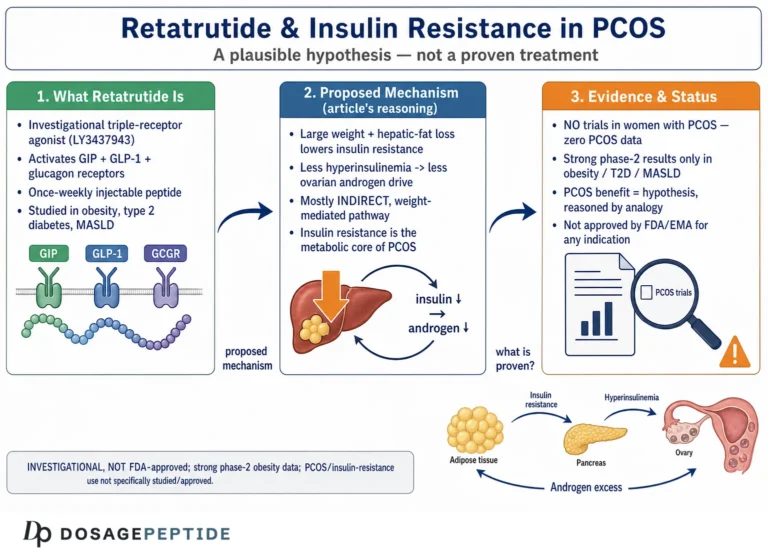
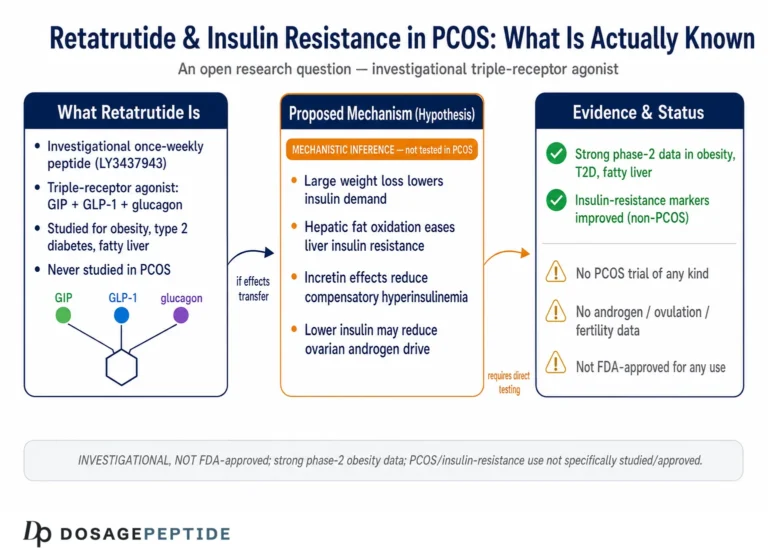
Short answer: retatrutide is a single peptide that activates three metabolic receptors — GLP-1, GIP and the glucagon receptor — where semaglutide activates one and tirzepatide two. That is what makes it different from everything before it. It is also investigational: as of 2026 it has not been approved by the FDA, the EMA or any other major regulator for any indication, and its phase 3 programme is still reporting.1
This page places the molecule against what came before it — purified animal insulin, the incretin era, then engineered dual agonists — explains what adding a glucagon-receptor arm is meant to buy in energy expenditure and liver fat, and is explicit about the evidence level behind each claim. Striking early data and established therapy are separated by a gap that has swallowed promising compounds before. Readers who want the technical handling and reconstitution figures can find them on the Dosage Peptide dosages index; this piece is the conceptual companion.
What Retatrutide Is and Where It Came From
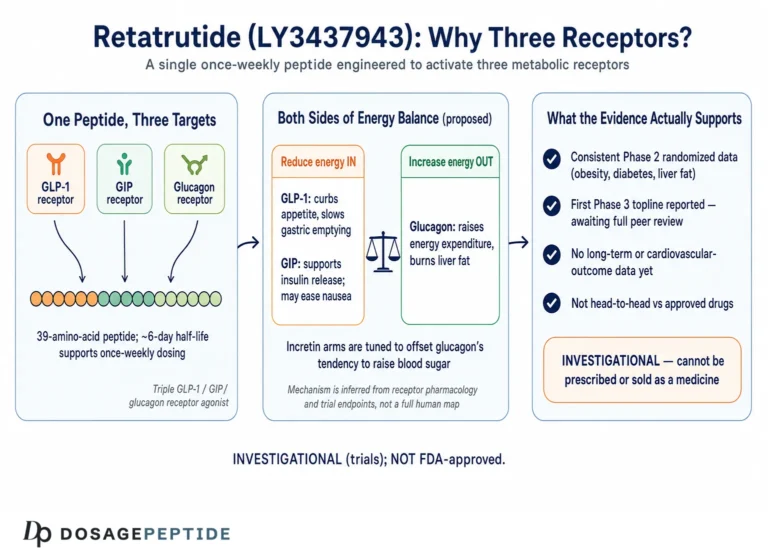
Retatrutide is a synthetic peptide of roughly 39 amino acids engineered by scientists at Eli Lilly and Company. It is frequently described in the literature and in press coverage as a “triple agonist” or “triple-hormone-receptor agonist” because a single molecule is designed to activate three distinct receptors: the glucose-dependent insulinotropic polypeptide (GIP) receptor, the glucagon-like peptide-1 (GLP-1) receptor, and the glucagon receptor.1,4 That combination is what makes the compound conceptually novel and is the reason it is discussed as a possible next chapter in metabolic peptide design.
To understand where retatrutide “came from,” it helps to see it as the product of an iterative engineering lineage rather than a single discovery event. The incretin story reaches back more than a century, to Bayliss and Starling’s early-twentieth-century description of a signaling link between the gut and the pancreas.8 GLP-1 itself was later shown to account for a large share of the insulin secreted in response to a meal, which established it as a therapeutic target. Native GLP-1, however, is degraded within minutes by the enzyme dipeptidyl peptidase-4 (DPP-4), so decades of medicinal chemistry were spent finding ways to make incretin-based molecules last long enough to be dosed conveniently.8,9
Retatrutide inherits every one of those engineering tricks. Its backbone is derived from GIP rather than from GLP-1, and it carries several non-coded (non-standard) amino acid substitutions — reported as Aib2, Aib20, and an alpha-methyl-leucine at position 13 — that protect it from DPP-4 cleavage and tune its receptor activity.4 Attached to the peptide at a lysine residue is a C20 fatty diacid moiety connected through a linker. That lipid tail allows the molecule to bind reversibly to circulating albumin, which dramatically slows its clearance. The reported result is a half-life of roughly six days, long enough to support once-weekly subcutaneous administration in the trials.4,5
| Attribute | Reported value / description | Evidence context |
|---|---|---|
| Development code | LY3437943 | Eli Lilly designation4 |
| Molecular class | Synthetic peptide, ~39 amino acids | Medicinal-chemistry reports4 |
| Receptor targets | GIP, GLP-1, and glucagon receptors | Preclinical pharmacology4 |
| Backbone origin | GIP-based sequence with non-coded residues | Preclinical pharmacology4 |
| Half-life extension | C20 fatty diacid, albumin binding | Phase 1 pharmacokinetics5 |
| Reported half-life | ~6 days (supports weekly dosing) | Phase 1 data5 |
| Regulatory status | Investigational; not FDA/EMA approved | As of 20261,7 |
It is worth pausing on how radical the broader arc has been, because it sets the scale against which retatrutide should be judged. The therapeutic use of peptides begins, for practical purposes, with the isolation of insulin in 1921–1922, a moment that transformed type 1 diabetes from a uniformly fatal condition into a manageable one. For decades afterward, peptide therapy meant hormone replacement with molecules purified from animal tissue, and the field advanced slowly because peptides are difficult to manufacture, unstable in the body, and impossible to take orally in most cases. The arrival of recombinant DNA technology in the late twentieth century allowed human insulin and, later, engineered analogues to be produced at scale, which reopened the field to rational molecular design. Retatrutide is a direct descendant of that design tradition: it is not a natural hormone that was found and purified but a molecule deliberately assembled, residue by residue, to hit three receptors at once. Seen this way, it belongs less to the “replacement” era of peptide medicine and more to the “engineering” era, in which the peptide is treated as a programmable scaffold whose sequence, modifications, and lipidation are tuned to achieve a specified pharmacological profile.8,9
The immediate predecessor that made retatrutide conceivable was tirzepatide, the dual GIP/GLP-1 agonist. Tirzepatide demonstrated that a single engineered peptide could hit two incretin receptors and outperform, in cross-trial terms, the best single-receptor agonist available. That proof of concept is what justified the leap to a third receptor. Lilly’s medicinal chemists, having a GIP-based dual-agonist platform in hand, extended it by tuning the molecule’s activity at the glucagon receptor while retaining potent GLP-1 and GIP activity — a balancing act, because shifting activity toward one receptor can pull it away from another. The reported non-coded residues and the position of the fatty-acid attachment are the fingerprints of that optimization work. In that sense, retatrutide’s “origin” is not a eureka moment but a continuation of an industrial design lineage in which each molecule teaches the chemists what to try next.4,10
What distinguishes retatrutide’s origin from that of its predecessors is the deliberate inclusion of glucagon-receptor activity. GLP-1 and GIP are incretins — broadly, they promote glucose-dependent insulin secretion and, in the case of GLP-1, reduce appetite. Glucagon is, in the simplest textbook framing, the counter-regulatory hormone that raises blood sugar. Adding a glucagon-receptor agonist to a molecule intended to improve metabolic disease seems paradoxical at first glance, and the rationale for it is discussed in the mechanism section below. For now, the key origin fact is that retatrutide was rationally designed to be the first-in-class combination of all three activities in one weekly peptide, and that its earliest human data emerged from Lilly-sponsored phase 1 studies published around 2022.5
The Molecular Mechanism: Three Receptors, One Peptide
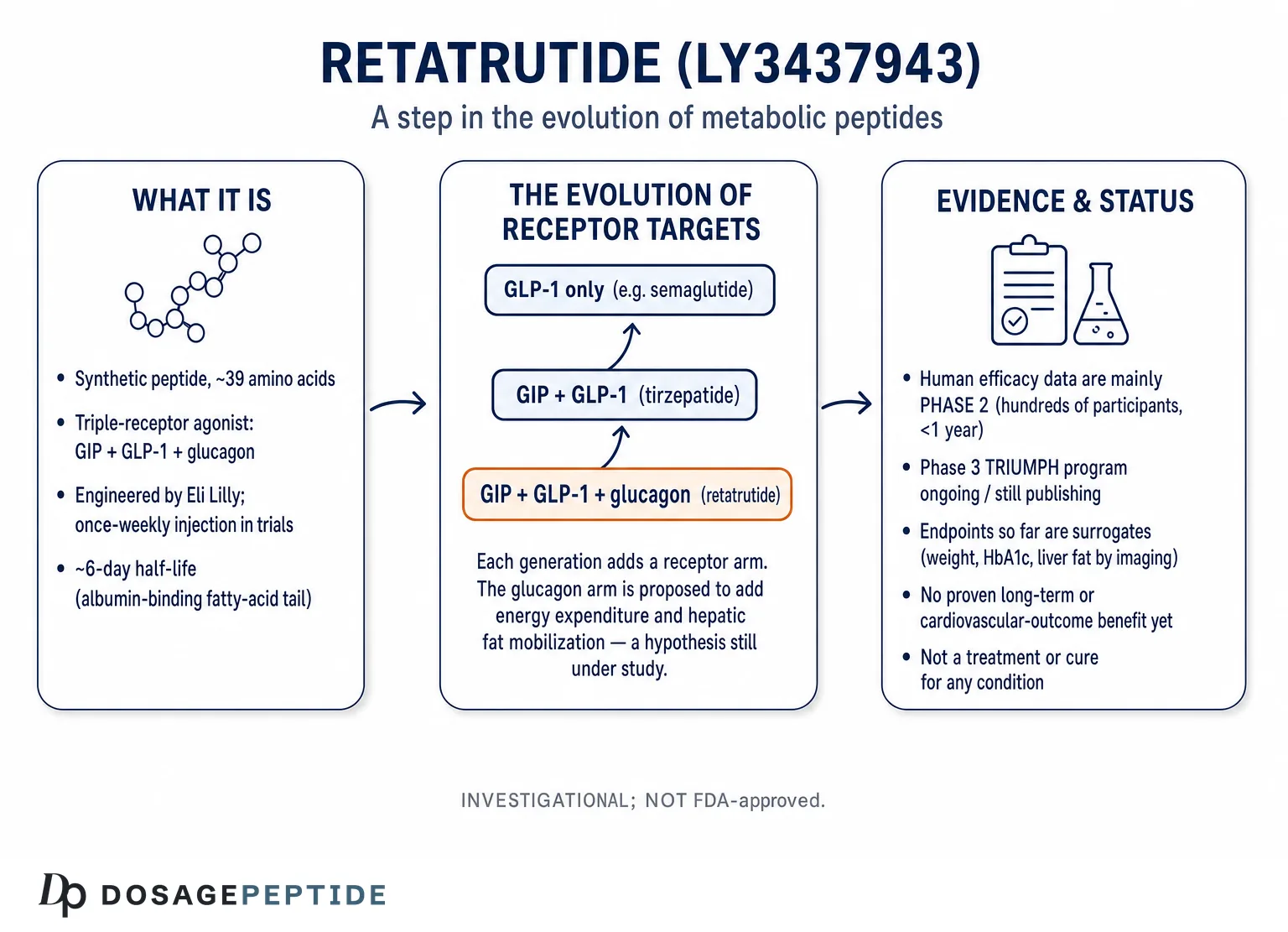
The mechanistic thesis behind retatrutide is that simultaneously engaging GIP, GLP-1, and glucagon receptors may produce complementary metabolic effects that any single-receptor or dual-receptor agonist cannot. It is important to frame this as a hypothesis under investigation: the receptor pharmacology is well characterized in laboratory systems, but the claim that the triple combination is clinically superior in the ways that matter to patients is still being tested in phase 3.1,6
GLP-1 receptor. This is the most familiar arm. GLP-1 receptor agonism enhances glucose-dependent insulin secretion, suppresses glucagon secretion when glucose is high, slows gastric emptying, and acts on hypothalamic circuits to reduce appetite and food intake. Every approved incretin drug for weight management — from liraglutide to semaglutide — leans heavily on this arm.9
GIP receptor. GIP is the other major incretin. Its role in metabolism has been more contested than GLP-1’s, and there is an ongoing scientific debate about whether GIP-receptor agonism or antagonism is more beneficial. What is not in dispute is that tirzepatide, the approved dual GIP/GLP-1 agonist, produced the largest weight-loss results seen in its class in the placebo-controlled SURMOUNT-1 program, which lent strong support to the idea that adding GIP activity contributes something meaningful; a subsequent head-to-head trial (SURMOUNT-5) later compared tirzepatide directly with semaglutide.10 Retatrutide carries that GIP arm forward.
Glucagon receptor. This is the genuinely novel component and the source of both the compound’s promise and its distinctive safety questions. The rationale is that, at the doses used, glucagon-receptor agonism may increase energy expenditure and, importantly, drive hepatic (liver) fat mobilization and oxidation. In other words, the glucagon arm is hypothesized to add a “fat-burning” and liver-directed dimension on top of the appetite-suppressing and insulin-sensitizing effects of the incretin arms.3,4 The counter-regulatory, glucose-raising tendency of glucagon is, in theory, offset by the strong glucose-lowering effect of the GLP-1 and GIP components, so that net glycemic control is maintained or improved — a balance that the phase 2 diabetes data appear to support but that requires the larger phase 3 datasets to confirm.2
| Receptor arm | Principal hypothesized effects | Main open question |
|---|---|---|
| GLP-1 | Appetite suppression, insulin secretion, slowed gastric emptying | Well established; drives GI side effects |
| GIP | Incretin insulin response; possible additive weight effect | Agonism vs antagonism debate unresolved |
| Glucagon | Energy expenditure, hepatic fat mobilization | Long-term glycemic and cardiovascular safety |
A subtlety that is frequently glossed over in popular accounts is that a “triple agonist” is not simply three drugs in one. The relative potency of the single molecule at each of the three receptors matters enormously, and it is a deliberate design choice rather than an accident. If the glucagon activity were too high relative to the incretin activity, the glucose-raising tendency of glucagon could overwhelm the glucose-lowering incretin effects and worsen glycemic control; if it were too low, the hypothesized benefits on energy expenditure and hepatic fat would be lost. The engineering challenge, therefore, is to find a potency ratio across the three receptors that yields net benefit, and the observed clinical behavior — strong weight loss and improved glycemia with dose-dependent but manageable signals — is evidence that the chosen ratio is at least reasonable. It is not, however, evidence that it is optimal; the ratio that maximizes weight loss may not be the one that maximizes long-term safety, and only larger trials can adjudicate that trade-off.2,4
There is also an important physiological nuance around the glucagon arm and the liver. Glucagon’s classical role is to mobilize glucose from the liver, but it also promotes the oxidation of hepatic fat and can increase overall energy expenditure. The MASLD sub-study data, in which higher doses drove very large reductions in liver fat, are the clearest clinical hint that this hepatic mechanism is doing real work in humans rather than merely in theory.3 This is one of the more genuinely novel aspects of retatrutide relative to pure incretin drugs: whereas GLP-1-based weight loss reduces liver fat largely as a downstream consequence of eating less and losing weight, the glucagon arm may act on the liver more directly. Distinguishing these two pathways — direct hepatic action versus weight-loss-mediated effect — is an open scientific question that the current data cannot fully resolve, and it is exactly the sort of question that keeps the compound interesting to researchers regardless of its eventual regulatory fate.
Mechanistically, then, retatrutide is best understood not as a wholly new idea but as an additive extension of the multi-agonist strategy: single agonist (GLP-1) to dual agonist (GIP/GLP-1) to triple agonist (GIP/GLP-1/glucagon). Each step has been accompanied by the hope that stacking complementary mechanisms would raise the ceiling on achievable metabolic benefit. The preclinical and early clinical pharmacology support the internal logic of the design, but readers should resist the temptation to treat mechanistic plausibility as proof of clinical outcome — the history of drug development is littered with mechanistically elegant molecules that failed in late-stage trials for reasons no one anticipated.
The Key Evidence and Its Honest Level
This is the section where precision matters most, because the enthusiasm around retatrutide has outrun careful reading of what has and has not been demonstrated. The strongest published evidence to date comes from phase 2 trials — well-conducted, randomized, placebo-controlled, but still mid-stage studies with modest sample sizes and limited duration. Phase 3 readouts began emerging in 2025 and 2026, but at the time of writing the peer-reviewed, fully published phase 3 corpus remains thinner than the topline press coverage implies.
Obesity phase 2 (NEJM, 2023). The pivotal phase 2 obesity trial enrolled 338 adults with obesity, or overweight with a weight-related condition, and without type 2 diabetes, treated for 48 weeks. At the highest dose (12 mg weekly), mean weight reduction reached roughly 24.2% versus about 2.1% with placebo.1 For context, that figure exceeded what had been reported for semaglutide 2.4 mg in the STEP 1 obesity trial (about 14.9%),12 which is the comparison that generated the headlines. The honest caveats: this was a phase 2 study of a few hundred people; weight loss had not clearly plateaued at 48 weeks, so the endpoint reflects a still-descending curve rather than a steady state; and phase 2 magnitude often shifts when a compound is tested in the larger, more heterogeneous phase 3 population.
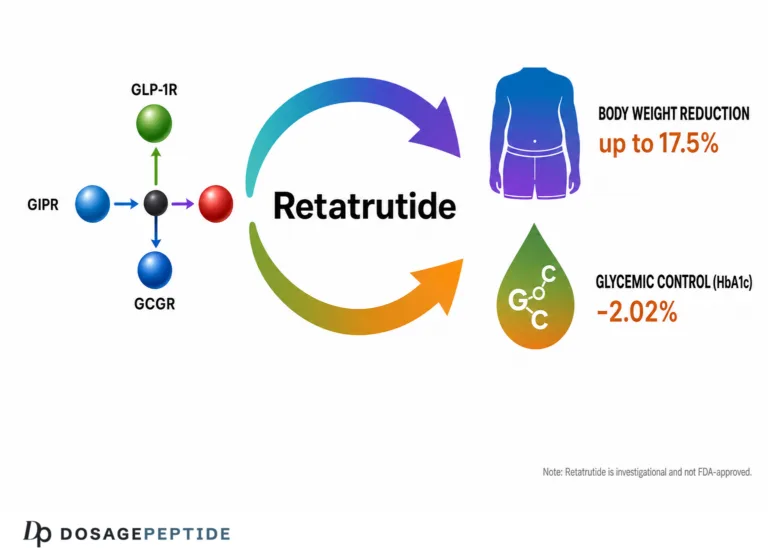
Type 2 diabetes phase 2 (The Lancet, 2023). A parallel phase 2 trial studied 281 adults with type 2 diabetes over 36 weeks, using dulaglutide 1.5 mg as an active comparator. Retatrutide produced dose-dependent HbA1c reductions — on the order of 1.3 to 2.0 percentage points at the higher doses — alongside dose-dependent weight reductions reported up to roughly 16.9%.2 Critically for the mechanism debate, glycemic control improved despite the glucagon-receptor arm, supporting the idea that the incretin components dominate the net glucose effect. Again, these are 36-week, phase 2 findings in fewer than 300 participants.
Liver-fat phase 2a (Nature Medicine, 2024). A sub-study in 98 participants with obesity and elevated liver fat examined metabolic dysfunction-associated steatotic liver disease (MASLD). Relative liver-fat reductions from baseline at the 24-week primary endpoint were reported as approximately −42.9%, −57.0%, −81.4%, and −82.4% for the 1, 4, 8, and 12 mg doses respectively, versus a slight increase with placebo, and a large fraction of participants on higher doses reached normal liver-fat levels (below 5%) at that timepoint.3 This is mechanistically consistent with the glucagon arm’s hypothesized hepatic effects, and it is genuinely notable — but it is a small phase 2a imaging endpoint (liver fat by MRI-PDFF), not a histology-confirmed outcome trial and not a demonstration of improved long-term liver disease outcomes.
| Study (population) | N / duration | Headline finding | Evidence level |
|---|---|---|---|
| Obesity, no diabetes1 | 338 / 48 wk | ~24.2% mean weight loss at 12 mg vs ~2.1% placebo | Phase 2, mid-stage |
| Type 2 diabetes2 | 281 / 36 wk | HbA1c −1.3 to −2.0 pts; weight up to ~16.9% | Phase 2, mid-stage |
| MASLD sub-study3 | 98 / 48 wk (24-wk primary endpoint) | Liver fat down up to ~82% at higher doses (at 24 wk) | Phase 2a, imaging endpoint |
| TRIUMPH phase 37,11 | thousands / ongoing | Topline weight-loss readouts reported 2025–2026 | Late-stage, still maturing/publishing |
Taken together, the phase 2 package is internally consistent and mechanistically coherent: robust weight loss, meaningful glycemic improvement, and pronounced liver-fat reduction, all dose-dependent. That is a strong mid-stage signal. It is not proof of long-term efficacy or safety, and it does not license any claim that retatrutide “treats” or “cures” obesity, diabetes, or liver disease. The evidence level is best summarized as: promising, coherent, but not yet definitive. The definitive answer will come from the phase 3 TRIUMPH program and, for cardiovascular claims specifically, from the dedicated outcomes trial that will not report for years.7
How Retatrutide Compares with Its Predecessors
Comparisons are where the “evolution” framing earns its keep, but they must be handled carefully because most of them are cross-trial rather than head-to-head. Cross-trial comparisons — lining up the weight-loss number from one drug’s trial against another drug’s separate trial — are notoriously unreliable, because trial populations, durations, titration schemes, and analytic methods differ. With that caveat firmly in place, the broad trajectory is nonetheless informative.
The modern anti-obesity peptide lineage runs roughly as follows. Liraglutide (a once-daily GLP-1 agonist) produced mean weight loss in the high single digits of percent in its obesity program. Semaglutide 2.4 mg (once-weekly GLP-1) raised that to roughly 15% in STEP 1.12 Tirzepatide (once-weekly dual GIP/GLP-1) reported up to around 20% or more in SURMOUNT-1, depending on dose.10 Retatrutide’s phase 2 figure of about 24% at 48 weeks sits at the top of that progression — but, again, it is a phase 2 number that had not plateaued, so direct ranking against the phase 3 numbers of approved drugs is not an apples-to-apples exercise.
| Compound | Receptor targets | Dosing | Reported weight loss (trial context) | Status |
|---|---|---|---|---|
| Liraglutide | GLP-1 | Once daily | ~high single digits % | Approved |
| Semaglutide 2.4 mg | GLP-1 | Once weekly | ~14.9% (STEP 1)12 | Approved |
| Tirzepatide | GIP/GLP-1 | Once weekly | up to ~20%+ (SURMOUNT-1)10 | Approved |
| Retatrutide | GIP/GLP-1/glucagon | Once weekly | ~24.2% at 12 mg (phase 2)1 | Investigational |
The more defensible comparison is qualitative and mechanistic. Each generation added a receptor arm and, in the aggregate trial data, appeared to shift the efficacy distribution upward. Retatrutide’s distinctive addition — the glucagon arm — is also the reason it should not be treated as merely “a stronger tirzepatide.” The glucagon component introduces different physiology (energy expenditure, hepatic fat handling) and a different safety texture (heart-rate and hepatic considerations discussed below). So the honest comparative statement is: retatrutide extends a clear historical trajectory of stacking metabolic receptor activities, and its early data are consistent with that trajectory continuing, but it is also a mechanistically distinct molecule whose full risk-benefit profile cannot be inferred from its predecessors.
It is also worth being explicit about what the phase 3 landscape has begun to show, while keeping the appropriate caution. Topline announcements from the TRIUMPH program in 2025 and 2026 have reported weight-loss figures in the general obesity population broadly in the high-twenties to around thirty percent range at the higher doses, alongside readouts in specific populations such as type 2 diabetes and knee osteoarthritis, and sleep-apnea and cardiovascular sub-analyses.11 If those figures hold up under full peer review and regulatory scrutiny, they would place retatrutide at or near the top of the current anti-obesity efficacy distribution. But “topline” is a load-bearing word here: these are company announcements of primary endpoints, not the complete, independently reviewed datasets that include the full safety database, the secondary endpoints, and the discontinuation and adverse-event breakdowns. The history of drug development includes compounds whose topline efficacy was real but whose approval was complicated or delayed by safety findings that only became visible in the full dataset. Until the phase 3 trials are fully published and reviewed, the honest comparative claim remains that retatrutide’s efficacy appears to extend the historical trajectory, not that it has been confirmed to do so.
There is a second dimension of comparison beyond raw efficacy: tolerability and the shape of the side-effect profile. All of these drugs share the gastrointestinal signature of GLP-1 activation, and in cross-trial terms the discontinuation rates due to adverse events have been broadly comparable across the class rather than dramatically worse for the more potent agents. Retatrutide’s distinctive additions to the class side-effect picture — the transient heart-rate rise associated in part with the glucagon arm, and the cutaneous hyperesthesia signal — are the features a careful reader should watch, because they are the places where “more receptors” might translate into “more or different risks” rather than simply “more benefit.” A fuller treatment of these signals appears in the safety section below.
One further comparison deserves emphasis for anyone studying these compounds: the approved drugs have years of post-marketing data across millions of patients, cardiovascular outcomes trials, and mature safety databases. Retatrutide has none of that yet. In the evolution of peptide therapeutics, the difference between a phase 2 headline and an established therapy is precisely this accumulated evidence, and it is why the compound remains investigational despite its impressive early numbers.
Research Models and Trial Methodology
Understanding how retatrutide has been studied is essential to interpreting its data honestly, because study design determines what a result can and cannot claim. The compound’s development followed the conventional staged model of drug research, and each stage answers a different question.
Preclinical and receptor pharmacology. Before any human dosing, LY3437943 was characterized in cell-based receptor assays and animal models to establish that it activated all three target receptors and produced the intended metabolic effects.4 These systems are indispensable for mechanism but are poor predictors of human magnitude; rodent metabolism differs from human metabolism, and effect sizes rarely translate one-to-one.
Phase 1. First-in-human studies established basic pharmacokinetics (including the ~6-day half-life that justified weekly dosing), pharmacodynamics, and initial tolerability, typically in small groups of healthy volunteers and people with type 2 diabetes.5 Phase 1 answers “is it tolerable and how does the body handle it,” not “does it work.”
Phase 2. The three studies discussed above (obesity, diabetes, MASLD) are dose-ranging, randomized, double-blind, and placebo-controlled — the gold-standard architecture for reducing bias. Randomization balances known and unknown confounders across groups; blinding prevents expectation from distorting outcomes; a placebo (and, in the diabetes trial, an active comparator) provides the counterfactual. These features are why the phase 2 signal is credible. The limits are equally structural: a few hundred participants cannot detect uncommon adverse events, and 36 to 48 weeks cannot speak to multi-year outcomes.1,2,3
Phase 3 (TRIUMPH program). The confirmatory phase enrolls thousands of participants across multiple trials and populations — general obesity, type 2 diabetes, cardiovascular disease, and specialized populations — with the statistical power to confirm efficacy and detect less common harms.7,11 A dedicated cardiovascular outcomes trial (registered under an identifier such as NCT06383390) is designed to assess major adverse cardiovascular events and is the kind of study a regulator typically wants before any broad cardiovascular labeling.7 These trials read out over a period of years, and topline press releases precede full peer-reviewed publication, which is why cautious readers distinguish between “Lilly announced topline results” and “the data have been published and scrutinized.”
A methodological point that recurs in discussions of these peptides is the endpoint hierarchy. Weight loss and HbA1c are useful surrogate endpoints, and liver fat measured by MRI-PDFF is an imaging surrogate. Surrogates are valuable because they are measurable quickly, but they are not the same as hard clinical outcomes such as reduced heart attacks, reduced progression of liver disease to cirrhosis, or reduced mortality. Much of retatrutide’s published evidence is surrogate-based. That does not diminish its scientific interest; it simply means the outcome trials, not the surrogate trials, will decide whether the compound earns a place among established therapies.
For readers approaching the compound from a laboratory or research-education angle, this staged framework is also the correct lens for the handling and reconstitution information catalogued elsewhere on this site. Research-grade material and the way it is measured, reconstituted, and documented sit within a research paradigm — they are not a shortcut around the clinical evidence pathway described here.
Safety and Tolerability: What the Trials Reported
No discussion of an investigational peptide is complete or honest without a careful account of its safety signals. The phase 2 trials characterized retatrutide’s tolerability profile, and while the overall pattern was described as consistent with the incretin drug class, several signals warrant specific attention. Nothing in this section should be read as reassurance; adverse-event data from mid-stage trials are, by definition, incomplete.
Gastrointestinal events. The most common adverse effects were gastrointestinal — nausea, vomiting, and diarrhea — which are hallmark effects of GLP-1 receptor activation and are typically dose-dependent and most pronounced during dose escalation.1 In the trials these were generally described as mild to moderate, but they are the events most likely to affect tolerability and were managed in part through gradual dose titration.
Heart rate. A notable signal was a dose-dependent increase in heart rate that peaked around 24 weeks and then declined thereafter.1 Increases in heart rate are a known class effect of GLP-1 agonists, but the glucagon-receptor arm adds a distinct cardiovascular dimension, and the long-term significance of these changes is exactly the kind of question a cardiovascular outcomes trial is designed to answer.
Cutaneous / sensory events. Cutaneous hyperesthesia and skin-sensitivity events were reported in about 7% of retatrutide-treated participants versus about 1% on placebo. In the reported data these were not severe or serious and did not lead to treatment discontinuation, but the imbalance is a distinctive feature of this compound relative to older incretins and merits ongoing monitoring.1
Glycemic and hepatic considerations. Importantly, the obesity trial reported no cases of clinically significant (level 2 or level 3) hypoglycemia, and no cases of medullary thyroid cancer or C-cell hyperplasia were reported, though the class as a whole carries a boxed warning for thyroid C-cell tumors based on rodent data.1 The glucagon arm raises the theoretical possibility of transient increases in hepatic enzymes and, at higher glucagon activity, effects on glucose; in the diabetes trial, net glycemic control nonetheless improved, which argues the incretin arms dominate. Cardiac arrhythmias reported in the obesity trial were generally mild to moderate.1,2
| Signal | What the trials reported | Interpretation caveat |
|---|---|---|
| GI (nausea, vomiting, diarrhea) | Most common; dose-dependent; mostly mild-moderate | Class effect; titration-related |
| Heart rate | Dose-dependent rise, peaked ~24 wk then declined | Long-term impact needs outcome trial |
| Skin hyperesthesia | ~7% vs ~1% placebo; not severe/serious | Distinctive; mechanism unclear |
| Hypoglycemia | No level 2/3 events reported (obesity trial) | Small sample; longer data needed |
| Thyroid C-cell | None reported in trials | Class boxed warning from rodent data |
A recurring and legitimate question is whether the cutaneous hyperesthesia signal — heightened skin sensitivity — reflects something specific to the glucagon arm or the triple mechanism, since it is not a prominent feature of the older incretin drugs. The published trials did not establish a mechanism for it, and because the events were not severe and did not drive discontinuation, they received limited attention in the headline coverage. For a careful reader, though, an unexplained and dose-relevant signal that distinguishes a novel compound from its class is precisely the kind of finding that deserves continued monitoring in the larger trials, rather than dismissal. The same reasoning applies to the heart-rate observation: the fact that it peaked and then declined is reassuring in pattern, but pattern is not the same as proven long-term cardiovascular safety.1
The overarching honest statement on safety is this: the mid-stage profile contained no unexpected catastrophic signal, the events observed were largely consistent with the incretin class plus a few glucagon-related and compound-specific findings, and dose-dependence was the recurring theme. But phase 2 trials of a few hundred people over under a year cannot rule out rare or delayed harms. Only the large, long phase 3 and outcomes trials can, and until they do, any characterization of retatrutide as “safe” would overstate the evidence.
Handling and Reconstitution in a Research Context
Because retatrutide is an unapproved investigational peptide, there is no consumer product, no pharmacy-dispensed pen with a validated label, and no regulator-reviewed patient instructions. Material described as retatrutide that circulates outside of a sponsored clinical trial is, by definition, research-grade material of uncertain provenance, and this section is included strictly to explain the concepts that govern how such material is handled in a laboratory or research-education setting — not as directions for use in humans.
In the clinical trials, retatrutide was administered as a once-weekly subcutaneous injection, a route and cadence made possible by the ~6-day half-life engineered into the molecule.1,5 Peptides of this type are generally supplied as a lyophilized (freeze-dried) powder because peptides are more stable dry than in solution. The general principles that apply to lyophilized research peptides — and that are covered in far more technical detail on the compound-specific protocol pages — include reconstitution with an appropriate sterile diluent, gentle handling to avoid denaturing the peptide, cold-chain storage, and careful concentration math so that a stated mass corresponds to a known volume.
The concentration arithmetic is where errors most commonly occur, which is why the vial-specific pages exist. A given mass of peptide dissolved in a given volume of diluent yields a concentration, and the relationship between vial size, diluent volume, and the resulting units is purely a matter of dimensional analysis. Readers who want the worked examples for particular vial sizes can consult the dedicated protocol pages, for example the 6 mg vial protocol, the 10 mg vial reconstitution guide, the 12 mg vial protocol, and larger formats such as the 20 mg vial protocol and Retatrutide 30mg dosage chart in units.
| Handling concept | Why it matters |
|---|---|
| Lyophilized storage | Dry peptide is more chemically stable than in solution |
| Sterile reconstitution | Contamination and degradation are the main quality risks |
| Cold chain | Reconstituted peptide stability is temperature-sensitive |
| Concentration math | Mass-to-volume errors are the most common mistake |
| Provenance / purity | Non-trial material has no verified identity or purity |
The single most important caveat in this whole section is provenance. In the clinical trials, the material is manufactured to pharmaceutical standards, identity-tested, and purity-verified. Material obtained outside that setting has none of those guarantees; its identity, purity, concentration, and sterility are unverified regardless of what a label claims. This is a scientific and quality concern quite separate from the regulatory and legal ones, and it is why any research-context handling discussion must be paired with an explicit acknowledgment that unapproved material carries irreducible uncertainty about what is actually in the vial.
Limitations and the Human-Evidence Gap
Having surveyed the promising data, it is essential to gather the limitations in one place, because they are easy to lose amid the enthusiasm. The gap between what retatrutide has demonstrated and what would be required to call it an established therapy is substantial and worth stating plainly.
Stage of evidence. The peer-reviewed, published human efficacy data are predominantly phase 2 — hundreds of participants, under a year of follow-up. Phase 2 results routinely change in phase 3, sometimes modestly and sometimes dramatically, and effect sizes for weight loss in particular can attenuate in larger, more diverse populations.1,2
Surrogate endpoints. The reported outcomes — body weight, HbA1c, liver fat by imaging — are surrogates. They correlate with meaningful clinical benefit but do not equal it. No published data demonstrate that retatrutide reduces heart attacks, strokes, progression to cirrhosis, or death. The cardiovascular outcomes trial that would speak to the first of these is designed to report years from now.3,7
Duration and durability. The trials did not clearly establish a weight plateau, so the true long-term efficacy is unknown, as is what happens on discontinuation. Class experience with other incretin drugs suggests weight regain after stopping, but that is an inference, not a retatrutide-specific finding.
Rare and delayed harms. A few hundred participants over under a year cannot detect adverse events that occur in, say, one in several thousand patients or that emerge only after prolonged exposure. The heart-rate signal, the cutaneous hyperesthesia imbalance, and the theoretical glucagon-related hepatic effects all need the larger, longer datasets before they can be properly weighed.1
Populations not yet studied. The published trials enrolled specific populations. Evidence in older adults, in those with significant comorbidities, in pregnancy, and in many other groups is limited or absent, and nothing here should be extrapolated to them.
| Limitation | Consequence for interpretation |
|---|---|
| Mostly phase 2 data | Effect sizes may not hold in phase 3 |
| Surrogate endpoints | No proven hard-outcome benefit yet |
| Short follow-up | Durability and off-treatment course unknown |
| Small samples | Rare/delayed harms undetectable |
| Narrow populations | Not generalizable to untested groups |
The intellectually honest conclusion is that retatrutide occupies a specific and well-defined place: it is a mechanistically novel, mid-to-late-stage investigational peptide with a strong and internally consistent early efficacy signal and no disqualifying safety surprise so far, whose ultimate standing in the therapeutic armamentarium is genuinely undetermined and will be decided by data that do not yet exist in mature, published form. Anyone who tells you the story is finished — in either direction — is ahead of the evidence.
Regulatory Status
The regulatory picture is the clearest way to anchor everything above, and it can be stated without ambiguity: as of 2026, retatrutide is not approved by the FDA, the EMA, or other major regulators for any indication. It is an investigational compound being evaluated in clinical trials under the sponsorship of Eli Lilly, and it may be approved, delayed, or abandoned depending on how those trials resolve.1,7,11
The phase 3 TRIUMPH program is the gateway. Topline results from several TRIUMPH trials in obesity and related populations began emerging in 2025 and 2026, and these announcements have driven much of the public conversation.11 But a topline press release is not a regulatory approval, and it is not even the same as full peer-reviewed publication. Regulators review complete datasets, including the safety database and manufacturing information, before granting a marketing authorization, and for a compound with a novel glucagon-receptor arm, the safety review is likely to receive particular scrutiny. Broad cardiovascular claims, specifically, would require the dedicated cardiovascular outcomes trial, which is designed to report on a multi-year horizon.7
There are several practical implications of this status that readers should hold clearly in mind. First, there is no approved retatrutide product, no validated dosing label, and no regulator-reviewed patient information — so any material or protocol circulating outside a clinical trial does not carry those assurances. Second, the legal status of obtaining or handling such material varies by jurisdiction and is a matter of local law that this article does not attempt to adjudicate. Third, the appropriate posture toward an investigational compound is one of interested observation of the science, not treatment of the compound as though its evaluation were complete.
In the arc of peptide-therapeutic evolution, then, retatrutide’s regulatory status is the honest coda to its scientific story. The molecule may well earn approval and take a place in the lineage that runs from insulin through the incretins to the multi-agonists — the early data are consistent with that outcome — but it has not done so yet, and the difference between “promising investigational peptide” and “approved therapy” is not a formality. It is the accumulated, scrutinized, long-term evidence that separates a compelling hypothesis from a proven treatment.
Frequently Asked Questions
Is retatrutide an approved treatment for obesity or diabetes?
No. As of 2026, retatrutide is an investigational compound that has not been approved by the FDA, the EMA, or other major regulators for any indication. Its human efficacy data come mainly from phase 2 trials, with phase 3 (TRIUMPH) trials ongoing and beginning to report. It should not be described as a treatment or therapy for any condition.1,7
What makes retatrutide different from semaglutide and tirzepatide?
The key difference is the number and identity of receptors targeted. Semaglutide activates the GLP-1 receptor; tirzepatide activates both GIP and GLP-1 receptors; retatrutide is designed to activate GIP, GLP-1, and glucagon receptors. The glucagon-receptor arm is the novel component and is hypothesized to add effects on energy expenditure and hepatic fat, while also introducing distinct safety questions.1,4,10
How much weight loss did retatrutide produce in trials?
In the phase 2 obesity trial published in 2023, the highest dose (12 mg weekly) produced mean weight reduction of about 24.2% over 48 weeks versus about 2.1% with placebo. This is a mid-stage result in a few hundred participants, and the weight curve had not clearly plateaued, so it should not be treated as a final or guaranteed figure.1
Why does retatrutide include a glucagon-receptor agonist if glucagon raises blood sugar?
Glucagon-receptor agonism is hypothesized to increase energy expenditure and promote hepatic fat mobilization, adding a dimension the incretin arms alone do not provide. The glucose-raising tendency of glucagon is thought to be offset by the strong glucose-lowering effects of the GLP-1 and GIP components, and in the phase 2 diabetes trial net glycemic control improved — but this balance is still being confirmed in larger studies.2,4
What are the main reported side effects?
In phase 2 trials the most common were gastrointestinal — nausea, vomiting, and diarrhea — consistent with the GLP-1 class. Other reported signals included a dose-dependent increase in heart rate that peaked around 24 weeks, and cutaneous hyperesthesia (skin sensitivity) in about 7% of treated participants versus about 1% on placebo. These mid-stage data cannot rule out rare or long-term harms.1
Does retatrutide help with fatty liver disease?
A phase 2a sub-study reported large relative reductions in liver fat measured by imaging — up to roughly 82% at higher doses at the 24-week primary endpoint — in participants with obesity and elevated liver fat. This is a promising surrogate (imaging) endpoint, not a histology-confirmed outcome trial, so it does not establish improved long-term liver disease outcomes.3
Where does retatrutide fit in the history of peptide drugs?
It represents the latest step in a long trajectory: from animal-derived insulin, through single-receptor GLP-1 agonists, to dual GIP/GLP-1 agonists, and now to a triple GIP/GLP-1/glucagon agonist. Its early data are consistent with that upward trajectory, but whether it becomes an established therapy depends on phase 3 and outcomes data that are not yet mature.8,9,10
Can I buy an approved retatrutide product?
There is no approved retatrutide product with a validated label or regulator-reviewed instructions. Any material circulating outside a clinical trial is research-grade material of unverified identity, purity, and sterility, and its legal status varies by jurisdiction. This article is educational and does not endorse obtaining or using such material.1,7
References
- Jastreboff AM, Kaplan LM, Frias JP, et al. Triple–Hormone-Receptor Agonist Retatrutide for Obesity — A Phase 2 Trial. New England Journal of Medicine. 2023;389:514–526. doi:10.1056/NEJMoa2301972. PMID:37366315. https://www.nejm.org/doi/full/10.1056/NEJMoa2301972
- Rosenstock J, Frias J, Jastreboff AM, et al. Retatrutide, a GIP, GLP-1 and glucagon receptor agonist, for people with type 2 diabetes: a randomised, double-blind, placebo- and active-controlled, parallel-group, phase 2 trial conducted in the USA. The Lancet. 2023;402(10401):529–544. https://www.thelancet.com/journals/lancet/article/PIIS0140-6736(23)01053-X/abstract
- Sanyal AJ, Kaplan LM, Frias JP, et al. Triple hormone receptor agonist retatrutide for metabolic dysfunction-associated steatotic liver disease: a randomized phase 2a trial. Nature Medicine. 2024;30:2037–2048. https://www.nature.com/articles/s41591-024-03018-2 (PMC11271400)
- Coskun T, Urva S, Roell WC, et al. LY3437943, a novel triple glucagon, GIP, and GLP-1 receptor agonist for glycemic control and weight loss: From discovery to clinical proof of concept. Cell Metabolism. 2022;34(9):1234–1247. doi:10.1016/j.cmet.2022.07.013. PMID:35985340. https://www.cell.com/cell-metabolism/fulltext/S1550-4131(22)00312-6
- Urva S, Coskun T, Loh MT, et al. LY3437943, a novel triple GIP/GLP-1/glucagon receptor agonist, in people with type 2 diabetes: a phase 1b, multicentre, double-blind, placebo-controlled trial. The Lancet. 2022;400(10366):1869–1881.
- American Diabetes Association. Novel Agent Retatrutide Results in Substantial Weight Reduction (late-breaking symposium). 2023. https://diabetes.org/newsroom/american-diabetes-association-highlights-novel-agent-retatrutide-results-substantial-weight-reduction
- ClinicalTrials.gov. The Effect of Retatrutide Once Weekly on Cardiovascular and Kidney Outcomes in Adults Living With Obesity (TRIUMPH-Outcomes). NCT06383390. https://clinicaltrials.gov/study/NCT06383390
- Nauck MA, Meier JJ. The incretin effect in healthy individuals and those with type 2 diabetes. The Lancet Diabetes & Endocrinology. 2016;4(6):525–536. doi:10.1016/S2213-8587(15)00482-9. PMID:26876794. https://www.thelancet.com/journals/landia/article/PIIS2213-8587(15)00482-9/abstract
- Knudsen LB, Lau J. The Discovery and Development of Liraglutide and Semaglutide. Frontiers in Endocrinology. 2019;10:155. https://www.ncbi.nlm.nih.gov/pmc/articles/PMC6474072/
- Jastreboff AM, Aronne LJ, Ahmad NN, et al. Tirzepatide Once Weekly for the Treatment of Obesity (SURMOUNT-1). New England Journal of Medicine. 2022;387:205–216.
- Eli Lilly and Company / TRIUMPH phase 3 program topline results (2025–2026 announcements, as reported by AJMC and PharmExec). https://www.ajmc.com/view/retatrutide-achieves-up-to-30-3-average-weight-loss-in-phase-3-triumph-1-trial
- Wilding JPH, Batterham RL, Calanna S, et al. Once-Weekly Semaglutide in Adults with Overweight or Obesity (STEP 1). New England Journal of Medicine. 2021;384:989–1002. doi:10.1056/NEJMoa2032183. PMID:33567185. https://www.nejm.org/doi/full/10.1056/NEJMoa2032183
Educational and research-use disclaimer: This article is provided strictly for scientific education and general information. Retatrutide is an investigational compound that is not approved by the FDA, EMA, or other regulators for any use; it is not a treatment or cure for any condition, and nothing here should be interpreted as medical advice, a recommendation, or an endorsement of obtaining or using the compound. Statements about efficacy and safety reflect early-stage trial data with important limitations. Consult qualified professionals and applicable law regarding any research involving investigational materials.