Retatrutide has never been tested in PCOS, and the wider GLP-1 class has only small, short trials to show for it. As of mid-2026 there is no published study in which a single person with PCOS received retatrutide — no trial, no ovarian or menstrual endpoints, no insulin-sensitivity analysis in this population. Anyone telling you otherwise is extrapolating from other diseases.
The link is not arbitrary, though. Insulin resistance and the compensatory hyperinsulinemia it drives are present in an estimated 65 to 95 percent of women with PCOS, and that excess insulin is what pushes the ovary to overproduce androgens.1 Retatrutide’s phase-2 trials in obesity, type 2 diabetes and fatty liver reported large, dose-dependent falls in insulin-resistance markers — fasting insulin down by up to roughly 70 percent and HOMA2-IR by around 69 percent at the top dose by 48 weeks in the liver trial.123 So the mechanistic case is coherent.
Coherent is not proven, and the distance between them is the subject of this article. Below: what insulin resistance actually does in PCOS, how a triple GLP-1/GIP/glucagon agonist could plausibly touch it, what the trials genuinely measured, what the wider GLP-1 class has shown in PCOS specifically, how much of any benefit would simply be weight loss, and what a real PCOS study would have to look like. Retatrutide is not approved anywhere for any indication — and women of reproductive age are precisely the group its development programme has so far excluded.
What Retatrutide Is and Why the PCOS Question Arises
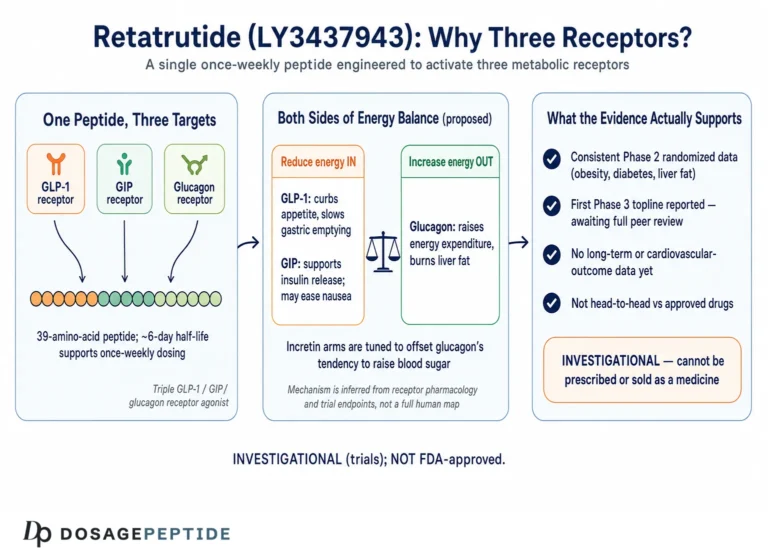
Retatrutide (developmental designation LY3437943) is a once-weekly, subcutaneously administered synthetic peptide engineered to activate three different receptors at once: the glucose-dependent insulinotropic polypeptide (GIP) receptor, the glucagon-like peptide-1 (GLP-1) receptor, and the glucagon receptor.4 That triple agonism is what distinguishes it from the single-incretin GLP-1 drugs (semaglutide, liraglutide) and from the dual GIP/GLP-1 agonist tirzepatide. The molecule was designed to marry the appetite-suppressing and insulinotropic effects of the two incretin arms with the energy-expenditure and hepatic-lipid-mobilizing effects of glucagon-receptor signaling — a combination intended to drive weight loss and metabolic improvement beyond what incretin agonism alone achieves.4 For readers who want the full receptor-pharmacology background, our overview of what retatrutide is and how the triple-receptor agonist works lays out the design logic in detail.
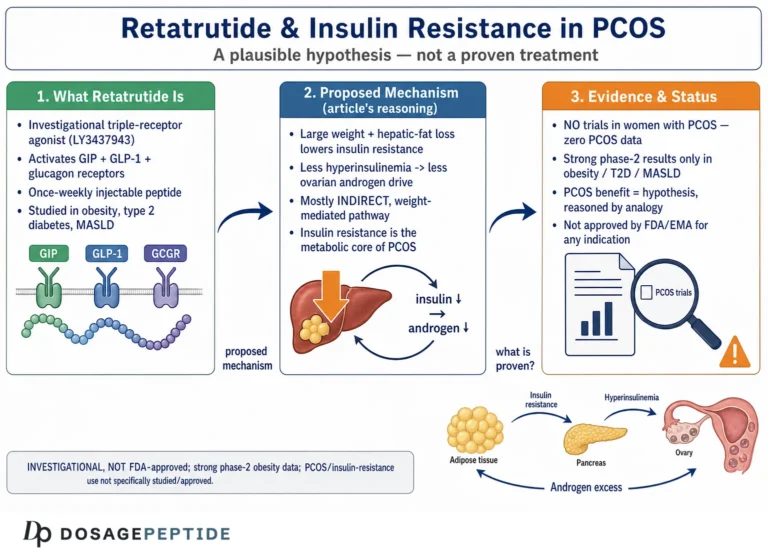
So why does anyone connect this obesity-and-diabetes compound to PCOS at all? The link is not arbitrary; it runs through insulin. PCOS is, for the majority of the women affected, fundamentally a disorder of insulin action. Insulin resistance and the compensatory hyperinsulinemia it provokes are present in an estimated 65–95% of women with PCOS, spanning nearly all with obesity and more than half of those at normal weight.5 That excess insulin is not a bystander — it actively drives the hormonal features that define the syndrome. Any intervention that meaningfully lowers insulin resistance therefore has, in principle, a route to influence PCOS physiology. Retatrutide, in its metabolic trials, lowered fasting insulin and the insulin-based HOMA index dramatically.3 Put those two facts side by side and the hypothesis writes itself. The problem, as we will see, is that a hypothesis assembled from two separate literatures is exactly the kind of claim that needs direct testing before it can be believed — and that testing does not yet exist.
It also matters that retatrutide’s development program has, so far, deliberately excluded the populations most relevant to a PCOS question. The pivotal phase-2 obesity trial enrolled adults with obesity but without diabetes, and while it included women, it did not select for or characterize PCOS.1 The diabetes and fatty-liver trials likewise recruited on metabolic criteria, not reproductive ones.23 None reported androgen levels, menstrual regularity, ovulation, or fertility outcomes — the endpoints that actually matter in PCOS. This is a recurring theme in the peptide field: a compound accumulates strong evidence for one set of endpoints and is then discussed, in secondary and commercial writing, as though that evidence transfers automatically to adjacent conditions. It does not.
Insulin Resistance in PCOS: The Central Engine
To judge whether retatrutide could plausibly help, we first need precision about what insulin resistance is in PCOS, because it is a peculiar and tissue-selective phenomenon rather than a simple uniform blunting of insulin action. Classic work established decades ago that women with PCOS exhibit a form of insulin resistance that is, in important respects, intrinsic and not fully explained by obesity: even lean women with the syndrome can show reduced insulin-stimulated glucose disposal, pointing to a post-receptor signaling defect in the insulin cascade.6 In skeletal muscle, liver, and adipose tissue — the classical insulin target organs — the metabolic (PI3K/Akt) arm of insulin signaling that governs glucose uptake is impaired, so the pancreas compensates by secreting more insulin to keep blood glucose in range.5
Here is the crucial twist. While the metabolic arm of insulin signaling is resistant in muscle and fat, the ovary and adrenal remain insulin-sensitive — and in some respects the mitogenic and steroidogenic actions of insulin are preserved or even amplified. The result is that compensatory hyperinsulinemia, generated to overcome peripheral resistance, floods still-responsive tissues. In the ovarian theca cells, insulin acts synergistically with luteinizing hormone (LH) to increase the activity of steroidogenic enzymes, driving androgen (testosterone) production.56 Simultaneously, high insulin suppresses hepatic production of sex hormone–binding globulin (SHBG), the carrier protein that keeps testosterone bound and inactive; less SHBG means more free, biologically active androgen. Insulin also amplifies LH pulse frequency at the level of the hypothalamic–pituitary axis. Each of these effects pushes in the same direction: more androgen, more free androgen, and the disrupted follicular development and anovulation that produce the clinical picture of PCOS.5
This creates a self-reinforcing loop that clinicians describe as a vicious cycle. Insulin resistance begets hyperinsulinemia; hyperinsulinemia begets hyperandrogenism; and androgen excess, in turn, worsens insulin resistance by promoting visceral fat deposition, elevating free fatty acids, and altering skeletal-muscle composition.5 The loop is why insulin resistance is regarded as a central engine rather than a mere comorbidity of PCOS, and it is why insulin-lowering strategies are attractive in principle: break the cycle at the insulin node, and the downstream androgen excess and ovulatory dysfunction may ease.
The clinical management framework reflects this. The 2023 International Evidence-based Guideline for the Assessment and Management of PCOS — the field’s most authoritative synthesis — positions lifestyle intervention as the foundation of care and metformin as the recommended first-line pharmacological agent for metabolic features such as insulin resistance, weight, and dysglycemia, particularly in women with a higher BMI.7 That same guideline explicitly acknowledges the emerging role of anti-obesity and incretin-based medications while stressing that the evidence base in PCOS specifically remains limited. It is against this backdrop — a syndrome anchored to insulin resistance, treated first with lifestyle and metformin, with incretin drugs a promising but under-evidenced adjunct — that a triple agonist like retatrutide enters the conversation.
It is worth pausing on why insulin resistance in PCOS is so often described as “selective” or “paradoxical,” because that peculiarity shapes whether any insulin-lowering drug could help. The resistance is pathway-selective within the same cell: the metabolic branch of insulin signaling (PI3K/Akt), which drives glucose transporter translocation and glucose uptake, is blunted, while the mitogenic branch (MAPK/ERK), which drives cell growth and, in steroidogenic tissue, androgen synthesis, remains responsive or even sensitized.5 When the pancreas raises insulin output to force glucose uptake through the resistant metabolic branch, it inadvertently over-stimulates the still-open mitogenic branch elsewhere. This is the molecular reason that lowering insulin — whether by weight loss, metformin, or in principle an incretin-based agent — is attractive: it reduces the drive on the mitogenic, androgen-producing pathway without needing to fix the underlying signaling defect directly. It is also why a drug that lowers hyperinsulinemia could, at least theoretically, improve the hormonal picture even if it does not repair the intrinsic post-receptor defect at all.
This same selectivity, however, tempers expectations. Because a meaningful portion of PCOS insulin resistance is intrinsic to the tissue and not simply a product of excess fat, no amount of weight loss will normalize insulin action in every woman with the syndrome. Lean women with PCOS who are insulin-resistant illustrate the point: their resistance persists despite the absence of obesity, implicating genetic and cellular factors that a weight-loss-dominant drug would not necessarily touch.6 Any realistic account of what retatrutide might do therefore has to separate the adiposity-driven component of PCOS insulin resistance, which a powerful weight-loss agent should address well, from the intrinsic component, which it may address only partially or not at all.
One further point of precision matters. Insulin resistance in PCOS is not monolithic across the syndrome’s phenotypes. PCOS is diagnosed by the Rotterdam criteria, requiring two of three features: hyperandrogenism, ovulatory dysfunction, and polycystic ovarian morphology. The phenotypes that include hyperandrogenism tend to carry the heaviest metabolic burden and the most pronounced insulin resistance, whereas the normoandrogenic phenotype is metabolically milder.5 Any honest discussion of a metabolic drug in PCOS must therefore acknowledge that “PCOS” is not one target but a heterogeneous group in which the degree of insulin resistance — and therefore the potential relevance of an insulin-sensitizing intervention — varies substantially.
How Retatrutide’s Triple Mechanism Could Touch Insulin Sensitivity
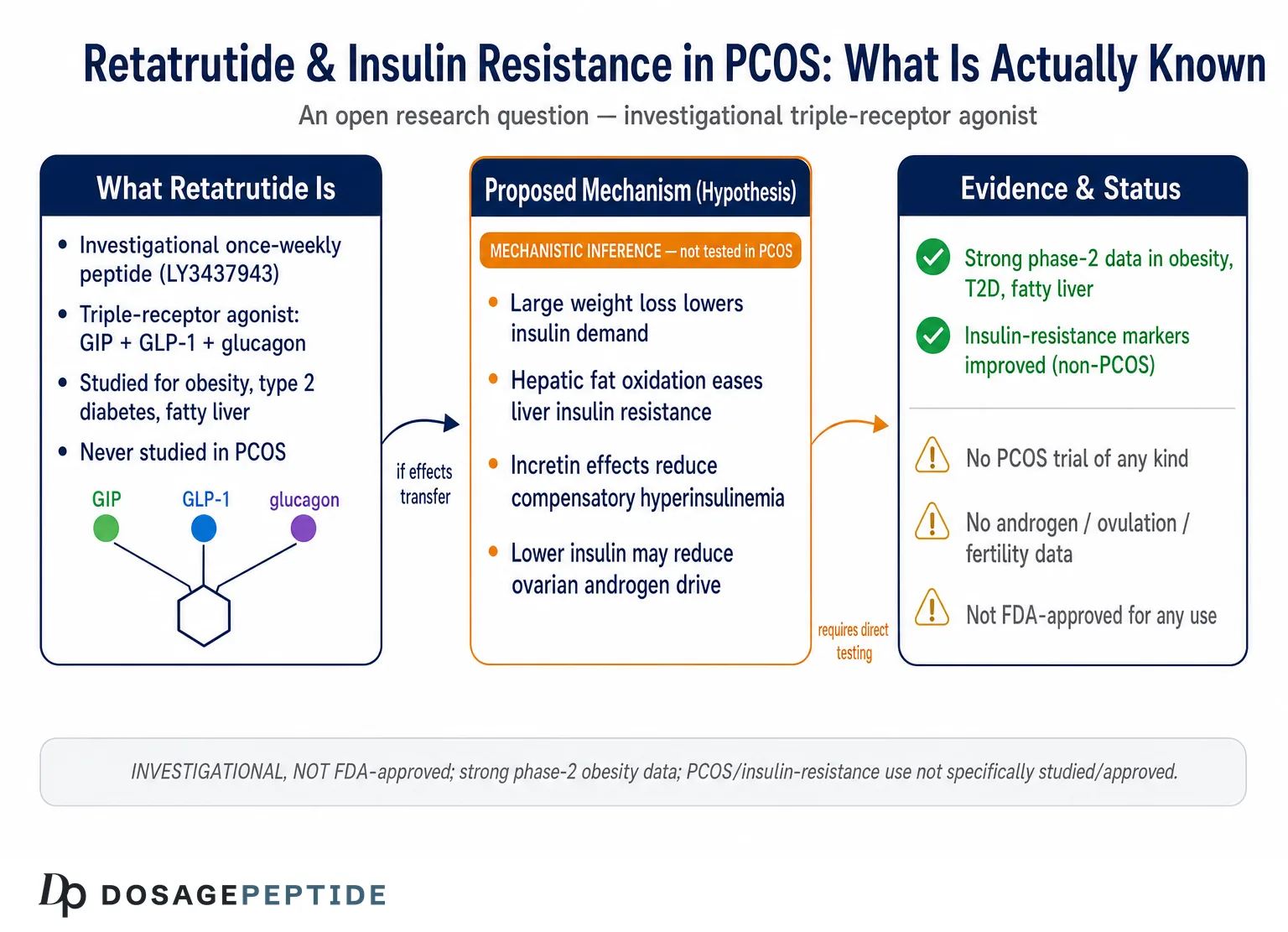
If insulin resistance is the engine of PCOS, the mechanistic question becomes: through which of its three receptor arms might retatrutide plausibly lower insulin resistance, and are those routes direct or merely a consequence of weight loss? The distinction is not academic. A drug that improves insulin sensitivity only by causing weight loss offers nothing that diet, exercise, or any other effective weight-loss method would not; a drug with weight-independent insulin-sensitizing actions offers something additional. The truth for retatrutide, as best we can reconstruct it from mechanism and trial data, is that both elements are probably in play, with weight loss dominating.
The GLP-1 arm is the most familiar. GLP-1 receptor agonism enhances glucose-dependent insulin secretion, suppresses inappropriate glucagon release after meals, slows gastric emptying, and acts centrally to reduce appetite and energy intake.4 Most of its effect on insulin resistance is indirect, mediated by the substantial weight loss and reduced ectopic fat that follow reduced caloric intake. But GLP-1 signaling also has more direct metabolic effects, including improved beta-cell function and reduced postprandial glucose excursions that lessen the demand on insulin secretion. In the PCOS context, less hyperinsulinemia means less ovarian androgen stimulation — the theoretical mechanism by which the GLP-1 class has been studied in the syndrome.
The GIP arm is more complex and, frankly, less fully understood. GIP is an incretin that potentiates glucose-stimulated insulin secretion; it also has effects on adipose-tissue metabolism and lipid buffering. The rationale for combining GIP with GLP-1 agonism (as in tirzepatide and retatrutide) is that dual incretin action produces greater glycemic control and weight loss than either alone, and improved adipose function may reduce lipotoxicity — the spillover of fat into muscle and liver that drives insulin resistance.4 Our companion analysis of how tirzepatide improves fat loss and insulin sensitivity explores this dual-incretin logic in depth and is a useful sibling reference for understanding what the GIP/GLP-1 backbone contributes before glucagon is added.
The glucagon arm is what makes retatrutide distinctive and is the most double-edged with respect to insulin resistance. Glucagon-receptor agonism increases energy expenditure and, importantly, drives hepatic fatty-acid oxidation while suppressing hepatic lipogenesis — a mechanism that powerfully reduces liver fat.3 Because ectopic liver fat is a major contributor to hepatic insulin resistance, mobilizing it can improve insulin sensitivity in the liver specifically. This is likely why retatrutide produced such striking reductions in liver fat and in HOMA-based insulin-resistance indices in its fatty-liver trial.3 The double edge is that glucagon, in isolation, raises blood glucose by stimulating hepatic glucose output; the design bet of retatrutide is that the GLP-1 and GIP arms more than offset this, keeping net glycemic effects favorable — a bet the diabetes trial appears to have won, given the large HbA1c reductions observed.2
Synthesizing these arms, the plausible mechanistic route to reduced insulin resistance in a PCOS-relevant sense is a combination of: (1) large weight loss reducing overall insulin demand and visceral adiposity; (2) reduced ectopic fat in liver and muscle, easing tissue-specific insulin resistance; and (3) improved incretin-mediated glucose handling lowering the compensatory hyperinsulinemia that drives ovarian androgen production. If those effects occurred in women with PCOS as they do in adults with obesity and fatty liver, one would predict lower insulin, potentially lower free androgens, and possibly improved menstrual regularity. That is a reasonable, mechanism-grounded prediction — and it is precisely the prediction that has never been tested with retatrutide.
What the Trials Actually Show About Insulin Resistance
Retatrutide’s effect on insulin-resistance markers is where the evidence is genuinely strong — provided we are careful to state that all of it comes from non-PCOS populations. Three phase-2 programs anchor the record.
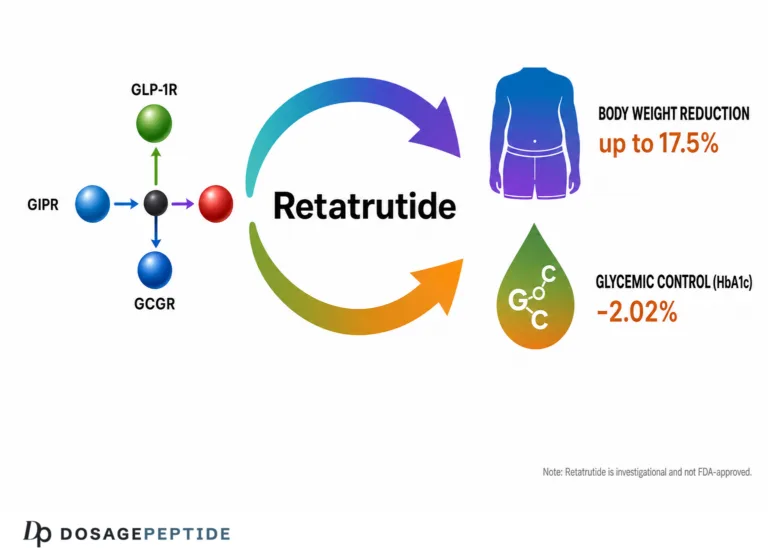
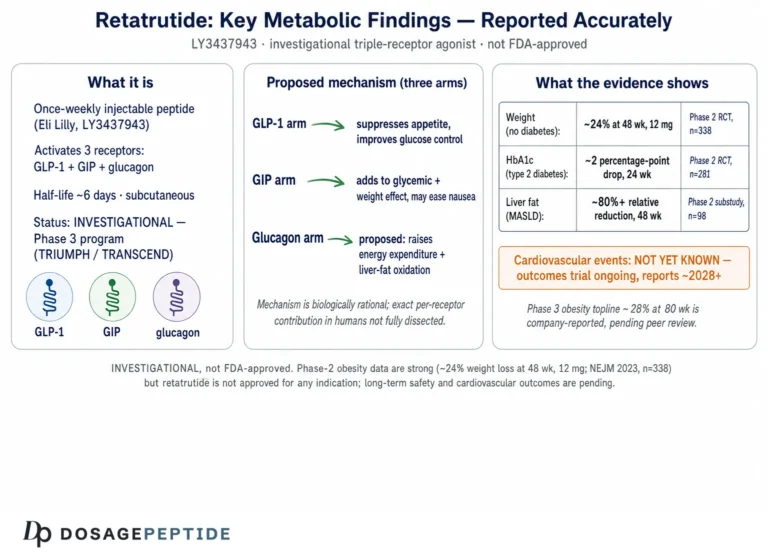
In the obesity trial (Jastreboff et al., NEJM 2023), 338 adults with obesity but without diabetes received retatrutide at 1, 4, 8, or 12 mg once weekly, or placebo, for 48 weeks. Weight loss was the headline: a placebo-adjusted least-squares mean reduction of roughly 22% at 48 weeks at the 12 mg dose, with an observed mean loss of about 24.2% — among the largest reductions reported for any pharmacological agent.1 Because insulin resistance tracks tightly with adiposity, this magnitude of weight loss would be expected, on its own, to substantially improve insulin sensitivity, and glycemic and metabolic parameters improved accordingly.
In the type 2 diabetes trial (Rosenstock et al., Lancet 2023), 281 adults with type 2 diabetes inadequately controlled on diet/exercise (some on metformin) received retatrutide across several doses, dulaglutide, or placebo over 36 weeks. HbA1c fell by up to about 2.0% at the higher doses, exceeding both placebo and the active GLP-1 comparator, with weight loss up to roughly 16.9%.2 A large HbA1c reduction achieved alongside major weight loss is the signature of improved whole-body insulin sensitivity plus enhanced insulin secretion — a favorable combination in a disease of insulin resistance.
The most direct insulin-resistance data come from the metabolic dysfunction–associated steatotic liver disease (MASLD) trial (Sanyal et al., Nature Medicine 2024), which enrolled 98 adults and measured liver fat by MRI alongside insulin-resistance indices. At the higher doses, relative reductions in hepatic fat exceeded 80%, and by later timepoints a large fraction of participants reached normal liver-fat levels.3 Critically for our question, the trial reported that insulin-resistance biomarkers improved substantially: fasting insulin fell by up to roughly 70%, and the insulin-based HOMA2-IR index dropped by around 69% at the highest dose by 48 weeks, with significant improvements at doses of 4 mg and above.3 These are large, dose-dependent, statistically significant reductions in exactly the kind of markers used to quantify insulin resistance in PCOS research.
| Phase-2 program | Population | Key insulin-resistance–relevant findings |
|---|---|---|
| Obesity (NEJM 2023)1 | 338 adults, obesity without diabetes, 48 wk | ~24% observed weight loss at 12 mg; broad metabolic improvement expected to lower insulin resistance via adiposity reduction |
| Type 2 diabetes (Lancet 2023)2 | 281 adults, T2D, 36 wk | HbA1c down up to ~2.0%; weight down up to ~16.9%; exceeded GLP-1 comparator |
| MASLD (Nat Med 2024)3 | 98 adults, fatty liver, up to 48 wk | Liver fat down >80%; fasting insulin down up to ~70%; HOMA2-IR down ~69% at 12 mg |
A body-composition substudy of the diabetes program further showed that retatrutide’s weight loss came substantially from fat mass, including visceral fat, which is the adipose depot most strongly implicated in insulin resistance.8 Loss of visceral and ectopic fat, rather than indiscriminate weight loss, is metabolically the most favorable pattern for improving insulin sensitivity, and it strengthens the mechanistic plausibility that these gains would carry over to an insulin-resistant PCOS population.
Two honest caveats bound this evidence. First, HOMA-IR and fasting insulin are surrogate markers; they are informative but are not the same as gold-standard clamp measurements of insulin action, and improvements in them driven largely by weight loss do not prove a weight-independent insulin-sensitizing action. Second, and more importantly, every number above comes from adults selected for obesity, diabetes, or fatty liver — not for PCOS, not for reproductive-age women specifically, and with no measurement of androgens, SHBG, menstrual cyclicity, or ovulation. The insulin-resistance improvements are real and large; their transferability to PCOS is an inference, not a finding. Readers wanting the broader metabolic picture can consult our summary of the key findings on retatrutide for obesity and metabolic health.
The PCOS Evidence Gap: What Has — and Has Not — Been Studied
This section is deliberately blunt because the honest answer is short. There are no completed, published clinical trials of retatrutide in women with PCOS. There are no studies measuring its effect on ovarian androgen production, SHBG, free testosterone, menstrual regularity, ovulation rates, or fertility. There are no PCOS-specific pharmacokinetic or safety data. A search of the trial registries and literature as of mid-2026 returns retatrutide programs in obesity, type 2 diabetes, MASLD/MASH, cardiovascular and renal outcomes, and osteoarthritis-associated obesity — but not PCOS. On the specific question of how retatrutide affects insulin resistance in PCOS, the direct evidence level is zero.
That absence is the single most important fact in this article, and it is easy to lose amid the impressive metabolic numbers. “Zero direct evidence” does not mean “evidence of no effect” — the mechanistic case is genuinely reasonable, and it would be surprising if a drug that halves HOMA-IR in adults with fatty liver had no effect on insulin resistance in women with PCOS. But it does mean that any confident statement about efficacy, magnitude, androgen response, or reproductive benefit is unsupported. The specific features that make PCOS distinct — the tissue-selective insulin resistance, the ovarian hypersensitivity to insulin, the androgen–insulin vicious cycle, the reproductive endpoints — have simply not been observed under retatrutide treatment.
There are also reasons the transfer might not be clean. PCOS insulin resistance has an intrinsic, partly genetic component beyond adiposity;6 a weight-loss-dominant drug might improve the obesity-related fraction of insulin resistance more than the intrinsic fraction. The dominant patient population is young women, many of normal weight, in whom aggressive weight loss and a glucagon-driven catabolic drug have a different risk–benefit calculus than in an adult with severe obesity or diabetes. And the reproductive endpoints that ultimately matter in PCOS — ovulation, cycle regularity, fertility, and pregnancy safety — are downstream of insulin and androgen changes and cannot be assumed to follow automatically. A drug could lower insulin resistance yet, through unrelated mechanisms or through pregnancy-exposure concerns, be inappropriate for many women with PCOS.
The correct scientific posture is therefore agnosticism combined with mechanistic optimism: the hypothesis is plausible and worth testing, and it has not been tested. Anyone claiming that retatrutide “improves insulin resistance in PCOS” is, at best, extrapolating from adjacent populations and, at worst, marketing. For how the compound fits the longer arc of incretin drug development that has repeatedly moved from diabetes into adjacent metabolic conditions, see our piece on how retatrutide fits into the evolution of peptide therapeutics — a history that shows both the promise and the frequent overreach of such extrapolations.
What the Broader GLP-1 Class Suggests — Cautiously
Because retatrutide itself has no PCOS data, the nearest available evidence comes from the drug class it partly belongs to: GLP-1 receptor agonists such as liraglutide, semaglutide, and exenatide, which have been studied in PCOS, albeit in small trials. This borrowed evidence is worth examining honestly, both for what it suggests and for how far it can — and cannot — be stretched to a triple agonist.
Several small randomized and observational studies have tested GLP-1 agonists in women with PCOS, usually those with overweight or obesity. A frequently cited pilot randomized study found that short-term liraglutide monotherapy produced greater weight loss than metformin in obese women with PCOS, with reductions in visceral adipose tissue and favorable shifts in glucose homeostasis.9 A body of subsequent work and reviews has reported that GLP-1 agonists, alone or combined with metformin, can reduce body weight, waist circumference, and insulin-resistance indices, and in some studies improve menstrual frequency and androgen markers, in women with PCOS.10 A 2025 meta-analysis of randomized trials concluded that GLP-1 agonists produced significant reductions in BMI and improvements in some metabolic parameters in women with PCOS.11
But the quality caveats are substantial and must not be glossed. The trials are small, short (often 12–24 weeks), heterogeneous in dose and population, and focused mostly on surrogate metabolic and anthropometric endpoints rather than on hard reproductive outcomes like live birth. Systematic reviews consistently rate the overall certainty of evidence as low, and the 2023 international guideline treats incretin-based therapy in PCOS as promising but insufficiently evidenced to be a standard recommendation.711 Even for the GLP-1 drugs that have actually been studied in PCOS, the field is far from a settled efficacy claim.
Now consider the extra distance for retatrutide. It is not a GLP-1 agonist; it is a triple agonist whose glucagon arm and dual-incretin backbone make it pharmacologically distinct. One cannot assume its PCOS effects would mirror liraglutide’s, either in magnitude or in character — the glucagon-mediated increase in energy expenditure and hepatic fat oxidation could enhance insulin-resistance benefits, or the same catabolic drive could raise different concerns in lean young women. The GLP-1 class evidence establishes that the general strategy — using an incretin-based, weight-lowering agent to break the insulin–androgen cycle in PCOS — is biologically reasonable and has produced encouraging early signals. It does not establish anything specific about retatrutide, and it should be read as a rationale for studying the compound in PCOS, not as a substitute for having done so.
| Agent / class | Primary mechanism vs insulin resistance | PCOS-specific evidence |
|---|---|---|
| Lifestyle (diet + exercise) | Reduces adiposity, improves insulin sensitivity directly | Foundation of care; guideline first-line for all phenotypes7 |
| Metformin | Reduces hepatic glucose output; improves insulin sensitivity | Guideline-recommended first-line pharmacotherapy for metabolic features7 |
| GLP-1 receptor agonists (liraglutide, semaglutide) | Weight loss + incretin-mediated glucose handling | Small RCTs; weight/IR benefit, low certainty; not yet standard91011 |
| Tirzepatide (GIP/GLP-1) | Dual incretin; large weight loss + insulin sensitivity | Emerging interest; limited direct PCOS data |
| Retatrutide (GIP/GLP-1/glucagon) | Triple agonist; weight loss + hepatic fat oxidation + incretin effects34 | No PCOS studies of any kind |
Untangling Weight Loss from Direct Insulin Sensitization
A question that matters enormously for PCOS — and that the current evidence cannot fully answer for retatrutide — is how much of any insulin-resistance benefit would come simply from weight loss versus from weight-independent, tissue-specific insulin-sensitizing actions. The distinction shapes who might benefit and how the drug compares with alternatives.
In obesity-driven insulin resistance, weight loss is the dominant lever: lose 15–25% of body weight and insulin sensitivity improves markedly through reduced visceral fat, lower circulating free fatty acids, and less ectopic lipid in liver and muscle. Retatrutide is, first and foremost, an extraordinarily effective weight-loss agent, so a large share of its insulin-resistance benefit almost certainly flows through this route.1 For a woman with PCOS and obesity, this could translate into lower hyperinsulinemia and, potentially, reduced ovarian androgen drive — but the same benefit would, in principle, follow from any equally effective weight-loss intervention.
The more interesting possibility is a weight-independent component. The MASLD data are suggestive here: the glucagon arm’s direct stimulation of hepatic fatty-acid oxidation reduces liver fat through a mechanism that is not purely a consequence of caloric restriction, and hepatic fat is a specific driver of hepatic insulin resistance.3 If retatrutide reduces liver and muscle lipid content beyond what weight loss alone would predict, it could improve insulin sensitivity in a way that matters for the intrinsic, non-adiposity component of PCOS insulin resistance. This is mechanistically appealing but, for PCOS, entirely speculative — disentangling weight-dependent from weight-independent effects requires clamp studies and PCOS-specific trials that have not been done.
It is also worth noting how the trial evidence itself hints at a weight-independent element without proving one for PCOS. In the diabetes program, retatrutide out-performed an active GLP-1 comparator on HbA1c, and it did so at least partly through effects — enhanced insulin secretion, glucagon-driven energy expenditure, hepatic fat mobilization — that are not reducible to weight loss alone.24 The fatty-liver data point the same way: hepatic lipid fell by more than 80%, a change that improves liver-specific insulin resistance through a mechanism (increased fatty-acid oxidation) distinct from generalized caloric restriction.3 If a comparable degree of ectopic-fat clearance occurred in the liver and skeletal muscle of women with PCOS, it could improve the hepatic and myocellular components of their insulin resistance. But this remains an extrapolation across populations, and the intrinsic ovarian and post-receptor defects of PCOS may respond quite differently from the metabolically driven resistance of the studied cohorts.
There is a countervailing consideration too. A meaningful subset of women with PCOS are lean or normal-weight yet insulin-resistant. In this group, the value proposition of a powerful weight-loss drug is far less clear: there may be little excess adiposity to lose, aggressive weight loss could be undesirable, and the benefit would have to come almost entirely from any weight-independent insulin-sensitizing action — the very component that is least established. This is a concrete example of why “retatrutide improves insulin resistance” cannot be applied uniformly across PCOS: the drug’s dominant mechanism (weight loss) is well matched to the obese phenotype and poorly matched to the lean one.
Safety, Reproductive, and Population-Specific Considerations
Even setting efficacy aside, a compound aimed at reproductive-age women demands careful attention to safety and to a population very different from the middle-aged adults with obesity or diabetes who populated the trials. Several considerations are specific to the PCOS setting and cannot be answered by the existing data.
The documented adverse-effect profile of retatrutide in its trials is dominated by dose-dependent gastrointestinal effects — nausea, vomiting, diarrhea, and constipation — consistent with the incretin drug class, generally mild-to-moderate and most pronounced during dose escalation.12 The trials also examined cardiovascular and metabolic parameters; a meta-analysis of retatrutide randomized data has examined its effects on blood pressure and lipids, generally finding favorable metabolic shifts alongside the expected class effects.12 Our discussion of how retatrutide influences cardiovascular risk factors covers this in more detail. Dose-dependent increases in heart rate were observed, as with other incretin agents, warranting monitoring.
The considerations that have not been characterized are the ones most relevant to PCOS:
- Pregnancy and fertility. Many women with PCOS seek treatment precisely because they want to conceive, and improving insulin resistance can restore ovulation — which means a woman on an incretin-based drug could become pregnant unexpectedly. GLP-1-based agents are generally not recommended during pregnancy, and there are no adequate human safety data for retatrutide in pregnancy. Restoring fertility while administering an investigational drug with unknown reproductive-toxicity profile is a genuine hazard that has no counterpart in the obesity or diabetes trials.
- Lean phenotype. The trials enrolled adults with obesity, diabetes, or fatty liver. Applying a potent catabolic, weight-lowering agent to lean or normal-weight women with PCOS is entirely outside the studied population.
- Nutritional adequacy. Large, rapid weight loss can compromise intake of nutrients important for menstrual and reproductive health; this has not been studied in a PCOS context.
- Duration and reversibility. PCOS is a chronic, lifelong condition, whereas the trials ran months. Whether any insulin-resistance benefit persists, and whether features rebound on discontinuation (as weight often does with incretin drugs), is unknown.
- Product quality and unsupervised use. Because retatrutide is investigational and not approved, material obtained outside clinical trials is unregulated, of uncertain purity, and used without medical supervision — risks that are independent of the molecule’s intrinsic pharmacology and are especially concerning in an unstudied population.
The reasonable reading is that retatrutide has a manageable short-term safety profile in the adult metabolic populations studied, but that this provides little assurance for reproductive-age women with PCOS, and none at all regarding pregnancy exposure. Absence of demonstrated harm in one population is not evidence of safety in another, and the reproductive dimension makes the PCOS setting distinctly higher-stakes than the trial settings.
Research Models, Endpoints, and What a Real PCOS Study Would Require
It is worth being concrete about what would be needed to actually answer this article’s title question, because the gap between the current evidence and a real answer is instructive. The retatrutide evidence base was built to answer metabolic questions, using metabolic endpoints, in metabolic populations. A PCOS investigation would require a substantially different architecture.
The endpoints would have to include the features that define PCOS, not just surrogate metabolic markers. Beyond HOMA-IR, fasting insulin, and ideally clamp-derived insulin sensitivity, a meaningful trial would measure total and free testosterone, SHBG, LH and FSH dynamics, menstrual cycle regularity, ovulation (by progesterone or ultrasound monitoring), and — for fertility-focused questions — ovulation and pregnancy rates. Anti-Müllerian hormone and ovarian morphology on ultrasound might be tracked. These reproductive endpoints are entirely absent from the existing retatrutide literature.
The population would need to be defined by Rotterdam criteria and, ideally, stratified by phenotype and by BMI, so that effects in lean versus obese women and in hyperandrogenic versus normoandrogenic phenotypes could be distinguished. Given the reproductive stakes, such a trial would require rigorous contraception protocols and pregnancy monitoring, and careful ethical handling of the fertility-restoration paradox described above.
The design would need to be randomized, controlled, and long enough to capture reproductive outcomes that unfold over months, ideally with an active comparator such as metformin or a GLP-1 agonist to establish whether the triple agonist offers anything beyond existing options. And it would need to disentangle weight-dependent from weight-independent effects — for instance, through weight-matched comparisons — to determine whether retatrutide does more for PCOS insulin resistance than weight loss by any means. Until studies of roughly this shape are completed, statements about retatrutide and PCOS insulin resistance remain hypotheses, however plausible. Researchers handling the compound in any legitimate investigational context should note the critical handling protocols for retatrutide research studies, since assay reliability depends on proper reconstitution and storage.
Regulatory and Development Status
Precision about regulatory status is essential, because it is frequently misrepresented in commercial writing. Retatrutide is not approved by any major regulator — not the U.S. Food and Drug Administration, not the European Medicines Agency, not any comparable authority — for obesity, type 2 diabetes, fatty liver disease, PCOS, or any other indication. It is an investigational compound in ongoing phase-3 development under a broad clinical program spanning obesity, diabetes, cardiovascular and renal outcomes, and related metabolic conditions. Its impressive results to date are phase-2 findings; phase-3 confirmation and regulatory review remain to be completed.
For PCOS specifically, there is no approved indication anywhere, no active labeled use, and — as established above — no completed clinical trial. Any use of retatrutide for PCOS would be entirely off-label and, given the absence of approval for even its lead indications, would occur with an investigational agent outside its evidence base. Material marketed as “research-only” retatrutide sits outside the regulated pharmaceutical supply chain and carries the attendant purity, dosing, and safety uncertainties.
The honest regulatory synthesis is that retatrutide is a highly promising but still-investigational triple agonist with strong phase-2 metabolic data, no approvals, and no PCOS-specific study or indication. For the syndrome addressed in this article’s title, the appropriate path is formal clinical investigation under regulatory oversight — not extrapolation, and not unsupervised use. The 2023 international PCOS guideline’s framework — lifestyle first, metformin as first-line pharmacotherapy for metabolic features, incretin-based therapy as an evidence-limited emerging option — remains the current standard, and retatrutide has not earned a place in it.7
Frequently Asked Questions
Does retatrutide treat insulin resistance in PCOS?
There is no direct evidence that it does, because retatrutide has never been studied in women with PCOS. In non-PCOS populations — adults with obesity, type 2 diabetes, or fatty liver — it produced large, dose-dependent improvements in insulin-resistance markers such as fasting insulin and HOMA2-IR, with the latter falling by around 69% at the highest dose in a fatty-liver trial.3 Whether those benefits transfer to the specific, tissue-selective insulin resistance of PCOS is a reasonable hypothesis but an untested one. Retatrutide is investigational and not approved for PCOS or any other condition.
Why is insulin resistance so central to PCOS in the first place?
In most women with PCOS, peripheral tissues (muscle, fat, liver) are resistant to insulin’s glucose-lowering action, so the pancreas secretes more insulin to compensate. That excess insulin acts on still-sensitive ovarian theca cells to boost androgen production, suppresses hepatic SHBG so more testosterone is free and active, and raises LH pulsatility — together driving the hyperandrogenism and ovulatory dysfunction that define the syndrome.56 Insulin resistance and compensatory hyperinsulinemia are present in an estimated 65–95% of women with PCOS.5
How might retatrutide lower insulin resistance mechanistically?
Through several plausible routes: substantial weight loss and visceral-fat reduction lowering overall insulin demand; glucagon-receptor-driven hepatic fat oxidation reducing liver fat and hepatic insulin resistance; and incretin (GLP-1/GIP) effects improving glucose handling and lowering hyperinsulinemia.34 Most of the benefit likely flows through weight loss, with a possible weight-independent hepatic component. These are mechanistic inferences from non-PCOS data, not demonstrated effects in PCOS.
Has any GLP-1 drug been studied in PCOS?
Yes — but not retatrutide. Small randomized and observational studies of GLP-1 agonists such as liraglutide and semaglutide in women with PCOS (mostly with overweight/obesity) have reported weight loss, improved insulin-resistance indices, and in some cases better menstrual regularity and androgen profiles.91011 However, these trials are small and short, and systematic reviews rate the overall certainty of evidence as low. Retatrutide is a distinct triple agonist, so this class evidence supports studying it, not assuming its effects.
Is retatrutide better than metformin for PCOS?
This cannot be answered from current data because no head-to-head trial exists in PCOS, and retatrutide has no PCOS data at all. Metformin remains the guideline-recommended first-line pharmacological agent for the metabolic features of PCOS, alongside lifestyle intervention.7 Any comparison with retatrutide would require dedicated PCOS trials with reproductive endpoints, ideally weight-matched to separate drug-specific effects from weight loss.
Is it safe for women who might want to become pregnant?
This is a specific concern. Improving insulin resistance can restore ovulation, so a woman with PCOS on an incretin-based drug could conceive unexpectedly — and there are no adequate human safety data for retatrutide in pregnancy. Incretin-based agents are generally not recommended during pregnancy. This reproductive dimension makes the PCOS setting higher-stakes than the obesity and diabetes trials, none of which addressed pregnancy exposure.
Is retatrutide approved or legal to use for PCOS?
No. Retatrutide is not approved by the FDA, EMA, or any comparable regulator for any indication; it is an investigational agent in phase-3 development. There is no approved PCOS use anywhere, no completed PCOS trial, and any use for PCOS would be off-label with an unapproved drug. Material sold as “research” retatrutide is unregulated and of uncertain quality.
What is the single most important takeaway?
That the title’s premise is an open research question. Retatrutide clearly and substantially improves insulin-resistance markers in adults with obesity, diabetes, and fatty liver, and there is a coherent mechanistic case that it could help the insulin resistance underlying PCOS. But it has never been tested in PCOS, the reproductive endpoints that matter have never been measured under this drug, and it is not approved for anything. Plausible mechanism is not proven benefit.
References
- Jastreboff AM, Kaplan LM, Frías JP, et al. Triple–Hormone-Receptor Agonist Retatrutide for Obesity — A Phase 2 Trial. N Engl J Med. 2023;389(6):514-526. PMID: 37366315. https://pubmed.ncbi.nlm.nih.gov/37366315/
- Rosenstock J, Frias J, Jastreboff AM, et al. Retatrutide, a GIP, GLP-1 and glucagon receptor agonist, for people with type 2 diabetes: a randomised, double-blind, placebo and active-controlled, parallel-group, phase 2 trial conducted in the USA. Lancet. 2023;402(10401):529-544. PMID: 37385280. https://pubmed.ncbi.nlm.nih.gov/37385280/
- Sanyal AJ, Kaplan LM, Frias JP, et al. Triple hormone receptor agonist retatrutide for metabolic dysfunction-associated steatotic liver disease: a randomized phase 2a trial. Nat Med. 2024;30(7):2037-2048. PMID: 38858523. PMCID: PMC11271400. https://pmc.ncbi.nlm.nih.gov/articles/PMC11271400/
- Coskun T, Urva S, Roell WC, et al. LY3437943, a novel triple glucagon, GIP, and GLP-1 receptor agonist for glycemic control and weight loss: From discovery to clinical proof of concept. Cell Metab. 2022;34(9):1234-1247.e9. PMID: 35985340. https://pubmed.ncbi.nlm.nih.gov/35985340/
- Zhao H, Zhang J, Cheng X, Nie X, He B. Insulin resistance in polycystic ovary syndrome across various tissues: an updated review of pathogenesis, evaluation, and treatment. J Ovarian Res. 2023;16(1):9. PMID: 36631836. PMCID: PMC9832677. https://pmc.ncbi.nlm.nih.gov/articles/PMC9832677/
- Dunaif A. Insulin resistance and the polycystic ovary syndrome: mechanism and implications for pathogenesis. Endocr Rev. 1997;18(6):774-800. https://academic.oup.com/edrv/article/18/6/774/2530788
- Teede HJ, Tay CT, Laven J, et al. Recommendations From the 2023 International Evidence-based Guideline for the Assessment and Management of Polycystic Ovary Syndrome. J Clin Endocrinol Metab. 2023;108(10):2447-2469. PMID: 37580314. https://pubmed.ncbi.nlm.nih.gov/37580314/
- Effects of retatrutide on body composition in people with type 2 diabetes: a substudy of a phase 2, double-blind, parallel-group, placebo-controlled, randomised trial. Lancet Diabetes Endocrinol. 2025. https://www.thelancet.com/journals/landia/article/PIIS2213-8587(25)00092-0/abstract
- Jensterle M, Salamun V, Kocjan T, Vrtacnik Bokal E, Janez A. Short term monotherapy with GLP-1 receptor agonist liraglutide or PDE 4 inhibitor roflumilast is superior to metformin in weight loss in obese PCOS women: a pilot randomized study. J Ovarian Res. 2015;8:32. PMCID: PMC4506413. https://pmc.ncbi.nlm.nih.gov/articles/PMC4506413/
- Bednarz K, Kowalczyk K, Cwynar M, et al. The Role of GLP-1 Receptor Agonists in Insulin Resistance with Concomitant Obesity Treatment in Polycystic Ovary Syndrome. Int J Mol Sci. 2022;23(8):4334. PMCID: PMC9029608. https://pmc.ncbi.nlm.nih.gov/articles/PMC9029608/
- Efficacy and safety of GLP-1 receptor agonists on weight management and metabolic parameters in PCOS women: a meta-analysis of randomized controlled trials. Sci Rep. 2025. https://www.nature.com/articles/s41598-025-99622-4
- Effect of Retatrutide, a Novel Triple Receptor Agonist, on Blood Pressure and Lipid Levels: A Systematic Review and Meta-analysis of Randomized Controlled Trials. High Blood Press Cardiovasc Prev. 2026. https://link.springer.com/article/10.1007/s40292-026-00812-6
Educational and research-use disclaimer: This article is provided solely for scientific and educational purposes. Retatrutide is an investigational compound and is not approved by the FDA, EMA, or any comparable regulator for the treatment, cure, or prevention of polycystic ovary syndrome, insulin resistance, obesity, type 2 diabetes, or any other disease. It has never been studied in a PCOS population, and no effect on insulin resistance, androgens, or reproductive outcomes in PCOS has been demonstrated. Nothing here is medical advice or a recommendation for human use. Any legitimate investigation of this compound should occur within properly authorized clinical research under appropriate regulatory oversight. Women with PCOS should consult qualified healthcare professionals about evidence-based care.