Adipotide, also called FTPP — a research-chemical abbreviation for fat-targeted proapoptotic peptide — or Prohibitin Targeting Peptide 1, is an experimental peptidomimetic that kills the blood vessels feeding white fat rather than the fat cells themselves. It produced striking weight loss in mice and in obese monkeys, along with dose-dependent damage to the kidney’s proximal tubules, and it entered a single first-in-human Phase 1 trial that was terminated after enrolling four of a planned thirty-nine patients — with no human efficacy or safety results ever published. It is not approved by the FDA or any other regulator for any indication, and it exists today only as a research chemical.
Most popular descriptions get at least one part of that wrong, usually by calling adipotide something that “melts fat cells.” It does not. Understanding what it actually does — and why the mechanism is simultaneously elegant and dangerous — is the point of this page.
What is adipotide, exactly?
Adipotide is not a naturally occurring hormone, and it is not analogous to the incretin-based compounds that dominate current obesity pharmacology. It is a synthetic chimeric peptidomimetic: a laboratory-designed two-part molecule in which a targeting address is chemically fused to a cytotoxic payload.
The full sequence, as reported in the primate study that gave the compound its name, is CKGGRAKDC-GG-D(KLAKLAK)2[1]. It has carried an unusual number of names: Prohibitin Targeting Peptide 1 — abbreviated Prohibitin-TP01, the name on its clinical trial registration — Adipotide® (a trade name registered by its commercial developer), and FTPP in research-chemical marketing. All refer to the same molecule.
The two halves of the molecule
The homing domain is CKGGRAKDC, a nine-residue cyclic motif. It was not designed rationally; it was discovered, by in vivo phage display — a technique in which a library of billions of random peptide-displaying viruses is injected into an animal, and those that accumulate in the tissue of interest are recovered and sequenced. Mikhail Kolonin and colleagues used this approach to isolate a motif that homes to the vasculature of white fat[2].
The effector domain is D(KLAKLAK)2, a fourteen-residue amphipathic cationic sequence. This payload predates adipotide by five years: Ellerby and colleagues introduced it in 1999 as a general-purpose proapoptotic warhead for targeted anti-cancer peptides[3]. Its defining property is conditional toxicity: the authors designed it to be “nontoxic outside cells, but toxic when internalized,” where it disrupts mitochondrial membranes and triggers apoptosis. A glycine-glycine linker joins the two domains.
Why “peptidomimetic” and not “peptide”
The prefix “D” in D(KLAKLAK)2 is the most functionally important character in the sequence. It indicates that the effector domain is built from D-amino acids — mirror-image stereoisomers of the L-amino acids that make up essentially all natural proteins. Mammalian proteases evolved to cleave L-peptide bonds and largely cannot process D-peptides, so the payload survives in circulation far longer than a conventional peptide of the same length.
The 2011 primate paper labels the compound a peptidomimetic rather than a peptide[1]; D-amino acid content is the conventional reason such constructs fall outside the peptide category. The distinction is not pedantry: protease resistance is exactly what makes the molecule persistent enough to reach non-target vascular beds, and it removes one of the body’s natural brakes on an indiscriminate cytotoxic payload. It also complicates characterisation, since routine certificate-of-analysis methods confirm mass and purity but not chirality.
How does adipotide work? The mechanism most descriptions get wrong
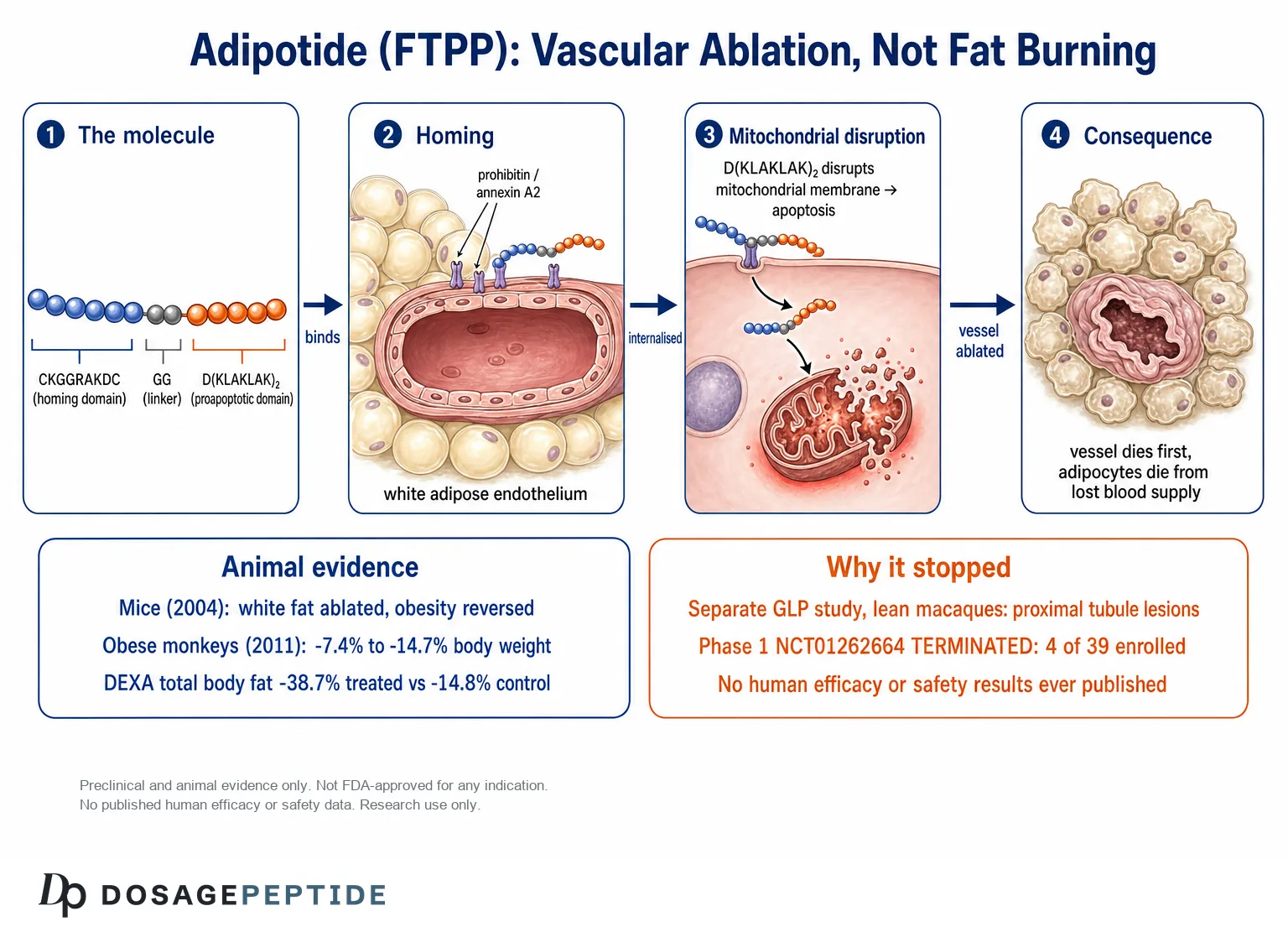
Adipotide does not act on adipocytes. It acts on endothelial cells — the cells lining the blood vessels that supply white adipose tissue. Fat loss is a second-order consequence of vascular destruction. This is targeted vascular ablation, closer in spirit to an anti-angiogenic cancer strategy than to any conventional metabolic drug.
Step one: homing to the adipose vasculature
The CKGGRAKDC domain binds prohibitin, a multifunctional membrane protein. Kolonin and colleagues established prohibitin as a vascular marker of adipose tissue — present on the endothelial surface of white fat vessels at levels permitting selective accumulation[2]. The same paper noted that prohibitin is also expressed in the blood vessels of human white fat, which is what motivated the translational programme.
A second receptor entered the picture in the same year as the primate work. Staquicini and colleagues screened a peptide library directly in cancer patients and recovered prohibitin/annexin A2 as a native ligand–receptor pair specific to human white adipose tissue vasculature[4] — the finding the primate paper cites when it refers to an annexin A2–prohibitin receptor system in human white fat. Five years later, Salameh and colleagues characterised the interaction mechanistically, showing that the two proteins form a complex with the fatty acid transporter CD36 and that this complex regulates fatty acid transport[5]. It is accurate to say adipotide targets a prohibitin–annexin A2 receptor system on adipose endothelium. It is less well established that the homing peptide binds annexin A2 directly as an independent receptor: the 2004 work identified prohibitin as the binding partner, and the annexin A2 relationship was characterised afterwards as part of a receptor complex. That distinction is worth preserving rather than collapsing.
Step two: internalisation and mitochondrial disruption
Binding is only the address. Once internalised by the endothelial cell, the D(KLAKLAK)2 domain reaches the mitochondria, disrupts the mitochondrial membrane and initiates apoptosis[3]. The endothelial cell dies. Repeated across a capillary bed, this ablates the microvasculature of the fat depot.
Step three: adipocytes die from loss of blood supply
Adipocytes in the affected depot are then deprived of perfusion. The 2004 paper described the downstream result as “resorption of established white adipose tissue and normalization of metabolism”[2]. Fat mass falls because the tissue storing it was starved out — not because lipolysis was stimulated or appetite centrally suppressed. This sits within a broader research programme on targeting adipose vasculature, reviewed by Daquinag, Zhang and Kolonin[6]: white fat expansion depends on concurrent angiogenesis, which is what makes its vasculature conceptually attractive as a target.
An unexpected metabolic finding
One result complicates the simple “starve the fat” story. Kim and colleagues, in Diabetes in 2012, found that a proapoptotic peptide targeting white adipose tissue endothelium improved glucose tolerance in obese mice rapidly and independently of weight and food intake, within two to three days[7]. Microarray analysis showed reversal of high-fat-diet-induced changes in mitochondrial function, oxidative phosphorylation and branched-chain amino acid degradation. This suggests the adipose vasculature has signalling roles in glucose homeostasis not reducible to fat mass — a preclinical finding of genuine interest that says nothing about human safety.
What does the animal research on adipotide actually show?
The published evidence base is small, entirely preclinical, and concentrated in two landmark papers plus a few follow-ups.
The 2004 mouse work
Kolonin, Saha, Chan, Pasqualini and Arap published “Reversal of obesity by targeted ablation of adipose tissue” in Nature Medicine in 2004[2]. In obese mice, they isolated the CKGGRAKDC motif, identified prohibitin as its binding partner, and showed that delivering the proapoptotic payload to prohibitin in adipose vasculature ablated white fat and reversed obesity. The abstract reports this occurred “without detectable adverse effects.”
That phrase deserves scrutiny rather than repetition. “Without detectable adverse effects” in a short rodent study describes the sensitivity of the assays used and the duration of observation — not a guarantee of safety. The primate work published seven years later, with more extensive toxicology, detected a clear organ-specific signal the mouse work never surfaced.
The 2011 primate study
This is the pivotal paper. Barnhart, Christianson, Hanley, Driessen and colleagues — with Kolonin, Chan, Arap and Pasqualini among the senior authors — published “A peptidomimetic targeting white fat causes weight loss and improved insulin resistance in obese monkeys” in Science Translational Medicine in 2011[1].
The work spanned three Old World monkey species: rhesus macaques, cynomolgus macaques and baboons. In the fixed-dose efficacy study, obese rhesus macaques received 0.43 mg/kg by daily subcutaneous injection for 28 consecutive days, followed by a four-week recovery period. Weight loss ranged from −7.4% to −14.7% of pretreatment body weight in the ten treated monkeys, against +1.0% to −3.5% in the five saline controls; the paper reports no mean weight-loss figure. MRI and DXA imaging confirmed a marked reduction in white adipose tissue specifically — not merely a drop on the scale — with total body fat on DEXA falling by an average of 38.7% in treated animals against 14.8% in controls. Insulin resistance improved.
The renal findings are not a footnote to that result; they are half of it. The paper reports “slight-to-moderate dose-dependent elevations in serum creatinine” at doses above 0.25 mg/kg, together with glucosuria, proteinuria and increased renal epithelial cells in urine. Histopathology came from a separate arm: a 28-day GLP toxicology study in twenty lean rhesus macaques dosed at 0.25, 0.43 or 0.75 mg/kg, with animals necropsied 24 hours after the final dose. There, kidney lesions were dose-dependent and absent in controls — degenerative and necrotic (single-cell necrosis) alongside reactive and regenerative change, scored minimal to mild at 0.25 mg/kg, minimal to mild in most animals at 0.43 mg/kg, and minimal to moderate at 0.75 mg/kg. The obese efficacy monkeys were not necropsied, so no tissue-level renal data exists for the cohort that produced the weight-loss numbers. The abstract frames the outcome as “predictable and reversible changes in renal proximal tubule function.”
Reversibility should be reported accurately in both directions. Most serum and urine abnormalities normalised within 28 days of stopping treatment, and lesions were minimal in all monkeys after recovery. Overstating this as permanent kidney destruction is as inaccurate as omitting it. What is fair to say: the kidney was the organ the compound reliably injured, the injury tracked dose, and it appeared at doses in the same range as those producing the desired weight loss. The paper also flags that the creatinine rise was not accompanied by a matching rise in blood urea nitrogen, raising the possibility that some of the signal reflects competitive inhibition of tubular creatinine secretion rather than injury alone.
The food-intake objection
An honest account must include the published challenge to the mechanism. In 2012, Leoluca Criscione published a comment in Science Translational Medicine arguing that the observed weight loss might instead reflect a direct effect of adipotide on food consumption rather than vascular apoptosis[8]. The concern came from the original paper’s own data: consumption of monkey chow biscuits in treated animals fell as the dose rose, though the same animals continued to eat nearly all of their enrichment foods — a selectivity the authors read as satiety rather than nausea.
The authors replied in the same issue[8]. Two elements of the original paper bear on the question. Imaging documented selective reduction of white adipose tissue, which simple caloric restriction would not be expected to produce so specifically over 28 days. More tellingly, lean rhesus monkeys given adipotide at 0.25 and 0.43 mg/kg did not lose weight, which the authors took to suggest an obesity-specific mechanism rather than a general anorectic action[1]. The same paper concedes that mild nausea as a contributor to overall weight loss cannot be completely ruled out. The debate was never conclusively settled, and readers should hold the mechanism as well-supported but not beyond challenge.
The research dossier at a glance
| Study | Model / species | Design | Main outcome | Key safety finding | Citation |
|---|---|---|---|---|---|
| Kolonin et al., Nat Med, 2004 | Obese mice | Targeted proapoptotic peptide to adipose vasculature | Ablation of white fat; resorption of established WAT; normalisation of metabolism | “Without detectable adverse effects” at the assay sensitivity and duration used | [2] |
| Barnhart et al., Sci Transl Med, 2011 | Obese rhesus macaques (efficacy cohort); cynomolgus macaques and baboons in supporting studies | 0.43 mg/kg subcutaneous daily × 28 days, then 4-week recovery | −7.4% to −14.7% body weight (n=10 treated vs n=5 saline controls at +1.0% to −3.5%); DEXA total body fat −38.7% treated vs −14.8% control; MRI/DXA-confirmed WAT reduction; improved insulin resistance | Clinical pathology only in this cohort (no necropsy): dose-dependent creatinine elevation above 0.25 mg/kg, glucosuria, proteinuria, increased renal epithelial cells. Most serum and urine changes reversed within 28 days of discontinuation | [1] |
| Barnhart et al., 2011 (GLP toxicology arm) | Lean rhesus macaques (n=20) | 0.25, 0.43 and 0.75 mg/kg subcutaneous daily × 28 days; necropsy at 24 h or after 4-week recovery | No weight loss at 0.25 or 0.43 mg/kg — effect appears obesity-specific in primates; weight maintained or mildly reduced at 0.75 mg/kg | Source of all renal histopathology: dose-dependent proximal tubule degeneration, necrosis and regeneration, absent in controls. Creatinine elevated at 0.75 mg/kg, sporadic in two animals at 0.43 mg/kg, not at 0.25 mg/kg. Lesions minimal in all animals after recovery | [1] |
| Kim et al., Diabetes, 2012 | Diet-induced obese mice | Proapoptotic peptide vs. vehicle vs. pair-fed controls | Rapid glucose tolerance improvement, independent of weight and food intake | Not a toxicology study; no renal endpoints reported | [7] |
| Hossen et al., J Control Release, 2013 | Diet-induced obese mice | Prohibitin-targeted nanoparticle (KLA-PTNP) vs. the adipotide bioconjugate | Nanoparticle reduced body weight and ectopic fat at a low dose where the bioconjugate did not | No detectable hepatotoxicity reported in the nanoparticle arm | [9] |
| NCT01262664 (MD Anderson) | Humans: metastatic prostate cancer with obesity (BMI over 30) | Phase 1 dose escalation, subcutaneous daily × 28 days; up to 39 planned | Terminated after 4 participants enrolled; no results posted | No published human safety data | [10] |
Was adipotide ever tested in humans?
Yes — once, briefly, and the results were never published. This is the most important section of this article, because the gap between what the internet implies and what the registry records is enormous.
Adipotide was developed commercially by Arrowhead Research Corporation (now Arrowhead Pharmaceuticals) through its majority-owned subsidiary Ablaris Therapeutics — a relationship disclosed in Arrowhead’s SEC filings rather than in the press releases cited here — with MD Anderson Cancer Center bearing the costs of the preclinical studies, drug manufacturing and the Phase 1 trial. Arrowhead announced FDA clearance to initiate the trial on 4 January 2012[11], and on 11 July 2012 announced that the first patient had been dosed[12]. Both are company press releases, not peer-reviewed publications.
The trial is registered as NCT01262664, “A First-in-Man, Phase I Evaluation of A Single Cycle of Prohibitin Targeting Peptide 1 in Patients With Metastatic Prostate Cancer and Obesity,” sponsored by the University of Texas MD Anderson Cancer Center[10]. Several details are routinely misreported:
- It was not a trial in otherwise healthy obese people. Eligible participants had histologically confirmed metastatic or otherwise incurable prostate cancer and a BMI above 30, had been on androgen deprivation therapy for at least six months and continued it throughout, and — if castrate-resistant — had no remaining standard therapy options. The rationale was that fat produces substances that may promote prostate cancer growth.
- It was a dose-escalation safety study. Up to five dose levels, three participants per level, daily subcutaneous injection for 28 days. Primary endpoints were an acceptable dose and a “biologic activity” endpoint defined as loss of 10% of baseline body weight.
- The eligibility criteria were built around the kidney signal. Participants needed serum creatinine at or below 1.5 times the upper limit of normal or a creatinine clearance of at least 60 mL/min, plus a 24-hour urine collection showing under 2000 mg of protein (up to 3000 mg for patients with hematuria and no casts, eosinophiluria or electrolyte wasting), and had to abstain from NSAIDs and other nephrotoxic drugs. Long-term follow-up asked specifically about kidney function.
- Status: TERMINATED. Against a planned enrolment of up to 39, actual enrolment was four. The registry lists no posted results.
Stated plainly: there is no peer-reviewed human efficacy data for adipotide, and no published human safety data either. A PubMed search returns a handful of records for this compound, none of them a human clinical study. The sponsor never publicly specified why development stopped. Explanations circulating online — human kidney toxicity, a corporate pivot to RNA interference, a regulatory dead end — are speculation. What is documentable is that Arrowhead subsequently built its pipeline entirely around RNAi therapeutics, and that no adipotide trial has been registered by any sponsor since.
Anyone who tells you adipotide “works in humans” is extrapolating from monkeys. Anyone who tells you it was “proven unsafe in humans” is extrapolating from four patients whose data were never released. Both claims outrun the evidence.
Why the “fat-targeting” framing is seductive — and where it breaks down
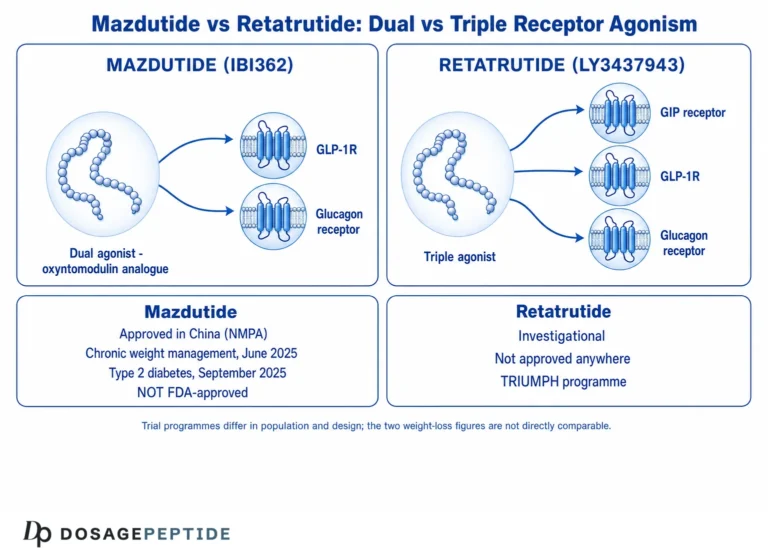
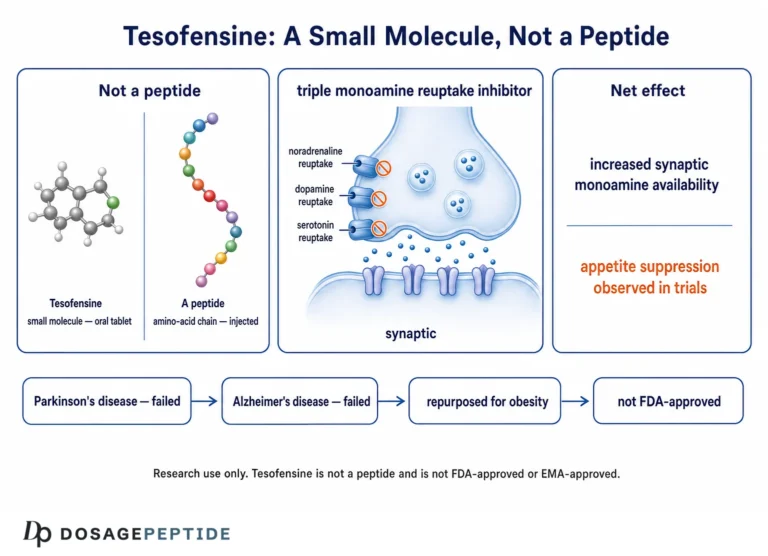
The appeal is obvious. Every other pharmacological approach to fat loss works indirectly: suppress appetite, alter reward signalling, slow gastric emptying, increase energy expenditure. Adipotide appears to skip the argument and remove the tissue. Arrowhead’s own framing captured the pitch — acting on the vasculature of fat rather than the brain, hoping to avoid the safety concerns that had derailed earlier centrally acting candidates[12]. For readers comparing mechanisms, the contrast with a centrally acting monoamine reuptake inhibitor such as tesofensine is instructive: opposite ends of the design space, each with a different class of risk.
But the mechanism cuts both ways, for three connected reasons.
Selectivity is relative, not absolute. Prohibitin is not exclusive to adipose endothelium; it is a multifunctional protein expressed across many tissues. What the 2004 work established is enrichment sufficient for preferential homing — a weaker claim than exclusivity. A homing peptide concentrates a payload; it does not confine it.
The payload is indiscriminate by design. D(KLAKLAK)2 has no tissue preference of its own. It kills any cell it gets inside. The entire safety margin rests on the targeting domain and on the payload’s inability to enter cells unassisted — a narrow foundation for a cytotoxic agent given daily for four weeks.
The kidney is the most vulnerable bystander. The kidneys receive roughly a fifth of cardiac output and are exceptionally richly vascularised, and the proximal tubule is specialised for reabsorbing filtered small molecules, including peptides. A protease-resistant cationic peptidomimetic circulating at pharmacological concentrations is close to a worst case for that tissue. The proximal tubule injury seen in monkeys is not a random adverse event; it is the mechanism operating exactly as designed, in the wrong organ — which is why it appeared reliably and dose-dependently across species.
A further consideration is rarely discussed: ablating a depot’s vasculature is not obviously reversible the way stopping a drug is. Whether destroyed adipose microvasculature regenerates fully, and what happens to fat storage capacity if it does not, remain open questions. No published study followed animals long enough to answer them.
Is adipotide approved, and is it legal?
Adipotide is not FDA-approved for any indication. It does not appear as an approved product in the FDA’s Drugs@FDA database[13], has no approved label, and has no authorised human use pathway. It is not approved in the EU, the UK, Australia or anywhere else. Its only regulatory status in human medicine was as an investigational agent under an IND for a trial that terminated.
Material sold today as adipotide or FTPP is sold strictly as a research chemical for laboratory use, outside any framework governing drug identity, purity or potency. The distinction between an investigational drug manufactured to clinical standards under an IND and a vial purchased online is not a technicality — they are different categories of substance. The legal status of research peptides varies by jurisdiction and intended use, and research-use-only labelling is a statement about permitted use, not a quality certification.
For laboratories characterising such material, two practical documents matter more than any marketing copy: an interpretable certificate of analysis with HPLC and mass spectrometry data, and correct handling conditions — see our references on reading a peptide COA and on storage before and after reconstitution. Compound-specific handling and reconstitution parameters reported in the literature are compiled on our adipotide 5 mg vial reference page, which documents what was used in published animal studies and is not a recommendation for any use in humans.
How does adipotide compare with other fat-loss research compounds?
Adipotide is an outlier, and the comparison is instructive precisely because it is so unfavourable on evidence. Most compounds discussed in fat-loss research belong to recognisable pharmacological families with substantial human data — incretin receptor agonists with completed Phase 3 programmes and approvals, or centrally acting agents with published human trials. Adipotide belongs to none of them: it is a targeted cytotoxic agent borrowed from oncology drug design, and its human dossier is one terminated trial with four participants and no results.
Three points follow. On quantity of evidence, adipotide sits at the extreme low end of anything commonly discussed for fat loss, notwithstanding the visual drama of the monkey data. Its mechanism is structural rather than signalling-based, which changes the shape of the risk: stopping a receptor agonist restores baseline signalling, whereas whether an ablated adipose capillary bed reconstitutes after discontinuation has never been studied. And its principal toxicity was identified in a vital organ at doses in the range producing the intended effect, meaning the therapeutic window was narrow at the outset.
That last point has been tested directly. Hossen and colleagues compared adipotide against a prohibitin-targeted nanoparticle carrying the same KLA payload, and found the nanoparticle produced weight and ectopic fat reduction at a low dose at which the bioconjugate did not[9]. This is preclinical mouse work, but it suggests the therapeutic index problem may belong to the bioconjugate format rather than to vascular targeting as a concept — scientifically encouraging, and entirely irrelevant to the safety of the bioconjugate itself. For orientation across the wider field, see our overview of peptides studied for fat loss and the evidence tier each one occupies.
Frequently Asked Questions
What is adipotide?
Adipotide is an experimental synthetic peptidomimetic with the sequence CKGGRAKDC-GG-D(KLAKLAK)2. It combines a homing domain that binds prohibitin on the blood vessels supplying white fat with a proapoptotic payload built from D-amino acids. It was studied as an anti-obesity candidate in mice and monkeys, entered one terminated Phase 1 trial, and is not approved for any human use.
Does adipotide kill fat cells directly?
No, and this is the most widely repeated error about the compound. Adipotide targets endothelial cells lining the blood vessels that feed white adipose tissue. Those cells undergo apoptosis, the capillary bed is destroyed, and adipocytes then die secondarily from loss of blood supply. The mechanism is vascular ablation, closer to an anti-angiogenic cancer strategy than to a metabolic drug.
What does FTPP stand for?
FTPP is a research-chemical marketing abbreviation, usually expanded as fat-targeted or fat-targeting proapoptotic peptide. It appears in vendor listings, not in the peer-reviewed literature or in any regulatory record for this compound. The same molecule has also been called Prohibitin Targeting Peptide 1, abbreviated Prohibitin-TP01 on its clinical trial registration, and Adipotide, a trade name registered by its commercial developer.
What were adipotide’s side effects in animal studies?
The dominant finding in the 2011 primate study was dose-dependent proximal tubule injury above 0.25 mg/kg: elevated serum creatinine, glucosuria and proteinuria in the obese cohort, and tubular necrosis and regeneration on histology in the lean toxicology arm. Most serum and urine abnormalities reversed within 28 days of stopping, and lesions were minimal after recovery. Chow consumption also fell with dose.
Was adipotide ever tested in humans?
Once. Trial NCT01262664 at MD Anderson Cancer Center was a Phase 1 dose-escalation study in patients with metastatic prostate cancer who were also obese. It planned up to 39 participants, enrolled four, and is listed as terminated with no results posted. No human efficacy or safety data for adipotide has ever been published in the peer-reviewed literature.
Why did adipotide development stop?
The sponsor never publicly specified a reason. What is documented is that the single registered trial terminated with four of 39 planned participants and no posted results, and that Arrowhead subsequently reoriented its pipeline toward RNA interference therapeutics. Explanations attributing the stop specifically to human kidney toxicity are speculation, because no human safety data was ever released.
Is adipotide FDA-approved?
No. Adipotide is not approved by the FDA or any other regulator for any indication, in any country. It has no approved label and no authorised human use pathway. Its only human regulatory status was as an investigational agent under an IND cleared in January 2012 for a trial that was subsequently terminated. It is sold today solely as a research chemical for laboratory use.
How is adipotide different from GLP-1 based obesity drugs?
They share almost nothing beyond the word peptide. Incretin-based agents are receptor agonists that modulate physiological signalling, are reversible on discontinuation, and carry large completed human trial programmes and regulatory approvals. Adipotide is a targeted cytotoxic construct that structurally destroys tissue, with a preclinical-only evidence base and a single terminated four-patient human trial.
Why does adipotide affect the kidneys specifically?
Two anatomical facts converge. The kidneys receive roughly a fifth of cardiac output and are among the most densely vascularised organs, so any circulating vascular-targeting agent reaches them heavily. Separately, the proximal tubule is specialised to reabsorb filtered small molecules including peptides, concentrating the compound in exactly the cells its payload is designed to kill. The renal finding reflects the mechanism working in the wrong tissue.
References
- Barnhart KF, Christianson DR, Hanley PW, Driessen WHP, Bernacky BJ, Baze WB, Wen S, Tian M, Ma J, Kolonin MG, Saha PK, Do KA, Hulvat JF, Gelovani JG, Chan L, Arap W, Pasqualini R. A peptidomimetic targeting white fat causes weight loss and improved insulin resistance in obese monkeys. Science Translational Medicine. 2011;3(108):108ra112. Full text (PMC3666164)
- Kolonin MG, Saha PK, Chan L, Pasqualini R, Arap W. Reversal of obesity by targeted ablation of adipose tissue. Nature Medicine. 2004;10(6):625–632. PubMed 15133506
- Ellerby HM, Arap W, Ellerby LM, Kain R, Andrusiak R, Del Rio G, Krajewski S, Lombardo CR, Rao R, Ruoslahti E, Bredesen DE, Pasqualini R. Anti-cancer activity of targeted pro-apoptotic peptides. Nature Medicine. 1999;5(9):1032–1038. PubMed 10470080
- Staquicini FI, Cardó-Vila M, Kolonin MG, Trepel M, Edwards JK, Nunes DN, et al. Vascular ligand-receptor mapping by direct combinatorial selection in cancer patients. Proceedings of the National Academy of Sciences USA. 2011;108(46):18637–18642. Full text (PMC3219136)
- Salameh A, Daquinag AC, Staquicini DI, An Z, Hajjar KA, Pasqualini R, Arap W, Kolonin MG. Prohibitin/annexin 2 interaction regulates fatty acid transport in adipose tissue. JCI Insight. 2016;1(10):e86351. Full text (PMC4959783)
- Daquinag AC, Zhang Y, Kolonin MG. Vascular targeting of adipose tissue as an anti-obesity approach. Trends in Pharmacological Sciences. 2011;32(5):300–307. PubMed 21349592
- Kim DH, Sartor MA, Bain JR, Sandoval D, Stevens RD, Medvedovic M, Newgard CB, Woods SC, Seeley RJ. Rapid and weight-independent improvement of glucose tolerance induced by a peptide designed to elicit apoptosis in adipose tissue endothelium. Diabetes. 2012;61(9):2299–2310. Full text (PMC3425411)
- Criscione L. Comment on “A peptidomimetic targeting white fat causes weight loss and improved insulin resistance in obese monkeys” (with author reply). Science Translational Medicine. 2012;4(131):131le2. PubMed 22539771
- Hossen N, Kajimoto K, Akita H, Hyodo M, Harashima H. A comparative study between nanoparticle-targeted therapeutics and bioconjugates as obesity medication. Journal of Controlled Release. 2013;171(2):104–112. PubMed 23871959
- ClinicalTrials.gov. NCT01262664 — A First-in-Man, Phase I Evaluation of A Single Cycle of Prohibitin Targeting Peptide 1 in Patients With Metastatic Prostate Cancer and Obesity. Sponsor: M.D. Anderson Cancer Center. Status: Terminated. Registry record
- Arrowhead Research Corporation. “Arrowhead Announces FDA Clearance to Initiate Adipotide™ Phase I Clinical Trial.” Company press release — not peer-reviewed. 4 January 2012. Press release
- Arrowhead Research Corporation. “Arrowhead Announces Dosing of First Patient with Anti-Obesity Treatment Adipotide in a Phase 1 Clinical Trial.” Company press release — not peer-reviewed. 11 July 2012. Press release
- U.S. Food and Drug Administration. Drugs@FDA: FDA-Approved Drugs database. Official regulator database
Research use only. This article is an educational summary of published scientific literature and regulatory records. Adipotide is not approved by the FDA or any other regulatory authority for any indication, and no peer-reviewed human efficacy or safety data exists for it. Nothing here is medical advice, a treatment recommendation, or a dosing protocol for human use. Doses referenced are those reported in published animal studies and are cited as historical scientific record only. dosagepeptide.com does not sell peptides. Where this site links to a commercial supplier, that link may be a paid or affiliate placement; no such link appears in this article, and no vendor reviewed, funded or approved its contents.