The question this article sets out to answer contains a claim worth handling carefully before we accept it. To ask what semaglutide’s clinical trials show about cardiometabolic benefits “beyond weight loss” presupposes two things: first, that such benefits exist and have been measured in rigorous trials, and second, that they can be meaningfully separated from the profound weight reduction the drug produces. The first premise is, for once in the peptide field, on solid ground. Semaglutide is not an investigational research chemical; it is an FDA-approved medicine sold as Ozempic and Rybelsus for type 2 diabetes and as Wegovy for chronic weight management and, more recently, for cardiovascular risk reduction. Its cardiometabolic effects have been tested in some of the largest randomized outcome trials ever run on a metabolic drug, enrolling tens of thousands of participants across the SUSTAIN, PIONEER, STEP, SELECT, and FLOW programs.123
The second premise — the “beyond weight loss” part — is where honesty demands more nuance. Semaglutide causes so much weight loss (roughly 15% of body weight at the 2.4 mg obesity dose) that disentangling which benefits are caused by weight reduction from those that operate independently of it is genuinely difficult, and in several domains the trials themselves cannot fully resolve the question. So this piece does not treat “beyond weight loss” as a settled fact to be celebrated. It treats it as a precise scientific question: for each cardiometabolic outcome semaglutide improves — major adverse cardiovascular events, blood pressure, lipids, inflammation, kidney function, heart-failure symptoms, glycemic control — how much of the benefit is plausibly weight-independent, what did the trials actually measure, and where does the evidence remain silent or ambiguous?
This is written for readers who want an accurate map rather than a marketing brochure. We will walk through the mechanism that makes cardiometabolic effects biologically plausible, confront the weight-loss confound head-on, then examine the pivotal trials one class of outcome at a time — cardiovascular events in diabetes and in obesity without diabetes, the risk-factor layer, kidney protection, heart failure, and glycemia — before turning to the harder question of weight-independence and the real limits of what has been shown. Throughout, the guiding principle is measured accuracy: semaglutide has demonstrated benefits that are, by peptide-field standards, exceptionally well evidenced, and precisely because of that it deserves to be described without exaggeration.
How Semaglutide Works, and Why Cardiometabolic Effects Are Plausible
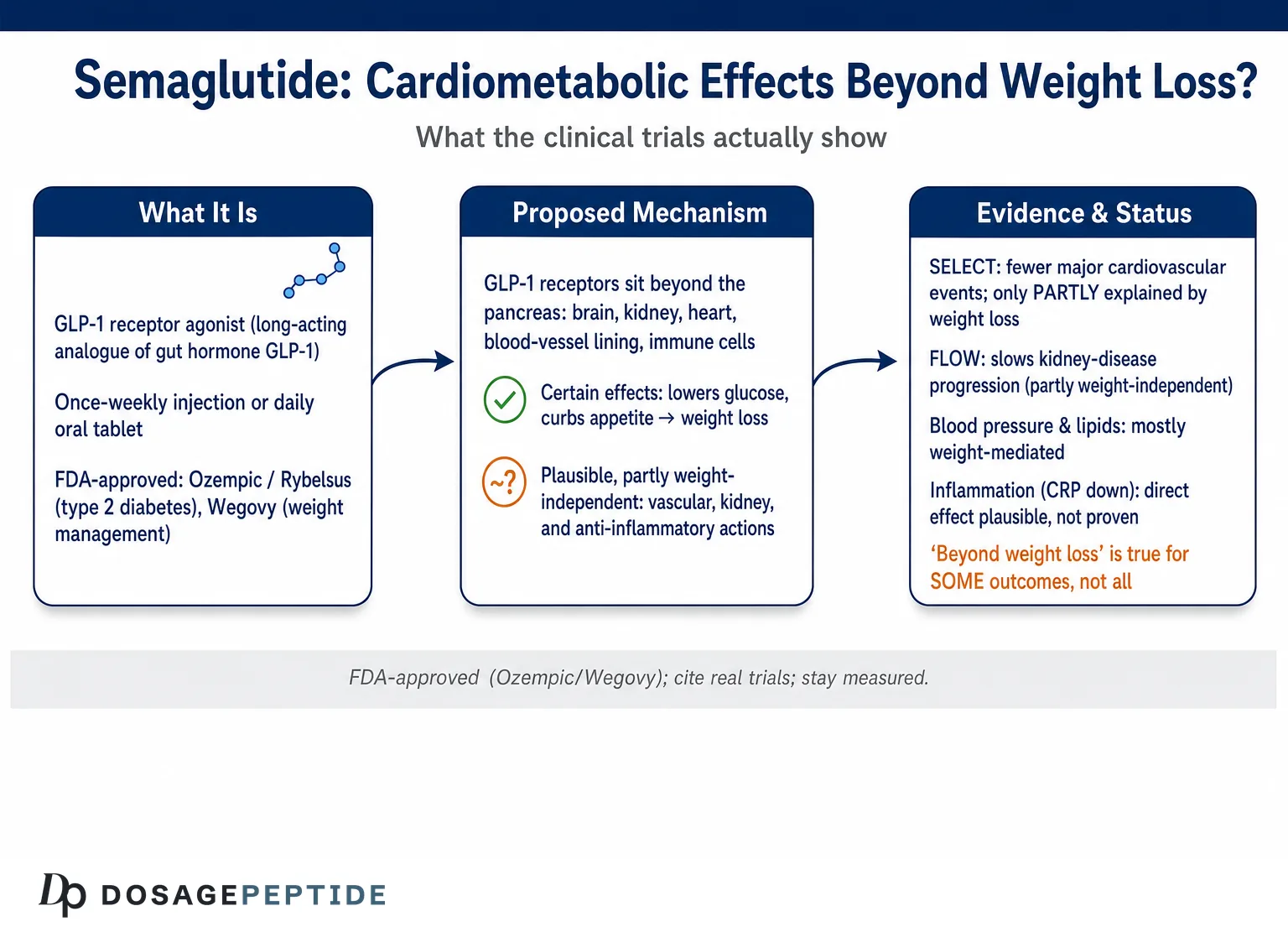
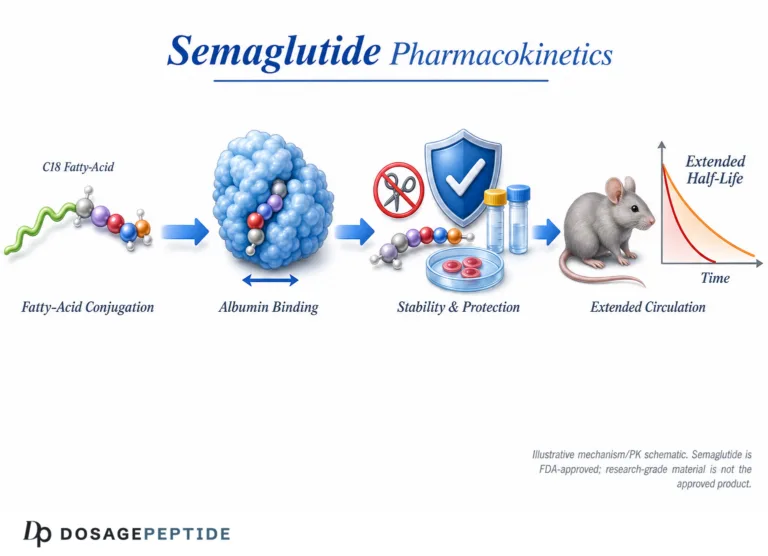
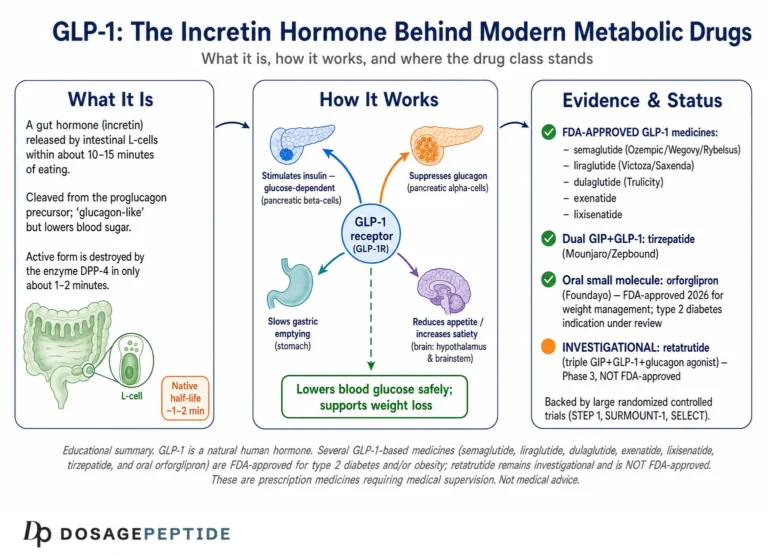
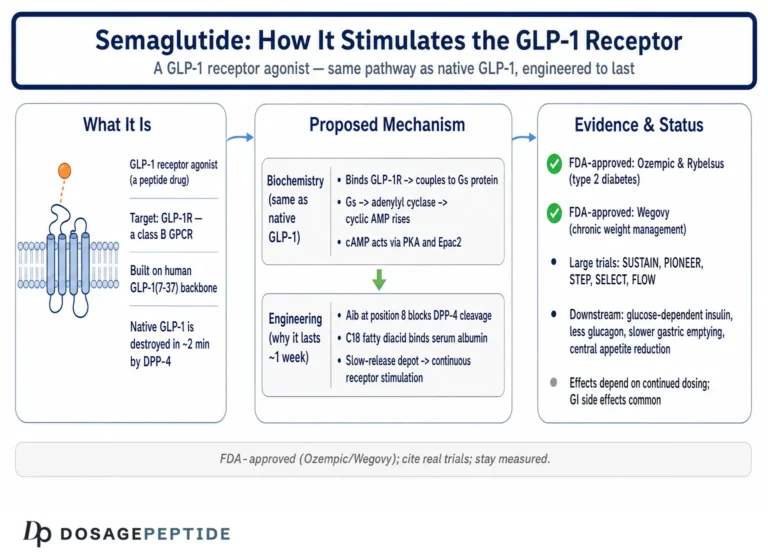
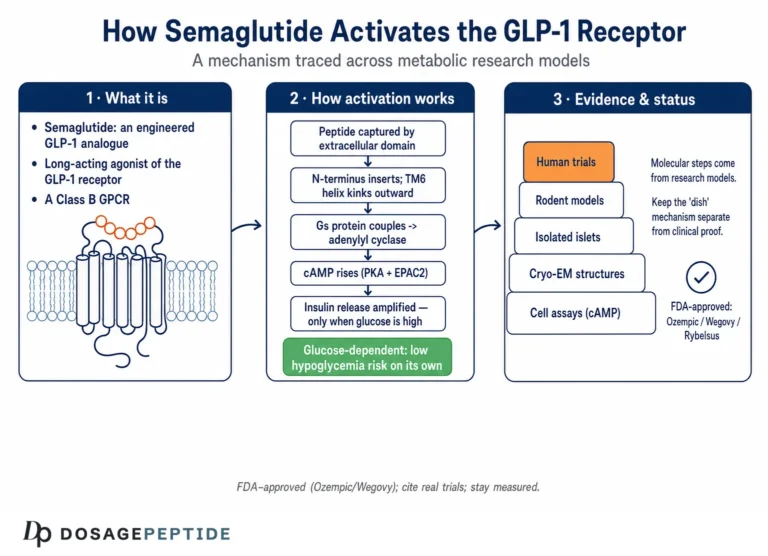
Semaglutide is a glucagon-like peptide-1 (GLP-1) receptor agonist: a long-acting analogue of the incretin hormone GLP-1, engineered for a roughly week-long half-life through fatty-acid acylation that binds it to albumin and slows its clearance.4 Native GLP-1 is released from intestinal L-cells after eating and is degraded within minutes by the enzyme dipeptidyl peptidase-4; semaglutide’s structural modifications resist that degradation, allowing once-weekly subcutaneous dosing (or, in the Rybelsus formulation, daily oral dosing with an absorption enhancer).
The reason cardiometabolic effects are biologically plausible — rather than a surprise — is that the GLP-1 receptor is not confined to the pancreas. It is expressed across tissues directly relevant to cardiometabolic health: pancreatic islet cells, the central nervous system (including hypothalamic appetite centers and brainstem regions), the gastrointestinal tract, the kidney, the sinoatrial node of the heart, and vascular endothelium and immune cells.4 This distributed receptor biology means a single molecule can, in principle, touch glucose, appetite, blood pressure, inflammation, and renal handling through several parallel routes.
The best-characterized actions are the classical incretin effects. In the pancreas, semaglutide augments glucose-dependent insulin secretion and suppresses glucagon, lowering blood glucose with a low intrinsic risk of hypoglycemia because the insulinotropic effect fades as glucose normalizes.4 In the brain and gut, it slows gastric emptying and reduces appetite and energy intake, which drives the weight loss. Those two arms — glycemic and appetitive — are established beyond serious dispute.
The cardiometabolic arms are where mechanism becomes more layered. Several plausible, partly weight-independent pathways have been proposed and are supported to varying degrees by preclinical and human data. GLP-1 receptor activation on vascular endothelium may improve endothelial function and nitric-oxide signaling; effects on the kidney include natriuresis (increased sodium excretion) and reductions in glomerular hyperfiltration and albuminuria that are not fully explained by weight or glucose changes; and there is growing evidence of a direct anti-inflammatory effect, with GLP-1 receptor signaling dampening pro-inflammatory pathways in immune cells and vasculature.410 Readers interested in how the broader GLP-1 class engages vascular biology will find the site’s discussion of GLP-1 signaling mechanisms in arterial stiffness a useful companion, and the parallel piece on how GLP-1 pathways regulate lipid metabolism covers the lipid arm in more depth.
It is worth pausing on one mechanistic subtlety that shapes how cardiovascular benefit could arise. GLP-1 receptors in the atherosclerotic plaque and vascular wall are found largely on endothelial cells and infiltrating monocytes and macrophages rather than densely on vascular smooth muscle. This matters because it steers the plausible mechanism toward modulation of the inflammatory, endothelial, and thrombotic milieu of the plaque — the biology that governs whether a plaque stays quiet or ruptures and triggers a heart attack — rather than toward a large, direct effect on vascular tone or blood pressure. That fits the clinical pattern seen in the outcome trials, where the benefit shows up as fewer atherothrombotic events rather than as a dramatic blood-pressure drop, and it is one reason the anti-inflammatory hypothesis has attracted serious attention.410
A second subtlety concerns the heart itself. The GLP-1 receptor is expressed in the sinoatrial node, which is why GLP-1 receptor agonists reliably raise resting heart rate by a few beats per minute — a class effect, not a sign of benefit, and one that has prompted careful scrutiny in the outcome trials. Reassuringly, the modest heart-rate increase did not translate into excess arrhythmic events or offset the cardiovascular benefit in the large trials, but it is a reminder that the drug’s cardiac actions are not uniformly favorable and must be weighed as a whole.410 This is the kind of detail that separates an honest mechanistic account from a promotional one: the same receptor biology that plausibly protects the vasculature also produces a physiological effect (tachycardia) that would, in isolation, be considered undesirable.
The honest framing at the mechanistic level is this: semaglutide has multiple biologically credible routes to cardiometabolic benefit, some of which (glucose, appetite/weight) are certain, and some of which (direct vascular, renal, and anti-inflammatory actions) are plausible and partly supported but not fully proven to be independent of the downstream metabolic improvements they accompany. That distinction — between a mechanism that is demonstrated and one that is merely plausible — will recur throughout this article, because it is exactly what separates careful reading of the trials from hype.
The Weight-Loss Confound: What “Beyond” Really Means
Before touring the trials, it is worth being explicit about why the “beyond weight loss” question is scientifically hard, because sloppy handling of it is the single most common source of overstatement about this drug.
Weight loss is itself a powerful cardiometabolic intervention. Losing 10–15% of body weight, by any means, tends to lower blood pressure, improve the lipid profile, reduce systemic inflammation, improve insulin sensitivity and glycemia, offload the heart, and reduce intraglomerular pressure in the kidney. So when semaglutide improves all of these things while also producing large weight loss, the default hypothesis must be that much of the benefit is mediated by the weight loss — not a mysterious extra effect. To claim a benefit is “beyond” or “independent of” weight loss, one needs specific evidence: either the benefit appears too early or too large for the weight change, or statistical mediation analyses show that weight change explains only part of it, or the effect persists in subgroups with minimal weight loss.
There are three broad patterns that trials have used to argue for weight-independent effects, and it helps to name them:
- Timing. If an outcome curve separates within weeks — before substantial weight has been lost — that suggests a mechanism acting faster than weight change. In SELECT, the cardiovascular event curves began to diverge early, within the first months, which several analysts read as evidence that not all of the benefit waits on weight loss.2
- Magnitude versus mediation. Formal mediation analyses attempt to quantify how much of an outcome is statistically explained by the change in weight (or blood pressure, glucose, etc.). In SELECT, prespecified and subsequent analyses indicated that the reduction in cardiovascular events was only partly explained by the amount of weight lost, and was broadly consistent across the range of weight change — including in participants who lost relatively little.2
- Consistency across subgroups. If a benefit is similar in people who lost a lot of weight and those who lost little, or is present regardless of baseline BMI, that argues against weight loss being the sole driver.
None of these is a perfect proof. Mediation analysis rests on assumptions and cannot fully separate correlated variables; early curve separation could reflect rapid changes in blood pressure, fluid status, or inflammation that are themselves early consequences of the drug. The responsible conclusion — and the one this article defends — is that semaglutide’s cardiometabolic benefits are best described as arising from a combination of weight loss and weight-independent actions, with the balance differing by outcome, and with “fully independent of weight” being a strong claim that the trials support only partially and only for some endpoints. The sibling article on whether semaglutide offers a sustainable solution for long-term weight loss examines the weight-loss dimension itself; here the focus is deliberately on everything else.
SELECT: Cardiovascular Events in Obesity Without Diabetes
The single most important trial for the “beyond weight loss” question is SELECT, precisely because it removed diabetes from the equation. Published by Lincoff and colleagues in the New England Journal of Medicine in 2023, SELECT randomized 17,604 adults aged 45 or older who had established cardiovascular disease and a body-mass index of at least 27 — but who did not have diabetes — to once-weekly subcutaneous semaglutide 2.4 mg or placebo, on top of standard cardiovascular care, and followed them for a mean of about 34 months.2
The primary endpoint, a composite of death from cardiovascular causes, nonfatal myocardial infarction, or nonfatal stroke (three-point MACE), occurred in 6.5% of the semaglutide group versus 8.0% of the placebo group, a hazard ratio of 0.80 (95% CI 0.72–0.90; p<0.001).2 That is a 20% relative reduction in major cardiovascular events in people with obesity or overweight and prior cardiovascular disease but no diabetes — a population in which no weight-management drug had previously demonstrated cardiovascular event reduction in a dedicated outcomes trial. On the strength of these data, the FDA in 2024 approved a cardiovascular risk-reduction indication for Wegovy, making semaglutide the first drug in its class approved to reduce cardiovascular events in this specific non-diabetic population.3
Why does SELECT matter so much for the “beyond weight loss” framing? Because it demonstrates a hard clinical outcome benefit that cannot be attributed to glucose lowering — there was no diabetes to treat. That narrows the candidate explanations to weight loss plus other, non-glycemic effects. And here the analyses become interesting: the participants lost, on average, about 9–10% of body weight, yet the cardiovascular benefit was only partly attributable to the magnitude of weight change, the event curves separated early, and the relative risk reduction was broadly consistent across categories of baseline BMI and observed weight loss.2 This is the strongest single body of evidence that semaglutide’s cardiovascular benefit is not solely a weight-loss phenomenon.
It is also instructive to look at what SELECT did and did not move among its secondary and exploratory endpoints, because the pattern is revealing. The confirmatory secondary endpoint of cardiovascular death alone showed a favorable trend but did not reach statistical significance on its own, and the same was true of all-cause mortality; the robust, statistically secure result was the three-point composite.2 This is a nuance that promotional summaries often blur by implying semaglutide was “proven to save lives.” What SELECT actually proved is a reduction in the composite of cardiovascular death, heart attack, and stroke; the mortality components pointed the right way but were not individually conclusive. Honest reporting keeps that distinction intact. A large, prespecified heart-failure composite (cardiovascular death or worsening heart failure) was also reduced, consistent with the separate STEP-HFpEF findings discussed below and adding to the picture of a broad cardiovascular effect.2
Two cautions keep this measured. First, “only partly explained by weight” is not the same as “independent of weight”; the participants still lost meaningful weight, and one cannot construct a real-world arm in which semaglutide produces its benefit with zero weight change. Second, SELECT enrolled a secondary-prevention population (everyone had established cardiovascular disease), so the results should not be extrapolated to primary prevention in otherwise healthy people with obesity, where the absolute event rates and the risk-benefit calculus differ. The 20% relative reduction, applied to a lower baseline risk, would yield a much smaller absolute benefit in a low-risk person — and the number needed to treat, harms, and cost all shift accordingly. The trial answers a specific question about high-risk secondary prevention; it does not license the broad claim that semaglutide protects everyone’s heart.
SUSTAIN-6 and PIONEER-6: The Cardiovascular Signal in Diabetes
Before SELECT, the cardiovascular story was built in type 2 diabetes, where the earliest and mechanistically foundational trials were run. SUSTAIN-6, published by Marso and colleagues in 2016, was a preapproval cardiovascular safety trial that randomized 3,297 patients with type 2 diabetes at high cardiovascular risk to subcutaneous semaglutide (0.5 or 1.0 mg weekly) or placebo for 104 weeks.1 The primary MACE outcome occurred in 6.6% of the semaglutide group versus 8.9% of placebo (hazard ratio 0.74; 95% CI 0.58–0.95), a 26% relative reduction that met the noninferiority requirement and, unexpectedly for a safety trial, suggested superiority.1 The effect was driven substantially by a reduction in nonfatal stroke (hazard ratio 0.61) and nonfatal myocardial infarction (hazard ratio 0.74).1
SUSTAIN-6 came with an important asterisk that honesty requires flagging: it also reported an increase in the rate of diabetic retinopathy complications in the semaglutide group (hazard ratio 3.02), a finding generally attributed to the effect of rapid glucose lowering in patients with pre-existing retinopathy rather than a direct toxic effect, but one that remains a genuine safety consideration and a reason for retinal monitoring in at-risk patients.1
PIONEER 6, published by Husain and colleagues in 2019, did the analogous job for the oral formulation, randomizing 3,183 patients with type 2 diabetes at high cardiovascular risk to oral semaglutide or placebo.5 The trial was designed to demonstrate cardiovascular safety (noninferiority) and did so, with a MACE hazard ratio of 0.79 (95% CI 0.57–1.11); it was not powered to prove superiority, so the point estimate is encouraging but the confidence interval crosses 1.5 A notable secondary observation was a lower rate of death from any cause (1.4% vs 2.8%; hazard ratio 0.51), though as a secondary endpoint in a safety trial this should be read as hypothesis-generating rather than definitive.5
A structural point about these two diabetes trials helps set expectations honestly: both SUSTAIN-6 and PIONEER 6 were designed primarily as cardiovascular safety studies, run to satisfy the regulatory requirement that new diabetes drugs rule out excess cardiovascular harm. They were event-driven but powered to demonstrate noninferiority, not superiority. That SUSTAIN-6 crossed into apparent superiority was a welcome bonus rather than the trial’s designed purpose, which is one reason the field waited for the larger, longer, superiority-powered SELECT trial before treating cardiovascular benefit as firmly established. Reading a safety trial’s encouraging secondary signal as though it were proof of efficacy is a common error; the measured interpretation is that SUSTAIN-6 and PIONEER 6 were consistent with benefit and set the stage, while SELECT and FLOW supplied the definitive superiority evidence.1259
The diabetes trials establish that the cardiovascular signal predates the obesity program and is not an artifact of the very high 2.4 mg dose. But they cannot separate “beyond weight loss” cleanly, because in diabetes the drug simultaneously lowers glucose, weight, blood pressure, and more. That is exactly the gap SELECT later filled by removing diabetes from the picture. For readers comparing incretin agents, the mechanistic contrast with dual and triple agonists is covered in the overview of how tirzepatide works and in the analysis of how retatrutide influences cardiovascular risk factors.
| Trial | Population | N / dose | Primary result (MACE) |
|---|---|---|---|
| SUSTAIN-61 | T2D, high CV risk | 3,297; SC 0.5/1.0 mg | HR 0.74 (0.58–0.95); 26% lower |
| PIONEER 65 | T2D, high CV risk | 3,183; oral | HR 0.79 (0.57–1.11); safety (noninferior) |
| SELECT2 | Overweight/obesity, prior CVD, NO diabetes | 17,604; SC 2.4 mg | HR 0.80 (0.72–0.90); 20% lower |
Blood Pressure, Lipids, and Inflammation: The Risk-Factor Layer
Beneath the hard-outcome trials sits a layer of intermediate cardiometabolic risk factors that semaglutide reliably improves, and these help explain how the outcome benefits might arise. The STEP program — the phase 3 obesity trials — measured these systematically, and exploratory analyses across STEP 1 through STEP 5 provide the clearest picture.67
Blood pressure. Across the STEP trials, semaglutide 2.4 mg produced greater reductions in systolic and diastolic blood pressure than placebo, with systolic reductions on the order of 5–6 mmHg placebo-adjusted in several trials.6 A drop of that size is clinically meaningful at population scale, but it is also well within what substantial weight loss alone would predict, so blood pressure is a domain where the “beyond weight loss” case is weak — the effect is real but largely consistent with being weight-mediated, plausibly aided by the drug’s natriuretic action.
Lipids. Semaglutide modestly improves the lipid profile, lowering triglycerides and, to a lesser degree, non-HDL and LDL cholesterol, with the triglyceride effect being the most consistent.6 These changes are again broadly in keeping with weight loss and improved insulin sensitivity rather than a dramatic independent lipid-lowering action; semaglutide is not a substitute for a statin and was never shown to be.
Inflammation. This is the risk factor with the most interesting “beyond weight loss” texture. Semaglutide reduces high-sensitivity C-reactive protein (hs-CRP), a marker of systemic inflammation, substantially — on the order of a 40% or greater reduction versus placebo in pooled STEP analyses.8 Part of this tracks with weight loss, but the magnitude and the mechanistic backdrop (GLP-1 receptor expression on immune cells and evidence of direct anti-inflammatory signaling) have led investigators to argue that at least some of the CRP reduction reflects a direct anti-inflammatory effect.810 Because vascular inflammation is central to atherosclerosis, an anti-inflammatory action is one of the more attractive candidate explanations for the early cardiovascular curve separation seen in SELECT. It remains, however, a candidate: CRP is a marker, not a validated mediator, and no trial has proven that the CRP reduction causes the event reduction.
| Risk factor | Typical direction with semaglutide 2.4 mg | How much is “beyond weight loss”? |
|---|---|---|
| Systolic blood pressure | ↓ ~5–6 mmHg vs placebo6 | Mostly weight-mediated; natriuresis may add |
| Triglycerides / non-HDL | ↓ modest6 | Largely consistent with weight/insulin changes |
| hs-CRP (inflammation) | ↓ ~40%+ vs placebo8 | Partly weight-driven; direct anti-inflammatory effect plausible |
| Waist circumference | ↓ markedly6 | Reflects visceral fat loss (i.e., weight-dependent) |
| HbA1c / fasting glucose | ↓ (in diabetes)6 | Direct incretin effect plus weight |
FLOW: Kidney Protection in Diabetic Chronic Kidney Disease
If SELECT is the flagship cardiovascular trial, FLOW is arguably the strongest case for a genuinely organ-protective effect that is difficult to attribute to weight loss alone. Published by Perkovic and colleagues in 2024, FLOW randomized 3,533 adults with type 2 diabetes and chronic kidney disease (reduced eGFR and/or significant albuminuria) to subcutaneous semaglutide 1.0 mg weekly or placebo, and was stopped early for efficacy after a median follow-up of about 3.4 years.9
The primary composite outcome — kidney failure (dialysis, transplantation, or sustained eGFR <15), a sustained ≥50% reduction in eGFR, or death from kidney-related or cardiovascular causes — occurred significantly less often with semaglutide (hazard ratio 0.76; 95% CI 0.66–0.88; p=0.0003), a 24% relative risk reduction.9 Semaglutide also slowed the annual decline in eGFR and, in the same trial, reduced cardiovascular events (roughly 18% lower) and death from any cause (about 20% lower).9
Why is FLOW compelling for weight-independence? The kidney effects — reduced albuminuria, slowed eGFR decline — are difficult to explain by weight loss alone at the 1.0 mg diabetes dose, which produces far less weight change than the 2.4 mg obesity dose. The proposed mechanisms include reductions in glomerular hyperfiltration and intraglomerular pressure, natriuresis, blood-pressure lowering, and anti-inflammatory and anti-fibrotic effects within the kidney, several of which are at least partly independent of weight.49 FLOW thus extends semaglutide’s cardiometabolic reach into renal outcomes, a domain where the “beyond weight loss” interpretation is more defensible than it is for, say, blood pressure.
The eGFR-slope finding deserves emphasis because it speaks to disease modification rather than a one-off shift. Semaglutide reduced the rate of decline in estimated glomerular filtration rate by roughly 1.2 mL/min/1.73 m² per year versus placebo — a slope difference that, sustained over years, translates into meaningfully delayed progression toward kidney failure.9 Slowing the trajectory of kidney-function loss is precisely the kind of endpoint that argues for an effect on the underlying disease process, not merely a hemodynamic or fluid-balance artifact, and it is harder to explain by the modest weight change at the 1.0 mg dose than a one-time drop in albuminuria would be.
An important practical question the FLOW investigators addressed is whether the benefit persists when patients are already taking an SGLT2 inhibitor, the other drug class that has transformed diabetic kidney care. A prespecified analysis indicated the kidney and cardiovascular benefits of semaglutide were broadly consistent regardless of baseline SGLT2-inhibitor use, supporting the idea that the two classes act through at least partly complementary mechanisms and can be layered.9 That is clinically meaningful: it positions semaglutide as an additive tool in diabetic CKD rather than an alternative to established renoprotective therapy.
The measured caveat: FLOW was conducted in people with diabetes and established kidney disease, so its kidney-protection result should not be generalized to people without diabetes or without CKD. And as with all these trials, the drug’s benefits sit on top of — not instead of — established therapies such as renin-angiotensin system blockade and, increasingly, SGLT2 inhibitors.
STEP-HFpEF: Heart Failure With Preserved Ejection Fraction
Heart failure with preserved ejection fraction (HFpEF) is a condition in which, for decades, almost no drug improved patients’ symptoms in a convincing randomized trial. The obesity phenotype of HFpEF — where excess adiposity and systemic inflammation appear central to the disease — became a natural target for semaglutide, and the STEP-HFpEF program tested it directly.
The first trial, STEP-HFpEF (Kosiborod and colleagues, 2023), enrolled 529 patients with HFpEF (ejection fraction ≥45%), a BMI of at least 30, and heart-failure symptoms, without diabetes, and randomized them to semaglutide 2.4 mg or placebo for 52 weeks.11 The dual primary endpoints both favored semaglutide decisively: the Kansas City Cardiomyopathy Questionnaire clinical summary score (a patient-reported measure of symptoms and physical limitation) improved by about 7.8 points more than placebo, and body weight fell by about 10.7 percentage points more.11 Semaglutide also improved six-minute walk distance and reduced CRP, and the symptom benefit was roughly twice the conventional threshold for clinical meaningfulness.11
The companion trial STEP-HFpEF DM (Kosiborod and colleagues, 2024) reproduced the design in patients who also had type 2 diabetes, with concordant results: greater improvements in heart-failure symptoms, physical limitation, and weight than placebo at one year.12 Together the two trials establish semaglutide as a symptom-modifying therapy in obesity-related HFpEF across diabetic and non-diabetic patients.
How much of the HFpEF benefit is “beyond weight loss”? Here honesty cuts the other way. In HFpEF specifically, a substantial part of the symptom and functional improvement plausibly is weight-mediated — losing 10% of body weight reduces the mechanical and metabolic load driving obesity-phenotype HFpEF. Mediation analyses suggested that weight loss explained a meaningful share of the KCCQ improvement, though not all of it, leaving room for additional effects (reduced congestion, lower inflammation).11 So HFpEF is a domain where semaglutide clearly helps, but where the mechanism is more weight-linked than in, say, the kidney. It is also worth noting these trials measured symptoms and function, not hard endpoints like heart-failure hospitalization or death as their primary outcome, so the claim is “improves how patients feel and function,” not yet “prevents heart-failure death.”
Glycemic Control and Insulin Sensitivity
The oldest and least controversial cardiometabolic benefit is glycemic. In type 2 diabetes, semaglutide is among the most effective non-insulin glucose-lowering agents, reducing HbA1c by roughly 1.0–1.8 percentage points depending on dose and baseline across the SUSTAIN and PIONEER programs, with a low intrinsic hypoglycemia risk owing to the glucose-dependence of its insulinotropic action.14
Strictly speaking, glucose lowering is not “beyond weight loss” — it is a distinct, direct incretin effect that operates in parallel with weight loss. The two reinforce one another: better glycemia reduces glucotoxicity on beta cells and the vasculature, and weight loss improves insulin sensitivity, lowering the insulin resistance (measured by indices such as HOMA-IR) that underlies type 2 diabetes.6 This dual action is why semaglutide improves the entire glycemic-metabolic axis rather than a single number.
There is a mechanistic reason the glycemic and cardiometabolic stories reinforce rather than merely coexist. Chronic hyperglycemia damages the vasculature through advanced glycation end-products, oxidative stress, and endothelial dysfunction, so improving glucose control removes one driver of the very atherosclerotic and renal injury that the outcome trials measure. In that sense the glycemic effect is not a separate silo but part of the integrated cardiometabolic benefit — one input among several (weight, blood pressure, inflammation, direct vascular and renal actions) that together plausibly account for the outcomes. The point for the “beyond weight loss” question is simply that glucose lowering is its own distinct mechanism, neither caused by weight loss nor an instance of it, and it is present chiefly in the diabetic populations where there is elevated glucose to correct.
It is also worth being precise about the size of the glycemic effect and its ceiling. The 1.0–1.8 percentage-point HbA1c reduction places semaglutide among the more potent injectable non-insulin options, but the effect is dose- and baseline-dependent: patients starting with higher HbA1c see larger absolute reductions, and the incremental benefit narrows as glucose approaches target. Crucially, because the insulinotropic action is glucose-dependent, semaglutide does not drive glucose below normal on its own the way a sulfonylurea or exogenous insulin can, which is why hypoglycemia is uncommon unless it is combined with those agents. That safety characteristic is part of why the drug integrates well into multi-agent diabetes regimens, but it also means semaglutide is not a tool for the tight, aggressive glucose control that some patients require, where insulin remains necessary.4
For the purposes of this article’s question, the glycemic benefit is important context rather than the headline: in people without diabetes (as in SELECT and STEP-HFpEF), there is little glucose to lower, yet cardiovascular and heart-failure benefits still appeared — which is part of why those non-diabetic trials are so informative about weight-independent and non-glycemic effects. Whether semaglutide genuinely qualifies as a breakthrough for type 2 diabetes specifically is examined, for the related dual agonist, in the analysis of whether current evidence supports tirzepatide as a breakthrough therapy for type 2 diabetes; the semaglutide glycemic record is comparably robust if generally a step less potent on weight.
So How Much Really Is “Beyond” Weight Loss?
Pulling the trials together, we can give a reasonably honest, outcome-by-outcome verdict on the article’s central question — while resisting the temptation to declare every benefit magically weight-independent.
Cardiovascular events (SELECT): The strongest case for a partly weight-independent benefit. Early curve separation and mediation analyses indicate weight loss explains only part of the 20% MACE reduction, pointing to additional non-glycemic, possibly anti-inflammatory and vascular, mechanisms.2 Verdict: genuinely more than weight loss, though not proven fully independent of it.
Kidney outcomes (FLOW): A defensible case for weight-independent renal protection, given the modest weight change at the 1.0 mg dose and the plausible hemodynamic and anti-fibrotic mechanisms.9 Verdict: substantially beyond weight loss.
Inflammation (hs-CRP): Partly beyond weight loss; a direct anti-inflammatory effect is plausible and biologically supported, but CRP remains a marker, not a proven mediator.8 Verdict: plausibly beyond, not established.
Blood pressure and lipids: Real improvements, but largely consistent with what the weight loss itself would produce.6 Verdict: mostly weight-mediated.
Heart-failure symptoms (STEP-HFpEF): Clear benefit, but a large share appears weight-mediated in the obesity phenotype.11 Verdict: benefit real, mechanism more weight-linked.
Glycemia: A distinct, direct incretin effect — neither “beyond” nor caused by weight loss, but parallel to it.4 Verdict: independent by mechanism, but a different axis entirely.
| Outcome | Key trial | Is it “beyond weight loss”? |
|---|---|---|
| Major cardiovascular events | SELECT2 | Partly — only partly explained by weight; early curve separation |
| Kidney disease progression | FLOW9 | Substantially — modest weight change at 1.0 mg dose |
| Systemic inflammation (CRP) | STEP 1–38 | Plausibly — direct effect supported but not proven |
| Blood pressure | STEP program6 | Mostly weight-mediated (natriuresis may add) |
| Lipids | STEP program6 | Largely weight-mediated |
| Heart-failure symptoms | STEP-HFpEF11 | Real, but a large share weight-linked |
| Glycemic control | SUSTAIN/PIONEER15 | Direct incretin effect — parallel to, not caused by, weight |
The synthesis is that “beyond weight loss” is true for some outcomes (cardiovascular events, kidney protection, probably inflammation) and largely false for others (blood pressure, lipids, much of the HFpEF symptom benefit). Semaglutide is best understood not as a weight-loss drug that happens to have side benefits, nor as a magic pleiotropic agent whose effects float free of weight, but as a metabolic agent that improves cardiometabolic health through both weight loss and a set of direct, partly weight-independent actions on the vasculature, kidney, and inflammatory system. That layered picture is the accurate one, and it is impressive enough without embellishment.
Limits, Unknowns, and What the Trials Do Not Show
An honest account has to be as clear about the boundaries of the evidence as about its strengths. Several important limitations and open questions temper any enthusiasm.
Populations were specific, not universal. SELECT enrolled people with established cardiovascular disease and overweight/obesity but no diabetes; FLOW enrolled people with diabetes and CKD; STEP-HFpEF enrolled obese HFpEF patients. The benefits are demonstrated in those populations. They should not be assumed identical in, for example, healthy young people with mild overweight, in whom neither efficacy nor the risk-benefit balance has been established. Using semaglutide as a general-purpose “cardiometabolic optimizer” in low-risk individuals is not what these trials tested.
Adverse effects are real. Gastrointestinal effects (nausea, vomiting, diarrhea, constipation) are common and drive a meaningful minority of discontinuations. The SUSTAIN-6 retinopathy signal warrants attention in patients with pre-existing diabetic eye disease undergoing rapid glucose lowering.1 There are class considerations around gallbladder events, pancreatitis (rare), and a rodent-based thyroid C-cell tumor signal that has led to a labeled contraindication in people with a personal or family history of medullary thyroid carcinoma or MEN 2, even though a causal human risk has not been established. Muscle-mass loss accompanying rapid weight loss is an area of active study. None of this negates the benefits; all of it belongs in an honest ledger.
Mechanistic attribution remains partly inferential. As emphasized throughout, mediation and subgroup analyses are informative but cannot definitively prove weight-independence. The confident statement “semaglutide reduces cardiovascular events independently of weight loss” overreaches; “semaglutide reduces cardiovascular events through a combination of weight loss and additional mechanisms not fully explained by weight change” is what the data support.
Durability and discontinuation. Cardiometabolic benefits depend on continued treatment; weight and risk factors tend to regress substantially after semaglutide is stopped, as shown in the STEP 1 extension.7 This is a chronic-therapy model, not a cure, and the long-term (decade-plus) safety and benefit profile is still accumulating.
Comparative and head-to-head evidence is limited. The outcome trials tested semaglutide against placebo on top of standard care, not against other active agents. There is no large cardiovascular-outcomes trial pitting semaglutide directly against a dual agonist such as tirzepatide, against an SGLT2 inhibitor, or against bariatric surgery for hard endpoints. So while semaglutide has proven it reduces events relative to placebo, statements ranking it above or below those alternatives on cardiovascular outcomes are extrapolations from separate trials with different populations and designs, not conclusions from head-to-head data. The honest framing is that semaglutide has a robust placebo-controlled evidence base and a comparatively thin comparative-effectiveness one.
Not a replacement for foundational care. In every trial, semaglutide was added to guideline-directed therapy. It complements statins, antihypertensives, RAS blockade, SGLT2 inhibitors, and lifestyle change; it does not replace them, and the evidence base reflects that combination rather than monotherapy.
Finally, a note on sourcing and setting that this site consistently emphasizes: the trial evidence pertains to pharmaceutical-grade semaglutide administered under medical supervision at studied doses. It does not transfer to unregulated “research” material of uncertain identity and purity, nor to unsupervised use. Readers who want to understand the terminology behind these trials may find the site’s peptide glossary a helpful reference for the pharmacological terms used throughout this article and its companion pieces.
Frequently Asked Questions
Is semaglutide FDA-approved for cardiovascular protection, or only for weight loss and diabetes?
Both, in specific forms and populations. Semaglutide is approved as Ozempic and Rybelsus for type 2 diabetes and as Wegovy for chronic weight management. In 2024, following the SELECT trial, the FDA additionally approved a cardiovascular risk-reduction indication for Wegovy in adults with established cardiovascular disease and overweight or obesity — making it the first drug of its class approved to reduce major cardiovascular events in that non-diabetic population.23
Does semaglutide reduce heart attacks and strokes even in people without diabetes?
Yes, in the population studied. In SELECT, semaglutide reduced the composite of cardiovascular death, nonfatal myocardial infarction, and nonfatal stroke by 20% (hazard ratio 0.80) in adults with prior cardiovascular disease and overweight/obesity but without diabetes.2 This benefit was only partly explained by weight loss, suggesting additional mechanisms are at work.
Are the cardiovascular benefits just a result of losing weight?
Not entirely. Weight loss contributes, but analyses of SELECT found the cardiovascular benefit was only partly attributable to the amount of weight lost, that event curves separated early (before much weight was lost), and that the benefit was broadly consistent across levels of weight change.2 The accurate statement is that the benefit arises from a combination of weight loss and additional, partly weight-independent effects — not that it is fully independent of weight.
What did the FLOW trial show about the kidneys?
FLOW showed that in people with type 2 diabetes and chronic kidney disease, semaglutide 1.0 mg reduced major kidney events (kidney failure, large sustained eGFR decline, or kidney/cardiovascular death) by 24% (hazard ratio 0.76) and slowed the loss of kidney function, while also lowering cardiovascular events and all-cause death.9 Because the weight change at this dose is modest, kidney protection is one of the more plausibly weight-independent benefits.
Can semaglutide help with heart failure?
In a specific type. The STEP-HFpEF and STEP-HFpEF DM trials showed that in patients with obesity-related heart failure with preserved ejection fraction, semaglutide 2.4 mg improved symptoms, physical function, and weight versus placebo.1112 These trials measured symptoms and function rather than heart-failure death, and a substantial part of the benefit appears linked to weight loss in this obesity phenotype.
Does semaglutide reduce inflammation?
It reduces high-sensitivity C-reactive protein, a marker of systemic inflammation, by roughly 40% or more versus placebo in pooled STEP analyses.8 Some of this tracks with weight loss, but a direct anti-inflammatory effect is biologically plausible given GLP-1 receptor activity in immune cells. CRP is a marker rather than a proven mediator, so this remains a supported hypothesis rather than a demonstrated causal pathway.
How does the oral form (Rybelsus) compare for cardiovascular outcomes?
PIONEER 6 established cardiovascular safety (noninferiority) for oral semaglutide in high-risk type 2 diabetes, with an encouraging but not statistically definitive MACE hazard ratio of 0.79 and a notably lower rate of all-cause death as a secondary finding.5 A larger dedicated cardiovascular outcomes trial was needed to move oral semaglutide from “safe” toward “proven superior,” so the injectable evidence base for superiority is stronger.
What are the main risks and downsides?
The most common are gastrointestinal (nausea, vomiting, diarrhea, constipation). SUSTAIN-6 flagged an increase in diabetic retinopathy complications, likely tied to rapid glucose lowering in patients with pre-existing retinopathy.1 There are labeled cautions around pancreatitis, gallbladder events, and a rodent thyroid C-cell tumor signal (contraindicated with personal/family history of medullary thyroid carcinoma or MEN 2), plus interest in muscle-mass loss during rapid weight reduction. Benefits also depend on continued use, since weight and risk factors regress after stopping.7
Is semaglutide a substitute for statins, blood-pressure drugs, or lifestyle change?
No. In every trial it was added on top of guideline-directed therapy and lifestyle measures, not used as a replacement.29 Its lipid and blood-pressure effects are modest and largely weight-mediated, so it complements rather than replaces established cardiometabolic treatments.
References
- Marso SP, Bain SC, Consoli A, et al. Semaglutide and Cardiovascular Outcomes in Patients with Type 2 Diabetes (SUSTAIN-6). N Engl J Med. 2016;375(19):1834-1844. PMID: 27633186. https://pubmed.ncbi.nlm.nih.gov/27633186/
- Lincoff AM, Brown-Frandsen K, Colhoun HM, et al. Semaglutide and Cardiovascular Outcomes in Obesity without Diabetes (SELECT). N Engl J Med. 2023;389(24):2221-2232. PMID: 37952131. https://pubmed.ncbi.nlm.nih.gov/37952131/
- U.S. Food and Drug Administration. FDA approves first treatment to reduce risk of serious cardiovascular problems in adults with cardiovascular disease and overweight or obesity (Wegovy), March 2024. https://www.fda.gov/news-events/press-announcements/fda-approves-first-treatment-reduce-risk-serious-heart-problems-specifically-adults-obesity-or
- Drucker DJ. Mechanisms of Action and Therapeutic Application of Glucagon-like Peptide-1. Cell Metab. 2018;27(4):740-756. PMID: 29617641. https://pubmed.ncbi.nlm.nih.gov/29617641/
- Husain M, Birkenfeld AL, Donsmark M, et al. Oral Semaglutide and Cardiovascular Outcomes in Patients with Type 2 Diabetes (PIONEER 6). N Engl J Med. 2019;381(9):841-851. PMID: 31185157. https://pubmed.ncbi.nlm.nih.gov/31185157/
- Wilding JPH, Batterham RL, Calanna S, et al. Once-Weekly Semaglutide in Adults with Overweight or Obesity (STEP 1). N Engl J Med. 2021;384(11):989-1002. PMID: 33567185. https://pubmed.ncbi.nlm.nih.gov/33567185/
- Wilding JPH, Batterham RL, Davies M, et al. Weight regain and cardiometabolic effects after withdrawal of semaglutide: The STEP 1 trial extension. Diabetes Obes Metab. 2022;24(8):1553-1564. PMID: 35441470. https://pubmed.ncbi.nlm.nih.gov/35441470/
- Verma S, Bhatta M, Davies M, et al. Effects of once-weekly semaglutide 2.4 mg on C-reactive protein in adults with overweight or obesity (STEP 1, 2, and 3): exploratory analyses of three randomised, double-blind, placebo-controlled, phase 3 trials. eClinicalMedicine. 2023;55:101737. PMCID: PMC9713290. https://www.ncbi.nlm.nih.gov/pmc/articles/PMC9713290/
- Perkovic V, Tuttle KR, Rossing P, et al. Effects of Semaglutide on Chronic Kidney Disease in Patients with Type 2 Diabetes (FLOW). N Engl J Med. 2024;391(2):109-121. doi:10.1056/NEJMoa2403347. https://www.nejm.org/doi/full/10.1056/NEJMoa2403347
- Ussher JR, Drucker DJ. Glucagon-like peptide 1 receptor agonists: cardiovascular benefits and mechanisms of action. Nat Rev Cardiol. 2023;20(7):463-474. PMID: 36593271. https://pubmed.ncbi.nlm.nih.gov/36593271/
- Kosiborod MN, Abildstrøm SZ, Borlaug BA, et al. Semaglutide in Patients with Heart Failure with Preserved Ejection Fraction and Obesity (STEP-HFpEF). N Engl J Med. 2023;389(12):1069-1084. PMID: 37622681. https://pubmed.ncbi.nlm.nih.gov/37622681/
- Kosiborod MN, Petrie MC, Borlaug BA, et al. Semaglutide in Patients with Obesity-Related Heart Failure and Type 2 Diabetes (STEP-HFpEF DM). N Engl J Med. 2024;390(15):1394-1407. PMID: 38587233. https://pubmed.ncbi.nlm.nih.gov/38587233/
Educational disclaimer: This article summarizes published clinical-trial evidence for informational and educational purposes only and is not medical or clinical advice. Semaglutide is a prescription medicine approved by the FDA (as Ozempic, Rybelsus, and Wegovy) for type 2 diabetes, chronic weight management, and — in adults with established cardiovascular disease and overweight or obesity — cardiovascular risk reduction; approved indications, doses, and populations are specific and defined on the product labeling. The cardiometabolic benefits described here were demonstrated in specific trial populations under medical supervision using pharmaceutical-grade drug, and do not necessarily generalize to other populations, to unsupervised use, or to unregulated material of uncertain identity or purity. Semaglutide has real adverse effects and contraindications. Any decision about its use should be made with a qualified healthcare professional, and nothing here should be read as a recommendation to obtain or use the drug outside an approved, supervised medical context.