The question of how semaglutide stimulates glucagon-like peptide-1 (GLP-1) receptor activity is, refreshingly, a question with real answers. Unlike many peptides discussed in research circles, semaglutide is not an obscure or investigational molecule: it is the active ingredient in Ozempic and Rybelsus (approved for type 2 diabetes) and Wegovy (approved for chronic weight management), and its receptor pharmacology has been dissected in structural, cellular, animal, and human metabolic studies over more than a decade.1 So this article does not have to relitigate whether semaglutide works. It does, however, need to be precise about the mechanism, because the phrase “stimulate GLP-1 receptor activity” is often used loosely, as though the drug simply switches a receptor on and the rest follows automatically. The reality is more specific and, to a researcher, more interesting.
Semaglutide is a peptide agonist of a single, well-characterized target: the GLP-1 receptor (GLP-1R), a class B G-protein-coupled receptor (GPCR).2 “Stimulating” that receptor means binding it, stabilizing the conformational change that couples it to the stimulatory G-protein Gs, and thereby raising intracellular cyclic AMP (cAMP) in cells that express the receptor.3 What makes semaglutide clinically distinctive is not a novel signaling trick — it activates the same receptor and the same core pathway as the body’s own GLP-1 — but rather the molecular engineering that lets it do so continuously for roughly a week from a single dose, and at receptor sites the native hormone can barely reach before it is destroyed.1 The mechanism, in other words, is as much about pharmacokinetics and receptor residence as it is about the receptor’s own biochemistry.
This piece is written for researchers and scientifically literate readers who want an honest, mechanism-level account: what the GLP-1 receptor is, how semaglutide was built to engage it, what happens downstream in the beta cell, the alpha cell, the gut, and the brain, and what the large metabolic trials (the SUSTAIN, PIONEER, STEP, and SELECT programs) actually measured. Throughout, the aim is accuracy rather than promotion. Semaglutide is genuinely effective for its approved uses, and the pivotal trials support that. But receptor stimulation is not magic, the benefits come with well-documented limits and side effects, and no amount of mechanistic elegance substitutes for the measured reading of the clinical data.
What the GLP-1 Receptor Is and Why It Sits at a Metabolic Crossroads
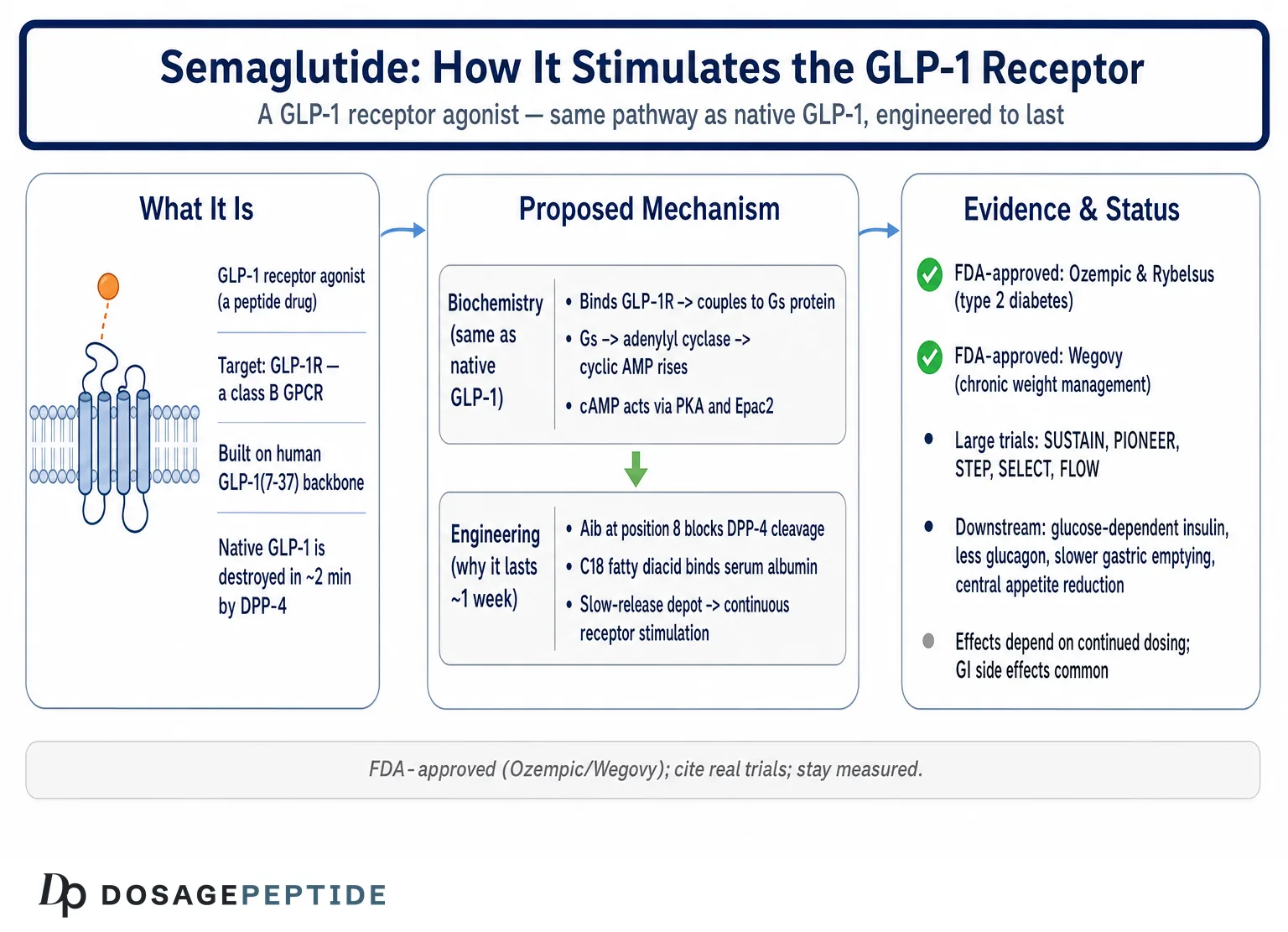
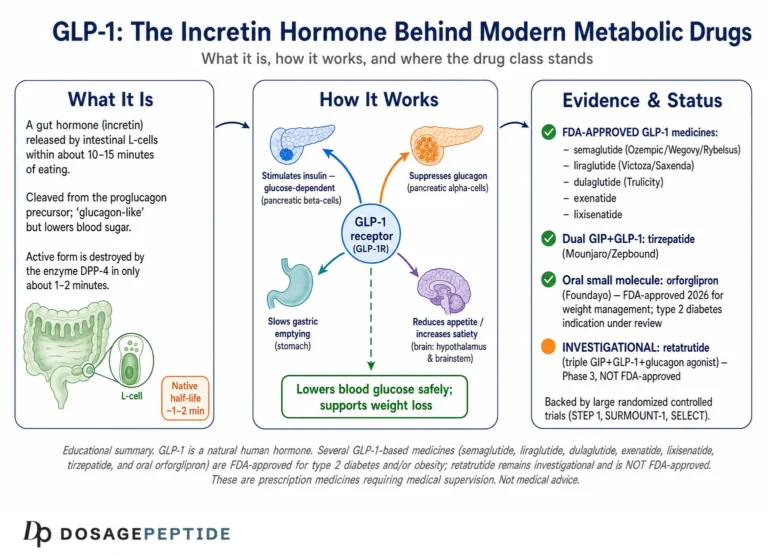
To understand how semaglutide acts, you first have to understand the receptor it targets. GLP-1 itself is an incretin hormone: a peptide released from enteroendocrine L-cells in the distal small intestine and colon in response to nutrient ingestion. Its physiological job is to help the body anticipate and handle an incoming meal — the “incretin effect” that explains why oral glucose provokes far more insulin release than the same amount of glucose given intravenously. The receptor that transduces this signal, GLP-1R, is a class B (secretin-family) GPCR characterized by a large extracellular domain that captures the peptide’s C-terminus, followed by a transmembrane bundle that the peptide’s N-terminus inserts into to trigger activation.2
The receptor’s distribution is what makes it metabolically powerful. GLP-1R is expressed on pancreatic beta cells and alpha cells, on neurons in the hypothalamus and hindbrain, on cells of the gastrointestinal tract and vagal afferents, and in the cardiovascular system, kidney, and elsewhere.2 A single agonist that engages this one receptor therefore reaches into glucose regulation, appetite, gastric motility, and cardiovascular physiology simultaneously. That breadth is the reason GLP-1R agonism has become one of the most consequential therapeutic strategies in modern metabolic medicine — and it is also why the effects of semaglutide cannot be reduced to a single organ.
One further piece of physiology explains why this receptor became a drug target in the first place: the incretin effect is impaired in type 2 diabetes. In healthy people, the incretin hormones GLP-1 and glucose-dependent insulinotropic polypeptide (GIP) account for a large share of the insulin response to an oral meal. In type 2 diabetes, this amplification is blunted — the GIP response in particular becomes weak — while responsiveness to GLP-1, though reduced, is at least partially preserved and can be restored by supraphysiological exposure. That asymmetry is precisely why pharmacological GLP-1R agonism, rather than GIP-based approaches alone, became the dominant strategy: you can overcome the defect by driving the GLP-1 receptor hard enough. Semaglutide is the pharmacological embodiment of that idea — not replacing a missing hormone but flooding a partially responsive receptor with a stable agonist. Understanding this reframes the whole mechanism: the goal is not to mimic normal post-meal GLP-1 pulses but to establish a continuous, elevated level of receptor activation that a diseased system cannot generate on its own.
There is a crucial catch, however, that defines the entire drug-design problem. Native GLP-1 is almost useless as a medicine. It is cleaved within roughly one to two minutes of entering the circulation by the enzyme dipeptidyl peptidase-4 (DPP-4), which removes the two N-terminal residues and abolishes activity, and what survives is rapidly cleared by the kidneys.1 To turn the physiology of GLP-1 into a once-weekly therapy, you cannot simply administer more of the natural hormone; you have to engineer a molecule that binds and activates the same receptor but resists degradation and clears slowly. That engineering problem is the real story of how semaglutide stimulates GLP-1R activity in a sustained, drug-like way.
Engineering Semaglutide: How Its Structure Sustains Receptor Activation
Semaglutide is a 31-amino-acid peptide built on the backbone of human GLP-1 (specifically the GLP-1(7–37) sequence), with three deliberate modifications that together convert a fragile hormone into a long-acting receptor agonist. The molecule was described in detail in the 2015 discovery paper by Lau and colleagues, and understanding those three changes is understanding the mechanism of sustained stimulation.1
First, an alpha-aminoisobutyric acid (Aib) substitution at position 8. The DPP-4 enzyme cleaves native GLP-1 between positions 8 and 9. Replacing the position-8 alanine with the non-natural, sterically hindered residue Aib blocks that cleavage, so the peptide’s active N-terminus survives in plasma rather than being decapitated within minutes.1 This is the single change most responsible for turning a two-minute hormone into a viable drug scaffold.
Second, an arginine substitution at position 34 (Arg34). This change removes a competing lysine so that the subsequent fatty-acid attachment can be directed to a single, defined site (position 26) rather than derivatizing the molecule at multiple points.1 It is a chemistry-enabling modification more than a pharmacological one, but it is what makes the third and most important change precise.
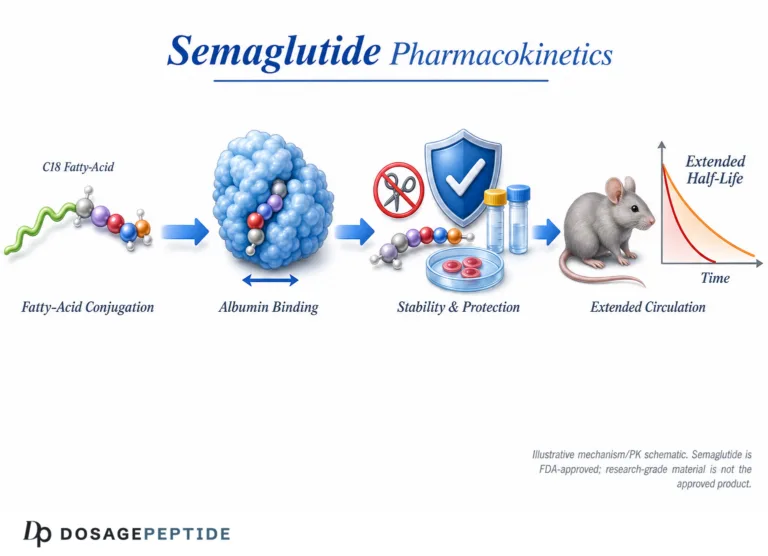
Third, and most consequentially, a C18 fatty diacid attached to the lysine at position 26 through a hydrophilic linker. The lysine is conjugated to a spacer built from gamma-glutamic acid and two units of a short polyethylene-glycol-like linker (“γGlu-2×OEG”), which in turn carries an eighteen-carbon diacid chain.1 This fatty acid is the protraction engine. It binds reversibly and with high affinity to serum albumin, the most abundant plasma protein, so that the vast majority of circulating semaglutide is transiently “parked” on albumin at any given moment. Albumin binding does two things at once: it shields the peptide from enzymatic and renal clearance, and it creates a slowly releasing depot, so a small free fraction is continuously liberated to engage GLP-1R.1 The net result is a plasma half-life of approximately one week (on the order of 160–165 hours), which is what permits once-weekly subcutaneous dosing.1
It is worth being clear about what these modifications do and do not change. They do not invent a new signaling mechanism; semaglutide retains high affinity for GLP-1R and, when free peptide reaches the receptor, activates it much as native GLP-1 does.1 What they change is duration and reach: the receptor is stimulated persistently rather than in brief post-meal pulses, and enough intact peptide survives to act at central sites over days. In that sense the phrase “how semaglutide stimulates GLP-1R activity” has two layers — the biochemical layer (agonism at a class B GPCR) and the pharmacokinetic layer (albumin-mediated protraction) — and the second layer is where semaglutide’s engineering advantage actually lives. For readers who want to see how a different molecule solves the same problem, the site’s overview of how tirzepatide influences incretin pathways is a useful comparison, since tirzepatide adds a second receptor (GIP) to the picture.
| Molecular feature | Change relative to native GLP-1 | Mechanistic consequence |
|---|---|---|
| Position 8 | Ala → Aib (α-aminoisobutyric acid) | Blocks DPP-4 cleavage; N-terminus survives in plasma1 |
| Position 34 | Lys → Arg | Removes competing lysine; directs single-site acylation1 |
| Position 26 | C18 fatty diacid via γGlu-2×OEG linker | Reversible albumin binding; shields from clearance; slow-release depot1 |
| Net pharmacokinetics | Half-life ~2 min → ~1 week | Enables once-weekly dosing; continuous receptor occupancy1 |
| Receptor target | Unchanged (GLP-1R, class B GPCR) | Same core Gs/cAMP signaling as native hormone23 |
From Binding to cAMP: The Core Signaling Event
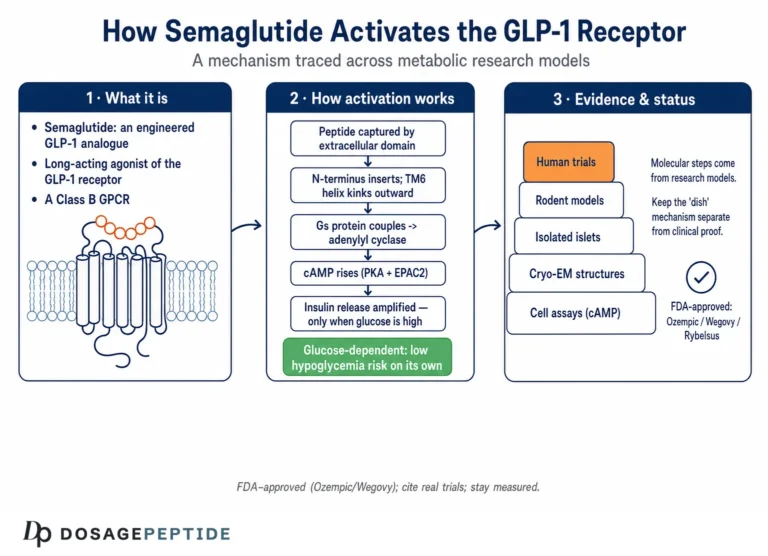
Once free semaglutide encounters a GLP-1 receptor, the biochemical sequence is that of a canonical class B GPCR agonist. The peptide’s C-terminal region is captured by the receptor’s large extracellular domain, and its N-terminus — the part protected by the Aib8 substitution — inserts into the transmembrane helical bundle. This engagement stabilizes an active receptor conformation that opens an intracellular pocket for the heterotrimeric G-protein.2
The GLP-1 receptor couples primarily to Gs, the stimulatory G-protein. Activation exchanges GDP for GTP on the Gαs subunit, which then stimulates adenylyl cyclase to convert ATP into cyclic AMP. The rise in intracellular cAMP is the central second-messenger event of GLP-1R stimulation, and essentially every downstream metabolic effect traces back to it.3 cAMP acts through two principal effectors: protein kinase A (PKA) and the cAMP-regulated guanine-nucleotide-exchange factor Epac2 (also called cAMP-GEFII). These two effectors work in concert, PKA through phosphorylation of numerous targets and Epac2 through more direct protein-protein interactions, to produce the receptor’s characteristic cellular responses.3
A useful way to picture the amplification is to recognize how small the triggering event is relative to its output. A single agonist-occupied receptor can activate many G-proteins before it is deactivated, and each activated adenylyl cyclase molecule generates many cAMP molecules; the cAMP signal is therefore a chemical amplifier, converting a modest number of receptor-binding events into a large intracellular response. This is one reason a low free concentration of semaglutide — the small fraction not bound to albumin at any instant — can nonetheless drive robust cellular signaling. It also explains why the duration of receptor occupancy matters so much: sustained low-level agonism, maintained over days by the albumin depot, produces a persistent cAMP tone rather than the sharp, transient spikes that native GLP-1 generates and that are quickly terminated by both DPP-4 cleavage of the ligand and cellular phosphodiesterase degradation of cAMP.3
Two features of this signaling deserve emphasis because they are frequently misstated. First, GLP-1R signaling is not purely a single linear cascade: like many GPCRs, the receptor can recruit β-arrestins, undergo internalization and recycling, and produce signaling outputs whose balance depends on the specific agonist and on receptor trafficking. This is the domain of “biased agonism,” and it is an active research area precisely because different agonists at the same receptor can produce subtly different downstream profiles.4 Second, the physiologically vital property of the beta-cell response — its glucose dependence — is not a property of the receptor’s coupling per se but of how the cAMP signal intersects with glucose metabolism inside the cell, as the next section explains. Getting these two points right prevents the common overstatement that semaglutide simply “forces” insulin out of the pancreas regardless of context.
The Beta Cell: Glucose-Dependent Insulinotropic Signaling
The most classically studied consequence of GLP-1R stimulation is the potentiation of insulin secretion from pancreatic beta cells — and the word potentiation is the key to understanding it. GLP-1R agonists do not act as standalone secretagogues that empty the beta cell irrespective of blood glucose. Instead, they amplify glucose-stimulated insulin secretion, so their insulinotropic effect is largely conditional on glucose being elevated in the first place.5
The cellular logic runs as follows. Beta cells sense glucose through metabolism: glucose entry and phosphorylation raise the ATP-to-ADP ratio, which closes ATP-sensitive potassium (KATP) channels, depolarizes the membrane, opens voltage-dependent calcium channels, and triggers calcium-dependent exocytosis of insulin granules. GLP-1R-driven cAMP layers onto this glucose-sensing machinery. Through PKA and Epac2, cAMP further inhibits KATP channels, facilitates opening of voltage-dependent calcium channels, sensitizes intracellular calcium-release channels (IP3 and ryanodine receptors) to promote calcium-induced calcium release, and enhances the exocytotic machinery so that a given calcium signal releases more insulin.5 Critically, several of these amplifying steps require the permissive context of glucose metabolism; when glucose is low, KATP channels remain open and the amplification has little to act on. This is why GLP-1R agonists carry an intrinsically low risk of hypoglycemia when used as monotherapy — a genuinely important and often under-appreciated feature of the mechanism.5
There is a subtlety here that metabolic studies have made explicit and that popular accounts routinely flatten. The glucose dependence is not absolute but graded: GLP-1R stimulation shifts the entire dose-response curve of insulin secretion to the left, so beta cells secrete more insulin at any given glucose concentration above the threshold, while contributing little when glucose is genuinely low. The receptor’s cAMP signal, in effect, lowers the glucose threshold at which secretion accelerates and steepens the response above it. This is why the drug improves both fasting and post-prandial glucose in diabetes yet does not, by itself, push glucose into the hypoglycemic range. It is a fundamentally different behavior from a sulfonylurea, which closes KATP channels directly and drives insulin release regardless of glucose — and the distinction is a real safety property, not a marketing line.5
Beyond acute secretion, GLP-1R signaling in the beta cell also promotes insulin gene transcription and biosynthesis, so that the secreted insulin is replenished, and in rodent and cell studies it supports beta-cell survival and proliferation.3 An honest caveat is essential here: the proliferative and mass-preserving effects observed in rodents and in vitro have not translated into demonstrated durable beta-cell regeneration in humans, and one should not extrapolate from a mouse islet to a patient’s pancreas. What is well established in humans is the glucose-dependent enhancement of insulin secretion, reflected in the HbA1c reductions seen across the clinical program.
Alpha Cells, the Gut, and the Periphery
Insulin is only half of the pancreatic story. GLP-1R stimulation also suppresses the secretion of glucagon — the counter-regulatory hormone from pancreatic alpha cells that raises blood glucose by driving hepatic glucose output. By dampening inappropriate glucagon release in the post-meal (and fasting) state, semaglutide reduces hepatic glucose production, complementing the insulin effect.3 Importantly, this glucagon suppression is itself glucose-dependent: the counter-regulatory glucagon response to genuine hypoglycemia is largely preserved, another safeguard built into the physiology. The combined push (more glucose-appropriate insulin) and pull (less glucagon-driven hepatic glucose) is why GLP-1R agonists are effective glucose-lowering agents without the hypoglycemia burden of sulfonylureas or insulin.
In the gastrointestinal tract, GLP-1R stimulation slows gastric emptying. By delaying the rate at which a meal leaves the stomach, semaglutide blunts the post-prandial glucose excursion (less glucose arrives in the bloodstream at once) and prolongs satiety signals.6 This delayed gastric emptying is a double-edged feature: it contributes to glucose control and to the feeling of fullness that reduces food intake, but it is also the proximate cause of the most common adverse effects — nausea, and less often vomiting, early satiety, and constipation. Interestingly, the gastric-emptying effect appears to attenuate somewhat with continued exposure (tachyphylaxis), whereas the appetite and weight effects are more sustained, which suggests the two are mechanistically dissociable.6 This is one reason it is a mistake to attribute semaglutide’s weight loss primarily to “a full stomach”; the central appetite pathways matter more.
A point that repays emphasis is that the gastric and appetite effects, though both mediated by GLP-1R stimulation, operate on different timescales and adapt differently. The delayed gastric emptying is most pronounced early and after single doses and tends to wane with repeated exposure, a tachyphylaxis that likely reflects local adaptation. The central appetite suppression, by contrast, is sustained across months of treatment, which is why weight loss continues to accrue long after the initial gastrointestinal effects have settled.6 For anyone trying to reason about the mechanism, this dissociation is a corrective against two opposite errors: attributing all the weight effect to slowed digestion (which fades), and dismissing the gastrointestinal effects as irrelevant to glucose control (they meaningfully blunt post-prandial spikes while they last). The receptor is the same; the tissue context and its capacity to adapt are what differ.
GLP-1 receptors are also present in the cardiovascular system, kidney, and on immune and endothelial cells, and GLP-1R signaling has been linked to effects on vascular function, inflammation, and lipid handling that may contribute to the cardiovascular and renal outcomes discussed later. These peripheral pathways are still being mapped, and the site’s discussions of how GLP-1 pathways regulate lipid metabolism and of GLP-1 signaling in arterial stiffness survey where the mechanistic evidence is stronger and where it remains associative.
The Central Nervous System: Where Weight Loss Actually Originates
For the weight-management indication, the most important site of GLP-1R stimulation is the brain. Body weight is regulated by neural circuits that integrate signals of energy status and translate them into appetite and food-seeking behavior, and several of these circuits express GLP-1R. Semaglutide’s protracted pharmacokinetics are again central: because a stable pool of intact peptide persists for days, enough reaches central receptors to exert a sustained anorectic effect.
Mechanistic work in rodents has localized key sites of action. A landmark study of the related agonist liraglutide demonstrated that GLP-1R agonist-dependent weight loss was mediated substantially through the arcuate nucleus of the hypothalamus — a hub for appetite regulation — rather than requiring the vagus nerve, area postrema, or paraventricular nucleus.7 For semaglutide specifically, imaging and neuronal-activation studies in rodents showed that the peptide accesses the brain and engages a distributed network of GLP-1R-expressing neurons, including hypothalamic and hindbrain regions, to lower body weight; the effect is not the product of a single nucleus but of a coordinated circuit.8 These are preclinical findings, and the precise human neuroanatomy is harder to interrogate directly, but they establish the principle that the anorectic action is centrally driven.
A question that naturally arises is how a large, albumin-bound peptide reaches neurons that sit behind the blood-brain barrier at all. The answer appears to be that it does not need to cross into deep brain tissue uniformly. Several of the relevant GLP-1R-expressing populations lie in or near circumventricular organs and periventricular regions — the arcuate nucleus abuts the median eminence, and the area postrema in the hindbrain is a classic circumventricular structure — where the barrier is relatively permeable and blood-borne signals can gain access. Semaglutide administration in rodents produced neuronal activation in exactly this distributed pattern of hypothalamic and brainstem nodes, and access was greatest at these barrier-poor sites rather than throughout the cortex.8 The mechanistic implication is that the drug’s central appetite effect is achieved by engaging a specific, anatomically constrained circuit rather than by generalized brain exposure — which also helps explain why the anorectic effect is relatively targeted.
Human metabolic studies corroborate the behavioral output of this central mechanism. In a randomized crossover study in people with obesity, once-weekly semaglutide reduced ad libitum energy intake by roughly a quarter, lowered hunger and food cravings, improved control of eating, and shifted food preferences away from high-fat foods, alongside a reduction in body weight — a pattern consistent with a central appetite effect rather than merely a mechanical gastric one.6 There is also a qualitative dimension worth noting: participants reported not merely eating less but wanting food less — reduced cravings, weaker responses to food cues, and a shift away from energy-dense, high-fat choices.6 This maps onto the idea that GLP-1R stimulation modulates not only homeostatic hunger but also the hedonic, reward-related dimension of eating, engaging circuits beyond the classical satiety centers. The mechanistic bottom line for the weight indication is therefore this: semaglutide stimulates GLP-1R activity in appetite-regulating neurons, reduces both the homeostatic and hedonic drive to eat, and lowers energy intake; the weight loss follows from sustained negative energy balance. For a measured discussion of how durable that weight loss is and what happens when treatment stops, the companion article on whether semaglutide provides a sustainable solution for long-term weight loss examines the maintenance question directly.
What the Metabolic Trials Actually Measured
Mechanism is only as credible as the outcomes it predicts. The value of the large semaglutide programs is that they took the receptor pharmacology described above and tested whether it produced the expected metabolic endpoints in humans, at scale, against placebo and active comparators. It did — with limits worth naming.
Glycemic control (SUSTAIN and PIONEER). The subcutaneous SUSTAIN program (SUSTAIN 1–6, with later phase 3b trials) evaluated once-weekly semaglutide in more than 7,000 people with type 2 diabetes; across the program the 1.0 mg dose reduced HbA1c by roughly 1.5–1.8 percentage points over 30–56 weeks, generally exceeding comparators including sitagliptin, exenatide extended-release, insulin glargine, and the GLP-1R agonists liraglutide and dulaglutide.9 The head-to-head SUSTAIN 7 trial is instructive because it compared two once-weekly GLP-1R agonists directly: semaglutide reduced HbA1c and body weight more than dulaglutide at matched dose tiers (for example, HbA1c fell by about 1.8% with semaglutide 1.0 mg versus about 1.4% with dulaglutide 1.5 mg), with a broadly similar safety profile.10 The oral PIONEER program then showed that the same molecule, formulated with an absorption enhancer for daily oral use, achieves clinically meaningful HbA1c reductions as well — demonstrating that the mechanism does not depend on the injectable route, only on getting sufficient intact peptide to the receptor.11
Body weight (STEP). The STEP program tested the higher 2.4 mg once-weekly dose for chronic weight management. In STEP 1, adults with overweight or obesity (without diabetes) lost a mean of about 14.9% of body weight over 68 weeks with semaglutide plus lifestyle intervention, versus about 2.4% with placebo plus lifestyle, and roughly 86% of the semaglutide group achieved at least 5% weight loss.12 This is the human read-out of the central appetite mechanism, and it represented a step-change over prior pharmacotherapy for obesity. The honest caveats: weight tends to be regained when the drug is stopped, gastrointestinal side effects are common, and the trial paired the drug with structured lifestyle support.
| Program / trial | Population & dose | Headline metabolic result |
|---|---|---|
| SUSTAIN 1–6 (subcutaneous) | Type 2 diabetes; up to 1.0 mg weekly | HbA1c ↓ ~1.5–1.8%; superior to several comparators9 |
| SUSTAIN 7 (head-to-head) | Type 2 diabetes; semaglutide vs dulaglutide | Greater HbA1c and weight reduction vs dulaglutide10 |
| PIONEER (oral) | Type 2 diabetes; oral 14 mg daily | HbA1c ↓ ~1.0–1.4%; efficacy without injection11 |
| STEP 1 | Overweight/obesity, no diabetes; 2.4 mg weekly | ~14.9% weight loss vs ~2.4% placebo at 68 wk12 |
| Blundell crossover | Obesity; mechanistic | ~24% lower energy intake; reduced hunger/cravings6 |
It is worth pausing on what these numbers are and are not. HbA1c reflects average glycemia over roughly the preceding three months, so a 1.5–1.8 percentage-point reduction is a substantial, clinically meaningful shift in chronic glucose exposure — the difference, for many patients, between poor and adequate control. But HbA1c is a surrogate: it correlates with, but does not equal, the outcomes patients care about, which is why the cardiovascular trials discussed in the next section were necessary rather than optional. Similarly, the STEP weight figures are placebo-subtracted trial means achieved with full titration, adherence support, and lifestyle counseling over more than a year; real-world weight loss is often more modest, partly because tolerability and persistence are harder outside a trial. Reading the mechanism honestly means holding both truths at once: the receptor pharmacology reliably produces these effects, and the magnitude any given person experiences depends on factors the mechanism alone does not determine.
Two interpretive points keep this measured. First, effect sizes vary by population, dose, background therapy, and adherence; the headline numbers are trial means, not guarantees for any individual. Second, the mechanistic through-line is consistent across every one of these trials: enhance glucose-dependent insulin secretion, suppress glucagon, slow gastric emptying, and reduce central appetite drive. The outcomes are what the receptor pharmacology predicts — which is exactly the kind of convergence that makes a mechanism believable.
Cardiovascular and Renal Outcomes: The Higher Bar
Surrogate endpoints such as HbA1c and body weight are meaningful, but the endpoints that matter most to patients are hard outcomes: heart attacks, strokes, cardiovascular death, and kidney decline. Here the semaglutide evidence has grown genuinely strong, and it deserves careful, non-inflated description.
In SUSTAIN-6, a pre-approval cardiovascular safety trial in people with type 2 diabetes at high cardiovascular risk, once-weekly semaglutide significantly reduced the primary composite of cardiovascular death, nonfatal myocardial infarction, or nonfatal stroke compared with placebo, driven notably by a reduction in nonfatal stroke.13 SUSTAIN-6 was powered to demonstrate safety (non-inferiority), so the observed benefit, while significant, warranted confirmation. The oral counterpart, PIONEER 6, subsequently confirmed cardiovascular safety (non-inferiority) for oral semaglutide, with numerically fewer events, in a similar high-risk diabetes population.14
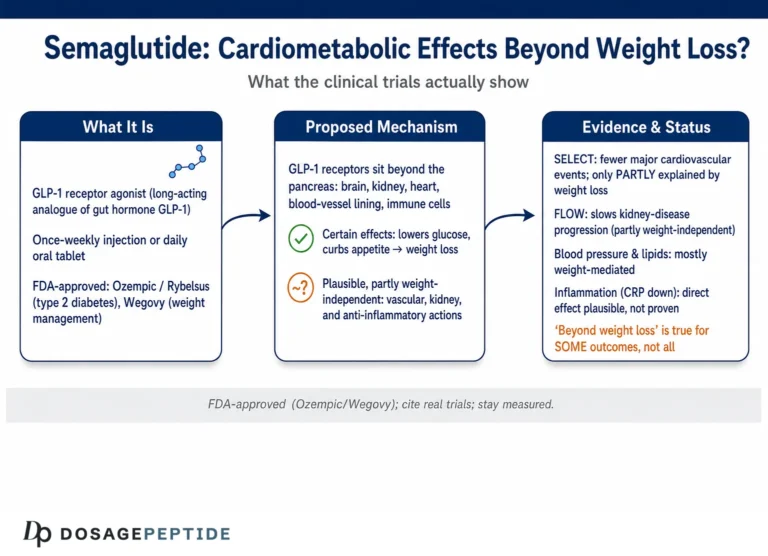
The most important recent result is SELECT, which extended the question beyond diabetes. In more than 17,000 adults with established cardiovascular disease and overweight or obesity but without diabetes, once-weekly semaglutide 2.4 mg reduced the primary composite cardiovascular endpoint by about 20% relative to placebo over several years.15 SELECT is pivotal because it demonstrated that the cardiovascular benefit is not merely a downstream consequence of better glucose control — the participants did not have diabetes — supporting the idea that weight loss and possibly direct GLP-1R-mediated vascular effects contribute. It is on the strength of results like these that semaglutide’s approved label expanded to include reducing cardiovascular risk in appropriate populations.
The renal side of this section deserves its own evidence rather than being folded into the cardiovascular story by assumption. The dedicated kidney-outcomes trial FLOW tested once-weekly semaglutide 1.0 mg against placebo in 3,533 people with type 2 diabetes and chronic kidney disease, on top of standard care. Over a median of about 3.4 years, semaglutide reduced the primary composite of major kidney events (kidney failure, a sustained large fall in eGFR, or death from kidney or cardiovascular causes) by roughly 24% relative to placebo, and the trial was stopped early for efficacy at a pre-specified interim analysis.16 This is a genuine hard-outcome result in a specific, higher-risk population, and it is the strongest renal evidence for the class to date. The honest boundaries still apply: FLOW enrolled people who already had type 2 diabetes and established kidney disease, so its findings should not be read as evidence that semaglutide prevents kidney disease in the general population, and the mechanistic contributors — glycemic improvement, weight loss, blood-pressure and albuminuria reduction, and possible direct renal GLP-1R-linked effects — have not been cleanly separated. As with the cardiovascular data, the receptor pharmacology makes the benefit plausible, but the trial, not the mechanism, is what establishes it.
The measured reading: for people with type 2 diabetes at high risk, and for people with obesity and established cardiovascular disease, semaglutide reduces major adverse cardiovascular events, and the effect appears at least partly independent of glucose lowering. That is a strong, replicated, outcome-level finding. What it does not license is the claim that semaglutide is cardioprotective for everyone, or that the precise contribution of each mechanism (weight loss, blood-pressure and lipid changes, direct vascular signaling, anti-inflammatory effects) has been fully partitioned — that mechanistic attribution remains an active research question.
How Semaglutide Compares With Native GLP-1 and Other Agonists
Placing semaglutide beside the native hormone and other agonists clarifies what “stimulating GLP-1R activity” means in practice. All GLP-1R agonists engage the same receptor and the same Gs/cAMP core; they differ in stability, duration, potency, route, and — in the case of dual agonists — in how many receptors they hit.
| Agent | Receptor target(s) | Duration / route | Defining mechanistic feature |
|---|---|---|---|
| Native GLP-1 | GLP-1R | ~2 min half-life; endogenous | Rapidly destroyed by DPP-4; not drug-viable1 |
| Liraglutide | GLP-1R | ~13 h; once-daily injection | C16 acylation; shorter albumin residence than semaglutide1 |
| Dulaglutide | GLP-1R | Once-weekly injection | GLP-1 analogue fused to an antibody Fc fragment10 |
| Semaglutide | GLP-1R | ~1 week; weekly injection or daily oral | Aib8 + C18 diacid; strong albumin binding, DPP-4 resistant1 |
| Tirzepatide | GIP-R + GLP-1R | Once-weekly injection | Dual incretin agonism (adds GIP receptor)10 |
One nuance the table cannot capture is that these agents are not equipotent per milligram, and their dose-response relationships differ. Dulaglutide’s antibody-Fc fusion achieves long duration by increasing molecular size and slowing renal clearance, a mechanically different protraction strategy from semaglutide’s albumin binding; the two arrive at once-weekly dosing by distinct routes. Liraglutide’s shorter C16 acylation binds albumin less avidly, giving it a roughly daily rather than weekly duration. These are not trivial pharmacokinetic footnotes — they shape how steadily the receptor is occupied, and steadier occupancy is a plausible contributor to semaglutide’s larger effect sizes. The lesson is that in this drug class, the pharmacokinetic engineering is often as decisive as the receptor biochemistry, because all of these molecules ultimately pull the same Gs/cAMP lever.
The comparison underscores that semaglutide’s edge over earlier GLP-1R agonists is largely one of sustained, high-level receptor engagement achieved through albumin-mediated protraction, not a fundamentally different signaling mechanism. The head-to-head SUSTAIN 7 superiority over dulaglutide is consistent with this: more consistent receptor occupancy translates into greater metabolic effect.10 The newer dual agonist tirzepatide takes a different route by recruiting a second incretin receptor, which is a distinct mechanistic strategy rather than a better version of the same one; the pillar overview of what tirzepatide is and how it works lays out that contrast. Terms such as Gs coupling, incretin effect, and biased agonism used throughout this article are defined in the site’s peptide science glossary for readers who want the underlying vocabulary.
What Receptor Pharmacology Does Not Explain
An honest mechanistic account has to mark its own limits, because the most common errors in popular writing about semaglutide come from over-reading the mechanism.
Side effects are part of the mechanism, not a footnote. The nausea, vomiting, and constipation that lead some patients to discontinue are direct consequences of the same GLP-1R stimulation (particularly delayed gastric emptying and central effects) that produces the benefits. There is rare but serious concern regarding pancreatitis and gallbladder events, and the drug carries a boxed warning based on rodent studies showing thyroid C-cell tumors; the human relevance of that thyroid signal is uncertain, but it is the reason the drug is contraindicated in people with a personal or family history of medullary thyroid carcinoma or MEN2. These are not mechanism-independent surprises; they flow from where GLP-1 receptors are and what their stimulation does.
Weight and glucose effects depend on continued receptor stimulation. Because the therapeutic effect is a pharmacological modulation of appetite and islet function rather than a cure of the underlying disease, stopping the drug generally reverses much of the benefit — weight is regained, glucose control drifts back. The mechanism explains the effect while the drug is present; it does not confer permanence.
Biased agonism and inter-individual variability are unresolved. The recognition that different GLP-1R agonists can bias signaling toward or away from β-arrestin recruitment and internalization means the mechanism is not fully “one receptor, one output.”4 How much of semaglutide’s specific profile — efficacy, tolerability, response variability — reflects signaling bias versus pharmacokinetics is still being worked out, and individual responses vary more than trial means suggest.
Receptor stimulation is necessary but not sufficient to explain the outcomes. The cardiovascular benefit in SELECT, in people without diabetes, is a case in point: it cannot be a simple consequence of glucose lowering, and while weight loss, blood-pressure reduction, improved lipids, and possible direct anti-inflammatory or endothelial effects are all plausible contributors, the field has not cleanly quantified how much each pathway adds.15 Mechanistic humility is appropriate here: knowing that semaglutide activates GLP-1R does not, on its own, tell you why a given hard outcome improved. The receptor is the entry point; the systems-level consequences are still being resolved, and much of the peripheral signaling remains associative rather than causally nailed down.
Mechanistic elegance is not a license for unsupervised use. The fact that the pathway is well understood does not make self-directed or non-prescription use safe. Dose titration exists specifically to manage the mechanism-linked gastrointestinal effects; product identity and purity matter; and the contraindications above are real. Semaglutide is FDA-approved and effective when used appropriately under medical supervision, and that is the correct frame for interpreting everything above. Readers handling research-grade peptides in a laboratory context can consult the general peptide reconstitution guide for standard handling practice, with the understanding that it is educational and not a protocol for human use.
Frequently Asked Questions
How exactly does semaglutide “stimulate” the GLP-1 receptor?
It acts as an agonist: the peptide binds the GLP-1 receptor, a class B G-protein-coupled receptor, stabilizing an active conformation that couples the receptor to the stimulatory G-protein Gs. That coupling activates adenylyl cyclase, raising intracellular cyclic AMP, which then acts through PKA and Epac2 to produce the receptor’s downstream effects.23 Semaglutide uses the same core mechanism as the body’s own GLP-1; its advantage is that it resists degradation and stays in circulation for about a week, so it stimulates the receptor continuously rather than in brief pulses.1
What makes semaglutide last so much longer than natural GLP-1?
Three engineered modifications. An Aib substitution at position 8 blocks the DPP-4 enzyme that normally destroys GLP-1 within minutes; an Arg34 substitution enables precise chemistry; and a C18 fatty diacid attached at lysine 26 binds reversibly to serum albumin, shielding the peptide from clearance and creating a slow-release depot.1 Together these extend the half-life from roughly two minutes to about one week.
Does semaglutide force insulin release and cause hypoglycemia?
Not on its own. GLP-1R stimulation potentiates glucose-stimulated insulin secretion rather than triggering it unconditionally, because several amplifying steps require the permissive context of glucose metabolism in the beta cell. When glucose is low, the amplification has little to act on, so the hypoglycemia risk is intrinsically low as monotherapy.5 Risk rises when it is combined with insulin or sulfonylureas.
Is the weight loss mainly from a “full stomach”?
No. Delayed gastric emptying contributes and tends to attenuate over time, whereas the appetite and weight effects are more sustained, which shows the two are dissociable.6 The dominant driver is central: semaglutide stimulates GLP-1 receptors in appetite-regulating brain regions, reducing hunger and food intake. Human studies showed roughly a quarter reduction in energy intake alongside reduced cravings.68
Is semaglutide FDA-approved, and for what?
Yes. Semaglutide is approved as Ozempic and Rybelsus for type 2 diabetes and as Wegovy for chronic weight management in eligible adults, with an expanded indication for reducing cardiovascular risk in appropriate populations based on outcome trials.15 This article describes its mechanism and the evidence; it is not medical advice, and the drug should be used under medical supervision.
How strong is the cardiovascular evidence?
Strong and replicated for specific populations. SUSTAIN-6 showed a reduction in major cardiovascular events in high-risk type 2 diabetes, PIONEER 6 confirmed cardiovascular safety of the oral form, and SELECT showed about a 20% reduction in cardiovascular events in people with obesity and established cardiovascular disease but without diabetes.131415 The benefit appears at least partly independent of glucose lowering, though the exact mechanistic contributions are still being partitioned.
Why is semaglutide more effective than some other GLP-1 receptor agonists?
Largely because of more sustained, high-level receptor engagement rather than a different signaling mechanism. Its strong albumin binding and DPP-4 resistance keep intact peptide available continuously. In the head-to-head SUSTAIN 7 trial it produced greater HbA1c and weight reductions than dulaglutide at matched dose tiers.10 Dual agonists such as tirzepatide take a different approach by also activating the GIP receptor.
What are the main mechanism-linked side effects?
Gastrointestinal effects — nausea, vomiting, early satiety, constipation — are the most common and stem directly from delayed gastric emptying and central GLP-1R action; dose titration is used to manage them. Rarer concerns include pancreatitis and gallbladder events, and a boxed warning for thyroid C-cell tumors based on rodent data, which makes the drug contraindicated in people with a personal or family history of medullary thyroid carcinoma or MEN2. These flow from the same receptor biology that produces the benefits.
Do the effects persist after stopping the drug?
Generally no. The therapeutic effect is ongoing pharmacological modulation of appetite and islet function, not a cure of the underlying condition, so weight is typically regained and glucose control drifts back after discontinuation. The maintenance question is examined in the companion article on semaglutide and long-term weight loss.
References
- Lau J, Bloch P, Schäffer L, et al. Discovery of the Once-Weekly Glucagon-Like Peptide-1 (GLP-1) Analogue Semaglutide. J Med Chem. 2015;58(18):7370-7380. PMID: 26308095. https://pubmed.ncbi.nlm.nih.gov/26308095/
- Zheng Z, Zong Y, Ma Y, et al. Glucagon-like peptide-1 receptor: mechanisms and advances in therapy. Signal Transduct Target Ther. 2024;9:234. PMID: 39289339. PMCID: PMC11408715. https://www.nature.com/articles/s41392-024-01931-z
- Knudsen LB, Lau J. The Discovery and Development of Liraglutide and Semaglutide. Front Endocrinol (Lausanne). 2019;10:155. PMCID: PMC6474072. https://pmc.ncbi.nlm.nih.gov/articles/PMC6474072/
- Jones B, Bloom SR, Buenaventura T, et al. Control of insulin secretion by GLP-1. Peptides. 2018;100:75-84 (biased agonism and GLP-1R trafficking reviewed). PMID: 29412835. https://pubmed.ncbi.nlm.nih.gov/29412835/
- Meloni AR, DeYoung MB, Lowe C, Parkes DG. GLP-1 receptor activated insulin secretion from pancreatic β-cells: mechanism and glucose dependence. Diabetes Obes Metab. 2013;15(1):15-27. PMID: 22776039. PMCID: PMC3556522. https://pmc.ncbi.nlm.nih.gov/articles/PMC3556522/
- Blundell J, Finlayson G, Axelsen M, et al. Effects of once-weekly semaglutide on appetite, energy intake, control of eating, food preference and body weight in subjects with obesity. Diabetes Obes Metab. 2017;19(9):1242-1251. PMCID: PMC5573908. https://pmc.ncbi.nlm.nih.gov/articles/PMC5573908/
- Secher A, Jelsing J, Baquero AF, et al. The arcuate nucleus mediates GLP-1 receptor agonist liraglutide-dependent weight loss. J Clin Invest. 2014;124(10):4473-4488. PMID: 25202980. https://pubmed.ncbi.nlm.nih.gov/25202980/
- Gabery S, Salinas CG, Paulsen SJ, et al. Semaglutide lowers body weight in rodents via distributed neural pathways. JCI Insight. 2020;5(6):e133429. PMCID: PMC7213778. https://pmc.ncbi.nlm.nih.gov/articles/PMC7213778/
- Aroda VR. A review of GLP-1 receptor agonists: Evolution and advancement, through the lens of randomised controlled trials (SUSTAIN program overview). Diabetes Obes Metab. 2018;20 Suppl 1:22-33. PMID: 29364586. https://pubmed.ncbi.nlm.nih.gov/29364586/
- Pratley RE, Aroda VR, Lingvay I, et al. Semaglutide versus dulaglutide once weekly in patients with type 2 diabetes (SUSTAIN 7): a randomised, open-label, phase 3b trial. Lancet Diabetes Endocrinol. 2018;6(4):275-286. PMID: 29397376. https://pubmed.ncbi.nlm.nih.gov/29397376/
- Aroda VR, Rosenstock J, Terauchi Y, et al. PIONEER 1: Randomized Clinical Trial of the Efficacy and Safety of Oral Semaglutide Monotherapy in Comparison With Placebo in Patients With Type 2 Diabetes. Diabetes Care. 2019;42(9):1724-1732. PMID: 31186300. https://pubmed.ncbi.nlm.nih.gov/31186300/
- Wilding JPH, Batterham RL, Calanna S, et al. Once-Weekly Semaglutide in Adults with Overweight or Obesity (STEP 1). N Engl J Med. 2021;384(11):989-1002. PMID: 33567185. https://pubmed.ncbi.nlm.nih.gov/33567185/
- Marso SP, Bain SC, Consoli A, et al. Semaglutide and Cardiovascular Outcomes in Patients with Type 2 Diabetes (SUSTAIN-6). N Engl J Med. 2016;375(19):1834-1844. PMID: 27633186. https://pubmed.ncbi.nlm.nih.gov/27633186/
- Husain M, Birkenfeld AL, Donsmark M, et al. Oral Semaglutide and Cardiovascular Outcomes in Patients with Type 2 Diabetes (PIONEER 6). N Engl J Med. 2019;381(9):841-851. PMID: 31185157. https://pubmed.ncbi.nlm.nih.gov/31185157/
- Lincoff AM, Brown-Frandsen K, Colhoun HM, et al. Semaglutide and Cardiovascular Outcomes in Obesity without Diabetes (SELECT). N Engl J Med. 2023;389(24):2221-2232. PMID: 37952131. https://pubmed.ncbi.nlm.nih.gov/37952131/
- Perkovic V, Tuttle KR, Rossing P, et al. Effects of Semaglutide on Chronic Kidney Disease in Patients with Type 2 Diabetes (FLOW). N Engl J Med. 2024;391(2):109-121. PMID: 38785209. https://pubmed.ncbi.nlm.nih.gov/38785209/
Educational and research-use disclaimer: This article is provided solely for scientific and educational purposes and is not medical advice. Semaglutide is FDA-approved (as Ozempic and Rybelsus for type 2 diabetes, and Wegovy for chronic weight management, including an indication for cardiovascular risk reduction in appropriate populations), but it is a prescription medicine that should be used only under qualified medical supervision, with attention to its contraindications (including a personal or family history of medullary thyroid carcinoma or MEN2) and its documented adverse effects. Nothing here recommends unsupervised, off-label, or non-prescription use, and individual responses differ from trial averages. Readers should consult qualified healthcare professionals and applicable regulations before making any decisions.