Few molecules in modern metabolic medicine have generated as much discussion as tirzepatide. Marketed as Mounjaro for glycemic control in type 2 diabetes, it is the first single agent to activate two distinct incretin receptors at once, and its pivotal trials produced glucose- and weight-lowering figures that were, by the standards of the field, unusually large. The word “breakthrough” attaches to it easily — and, in a narrow regulatory sense, it earned that word: the U.S. Food and Drug Administration granted tirzepatide Breakthrough Therapy designation during development. But regulatory shorthand and clinical reality are not the same thing, and the honest question this article examines is whether the accumulated evidence justifies calling tirzepatide a genuine step-change in type 2 diabetes care, or a very strong incremental advance on a class of drugs that was already reshaping the field.
That distinction matters because enthusiasm can outrun data. Tirzepatide is unambiguously effective at lowering HbA1c and body weight in the populations studied — this is not in dispute and is reflected in its approval by the FDA, the European Medicines Agency, and other regulators.1 What is more nuanced is how its benefits compare with existing therapies over the long term, what its cardiovascular and renal profile looks like against active comparators, how durable its effects are, and where the residual gaps in the evidence base still sit. This article walks through the compound’s origin, its molecular mechanism, the actual results of the SURPASS clinical program, comparative data, trial methodology, safety, handling in a research context, and its regulatory standing — keeping the framing measured throughout.
This page is educational and written for a research-literate audience. It is not medical advice, does not recommend any use of tirzepatide, and does not endorse acquiring or self-administering it. Where numbers appear, they are drawn from peer-reviewed primary literature and regulatory documents, cited so readers can verify them directly.
What Tirzepatide Is and Where It Came From
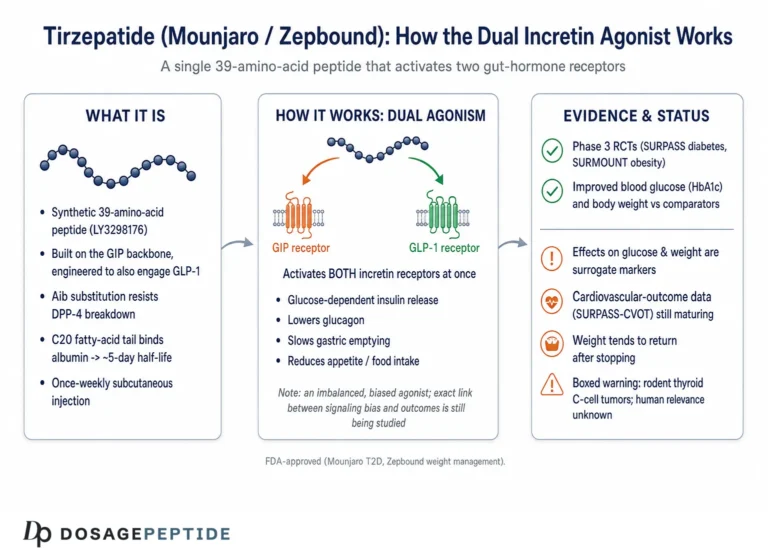
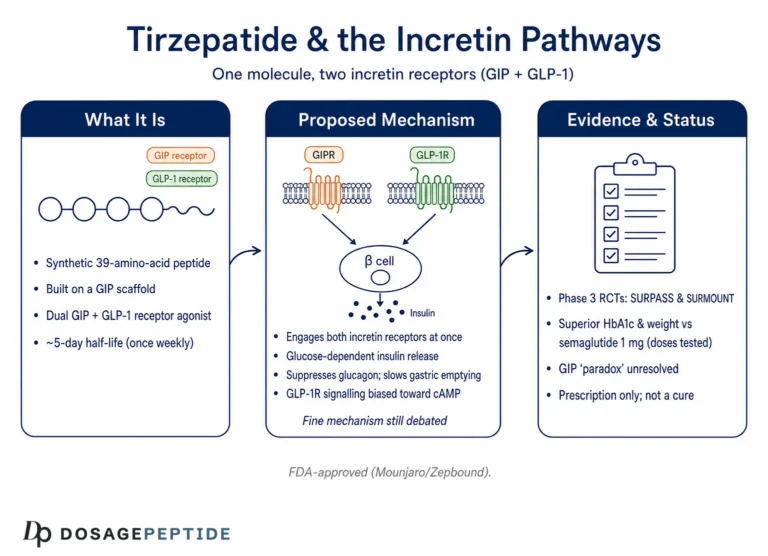
Tirzepatide, known during development as LY3298176, is a synthetic 39‑amino‑acid peptide engineered by Eli Lilly. Structurally it is based on the native GIP (glucose-dependent insulinotropic polypeptide) sequence, modified to also engage the GLP-1 (glucagon-like peptide-1) receptor, and acylated with a C20 fatty diacid moiety attached to a lysine residue at position 20. That fatty-acid tail allows the molecule to bind reversibly to serum albumin, which slows renal clearance and extends the half-life to roughly five days — long enough to support once-weekly subcutaneous dosing.2 Its molecular weight is approximately 4.8 kDa. In pharmacological shorthand it is described as a dual GIP/GLP-1 receptor agonist, or a “twincretin,” and it was the first molecule of that description to reach the market.
The scientific lineage behind tirzepatide reaches back decades. GLP-1 receptor agonists — exenatide, liraglutide, dulaglutide, semaglutide — had already established that mimicking incretin biology could lower glucose while promoting weight loss, an appealing combination in a disease where obesity is a common driver. GIP, the other major incretin hormone, had a more ambiguous reputation: in the insulin-resistant, hyperglycemic state of type 2 diabetes, the insulinotropic response to GIP is blunted, and for years GIP was viewed by some researchers as a therapeutic dead end, or even as a hormone whose agonism might worsen obesity. The insight that recovering glycemic control might restore GIP responsiveness, and that combining GIP and GLP-1 agonism in a single, balanced molecule might be additive or synergistic, is what animated the tirzepatide program.2
The clinical development pathway moved quickly. Early phase studies established dose-dependent reductions in HbA1c and body weight and identified the doses — 5, 10, and 15 mg, reached through a gradual titration to limit gastrointestinal side effects — that would carry forward into phase 3. The pivotal phase 3 program, branded SURPASS (SURPASS-1 through SURPASS-5, plus regional and specialized studies), tested tirzepatide across the spectrum of type 2 diabetes care: as monotherapy, added to metformin, against basal insulin, and on a background of insulin.3,4,5,6,7 On the strength of those results, the FDA approved tirzepatide as Mounjaro on 13 May 2022 for glycemic control in adults with type 2 diabetes as an adjunct to diet and exercise.1
It is worth being precise about what tirzepatide is not. Under the Mounjaro label, it is a glucose-lowering therapy for type 2 diabetes; it is not indicated to prevent diabetes, and its approvals for chronic weight management (under a separate brand) rest on a distinct set of trials. The compound is a prescription pharmaceutical, not a nutritional supplement or a “research chemical” in the regulatory sense, even though tirzepatide is also sold by peptide vendors as a research-grade material of variable and often unverified quality. For readers approaching this from a research or educational angle, the distinction between pharmaceutical-grade Mounjaro used in the trials described below and generic vialed powder of uncertain provenance is not a technicality — the trial data apply only to the former. DosagePeptide maintains reference pages on tirzepatide handling for the 5 mg, 15 mg, and 30 mg vial formats, which document the escalation schedules used in research contexts.
The Molecular Mechanism: Dual GIP/GLP-1 Receptor Agonism
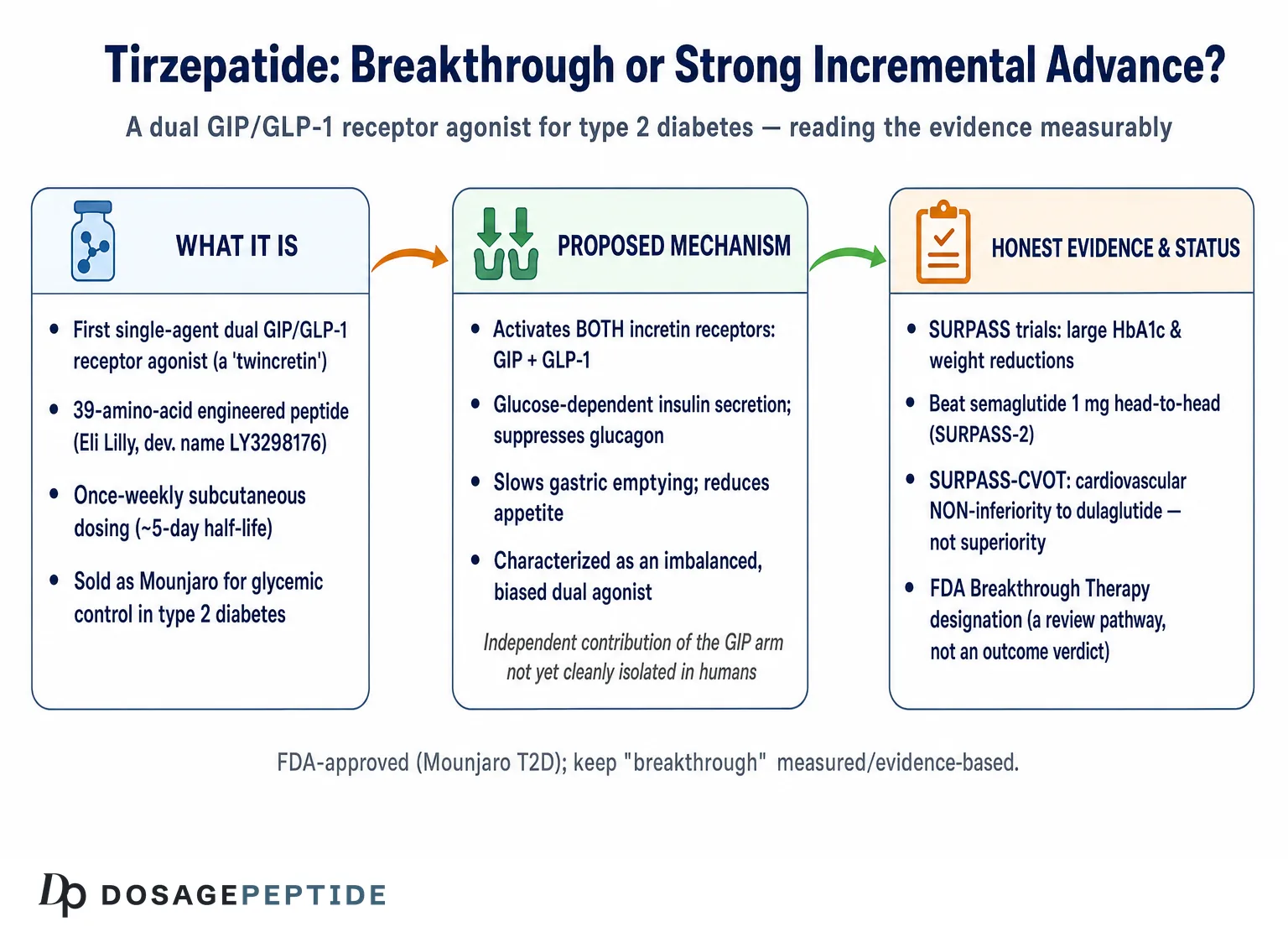
The mechanistic premise of tirzepatide is straightforward to state and surprisingly subtle in its details. Both GIP and GLP-1 are incretin hormones — gut-derived peptides released after eating that potentiate glucose-dependent insulin secretion from pancreatic beta cells. Because their insulinotropic effect is glucose-dependent, it switches off as blood glucose normalizes, which is a large part of why incretin-based drugs carry a low intrinsic risk of hypoglycemia when used alone. Tirzepatide activates both receptors, aiming to recruit the metabolic benefits of each simultaneously.8
GLP-1 receptor agonism contributes several well-characterized effects: it enhances glucose-dependent insulin secretion, suppresses inappropriate glucagon release (which lowers hepatic glucose output), slows gastric emptying, and acts on hypothalamic circuits to reduce appetite and energy intake. GIP receptor agonism adds its own insulinotropic push and appears to influence adipose tissue metabolism, though the precise contribution of the GIP arm to the clinical effect remains an area of active investigation. One prevailing hypothesis is that engaging GIP signaling on a background of improving glycemia restores the blunted GIP response characteristic of type 2 diabetes, allowing the two incretin pathways to act in concert.8
What makes tirzepatide pharmacologically distinctive — and what complicates simple “two is better than one” narratives — is that it is not a balanced agonist. Detailed receptor-signaling studies have characterized it as an imbalanced and biased agonist. Its affinity for the GIP receptor is roughly equivalent to that of native GIP, while its affinity for the GLP-1 receptor is approximately five times weaker than that of native GLP-1.9 At the GLP-1 receptor it also shows signaling bias, favoring cAMP generation over β-arrestin recruitment and driving less receptor internalization than native GLP-1 does. Whether this biased, GIP-weighted profile is the reason for tirzepatide’s efficacy, or merely a feature of the molecule that happens to coincide with strong outcomes, is not settled science. It is an important honesty point: the drug works, but the mechanistic attribution of why it works better than a pure GLP-1 agonist in head-to-head glycemic terms is still being worked out at the bench.9
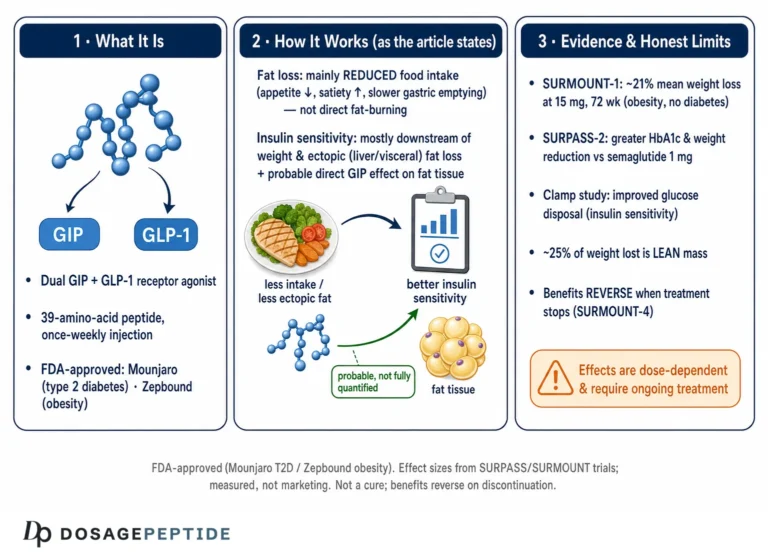
The downstream metabolic consequences are easier to observe than the receptor-level cause. In clinical studies tirzepatide improves fasting and postprandial glucose, increases insulin sensitivity, reduces body weight substantially, and improves several cardiometabolic markers including blood pressure and lipid parameters. A recurring analytic question is how much of the HbA1c reduction is a direct incretin effect on the pancreas versus an indirect consequence of weight loss and improved insulin sensitivity. Mediation analyses suggest that weight loss accounts for a meaningful but partial share of the glycemic benefit, implying that tirzepatide lowers glucose through both weight-dependent and weight-independent pathways — consistent with a genuine incretin action layered on top of the metabolic benefits of losing weight.8 For readers comparing incretin mechanisms across compounds, DosagePeptide’s semaglutide reference page outlines the single-receptor GLP-1 approach that tirzepatide builds upon.
The practical upshot of the mechanism is a therapy that addresses several defects of type 2 diabetes at once — insufficient insulin secretion, excess glucagon, and the obesity that drives insulin resistance. That breadth of action is the strongest mechanistic argument for the “breakthrough” framing. The strongest counterargument is that GLP-1 agonists already did much of this; tirzepatide’s mechanistic novelty is the addition of GIP, whose independent contribution, though plausible and supported by preclinical data, has not been isolated cleanly in humans.
What the Evidence Actually Shows: The SURPASS Program
The core of the case for tirzepatide in type 2 diabetes is the SURPASS phase 3 program — a set of large, randomized, generally well-conducted trials that tested the drug against placebo and against active comparators across the treatment spectrum. The consistency and magnitude of the glycemic and weight results are what earned tirzepatide its reputation. Below is an honest accounting of the pivotal studies and their headline numbers.
SURPASS-1 was a 40-week, double-blind, placebo-controlled monotherapy trial in 478 adults inadequately controlled on diet and exercise. All three doses produced HbA1c reductions of roughly 1.9 to 2.1 percentage points, with estimated treatment differences versus placebo of about −1.9 to −2.1 points, and weight loss of about 7.0 to 9.5 kg.3 SURPASS-2, published in the New England Journal of Medicine, was the most closely watched: an open-label, 40-week trial of 1,879 participants on metformin, comparing tirzepatide against once-weekly semaglutide 1 mg — at the time a benchmark GLP-1 agonist. Tirzepatide met both non-inferiority and superiority: HbA1c fell by 2.01, 2.24, and 2.30 points at 5, 10, and 15 mg respectively, versus 1.86 points for semaglutide, and weight loss was correspondingly greater.4
SURPASS-3 compared tirzepatide against titrated insulin degludec in participants on metformin with or without an SGLT2 inhibitor; all doses were superior to basal insulin for HbA1c and weight, with the 15 mg dose reducing HbA1c by roughly 2.4 points and weight by about 13 kg by the efficacy analysis.5 SURPASS-4 tested tirzepatide against titrated insulin glargine in a higher-cardiovascular-risk population over up to 104 weeks; at week 104 HbA1c reductions of 2.3 to 2.6 points contrasted with 1.0 point for glargine, and tirzepatide produced weight loss where insulin caused weight gain.6 SURPASS-5 added tirzepatide or placebo to background insulin glargine; the 15 mg dose lowered HbA1c by about 2.6 points and weight by about 11 kg versus placebo.7
| Trial | Comparator | Duration | HbA1c change (15 mg) | Weight change (15 mg) |
|---|---|---|---|---|
| SURPASS-13 | Placebo (monotherapy) | 40 weeks | ~ −2.1 points | ~ −9.5 kg |
| SURPASS-24 | Semaglutide 1 mg | 40 weeks | −2.30 points | ~ −12.4 kg |
| SURPASS-35 | Insulin degludec | 52 weeks | ~ −2.37 points | ~ −12.9 kg |
| SURPASS-46 | Insulin glargine | 104 weeks | ~ −2.6 points | ~ −11.4 kg |
| SURPASS-57 | Placebo + glargine | 40 weeks | ~ −2.6 points | ~ −10.9 kg |
Pooled across the program, tirzepatide reduced HbA1c by approximately 1.9 to 2.6 points depending on dose and study, and a striking proportion of participants reached glycemic targets: across doses and studies a large majority — commonly in the range of roughly 80% at lower doses to more than 90% at the highest dose — achieved HbA1c below 7% (the ADA target for most adults), and a meaningful minority reached below 5.7% — a threshold in the non-diabetic range that older glucose-lowering drugs rarely touched.3,4 Framed honestly, this is the strongest single argument for the “breakthrough” characterization: the effect sizes on both glucose and weight exceed what most established therapies deliver, and the superiority over semaglutide in SURPASS-2 was a genuine head-to-head win against the previous class leader.
The measured caveats belong in the same breath. Several SURPASS trials were open-label (notably SURPASS-2 and the insulin comparisons), which introduces potential bias in patient-reported and behavior-mediated outcomes even when the primary endpoint is an objective laboratory value. Trial populations were selected and monitored, follow-up in most studies was one to two years, and the endpoints were surrogate markers — HbA1c and weight — rather than the hard clinical outcomes (heart attack, stroke, death, kidney failure, retinopathy) that ultimately define diabetes care. A large surrogate effect is strongly encouraging but is not the same as a proven reduction in diabetes complications, which requires dedicated outcome trials discussed in the next section.
Cardiovascular, Renal, and Broader Outcomes
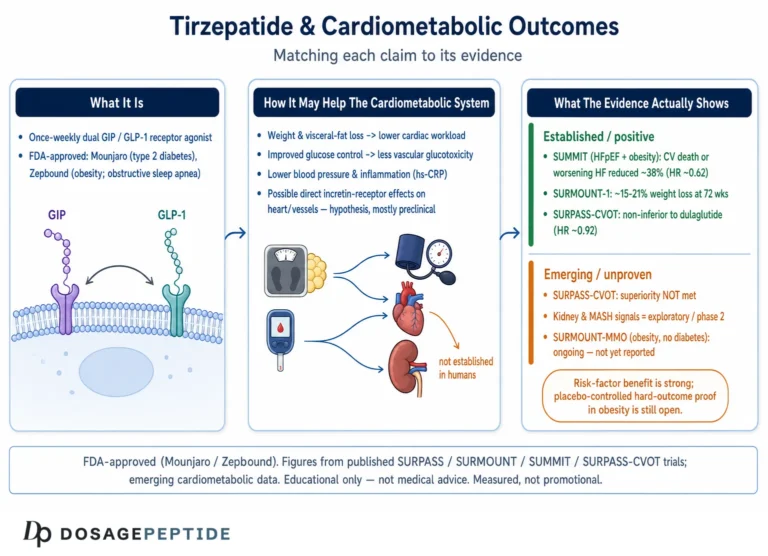
Surrogate markers alone cannot answer whether a diabetes drug ultimately protects patients, so the most important recent evidence for tirzepatide comes from its dedicated cardiovascular outcomes trial, SURPASS-CVOT. This was a large, long-term, active-comparator study enrolling roughly 13,300 participants with type 2 diabetes and established atherosclerotic cardiovascular disease, comparing tirzepatide against dulaglutide — a GLP-1 receptor agonist that had itself already demonstrated cardiovascular benefit — over a planned follow-up of about four to five years.11 The choice of an active comparator with proven cardiovascular benefit, rather than placebo, is scientifically and ethically important: it made the trial a genuinely tougher test.
The reported results showed that tirzepatide was non-inferior to dulaglutide for the primary composite of cardiovascular death, myocardial infarction, and stroke (major adverse cardiovascular events, MACE-3), with a hazard ratio of approximately 0.92 — an 8% numerically lower risk that met the prespecified non-inferiority criterion.11 On secondary endpoints tirzepatide produced greater reductions in HbA1c, body weight, and measures of renal function, and a lower rate of all-cause mortality (about 16% lower than dulaglutide in the reported analysis). Investigators also reported a prespecified indirect comparison estimating MACE and mortality benefit relative to a putative placebo, though indirect comparisons carry more inferential uncertainty than direct ones and should be read cautiously.11
How should this be weighed? The honest reading is favorable but bounded. SURPASS-CVOT establishes that tirzepatide does not increase cardiovascular risk and performs at least as well as an established, benefit-proven GLP-1 agonist — a reassuring and clinically meaningful result that moves tirzepatide from “lowers surrogate markers” toward “safe and non-inferior on hard outcomes.” What it did not do, on the primary endpoint, was demonstrate statistical superiority over dulaglutide for MACE-3. The advantages on weight, glycemia, renal measures, and mortality are real and consistent with the drug’s metabolic profile, but a trial designed and powered primarily to show non-inferiority cannot, by itself, establish that tirzepatide is cardioprotectively superior to the best existing incretin therapy. That is a meaningful distinction for anyone tempted to read “breakthrough” as “proven best-in-class for preventing cardiovascular events.”
Beyond the dedicated outcomes trial, supportive evidence has accumulated across the SURPASS program and its sub-analyses. Tirzepatide consistently lowered systolic blood pressure, improved lipid fractions, and in higher-risk populations (SURPASS-4) showed encouraging signals on renal endpoints such as slowing the decline in estimated glomerular filtration rate and reducing albuminuria. Post-hoc analyses have explored predictors of large weight loss and the associated improvements in cardiometabolic risk factors.6 These are hypothesis-strengthening rather than definitive, but taken together they paint a coherent picture of a drug whose metabolic benefits extend into the vascular and renal domains — which is precisely where the long-term value of a diabetes therapy is ultimately decided. Readers surveying the wider incretin landscape may find DosagePeptide’s retatrutide reference page useful, since triple-agonist candidates are being studied against the same outcome questions.
How Tirzepatide Compares to Other Therapies
“Breakthrough” is inherently a comparative claim, so the comparison to existing therapy deserves its own careful treatment. Type 2 diabetes has a crowded and effective pharmacopeia: metformin, sulfonylureas, DPP-4 inhibitors, SGLT2 inhibitors, insulin, and the GLP-1 receptor agonists. Against most of these, tirzepatide’s glycemic and weight effects in head-to-head or class-comparison terms are larger. The most informative comparisons are the direct ones built into the SURPASS trials.
The single most consequential comparison is SURPASS-2 versus semaglutide 1 mg, because semaglutide was the reigning benchmark for incretin efficacy. Tirzepatide was statistically superior on HbA1c and produced greater weight loss at all three doses.4 That result is the empirical backbone of the argument that tirzepatide is not merely another GLP-1 drug but a meaningfully more potent metabolic agent. Two honesty caveats apply. First, the trial compared tirzepatide’s doses up to 15 mg against semaglutide at 1 mg — a dose that was standard for glycemic use at the time but below the 2 mg dose later studied and the higher doses used for weight management — so the comparison reflects the specific doses tested, not the full dose range of each drug. Second, the trial was open-label. Neither caveat overturns the result, but both temper any leap from “superior in this trial” to “categorically superior in every context.”
Against basal insulin (SURPASS-3 and SURPASS-4), tirzepatide delivered superior HbA1c control while reducing weight, in contrast to the weight gain and hypoglycemia risk that accompany insulin titration.5,6 This is a clinically attractive contrast, but it compares a modern incretin therapy against insulin used as a glucose-lowering tool; insulin remains irreplaceable in insulin-deficient states, and the comparison speaks to positioning within a treatment algorithm rather than to insulin’s fundamental role. Against placebo (SURPASS-1 and SURPASS-5), the effect sizes were large, as expected for an active drug versus placebo, and establish efficacy rather than comparative superiority.
| Therapy class | Typical HbA1c effect | Weight effect | Hypoglycemia risk (monotherapy) |
|---|---|---|---|
| Tirzepatide (dual GIP/GLP-1) | Very large (~1.9–2.6 pts)10 | Substantial loss | Low |
| GLP-1 agonists (e.g., semaglutide) | Large (~1.4–1.9 pts)4 | Moderate–substantial loss | Low |
| SGLT2 inhibitors | Moderate | Modest loss | Low |
| Sulfonylureas | Moderate | Gain | Higher |
| Basal insulin | Large (dose-dependent) | Gain | Higher |
Where the comparison becomes genuinely nuanced is on outcomes rather than surrogates. SGLT2 inhibitors have robust, dedicated evidence for reducing heart-failure hospitalization and slowing kidney disease progression; several GLP-1 agonists have proven MACE reduction. Tirzepatide’s SURPASS-CVOT established non-inferiority to a benefit-proven GLP-1 agonist rather than a new class of outcome benefit.11 So the fair comparative summary is this: on the surrogate markers that dominate day-to-day diabetes management — glucose and weight — tirzepatide is at or near the top of the available options, and beat the prior class leader in a direct trial. On the hard-outcome evidence that guideline bodies weigh most heavily, it is competitive with and non-inferior to the best incretin comparator, but has not (on primary endpoints) demonstrated a distinct outcome advantage over the entire existing armamentarium. Both statements are true simultaneously, and holding them together is what “evidence-cautious” requires.
Research Models and Trial Methodology
Understanding how confident to be in the tirzepatide data requires understanding how that data was generated. The evidence base spans a conventional translational arc: receptor pharmacology and cell-signaling assays, rodent and primate metabolic models, early-phase human pharmacokinetic and dose-ranging studies, and the large randomized phase 3 SURPASS program. Each layer answers a different question and carries different limitations.
At the preclinical level, the mechanistic characterization of tirzepatide as an imbalanced, biased dual agonist rests on in vitro receptor-binding and signaling assays — measuring cAMP accumulation, β-arrestin recruitment, and receptor internalization in cells expressing human GIP and GLP-1 receptors — alongside animal models of obesity and glucose intolerance.9 These systems are essential for establishing plausibility and generating hypotheses, but they are notoriously imperfect predictors of clinical benefit. Receptor bias measured in a cell line does not translate linearly into human metabolic outcomes, and species differences in incretin biology (including differences relevant to the thyroid C-cell safety signal, discussed later) mean animal findings must be interpreted with care.
The phase 3 SURPASS trials are the methodological center of gravity, and their design features determine how much weight the results can bear. On the strengths: they were randomized, they were adequately sized for their glycemic endpoints (ranging from several hundred to nearly two thousand participants each), they used prespecified estimands (the “treatment-regimen” and “efficacy” estimands, which handle discontinuation and rescue medication differently and are reported separately), and they spanned the treatment spectrum from monotherapy to insulin add-on.3,4,5,6,7 The use of active comparators — semaglutide, insulin degludec, insulin glargine, and dulaglutide in the CVOT — is a methodological strength, because beating or matching an effective drug is more informative than beating placebo.
On the limitations: several key trials were open-label, most notably SURPASS-2 and the insulin comparisons, because blinding an injectable-versus-injectable comparison with different titration schedules and devices is difficult. Open-label design is a real threat to the validity of subjective and behavior-mediated endpoints (such as weight, which is influenced by diet and activity that participants may adjust when they know their treatment). The primary glycemic endpoint, HbA1c, is an objective laboratory measure and is relatively robust to this bias, which mitigates the concern but does not eliminate it for secondary endpoints. Trial durations were mostly 40 to 104 weeks — adequate to characterize glycemic and weight effects and their trajectory, but short relative to the multi-decade course of type 2 diabetes.
Two further methodological points deserve emphasis for an evidence-cautious reading. First, industry sponsorship: the SURPASS program was designed, funded, and analyzed by the manufacturer. This is normal and often unavoidable for pivotal drug trials, and it does not by itself invalidate results, but it is a factor that thoughtful readers weigh, and it underscores the value of independent replication and real-world post-marketing surveillance. Second, generalizability: trial participants meet inclusion and exclusion criteria that make them healthier and more adherent than the broad population that ultimately receives the drug, so real-world effect sizes are frequently somewhat smaller than trial estimates. Analyses examining the generalizability of SURPASS results to broader diabetes and obesity populations have explicitly raised this point.4 None of this undercuts the core finding of efficacy; it calibrates how precisely the trial numbers will reproduce in ordinary clinical practice.
Safety and Tolerability
An honest efficacy story is incomplete without an equally honest safety story. Tirzepatide’s tolerability profile is dominated, like the rest of the incretin class, by gastrointestinal effects, with a smaller set of less common but more serious concerns and one boxed warning driven by animal data.
The most frequent adverse events across the SURPASS trials were gastrointestinal: nausea, vomiting, diarrhea, constipation, decreased appetite, dyspepsia, and abdominal discomfort. These were generally mild to moderate, most common during dose escalation, and tended to diminish over time — which is precisely why the approved regimen uses a slow titration from a 2.5 mg starting dose rather than initiating at a therapeutic dose.12 Gastrointestinal events were nonetheless the leading reason for treatment discontinuation, and their frequency generally rose with dose. A systematic review and meta-analysis of tirzepatide’s gastrointestinal effects confirmed this dose-related pattern across the trial data.13
Less common but clinically important adverse events include acute pancreatitis, gallbladder-related events (gallstones and cholecystitis), hypersensitivity reactions, and hypoglycemia — the last chiefly when tirzepatide is combined with insulin or sulfonylureas, which is why those combinations may require dose reductions of the background agent.12,14 In the trial data, absolute rates of pancreatitis were low (on the order of a fraction of a percent, and not consistently higher than comparator in every dataset), and gallbladder events occurred in roughly 1% of users versus somewhat lower rates in comparators — a pattern common to the class and plausibly linked partly to rapid weight loss. Case reports of acute pancreatitis associated with tirzepatide exist and warrant clinical vigilance, but individual case reports establish association, not incidence.15 Other labeled considerations include the risk of aspiration during general anesthesia related to delayed gastric emptying, potential worsening of pre-existing severe gastrointestinal or renal disease, and monitoring for diabetic retinopathy in at-risk patients.
The most prominent safety item is the boxed warning for thyroid C-cell tumors. In rodent studies, tirzepatide (like other incretin agents) caused thyroid C-cell tumors, including medullary thyroid carcinoma, at clinically relevant exposures.12 It is contraindicated in people with a personal or family history of medullary thyroid carcinoma or multiple endocrine neoplasia syndrome type 2 (MEN 2). The crucial honesty point is that the human relevance of this rodent finding is unknown: rodents have a far higher density of GLP-1-responsive thyroid C-cells than humans, the mechanism may not translate, and no causal human signal has been established. The warning reflects appropriate regulatory caution in the face of an unresolved question, not a demonstrated human cancer risk. Post-marketing pharmacovigilance, including analyses of the FDA Adverse Event Reporting System (FAERS), continues to monitor for signals that would not have surfaced in the finite populations and durations of the trials.14
Placed in perspective, tirzepatide’s safety profile is broadly consistent with the GLP-1 receptor agonist class from which it descends: predominantly gastrointestinal, manageable through titration, with rare serious events and one animal-derived warning that has not been shown to affect humans. That profile is compatible with a favorable benefit-risk balance in the studied population, which is what regulators concluded — but “favorable in the trial population over one to two years” is a bounded statement, and the long-term safety of chronic use over many years is still being characterized through ongoing surveillance.
Handling and Reconstitution in a Research Context
Because tirzepatide is widely encountered as a lyophilized (freeze-dried) powder in research settings — distinct from the ready-to-use pen or vial formulations approved for patient care — a brief, non-prescriptive note on handling is warranted for the research-literate reader. Nothing in this section is administration guidance; it describes laboratory handling principles for an educational audience and does not endorse human use of research-grade material.
Lyophilized peptides are hygroscopic and heat- and light-sensitive. Research-grade tirzepatide powder is generally stored refrigerated (commonly 2–8 °C) or frozen for longer-term storage before reconstitution, protected from light, and kept desiccated until use. Reconstitution in a research context typically uses bacteriostatic water (sterile water containing a small percentage of benzyl alcohol as a preservative), which allows a multi-use vial to remain usable over a period of days to weeks; sterile water without preservative is sometimes used for single-session work. The diluent is directed gently against the vial wall rather than forcefully onto the peptide pellet, because peptides are shear-sensitive and vigorous mixing can degrade them — the vial is swirled, not shaken. After reconstitution, material is kept refrigerated and protected from light.14
The relationship between vial content, diluent volume, and resulting concentration is a matter of simple arithmetic that nonetheless causes frequent errors. Concentration equals the total peptide mass divided by the volume of diluent added; the volume needed to deliver a given quantity is that quantity divided by the concentration. For example, a 15 mg vial reconstituted with 1.5 mL of bacteriostatic water yields a concentration of 10 mg/mL, so a hypothetical 2.5 mg quantity would occupy 0.25 mL. DosagePeptide’s peptide reconstitution guide and dosage calculator walk through this arithmetic explicitly, and the compound-specific dosage index pages collect the escalation schedules used across formats. These are reference tools for understanding the mathematics, not instructions to use the compound.
A final and important honesty point about handling: none of the SURPASS efficacy or safety data apply to research-grade powder of unknown purity, identity, or endotoxin content. The trials used pharmaceutical-grade, quality-controlled tirzepatide manufactured under regulated conditions. Vialed material sold as “research chemical” tirzepatide is not subject to the same quality assurance, may vary in actual peptide content, and may contain impurities or contaminants that neither the trials nor the regulatory review evaluated. Any inference from the clinical evidence to such material is unwarranted. This distinction is not a legal nicety — it is the difference between the substance the evidence describes and a substance that merely shares its name.
Limitations and the Human-Evidence Gap
Tirzepatide is, unusually for a compound discussed on an evidence-cautious peptide-education site, one whose human evidence is strong rather than absent. The relevant “gap” is therefore not the familiar one of “no human data” but the subtler one of what the existing human data does and does not yet establish. Being precise about that boundary is the whole point of the “breakthrough” question.
The first limitation is durability. The pivotal trials ran mostly one to two years, and in several arms weight loss had not plateaued when the studies ended — encouraging, but it means the long-run trajectory of both benefit and effect maintenance over five, ten, or twenty years of a chronic disease is not directly established by the pivotal data. Type 2 diabetes is managed across decades; the pivotal evidence characterizes the opening years of that arc. Related is the question of what happens on discontinuation: like other incretin therapies, the metabolic benefits appear to depend on continued treatment, and weight regain after stopping has been observed in the broader class, implying that tirzepatide is a maintenance therapy rather than a cure — a framing that guards against any “cures diabetes” misreading.
The second limitation concerns hard outcomes. Most of the pivotal evidence rests on surrogate endpoints — HbA1c and weight — which are excellent predictors of, but not identical to, the complications patients actually fear. SURPASS-CVOT substantially narrowed this gap by demonstrating cardiovascular non-inferiority to a benefit-proven comparator and favorable secondary signals, but it did not establish primary-endpoint superiority over that comparator, and dedicated long-term trials on microvascular outcomes (retinopathy, nephropathy, neuropathy) and on mortality across diverse populations are still maturing.11 A drug can lower every surrogate marker impressively and still require outcome trials to confirm that the surrogate improvements translate into fewer strokes, amputations, and deaths — the history of diabetes therapeutics contains cautionary examples of surrogate-outcome mismatch.
The third limitation is generalizability and real-world performance. Trial cohorts are selected, adherent, and closely monitored; real-world populations are more heterogeneous, less adherent, and often have comorbidities that trials exclude. Effect sizes observed in routine care are commonly attenuated relative to trial estimates, and tolerability-driven discontinuation may be higher outside the structured trial environment.4 The fourth is mechanistic uncertainty: the independent contribution of the GIP arm to the human clinical effect has not been cleanly isolated, so the mechanistic story that makes tirzepatide sound novel is still partly a hypothesis.9 The fifth is sponsorship and independence: the evidence base is heavily manufacturer-generated, and independent, non-industry replication and long-horizon surveillance remain valuable.
None of these limitations negate the achievement. They define its shape. The fair conclusion is that tirzepatide has robust, high-quality evidence for large improvements in glycemic control and weight in adults with type 2 diabetes over one to two years, cardiovascular non-inferiority to an established comparator, and a class-consistent safety profile — and that the open questions concern long-term durability, primary-endpoint outcome superiority, real-world magnitude, and mechanistic attribution. Whether that package amounts to a “breakthrough” depends on the definition. As a regulatory designation and as a genuine step up in metabolic potency over the prior class leader, the word is defensible. As a claim of proven, distinct, long-term outcome superiority over the entire existing toolkit, it currently outruns the evidence.
Regulatory Status
Tirzepatide’s regulatory standing is, unlike most compounds discussed in a research-education context, fully established for type 2 diabetes. It is an approved prescription medicine, not an investigational or unapproved substance, and this fact is central to reading its evidence honestly.
In the United States, the FDA approved tirzepatide as Mounjaro on 13 May 2022 to improve glycemic control in adults with type 2 diabetes, as an adjunct to diet and exercise.1 It was described by the agency and the manufacturer as the first-in-class GIP and GLP-1 receptor agonist. The approval carries the boxed warning for thyroid C-cell tumors and the contraindications in medullary thyroid carcinoma and MEN 2 discussed above. During development, tirzepatide received Breakthrough Therapy designation from the FDA — a program that expedites review of drugs showing substantial improvement over available therapy on a clinically significant endpoint. It is that designation, as much as the trial results, that anchors the “breakthrough” language in fact; but it is worth stressing that Breakthrough Therapy designation is a development-and-review pathway, not a verdict on long-term comparative outcomes.
In the European Union, the European Commission granted marketing authorisation for Mounjaro on 15 September 2022, following a positive opinion from the EMA’s Committee for Medicinal Products for Human Use, as an adjunct to diet and exercise for adults with insufficiently controlled type 2 diabetes.16 Other national regulators have issued their own authorisations on comparable evidence. Separately, tirzepatide has been approved under a different brand for chronic weight management on the basis of a distinct trial program; that indication is outside the scope of this diabetes-focused discussion and rests on its own evidence.
A few regulatory-literacy points sharpen the picture. First, approval for glycemic control is not approval to prevent or cure diabetes, nor to treat conditions for which dedicated evidence has not been submitted — regulators approve specific indications supported by specific trials. Second, the diabetes label positions tirzepatide as an adjunct to lifestyle measures, not a replacement for them. Third, approval reflects a favorable benefit-risk judgment on the evidence available at the time, and regulators continue to update labeling as post-marketing data accrue; the FAERS-based pharmacovigilance analyses cited earlier are part of that ongoing process.14 Finally, the existence of an approved pharmaceutical does not legitimize research-grade powder sold under the same name: such material is not the approved product, has not passed regulatory review, and inherits none of the approval’s assurances of identity, purity, or manufacturing quality.
The regulatory bottom line is clean and worth stating plainly: for glycemic control in adults with type 2 diabetes, tirzepatide is an approved, evidence-supported therapy in the United States, the European Union, and beyond. That is the firmest possible answer to the narrow question of whether it “works” and is sanctioned. The subtler question this article set out to examine — whether the totality of evidence supports calling it a breakthrough rather than a strong incremental advance — is answered not by the approval stamp but by the measured reading of the trials above.
Frequently Asked Questions
Is tirzepatide approved for type 2 diabetes?
Yes. Tirzepatide is FDA-approved as Mounjaro (approved 13 May 2022) and EMA-authorised (15 September 2022) to improve glycemic control in adults with type 2 diabetes, as an adjunct to diet and exercise.1,16 This is distinct from any research-grade powder sold under the same name, to which the trial and approval data do not apply.
Does the evidence justify calling tirzepatide a “breakthrough”?
Partly, with caveats. It received FDA Breakthrough Therapy designation, and it produced larger HbA1c and weight reductions than most existing therapies — beating semaglutide 1 mg head-to-head in SURPASS-2.4 But “breakthrough” as a claim of proven long-term outcome superiority over all existing options outruns the data: SURPASS-CVOT showed cardiovascular non-inferiority, not primary-endpoint superiority, versus dulaglutide.11 It is best described as a strong advance in metabolic potency rather than a demonstrated best-in-class for hard outcomes.
How much does tirzepatide lower HbA1c and body weight?
Across the SURPASS trials, HbA1c fell by roughly 1.9 to 2.6 percentage points depending on dose and study, and a large majority of participants — commonly around 80% at lower doses to more than 90% at the highest dose — reached HbA1c below 7%.3,4 Weight loss with the 15 mg dose ranged from about 9 to 13 kg across trials.3,4,5,6,7 Real-world reductions are often somewhat smaller than trial figures.
How does tirzepatide differ from semaglutide mechanistically?
Semaglutide is a single GLP-1 receptor agonist; tirzepatide activates both the GLP-1 and GIP receptors. It is characterized as an imbalanced, biased dual agonist, with GIP-receptor affinity comparable to native GIP and weaker affinity at the GLP-1 receptor than native GLP-1.9 The independent clinical contribution of the GIP component has not been cleanly isolated in humans.
What are the most common side effects?
Gastrointestinal effects dominate: nausea, vomiting, diarrhea, constipation, and decreased appetite, mostly mild to moderate and most frequent during dose escalation.12,13 Less common serious concerns include pancreatitis, gallbladder events, and hypoglycemia when combined with insulin or sulfonylureas. There is a boxed warning for thyroid C-cell tumors based on rodent data whose human relevance is unknown.12
Does tirzepatide reduce cardiovascular events?
SURPASS-CVOT, comparing tirzepatide against dulaglutide in about 13,300 people with type 2 diabetes and cardiovascular disease, showed non-inferiority on the primary MACE-3 endpoint (hazard ratio ~0.92) and favorable secondary results including lower all-cause mortality.11 This establishes cardiovascular safety and non-inferiority to a benefit-proven comparator, but not primary-endpoint superiority.
Is tirzepatide a cure for diabetes, or does it need to be continued?
It is not a cure. Like other incretin therapies, its glycemic and weight benefits depend on continued treatment, and stopping is associated with weight regain and loss of glycemic benefit in the broader class. It is a maintenance therapy used alongside diet and exercise, not a one-time treatment that reverses the disease.
Can the clinical trial data be applied to research-grade tirzepatide powder?
No. All SURPASS efficacy and safety data come from pharmaceutical-grade, quality-controlled tirzepatide. Research-grade vialed powder is not the approved product, is not subject to the same manufacturing controls, and may differ in purity, identity, and content. Inferring safety or efficacy for such material from the clinical evidence is unwarranted.
References
- U.S. Food and Drug Administration. FDA approves novel, dual-targeted treatment for type 2 diabetes. FDA press announcement, 13 May 2022 (primary regulatory source). Approval-history details corroborated via the Mounjaro entry on Drugs.com (secondary source).
- Coskun T, et al. LY3298176, a novel dual GIP and GLP-1 receptor agonist for the treatment of type 2 diabetes mellitus: from discovery to clinical proof of concept. Molecular Metabolism. 2018;18:3–14.
- Rosenstock J, et al. Efficacy and safety of a novel dual GIP and GLP-1 receptor agonist tirzepatide in patients with type 2 diabetes (SURPASS-1): a double-blind, randomised, phase 3 trial. The Lancet. 2021;398(10295):143–155.
- Frías JP, et al. Tirzepatide versus semaglutide once weekly in patients with type 2 diabetes (SURPASS-2). New England Journal of Medicine. 2021;385(6):503–515. doi:10.1056/NEJMoa2107519.
- Ludvik B, et al. Once-weekly tirzepatide versus once-daily insulin degludec as add-on to metformin with or without SGLT2 inhibitors in patients with type 2 diabetes (SURPASS-3): a randomised, open-label, phase 3 trial. The Lancet. 2021;398(10300):583–598.
- Del Prato S, et al. Tirzepatide versus insulin glargine in type 2 diabetes and increased cardiovascular risk (SURPASS-4): a randomised, open-label, parallel-group, phase 3 trial. The Lancet. 2021;398(10313):1811–1824.
- Dahl D, et al. Effect of subcutaneous tirzepatide vs placebo added to titrated insulin glargine on glycemic control in patients with type 2 diabetes (SURPASS-5): a randomized clinical trial. JAMA. 2022;327(6):534–545.
- Mechanisms of GLP-1 and dual GIP/GLP-1 receptor agonism in type 2 diabetes (review). Frontiers in Endocrinology. 2024;15:1431292. For primary mechanistic data see Coskun et al. 2018 (reference 2) and Willard et al. 2020 (reference 9).
- Willard FS, et al. Tirzepatide is an imbalanced and biased dual GIP and GLP-1 receptor agonist. JCI Insight. 2020;5(17):e140532.
- American Diabetes Association. Latest data from SURPASS trials demonstrate tirzepatide provided meaningful blood sugar reductions and weight loss (81st Scientific Sessions summary).
- SURPASS-CVOT: comparison of tirzepatide and dulaglutide on major adverse cardiovascular events in participants with type 2 diabetes and atherosclerotic cardiovascular disease. Trial design and reported outcomes, 2025.
- Mounjaro (tirzepatide) U.S. Prescribing Information, including boxed warning for thyroid C-cell tumors, contraindications, and warnings (Eli Lilly).
- Tirzepatide-Induced Gastrointestinal Manifestations: A Systematic Review and Meta-Analysis. PMC10614464.
- Drug-safety and pharmacovigilance sources for tirzepatide: (a) Tirzepatide — LiverTox: Clinical and Research Information on Drug-Induced Liver Injury. NCBI Bookshelf, NBK581694 (hepatic-safety reference); (b) real-world FAERS pharmacovigilance analyses of tirzepatide, PMC11190169 and PMC12469573 (post-marketing signal detection). These are distinct sources cited together for the safety-monitoring statements.
- Acute Pancreatitis Caused by Tirzepatide (case report). PMC11743417.
- European Medicines Agency. Mounjaro (tirzepatide) European Public Assessment Report; marketing authorisation valid throughout the EU, date of authorisation 15 September 2022.
Educational and research-use disclaimer: This article is provided for educational and informational purposes for a research-literate audience. It is not medical advice, is not a recommendation to use, purchase, or administer tirzepatide or any other compound, and should not be used to guide treatment decisions. Tirzepatide is a prescription medicine; decisions about diabetes therapy must be made with a qualified healthcare professional. Descriptions of handling and reconstitution refer to laboratory research contexts only and do not constitute administration guidance. Clinical trial data cited here apply to pharmaceutical-grade tirzepatide, not to research-grade material of unverified quality. Always consult primary literature and licensed clinicians before drawing conclusions.