
Skin, Wound & Regeneration
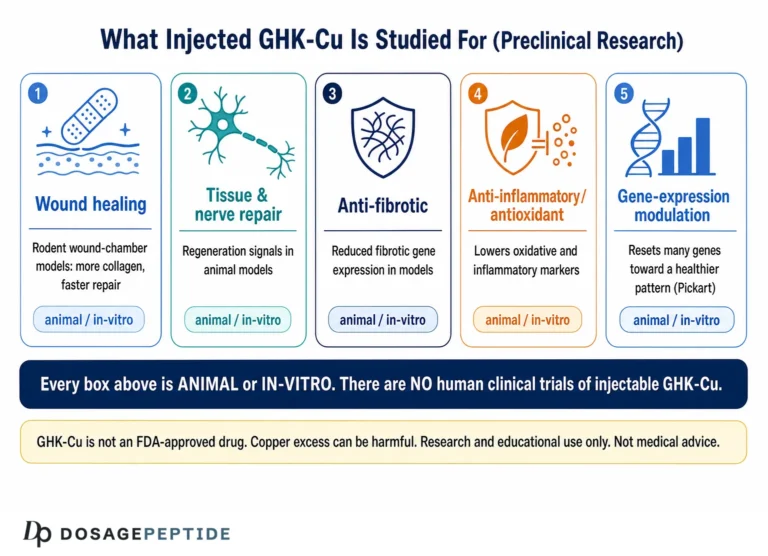
Injectable GHK-Cu: What the Subcutaneous and Systemic Research Shows
The short answer. No published human clinical trial has ever tested injected GHK-Cu — not for skin, not for wound healing, not…
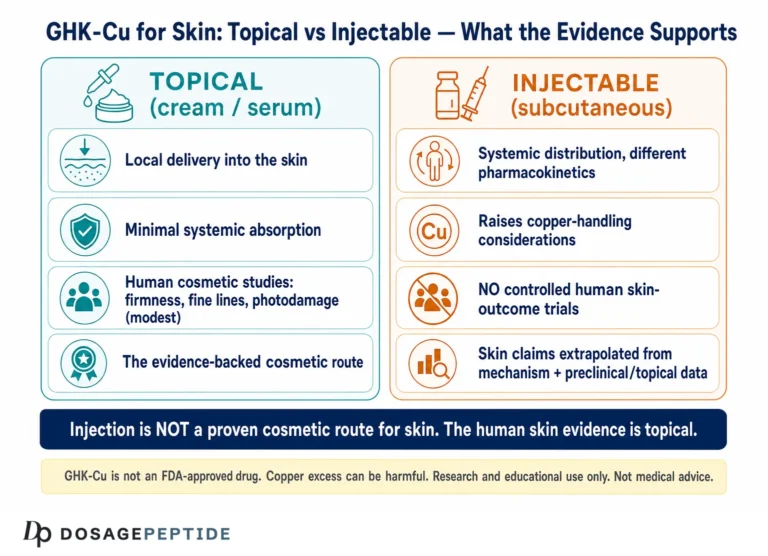
GHK-Cu Injectable vs Topical: What the Skin Research Actually Shows
The short answer. The human evidence that GHK-Cu improves skin is topical. Creams and serums have been through controlled human trials measuring…
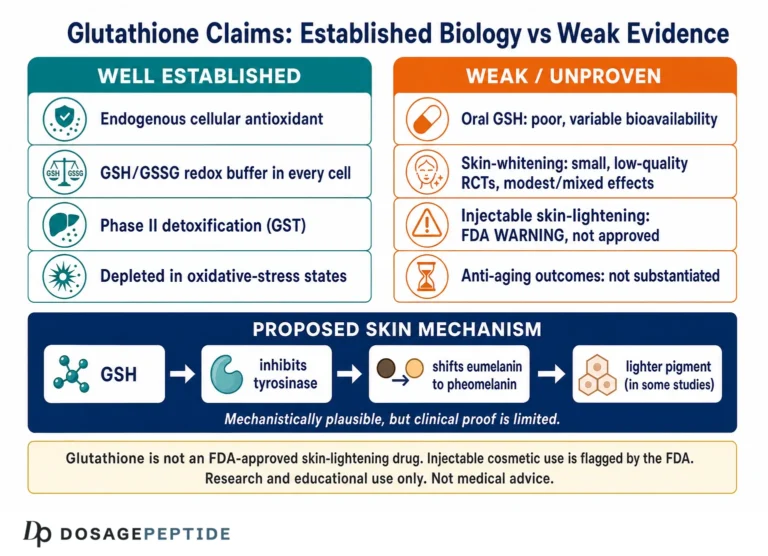
What Is Glutathione? The Master Antioxidant Tripeptide in Cellular & Skin Research
Glutathione is often introduced with a grand nickname — the “master antioxidant” — yet the central research question is more precise than…
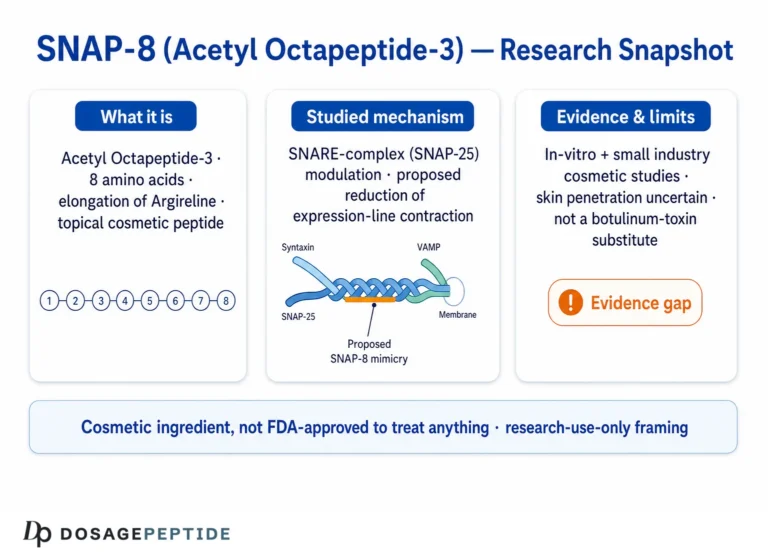
What Is SNAP-8 (Acetyl Octapeptide-3)? The SNARE-Modulating Cosmetic Peptide in Research
Short answer: SNAP-8 (INCI name acetyl octapeptide-3) is a cosmetic peptide designed to imitate a fragment of the SNAP-25 protein and blunt…

BPC-157 + TB-500 Safety: What Animal Data Show (2026)
Short answer: in animal studies, neither BPC-157 nor TB-500 has produced a lethal dose, organ damage, or a clear toxic signal —…

Does Experimental Literature Suggest Distinct Neuroregenerative Functions for TB-500 and BPC-157?
Two of the most discussed molecules in the regenerative-peptide literature, TB-500 and BPC-157, are frequently grouped together as generic “healing peptides” —…
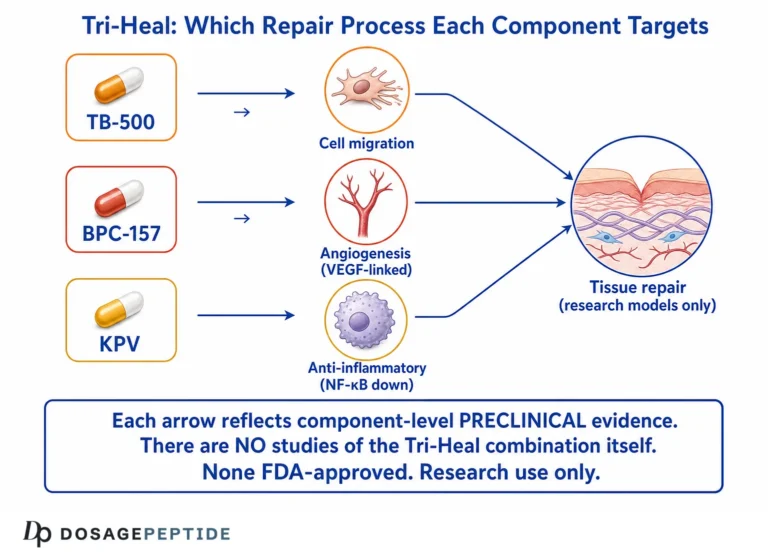
What Is Tri-Heal? The TB-500 + BPC-157 + KPV Recovery Blend Explained
The tri-heal peptide blend is a single research vial that combines three separate peptides — TB-500 (25 mg), BPC-157 (10 mg) and KPV (10 mg)…
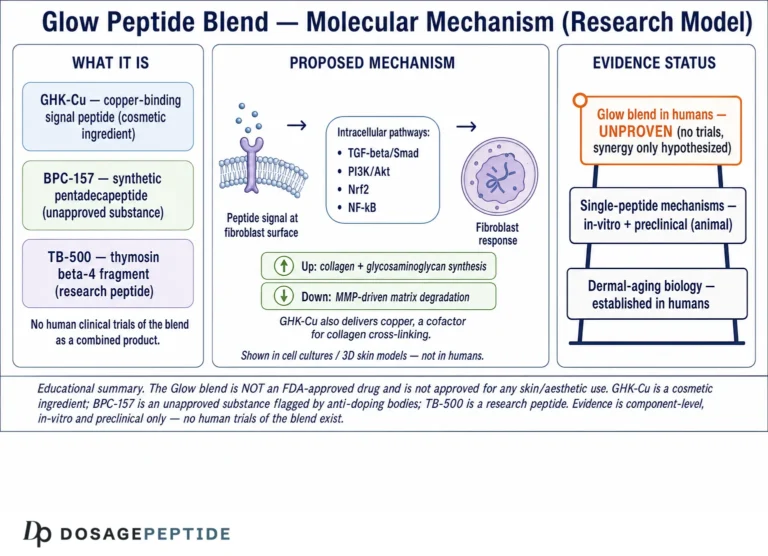
The Glow Peptide Blend: What It Does at a Molecular Level
The central research question behind the Glow peptide blend molecular mechanism is deceptively simple to state and genuinely difficult to answer: can…
Can TB-500 Support Regeneration in Spinal Cord Injuries?
Spinal cord injury (SCI) sits among the most intractable problems in regenerative biology: the mammalian central nervous system (CNS) heals poorly, damaged…
KLOW and Skin Elasticity: What Each Peptide Does (2026)
The research question behind this article is narrow and important: does clinical evidence actually support KLOW’s impact on skin elasticity? The honest…