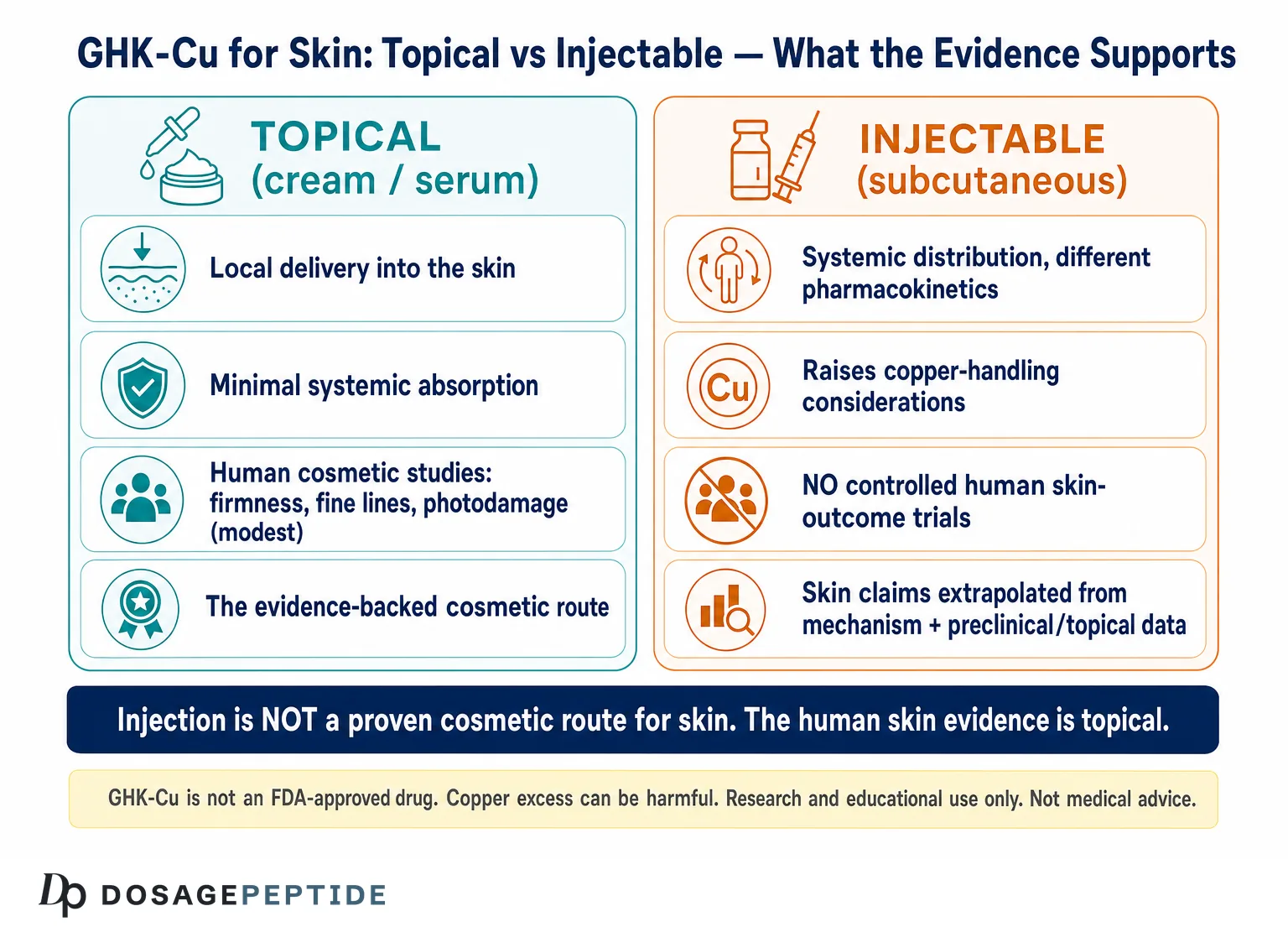
Almost every discussion of GHK-Cu for skin quietly assumes that the copper peptide works the same way no matter how it enters the body — but the central research question of this article is far narrower and far more honest: does the published human evidence for smoother, firmer, better-remodeled skin come from a cream or from a needle? The short answer, which the rest of this article unpacks in detail, is that the human skin-benefit data for GHK-Cu are overwhelmingly topical, while the GHK-Cu injectable form sold in the research-peptide market rests on mechanism, animal studies, and extrapolation rather than on controlled human cosmetic trials. That distinction — route of administration, not the molecule itself — is the entire point.
Research Context: Why the Route of Administration Is the Real Question
GHK-Cu has been studied for roughly five decades, and the dosagepeptide.com library already covers its chemistry, its collagen-stimulating reputation, and the breadth of its proposed benefits in depth. What most write-ups gloss over is that the word “GHK-Cu” is doing two very different jobs depending on how the compound is delivered. A topical serum deposits the copper tripeptide onto and into the outer skin layers, where it can act locally on resident fibroblasts and the extracellular matrix. A GHK-Cu subcutaneous injection, by contrast, introduces the same molecule into the systemic circulation, where its distribution, its interaction with copper-binding plasma proteins, and its ultimate fate are governed by whole-body copper physiology rather than by local skin diffusion.
This matters because the research-peptide market now offers GHK-Cu almost exclusively as a lyophilized powder in a GHK-Cu vial, intended to be reconstituted and injected. That format visually and procedurally resembles the injectable peptides people use for other research goals, and it is easy to assume the skin literature transfers cleanly to the needle. It does not transfer cleanly. When Loren Pickart and Anna Margolina — the authors most associated with GHK-Cu research — describe cosmetic outcomes such as tighter skin, improved elasticity, reduced fine lines, and reduced photodamage, those outcomes are reported for creams and serums applied to the skin, not for injected material.[1] The honest framing, then, is not “does GHK-Cu work for skin?” but “for which route does the human skin evidence actually exist?”
Throughout this article we keep those two questions strictly separated. We describe the mechanism that is shared across routes, then anchor every claimed skin benefit to the delivery method that actually generated the data. Readers who want the deeper cosmetic-outcome discussion can consult our companion pages on what GHK-Cu does for skin health, wrinkle reduction, and collagen synthesis and on the scientific evidence supporting GHK-Cu’s role in skin repair and anti-aging; this article deliberately does not re-tell those stories but instead re-frames them through the lens of route. The reason the framing matters so much is that a reader who accepts “GHK-Cu improves skin” as a route-neutral fact can be quietly led to a conclusion the evidence never established — that pushing the same molecule in through a needle must do at least as much as rubbing it on. Keeping the routes separate is the only way to keep the claims honest.
What Is GHK-Cu, and Why Does the Delivery Route Change the Analysis?
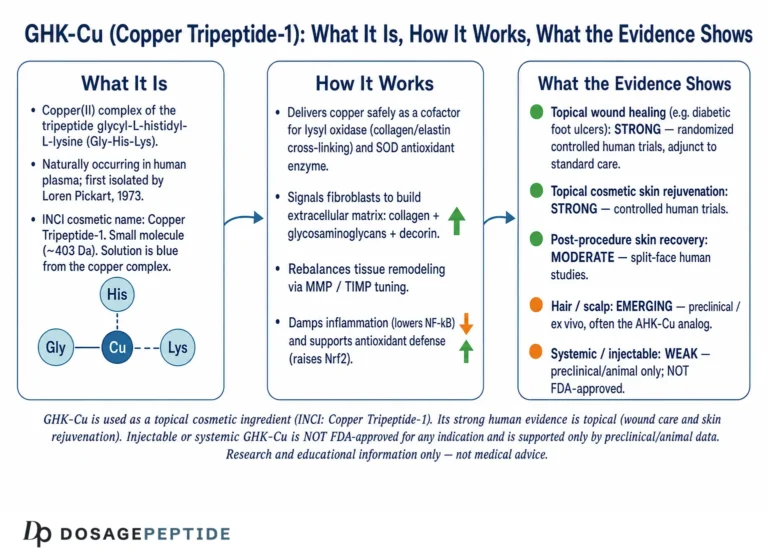
GHK is the tripeptide glycyl-L-histidyl-L-lysine, a small three-amino-acid sequence that occurs naturally in human plasma, saliva, and urine. It was first identified in 1973 as an activity in human albumin that caused aged liver tissue to synthesize proteins in a more youthful pattern, and its plasma concentration is reported to decline substantially with age.[1][6] GHK has a high affinity for copper(II) ions — comparable to the copper-binding site on albumin — and readily forms the copper complex written as GHK-Cu.[3] When people say “copper peptide,” this complex is usually what they mean. The molecule’s natural decline with age is part of why it became interesting as a regenerative signal in the first place: the reasoning is that restoring a youthful signal might restore youthful tissue behavior. That reasoning is legitimate as a hypothesis, but it is worth flagging early that “the body makes less of it with age” is not by itself evidence that adding it back — least of all by injection — produces a cosmetic benefit.
Critically, GHK-Cu is not an FDA-approved drug. It occupies a regulatory space split between cosmetic ingredient and research chemical. Topically, glycyl-histidyl-lysine copper complexes have a long history of use in cosmetic formulations, where the U.S. Food and Drug Administration regulates them as cosmetics rather than approving them as drugs; cosmetic products and ingredients other than color additives do not require FDA pre-market approval.[12] The injectable powder sold in research vials is neither an approved drug nor a cosmetic in the regulatory sense; it is research-grade material, and that classification carries consequences for sterility, characterization, and the complete absence of the controlled human safety and efficacy testing that a drug approval would require.
Why the same molecule behaves differently by route
The reason route dominates this analysis is pharmacokinetic. A molecule’s effect depends not only on its intrinsic biology but on where it goes, how much of it reaches the target tissue, how long it persists, and what else it interacts with along the way. Topical GHK-Cu is a local intervention: the copper tripeptide is placed directly against the tissue it is meant to influence, and only a limited fraction reaches deeper layers or the systemic circulation. Injected GHK-Cu is a systemic intervention: it enters the bloodstream, distributes throughout the body, and encounters the tightly regulated machinery of copper transport before any of it ever reaches the skin as an intact complex. These are not minor differences of degree. They change which tissues are exposed, at what concentrations, and with what safety profile.
For readers coming from the practical side — those looking at a GHK-Cu 50mg vial protocol or a 100mg vial protocol — the key takeaway to carry through the rest of this article is that the vial format is a research-market convention, not a signal that injection is the evidence-backed skin route. The vial exists because that is how research peptides are typically distributed and stored; it does not, by its existence, validate injection as a cosmetic delivery method. A powder in a vial is a shipping-and-stability decision made upstream by suppliers, and it says nothing about whether the reconstituted liquid, once injected, does anything measurable for the appearance of skin.
How Does the Mechanism of GHK-Cu Translate Across Injectable and Topical Routes?
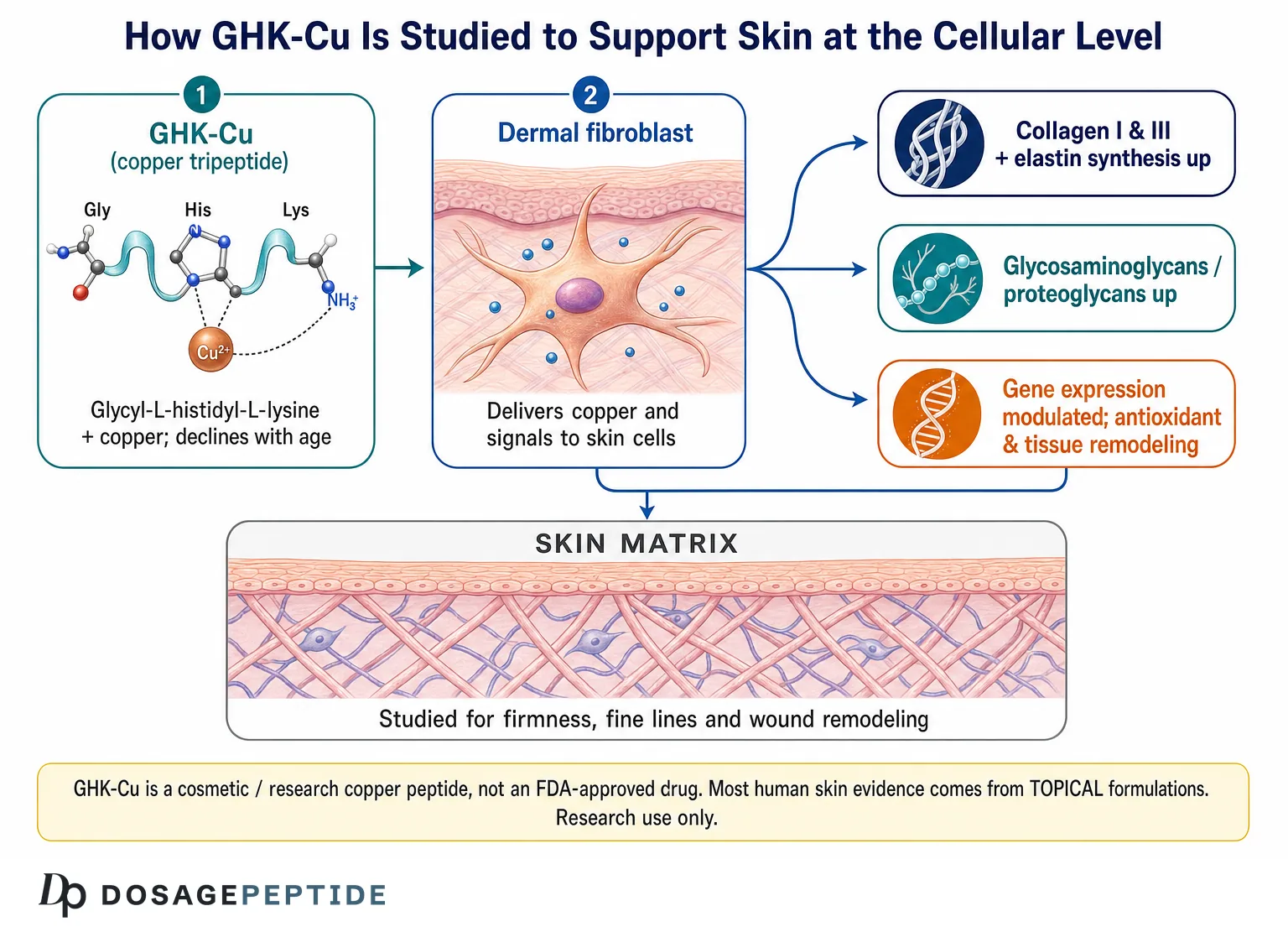
The mechanism of GHK-Cu is the part of the story that is genuinely well described in the literature, and it is largely route-independent at the cellular level — which is precisely why extrapolation to injection is so tempting and so easy to overstate. Understanding the mechanism carefully is what lets us separate what is plausible from what is proven. A cell in a dish does not know whether the peptide reached it from a cream or from the bloodstream; what changes between routes is not the cellular biology but whether, and in what concentration, the intact complex ever arrives at that cell in a living human.
Copper delivery and chelation
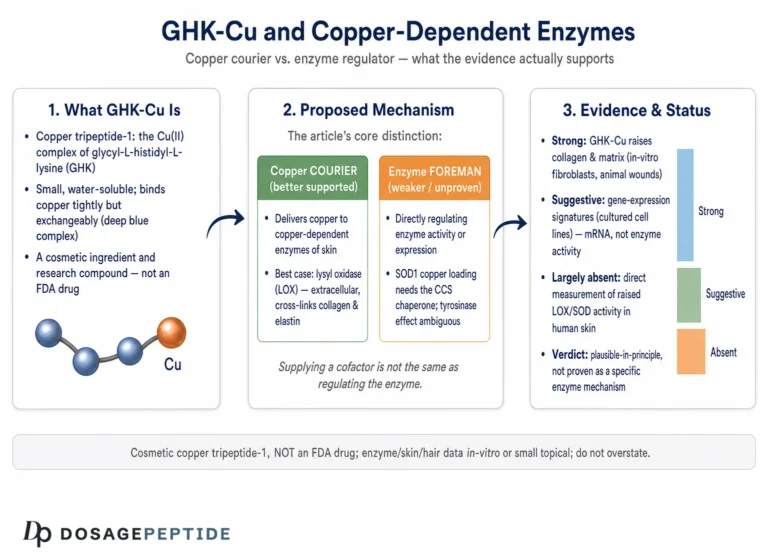
At its most basic, GHK acts as a copper carrier and modulator. Copper is an essential trace metal and a required cofactor for enzymes central to skin biology, including lysyl oxidase (which cross-links collagen and elastin) and superoxide dismutase (an antioxidant enzyme). By binding copper with an affinity similar to albumin’s transport site, GHK can shuttle copper to cells and influence local copper availability.[3] This chelation-and-delivery role is the mechanistic seed from which most downstream effects grow, and it is intrinsic to the molecule regardless of how it is administered. It is also, notably, the same property that makes systemic dosing worth scrutinizing: a molecule whose defining feature is carrying copper is a molecule whose systemic use has to be evaluated in light of how the body already manages copper.
Stimulation of extracellular matrix synthesis
The most reproducible cell-level finding is that GHK-Cu stimulates dermal fibroblasts to produce more extracellular matrix. In cultured fibroblasts, GHK-Cu increased collagen synthesis at strikingly low concentrations — the effect began between roughly 10-12 and 10-11 M and peaked near 10-9 M, independent of any change in cell number, meaning the peptide upregulated matrix production per cell rather than simply growing more cells.[4] Beyond collagen, GHK-Cu stimulates elastin, glycosaminoglycans, and small proteoglycans. In a rat wound model and in rat dermal fibroblast cultures, GHK-Cu increased type I collagen and glycosaminoglycan production and modulated the expression of the dermal proteoglycans decorin and biglycan.[5] Notably, that particular study used repeated GHK-Cu injections into wound chambers — an important detail we return to below, because it is one of the few places where injected GHK-Cu was actually studied, and it was in rodents, not human skin.
Matrix remodeling and MMP modulation
GHK-Cu does not simply pour on new matrix; it appears to modulate remodeling in both directions. It influences matrix metalloproteinases (MMPs) and their tissue inhibitors (TIMPs), stimulating both the synthesis and the controlled breakdown of collagen and glycosaminoglycans.[1] This dual action is consistent with a tissue-remodeling role: the peptide behaves less like a blunt growth stimulus and more like a signal that helps reset damaged tissue toward an organized, healthy architecture. Pickart’s reviews frame this as the peptide stopping the inflammatory and scar-forming phase of wound healing and restoring normal tissue morphology.[3] This balanced remodeling is attractive for a cosmetic goal in principle, but it is worth stressing that “consistent with” and “attractive in principle” are statements about plausibility, not about a demonstrated outcome in aging human skin by any given route.
Antioxidant and anti-inflammatory signaling
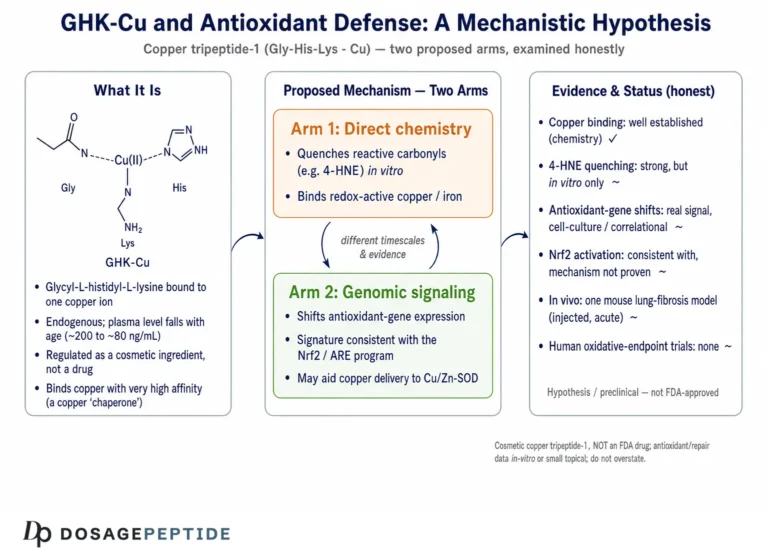
GHK and GHK-Cu are described as antioxidant and anti-inflammatory. Reported actions include suppression of free radicals, reduction of oxidizing iron release, dampening of pro-inflammatory signaling, and support of antioxidant defenses such as superoxide dismutase.[3][6] In the context of aging skin, oxidative damage and low-grade inflammation are plausible contributors to matrix degradation, so an agent that modulates both is mechanistically attractive. Again, though, these actions are largely characterized in cell and animal systems, and their relevance to visible human skin change depends entirely on whether an effective concentration reaches the dermis by the route in question.
The gene-expression “reset” hypothesis
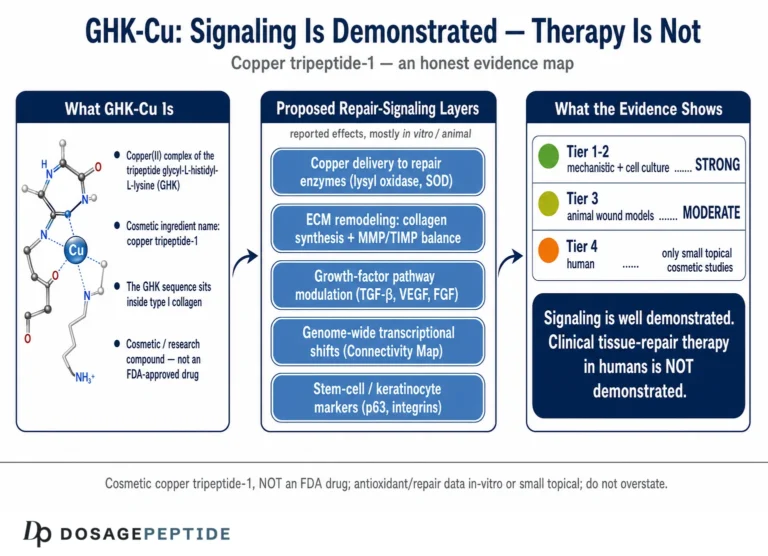
The most expansive mechanistic claim — and the one most often cited to justify systemic dosing — comes from Pickart’s gene-expression work. Using the Broad Institute’s Connectivity Map, the group reported that GHK modulates the expression of a very large number of human genes, on the order of thousands, and tends to shift pathological or aged expression patterns back toward a healthier, younger profile.[1][2] The affected pathways reportedly include DNA repair, antioxidant defense, anti-inflammatory signaling, and tissue remodeling, and related work extended this analysis to nervous-system genes.[7] It is genuinely interesting biology. But it is essential to read it for what it is: computational and in-vitro gene-signature analysis, not evidence that injecting GHK-Cu produces a measurable, beneficial, whole-body genomic reset in living humans, and certainly not evidence that such a reset visibly improves skin.
The Connectivity Map approach compares the gene-expression “signature” a compound induces in cultured cells against a reference database of signatures, inferring which pathological patterns the compound might counteract. It is a hypothesis-generating screen, powerful for prioritizing what to study next, but it does not measure a clinical outcome. A signature that looks “anti-aging” in a database is a lead, not a result. When this genomic breadth is cited to justify systemic GHK-Cu dosing — the reasoning being that a molecule touching thousands of genes must be doing something profound throughout the body — it is worth remembering that broad gene modulation is as plausibly a reason for caution as for enthusiasm, since specificity, not breadth, is usually what separates a useful therapeutic from an indiscriminate one.
Angiogenesis, wound-repair, and preclinical systemic effects
In preclinical models, GHK-Cu promotes angiogenesis (new blood-vessel formation), attracts repair cells such as macrophages and capillary cells to injury sites, and accelerates wound healing across a range of tissues and species — skin, hair follicles, gastrointestinal lining, bone, and more.[3] Some of these effects have been demonstrated with systemic administration in animals, which is the strongest mechanistic basis for the idea that injected GHK-Cu could do something systemically. The gap — and it is a large one — is that none of this rodent systemic work establishes a cosmetic skin benefit from injection in humans.
Put plainly: the mechanism is shared across routes, but a shared mechanism is a hypothesis generator, not proof of effect. The same collagen-stimulating biology that a topical serum exploits locally is what injectable proponents invoke systemically. The difference is that the topical claim has supporting human cosmetic studies behind it, while the injectable skin claim has mechanism plus animal data and nothing more. For a fuller mechanistic tour, our What Is GHK-Cu pillar on mechanism, benefits, risks, and use lays out the pathways in additional depth.
What Does the Skin Research Actually Show for Topical GHK-Cu?
This is where the human evidence lives. When researchers and cosmetic scientists report visible skin improvements from GHK-Cu, they are almost always describing topical application — creams and serums applied to aged or photodamaged facial skin. Anchoring this point firmly matters, because it is the factual backbone of the entire injectable-versus-topical comparison: the route with human cosmetic data is the one you apply, not the one you inject.
Cosmetic outcomes reported for topical use
Pickart and Margolina’s reviews summarize controlled cosmetic studies in which topical GHK-Cu formulations were reported to tighten loose skin, improve elasticity, increase skin density and firmness, reduce fine lines and wrinkles, reduce photodamage, and reduce hyperpigmentation, alongside increased keratinocyte proliferation.[1] These are meaningful cosmetic endpoints, and they map logically onto the mechanism: more collagen and glycosaminoglycan synthesis, better-organized remodeling, and reduced oxidative and inflammatory burden should, in principle, translate into firmer, smoother, more resilient skin. It is worth being explicit that even here the claim is “studied for and reported to improve” these endpoints in cosmetic research, not “proven to treat” any skin condition — the distinction between a cosmetic-science finding and a medical claim holds throughout.
The important caveats on the topical data
Honesty requires naming the limitations even of the route that does have human data. First, many of these cosmetic studies are small, and some were conducted or sponsored by parties with a commercial interest in the ingredient, which raises the possibility of optimistic reporting. Second, the magnitude of benefit is often modest — measurable improvements in firmness or fine lines, not dramatic transformations. Third, cosmetic-study endpoints (subjective firmness scores, instrumental elasticity, photographic grading) are softer and more variable than the hard clinical endpoints used in drug trials. So even the topical route, which is the evidence-backed one, should be described as “supported by small, sometimes industry-affiliated human cosmetic studies with modest effect sizes,” not as “proven.” The correct posture toward topical GHK-Cu is cautious optimism grounded in real but imperfect human data — which is still a materially stronger position than the injectable route can claim.
How topical GHK-Cu actually reaches the skin
One reasonable objection is whether a copper tripeptide can penetrate skin at all when applied topically. In-vitro human-skin studies using GHK copper cuprate diacetate found that the compound did penetrate and was retained in skin tissue: across dermatomed human skin, a measurable permeability coefficient was recorded, with a substantial amount of copper retained as a depot within the tissue over 48 hours.[8][9] This supports the biological plausibility of topical delivery: the copper peptide can enter and dwell in the very layers where fibroblasts reside. It also underscores something the injectable-versus-topical debate often misses — topical delivery is not merely surface cosmetics; it establishes a local skin depot, which is arguably the most direct way to expose dermal fibroblasts to the complex. These were ex-vivo permeation experiments framed around anti-inflammatory delivery rather than wrinkle outcomes, so they speak to whether the molecule can reach the dermis, not to how much cosmetic change follows — but even that limited, mechanism-level demonstration is one the injectable route has no equivalent of for reaching skin specifically.
What Do We Actually Know About Injectable (Subcutaneous) GHK-Cu?
Here is the crux of the article, stated as plainly as possible: there are no published, controlled human clinical trials establishing a skin or cosmetic benefit from injected (subcutaneous) GHK-Cu. Every confident claim you may encounter about an injectable copper peptide transforming skin from the inside is an extrapolation — built from the shared cellular mechanism, from topical human cosmetic data, and from preclinical rodent studies — not a conclusion drawn from human injectable trials.
What the injectable evidence base actually consists of
The strongest injectable-relevant data are preclinical. In the rat wound-chamber study discussed earlier, repeated GHK-Cu injections stimulated wound-tissue production, collagen, and glycosaminoglycan synthesis, and modulated proteoglycan expression — a genuine demonstration that injected GHK-Cu can influence connective-tissue synthesis in a living animal.[5] Broader reviews note that GHK-Cu induces systemic wound healing in rats, mice, and pigs when administered systemically.[1] These findings tell us that systemic GHK-Cu is biologically active in animals. They do not tell us that subcutaneous GHK-Cu makes human facial skin firmer, smoother, or younger-looking, and they do not establish a human dose, schedule, or safety margin.
Why the extrapolation is weaker than it looks
It is tempting to reason: “topical works locally, mechanism is systemic, animals respond to injection, therefore injection should work for skin in people.” Each link in that chain is weaker than it appears. Topical benefit demonstrates local activity where the peptide is concentrated at the target; it says nothing about whether a systemic dose delivers enough intact complex to the skin to matter. The mechanism is real but non-specific — a molecule that influences thousands of genes and many tissues is not obviously going to concentrate its benefits on your dermis when injected. And animal wound-healing models test tissue repair after injury, not cosmetic rejuvenation of intact, aging human skin. The result is a plausible hypothesis with no human confirmation for the specific claim being made.
What injectable proponents cannot honestly claim
Given this evidence base, several statements are not supportable and should be treated as red flags: that injectable GHK-Cu is “more effective than topical” for skin; that it “delivers collagen stimulation from within” in a proven way; that there is an established injectable dose for skin outcomes; or that systemic dosing is safer or more efficient than a serum. None of these has controlled human support. This article takes no position that injection is superior for skin — the evidence does not permit that position — and it deliberately provides no injection instructions or human dosing recommendations. The practical dosing pages on this site exist to document what the research market offers and to support safe handling and reconstitution literacy, not to endorse injection as a proven cosmetic route.
Injectable vs Topical GHK-Cu: How Do the Routes Compare Head to Head?
Because the whole article turns on the GHK-Cu injection vs topical comparison, it helps to lay the two routes side by side across the dimensions that actually matter. The table below summarizes the contrast; note especially the “human skin evidence” row, which is the decisive one.
| Dimension | Topical GHK-Cu (cream/serum) | Injectable / subcutaneous GHK-Cu |
|---|---|---|
| Primary site of action | Local — outer skin layers and upper dermis where applied | Systemic — whole-body distribution via bloodstream |
| Human skin-benefit evidence | Small controlled cosmetic studies; modest, some industry-affiliated | None — no controlled human cosmetic trials |
| Basis for skin claims | Direct human cosmetic data plus mechanism | Extrapolation from mechanism, topical data, and rodent studies |
| Delivery to dermal fibroblasts | Local skin depot demonstrated in vitro | Depends on systemic PK; intact-complex delivery to skin unquantified |
| Systemic copper exposure | Minimal absorption | Meaningful — governed by whole-body copper handling |
| Regulatory status | Regulated as a cosmetic ingredient (not FDA-approved drug) | Research-grade material; not an approved drug or cosmetic |
| Sterility considerations | Non-sterile cosmetic acceptable for skin surface | Sterility and endotoxin control critical; research vials are not sterile pharmaceuticals |
| Honest evidence verdict | Supported for cosmetic endpoints, modestly | Unproven for skin; hypothesis only |
The pattern in the table is consistent: on every row that concerns human skin outcomes, the topical route has at least some direct evidence and the injectable route has none. Where the injectable route has an advantage on paper — systemic reach — that same property is also its main safety liability, as the copper-handling discussion below explains.
What Is the Pharmacology of Systemic GHK-Cu, and Why Does Copper Handling Matter?
To evaluate injectable GHK-Cu fairly, we have to think about what happens to a copper-carrying peptide once it is in the bloodstream. This is where the differentiator becomes not just about efficacy but about physiology and safety.
Copper is essential — and tightly regulated for a reason
Copper is an essential trace element required by numerous enzymes, but the body regulates it within narrow limits precisely because free or excess copper is chemically dangerous. Copper ions can catalyze the generation of reactive oxygen species, and copper homeostasis is maintained by a dedicated system of transporters, chaperones, and binding proteins (such as ceruloplasmin and albumin) that keep essentially no copper floating around unbound.[11] When GHK-Cu is injected, it enters this regulated system. Some of the copper may be handed off to plasma copper-binding proteins; the peptide portion is subject to degradation by plasma and tissue proteases. The intact GHK-Cu complex is unlikely to survive indefinitely in circulation, which further complicates any assumption that injected complex arrives at the skin unchanged.
Different pharmacokinetics, different exposure profile
A subcutaneous injection creates a systemic exposure profile fundamentally different from a topical application. Instead of a sustained local skin depot, the injection produces a bolus that is absorbed, distributed, and cleared on a whole-body timescale. The tissues most exposed are not necessarily the skin — they are the highly perfused organs and the copper-handling machinery of blood and liver. For a cosmetic goal, this is arguably the wrong exposure profile: you disperse the compound throughout the body to (hypothetically) reach a target organ, the skin, that a topical route reaches directly and locally.
The copper-load consideration
Repeated systemic dosing of a copper complex raises a legitimate, if largely theoretical, question about cumulative copper exposure. The amount of copper delivered by typical research-peptide GHK-Cu doses is small relative to dietary copper and total body copper, and there is no published evidence of copper toxicity from GHK-Cu at the doses discussed in the peptide community. But “no published evidence” is not the same as “demonstrated safe,” because the controlled human studies that would detect a problem have not been done. The prudent framing is that systemic copper delivery is a variable that topical use largely avoids, and that anyone with impaired copper regulation faces a categorically different risk calculus — which brings us to safety.
It is also worth noting an asymmetry that cuts against the intuitive “injection is stronger, therefore better” assumption. With a topical serum, the copper that reaches deeper tissue does so gradually and locally, and the vast majority of the body is never exposed. With an injection, the copper is introduced all at once into the systemic pool, and the body must accommodate the entire dose regardless of how little of it the skin ultimately uses. For a target organ as accessible from the outside as the skin, routing a copper complex through the whole body to reach it is arguably the least efficient and highest-exposure way to do it. This is a conceptual argument rather than a measured one — again, the human PK data do not exist — but it illustrates why systemic delivery is not self-evidently advantageous for a cosmetic goal, and why the burden of proof sits squarely on anyone claiming injection is the better skin route.
What Are the Safety Considerations for Injectable Copper Peptide?
Safety is where the injectable-versus-topical distinction stops being academic. Because injection bypasses the skin barrier and introduces material systemically, the safety considerations are more serious and less forgiving than for a cosmetic serum.
Copper-metabolism disorders: a conceptual contraindication
The clearest safety concern involves disorders of copper handling. Wilson’s disease is an autosomal-recessive disorder in which copper accumulates pathologically in the liver, brain, and other tissues because of defective copper excretion, and its management centers on reducing copper burden, not adding to it.[10] Systemically dosing a copper-carrying peptide in someone with Wilson’s disease or another copper-overload condition is conceptually contraindicated: it works against the entire therapeutic direction of the disease. Several rarer inherited and acquired copper-dysregulation conditions can mimic or overlap with Wilson’s disease, which is another reason that adding exogenous copper systemically without medical oversight is a poor idea.[10] This is not a claim that GHK-Cu causes copper overload in healthy people; it is a statement that the systemic route removes the safety margin that topical use provides for anyone whose copper regulation is compromised.
Sterility, endotoxin, and product characterization
Research-grade GHK-Cu is not a sterile pharmaceutical product. It is typically supplied as a lyophilized powder in a vial with no guarantee of sterility, endotoxin control, or the identity-and-purity verification that a compounded or approved injectable would carry. Injecting any non-sterile or inadequately characterized material carries risks of infection, injection-site reactions, and exposure to impurities. The U.S. FDA has repeatedly warned about the risks of compounded and non-approved injectables precisely because sterility and quality cannot be assumed outside a controlled pharmaceutical process.[13] For a topical cosmetic, a non-sterile product is acceptable because it stays on the skin surface; for an injectable, sterility is a first-order safety requirement that research vials do not promise to meet.
Injection-site and general considerations
Beyond sterility, subcutaneous injection carries the ordinary risks of any injection: local irritation, bruising, nodules, and the possibility of allergic or hypersensitivity reactions. Because there are no controlled human safety data for injectable GHK-Cu specifically, the reaction profile at any given dose is genuinely unknown rather than reassuringly characterized. This absence of data cuts against the injectable route: it is not that injectable GHK-Cu has been shown to be dangerous, but that it has not been shown to be safe in the way an approved product would be. The rational response to genuine uncertainty about an injected substance is caution, not the optimistic assumption that silence in the literature equals a clean bill of health.
Regulatory reality
To restate the regulatory position clearly: GHK-Cu is not FDA-approved for any injectable indication. Topical copper-peptide products are regulated as cosmetics and are not FDA-approved as drugs.[12] The injectable vial exists in a research-use-only context. Nothing in this article should be read as encouraging injectable use; the goal is to accurately characterize what the evidence does and does not support.
How Does the GHK-Cu Vial Form Fit Into the Route Question?
Since the injectable market centers on the vial, it is worth addressing the vial format directly — both what it is and what it is not evidence of.
Why GHK-Cu is sold as a lyophilized vial
GHK-Cu, like most research peptides, is distributed as a freeze-dried (lyophilized) powder in a sealed vial to maximize stability during storage and shipping. Peptides degrade in solution over time, so shipping them dry and reconstituting them shortly before use is a practical stability convention. The presence of a vial and the need to reconstitute do not indicate that injection is the validated cosmetic route; they reflect how the research-peptide supply chain handles fragile molecules generally. Someone comparing a 50mg vial protocol against a 100mg vial protocol is really comparing two package sizes of the same research material, not two tiers of proven efficacy.
Reconstitution is a handling skill, not an endorsement
Reconstitution — adding bacteriostatic or sterile water to the powder to create a solution — is a technical step common to many research peptides, and doing it correctly matters for concentration accuracy and contamination control. Our peptide reconstitution guide covers the mechanics of how vial volume, peptide mass, and diluent volume determine final concentration, and why the diluent has to physically fit the vial. That guide is relevant here because the injectable/vial form is the one that requires reconstitution at all — a topical serum arrives ready to use. But learning to reconstitute a vial correctly is a handling-literacy topic; it is not evidence that the reconstituted material has a proven skin benefit when injected. Both things can be true at once: reconstitution should be done carefully and the injectable skin claim remains unproven.
Copper content and the vial
One practical, honest note about the vial: GHK-Cu’s copper is part of the complex, so the copper dose scales with the peptide dose. A larger vial and a larger reconstituted dose mean more systemic copper per administration if injected. This is a straightforward reason that, on the systemic route, “more” is not obviously “better” and may simply mean more copper exposure without a demonstrated skin payoff — another argument for treating injectable skin claims skeptically.
What Would It Take to Prove Injectable GHK-Cu Works for Skin?
A useful way to appreciate how far the injectable-for-skin claim is from being established is to sketch what genuine proof would actually require. The gap between “plausible mechanism” and “demonstrated cosmetic benefit” is not a formality; it is the difference between a hypothesis and knowledge.
The studies that do not yet exist
To claim that subcutaneous GHK-Cu improves human skin, one would need, at minimum, a randomized, placebo-controlled trial in human volunteers with defined skin characteristics — for example, photoaged facial skin graded at baseline. Participants would be randomized to injectable GHK-Cu, to placebo injection, and ideally to a topical GHK-Cu arm for a route comparison. Outcomes would be measured with validated instruments: instrumental elasticity and firmness, corneometry and cutometry, standardized photography with blinded grading, and, most convincingly, dermal biopsies quantifying collagen density and organization before and after. Doses and schedules would be pre-registered, and safety monitoring would track copper status (serum copper, ceruloplasmin), injection-site reactions, and any systemic effects. No such trial has been published. Until one is, the injectable skin claim cannot graduate from extrapolation.
The pharmacokinetic groundwork that is also missing
Even before an efficacy trial, injectable GHK-Cu lacks the basic human pharmacokinetic characterization that any injectable drug candidate would require: measured plasma half-life of the intact complex, the fraction of administered copper that binds to plasma proteins versus remains peptide-bound, tissue distribution, and how much functional complex — if any — actually reaches the dermis. Without these data, even a positive skin outcome would be difficult to attribute to a specific mechanism, and a safe cumulative-dose ceiling could not be defined. The absence of this groundwork is itself informative: it signals how early the injectable route sits on the evidence timeline compared with the decades of topical cosmetic-science work.
Why mechanism alone keeps failing this test
The history of dermatology and pharmacology is full of compounds with impeccable mechanistic rationales that did not translate into clinical benefit, or that worked by one route and not another. A molecule that stimulates fibroblast collagen synthesis in a dish, and that helps rodents heal wounds when injected, has cleared only the earliest hurdles. Human skin is a different, aging, intact system; cosmetic rejuvenation is a different endpoint from wound repair; and systemic delivery is a different exposure than the local depot a serum creates. Each of those differences is a place where a mechanistically sound idea can fail. That is exactly why the honest posture is to describe injectable GHK-Cu for skin as an untested hypothesis rather than a validated protocol, no matter how elegant the underlying biology looks on paper.
Current Evidence Level: Grading the Skin Claims by Route
Pulling the threads together, it helps to grade the evidence explicitly rather than leaving it as prose, because the honest verdict differs sharply by route and by claim. The following framework assigns a candid evidence tier to each combination.
| Claim | Route | Evidence tier | What actually supports it |
|---|---|---|---|
| Improves firmness / elasticity / fine lines | Topical | Low-to-moderate human | Small controlled cosmetic studies, some industry-affiliated[1] |
| Stimulates collagen / GAG synthesis | Cellular (route-independent) | Moderate mechanistic | Fibroblast and in-vivo animal studies[4][5] |
| Penetrates and dwells in skin | Topical | In-vitro human skin | Ex-vivo permeation studies[8] |
| Accelerates wound healing | Topical & systemic (animal) | Preclinical | Rodent and other animal models[3] |
| Improves aging facial skin when injected | Injectable / subcutaneous | None (human) | No controlled human trials — extrapolation only |
| Systemic “gene reset” benefits skin | Injectable / systemic | Hypothetical | Computational gene-signature analysis[2] |
Read the bottom two rows together with the top row and the article’s thesis becomes concrete. The claims with the most human support are all topical. The injectable skin claim sits at the bottom of the evidence hierarchy — not disproven, but genuinely unproven, resting on extrapolation. A reader deciding how much confidence to place in an injectable-for-skin narrative should weight it accordingly. For a deeper walk through the underlying cosmetic and repair evidence, our page on the scientific evidence for GHK-Cu in skin repair and anti-aging examines the primary studies in more granularity.
Limitations of the Current Evidence
Any honest treatment of this topic has to foreground its own limitations, because the strength of the conclusions is bounded by the weakness of the underlying data. Several limitations apply.
Absence of head-to-head human comparison
There is no published human study that directly compares injectable GHK-Cu against topical GHK-Cu for any skin endpoint. The comparison in this article is therefore assembled from separate bodies of evidence — human topical cosmetic studies on one side, animal and mechanistic work on the other — rather than from a single trial that pits the routes against each other. Cross-body-of-evidence comparisons are inherently weaker than a controlled head-to-head, and readers should hold the “topical wins on evidence” conclusion as a statement about what has been studied, not a proven verdict that topical outperforms injection.
Quality and independence of the topical data
The human cosmetic studies that anchor the topical route are frequently small, short, and in some cases affiliated with commercial interests, and cosmetic endpoints are softer than clinical ones. This means the topical evidence, while real, is itself of modest strength. It would be a mistake to read this article as saying topical GHK-Cu is definitively proven — only that it has more, and more directly relevant, human evidence than the injectable route.
Reliance on mechanism and animal models for the injectable route
The injectable case leans heavily on mechanism and rodent studies. Mechanistic plausibility is a weak form of evidence for a specific clinical outcome, and animal wound-healing models do not model cosmetic rejuvenation of intact human skin. The gene-expression “reset” work, while intriguing, is computational and in-vitro; it has not been shown to produce visible skin benefits in living humans by any route, let alone by injection.[2]
Pharmacokinetic unknowns
We lack good human pharmacokinetic data for injected GHK-Cu: how much intact complex survives in circulation, how much copper is handed off to plasma proteins, how much (if any) reaches the skin as functional complex, and what a safe cumulative copper exposure would be. Without these numbers, statements about injectable efficacy or long-term safety are speculative.
Publication and enthusiasm bias
Finally, much of the accessible GHK-Cu literature is authored by a small number of closely associated researchers and enthusiasts, and negative or null results are less likely to be published or promoted. This can create an impression of a stronger, more unanimous evidence base than a neutral systematic review would find. The appropriate posture is interested but skeptical: the biology is real and worth studying, and the specific injectable-for-skin claim is not yet earned.
None of these limitations is a reason to dismiss GHK-Cu as uninteresting. The molecule has a legitimate, decades-long research history, a well-characterized mechanism, and a body of topical cosmetic data that, while modest, is more than many popular ingredients can claim. The limitations are, rather, a reason to be precise about what is supported and by which route. Precision here is not pedantry; it is the difference between an evidence-guided decision and an assumption dressed up as one. The route of administration is the variable that most changes the honest answer, and it is the variable most often ignored.
So What Is the Honest Verdict on Injectable vs Topical GHK-Cu for Skin?
If you compress everything above into a single honest verdict, it is this: for skin, the evidence points to topical GHK-Cu as the route with actual human support — modest, imperfect, but real — while injectable GHK-Cu for skin remains an extrapolation that has not been tested in controlled human trials. The molecule’s mechanism is genuinely interesting and route-independent at the cellular level, which is why the injectable idea is plausible; but plausibility is not proof, and the systemic route adds copper-handling and sterility considerations that the topical route largely avoids.
This is not a claim that injectable GHK-Cu does nothing, nor an endorsement of any particular use. It is a statement about where the evidence currently stands. Anyone weighing the two routes for skin purposes should understand that they are comparing a modestly-supported cosmetic route against an unproven, higher-consideration systemic one — and should treat any source that presents injection as the superior skin route as getting ahead of the science. For the broader picture of what GHK-Cu is and how it is discussed across contexts, the GHK-Cu mechanism, benefits, risks, and use pillar remains the best starting point on this site.
For a focused look at the injected route on its own — the systemic mechanism and the preclinical studies — see what the subcutaneous and systemic GHK-Cu research shows.
Frequently Asked Questions
Is injectable GHK-Cu better than topical for skin?
No route has been shown to be better for skin in a controlled human comparison, and the injectable route has no controlled human cosmetic trials at all. The human skin-benefit evidence — improved firmness, elasticity, and reduced fine lines — comes almost entirely from topical creams and serums. Claims that injection is superior for skin are extrapolations from mechanism and animal data, not proven findings.
Does subcutaneous GHK-Cu actually reach the skin?
That is precisely the unknown. Injected GHK-Cu distributes systemically and enters the body’s tightly regulated copper-handling system, where the peptide is subject to protease degradation and the copper may be handed to plasma proteins. How much intact complex ultimately reaches the skin has not been quantified in humans. By contrast, topical application demonstrably deposits a copper-peptide depot in the skin layers themselves.
Why is GHK-Cu sold as an injectable vial if topical has the evidence?
The vial format reflects how the research-peptide supply chain distributes fragile molecules — lyophilized powder is more stable for shipping and storage than a pre-made solution. The existence of a GHK-Cu vial is a packaging and market convention, not evidence that injection is the validated cosmetic route. Topical cosmetic formulations are sold separately as ready-to-use serums and creams.
What is the mechanism behind GHK-Cu’s skin effects?
GHK-Cu delivers and modulates copper and stimulates dermal fibroblasts to synthesize collagen, elastin, glycosaminoglycans, and proteoglycans, while modulating matrix metalloproteinases and antioxidant and anti-inflammatory pathways. Pickart’s gene-expression work also reports that GHK influences a large number of human genes. This mechanism is largely route-independent at the cellular level, which is why it is invoked for both topical and injectable use — but a shared mechanism does not by itself prove that either route produces a visible skin outcome.
Is injectable GHK-Cu safe?
There are no controlled human safety data for injectable GHK-Cu, so its safety is genuinely uncharacterized rather than established. Specific concerns include theoretical copper exposure with repeated systemic dosing, a conceptual contraindication in Wilson’s disease and other copper-metabolism disorders, and the sterility and impurity risks of injecting research-grade material that is not a sterile pharmaceutical product. It is not FDA-approved.
Could GHK-Cu injections cause copper overload?
There is no published evidence of copper toxicity from GHK-Cu at the doses discussed in the research community, and the copper delivered is small relative to total body copper. However, “no evidence of harm” is not the same as “demonstrated safe,” because the studies that would detect a problem have not been done. People with impaired copper regulation face a categorically different and higher risk from any systemic copper delivery.
Is GHK-Cu FDA-approved?
No. GHK-Cu is not an FDA-approved drug for any indication. Topical copper-peptide products are regulated as cosmetics, which are not FDA-approved as drugs and do not require pre-market approval. The injectable powder sold in research vials is research-grade material, neither an approved drug nor a regulated cosmetic, and is intended for research use only.
Does the vial size (50mg vs 100mg) change the skin benefit?
No demonstrated skin benefit is tied to vial size. A 50mg and a 100mg vial are different package sizes of the same research material; the larger vial simply contains more peptide and, correspondingly, more copper per equivalent dose. Because the injectable skin benefit is unproven in the first place, a larger vial mainly means greater potential systemic copper exposure, not a proven larger cosmetic effect.
What is the most evidence-based way to use GHK-Cu for skin?
Based on the published human data, topical formulations are the route with actual cosmetic-outcome evidence, albeit modest and from small studies. This article does not provide dosing advice for any route and does not endorse injectable use; it describes what the evidence supports. Decisions about personal use should be made with a qualified healthcare professional, particularly given the copper and sterility considerations of any injectable.
References
- Pickart L, Vasquez-Soltero JM, Margolina A. GHK Peptide as a Natural Modulator of Multiple Cellular Pathways in Skin Regeneration. BioMed Research International. 2015;2015:648108. https://www.ncbi.nlm.nih.gov/pmc/articles/PMC4508379/
- Pickart L, Margolina A. Regenerative and Protective Actions of the GHK-Cu Peptide in the Light of the New Gene Data. International Journal of Molecular Sciences. 2018;19(7):1987. https://www.ncbi.nlm.nih.gov/pmc/articles/PMC6073405/
- Pickart L. The human tri-peptide GHK and tissue remodeling. Journal of Biomaterials Science, Polymer Edition. 2008;19(8):969–988. https://pubmed.ncbi.nlm.nih.gov/18644225/
- Maquart FX, Pickart L, Laurent M, Gillery P, Monboisse JC, Borel JP. Stimulation of collagen synthesis in fibroblast cultures by the tripeptide-copper complex glycyl-L-histidyl-L-lysine-Cu2+. FEBS Letters. 1988;238(2):343–346. https://pubmed.ncbi.nlm.nih.gov/3169264/
- Siméon A, Wegrowski Y, Bontemps Y, Maquart FX. Expression of glycosaminoglycans and small proteoglycans in wounds: modulation by the tripeptide-copper complex glycyl-L-histidyl-L-lysine-Cu(2+). Journal of Investigative Dermatology. 2000;115(6):962–968. https://pubmed.ncbi.nlm.nih.gov/11121126/
- Pickart L, Vasquez-Soltero JM, Margolina A. The human tripeptide GHK-Cu in prevention of oxidative stress and degenerative conditions of aging: implications for cognitive health. Oxidative Medicine and Cellular Longevity. 2012;2012:324832. https://www.ncbi.nlm.nih.gov/pmc/articles/PMC3359723/
- Pickart L, Vasquez-Soltero JM, Margolina A. The Effect of the Human Peptide GHK on Gene Expression Relevant to Nervous System Function and Cognitive Decline. Brain Sciences. 2017;7(2):20. https://www.ncbi.nlm.nih.gov/pmc/articles/PMC5332963/
- Hostynek JJ, Dreher F, Maibach HI. Human skin penetration of a copper tripeptide in vitro as a function of skin layer. Inflammation Research. 2011;60(1):79–86. https://pubmed.ncbi.nlm.nih.gov/20721598/
- Hostynek JJ, Dreher F, Maibach HI. Human skin retention and penetration of a copper tripeptide in vitro as function of skin layer towards anti-inflammatory therapy. Inflammation Research. 2010;59(11):983–988. https://www.ncbi.nlm.nih.gov/pmc/articles/PMC2945467/
- Antos A, Gromadzka G, Bembenek JP, Litwin T. Disorders Mimicking Wilson’s Disease: Clinical, Biochemical, and Molecular Perspectives for Accurate Differential Diagnosis. Diagnostics. 2026;16(9):1342. https://www.ncbi.nlm.nih.gov/pmc/articles/PMC13163969/
- National Institutes of Health, Office of Dietary Supplements. Copper — Health Professional Fact Sheet. https://ods.od.nih.gov/factsheets/Copper-HealthProfessional/
- U.S. Food and Drug Administration. FDA Authority Over Cosmetics: How Cosmetics Are Not FDA-Approved, but Are FDA-Regulated. https://www.fda.gov/cosmetics/cosmetics-laws-regulations/fda-authority-over-cosmetics-how-cosmetics-are-not-fda-approved-are-fda-regulated
- U.S. Food and Drug Administration. Compounding and the FDA: Questions and Answers. https://www.fda.gov/drugs/human-drug-compounding/compounding-and-fda-questions-and-answers
Disclaimer: This article is for educational and informational purposes only and describes research and cosmetic-science findings. It is not medical advice and does not constitute a recommendation to use GHK-Cu by any route. GHK-Cu is not an FDA-approved drug; injectable research-grade material is intended for laboratory research use only and is not a sterile pharmaceutical product. Nothing here should be interpreted as instructions for human use or dosing. Consult a qualified, licensed healthcare professional before making any decision related to peptides, copper-containing compounds, or your health, particularly if you have any disorder of copper metabolism.