Glutathione is often introduced with a grand nickname — the “master antioxidant” — yet the central research question is more precise than the marketing: how much of glutathione’s well-established intracellular redox biology actually translates into the systemic and skin-brightening benefits that supplements and clinics promote? This reference article separates the two halves of that question: the textbook-solid biochemistry of the glutathione (GSH) system, which is not in dispute, and the far weaker, inconsistent evidence for oral, topical, and injectable glutathione as a cosmetic skin-lightening agent. Throughout, the goal is to grade the evidence honestly rather than inflate it, and to keep the distinction between confident biochemistry and speculative cosmetic application in constant view.
What Is Glutathione and Why Is It Called the “Master Antioxidant”?
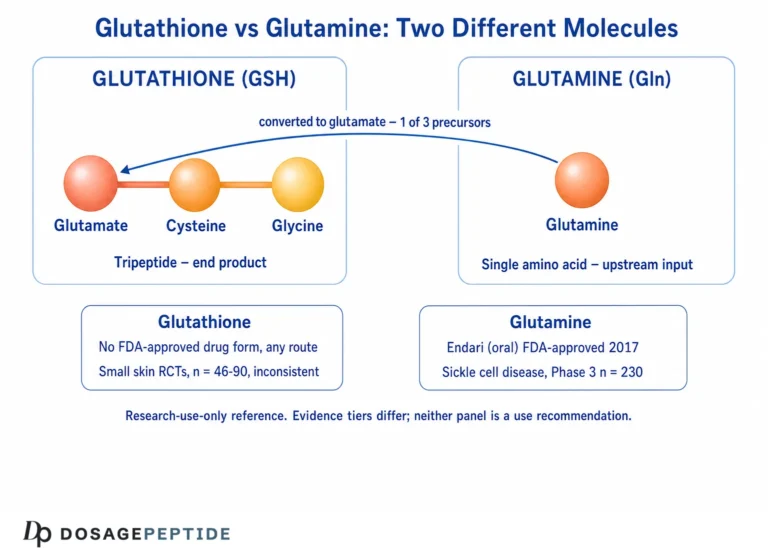
Glutathione is a tripeptide — a molecule built from three amino acids — with the systematic name γ-L-glutamyl-L-cysteinyl-glycine. It is the most abundant low-molecular-weight thiol in animal cells, present at millimolar concentrations (roughly 1–10 mM) inside most tissues, which makes it one of the most concentrated small molecules in the human body.[1] The term “master antioxidant” reflects two facts: glutathione directly neutralizes reactive oxygen species, and it also regenerates and supports other antioxidants (such as vitamins C and E) while serving as the substrate for a family of protective enzymes. That much is genuine, uncontroversial biochemistry taught in every cell-biology curriculum.
Its distribution inside the cell is not uniform, and that detail matters for interpreting supplement claims. The largest pool sits in the cytosol, but discrete pools also exist in the nucleus, the endoplasmic reticulum, and the mitochondria — the last being disproportionately important because mitochondria are the principal source of the reactive oxygen species generated by normal respiration. Because the body synthesizes glutathione where it is needed and compartmentalizes it deliberately, simply raising the concentration of glutathione in the bloodstream does not guarantee that any particular tissue compartment — least of all a target as specific as the melanocytes in the basal epidermis — sees a meaningful change. This compartmentalization is one of several reasons the leap from “more glutathione in blood” to “a visible cosmetic effect” is far larger than marketing implies.[1]
The tripeptide structure and its unusual bond
What makes glutathione chemically distinctive is the gamma (γ) peptide bond. In ordinary peptides, amino acids are joined through the alpha-carboxyl group. In glutathione, glutamate connects to cysteine through its side-chain (gamma) carboxyl instead. This single structural quirk has an outsized functional consequence: it renders the molecule resistant to cleavage by standard cellular peptidases, which recognize alpha bonds. Only the specialized enzyme gamma-glutamyl transpeptidase, located on the outer surface of certain cell membranes, can break that bond.[2] The reactive heart of the molecule is the cysteine thiol (–SH) group, whose sulfur atom is what donates electrons to quench oxidants and forms disulfide bonds. Nearly all of glutathione’s antioxidant chemistry happens at that one sulfur, which is why the availability of cysteine — the only one of the three amino acids that carries the reactive thiol — is the pivotal variable in whether a cell can build and maintain its glutathione supply.
Endogenous synthesis and the gamma-glutamyl cycle
Crucially, glutathione is synthesized inside cells, not merely obtained from diet. Its production is a two-step, ATP-dependent process. First, glutamate and cysteine are joined by glutamate-cysteine ligase (also called gamma-glutamylcysteine synthetase) — the rate-limiting step. Second, glycine is added by glutathione synthetase to complete the tripeptide.[1] The availability of cysteine is usually the limiting factor, which is why cysteine-donor compounds such as N-acetylcysteine (NAC) can raise intracellular glutathione more reliably than glutathione itself. Synthesis is further governed by feedback inhibition: when glutathione levels are high, the first enzyme is suppressed. This tight, self-regulating loop — part of the broader gamma-glutamyl cycle first mapped in detail by Alton Meister’s laboratory — is the single most important fact to understand before evaluating supplement claims, because it means the body defends a set-point rather than passively accumulating whatever glutathione is swallowed.[2]
The classic experimental tool that exposed how central this synthetic pathway is has been the inhibitor buthionine sulfoximine, which blocks glutamate-cysteine ligase and lets researchers deliberately deplete cellular glutathione to observe the consequences. Studies using this and related approaches, largely from Meister’s group, established that adequate protein nutrition — and specifically an adequate supply of sulfur amino acids — is what keeps the glutathione system running.[2] The same body of work clarified that dietary cysteine, cystine, methionine, N-acetylcysteine, and related precursors are effective at supporting tissue glutathione synthesis, whereas intact glutathione taken by mouth faces the additional hurdle of surviving the digestive tract before it can contribute anything.[1]
Why “glutathione peptide” is a slightly loose term
Search traffic frequently uses the phrase glutathione peptide, and it is technically accurate — glutathione is a peptide. But it is not a “peptide drug” in the way research peptides such as BPC-157 or the GHK-Cu copper complex are. It is an endogenous metabolite present in every nucleated cell, more comparable to a vitamin cofactor than to a signaling peptide. Readers coming from a peptide-research background will find a fuller vocabulary comparison in the site’s peptide research glossary, which distinguishes endogenous tripeptides like glutathione from synthetic research peptides. Keeping that distinction clear prevents a common category error: glutathione’s biology does not automatically behave like an injectable peptide simply because both are chains of amino acids.
Research Context: How Did Glutathione Move From Biochemistry to Skincare?
For most of the twentieth century, glutathione was studied purely as a redox and detoxification molecule — a subject of enzymology and toxicology, not cosmetics. The pivot toward skin came from an incidental observation: patients receiving high-dose glutathione for other reasons sometimes reported skin lightening, and laboratory work showed that glutathione could inhibit tyrosinase, the rate-limiting enzyme of melanin production. That mechanistic hook — a plausible pathway from a well-known antioxidant to reduced pigmentation — is what launched an entire cosmetic category.[7]
From redox biology to cosmetic claims
The leap from “glutathione inhibits tyrosinase in a test tube” to “glutathione whitens skin when swallowed or injected” is a long one, and it is precisely where the evidence thins out. In-vitro tyrosinase inhibition is robust and reproducible. Demonstrating that an oral capsule delivers enough intact glutathione to melanocytes in the basal layer of the epidermis to meaningfully shift pigmentation is a much harder claim to support, and the human trials that attempt it are small, short, and methodologically uneven.[8] Recognizing that gap between mechanism and outcome is the core of reading this literature honestly. A mechanism that is real in a cuvette is only a hypothesis about the human body until a well-designed clinical trial tests it directly at the actual target tissue.
The geography and commercial context of the research
Much of the skin-lightening research on glutathione originates in regions where lighter skin carries strong cultural and commercial value — notably the Philippines, Thailand, India, and parts of East Asia. This is not a reason to dismiss the studies, but it is a reason to read them critically: several trials were funded or conducted by companies with a commercial interest in the result, sample sizes are typically in the dozens, follow-up rarely extends beyond a few months, and publication bias toward positive cosmetic outcomes is a recognized concern.[7] The result is a body of evidence that is suggestive but far from the standard applied to approved dermatologic drugs. Dosagepeptide.com is an independent reference library, not a seller; the site’s glutathione research dosage reference page catalogs how the compound is handled in laboratory settings without endorsing cosmetic use.
Reduced vs Oxidized Glutathione: What Is the GSH/GSSG Redox Couple?
You cannot understand glutathione without understanding that it exists in two interconvertible forms, and that the ratio between them is one of the most important measures of a cell’s redox health. This is the reduced vs oxidized glutathione distinction, usually written as the GSH GSSG couple.
GSH, GSSG, and how they convert
Reduced glutathione (GSH) is the active, monomeric form carrying a free thiol group. When GSH donates an electron to neutralize a reactive oxygen species, two GSH molecules become oxidized and join through a disulfide bond to form a single molecule of oxidized glutathione (GSSG), also called glutathione disulfide. GSSG is then recycled back to GSH by the enzyme glutathione reductase, which uses NADPH as the electron source. This continuous cycle — oxidation during antioxidant work, reduction to regenerate the active pool — means the same glutathione molecules can be used repeatedly rather than consumed once.[1]
| Property | Reduced glutathione (GSH) | Oxidized glutathione (GSSG) |
|---|---|---|
| Structure | Single tripeptide with free –SH thiol | Two tripeptides linked by a disulfide (–S–S–) bond |
| Redox role | Electron donor / active antioxidant | Spent form, awaiting recycling |
| Typical cellular abundance | Vast majority (>90% of the pool in healthy cells) | Small fraction under normal conditions |
| Regenerated by | — | Glutathione reductase (NADPH-dependent) |
| Rising level signals | Healthy reducing environment | Oxidative stress / redox imbalance |
The redox ratio as a biomarker
Because GSSG accumulates when antioxidant demand outpaces recycling capacity, the GSH:GSSG ratio is widely used in research as a quantitative index of oxidative stress. A high ratio indicates a robust reducing environment; a falling ratio flags redox imbalance and is associated in the literature with aging and numerous disease states.[1] Notably, one of the more credible findings from a well-conducted oral-supplement trial was not a dramatic clinical benefit but a measurable decrease in the whole-blood oxidized-to-reduced ratio after six months — a biomarker shift rather than a proven health outcome.[3] It is worth dwelling on that distinction, because it recurs throughout the glutathione literature: a change in a laboratory number is easy to measure and easy to publish, but it is not the same thing as a change a person can see in the mirror or feel in their health.
Why the two forms matter for skin research
The GSH/GSSG distinction is not academic when it comes to cosmetics. Most tyrosinase-inhibition data concern reduced glutathione, yet at least one notable topical trial tested oxidized glutathione (GSSG) and still reported reduced melanin index — suggesting the pigment effect may not depend solely on the free thiol.[5] This complicates simple mechanistic stories and is one reason the skin-brightening evidence remains genuinely uncertain rather than merely under-powered. If both the reduced and the oxidized form can move a pigment marker, the field does not yet have a settled account of what the active species even is in living skin.
Mechanisms Studied: How Does Glutathione Work at the Cellular Level?
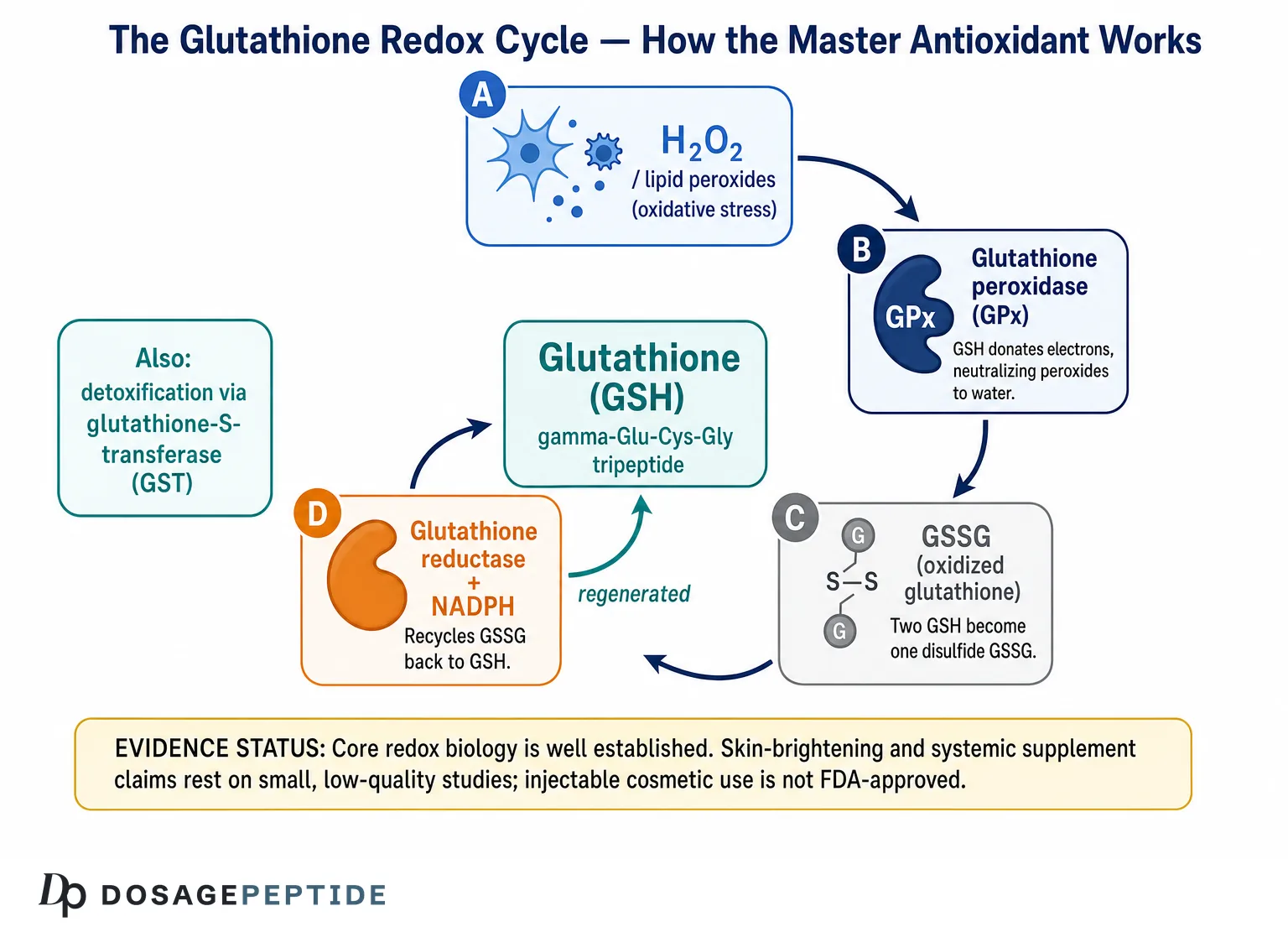
This section covers the part of glutathione biology that is well-established textbook science. Unlike the skin-lightening claims, these mechanisms are supported by decades of enzymology and are not seriously contested. Understanding them is what makes the “master antioxidant” label defensible.
Direct free-radical scavenging
The most straightforward function is direct chemical neutralization. The cysteine thiol of GSH donates a hydrogen atom or electron to reactive oxygen and nitrogen species — hydroxyl radicals, peroxynitrite, and others — converting these damaging molecules into more stable products and, in the process, becoming oxidized to GSSG. Because glutathione is present at such high intracellular concentrations, it functions as a large buffering reservoir that absorbs oxidative insults before they can damage lipids, proteins, and DNA.[1]
Glutathione peroxidase and the disposal of peroxides
Glutathione does much of its most important work not alone but as the substrate for glutathione peroxidase (GPx), a family of (mostly selenium-dependent) enzymes that reduce hydrogen peroxide and lipid peroxides to water and harmless alcohols. In this reaction, two GSH are oxidized to one GSSG per molecule of peroxide removed. GPx is a frontline defense against membrane lipid peroxidation and is central to how cells manage the constant low-level flux of hydrogen peroxide generated by normal metabolism.[1] This enzymatic route — the GSH mechanism most cited in redox biology — is far more quantitatively significant than direct scavenging for handling peroxides.
Glutathione-S-transferase and phase II detoxification
A third major role is detoxification. The glutathione-S-transferase (GST) enzyme family conjugates GSH onto electrophilic xenobiotics — drug metabolites, environmental toxins, carcinogens, and reactive intermediates. Adding the water-soluble glutathione “tag” marks these compounds for further processing through the mercapturic acid pathway and eventual excretion. This is why glutathione is described as central to the liver’s phase II detoxification and why glutathione depletion (for example, in acetaminophen overdose, where the reactive metabolite NAPQI consumes hepatic glutathione) is dangerous.[1] A relevant honesty note: the antidote for acetaminophen poisoning is N-acetylcysteine (NAC), which replenishes glutathione by supplying cysteine — not glutathione itself — underscoring that raising intracellular glutathione is usually achieved through precursors, not direct administration.
Protein glutathionylation and redox signaling
Beyond bulk antioxidant duty, glutathione participates in redox signaling through reversible S-glutathionylation — the attachment of glutathione to specific cysteine residues on proteins. This post-translational modification can protect vulnerable thiols from irreversible over-oxidation and can also switch enzyme activity on or off, making glutathione a genuine signaling participant rather than a passive scavenger. Glutathione has documented roles in gene expression, DNA and protein synthesis, cell proliferation, apoptosis, and immune function, including a well-characterized influence on lymphocyte activity.[1] In the oral-supplement trial mentioned earlier, natural-killer-cell cytotoxicity roughly doubled in the high-dose group at three months — an intriguing immunologic signal, though from a single small study and reported as a secondary outcome that would need independent replication before it could be considered established.[3]
Mechanism Studied: How Might Glutathione Influence Skin Pigmentation?
Here we turn to the mechanisms behind the glutathione skin brightening research. The proposed pathways are biologically plausible and partly demonstrated in vitro; the open question is whether they operate meaningfully in living human skin at achievable concentrations.
Tyrosinase inhibition and copper chelation
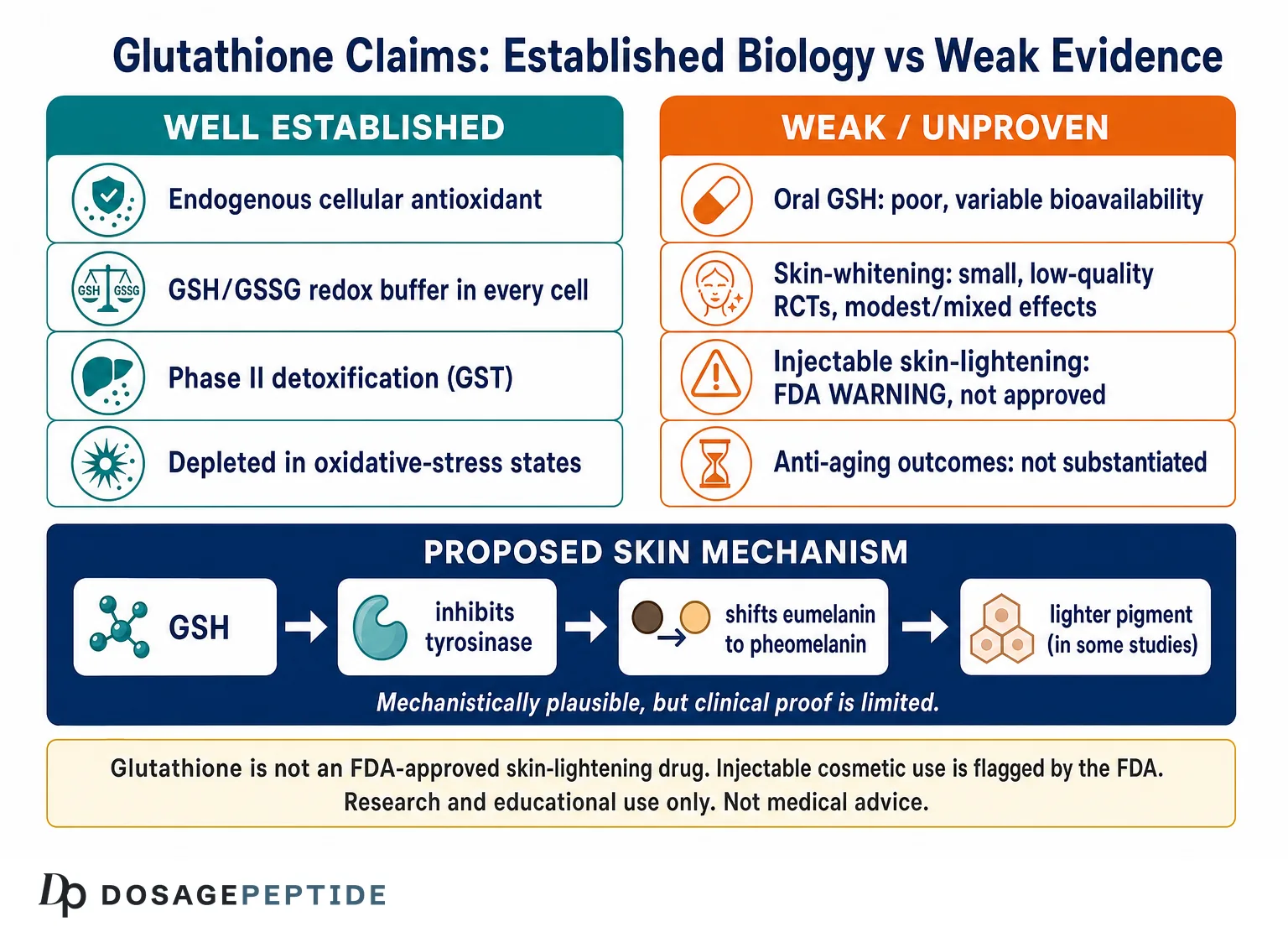
Melanin synthesis begins when the enzyme tyrosinase converts the amino acid L-tyrosine to DOPA and then to dopaquinone — the rate-limiting, committed step of melanogenesis. Tyrosinase depends on two copper ions at its active site. Glutathione is thought to inhibit tyrosinase in at least two ways: by directly interacting with the enzyme, and by its thiol group chelating the active-site copper that tyrosinase requires for catalysis.[9] This is the mechanistic centerpiece of every glutathione-whitening claim — the glutathione tyrosinase interaction — and it is real in isolated-enzyme assays. The uncertainty lies entirely in delivery and dose at the target cell.
The eumelanin-to-pheomelanin switch
A second, more subtle mechanism involves the type of melanin produced rather than the total amount. During melanogenesis, dopaquinone can branch down two routes. In the presence of thiol compounds such as glutathione or cysteine, dopaquinone is diverted toward the synthesis of pheomelanin — a lighter, yellow-to-reddish pigment — instead of the darker, brown-to-black eumelanin that forms when thiols are absent.[9] By raising local thiol availability, glutathione is hypothesized to skew the pigment ratio toward the lighter form, producing a brightening effect without necessarily eliminating melanin. This eumelanin-to-pheomelanin switching hypothesis is explicitly invoked in the cosmetic-supplement literature.[6]
Antioxidant interruption of melanogenesis
Melanin production is also stimulated by ultraviolet light and by the reactive oxygen species and hydrogen peroxide that UV generates. As an antioxidant, glutathione may indirectly dampen melanogenesis by quenching those oxidative triggers and by interfering with the downstream signaling (including the tyrosinase-related proteins TRP-1 and TRP-2) that drives pigment synthesis. Because hydrogen peroxide itself modulates tyrosinase activity, molecules that both inhibit tyrosinase and degrade peroxide have been explored as dual-action depigmenting agents.[9] This antioxidant framing is why some researchers argue glutathione may act more as a general oxidative-stress modulator in pigmentary disorders such as melasma than as a targeted whitening drug.[8]
How this compares with other pigment-modulating peptides
It is instructive to contrast glutathione’s proposed lightening mechanism with peptides studied for the opposite effect. Melanotan II, for example, is a melanocortin-receptor agonist investigated for its ability to increase melanin — a useful mechanistic mirror image explained in the reference on how Melanotan II influences melanin production in scientific skin studies. Separately, the copper tripeptide GHK-Cu is studied for skin-matrix and collagen effects rather than pigmentation, as detailed in the analysis of what GHK-Cu does for skin health, wrinkle reduction, and collagen synthesis. Placing glutathione alongside these compounds clarifies that “skin peptide” covers several entirely different mechanisms — pigment increase, pigment decrease, and matrix remodeling — that should not be conflated.
Current Evidence Level: What Do Human Studies Actually Show?
This is the crux of the honest assessment. The antioxidant biochemistry above is settled; the clinical skin-lightening evidence is mixed, modest, and low-to-moderate quality. Here is what the actual human trials report, graded plainly.
Oral glutathione trials
The most-cited oral trial randomized 60 healthy Thai medical students to 500 mg/day of glutathione or placebo for four weeks. Melanin indices decreased at all six measured sites in the glutathione group, but the difference reached statistical significance versus placebo at only two of six sites (right face and sun-exposed forearm; p = 0.021 and p = 0.036).[4] The authors themselves concluded the effect appeared in a small number of subjects and that long-term safety was not established. A later 12-week trial in 124 Asian women found that oral L-cystine combined with reduced glutathione produced significant skin lightening and reduced facial dark-spot size — but the combination outperformed either L-cystine or glutathione alone, and the study was conducted by an ingredient manufacturer.[6] A 2024 systematic review counted roughly five randomized controlled trials of oral glutathione showing significant melanin-index reductions versus placebo, but graded the overall evidence as limited by small samples, short duration, high risk of bias in about half the studies, and — critically — effects that are “unsustainable” once treatment stops.[8]
Topical glutathione trials
Topical application bypasses the digestive tract and has produced some of the cleaner data. A double-blind, split-face trial applied 2% oxidized glutathione (GSSG) lotion to one side of the face and placebo to the other in 30 women for 10 weeks; the treated side showed a significantly lower melanin index (p<0.001) along with improvements in stratum-corneum moisture and smoothness, without marked adverse effects.[5] The 2024 systematic review likewise found 0.5% topical glutathione significantly more effective than 0.1% or placebo, and that combining topical with oral glutathione beat monotherapy.[8] Topical effects, however, are localized and also fade after discontinuation. It should also be noted that the strongest topical trial was run by a manufacturer of the ingredient, which is not disqualifying but is exactly the kind of context an honest reader keeps in view.[5]
A summary of the key trials
| Study (form) | Design / n | Main finding | Honest caveat |
|---|---|---|---|
| Arjinpathana & Asawanonda (oral, 500 mg/day)[4] | RCT, double-blind, 4 wk, n=60 | Melanin index fell; significant at 2 of 6 sites | Small, short; effect in a minority of subjects |
| Watanabe et al. (topical 2% GSSG)[5] | Split-face RCT, 10 wk, n=30 | Lower melanin index (p<0.001), better hydration | Localized effect; single manufacturer study |
| Duperray et al. (oral L-cystine + GSH)[6] | RCT, 12 wk, n=124 | Skin lightening + smaller dark spots vs placebo | Industry-conducted; combo, not GSH alone |
| Richie et al. (oral, 250 / 1000 mg/day)[3] | RCT, 6 mo, n=54 | Raised body GSH stores; lowered GSSG:GSH ratio | Biomarker outcome, not a skin/clinical endpoint |
| Hauser et al. (IV, Parkinson’s)[10] | Pilot RCT, n=21 | Well tolerated; no significant UPDRS benefit | Underpowered; inconclusive efficacy |
The overall grade
Taken together, the human evidence supports a modest, inconsistent, and non-durable cosmetic effect for oral and topical glutathione, with topical having somewhat stronger short-term data than oral. No trial demonstrates a large, lasting, or clinically transformative result, and reviewers repeatedly call for larger, longer, independently funded studies before glutathione can be considered an established depigmenting therapy.[7] This is precisely the “mixed evidence” tier — not fraudulent, but nowhere near the confidence level of an FDA-approved drug.
How Do the Different Delivery Routes Compare?
Because glutathione is marketed as an oral capsule, a topical lotion, and an injectable, it helps to lay the three routes side by side. Each faces a different core problem, and none of the three has generated the kind of large, long, independent evidence base that would move it out of the “mixed” tier. The table below summarizes the research picture route by route; it is a synthesis of the trials and reviews discussed throughout this article, not a set of recommendations.
| Route | Core obstacle | What the research shows | Regulatory / safety status |
|---|---|---|---|
| Oral | Gut degradation; homeostatic set-point | Can raise body GSH stores; modest, inconsistent melanin-index effects that reverse on stopping[3][8] | Sold as a dietary supplement; not an approved depigmenting drug |
| Topical | Penetration to basal melanocytes | Some of the cleaner short-term data (e.g. 2% GSSG, 0.5% GSH); localized and fades after discontinuation[5][8] | Cosmetic use; not an approved drug indication |
| Injectable / IV | No efficacy evidence; contamination and adverse-event risk | Reviews judge IV cosmetic use to lack efficacy evidence and to carry a concerning side-effect profile[8][7] | Not FDA-approved for skin whitening; subject of regulatory warnings[11] |
Mechanism Studied: Why In-Vitro Potency Does Not Settle the Pigmentation Question
One reason the pigment story stays unsettled is that skin color is not governed by melanocytes in isolation. Keratinocytes, the surrounding oxidative environment, ultraviolet exposure, and hormonal signals all feed into how much and what type of melanin is deposited and distributed. A molecule that nudges tyrosinase in a test tube is therefore acting on only one node of a much larger network in real skin.
The melanogenesis pathway is regulated by several intracellular signaling cascades — among them the cAMP/PKA/CREB/MITF axis and the MAP-kinase cascade — that respond to ultraviolet radiation, cytokines, and hormones, and that ultimately control the expression and activity of tyrosinase and its related proteins.[9] An agent that inhibits the enzyme directly is only intervening at the far end of that chain, and only if it actually reaches the melanosome at a sufficient concentration. This is precisely why demonstrating enzyme inhibition in a cuvette, or even in cultured melanocytes, does not translate automatically into a visible clinical result — and why the human trials, rather than the mechanistic studies, have to carry the weight of any honest claim.[8]
The Bioavailability Problem: Does Oral Glutathione Survive Digestion?
A central reason to be cautious about oral glutathione supplements is a pharmacokinetic one: glutathione is a peptide, and peptides are broken down in the gastrointestinal tract.
Why the gut degrades glutathione
When glutathione is swallowed, it is exposed to gamma-glutamyl transpeptidase and other enzymes that hydrolyze it into its constituent amino acids — glutamate, cysteine, and glycine — before much intact tripeptide reaches the bloodstream. Historically, this led to the widespread belief that oral glutathione is essentially useless because it never survives digestion as a whole molecule. The reality is more nuanced: cells can reassemble glutathione from the absorbed amino acids (especially cysteine), so oral glutathione may raise body stores indirectly even if little intact tripeptide is absorbed.[1]
What the best bioavailability trial actually showed
The most rigorous test of this question was a six-month, randomized, double-blind, placebo-controlled trial of oral glutathione at 250 or 1000 mg/day in 54 non-smoking adults. It found dose- and time-dependent increases in glutathione across blood, erythrocytes, plasma, lymphocytes, and buccal cells — up to about a 30–35% rise in several compartments and a striking 260% rise in buccal-cell glutathione at the high dose — alongside a favorable shift in the redox ratio.[3] Two caveats keep this in perspective. First, the increases returned to baseline within one month of stopping, confirming the body’s set-point regulation rather than permanent enhancement. Second, raising a biomarker (tissue glutathione) is not the same as delivering a proven cosmetic or clinical benefit — it establishes that oral glutathione is bioavailable at the level of body stores, not that those stores translate into skin lightening or disease modification.
The precursor alternative
Because cysteine availability limits synthesis, cysteine-donor strategies — N-acetylcysteine, L-cystine, or whey protein — are often more efficient at raising intracellular glutathione than glutathione itself, which is one reason the Duperray combination trial paired glutathione with L-cystine.[6] This nuance is frequently omitted from consumer marketing, which tends to imply that swallowing glutathione directly floods the body with the active molecule. The mechanistic literature is quite clear that the rate-limiting resource is the sulfur amino-acid supply, not the intact tripeptide, which is why so much of the classical work focused on precursor delivery rather than on feeding animals glutathione itself.[1]
Injectable and IV Glutathione: What Do Regulators Say?
The most important safety and compliance section concerns injectable and intravenous (IV) glutathione marketed for skin whitening — a practice that regulatory bodies have explicitly warned against.
The regulatory position
Injecting glutathione for skin lightening is not an approved use. The Philippine Food and Drug Administration issued a public advisory warning against the use of intravenous glutathione for skin whitening, citing serious adverse events and off-label promotion; this warning is documented in the peer-reviewed dermatology literature.[7] In the United States, glutathione is not an FDA-approved drug for skin whitening, and the US FDA has separately flagged safety concerns about using the dietary ingredient glutathione to compound sterile injectable products — noting reports of adverse events and, in laboratory testing of sampled product, bacterial endotoxin contamination well above acceptable limits.[11] Reviews conclude bluntly that IV glutathione for lightening lacks efficacy evidence and carries a concerning side-effect profile, with one systematic review stating that IV use is essentially contraindicated for this purpose.[8]
Documented risks
Reported adverse events associated with high-dose or injectable glutathione used cosmetically include severe cutaneous reactions (including reports of Stevens–Johnson syndrome and toxic epidermal necrolysis), potential renal and thyroid dysfunction, abdominal pain, and the infection and embolism risks inherent to any unregulated injectable administered outside proper medical supervision.[7] The contamination risk is not hypothetical: US regulators have described patients experiencing reactions ranging from nausea and vomiting to breathing difficulty after receiving compounded intravenous glutathione, in a setting where sampled product failed endotoxin testing.[11] The combination of unproven benefit and real risk is what drives the regulatory caution. For any reader, this is a clear instance where the honest reading of the evidence is not “proceed carefully” but “the risk-benefit balance for cosmetic injection is unfavorable and regulators advise against it.”
Why the injectable route is uniquely problematic
Advocates argue that injection solves the bioavailability problem by bypassing gut degradation entirely. Even granting that, injection does not resolve the deeper issue: there is no robust, independent, adequately powered clinical trial demonstrating durable skin-whitening efficacy for IV glutathione, and the safety signals are serious. Bypassing the gut does not manufacture evidence of benefit.[8] If anything, it substitutes a pharmacokinetic advantage for a much larger set of safety and quality-control liabilities — which is exactly why the systematic-review literature treats IV cosmetic use as the least defensible of the three routes.[8]
Glutathione in Clinical Research Beyond the Skin
Because glutathione is fundamental to redox biology, it has been investigated in numerous disease contexts. Reviewing these honestly shows a recurring pattern: strong mechanistic rationale, promising preclinical data, but inconsistent or inconclusive human results.
Neurodegeneration and Parkinson’s disease
Oxidative stress is implicated in Parkinson’s disease, and post-mortem studies show reduced glutathione in the affected substantia nigra, which spurred trials of glutathione supplementation. A randomized, double-blind pilot of IV glutathione (1400 mg three times weekly for four weeks) in 21 Parkinson’s patients found the treatment well tolerated but produced no statistically significant improvement in Unified Parkinson’s Disease Rating Scale scores; the authors described at most a possible mild symptomatic effect requiring larger study.[10] This is a textbook example of an inconclusive result being honestly reported rather than overstated. Ongoing and completed trials of glutathione and its precursors in various conditions can be tracked through the public registry.[12]
Oxidative-stress-associated diseases
Glutathione depletion is documented across a wide range of conditions — including liver disease, cystic fibrosis, sickle-cell anemia, HIV/AIDS, diabetes, cardiovascular disease, and neurodegeneration — and glutathione status is considered a marker of oxidative stress in aging.[1] It is essential to read this correctly: an association between low glutathione and disease does not establish that supplementing glutathione treats those diseases. Depletion may be a consequence of illness rather than a cause, and correcting a biomarker does not guarantee clinical benefit. This distinction — correlation of glutathione status with disease versus proven therapeutic effect of glutathione supplementation — is the single most common place where the literature is over-interpreted, and it is the reason no responsible reading of this evidence should describe glutathione as something that treats, cures, or prevents any of these conditions.
The detoxification and hepatology context
The one area with genuinely strong clinical grounding is glutathione’s role in detoxification, exemplified by acetaminophen (paracetamol) overdose. Here the established, life-saving intervention is N-acetylcysteine, which restores hepatic glutathione by supplying cysteine.[1] This demonstrates the therapeutic power of the glutathione system — while also reinforcing that the effective clinical tool is a precursor, not administered glutathione, and that this success does not extend to cosmetic claims.
This precursor-versus-product distinction is easy to blur in consumer messaging, and blurring it is precisely how a legitimate piece of clinical pharmacology gets recruited to sell an unproven cosmetic. The acetaminophen-antidote story is genuinely impressive: replenishing the liver’s glutathione pool at the right moment can prevent fatal hepatic necrosis. But it is a story about supplying the rate-limiting building block, cysteine, so that hepatocytes can rebuild their own glutathione on demand — not about flooding the bloodstream with the finished tripeptide in the hope of whitening skin.[1] The mechanistic lesson runs in the opposite direction from the marketing: the body’s own regulated synthesis, fed by amino-acid precursors, is what does the therapeutic work, which is exactly why an externally administered dose of glutathione is neither the tool that saved the overdose patient nor a validated route to a cosmetic outcome.
How Is Glutathione Measured and Studied in the Laboratory?
Understanding the research context requires knowing how glutathione is actually quantified, because measurement choices shape which conclusions are trustworthy.
Common analytical methods
Total glutathione and the GSH:GSSG ratio are typically measured by enzymatic recycling assays (using glutathione reductase and DTNB, the Ellman’s reagent), by high-performance liquid chromatography (HPLC) with various detection methods, or by mass spectrometry. A recurring technical pitfall is that GSH oxidizes rapidly to GSSG during sample handling, so studies that fail to properly stabilize and derivatize samples can artificially inflate the apparent oxidized fraction — a source of noise across the literature.[1] This is why the redox-ratio findings from carefully conducted trials carry more weight than isolated measurements.
In-vitro versus in-vivo evidence
Much of the enthusiasm for glutathione whitening rests on in-vitro tyrosinase and melanocyte assays, where controlled concentrations produce clear inhibition.[9] Translating those results to intact human skin requires overcoming absorption, distribution, and the body’s homeostatic regulation — hurdles that in-vitro work cannot address. Readers evaluating any glutathione claim should always ask which tier of evidence supports it: isolated-enzyme assay, cell culture, animal model, or human RCT. The confidence attached to each is very different, and the site’s research terminology glossary can help decode these evidence categories. For laboratory handling details of the compound itself, the glutathione reference dosage page documents reconstitution and measurement conventions used in research settings — strictly as reference information, not as guidance for human use.
Limitations and Open Questions
An honest reference article must foreground what remains unknown. For glutathione, the gap between the confident biochemistry and the uncertain applications is wide.
What we can state confidently
- Glutathione is an endogenous tripeptide and the principal intracellular thiol antioxidant; this is settled science.[1]
- The GSH/GSSG redox couple, glutathione peroxidase, glutathione-S-transferase, and the gamma-glutamyl cycle are well-characterized and central to cellular defense and detoxification.[2]
- Glutathione inhibits tyrosinase in vitro, providing a plausible pigment-modulating mechanism.[9]
- Oral supplementation can raise body glutathione stores, though the effect reverses on discontinuation.[3]
What remains unproven or uncertain
- Durable cosmetic benefit. Skin-lightening effects in trials are modest, inconsistent across measurement sites, and fade after stopping treatment.[8]
- Study quality. Many trials are small, short, industry-linked, and at moderate-to-high risk of bias; independent replication is scarce.[7]
- Optimal form, dose, and duration. Reviewers explicitly note that treatment duration, maintenance protocols, and the longevity of any effect remain unanswered.[7]
- Reduced versus oxidized activity. Both GSH and GSSG have shown pigment effects in different studies, leaving the precise active species and mechanism in living skin unresolved.[5]
- Injectable safety and efficacy. IV cosmetic use lacks efficacy evidence and carries documented risks; regulators advise against it.[8]
- Disease applications. Human trials in neurodegeneration and other oxidative-stress conditions have been largely inconclusive despite strong mechanistic rationale, and no glutathione product is established as a treatment for any of these diseases.[10]
The bottom line on evidence tier
Glutathione occupies an unusual position: rock-solid as fundamental biochemistry, genuinely mixed and modest as a cosmetic intervention, and cautioned-against as a cosmetic injectable. The correct framing is neither dismissive (“it does nothing”) nor promotional (“the master antioxidant that whitens skin and cures disease”). It is a critically important endogenous molecule whose supplement and skin-whitening applications are supported by weaker evidence than the confident biology would lead the casual reader to assume.
Frequently Asked Questions
Is glutathione a peptide or an antioxidant?
It is both. Glutathione is chemically a tripeptide — three amino acids (glutamate, cysteine, glycine) joined together — and functionally it is the body’s principal intracellular antioxidant. Its antioxidant activity comes from the reactive thiol group on its cysteine residue, which donates electrons to neutralize reactive oxygen species and serves as a substrate for protective enzymes like glutathione peroxidase.[1]
What is the difference between reduced and oxidized glutathione?
Reduced glutathione (GSH) is the active form with a free thiol group that neutralizes oxidants. When it does so, two GSH molecules link into one oxidized glutathione (GSSG) via a disulfide bond. The enzyme glutathione reductase recycles GSSG back to GSH using NADPH. The GSH:GSSG ratio is a standard laboratory biomarker of oxidative stress, with a falling ratio signaling redox imbalance.[1]
Does oral glutathione actually get absorbed?
Partly. Glutathione is broken down in the gut, but a rigorous six-month RCT showed that oral doses of 250–1000 mg/day raised glutathione levels in blood, red cells, and other compartments in a dose-dependent way. However, levels returned to baseline within a month of stopping, and raising body stores is not the same as proving a cosmetic or clinical benefit. Cysteine-donor precursors may raise glutathione more efficiently.[3]
How is glutathione thought to lighten skin?
Research proposes several mechanisms: direct and copper-chelating inhibition of tyrosinase (the rate-limiting melanin enzyme), a shift from darker eumelanin toward lighter pheomelanin production, and antioxidant dampening of UV-driven melanogenesis. These are demonstrated mainly in vitro; whether they operate meaningfully in living human skin at achievable doses remains uncertain and inconsistently supported by trials.[9]
Is glutathione skin whitening proven and safe?
Not robustly. Human trials show modest, inconsistent, and non-durable lightening, with effects fading after treatment stops and much of the research being small or industry-linked. Topical data are somewhat stronger than oral. Injectable/IV glutathione for whitening is not an approved use and has prompted regulatory warnings over serious adverse effects, so the risk-benefit balance for cosmetic injection is considered unfavorable.[8]
Why do regulators warn against injectable glutathione?
Because it combines unproven cosmetic benefit with real risk. The Philippine FDA issued a public advisory against IV glutathione for skin whitening, and it is not FDA-approved for that use in the United States, where regulators have also flagged contamination and adverse-event concerns with compounded injectable glutathione. Documented risks include severe skin reactions (including Stevens–Johnson syndrome), possible kidney and thyroid effects, and infection or embolism from unregulated injection.[11]
Is glutathione the same as the acetaminophen antidote?
No. The antidote for acetaminophen (paracetamol) overdose is N-acetylcysteine (NAC), which replenishes the liver’s glutathione by supplying cysteine, the limiting building block. This shows the therapeutic importance of the glutathione system, but the effective drug is a precursor, not administered glutathione, and this clinical success does not extend to cosmetic skin-whitening claims.[1]
Has glutathione been proven to treat diseases like Parkinson’s?
No. Although low glutathione is associated with many oxidative-stress conditions, a randomized double-blind pilot of IV glutathione in Parkinson’s disease found it well tolerated but with no statistically significant benefit on standard motor scores. Association between low glutathione and disease does not prove that supplementing it treats the disease; larger, definitive trials are lacking.[10]
What is the gamma-glutamyl cycle?
It is the metabolic pathway that synthesizes, transports, and breaks down glutathione. Glutathione is built in two ATP-dependent steps (glutamate-cysteine ligase, then glutathione synthetase), used in redox and detox reactions, and later cleaved by gamma-glutamyl transpeptidase — the only enzyme able to break its unusual gamma peptide bond. Synthesis is feedback-regulated and cysteine-limited, which is why the body defends a glutathione set-point.[2]
References
- Wu G, Fang YZ, Yang S, Lupton JR, Turner ND. Glutathione metabolism and its implications for health. J Nutr. 2004;134(3):489–492. https://pubmed.ncbi.nlm.nih.gov/14988435/
- Meister A. New aspects of glutathione biochemistry and transport — selective alteration of glutathione metabolism. Nutr Rev. 1984;42(12):397–410. https://pubmed.ncbi.nlm.nih.gov/6151157/
- Richie JP Jr, Nichenametla S, Neidig W, et al. Randomized controlled trial of oral glutathione supplementation on body stores of glutathione. Eur J Nutr. 2015;54(2):251–263. https://pubmed.ncbi.nlm.nih.gov/24791752/
- Arjinpathana N, Asawanonda P. Glutathione as an oral whitening agent: a randomized, double-blind, placebo-controlled study. J Dermatolog Treat. 2012;23(2):97–102. https://pubmed.ncbi.nlm.nih.gov/20524875/
- Watanabe F, Hashizume E, Chan GP, Kamimura A. Skin-whitening and skin-condition-improving effects of topical oxidized glutathione: a double-blind and placebo-controlled clinical trial in healthy women. Clin Cosmet Investig Dermatol. 2014;7:267–274. https://pubmed.ncbi.nlm.nih.gov/25378941/
- Duperray J, Sergheraert R, Chalothorn K, Tachalerdmanee P, Perin F. The effects of the oral supplementation of L-cystine associated with reduced L-glutathione-GSH on human skin pigmentation: a randomized, double-blinded, benchmark- and placebo-controlled clinical trial. J Cosmet Dermatol. 2022;21(2):802–813. https://pubmed.ncbi.nlm.nih.gov/33834608/
- Sonthalia S, Daulatabad D, Sarkar R. Glutathione as a skin whitening agent: facts, myths, evidence and controversies. Indian J Dermatol Venereol Leprol. 2016;82(3):262–272. https://pubmed.ncbi.nlm.nih.gov/27088927/
- Sarkar R, Yadav V, Yadav T, Janaani P, Mandal I. Glutathione as a skin-lightening agent and in melasma: a systematic review. Int J Dermatol. 2025;64(6):992–1004 (Epub 2024 Oct 23). https://pubmed.ncbi.nlm.nih.gov/39444151/
- Rzepka Z, Buszman E, Beberok A, Wrześniok D. From tyrosine to melanin: signaling pathways and factors regulating melanogenesis. Postepy Hig Med Dosw. 2016;70:695–708. https://pubmed.ncbi.nlm.nih.gov/27356601/
- Hauser RA, Lyons KE, McClain T, Carter S, Perlmutter D. Randomized, double-blind, pilot evaluation of intravenous glutathione in Parkinson’s disease. Mov Disord. 2009;24(7):979–983. https://pubmed.ncbi.nlm.nih.gov/19230029/
- U.S. Food and Drug Administration. FDA highlights concerns with using the dietary ingredient glutathione to compound sterile injectables. FDA Human Drug Compounding. https://www.fda.gov/drugs/human-drug-compounding/fda-highlights-concerns-using-dietary-ingredient-glutathione-compound-sterile-injectables
- U.S. National Library of Medicine. ClinicalTrials.gov — registry of glutathione clinical studies. https://clinicaltrials.gov/search?term=glutathione
This article is provided for educational and research-reference purposes only. It describes laboratory, preclinical, and clinical research and does not constitute medical advice, a treatment recommendation, or an endorsement of any human use, self-administration, or cosmetic application of glutathione. Glutathione is not an FDA-approved product for skin whitening, and injectable cosmetic use has been the subject of regulatory warnings. Consult a qualified, licensed healthcare professional before making any health decision.