
Dr. Aimen Arij
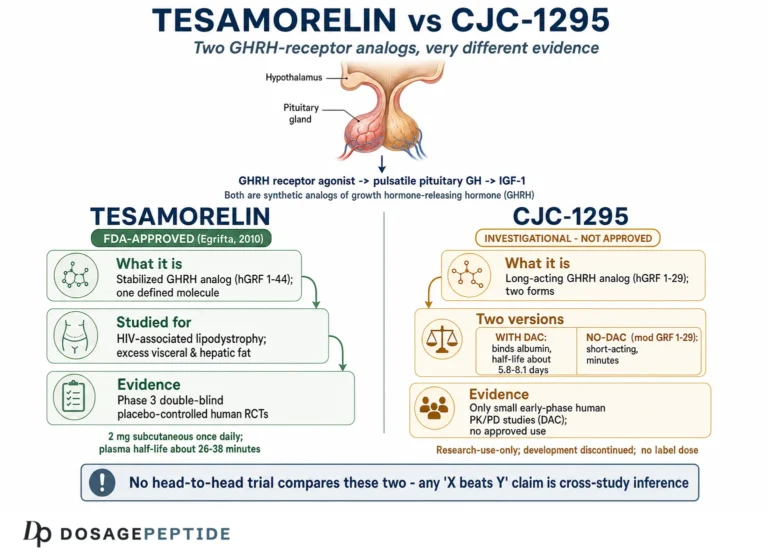
Tesamorelin vs CJC-1295: Doses, Evidence and Which One Has Real Data
Search for tesamorelin vs CJC-1295 and you will find the two compounds discussed side by side as if they were interchangeable options…
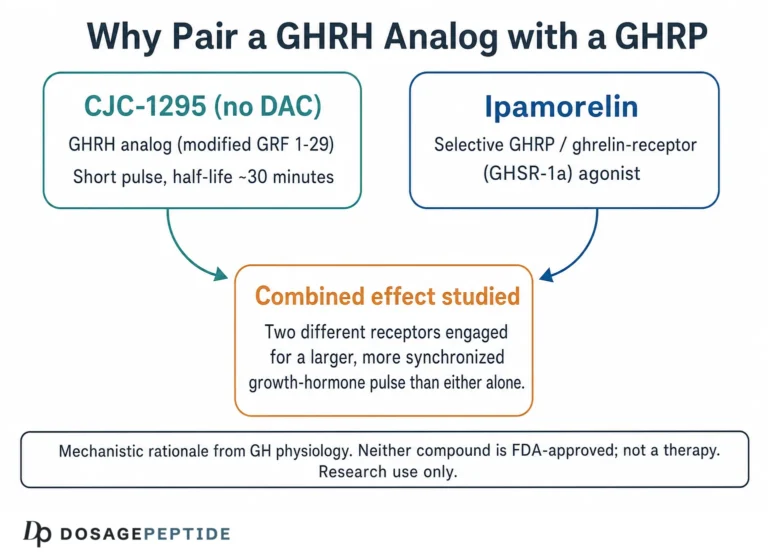
CJC-1295 + Ipamorelin Blend Dosage: Reconstitution & Units for Research
Mixing two peptides? First read: Can I combine peptides in the same syringe? On a 10 mg blend vial reconstituted with 2 mL of…
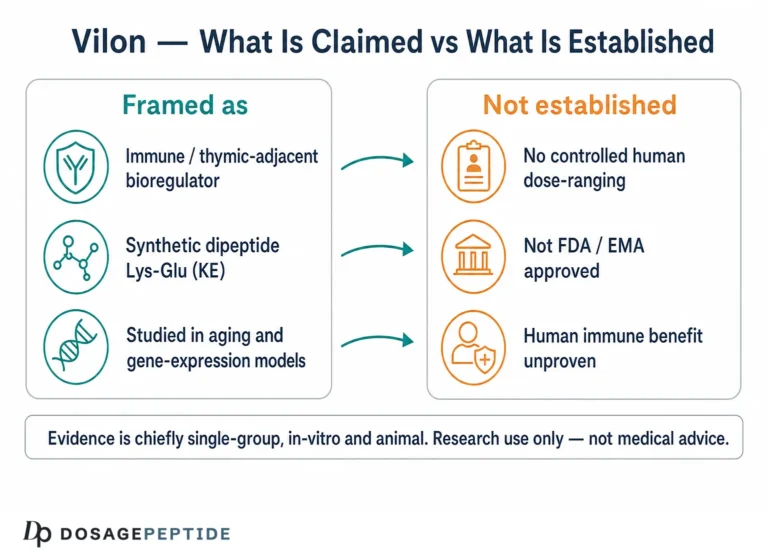
Vilon Dosage & Reconstitution: A Research Reference for the KE Dipeptide
The central question behind almost every search for vilon dosage is deceptively simple: how much of a Lys-Glu (KE) dipeptide would a…
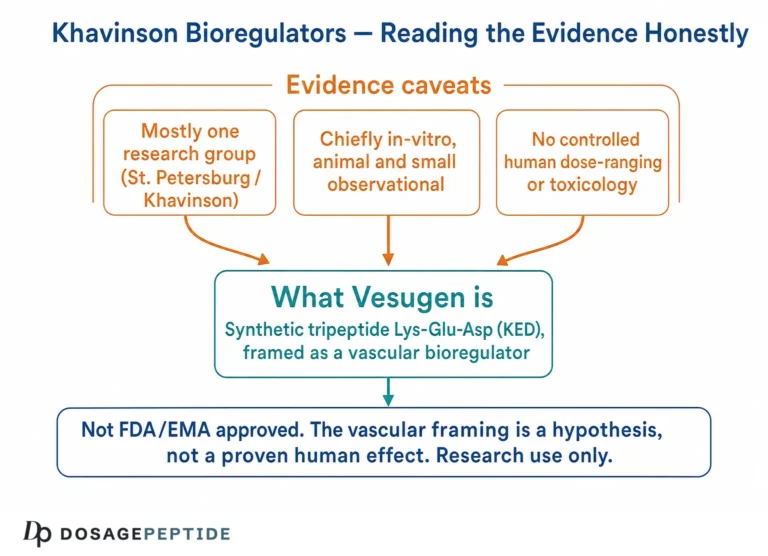
Vesugen Dosage & Reconstitution: A Research Reference for the KED Peptide
The central question behind almost every search for vesugen dosage is deceptively simple: if a laboratory holds a 20 mg lyophilized vial of…
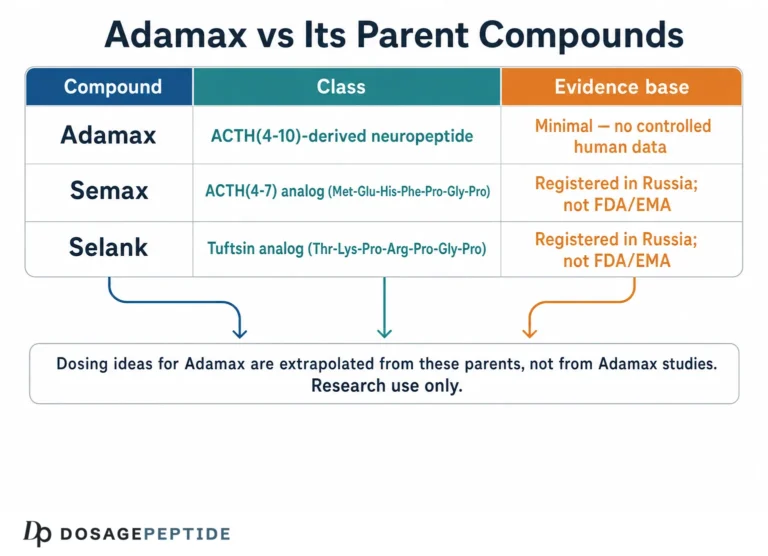
Adamax Dosage & Reconstitution: What the Research Actually Supports
The central research question behind almost every search for “adamax dosage” is deceptively simple: how much of a 10mg vial does a…
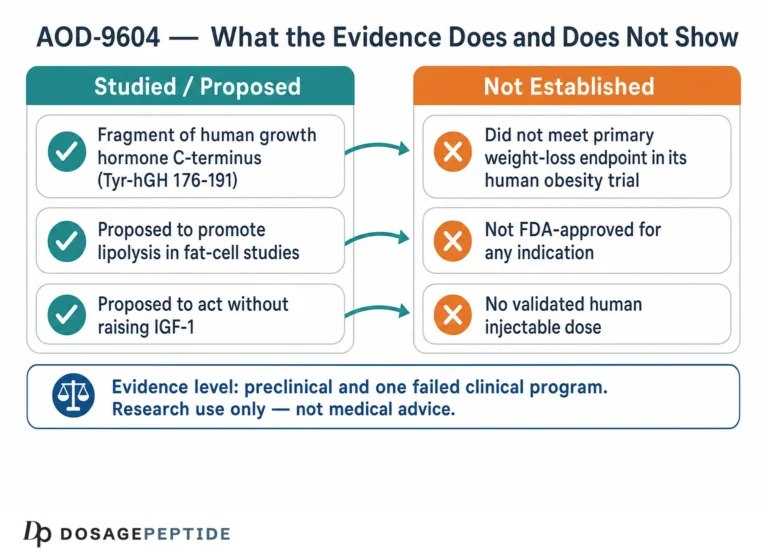
AOD-9604 Dosage Chart: Reconstitution and Unit Conversions (2026)
A 5 mg AOD-9604 vial reconstituted with 2 mL of bacteriostatic water holds 2,500 mcg per mL, which puts 300 mcg at the 12-unit mark on…
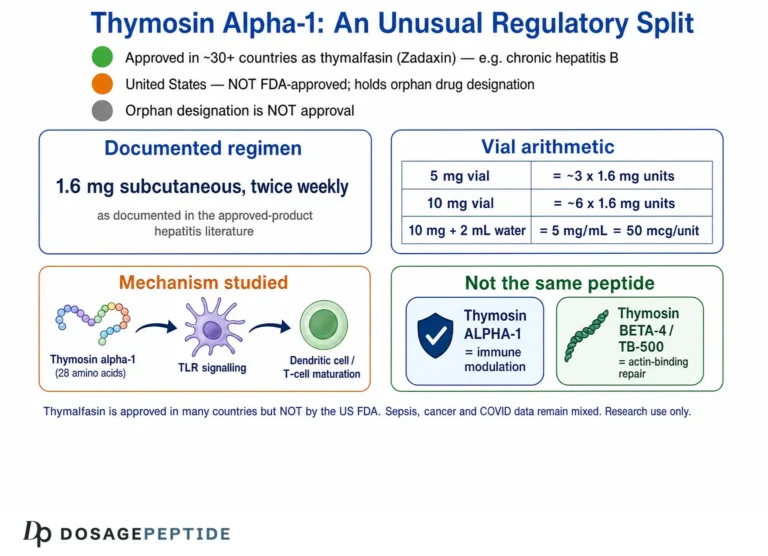
Thymosin Alpha-1 Dosage: Protocol, Reconstitution & Cycle
The dosing figure that actually appears in the published trials is 1.6 mg subcutaneously, twice weekly — the regimen given for 26…
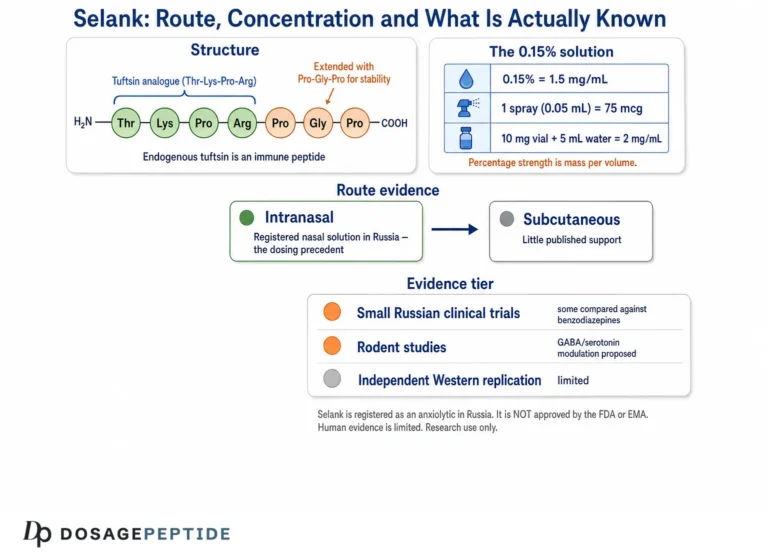
Selank Dosage: Chart, Intranasal vs SubQ & Frequency
If you are holding a 5 mg or 10 mg Selank vial, two numbers matter: how much bacteriostatic water to add, and…
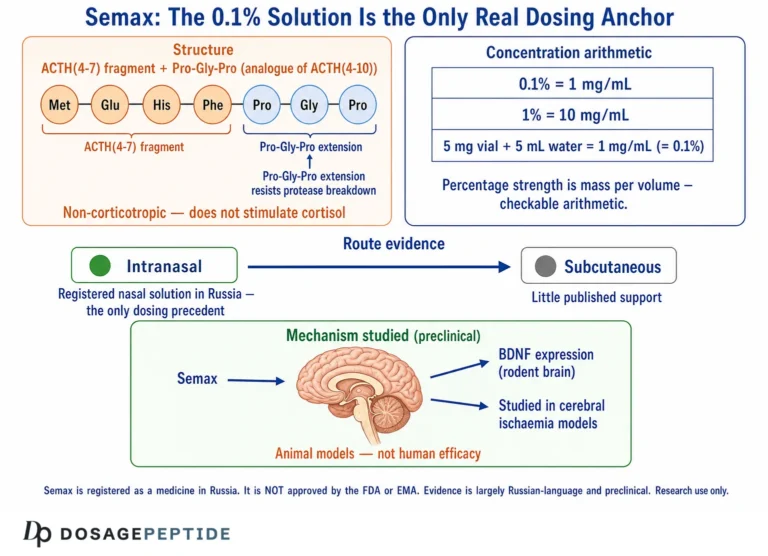
Semax Dosage: Chart, Intranasal vs SubQ & What the Research Documents
Semax (Met-Glu-His-Phe-Pro-Gly-Pro) is one of the few research peptides where the dosing question has a real, documented anchor — and also one…
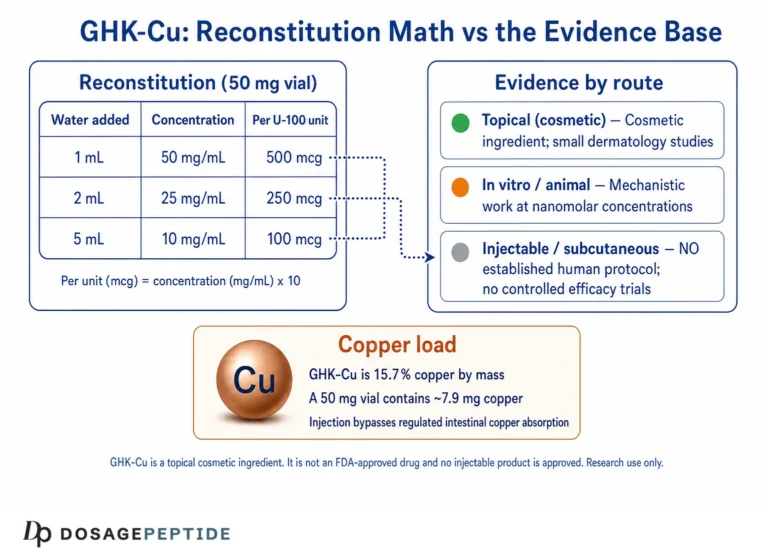
GHK-Cu Dosage: Injection Chart, Reconstitution & Frequency
Search volume for “GHK-Cu dosage chart” is dominated by people who have already bought a 50 mg or 100 mg vial of…