Short answer: NAD+ is genuinely required for DNA repair, but no study shows that raising it prevents cancer in people. The mechanism is not in doubt — PARP enzymes consume NAD+ molecule by molecule to patch damaged DNA, and cells running low on NAD+ repair more slowly. The leap from that fact to “NAD+ prevents cancer” is where the evidence stops: there is no randomized trial showing any NAD+ precursor lowers cancer risk, and no regulator has approved one for that purpose.
The biology also cuts both ways, which is the part most articles leave out. A tumour cell runs on the same NAD+ that a healthy cell uses to repair itself, and preclinical work has linked NAD+ precursor supplementation to faster tumour growth and spread in some cancer models. So “fuels DNA repair” and “protects against cancer” are two different claims, and in an established tumour they may point in opposite directions.
This page walks the mechanism honestly: how NAD+ powers repair enzymes, why more of it might help or harm depending on context, what the human data actually measured, how NAD+ compares with NR and NMN, and where the record ends. Research use only — no NAD+ product is approved to prevent or treat cancer.
What NAD+ Is and Where the Question Comes From
NAD+ is one of the oldest and most fundamental coenzymes in biology. It was first glimpsed in 1906, when the British biochemists Arthur Harden and William John Young found that a heat-stable, dialyzable fraction of yeast extract dramatically accelerated fermentation. They called the mystery factor a “coferment,” and it was later named cozymase.6 Over the following decades the molecule was purified and characterized: Hans von Euler-Chelpin identified it as a nucleotide, work that contributed to his 1929 Nobel Prize, and in 1936 Otto Warburg showed that the nicotinamide ring is the business end of the molecule, the site where a hydride ion is accepted and donated during redox reactions.14 By 1938 the vitamin connection was clear, when Conrad Elvehjem demonstrated that nicotinamide cured “black tongue” in dogs, the canine equivalent of the human deficiency disease pellagra.6
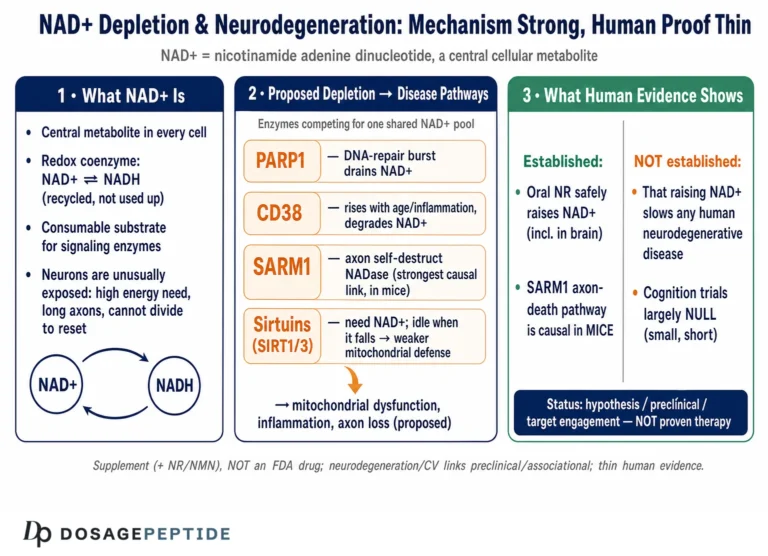
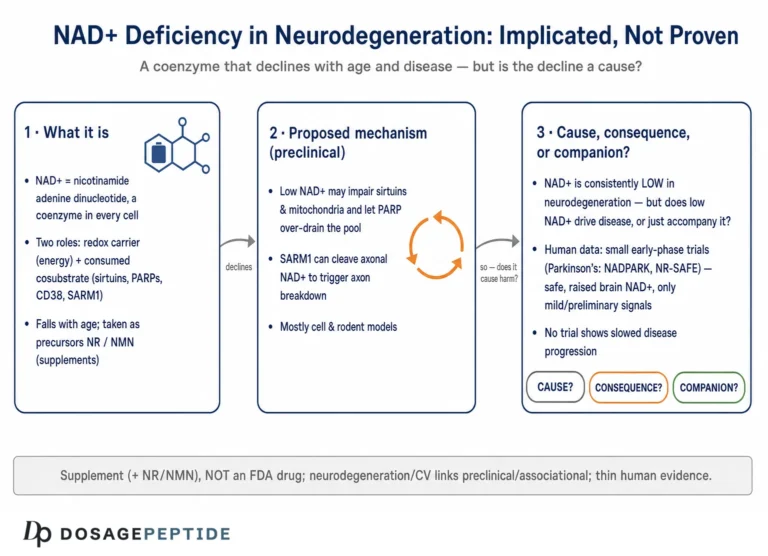
Chemically, NAD+ is a dinucleotide: two nucleotides joined by their phosphate groups, one carrying an adenine base and the other carrying nicotinamide. The molecule exists in two interconverting forms. In its oxidized state (NAD+) it can accept electrons; in its reduced state (NADH) it carries them. This NAD+/NADH couple is the backbone of energy metabolism, ferrying electrons from the breakdown of glucose, fatty acids, and amino acids into the mitochondrial electron transport chain, where their energy is captured as ATP. A closely related phosphorylated pair, NADP+/NADPH, handles reductive biosynthesis and antioxidant defense. In its classical redox role, NAD+ is not consumed; it cycles endlessly between oxidized and reduced states.
The twist that makes NAD+ relevant to DNA repair and cancer is that a second class of enzymes does not merely borrow NAD+ but destroys it. These “NAD+-consuming” enzymes cleave the molecule, releasing nicotinamide and using the ADP-ribose portion for signaling. Because they permanently break NAD+ down, they create a constant demand that the cell must meet by resynthesizing NAD+. The body maintains supply through three routes: the de novo pathway from the amino acid tryptophan, the Preiss-Handler pathway from nicotinic acid (niacin), and, most importantly for day-to-day maintenance, the salvage pathway, which recycles nicotinamide back into NAD+. The salvage pathway is thought to account for the large majority of NAD+ turnover, and its rate-limiting enzyme, NAMPT, is a heavily studied node.5
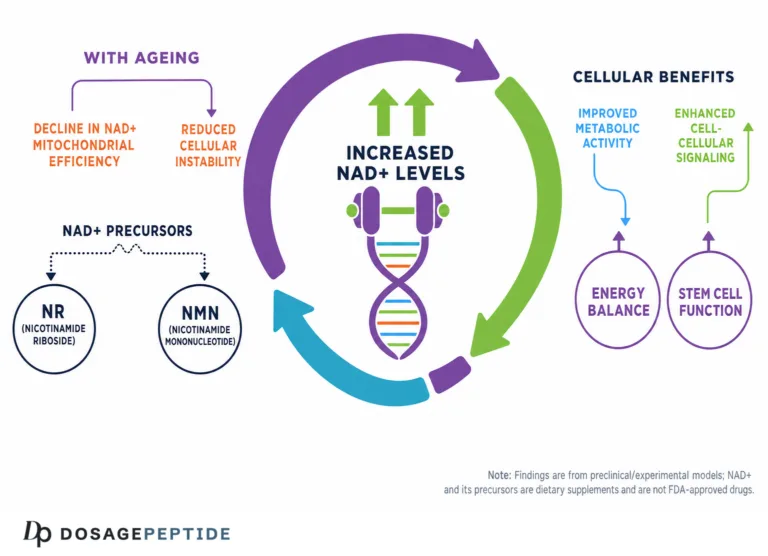
The reason the field cares about all of this is aging. A consistent observation across tissues and species is that NAD+ concentrations decline with age. Isotope-tracing work suggests the decline is driven less by a failure to make NAD+ and more by accelerated consumption, in particular by the NAD+-degrading enzyme CD38, whose activity rises substantially between young adulthood and old age, partly through the accumulation of pro-inflammatory, CD38-expressing immune cells in aging tissue.4 If NAD+ falls, and if NAD+ is required to run DNA-repair enzymes, then a tidy chain of reasoning suggests that age-related NAD+ decline might compromise genome maintenance, and that restoring NAD+ might rescue it. That chain of reasoning, elegant as it is, is exactly what needs to be examined rather than assumed. The “cancer prevention” question is downstream of it, and every link in the chain is a place where the biology can surprise us.
The Molecular Machinery: How NAD+ Fuels DNA Repair
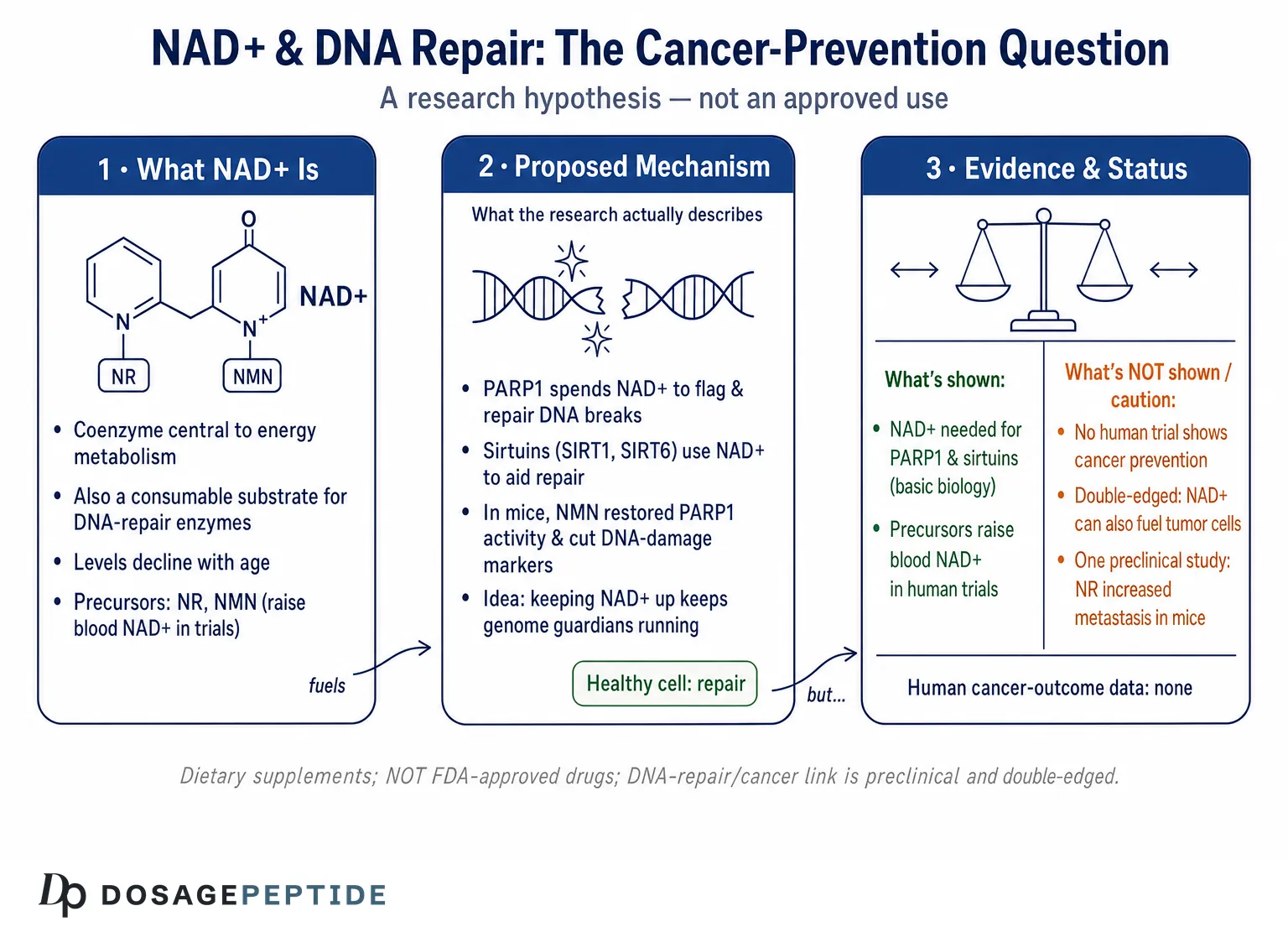
To understand why NAD+ is tied to DNA repair, you have to meet the two enzyme families that spend it: the poly(ADP-ribose) polymerases, or PARPs, and the sirtuins. Both use NAD+ as a consumable substrate, and both are central to how cells sense and respond to genomic stress.
PARP1 is the workhorse. It is among the first responders to a DNA break. When PARP1 detects a single-strand break or other lesion, it clamps onto the damaged DNA and springs into catalytic action. Mechanistically, it cleaves the bond between nicotinamide and ADP-ribose in NAD+, releasing free nicotinamide, and then attaches the ADP-ribose unit onto target proteins, including PARP1 itself and surrounding chromatin factors. It repeats this thousands of times, building long, branched chains of poly(ADP-ribose), a process called PARylation. These negatively charged polymers act as a molecular flare and a scaffold: they relax the local chromatin, recruit repair factors to the site of damage, and coordinate the base excision repair and single-strand break repair pathways. This burst of activity is enormously expensive in NAD+ terms; severe DNA damage can drain a substantial fraction of a cell’s NAD+ pool within minutes, which is precisely why the size of the NAD+ pool matters for repair capacity. If NAD+ runs too low, PARP1 cannot do its job, and unrepaired breaks accumulate.
The sirtuins are the second family, and they are more diverse. There are seven mammalian sirtuins (SIRT1 through SIRT7), and they use NAD+ to remove acetyl and other acyl groups from proteins, with some also performing mono-ADP-ribosylation. Several sirtuins bear directly on genome stability. SIRT1 deacetylates repair factors and chromatin, helps organize the DNA-damage response, and regulates the same NAD+ pool that PARP1 draws on. SIRT6 is particularly interesting for genome maintenance: it mono-ADP-ribosylates PARP1, stimulating PARP1 activity and enhancing double-strand break repair in response to oxidative stress, and it also supports base excision repair and proper chromatin structure at telomeres.3 Because sirtuins release nicotinamide as they work, and because nicotinamide itself feeds back to inhibit sirtuin activity, the whole system is exquisitely sensitive to how much NAD+ is available and how fast it is being recycled.
A crucial and often-overlooked feature is that PARPs and sirtuins compete. They draw on the same finite NAD+ pool, and their activities can therefore constrain one another. This is the heart of what some authors call the PARP-NAD-SIRT axis.2 When DNA damage is heavy and PARP1 fires hard, it can deplete NAD+ to the point that sirtuin function suffers, blunting the metabolic and protective programs that sirtuins normally run. Conversely, when sirtuins are highly active, they draw down NAD+ that PARP1 might otherwise use. In a young cell with abundant NAD+, both systems can operate. In an aged cell with a shrunken NAD+ pool, the competition becomes a zero-sum problem, and the reasoning goes that raising NAD+ could ease the competition and let both genome-guarding systems function.2
The redox role of NAD+ ties back into this too. Efficient DNA repair is energetically demanding, and it happens against a backdrop of ongoing metabolic activity. NAD+ is the hinge between the two: it is the coenzyme that lets mitochondria generate the ATP that repair requires, and it is the substrate that the repair enzymes consume directly. This dual identity is what makes NAD+ such an attractive lever in theory. It is also what makes it dangerous to think about naively, because anything that boosts a cell’s capacity to repair DNA and generate energy is, in the wrong context, exactly what a cancer cell would want.
The Central Mechanistic Hypothesis: NAD+, Genome Maintenance, and Cancer Risk
The specific hypothesis linking NAD+ to cancer prevention rests on a well-defined molecular story, and one experiment in particular anchors it. In 2017, a team led by David Sinclair at Harvard published work in Science describing how NAD+ directly governs the activity of PARP1 through a protein called DBC1 (deleted in breast cancer 1).1 They found that DBC1 can bind and inhibit PARP1, keeping the repair enzyme switched off. NAD+ competes for a specific binding pocket, a region called the NHD (Nudix homology domain), on DBC1. When NAD+ is abundant, it occupies that pocket and prevents DBC1 from latching onto PARP1, leaving PARP1 free to repair DNA. When NAD+ falls, as it does with age, DBC1 increasingly binds and shackles PARP1, and DNA damage accumulates.1
The experimental payoff came in aged mice. Older animals had lower liver NAD+, more DBC1-PARP1 complexes, and reduced PARP1 activity. After the mice drank water supplemented with the NAD+ precursor nicotinamide mononucleotide (NMN) for as little as one week, their NAD+ levels rose, the DBC1-PARP1 complexes were disrupted, PARP1 activity was restored, and markers of DNA damage declined.1 This is the mechanistic keystone that people cite when they argue NAD+ “protects DNA.” It is a genuinely elegant piece of molecular biology, and it makes a concrete, testable claim: that NAD+ availability sets a rheostat on the cell’s ability to repair its genome.
Layered on top of the PARP1 story is the sirtuin story. SIRT6 is a tumor-suppressor-associated sirtuin; in mice, its loss causes genomic instability and features of premature aging, while its overexpression has been associated with extended lifespan in males. Because SIRT6 supports double-strand break repair and requires NAD+ to function, the argument runs that adequate NAD+ keeps SIRT6-dependent genome maintenance intact.3 Similar logic applies to SIRT1’s role in the DNA-damage response. The composite hypothesis, then, is that NAD+ sufficiency keeps a whole suite of genome guardians (PARP1, SIRT1, SIRT6) operational, reducing the mutational burden that could otherwise seed cancer.
It is worth being precise about what this hypothesis does and does not claim. It claims that NAD+ is mechanistically necessary for these repair enzymes to work, which is well established. It claims that age-related NAD+ decline can impair their function, which is supported in animal models. It extrapolates that maintaining NAD+ might therefore reduce the accumulation of DNA damage that contributes to cancer, which is biologically plausible but unproven in humans. And it does not, and cannot on current evidence, claim that taking an NAD+ precursor lowers a person’s risk of developing cancer. That last step is a hope built on a mechanism, not a demonstrated outcome.
There is also a conceptual subtlety that cautious readers should hold onto. Better DNA repair is not automatically cancer-protective in every context. In a normal, pre-cancerous cell, efficient repair prevents the mutations that could start a tumor. But in a cell that is already malignant or precancerous, robust repair capacity helps that cell survive genotoxic stress, including the DNA-damaging chemotherapies and radiation used to treat cancer. The same PARP machinery that protects healthy cells is the target of PARP-inhibitor drugs precisely because blocking it kills certain repair-deficient tumors. So the relationship between NAD+, DNA repair, and cancer is not a simple line from “more repair” to “less cancer.” It is context-dependent in a way that the “prevention” framing tends to flatten.
The Double-Edged Problem: Why NAD+ May Also Help Tumors
This section is the one that any honest treatment of the topic cannot skip, because it is where the hopeful narrative collides with inconvenient biology. NAD+ is not selectively good for healthy cells. It is a universal metabolic and repair currency, and cancer cells are, if anything, more dependent on it than normal cells.
Malignant cells proliferate rapidly, and rapid proliferation is metabolically ravenous. Many tumors upregulate NAD+ biosynthetic enzymes, especially NAMPT, to keep pace with the demand that fast growth places on NAD+-dependent glycolysis, redox balance, and biosynthesis. Reviews of NAD+ in oncology describe this as a genuinely paradoxical, double-edged relationship: because tumors lean so heavily on NAD+ metabolism, one of the more active areas of cancer drug development has been NAMPT inhibition, an attempt to starve tumors of NAD+, which is the opposite of supplementation.11 If cutting NAD+ can be a plausible anti-cancer strategy in some settings, then boosting it indiscriminately is, on its face, a reason for caution rather than confidence.
The preclinical data reflect this ambivalence rather than resolving it. On the concerning side, a 2022 study developed a bioluminescent probe to track nicotinamide riboside (NR) uptake in living mice and reported that NR supplementation increased the incidence of triple-negative breast cancer metastasis, including to the brain, in an aggressive tumor model.10 The proposed interpretation was that extra NAD+ made it easier for cancer cells to meet their energy needs and colonize new sites. This was a study in immunocompromised mice implanted with a specific human cancer line, so it does not translate directly to human risk, but it is a concrete, published signal that raising NAD+ can favor tumor behavior under some conditions.
On the other side of the ledger, other preclinical work points the opposite way. One study reported that an NAD+ precursor suppressed hepatocellular carcinoma progression in mice, and NR has been reported in some models to alleviate cancer-associated metastasis or cachexia.12 The picture that emerges from the totality of animal work is not “NAD+ prevents cancer” or “NAD+ causes cancer” but rather “the effect of NAD+ on cancer depends heavily on tumor type, stage, genetic context, immune status, and the metabolic environment.” NAD+ influences energy metabolism, DNA repair, epigenetic modification, inflammation, stress resistance, and circadian biology, all of which are relevant to cancer, and all of which can push in different directions.11
For anyone reasoning about the human situation, the practical takeaways are stark. First, a person cannot know whether they harbor an early, undetected malignancy or a field of precancerous cells; if they do, feeding those cells extra NAD+ substrate is a theoretical risk, not a benefit. Second, NAD+ precursors should be regarded with particular caution by anyone with an active cancer diagnosis or history, and any decision in that context belongs with an oncology team, not a supplement label. Professional bodies have issued position statements urging caution precisely because the preclinical signals are mixed and the human data are absent. The mechanistic link between NAD+ and DNA repair is real; the inference that this link makes NAD+ a cancer preventive is not, and the double-edged biology is the reason why.
Key Evidence and Its Honest Level
Sorting the evidence by strength is the most useful thing this article can do, because the gap between “mechanistically demonstrated in a dish or a mouse” and “shown to help people” is enormous and frequently glossed over.
At the strongest, most established tier sits the basic biochemistry: NAD+ is an obligatory substrate for PARPs and sirtuins, and these enzymes are central to DNA repair. This is textbook cell biology, reproduced in countless laboratories, and not in serious dispute.2,3 Equally solid is the observation that NAD+ declines with age across tissues and that this decline is driven substantially by increased consumption, including by CD38.4,5 These facts are the foundation, but note what they are: statements about molecular necessity and about aging biology, not statements about disease outcomes.
At the next tier down are the animal experiments that connect NAD+ restoration to improved DNA-repair readouts. The DBC1-PARP1 study is the flagship: in aged mice, NMN raised NAD+, freed PARP1, and reduced DNA-damage markers within a week.1 This is strong mechanistic evidence in a model organism. It demonstrates causation for the molecular mechanism. It does not demonstrate that the same intervention prevents cancer, extends healthy lifespan, or does anything comparable in humans. Mouse models of aging and cancer are notoriously imperfect predictors of human outcomes, and mice are not small people.
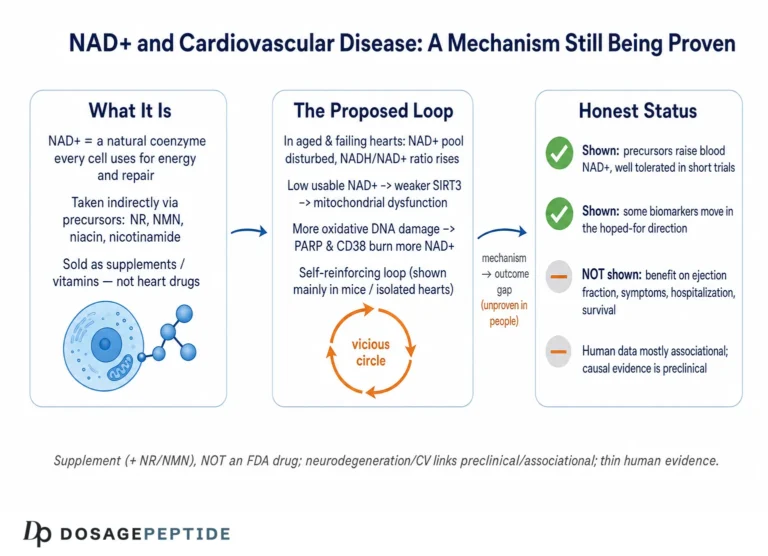
Then come the human trials, and here the picture narrows sharply. Human studies of NAD+ precursors have overwhelmingly measured one thing: whether the precursor raises blood NAD+ levels. And on that narrow question, the answer is a clear yes. A randomized, double-blind, placebo-controlled trial of nicotinamide riboside chloride found that 100, 300, and 1000 mg daily raised whole-blood NAD+ by roughly 22%, 51%, and 142% respectively within two weeks, in a dose-dependent manner.7 A trial of NR combined with pterostilbene showed similar dose-dependent NAD+ increases,8 and randomized trials of NMN at 300 to 900 mg daily have likewise shown blood NAD+ increases with acceptable tolerability.9
The critical point is what these human trials do not show. Raising a biomarker (blood NAD+) is not the same as improving a clinical outcome. None of these trials was designed or powered to test whether raising NAD+ reduces DNA damage in human tissues in a way that matters, let alone whether it prevents cancer. The human endpoints that have been studied tend to be surrogate or exploratory measures such as physical performance, insulin sensitivity, or blood pressure, with mixed and generally modest results. There is, at the time of writing, no randomized controlled trial demonstrating that any NAD+ precursor prevents, delays, or treats cancer in humans, and there is no regulatory approval reflecting such a claim. The honest summary is: mechanism strong, animal DNA-repair data suggestive, human data limited to biomarker changes, and cancer-outcome data in humans nonexistent.
Comparisons: NAD+ Itself Versus Its Precursors
“NAD+” in the supplement and research-chemical world is usually shorthand for a family of related molecules, and they are not interchangeable. Understanding the differences clarifies why the literature can seem contradictory.
NAD+ itself is a large, charged molecule that is not efficiently absorbed intact when taken by mouth, and it is thought to be largely broken down into precursors in the gut before entering cells. This is why most oral products are precursors rather than NAD+ itself, and why some settings use intravenous NAD+ or, in research contexts, injectable formulations. The precursors each enter NAD+ synthesis at a different point.
| Molecule | Class | Entry point into NAD+ synthesis | Notable features |
|---|---|---|---|
| Nicotinic acid (niacin) | Vitamin B3 form | Preiss-Handler pathway | Long history; causes flushing at higher doses; used for lipids |
| Nicotinamide (niacinamide) | Vitamin B3 form | Salvage pathway | No flushing; feedback-inhibits sirtuins at high levels |
| Nicotinamide riboside (NR) | Riboside precursor | Salvage pathway (via NRK enzymes) | Most human RCT data; raises blood NAD+ dose-dependently7 |
| Nicotinamide mononucleotide (NMN) | Nucleotide precursor | One step from NAD+ | Widely studied; contested regulatory status9,13 |
| NAD+ (intact) | Coenzyme itself | N/A (poor oral uptake) | Used IV or injectable in some research settings |
The two most-discussed research precursors are NR and NMN. NR enters the salvage pathway and is converted first to NMN and then to NAD+; NMN sits one enzymatic step from NAD+. Debate persists over whether NMN must be dephosphorylated to NR to cross cell membranes or whether a dedicated NMN transporter exists, and this transport question is one reason the two compounds are studied side by side. In practice, both reliably raise blood NAD+ in human trials.7,9 Nicotinamide and nicotinic acid, the classic vitamin B3 forms, also raise NAD+ but carry their own quirks: high-dose nicotinamide can inhibit sirtuins through feedback, and nicotinic acid causes the well-known niacin flush.
It is also worth situating NAD+ against adjacent compounds that researchers pair with it or study in the same longevity-metabolism space. Some agents aim to spare NAD+ rather than supply it, such as inhibitors of the enzyme NNMT, which are theorized to preserve nicotinamide for NAD+ synthesis. Readers exploring these categories can compare, for example, the research profiles of 5-Amino-1MQ and its higher-strength vial format, along with mitochondrial-targeted peptides such as SS-31 and longevity-oriented peptides such as Epithalon. None of these comparisons implies that any of them prevents disease; they simply map the neighborhood of compounds that intersect with NAD+ biology in the research literature. A broader index of these compounds and their study-based reconstitution details is maintained on the peptide dosages catalog.
Research Models and Methodology
How a claim is generated matters as much as the claim itself, and NAD+ research spans a wide methodological range whose limitations should be visible to any careful reader.
At the most reductionist end are cell-free biochemical assays. These are how the enzymology was worked out: purified PARP1 or a sirtuin, defined amounts of NAD+, and a readout of enzymatic activity or ADP-ribose polymer formation. Such assays established the substrate relationship and the mechanism of DBC1-PARP1 regulation, including the NHD binding pocket.1 Their strength is precision and unambiguous causation; their weakness is that they strip away the crowded, regulated environment of a living cell, where NAD+ is compartmentalized (the nucleus, cytosol, and mitochondria maintain distinct pools) and where dozens of enzymes compete for it.
Next come cell-culture studies. Researchers manipulate NAD+ levels, expose cells to DNA-damaging agents such as hydrogen peroxide or radiation, and quantify DNA-damage markers like gamma-H2AX foci, comet-assay tail moments, or PARylation. These experiments demonstrated, for instance, that SIRT6 stimulates PARP1 to enhance double-strand break repair under oxidative stress.3 Cell models allow relatively fast, controlled testing, but immortalized cell lines are themselves often derived from tumors and carry mutations that can distort NAD+ and repair biology. Findings in one cell line frequently fail to replicate in another.
Then there are animal models, predominantly mice. These allow whole-organism questions: does raising NAD+ with dietary NMN restore PARP1 activity in an aged liver, and does it lower DNA-damage markers?1 Does NR supplementation change tumor metastasis in an implanted cancer model?10 Mouse work is indispensable, but it carries heavy caveats. Mice metabolize NAD+ precursors differently from humans, live on compressed timescales, are usually genetically uniform, and are studied in models (immunodeficient hosts, xenografted human tumors, engineered oncogenes) that only partially mimic spontaneous human disease. The Maric metastasis finding, for example, came from immunocompromised mice with a specific breast-cancer line, which constrains how far it can be generalized.10
Finally, there are human studies, and here methodology and honesty intersect most sharply. The strongest are randomized, double-blind, placebo-controlled trials, and several exist for NR and NMN.7,8,9 But almost all were designed to answer pharmacokinetic and safety questions (does the precursor raise blood NAD+, and is it tolerated), typically over weeks to a few months, in modest numbers of participants. Measuring blood NAD+ is convenient but is a surrogate; it does not tell us what is happening to DNA-repair capacity in the liver, brain, or breast, nor whether any downstream health outcome changes. Blood NAD+ may also not track tissue NAD+ faithfully. Crucially, cancer prevention is an endpoint that would require enormous, long, expensive trials with thousands of participants followed for years, and no such trial of NAD+ precursors has been completed. When you see a bold cancer-related headline about NAD+, it is worth asking which rung of this ladder the underlying study occupies. Almost always, it is a cell or mouse study several rungs below a human outcome.
Safety and Tolerability
Within the narrow window that has actually been studied, the common NAD+ precursors have a reassuring short-term tolerability profile, but “reassuring in short trials” is a much smaller statement than “safe,” and the distinction matters.
In the randomized trial of nicotinamide riboside chloride in overweight adults, doses up to 1000 mg daily for eight weeks produced no flushing and no significant difference in adverse events between NR and placebo groups.7 The NR-plus-pterostilbene trial in older adults reported no serious adverse events.8 NMN trials at 300 to 900 mg daily, and a separate safety evaluation at higher single daily doses over a few weeks, have generally reported good tolerability with no serious safety signals attributable to the compound.9 The most commonly reported complaints across studies are mild and nonspecific: occasional gastrointestinal upset, nausea, headache, or fatigue, typically at rates similar to placebo.
Those data support a claim that is genuinely limited in scope: at the doses and durations tested, in the relatively healthy adult populations enrolled, these precursors did not cause obvious short-term harm. What they cannot support is any statement about long-term safety, safety in vulnerable populations, or the theoretical oncologic concern that is the whole point of this article. The trials ran for weeks to months, not years; they enrolled screened, generally healthy volunteers, not people with cancer, precancerous conditions, or major comorbidities; and they were far too small and too short to detect a rare or slow-developing harm such as an increase in cancer incidence.
The cancer concern deserves restating in the safety context because it is the one that most directly contradicts a naive “it’s just a vitamin” attitude. Preclinical evidence that NR can promote metastasis in a tumor-bearing model,10 combined with the well-documented dependence of many tumors on NAD+ metabolism,11 means that raising NAD+ is not self-evidently safe for someone who has, or is at elevated risk of, cancer. Anyone with a personal or strong family history of cancer, anyone in active treatment, and anyone with an undiagnosed suspicious finding has a specific reason to be cautious and to defer to a physician. This is not a hypothetical liability disclaimer; it follows directly from the double-edged biology.
Other unknowns compound the picture. Drug interactions are poorly characterized, and NAD+ metabolism intersects with pathways relevant to many medications. The interaction between NAD+ precursors and cancer therapies is particularly uncertain, since some chemotherapies and radiation work by damaging DNA, and boosting the machinery that repairs it could in principle blunt their effect. Effects during pregnancy and lactation are unstudied. And because these products are sold as supplements or research materials rather than approved drugs, real-world product quality and purity vary, adding a layer of uncertainty entirely separate from the biology.
Handling and Reconstitution in a Research Context
Where NAD+ or its precursors are supplied as lyophilized (freeze-dried) powder for laboratory or research use rather than as an oral capsule, correct handling matters both for stability and for meaningful, reproducible experiments. This section is informational for a research setting and is not a how-to for human use.
NAD+ is chemically less stable than many small-molecule research compounds. It is sensitive to moisture, heat, and repeated freeze-thaw cycles, and in solution it can degrade over time, which is why storage and reconstitution conditions are treated carefully. Lyophilized material is generally kept cold and dry, protected from light. Published research-context storage guidance for NAD+ vials describes keeping unopened, lyophilized powder at −20 °C or below, with deep-freeze storage (around −80 °C) preferred for long-term stability, in a dry, dark environment. Once reconstituted, the solution is typically refrigerated at 2 to 8 °C and used within a limited window (on the order of two weeks) to limit degradation, with reconstitution details such as diluent volume and resulting concentration documented per vial size on resources like the NAD+ 500 mg/10 mL research protocol page.
Reconstitution in a research setting usually uses bacteriostatic or sterile water as the diluent, added slowly against the inside wall of the vial rather than directly onto the powder, and the vial is swirled gently rather than shaken, because vigorous agitation can stress fragile molecules and introduce foaming. The volume of diluent chosen sets the final concentration; a common convention is to select a volume that yields a round, easily measured concentration for the intended experimental aliquots. Because NAD+ solutions can degrade, aliquoting to avoid repeated freeze-thaw and keeping working solutions cold and shielded from light are standard precautions.
General laboratory reconstitution principles that apply broadly to lyophilized compounds are covered in dedicated references, and readers working in a research context may find a structured overview useful; the site’s general reconstitution and dosages catalog compiles these study-based handling parameters across compounds. Two points bear emphasis regardless of technique. First, none of this handling information constitutes medical guidance or an endorsement of self-administration; it is the operational detail required to run a controlled experiment. Second, product identity and purity cannot be assumed. Materials sold outside a regulated pharmaceutical supply chain vary in what they actually contain, and without independent analytical verification (for example, by high-performance liquid chromatography or mass spectrometry), a labeled vial’s real composition is unknown. In a rigorous research context, verifying the material is part of the methodology, not an afterthought.
Limitations and the Human-Evidence Gap
Having walked through the mechanism, the evidence, and the double-edged biology, it is worth consolidating the specific limitations that separate this field’s genuine achievements from its frequent overstatement. These are not minor caveats; they are the difference between science and marketing.
The first and largest gap is the absence of human outcome data on cancer. Every claim that NAD+ “protects DNA” traces back to molecular and animal experiments. There is no completed randomized controlled trial showing that any NAD+ precursor reduces cancer incidence, mutation burden, or DNA damage in a clinically meaningful way in people. The human trials that exist measured blood NAD+ and short-term tolerability.7,8,9 Between a rise in a blood biomarker and a reduction in a person’s cancer risk lie many unverified assumptions.
The second is the surrogate-endpoint problem. Blood NAD+ is convenient to measure but is a proxy, and it may not reflect NAD+ in the tissues that matter, nor track the specific outcome of interest (DNA-repair capacity, and ultimately health). The history of medicine is littered with interventions that moved a biomarker in the “right” direction while failing to help, or even harming, patients on hard endpoints. Treating a blood NAD+ increase as if it were equivalent to a health benefit is exactly this error.
The third is the translation gap between species. The strongest DNA-repair data come from mice, and mouse aging, metabolism, and cancer biology differ from human biology in ways that repeatedly derail translation.1,10 A one-week NMN effect in an aged mouse liver is a beautiful demonstration of a mechanism, not a prediction about a human being taking a supplement for years.
The fourth is the double-edged nature of the biology itself, which is arguably the deepest limitation because it undercuts the premise. If NAD+ can both support genome maintenance in normal cells and fuel the metabolism and repair of tumor cells, then there is no reason to expect a uniform, direction-consistent effect on cancer risk. The preclinical literature contains findings pointing both ways.10,11,12 A single number for “the effect of NAD+ on cancer” may simply not exist; the effect is conditional on context that we cannot fully specify in advance for any given person.
The fifth is publication and interpretation bias. NAD+ sits at the center of a large commercial supplement industry, which creates incentives to emphasize favorable mechanistic stories and downplay ambiguous or negative findings. Positive cell and mouse studies attract press releases; the words “in mice” and “does not establish causation in humans” rarely survive the journey to a headline. Readers should discount claims accordingly and look for the study design, the species, the endpoint, and whether an outcome (not just a biomarker) was measured.
The honest bottom line is that NAD+’s connection to DNA repair is one of the better-understood pieces of cell biology, and the age-related decline of NAD+ is real, which is what makes the field legitimately interesting. But interesting mechanism is not the same as proven benefit, and the specific claim that NAD+ precursors prevent cancer in humans is unsupported, unapproved, and, given the double-edged biology, not even clearly pointed in a single direction.
Regulatory Status
The regulatory picture reinforces every cautionary point above, and it has been unusually turbulent for NMN in particular. The single most important fact is that no NAD+ precursor is an approved drug for preventing, treating, or curing cancer, or any other disease, in the United States, the European Union, or other major jurisdictions. Products are sold as dietary supplements, foods, or research materials, categories that carry no requirement to prove efficacy for any medical outcome and no premarket approval of disease claims.
Nicotinamide riboside is marketed in the United States as a dietary ingredient, having gone through the regulatory pathways applicable to new dietary ingredients, and it is the precursor with the most human trial data behind its NAD+-raising effect.7 Nicotinamide and nicotinic acid are long-established forms of vitamin B3 with recognized status as nutrients. None of these approvals or notifications, however, authorizes a disease-prevention claim; a lawful supplement claim is confined to general structure-function language and must be accompanied by the standard disclaimer that the product is not intended to diagnose, treat, cure, or prevent any disease.
NMN has had a notably contested path. In late 2022, the U.S. Food and Drug Administration took the position that NMN could not be marketed as a dietary supplement because it had been “authorized for investigation as a new drug” before being marketed as a supplement, pointing to investigational drug development of an NMN formulation.13 That decision effectively excluded NMN from the supplement category under the drug-preclusion provision. Following industry petitions and litigation, the FDA subsequently reversed course, indicating that NMN is not excluded from the dietary-supplement definition and reopening a pathway for its lawful marketing as a supplement.13 The saga underscores that even the basic legal classification of these compounds has been unsettled, and that “available for purchase” should never be read as “vetted and approved for a health benefit.”
Separately, NAD+ and its precursors appear in clinical-trial registries for a range of investigational uses, from COVID-19-related fatigue to metabolic and neurodegenerative conditions. The existence of a registered trial signals that a question is being asked, not that an answer has been reached or that any use is approved. Intravenous NAD+ offered by some clinics likewise operates outside the framework of approved, indication-specific therapy, and marketing claims made in such settings are not equivalent to regulatory endorsement.
For cancer specifically, the regulatory reality is unambiguous: there is no approved NAD+-based product indicated for cancer prevention or treatment, and any product or provider claiming otherwise is making an unsubstantiated and likely unlawful claim. The mismatch between the enthusiasm of the mechanistic literature and the silence of the regulatory record is itself informative. If the human, outcome-level evidence existed, the regulatory status would look very different than it does.
Frequently Asked Questions
Does taking NAD+ or its precursors prevent cancer?
No. There is no human evidence that any NAD+ precursor prevents cancer, and no such use is approved by any major regulator. The link between NAD+ and DNA repair is a laboratory mechanism demonstrated mainly in cells and mice.1,2,3 Moreover, the biology is double-edged: NAD+ also supports the metabolism and repair capacity of tumor cells, and at least one animal study linked an NAD+ precursor to increased cancer metastasis.10,11 Raising NAD+ cannot be assumed to lower cancer risk, and in some contexts it could plausibly do the opposite.
How exactly does NAD+ relate to DNA repair?
NAD+ is a consumable substrate for two enzyme families that maintain the genome. PARP1 breaks down NAD+ to build poly(ADP-ribose) chains at sites of DNA damage, flagging breaks and recruiting repair factors. Sirtuins such as SIRT1 and SIRT6 use NAD+ to regulate chromatin and stimulate repair, with SIRT6 directly enhancing PARP1 activity.2,3 Because these enzymes compete for a shared NAD+ pool, the amount of available NAD+ can set a ceiling on repair capacity.2
What did the famous Harvard NMN and DNA-repair study actually show?
The 2017 Science study found that a protein called DBC1 binds and inhibits PARP1, and that NAD+ occupies a pocket on DBC1 to prevent that inhibition. In aged mice, NAD+ was low, PARP1 was shackled, and DNA damage had accumulated; one week of NMN-supplemented water raised NAD+, freed PARP1, and reduced DNA-damage markers.1 This is strong evidence for the mechanism in mice. It does not show that NMN prevents cancer or produces comparable effects in humans.
Do NAD+ precursors actually raise NAD+ levels in people?
Yes, on that narrow question the human evidence is fairly clear. Randomized, placebo-controlled trials show that nicotinamide riboside raises whole-blood NAD+ in a dose-dependent way (roughly 22%, 51%, and 142% at 100, 300, and 1000 mg), and NMN trials show similar increases.7,8,9 But raising a blood biomarker is not the same as improving a health outcome, and these trials did not test cancer prevention or measure DNA repair in human tissues.
Are NAD+ precursors safe?
In short trials of a few weeks to months, in generally healthy adults, NR and NMN have been well tolerated with adverse-event rates similar to placebo and no serious safety signals attributed to the compound.7,8,9 That is a limited statement. Long-term safety is unstudied, drug interactions are poorly characterized, and the theoretical cancer concern means anyone with a cancer history, active disease, or elevated risk should be especially cautious and consult a physician.
Why might more NAD+ be bad rather than good?
Because cancer cells are heavily dependent on NAD+ metabolism to fuel rapid growth, and boosting NAD+ can help them meet those demands. This is why draining NAD+ (for example via NAMPT inhibition) is an active anti-cancer drug strategy, the opposite of supplementation.11 A person cannot know whether they harbor early or precancerous cells, so indiscriminately supplying extra NAD+ substrate carries a theoretical risk that healthy-cell benefits do not cancel out.
What is the difference between NR and NMN?
Both are salvage-pathway precursors that raise NAD+. NR is converted to NMN and then to NAD+; NMN sits one enzymatic step from NAD+. There is ongoing debate about how NMN enters cells (whether via a dedicated transporter or after conversion to NR). NR has the larger body of human trial data, while NMN’s regulatory classification in the United States has been unusually contested.7,9,13
Is any NAD+ product approved to treat or prevent disease?
No. NAD+ precursors are sold as dietary supplements, foods, or research materials, not as approved drugs, and none is authorized for preventing or treating cancer or any other disease. Lawful supplement claims are limited to general structure-function language with the standard disclaimer. NMN’s supplement status in the United States was even withdrawn and later reinstated, illustrating that the basic legal classification has been in flux.13
References
- Li J, Bonkowski MS, Moniot S, et al. A conserved NAD+ binding pocket that regulates protein-protein interactions during aging. Science. 2017;355(6331):1312-1317. https://www.science.org/doi/10.1126/science.aad8242
- Luna A, Aladjem MI, Kohn KW. SIRT1/PARP1 crosstalk: connecting DNA damage and metabolism. Genome Integrity. 2013;4:6. https://www.ncbi.nlm.nih.gov/pmc/articles/PMC3898398/
- Mao Z, Hine C, Tian X, et al. SIRT6 promotes DNA repair through mono-ADP-ribosylation of PARP1. Science. 2011;332(6036):1443-1446. https://www.ncbi.nlm.nih.gov/pmc/articles/PMC3325133/
- Covarrubias AJ, Kale A, Perrone R, et al. Senescent cells promote tissue NAD+ decline during ageing via the activation of CD38+ macrophages. Nature Metabolism. 2020;2:1265-1283. https://www.ncbi.nlm.nih.gov/pmc/articles/PMC7908681/
- Chini CCS, Cordeiro HS, Tran NLK, et al. NAD metabolism: role in senescence regulation and aging. Aging Cell. 2024;23:e13920. https://pmc.ncbi.nlm.nih.gov/articles/PMC10776128/
- History of NAD+: Harden and Young (1906), von Euler-Chelpin, and Elvehjem’s vitamin work. American Chemical Society, Molecule of the Week: NAD. https://www.acs.org/molecule-of-the-week/archive/n/nicotinamide-adenine-dinucleotide.html
- Conze D, Brenner C, Kruger CL. Safety and metabolism of long-term administration of NIAGEN (nicotinamide riboside chloride) in a randomized, double-blind, placebo-controlled clinical trial of healthy overweight adults. Scientific Reports. 2019;9:9772. https://www.ncbi.nlm.nih.gov/pmc/articles/PMC6611812/
- Dellinger RW, Santos SR, Morris M, et al. Repeat dose NRPT (nicotinamide riboside and pterostilbene) increases NAD+ levels in humans safely and sustainably. npj Aging and Mechanisms of Disease. 2017;3:17. https://www.ncbi.nlm.nih.gov/pmc/articles/PMC5701244/
- Yi L, Maegawa S, et al. The efficacy and safety of β-nicotinamide mononucleotide (NMN) supplementation in healthy middle-aged adults: a randomized, multicenter, double-blind, placebo-controlled, parallel-group, dose-dependent clinical trial. 2022. https://pubmed.ncbi.nlm.nih.gov/36482258/
- Maric T, Bazhin A, et al. A bioluminescent-based probe for in vivo non-invasive monitoring of nicotinamide riboside uptake reveals a link between metastasis and NAD+ metabolism. Biosensors and Bioelectronics. 2022;220:114826. https://www.sciencedirect.com/science/article/abs/pii/S0956566322008661
- Yong J, Cai S, Zeng Z. Targeting NAD+ metabolism: dual roles in cancer treatment. Frontiers in Immunology. 2023;14:1269896. https://pmc.ncbi.nlm.nih.gov/articles/PMC10728650/
- NAD+ precursor suppresses hepatocellular cancer progression in mice. PMC. 2023. https://pmc.ncbi.nlm.nih.gov/articles/PMC10055624/
- FDA position on NMN as a dietary supplement: 2022 exclusion and subsequent 2025 reversal. NutraIngredients-USA. 2025. https://www.nutraingredients.com/Article/2025/09/30/fda-declares-nmn-lawful-in-dietary-supplements/
- Warburg O and von Euler-Chelpin: elucidation of NAD’s redox function and structure (historical). American Chemical Society, Molecule of the Week: NAD. https://www.acs.org/molecule-of-the-week/archive/n/nicotinamide-adenine-dinucleotide.html
Educational and research-use disclaimer: This article is provided for scientific and educational purposes only and describes preclinical and mechanistic research. It is not medical advice, and nothing here should be interpreted as a recommendation to prevent, diagnose, treat, or cure any disease, including cancer. NAD+ precursors are sold as dietary supplements or research materials, not as approved drugs, and are not authorized by any major regulator for cancer prevention or treatment. The DNA-repair and cancer-related biology of NAD+ is preclinical, incomplete, and double-edged, since NAD+ can also support tumor cells. Any research use must comply with applicable laws, institutional oversight, and ethical requirements, and any personal health decision should be made only in consultation with a qualified, licensed healthcare professional.