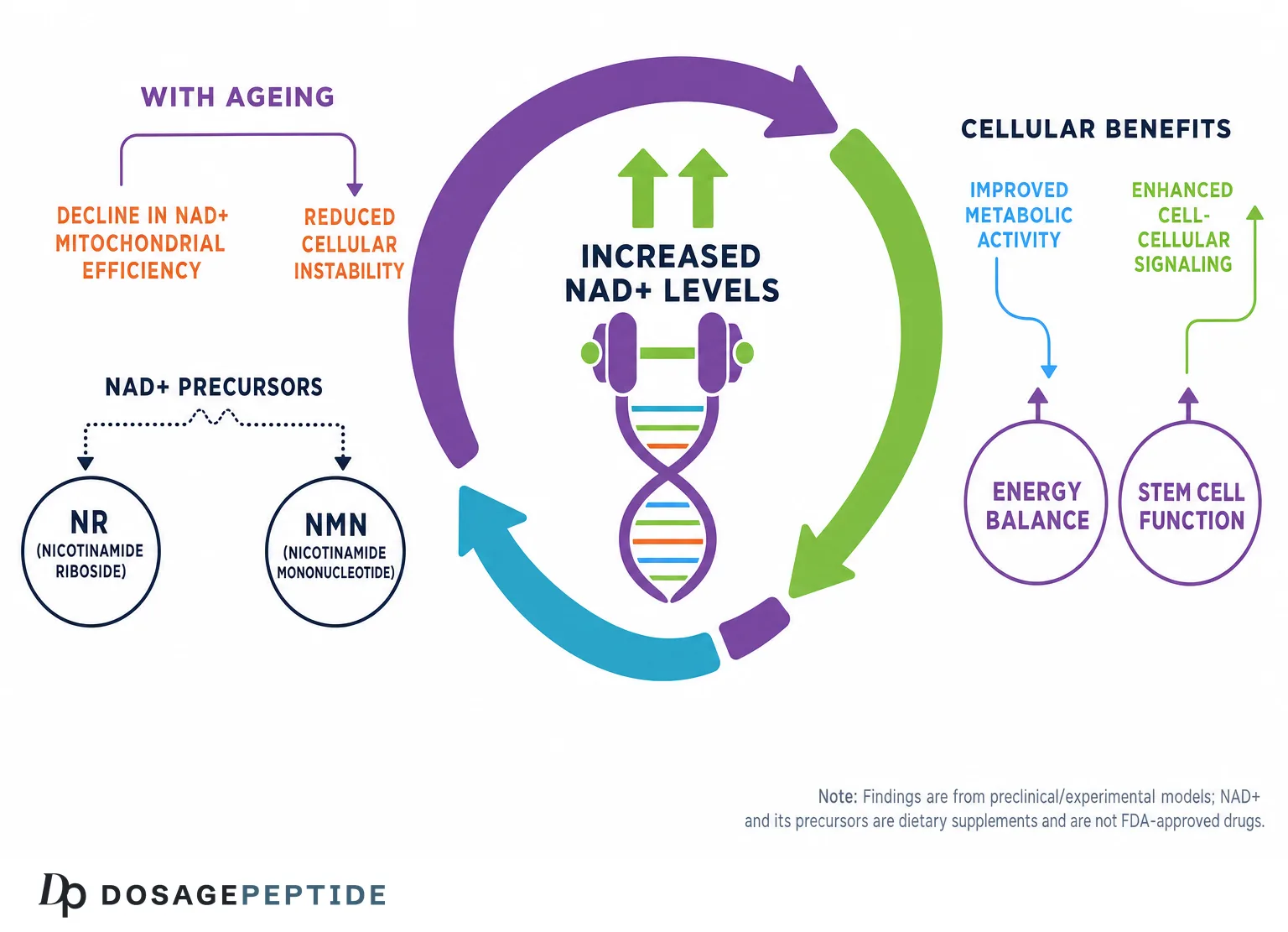
Nicotinamide adenine dinucleotide, universally abbreviated NAD+, is one of the most heavily studied molecules in the biology of aging. It sits at the crossroads of energy metabolism, DNA repair, and cellular signaling, and its measurable decline across the lifespan has made it a magnet for both serious laboratory science and aggressive marketing. Over the past decade, a family of “NAD+ boosters” — principally the oral precursors nicotinamide riboside (NR) and nicotinamide mononucleotide (NMN), alongside injectable NAD+ itself — has moved from obscure biochemistry into a multi-billion-dollar consumer category. The central promise is seductive: restore a molecule your cells lose with age, and perhaps slow some facet of aging itself.
The scientific reality is more disciplined than the marketing. There is genuinely strong, reproducible evidence that NAD+ falls with age in multiple tissues, that this decline matters mechanistically, and that oral precursors can raise circulating NAD+ in humans. There is a large and compelling body of preclinical data — cell culture and rodent studies — suggesting that replenishing NAD+ improves markers of cellular health. But the leap from “raises NAD+ in blood” to “slows human aging” remains, as of 2026, largely unproven. NR and NMN are regulated as dietary supplements, not as approved drugs; they are not authorized to treat, cure, or prevent any disease.
This article surveys what the evidence actually shows, graded honestly by strength. It covers the molecule and its history, the molecular mechanisms that make NAD+ indispensable, why it declines, how the leading precursors compare, what human trials have and have not demonstrated, the research models used to study it, bioavailability and the ongoing transporter debate, safety and tolerability, handling considerations in a research setting, the substantial gap between animal and human data, and the current regulatory status. The goal is education, not endorsement.
What NAD+ Is and Where the Aging Story Began
NAD+ is a coenzyme present in every living cell. Structurally it is a dinucleotide: two nucleotides joined through their phosphate groups, one bearing an adenine base and the other a nicotinamide moiety. It was first identified in 1906 by Arthur Harden and William Young as a heat-stable factor that accelerated fermentation in yeast extracts, and its role as a hydrogen-transfer coenzyme was elucidated over subsequent decades — work that earned multiple Nobel Prizes. For most of the twentieth century, NAD+ was understood almost entirely as a metabolic workhorse: the electron carrier that shuttles reducing equivalents through glycolysis, the citric acid cycle, and oxidative phosphorylation.
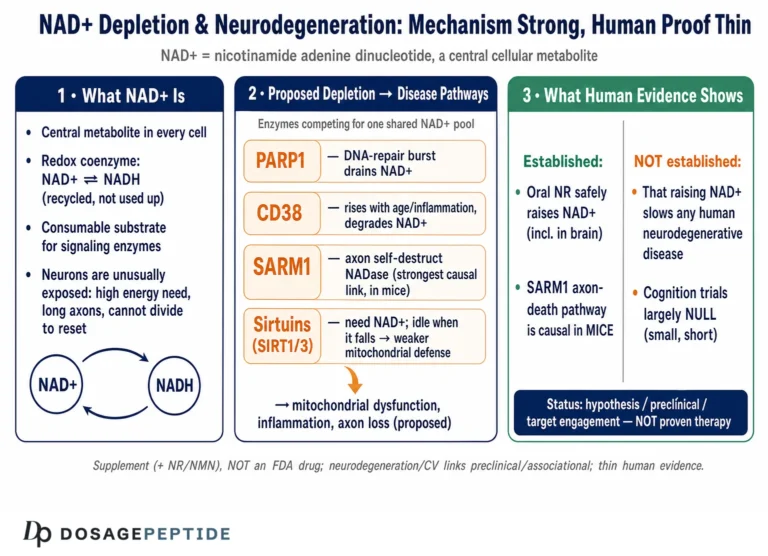
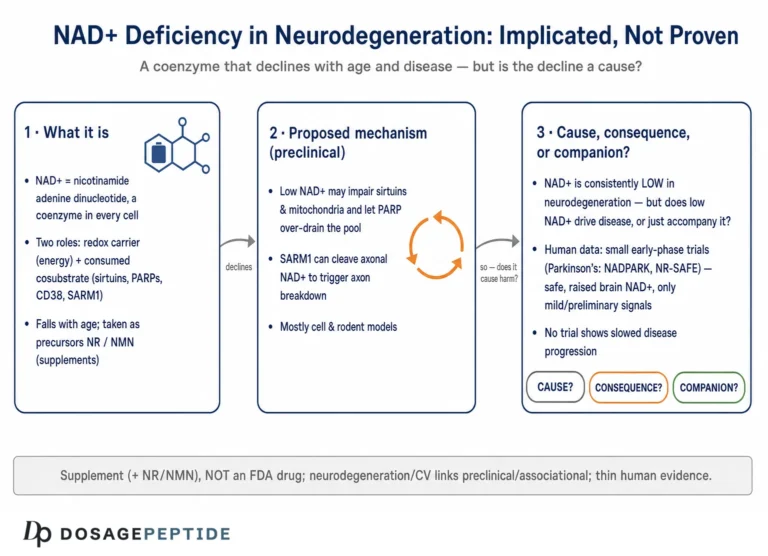
The modern “aging” story began much later, when researchers discovered that NAD+ is not only a coenzyme in redox reactions but also a consumed substrate for a set of signaling enzymes — the sirtuins, the poly(ADP-ribose) polymerases (PARPs), and the NAD glycohydrolases such as CD38. These enzymes cleave NAD+ and use its nicotinamide portion to modify proteins or generate second messengers. Because they physically consume the molecule, their activity is tied directly to how much NAD+ a cell has available. This reframing — NAD+ as both fuel and signal — transformed it from a textbook footnote into a candidate lever for influencing the aging process.
The observation that catalyzed the field was deceptively simple: NAD+ concentrations decline with age. Multiple groups reported reduced NAD+ in tissues from aged rodents and in human samples, with plasma and tissue analyses documenting a dysregulated NAD+ metabolome in “normal” aging.34 Some widely cited estimates suggest that tissue NAD+ can fall by roughly half between young adulthood and middle age, though the exact magnitude varies substantially by tissue, measurement method, and study. This decline is correlated with, and mechanistically linked to, several recognized hallmarks of aging: mitochondrial dysfunction, genomic instability, and cellular senescence.
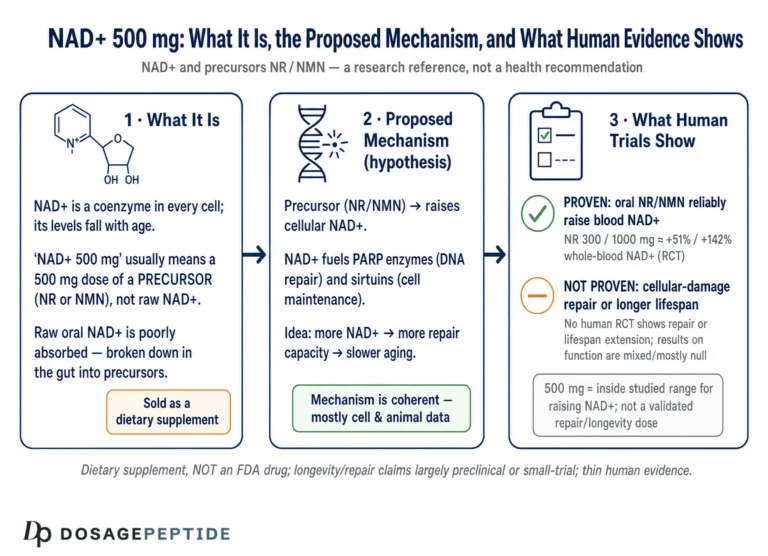
From there, the logic of intervention followed naturally. If NAD+ falls with age and NAD+ is essential for the enzymes that maintain cellular health, then restoring NAD+ might restore some of that function. Because NAD+ itself is a large, charged molecule that cells do not readily import intact, attention turned to smaller precursors that the body converts into NAD+ through well-characterized biosynthetic routes. NR and NMN emerged as the front-runners because they enter the salvage pathway efficiently and, unlike high-dose niacin, do not typically cause the uncomfortable flushing associated with nicotinic acid.
It is worth naming a source of confusion at the outset. The consumer market blends three distinct things under the “NAD+” banner: oral NR (sold widely, often as a patented chloride salt), oral NMN, and injectable or intravenous NAD+ itself, which is used in some clinics and research settings. These differ in how they are absorbed, how they are regulated, and how much human evidence supports them. Throughout this article the distinctions are kept explicit, because conflating them is one of the most common ways the evidence gets overstated. For the reconstitution and handling parameters relevant to research-grade injectable NAD+, our compound-specific NAD+ 1000 mg vial dosage protocol lays out the technical details separately from the biology discussed here.
The Molecular Mechanism: How NAD+ Powers Cellular Function
To understand why NAD+ attracts so much attention, it helps to appreciate the sheer breadth of processes that depend on it. NAD+ operates in two fundamentally different modes, and both are relevant to cellular aging.
The first mode is redox chemistry. In its oxidized form (NAD+) the molecule accepts a hydride ion to become NADH; the NAD+/NADH couple is the primary currency of electron transfer in central metabolism. Glycolysis, the citric acid cycle, and fatty acid oxidation all generate NADH, which then donates electrons to the mitochondrial electron transport chain to drive ATP synthesis. A closely related phosphorylated form, NADP+/NADPH, supplies the reducing power for biosynthesis and, critically, for antioxidant defense systems such as glutathione regeneration. In this mode NAD+ is catalytic — it is regenerated in a cycle and not consumed net. A cell short on NAD+ in this pool struggles to produce energy efficiently, which is one reason NAD+ decline is linked to the mitochondrial dysfunction seen in aged tissues.
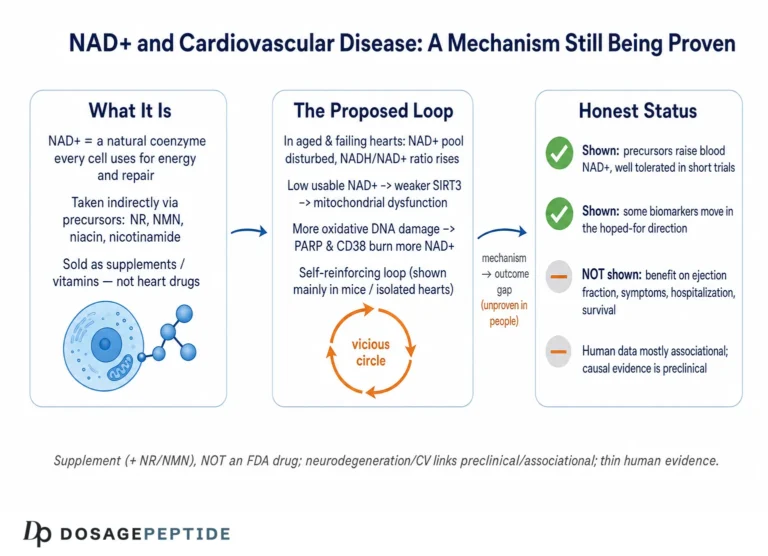
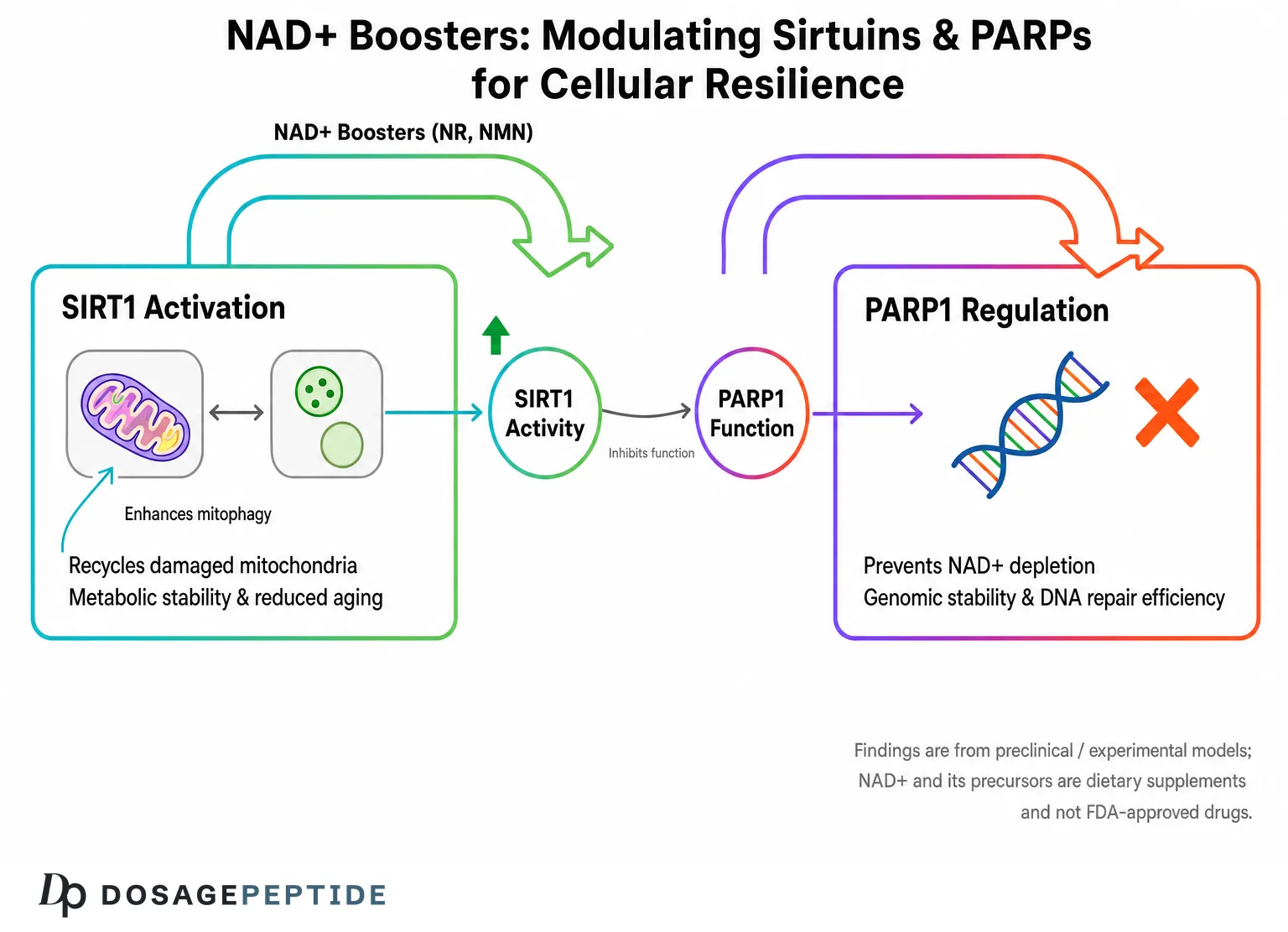
The second mode is the one that ties NAD+ directly to longevity biology: it serves as a consumed substrate for NAD+-dependent signaling enzymes. Three families dominate. The sirtuins (SIRT1 through SIRT7) are NAD+-dependent deacylases that remove acetyl and other acyl groups from proteins, including histones and metabolic regulators. Their activity is gated by NAD+ availability, which links the cell’s metabolic state to gene expression, mitochondrial biogenesis, and stress resistance. SIRT3, a mitochondrial sirtuin, is a recurring character in the NAD+ decline story.3 The PARPs, especially PARP1, detect DNA strand breaks and build chains of poly(ADP-ribose) on target proteins to orchestrate repair; each cycle consumes NAD+. And the NAD glycohydrolases, chiefly CD38 and its relative CD157, cleave NAD+ to produce calcium-signaling messengers such as cyclic ADP-ribose.
The consequence of this architecture is that sirtuins, PARPs, and CD38 all draw from the same limited NAD+ pool. When DNA damage rises and PARP activity increases, or when inflammation drives up CD38 expression, the drain on NAD+ can leave less substrate available for sirtuins. Because sirtuins are broadly protective — supporting mitochondrial quality control, genome maintenance, and metabolic flexibility — a fall in NAD+ can be read by the cell as a fall in its capacity to maintain itself. This is the mechanistic core of the hypothesis that raising NAD+ could support cellular health: give the sirtuins more substrate and, in principle, restore some maintenance capacity.
NAD+ is not manufactured once and stored; it is turned over rapidly, with a half-life in some tissues measured in hours. Cells replenish it through several routes. The de novo pathway builds NAD+ from the amino acid tryptophan through the kynurenine pathway. The Preiss-Handler pathway uses dietary nicotinic acid (niacin). And the salvage pathway — the dominant route in most tissues — recycles nicotinamide, the byproduct released whenever sirtuins, PARPs, or CD38 consume NAD+. The rate-limiting enzyme of the salvage pathway is nicotinamide phosphoribosyltransferase (NAMPT), which converts nicotinamide back into NMN; NMN is then adenylylated to NAD+ by NMNAT enzymes. This is precisely why NR and NMN are attractive as supplements: NR is converted to NMN by NR kinases, and NMN sits one enzymatic step from NAD+, so both feed the salvage pathway directly and bypass the slower de novo route. Compounds that preserve the NAD+ pool by a different route — such as the NNMT inhibitor discussed on our 5-Amino-1MQ protocol page — illustrate that “boosting NAD+” can mean either adding precursor or reducing its wasteful methylation and disposal.
Why NAD+ Declines With Age
If NAD+ decline is the premise for the entire supplement category, then the mechanism of that decline deserves careful scrutiny. The research points to a combination of increased consumption and decreased synthesis, with the balance between them still under active investigation.
The most influential single finding concerns CD38. In a landmark 2016 study in Cell Metabolism, Camacho-Pereira and colleagues showed that CD38 expression and activity rise with age in multiple mouse tissues and that CD38 is required for the age-related decline in NAD+ and the associated mitochondrial dysfunction.3 Mice lacking CD38 were protected from the age-related NAD+ drop, and the mechanism appeared to involve regulation of SIRT3 activity. Because CD38 is expressed on immune cells and its expression is driven by inflammatory signals, this finding dovetails with the broader concept of “inflammaging” — the chronic, low-grade inflammation of aging — acting as an NAD+ sink. Subsequent work has reinforced CD38 as a major consumer of NAD+ in aged tissue.4
A second contributor is chronic PARP activation. As cells accumulate DNA damage over a lifetime — from oxidative stress, replication errors, and environmental insults — PARP1 is repeatedly engaged to coordinate repair. Each engagement consumes NAD+. In tissues with a high burden of unrepaired damage, sustained PARP activity represents a persistent drain. Because sirtuins and PARPs compete for the same substrate, elevated PARP activity can functionally starve sirtuins, propagating dysfunction beyond the immediate site of DNA damage.
A third factor is reduced synthesis. Several lines of evidence suggest that NAMPT, the rate-limiting salvage enzyme, declines in expression or activity in certain aging tissues, lowering the cell’s capacity to regenerate NAD+ from nicotinamide.4 If the recycling machinery slows at the same time that consumption accelerates, the pool contracts from both directions. The relative importance of consumption versus synthesis likely differs by tissue and by the specific stresses a tissue experiences, and reconciling these mechanisms remains an area of ongoing research rather than settled fact.
Two important cautions apply to the “50% decline” figure that circulates widely. First, NAD+ is technically difficult to measure; it is unstable, sensitive to how samples are collected and processed, and reported in different compartments (whole blood, plasma, muscle, brain, specific cell types) using different assays. Cross-study comparisons are therefore fraught, and the headline percentages should be treated as approximate rather than precise. Second, correlation is not causation. That NAD+ falls with age and that low NAD+ accompanies dysfunction does not by itself prove that the decline drives aging, nor that reversing it reverses aging. The rodent data provide strong mechanistic support for a causal contribution in animals, but the human causal picture is far less complete.
What can be stated with reasonable confidence is this: NAD+ declines with age in multiple tissues across multiple species; the decline reflects both heightened consumption (CD38, PARP) and diminished salvage (NAMPT); and this decline is mechanistically connected to processes — mitochondrial function, DNA repair, senescence — that are central to how cells age. Whether topping up NAD+ meaningfully alters the trajectory of human aging is a separate question that the mechanism alone cannot answer.
The Precursor Landscape: NR, NMN, NAD+, and Niacin Compared
Consumers and researchers face a menu of NAD+-raising strategies that differ in chemistry, evidence base, cost, and regulatory standing. Understanding how they relate prevents the common error of treating them as interchangeable.
Nicotinamide riboside (NR) is a nicotinamide attached to a ribose sugar. It is converted to NMN by nicotinamide riboside kinases and then to NAD+. NR has the deepest human safety and pharmacokinetic dataset of the precursors, largely because it was commercialized early as a patented ingredient and studied in several registered trials. Landmark work by Trammell and colleagues established that NR is orally bioavailable and raises the NAD+ metabolome in humans,18 and a placebo-controlled crossover trial by Martens and colleagues confirmed that chronic NR is well tolerated and elevates NAD+ in healthy middle-aged and older adults.2
Nicotinamide mononucleotide (NMN) sits one step closer to NAD+ than NR. It has attracted enormous interest partly because of high-profile rodent studies and partly because of a 2021 human trial suggesting metabolic benefit. NMN is one enzymatic step from NAD+ but, because it is phosphorylated and charged, its route across cell membranes has been the subject of considerable debate (discussed below).
NAD+ itself, administered by injection or intravenous infusion, bypasses the question of oral absorption but raises its own questions about stability, distribution, and whether extracellular NAD+ is taken up intact or first broken down to precursors. Human evidence for injectable NAD+ is far thinner than for oral NR or NMN, consisting largely of small studies and clinical anecdote rather than robust randomized trials.
Niacin (nicotinic acid) and nicotinamide (niacinamide) are the classical, inexpensive vitamin B3 forms. Both raise NAD+ — niacin has decades of use, and one notable study even showed NAD+ repletion with niacin improved muscle function in a mitochondrial myopathy. Their drawbacks are practical: niacin causes prostaglandin-mediated flushing at higher doses, and high-dose nicotinamide can inhibit sirtuins (its own product) and burden methylation pathways. Much of the appeal of NR and NMN is that they raise NAD+ without the flush and, proponents argue, through a more favorable metabolic route — though the incremental clinical advantage over cheap B3 remains an open question.
| Feature | NR | NMN | Injectable NAD+ | Niacin / Nicotinamide |
|---|---|---|---|---|
| Steps to NAD+ | Two (via NMN) | One | Direct (or via breakdown) | Multiple (salvage / Preiss-Handler) |
| Human RCT depth | Deepest of the precursors | Growing; several RCTs | Very limited | Extensive (as vitamin) |
| Raises blood NAD+? | Yes2 | Yes9 | Reported, limited data | Yes |
| Flushing | Rare | Rare | Route-dependent | Common with niacin |
| US regulatory status | Dietary supplement | Dietary supplement (2025 reversal)14 | Not an approved drug | Dietary supplement / food |
The practical takeaway is that “boosting NAD+” is not a single intervention but a family of them, each at a different point on the evidence curve. NR carries the most rigorous human pharmacokinetic and safety data; NMN has newer, promising, but still limited randomized evidence; injectable NAD+ is the least studied in controlled trials despite its clinical popularity; and simple B3 vitamins remain the cheapest, best-characterized way to raise NAD+ if flushing and methylation are managed. Related longevity-oriented compounds such as the mitochondrial-derived peptide on our MOTS-c peptide dosage chart are sometimes discussed alongside NAD+ boosters, but they act through distinct mechanisms and should not be assumed to share NAD+’s evidence base.
What the Human Evidence Actually Shows
Grading the human evidence honestly is the most important task of this article, because it is where marketing and science diverge most sharply. The evidence can be sorted into three tiers of confidence.
Tier one — well established. Oral NR and NMN reliably raise NAD+ and related metabolites in human blood. This is the most reproducible human finding in the field. Martens and colleagues showed NR roughly doubled a key NAD+ metabolite in healthy adults;2 Trammell and colleagues demonstrated dose-dependent increases in the NAD+ metabolome;18 and multiple NMN trials, including dose-ranging work, report elevated blood NAD+.59 That precursors elevate circulating NAD+ is not in serious dispute. What that elevation accomplishes functionally is where confidence drops.
Tier two — suggestive but inconsistent. A number of trials report improvements in specific functional or metabolic markers, but the results are heterogeneous and often modest. The most cited is Yoshino and colleagues’ 2021 Science trial, in which 10 weeks of NMN improved muscle insulin sensitivity and insulin signaling in postmenopausal women with prediabetes.1 This was a genuine, rigorously conducted result — but it was small (about two dozen participants), confined to a specific population, and its interpretation was contested in a published technical comment.16 Other trials have reported improved aerobic capacity in amateur runners, better performance on walking-speed tests and self-reported sleep in older adults at 250 mg/day, and improvements in muscle-related endpoints in systematic reviews.13 On the NR side, the NICE randomized trial found NR improved six-minute walk performance in people with peripheral artery disease, though other endpoints were mixed.8 The overall pattern is a scatter of individually interesting signals that do not yet converge on a single, robustly replicated functional benefit.
Tier three — not demonstrated in humans. The headline claims — that NAD+ precursors extend lifespan, reverse aging, or treat age-related disease — have not been demonstrated in humans. No trial has shown lifespan extension; such a trial would take many years and has not been done. Many metabolic trials in healthy overweight or obese adults have been frankly negative, failing to find significant improvements in insulin sensitivity, body composition, or other endpoints despite clearly raising NAD+. This disconnect — NAD+ up, outcomes unchanged — is one of the most important and least advertised facts in the field. Raising a biomarker is not the same as producing a health benefit.
Several meta-analyses have tried to aggregate the noise into signal. A 2024 systematic review and meta-analysis of NMN randomized trials concluded that NMN may improve certain physical-performance and metabolic parameters, but repeatedly flagged small sample sizes, short durations, heterogeneity, and risk of bias.1317 Meta-analyses of glucose and lipid endpoints have been similarly cautious, finding limited or inconsistent effects. The honest summary is that human NAD+ precursor research is still early: firmly established at the biomarker level, genuinely promising in scattered functional signals, and unproven for the aging and disease claims that dominate consumer marketing.
It is also worth stressing what “supplement” implies for evidence quality. Because NR and NMN are sold as dietary supplements rather than developed as drugs, many trials are small, industry-adjacent, and powered to detect biomarker changes rather than hard clinical outcomes. There is no NAD+ precursor with a large, long-duration, independently funded phase III trial demonstrating a clinical benefit. That absence is not proof of failure, but it is the reason responsible summaries stop well short of efficacy claims.
Research Models and Methodology
The gap between the animal and human literatures is largely a story about research models, so it is worth understanding how NAD+ biology is actually studied and where each model’s authority ends.
In vitro systems. Much foundational mechanism comes from cultured cells: measuring how sirtuin or PARP activity tracks with NAD+, how CD38 consumes the pool, and how adding precursors shifts these balances. Cell models are indispensable for dissecting pathways, but they operate at NAD+ and precursor concentrations that may not reflect what tissues experience in a living organism, and they cannot capture whole-body pharmacokinetics, first-pass metabolism, or organ crosstalk. A benefit in a dish is a hypothesis, not a therapy.
Rodent models. The most persuasive functional data come from mice. Here, NAD+ precursors have improved insulin sensitivity, mitochondrial function, vascular health, and various age-related phenotypes, and CD38 knockouts are protected from age-related NAD+ decline.3 The lifespan question has been directly tested: a 2024 study from the De Cabo and Sinclair groups reported that long-term NMN increased median lifespan (by roughly 8.5%) in female mice and improved healthspan measures in males — but the effect was strikingly sex-dependent, with males not showing the same lifespan gain.6 That result is a useful microcosm of the whole field: real, mechanistically grounded, but conditional and not straightforwardly generalizable. Mice are not small humans; they differ in NAD+ metabolism, in the relevant transporters, in dosing on a per-kilogram basis (rodent doses are often far higher than human-equivalent doses), and in the controlled conditions of a vivarium versus a free-living human life.
Human trials. The clinical literature is dominated by small, short randomized controlled trials — typically dozens of participants over 4 to 12 weeks, occasionally longer. The best of these are double-blind and placebo-controlled and measure NAD+ directly to confirm target engagement.12 But the recurring methodological weaknesses are consistent: underpowering for clinical endpoints, short durations that cannot address aging, heterogeneous populations (healthy young athletes, prediabetic postmenopausal women, Parkinson’s patients, older adults — each a different biology), and outcome measures that are frequently surrogate biomarkers rather than events that matter to patients.
Two methodological themes deserve emphasis. First, measurement of NAD+ itself is a moving target. The molecule degrades quickly ex vivo, and results depend on the compartment sampled and the assay used, which complicates comparison across studies and inflates apparent inconsistency. Second, target engagement is not efficacy. A well-designed trial can convincingly show that a precursor raised NAD+ (target engaged) while showing no clinical benefit — and many have. Confusing the first for the second is the single most common error in popular coverage of this field. Rigorous NAD+ research increasingly insists on both measuring NAD+ and pre-specifying clinical endpoints, precisely so that the two are not conflated.
Finally, publication and funding dynamics shape the visible literature. Positive biomarker studies and mechanistic mouse papers are abundant and heavily promoted; null human outcome trials attract less attention and less commercial amplification. A reader relying on headlines will systematically overestimate the strength of the evidence. Reading the primary trials — their sample sizes, durations, and pre-specified endpoints — is the antidote.
Bioavailability, Absorption, and the Transporter Debate
A surprising amount of scientific disagreement centers not on whether precursors raise NAD+ but on how they get into cells — a question with real implications for which precursor is preferable and why oral dosing behaves as it does.
When NR or NMN is swallowed, it encounters the gut, the gut microbiome, and the liver before reaching peripheral tissues. A recurring finding is that a large fraction of oral precursor is broken down to nicotinamide (NAM) before or during absorption. In the intestine and especially on first pass through the liver, enzymes can convert much of an NMN or NR dose to nicotinamide, which then circulates and is taken up by tissues to rebuild NAD+ through the salvage pathway. Some analyses estimate that the majority of an oral NMN dose is metabolized to nicotinamide rather than absorbed intact. A 2024 Science Advances study proposed that NR and NMN substantially support NAD+ synthesis via enterohepatic circulation — a route in which the molecules are processed and recirculated through the liver and gut rather than delivered intact to distant cells.11 If most of the benefit ultimately flows through nicotinamide anyway, it raises a pointed question about how much advantage the expensive precursors hold over cheap B3 — a question the field has not fully resolved.
For NMN specifically, the sharpest controversy concerns a putative dedicated transporter. In 2019, Grozio and colleagues reported that Slc12a8 functions as a direct NMN transporter in the mouse gut, with knockdown experiments suggesting it accounts for a large share of intestinal NMN uptake.12 If correct, this would mean NMN can be absorbed intact rather than requiring conversion to NR first. The finding was influential but also contested; other researchers have argued that NMN is largely dephosphorylated extracellularly to NR by the enzyme CD73, imported as NR, and only then rephosphorylated inside the cell — making NR, not NMN, the true membrane-permeant species. The expression and quantitative importance of Slc12a8 in humans remains debated, with studies reporting low but detectable levels in human tissue and no consensus on its dominance.
This “NMN versus NR” transporter debate has practical echoes in the marketing wars between the two products, but from an evidence standpoint the honest position is that the human absorption route is not fully settled. Both precursors demonstrably raise blood NAD+ in humans; the precise molecular path — how much intact NMN, how much via NR, how much via nicotinamide — is still being worked out and may differ between the gut and other tissues.
Formulation adds another layer. Marketers promote sublingual tablets, liposomal preparations, and enteric coatings on the premise of bypassing gut and hepatic breakdown, but rigorous head-to-head human pharmacokinetic comparisons of these formats are scarce, and claims of superior “absorption” frequently outrun the data. For NAD+ delivered by injection in a research context, absorption from the gut is bypassed entirely, which is part of the rationale some cite for parenteral routes — but this trades the absorption question for questions about stability, distribution, and whether extracellular NAD+ is used intact. Practical handling parameters for the injectable form, including reconstitution concentration and storage, are covered separately in our NAD+ 500 mg vial dosage protocol.
Safety and Tolerability
On safety, the human evidence is more reassuring than on efficacy, though it is not a blank check — and short-term tolerability data should not be mistaken for long-term safety certainty.
Across numerous trials, oral NR and NMN have been generally well tolerated at the doses studied, which typically range from a few hundred milligrams to about 1,000–2,000 mg per day, over periods up to roughly 20 weeks.25910 A dedicated long-term safety trial of a branded NR product in overweight adults reported no serious safety signals over months of use.10 Dose-ranging NMN studies up to 900 mg/day reported acceptable tolerability.5 Reported adverse events tend to be mild and non-specific — nausea, fatigue, headache, gastrointestinal discomfort — and in placebo-controlled trials often occur at similar rates in the placebo arm, underscoring how difficult it is to attribute mild symptoms to the precursor itself. Unlike high-dose niacin, NR and NMN do not typically cause flushing.
The high-dose end has been probed most rigorously in Parkinson’s disease research. The NR-SAFE trial administered NR at 3,000 mg/day (1,500 mg twice daily) for four weeks and found no moderate or severe adverse events attributable to NR, alongside a pronounced increase in the NAD+ metabolome and no evidence of methyl-donor depletion.7 That is a meaningfully high dose tolerated over a short window, which is encouraging for short-term safety even if it says nothing about years of use.
Several caveats temper this reassuring picture. First, duration. Most trials run weeks to a few months. The safety of taking NAD+ precursors daily for years or decades — the timeframe implied by “anti-aging” use — has not been established, and cannot be from the existing trials. Second, the NAD+-and-cancer question. Because NAD+ supports cellular proliferation and DNA repair, there is a theoretical concern, raised by some preclinical work, that abundant NAD+ could in principle support the growth or survival of existing cancer cells; the human relevance is unknown and unresolved, but it is a reason for caution particularly in anyone with a cancer history. Third, high-dose nicotinamide metabolism consumes methyl groups (it is methylated to N-methylnicotinamide for excretion), which in theory could stress methylation pathways — a concern the NR-SAFE data did not bear out at the doses and duration tested, but which merits monitoring in long-term use. Fourth, most safety data derive from oral precursors; injectable or intravenous NAD+ has a thinner controlled-safety record and introduces route-specific risks (infusion reactions, injection-site issues, sterility considerations) that oral products do not.
The balanced conclusion is that oral NR and NMN appear safe and well tolerated over the weeks-to-months studied, at the doses studied, in the generally healthy or specific patient populations studied. That is a real and useful finding. It is not the same as a guarantee of safety for indefinite daily use, for injectable formulations, or for people with conditions — cancer history foremost — where the theoretical concerns are most salient. Anyone considering these products should discuss them with a qualified clinician, particularly if pregnant, breastfeeding, on medication, or managing a chronic condition.
Handling and Reconstitution in a Research Context
Oral NR and NMN reach the consumer as capsules, tablets, or powders and require no special handling beyond ordinary storage away from heat and moisture; NMN in particular is somewhat hygroscopic and can degrade if left exposed. The handling discussion becomes technically meaningful for injectable NAD+ used in research and some clinical settings, which arrives as a lyophilized (freeze-dried) powder that must be reconstituted before use. This section describes the general research-context parameters for that form; it is technical background for laboratory understanding, not a directive to self-administer, and injectable NAD+ is not an approved drug.
Reconstitution means dissolving the lyophilized powder in a sterile diluent, most commonly bacteriostatic water (water containing a small percentage of benzyl alcohol as a preservative). The diluent is added slowly down the inside wall of the vial rather than jetted directly onto the powder, and the vial is gently swirled — not shaken — because NAD+, like many biologically active molecules, can be sensitive to mechanical shear and foaming. The volume of diluent added determines the final concentration, which in turn determines how a given dose maps onto the graduations of a syringe. As a representative example from published protocols, reconstituting a 1,000 mg vial with 3.0 mL of bacteriostatic water yields roughly 333 mg/mL, at which one unit on a U-100 insulin syringe (0.01 mL) corresponds to about 3.33 mg; a 500 mg vial reconstituted with the same 3.0 mL yields roughly 167 mg/mL. These figures are illustrative of how concentration math works, not a recommendation.
Stability and storage are where NAD+ differs from many peptides. The lyophilized powder is generally stored frozen or refrigerated and protected from light. Once reconstituted, the solution is kept refrigerated at roughly 2–8 °C, shielded from light, and used within a relatively short window — commonly cited as up to about two weeks — because NAD+ in solution is less stable than the dry powder and degrades over time. Repeated freeze–thaw cycles of the reconstituted solution are avoided. Every reconstituted vial should be labeled with the date of reconstitution so that the use-by window is tracked. Sterile technique — alcohol-swabbing the vial stopper, using a fresh needle, avoiding contact contamination — is standard because bacteriostatic water only inhibits, rather than eliminates, microbial growth.
A distinctive practical issue with injectable NAD+ is tolerability of the injection or infusion itself. Anecdotal and clinical reports describe that rapid intravenous NAD+ can produce uncomfortable sensations — chest tightness, nausea, flushing, a feeling of pressure — that are mitigated by slowing the rate of administration. This is one reason clinical NAD+ infusions are typically given slowly over hours. It also illustrates that the parenteral route trades the absorption uncertainties of oral dosing for a different set of practical and tolerability considerations.
None of these handling parameters should be read as guidance to use injectable NAD+ outside an appropriate professional or research context. They are included because understanding how a compound is formulated, reconstituted, and stored is part of understanding the compound scientifically. Readers seeking the full technical breakdown for the injectable format can consult the dedicated protocol pages linked throughout this article, and can browse related longevity-oriented compounds through our main peptide dosage protocols catalog.
Limitations and the Human-Evidence Gap
Every section so far has gestured at the same central limitation; it deserves to be stated plainly and in one place. The dominant feature of the NAD+ field is a large and persistent gap between preclinical promise and human proof.
The preclinical case is genuinely strong. Decades of biochemistry establish NAD+ as essential; robust rodent work links its decline to age-related dysfunction and shows that restoring it improves many phenotypes; and mechanistic studies provide a coherent story about sirtuins, PARPs, CD38, and the salvage pathway. If mouse data were sufficient to establish human efficacy, NAD+ precursors would be a settled success. But mouse data are not sufficient, and the history of aging research is littered with interventions that extended rodent healthspan and then failed to translate.
The human case, by contrast, is thin in exactly the places that matter most. Human trials reliably show that precursors raise blood NAD+ — and then reliably struggle to show that this translates into consistent functional benefit. Many well-conducted metabolic trials in humans have been null. The positive human signals that do exist — insulin sensitivity in one small population,1 walking performance in peripheral artery disease,8 aerobic and physical-performance measures in some cohorts13 — are individually interesting but collectively fail to converge on a single, robustly replicated, clinically meaningful outcome. No human study has tested, let alone demonstrated, lifespan or healthspan extension; the mouse lifespan result was itself sex-dependent and not uniformly positive.6
Several structural factors sustain this gap. Trial size and duration: aging unfolds over decades, but trials run weeks; detecting a true effect on aging in a short study is close to impossible. Endpoint choice: reliance on biomarkers like blood NAD+ substitutes target engagement for clinical benefit. Population heterogeneity: a precursor might help a prediabetic postmenopausal woman and do nothing for a healthy young athlete, and pooling them obscures both. Dose translation: effective rodent doses often exceed human-equivalent doses used in trials. The absorption question: if much of an oral dose is metabolized to nicotinamide anyway, the specific-precursor hypothesis is undercut. And commercial incentives: the field’s funding and publicity favor positive biomarker and mechanism stories over null clinical outcomes, skewing public perception toward optimism.
The appropriate stance is neither dismissal nor hype. NAD+ biology is real, important, and worth studying; the mechanism is sound; short-term safety looks reasonable; and the biomarker effect is undisputed. But the specific consumer claims — that these products slow aging, extend life, or treat disease — are not supported by the current human evidence. They are hypotheses under investigation, some promising, none proven. A reader deciding whether to spend money on NR or NMN is buying into a plausible, mechanistically motivated bet with confirmed biomarker engagement and unconfirmed clinical payoff — not a validated anti-aging therapy. Framing it that way is the honest framing.
Regulatory Status
The regulatory landscape for NAD+ precursors is unusually eventful and worth understanding precisely, because it directly constrains what can and cannot be claimed.
In the United States, NR and NMN are regulated as dietary supplements, not as approved drugs. This has a crucial legal consequence: they may not be marketed to diagnose, treat, cure, or prevent any disease, and they have not undergone the FDA drug-approval process that would validate such claims through the required efficacy and safety review. Nicotinamide riboside chloride has been the subject of GRAS (Generally Recognized As Safe) notifications and New Dietary Ingredient notifications, and it is broadly marketed without regulatory dispute over its supplement status.
NMN’s path has been far more turbulent. In 2022, after initially acknowledging NMN through the New Dietary Ingredient process, the FDA reversed course and took the position that NMN was excluded from the dietary-supplement definition. The stated reason was the “drug preclusion” clause of the Federal Food, Drug, and Cosmetic Act: because NMN had been “authorized for investigation as a new drug” — specifically, an investigational NMN formulation (MIB-626) had entered clinical study before, in the agency’s view, NMN was lawfully marketed as a supplement — NMN could arguably no longer qualify as a dietary ingredient.14 This created significant uncertainty for the NMN market through 2022 and 2023, prompting a citizen petition from industry groups and, for a period, the delisting of NMN products by some major retailers.
That situation has since shifted again. In 2025, following legal and industry pressure, the FDA effectively reversed its position and confirmed that NMN can lawfully be marketed as a dietary supplement, acknowledging evidence that NMN had been sold as a supplement in the United States before the relevant drug authorization.14 Reporting through late 2025 described the agency reinstating NMN’s dietary-ingredient standing.15 The practical upshot as of 2026 is that NMN is again generally available as a supplement in the US — but the episode is a vivid reminder that supplement regulatory status can change, and that “available on the market” is not equivalent to “FDA-approved as safe and effective for any use.”
Injectable and intravenous NAD+ occupy a different and murkier category. Injectable NAD+ is not an FDA-approved drug for any indication; where it is used, it is typically compounded and administered in clinical or wellness settings, an arrangement that carries its own regulatory and quality-control considerations and a much thinner controlled-evidence base than oral precursors. Research-grade NAD+ sold for laboratory use is explicitly not intended for human administration.
Internationally, status varies. Some jurisdictions permit NR and/or NMN as supplements or novel foods; others restrict or have not authorized them. In all cases, the common thread is that no NAD+ precursor is an approved medicine for aging or any age-related disease anywhere; the products are regulated as supplements or foods, a category that does not require demonstration of clinical efficacy. Consumers should treat disease-treatment or anti-aging efficacy claims — regardless of how they are phrased — as marketing that outruns both the evidence and the regulatory permissions.
Frequently Asked Questions
Does NAD+ or its precursors actually reverse aging in humans?
No. There is no human evidence that NAD+, NR, or NMN reverses aging or extends lifespan. Precursors do reliably raise blood NAD+ levels in people, and there are scattered, promising signals on specific markers such as muscle insulin sensitivity and walking performance in particular populations.18 But lifespan extension has only been shown in animals — and even there it was sex-dependent in mice6 — and the broader “anti-aging” claims remain hypotheses under investigation, not demonstrated human outcomes.
What is the difference between NR, NMN, and NAD+?
NAD+ is the active coenzyme cells actually use. NR (nicotinamide riboside) and NMN (nicotinamide mononucleotide) are smaller precursors that the body converts into NAD+ through the salvage pathway — NR is two enzymatic steps away, NMN is one. Because NAD+ itself is large and charged, cells do not readily import it intact, which is why oral products use the precursors. Injectable NAD+ bypasses oral absorption but has far less controlled human evidence than oral NR or NMN.
Are NAD+ supplements FDA-approved?
No. NR and NMN are regulated as dietary supplements, not approved drugs, and cannot legally be marketed to treat, cure, or prevent disease. NMN’s supplement status was actually contested by the FDA in 2022 under the drug-preclusion rule (because of an investigational NMN drug) before the agency reversed course in 2025 and confirmed NMN can be sold as a supplement.1415 Injectable NAD+ is not an FDA-approved drug for any indication.
Are NAD+ precursors safe?
Oral NR and NMN have been generally well tolerated in trials at doses up to roughly 1,000–3,000 mg/day over weeks to a few months, with mostly mild, non-specific side effects.710 Important caveats: long-term (years) safety has not been established; there is an unresolved theoretical concern about NAD+ supporting existing cancer cells; and injectable NAD+ carries route-specific risks and thinner safety data. Anyone pregnant, breastfeeding, on medication, or with a medical condition — especially a cancer history — should consult a clinician first.
Why does NAD+ decline with age?
Research points to a combination of increased consumption and decreased synthesis. The enzyme CD38, driven up by age-related inflammation, is a major NAD+ consumer and is required for age-related NAD+ decline in mice.3 Chronic PARP activation from accumulating DNA damage adds another drain, and the salvage enzyme NAMPT appears to decline in some tissues, reducing recycling capacity.4 The exact magnitude of decline varies by tissue and is hard to measure precisely.
Is NMN or NR better?
The evidence does not clearly favor one. NR has the deepest human pharmacokinetic and safety dataset;218 NMN has newer randomized trials including a notable metabolic study.1 Both raise blood NAD+. The molecular question of how NMN is absorbed — whether via a dedicated transporter (Slc12a8) or after conversion to NR — is still debated,12 and a substantial fraction of either precursor may be metabolized to nicotinamide before reaching tissues.11 Marketing claims of one being definitively superior outrun the data.
Can I just take cheap niacin or nicotinamide instead?
Niacin (nicotinic acid) and nicotinamide are classical vitamin B3 forms that also raise NAD+ and are far cheaper. Their drawbacks are practical: niacin causes flushing at higher doses, and high-dose nicotinamide can inhibit sirtuins and burden methylation. Proponents argue NR and NMN raise NAD+ more favorably and without flushing, but because much of an oral precursor dose may funnel through nicotinamide anyway, the incremental clinical advantage over cheap B3 remains an open scientific question rather than a settled fact.
How is injectable NAD+ handled in a research setting?
Injectable NAD+ arrives as a lyophilized powder that is reconstituted with sterile bacteriostatic water, swirled gently rather than shaken, then refrigerated at 2–8 °C, protected from light, and typically used within about two weeks. Concentration depends on the diluent volume added. These are technical formulation details, not a recommendation — injectable NAD+ is not an approved drug, and rapid administration can cause uncomfortable sensations, which is why clinical infusions are given slowly. See the linked protocol pages for the full technical breakdown.
Educational Disclaimer
This article is provided for educational and informational purposes only and describes research on NAD+ and its precursors. It is not medical advice, and nothing here should be interpreted as a recommendation to use, purchase, or administer any compound. NR and NMN are dietary supplements, not approved drugs, and injectable NAD+ is not an FDA-approved medicine; none of these products is proven to treat, cure, or prevent any disease or to slow human aging. Statements about dosing, reconstitution, or handling describe published research parameters and do not constitute usage instructions. Always consult a qualified healthcare professional before starting any supplement, particularly if you are pregnant, breastfeeding, taking medication, or managing a medical condition.
References
- Yoshino M, Yoshino J, Kayser BD, et al. Nicotinamide mononucleotide increases muscle insulin sensitivity in prediabetic women. Science. 2021;372(6547):1224-1229. https://www.science.org/doi/10.1126/science.abe9985
- Martens CR, Denman BA, Mazzo MR, et al. Chronic nicotinamide riboside supplementation is well-tolerated and elevates NAD+ in healthy middle-aged and older adults. Nature Communications. 2018;9:1286. https://www.nature.com/articles/s41467-018-03421-7
- Camacho-Pereira J, Tarrago MG, Chini CCS, et al. CD38 dictates age-related NAD decline and mitochondrial dysfunction through an SIRT3-dependent mechanism. Cell Metabolism. 2016;23(6):1127-1139. https://www.cell.com/cell-metabolism/fulltext/S1550-4131(16)30224-8
- Chini CCS, Cordeiro HS, Tran NLK, Chini EN. NAD metabolism: role in senescence regulation and aging. Aging Cell. 2024;23(1):e13920. https://onlinelibrary.wiley.com/doi/10.1111/acel.13920
- Yi L, Maier AB, Tao R, et al. The efficacy and safety of beta-nicotinamide mononucleotide (NMN) supplementation in healthy middle-aged adults: a randomized, multicenter, double-blind, placebo-controlled, parallel-group, dose-dependent clinical trial. GeroScience. 2023;45(1):29-43. https://link.springer.com/article/10.1007/s11357-022-00705-1
- Kane AE, Chellappa K, Arnold M, et al. Long-term NMN treatment increases lifespan and healthspan in mice in a sex-dependent manner. bioRxiv. 2024. https://www.biorxiv.org/content/10.1101/2024.06.21.599604
- Brakedal B, Tzoulis C, Tysnes OB, Haugarvoll K, et al. (NR-SAFE): a randomized, double-blind safety trial of high dose nicotinamide riboside in Parkinson’s disease. Nature Communications. 2023;14:5715. https://www.nature.com/articles/s41467-023-43514-6
- McDermott MM, et al. Nicotinamide riboside for peripheral artery disease: the NICE randomized clinical trial. Nature Communications. 2024;15:5230. https://www.nature.com/articles/s41467-024-49092-5
- Oral administration of nicotinamide mononucleotide is safe and efficiently increases blood nicotinamide adenine dinucleotide levels in healthy subjects. PMC. 2022;PMC9036060. https://www.ncbi.nlm.nih.gov/pmc/articles/PMC9036060/
- Conze D, Brenner C, Kruger CL. Safety and metabolism of long-term administration of NIAGEN (nicotinamide riboside chloride) in a randomized, double-blind, placebo-controlled clinical trial of healthy overweight adults. Scientific Reports. 2019;9:9772. https://www.ncbi.nlm.nih.gov/pmc/articles/PMC6611812/
- Okabe K, et al. Nicotinamide riboside and nicotinamide mononucleotide facilitate NAD+ synthesis via enterohepatic circulation. Science Advances. 2024. https://www.science.org/doi/10.1126/sciadv.adr1538
- Grozio A, Mills KF, Yoshino J, et al. Slc12a8 is a nicotinamide mononucleotide transporter. Nature Metabolism. 2019;1:47-57. https://www.nature.com/articles/s42255-018-0009-4
- Improved physical performance parameters in patients taking nicotinamide mononucleotide (NMN): a systematic review of randomized controlled trials. PMC. 2024;PMC11365583. https://www.ncbi.nlm.nih.gov/pmc/articles/PMC11365583/
- Venable LLP. FDA declares nicotinamide mononucleotide is a dietary supplement. 2025. https://www.venable.com/insights/publications/2025/10/fda-declares-nicotinamide-mononucleotide-is
- NutraIngredients. FDA reinstates NDI status of NMN with new letters to ingredient players. 2025. https://www.nutraingredients.com/Article/2025/12/09/fda-reinstates-ndi-status-of-nmn-with-new-letters-to-ingredient-players/
- Technical comment on “Nicotinamide mononucleotide increases muscle insulin sensitivity in prediabetic women.” Science. 2021. https://www.science.org/doi/10.1126/science.abj1696
- Zhong O, et al. Effects of nicotinamide mononucleotide on glucose and lipid metabolism in adults: a systematic review and meta-analysis of randomised controlled trials. PMC. 2024;PMC11557618. https://pmc.ncbi.nlm.nih.gov/articles/PMC11557618/
- Trammell SAJ, Schmidt MS, Weidemann BJ, et al. Nicotinamide riboside is uniquely and orally bioavailable in mice and humans. Nature Communications. 2016;7:12948. https://www.nature.com/articles/ncomms12948