The question in the title carries a quiet assumption worth surfacing before we accept it: that we already know cagrilintide slows gastric emptying and reshapes what happens to a meal after it is eaten. It is an intuitive assumption, because cagrilintide is an amylin analog, and amylin is one of the most reliably characterized brakes on stomach emptying in all of gut endocrinology.2 But intuition and evidence are not the same thing, and the leap from “amylin slows gastric emptying” to “a long-acting, continuously present amylin analog slows gastric emptying week after week” hides a genuinely open scientific problem. Native amylin and its short-acting analog pramlintide are pulsatile, meal-associated signals; cagrilintide was engineered to sit in the bloodstream for days at a time, with a half-life on the order of seven days.1 Whether a gastrointestinal signal built for brief, prandial spikes behaves the same way when it is switched on permanently is not a rhetorical question. It is the crux of this article.
So rather than restate marketing copy, this piece treats the premise as a research question and examines it honestly. We will separate what is firmly established about amylin physiology from what has actually been measured for cagrilintide specifically; we will look at where the gastric-emptying data are strong (mostly for pramlintide, not cagrilintide), where they are thin, and where a plausible mechanism may not translate into a durable clinical effect. Throughout, one framing matters: cagrilintide is an investigational compound. It is not approved by the U.S. Food and Drug Administration or the European Medicines Agency for obesity, type 2 diabetes, or any other indication, and its most advanced clinical use — the fixed-dose combination with semaglutide known as CagriSema — remains under regulatory review rather than in approved use.12 Nothing here is medical advice, and nothing here should be read as claiming cagrilintide treats, cures, or prevents any disease.
What Cagrilintide Is, and Why Its Design Changes the Gastric Question
Cagrilintide (developmental designations AM833 and NN9838) is a synthetic, lipidated, long-acting analog of human amylin developed by Novo Nordisk. Amylin itself — also called islet amyloid polypeptide (IAPP) — is a 37-amino-acid peptide co-secreted with insulin from pancreatic β-cells in response to a meal.2 The native hormone has a serious pharmaceutical liability: it is prone to aggregation into amyloid fibrils and has a plasma half-life measured in minutes, which is why the first amylin-based drug, pramlintide, had to be injected before every major meal.1
Cagrilintide was designed to solve both problems at once. Its medicinal-chemistry program, described in detail by Kruse and colleagues, introduced several deliberate substitutions into the amylin backbone: residues borrowed from rat amylin (which does not readily form fibrils) to blunt the aggregation tendency, an engineered salt bridge to stabilize the central helix, and a C 20 fatty-diacid moiety attached through a linker to promote reversible binding to serum albumin.1 That albumin binding is the key to its longevity. By tethering itself to a large circulating protein, cagrilintide is shielded from renal filtration and enzymatic degradation, extending its half-life to roughly 159–195 hours — about a week — against pramlintide’s 20–45 minutes.1 Steady-state concentrations are reached after roughly five weeks of once-weekly dosing, with substantial carryover from one week to the next.6
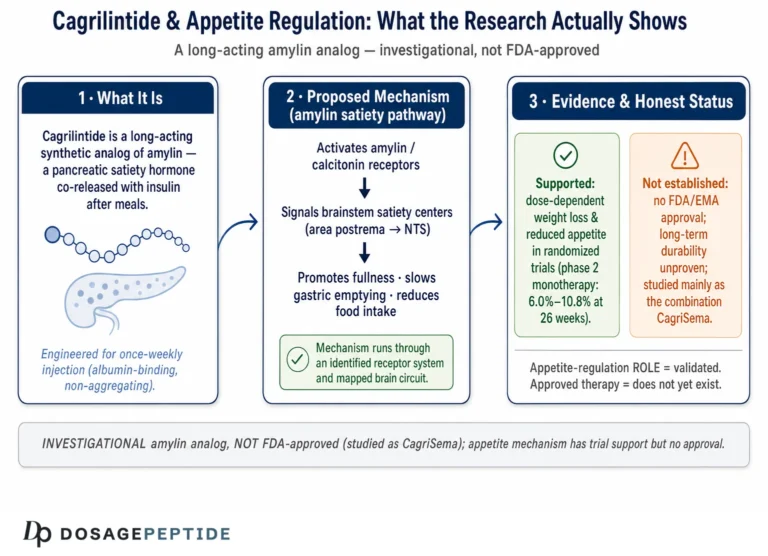
This is not a trivial reformulation; it is a change in the fundamental temporal character of the signal, and that is precisely why it complicates the gastric-emptying story. Amylin evolved as a within-meal satiation signal — a pulse that rises after eating and falls between meals. Gastric emptying is regulated on that same minute-to-minute timescale. A pharmacology that keeps amylin receptors tonically engaged, day and night, may reproduce amylin’s central appetite effects (which appear to tolerate sustained stimulation reasonably well) while behaving quite differently at the level of the stomach, where continuous braking could invite adaptive counter-regulation. We will return to this tension repeatedly, because it is the single most important honest caveat in the whole discussion. Readers interested in how the same molecule is being examined from the appetite side can compare this analysis with the companion discussion of cagrilintide’s role in appetite regulation, which focuses on the central satiety arm rather than the gastrointestinal one.
It is also worth noting what the redesign preserved and what it discarded. The structure-activity work that produced cagrilintide was not a blind search; it was a systematic effort to retain full agonist potency at the amylin receptors while adding pharmaceutical durability, and the resulting molecule is a potent agonist at both AMY receptor subtypes and the parent calcitonin receptor.111 That dual amylin/calcitonin activity is a genuine pharmacological distinction from pramlintide, which is closer to a faithful amylin mimic. Whether the added calcitonin-receptor component contributes anything to gastric motility specifically is not well characterized, and it is one of several places where cagrilintide cannot simply be treated as “pramlintide that lasts a week.” The kinetic transformation and the receptor-activity profile together mean that borrowing pramlintide’s gastric numbers is a working hypothesis, not a substitution of equals — a theme that recurs throughout this analysis.
Amylin’s Physiological Control of Gastric Emptying: the Established Baseline
To judge whether cagrilintide slows the stomach, we first need a clear picture of what amylin does in its native, physiological form — because this is the part of the story that rests on solid ground.
Amylin is one of the body’s principal endogenous inhibitors of gastric emptying. Working in concert with insulin, it slows the rate at which the stomach delivers chyme into the duodenum, and this deceleration is a major reason amylin flattens the post-meal glucose curve.2 The logic is elegant: after a carbohydrate-rich meal, most of the glycemic excursion is governed not by how fast the pancreas secretes insulin but by how fast glucose arrives in the small intestine to be absorbed. By acting as a rate-limiter on gastric outflow, amylin spreads nutrient delivery over a longer window, lowering the peak.2
The clearest human quantification of this effect comes not from cagrilintide but from pramlintide, and it is worth stating the numbers precisely because they anchor the entire mechanistic claim. In a controlled study by Samsom and colleagues, healthy subjects given pramlintide showed gastric-emptying half-times that lengthened from about 112 minutes on placebo to roughly 169 minutes at 30 µg and 177 minutes at 60 µg — a delay of more than an hour at the higher dose.3 Crucially, the same study pointed to a neural, vagally mediated mechanism: the effect had the signature of vagal inhibition rather than a direct action on gastric smooth muscle.3 Subsequent work extended these findings to people with type 1 and type 2 diabetes, confirming that amylin-receptor agonism measurably slows emptying across populations.10
Three features of this baseline deserve emphasis. First, the effect is real, dose-dependent, and reproducible — this is not speculative pharmacology. Second, it is a gastric effect achieved through the brain, via vagal outflow to the stomach, not through amylin acting locally on gastric tissue. Third, and most consequentially for cagrilintide, every one of these measurements was made under acute or short-term dosing conditions that mirror amylin’s natural pulsatile release. None of them tells us what happens when the receptor is engaged continuously for weeks. The baseline is trustworthy; its extrapolation to a once-weekly drug is the open part.
| Property | Native amylin | Pramlintide | Cagrilintide |
|---|---|---|---|
| Origin | Endogenous β-cell hormone (37 aa)2 | Human amylin analog (3 proline substitutions)10 | Lipidated, albumin-binding amylin analog1 |
| Plasma half-life | Minutes2 | ~20–45 min1 | ~159–195 h (about 1 week)1 |
| Dosing rhythm | Pulsatile, meal-linked | Before each major meal10 | Once weekly (tonic exposure)6 |
| Gastric-emptying delay | Yes, physiological2 | Yes, measured (half-time ~112→177 min)3 | Direct human quantification limited; inferred |
| Approval status | — | FDA-approved adjunct (diabetes) | Investigational; not approved12 |
From Receptor to Stomach: the Neural Circuit Behind the Effect
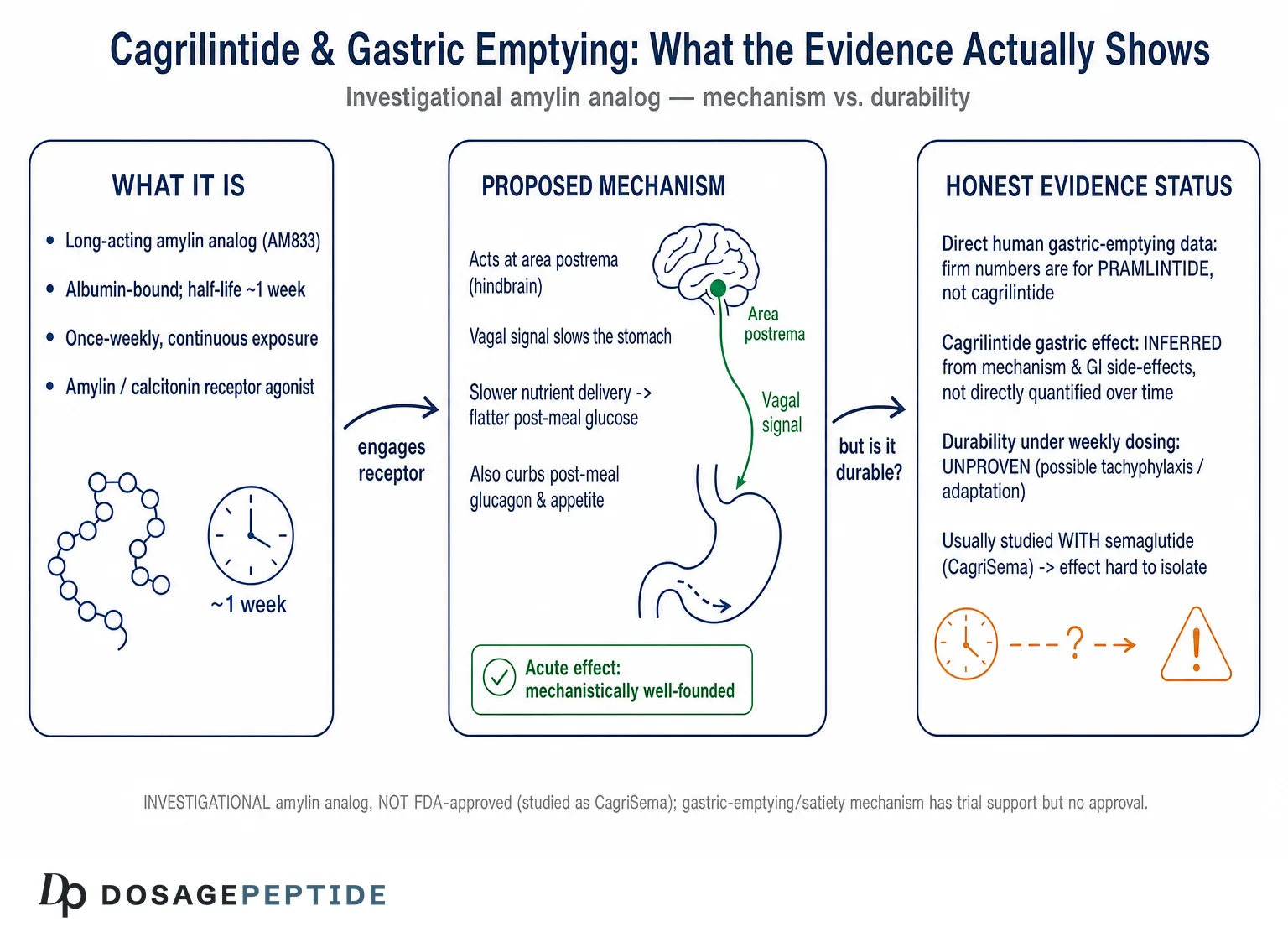
Understanding how amylin reaches the stomach clarifies why cagrilintide’s gastric effect is both plausible and hard to guarantee. The pathway runs through the brain, not the gut wall.
Amylin does not have a single, unique receptor. Its receptors are assembled from the calcitonin receptor (CTR) core combined with one of three receptor-activity-modifying proteins (RAMP1, RAMP2, or RAMP3), producing the amylin-receptor subtypes designated AMY₁, AMY₂, and AMY₃.2 This modular architecture is why amylin pharmacology overlaps with calcitonin and CGRP signaling, and it is why cagrilintide is more precisely described as a dual amylin/calcitonin-receptor co-agonist than as a pure amylin mimic.11 Structural studies of cagrilintide bound to these receptors show that its lipid tail and stabilized helix create distinctive, long-residence interactions at the receptor interface.11
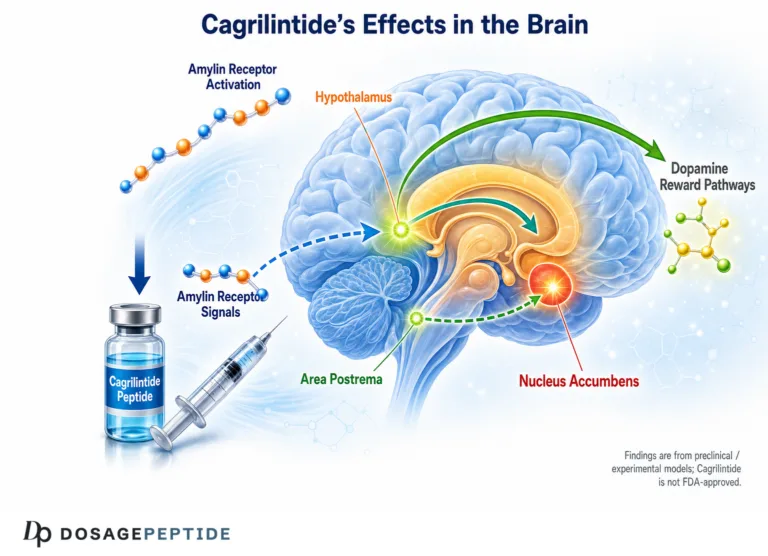
The anatomical linchpin is the area postrema, a small hindbrain structure that sits outside the blood–brain barrier and is therefore directly exposed to circulating hormones. The area postrema expresses all the components of functional amylin receptors, and it is here that amylin—and cagrilintide—first engages the central nervous system.4 A 2025 mechanistic study using RAMP1/RAMP3 knockout mice demonstrated this dependence directly: cagrilintide activated area postrema neurons and reduced body weight in wild-type animals but had essentially no effect in mice lacking these receptors, pinning its action to the AMY₁ and AMY₃ subtypes in the hindbrain.5 From the area postrema, the signal propagates through the nucleus of the solitary tract and parabrachial nucleus, and it is from these brainstem hubs that descending vagal (parasympathetic) output modulates gastric motility.4
This is the same vagal circuit that Samsom’s pramlintide study implicated: the gastric-emptying delay is a brain-to-stomach command relayed down the vagus, not a peptide throttling the pylorus directly.3 The distinction matters for two reasons. First, it means gastric emptying and central satiety share an upstream node (the area postrema) but diverge into different downstream circuits — one motor/vagal, one appetitive. They can, in principle, be dissociated. Second, brain-mediated autonomic effects are exactly the kind of physiology that is subject to adaptation and counter-regulation over time, which is the mechanistic basis for the tachyphylaxis concern examined below. For a broader map of how amylin sits within the wider family of metabolic peptides and their receptor targets, the site’s peptide glossary catalogs the relevant terminology.
The Tachyphylaxis Problem: Will a Long-Acting Amylin Keep Slowing the Stomach?
Here is the article’s central honest tension, and it deserves to be stated plainly rather than smoothed over. There is a well-recognized phenomenon in gut-hormone pharmacology whereby a signal that potently slows gastric emptying on first exposure gradually loses that particular effect under continuous stimulation, even as its central appetite-suppressing effect persists. This tachyphylaxis of gastric emptying is best documented for long-acting GLP-1 receptor agonists, where short-acting agents produce large, sustained emptying delays while long-acting agents produce an emptying delay that wanes with continued dosing. The relevant question for cagrilintide is whether an amylin analog engineered for tonic, week-long receptor occupancy follows the same pattern.
The honest answer is that we do not fully know, and the available evidence cuts in more than one direction. On one hand, some amylin researchers argue there is no clear demonstration that the central, eating-inhibitory effect of amylin desensitizes; acute amylin appears to reduce food intake regardless of baseline amylin tone, which is one reason a long-acting analog is attractive.4 On the other hand, chronically elevated amylin levels — as seen in obesity — have been associated with down-regulation of amylin receptors, which could blunt the impact of any single postprandial signal, including the gastric-emptying component.4 These two observations are not contradictory if the central satiety arm and the peripheral gastric-motility arm adapt at different rates. That is exactly the scenario that would leave cagrilintide with a durable appetite effect but an attenuating gastric-emptying effect at steady state.
This distinction is not academic. If cagrilintide’s clinical benefit rests primarily on sustained central satiety rather than on persistent gastric slowing, then the title’s framing — cagrilintide as a gastric-emptying and postprandial-metabolism agent — describes the compound’s acute pharmacology more accurately than its chronic steady-state behavior. It would also help explain a clinical observation discussed later: the gastrointestinal side effects associated with amylin analogs (nausea, early fullness) tend to be most pronounced during dose escalation and to ease with continued treatment, a pattern consistent with partial adaptation of the very gastric mechanism in question.7
The intellectually responsible position, then, is this: cagrilintide almost certainly slows gastric emptying acutely, by the same vagal mechanism as native amylin and pramlintide, because it engages the same receptors in the same hindbrain region.35 Whether it maintains a clinically meaningful gastric-emptying delay across months of once-weekly dosing is unproven, and there is a credible mechanistic reason — drawn from the broader behavior of long-acting gut-hormone agonists — to suspect the effect may attenuate. Anyone asserting that cagrilintide “slows gastric emptying” as a settled, durable fact is reaching beyond the published human data.
What the Cagrilintide Human Data Actually Show — and the Measurement Gap
It would be reassuring to point to a definitive human study in which cagrilintide’s effect on gastric emptying was directly quantified with a validated method — a scintigraphy scan, a ¹³C-breath test, or an acetaminophen (paracetamol) absorption test — across the dose range and over time. Such a clean, isolated dataset for cagrilintide monotherapy is not prominent in the peer-reviewed literature, and this gap is itself an important finding.
What we do have is a coherent but indirect body of evidence. The phase 1b combination study by Enebo and colleagues, which examined multiple ascending doses of cagrilintide together with semaglutide 2.4 mg, characterized pharmacodynamic markers including appetite and gastrointestinal effects during the early weeks of dosing, before meaningful body-weight separation had emerged.6 The phase 2 monotherapy dose-finding trial by Lau and colleagues established that once-weekly cagrilintide up to 4.5 mg produced dose-dependent weight loss — about 10.8% at the top dose over 26 weeks — with a gastrointestinal side-effect profile (nausea and related symptoms) that is the clinical fingerprint of a gut-slowing, satiating mechanism.7 In other words, the consequences we would expect from gastric slowing and enhanced satiation were observed, even where the gastric-emptying rate itself was not the reported primary endpoint.
This is a legitimate but limited form of evidence, and honesty requires labeling it as such. Nausea and early satiety are consistent with delayed gastric emptying, but they are not measurements of it; they can also arise from direct central actions in the area postrema (the brain’s nausea and vomiting center) independent of what the stomach is doing. Inferring a specific gastric-emptying rate from a side-effect profile is a reasonable hypothesis, not a quantified result. The strongest direct gastric-emptying numbers in the amylin literature remain those from pramlintide,310 and importing them wholesale onto a structurally modified, kinetically transformed molecule is exactly the kind of extrapolation this article is cautioning against.
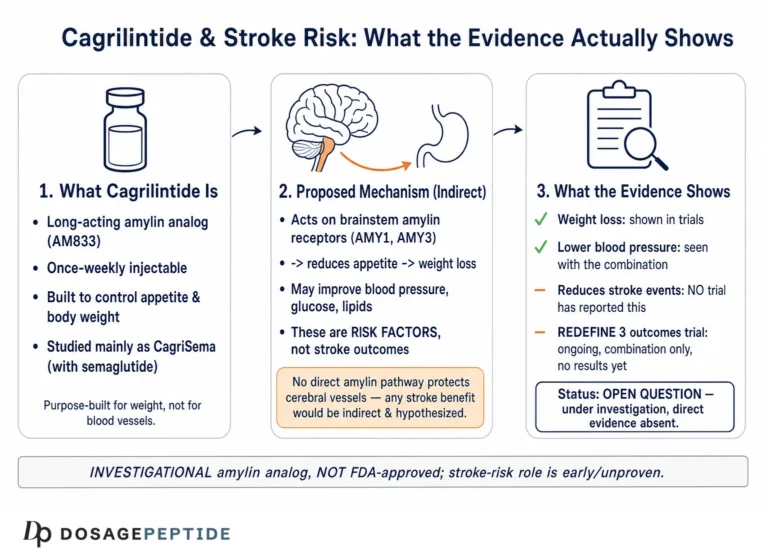
The fair synthesis is that cagrilintide’s effect on human gastric emptying is inferred with moderate confidence from mechanism and side-effect data, but not precisely quantified over time in published monotherapy trials. That is a meaningfully weaker claim than the title’s phrasing implies, and it is the claim the evidence actually supports. Researchers tracking how this evidence base matures can compare it with the companion assessment of whether current research supports cagrilintide’s role in lowering stroke risk, which weighs a similarly early evidence base for a different endpoint.
Postprandial Glucagon and Glucose: Amylin’s Second Metabolic Lever
Gastric emptying is only half of the postprandial story. Amylin’s other major contribution to after-meal metabolism is the suppression of glucagon, and this arm is arguably more specific to amylin biology than the gastric effect it shares in spirit with GLP-1.
In a healthy person, a carbohydrate meal should switch off glucagon — the hormone that tells the liver to pour glucose into the blood — because glucose is already arriving from the gut. In type 2 diabetes and related states, this switch is broken: glucagon stays inappropriately high after meals, and the liver keeps producing glucose it does not need, worsening the postprandial spike. Amylin restrains this pathological postprandial glucagon secretion, and it does so most powerfully in the fed state, reducing inappropriate hepatic glucose output.2 Importantly, amylin does not blunt the counter-regulatory glucagon response to hypoglycemia, so this suppression is selective for the postprandial, not the fasting or emergency, context.2
There is an important mechanistic interdependence here that is easy to miss. Part of amylin’s postprandial glucagon suppression is not a wholly separate action but a downstream consequence of the gastric-emptying delay itself: when nutrients arrive in the intestine more slowly, the signals that would otherwise drive inappropriate glucagon release are themselves blunted.2 This coupling has a subtle implication for the durability question. If the gastric-emptying arm partly drives the glucagon-suppression arm, then any attenuation of gastric slowing at steady state could, in principle, drag part of the glucagon benefit down with it. Conversely, amylin also appears to have gastric-emptying-independent effects on islet alpha cells, so the two are not perfectly yoked. Disentangling which fraction of the postprandial glucose benefit is “gastric” and which is “direct” is one of the more interesting unresolved questions in amylin pharmacology, and it has never been resolved specifically for cagrilintide.
Layered on top of glucagon suppression and gastric slowing is a third effect: a centrally mediated reduction in food intake and meal size, mediated through the same area postrema circuitry.13 Together these three actions — slower nutrient delivery, lower postprandial glucagon, and reduced caloric intake — constitute amylin’s integrated postprandial signature. They are complementary: the gastric-emptying delay flattens the initial glucose rise, glucagon suppression trims the hepatic contribution, and reduced intake lowers the total nutrient load. Because these mechanisms reinforce one another, the overall metabolic effect can appear robust even if any single component varies, which is another reason a clean, isolated read on the gastric-emptying contribution is so hard to obtain from combination-drug outcome data.
How much of this integrated signature does cagrilintide reproduce durably? The clearest human window comes from the type 2 diabetes setting. In the phase 2 trial of cagrilintide 2.4 mg co-administered with semaglutide 2.4 mg (CagriSema) in people with type 2 diabetes, the combination improved glycemic control and body weight relative to semaglutide alone, consistent with amylin adding a postprandial glucose-lowering contribution on top of GLP-1 action.8 Later phase 3 data in the broader CagriSema program reinforced that the combination delivers superior weight-loss outcomes versus semaglutide monotherapy.12 These outcomes are consistent with a maintained postprandial metabolic effect — but note the important confound: in these trials cagrilintide is almost always studied with semaglutide, so cleanly attributing the postprandial glucose benefit to cagrilintide’s gastric or glucagon effects specifically is not straightforward. For readers exploring the diabetes-prevention angle of this same compound, the companion analysis of whether cagrilintide can prevent diabetes in high-risk patients examines the glycemic data in more depth.
| Postprandial mechanism | What it does | Evidence level for cagrilintide |
|---|---|---|
| Gastric-emptying delay | Slows nutrient arrival, flattens glucose peak23 | Inferred from mechanism & GI side effects; not directly quantified over time7 |
| Postprandial glucagon suppression | Reduces inappropriate hepatic glucose output2 | Physiologically established for amylin; cagrilintide-specific human data limited & confounded by semaglutide8 |
| Reduced food intake / meal size | Lowers total nutrient load13 | Supported by phase 2 weight loss (~10.8% at 4.5 mg)7 |
| Durability at steady state | Whether effects persist under tonic dosing | Open question; possible partial adaptation of gastric arm4 |
Cagrilintide Plus Semaglutide: Two Overlapping Brakes on the Stomach
Because cagrilintide’s most advanced clinical development is as part of CagriSema, its gastric and postprandial effects cannot be discussed in isolation from semaglutide. The two agents are frequently described as “complementary,” but a careful reading shows their gastric mechanisms partly overlap, which has both pharmacological and tolerability implications.
Semaglutide is a GLP-1 receptor agonist, and GLP-1 agonists also slow gastric emptying — indeed, gastric slowing is a well-known component of how GLP-1 drugs lower postprandial glucose. So CagriSema applies two independent signals that both converge on decelerating the stomach: cagrilintide via amylin/AMY receptors in the area postrema and its vagal output, and semaglutide via GLP-1 receptors on vagal afferents and in the brainstem. On the appetite side the two pathways are genuinely distinct and additive, which is the biological rationale for the combination and helps explain why CagriSema produced greater weight loss than either mechanism alone in the obesity program.612 The contrast with the incretin-only approach is instructive; readers can compare how a pure GLP-1 mechanism operates in the discussion of how semaglutide activates GLP-1 receptors and how dual-incretin agents such as tirzepatide engage overlapping but broader circuitry in tirzepatide’s influence on incretin pathways.
The overlap on gastric emptying carries a nuance that honest analysis should not skip. When two agents both slow the stomach, the combined gastrointestinal effect — and the accompanying nausea, early satiety, and, in some participants, vomiting — can be additive, which is one reason CagriSema regimens use gradual dose escalation of both components.6 It also complicates attribution: in a person taking both drugs, an observed gastric-emptying delay cannot be cleanly credited to cagrilintide. Interestingly, the tachyphylaxis question resurfaces here too. If semaglutide’s gastric-emptying effect attenuates over time (as is characteristic of long-acting GLP-1 agonists) while cagrilintide’s central satiety persists, the durable benefit of the combination may lean more on appetite suppression than on sustained gastric slowing — again pushing the “postprandial gastric” framing toward the acute phase of treatment rather than the maintenance phase.
There is a further point that the combination-first development strategy makes stubbornly hard to resolve. Because the pivotal efficacy trials pit CagriSema against semaglutide, they are designed to show what cagrilintide adds to a GLP-1 backbone, not what cagrilintide does on its own to gastric physiology. The phase 2 monotherapy trial is the closest we have to an isolated view, and even there the reported endpoints were weight and safety rather than gastric-emptying kinetics.7 This is a reasonable commercial and clinical strategy — the combination is where the largest benefit lies — but it means that the specific scientific question in this article’s title has, somewhat ironically, been left partly in shadow by the very success of the combination program. A mechanistically curious reader is left to reconstruct the gastric story from receptor biology, pramlintide analogy, animal work, and side-effect patterns, rather than from a direct, cagrilintide-specific, longitudinal emptying dataset. That reconstruction is reasonable, but it is inference, and it should be labeled as such rather than presented as established fact.
Why the Gastric and Central Effects Can Come Apart
A subtle but important idea underlies much of this article: amylin’s slowing of gastric emptying and its suppression of appetite are related but separable, and they may not rise and fall together under a long-acting drug. Understanding why they can dissociate helps explain the honest verdict.
The two effects share an upstream sensor — the area postrema — but split into different downstream machinery. The appetite effect is a matter of neural signaling: area postrema neurons project to the parabrachial nucleus and onward to forebrain regions that govern the decision to stop eating, and this circuit also engages hedonic pathways that reduce the rewarding value of food.413 The gastric effect, by contrast, is a matter of autonomic output: descending signals adjust vagal tone to the stomach, changing the mechanical rate at which it empties.3 These are different effector systems with different adaptive properties. A central appetite circuit can, in principle, keep firing at a steady set-point for months; a peripheral motor system under continuous inhibitory drive is more likely to recalibrate toward its baseline, because the body generally defends the timely delivery of nutrients and the avoidance of prolonged gastric retention.
There is also a physiological reason to expect the gastric arm to be self-limiting. Gastric emptying is not a single fixed rate; it is continuously tuned by feedback from the small intestine (the “ileal brake” and duodenal nutrient sensing) so that the downstream gut is never overwhelmed. Superimposing a tonic pharmacological brake on top of this feedback system creates competing signals, and it would be unsurprising if intestinal feedback partially normalized emptying over time even while the drug is present. This is speculative for cagrilintide specifically — no study has dissected it — but it is grounded in well-established gastrointestinal physiology and is exactly the kind of reasoning that should temper confident claims of durable gastric slowing.
The practical upshot is that the two headline effects should be tracked as distinct outcomes, not bundled. A trial could plausibly show sustained appetite suppression and weight loss (the appetite arm holding) alongside a fading gastric-emptying delay (the motor arm adapting). If that pattern holds, then cagrilintide would be, at steady state, more accurately described as a durable satiety agent with an early and possibly transient gastric-emptying component — a description that reframes the title’s premise without dismissing it. The comparison table below summarizes how the two arms differ in their expected durability.
| Feature | Central satiety / appetite arm | Gastric-emptying / motor arm |
|---|---|---|
| Entry point | Area postrema → parabrachial → forebrain4 | Area postrema → brainstem → vagal output to stomach3 |
| Effector system | Neural appetite/reward circuitry13 | Autonomic (vagal) control of gastric motility3 |
| Main readout | Reduced meal size, weight loss7 | Delayed gastric half-emptying time, flatter glucose peak2 |
| Expected durability under tonic dosing | Plausibly sustained4 | Possibly attenuating (adaptation, intestinal feedback) |
| Cagrilintide-specific longitudinal data | Weight loss maintained over trial period7 | Not directly quantified over time |
How Gastric Emptying Is Measured — and Why the Method Matters Here
A recurring theme in this article is that claims about gastric emptying are only as good as the method used to measure it. Because so much confident language about cagrilintide rests on inference, it is worth understanding what a rigorous gastric-emptying measurement actually requires.
The reference standard is scintigraphy: a test meal is labeled with a radioisotope, and a gamma camera tracks how quickly the labeled contents leave the stomach, yielding a half-emptying time (the T½ values quoted earlier for pramlintide came from this class of method).3 A widely used non-radioactive alternative is the ¹³C breath test, in which a stable-isotope-labeled substrate (often octanoate or spirulina) is metabolized after it passes into the small intestine, so the rate of labeled CO₂ appearance in the breath reports on emptying. A simpler surrogate is the acetaminophen (paracetamol) absorption test: because acetaminophen is negligibly absorbed by the stomach but rapidly absorbed by the small intestine, the rise in its plasma concentration tracks the rate of gastric emptying — a convenient method often embedded in early-phase metabolic studies.
Each method has limitations that bear directly on interpreting amylin-analog data. Emptying is not linear; it depends heavily on meal composition (solids empty differently from liquids, fat slows emptying), and the effect of an amylin analog measured with a liquid caloric drink may differ from its effect on a solid mixed meal. More importantly for the tachyphylaxis question, a single snapshot — emptying measured once, early in treatment — cannot reveal whether the effect is durable. Detecting attenuation requires repeated measurements at the start of dosing and again after weeks of steady-state exposure, in the same individuals. The relative scarcity of exactly this kind of longitudinal, cagrilintide-specific gastric-emptying dataset is why the durability question remains genuinely open rather than settled. Methodology, in short, is not a footnote here; it is the reason the honest answer to the title is “partly, and probably less over time” rather than a flat “yes.”
Safety, Gastrointestinal Tolerability, and the Postprandial Trade-off
The same gastric and central mechanisms that could deliver postprandial benefit are also the source of cagrilintide’s most common adverse effects, and this trade-off is worth stating without spin.
Across the cagrilintide clinical program, the dominant tolerability issues have been gastrointestinal: nausea, reduced appetite, constipation, and, less commonly, vomiting — a profile shared with pramlintide and with GLP-1 agonists, and mechanistically expected from a compound that slows the stomach and engages the area postrema.7 In the phase 2 monotherapy trial these events were generally mild to moderate, most frequent during dose escalation, and tended to diminish with continued treatment.7 That temporal pattern — worst early, easing later — is clinically important on two counts. Practically, it is why titration schedules exist. Mechanistically, as noted earlier, the fading of gastric symptoms over time is at least consistent with partial adaptation of the gastric-emptying effect, though symptom reports are an imperfect proxy for the underlying motility.
Several honest caveats frame the safety picture:
- Investigational status. Cagrilintide’s long-term safety profile is still being defined through ongoing and recently reported trials; it does not carry the multi-year post-marketing safety record of an approved drug.12
- Delayed gastric emptying is a double-edged sword. The mechanism that lowers postprandial glucose also means the stomach retains contents longer, which is relevant to anyone with pre-existing gastroparesis or significant GI motility disorders, and is a theoretical consideration around procedures requiring an empty stomach.
- Combination effects. In CagriSema, GI adverse events reflect the additive gastric actions of two agents, complicating attribution and reinforcing the need for cautious escalation.6
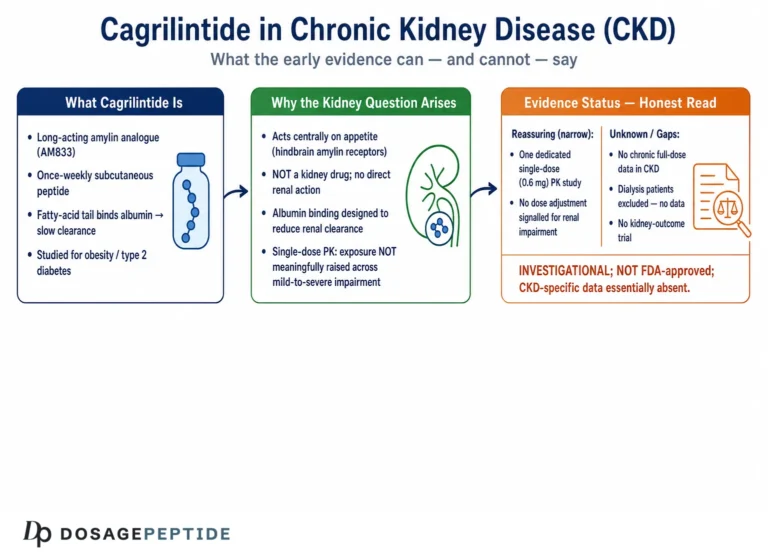
- Special populations. Because amylin analogs are cleared in part renally and the postprandial glucose effect intersects with diabetes therapy, use in people with kidney impairment or on other glucose-lowering drugs warrants specific scrutiny — a topic examined separately in the analysis of cagrilintide safety in chronic kidney disease.
The reasonable reading is that cagrilintide’s gastrointestinal effects are mechanism-based and generally manageable with titration in the studied populations, but that “manageable in trials” is not the same as “fully characterized for long-term real-world use,” and the delayed-emptying mechanism itself carries context-specific cautions that should not be waved away.
Putting the Pieces Together: an Honest Verdict on the Title’s Premise
Having assembled the evidence, we can now answer the title’s question with the precision it deserves, rather than with a marketing headline.
Does cagrilintide affect gastric emptying? Almost certainly yes, acutely. It engages the same amylin/calcitonin receptors in the same hindbrain area postrema as native amylin and pramlintide,511 and it drives the same vagally mediated slowing of the stomach that Samsom and colleagues quantified for pramlintide.3 The gastrointestinal side-effect profile seen across its trials is the clinical fingerprint of that mechanism.7
Does it durably slow gastric emptying across months of once-weekly dosing? This is unproven. The direct, quantified, longitudinal human measurements that would settle it are largely absent from the published cagrilintide monotherapy literature, and there is a credible mechanistic reason — the tendency of long-acting gut-hormone agonists toward gastric-emptying tachyphylaxis, plus obesity-associated amylin-receptor down-regulation — to suspect the gastric arm may attenuate even as central satiety persists.4
Does it reshape postprandial metabolism more broadly? Amylin biology supports a genuine postprandial signature — slower nutrient delivery, suppressed postprandial glucagon, reduced meal size — and the cagrilintide-plus-semaglutide diabetes data are consistent with a maintained postprandial glucose benefit.2812 But those data are confounded by co-administration with semaglutide, so the cagrilintide-specific contribution cannot be cleanly isolated.
The intellectually honest bottom line is that the compound’s acute pharmacology matches the title well, its chronic gastric-emptying behavior is a genuine open question, and its postprandial-metabolism effects are real in principle but partly entangled with its combination partner in the clinic. That is a more nuanced — and more accurate — picture than “cagrilintide slows gastric emptying,” and it is the picture a careful reader of the primary literature should carry away.
Regulatory Status and What Remains Unknown
Precision about regulatory status matters, because it is frequently misrepresented in commercial writing about this compound.
Cagrilintide is investigational. As of mid-2026 it is not approved as a standalone drug for obesity, type 2 diabetes, or any other indication by the FDA, the EMA, or comparable regulators. Its development has proceeded through phase 1, phase 2, and phase 3 trials, most prominently as the fixed-dose CagriSema combination with semaglutide, which has generated late-stage efficacy data but remains under regulatory evaluation rather than in approved clinical use.7812 Material sold outside regulated clinical channels as a “research chemical” carries the usual, serious concerns about purity, identity, sterility, and mislabeling, none of which have anything to do with the molecule’s intrinsic pharmacology.
Several specific unknowns bear directly on this article’s question and define the research agenda that would be needed to answer it properly:
- Longitudinal gastric-emptying data. Repeated, method-validated measurements (scintigraphy or ¹³C-breath testing) in the same participants at treatment start and after weeks of steady state, for cagrilintide monotherapy, to test the tachyphylaxis hypothesis directly.
- Deconvolution from semaglutide. Studies isolating cagrilintide’s postprandial glucose and glucagon effects from those of its combination partner.
- Meal-type dependence. Whether the emptying effect differs meaningfully for solid mixed meals versus caloric liquids, which affects real-world relevance.
- Long-term safety. The durability of tolerability and the profile of delayed emptying over years, not weeks.
Until that work is published, the appropriate scientific posture is measured: cagrilintide has a strong mechanistic and short-term case for affecting gastric emptying and postprandial metabolism, an encouraging but combination-confounded clinical dataset, and an unresolved question about durability. It is a promising investigational amylin analog, not an approved therapy, and its gastric-emptying credentials are best described as mechanistically well-founded but not yet fully quantified in humans over time.
None of this diminishes the compound’s scientific interest. If anything, cagrilintide is a useful natural experiment in what happens when an evolutionarily pulsatile signal is converted into a tonic one, and the gastric-emptying question sits at the heart of that experiment. A reader who wants to think clearly about it should hold two facts together without collapsing them: the acute, receptor-level case that cagrilintide slows the stomach is strong, and the chronic, whole-organism case that it keeps doing so is unproven. Keeping those two claims distinct — rather than letting the strength of the first vouch for the second — is the single most useful habit for reasoning honestly about this molecule and its postprandial effects.
Frequently Asked Questions
Does cagrilintide slow gastric emptying the way GLP-1 drugs do?
It slows gastric emptying by a related but distinct route. GLP-1 agonists such as semaglutide act through GLP-1 receptors, whereas cagrilintide acts through amylin/calcitonin receptors in the hindbrain area postrema, sending a vagal signal that decelerates the stomach.35 The downstream effect — slower nutrient delivery and a flatter postprandial glucose curve — is similar, which is partly why the two are combined in CagriSema. The most precise human gastric-emptying numbers, however, come from the short-acting amylin analog pramlintide, not from cagrilintide directly.3
How much does an amylin analog delay gastric emptying?
For pramlintide, controlled studies showed the gastric half-emptying time lengthening from roughly 112 minutes on placebo to about 169–177 minutes at 30–60 µg doses — a delay of roughly an hour.3 These figures describe pramlintide under acute dosing and should not be assumed to transfer unchanged to cagrilintide, which has very different pharmacokinetics.1
Will the gastric-emptying effect last, or does it wear off?
This is genuinely uncertain. Long-acting gut-hormone agonists as a class tend to show tachyphylaxis of the gastric-emptying effect — it attenuates with continued dosing even as central appetite suppression persists. Whether cagrilintide follows this pattern has not been directly established in published longitudinal gastric-emptying studies, and there is a plausible mechanistic basis (including obesity-associated amylin-receptor down-regulation) for the gastric arm to adapt over time.4 The easing of nausea after the first weeks of treatment is consistent with, but does not prove, such adaptation.7
How does cagrilintide affect blood sugar after meals?
Amylin lowers postprandial glucose through three combined actions: slowing gastric emptying, suppressing inappropriate postprandial glucagon (which reduces liver glucose output), and reducing food intake.213 In type 2 diabetes trials, cagrilintide added to semaglutide improved glycemic control beyond semaglutide alone, consistent with a real postprandial contribution — though because it was studied in combination, the cagrilintide-specific share cannot be cleanly separated.812
Is the gastric-emptying delay dangerous?
In the studied populations it has been generally manageable, mostly manifesting as dose-escalation nausea and early fullness that ease over time.7 That said, a mechanism that keeps the stomach fuller for longer warrants caution in people with pre-existing gastroparesis or motility disorders, and it is a theoretical consideration before procedures requiring an empty stomach. Cagrilintide is investigational, so its long-term profile is still being defined.12
Why is cagrilintide almost always studied with semaglutide?
Because their appetite mechanisms are distinct and additive: amylin-receptor signaling (cagrilintide) plus GLP-1-receptor signaling (semaglutide) produced greater weight loss together than either alone.612 A side effect of this design, however, is that gastric-emptying and postprandial-glucose benefits observed with CagriSema reflect both drugs, which is why isolating cagrilintide’s own gastric contribution is difficult.
Has cagrilintide’s effect on gastric emptying been directly measured in humans?
Not in the clean, quantified, longitudinal way one would want. Cagrilintide’s gastric effect is inferred with reasonable confidence from receptor pharmacology, animal data, and its gastrointestinal side-effect profile, but published monotherapy trials did not center on validated gastric-emptying measurements (scintigraphy or breath testing) tracked over time.67 The direct rate data in the amylin field still belong mostly to pramlintide.3
Is cagrilintide approved for controlling blood sugar or weight?
No. Cagrilintide is an investigational amylin analog and is not approved by the FDA, EMA, or comparable regulators for any indication. Its most advanced use, the CagriSema combination, has produced late-stage trial data but remains under regulatory review.12 Nothing in this article is medical advice or a recommendation for human use.
References
- Kruse T, Hansen JL, Dahl K, et al. Development of Cagrilintide, a Long-Acting Amylin Analogue. J Med Chem. 2021;64(15):11183-11194. PMID 34288673. https://pubs.acs.org/doi/10.1021/acs.jmedchem.1c00565
- Hay DL, Chen S, Lutz TA, Parkes DG, Roth JD. Amylin: Pharmacology, Physiology, and Clinical Potential. Pharmacol Rev. 2015;67(3):564-600. doi:10.1124/pr.115.010629. https://pharmrev.aspetjournals.org/content/67/3/564
- Samsom M, Szarka LA, Camilleri M, Vella A, Zinsmeister AR, Rizza RA. Pramlintide, an amylin analog, selectively delays gastric emptying: potential role of vagal inhibition. Am J Physiol Gastrointest Liver Physiol. 2000;278(6):G946-G951. PMID 10859225. https://pubmed.ncbi.nlm.nih.gov/10859225/
- Boyle CN, Lutz TA, Le Foll C. Amylin — Its role in the homeostatic and hedonic control of eating and recent developments of amylin analogs to treat obesity. Mol Metab. 2018;8:203-210. PMID 29203236. https://pubmed.ncbi.nlm.nih.gov/29203236/
- Carvas AO, Leuthardt A, Kulka P, et al. Cagrilintide lowers bodyweight through brain amylin receptors 1 and 3. eBioMedicine. 2025;118:105836. PMID 40609154. PMCID PMC12270663. https://pmc.ncbi.nlm.nih.gov/articles/PMC12270663/
- Enebo LA, Berthelsen KK, Kankam M, et al. Safety, tolerability, pharmacokinetics, and pharmacodynamics of concomitant administration of multiple doses of cagrilintide with semaglutide 2·4 mg for weight management: a randomised, controlled, phase 1b trial. Lancet. 2021;397(10286):1736-1748. doi:10.1016/S0140-6736(21)00845-X. https://www.thelancet.com/journals/lancet/article/PIIS0140-6736(21)00845-X/abstract
- Lau DCW, Erichsen L, Francisco AM, et al. Once-weekly cagrilintide for weight management in people with overweight and obesity: a multicentre, randomised, double-blind, placebo-controlled and active-controlled, dose-finding phase 2 trial. Lancet. 2021;398(10317):2160-2172. doi:10.1016/S0140-6736(21)01751-7. https://www.thelancet.com/journals/lancet/article/PIIS0140-6736(21)01751-7/abstract
- Frias JP, Deenadayalan S, Erichsen L, et al. Efficacy and safety of co-administered once-weekly cagrilintide 2·4 mg with once-weekly semaglutide 2·4 mg in type 2 diabetes: a multicentre, randomised, double-blind, active-controlled, phase 2 trial. Lancet. 2023;402(10403):720-730. doi:10.1016/S0140-6736(23)01163-7. https://www.thelancet.com/journals/lancet/article/PIIS0140-6736(23)01163-7/abstract
- D’Ascanio AM, Mullally JA, Frishman WH. Cagrilintide: A Long-Acting Amylin Analog for the Treatment of Obesity. Cardiol Rev. 2024;32(1):83-90. PMID 36883831. https://pubmed.ncbi.nlm.nih.gov/36883831/
- Vella A, Lee JS, Camilleri M, et al. Effects of pramlintide, an amylin analogue, on gastric emptying in type 1 and 2 diabetes mellitus. Neurogastroenterol Motil. 2002;14(2):123-131. doi:10.1046/j.1365-2982.2002.00311.x. https://onlinelibrary.wiley.com/doi/10.1046/j.1365-2982.2002.00311.x
- Cao J, Belousoff MJ, Danev R, et al. Structural and dynamic features of cagrilintide binding to calcitonin and amylin receptors. Nat Commun. 2025;16. doi:10.1038/s41467-025-58680-y. https://www.nature.com/articles/s41467-025-58680-y
- Davies MJ, Deanfield JE, Frias JP, et al. Coadministered Cagrilintide and Semaglutide in Adults with Overweight or Obesity (REDEFINE program). N Engl J Med. 2025. https://www.nejm.org/doi/full/10.1056/NEJMoa2502081
- Lutz TA. Amylinergic control of food intake. Physiol Behav. 2006;89(4):465-471. PMID 16697020. https://pubmed.ncbi.nlm.nih.gov/16697020/
Educational and research-use disclaimer: This article is provided solely for scientific and educational purposes. Cagrilintide is an investigational long-acting amylin analog and is not approved by the FDA, EMA, or any comparable regulator for the treatment, cure, or prevention of obesity, type 2 diabetes, gastrointestinal disorders, or any other condition; its most advanced clinical use, the CagriSema combination with semaglutide, remains under regulatory evaluation. Its effect on human gastric emptying is supported by receptor pharmacology and short-term data but has not been fully quantified over long-term dosing. Nothing here is medical advice or a recommendation for human use. Any legitimate investigation of this compound should occur within properly authorized clinical research under appropriate oversight, and readers should consult qualified professionals and applicable regulations before making any decisions.