

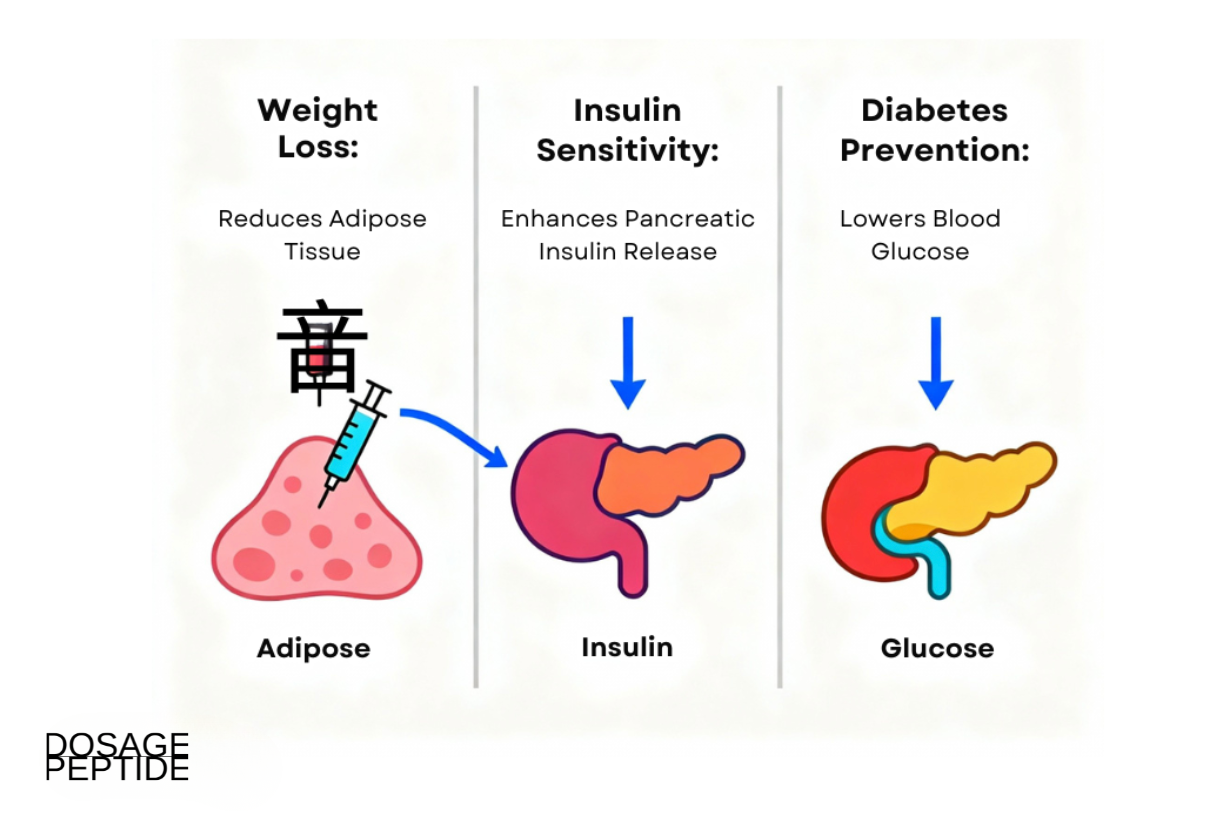
Diabetes affects more than 500 million people[1] worldwide, and the numbers continue to rise with obesity and metabolic challenges fueling the risk. Researchers are urgently seeking preventive therapies, and one promising option is cagrilintide, a novel peptide that may help stop diabetes before it develops. This innovative approach has the potential to transform the way we approach diabetes prevention and long-term health.
Researchers and healthcare professionals continue to explore peptide-based approaches for metabolic health and diabetes prevention. Dosage Peptide provides access to peptide-related information and research-focused resources designed to support scientific learning, ongoing investigation, and evidence-based exploration in the field of metabolic research.
What Makes High-Risk Patients Susceptible to Type 2 Diabetes?
High-risk patients develop type 2 diabetes mainly because of insulin resistance and impaired beta-cell function[2]. These conditions lead to elevated blood glucose, which eventually overwhelms the pancreas’s ability to produce enough insulin to maintain normal levels.
Key Risk Factors Include:
- Obesity: Excess fat, especially around the abdomen, worsens insulin resistance.
- Prediabetes: Elevated fasting glucose or impaired glucose tolerance signals the early development of disease.
- Family History & Genetics: A history of diabetes in family members increases susceptibility to the disease.
These factors underscore the importance of addressing weight gain in prevention efforts. Since obesity plays a central role, lifestyle interventions targeting weight control can significantly delay or prevent progression to type 2 diabetes.
Can Weight Loss from Cagrilintide Lower Diabetes Risk?
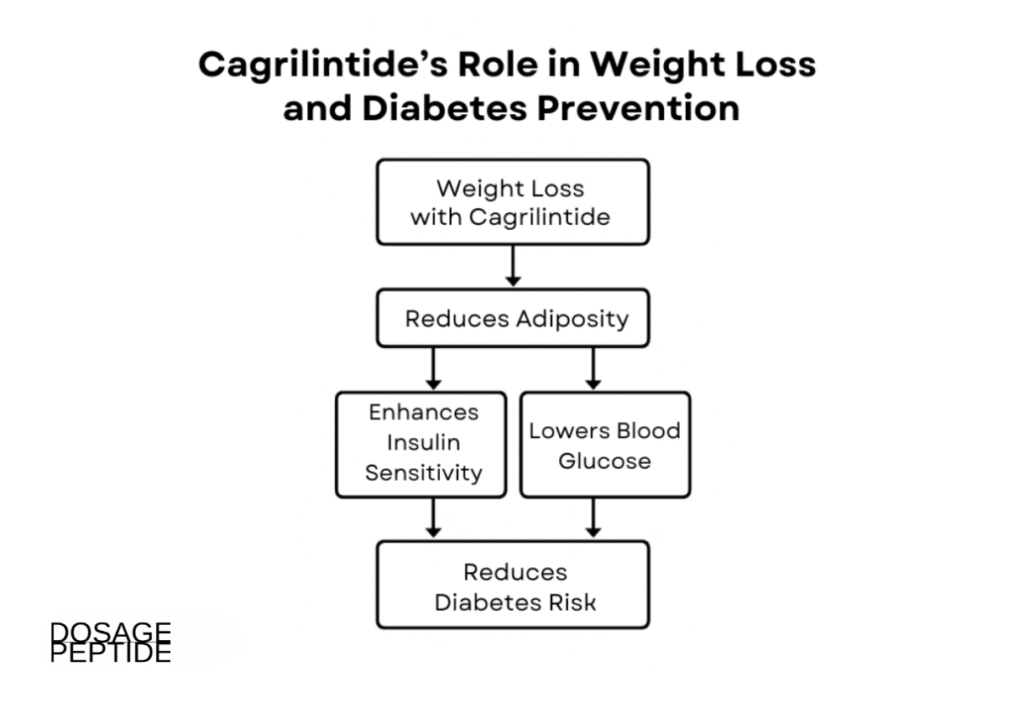
Yes, weight loss achieved with cagrilintide significantly lowers diabetes risk in high-risk individuals. Excess body fat, particularly visceral fat, is a key driver of insulin resistance, a significant factor in type 2 diabetes. By reducing both overall and visceral adiposity, cagrilintide enhances insulin sensitivity, lowers blood glucose, and supports pancreatic beta cells. Clinical studies have shown that even a 5–10% weight loss[3] can significantly reduce the risk of diabetes and improve metabolic health.
Clinical studies demonstrate[4] that cagrilintide alone can induce 15-20% body weight loss, while combined therapy with semaglutide (Cagrisema) achieves over 20%, exceeding many current standards. This level of weight loss is strongly correlated with improved glucose metabolism and a reduced likelihood of diabetes onset. Therefore, cagrilintide’s ability to reduce weight directly contributes to lowering diabetes risk in high-risk patients.
What Do Clinical Trials Reveal About Cagrilintide and Glycemic Control?
Cagrilintide has been shown in clinical trials to improve key glycemic parameters while also promoting significant weight loss. These improvements include lowering fasting plasma glucose and HbA1c levels, along with enhanced insulin sensitivity in both obese individuals and patients with early diabetes.
- Clinical studies report[5] meaningful reductions in fasting glucose and HbA1c after 24 to 68 weeks of treatment.
- Improvements in glucose control often precede maximal weight loss, suggesting direct metabolic effects beyond weight reduction.
- In trials such as REDEFINE 1 and 2[6], cagrilintide combined with semaglutide (CagriSema) resulted in 74% of patients achieving HbA1c levels of ≤6.5%, compared to 15.9% with placebo.
How Does Cagrilintide Compare with Other Diabetes Prevention Strategies?
Cagrilintide stands out as a promising alternative[7] to other diabetes prevention strategies, offering potent weight loss with fewer side effects. Its weekly injection and unique mechanism targeting amylin receptors provide benefits that effectively bridge lifestyle changes and more invasive treatments.
To understand why cagrilintide is gaining attention, it is helpful to compare it with existing methods:
1. Lifestyle Modifications
Lifestyle changes such as diet and exercise remain foundational but often face adherence challenges. While effective, many high-risk patients struggle to maintain long-term weight loss, limiting diabetes prevention success.
2. GLP-1 Receptor Agonists
GLP-1 agonists like semaglutide provide strong glycemic control and weight loss but commonly cause gastrointestinal side effects like nausea and vomiting. Although effective, these side effects can reduce patient compliance.
3. Bariatric Surgery
Surgical interventions yield substantial and sustained weight loss, offering an excellent option for severe obesity and diabetes risk reduction. However, surgery carries risks, high costs, and limited accessibility, making it unsuitable for many patients.
Transform Diabetes Prevention with Cagrilintide Solutions from Dosage Peptide
Diabetes prevention remains a global challenge, with obesity, insulin resistance, and poor treatment adherence driving rising incidence rates. Existing strategies, including lifestyle modifications, pharmacotherapy, and surgical options, often fall short due to limited accessibility, side effects, or inconsistent outcomes. This unmet need emphasizes the importance of reliable, evidence-based peptide therapies.
At Dosage Peptide, we support the growing field of peptide and metabolic research by providing access to research-focused peptide information and scientific resources related to compounds such as cagrilintide. Our goal is to help researchers and healthcare professionals stay informed about evolving evidence, clinical developments, and emerging strategies in diabetes prevention and metabolic health research.
FAQs
What is cagrilintide and how does it work?
Cagrilintide is a long-acting amylin analogue that helps regulate blood sugar, suppress appetite, and promote weight loss. It works by slowing gastric emptying, reducing glucagon release, and supporting better glycemic control, making it a potential option for diabetes prevention in high-risk individuals.
Can cagrilintide really help prevent type 2 diabetes?
Yes, research suggests that cagrilintide lowers diabetes risk by reducing body weight, especially visceral fat that drives insulin resistance. Even modest weight loss (5–10%) significantly reduces risk, and cagrilintide has shown the ability to achieve greater weight reduction in clinical trials.
How does cagrilintide compare to other prevention methods?
Unlike lifestyle changes or GLP-1 receptor agonists, cagrilintide specifically targets the amylin pathway, offering complementary benefits with fewer side effects. It also bridges the gap between lifestyle strategies and invasive options like bariatric surgery, making it a unique and promising approach.
What do clinical trials reveal about cagrilintide’s effectiveness?
Clinical trials show that cagrilintide improves glycemic control and leads to significant weight loss. When combined with semaglutide (CagriSema), results are even more promising, with over 20% body weight reduction and a large proportion of patients achieving normal HbA1c levels. These findings highlight its strong preventive potential.
References:
- Magliano, D. J., Boyko, E. J., & the IDF Diabetes Atlas 10th Edition Scientific Committee. (2021). IDF Diabetes Atlas: Global picture (10th ed.). International Diabetes Federation. Retrieved from https://www.ncbi.nlm.nih.gov/books/NBK581940/
- Halban, P. A., Polonsky, K. S., Bowden, D. W., Hawkins, M. A., Ling, C., Mather, K. J., … Weir, G. C. (2014). beta-cell failure in type 2 diabetes: Postulated mechanisms and prospects for prevention and treatment. Journal of Clinical Endocrinology & Metabolism, 99(6), 1983–1992. Retrieved from https://www.ncbi.nlm.nih.gov/pmc/articles/PMC3608918/
- Schwartz, A. V. (2017). Weight management: From obesity to diabetes [Review]. Diabetes Spectrum, 30(4), 274-278. Retrieved from https://www.ncbi.nlm.nih.gov/pmc/articles/PMC5556579/
- Bavry, A. A. (2023, July 6). Cagrilintide-Semaglutide in type 2 diabetes – CagriSema. American College of Cardiology. Retrieved from https://www.acc.org/Latest-in-Cardiology/Clinical-Trials/2023/07/06/14/40/CargiSema
- Frias, J. P., Sullivan, J. T., Ha, V., Chanoine, J.-P., Koroboki, E., Wolden, M. L., … O’Neil, P. M. (2025). Coadministered cagrilintide and semaglutide in adults with overweight or obesity. New England Journal of Medicine. https://doi.org/10.1056/NEJMoa2502081
- Davies, M. J., Bajaj, H. S., Broholm, C., Eliasen, A., Garvey, W. T., le Roux, C. W., Lingvay, I., Lyndgaard, C. B., Rosenstock, J., Pedersen, S. D., & REDEFINE 2 Study Group. (2025). Cagrilintide-Semaglutide in Adults with Overweight or Obesity and Type 2 Diabetes. New England Journal of Medicine, 393(7), 648-659. https://doi.org/10.1056/NEJMoa2502082
- Dutta, D., Nagendra, L., Harish, B. G., Sharma, M., Joshi, A., Hathur, B., & Kamrul-Hasan, A. B. M. (2024). Efficacy and safety of cagrilintide alone and in combination with semaglutide (Cagrisema) as anti-obesity medications: A systematic review and meta-analysis. Indian Journal of Endocrinology and Metabolism, 28(5), 436–444.