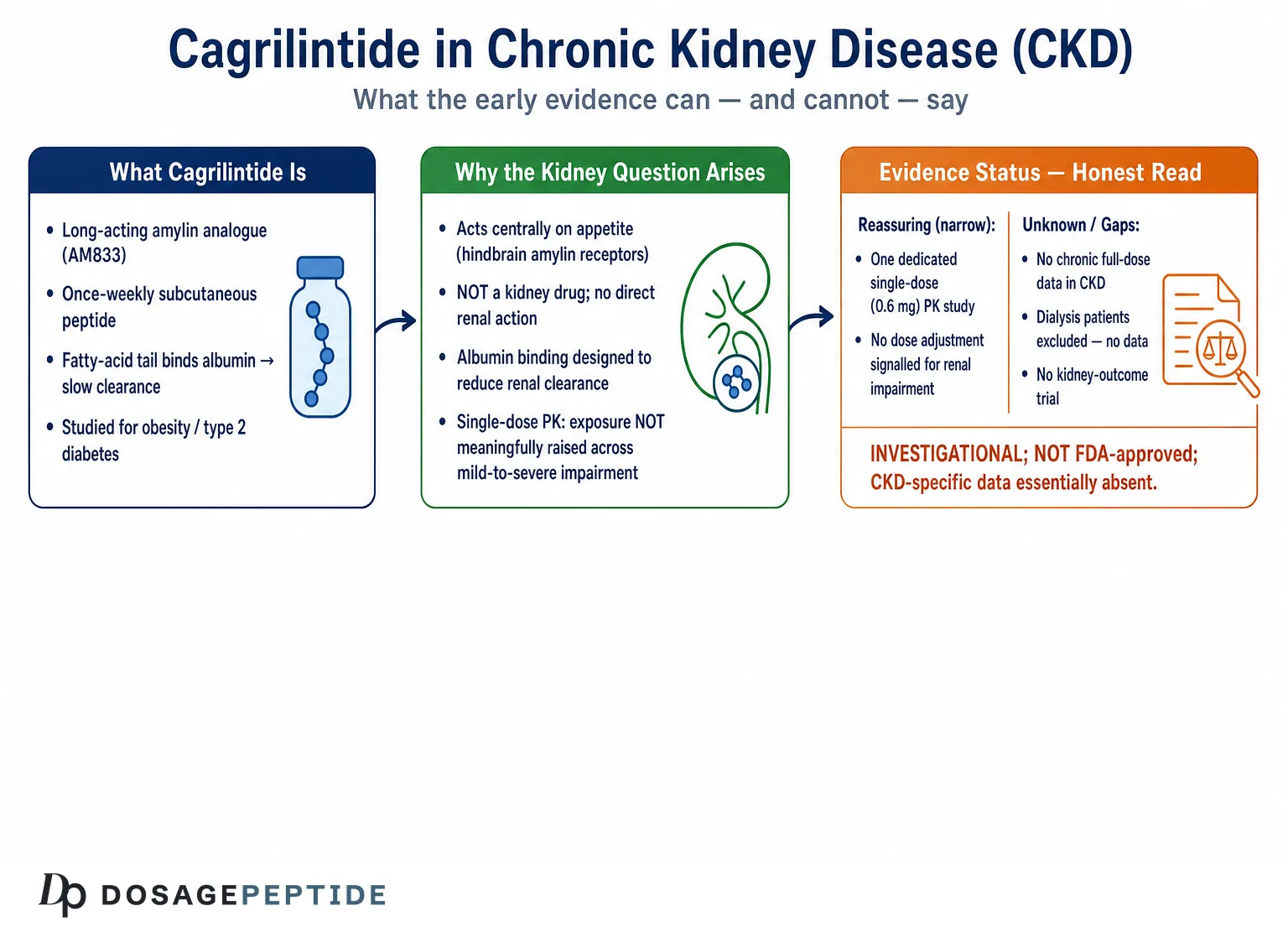
No trial has tested cagrilintide in people with chronic kidney disease, so there is no established safety profile to report. Cagrilintide is an investigational, long-acting amylin analogue developed by Novo Nordisk. It is not approved anywhere in the world as a stand-alone product, and its combination with semaglutide (CagriSema) has only recently been filed for regulatory review. What does exist is a small body of pharmacology — including renal-impairment pharmacokinetic work — plus what is known about how amylin analogues behave. This article sets out precisely what that allows anyone to say, and where the gap begins.1
The gap matters. CKD affects roughly one in seven adults and is strongly linked to obesity and type 2 diabetes, the very conditions cagrilintide is being studied to address. It would be clinically useful to know whether an amylin analogue behaves differently when the kidneys are impaired, because reduced glomerular filtration changes how many peptides and small molecules are cleared, and because people with CKD often tolerate drugs differently from people with normal renal function. Encouragingly, one dedicated pharmacokinetic study has looked directly at cagrilintide across a range of renal function.2 Discouragingly, that study was small, used a single low dose, excluded dialysis patients, and measured drug exposure and short-term tolerability rather than long-term clinical safety or kidney outcomes. It is a useful data point, not a green light.
What Cagrilintide Is and Where It Came From
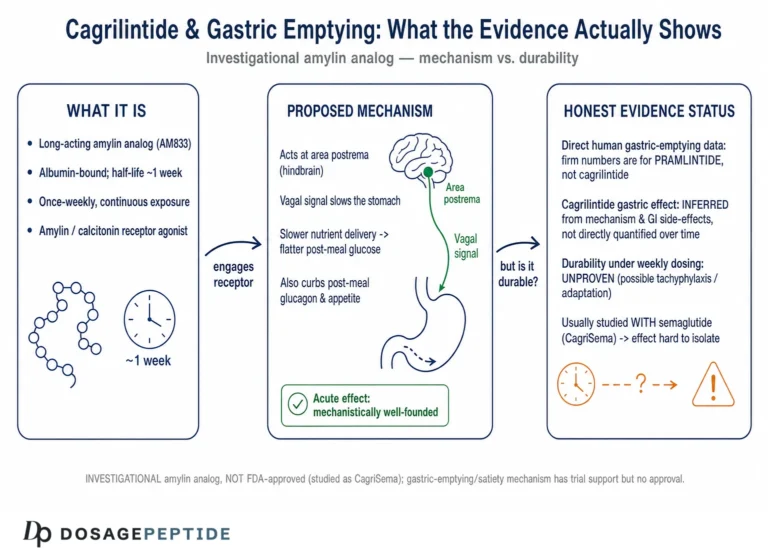
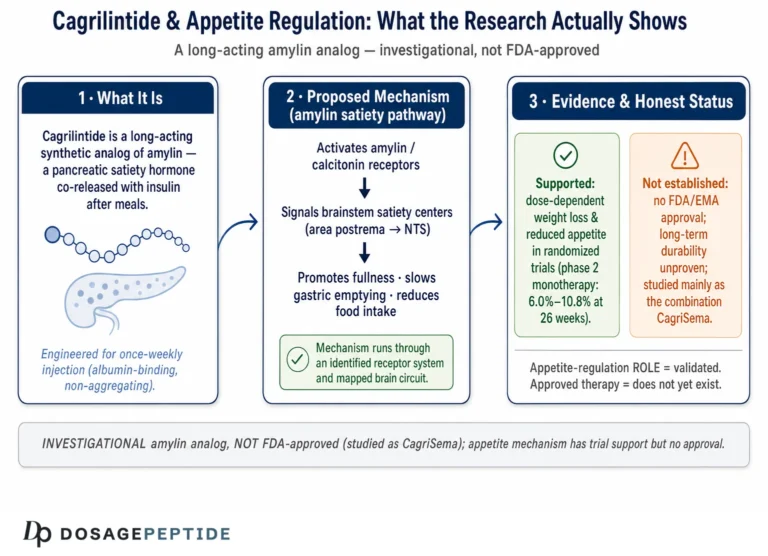
Cagrilintide, also known by the development codes AM833 and NNC0174-0833, is a synthetic peptide engineered to mimic and prolong the action of human amylin. Human amylin — also called islet amyloid polypeptide (IAPP) — is a 37-amino-acid hormone co-secreted with insulin by the pancreatic beta cells after a meal. It contributes to the sense of fullness, slows the rate at which the stomach empties, and suppresses inappropriate glucagon release. Native amylin has two properties that make it impractical as a drug: it has a very short half-life (on the order of minutes), and in aqueous solution it is prone to aggregation into insoluble amyloid fibrils. Any therapeutic amylin mimetic has to solve both problems.3
The medicinal-chemistry work behind cagrilintide was published in the Journal of Medicinal Chemistry in 2021 by a Novo Nordisk group. Their strategy borrowed the stabilised backbone logic used in pramlintide (the only amylin analogue approved for human use, of which more later) and added a fatty-acid acylation to extend the molecule’s residence time in the body. The result is a 37-residue peptide with structural homology to human amylin, carrying a C18 fatty diacid chain attached through a linker at a lysine position.3 That lipid tail binds reversibly and non-covalently to serum albumin, which acts as a circulating reservoir, shields the peptide from rapid degradation, and slows its clearance. The practical consequence is a half-life measured in days rather than minutes, enabling once-weekly subcutaneous dosing.3
Novo Nordisk selected cagrilintide for clinical development with obesity as the lead indication. Early-phase studies showed that it produced meaningful weight loss on its own, and — more strikingly — that combining it with the GLP-1 receptor agonist semaglutide produced additive effects. That combination, CagriSema, became the flagship program, culminating in the large Phase 3 REDEFINE trials.4,5 Throughout this development history, the compound has been studied in adults with overweight, obesity, and type 2 diabetes. It has not been developed, and is not marketed, as a kidney drug. Any discussion of “cagrilintide in CKD” is therefore a discussion about a comorbid population that happens to overlap heavily with the target population, rather than about a therapy indicated for kidney disease.
The obesity-first development path also explains why the renal evidence base looks the way it does. When a sponsor develops a metabolic drug, regulators expect a package of clinical-pharmacology studies characterising how the compound behaves in special populations — reduced kidney function, reduced liver function, older age, and so on — because those groups are common among the people who will eventually take the drug. These studies are designed to answer disposition questions (does the drug build up? does it need a different dose?) rather than to prove clinical benefit in that subgroup. That is precisely the category the cagrilintide renal study falls into: a supporting pharmacokinetic study, not a therapeutic trial in kidney patients.2 Recognising this framing early prevents a common misreading, in which a reassuring “no dose adjustment needed” headline is mistaken for evidence that the drug is proven safe and beneficial in CKD.
It is worth being precise about naming, because the research-chemical and grey markets frequently blur it. “Cagrilintide” refers specifically to this acylated amylin analogue. It is distinct from pramlintide (a short-acting amylin analogue), from semaglutide and tirzepatide (incretin-based agents), and from native amylin itself. Vendors sometimes sell cagrilintide as a lyophilised powder, alone or blended with semaglutide, described as a “research compound.” Material sold that way is not a pharmaceutical product, carries no guarantee of identity, purity, sterility, or correct mass, and has not been through the quality controls that underpin any of the published clinical data. That gap between “the molecule studied in REDEFINE” and “the powder in an unlabelled vial” is one of the most important safety considerations in this entire topic, and it applies with extra force to a population as vulnerable as people with CKD.
Molecular Mechanism: How an Amylin Analogue Signals
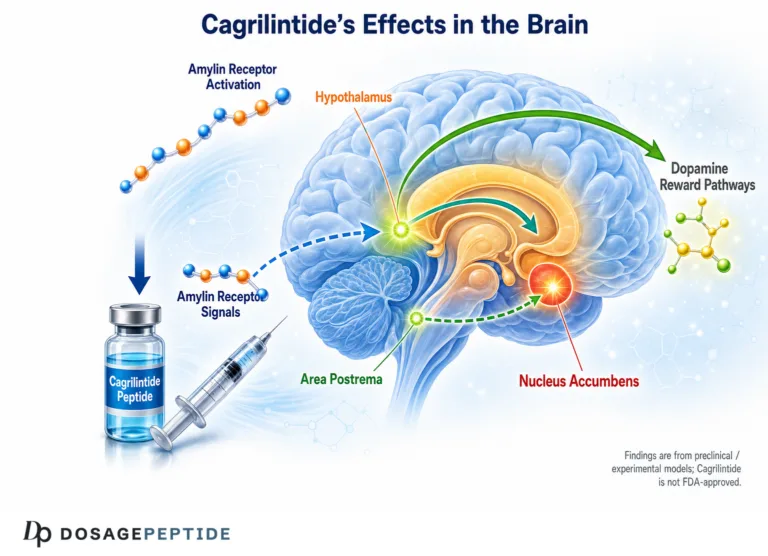
To reason about renal safety at all, it helps to understand what cagrilintide does mechanistically, because mechanism shapes both where a drug acts and how the body disposes of it. Amylin signalling runs through a family of receptors assembled from the calcitonin receptor (CTR) combined with one of three receptor activity-modifying proteins (RAMPs). The three resulting complexes are designated AMY1R, AMY2R, and AMY3R. Cagrilintide is an agonist at these amylin receptors and also interacts with the calcitonin receptor itself.3,10
The receptors most relevant to appetite are concentrated in the hindbrain — particularly the area postrema and the nucleus of the solitary tract — and in the hypothalamus. These are regions involved in sensing satiety and nausea and in integrating signals about energy balance. By activating them, cagrilintide is thought to promote a sense of fullness, reduce food intake, and slow gastric emptying. Because it engages both homeostatic (“I need energy”) and hedonic (“that looks appetising”) pathways, its appetite effect is somewhat different in flavour from that of GLP-1 agonists, which is part of the rationale for combining the two mechanisms.4
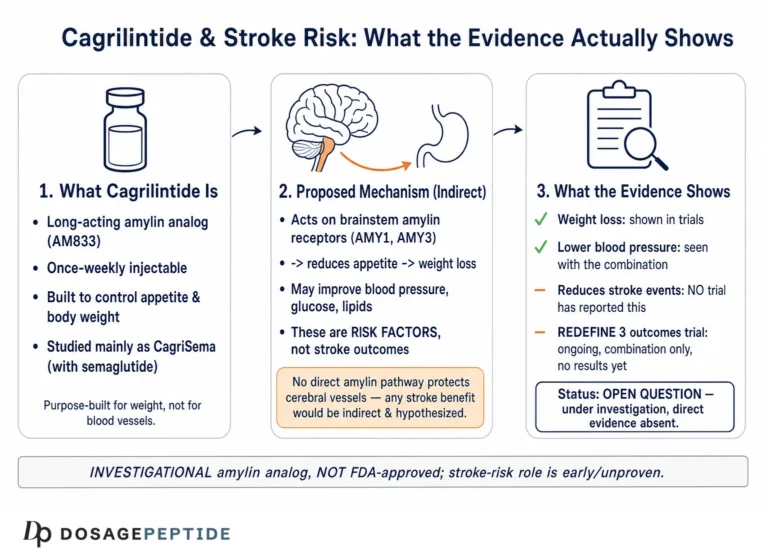
A crucial point for a CKD discussion is that cagrilintide’s mechanism is central and metabolic, not primarily renal. It is not designed to act on the kidney, to alter glomerular filtration, or to change tubular handling of sodium in the direct way that, say, an SGLT2 inhibitor does. Whatever renal relevance it has flows from two indirect channels. First, disposition: how does an albumin-bound, acylated peptide get cleared, and does impaired kidney function change its blood levels? Second, downstream physiology: does the weight loss, blood-pressure change, and glycaemic improvement that cagrilintide can produce translate into any benefit or harm for the kidney over time? The published clinical program was built to answer questions about weight and glucose, not about the kidney, so the second channel is essentially unstudied for cagrilintide specifically.4,5
The albumin-binding design has one more mechanistic implication worth flagging. Because the fatty-acid tail parks the peptide on albumin, cagrilintide’s free (unbound) concentration — the fraction able to reach receptors — is buffered by the amount of circulating albumin. Advanced CKD and nephrotic-range proteinuria can lower serum albumin substantially. In principle, hypoalbuminaemia could shift the bound-to-free ratio of an albumin-binding drug, which is a reasonable thing to worry about on paper. Whether it matters in practice for cagrilintide has not been directly established; the dedicated renal study enrolled patients categorised by filtration rate, not by albumin level, and did not report outcomes stratified by albumin.2 This is a good example of how a mechanism can generate a specific, testable safety hypothesis that the existing data simply have not yet addressed.
Another mechanistic nuance concerns the pace at which the drug acts on the gut. Amylin agonists slow gastric emptying, which is part of how they curb appetite, but delayed gastric emptying is also the proximate cause of the nausea and early satiety that patients report. In a person whose baseline gastric motility is already sluggish — as it often is in advanced CKD and uraemia — adding a drug that further slows emptying could, in principle, amplify these effects. The single-dose renal study did not detect a step-up in adverse events with worsening kidney function, but a single low dose is a weak probe of a phenomenon that typically emerges with repeated full-dose exposure.2,6 Mechanistically, then, the gut is a second plausible site — alongside albumin binding and clearance — where CKD physiology and cagrilintide pharmacology could interact, and it is one the current data barely touch.
Finally, amylin agonism carries a class-level pharmacological caveat: activation of the calcitonin/amylin receptor family, and the amyloidogenic tendency of the amylin peptide family, are areas that regulators scrutinise. Native human amylin is the peptide that forms islet amyloid in type 2 diabetes. Cagrilintide’s backbone was engineered to resist aggregation, and no clinical amylin-deposition signal has been described in the trial reports, but this is the kind of mechanistic flag that keeps long-term surveillance appropriate rather than optional.
Why the Kidney Matters: CKD Physiology and Amylin Biology
Chronic kidney disease is not a single condition but a spectrum, conventionally staged by estimated glomerular filtration rate (eGFR) and by the degree of albuminuria. It ranges from mild reduction in filtration (stage G2, eGFR 60–89 mL/min/1.73 m²) through moderate stages (G3a and G3b) to severe reduction (G4, eGFR 15–29) and kidney failure (G5, eGFR below 15, including dialysis-dependent patients). Each step down this ladder changes drug handling, fluid and electrolyte balance, gastrointestinal physiology, and the margin for error when something goes wrong.6
Several features of CKD make it a legitimate area of concern for any new injectable metabolic drug. Reduced filtration can raise the blood levels of renally cleared compounds, increasing exposure and the risk of dose-related side effects. Uraemia and CKD independently slow gastric emptying and predispose to nausea — a problem for a drug class whose most common adverse effects are gastrointestinal. Volume status is fragile; a drug that reduces appetite and food and fluid intake can, in a susceptible person, contribute to dehydration, and dehydration is itself a cause of acute kidney injury superimposed on chronic disease. And people with CKD are often older, frailer, and taking many other medications, widening the surface for interactions and cumulative harm.6
Where does amylin biology fit into this? Native amylin is partly cleared by the kidney, and the only approved amylin analogue, pramlintide, is metabolised primarily through proteolytic degradation in the kidney.7 That fact alone makes the kidney a plausible player in amylin-analogue pharmacokinetics and justifies studying it. Cagrilintide, however, was deliberately engineered to lean on albumin binding, and one stated advantage of fatty-acid acylation is precisely that it can protect a peptide from renal clearance by keeping it bound to a large carrier protein that is not freely filtered.3 So there is a genuine mechanistic tension: the parent hormone and the short-acting analogue are kidney-dependent for elimination, but the long-acting engineered version was designed to route around that dependence. Which behaviour dominates in a real patient with impaired kidneys is an empirical question, and it is the exact question the dedicated pharmacokinetic study set out to test.2
There is also a forward-looking reason the kidney matters for this drug class. Obesity and type 2 diabetes are leading drivers of CKD, and metabolic therapies that reduce weight, blood pressure, and hyperglycaemia have — for at least one related class — turned out to be protective for the kidney. The FLOW trial demonstrated that semaglutide reduced major kidney events in people with type 2 diabetes and CKD.8 That result raises an obvious hypothesis about whether amylin-based or amylin-plus-GLP-1 therapy might also benefit the kidney. But a hypothesis is not a finding. No completed outcome trial has tested cagrilintide, alone or as CagriSema, for kidney endpoints. Reading semaglutide’s renal benefit across to cagrilintide would be an unjustified leap, and doing so in the direction of reassurance about safety would be doubly unjustified.
The Key Evidence: What the Renal-Impairment Study Actually Showed
The single most directly relevant piece of primary evidence for this topic is a clinical pharmacology study reported by Nielsen and colleagues in Clinical Pharmacokinetics, which examined whether renal (or hepatic) impairment alters the pharmacokinetics, safety, and tolerability of subcutaneous cagrilintide.2 Because so much hinges on the details, it is worth laying them out precisely rather than in summary.
The renal arm was an open-label, parallel-group study that enrolled 33 participants. They were stratified into four groups by kidney function: normal (eGFR at or above 90 mL/min), mild impairment (60 to below 90), moderate impairment (30 to below 60), and severe impairment (below 30, not requiring dialysis). Each participant received a single subcutaneous dose of cagrilintide 0.6 mg, and blood levels were followed over time to characterise exposure.2
The headline pharmacokinetic result was that renal impairment did not produce clinically relevant changes in cagrilintide exposure. The estimated ratios of total exposure (AUC) relative to the normal-function group were modest across all impairment categories, and peak concentrations were broadly similar between groups. The terminal half-life was on the order of roughly one week — consistent with the drug’s once-weekly design — with only a slight tendency toward a longer half-life at the most severe end of impairment.2 The following table reproduces the reported exposure pattern.
| Renal function group | eGFR (mL/min) | n | Approx. AUC ratio vs normal |
|---|---|---|---|
| Normal | ≥90 | 14 | 1.00 (reference) |
| Mild impairment | 60 to <90 | 7 | ~1.23 |
| Moderate impairment | 30 to <60 | 7 | ~1.18 |
| Severe impairment | <30 (no dialysis) | 5 | ~1.21 |
On the safety side over the short observation window, the investigators recorded treatment-emergent adverse events in a subset of participants. The most frequent were injection-site erythema, nausea, vomiting, and decreased appetite — precisely the profile one would predict from an amylin analogue. All events were characterised as mild to moderate, none were serious, and importantly there was no signal that adverse events increased with worsening renal function.2 The authors’ stated conclusion was that no specific dose adjustment for cagrilintide is required in people with renal impairment.2
Taken at face value, this is genuinely reassuring on the narrow question it asked: a single low dose of cagrilintide did not accumulate dangerously as kidney function fell across the mild-to-severe range, and it was tolerated similarly regardless of renal group. That is exactly the kind of finding the albumin-binding design predicted, and it is meaningfully more than we have for many research peptides, for which no dedicated renal data exist at all.3
But the boundaries of the study need to be stated just as plainly, because they are the whole reason the title’s question stays open. The dose studied was 0.6 mg — well below the 2.4 mg maintenance dose used in the Phase 3 obesity trials — so the data describe exposure after a small single administration, not steady-state exposure after months of full-dose weekly injections. The severe-impairment group contained only five people. Dialysis-dependent patients (stage G5D) were excluded entirely, so the sickest kidney population has no pharmacokinetic data at all. The study measured drug levels and short-term tolerability, not clinical outcomes, and it followed participants for a single dosing episode rather than the long horizon over which CKD safety questions actually play out. It was, in short, a well-designed clinical-pharmacology study answering a disposition question — and it should not be over-read as a verdict on the real-world safety of chronic full-dose therapy in CKD.2
Comparisons: Cagrilintide Versus Related Compounds in the CKD Setting
Cagrilintide does not exist in a vacuum. Placing it beside compounds with longer track records helps calibrate both what to expect and what remains unknown. Three comparators are especially informative: pramlintide (the same drug class), semaglutide (its partner in CagriSema), and the broader anti-obesity pharmacotherapy landscape in CKD.
Pramlintide is the only amylin analogue approved for human use. It is short-acting, injected before meals, and — critically for this discussion — is cleared primarily through renal proteolytic metabolism, with an active metabolite of similar potency.7 Despite that renal dependence, the pramlintide label reports that no dosage adjustment is required for mild, moderate, or severe renal impairment, because exposure did not rise in those groups; however, it has not been studied in dialysis patients, and its use in dialysis is not advised.7 This is a strikingly close parallel to what the cagrilintide renal study found: exposure not meaningfully increased across mild-to-severe impairment, and dialysis untested. The consistency between a short-acting, renally cleared amylin analogue and a long-acting, albumin-bound one is reassuring at the level of “the amylin class does not appear to accumulate dangerously as filtration falls,” but both share the same hard stop at end-stage disease.
Semaglutide is the more provocative comparator because of the FLOW trial, which showed that semaglutide reduced the risk of major kidney events by roughly a quarter in people with type 2 diabetes and CKD, slowed the annual decline in eGFR, and reduced cardiovascular and all-cause death — with benefit extending down to an eGFR of about 25 mL/min.8 That is a landmark result for a GLP-1 receptor agonist. It is tempting to assume the amylin arm of CagriSema shares in that protection, but there is no evidence for it. FLOW tested semaglutide, not cagrilintide and not CagriSema. The REDEFINE trials that established CagriSema’s efficacy were weight and glycaemia trials, not kidney-outcome trials, and their primary publications do not report dedicated renal-event endpoints in a CKD cohort.4,5 So the fair comparison is: semaglutide has proven renal benefit in CKD; cagrilintide has proven short-term pharmacokinetic neutrality across renal function but no outcome data of any kind in the kidney.
The wider context is captured by reviews of anti-obesity pharmacotherapy in CKD, which emphasise that people with kidney disease have historically been under-represented in obesity drug trials and that clinicians must weigh gastrointestinal tolerability, volume status, and the risk of over-rapid weight loss carefully in this group.6 The table below summarises the comparison at a glance.
| Attribute | Cagrilintide | Pramlintide | Semaglutide |
|---|---|---|---|
| Class | Long-acting amylin analogue | Short-acting amylin analogue | GLP-1 receptor agonist |
| Approval status | Investigational | Approved (adjunct in diabetes) | Approved (diabetes, obesity) |
| Dedicated renal PK study | Yes (single 0.6 mg dose) | Yes (label) | Yes (label + FLOW) |
| Dialysis data | None (excluded) | None; use not advised | Limited |
| Proven kidney-outcome benefit in CKD | None | None | Yes (FLOW) |
There is one further comparative angle worth naming. Tirzepatide and other dual- or triple-agonist metabolic drugs are also being examined in kidney-relevant populations, and the field as a whole is moving toward asking not just “does this drug cause weight loss?” but “does it change hard cardiovascular and renal outcomes?” Cagrilintide has not yet been carried into that second class of question. Its evidence sits at the stage semaglutide occupied years before FLOW: efficacy on metabolic surrogates established, disposition in special populations characterised, but outcome data in kidney disease still to come. Whether cagrilintide or CagriSema will eventually generate a FLOW-style renal-outcome dataset is unknown, and until such a trial reports, the comparison must stay honest about the asymmetry.4,5,8
The comparison yields a disciplined takeaway. Within its class, cagrilintide’s renal-disposition behaviour looks unremarkable and broadly in line with pramlintide’s. Against semaglutide, it lags badly on the only metric that ultimately settles a CKD safety-and-benefit question: hard outcome data. That is not a criticism of the molecule so much as a statement about how early the evidence base is.
Research Models and Methodology Behind the Renal Data
Understanding how the renal evidence was generated is essential to interpreting it responsibly, and it also illustrates the methodological standards that separate a clinical fact from a marketing claim. The cagrilintide renal data come from a dedicated single-dose clinical pharmacology study in humans, not from cell culture, not from rodents, and not from anecdote. That design — an open-label, parallel-group study that recruits participants pre-stratified by organ function and compares drug exposure between groups — is the standard regulatory approach for characterising how impairment affects a drug’s pharmacokinetics.2
The core methodological choices deserve unpacking. Enrolling participants into discrete renal-function bins (normal, mild, moderate, severe) allows the analysis to model exposure as a function of eGFR and to detect whether AUC or peak concentration climbs as filtration falls. Using a single low dose (0.6 mg) is deliberate: it isolates the disposition question while minimising the risk to participants who, by definition, have compromised organ function. Following the full concentration–time curve out over many days is necessary because the drug’s half-life is measured in days. And capturing treatment-emergent adverse events across the groups provides a first-pass tolerability read, even though the study is far too small and short to be a safety trial in the outcome sense.2
The broader cagrilintide research program supplies the surrounding methodology. Structure–activity work in the Journal of Medicinal Chemistry characterised receptor binding and the albumin-binding pharmacokinetic behaviour that the renal study later probed in patients.3 A dose-finding phase 2 trial established dose ranges and titration schedules, and later studies characterised the safety of co-administration with semaglutide.10 The Phase 3 REDEFINE trials then tested efficacy and safety at scale in obesity and type 2 diabetes.4,5 Dedicated organ-impairment studies — such as the renal and hepatic pharmacokinetic work — sit alongside cardiac-safety studies, including a dedicated thorough-QT evaluation that found no clinically relevant QTc prolongation,11 as part of the standard package a sponsor assembles to support a regulatory filing. The existence of registered trials examining reduced liver function, heart rhythm, and combination dosing reflects this systematic approach.1
What this methodology does not include, for the CKD question specifically, is instructive. There is no completed randomised controlled trial powered for kidney outcomes in a CKD population. There is no steady-state, full-dose exposure study in advanced CKD. There is no study in dialysis. And there is no long-term pharmacovigilance dataset, because the drug is not approved and therefore has no post-marketing surveillance history. Each of these absences is a specific, nameable gap rather than a vague uncertainty, which is actually a healthy way to think about an early compound: we can enumerate exactly what has and has not been tested.2,4
For readers interested in the mechanics of how cagrilintide is prepared and dosed in research settings, our protocol pages walk through the cagrilintide 5 mg vial dosage protocol and the cagrilintide 10 mg vial dosage protocol, which describe the escalating-titration schedules studied in the trials. Those pages are descriptive references, not endorsements of use, and they carry no special validity for a CKD context, where none of the schedules has been formally evaluated.
Safety and Tolerability Signals Relevant to CKD
Even without CKD-specific outcome data, we can reason carefully about which of cagrilintide’s known tolerability signals would be most consequential in a person with kidney disease. The most consistent adverse effects across the cagrilintide program are gastrointestinal: nausea, vomiting, and decreased appetite, alongside injection-site reactions.2,4 In the general obesity population, one selling point of cagrilintide monotherapy was a comparatively lower rate of nausea and vomiting than some other agents. But “comparatively lower in healthy-kidney populations” does not automatically translate to “low risk in CKD.”
Consider the chain of physiology. People with advanced CKD are already predisposed to nausea and delayed gastric emptying from uraemia. Layering an appetite-suppressing, gastric-slowing drug on top can, in a subset, meaningfully reduce food and — importantly — fluid intake. Reduced fluid intake plus any vomiting can tip a person toward volume depletion, and volume depletion is a classic precipitant of acute kidney injury (AKI) superimposed on chronic disease. This “sick-day” vulnerability is well described for GLP-1 agonists and, by mechanistic analogy, is a reasonable concern for potent amylin agonists too. It is not established as a cagrilintide-specific hazard — the renal pharmacokinetic study saw only mild-to-moderate, non-serious events after a single low dose — but it is exactly the kind of risk that a single-dose study is not built to detect and that would only surface in longer, larger, full-dose use.2,6
Rate of weight loss is a second consideration. Very rapid weight loss can shift fluid balance, alter the volume of distribution of other drugs, and in some patients change the dosing requirements of medications that are common in CKD (antihypertensives, diuretics, glucose-lowering agents). CagriSema produced very large weight reductions in trials — a mean of about 20.4% in REDEFINE 1 over 68 weeks under the primary treatment-policy estimand (which counts outcomes regardless of whether participants stayed on treatment), or about 22.7% under the trial-product estimand that assumes full adherence, with a substantial fraction of participants losing more than 20% of body weight.4 Weight change of that magnitude is generally desirable metabolically, but in a frail CKD patient it needs monitoring rather than assumption, and the trials that produced those numbers were not enriched for advanced kidney disease.
Class-level and program-level flags round out the picture. Amylin receptor agonism touches the calcitonin receptor family, and the amylin peptide family is inherently amyloidogenic — reasons regulators require careful long-term monitoring even though no clinical deposition signal has been reported for the engineered, aggregation-resistant cagrilintide backbone.3 A dedicated thorough-QT study found that cagrilintide, escalated to 4.5 mg, was not associated with clinically relevant QTc prolongation, reflecting standard scrutiny of heart-rate and rhythm effects for appetite-active drugs.11 And, as with the entire GLP-1/amylin metabolic field, questions such as gallbladder events and pancreatitis are monitored across trials.
The single most important safety consideration for a lay reader, however, is not pharmacological at all. It is that cagrilintide is investigational and that any material obtained outside a clinical trial — including “research-only” powders sold alone or blended with semaglutide — is of unverified identity, purity, and sterility. In a person with CKD, who has a reduced margin for error, an impurity, an endotoxin contaminant, or a mislabelled dose is a compounding hazard on top of the drug’s own pharmacology. No amount of favourable single-dose pharmacokinetic data offsets the risk introduced by an unregulated supply chain. Anyone weighing questions like these should do so only with a qualified clinician and only in the context of properly regulated care.
Handling and Reconstitution in a Research Context
Because cagrilintide is frequently distributed as a lyophilised (freeze-dried) powder in the research-chemical market, the mechanics of handling and reconstitution come up often. This section is included for completeness and physical-safety awareness; it is explicitly not a use recommendation, and it carries added caveats in any CKD-adjacent context, where the appropriate answer is that no validated procedure exists outside a clinical trial.
In the clinical trials, cagrilintide is a manufactured, sterile, quality-controlled injectable delivered subcutaneously once weekly, with dosing titrated upward over weeks to reduce gastrointestinal side effects. Reported titration reflects a gradual escalation from low starting doses toward maintenance doses in the low-milligram range, with the exact schedule differing between monotherapy and combination programs.4,10 Those schedules were designed and monitored under trial conditions; they are not self-administration instructions.
Reconstitution of a lyophilised research powder generically involves adding a sterile diluent (commonly bacteriostatic water) to the vial, directing the stream against the glass wall rather than onto the powder, and allowing the solid to dissolve without vigorous shaking, since peptides can be sensitive to mechanical stress and foaming. Reconstituted peptide solutions are generally kept refrigerated and protected from light, and the acylated, albumin-binding structure of cagrilintide does not change the basic principle that a dissolved peptide is less stable than its dry form. Our general peptide dosages reference and the compound-specific protocol pages describe these steps in more detail for those studying the material.
Several handling realities deserve emphasis specifically because they intersect with the CKD safety question. First, reconstitution outside a pharmacy does not create a sterile pharmaceutical; it produces an unvalidated solution whose concentration depends entirely on the accuracy of the stated vial mass, which for research-market material is not guaranteed. Second, blends — such as a combined cagrilintide-and-semaglutide vial — introduce two active peptides at fixed ratios that may not match any studied combination, complicating any attempt to reason about exposure. Our page on the cagrilintide + semaglutide 10 mg blend discusses those ratio considerations. Third, the albumin-binding pharmacokinetics that make cagrilintide forgiving of renal impairment in the single-dose study are properties of the correctly manufactured molecule; a degraded or impure preparation offers no such guarantees.
For a person with CKD, the takeaway is stark. The very population that is most vulnerable to dosing errors, contamination, and fluid shifts is the population for whom no validated handling or dosing procedure exists outside a trial, and for whom the reassuring pharmacokinetic data apply only to a single low dose of pharmaceutical-grade drug. The gap between “handled properly in a Phase 1 unit” and “reconstituted at home from an unlabelled vial” is precisely where avoidable harm lives. Those interested in the broader landscape of multi-compound approaches can review our overview of peptide stacks, again as educational reference material rather than protocol guidance.
Limitations and the Human-Evidence Gap in CKD
It is worth consolidating, in one place, exactly what we do not know — because the honest answer to “how safe is cagrilintide in CKD?” is largely a catalogue of gaps. The temptation with a favourable pharmacokinetic result is to let it stand in for a safety conclusion. It cannot.
Dose and duration gap. The dedicated renal study used a single 0.6 mg dose.2 The therapeutic maintenance dose in obesity trials is 2.4 mg, given weekly for many months.4 Single-dose exposure neutrality across renal groups does not guarantee that steady-state, full-dose exposure behaves identically, nor that tolerability holds up over a year of dosing in people with impaired kidneys. Accumulation questions and cumulative tolerability questions remain open.
Population gap. The severe-impairment group in the renal study contained five participants, and dialysis-dependent patients were excluded entirely.2 The sickest CKD populations therefore have essentially no cagrilintide data. The large Phase 3 trials were run in obesity and diabetes populations that were not enriched for advanced kidney disease, so their reassuring aggregate safety numbers cannot be assumed to describe a CKD subgroup.4,5
Outcome gap. Every scrap of renal data for cagrilintide is about drug exposure and short-term tolerability. There is no trial of kidney outcomes — no eGFR-slope endpoint, no kidney-failure endpoint, no cardiovascular-death-in-CKD endpoint. Contrast this with semaglutide, where the FLOW trial provides exactly that kind of hard outcome evidence.8 Cagrilintide’s outcome file in CKD is empty, and it would be wrong to fill it by analogy to a different drug class.
Interaction and comorbidity gap. People with CKD take many medications and often have cardiovascular disease, autonomic dysfunction, and gastrointestinal fragility. The interaction of an appetite-suppressing, gastric-slowing amylin agonist with diuretics, RAAS blockers, and glucose-lowering drugs in this setting has not been characterised for cagrilintide. Nor has the theoretical concern about hypoalbuminaemia shifting the free fraction of an albumin-binding drug been directly tested.2,6
Approval and surveillance gap. Because cagrilintide is not approved, there is no post-marketing pharmacovigilance dataset — the large, messy, real-world signal-detection system that catches rare harms after a drug reaches millions of patients. For CKD, where rare events in a vulnerable group matter enormously, the absence of this layer is significant.
The intellectually honest position is therefore twofold. On one hand, the available pharmacology is modestly reassuring: an amylin analogue engineered to bind albumin did not accumulate dangerously across a mild-to-severe renal range in a single-dose study, consistent with what is known about the amylin class.2,3,7 On the other hand, this reassurance is narrow, early, and about disposition rather than clinical safety, and it says nothing about full-dose chronic use, dialysis, or kidney outcomes. “How safe is cagrilintide in CKD?” is, in 2026, still an open research question — one with a promising first data point and a long list of unanswered ones.
Regulatory Status
Cagrilintide’s regulatory position is central to interpreting everything above, and it is frequently misrepresented by vendors. As of this writing, cagrilintide is an investigational compound and is not approved as a stand-alone medicine by the U.S. Food and Drug Administration (FDA), the European Medicines Agency (EMA), or any comparable regulator. It has no approved indication for weight management, diabetes, kidney disease, or anything else on its own.1
The most advanced regulatory activity concerns the combination product, CagriSema (cagrilintide plus semaglutide). Following the Phase 3 REDEFINE program, Novo Nordisk announced that it had filed CagriSema with the FDA for weight management — described as the first once-weekly combination of a GLP-1 and an amylin analogue for that indication.9 A regulatory filing is a request for review, not an approval; the FDA had not, at the time of writing, approved CagriSema, and a submission can result in approval, a request for more data, or rejection. Even if CagriSema is approved for weight management in the general population, that would not by itself constitute approval of cagrilintide for use in CKD, which would require its own evidence and labelling.
It is also important to distinguish the combination from the monotherapy. Cagrilintide alone showed meaningful efficacy in trials, but the commercial and regulatory momentum has coalesced around CagriSema. So the realistic near-term regulatory scenario is that a semaglutide-containing combination product reaches market first, with stand-alone cagrilintide remaining investigational. In neither case does a CKD indication currently exist or appear imminent, because the outcome trials that would support one have not been run.4,5
For the research community, the practical implications are concrete. Material sold as “cagrilintide for research use only” is not an approved drug and is not subject to the manufacturing, purity, and labelling controls that govern pharmaceuticals. It is not legal to market it for human consumption, and buying, reconstituting, and self-administering such material — particularly in a person with a chronic disease like CKD — sits entirely outside the evidence base and the regulatory framework that would make a safety judgement possible. The correct venue for any human exposure to cagrilintide is a registered, ethics-approved clinical trial, several of which have examined organ impairment, cardiac safety, and combination dosing.1,2,11
The bottom line on status is that we are discussing a drug at the threshold of approval for a general metabolic indication, with a favourable but narrow renal pharmacokinetic dataset, and with no regulatory recognition whatsoever of a CKD use. That is the appropriate frame for the entire topic.
Frequently Asked Questions
Is cagrilintide approved to treat patients with chronic kidney disease?
No. Cagrilintide is investigational and is not approved by the FDA, EMA, or any regulator as a stand-alone medicine for any condition, including CKD.1 Its combination with semaglutide (CagriSema) has been filed for regulatory review for weight management in the general population, but a filing is not an approval, and no CKD-specific indication exists.9
Does the kidney clear cagrilintide, and does impaired kidney function raise drug levels?
Cagrilintide is engineered with a fatty-acid tail that binds albumin, a design intended partly to reduce renal clearance.3 In a dedicated single-dose (0.6 mg) study across normal, mild, moderate, and severe renal impairment, total exposure was not clinically meaningfully increased as kidney function fell, and the authors concluded no dose adjustment was required for renal impairment.2 That result is reassuring but applies to a single low dose, not chronic full-dose therapy.
Has cagrilintide been studied in dialysis patients?
No. The dedicated renal pharmacokinetic study explicitly excluded dialysis-dependent patients, so there are no cagrilintide data in end-stage kidney disease.2 This mirrors the situation for pramlintide, the approved amylin analogue, whose use in dialysis is not advised.7
If semaglutide protects the kidney in CKD, does cagrilintide too?
That inference is not supported. The FLOW trial showed kidney-outcome benefits for semaglutide specifically in people with type 2 diabetes and CKD.8 No comparable outcome trial has tested cagrilintide or CagriSema for kidney endpoints, and reading one drug class’s benefit across to another is not scientifically valid.4,5
What side effects would matter most for someone with kidney disease?
The most consistent effects are gastrointestinal — nausea, vomiting, and decreased appetite — plus injection-site reactions.2,4 In CKD, vomiting and reduced fluid intake could contribute to dehydration and, in a susceptible person, acute kidney injury, a concern by mechanistic analogy rather than a proven cagrilintide-specific hazard. These questions should only be navigated with a qualified clinician.6
Could low blood albumin in advanced CKD change how cagrilintide behaves?
It is a reasonable theoretical concern, because cagrilintide’s action depends on reversible albumin binding, and advanced CKD or heavy proteinuria can lower serum albumin.3 However, the renal study stratified participants by filtration rate, not albumin, and did not directly test this, so it remains an untested hypothesis rather than an established effect.2
Is it safe to reconstitute research-market cagrilintide at home if I have CKD?
No responsible answer supports that. Research-market powder is of unverified identity, purity, and sterility, and it is not an approved drug.1 The favourable pharmacokinetic data apply only to pharmaceutical-grade drug given in a trial. In a person with CKD, who has a reduced margin for error, an impure or mislabelled preparation is an added hazard that no pharmacokinetic reassurance offsets.
Where does this leave the title’s question?
Open. The honest summary is that a single small pharmacokinetic study offers modest reassurance about drug disposition across mild-to-severe renal impairment, but there are no data on chronic full-dose use, dialysis, kidney outcomes, or drug interactions in CKD.2,4,8 Cagrilintide safety in CKD is a legitimate research question, not a settled fact.
References
- ClinicalTrials.gov registry entries for cagrilintide (AM833 / NNC0174-0833) development, including organ-impairment, cardiac-safety, and combination-dosing study registrations. Identifiers include NCT03600480, NCT04982575, NCT05564104, and NCT05804162. U.S. National Library of Medicine. Available at: https://clinicaltrials.gov/
- Nielsen MJF, et al. Renal or Hepatic Impairment Does Not Affect Pharmacokinetics, Safety, or Tolerability of Subcutaneous Cagrilintide. Clinical Pharmacokinetics. 2026. DOI: 10.1007/s40262-026-01654-0. https://link.springer.com/article/10.1007/s40262-026-01654-0
- Kruse T, et al. Development of Cagrilintide, a Long-Acting Amylin Analogue. Journal of Medicinal Chemistry. 2021;64(15). DOI: 10.1021/acs.jmedchem.1c00565. https://pubs.acs.org/doi/10.1021/acs.jmedchem.1c00565
- Garvey WT, et al. Coadministered Cagrilintide and Semaglutide in Adults with Overweight or Obesity (REDEFINE 1). New England Journal of Medicine. 2025. DOI: 10.1056/NEJMoa2502081. https://www.nejm.org/doi/full/10.1056/NEJMoa2502081
- Cagrilintide-Semaglutide in Adults with Overweight or Obesity and Type 2 Diabetes (REDEFINE 2). New England Journal of Medicine. 2025. DOI: 10.1056/NEJMoa2502082. PMID: 40544432. https://www.nejm.org/doi/full/10.1056/NEJMoa2502082
- Anti-obesity pharmacotherapy in adults with chronic kidney disease. Kidney International. 2023. https://www.kidney-international.org/article/S0085-2538(23)00762-7/abstract
- SYMLIN (pramlintide acetate) injection — FDA Prescribing Information. U.S. Food and Drug Administration. https://www.accessdata.fda.gov/drugsatfda_docs/label/2007/021332s006lbl.pdf
- Perkovic V, et al. Effects of Semaglutide on Chronic Kidney Disease in Patients with Type 2 Diabetes (FLOW trial). New England Journal of Medicine. 2024;391(2):109–121. DOI: 10.1056/NEJMoa2403347. https://www.nejm.org/doi/full/10.1056/NEJMoa2403347
- Novo Nordisk files for FDA approval of CagriSema, the first once-weekly combination of GLP-1 and amylin analogues for weight management. Novo Nordisk / PR Newswire. https://www.prnewswire.com/news-releases/novo-nordisk-files-for-fda-approval-of-cagrisema-the-first-once-weekly-combination-of-glp1-and-amylin-analogues-for-weight-management-302645862.html
- Lau DCW, et al. Once-weekly cagrilintide for weight management in people with overweight and obesity: a multicentre, randomised, double-blind, placebo-controlled and active-controlled, dose-finding phase 2 trial. The Lancet. 2021;398(10317):2160–2172. DOI: 10.1016/S0140-6736(21)01751-7. https://pubmed.ncbi.nlm.nih.gov/34798060/
- Gabe MBN, et al. Cagrilintide is not associated with clinically relevant QTc prolongation: a thorough QT study in healthy participants. Diabetes, Obesity and Metabolism. 2024;26(12):5919–5927. DOI: 10.1111/dom.15951. https://pubmed.ncbi.nlm.nih.gov/39279639/
Educational and research-use disclaimer: This article is provided strictly for educational and scientific-reference purposes. It is not medical advice, a treatment recommendation, or a dosing protocol, and it does not encourage the acquisition or use of cagrilintide outside a properly regulated clinical trial. Cagrilintide is an investigational compound that is not approved by the FDA, EMA, or other regulators for any indication, and CKD-specific safety and outcome data are essentially absent. Statements about mechanism, pharmacokinetics, and trial findings reflect early and incomplete evidence and may change as research advances. Anyone with chronic kidney disease or any medical condition should make decisions only in consultation with a qualified, licensed healthcare professional.