Most people asking where to inject BPC-157 want one of two things: a body site, or a rule about injecting near an injury. Here is the short version. The subcutaneous sites used in practice are the abdomen, the outer thigh and the back of the upper arm — the same soft-tissue sites every approved subcutaneous peptide uses — rotated between doses. But no human trial has ever compared those sites for BPC-157, and none has shown that injecting near an injury beats injecting anywhere else. Nothing about the site is established; only the general anatomy is.
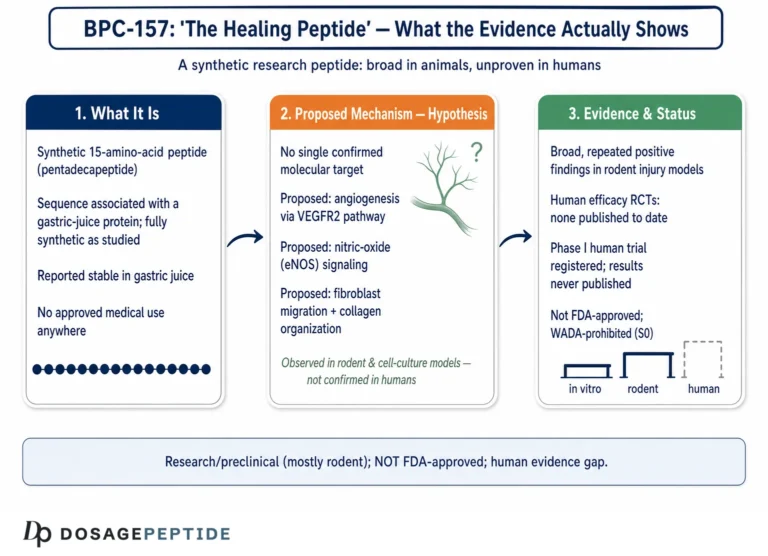
That distinction matters more than it sounds. Nearly the entire BPC-157 efficacy literature is rodent work, and the dominant route in those studies is intraperitoneal — into the abdominal cavity of an anaesthetised rat — alongside intragastric (oral) dosing and topical cream. There is no adequate, well-controlled human efficacy trial establishing an optimal BPC-157 injection site, and BPC-157 is not approved by the FDA or any other national regulator for any indication. Below is what the record actually documents, route by route, then an honest treatment of the “local versus systemic” question that dominates forum discussion.
Which routes did BPC-157 research actually use?
The table below maps the administration routes that appear in the peer-reviewed BPC-157 literature and in registered human studies, with the evidence tier stated for each. This is a description of the research record, not a set of instructions.
| Route | Where it was used | What it was used for | Evidence tier |
|---|---|---|---|
| Intraperitoneal (IP) injection | Rat and mouse abdominal cavity | The single most-cited route: Achilles tendon transection [1], tendon-to-bone detachment [2], muscle crush [5] and gastrointestinal lesion models [3] | Preclinical, rodent only. No routine human equivalent. |
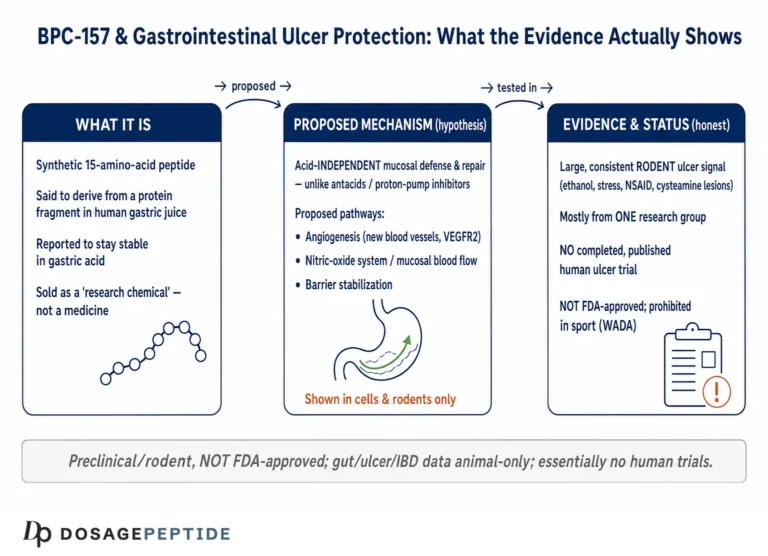
| Intragastric / per-oral (gavage or drinking water) | Rat and mouse | Gastrointestinal models: ulcer, fistula, anastomosis, short-bowel [3] | Preclinical, rodent only |
| Topical (cream at the lesion) | Mouse skin; rat/mouse limb | Deep partial-thickness flame burns and crushed gastrocnemius muscle, applied as a thin layer of neutral cream [4][5] | Preclinical, rodent only |
| Local application at the injury | Rodent limb, minority of studies | Compared against systemic IP dosing in a small number of burn and muscle-injury experiments [4][5] | Preclinical, rodent only |
| No route (in vitro) | Cultured rat tendon fibroblasts and tendon explants | Mechanistic work on cell migration, survival under oxidative stress, FAK–paxillin signalling [6] | In vitro. Says nothing about any injection site. |
| Oral capsule (human) | Healthy adult volunteers, single site | A registered Phase 1 safety and pharmacokinetics study of an oral BPC-157 product [14] | Investigational. Record status “unknown”; no results posted. |
| Subcutaneous injection (human) | Adults with MRI-confirmed grade II hamstring strain | An ongoing randomised, double-blind, placebo-controlled Phase 2 trial: once-daily subcutaneous dosing for 14 days alongside a standardised rehabilitation programme [13] | Investigational, recruiting. No results. Not an approved use. |
Read the last two rows carefully. The only registered controlled trial in a musculoskeletal injury population uses systemic subcutaneous dosing — not an injection placed into or beside the torn muscle. That single design choice contradicts the most common assumption in the online literature.
Why the rodent route matters more than most people think
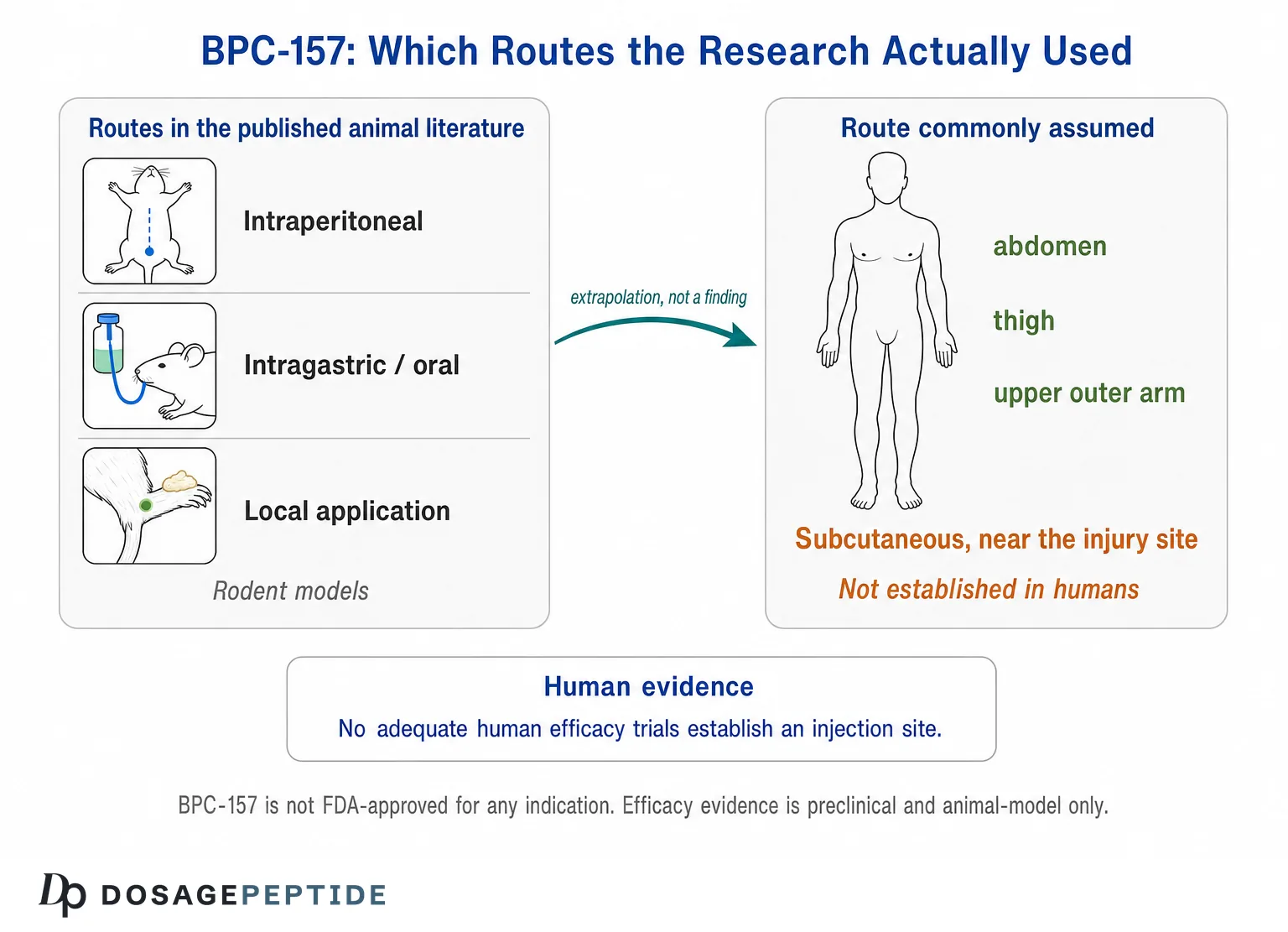
Intraperitoneal injection is a laboratory convenience. It delivers a compound into the peritoneal cavity, where it is absorbed largely through the portal circulation, giving fast and reliably systemic exposure in a small animal. It is chosen because it is reproducible in rodents, not because it models anything a person does.
This matters for interpretation. When a review reports that BPC-157 “improved Achilles tendon healing,” the underlying experiment typically gave the peptide intraperitoneally, once daily, starting 30 minutes after surgical transection, with the tendon itself never touched by a needle [1]. Any healing effect observed there is, by construction, a systemic effect. It is not evidence that placing a needle near a tendon does anything.
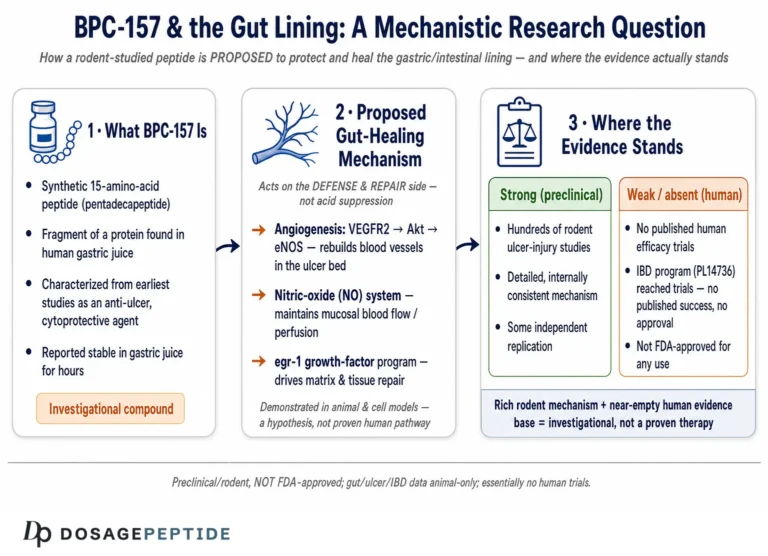
It is also worth noting how narrow the source base is. A 2019 review in Cell and Tissue Research concluded that the majority of BPC-157 studies had been performed in small rodent models, that only a handful of research groups had published in-depth work on the peptide, and that its efficacy was yet to be confirmed in humans [7]. The same review noted that every study it examined had reported consistently positive effects — a uniformity that, in a field dominated by a few groups, is itself a reason for caution rather than confidence. As of August 2026 no completed human efficacy trial has changed that picture.
Does injecting near the injury beat a distant site?
This is the question that actually drives the search, so here it is directly: no controlled human study has compared a local injection site to a distant one for BPC-157. The popular practice of injecting “near the injury” is an extrapolation from wound-healing logic and from a handful of rodent experiments — not a finding.
What the rodent data actually compared
The closest thing to a head-to-head comparison is a rat gastrocnemius crush-injury study in which BPC-157 was given either intraperitoneally or locally as a cream at the injury. Both routes improved functional, macroscopic and histological healing relative to untreated controls, and both counteracted corticosteroid-induced impairment [5]. A comparable pattern appears in burned mice, where topical cream and intraperitoneal injection both improved outcomes, the cream improving a broader set of local wound parameters. The detail that matters most for the local-versus-systemic argument is what happened away from the burn: the distant, burn-induced gastric lesions were attenuated by both arms — by the injection and by the cream applied to the skin [4]. In other words, even the “local” arm produced an effect at a distant organ, which is difficult to reconcile with the idea that placement is what does the work.
The group behind most of this work has repeatedly described BPC-157 as having practical applicability when given “with the same dose range, and same equipotent routes of application, regardless the injury tested” [8]. Taken at face value, that claim argues against site-specific injection mattering, not for it. Either way, it is a claim made about rodents by a small number of investigators, and it has not been independently replicated in humans.
What the only registered controlled MSK trial does
The Phase 2 hamstring trial is instructive precisely because its designers had every reason to inject locally if local delivery were the obvious answer. Instead the protocol specifies subcutaneous administration once daily for 14 days, with co-primary endpoints of time to return to unrestricted sport and change in MRI-assessed injury volume at day 14, and with every participant following the same supervised rehabilitation protocol [13]. It is a single-site study of 120 planned participants, sponsored by a private company and running at one hospital in Shenzhen, China; it began in February 2026, lists primary completion in 2027, and has posted no results. Nothing about it should be read as evidence of benefit — only as a description of how one controlled study chose to frame the question.
The practical takeaway for anyone reading protocol literature: the distinction between local and systemic delivery is an open research question, and any source that presents “inject near the injury” as an established rule is asserting something the evidence base does not contain. If you are cross-referencing dosing documentation, the BPC-157 5 mg vial reference and the 10 mg vial reference document what published research settings have used, with the same caveats.
What subcutaneous anatomy actually means
Because the human investigational route is subcutaneous, it is worth stating what “subcutaneous” means anatomically. This is general, long-established pharmacology background that applies to subcutaneous drugs as a class — insulin, heparins, biologics — and it is not a BPC-157 procedure.
| Region | Anatomical description | Why it is used in general practice |
|---|---|---|
| Abdomen | Below the costal margin to the iliac crest, avoiding a margin around the umbilicus | Largest usable surface area; consistent adipose depth in most adults |
| Anterior and lateral thigh | Upper outer quadrant of the thigh | Easy self-access; well away from major vessels and nerves |
| Upper outer arm | Outer lateral aspect of the upper arm | Commonly used when administered by another person |
| Upper back / upper ventrogluteal | Posterior regions | Used clinically; generally impractical for self-administration |
Standard references also describe why sites are rotated rather than reused: repeated injection into the same spot is associated with lipohypertrophy, which changes local tissue architecture and can make absorption erratic and incomplete [15]. Areas that are bruised, scarred, inflamed or over a bony prominence are avoided for the same reason. Our general peptide injection site reference and the companion aseptic handling overview cover this background in more depth.
Why intramuscular and intra-articular are a different category
Deeper routes are not simply “closer to the target.” Intramuscular injection carries risks of nerve injury, vascular puncture and haematoma that depend on precise landmarking. Intra-articular and intratendinous injection add joint-space infection — septic arthritis is a surgical emergency — and, for tendons, possible mechanical disruption of the tissue the injection is meant to help. These are clinician procedures, performed under sterile conditions and often with imaging guidance, on approved products of known sterility and identity.
Research-grade material meets none of those conditions. It has not been through the identity, sterility, endotoxin and impurity controls an approved injectable undergoes, and it carries no approved label. Reconstitution adds its own variability — see how diluent volume changes concentration — and reported adverse-event patterns are catalogued in our BPC-157 safety literature review.
What is the current regulatory status?
Status changed recently enough that outdated summaries are circulating, so here is the precise position as of August 2026.
- BPC-157 is not FDA-approved for any indication. It is an unapproved drug substance with no approved label and no approved route of administration.
- FDA flagged it under its interim compounding policies, and that entry is still published. BPC-157 was placed in category 2 — bulk substances that may present significant safety risks — and now appears on FDA’s category 2 page in the sub-list of substances that were nominated but subsequently withdrawn by the nominators, so it is not a live category 2 nomination today. FDA’s stated rationale is still published there: compounded drugs containing BPC-157 “may pose risk for immunogenicity for certain routes of administration” and may have complexities regarding peptide-related impurities and active pharmaceutical ingredient characterisation, and FDA “has identified no, or only limited, safety-related information for the proposed routes of administration” [10]. Note that FDA’s concern is explicitly route-dependent — the agency treats the choice of route as a safety variable, not a matter of preference.
- An advisory committee voted in July 2026 — that is not an approval. At the Pharmacy Compounding Advisory Committee meeting of 23–24 July 2026, BPC-157-related bulk drug substances (BPC-157 free base and BPC-157 acetate) were discussed for possible inclusion on the section 503A Bulks List. FDA’s own agenda lists the use evaluated as ulcerative colitis — a gastrointestinal indication, not tendon, muscle or joint injury, and not a question about injection sites. The same page states that advisory committees make non-binding recommendations to the FDA, “which generally follows the recommendations but is not legally bound to do so” [9]. A recommendation to permit pharmacy compounding is not a marketing approval, does not create an approved indication or an approved route, and would still require formal action by the agency to take effect. Anyone citing that vote as evidence that BPC-157 “works” for a torn hamstring is citing a vote about ulcerative colitis.
- Anti-doping. USADA states that BPC-157 is prohibited under the S0 Non-Approved Substances category and that it is not approved for human clinical use by FDA or any other global health authority [11]. S0 is a category-based catch-all rather than a fixed named list, which is why secondary sources disagree about whether BPC-157 is “named” in a given year’s list — a 2025 peer-reviewed review, for instance, carries a parenthetical claiming it is not currently listed [12]. Tested athletes should confirm status directly with their anti-doping organisation rather than with any article, including this one.
The evidence gap, stated plainly
What exists: a coherent body of rodent work, concentrated in a small number of laboratories, using intraperitoneal, intragastric and topical delivery, plus in-vitro mechanism studies. What does not exist: published human efficacy data, human pharmacokinetics adequate to inform route selection, any head-to-head comparison of injection sites in humans, or regulatory approval anywhere. A 2025 review in Pharmaceuticals reached the same conclusion — no approval, because of the absence of sufficient and comprehensive clinical studies confirming benefit in humans [12].
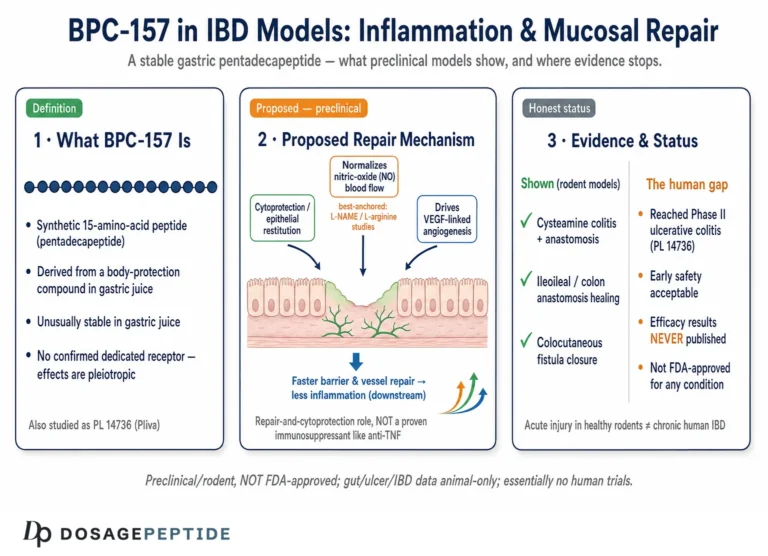
One caveat cuts in both directions and is usually left out. BPC-157 is not a compound that has never been near a human: the same peptide was carried into inflammatory bowel disease trials in the 2000s under the development codes PL 14736 and PLD-116 [3]. That programme was a gastrointestinal one, it did not report efficacy results in the peer-reviewed record, and it tells a reader nothing about where to place a needle for a tendon or a muscle. It is, however, why the indication FDA’s advisory committee actually evaluated in 2026 was ulcerative colitis [9] — and why a 2025 review still describes the barrier to approval as missing clinical evidence rather than missing interest [12].
Until the ongoing Phase 2 work reports, “where to inject BPC-157” has no evidence-based answer for humans. The route question with more published groundwork is oral versus injectable delivery, covered separately in BPC-157 oral versus injection. Combination material such as the BPC-157 and TB-500 blend reference inherits every one of these limitations, plus the absence of controlled data on the combination itself.
Which body sites are actually used, and what that does not tell you
Because there is no BPC-157 label, there is no labelled injection site. What circulates instead is generic subcutaneous technique, borrowed from approved subcutaneous products. It is worth stating plainly, because it is the part of the question that does have a factual answer — and then stating just as plainly what it does not settle.
The soft-tissue sites used for subcutaneous injection generally are the abdomen (avoiding the area immediately around the navel), the outer upper thigh, and the back of the upper arm. Standard practice across approved subcutaneous products is to rotate between sites and between spots within a site, and to avoid skin that is bruised, scarred, inflamed, hardened, tender or numb. Repeatedly injecting the same spot is what produces local tissue changes, which is the reason rotation exists at all.
None of that is BPC-157 evidence. It is injection-route anatomy that applies to any subcutaneous injection, and it carries over unchanged whether the vial contains an approved drug or research material. It tells you where subcutaneous tissue is. It does not tell you that subcutaneous BPC-157 works, that any site works better than another, or that the material in a research vial is what the label says. Those are separate questions, and the first two have no human answer.
The practical consequence: anyone presenting a site-specific BPC-157 “protocol” — this site for tendon, that site for gut — is extrapolating from rodent studies that used a route no human uses. The confident specificity is the tell. Where the underlying data are this thin, precision is invented, not measured.
Frequently Asked Questions
Where was BPC-157 injected in the studies people cite?
Overwhelmingly intraperitoneally — into the abdominal cavity of rats or mice. That is the route used in the Achilles transection, tendon-to-bone detachment and muscle crush models that underpin nearly every musculoskeletal claim made about the peptide. Intragastric dosing and topical cream account for most of the rest. Human subcutaneous injection appears only in investigational settings, not in the efficacy literature.
Is subcutaneous injection the “correct” route for BPC-157?
There is no correct route, because there is no approved product and no completed human efficacy trial. Subcutaneous administration is what the one registered Phase 2 musculoskeletal trial specified for its protocol, once daily for 14 days. That documents a study design, not a validated route, and the trial has posted no results.
Does injecting near an injury work better than a distant site?
Not established. No controlled human study has compared local and distant sites for BPC-157. The most-cited rodent healing data used systemic intraperitoneal delivery, and the small number of rodent experiments that included a local arm found both local and systemic delivery effective. The widespread “inject near the injury” practice is an extrapolation, not a research finding.
Is BPC-157 FDA-approved now after the July 2026 vote?
No. The Pharmacy Compounding Advisory Committee discussed BPC-157-related bulk substances for possible inclusion on the 503A Bulks List on 23–24 July 2026, and FDA’s agenda lists the use evaluated as ulcerative colitis. Advisory committee recommendations are non-binding, and inclusion on a compounding bulks list is not a drug approval. BPC-157 has no FDA-approved indication and no approved route of administration, and nothing in that proceeding addressed musculoskeletal injury or injection sites.
Is BPC-157 banned in sport?
USADA states that BPC-157 is prohibited under the S0 Non-Approved Substances category, which covers pharmacological substances with no current approval by any governmental health authority for human therapeutic use. Because S0 works by category rather than a fixed named list, secondary sources sometimes conflict. Tested athletes should confirm current status with their own anti-doping organisation.
Why does site rotation get recommended for subcutaneous drugs?
Repeated injection into the same location is associated with lipohypertrophy — localised thickening of subcutaneous tissue — which can make absorption incomplete and unpredictable. Standard references therefore describe rotating within and between regions with large surface areas, and avoiding skin that is bruised, scarred, inflamed or directly over bone. This is general pharmacology background, not BPC-157-specific guidance.
Why are intramuscular and intra-articular routes treated differently?
They carry a different risk profile: nerve and vascular injury for intramuscular, and joint-space infection or tissue disruption for intra-articular and intratendinous. These are clinician-performed procedures using sterile, identity-verified pharmaceutical products, often under imaging guidance. Research-grade material meets none of those conditions and carries no approved label.
Do human pharmacokinetic data exist to guide route selection?
Not in usable published form. A Phase 1 safety and pharmacokinetics study of an oral BPC-157 tablet in 42 healthy volunteers, run at a single centre and listing completion in 2016, is registered on ClinicalTrials.gov, but its record status is “unknown” and no results have been posted a decade later. Without published human pharmacokinetics, arguments about local versus systemic exposure rest on rodent data and inference. Research-grade vendor material is also not the same thing as a characterised pharmaceutical product.
Which sites would a subcutaneous injection use?
The general subcutaneous sites are the abdomen away from the navel, the outer upper thigh and the back of the upper arm, rotated between doses, avoiding skin that is bruised, scarred, hardened, inflamed or numb. That is standard technique for any subcutaneous injection, not a BPC-157 finding. No study has compared these sites for BPC-157, so none of them is established as correct for it.
Does a BPC-157 injection hurt?
No published human study reports injection-site pain or tolerability data for BPC-157, so there is no evidence-based answer. Subcutaneous injections generally are described as briefly stinging, and discomfort tracks needle gauge, injection volume, solution temperature and technique rather than the compound. Reports circulating online are anecdotal and unmeasured, and reconstituted research material varies in purity and concentration between vials.
How long before anything happens?
Unknown in humans. The rodent healing studies report outcomes over days to weeks, but they used a different species, a different route and controlled injury models, so their timelines do not transfer. The one registered Phase 2 human musculoskeletal trial ran a 14-day dosing schedule and has posted no results. Any specific “results in X weeks” claim you encounter is not drawn from human data.
References
- Staresinic M, Sebecic B, Patrlj L, et al. Gastric pentadecapeptide BPC 157 accelerates healing of transected rat Achilles tendon and in vitro stimulates tendocytes growth. J Orthop Res. 2003;21(6):976–83. PubMed 14554208
- Krivic A, Anic T, Seiwerth S, Huljev D, Sikiric P. Achilles detachment in rat and stable gastric pentadecapeptide BPC 157: promoted tendon-to-bone healing and opposed corticosteroid aggravation. J Orthop Res. 2006;24(5):982–9. PubMed 16583442
- Sikiric P, Seiwerth S, Rucman R, et al. Stable gastric pentadecapeptide BPC 157: novel therapy in gastrointestinal tract. Curr Pharm Des. 2011;17(16):1612–32. PubMed 21548867
- Mikus D, Sikiric P, Seiwerth S, et al. Pentadecapeptide BPC 157 cream improves burn-wound healing and attenuates burn-gastric lesions in mice. Burns. 2001;27(8):817–27. PubMed 11718984
- Pevec D, Novinscak T, Brcic L, et al. Impact of pentadecapeptide BPC 157 on muscle healing impaired by systemic corticosteroid application. Med Sci Monit. 2010;16(3):BR81–88. PubMed 20190676
- Chang CH, Tsai WC, Lin MS, Hsu YH, Pang JS. The promoting effect of pentadecapeptide BPC 157 on tendon healing involves tendon outgrowth, cell survival, and cell migration. J Appl Physiol. 2011;110(3):774–80. PubMed 21030672
- Gwyer D, Wragg NM, Wilson SL. Gastric pentadecapeptide body protection compound BPC 157 and its role in accelerating musculoskeletal soft tissue healing. Cell Tissue Res. 2019;377(2):153–159. PubMed 30915550
- Seiwerth S, Milavic M, Vukojevic J, et al. Stable gastric pentadecapeptide BPC 157 and wound healing. Front Pharmacol. 2021;12:627533. PubMed 34267654
- U.S. Food and Drug Administration. July 23–24, 2026: Meeting of the Pharmacy Compounding Advisory Committee. fda.gov
- U.S. Food and Drug Administration. Certain Bulk Drug Substances for Use in Compounding That May Present Significant Safety Risks (category 2). fda.gov
- U.S. Anti-Doping Agency. BPC-157: Experimental Peptide Creates Risk for Athletes. usada.org
- Józwiak M, Bauer M, Kamysz W, Kleczkowska P. Multifunctionality and possible medical application of the BPC 157 peptide — literature and patent review. Pharmaceuticals (Basel). 2025;18(2):185. PMC11859134
- ClinicalTrials.gov. A Randomized, Double-Blind, Placebo-Controlled Phase 2 Trial of Pentadecapeptide BPC 157 for Accelerated Repair of Acute Grade II Hamstring Strain (NCT07437547). clinicaltrials.gov
- ClinicalTrials.gov. Phase I, Pilot Study in Healthy Volunteers, to Assess the Safety and Pharmacokinetics of PCO-02 (NCT02637284). clinicaltrials.gov
- Kim J, De Jesus O. Medication Routes of Administration. StatPearls, NCBI Bookshelf. NBK568677
Research use only. This article is an educational review of published research and regulatory records. It is not medical advice, not a protocol, and not a recommendation for human use. BPC-157 is not approved by the FDA or any other national regulator for any indication, and research-grade material is not an approved pharmaceutical product. Nothing here should be used to diagnose, treat, cure or prevent any disease.