Short answer: in rats, BPC-157 prevents and heals gut ulcers with remarkable consistency. In humans, there is nothing. Across three decades of rodent work, the peptide reduced gastric and duodenal lesions caused by alcohol, restraint stress, NSAIDs and other ulcerogens, and in some healing experiments it outperformed the acid-blocker famotidine, with histology showing faster rebuilding of glandular tissue. Those findings are real, peer-reviewed and internally consistent.
They are also entirely preclinical. No randomized trial of BPC-157 for any gastrointestinal condition has been published — and the inflammatory-bowel-disease trial cited constantly online has never appeared in a peer-reviewed journal, which is why you can never find the paper. Much of the rodent literature also comes from a single research group, so the consistency partly reflects one laboratory’s methods rather than independent replication.
Regulatory reality matters here too: BPC-157 is not approved for any condition, and US authorities describe it as an unapproved drug found unlawfully in wellness products. Below, the rodent evidence is laid out study by study, alongside the proposed mechanisms, the comparison with established ulcer therapies, and exactly what it would take to establish this peptide as a real treatment. Research use only — not medical advice.
What “Ulcer Protection” Means in This Research
The word “protection” in the title carries two meanings that are easy to conflate and important to separate. In pharmacology, “gastroprotection” or “cytoprotection” is a technical term describing a measurable reduction in mucosal injury when a challenge agent is applied — a lower lesion area, fewer erosions, less bleeding, preserved histological architecture. In everyday usage, “protection” suggests a dependable therapeutic shield a person could rely on. The rodent literature speaks to the first meaning; only human trials could speak to the second. Almost all of the confusion surrounding BPC-157 arises from readers who encounter the technical claim — “BPC-157 was gastroprotective in this model” — and hear the everyday one.
There is a second premise worth interrogating. Because BPC-157 is described as originating from a fragment of a protein found in human gastric juice, some writers present its ulcer effects as almost self-evidently physiological, as though the body were simply being supplemented with its own repair signal.2 This is a rhetorically powerful framing and a scientifically shaky one. The “body protection compound” parent protein and the precise endogenous role of the fragment are not well characterized in independent literature; the synthetic peptide administered in experiments is a defined 15-amino-acid sequence, and its behavior must be judged on experimental data, not on the intuition that anything “natural” must be both effective and safe. Endogenous origin, even if fully established, would say nothing about whether exogenous administration heals ulcers in people.
The correct posture, then, is neither dismissal nor enthusiasm. The animal data are too extensive and too reproducible within their own paradigm to wave away; the human data are too thin to support any clinical claim. A researcher’s job is to describe the shape of that asymmetry accurately, to explain why the stomach became the compound’s proving ground, and to resist the pull of a title that would rather announce a conclusion than pose a question. For a broader orientation to the molecule before we narrow to ulcers specifically, the site’s pillar explainer, what BPC-157 is and how it is studied, provides the general background this article assumes.
What BPC-157 Is and Where It Comes From
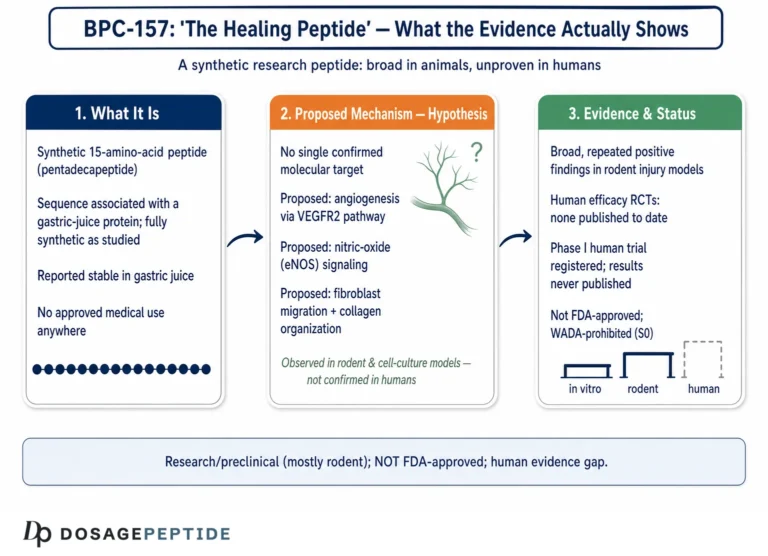
BPC-157 is a synthetic peptide of fifteen amino acids, with the sequence Gly-Glu-Pro-Pro-Pro-Gly-Lys-Pro-Ala-Asp-Asp-Ala-Gly-Leu-Val and a molecular weight near 1419 daltons. The abbreviation stands for “body protection compound,” and the “157” is a laboratory designation; the peptide is described as corresponding to a partial sequence of a larger protein reported in human gastric juice. In the research literature it appears under several development codes — PL-10, PLD-116, and PL-14736 among them — reflecting its history at the Croatian pharmaceutical company Pliva and its academic champions at the University of Zagreb.9
One physicochemical property is cited more than any other and genuinely matters to the ulcer question: BPC-157 is reported to be unusually stable in human gastric juice, remaining intact for well over twenty-four hours under conditions that would rapidly degrade most peptides.2 For a molecule proposed to act in the stomach, resistance to gastric acid and pepsin is not a trivial footnote; it is the difference between a plausible local actor and a peptide that would be destroyed before it could do anything. This stability is the single most distinctive pharmaceutical feature of the compound and the reason it was studied orally as well as parenterally.
It is important to be candid about the provenance of the science. The overwhelming majority of BPC-157 publications, and essentially all of the foundational gastrointestinal work, originate from one research program led by Predrag Sikirić and colleagues.13 This is not, by itself, a mark against the findings — pioneering programs often dominate a compound’s early literature — but it is a structural feature a critical reader must weigh. Independent replication by unaffiliated laboratories, particularly for the headline ulcer-healing claims, remains limited. A 2025 literature-and-patent review concluded bluntly that most, if not all, BPC-157 studies are confined to small rodent models and that no completed clinical study describes its efficacy in humans, despite the peptide’s wide availability on the gray market.10
A useful mental model separates three things that popular writing tends to blur: the claimed endogenous fragment (a piece of a gastric-juice protein whose independent characterization is thin), the synthetic research peptide (the defined 15-mer actually used in experiments), and the marketed “research chemical” (material of variable purity sold outside regulated channels). Evidence about one does not automatically transfer to another. When a study reports that “BPC-157 healed a gastric ulcer in rats,” it is the second entity — a specific, quality-controlled synthetic peptide at a defined dose and route — that was tested, and that is the only entity to which the finding strictly applies.
The Cytoprotection Paradigm: Why the Stomach Was the Starting Point
To understand why ulcer protection is BPC-157’s founding claim rather than an afterthought, it helps to recall the intellectual climate in which the compound was first studied. In the late twentieth century, gastric pharmacology was reorganized around a concept introduced by André Robert: “cytoprotection,” the observation that certain agents (classically prostaglandins) could protect the gastric mucosa against necrotizing insults such as absolute ethanol at doses far below those needed to inhibit acid secretion. Cytoprotection implied that the mucosa had active defensive machinery — mucus and bicarbonate secretion, mucosal blood flow, epithelial restitution, and vascular integrity — that could be reinforced independently of acid.
BPC-157 was introduced into precisely this framework and marketed intellectually as a “cytoprotective” and even “organoprotective” agent. The most persuasive early experiments were designed to test whether its protection was acid-dependent or acid-independent. In a much-cited model, totally gastrectomized rats — animals whose stomachs, and therefore whose gastric acid secretion, had been removed — were challenged with cysteamine to produce duodenal lesions. BPC-157, like the reference cytoprotective comparators, still reduced lesion development in this acid-free setting, an outcome interpreted as evidence that its protective effect did not depend on suppressing acid.3 That distinction is central: histamine H2-blockers and proton-pump inhibitors work chiefly by lowering acid, whereas a genuine cytoprotectant should defend the tissue itself. The gastrectomy experiments positioned BPC-157 conceptually alongside prostaglandins rather than alongside acid-suppressing drugs.
This paradigm explains the shape of the entire BPC-157 gastrointestinal program. If the peptide reinforces mucosal defense and repair rather than merely turning down acid, then it should protect across a wide range of ulcerogens with different mechanisms — and the research strategy was, accordingly, to throw many different injuries at the stomach and see whether one agent blunted them all. That is exactly the pattern the literature shows, and it is why the same compound appears in studies of ethanol lesions, stress lesions, NSAID lesions, and cysteamine lesions in rapid succession.1 The breadth is a feature of the cytoprotection hypothesis, not evidence of a miracle molecule; any agent acting on generic mucosal-defense machinery would be expected to show this kind of cross-model activity.
The Rodent Ulcer Evidence: What Was Actually Shown
The core of the “ulcer protection” case is a series of rodent experiments, and fairness requires describing both their consistency and their limits. In the foundational multi-model study, a single peptide reduced gastric and duodenal lesions induced by restraint stress, by 96% ethanol, by the NSAID indomethacin, and by capsaicin-related neurotoxicity, with effects reported across an extraordinarily wide dose range spanning microgram and even nanogram-per-kilogram levels.1 The cross-ulcerogen breadth of that early work set the template for everything that followed.
Later work moved from prevention toward healing of established lesions. In a frequently cited rat study using several ulcer models, both intramuscular and intragastric BPC-157 reduced ulcer area and accelerated healing, with intramuscular delivery reported as more potent; at the higher doses tested, ulcer-inhibition rates fell in the range of roughly forty-five to sixty-six percent, and intramuscular BPC-157 was reported to outperform the H2-blocker famotidine in some comparisons, with histology showing faster rebuilding of glandular epithelium and granulation tissue.4 The distinction between preventing a lesion (giving peptide before or with the insult) and healing an existing one (giving it after) matters, because clinical ulcer therapy is overwhelmingly about healing damage that has already occurred, and the healing experiments are therefore the more clinically relevant — and, generally, the smaller in number.
The table below organizes the principal ulcer and mucosal-injury models in which BPC-157 has been reported active. It is offered as a map of the preclinical terrain, not as a ledger of proven human benefits.
| Injury model (rodent) | Ulcerogen / insult | Reported BPC-157 effect |
|---|---|---|
| Ethanol gastric lesions | 96% / absolute ethanol intragastrically | Reduced mucosal necrosis and lesion area1 |
| Restraint-stress lesions | Physical/psychological restraint | Reduced gastric lesion formation1 |
| NSAID gastropathy | Indomethacin (and related agents) | Fewer gastric and small-intestinal lesions17 |
| Cysteamine duodenal lesions (gastrectomized) | Cysteamine, no gastric acid present | Reduced lesions, i.e. acid-independent protection3 |
| Chronic gastric ulcer (healing) | Acetic-acid / established ulcer models | Accelerated healing; outperformed famotidine in comparisons4 |
| Reflux esophagitis | Gastroesophageal reflux, gastrectomized rats | Sustained reduction in inflammatory infiltrate6 |
Two honest observations frame this table. First, the consistency across models is genuinely striking and is the strongest thing that can be said for the compound: a peptide that only worked in one contrived model would be far less interesting than one that blunts chemically unrelated insults. Second, every entry is a rodent entry. Not one line in this table represents a human ulcer, a human endoscopy score, or a human healing rate. The breadth of the preclinical signal is precisely what makes the absence of human data so conspicuous — a compound this active in animals, first studied for ulcers three decades ago, has still not produced a single completed, published, controlled human ulcer trial.10
It is worth being explicit about a subtlety that separates a good rodent ulcer study from an impressive-sounding one. In acute chemical-injury models, timing is everything: an agent given before or simultaneously with a necrotizing insult such as absolute ethanol can appear dramatically “protective” simply by blunting the initial injury, without saying anything about whether it accelerates the repair of damage that has already formed. Much of the earliest BPC-157 gastric work is of this prevention type, in which the peptide and the ulcerogen were administered together or the peptide was given an hour beforehand.17 The more demanding and more clinically translatable experiments are those in which an ulcer is first established and only then treated, and where healing is tracked over days to weeks against a proper comparator drug. BPC-157 does have healing-phase data of this kind, including the comparison against famotidine, and that is the subset a critical reader should weight most heavily.4 The distinction also cautions against a common rhetorical slide in secondary write-ups, which quote a large percentage “lesion reduction” from a prevention study and present it as though it were a healing rate in patients — two very different quantities separated by species, design, and decades of missing clinical work.
Proposed Mechanisms: Angiogenesis, Nitric Oxide, and Acid-Independent Defense
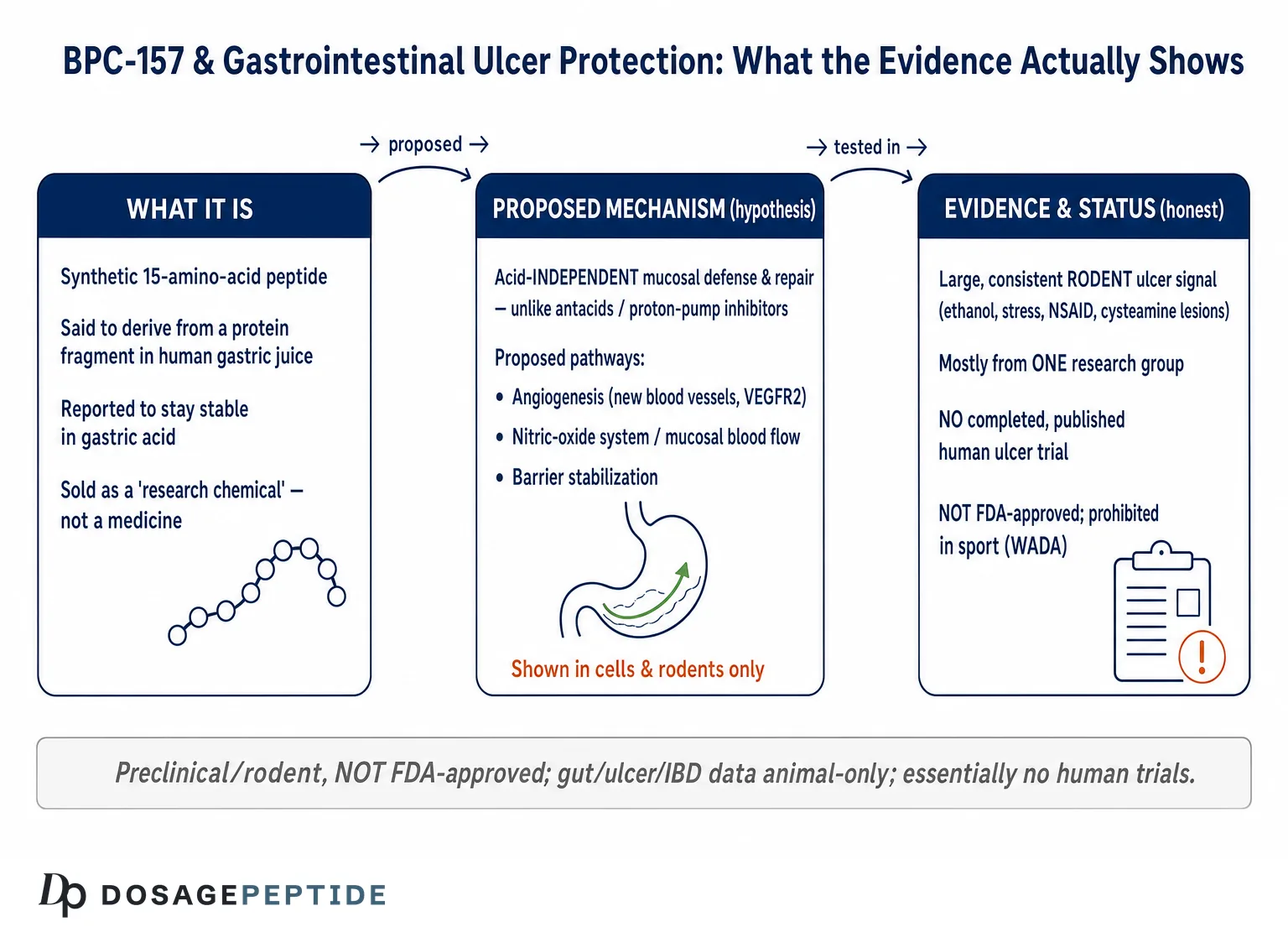
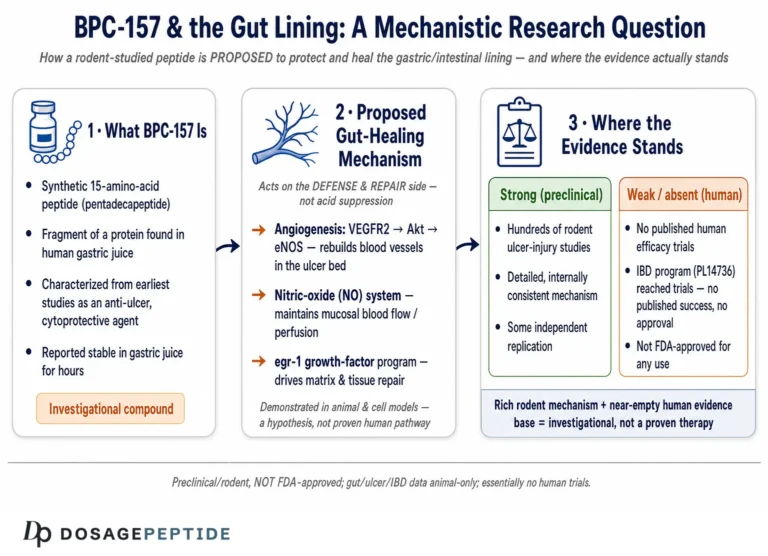
If BPC-157 protects and heals gastrointestinal mucosa without suppressing acid, what is it doing instead? The mechanistic literature converges on a few interrelated themes, each supported by experimental data of varying strength and each still best described as a proposed rather than a proven pathway in the human gut.
Angiogenesis and the VEGFR2 axis. The most mechanistically detailed work concerns blood-vessel formation. In human umbilical-vein endothelial cells, BPC-157 increased the expression of vascular endothelial growth factor receptor 2 (VEGFR2) without raising its ligand VEGF-A, promoted internalization of the receptor, and time-dependently activated the downstream VEGFR2–Akt–eNOS signaling cascade; blocking endocytosis with dynasore abolished these effects. In the chick chorioallantoic membrane assay and endothelial tube-formation assays, the peptide increased vessel density, and it accelerated blood-flow recovery in an ischemic rat hindlimb.5 Angiogenesis is directly relevant to ulcer healing, because granulation tissue and the re-epithelialization of an ulcer crater depend on new microvasculature; a pro-angiogenic signal is a biologically sensible way to speed mucosal repair.
The nitric-oxide system. A recurring theme across BPC-157 studies is modulation of nitric oxide (NO), the key regulator of vascular tone and mucosal blood flow. Experimental work has implicated activation of a Src–caveolin-1–endothelial nitric oxide synthase (eNOS) pathway in the peptide’s effects on vasomotor tone in isolated rat aorta, and many injury studies report that co-administration of NO-synthase inhibitors alters BPC-157’s protective activity, arguing for NO involvement.8 Because mucosal blood flow is one of the classical pillars of gastric cytoprotection — ischemia is a common final pathway in ethanol, stress, and NSAID injury — an effect on the NO system dovetails with the cytoprotection paradigm. The honest caveat is that “the NO system is involved” is a broad statement; the precise molecular target by which a 15-mer peptide engages this machinery is not fully resolved.
Growth-factor and gene-expression effects. Wound-healing studies report that BPC-157 rapidly up-regulates a cluster of repair-associated genes — including Vegfa, Nos3 (eNOS), Akt1, and early-growth-response genes — and enhances collagen deposition, fibroblast activity, and the orderly progression of clot resolution and granulation.2 The compound has also been described as counteracting the healing impairment caused by corticosteroids and as interacting with several other systems, including dopaminergic and serotonergic signaling in the gut. This pleiotropy is real in the animal data but is also a double-edged sword for interpretation: a molecule reported to touch so many pathways is difficult to pin to a single, testable mechanism, and pleiotropy can be a sign either of a genuine upstream master switch or of a loosely specified, hard-to-falsify hypothesis.
NSAID gastropathy as a mechanistic test case. The NSAID model is instructive because NSAID injury has a well-understood cause: inhibition of cyclooxygenase depletes protective prostaglandins and compromises mucosal defense, and NSAIDs also damage the small-intestinal barrier. BPC-157 has been reported to reduce both gastric and small-intestinal NSAID lesions and, in barrier-focused work, to stabilize intestinal permeability during NSAID exposure.7 A compound that defends the mucosa against a prostaglandin-depleting insult is, at least conceptually, acting downstream or in parallel to the prostaglandin system rather than by restoring it — consistent with the acid-independent, defense-reinforcing story, though again demonstrated only in animals.
The fair mechanistic summary is that BPC-157 has a coherent, partially characterized story for how it could speed mucosal healing — principally through angiogenesis and NO-mediated preservation of blood flow, supported by growth-factor-like gene expression — and that this story is anchored to genuine in-vitro and rodent data. What it lacks is any demonstration that these mechanisms operate to clinically meaningful effect in a human ulcer. For readers tracing how these same vascular and anti-inflammatory mechanisms are invoked elsewhere in the peptide’s literature, the companion discussion of BPC-157 in inflammation and joint pain examines the same pathways applied to musculoskeletal tissue, and a related piece on BPC-157 and nerve and brain health follows the gut-brain thread that recurs in this research program.
Beyond the Stomach: Esophagus, Duodenum, and NSAID Enteropathy
Although the phrase “ulcer protection” evokes the stomach, the preclinical BPC-157 literature extends across the length of the gastrointestinal tract, and this breadth is part of what its proponents mean by “organoprotection.” Examining the extensions helps calibrate the ulcer claim, because it shows both the reach and the uniformity of the animal signal.
Reflux esophagitis. In a rat model of reflux esophagitis in gastrectomized animals studied over one to four weeks, BPC-157 was compared with ranitidine, sucralfate, and cholestyramine. The reference agents showed benefit mainly at the earliest time point, whereas BPC-157-treated groups consistently showed less inflammatory-cell infiltration across all assessed periods, a result the authors framed as more durable cytoprotection.6 Esophageal mucosal injury shares final pathways with gastric injury — barrier disruption, inflammation, impaired blood flow — so activity here is consistent with the general cytoprotection hypothesis rather than a separate phenomenon.
Duodenal lesions. The cysteamine duodenal-ulcer model, especially in gastrectomized rats, has already been discussed as the key acid-independence experiment.3 Duodenal protection matters because human peptic ulcer disease includes duodenal ulcers, and because the duodenum is a principal site of NSAID and stress-related injury; the rodent duodenal data are among the more clinically resonant, even as they remain preclinical.
NSAID enteropathy and the intestinal barrier. Beyond the stomach, NSAIDs damage the small intestine, producing a “leaky” barrier and inflammation that acid-suppressing drugs do not address. BPC-157 has been reported to reduce NSAID-induced small-intestinal lesions and to counteract NSAID gastrointestinal cytotoxicity, and the same research program reports protection against broader NSAID toxicity in rodents.7 If these effects translated, a barrier-stabilizing agent that is not itself an acid-suppressant would be mechanistically complementary to, rather than redundant with, proton-pump inhibitors — an interesting idea that remains, for now, an animal-stage hypothesis.
The through-line is that BPC-157’s gastrointestinal story is not narrowly gastric; it is a general mucosal-repair story applied up and down the tract. That generality is scientifically coherent within the cytoprotection framework and simultaneously a reason for caution: the more universal a healing claim, the more important controlled human evidence becomes, and the more skeptical one should be of extrapolating from any single rodent model to a specific human disease. Readers who want the site’s dedicated treatment of the broader gut picture can consult the sibling article on BPC-157’s reported effects on the gut and inflammation, which covers the wider intestinal and inflammatory literature that this ulcer-focused piece only touches.
The IBD Trial That Is Cited Everywhere and Published Nowhere
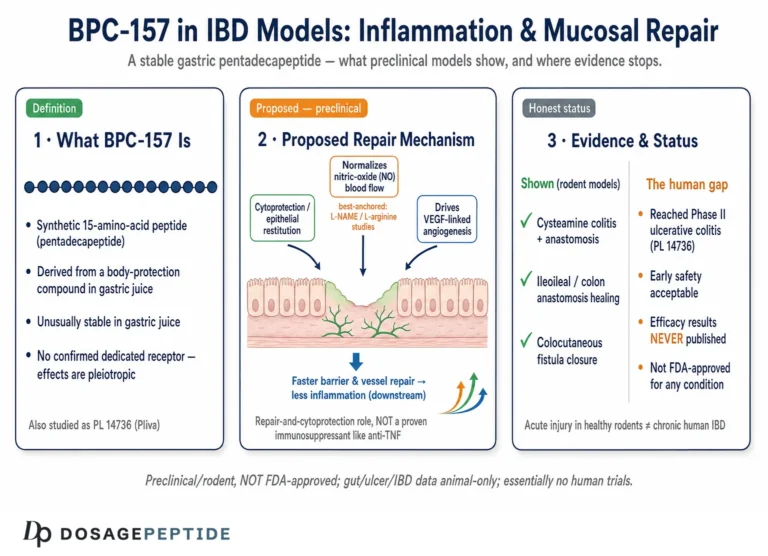
No discussion of BPC-157 and the gut is complete without the inflammatory-bowel-disease program, because it is the closest the compound has come to human testing and because it is routinely misrepresented. Under the development codes PL-10, PLD-116, and especially PL-14736, BPC-157 was advanced by Pliva toward clinical trials for inflammatory bowel disease, and the research literature repeatedly refers to it as being “in trials” for IBD and as having shown acceptable safety with no reported toxicity.9
Here candor is essential. The phrase “in clinical trials for inflammatory bowel disease” appears in the titles and abstracts of numerous preclinical papers — papers that themselves report rat experiments (fistula healing, anastomosis healing, colitis models) while referencing the existence of a human IBD program in their framing.9 What is missing is a standalone, peer-reviewed publication reporting the full design, results, and statistics of a completed Phase II ulcerative-colitis trial in a form that independent readers can evaluate. Later independent review confirms this gap: a 2025 literature-and-patent analysis found only minimal human data — at best a small retrospective case series — and noted that a Phase I safety trial begun in 2015 was cancelled in 2016 with results never submitted.10 In other words, the IBD story is real as a development effort and as a source of the “safe in humans” talking point, but it is not a published body of efficacy evidence.
Why does this matter for the ulcer question specifically? Because the IBD program is the usual bridge writers use to claim human relevance: “it was in human IBD trials, therefore it works in the human gut.” That inference over-reads the record twice over. First, ulcerative colitis is a chronic immune-mediated colonic disease, mechanistically distinct from peptic ulcer disease of the stomach and duodenum; success in one would not establish success in the other. Second, and more fundamentally, there is no published demonstration of efficacy in either. The most defensible statement is narrow: BPC-157 progressed into early human study for IBD, generated some human safety exposure without published toxicity signals, and did not produce a completed, published efficacy trial for colitis, ulcers, or anything else.910
How BPC-157 Compares With Established Ulcer Therapies
Placing BPC-157 beside the drugs that actually treat human ulcers clarifies both what its proposed mechanism might add and how far it sits from clinical validation. The contrast is not a competition — BPC-157 has never entered the arena of human ulcer therapy — but it shows what an evidence-backed ulcer treatment looks like.
| Agent / class | Primary mechanism | Human ulcer evidence |
|---|---|---|
| Proton-pump inhibitors (omeprazole, etc.) | Irreversible inhibition of gastric H+/K+-ATPase; profound acid suppression | Large RCTs; standard of care for peptic ulcer healing |
| H2-receptor antagonists (famotidine, etc.) | Block histamine-stimulated acid secretion | Extensive RCTs; established, if less potent than PPIs |
| H. pylori eradication regimens | Antibiotics + acid suppression removing the causal infection | Definitive trials; cures the dominant cause of peptic ulcers |
| Misoprostol (prostaglandin analog) | Restores mucosal prostaglandin defense; true cytoprotectant | RCTs, esp. NSAID-ulcer prevention; limited by GI side effects |
| Sucralfate | Physical barrier over ulcer base; local mucosal protection | Clinical use in ulcer healing |
| BPC-157 | Proposed acid-independent cytoprotection: angiogenesis, NO/eNOS, barrier stabilization | No completed, published, controlled human ulcer trial10 |
A caveat about the table itself: it deliberately compares BPC-157 against approved drugs on the one axis where the gap is starkest — human evidence — and not on mechanism, where BPC-157’s proposed profile is arguably broader. That asymmetry is intentional and honest. A compound can have a more interesting mechanism on paper than the incumbents while still having no business being called a therapy, because in medicine the mechanism is the promissory note and the randomized trial is the payment. Misoprostol and BPC-157 both claim “cytoprotection,” but only one of them cashed the note.
Several points emerge. First, human ulcer disease is largely a solved problem: the discovery that most peptic ulcers are caused by Helicobacter pylori or by NSAIDs, combined with potent acid suppression and antibiotic eradication, transformed a chronic relapsing condition into one that is usually curable. Any new agent enters a field where the bar for clinical relevance is high and the unmet need is comparatively narrow — refractory ulcers, NSAID enteropathy of the small bowel that PPIs do not reach, and healing quality rather than mere closure. Second, BPC-157’s proposed niche — acid-independent tissue repair and barrier stabilization — is genuinely different from the acid-suppression mechanism of the dominant drugs, which is what makes it conceptually interesting rather than redundant. Third, that conceptual interest is exactly the point at which the evidence stops: misoprostol, the one true cytoprotectant on the list, earned its place through randomized human trials, and BPC-157 has not run the equivalent. A mechanism, however elegant, is a hypothesis until a trial tests it.
Research Models and Methodology
Judging the ulcer claim requires understanding how the evidence was generated, because the methodology defines what the data can and cannot support. The BPC-157 gastrointestinal literature falls into three tiers of decreasing volume and, unfortunately, decreasing relevance to humans.
In-vitro and mechanistic assays. Endothelial-cell studies (VEGFR2 expression and internalization, tube formation), gene-expression profiling of healing tissue, and vasomotor/NO experiments provide the mechanistic backbone.58 These are appropriate tools for generating hypotheses about how the peptide might act, and the endothelial work in particular is methodologically clean, using pharmacological blockers (dynasore, NO-synthase inhibitors) to establish pathway dependence. Their limitation is intrinsic: a cell culture is not a mucosa, and an isolated pathway is not an ulcer.
Rodent injury models. The bulk of the ulcer evidence lives here — ethanol, stress, NSAID, cysteamine, and acetic-acid models in rats and mice, with endpoints including macroscopic lesion area, histological scoring, and comparisons against reference drugs.134 These are standard, validated ulcer models, and the use of gastrectomized animals to dissect acid-independence is a genuinely clever design. Three methodological caveats temper the picture. The dose-response relationships are unusual, with efficacy reported across many orders of magnitude (nanograms to micrograms per kilogram), which is biologically atypical and complicates the identification of a defined effective dose. The concentration of the work within a single research program means independent replication is thinner than the raw publication count suggests. And acute chemical-injury models, useful as they are, model a rapid necrotizing insult rather than the chronic, multifactorial disease process of human peptic ulcer.
Human studies. This tier is nearly empty for ulcers. There is the referenced IBD development program with its unpublished efficacy data and its cancelled Phase I trial, and at most small, uncontrolled reports for other indications.910 No study has enrolled patients with endoscopically confirmed peptic ulcers, randomized them to BPC-157 or placebo, and measured healing rates — the design that would be required to say anything about clinical ulcer protection. The methodological bottom line is that BPC-157’s evidence architecture was built to demonstrate a phenomenon in animals, not to test a therapy in people, and it succeeds at the former while remaining silent on the latter. Researchers documenting the compound’s handling parameters can find general educational reconstitution and storage practice on the site’s peptide reconstitution guide, which is written for laboratory reference rather than as any instruction for human use.
Safety, Sourcing, and Handling in a Research Context
The safety conversation around BPC-157 is where honest framing matters most, because the compound is widely sold and widely self-administered on the strength of a reassuring but shallow safety record. Two things are true simultaneously: the available data have not surfaced major short-term toxicity signals, and the available data are nowhere near sufficient to call the compound “safe” for human use.
On the encouraging side, rodent studies consistently report an absence of measurable toxicity — lethal doses were not reached, and standard limit tests were negative — and the compound’s stability in gastric juice and activity without special carriers make it experimentally tractable.2 The IBD development program is the source of the oft-repeated claim that BPC-157 was “safe in human trials,” reflecting some human exposure without published toxicity.9 These points are real and should not be dismissed.
The countervailing considerations are substantial and, for a would-be human user, decisive:
- No published human safety dataset. The one rigorous Phase I human safety trial begun in 2015 was cancelled in 2016 and never reported, leaving a foundational gap in human pharmacokinetics and dose-finding; today’s self-administered doses are extrapolated from animals, not derived from human data.10
- Angiogenesis cuts both ways. The very pro-angiogenic mechanism proposed to heal ulcers is a theoretical concern in the context of malignancy, where new-vessel growth supports tumors. This has not been shown to be a real-world hazard for BPC-157, but it is a reason not to assume that “promotes blood-vessel growth” is uniformly benign.
- Product quality and sourcing. Because BPC-157 is not an approved medicine, material sold as “research chemical” varies in purity, and impurities, incorrect sequences, endotoxin, and mislabeling are documented risks of the gray market that have nothing to do with the molecule’s intrinsic properties.1013
- Long-term and population unknowns. No data address chronic administration, use in older or comorbid patients, drug interactions, or immunogenicity over time.
- Regulatory/anti-doping hazard. BPC-157 is prohibited in sport by the World Anti-Doping Agency and is flagged by U.S. authorities as an unapproved drug; for athletes and service members, use carries sanction risk independent of any pharmacological effect.1213
For strictly educational completeness, BPC-157 is typically encountered as a lyophilized powder handled in a laboratory context. The general practices below recur across the research-peptide literature; they are presented as standard technique, not as a usage recommendation, and they change nothing about the evidence question.
| Parameter | Typical research-context practice |
|---|---|
| Lyophilized storage | Cool, dark conditions; freezing favored for long-term stability |
| Reconstitution | Sterile or bacteriostatic water directed against the vial wall; swirl, do not shake |
| After reconstitution | Refrigerated; used within a limited window |
| Light and heat | Minimize exposure; both degrade peptides |
| Freeze-thaw cycles | Repeated cycles degrade peptide; avoid |
| Purity / provenance | Major uncontrolled variable outside regulated supply |
The reasonable reading is that meticulous handling preserves whatever activity a genuine peptide has but manufactures no efficacy and resolves none of the safety unknowns. Absence of demonstrated harm in limited settings and absence of demonstrated benefit in humans can coexist — and for BPC-157 and ulcers, they do.
Regulatory Status and the Human-Evidence Gap
The regulatory picture is unambiguous where the science is ambiguous, and it is frequently misstated online. BPC-157 is not approved as a drug for peptic ulcer disease, inflammatory bowel disease, or any other condition by the FDA, the European Medicines Agency, or any comparable major regulator.11 U.S. authorities describe it explicitly as an unapproved drug that has appeared unlawfully in health-and-wellness products, and it is not a dietary-supplement ingredient with a lawful marketing pathway for these uses.13 In sport, the World Anti-Doping Agency lists BPC-157 among prohibited non-approved substances, with no therapeutic-use exemption available.12
The compound’s regulatory history under U.S. compounding rules reinforces the caution. BPC-157 was placed in the FDA’s Category 2 of bulk drug substances that may present significant safety risks in compounding — a designation reflecting concerns about immunogenicity and inadequate characterization of the substance rather than any finding of efficacy.11 In April 2026 the FDA removed BPC-157 (and several other peptides) from that Category 2 list after the nomination supporting its review was withdrawn; crucially, removal from Category 2 does not place the substance on the Category 1 “may compound” list and does not make it eligible for lawful compounding under section 503A, and the peptide remains scheduled for further advisory-committee consideration.11 In other words, the shifting compounding paperwork has not changed the fundamentals: BPC-157 is still not an approved drug, still not authorized for human use, and still without the clinical-effectiveness data that would justify either status — the regulatory system articulating precisely the point this article has made from the evidence, that extensive animal data do not substitute for human trials.
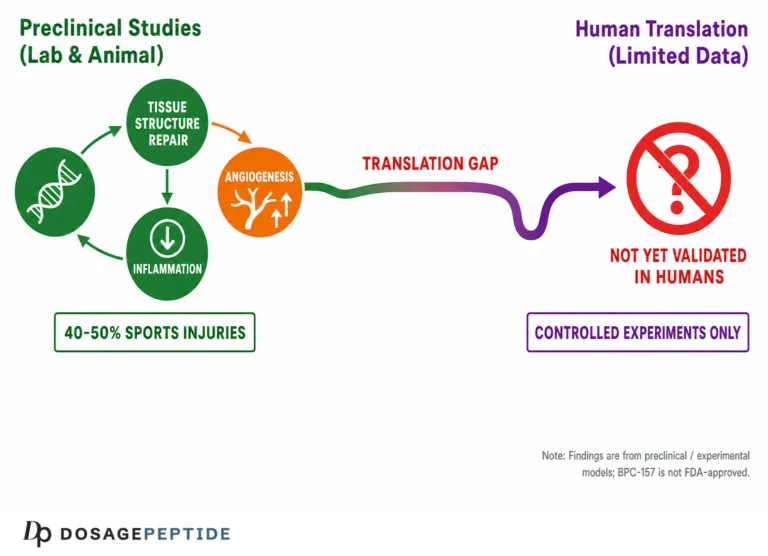
The human-evidence gap, then, is not a technicality to be papered over with mechanism talk and rodent extrapolation; it is the defining feature of the ulcer question. A responsible synthesis reads as follows. In rodents, BPC-157 reproducibly reduces and speeds the healing of gastric, duodenal, and esophageal lesions across chemically diverse ulcerogens, with a coherent proposed mechanism centered on angiogenesis, the nitric-oxide system, and acid-independent mucosal defense.135 In humans, there is no completed, published, controlled trial demonstrating that it protects against or heals ulcers, its most advanced human program (IBD) never published efficacy data and had its dedicated safety trial cancelled, and it is unapproved and, in sport, prohibited.91012 The animal signal earns BPC-157 a legitimate place as a research compound and a candidate worth formal investigation; it does not earn it the status of an ulcer therapy. Anyone genuinely interested in the compound’s gastrointestinal potential should want to see the trial that the last thirty years have not produced — and should treat every confident human claim made in its absence with corresponding skepticism. For a wider view of how peptides are cataloged and studied on this site, the central dosages index organizes these compounds for educational reference only.
Frequently Asked Questions
Does research prove BPC-157 protects against or heals ulcers?
No. Research shows that in rodents BPC-157 consistently reduces and speeds the healing of gastric, duodenal, and esophageal lesions produced by alcohol, stress, NSAIDs, and other insults.14 But every one of those results is preclinical. There is no completed, published, placebo-controlled human trial demonstrating ulcer protection or healing, so “prove” is the wrong word — the honest description is a strong animal signal without human confirmation.10
What makes BPC-157 different from antacids or proton-pump inhibitors?
Proton-pump inhibitors and H2-blockers heal ulcers mainly by suppressing gastric acid. BPC-157’s proposed action is acid-independent: it is described as a “cytoprotectant” that reinforces mucosal defense and repair, apparently through angiogenesis, the nitric-oxide system, and barrier stabilization.35 A key experiment showed protection even in rats whose stomachs (and thus acid) had been removed.3 That conceptual difference is interesting, but it has only been demonstrated in animals.
Was BPC-157 really tested in human inflammatory bowel disease?
It entered early human development for IBD under the codes PL-10, PLD-116, and PL-14736, and the literature repeatedly refers to it as being “in trials” and as having acceptable safety.9 However, no standalone paper reports a completed Phase II efficacy trial with full results, and an independent 2025 review found only minimal human data plus a Phase I safety trial that was cancelled in 2016 without published results.10 The IBD program is a real development effort, not a published body of efficacy evidence — and colitis is a different disease from peptic ulcer regardless.
How strong is the mechanistic evidence for how BPC-157 might heal the gut?
The best mechanistic work is the endothelial-cell research showing BPC-157 up-regulates VEGFR2 and activates the VEGFR2–Akt–eNOS pathway to promote angiogenesis, plus studies implicating a Src–caveolin-1–eNOS route in its vascular effects.58 Because ulcer healing depends on new blood vessels and preserved mucosal blood flow, these are biologically sensible mechanisms. They remain proposed pathways, demonstrated in cells and animals rather than in a healing human ulcer.
Why is so much of the BPC-157 ulcer research from one group?
The foundational gastrointestinal work comes overwhelmingly from the Sikirić program in Croatia, which pioneered the compound.13 That is common for a molecule’s early literature, but it is a limitation: independent replication of the headline ulcer-healing claims by unaffiliated laboratories is limited, and a 2025 review emphasized that the evidence base is still dominated by small animal studies.10 More independent replication would strengthen confidence considerably.
Is BPC-157 legal and approved?
It is not approved by the FDA, EMA, or comparable regulators for any condition and is described by U.S. authorities as an unapproved drug found unlawfully in wellness products. It was flagged in the FDA’s Category 2 of bulk substances presenting significant safety risks for compounding; although it was removed from that list in April 2026 after its nomination was withdrawn, it was not moved to the “may compound” category and remains ineligible for lawful compounding and unapproved for human use. It is also prohibited in sport by WADA with no therapeutic-use exemption.111213 Material sold as “research chemical” occupies a gray area and varies in purity.
Could the pro-angiogenic effect be harmful?
It is a theoretical concern rather than a demonstrated harm. The same new-blood-vessel growth proposed to heal ulcers is, in principle, unwelcome in the setting of cancer, where tumors depend on angiogenesis.5 No study has shown that BPC-157 promotes tumor growth in practice, but the point illustrates why “stimulates healing” should not be read as automatically safe, and why long-term human safety data — which do not exist — would be needed before any such reassurance.
What would it take to actually establish BPC-157 as an ulcer therapy?
A proper program: independent replication of the key animal healing studies, human pharmacokinetic and safety trials (the kind cancelled in 2016), and ultimately randomized, placebo-controlled trials in patients with endoscopically confirmed ulcers or NSAID enteropathy, measuring healing rates and functional outcomes.10 Until that work is done and published, statements that research “reveals” an ulcer-protective role for BPC-157 overstate a preclinical hypothesis as if it were a clinical finding.
References
- Sikirić P, Seiwerth S, Grabarević Z, et al. Beneficial effect of a novel pentadecapeptide BPC 157 on gastric lesions induced by restraint stress, ethanol, indomethacin, and capsaicin neurotoxicity. Dig Dis Sci. 1996;41(8):1604-1614. PMID: 8769287. https://pubmed.ncbi.nlm.nih.gov/8769287/
- Seiwerth S, Milavić M, Vukojević J, et al. Stable Gastric Pentadecapeptide BPC 157 and Wound Healing. Front Pharmacol. 2021;12:627533. PMID: 34267654. PMCID: PMC8275860. https://pmc.ncbi.nlm.nih.gov/articles/PMC8275860/
- Sikirić P, Seiwerth S, Grabarević Z, et al. Pentadecapeptide BPC 157, cimetidine, ranitidine, bromocriptine, and atropine effect in cysteamine lesions in totally gastrectomized rats: a model for cytoprotective studies. Dig Dis Sci. 1997;42(5):1029-1037. PMID: 9149058. https://pubmed.ncbi.nlm.nih.gov/9149058/
- Xue XC, Wu YJ, Gao MT, et al. Protective effects of pentadecapeptide BPC 157 on gastric ulcer in rats. World J Gastroenterol. 2004;10(7):1032-1036. PMID: 15052688. https://pubmed.ncbi.nlm.nih.gov/15052688/
- Hsieh MJ, Liu HT, Wang CN, et al. Therapeutic potential of pro-angiogenic BPC157 is associated with VEGFR2 activation and up-regulation. J Mol Med (Berl). 2017;95(3):323-333. PMID: 27847966. https://pubmed.ncbi.nlm.nih.gov/27847966/
- Sikirić P, Jadrijević S, Seiwerth S, et al. Long-lasting cytoprotection after pentadecapeptide BPC 157, ranitidine, sucralfate or cholestyramine application in reflux oesophagitis in rats. J Physiol Paris. 1999;93(6):467-477. PMID: 10672991. https://pubmed.ncbi.nlm.nih.gov/10672991/
- Sikirić P, Seiwerth S, Grabarević Z, et al. Pentadecapeptide BPC 157 positively affects both non-steroidal anti-inflammatory agent-induced gastrointestinal lesions and adjuvant arthritis in rats. J Physiol Paris. 1997;91(3-5):113-122. PMID: 9403784. https://pubmed.ncbi.nlm.nih.gov/9403784/
- Hsieh MJ, Lee CH, Chueh HY, Chang GJ, Huang HY, Lin Y, Pang JHS. Modulatory effects of BPC 157 on vasomotor tone and the activation of the Src–caveolin-1–endothelial nitric oxide synthase pathway. Sci Rep. 2020;10(1):17078. PMID: 33051481. PMCID: PMC7555539. https://pmc.ncbi.nlm.nih.gov/articles/PMC7555539/
- Sikirić P, Seiwerth S, Brcić L, et al. Stable gastric pentadecapeptide BPC 157 in trials for inflammatory bowel disease (PL-10, PLD-116, PL 14736, Pliva, Croatia). Full and distended stomach, and vascular response. Inflammopharmacology. 2006;14(5-6):214-221. PMID: 17186181. https://pubmed.ncbi.nlm.nih.gov/17186181/
- Józwiak M, Bauer M, Kamysz W, Kleczkowska P. Multifunctionality and Possible Medical Application of the BPC 157 Peptide—Literature and Patent Review. Pharmaceuticals (Basel). 2025;18(2):185. PMID: 40005999. PMCID: PMC11859134. https://pmc.ncbi.nlm.nih.gov/articles/PMC11859134/
- U.S. Food and Drug Administration. Certain Bulk Drug Substances for Use in Compounding That May Present Significant Safety Risks (section 503A). BPC-157 was placed in Category 2 (significant safety risks, incl. immunogenicity and characterization concerns) and removed from that list in April 2026 after nomination withdrawal, without being added to the Category 1 “may compound” list; not FDA-approved for any use. https://www.fda.gov/drugs/human-drug-compounding/certain-bulk-drug-substances-use-compounding-may-present-significant-safety-risks
- U.S. Anti-Doping Agency (USADA). BPC-157: Experimental Peptide Creates Risk for Athletes (prohibited under WADA Section S0, non-approved substances). https://www.usada.org/spirit-of-sport/bpc-157-peptide-prohibited/
- Operation Supplement Safety (OPSS), U.S. Department of Defense. BPC-157: A prohibited peptide and an unapproved drug found in health and wellness products. https://www.opss.org/article/bpc-157-prohibited-peptide-and-unapproved-drug-found-health-and-wellness-products
Educational and research-use disclaimer: This article is provided solely for scientific and educational purposes. BPC-157 is not approved by the FDA, EMA, or any comparable regulator for the treatment, cure, or prevention of peptic ulcer disease, inflammatory bowel disease, or any other condition, and no human efficacy for gastrointestinal ulcer protection has been demonstrated in a completed, published, controlled trial. The evidence discussed here is overwhelmingly preclinical (rodent and in-vitro). Nothing here is medical advice or a recommendation for human use. BPC-157 is prohibited in sport by the World Anti-Doping Agency and is considered an unapproved drug by U.S. authorities. Any legitimate investigation of this compound should occur within properly authorized preclinical or clinical research under appropriate oversight. Readers should consult qualified professionals and applicable regulations before making any decisions.