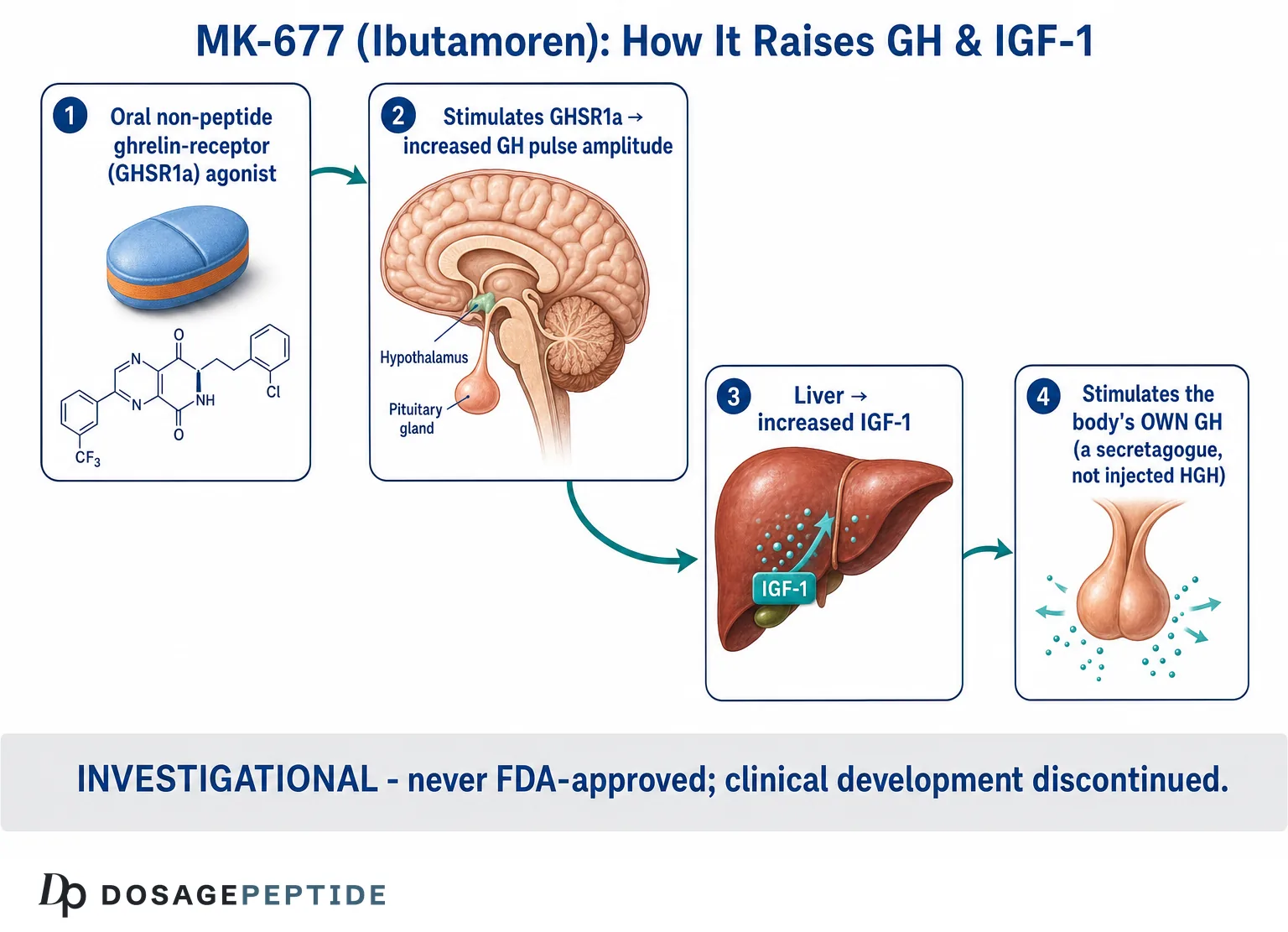
MK-677 (ibutamoren) is an orally active compound that makes the pituitary release more of the body’s own growth hormone by switching on the ghrelin receptor. It is not growth hormone, and it is not a peptide — it is a small molecule that survives digestion, which is why it is swallowed rather than injected.
Human trials were consistent about the effect: GH and IGF-1 go up, and stay up. In the year-long Alzheimer’s disease trial, IGF-1 rose 60–73% above placebo across 563 patients — and cognition did not improve.[10] They were equally consistent about the cost: increased appetite, fluid retention, higher fasting glucose and reduced insulin sensitivity, plus a congestive-heart-failure signal that ended a Phase IIb hip-fracture trial early.[9] Development was discontinued. MK-677 was never approved as a medicine and is not lawful as a supplement ingredient.
What follows is the mechanism, what each human trial actually measured, the risks in the order the literature ranks them, and why an oral secretagogue with real pharmacology still went nowhere. This is research context only, not guidance for use.
Research Context: What Is MK-677 (Ibutamoren)?
MK-677 is a non-peptide, orally-active, small-molecule agonist of the growth-hormone-secretagogue receptor (GHSR1a) — the same receptor engaged by the endogenous hormone ghrelin. It is known by several names in the literature: ibutamoren, ibutamoren mesylate, and its original developmental designations MK-0677 and L-163,191. It was designed and characterized by Merck Research Laboratories, where medicinal chemists built it as a potent, orally bioavailable member of a spiroindanyl-piperidine structural class explicitly intended to release growth hormone (GH) after oral dosing.[4]
The reason MK-677 matters as a research object is that it sits at the intersection of two important stories in endocrinology. The first is the decades-long effort to develop “growth hormone secretagogues” — molecules that coax the pituitary into releasing more of the body’s own GH rather than injecting recombinant human growth hormone (HGH) directly. The second is the discovery of ghrelin itself: the search for the natural ligand of the receptor that MK-677 and related peptides activate is precisely what led to ghrelin’s identification in 1999.[1] In that sense, MK-677 is not a fringe compound; it is a molecule with a well-documented pharmacological pedigree that advanced into multiple human trials.
To understand why Merck built MK-677 at all, it helps to trace the lineage it came from. The field of growth hormone secretagogues began with observations that certain opioid-derived peptides could release GH, work that led Cyril Bowers and colleagues to synthesize the first “growth hormone-releasing peptides” (GHRPs) such as GHRP-6. Those hexapeptides released GH through a mechanism distinct from GHRH, which implied a separate, then-uncharacterized receptor and, ultimately, a separate natural ligand. Because the GHRPs were peptides, they were not orally durable, and Merck’s program set out to convert that peptide pharmacology into a small molecule that could be swallowed. The intermediate benzolactam compound L-692,429 proved the concept was feasible; MK-677 (L-163,191) was the optimized successor with far greater oral potency and duration.[4] Reviews of this therapeutic effort framed GHRH analogs and GHRPs alike as attempts to enhance the body’s own GH output in disease and aging, rather than to replace the hormone.[8]
What it is not is a licensed drug. Despite Phase II programs in several indications, MK-677 never received FDA approval, and clinical development was halted. Today it circulates as a “research chemical” sold by laboratory-supply vendors, which is a very different regulatory and quality category from a prescription medicine. Researchers and readers evaluating the compound should hold both facts in view simultaneously: the human data are real and citable, and the compound is nonetheless investigational and unapproved. This dual character — a molecule with a legitimate pharmaceutical past but no approved present — is exactly why careful, source-anchored description matters: most consumer-facing writing about MK-677 draws selectively on the “promising” half of the story and omits the discontinuation and the safety signal that closed the program. For readers who want the handling and measurement details that accompany laboratory work with this compound, our MK-677 dosage and handling protocol compiles the reference figures reported in the literature.
Is MK-677 a Peptide or a Small Molecule?
This is one of the most consequential distinctions to get right, because MK-677 is routinely grouped with peptides such as ipamorelin or GHRP-2 in casual discussion, and it is not one. MK-677 is a non-peptide small molecule. Chemically it is a spiro-compound built around an indane and piperidine framework (its formal name references a spiro-1H-indene-piperidine core), formulated as a mesylate salt for oral use. It does not consist of amino acids linked by peptide bonds, and therefore it is not degraded by the peptidases in the gut that make most true peptides orally inactive.
That single property — oral bioavailability — is the entire point of MK-677’s design. The peptide secretagogues that inspired it, such as GHRP-6, had to be injected because they are broken down in the digestive tract. Merck’s medicinal-chemistry effort produced a series of “peptidomimetics” — small molecules that mimic what those peptides do at the receptor while surviving oral administration. In the original characterization, the compound released GH from cultured rat pituitary cells with an EC50 in the low-nanomolar range and raised GH in dogs after oral doses as low as 0.125 mg/kg, which is why it was selected for clinical study.[4]
Practically, the peptide-versus-small-molecule distinction has three implications that recur throughout the research literature:
- Route. MK-677 works by mouth; injectable secretagogues generally do not survive the gut. This is the headline reason MK-677 attracted attention as an oral growth hormone secretagogue.
- Half-life and duration. Human pharmacology showed that once-daily oral dosing produced GH and IGF-1 effects sustained across a 24-hour period, consistent with a relatively long duration of action for a secretagogue.[5]
- Receptor identity. Despite the structural difference, MK-677 acts at the very same GHSR1a receptor as the ghrelin-mimetic peptides — it is “mechanistically indistinguishable” from GHRP-6 at that receptor while being clearly distinct from growth-hormone-releasing hormone (GHRH).[4]
How Does MK-677 Work? Mechanisms Studied
The MK-677 mechanism is best understood by first understanding the receptor it targets and the natural hormone that occupies that receptor. This section walks through the ghrelin/GHS-receptor system, then explains how MK-677 amplifies the body’s own GH secretion, and finally how that translates into changes in IGF-1.
The ghrelin / growth-hormone-secretagogue receptor system
Growth hormone release from the anterior pituitary is classically governed by two opposing hypothalamic signals: GHRH, which stimulates release, and somatostatin, which suppresses it. In the 1980s and 1990s, researchers found that certain synthetic peptides (the “growth hormone-releasing peptides,” or GHRPs) stimulated GH through a separate receptor distinct from the GHRH receptor. That receptor was cloned and named the growth-hormone-secretagogue receptor (GHS-R), a seven-transmembrane G-protein-coupled receptor expressed prominently in the pituitary and hypothalamus.[2] In the molecular characterization of the receptor, radiolabeled MK-0677 bound the cloned receptor with high, sub-nanomolar affinity, directly confirming MK-677 as a GHS-R ligand.[2]
The existence of a dedicated receptor implied an undiscovered natural hormone. That hormone turned out to be ghrelin, purified from rat stomach in 1999: a 28-amino-acid peptide bearing an unusual octanoyl (fatty-acid) modification on its third serine residue, a modification essential for its GH-releasing activity.[1] That acyl modification is not incidental chemistry: it is installed by a dedicated enzyme (ghrelin O-acyltransferase) and is required for the peptide to bind and activate GHSR1a. Only the acylated form is a GH secretagogue, which is one reason the receptor’s natural pharmacology took so long to decode — and it underscores that MK-677, a stable small molecule, reproduces the signaling consequence of that fragile acyl group without needing the acyl group at all.[3]
Because MK-677 activates the ghrelin receptor, it is accurately described as a ghrelin receptor agonist or “ghrelin mimetic.” At the cellular level, GHSR1a is a Gq-coupled receptor: activation drives phospholipase C, inositol trisphosphate, and a rise in intracellular calcium in pituitary somatotrophs, which triggers GH release. The receptor also shows notably high constitutive (ligand-independent) activity, a feature that distinguishes it from many other G-protein-coupled receptors and that shapes how agonists like MK-677 behave. Ghrelin biology, however, extends well beyond GH: the same signaling system participates in appetite stimulation, gastric motility and acid secretion, glucose and lipid metabolism, sleep–wake regulation, learning and memory, and reward pathways.[3] This breadth is directly relevant to understanding MK-677’s side-effect profile — a compound that engages the ghrelin receptor is not a “clean” GH tool but a broad ghrelin-system agonist, which is precisely why appetite stimulation and metabolic shifts appear alongside the intended GH/IGF-1 rise.
Amplifying GH pulses rather than overriding feedback
A defining feature documented in human studies is how MK-677 raises GH. It does not create a flat, continuous elevation the way an infusion of recombinant GH would; instead it enhances the natural, pulsatile pattern of secretion. In the foundational 1996 dose-ranging study in healthy elderly subjects, oral MK-677 increased 24-hour GH concentrations in a dose-dependent manner — roughly doubling mean GH at the 25 mg dose — and the researchers attributed this to an enhancement of pre-existing pulsatile GH secretion: pulse height and interpulse nadir concentrations rose, while the number of pulses did not change significantly.[5]
This is mechanistically important. Because MK-677 amplifies endogenous pulses, the somatotroph’s own regulatory machinery — including negative feedback from IGF-1 and somatostatin — remains partly in the loop. That is generally described as a more “physiologic” pattern than the pharmacologic square-wave of exogenous HGH, and it is one reason secretagogues were pursued as candidate tools to enhance GH secretion in disease and aging in the first place.[8] It does not, however, make the effect trivial or self-limiting: the durable rise in IGF-1 across months of dosing shows the amplification is sustained rather than rapidly tolerated.
MK-677 and IGF-1
Downstream of GH, the liver and other tissues produce insulin-like growth factor 1 (IGF-1), which mediates many of GH’s anabolic effects and provides a stable, integrated readout of GH exposure. IGF-1 is useful precisely because it is slow-moving: unlike GH, whose serum level swings across a single pulse and is hard to capture with a spot measurement, IGF-1 integrates GH exposure over roughly a day, so a sustained rise in IGF-1 is strong evidence that GH output has genuinely increased rather than merely been re-timed. Across human trials, the MK-677 IGF-1 response is one of the most reproducible findings. In healthy older subjects, 25 mg/day restored mean serum IGF-1 into the range of healthy young adults over two to four weeks.[5] In the Alzheimer’s trial — a much larger study — MK-677 25 mg produced a 60.1% increase in serum IGF-1 at six weeks and a 72.9% increase at twelve months, which the authors cited as clear evidence of “target engagement.”[10] The consistency of this IGF-1 rise across independent trials is a key reason MK-677 is treated as a pharmacologically active compound and not a placebo, even though its clinical benefits proved elusive.
It is worth being explicit about what “target engagement” does and does not establish. It confirms that the molecule reaches the receptor, activates it, and produces the expected downstream endocrine consequence — a necessary condition for any hoped-for benefit. It does not, on its own, establish that the benefit follows. The MK-677 story is in fact the textbook illustration of this gap: the biomarker moved reliably and substantially in every population studied, yet the clinical endpoints those biomarkers were supposed to predict — cognition, functional performance, strength — did not. Readers should therefore treat the IGF-1 data as evidence of pharmacological activity, not as evidence of efficacy for any outcome a person might actually care about.
Secretagogue vs Exogenous HGH: Why the Distinction Matters
A recurring source of confusion is the assumption that MK-677 “is” growth hormone or a growth-hormone injection. It is neither. MK-677 is a secretagogue — a compound that stimulates a gland to secrete its own hormone. The GH that appears in the bloodstream after MK-677 is the person’s (or research subject’s) own pituitary GH, released in amplified pulses. Recombinant HGH, by contrast, is the finished hormone administered directly, bypassing the pituitary and its feedback controls entirely.
The distinction carries several practical consequences that the literature illustrates:
| Feature | MK-677 (secretagogue) | Exogenous recombinant HGH |
|---|---|---|
| Source of circulating GH | The subject’s own pituitary | Externally manufactured hormone |
| Secretion pattern | Amplified natural pulses[5] | Non-pulsatile, dose imposed externally |
| Feedback loop | Partially preserved (IGF-1/somatostatin still act) | Largely bypassed |
| Route | Oral | Subcutaneous injection |
| Regulatory status | Investigational; never approved | FDA-approved for specific deficiency indications |
One important corollary: because MK-677 depends on a functioning pituitary, its effect is fundamentally capped by the somatotroph’s capacity to respond. A person with an intact GH axis has a ceiling on how much GH the receptor amplification can produce. This is a mechanistic reason secretagogues are conceptually distinct from simply adding more hormone, and it is central to why they were studied as potentially “gentler” tools — a hypothesis that, as later sections show, did not automatically translate into a favorable clinical benefit-risk balance.
What Did the Human Trials Actually Measure?
Unlike many compounds sold as research chemicals, MK-677 has a genuine clinical dossier. Because it was a Merck development program, it was studied in properly designed, randomized, double-blind, placebo-controlled trials with real endpoints. Understanding those endpoints — and their results — is the honest way to characterize what the compound does.
The quality of that dossier is itself worth noting, because it is unusual for a compound now sold on the gray market. The pivotal studies used blinding and placebo controls, pre-specified endpoints, and independent measurement of hormones and outcomes — the machinery that separates a real drug effect from expectation and noise. That rigor cuts both ways for anyone tempted to read the trials optimistically: the same design that credibly demonstrated the GH/IGF-1 effect also credibly demonstrated the absence of the hoped-for clinical benefits. You cannot accept the biomarker findings as trustworthy while dismissing the negative efficacy findings from the identical studies. The subsections below walk through the main endpoint categories — body composition, catabolic protection, sleep, and bone — before the later sections address the trials whose primary purpose was disease treatment.
Body composition and fat-free mass
The most-cited body-composition study is the two-year randomized trial by Nass and colleagues in 65 healthy adults aged 60–81, published in the Annals of Internal Medicine in 2008. Daily oral MK-677 25 mg significantly increased GH and IGF-1 into the young-adult range and produced a statistically significant increase in fat-free mass: fat-free mass fell slightly in the placebo group but rose by about 1.1 kg in the MK-677 group (p<0.001).[9] Crucially, however, the same trial reported that this increase in fat-free mass “did not result in changes in strength or function.” In other words, the compound moved a body-composition number without demonstrably improving the outcomes that matter functionally — a nuance often omitted when MK-677 is described online.
The design of that trial deserves attention because it is what makes the “fat-free mass rose but strength did not” finding so instructive. It ran for two years, used objective body-composition measurement, and pre-specified functional outcomes rather than relying on subjective impressions. Fat-free mass is often used as a proxy for muscle, and increases in it are routinely reported as evidence of a “muscle-building” effect. But fat-free mass includes intracellular water, and GH/IGF-1 elevation is known to expand body water; the trial itself attributed much of the gain to water and lean tissue that did not translate into measurable strength or physical function. This is the single most important nuance in the entire MK-677 evidence base for anyone interested in performance: a number on a body-composition scan moved, and the thing that number is supposed to represent — usable strength and function — did not.
An earlier short-term study by Murphy and colleagues examined a catabolic model: healthy volunteers were placed on caloric restriction, and MK-677 25 mg reversed diet-induced negative nitrogen balance over one week compared with placebo, suggesting a short-term nitrogen-retaining (anabolic) effect under catabolic stress.[6] The authors were careful to frame this as a hypothesis for catabolic disease states requiring confirmation, not an established therapy. Nitrogen balance is a biochemical accounting of whether the body is net-building or net-breaking-down protein; shifting it positive during a short calorie deficit is a mechanistically plausible effect of raising GH, but a one-week nitrogen-balance study in a handful of volunteers is a proof-of-concept about protein handling, not a demonstration that the compound preserves muscle or improves outcomes in any real clinical catabolic state such as cancer cachexia or critical illness. Those confirmatory studies were never completed to approval.
Sleep, bone remodeling, and other measured endpoints
Because GH secretion and slow-wave sleep are physiologically linked, a controlled crossover study evaluated MK-677’s effect on sleep architecture. In young subjects, high-dose MK-677 increased stage IV (deep) sleep by roughly 50% and REM sleep by more than 20% versus placebo; in older adults, REM sleep increased by nearly 50% with reduced REM latency.[7] These are small, short studies, but they are real and specific measurements rather than anecdote.
The physiological rationale for the sleep finding is that GH is secreted preferentially during slow-wave sleep, and the ghrelin system has independent links to sleep architecture, so a ghrelin-receptor agonist plausibly modifies both. The observed shifts — more stage IV sleep in the young, more REM in older subjects — are biologically coherent. But the honest framing is that these were small crossover studies of one week per condition, measuring sleep-laboratory endpoints, not trials of daytime alertness, cognition, or long-term sleep-disorder treatment. They tell us MK-677 can measurably alter sleep architecture; they do not establish it as a treatment for insomnia or any sleep disorder, and no such indication was ever approved.
The two-year Nass trial also documented changes in bone-mineral-density markers consistent with increased bone remodeling, alongside the body-composition changes.[9] Bone remodeling markers rise before density itself changes, so this was an early biomarker signal rather than proof of fracture-relevant benefit — a distinction reinforced by the hip-fracture trial discussed below, which failed to show functional benefit. The pattern recurs across every endpoint category: an intermediate biomarker moves in the “right” direction, but the hard outcome the biomarker is supposed to predict does not follow. Recognizing that pattern is the single most useful analytical habit when reading about this compound.
Current Evidence Level
Stating the evidence tier precisely is essential. The accurate characterization of MK-677 is: an investigational small-molecule ghrelin-receptor agonist that reached Phase II human trials in several indications, never obtained FDA approval, and whose clinical development was discontinued. It is not an FDA-approved medicine for any indication. It is not a dietary supplement. It is sold today as a research chemical.
The human clinical program spanned several distinct populations, and the pattern of results is instructive because the pharmacodynamic effect (raising GH/IGF-1) was consistent while clinical benefit was not:
- Healthy elderly / age-related GH decline. MK-677 reliably raised GH and IGF-1 and increased fat-free mass, but without demonstrated gains in strength or function over two years.[9]
- Catabolic states (diet-induced). Short-term reversal of negative nitrogen balance — a mechanistic proof-of-concept, not an approved indication.[6]
- Hip-fracture recovery (Phase IIb). IGF-1 rose markedly, but most functional-performance endpoints did not improve, and the trial was terminated early for a safety signal (see below).[11]
- Alzheimer’s disease. A large 563-patient, 12-month trial showed clear IGF-1 target engagement but no effect on any cognitive or functional endpoint — a negative trial on its primary outcomes.[10]
The Alzheimer’s trial is worth understanding on its own terms, because its rationale was not arbitrary. Preclinical work had suggested that IGF-1 could increase clearance of beta-amyloid from the central nervous system, and the age-related decline of the GH/IGF-1 axis had been proposed as a contributor to neurodegeneration. MK-677 offered a way to test that hypothesis: an oral compound that reliably raises IGF-1 for a year. The trial did exactly what a good test should — it confirmed the drug raised IGF-1 by 60–73% and then measured whether that mattered for cognition and function in 563 patients. It did not. The investigators concluded that the age-related decline of the somatotropic axis is not, on this evidence, driving the disease process, and that raising IGF-1 pharmacologically does not slow it.[10] A well-designed negative trial of this size is not a null result to be waved away; it is informative evidence that a plausible mechanism did not deliver.
The hip-fracture program tells a parallel but more sobering story. The rationale there was that frail elderly patients recovering from fracture are in a catabolic, muscle-losing state, and that boosting GH/IGF-1 might preserve lean tissue and speed functional recovery. Again the biomarker cooperated — IGF-1 rose by roughly 51 ng/mL versus placebo — but the functional recovery it was meant to drive largely did not materialize, and the trial ran into a safety signal serious enough to stop it. The two Phase II failures together, in populations chosen because they might plausibly benefit, are why the program did not continue.[11]
The overall arc is a compound that engaged its target as designed but repeatedly failed to convert that biochemical effect into approved clinical benefit, and accumulated tolerability concerns along the way. That combination — consistent biomarker movement, inconsistent-to-absent clinical benefit, and a safety signal in a frail population — is the honest summary of the evidence level. Anyone claiming MK-677 is “proven” to build muscle, reverse aging, or treat disease in humans is overstating what these trials showed.
What Are the Documented Risks and Side Effects?
A balanced account requires giving the risk data the same weight as the benefit data. The MK-677 trials documented a recognizable cluster of adverse effects that follow logically from amplifying GH/IGF-1 and from activating the ghrelin system.
Appetite, fluid retention, and metabolic effects
Because MK-677 is a ghrelin-receptor agonist, appetite stimulation is expected, and it was observed: in the two-year healthy-elderly trial, increased appetite was among the most frequent effects, though it tended to subside over a few months. That trial also reported transient, mild lower-extremity edema and muscle pain, a body-weight increase of about 2.7 kg in the MK-677 group versus 0.8 kg on placebo, an average rise in fasting glucose (about 5 mg/dL), and a measurable decrease in insulin sensitivity.[9] The glucose finding is not incidental — the earlier dose-ranging study likewise showed increases in fasting glucose and reduced insulin sensitivity with 25 mg dosing.[5] GH is a counter-regulatory hormone, so a tendency toward insulin resistance and higher fasting glucose is a mechanistically coherent and repeatedly documented concern.
The glucose finding deserves mechanistic emphasis because it is the most predictable metabolic consequence of the compound. GH is a counter-regulatory, insulin-antagonistic hormone: sustained elevation reduces peripheral insulin sensitivity, so the pancreas must secrete more insulin to hold blood glucose steady, and fasting glucose tends to drift upward. This is not a quirk of one study — it appeared in the dose-ranging work and again over two years in the healthy-elderly trial, and it is the same reason exogenous GH raises diabetes risk. For a research context, the implication is that any model of chronic MK-677 exposure has to treat glucose and insulin as primary, expected variables to monitor, not incidental ones. Individuals with impaired glucose tolerance would, on this mechanism, be the group in whom the effect matters most.
Fluid retention and edema likewise track with GH/IGF-1 elevation, which promotes renal sodium and water retention through effects on the distal nephron and the renin–angiotensin–aldosterone system. In the trials these effects were generally described as mild and transient — lower-extremity edema, occasional arthralgia and muscle pain, and the transient carpal-tunnel-type symptoms long associated with GH excess. On their own these are nuisance-level tolerability issues in otherwise healthy subjects. But they are the direct mechanistic bridge to the more serious cardiovascular signal discussed below: the same sodium-and-water retention that produces mild ankle swelling in a robust 65-year-old can, in a frail patient with limited cardiac reserve, contribute to volume overload and clinical heart failure.
The congestive-heart-failure safety signal
The most serious documented finding comes from the Phase IIb hip-fracture trial by Adunsky and colleagues, which randomized frail elderly patients recovering from hip fracture. IGF-1 rose substantially (by about 51 ng/mL versus placebo, p<0.001), but most functional-performance measures did not improve, and critically, the trial was terminated early because of a safety signal of congestive heart failure (4 cases in the MK-0677 group versus 1 on placebo). The authors concluded plainly that MK-0677 has “an unfavorable safety profile in this patient population.”[11]
Two caveats keep this in proportion, in both directions. On one hand, this signal emerged specifically in frail, elderly, post-fracture patients — a population with high baseline cardiovascular vulnerability, and fluid retention from GH elevation can plausibly tip such patients into failure. On the other hand, it is precisely the kind of finding that ended a development program and that no vendor selling a “research chemical” is obligated to disclose. It would be dishonest to present MK-677 as benign in light of a trial halted for a cardiac safety signal.
Other measured changes across trials included a modest rise in cortisol and small increases in prolactin (generally remaining within the normal range) in the dose-ranging work,[5] consistent with the compound’s activity on the pituitary. The general principle to carry away is that elevating GH and IGF-1 chronically is not a free lunch: the same hormonal changes responsible for the compound’s appeal are responsible for its documented risks.
How Does MK-677 Compare to Injectable GH Secretagogues?
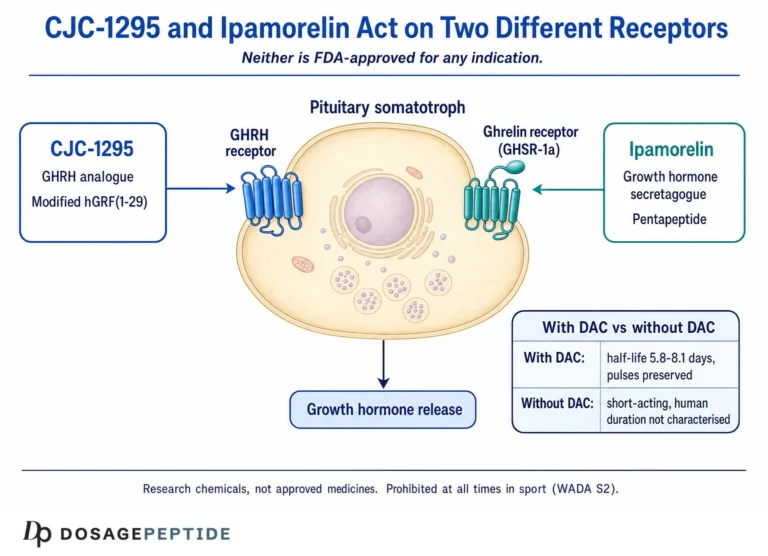
Because MK-677 is frequently discussed alongside the peptide secretagogues, it helps to place it in that family — while remembering it is chemically distinct from all of them. The peptide GH secretagogues fall into two functional groups: the ghrelin-mimetic GHRPs (which, like MK-677, act at GHSR1a) and the GHRH analogs (which act at the separate GHRH receptor).
- GHRP-2 is a synthetic hexapeptide ghrelin mimetic that, like MK-677, stimulates GH through the GHS-R but must be injected. Our overview of GHRP-2 growth hormone releasing peptide research details how it differs in appetite effect and cortisol/prolactin profile.
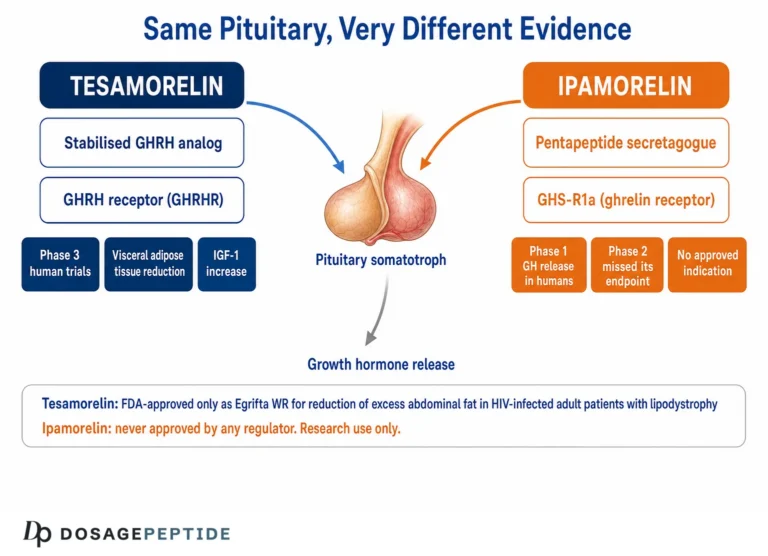
- Ipamorelin is a more selective GHRP-class peptide often studied for its comparatively clean profile at the GHS-R; the Ipamorelin mechanism guide contrasts its selectivity with the broader ghrelin-system activity of MK-677.
- CJC-1295 is a GHRH analog (not a ghrelin mimetic), and the presence or absence of a “drug affinity complex” changes its half-life dramatically — explained in CJC-1295 DAC vs no-DAC. Because GHRH analogs and ghrelin mimetics act on different receptors, they are sometimes studied in combination in the literature.
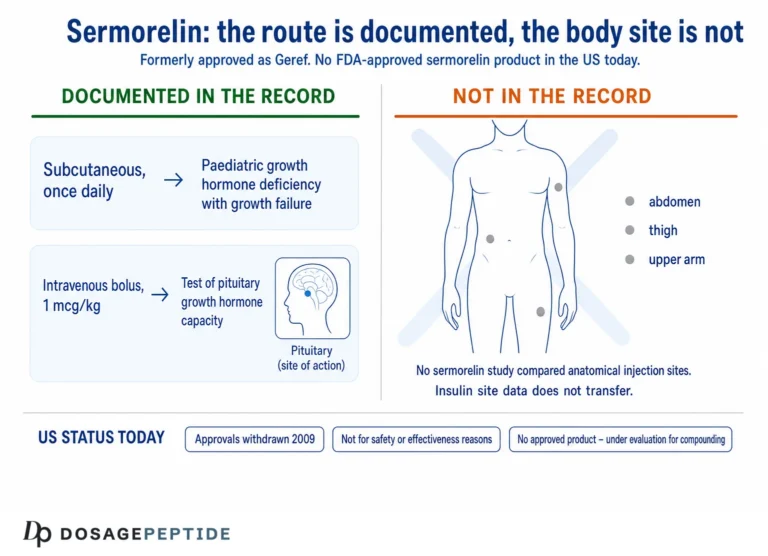
- Sermorelin is a truncated GHRH fragment; research on Sermorelin and natural growth hormone centers on the GHRH-receptor arm of GH regulation rather than the ghrelin arm MK-677 engages.
The single feature that most sets MK-677 apart from all of the above is oral activity combined with a long duration of action — a once-daily oral compound producing 24-hour effects, versus peptides that are injected and typically shorter-acting. Whether that convenience is an advantage or a liability is not obvious: a longer, flatter exposure may sacrifice some of the pulsatility that made secretagogues attractive, and sustained IGF-1 elevation is exactly what raises the metabolic and fluid-retention concerns discussed above.
| Compound | Class | Receptor | Route | Peptide? |
|---|---|---|---|---|
| MK-677 (ibutamoren) | Non-peptide GHS | GHSR1a (ghrelin) | Oral | No |
| GHRP-2 | GHRP (ghrelin mimetic) | GHSR1a (ghrelin) | Injection | Yes |
| Ipamorelin | GHRP (ghrelin mimetic) | GHSR1a (ghrelin) | Injection | Yes |
| CJC-1295 | GHRH analog | GHRH receptor | Injection | Yes |
| Sermorelin | GHRH fragment | GHRH receptor | Injection | Yes |
One further comparison point is often glossed over: the injectable ghrelin-mimetic peptides and the GHRH analogs act on different receptors, which is why they are sometimes studied together in the research literature — a GHRH-receptor agent and a ghrelin-receptor agent can produce a larger combined GH response than either alone, because they engage two independent limbs of the same regulatory system. MK-677 occupies only the ghrelin-receptor limb. That is a useful frame for placing it correctly: it is not a “stronger” or “weaker” version of a GHRH peptide like sermorelin or CJC-1295, it is a mechanistically different tool that happens to raise the same downstream hormone. None of this should be read as a comparative endorsement of any of these compounds for human use; the peptides listed here are themselves largely investigational or research-only, and the comparison is offered to clarify pharmacology, not to rank options.
For readers working through the arithmetic of reconstitution and concentration for the injectable comparators, our dosage calculator provides the reference math; MK-677 itself, being an oral small molecule, does not require reconstitution.
What Is the Regulatory and Legal Status of MK-677?
MK-677’s status is frequently misrepresented, so precision matters. It is not an FDA-approved drug in the United States for any indication, and its clinical development was discontinued rather than completed to approval. It is not a dietary ingredient and is not lawfully marketed as a supplement; products labeling it as such are mislabeled. In practice it is sold by chemical-supply vendors under “research use only” and “not for human consumption” labeling, which reflects its actual status as an investigational compound outside any approved medical or nutritional framework.
In the sporting context, MK-677 is prohibited. Growth hormone secretagogues, including MK-677 and other ghrelin-receptor agonists, are banned by the World Anti-Doping Agency (WADA) at all times (in and out of competition) under the S2 peptide-hormones, growth-factors and mimetics category. Athletes subject to anti-doping testing should treat any product containing ibutamoren as a prohibited substance regardless of how it is marketed.
Quality is a further, non-trivial concern with any research-chemical-grade material. When a compound is manufactured and sold outside an approved pharmaceutical supply chain, there is no regulatory authority verifying its identity, purity, or content, and no guarantee that the substance in a vial matches its label in either identity or amount. Independent testing of gray-market performance and “research” compounds has repeatedly found under-dosing, over-dosing, wrong actives, and contaminants. This is a categorical difference from an approved medicine, where content uniformity and impurity limits are enforced batch by batch. It also has a direct bearing on how far the trial data can be applied: the Merck studies used pharmaceutical-grade MK-677 of known identity and dose, so even the parts of the human record that are favorable were generated with material that bears no assured relationship to what a laboratory-supply vendor ships today. None of this constitutes legal advice; it is context for understanding why MK-677 cannot be equated with an approved medicine.
A final regulatory nuance worth stating plainly: “not FDA-approved” and “discontinued” are not the same as “shown to be safe but unavailable for bureaucratic reasons,” which is how the compound is sometimes spun. The development program ended after Phase II studies that failed on efficacy and, in the hip-fracture population, raised a cardiac safety concern. The absence of approval reflects the absence of a demonstrated favorable benefit–risk balance in the indications studied, not an untested promise waiting to be fulfilled. That distinction is the single most important thing to carry away from the regulatory picture.
Limitations of the MK-677 Evidence Base
Even taking every cited trial at face value, several structural limitations constrain what can honestly be claimed about MK-677:
- Biomarker success, clinical failure. The compound reliably raised GH and IGF-1, but the two largest or longest trials — the Alzheimer’s study and the two-year healthy-elderly study — failed to show benefit on the outcomes that actually matter (cognition/function and strength/function, respectively).[10][9] A biomarker that moves without a clinical payoff is a cautionary result, not a positive one.
- Discontinued development. The program did not proceed to approval, and at least one trial was stopped early for a cardiac safety signal.[11] Discontinuation removes the large, long-term safety databases that only completed development programs generate.
- Population specificity. Much of the human data comes from older adults or specific patient groups. Extrapolating these results to young, healthy individuals using research-chemical material is not supported by the trials, which never studied that use.
- Short durations for many endpoints. The sleep and catabolism findings, while real, come from very small, short studies.[7][6] They are hypothesis-generating, not definitive.
- No modern independent replication of long-term safety. Much of the pivotal data is now 15–30 years old and was generated by the developer; there is no ongoing regulated program to update the safety picture.
- Product-quality variability. Because it is sold as a research chemical, the substance in any given vial is not identity- or purity-assured, which further limits how far trial data (using pharmaceutical-grade material) can be applied to real-world samples.
The responsible reading is that MK-677 is a genuinely interesting pharmacological tool with a real but ultimately discouraging clinical record — a compound that did what it was designed to do at the receptor level while failing to become a medicine. That combination is more instructive than either a simple “it works” or a dismissive “it does nothing.” It does something specific and measurable: it durably amplifies endogenous GH pulses and raises IGF-1, through a well-characterized ghrelin-receptor mechanism, after a single daily oral dose. What it did not do, across a credible clinical program, was convert that biochemistry into an approved benefit that outweighed its risks in the populations tested. Holding both halves of that sentence together — the real pharmacology and the real failure — is what separates an accurate account from the selective optimism that dominates most consumer-facing coverage of this compound.
Frequently Asked Questions
Is MK-677 the same as HGH?
No. MK-677 (ibutamoren) is not growth hormone. It is an oral small-molecule secretagogue that stimulates the pituitary to release more of the body’s own GH by activating the ghrelin receptor. Recombinant HGH is the finished hormone injected directly. MK-677 raised GH and IGF-1 by amplifying natural pulsatile secretion in human trials, whereas exogenous HGH bypasses the pituitary and its feedback controls entirely.[5]
Is MK-677 a peptide?
No. MK-677 is a non-peptide small molecule, chemically a spiro-indane/piperidine compound formulated as a mesylate salt. It is not made of amino acids linked by peptide bonds, which is why it survives the digestive tract and works orally — unlike the injectable peptide secretagogues such as GHRP-2 and ipamorelin. It does, however, act at the same ghrelin receptor those peptides target.[4]
Is MK-677 FDA-approved?
No. MK-677 was never approved by the FDA for any indication. It advanced through several Phase II trials — in healthy older adults, hip-fracture recovery, and Alzheimer’s disease — but clinical development was discontinued, and one trial was halted early for a congestive-heart-failure safety signal. It is sold today only as a research chemical, not as a medicine or supplement.[11]
How does MK-677 raise IGF-1?
MK-677 activates the growth-hormone-secretagogue receptor (GHSR1a, the ghrelin receptor) on the pituitary, amplifying pulsatile GH release. The extra GH then drives the liver and other tissues to produce more IGF-1. This IGF-1 rise is the most reproducible effect in the human literature — for example, roughly a 60–73% increase over placebo across a year in the Alzheimer’s trial — and is used as evidence the compound engages its target.[10]
What side effects were reported in MK-677 studies?
Documented effects include increased appetite (expected from ghrelin-receptor activation), mild fluid retention and lower-extremity edema, muscle pain, weight gain, raised fasting glucose, and decreased insulin sensitivity. Most serious was a congestive-heart-failure safety signal that ended a Phase IIb hip-fracture trial in frail elderly patients. These risks track directly with sustained elevation of GH and IGF-1.[9]
Did MK-677 build muscle or strength in trials?
It increased fat-free mass in a two-year study of healthy older adults, but that increase “did not result in changes in strength or function.” So while a body-composition number moved, the trial did not demonstrate meaningful functional or strength benefit. A separate short study showed it reversed diet-induced nitrogen loss, suggesting a short-term anabolic effect under catabolic stress, but this was proof-of-concept only.[9]
Why was MK-677 development stopped?
Development was discontinued after the compound repeatedly failed to convert its consistent GH/IGF-1 effect into approved clinical benefit — most visibly a completely negative 563-patient Alzheimer’s trial — and after a hip-fracture Phase IIb study was terminated early for a congestive-heart-failure safety signal. The combination of unproven benefit and a cardiac safety concern made continued development untenable.[10]
Is MK-677 banned in sports?
Yes. Growth hormone secretagogues and ghrelin-receptor agonists, including MK-677 (ibutamoren), are prohibited by the World Anti-Doping Agency at all times, in and out of competition, under the S2 peptide-hormones, growth-factors and mimetics category. Any athlete subject to anti-doping testing should treat a product containing ibutamoren as a prohibited substance regardless of how it is labeled or marketed.
How does MK-677 differ from injectable secretagogues like ipamorelin?
Ipamorelin and GHRP-2 are injectable peptides that also activate the ghrelin receptor, while CJC-1295 and sermorelin are injectable GHRH-receptor agents acting on a different receptor. MK-677 is unique in being an orally active non-peptide with a long, roughly 24-hour duration of action. That convenience comes with sustained IGF-1 elevation, which is also what drives its metabolic and fluid-retention concerns.[2]
References
- Kojima M, Hosoda H, Date Y, Nakazato M, Matsuo H, Kangawa K. Ghrelin is a growth-hormone-releasing acylated peptide from stomach. Nature. 1999;402(6762):656–660. https://pubmed.ncbi.nlm.nih.gov/10604470/
- McKee KK, Palyha OC, Feighner SD, et al. Molecular analysis of rat pituitary and hypothalamic growth hormone secretagogue receptors. Mol Endocrinol. 1997;11(4):415–423. https://pubmed.ncbi.nlm.nih.gov/9092793/
- Müller TD, Nogueiras R, Andermann ML, et al. Ghrelin. Mol Metab. 2015;4(6):437–460. https://pubmed.ncbi.nlm.nih.gov/26042199/
- Patchett AA, Nargund RP, Tata JR, et al. Design and biological activities of L-163,191 (MK-0677): a potent, orally active growth hormone secretagogue. Proc Natl Acad Sci USA. 1995;92(15):7001–7005. https://pubmed.ncbi.nlm.nih.gov/7624358/
- Chapman IM, Bach MA, Van Cauter E, et al. Stimulation of the growth hormone (GH)-insulin-like growth factor I axis by daily oral administration of a GH secretagogue (MK-677) in healthy elderly subjects. J Clin Endocrinol Metab. 1996;81(12):4249–4257. https://pubmed.ncbi.nlm.nih.gov/8954023/
- Murphy MG, Plunkett LM, Gertz BJ, et al. MK-677, an orally active growth hormone secretagogue, reverses diet-induced catabolism. J Clin Endocrinol Metab. 1998;83(2):320–325. https://pubmed.ncbi.nlm.nih.gov/9467534/
- Copinschi G, Leproult R, Van Onderbergen A, et al. Prolonged oral treatment with MK-677, a novel growth hormone secretagogue, improves sleep quality in man. Neuroendocrinology. 1997;66(4):278–286. https://pubmed.ncbi.nlm.nih.gov/9349662/
- Thorner MO, Chapman IM, Gaylinn BD, Pezzoli SS, Hartman ML. Growth hormone-releasing hormone and growth hormone-releasing peptide as therapeutic agents to enhance growth hormone secretion in disease and aging. Recent Prog Horm Res. 1997;52:215–244. https://pubmed.ncbi.nlm.nih.gov/9238854/
- Nass R, Pezzoli SS, Oliveri MC, et al. Effects of an oral ghrelin mimetic on body composition and clinical outcomes in healthy older adults: a randomized trial. Ann Intern Med. 2008;149(9):601–611. https://pubmed.ncbi.nlm.nih.gov/18981485/
- Sevigny JJ, Ryan JM, van Dyck CH, et al. Growth hormone secretagogue MK-677: no clinical effect on AD progression in a randomized trial. Neurology. 2008;71(21):1702–1708. https://pubmed.ncbi.nlm.nih.gov/19015485/
- Adunsky A, Chandler J, Heyden N, et al. MK-0677 (ibutamoren mesylate) for the treatment of patients recovering from hip fracture: a multicenter, randomized, placebo-controlled phase IIb study. Arch Gerontol Geriatr. 2011;53(2):183–189. https://pubmed.ncbi.nlm.nih.gov/21067829/
Disclaimer: This article is provided strictly for educational and research-reference purposes. It is not medical advice, and nothing here should be interpreted as a recommendation to obtain, administer, or self-administer MK-677 (ibutamoren) or any other compound. MK-677 is an investigational substance that is not approved by the FDA or any comparable authority for human use, and its clinical development was discontinued. Any laboratory research involving such compounds must comply with all applicable laws, institutional oversight, and safety regulations. Consult a qualified, licensed healthcare professional for any questions relating to health, medication, or medical conditions.