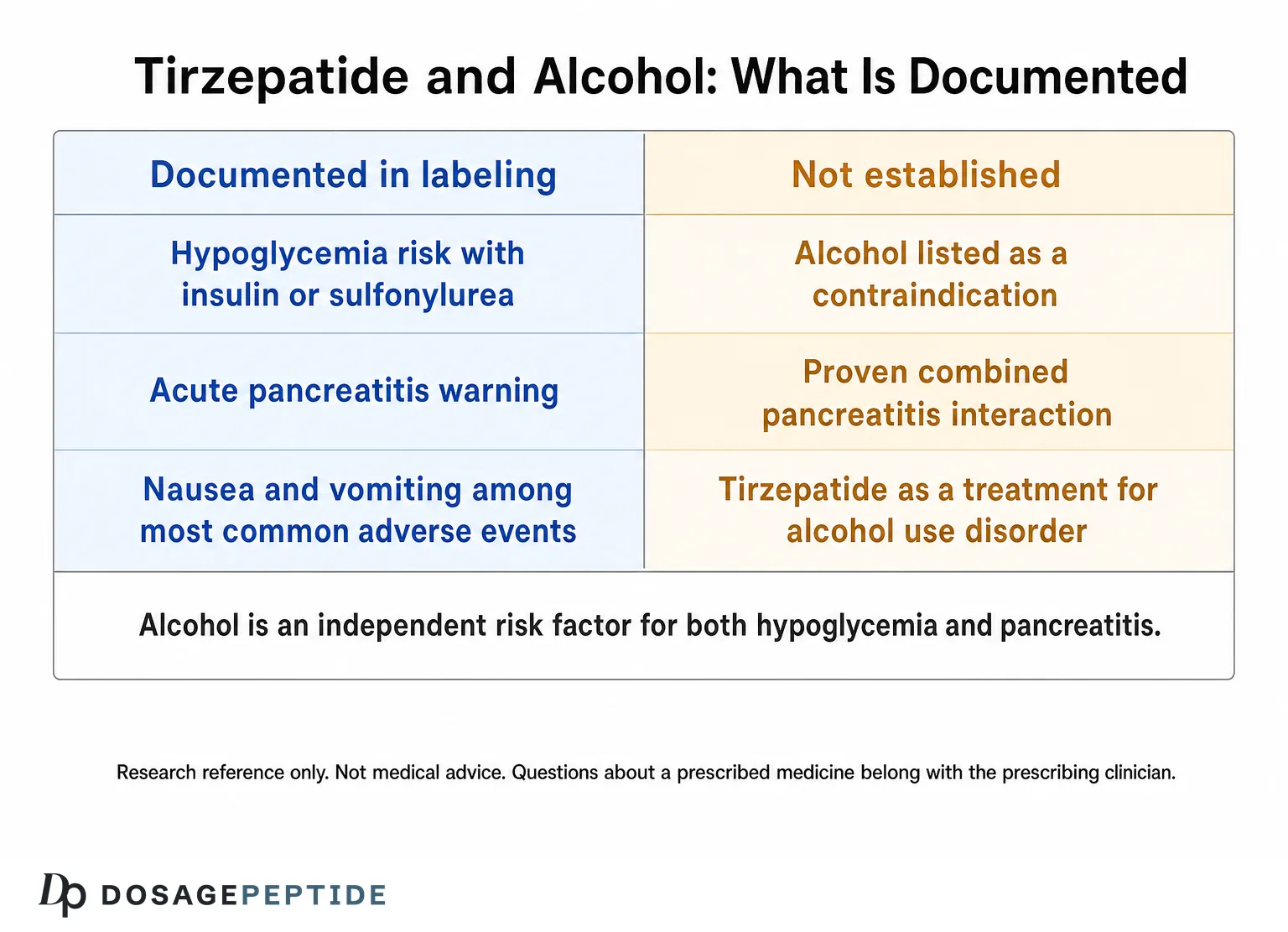
- Alcohol is not listed as a contraindication in tirzepatide labeling, and the US prescribing information contains no instruction telling patients not to drink.
- The clearest documented concern is low blood sugar — and it is specific: labeling flags hypoglycemia when tirzepatide is combined with insulin or an insulin secretagogue. Alcohol independently lowers blood glucose, more so on an empty stomach.
- Gastrointestinal side effects are common with tirzepatide, and alcohol has its own well-characterised gastric effects. The combination has not been studied.
- Two label warnings sit in the same territory: acute pancreatitis, and acute kidney injury following dehydration from vomiting or diarrhoea.
- No trial has tested the combination directly. Everything beyond the label is mechanism, not measurement.
Alcohol is not listed as a contraindication in tirzepatide labeling, and the approved US prescribing information contains no instruction telling patients they cannot drink. What labeling does document is a hypoglycemia interaction that becomes relevant when tirzepatide is combined with insulin or an insulin secretagogue, a warning for acute pancreatitis, a warning for acute kidney injury following gastrointestinal-related dehydration, and a high background rate of gastrointestinal adverse events — areas where alcohol has its own independent, well-characterized physiology. This article separates what is documented in the label and published trials, what is mechanistically plausible but untested, and what remains genuinely unknown.
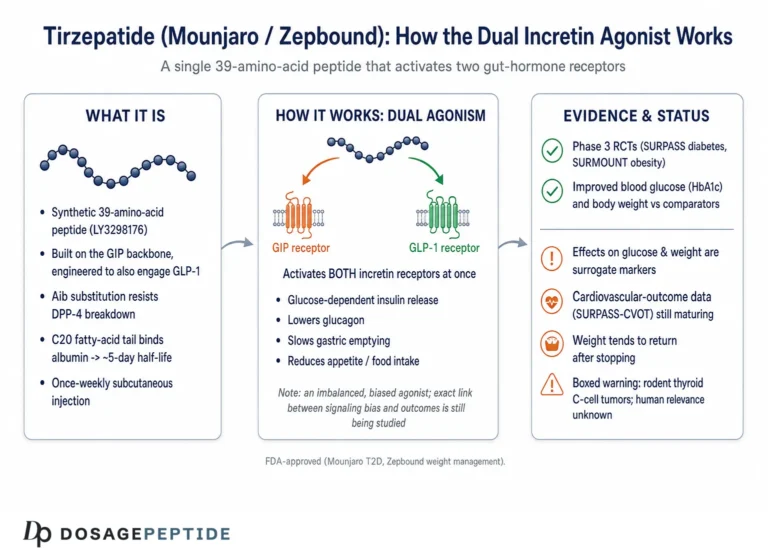
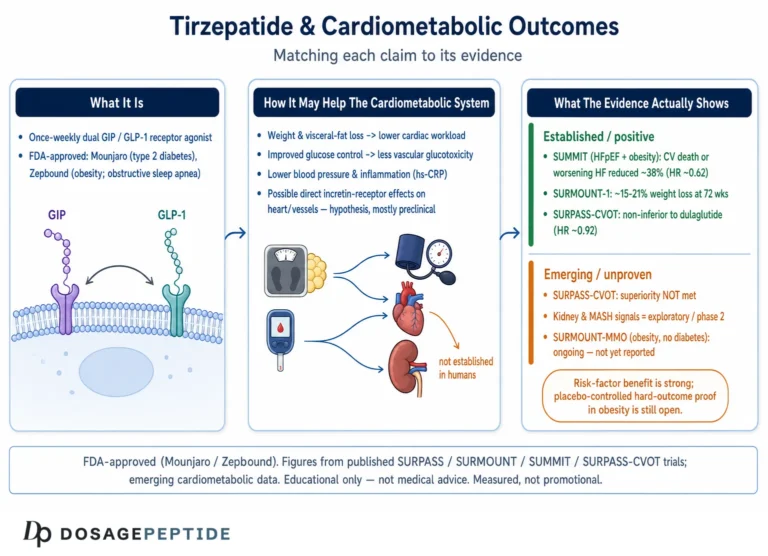
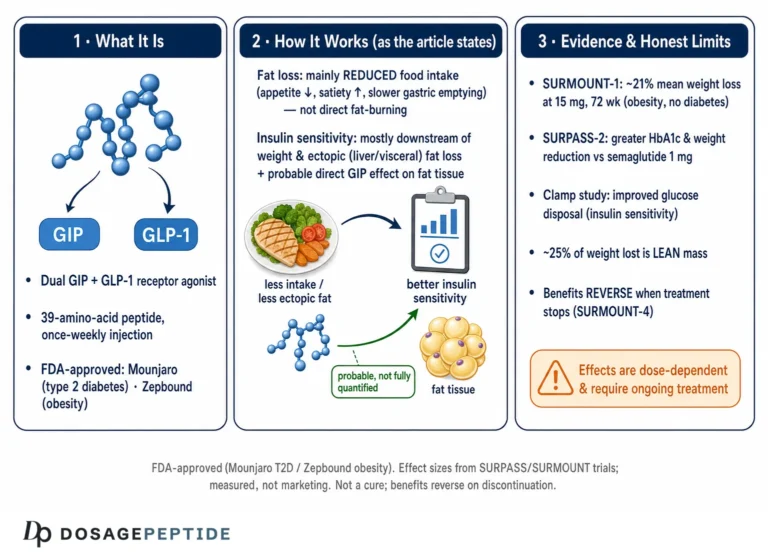
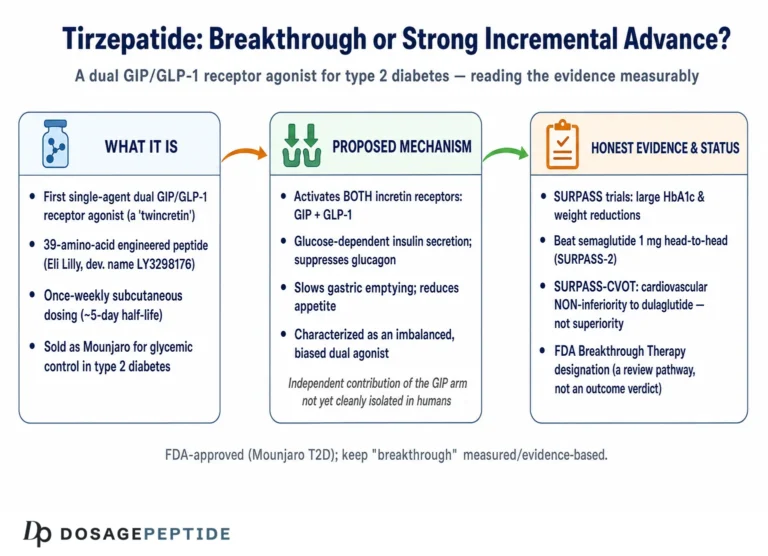
Tirzepatide is a dual GIP and GLP-1 receptor agonist. It is FDA-approved as Mounjaro as an adjunct to diet and exercise to improve glycemic control in adults and pediatric patients 10 years of age and older with type 2 diabetes mellitus,[1] and as Zepbound, in combination with a reduced-calorie diet and increased physical activity, to reduce excess body weight and maintain weight reduction long term in adults with obesity or adults with overweight in the presence of at least one weight-related comorbid condition, and to treat moderate to severe obstructive sleep apnea in adults with obesity.[2] Nothing below is medical advice, and nothing here tells any individual whether they may drink. That decision belongs to a prescribing clinician who knows the person’s full medication list, liver history, and pancreatitis risk.
What does the label actually say about alcohol?
The direct answer: the approved US prescribing information for tirzepatide does not mention alcohol, does not contain a blanket instruction to avoid it, and does not list it among contraindications. The contraindications section is narrow — personal or family history of medullary thyroid carcinoma or Multiple Endocrine Neoplasia syndrome type 2, and known serious hypersensitivity to tirzepatide or its excipients.[1]
Where alcohol becomes label-relevant is indirect but real. Tirzepatide labeling states that patients receiving tirzepatide in combination with an insulin secretagogue such as a sulfonylurea, or with insulin, may have an increased risk of hypoglycemia including severe hypoglycemia, and that the risk may be lowered by reducing the dose of the sulfonylurea or insulin.[1] Separately, alcohol is an established independent contributor to hypoglycemia in people with diabetes. The 2026 American Diabetes Association Standards of Care documents that risks of alcohol consumption include hypoglycemia and delayed hypoglycemia, particularly for people using insulin or insulin secretagogue therapies, and recommends counseling on the signs, symptoms, and self-management of delayed hypoglycemia and on glucose monitoring after drinking.[3] The two facts sit side by side. Neither one, on its own, is a statement about tirzepatide plus alcohol specifically.
This distinction matters because a great deal of online content conflates “the label warns about hypoglycemia” with “the label warns about alcohol.” It does not. Understanding what the molecule does and does not do starts with how tirzepatide’s dual GIP/GLP-1 receptor agonism actually works.
Is low blood sugar the main risk?
Tirzepatide’s glucose-lowering action is largely glucose-dependent: incretin receptor agonism amplifies insulin secretion when glucose is elevated and does relatively little when glucose is low. That is consistent with what the registration trials reported on a metformin background. In SURPASS-2, hypoglycemia defined as a blood glucose level below 54 mg/dL was reported in 0.6% of participants on 5 mg tirzepatide, 0.2% on 10 mg, and 1.7% on 15 mg.[4] The picture changes when a non-glucose-dependent agent is added — which is precisely what the label warning addresses,[1] and what SURPASS-5 studied directly by adding tirzepatide to titrated insulin glargine.[5]
Alcohol adds a third, independent mechanism. Ethanol metabolism in the liver shifts the cellular redox state and suppresses hepatic gluconeogenesis — the very process the body relies on to defend blood glucose during fasting or after an insulin dose. A controlled crossover study in men with type 1 diabetes found that moderate evening wine consumption produced significantly lower fasting and post-breakfast glucose the following morning, with five of six participants requiring treatment for hypoglycemia, despite no difference in overnight glucose between the wine and water sessions.[6] The delay is the point: the hypoglycemia arrived many hours after the alcohol had cleared, at a time when a person is least likely to connect the two.
So the arithmetic is: a glucose-dependent agent (low intrinsic risk) + a non-glucose-dependent agent (real risk) + a gluconeogenesis suppressor (real risk). The layered scenario is the one with documented components. What has not been quantified in a dedicated trial is the magnitude of that three-way combination — no published pharmacodynamic study has administered controlled alcohol to people on tirzepatide and measured glucose nadirs. The plausibility rests on well-established individual mechanisms, not on a study of the combination. Note also that the strongest human alcohol-hypoglycemia data comes from type 1 diabetes,[6] a different population from most tirzepatide users.
Does alcohol worsen tirzepatide’s gastrointestinal side effects?
Gastrointestinal adverse events are the dominant tolerability issue with tirzepatide. In SURPASS-2, the most common adverse events across tirzepatide doses were nausea (17% to 22%), diarrhea (13% to 16%), and vomiting (6% to 10%), primarily mild to moderate in severity.[4] The same pattern held in the obesity program: gastrointestinal events were the most frequently reported adverse events in SURMOUNT-1, mostly mild to moderate and concentrated during dose escalation.[7]
Alcohol independently affects the same organ system. A review of alcohol’s role in gastrointestinal tract disorders documents that alcohol impairs the function of the muscles separating the esophagus from the stomach, interferes with gastric acid secretion and with the activity of the muscles surrounding the stomach, and can impair muscle movement in the small and large intestines, contributing to diarrhea.[8]
Here is the honest state of the evidence: the overlap is mechanistically obvious, but there is no controlled trial that randomized people on tirzepatide to alcohol versus no alcohol and measured nausea or vomiting rates. Trial participants were not systematically stratified by alcohol intake in published gastrointestinal tolerability analyses. What exists is a plausible additive picture — two independent causes of the same symptom set — not a quantified interaction. Anyone writing that alcohol “significantly amplifies” tirzepatide nausea is describing an inference, not a measurement. For the documented adverse event profile itself, see the detailed breakdown of tirzepatide side effects as reported in registration trials.
The vomiting–dehydration–kidney chain
One downstream item is worth stating precisely because it is in the label. Tirzepatide labeling documents postmarketing reports of acute kidney injury, in some cases requiring hemodialysis, in patients treated with GLP-1 receptor agonists or tirzepatide, and states that the majority of reported events occurred in patients who experienced gastrointestinal adverse reactions leading to dehydration such as nausea, vomiting, or diarrhea. The label directs monitoring of renal function in patients reporting adverse reactions that could lead to volume depletion, especially during dosage initiation and escalation.[1] Alcohol has a well-recognized acute diuretic effect; the mechanism is classically attributed to suppression of vasopressin release, though it is not fully settled. Two independent routes to volume depletion converging is a coherent concern. The label documents the tirzepatide side of it, and no study has measured the pair together.
What about pancreatitis — is the combination proven to be worse?
This is the section where overclaiming is most common, so the two facts need stating separately and precisely.
Fact one: acute pancreatitis appears as a warning in tirzepatide labeling. The label states that acute pancreatitis, including fatal and non-fatal hemorrhagic or necrotizing pancreatitis, has been observed in patients treated with GLP-1 receptor agonists or tirzepatide, directs that patients be observed for signs and symptoms after initiation, and instructs that tirzepatide be discontinued if pancreatitis is suspected.[1] It is a labeled warning, not a demonstrated causal frequency — the absolute event numbers in the registration trials were low.
Fact two: alcohol is one of the recognized principal causes of acute pancreatitis, alongside gallstones, and alcoholic pancreatitis is treated as a distinct etiologic category in the clinical literature on the disease.[9]
What is not established: that tirzepatide and alcohol multiply each other’s pancreatitis risk. No study has demonstrated a synergistic or even additive interaction for that specific endpoint. Two independent risk factors for the same condition existing simultaneously is a reason for clinical attention — it is not evidence of a compound effect, and stating otherwise would be inventing a finding. It is also worth noting that the largest population-based analysis of incretin-based drugs, covering more than 1.5 million patients with type 2 diabetes, found no increased risk of hospitalized acute pancreatitis compared with two or more oral antidiabetic drugs.[10] That study predates tirzepatide and does not settle the question for it, but it argues against confident claims in either direction.
Does delayed gastric emptying change how alcohol is absorbed?
Tirzepatide slows gastric emptying, and the label states that tirzepatide delays gastric emptying and thereby has the potential to impact the absorption of concomitantly administered oral medications.[1] Dedicated work on the effect describes it as transient: in a mouse model and in a phase 1 multiple-dose human study, tirzepatide delayed gastric emptying after a single dose, with the effect diminishing after multiple doses in healthy participants, while a residual delay was still observed in participants with type 2 diabetes on an escalation schedule.[11]
Gastric emptying rate is also a genuine determinant of ethanol pharmacokinetics. In a crossover study in healthy men, accelerating gastric emptying with cisapride produced a small but statistically significant increase in peak blood ethanol concentration, and both peak concentration and total exposure were highest when the same alcohol dose was taken on an empty stomach rather than after a meal.[12] The direction is consistent: faster delivery of stomach contents to the small intestine means a higher, earlier peak; slower delivery means a lower, later one. The authors of that study also judged the cisapride effect itself to lack clinical or forensic significance, which is a useful calibration on how large such effects tend to be.
Now the critical honesty point: no published human pharmacokinetic study has measured blood alcohol curves in people taking tirzepatide. The mechanistic chain is sound at every individual link, and directionally one would expect delayed and possibly blunted peaks with slower emptying, but the specific measurement does not exist in the literature. Anyone reporting that tirzepatide “makes you drunk faster” or “slower” with confidence is extrapolating. For the metabolic handling side of the molecule, see what is documented about tirzepatide, the liver, and metabolic clearance.
Is there real evidence that GLP-1 drugs reduce alcohol intake?
There are early signals — and they need careful framing, because the randomized evidence is on other molecules, the trials are small, and this is not an approved indication for anything.
What the randomized data covers
The relevant randomized evidence involves other GLP-1 receptor agonists, not tirzepatide. A randomized, double-blind, placebo-controlled trial of once-weekly exenatide in 127 treatment-seeking patients with alcohol use disorder did not significantly reduce its primary outcome, the number of heavy drinking days, compared with placebo; exploratory analyses in a subgroup with obesity showed reductions in heavy drinking days and total alcohol intake.[13] A phase 2 randomized trial of low-dose semaglutide in 48 non-treatment-seeking adults with alcohol use disorder, over 9 weeks, reported reduced alcohol consumed during a laboratory self-administration task and reductions in drinks per drinking day and weekly craving, while average drinks per calendar day and number of drinking days were unchanged.[14] Its own authors framed the result as justifying larger trials. These are signal-generating studies, not practice-changing ones.
What the observational data covers
A retrospective cohort study of electronic health records reported that semaglutide, compared with other anti-obesity medications, was associated with a lower risk of both incidence and recurrence of alcohol use disorder over 12 months in patients with obesity, with similar findings in a type 2 diabetes population.[15] Observational designs of this kind carry confounding by indication and cannot establish causation; the authors themselves called for randomized trials.
Where tirzepatide specifically stands
Tirzepatide-specific alcohol-intake data is thinner still — no dedicated randomized trial of tirzepatide for alcohol use disorder has been published. Tirzepatide is not approved for alcohol use disorder and is not an addiction treatment. No one should read the incretin–craving literature as a reason to substitute it for evidence-based alcohol use disorder care. FDA-approved medications for alcohol use disorder exist; tirzepatide is not among them. Anyone concerned about their drinking is better served by a clinician than by a peptide article.
Concern by concern: what is documented
| Concern | What is actually documented | Evidence tier | What remains unknown |
|---|---|---|---|
| Absolute contraindication | Alcohol is not mentioned in tirzepatide labeling and is not a contraindication; contraindications are limited to MTC/MEN 2 history and serious hypersensitivity | FDA-approved labeling | Nothing — this is a documented absence, not an unknown |
| Hypoglycemia with insulin/sulfonylurea | Label warns of increased hypoglycemia risk, including severe hypoglycemia, with insulin or insulin secretagogues; ADA Standards of Care document alcohol as a cause of hypoglycemia and delayed hypoglycemia in the same populations | FDA labeling + clinical practice guideline + a controlled human crossover study in type 1 diabetes | No controlled study of glucose nadirs with alcohol in people on tirzepatide; magnitude of the three-way combination unquantified |
| Nausea and vomiting | GI events are the most common adverse events in tirzepatide trials; alcohol independently disrupts oesophageal sphincter function, gastric acid secretion, and intestinal motility | Phase 3 trial data (tirzepatide side) + review of alcohol GI pharmacology (alcohol side) | No randomized data on alcohol’s effect on tirzepatide GI event rates; additive vs. synergistic effect unmeasured |
| Acute pancreatitis | Labeled warning for tirzepatide with instruction to discontinue if suspected; alcohol is a recognized principal cause of acute pancreatitis | FDA labeling + clinical seminar literature — as two separate facts | No evidence of a multiplicative or synergistic interaction; combination risk not studied |
| Alcohol absorption / intoxication speed | Tirzepatide transiently delays gastric emptying (documented); gastric emptying rate influences ethanol peak concentration and exposure (documented) | Phase 1 and preclinical pharmacodynamic data on one element; a small human crossover study on the other | No published human PK study of blood alcohol curves under tirzepatide; direction and magnitude untested |
| Dehydration and kidney injury | Label documents postmarketing AKI reports, some requiring hemodialysis, mostly in patients with GI-related dehydration; alcohol has a recognized acute diuretic effect | Labeling (postmarketing reports) + general physiology | Combined incidence never quantified; no controlled data; vasopressin mechanism not fully settled |
| Reduced alcohol craving/intake | Randomized and observational signals exist for semaglutide and exenatide, not tirzepatide; the exenatide trial missed its primary endpoint | Emerging — one phase 2 RCT (n=48), one negative RCT (n=127), plus observational cohorts | Whether tirzepatide produces the same effect; durability; clinical relevance; no approved indication |
| Liver | Label documents that tirzepatide is metabolized by proteolytic cleavage, beta-oxidation, and amide hydrolysis rather than cytochrome P450 pathways; alcohol is directly hepatotoxic at heavy intake | FDA labeling (clinical pharmacology) + established hepatology | Net effect of combining them; no dedicated study in people with alcohol-related liver disease |
Why is there so little direct data on this combination?
The gap is structural, not accidental. Registration trials for metabolic drugs routinely exclude or minimize participants with significant alcohol use — heavy drinkers are typically screened out to avoid confounding hepatic and pancreatic endpoints. That exclusion protects the primary analysis and simultaneously guarantees the resulting dataset says little about alcohol.
Deliberate alcohol-challenge studies also face a design problem: administering controlled alcohol to participants on a drug carrying a labeled pancreatitis warning and a known gastrointestinal adverse event burden raises ethics-committee questions that sponsors have little commercial reason to take on. And the usual regulatory trigger for a dedicated interaction study — shared metabolic pathways — does not apply here in the way it does for small-molecule drugs: tirzepatide labeling documents metabolism by proteolytic cleavage of the peptide backbone, beta-oxidation of the C20 fatty diacid, and amide hydrolysis.[1] No dedicated alcohol interaction study appears in the approved labeling.
The practical consequence for a reader: absence of a documented interaction is not documentation of safety. It is absence of study. Those are different things, and confusing them in either direction produces bad conclusions.
Does the dose-increase phase change anything?
Because most tirzepatide gastrointestinal adverse events cluster during dose escalation, the escalation schedule itself is the part of the regimen where tolerability questions concentrate. Labeling documents a stepwise escalation: a starting dosage of 2.5 mg injected subcutaneously once weekly, increased to 5 mg after 4 weeks, with subsequent increases in 2.5 mg increments after at least 4 weeks on the current dose.[1][2] That is what the documents say. It is a description of an approved prescribing schedule, not a schedule any reader should apply to themselves, and it is not a recommendation.
For reference on how published protocols structure escalation, see the breakdown of tirzepatide titration as documented in trial protocols and labeling, along with vial-level reference pages such as the tirzepatide 5 mg vial protocol reference and the tirzepatide dosage calculator, which document unit conversions rather than recommend regimens.
What to ask a clinician
Rather than a list of rules this article has no standing to issue, the more useful output is the set of variables a prescriber actually weighs. These are the axes on which the answer differs between two people taking the same drug:
- Concomitant medications. Insulin or a sulfonylurea is the specific combination the label singles out; a metformin background is not.
- Personal or family pancreatitis history. People with prior pancreatitis were excluded from the pivotal trials, so the evidence base does not cover them.
- Liver status. Existing hepatic disease, whether alcohol-related or metabolic, changes the risk framing.
- Current GI tolerability. Someone mid-escalation with active nausea is in a different position from someone stable at a maintenance dose for months.
- Drinking pattern. Occasional versus regular versus heavy intake are epidemiologically distinct exposures, and the pancreatitis literature is driven by the heavy end.
- Hydration and eating pattern. Reduced food intake on an appetite-suppressing agent changes both the hypoglycemia context and, as the ethanol pharmacokinetic literature shows, the alcohol absorption context.
Whether alcohol is appropriate for a specific person on tirzepatide is a clinical judgment about that person. No article — this one included — is in a position to make it. Related background is available on how peptide safety questions are typically framed in the literature.
Frequently Asked Questions
Does the tirzepatide label say you cannot drink alcohol?
No. Alcohol is not mentioned in tirzepatide’s FDA-approved prescribing information, is not listed as a contraindication, and there is no instruction to abstain. The contraindications are limited to a personal or family history of medullary thyroid carcinoma or MEN 2, and known serious hypersensitivity. Alcohol becomes label-relevant only indirectly, through the hypoglycemia warning that applies when tirzepatide is used with insulin or an insulin secretagogue.
Why do so many sources warn about alcohol and tirzepatide anyway?
Because several separately documented facts overlap: tirzepatide’s most common adverse events are gastrointestinal, acute pancreatitis and dehydration-related acute kidney injury are labeled warnings, and alcohol independently disrupts gastrointestinal function, contributes to hypoglycemia in people on insulin or secretagogues, and is a recognized principal cause of acute pancreatitis. Clinicians reasonably flag the overlap. That is a mechanistic inference from separately established facts, not a measured drug interaction, and the distinction is frequently blurred online.
Is there a study measuring blood alcohol levels in people on tirzepatide?
No published human pharmacokinetic study has measured blood alcohol concentration curves in people taking tirzepatide. Tirzepatide transiently delays gastric emptying, and gastric emptying rate is a documented determinant of how high and how quickly blood alcohol peaks. The mechanistic reasoning is sound, but the specific measurement has not been made, so any confident claim about faster or slower intoxication is extrapolation.
Does tirzepatide treat alcohol use disorder?
No. Tirzepatide is not approved for alcohol use disorder and is not an addiction treatment. No dedicated randomized trial of tirzepatide for alcohol use disorder has been published. The randomized data that exists is on other GLP-1 receptor agonists: a phase 2 semaglutide trial in 48 participants reported reduced laboratory alcohol self-administration, and an exenatide trial in 127 participants missed its primary endpoint. FDA-approved medications for alcohol use disorder exist and are the appropriate subject of a clinical conversation.
Does alcohol raise pancreatitis risk more when taking tirzepatide?
That specific combined effect has not been established. Two facts are separately documented: acute pancreatitis is a labeled warning for tirzepatide, and alcohol is a recognized principal cause of acute pancreatitis. Both being true does not demonstrate that they multiply. No study has quantified a synergistic interaction, and claiming one would be describing a finding that does not exist in the literature.
Why is hypoglycemia the most concrete concern?
Because both components are individually well documented. Tirzepatide labeling warns of increased hypoglycemia risk, including severe hypoglycemia, with concomitant insulin or insulin secretagogues, and the ADA Standards of Care document alcohol as a cause of hypoglycemia and delayed hypoglycemia in those same populations. Tirzepatide on a metformin background produced low rates of hypoglycemia below 54 mg/dL in SURPASS-2; the concern arises specifically from layering non-glucose-dependent agents.
Were people who drink heavily included in the tirzepatide trials?
Registration trials for metabolic drugs typically exclude or minimize participants with significant alcohol use, since alcohol confounds hepatic and pancreatic safety endpoints. That design choice protects the primary analysis but means the resulting dataset contains little information about alcohol exposure. It is a structural reason the evidence base is thin, and it means absence of a documented interaction reflects absence of study rather than demonstrated safety.
Could alcohol worsen the dehydration warning in the label?
Mechanistically plausible, not measured. Tirzepatide labeling documents postmarketing reports of acute kidney injury, some requiring hemodialysis, mostly in patients whose gastrointestinal adverse reactions led to dehydration. Alcohol has a well-recognized acute diuretic effect. Two independent routes to volume depletion converging is a coherent clinical concern, but the combined incidence has never been quantified in any published study.
Who should decide whether drinking is appropriate?
A prescribing clinician who knows the individual’s full medication list, pancreatitis and liver history, current gastrointestinal tolerability, drinking pattern, and glycemic regimen. Those variables change the answer substantially between two people on the same dose of the same drug. No article can substitute for that assessment, and this one does not attempt to.
References
- Eli Lilly and Company. MOUNJARO (tirzepatide) injection, for subcutaneous use — full prescribing information. DailyMed, US National Library of Medicine. https://dailymed.nlm.nih.gov/dailymed/drugInfo.cfm?setid=d2d7da5d-ad07-4228-955f-cf7e355c8cc0
- Eli Lilly and Company. ZEPBOUND (tirzepatide) injection, for subcutaneous use — full prescribing information. DailyMed, US National Library of Medicine. https://dailymed.nlm.nih.gov/dailymed/drugInfo.cfm?setid=487cd7e7-434c-4925-99fa-aa80b1cc776b
- American Diabetes Association Professional Practice Committee. 5. Facilitating Positive Health Behaviors and Well-being to Improve Health Outcomes: Standards of Care in Diabetes—2026. Diabetes Care. 2026;49(Suppl 1):S89–S131. PMID 41358898. https://pubmed.ncbi.nlm.nih.gov/41358898/
- Frías JP, Davies MJ, Rosenstock J, et al. Tirzepatide versus Semaglutide Once Weekly in Patients with Type 2 Diabetes (SURPASS-2). N Engl J Med. 2021;385(6):503–515. PMID 34170647. https://pubmed.ncbi.nlm.nih.gov/34170647/
- Dahl D, Onishi Y, Norwood P, et al. Effect of Subcutaneous Tirzepatide vs Placebo Added to Titrated Insulin Glargine on Glycemic Control in Patients With Type 2 Diabetes: The SURPASS-5 Randomized Clinical Trial. JAMA. 2022;327(6):534–545. PMID 35133415. https://pubmed.ncbi.nlm.nih.gov/35133415/
- Turner BC, Jenkins E, Kerr D, Sherwin RS, Cavan DA. The effect of evening alcohol consumption on next-morning glucose control in type 1 diabetes. Diabetes Care. 2001;24(11):1888–1893. PMID 11679452. https://pubmed.ncbi.nlm.nih.gov/11679452/
- Jastreboff AM, Aronne LJ, Ahmad NN, et al. Tirzepatide Once Weekly for the Treatment of Obesity (SURMOUNT-1). N Engl J Med. 2022;387(3):205–216. PMID 35658024. https://pubmed.ncbi.nlm.nih.gov/35658024/
- Bode C, Bode JC. Alcohol’s role in gastrointestinal tract disorders. Alcohol Health Res World. 1997;21(1):76–83. PMID 15706765. https://pubmed.ncbi.nlm.nih.gov/15706765/
- Boxhoorn L, Voermans RP, Bouwense SA, et al. Acute pancreatitis. Lancet. 2020;396(10252):726–734. PMID 32891214. https://pubmed.ncbi.nlm.nih.gov/32891214/
- Azoulay L, Filion KB, Platt RW, et al. Association Between Incretin-Based Drugs and the Risk of Acute Pancreatitis. JAMA Intern Med. 2016;176(10):1464–1473. PMID 27479930. https://pubmed.ncbi.nlm.nih.gov/27479930/
- Urva S, Coskun T, Loghin C, et al. The novel dual GIP and GLP-1 receptor agonist tirzepatide transiently delays gastric emptying similarly to selective long-acting GLP-1 receptor agonists. Diabetes Obes Metab. 2020;22(10):1886–1891. PMID 32519795. https://pubmed.ncbi.nlm.nih.gov/32519795/
- Kechagias S, Jönsson KA, Jones AW. Impact of gastric emptying on the pharmacokinetics of ethanol as influenced by cisapride. Br J Clin Pharmacol. 1999;48(5):728–732. PMID 10594475. https://pubmed.ncbi.nlm.nih.gov/10594475/
- Klausen MK, Jensen ME, Møller M, et al. Exenatide once weekly for alcohol use disorder investigated in a randomized, placebo-controlled clinical trial. JCI Insight. 2022;7(19):e159863. PMID 36066977. https://pubmed.ncbi.nlm.nih.gov/36066977/
- Hendershot CS, Bremmer MP, Paladino MB, et al. Once-Weekly Semaglutide in Adults With Alcohol Use Disorder: A Randomized Clinical Trial. JAMA Psychiatry. 2025;82(4):395–405. PMID 39937469. https://pubmed.ncbi.nlm.nih.gov/39937469/
- Wang W, Volkow ND, Berger NA, Davis PB, Kaelber DC, Xu R. Associations of semaglutide with incidence and recurrence of alcohol use disorder in real-world population. Nat Commun. 2024;15(1):4548. PMID 38806481. https://pubmed.ncbi.nlm.nih.gov/38806481/
Research and educational use only. dosagepeptide.com is an independent reference library, sells nothing, and provides no medical advice. Nothing here is a treatment recommendation, a dosing instruction, or guidance on whether any individual may consume alcohol. Tirzepatide is a prescription medication; decisions about its use, and about alcohol alongside it, belong to a licensed healthcare professional who knows the individual’s full clinical picture.