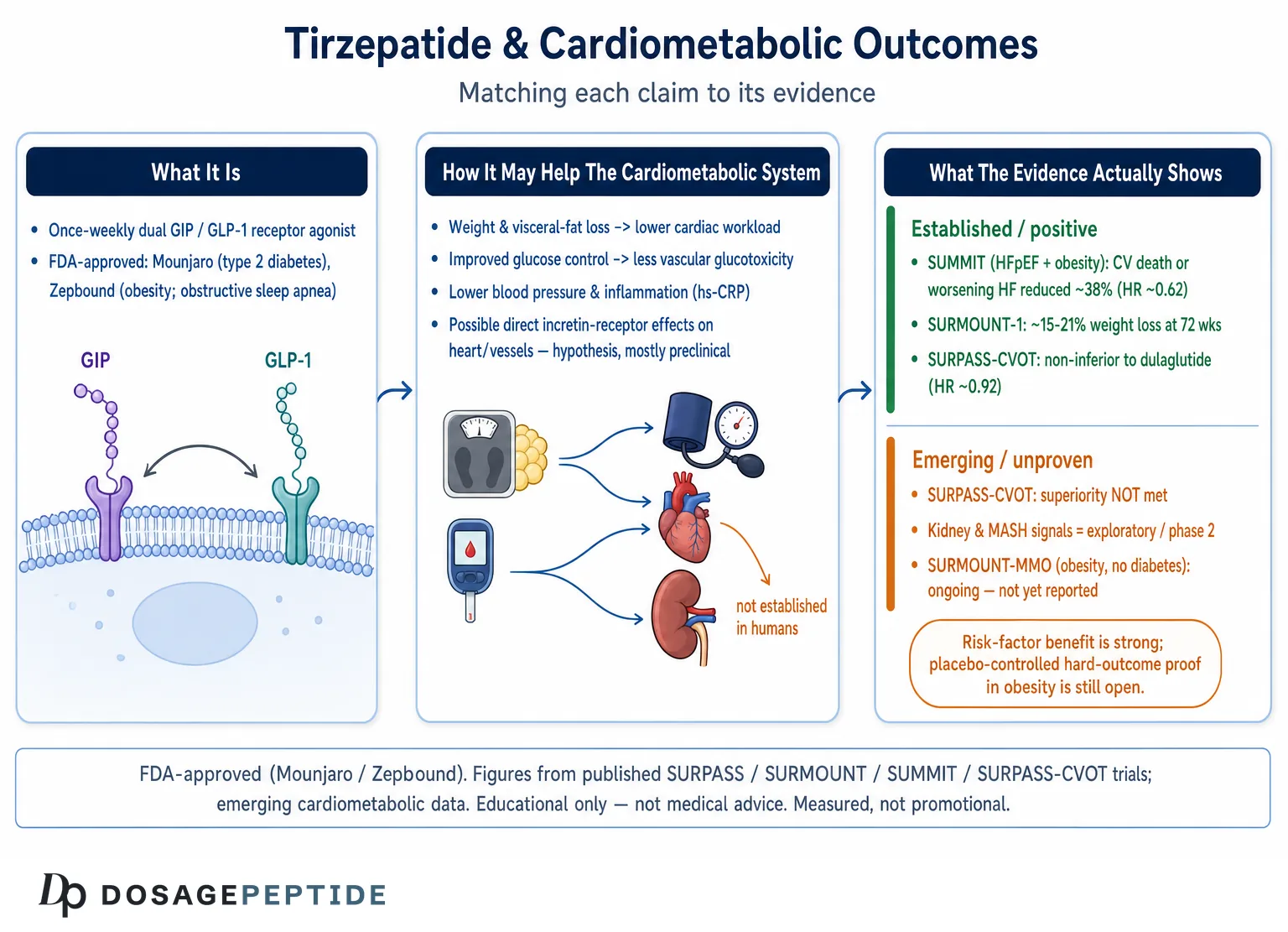
Tirzepatide moves nearly every measurable driver of cardiometabolic risk in the right direction: blood glucose, body weight, blood pressure, lipids and inflammatory markers. Whether it prevents the events people actually fear — heart attack, stroke, cardiovascular death — is a different question with a narrower answer. In the dedicated outcomes trial (SURPASS-CVOT) it matched, but did not beat, an active comparator that already reduces cardiovascular events; in obesity-related heart failure (SUMMIT) it cut cardiovascular death or worsening heart-failure events by roughly 38%.
The honest answer is that the evidence sits unevenly across those two readings. On the first — the risk-factor and surrogate-endpoint reading — tirzepatide has produced some of the most striking cardiometabolic improvements ever recorded for a single agent, with robust, replicated, placebo- and active-controlled data.12 On the second — the hard-outcome reading — the picture is genuinely emerging rather than settled. The first dedicated cardiovascular outcomes trial, SURPASS-CVOT, reported at the end of 2025 and demonstrated non-inferiority to an active comparator (dulaglutide) rather than a placebo-beating superiority on major adverse cardiovascular events.3 A placebo-controlled morbidity-and-mortality trial in obesity without diabetes has not yet reported. So tirzepatide is not, in mid-2026, a compound with a proven placebo-controlled reduction in heart attacks and strokes; it is a compound with overwhelming risk-factor benefit, a favorable comparative cardiovascular safety profile, and one landmark heart-failure outcome trial.
This piece is written for researchers, clinicians, and educated readers who want that distinction drawn cleanly. Tirzepatide is FDA-approved — as Mounjaro for type 2 diabetes and as Zepbound for obesity and, since December 2024, for moderate-to-severe obstructive sleep apnea in adults with obesity.10 Those approvals are real and the trial program behind them is unusually strong. But approval for weight, glucose, and sleep apnea is not the same as a demonstrated reduction in cardiovascular mortality, and this article will be careful to say which claim rests on which evidence. Readers who want the foundational pharmacology first may prefer the site’s primer on what tirzepatide is and how it works; here we focus specifically on the cardiometabolic outcome data.
Tirzepatide and the Heart: The Short Answers
- Risk factors (proven). Large, replicated, placebo- and active-controlled trials show substantial improvements in HbA1c, body weight, blood pressure, lipids and inflammatory markers.
- Heart attacks and strokes (not proven as superiority). SURPASS-CVOT randomised roughly 13,000 adults with type 2 diabetes and established atherosclerotic disease to tirzepatide or dulaglutide. Three-point MACE occurred in about 12.2% versus 13.1% over a median four years — non-inferior to a drug that already works, but not statistically superior.
- Heart failure (positive hard outcome). SUMMIT enrolled 731 patients with obesity and HFpEF and reported a roughly 38% reduction in cardiovascular death or worsening heart-failure events, plus better symptom scores and six-minute walk distance.
- Kidney (supportive, exploratory). Slower decline in kidney function was seen in SURPASS-4 and in secondary analyses — consistent, but not a confirmed primary endpoint.
- What is still unproven. Superiority over other incretins for hard cardiovascular events; benefit in heart failure with reduced ejection fraction; benefit in non-obese HFpEF; outcomes beyond the trial windows.
What “Cardiometabolic Outcomes” Actually Means
Cardiometabolic health is not a single measurement but a cluster of interlocking risk domains that jointly determine a person’s likelihood of cardiovascular disease and premature death. It bundles together glucose regulation (fasting glucose, HbA1c, insulin resistance), body composition (weight, visceral and ectopic fat), blood pressure, the lipid profile (triglycerides, LDL and HDL cholesterol, apolipoprotein B), and the downstream organ consequences that flow from years of metabolic stress — atherosclerosis, heart failure, chronic kidney disease, metabolic dysfunction-associated steatohepatitis (MASH), and obstructive sleep apnea. What makes the cluster coherent is that these factors are causally entangled: excess adiposity drives insulin resistance, which worsens dyslipidemia and hypertension, which accelerate atherosclerosis and strain the heart and kidneys.
This clustering is precisely why a drug that meaningfully shifts body weight and glucose could, in principle, ripple outward across the entire cardiometabolic landscape. It is also why researchers draw a sharp methodological line between two kinds of endpoint. Surrogate or intermediate endpoints — HbA1c, weight, systolic blood pressure, LDL, apnea-hypopnea index — are measurable in months and reliably responsive to treatment, but they are proxies. Hard clinical endpoints — a composite of cardiovascular death, non-fatal myocardial infarction, and non-fatal stroke (commonly “three-point MACE”), hospitalization for heart failure, kidney-failure events, all-cause mortality — are what regulators and guideline bodies ultimately want, because history is littered with drugs that improved a surrogate while doing nothing for, or even harming, the patient.
The classic cautionary tale is the class of agents that lowered blood glucose beautifully yet failed to reduce — or in some cases increased — cardiovascular events, a disconnect that led the FDA to require dedicated cardiovascular outcome trials for new diabetes drugs. That regulatory history is the backdrop against which tirzepatide’s data must be read. The compound’s surrogate improvements are extraordinary; the task of this article is to hold those alongside the more limited, still-maturing hard-outcome evidence and to resist the temptation to treat the former as if it were the latter. For a broader sense of how this drug’s efficacy has been characterized across studies, the sibling overview of how effective tirzepatide is according to recent clinical studies is a useful companion; this article deliberately narrows the lens to the cardiometabolic axis.
The Mechanistic Case: Why Dual GIP/GLP-1 Agonism Touches So Many Levers
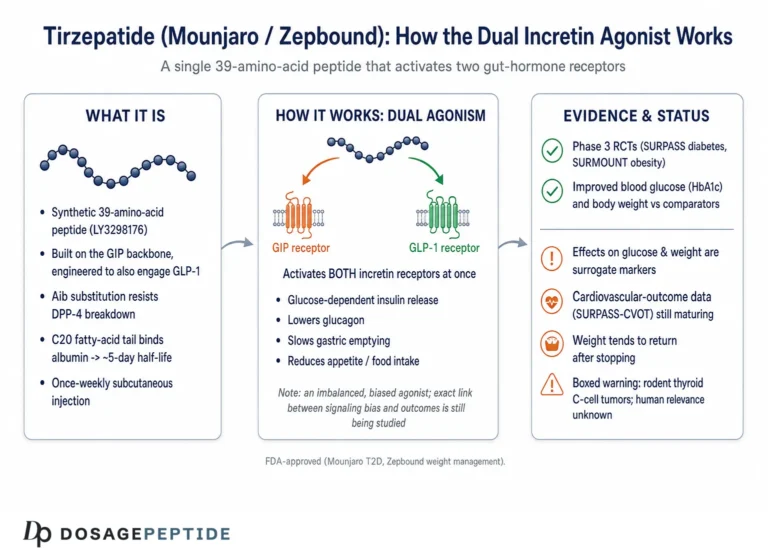
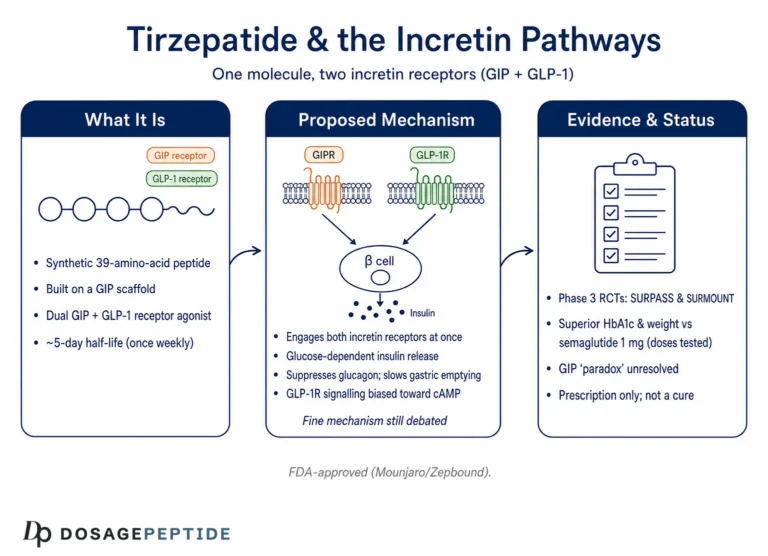
Tirzepatide is a once-weekly synthetic peptide engineered as a dual agonist of two incretin receptors: the glucose-dependent insulinotropic polypeptide (GIP) receptor and the glucagon-like peptide-1 (GLP-1) receptor. Its 39-amino-acid backbone is based on the native GIP sequence, modified with a C20 fatty-diacid moiety that binds albumin to extend its half-life to roughly five days, enabling weekly dosing.1 The dual-agonist design is the reason a single molecule reaches across so much of the cardiometabolic map, and the interplay between the two arms is explored in more depth in the sibling article on how tirzepatide influences incretin pathways.
The GLP-1 arm is the better-understood contributor. GLP-1 receptor activation augments glucose-dependent insulin secretion, suppresses inappropriate glucagon release, slows gastric emptying, and acts on hypothalamic and hindbrain circuits to reduce appetite and energy intake.1 Because insulin secretion is glucose-dependent, the effect on glycemia comes with a low intrinsic risk of hypoglycemia. The appetite and gastric-emptying effects drive the substantial weight loss that, in turn, mediates much of the downstream cardiometabolic benefit.
The GIP arm is more nuanced and, frankly, still being worked out. GIP is also an incretin that potentiates insulin secretion, but its role in energy balance has been debated, since both GIP agonism and antagonism have paradoxically been associated with weight effects in different models. The prevailing hypothesis is that adding GIP agonism to GLP-1 agonism enhances insulin sensitivity, improves the handling of dietary fat by adipose tissue, and may amplify the central appetite-suppressing effect while improving gastrointestinal tolerability relative to GLP-1 activity alone.1 Whether the GIP component adds a cardiovascular benefit independent of its metabolic effects is not established; it is a live research question, not a settled fact.
From this mechanism, several plausible routes to cardiometabolic benefit follow. Weight loss reduces cardiac workload, lowers blood pressure, improves the lipid profile, and reduces the ectopic fat (including epicardial and paracardiac adipose tissue) implicated in heart failure with preserved ejection fraction. Improved glycemia reduces the glucotoxicity that damages the vasculature and kidneys. Reduced systemic inflammation — reflected in falling high-sensitivity C-reactive protein — may attenuate atherogenesis. These are biologically coherent pathways, and the intermediate data (below) confirm that the levers do move. What the mechanism alone cannot tell us is whether pulling those levers translates into fewer deaths and cardiovascular events — a question only outcome trials can answer, and to which we return.
There is also an emerging question of whether incretin receptors act directly on cardiovascular tissue, independent of weight and glucose. GLP-1 receptors are expressed in the sinoatrial node, the vasculature, and immune cells; GIP receptors appear in cardiac and adipose tissue. In preclinical work, receptor activation has been linked to effects on endothelial function, vascular inflammation, and natriuresis (sodium excretion), any of which could contribute to blood-pressure lowering and cardiac benefit through routes not fully captured by weight change. This is why mediation analyses attribute most, but not all, of the observed blood-pressure effect to weight loss — the residual fraction is consistent with a direct component. For tirzepatide specifically, the relative contribution of the GIP arm to any direct cardiovascular effect is essentially uncharacterized in humans and remains one of the more interesting open questions in the field. The prudent stance is to treat direct cardioprotection as a plausible hypothesis with supporting preclinical and mechanistic data, not as an established human mechanism.
The Glycemic and Weight Foundation: SURPASS and SURMOUNT
The cardiometabolic story begins with the two pivotal endpoints that anchor tirzepatide’s approvals: glucose control and weight. These are themselves cardiometabolic outcomes — hyperglycemia and adiposity are among the strongest modifiable drivers of cardiovascular risk — and the magnitude of effect here is what makes everything downstream plausible.
In the SURPASS program for type 2 diabetes, tirzepatide produced HbA1c reductions and weight loss that exceeded established comparators. In the head-to-head SURPASS-2 trial, which randomized 1,879 adults with type 2 diabetes to tirzepatide (5, 10, or 15 mg) or semaglutide 1 mg over 40 weeks, tirzepatide was both non-inferior and superior to semaglutide on HbA1c reduction, with estimated reductions of roughly 2.0 to 2.3 percentage points versus about 1.86 for semaglutide, and mean weight loss of approximately 7.6 to 11.2 kg versus 5.7 kg.2 This established tirzepatide as, at the time, the most potent incretin-based glucose-lowering agent studied head-to-head. The question of whether this level of efficacy justifies calling it a paradigm shift for diabetes is examined in the sibling piece on whether current evidence supports tirzepatide as a breakthrough therapy for type 2 diabetes.
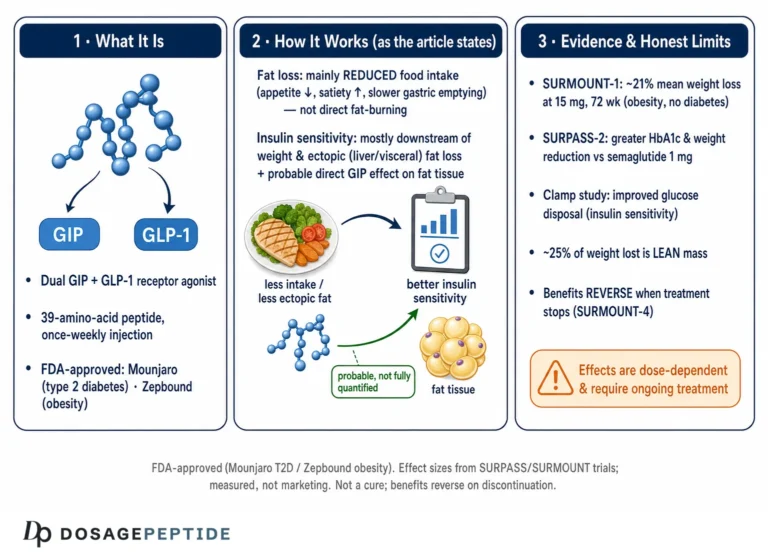
In obesity, the SURMOUNT-1 trial randomized 2,539 adults with obesity or overweight (without diabetes) to tirzepatide or placebo for 72 weeks. Mean weight reduction reached approximately 15%, 19.5%, and 20.9% on the 5, 10, and 15 mg doses respectively (treatment-regimen estimands ran slightly higher, to about 22.5% on 15 mg), versus roughly 3% on placebo, with about nine in ten treated participants losing weight.4 Notably, fat mass fell about three times more than lean mass, indicating that the loss was predominantly adipose rather than muscle. This degree of weight reduction approaches the lower range historically achieved only by bariatric surgery, and it is the engine behind the blood-pressure, lipid, and comorbidity improvements described next.
It is worth pausing on why the composition of that weight loss matters cardiometabolically. Visceral and ectopic fat — the fat packed around abdominal organs, infiltrating the liver, and encasing the heart — is far more metabolically toxic than subcutaneous fat. It secretes pro-inflammatory cytokines, drives insulin resistance, and, in the case of pericardial fat, exerts direct mechanical and paracrine effects on the myocardium. Incretin-driven weight loss preferentially mobilizes these depots, which is why the metabolic improvements (glucose, blood pressure, inflammation) tend to exceed what a simple percentage of total-body-weight change might predict. A given kilogram of visceral fat lost buys more cardiometabolic benefit than a kilogram of subcutaneous fat, and tirzepatide’s pattern of loss appears weighted toward the former.
The honest caveat here is that glucose and weight, however impressive, are still intermediate endpoints on the road to cardiovascular events. They are strongly associated with outcomes, and their improvement is necessary for benefit, but association is not the same as a demonstrated event reduction. The remainder of this article moves progressively closer to the hard endpoints.
Blood Pressure, Lipids, and Inflammation: The Risk-Factor Layer
Between the surrogate anchors of glucose and weight and the hard endpoints of death and infarction sits a layer of intermediate cardiovascular risk factors — blood pressure, the lipid profile, and inflammatory markers. Tirzepatide moves all of them favorably, and because these factors are causally linked to atherosclerosis, their improvement strengthens (without proving) the case for eventual outcome benefit.
The blood-pressure data are among the most rigorous. In a prospectively planned ambulatory blood-pressure monitoring substudy of SURMOUNT-1, 600 participants underwent 24-hour monitoring at baseline and week 36. Average 24-hour systolic blood pressure fell by roughly 7.4 to 10.6 mmHg across the tirzepatide dose arms relative to placebo, with diastolic pressure also reduced.5 Crucially, this used ambulatory monitoring rather than office readings, which reduces the white-coat and placebo artefacts that inflate clinic-based blood-pressure claims. A mediation analysis attributed roughly two-thirds of the systolic reduction to weight loss, implying that most, but not all, of the blood-pressure benefit is weight-driven. Similar systolic reductions were seen across the SURPASS diabetes program.
On lipids, tirzepatide consistently reduced triglycerides and, to varying degrees, improved other atherogenic lipid fractions, consistent with the broader effects of incretin-based therapy on lipid handling — a topic examined in the GLP-1-focused article on how GLP-1 pathways regulate lipid metabolism in atherogenic dyslipidemia. Markers of systemic inflammation, notably high-sensitivity C-reactive protein, also declined in trials such as SURMOUNT-OSA, consistent with reduced adipose-driven inflammation.7 The following table summarizes the direction and approximate magnitude of the principal risk-factor changes; figures are drawn from the specific trials cited and should be read as representative rather than universal.
| Risk factor | Typical effect of tirzepatide | Principal evidence |
|---|---|---|
| HbA1c (T2D) | −2.0 to −2.3 percentage points | SURPASS-22 |
| Body weight (obesity) | ~15% to 21% at 72 weeks | SURMOUNT-14 |
| 24-h systolic BP | −7.4 to −10.6 mmHg vs placebo | SURMOUNT-1 ABPM substudy5 |
| Triglycerides | Reduced | SURPASS / SURMOUNT programs24 |
| hs-CRP (inflammation) | Reduced | SURMOUNT-OSA7 |
| Apnea-hypopnea index | −25 to −29 events/hour vs placebo | SURMOUNT-OSA7 |
The reasonable interpretation is that tirzepatide comprehensively improves the modifiable risk-factor profile, and that much of this is mediated by weight loss with an additional glucose- and possibly inflammation-related component. This is a genuinely favorable pattern — but it is a pattern of improved risk factors, and the field’s hard-won lesson is that only outcome trials confirm whether such patterns convert into fewer events.
The Cardiovascular Outcomes Question: SURPASS-4 and SURPASS-CVOT
This is the crux of the article’s honest framing, and it deserves careful language. Two bodies of evidence bear directly on hard cardiovascular events in people with type 2 diabetes.
The first is SURPASS-4, a phase 3 trial that randomized 2,002 adults with type 2 diabetes and elevated cardiovascular risk to tirzepatide or titrated insulin glargine over a median of about 85 weeks. Cardiovascular events were adjudicated as a prespecified safety outcome rather than the primary efficacy endpoint. For a four-point MACE composite, the hazard ratio for tirzepatide versus insulin glargine was approximately 0.74 (95% CI roughly 0.51 to 1.08), indicating that tirzepatide did not increase cardiovascular risk and hinted at a possible reduction — but the confidence interval crossed 1.0, so this was a reassuring safety signal, not proof of benefit.6 SURPASS-4 also showed a slower decline in kidney function on tirzepatide, discussed below.
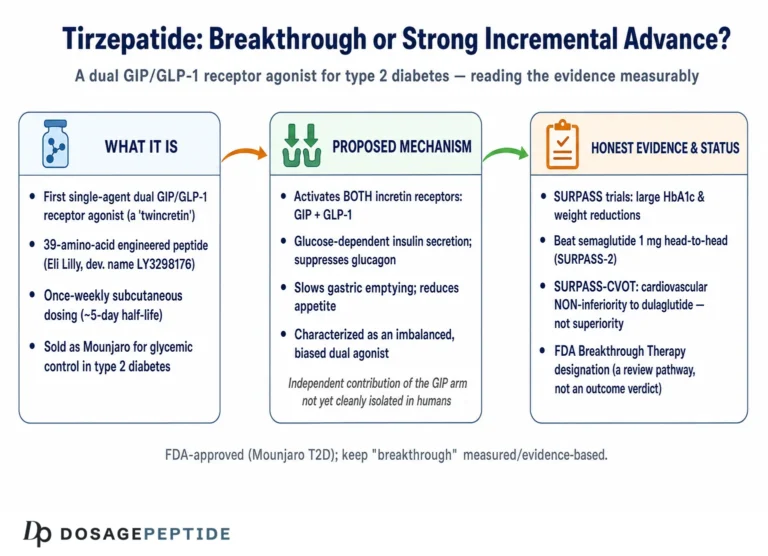
The second, and far more definitive, is SURPASS-CVOT, the dedicated cardiovascular outcomes trial published in late 2025. It randomized roughly 13,000 adults with type 2 diabetes and established atherosclerotic cardiovascular disease to tirzepatide or dulaglutide — an active comparator chosen because dulaglutide itself has a proven cardiovascular benefit (from the REWIND trial), making this an unusually stringent head-to-head design rather than a placebo comparison.3 Over a median follow-up of about four years, the primary three-point MACE composite occurred in approximately 12.2% of the tirzepatide group versus 13.1% of the dulaglutide group (hazard ratio about 0.92). This met the prespecified threshold for non-inferiority (the primary objective) but did not reach statistical significance for superiority over dulaglutide.3 Secondary analyses favored tirzepatide on all-cause mortality and kidney outcomes and, unsurprisingly given the mechanism, on HbA1c and weight, but these were not controlled for multiplicity and should be read as supportive rather than confirmatory.
The correct reading of SURPASS-CVOT is nuanced and easy to overstate in either direction. It is not a null result: demonstrating non-inferiority to an agent that already reduces cardiovascular events is meaningful and, combined with tirzepatide’s superior metabolic effects, positions it as at least as cardioprotective as an established GLP-1 receptor agonist. But it is also not a demonstration that tirzepatide beats placebo or beats dulaglutide on hard events — the superiority test did not clear its bar. Anyone claiming tirzepatide has “proven” it reduces heart attacks more than existing therapy is overreading the data; anyone claiming it has no cardiovascular value is underreading it. The measured statement is that tirzepatide provides cardiovascular protection non-inferior to a proven comparator, with superior metabolic and renal profiles, and that a placebo-controlled superiority margin in this population was not established because the trial was, ethically and by design, not placebo-controlled.
The choice of dulaglutide as comparator deserves a moment’s reflection, because it shapes how the result should be interpreted. By the time SURPASS-CVOT was designed, leaving high-risk patients with type 2 diabetes and established atherosclerotic disease on placebo for four years would have been difficult to justify, given that several agents already reduce events in this group. Choosing an active comparator with proven benefit is the more ethical design, but it raises the bar: a non-inferiority result now means “at least as good as a drug that already works,” and a superiority result would have required beating an already-effective therapy — a much harder target than beating placebo. Read in that light, the roughly 8% relative reduction in three-point MACE versus dulaglutide, though not statistically significant for superiority, is directionally encouraging rather than disappointing. It simply does not license the stronger claim.
A second subtlety concerns the secondary and exploratory endpoints. Tirzepatide numerically favored all-cause mortality and reduced major kidney events versus dulaglutide, and it produced its expected large advantages in HbA1c and weight.3 Because these analyses were not adjusted for multiple comparisons, they cannot carry the weight of a confirmed superiority claim — but they are internally consistent with a drug that is doing at least as much cardiovascular good as its comparator while doing considerably more metabolic good. The responsible summary treats the metabolic superiority as established and the incremental hard-outcome superiority as suggested but unproven.
Heart Failure: The SUMMIT Trial
If SURPASS-CVOT is the measured centerpiece for atherosclerotic events, the SUMMIT trial is arguably the most important positive hard-outcome result for tirzepatide in a cardiometabolic condition — and it concerns a disease uniquely tied to obesity: heart failure with preserved ejection fraction (HFpEF).
HFpEF is a syndrome in which the heart’s pumping fraction is normal but its filling is impaired, producing congestion, breathlessness, and exercise intolerance. It is strongly associated with obesity, and the obese phenotype of HFpEF is thought to be driven partly by expanded plasma volume, systemic inflammation, and the mechanical and paracrine effects of pericardial and visceral fat. Until recently, few therapies improved outcomes in this population.
SUMMIT randomized 731 patients with HFpEF and obesity (BMI ≥30) to tirzepatide (up to 15 mg weekly) or placebo. Over a median follow-up of about two years, tirzepatide reduced the composite of cardiovascular death or worsening heart failure events by roughly 38% (hazard ratio about 0.62), and significantly improved health status as measured by the Kansas City Cardiomyopathy Questionnaire and increased six-minute walk distance.8 A cardiac magnetic resonance substudy found reductions in left ventricular mass and in paracardiac adipose tissue, offering a mechanistic correlate for the clinical benefit.9 The trial was published in the New England Journal of Medicine in early 2025.
SUMMIT matters because it is a genuine hard-outcome trial — its endpoint included cardiovascular death and heart-failure events, not just a surrogate — and it was positive. The appropriate caveats are that it was a single trial of modest size (731 patients) in a specific population (obesity-related HFpEF), that the event-driven composite was dominated by heart-failure events rather than deaths, and that the results should not be extrapolated to heart failure with reduced ejection fraction or to non-obese HFpEF without further study. Within its defined population, however, SUMMIT provides the clearest evidence to date that tirzepatide can improve a cardiovascular clinical outcome, and it directly informed subsequent regulatory consideration of a heart-failure indication.
The SUMMIT result also reframes how we should think about obesity itself in this context. For decades, obesity was treated mainly as a risk factor to be managed indirectly. In obesity-related HFpEF, the SUMMIT data suggest that the excess adiposity is not merely a background risk but a proximate, treatable driver of the syndrome — and that removing it pharmacologically improves how patients feel and function while reducing events. That is a conceptually important shift: it positions substantial weight reduction as a cardiovascular intervention in its own right for at least one well-defined phenotype, rather than as a lifestyle aspiration. The caution, again, is not to over-generalize: the finding is anchored to obese HFpEF, and applying the same logic to other cardiovascular conditions requires their own trials, several of which are underway across the incretin class.
| Trial | Population | Primary hard endpoint | Result (honest reading) |
|---|---|---|---|
| SURPASS-4 | T2D, high CV risk (n=2,002) | 4-point MACE (safety outcome) | HR ~0.74, CI crossed 1.0 — no increased risk, not proof of benefit6 |
| SURPASS-CVOT | T2D + ASCVD (~13,000) | 3-point MACE vs dulaglutide | Non-inferior (HR ~0.92); superiority NOT met3 |
| SUMMIT | HFpEF + obesity (n=731) | CV death or worsening HF | Positive: ~38% reduction (HR ~0.62)8 |
| SURMOUNT-MMO | Obesity, no diabetes | MACE / mortality | Ongoing — not yet reported (as of mid-2026) |
Kidney Outcomes: A Consistent but Still-Exploratory Signal
The kidneys are a cardiometabolic organ in their own right, and chronic kidney disease is both a consequence of and an independent amplifier of cardiovascular risk. Tirzepatide has generated a consistent, favorable renal signal — though, importantly, from analyses that were exploratory or secondary rather than primary.
In a prespecified exploratory analysis of SURPASS-4, the composite of kidney endpoints and the rate of estimated glomerular filtration rate (eGFR) decline both favored tirzepatide over insulin glargine. The mean annual eGFR decline was approximately −1.4 mL/min/1.73m² on tirzepatide versus −3.6 on insulin, and urine albumin-to-creatinine ratio rose with insulin but not with tirzepatide.6 These findings echo the renoprotective pattern seen across the incretin class. In SURPASS-CVOT, major kidney events were also reduced relative to dulaglutide in prespecified exploratory analyses.3
The honest framing is that the renal evidence is directionally consistent and biologically plausible — weight loss, improved glycemia, and lower blood pressure all protect the kidney — but that no trial has yet made a hard renal composite (dialysis, transplant, renal death) its adequately powered primary endpoint for tirzepatide. The signal is promising and worth watching; it is not yet a proven indication. This is a recurring theme with this compound: the intermediate and secondary data run ahead of the primary-endpoint confirmation.
An additional nuance in the renal data deserves mention, because it recurs across the incretin class. When these drugs are started, eGFR sometimes dips modestly before stabilizing — a hemodynamic “dip and recover” pattern analogous to what is seen with renin-angiotensin blockers and SGLT2 inhibitors, and generally interpreted as a benign correlate of reduced intraglomerular pressure rather than true injury. The longer-term trajectory, showing a slower slope of decline, is the clinically meaningful part. Because tirzepatide’s renal findings come largely from populations with type 2 diabetes and coexisting cardiovascular risk, whether the same protection extends to people with obesity and early kidney disease but without diabetes is not yet established, and should not be assumed.
Sleep Apnea and Fatty Liver: Cardiometabolic Comorbidities With Trial Data
Two obesity-driven conditions with strong cardiometabolic ties have generated their own tirzepatide trials, and both illustrate the compound’s reach.
Obstructive sleep apnea (OSA). OSA is tightly linked to obesity, hypertension, and cardiovascular risk. The SURMOUNT-OSA program comprised two 52-week trials in adults with moderate-to-severe OSA and obesity — one in patients not using positive airway pressure (PAP) therapy and one in patients using it. Tirzepatide reduced the apnea-hypopnea index (AHI) by roughly 25 to 29 events per hour versus about 5 to 6 with placebo, alongside reductions in body weight, hypoxic burden, hs-CRP, and systolic blood pressure.7 These data supported the December 2024 FDA approval of Zepbound as the first pharmacologic therapy for moderate-to-severe OSA in adults with obesity.10 The measured caveat is that the endpoint was AHI — a validated but intermediate measure — and while its improvement plus the accompanying blood-pressure and inflammation benefits are cardiometabolically favorable, the trials were not designed to show a reduction in cardiovascular events attributable to treating apnea.
MASH (metabolic dysfunction-associated steatohepatitis). Fatty liver disease is the hepatic manifestation of cardiometabolic dysfunction. In the phase 2 SYNERGY-NASH trial, 190 participants with biopsy-confirmed MASH and stage F2–F3 fibrosis received tirzepatide or placebo for 52 weeks. MASH resolution without worsening of fibrosis was achieved by roughly 44% to 62% of tirzepatide-treated participants (rising with dose) versus about 10% on placebo, with fibrosis improvement in a substantial minority.11 This is a phase 2, biopsy-endpoint result — encouraging and mechanistically coherent, but not yet a phase 3 outcome trial, and MASH is not an approved indication for tirzepatide. It belongs in the cardiometabolic story as evidence of breadth, appropriately labeled investigational for this use.
Together, the OSA and MASH data reinforce a theme: tirzepatide favorably affects a wide range of obesity-linked cardiometabolic comorbidities. The strength of evidence varies by condition — approved and phase 3 for OSA, phase 2 for MASH — and readers should calibrate their confidence accordingly rather than treating “improves many things” as “proven to improve outcomes in all of them.”
Limitations and What Remains Unproven
Pulling the evidence together, several limitations bound what can honestly be claimed about tirzepatide and cardiometabolic outcomes.
No placebo-controlled MACE superiority in obesity yet. The single most consequential gap is that the definitive cardiovascular morbidity-and-mortality trial in obesity without diabetes — SURMOUNT-MMO — had not reported as of mid-2026. Until it does, the claim that tirzepatide reduces heart attacks and strokes in people with obesity but without diabetes rests on inference from risk factors and from the diabetes and HFpEF populations, not on a dedicated placebo-controlled event trial.
SURPASS-CVOT showed non-inferiority, not superiority. Against the active comparator dulaglutide, tirzepatide did not achieve a statistically significant reduction in three-point MACE.3 This is a strong safety-and-parity result, not a demonstration of superior event reduction, and language should reflect that.
Many benefits are weight-mediated. Mediation analyses attribute much of the blood-pressure and metabolic improvement to weight loss.5 This is not a criticism — weight loss is a legitimate mechanism — but it means tirzepatide’s cardiometabolic effects may not be fundamentally different in kind from those achievable by other means of substantial weight reduction, and durability depends on continued treatment, since weight tends to regress after discontinuation.
Surrogate-heavy evidence base. Several of the most impressive results — AHI in OSA, MASH resolution, eGFR slope, lipid changes — are intermediate or biopsy endpoints. They are meaningful and, in the case of OSA, sufficient for approval, but they are not hard cardiovascular outcomes.
Population specificity. SUMMIT’s positive result applies to obesity-related HFpEF, not to all heart failure; SURPASS-CVOT applies to type 2 diabetes with established atherosclerotic disease. Extrapolation beyond studied populations is speculation.
Duration and generalizability. Most trials ran one to four years. Long-term (decade-scale) cardiovascular and safety data are still accumulating, and trial populations, while large, may not capture the full diversity of real-world patients. For a sense of how these open questions are being framed as new data arrive, the sibling round-up of what the latest clinical trials reveal about tirzepatide tracks the evolving evidence.
None of this diminishes what tirzepatide has demonstrably achieved. It is to insist that the achievements be described at the correct evidentiary altitude: robust risk-factor improvement, a positive HFpEF outcome trial, cardiovascular parity with a proven comparator, and consistent-but-exploratory renal and metabolic signals — with the placebo-controlled hard-outcome question in obesity still open.
Safety and Tolerability in a Cardiometabolic Context
Cardiometabolic benefit must be weighed against the safety profile, which for tirzepatide is dominated by gastrointestinal effects. The most common adverse events across the SURPASS and SURMOUNT programs were nausea, diarrhea, vomiting, constipation, and decreased appetite — generally mild to moderate, most frequent during dose escalation, and the leading reason for discontinuation.24 In SURPASS-CVOT, treatment discontinuation for adverse events was modestly higher with tirzepatide than dulaglutide (roughly 13% versus 10%), consistent with its greater potency.3
Several safety considerations bear specifically on the cardiometabolic population. A modest increase in heart rate has been observed across the incretin class, including with tirzepatide; its long-term significance in patients with cardiovascular disease is monitored but has not offset the benefit seen in trials. Because tirzepatide can slow gastric emptying, there is theoretical and observed relevance to the absorption of other drugs and to peri-procedural aspiration risk, prompting anesthesia-society guidance on perioperative management. As a class, GLP-1-based agents carry a boxed warning for thyroid C-cell tumors based on rodent data (of uncertain human relevance) and contraindications in medullary thyroid carcinoma and MEN2. Cases of pancreatitis and gallbladder events have been reported. The loss of lean mass that accompanies rapid weight reduction is a consideration for frail or older patients, arguing for attention to protein intake and resistance activity during treatment.
Two practical points about tolerability bear on the cardiometabolic population specifically. First, the gastrointestinal effects are overwhelmingly a phenomenon of dose escalation: they cluster around each step up in dose and generally attenuate once a dose is maintained, which is why the labeled titration schedule — starting at 2.5 mg and increasing no faster than every four weeks — is not an arbitrary formality but the principal tool for keeping patients on therapy long enough to accrue benefit. Slower titration, dose holds, and symptomatic management materially reduce discontinuation in clinical practice, and because the cardiometabolic advantages depend on sustained exposure, tolerability management is inseparable from efficacy. Second, the benefits are contingent on continued treatment: across the incretin class, stopping the drug is followed by substantial regain of weight and a drift of blood pressure, glucose, and lipids back toward baseline. This has a direct bearing on how the outcome data should be read — the trials measured a drug taken continuously, so their cardiometabolic gains describe an ongoing therapy rather than a one-time correction, and any real-world durability claim must account for adherence, access, and the reality that these are, for chronic disease, chronic medications.
The balanced reading is that tirzepatide’s safety profile is well characterized and, for the approved populations, favorable relative to its benefits — but it is not benign, requires dose titration, and demands individualized assessment in patients with established cardiovascular or gastrointestinal disease. A clean safety signal in trials is not a guarantee of safety in every real-world patient, particularly those excluded from trials by comorbidity.
Regulatory Status and How to Read It
Tirzepatide’s regulatory record is unusually well defined for a peptide, and reading it precisely helps separate proven from investigational uses.
The compound is FDA-approved under two brand names for distinct indications. As Mounjaro, it was approved in May 2022 as an adjunct to diet and exercise to improve glycemic control in adults with type 2 diabetes.1 As Zepbound, it was approved in November 2023 for chronic weight management in adults with obesity or overweight with at least one weight-related comorbidity, and in December 2024 for moderate-to-severe obstructive sleep apnea in adults with obesity — the first drug ever approved for OSA.10 These approvals reflect demonstrated efficacy on their respective endpoints (glycemia, weight, AHI), each backed by phase 3 trials.
What the labels do not currently include is a broad standalone claim of cardiovascular event reduction of the kind carried by some other agents in the metabolic space. The heart-failure evidence from SUMMIT and the cardiovascular parity from SURPASS-CVOT inform ongoing regulatory and guideline discussions, and an HFpEF-related indication has been under active consideration, but researchers should verify the current approved labeling rather than assume a cardiovascular-outcomes claim that may not (yet) be granted. MASH and standalone cardiovascular-prevention uses remain investigational for tirzepatide.
A final point of precision: the surge of compounded and research-grade tirzepatide circulating outside approved channels is not equivalent to the approved product. Purity, dosing accuracy, and sterility vary, and none of the outcome data in this article can be assumed to transfer to unregulated material. The approved products were the ones studied; educational discussion of dosing, such as the reconstitution mathematics catalogued in the site’s dosage index, is provided for research literacy, not as endorsement of non-prescription use.
How Tirzepatide Compares Within the Cardiometabolic Peptide Landscape
Placing tirzepatide beside related agents clarifies where its cardiometabolic evidence stands. Semaglutide, a pure GLP-1 receptor agonist, has a landmark placebo-controlled cardiovascular outcome trial (SELECT) showing MACE reduction in obesity without diabetes — a hard-endpoint result tirzepatide does not yet have in that population, because SURMOUNT-MMO is still ongoing. Tirzepatide, in turn, generally produces greater weight and glucose reduction and a positive HFpEF outcome trial that semaglutide’s program approached from a different angle. Neither dominance is absolute; each compound has a distinct evidence portfolio.
Looking forward, triple agonists such as retatrutide — which adds glucagon-receptor agonism to the GIP/GLP-1 combination — are being studied for even larger metabolic effects, though their hard-outcome evidence is earlier-stage still; the sibling analysis of how retatrutide influences cardiovascular risk factors traces that frontier. The general lesson across the class is consistent with everything above: risk-factor improvement arrives first and impressively, while hard-outcome confirmation arrives later, trial by trial, and should not be assumed from mechanism or from surrogate data alone.
It is also worth being explicit about what the class as a whole has and has not established, because tirzepatide inherits both the promise and the gaps. No trial has yet compared two incretin agents head-to-head on a placebo-referenced hard cardiovascular endpoint; SURPASS-CVOT compared tirzepatide against dulaglutide, and SELECT compared semaglutide against placebo, but these are different designs in different populations, so cross-trial rankings of “which drug protects the heart most” are statistically illegitimate however tempting they are. What can be said is narrower and more defensible: within type 2 diabetes with established atherosclerotic disease, tirzepatide is at least as protective as a proven GLP-1 agonist while delivering more metabolic effect; within obesity-related HFpEF, it improves a hard composite; and within obesity without diabetes, its event-level cardiovascular claim awaits SURMOUNT-MMO. Clinicians choosing among these agents in practice therefore weigh factors beyond the headline trials — the specific comorbidity being targeted, tolerability, cost and coverage, and whether the goal is glycemic control, weight reduction, apnea, or heart-failure symptoms — rather than assuming a single hierarchy of cardiovascular benefit that the evidence does not support.
The measured conclusion for tirzepatide specifically is that it is one of the most metabolically potent agents ever brought to market, with a rapidly maturing — and, so far, favorable — cardiometabolic outcome record: proven in HFpEF, non-inferior on atherosclerotic events versus a cardioprotective comparator, reassuring on kidney function, and pending on the definitive obesity morbidity-mortality question. That is a strong position, and it is strong enough that it does not need to be overstated.
Frequently Asked Questions
Has tirzepatide been proven to reduce heart attacks and strokes?
Not in the strongest possible sense. In SURPASS-CVOT, tirzepatide was non-inferior to dulaglutide (a comparator that itself reduces cardiovascular events) for the composite of cardiovascular death, heart attack, and stroke, with a hazard ratio around 0.92 — but it did not reach statistical significance for superiority.3 There is not yet a completed placebo-controlled trial showing that tirzepatide reduces these events in people with obesity but without diabetes; that trial (SURMOUNT-MMO) is ongoing. The accurate statement is that tirzepatide offers cardiovascular protection at least equal to an established therapy, not that it has proven superior event reduction.
What is the strongest hard-outcome cardiovascular result for tirzepatide?
The SUMMIT trial. In patients with heart failure with preserved ejection fraction and obesity, tirzepatide reduced the composite of cardiovascular death or worsening heart failure by roughly 38% and improved symptoms and walk distance over about two years.8 This is a genuine hard-outcome result, but it applies specifically to obesity-related HFpEF and comes from a single trial of 731 patients.
How much does tirzepatide lower blood pressure?
In a rigorous 24-hour ambulatory monitoring substudy of SURMOUNT-1, average systolic blood pressure fell by about 7.4 to 10.6 mmHg versus placebo across doses, with diastolic pressure also reduced.5 Roughly two-thirds of the systolic reduction was attributable to weight loss. Using ambulatory rather than office readings makes this estimate more reliable than clinic-based blood-pressure claims.
Does tirzepatide protect the kidneys?
The signal is favorable but exploratory. In SURPASS-4, the rate of kidney-function decline was slower on tirzepatide than on insulin glargine (about −1.4 versus −3.6 mL/min/1.73m² per year), and albuminuria did not rise as it did with insulin.6 SURPASS-CVOT also showed fewer major kidney events versus dulaglutide in secondary analyses.3 However, no trial has yet made a hard renal composite its adequately powered primary endpoint for tirzepatide, so this remains promising rather than proven.
Is tirzepatide approved for sleep apnea, and what did the trial show?
Yes. In December 2024, the FDA approved Zepbound (tirzepatide) as the first drug for moderate-to-severe obstructive sleep apnea in adults with obesity.10 In the SURMOUNT-OSA trials, tirzepatide reduced the apnea-hypopnea index by roughly 25 to 29 events per hour versus about 5 to 6 with placebo over 52 weeks, along with reductions in weight, systolic blood pressure, and inflammation.7 The endpoint (AHI) is an intermediate measure; the trials were not designed to show reduced cardiovascular events from treating apnea.
What about fatty liver disease (MASH)?
Tirzepatide is not FDA-approved for MASH. In the phase 2 SYNERGY-NASH trial, however, 44% to 62% of treated participants (increasing with dose) achieved MASH resolution without worsening fibrosis, versus about 10% on placebo, with fibrosis improvement in a meaningful minority.11 This is an encouraging phase 2, biopsy-endpoint result that supports further study; it should be described as investigational for this use.
How does tirzepatide compare with semaglutide on cardiovascular evidence?
They have different evidence portfolios. Semaglutide has a completed placebo-controlled outcome trial (SELECT) showing reduced cardiovascular events in obesity without diabetes — a hard-endpoint result tirzepatide lacks in that population until SURMOUNT-MMO reports. Tirzepatide generally produces greater weight and glucose reduction and has a positive HFpEF outcome trial (SUMMIT). Neither is uniformly superior; the choice depends on the specific outcome and population in question.
Are the cardiometabolic benefits just from weight loss?
Largely, but not entirely. Mediation analyses attribute much of the blood-pressure and metabolic improvement to weight reduction.5 There are likely additional weight-independent contributions from improved glycemia, reduced inflammation, and direct incretin-receptor effects on the heart and vasculature, but disentangling these is an active research question. Practically, the benefits depend on continued treatment, as weight and risk factors tend to regress after discontinuation.
Is compounded or research-grade tirzepatide equivalent to the approved product?
No. All of the outcome data described here come from studies of the manufacturer’s approved product. Compounded or research-grade material varies in purity, potency, and sterility, and none of the trial findings can be assumed to transfer to it. Educational dosing references are provided for research literacy, not as endorsement of non-prescription use.
References
- Coskun T, Sloop KW, Loghin C, et al. LY3298176, a novel dual GIP and GLP-1 receptor agonist for the treatment of type 2 diabetes mellitus: from discovery to clinical proof of concept. Mol Metab. 2018;18:3-14. PMID: 30473097. https://pubmed.ncbi.nlm.nih.gov/30473097/
- Frías JP, Davies MJ, Rosenstock J, et al. Tirzepatide versus Semaglutide Once Weekly in Patients with Type 2 Diabetes. N Engl J Med. 2021;385(6):503-515. PMID: 34170647. https://pubmed.ncbi.nlm.nih.gov/34170647/
- Nicholls SJ, Bhatt DL, Buse JB, et al. Cardiovascular Outcomes with Tirzepatide versus Dulaglutide in Type 2 Diabetes (SURPASS-CVOT). N Engl J Med. 2025;393:2409-2420. DOI: 10.1056/NEJMoa2505928. https://www.nejm.org/doi/full/10.1056/NEJMoa2505928
- Jastreboff AM, Aronne LJ, Ahmad NN, et al. Tirzepatide Once Weekly for the Treatment of Obesity (SURMOUNT-1). N Engl J Med. 2022;387(3):205-216. PMID: 35658024. https://pubmed.ncbi.nlm.nih.gov/35658024/
- de Lemos JA, Linetzky B, le Roux CW, et al. Tirzepatide Reduces 24-Hour Ambulatory Blood Pressure in Adults With Body Mass Index ≥27 kg/m²: SURMOUNT-1 Ambulatory Blood Pressure Monitoring Substudy. Hypertension. 2024;81(3):e41-e51. DOI: 10.1161/HYPERTENSIONAHA.123.22022. https://www.ahajournals.org/doi/10.1161/HYPERTENSIONAHA.123.22022
- Del Prato S, Kahn SE, Pavo I, et al. Tirzepatide versus insulin glargine in type 2 diabetes and increased cardiovascular risk (SURPASS-4). Lancet. 2021;398(10313):1811-1824. PMID: 34672967. https://pubmed.ncbi.nlm.nih.gov/34672967/
- Malhotra A, Grunstein RR, Fietze I, et al. Tirzepatide for the Treatment of Obstructive Sleep Apnea and Obesity (SURMOUNT-OSA). N Engl J Med. 2024;391(13):1193-1205. DOI: 10.1056/NEJMoa2404881. https://www.nejm.org/doi/10.1056/NEJMoa2404881
- Packer M, Zile MR, Kramer CM, et al. Tirzepatide for Heart Failure with Preserved Ejection Fraction and Obesity (SUMMIT). N Engl J Med. 2025;392(5):427-437. PMID: 39555826. https://pubmed.ncbi.nlm.nih.gov/39555826/
- Kramer CM, Borlaug BA, Zile MR, et al. Tirzepatide Reduces LV Mass and Paracardiac Adipose Tissue in Obesity-Related Heart Failure: SUMMIT CMR Substudy. J Am Coll Cardiol. 2025;85(7):699-706. DOI: 10.1016/j.jacc.2024.11.001. https://www.jacc.org/doi/10.1016/j.jacc.2024.11.001
- U.S. Food and Drug Administration. FDA approves first medication for obstructive sleep apnea (Zepbound/tirzepatide). December 20, 2024. https://www.fda.gov/news-events/press-announcements/fda-approves-first-medication-obstructive-sleep-apnea
- Loomba R, Hartman ML, Lawitz EJ, et al. Tirzepatide for Metabolic Dysfunction-Associated Steatohepatitis with Liver Fibrosis (SYNERGY-NASH). N Engl J Med. 2024;391(4):299-310. DOI: 10.1056/NEJMoa2401943. https://www.nejm.org/doi/abs/10.1056/NEJMoa2401943
- Ludvik B, Giorgino F, Jódar E, et al. Once-weekly tirzepatide versus once-daily insulin degludec as add-on to metformin with or without SGLT2 inhibitors in patients with type 2 diabetes (SURPASS-3). Lancet. 2021;398(10300):583-598. PMID: 34370970. https://pubmed.ncbi.nlm.nih.gov/34370970/
Educational and research-use disclaimer: This article is provided solely for scientific and educational purposes. Tirzepatide is FDA-approved as Mounjaro for type 2 diabetes and as Zepbound for chronic weight management and for moderate-to-severe obstructive sleep apnea in adults with obesity; it is not, as of this writing, approved as a standalone therapy for the prevention of cardiovascular events or for MASH, and its placebo-controlled cardiovascular morbidity-mortality data in obesity without diabetes remain incomplete. Nothing here is medical advice, a treatment recommendation, or an endorsement of non-prescription, compounded, or research-grade material, which is not equivalent to the approved product. Individuals should consult qualified healthcare professionals and rely on current approved labeling before making any medical decisions.