Short answer: GHK-Cu almost certainly delivers copper to the enzymes that rebuild skin. Whether it also controls them is a different, much weaker claim — and it is the one most product pages quietly make. Copper is the mandatory cofactor for a specific set of skin-building enzymes: lysyl oxidase, which cross-links collagen and elastin; Cu/Zn superoxide dismutase, which handles oxidative stress; tyrosinase, which makes pigment; and cytochrome c oxidase, which powers the cell.10 That much is settled metal biochemistry. The step from “GHK-Cu carries copper” to “GHK-Cu regulates collagen synthesis” is where the marketing runs ahead of the data, and this article walks that gap enzyme by enzyme.
Read on for what the evidence actually supports for each enzyme, how strong that evidence is (cell culture, animal, or human), whether topical or injected GHK-Cu can even reach the enzymes in question, and which of the popular claims survive scrutiny. If you want the practical summary first: the collagen cross-linking story is the strongest, the antioxidant story has a delivery problem, the pigmentation story is a genuine paradox, and the wider matrix effects are real even where the enzyme mechanism is uncertain.
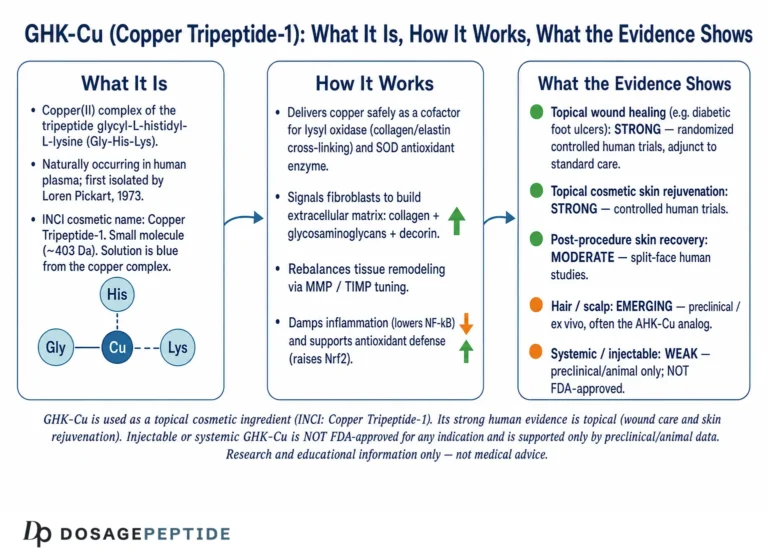
GHK-Cu — copper tripeptide-1, the copper(II) complex of glycyl-L-histidyl-L-lysine — is a cosmetic ingredient and a research compound. It is not an FDA-approved drug, and it has never been through the pivotal-trial machinery that would let anyone say it “treats” a skin condition. Most of what we know about its effect on copper-dependent enzymes comes from cell cultures, a handful of small topical studies, and large gene-expression datasets that are suggestive rather than definitive. This piece treats the title as a genuine open research question and works through the mechanistic case enzyme by enzyme: where the biology is solid, where it is plausible-but-unproven, and where the popular story quietly substitutes copper’s general importance for evidence that GHK-Cu specifically does the modulating.
Throughout, the guiding distinction is between delivering a cofactor and regulating an enzyme. A courier who drops a part at a factory is not the same as a foreman who decides how fast the line runs. GHK-Cu has a reasonable claim to being the courier. Whether it is also the foreman — and for which enzymes — is the harder question, and it does not have a single clean answer.
What GHK-Cu Is and the Copper It Carries
GHK is a tripeptide with the sequence glycyl-L-histidyl-L-lysine. It was first isolated from human plasma in the early 1970s as an activity that made aged liver tissue behave more like young tissue, and it turned out to co-purify with copper.1 That was the first clue that the peptide’s biology is inseparable from the metal. GHK binds Cu(II) with high affinity through its imidazole nitrogen (from histidine), the amino terminus, and a deprotonated amide nitrogen, forming a square-planar complex in which the copper is held tightly but remains exchangeable.1 The result, GHK-Cu, is a small, stable, water-soluble coordination compound. Its molecular weight is modest — the peptide is roughly 340 daltons, the complex a little more — which matters when we later ask whether it can even reach the tissues and cells where copper-dependent enzymes operate.
The central biochemical idea, articulated by Loren Pickart and colleagues across several decades, is that GHK acts as a physiological copper shuttle. Because its affinity for copper sits in a useful middle range — tighter than loose serum binding but looser than the deepest intracellular copper sinks — GHK can pick copper up from carriers such as albumin and hand it off to cells and to copper-requiring proteins, all while keeping the metal chelated and therefore chemically muzzled.1 Free copper is dangerous: unliganded Cu(II)/Cu(I) cycles through Fenton-type chemistry and generates hydroxyl radicals. The appeal of GHK-Cu is that it moves copper in a “safe” escorted form, delivering the element that dozens of enzymes need without releasing the naked ion that would damage the very tissue those enzymes are supposed to build.
There is a further wrinkle that gives the wound-healing story a satisfying internal logic. The GHK sequence itself is embedded in the alpha-2(I) chain of type I collagen. When collagen is degraded during injury, proteolysis can liberate GHK-containing fragments, which then complex with copper made locally available by tissue breakdown.2 On this model, GHK-Cu is not an exotic additive but a signal the body already generates at a wound: damaged matrix releases the peptide, the peptide grabs copper, and the copper-loaded peptide helps orchestrate repair. It is an elegant hypothesis, and it is the backbone of nearly every downstream claim about copper-dependent enzymes. It is also, like much of this field, better supported for the “peptide stimulates repair” endpoint than for any single molecular mechanism.
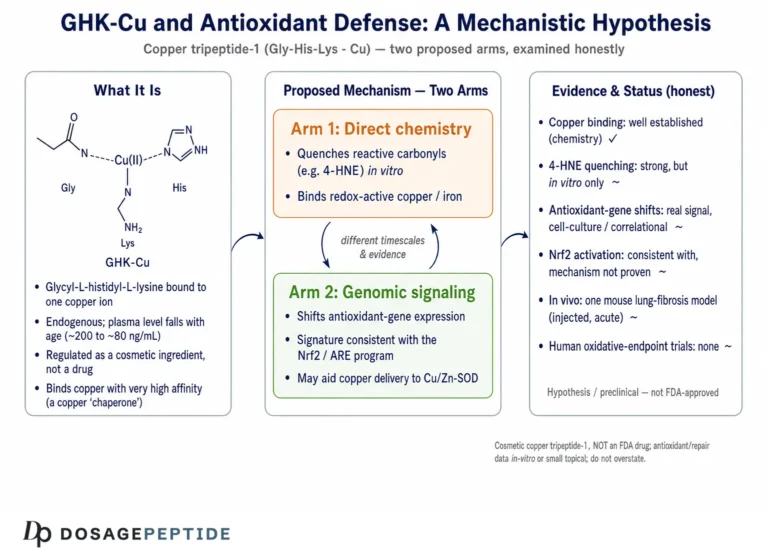
Levels of GHK in human plasma decline with age — roughly from the 200 nanogram-per-milliliter range in young adults to substantially lower in later decades — which is often invoked to explain why aged skin regenerates poorly and why supplementing GHK-Cu might help.512 That correlation is real and interesting, but it is a correlation; it does not by itself demonstrate that restoring GHK-Cu re-activates copper-dependent enzymes in aged skin. For readers who want the broader picture of what topical GHK-Cu has and has not been shown to do for skin, the companion overview on what GHK-Cu does for skin health, wrinkle reduction, and collagen synthesis is a useful complement to the enzyme-focused analysis here.
The Copper-Dependent Enzymes of Skin Regeneration
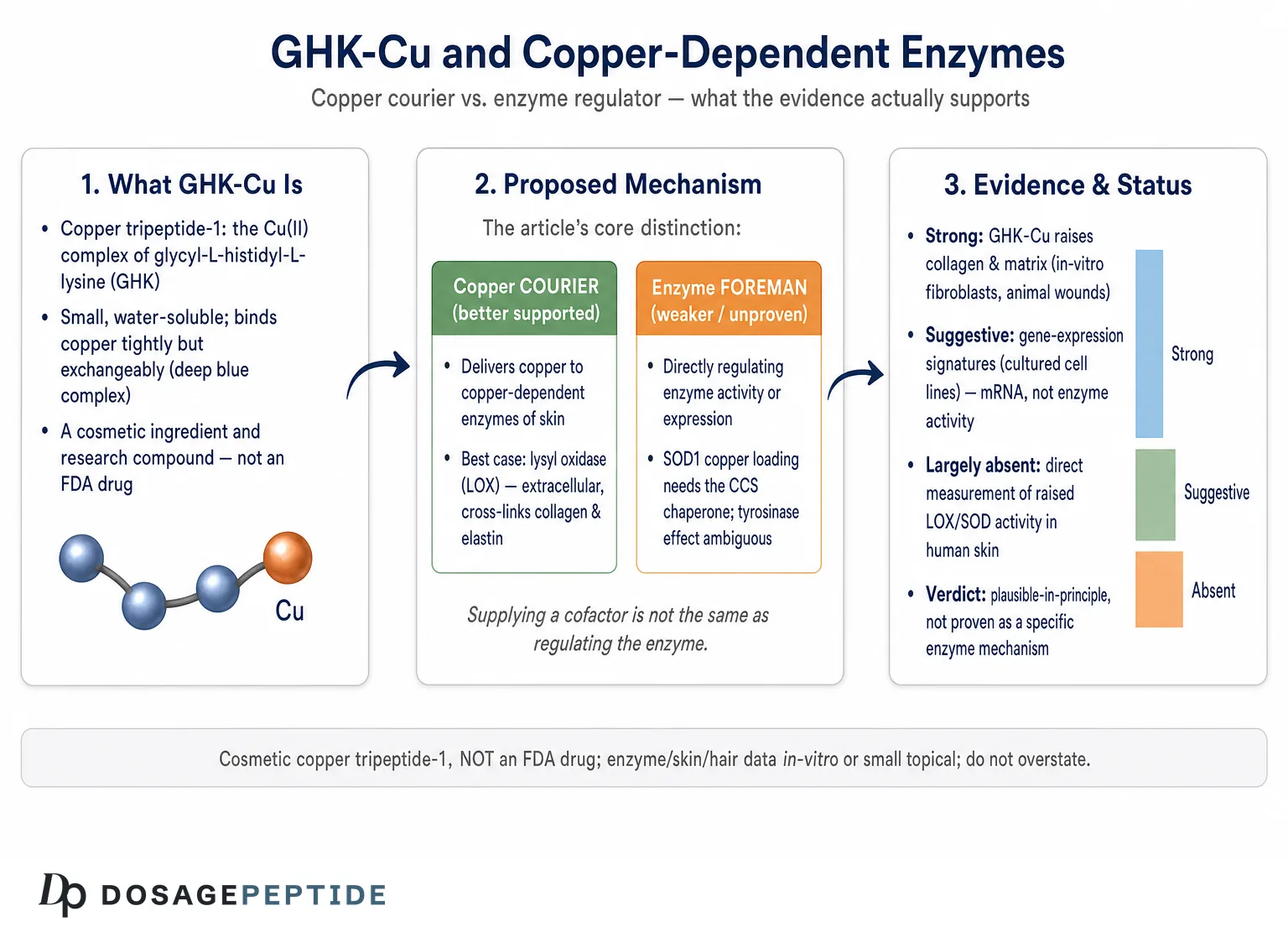
To evaluate whether GHK-Cu can modulate copper-dependent enzymes, we first need to be precise about which enzymes those are and what they do in skin. Copper is a catalytic metal: it sits in the active site and participates directly in electron transfer, which is why it shows up in oxidases and oxygenases rather than, say, in structural proteins. A relatively small number of cuproenzymes carry most of the load relevant to skin regeneration.10
Lysyl oxidase (LOX) and the LOX-like family (LOXL1–4). These are secreted, extracellular copper amine oxidases that catalyze the first, committed step of collagen and elastin cross-linking. They oxidatively deaminate specific lysine and hydroxylysine residues to reactive aldehydes, which then condense into the covalent cross-links that turn soluble collagen and elastin into a strong, insoluble matrix.7 Every LOX enzyme requires a single copper ion and a lysyl-tyrosylquinone (LTQ) cofactor; without copper, the enzyme is a catalytically dead apo-protein. For skin regeneration this is arguably the most important cuproenzyme, because it converts newly synthesized collagen into mechanically competent tissue. New collagen that is not cross-linked is weak and quickly degraded.
Cu/Zn superoxide dismutase (SOD1, and extracellular SOD3). These enzymes use copper to dismutate the superoxide radical into hydrogen peroxide and oxygen, the front line of the cell’s antioxidant defense. Copper is redox-active in the SOD active site, cycling between Cu(II) and Cu(I) as it handles successive superoxide molecules.11 In skin, which is chronically exposed to ultraviolet radiation and the reactive oxygen species it generates, SOD activity is central to limiting oxidative damage during and after regeneration.
Tyrosinase. A copper-dependent oxidase in melanocytes that catalyzes the rate-limiting steps of melanin synthesis. It contains a binuclear (two-copper) active site. Its relevance to “regeneration” is mainly cosmetic — pigmentation, post-inflammatory hyperpigmentation, and the evenness of repaired skin — but it is a genuine cuproenzyme and one where GHK-Cu’s effects are, as we will see, genuinely puzzling.
Cytochrome c oxidase (Complex IV). The terminal enzyme of the mitochondrial electron transport chain uses copper centers (Cu-A and Cu-B) to transfer electrons to oxygen. It is not skin-specific, but every regenerating, dividing, migrating cell depends on it for ATP, so copper sufficiency for cytochrome c oxidase underwrites the energy budget of repair.
Peptidylglycine alpha-amidating monooxygenase, dopamine-beta-hydroxylase, and ceruloplasmin. These round out the human cuproenzyme set. Ceruloplasmin is the major copper-carrying ferroxidase in plasma and links copper to iron handling; the other two are copper monooxygenases with more specialized roles. Their direct relevance to skin regeneration is smaller, but they illustrate how many biological processes depend on the same scarce metal.
| Cuproenzyme | Location relevant to skin | Role in regeneration | Plausibility of GHK-Cu modulation |
|---|---|---|---|
| Lysyl oxidase (LOX/LOXL1–4) | Extracellular matrix | Cross-links collagen & elastin; matrix strength | Highest — extracellular, copper-limited, GHK-Cu delivers copper where the enzyme works |
| Cu/Zn SOD (SOD1 / SOD3) | Cytosol / extracellular | Antioxidant defense against UV-driven ROS | Mixed — SOD1 copper loading needs the CCS chaperone; gene-expression signal reported |
| Tyrosinase | Melanocytes | Melanin synthesis, pigmentation of repaired skin | Ambiguous — both inhibition and copper-supply effects plausible |
| Cytochrome c oxidase | Mitochondria (all cells) | ATP for proliferation & migration | Indirect — general copper sufficiency, not specific modulation |
| Ceruloplasmin / PAM / DBH | Plasma / secretory | Copper & iron handling; peptide processing | Low direct relevance to skin repair |
It is worth pausing on why copper is such a rate-limiting element for this whole set of enzymes, because that scarcity is what makes the delivery hypothesis biologically meaningful in the first place. Copper is both essential and toxic, so the body handles it with obsessive care: dietary copper is absorbed, bound to ceruloplasmin and albumin in plasma, imported into cells through the CTR1 transporter, and then distributed to specific destinations by dedicated chaperones — ATOX1 toward the secretory pathway, COX17 toward mitochondrial cytochrome c oxidase, and CCS toward SOD1. The genetic diseases of copper handling, Menkes and Wilson disease, show what happens when this logistics network fails in either direction: too little copper reaching cuproenzymes causes connective-tissue and neurological collapse, while unregulated copper accumulation causes oxidative organ damage. Skin sits squarely inside this economy — lysyl oxidase deficiency from copper insufficiency produces fragile, poorly cross-linked connective tissue — which is exactly why a molecule that can move copper safely into the extracellular matrix is mechanistically interesting for regeneration, and also why simply dumping more copper in is not automatically helpful. The system is regulated for a reason, and any exogenous copper carrier is entering a tightly governed traffic pattern rather than a vacuum.
The table already hints at the article’s central finding: GHK-Cu’s plausibility as a “modulator” is not uniform across cuproenzymes. It is strongest exactly where the enzyme lives outside the cell and depends on a copper supply the peptide can plausibly reach (lysyl oxidase), and weakest where copper loading is controlled by dedicated intracellular chaperones that a small extracellular peptide has no obvious way to bypass.
Two Different Claims Hiding in One Question
Return to the distinction from the introduction, because it is the analytical key to the whole topic. When someone says GHK-Cu “modulates copper-dependent enzymes,” they could mean any of three quite different things, and the evidence for each is different.
Claim A — cofactor donation. GHK-Cu supplies copper to apo-enzymes (enzymes missing their metal), converting them from inactive to active. This is a real mechanism in principle: an apo-lysyl-oxidase with no copper is dead, and giving it copper revives it. But this only produces a net increase in activity if the enzyme was copper-starved to begin with. In a copper-replete tissue, adding more copper to already-loaded enzymes does nothing. So Claim A depends on a hidden premise — that skin regeneration is limited by copper availability — which is true in some settings (aged, wounded, or nutritionally copper-poor tissue) and false in others.
Claim B — transcriptional modulation. GHK-Cu changes how much of these enzymes the cell makes, by altering gene expression. This is a signaling claim, not a metallochemistry claim, and the evidence for it comes almost entirely from microarray and gene-expression datasets showing that GHK shifts the expression of thousands of genes, some of them encoding antioxidant and matrix enzymes.67 This is genuinely interesting but comes with heavy caveats about what gene-expression signatures do and do not prove about protein-level enzyme activity in living skin.
Claim C — allosteric or direct activity modulation. GHK-Cu binds an enzyme and changes its catalytic rate directly, independent of copper supply or transcription. This is the strongest form of “modulation” and, for the skin cuproenzymes, the least supported. The clearest example of anything like it is tyrosinase, where copper-chelating molecules can inhibit the enzyme by interfering with its active-site copper — and even there, whether intact GHK-Cu does this in skin is unresolved.
Most popular writing about GHK-Cu blurs A, B, and C into a single confident sentence. The honest version keeps them apart, because a compound can be excellent at Claim A (delivering copper) while having only weak, indirect support for Claim B and essentially none for Claim C. As we go enzyme by enzyme, notice which claim the available data actually support.
Lysyl Oxidase: the Strongest Case, and Its Limits
If GHK-Cu modulates any copper-dependent enzyme in a way relevant to skin regeneration, lysyl oxidase is the best candidate, and it is worth understanding exactly why the mechanistic logic is so appealing here.
Lysyl oxidase is secreted into the extracellular matrix as an inactive pro-enzyme, then proteolytically processed and loaded with copper to become catalytically active.7 Because it works outside the cell, its copper supply is drawn from the extracellular pool — precisely the compartment a small, copper-loaded, water-soluble peptide like GHK-Cu can inhabit. And its job is the exact bottleneck of matrix maturation: converting freshly made, soluble collagen and elastin into cross-linked, insoluble, mechanically strong tissue. A regenerating dermis can synthesize abundant new collagen and still end up weak if cross-linking lags. So an agent that both stimulates collagen synthesis and helps ensure the copper supply for the cross-linking enzyme would, in theory, be well-matched to the biology of repair.
The synthesis half of that story is the best-evidenced thing GHK-Cu does. In cultured fibroblasts, GHK-Cu stimulates collagen production at strikingly low, nanomolar concentrations, with the effect beginning around 10−12 to 10−11 molar and peaking near 10−9 molar — and independent of any increase in cell number, meaning it is a genuine per-cell stimulation rather than just more cells.3 In vivo, GHK-Cu injected into experimental wound chambers in rats produced concentration-dependent increases in dry weight, DNA, total protein, collagen, and glycosaminoglycan content, with collagen synthesis stimulated about twice as much as noncollagen protein, alongside increases in type I and type III collagen messenger RNA.4 These are solid, primary, peer-reviewed findings that GHK-Cu drives matrix accumulation.
But here is the honest gap: those experiments demonstrate that GHK-Cu increases collagen and matrix, not that it does so by modulating lysyl oxidase activity. The inference “more cross-linked collagen, therefore GHK-Cu boosted the copper-dependent cross-linking enzyme” is reasonable, but it is an inference. Direct enzymological measurements — showing that GHK-Cu increases lysyl oxidase catalytic activity, or restores activity in copper-deficient apo-LOX, in a controlled system — are far thinner than the collagen-synthesis data. The copper-delivery argument for LOX is mechanistically coherent and, of all the cuproenzymes, the most defensible, but it rests largely on the combination of (1) LOX unquestionably needing copper, (2) LOX being extracellular where GHK-Cu can go, and (3) GHK-Cu increasing cross-linkable matrix. That is a strong circumstantial case, not a closed one.
There is also a subtlety about elastin worth flagging, because “regeneration” includes elastic recoil, not just tensile strength. Lysyl oxidase cross-links elastin as well as collagen, and some GHK-Cu topical studies report improvements in elastin and skin elasticity.13 The same copper-supply logic applies, with the same caveat: improved elasticity is consistent with better LOX-mediated elastin cross-linking, but the studies measure the tissue-level outcome, not the enzyme step. Readers tracing the broader repair-signaling story will find it developed in the companion piece on the scientific evidence for GHK-Cu’s role in tissue repair signaling, which situates the matrix data within the peptide’s wider signaling profile.
Superoxide Dismutase and the Antioxidant Enzymes: a Copper-Delivery Problem
The antioxidant story is where the copper-delivery narrative is most often told and where it most needs qualification, because the biochemistry of how Cu/Zn SOD gets its copper undercuts the simplest version of the claim.
The popular version goes like this: GHK-Cu delivers copper to superoxide dismutase, activating it and boosting antioxidant defense in skin.6 The appeal is obvious. SOD1 is a copper enzyme; skin is under constant oxidative assault from UV; more active SOD would mean better protection during regeneration. And gene-expression work does show that GHK influences antioxidant-related genes, with reports of upregulated SOD, catalase, and glutathione-related pathways in treated cells.6
Now the complication. Copper does not simply diffuse into SOD1 and switch it on. Intracellular copper is almost never free — the cytosolic concentration of unbound copper is famously less than one atom per cell — and copper is handed to SOD1 by a dedicated protein, the copper chaperone for superoxide dismutase (CCS). CCS-deficient mice have normal amounts of SOD1 protein but markedly reduced SOD1 activity because copper cannot be loaded without the chaperone; the process also requires oxygen and involves chaperone-mediated disulfide bond formation.11 In other words, the cell tightly controls SOD1 copper loading through a specific escort, precisely to keep loose copper from wreaking havoc. A small extracellular peptide-copper complex does not obviously plug into that pathway. GHK-Cu might raise the intracellular copper pool that CCS draws from, but the idea that GHK-Cu “delivers copper directly to SOD1” skips over the chaperone system that actually does the delivering.
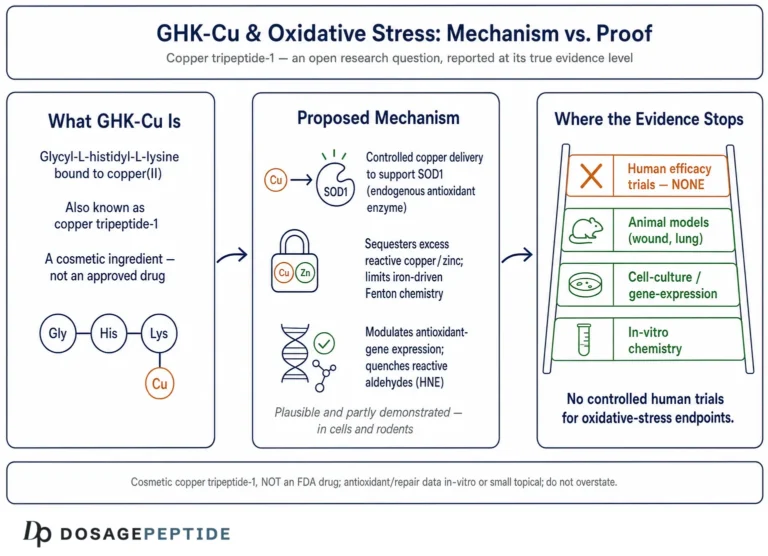
This does not mean GHK-Cu has no antioxidant effect — there is reasonable evidence that it does — but it means the mechanism is probably not the tidy “hand copper to SOD” picture. More defensible mechanisms include: transcriptional upregulation of antioxidant enzymes (Claim B), so the cell simply makes more SOD and catalase; the intrinsic redox activity of the GHK-Cu complex itself, which can participate in reversible Cu(II)/Cu(I) cycling and scavenge certain reactive species; and GHK’s reported ability to quench reactive carbonyl species and detoxify products of lipid peroxidation such as acrolein.9 Extracellular SOD3, unlike cytosolic SOD1, is a more plausible direct-delivery target because it operates outside the cell, but the specific data on GHK-Cu and SOD3 are limited.
The measured, honest reading is that GHK-Cu supports antioxidant defense in skin through several routes, of which direct copper donation to Cu/Zn SOD is the most frequently asserted and the least mechanistically clean. The gene-expression and cell-protection data are real; the specific step being modulated is less certain than the confident summaries suggest. The dedicated companion article on how GHK-Cu modulates cellular antioxidant defense mechanisms at the molecular level goes deeper into the redox chemistry, and the broader survey of what studies show about GHK-Cu against oxidative stress catalogs the cell-protection endpoints in detail.
Tyrosinase and Pigmentation: the Paradox of a Copper Enzyme
Tyrosinase is the most conceptually interesting cuproenzyme in this discussion, because GHK-Cu’s relationship to it seems to point in opposite directions at once — and that tension is itself instructive about what “modulation” really means.
Tyrosinase is a two-copper oxidase that catalyzes the rate-limiting steps of melanin synthesis. Naively, if GHK-Cu is a copper delivery vehicle, you might expect it to feed copper to tyrosinase and thereby increase pigmentation. Yet GHK-Cu is widely used and studied as a skin-brightening and anti-hyperpigmentation ingredient, with in-vitro reports of tyrosinase inhibition and reduced melanin production.5 How can a copper donor inhibit a copper enzyme?
Several explanations are plausible, and they are not mutually exclusive. First, many tyrosinase inhibitors work precisely by chelating the enzyme’s active-site copper — sequestering it — and a copper-binding peptide could, under some conditions, interfere with tyrosinase’s copper rather than feed it, depending on the local copper equilibrium and the relative affinities involved. Second, GHK’s pigmentation effects may be largely transcriptional and indirect: shifting the expression of pigmentation-related genes and the overall regenerative program rather than acting on the tyrosinase active site directly. Third, much of the “GHK-Cu reduces pigmentation” literature is small, in-vitro, or industry-sourced, and some strikingly specific figures that circulate online (precise percentage reductions in melanin index from named clinical trials) do not trace to well-documented, independently verifiable studies and should be treated with skepticism.
The honest position on tyrosinase is that GHK-Cu’s net effect on pigmentation appears to be modest and context-dependent, and the mechanism is genuinely unresolved. What tyrosinase illustrates so well is that “modulating a copper-dependent enzyme” is not automatically the same as “activating” it. A copper-binding molecule can, in different circumstances, supply the metal an enzyme needs or compete for it — and which one dominates depends on concentrations, compartments, and the specific enzyme’s copper affinity. The same peptide that plausibly helps supply copper to extracellular lysyl oxidase might, at a melanocyte’s tyrosinase, do something closer to the opposite. That is not a contradiction to be explained away; it is a clue that GHK-Cu’s interaction with each cuproenzyme has to be evaluated on its own terms, not deduced from a one-size-fits-all “copper donor” label.
What the Gene-Expression Data Actually Show — and Don’t
Much of the strongest-sounding language about GHK-Cu “modulating” enzymes rests on gene-expression analyses, so it is worth understanding what those studies are and what weight they can bear.
The headline finding, developed by Pickart and Margolina using the Broad Institute’s Connectivity Map dataset, is that GHK shifts the expression of a very large number of human genes — on the order of 4,000 — with meaningful up- or down-regulation of roughly 30 percent of them at the concentrations tested.7 Within that broad signature, pathways relevant to skin regeneration are enriched: collagen and extracellular-matrix genes, antioxidant-response genes, DNA-repair genes, and genes governing the ubiquitin-proteasome system that clears damaged proteins.57 On its face, this looks like powerful support for the modulation claim: GHK appears to reprogram cells toward a more regenerative, younger transcriptional state.
Three caveats keep this in proportion. First, the Connectivity Map data derive largely from cultured human cell lines (including cancer lines such as MCF7) exposed to GHK, not from human skin in situ; a transcriptional signature in a cultured cell is a hypothesis-generating signal, not a demonstration of what happens in a person’s dermis. Second, and most importantly for this article, gene expression is not enzyme activity. Showing that GHK raises the messenger RNA for an antioxidant or matrix enzyme does not establish that the corresponding protein increased, that it was correctly folded and copper-loaded, or that its catalytic activity rose in tissue. The distance between “more transcript” and “more functional cuproenzyme doing its job in skin” is exactly the distance between a plausible mechanism and a proven one. Third, a compound that moves thousands of genes is, by that very breadth, hard to pin to a specific therapeutic mechanism; broad transcriptional effects can reflect genuine signaling or can be a generic stress/adaptation response, and disentangling the two requires targeted follow-up that, for most of these enzymes, has not been done.
None of this makes the gene-expression work worthless — it is some of the most intriguing data in the field and the main empirical basis for Claim B (transcriptional modulation). It simply means the correct summary is “GHK is associated with a regenerative-leaning gene-expression signature that includes copper-dependent enzyme pathways,” not “GHK-Cu has been shown to increase the activity of lysyl oxidase and SOD in human skin.” The first is defensible; the second overstates what the data deliver.
Evidence Tiers: Sorting Strong From Suggestive
Because the claims about GHK-Cu and copper-dependent enzymes span everything from rigorous biochemistry to marketing copy, it helps to array the evidence by tier and by which of the three claims it supports.
| Finding | Evidence type | Supports which claim | Honest strength |
|---|---|---|---|
| GHK binds Cu(II) in a stable, exchangeable complex | Biophysical / spectroscopic1 | Prerequisite for A | Strong — well established |
| GHK-Cu stimulates fibroblast collagen synthesis at nM levels | In vitro3 | Consistent with A/B | Strong for the endpoint; indirect for LOX |
| GHK-Cu increases collagen & matrix in rat wounds | In vivo (animal)4 | Consistent with A/B | Strong for the endpoint; indirect for the enzyme |
| GHK-Cu modulates MMP/TIMP balance in wounds | In vivo (animal)8 | Adjacent (matrix turnover) | Moderate — concerns proteases, not cuproenzymes |
| GHK shifts ~4,000 genes incl. antioxidant/ECM pathways | Gene expression (cell lines)7 | B (transcriptional) | Suggestive — mRNA, not enzyme activity |
| GHK-Cu upregulates antioxidant enzyme expression / cuts ROS | In vitro6 | B, weak A | Suggestive — direct SOD copper-loading unproven |
| Topical GHK-Cu improves wrinkle/elasticity parameters | Small human topical studies13 | Downstream of A/B | Weak-moderate — small, industry-linked |
| Direct measurement of GHK-Cu raising LOX/SOD catalytic activity in skin | — | Would prove A/C | Largely absent |
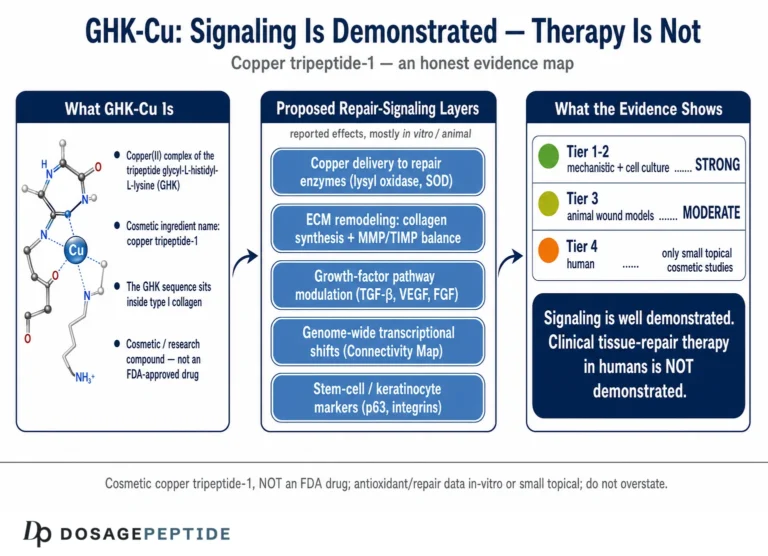
The pattern in the table is the whole argument in miniature. The strongest, most reproducible data concern outcomes — collagen, matrix, wound closure, and gene-expression signatures. The specific step the title asks about — direct modulation of a named copper-dependent enzyme’s activity in skin — sits in the bottom row, where the evidence is thinnest. That is not a reason to dismiss the hypothesis; the outcome data make it plausible that cuproenzymes are involved. It is a reason to state the conclusion carefully.
Delivery: Can Topical or Injected GHK-Cu Even Reach the Enzymes?
A mechanism is only as good as the compound’s ability to reach the place the mechanism operates, and this is an underappreciated constraint on every claim above.
For lysyl oxidase and extracellular SOD, the target compartment is the dermal extracellular matrix. For SOD1, cytochrome c oxidase, and tyrosinase, the targets are intracellular — cytosol, mitochondria, melanosomes. GHK-Cu is a small, hydrophilic molecule, and the outermost skin barrier, the stratum corneum, is built to keep exactly such molecules out. Topical penetration of intact GHK-Cu into the living dermis is therefore genuinely uncertain and formulation-dependent; a peptide that never crosses the barrier cannot modulate a dermal enzyme no matter how elegant the biochemistry. This is why delivery-enhancement strategies — microneedling, and formulation into carriers — have been studied specifically to get copper peptides past the stratum corneum, and why some of the more convincing topical outcomes come from procedures that breach the barrier.14
There is also the question of whether the complex survives intact. In a wound or an inflamed field, proteases abound; GHK-Cu may be degraded, and its copper may be handed off to other ligands (albumin, other peptides, or transporters) before or after reaching target cells. If that happens, the “modulation” of downstream enzymes may be driven by copper redistribution generally rather than by GHK-Cu acting as a discrete agent. That is not a failure of the compound — delivering copper into the local economy may be exactly the useful thing it does — but it changes the mechanistic story from “GHK-Cu docks with enzyme X” to “GHK-Cu enriches the copper pool that enzyme X’s loading machinery draws upon.” That distinction matters for how confidently anyone can claim specific, directed enzyme modulation.
For injected or reconstituted research use, penetration across the stratum corneum is bypassed, and the compound enters a compartment where it can exchange copper with plasma proteins and reach tissues more readily — which is one reason the animal wound-chamber data are among the cleaner demonstrations of matrix effects.4 But injected use in humans is not an approved therapy, carries its own risks, and is not what the cosmetic ingredient copper tripeptide-1 was validated for. The wound-healing angle is explored further in the companion analysis of whether GHK-Cu could improve outcomes in chronic non-healing wounds, where delivery and tissue access are central questions.
Beyond Enzymes: Why the Matrix Effects Are Real Even If the Enzyme Story Is Uncertain
It would be a mistake to read this article as “GHK-Cu does nothing.” The point is narrower and more precise: the specific claim of copper-dependent enzyme modulation is less proven than the general claim of matrix and repair activity. Those repair effects are supported by mechanisms that do not depend on cuproenzyme modulation at all, and it is worth naming them so the honest verdict does not read as dismissive.
GHK-Cu regulates the balance between matrix metalloproteinases (MMPs) and their tissue inhibitors (TIMPs). In experimental wounds, GHK-Cu modulated the expression and activation of MMP-2 and MMP-9 alongside TIMP-1 and TIMP-2, promoting orderly matrix turnover rather than either uncontrolled degradation or static accumulation.8 MMPs are zinc enzymes, not copper enzymes, so this is not cuproenzyme modulation — but it is central to regeneration, because remodeling requires demolishing damaged matrix as well as building new matrix. GHK-Cu also stimulates glycosaminoglycan and proteoglycan synthesis (dermatan sulfate, chondroitin sulfate, and the small proteoglycan decorin), increases angiogenesis and the recruitment of repair cells, exerts anti-inflammatory effects, and has been reported to increase integrin expression and the stem-cell-associated marker p63 in keratinocytes.5 It also influences hair-follicle biology through partly overlapping pathways, discussed separately in the article on how GHK-Cu affects hair-follicle stem cells and hair growth.
This broad, multi-pathway activity is a double-edged fact. It makes GHK-Cu genuinely interesting as a regenerative signal, and it also makes it hard to attribute any given outcome to any single mechanism — including cuproenzyme modulation. When a compound touches collagen synthesis, protease balance, proteoglycan production, angiogenesis, inflammation, and gene expression simultaneously, improved skin could arise through many routes that have nothing to do with lysyl oxidase or SOD copper loading. So the copper-dependent-enzyme mechanism is best understood as one plausible contributor within a wide portfolio of effects, not the load-bearing explanation for GHK-Cu’s skin benefits.
Handling and Research Context
A brief, strictly educational note on how GHK-Cu is handled in research and cosmetic-formulation settings — not a usage recommendation, and with the reminder that copper tripeptide-1 is a cosmetic ingredient and research compound, not an approved therapeutic.
GHK-Cu is supplied either as the pre-formed blue copper complex or as the apo-peptide GHK, which is combined with a copper source. The characteristic deep blue color of solutions reflects the Cu(II) d-d electronic transitions of the complex; loss of color can signal that copper has dissociated or that the complex has degraded. As a small peptide, GHK-Cu is sensitive to the usual peptide stressors: heat, light, oxidation, extremes of pH, and microbial contamination in aqueous solution. Reconstitution of lyophilized material for research follows standard peptide practice — sterile or bacteriostatic diluent added gently against the vial wall, swirled rather than shaken to avoid shearing, and stored cold and dark with minimal freeze-thaw cycling. General reconstitution mathematics and technique are covered on the site’s peptide reconstitution guide, the vial-specific figures are documented on the GHK-Cu 50 mg vial protocol, and terminology used throughout this article is defined in the peptide glossary.
| Parameter | Typical research/formulation consideration |
|---|---|
| Form | Pre-formed GHK-Cu (blue) or apo-GHK plus copper source |
| Color as indicator | Deep blue = intact Cu(II) complex; fading suggests dissociation/degradation |
| Stability stressors | Heat, light, oxidation, pH extremes, microbial contamination |
| Topical delivery challenge | Stratum corneum limits penetration of intact hydrophilic complex14 |
| Storage | Cool, dark; minimize freeze-thaw; refrigerate reconstituted solution |
| Purity/sourcing | Variable in unregulated channels; affects any observed effect |
Meticulous handling preserves whatever activity the molecule has; it does not settle the evidence question. A perfectly intact, high-purity vial of GHK-Cu is still a compound whose direct modulation of copper-dependent enzymes in human skin remains inferred rather than demonstrated.
Limitations and the Honest Verdict
Pulling the analysis together, several limitations bound what can responsibly be said in answer to the title.
Outcome data, not enzyme data. The robust evidence concerns collagen synthesis, matrix accumulation, wound repair, and gene-expression signatures. Direct measurement of GHK-Cu increasing the catalytic activity of a named copper-dependent enzyme (lysyl oxidase, SOD) in skin is largely absent. The enzyme mechanism is inferred from copper’s known cofactor role plus the downstream outcomes.
The cofactor-versus-modulator gap. GHK-Cu’s best-supported role is as a safe copper delivery vehicle. Delivering a cofactor only boosts enzyme activity where the enzyme was copper-limited, and it is not the same as regulating the enzyme. Conflating “supplies copper that enzymes need” with “modulates those enzymes” is the single most common overstatement in this area.
Compartment and delivery problems. Intracellular cuproenzymes (SOD1, cytochrome c oxidase) are loaded with copper by dedicated chaperones that a small extracellular peptide does not obviously access, and topical penetration of intact GHK-Cu through the stratum corneum is uncertain. The mechanistic case is strongest for the one major cuproenzyme that lives extracellularly and is plausibly copper-limited during repair: lysyl oxidase.
Study quality. Much of the enzyme-relevant human data comes from small topical studies, some industry-linked, and much of the mechanistic data comes from cultured cell lines and microarray datasets. Some precise-sounding statistics circulating online do not trace to verifiable primary sources and should be discounted.
Regulatory status. GHK-Cu is copper tripeptide-1, a cosmetic ingredient and research compound. It is not FDA-approved to treat, cure, or prevent any skin disease, and nothing here should be read as implying otherwise.
So, can GHK-Cu modulate copper-dependent enzymes involved in skin regeneration? The most defensible answer is a qualified yes-in-principle, no-as-proven-fact. It is biochemically well-established that GHK-Cu carries copper, that these enzymes require copper, and that GHK-Cu increases the collagen and matrix outputs those enzymes help produce. It is plausible — strongest for extracellular lysyl oxidase, weaker and more indirect for the antioxidant enzymes, and genuinely ambiguous for tyrosinase — that GHK-Cu contributes to skin regeneration partly by supporting copper-dependent enzyme function. What has not been established is direct, specific modulation of any named cuproenzyme’s activity in human skin as the demonstrated cause of GHK-Cu’s effects. The copper-dependent-enzyme pathway is a well-motivated hypothesis embedded within a broader, better-documented portfolio of matrix and signaling actions — not the settled mechanism the confident marketing implies. For readers who want to see how these mechanistic questions map onto the compound’s most-discussed cosmetic endpoint, the overview of GHK-Cu, wrinkle reduction, and collagen synthesis is the natural next read.
Frequently Asked Questions
Does GHK-Cu actually activate lysyl oxidase?
The mechanistic case is the strongest of any copper-dependent enzyme, but it remains inferred rather than directly proven. Lysyl oxidase is an extracellular copper enzyme that cross-links collagen and elastin, and GHK-Cu both stimulates collagen synthesis and can supply copper to the extracellular compartment where the enzyme works.37 What the primary studies actually measured, however, is increased collagen and cross-linkable matrix — not a direct increase in lysyl oxidase catalytic activity in skin.4 So it is reasonable to think GHK-Cu supports lysyl oxidase function, but this is a well-motivated hypothesis, not a closed demonstration.
Can GHK-Cu really deliver copper to superoxide dismutase inside cells?
Probably not in the direct way it is often described. Intracellular Cu/Zn superoxide dismutase (SOD1) is loaded with copper by a dedicated protein, the copper chaperone CCS, in a tightly controlled process that also requires oxygen; cells keep essentially no free copper floating around.11 A small extracellular peptide-copper complex does not obviously bypass that chaperone system. GHK-Cu may still boost antioxidant defense — by upregulating antioxidant gene expression, through its own redox chemistry, and by enriching the copper pool the chaperone draws from — but “GHK-Cu hands copper directly to SOD” oversimplifies the biology.6
Why would a copper peptide inhibit tyrosinase, another copper enzyme?
This is the genuine paradox of the topic. Tyrosinase needs copper, yet GHK-Cu is studied as a skin-brightening agent that appears to reduce melanin.5 The likely explanation is that copper-binding molecules can, depending on concentrations and compartments, either supply copper or compete for it, and many tyrosinase inhibitors work by interfering with the enzyme’s active-site copper. GHK’s pigmentation effects may also be largely transcriptional and indirect. The net effect appears modest and context-dependent, and the mechanism is not settled. It is a useful reminder that “modulating” a copper enzyme can mean activating or inhibiting it.
Is the “GHK changes 4,000 genes” claim evidence of enzyme modulation?
It is suggestive, not conclusive. Gene-expression analyses using the Connectivity Map dataset do show that GHK shifts thousands of genes, with enrichment in antioxidant and matrix pathways.7 But those data mostly come from cultured cell lines, and — crucially — more messenger RNA for an enzyme is not the same as more functional, copper-loaded, catalytically active enzyme doing its job in human skin. Gene-expression signatures generate hypotheses about enzyme modulation; they do not by themselves prove it.
Does topical GHK-Cu even reach the enzymes in the dermis?
That is a real and often-ignored limitation. GHK-Cu is small and water-loving, and the stratum corneum is built to exclude exactly such molecules, so penetration of the intact complex into the living dermis is uncertain and formulation-dependent.14 This is why delivery strategies such as microneedling are studied to get copper peptides past the barrier, and why some of the more convincing effects come from procedures that breach the stratum corneum. An enzyme cannot be modulated by a compound that never reaches it.
Is GHK-Cu an approved treatment for skin aging or scars?
No. GHK-Cu is copper tripeptide-1, a cosmetic ingredient and research compound. It is not approved by the FDA or comparable regulators to treat, cure, or prevent skin aging, scarring, or any disease. The topical human evidence consists largely of small studies, some industry-linked, reporting improvements in wrinkle and elasticity parameters — encouraging but not equivalent to drug-level proof of efficacy or of any specific enzyme mechanism.13
If the enzyme mechanism is uncertain, does GHK-Cu do anything for skin?
Likely yes, through mechanisms that do not depend on cuproenzyme modulation. GHK-Cu stimulates collagen and proteoglycan synthesis, balances MMP and TIMP activity for orderly remodeling, promotes angiogenesis, and has anti-inflammatory and antioxidant effects.58 The point of this article is narrow: the specific claim of direct copper-dependent enzyme modulation is less proven than the general claim of skin-repair activity. Both can be true at once.
What single fact best captures the honest answer?
That GHK-Cu is far better documented as a copper courier than as an enzyme foreman. Supplying the copper that lysyl oxidase, SOD, and tyrosinase require is not the same as directing those enzymes’ activity, and the evidence supports the courier role much more firmly than the foreman role. For skin regeneration, that supporting role — strongest for extracellular lysyl oxidase — is plausible and worth studying, but it should not be sold as an established therapeutic mechanism.
References
- Pickart L, Freedman JH, Loker WJ, et al. Growth-modulating plasma tripeptide may function by facilitating copper uptake into cells. Nature. 1980;288(5792):715-717. PMID: 7453802. https://pubmed.ncbi.nlm.nih.gov/7453802/
- Pickart L. The human tri-peptide GHK and tissue remodeling. J Biomater Sci Polym Ed. 2008;19(8):969-988. PMID: 18644225. https://pubmed.ncbi.nlm.nih.gov/18644225/
- Maquart FX, Pickart L, Laurent M, et al. Stimulation of collagen synthesis in fibroblast cultures by the tripeptide-copper complex glycyl-L-histidyl-L-lysine-Cu2+. FEBS Lett. 1988;238(2):343-346. PMID: 3169264. https://pubmed.ncbi.nlm.nih.gov/3169264/
- Maquart FX, Bellon G, Chaqour B, et al. In vivo stimulation of connective tissue accumulation by the tripeptide-copper complex glycyl-L-histidyl-L-lysine-Cu2+ in rat experimental wounds. J Clin Invest. 1993;92(5):2368-2376. PMID: 8227353. PMCID: PMC288419. https://www.ncbi.nlm.nih.gov/pmc/articles/PMC288419/
- Pickart L, Vasquez-Soltero JM, Margolina A. GHK Peptide as a Natural Modulator of Multiple Cellular Pathways in Skin Regeneration. Biomed Res Int. 2015;2015:648108. PMID: 26236730. PMCID: PMC4508379. https://www.ncbi.nlm.nih.gov/pmc/articles/PMC4508379/
- Pickart L, Vasquez-Soltero JM, Margolina A. GHK-Cu may Prevent Oxidative Stress in Skin by Regulating Copper and Modifying Expression of Numerous Antioxidant Genes. Cosmetics. 2015;2(3):236-247. doi:10.3390/cosmetics2030236. https://www.mdpi.com/2079-9284/2/3/236
- Pickart L, Margolina A. Regenerative and Protective Actions of the GHK-Cu Peptide in the Light of the New Gene Data. Int J Mol Sci. 2018;19(7):1987. PMID: 29986520. PMCID: PMC6073405. https://www.ncbi.nlm.nih.gov/pmc/articles/PMC6073405/
- Siméon A, Monier F, Emonard H, et al. Expression and activation of matrix metalloproteinases in wounds: modulation by the tripeptide-copper complex glycyl-L-histidyl-L-lysine-Cu2+. J Invest Dermatol. 1999;112(6):957-964. PMID: 10383745. https://pubmed.ncbi.nlm.nih.gov/10383745/
- Pickart L, Vasquez-Soltero JM, Margolina A. The Human Tripeptide GHK-Cu in Prevention of Oxidative Stress and Degenerative Conditions of Aging: Implications for Cognitive Health. Oxid Med Cell Longev. 2012;2012:324832. PMID: 22811882. PMCID: PMC3359723. https://www.ncbi.nlm.nih.gov/pmc/articles/PMC3359723/
- Vallet SD, Ricard-Blum S. Lysyl oxidases: from enzyme activity to extracellular matrix cross-links. Essays Biochem. 2019;63(3):349-364. PMID: 31488698. https://pubmed.ncbi.nlm.nih.gov/31488698/
- Wong PC, Waggoner D, Subramaniam JR, et al. Copper chaperone for superoxide dismutase is essential to activate mammalian Cu/Zn superoxide dismutase. Proc Natl Acad Sci USA. 2000;97(6):2886-2891. PMID: 10694572. PMCID: PMC16025. https://www.ncbi.nlm.nih.gov/pmc/articles/PMC16025/
- Dou Y, Lee A, Zhu L, Morton J, Ladiges W. The potential of GHK as an anti-aging peptide. Aging Pathobiol Ther. 2020;2(1):58-61. PMID: 35083444. PMCID: PMC8789089. https://pubmed.ncbi.nlm.nih.gov/35083444/
- Badenhorst T, Svirskis D, Wu Z. Effects of GHK-Cu on MMP and TIMP Expression, Collagen and Elastin Production, and Facial Wrinkle Parameters. J Aging Sci. 2016;4(3):166. https://www.walshmedicalmedia.com/open-access/effects-of-ghkcu-on-mmp-and-timp-expression-collagen-and-elastin-production-and-facial-wrinkle-parameters-2329-8847-1000166.pdf
- Li H, Low YSJ, Chong HP, et al. Microneedle-Mediated Delivery of Copper Peptide Through Skin. Pharm Res. 2015;32(8):2678-2689. PMID: 25690343. doi:10.1007/s11095-015-1652-z. https://link.springer.com/article/10.1007/s11095-015-1652-z
Educational and research-use disclaimer: This article is provided solely for scientific and educational purposes. GHK-Cu (copper tripeptide-1) is a cosmetic ingredient and research compound; it is not approved by the FDA, EMA, or any comparable regulator for the treatment, cure, or prevention of skin aging, scarring, hyperpigmentation, or any other disease. The available data on GHK-Cu and copper-dependent enzymes are largely in-vitro, animal, gene-expression, or small topical studies, and direct modulation of specific cuproenzyme activity in human skin has not been definitively demonstrated. Nothing here is medical advice or a recommendation for human use. Any legitimate investigation of this compound should occur within properly authorized research under appropriate oversight, and readers should consult qualified professionals and applicable regulations before making any decisions.