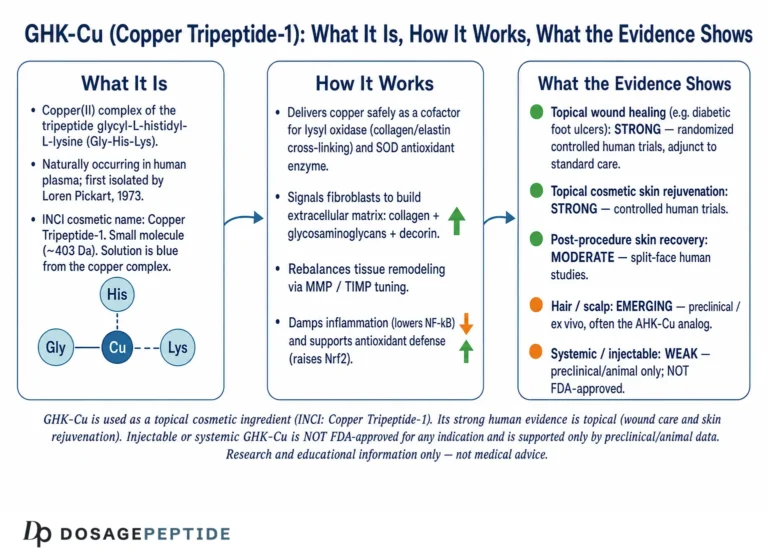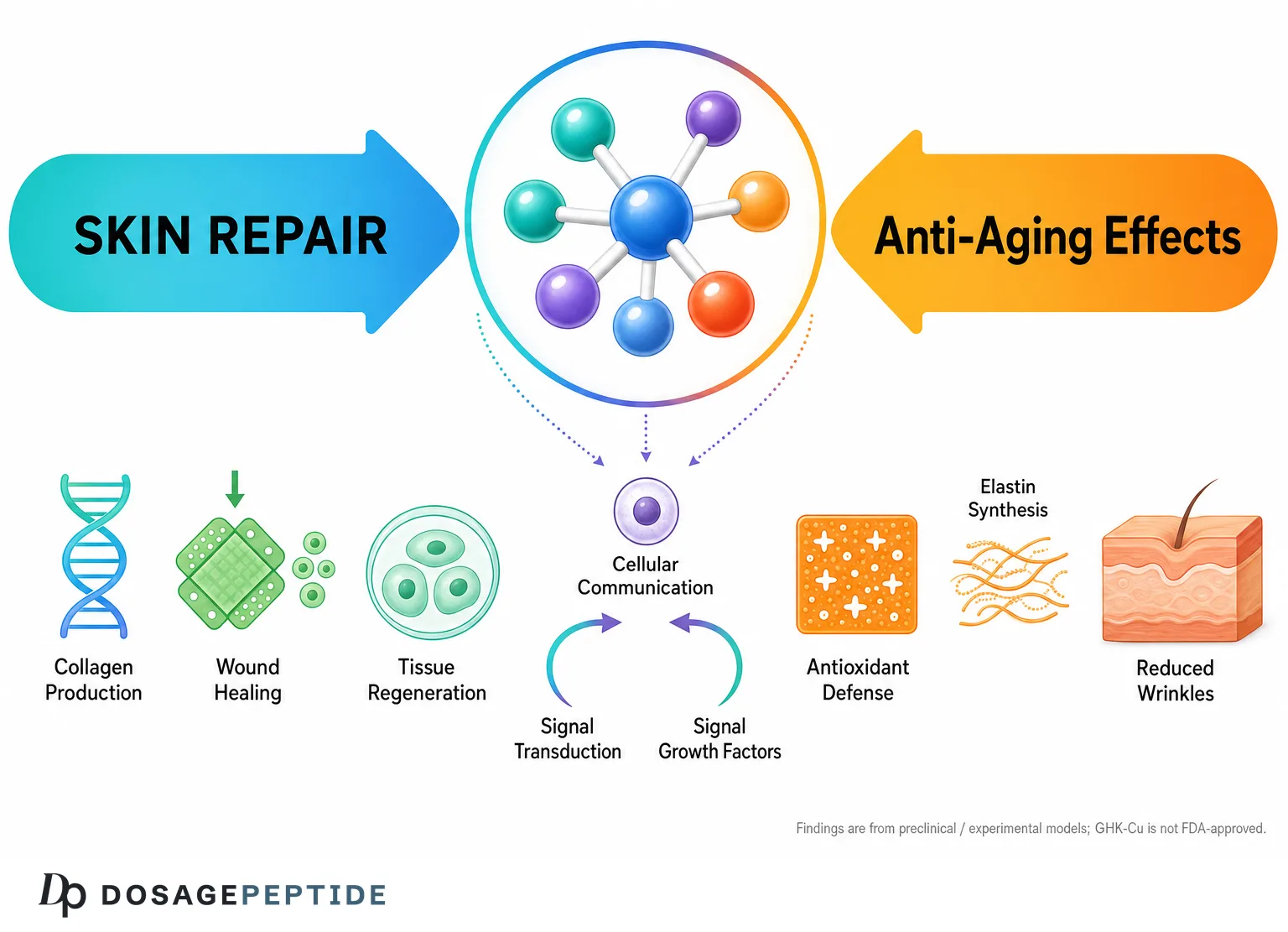
GHK-Cu’s strongest evidence is for wound healing and collagen signalling in the laboratory; its anti-aging claims rest on a handful of small cosmetic trials and, in places, on gene-expression data never confirmed in living human skin. Sorting those tiers is the whole point of this article, because the same compound is sold on both. GHK-Cu is the copper complex of the tripeptide glycyl-L-histidyl-L-lysine, one of the most heavily studied small peptides in cosmetic dermatology — and one where the strength of the evidence varies dramatically depending on which claim you examine.1 Below we weigh the human trials, explain what the widely quoted “4,000 genes” figure really means, cover safety and topical-versus-injectable use, and mark where the evidence stops. Dosing conventions are collected in our GHK-Cu 50 mg vial protocol.
The compound was first isolated in 1973, and in the half-century since it has been examined as a wound-healing agent, an anti-inflammatory, an antioxidant, a modulator of collagen and glycosaminoglycan synthesis, and, more recently, as a broad regulator of gene expression. It appears in over-the-counter anti-aging cosmetics (where it is listed as “Copper Tripeptide-1”), in wound-care research, and in the grey market of research peptides sold as lyophilized powder. Each of these contexts carries a different evidence base and a different regulatory reality, and conflating them is the single most common error in popular writing about the molecule.2
This article surveys the scientific evidence supporting GHK-Cu’s proposed role in skin repair and anti-aging, with explicit attention to the level of that evidence at every step. Where data come from cell cultures, we say “in vitro.” Where they come from rodents, we say “animal model.” Where human data exist, we describe the study size and design honestly. GHK-Cu is not an FDA-approved drug for any therapeutic indication, and nothing here should be read as a claim that it treats, cures, or prevents any disease. This is educational material for people trying to understand the research literature, not medical guidance.
What GHK-Cu Is and Where It Came From
GHK is a naturally occurring tripeptide, meaning it is built from just three amino acids: glycine, histidine, and lysine, joined in that order. On its own, GHK is a small, water-soluble molecule with a molecular formula of C14H24N6O4 and a molecular weight of roughly 340 daltons.3 The biologically interesting form, however, is not the bare peptide but its complex with copper(II) ions, written GHK-Cu. Because GHK binds copper with extraordinarily high affinity, the two are effectively inseparable under physiological conditions, and most of the documented biological activity is attributed to the copper-bearing complex rather than the peptide alone.3
The molecule was discovered in 1973 by Loren Pickart, who was investigating why blood plasma from younger human donors caused aged liver tissue to synthesize proteins more like young tissue, while plasma from older donors did not. Working with the biochemist Marshall Thaler, Pickart traced this “rejuvenating” activity in human serum albumin down to a small copper-binding peptide, which he named GHK. The original report, published in Nature New Biology, described a tripeptide in human serum that prolonged the survival of normal liver cells in culture.4 That single observation launched a research program that Pickart and collaborators have continued for five decades, and it is worth noting that Pickart is both the discoverer of the molecule and, through his company, a commercial developer of copper-peptide cosmetics. That dual role does not invalidate the science, but it is a relevant piece of context when weighing enthusiastic framing in the literature.
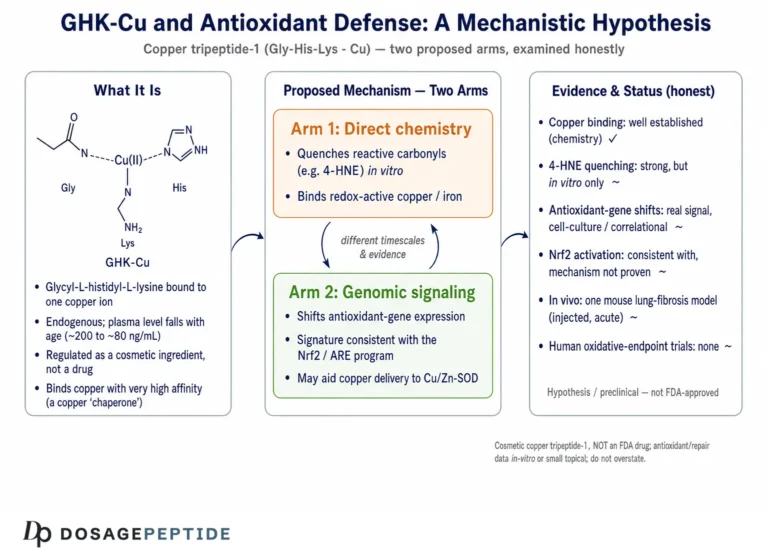
One of the most frequently cited facts about GHK is that its concentration in human plasma declines with age. Reported figures place plasma GHK at approximately 200 nanograms per milliliter around age 20, falling to roughly 80 nanograms per milliliter by age 60, a decline of about 60 percent.1 This age-related decline is the observational anchor for the entire “GHK as an anti-aging molecule” hypothesis: the reasoning is that if a repair-associated peptide falls as we age, restoring it might restore some repair capacity. This is a plausible and testable hypothesis, but it is important to recognize what it is and is not. A correlation between declining GHK levels and declining regenerative capacity does not, by itself, establish that GHK causes the difference, nor that topical or injected supplementation reverses it. The decline is real and reproducibly reported; the causal inference is an extrapolation.
In the body, GHK is thought to be released during tissue injury, when proteins in the extracellular matrix (particularly collagen) are broken down, liberating fragments that include the GHK sequence. Under this model, GHK functions as an endogenous signal of tissue damage: its appearance tells surrounding cells that repair is needed, and it then participates in coordinating that repair by shuttling copper and modulating the behavior of fibroblasts, immune cells, and endothelial cells. This “damage signal” framing is widely repeated and biochemically coherent, though the precise kinetics of GHK release in human wounds remain incompletely characterized.2
For readers who want to see how the compound is discussed in a practical research-education context, DosagePeptide.com maintains a dedicated overview page, What is GHK-Cu? Mechanism, Benefits, Risks and How to Use, which summarizes the same material at an introductory level. The remainder of this article goes deeper into the specific mechanisms and, crucially, the quality of the evidence behind each of them.
The Molecular Structure and Copper Chemistry
To understand why GHK-Cu behaves the way it does, it helps to look at how the peptide holds onto copper. Copper is a double-edged element in biology. It is an essential cofactor for enzymes involved in connective-tissue formation, energy production, and antioxidant defense, but free copper ions are highly reactive and can catalyze the generation of damaging free radicals through Fenton-type chemistry. The body therefore almost never allows copper to circulate unbound; it is chaperoned by proteins and peptides that keep its reactivity controlled while delivering it where it is needed. GHK is one such carrier.1
In the GHK-Cu complex, the copper(II) ion is held by several coordinating groups on the peptide: the nitrogen of the histidine imidazole ring, the terminal amine nitrogen of the glycine residue, and the deprotonated amide nitrogen of the glycine-histidine peptide bond. Additional coordination can come from carboxyl oxygen atoms of neighboring complexes, producing a roughly square-planar to square-pyramidal geometry around the metal.14 The binding is remarkably tight, with a reported stability constant on the order of log K around 16, which is high enough that GHK can effectively compete for copper with other physiological ligands and can exchange copper with albumin, the main copper transporter in blood.14
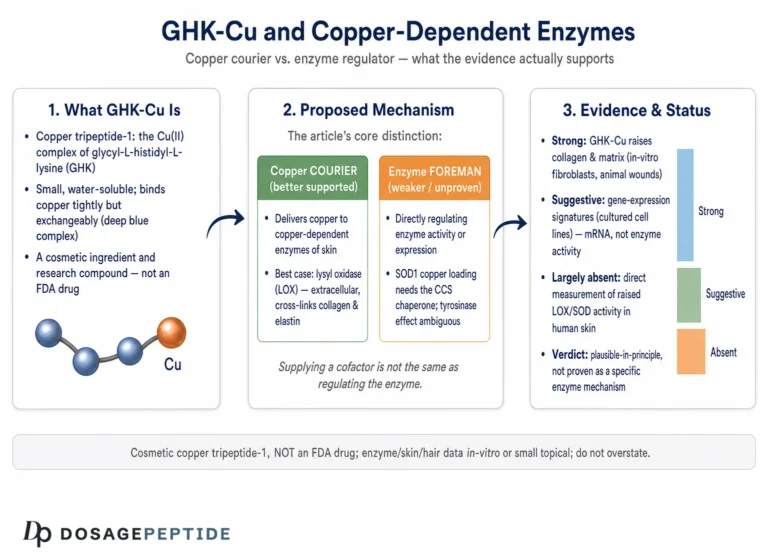
This tight, geometrically defined binding is the key to GHK’s proposed dual function. First, it silences copper’s redox reactivity: when copper is locked into the GHK coordination sphere, it is far less able to drive the free-radical chemistry that makes loose copper toxic. Second, the complex is neutral or lightly charged and lipophilic enough to associate with cell membranes, which is thought to facilitate the movement of copper into and out of cells. In other words, GHK-Cu is positioned to deliver copper as a controlled cofactor rather than as a hazard. Because so many of the enzymes involved in building and remodeling skin, including lysyl oxidase (which cross-links collagen and elastin) and superoxide dismutase (an antioxidant enzyme), depend on copper, a well-behaved copper-delivery system has an obvious rationale in skin biology.2
| Property | Value / description | Relevance |
|---|---|---|
| Peptide sequence | Glycyl-L-histidyl-L-lysine (Gly-His-Lys) | Minimal three-residue “signal” fragment |
| Peptide molecular weight | ~340 Da (free peptide) | Small enough to interact with cell surfaces |
| Copper binding | Very high affinity (log K ~16) | Keeps copper redox-silenced and mobile |
| Coordination atoms | His imidazole N, glycyl amine N, amide N | Defines square-planar/pyramidal geometry |
| Cosmetic INCI name | Copper Tripeptide-1 | How it appears on product labels |
| CAS number (peptide) | 49557-75-7 | Chemical registry identifier |
An important practical consequence of this chemistry is that the copper-peptide bond is not indestructible. It depends on the peptide being intact and on the surrounding pH. In strongly acidic conditions, or in the presence of competing chelators, the complex can dissociate, and the peptide backbone itself is susceptible to enzymatic degradation by peptidases in skin and blood. This chemical fragility explains several real-world observations, including why GHK-Cu formulations can be destabilized by low-pH cosmetic actives, and why the molecule’s behavior in a clean cell-culture dish may not translate cleanly to the messy environment of living tissue. We return to these stability issues in the section on handling and formulation.6
How GHK-Cu Is Proposed to Work: Mechanisms of Action
The mechanistic literature on GHK-Cu is genuinely large, but it is overwhelmingly built on in vitro (cell-culture) and animal experiments. With that caveat stated plainly, the proposed mechanisms cluster into several related themes, most of which converge on the idea that GHK-Cu shifts skin cells toward a repair-and-rebuild program.1
Collagen and extracellular-matrix synthesis. The most consistently reported activity is stimulation of collagen production by dermal fibroblasts. In cultured fibroblasts, GHK-Cu at nanomolar concentrations has been reported to increase synthesis of collagen along with other matrix components such as elastin, dermatan sulfate, chondroitin sulfate, and the small proteoglycan decorin.2 Because these molecules collectively form the structural scaffold and hydration reservoir of the dermis, an agent that boosts their production has a coherent theoretical basis for improving skin firmness and thickness. It is worth emphasizing that these are cell-culture findings; the leap from “increases collagen in a dish” to “rebuilds aged human dermis” is exactly the leap that requires human trials to validate.
Balanced remodeling via metalloproteinases. Tissue repair is not only about building new matrix; it also requires controlled breakdown of damaged matrix. This demolition is carried out by matrix metalloproteinases (MMPs), which are in turn held in check by tissue inhibitors of metalloproteinases (TIMPs). A distinctive feature of GHK-Cu in the literature is that it appears to modulate both sides of this system, influencing MMP activity and TIMP-1 and TIMP-2 levels, rather than simply switching one on or off.1 The interpretation offered by proponents is that GHK-Cu promotes “remodeling” (a balanced turnover that replaces old, damaged collagen with new, well-organized collagen) rather than pure accumulation. This nuance is often lost in marketing, which tends to present the molecule as simply a collagen booster.
Antioxidant and anti-inflammatory activity. GHK-Cu has been reported to reduce oxidative damage, including by helping to neutralize reactive byproducts of lipid peroxidation and by supporting antioxidant enzyme activity, consistent with copper’s role as a cofactor for superoxide dismutase.2 On the inflammatory side, cell studies have shown that GHK can dampen the secretion of pro-inflammatory signals; for example, reducing tumor necrosis factor-alpha (TNF-alpha)-induced interleukin-6 release in dermal fibroblasts.1 In animal wound models, GHK-Cu treatment has been associated with lower local TNF-alpha and reduced activity of tissue-degrading enzymes, alongside faster wound closure. These anti-inflammatory effects are frequently invoked to explain both improved healing and reduced scarring, since excessive inflammation drives fibrotic scar formation.
Angiogenesis and cellular recruitment. Effective repair requires new blood vessels to supply the healing area, and GHK-Cu has been reported to promote angiogenesis and to attract immune cells and endothelial cells to sites of injury in experimental models.2 In the context of hair research, related work has pointed to upregulation of vascular endothelial growth factor (VEGF) in cultured dermal papilla cells, which would improve follicular blood supply, though hair applications are outside the primary scope of skin repair and rest on even thinner human evidence.
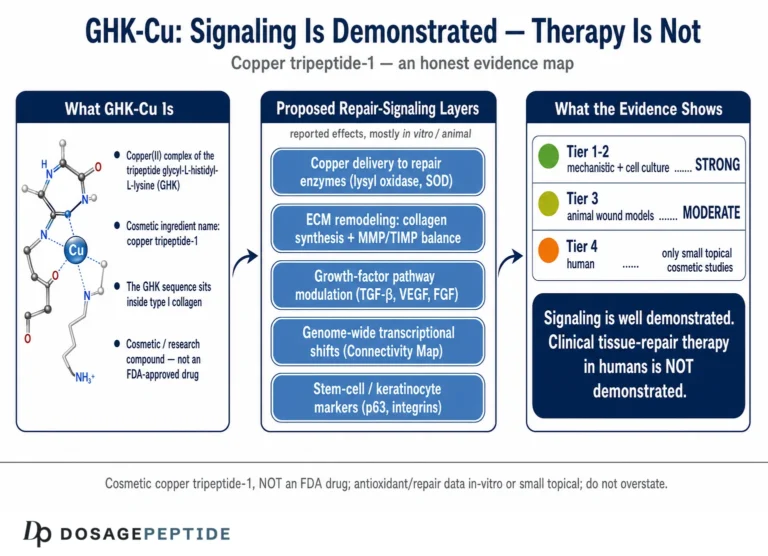
Taken together, these mechanisms paint a picture of a molecule that nudges skin cells toward coordinated repair: build new matrix, remodel the old, calm inflammation, quench oxidative stress, and improve perfusion. It is an attractive and internally consistent story. The honest scientific caveat is that essentially all of the mechanistic detail comes from reductionist models, and a mechanism demonstrated in isolated cells is a hypothesis about the whole organism, not a proof. The next section examines the most ambitious version of the mechanistic claim, the gene-expression data, before we turn to what has actually been shown in people.
The Genomic Signal and the “4,000 Genes” Claim
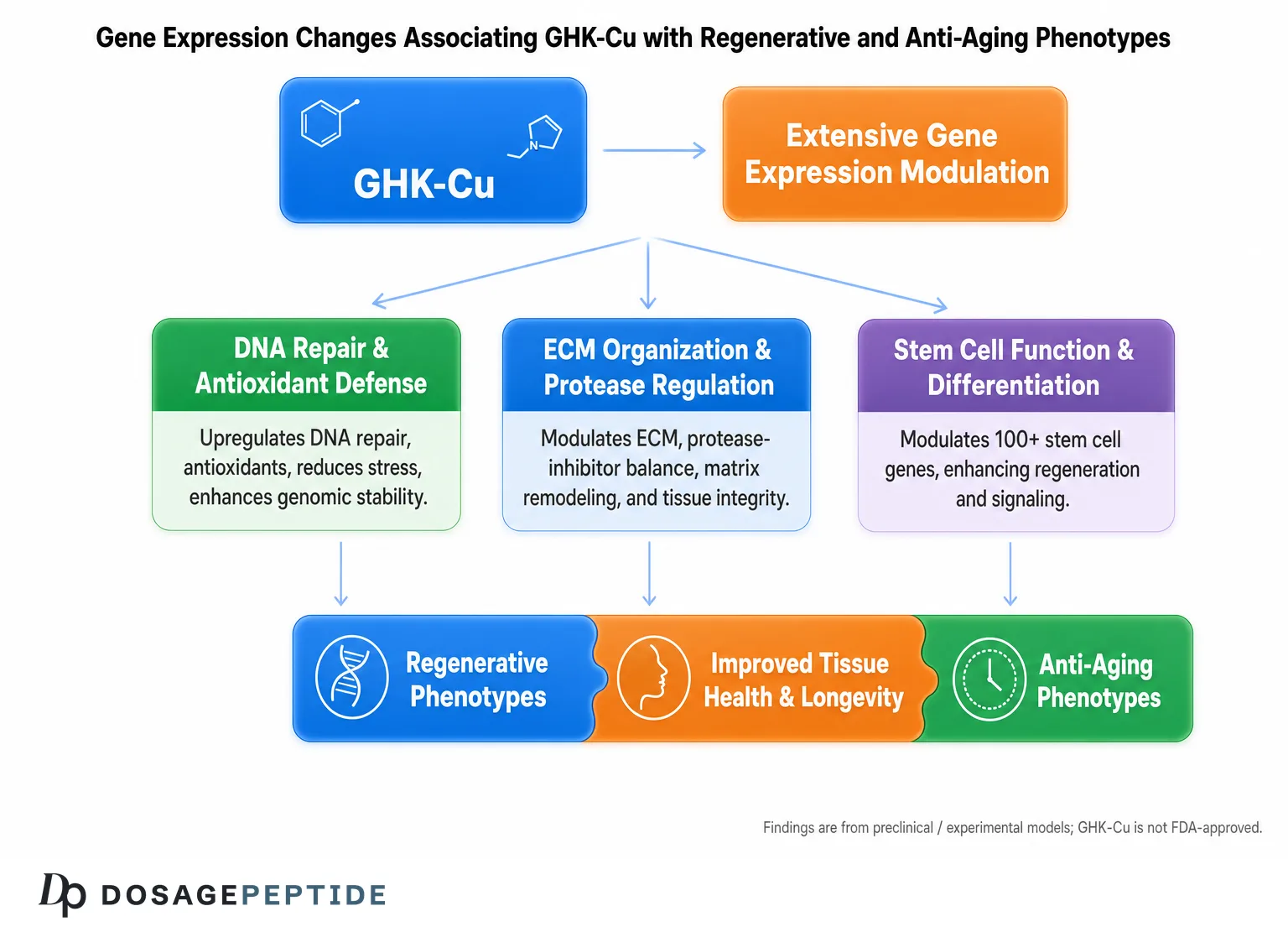
Perhaps the most striking and most heavily promoted claim about GHK-Cu is that it influences the activity of roughly 4,000 human genes. This figure comes from analyses in which Pickart and colleagues cross-referenced GHK against the Broad Institute’s Connectivity Map, a large public database that records how gene-expression patterns in cultured human cells respond to thousands of bioactive compounds. When GHK’s signature was compared against this dataset, it was reported to be associated with changes, up or down, in on the order of 4,000 genes, corresponding to roughly 30 percent of the genes analyzed.5
The genes reported to be affected are thematically coherent with the mechanistic story above. GHK’s signature was associated with upregulation of genes involved in tissue remodeling, antioxidant defense, and, notably, DNA repair; one analysis reported that GHK upregulated 47 DNA-repair genes while suppressing five.16 (A separate 2018 review, using a broader accounting, reports on the order of 84 genes associated with DNA repair; the 47-up/5-suppressed figure belongs specifically to the 2015 gene-expression analysis and is kept tied to that source here to avoid conflating the two counts.) Genes associated with chronic inflammation, matrix breakdown, and certain markers of cellular aging were reported to be downregulated. Proponents describe this as GHK “resetting” pathological or age-shifted gene-expression patterns back toward a younger or healthier profile.5
This is genuinely interesting data, and it is the source of much of the excitement around GHK-Cu as more than a cosmetic. But it demands careful interpretation, and here the honesty of framing matters enormously:
First, the Connectivity Map analyses are based on gene-expression changes in cultured cell lines exposed to the compound, not on human skin treated with GHK-Cu in a clinical setting. A gene-expression signature in a Petri dish is a molecular fingerprint, not a demonstrated physiological outcome. It tells us which pathways a compound touches, not what happens to a person who uses it. Second, affecting a large number of genes is not automatically a mark of a powerful or beneficial drug; many compounds produce broad transcriptional ripples, and breadth of effect can equally signal nonspecific activity. Third, and most importantly, none of the sweeping claims (DNA repair, anti-aging gene resetting, cancer-related gene modulation) have been validated in controlled human trials measuring hard clinical endpoints. They remain, at this stage, biologically intriguing hypotheses generated from bioinformatic datasets.5
A related strand of preclinical work has examined GHK-Cu’s effect on stem cells, reporting increased “stemness” markers and enhanced secretion of trophic factors by mesenchymal stem cells in culture, along with support of DNA-repair capacity in cells damaged by radiation in an older study by McCormack and colleagues.7 Again, these are cell-based findings. The appropriate way to summarize the genomic and stem-cell literature is this: GHK-Cu appears, in laboratory systems, to engage an unusually broad set of repair- and youth-associated molecular pathways, and this provides a rich rationale for further study, but it does not by itself demonstrate anti-aging efficacy in human beings. Readers who encounter confident statements that GHK-Cu “reverses aging at the DNA level” should recognize those as extrapolations from in vitro gene data, not as established clinical facts.
Weighing the Human Evidence Honestly
Everything above concerns mechanism. The question a careful reader actually cares about is: what has GHK-Cu been shown to do in real human skin, in controlled studies? The honest answer is that a modest body of small human cosmetic studies exists, most of it topical, some of it decades old, and it is suggestive rather than definitive.
The most cited human work comes from facial studies of topical copper-peptide creams. A frequently referenced 12-week study applied a GHK-Cu-containing cream twice daily to a group of women with photoaged skin (reported cohorts of roughly 67 to 71 participants across related studies) and observed improvements in measures such as skin laxity, clarity, firmness, fine-line and wrinkle depth, skin density and thickness, and mottled pigmentation, with histological evidence of increased dermal keratinocyte and fibroblast activity in biopsies.8 A separate eye-area study of around 41 women reported that a copper-peptide eye cream performed favorably compared with a vitamin K control.8
A particularly interesting comparative dataset comes from a thigh-skin biopsy study by Abdulghani and colleagues, which applied creams containing GHK-Cu, vitamin C, or retinoic acid (tretinoin) daily for one month and then measured new collagen production immunohistologically. In that study, increased collagen production was observed in about 70 percent of the GHK-Cu-treated participants, versus roughly 50 percent for vitamin C and 40 percent for retinoic acid.9 This head-to-head design is why GHK-Cu is often described as matching or outperforming better-known actives on collagen stimulation. It is a real and useful result, but it is also a small study with a binary “responder” outcome measure, and it should be read as encouraging preliminary evidence rather than as proof of superiority.
| Evidence type | What it can show | Strength for GHK-Cu skin claims |
|---|---|---|
| In vitro (cell culture) | Mechanisms, pathway engagement | Extensive and consistent |
| Animal models | Wound closure, tissue effects in vivo | Multiple supportive studies |
| Gene-expression / bioinformatics | Which pathways are touched | Broad but hypothesis-generating only |
| Small human cosmetic trials | Topical anti-aging appearance endpoints | Limited, small, suggestive |
| Large RCTs with clinical endpoints | Definitive efficacy and safety | Largely absent to date |
It is important to be candid about the limitations that run through this human dataset. The studies are small by modern standards, several are decades old, some were conducted or sponsored by parties with a commercial interest in copper peptides, and the outcome measures are often appearance-based or responder-based rather than blinded quantitative endpoints. Publication in book chapters and conference-adjacent formats, rather than in large independent peer-reviewed trials, further complicates assessment.8 None of this means the effects are illusory; the consistency of “improved firmness, reduced fine lines, increased collagen” across independent small studies is a genuine signal. But it is a signal at the level of promising cosmetic ingredient, not at the level of a proven therapy. Anyone who tells you GHK-Cu is “clinically proven” to rebuild aged skin is overstating what these studies can support.
For a research-context breakdown of how the compound is typically prepared and dosed in investigational settings, DosagePeptide.com maintains protocol references such as the GHK-Cu 100 mg vial dosage protocol and a 50 mg vial protocol. These pages are educational references describing how the material is handled in research, not endorsements of any particular use, and it bears repeating that the strongest human data are for topical cosmetic application rather than injection.
Preclinical Wound-Healing Evidence in Animal Models
Beyond cosmetic anti-aging, the oldest and arguably most robust experimental application of GHK-Cu is in wound healing, and here the evidence base is dominated by animal studies. Across a range of species (rats, mice, rabbits, pigs, and dogs) topical GHK-Cu has been reported to accelerate the closure of experimental wounds, improve the healing of wounds compromised by diabetes or poor blood supply, enhance new blood-vessel formation, and improve the quality of the resulting tissue.2
One representative and often-cited experiment was reported by Canapp and colleagues in Veterinary Surgery. It used an ischemic (blood-flow-restricted) bipedicle skin-flap model in 24 Sprague-Dawley rats, in which full-thickness wounds were treated daily with a topical tripeptide-copper complex (GHK-Cu) or a vehicle control for around 13 days. Wound-size reduction reached roughly 64.5 percent in the GHK group, compared with about 45.6 percent in the vehicle group and 28.2 percent in untreated controls, and the accelerated healing was accompanied by significantly lower local levels of TNF-alpha and of elastin-degrading matrix metalloproteinases.10 This kind of result is valuable because it ties a functional outcome (faster closure) to a proposed mechanism (reduced inflammation and controlled matrix degradation) within the same experiment. It is worth being precise about what this study is and is not: although it was published in a veterinary surgical journal, it was a rodent experiment, and it is therefore sometimes miscited as evidence that GHK-Cu’s effect “generalizes beyond rodents.” It does not establish that; it is one more well-designed rat study.
Other work has incorporated GHK, sometimes in a biotinylated form, into collagen membranes and wound dressings, reporting stimulation of wound contraction, cell proliferation, and antioxidant enzyme expression in diabetic rat models.2 Taken as a whole, this literature remains a rodent- and small-animal body of work: consistent and mechanistically coherent, but not a demonstration of efficacy in human wounds.
Animal wound-healing evidence sits at a higher tier than pure cell-culture work because it involves a whole living organism with intact circulation, immune response, and healing machinery. It is genuinely more persuasive than an in vitro assay. But it still carries the standard caveats of preclinical research. Rodent skin differs structurally and functionally from human skin, including in how wounds contract; controlled experimental wounds differ from the chronic, contaminated, comorbidity-laden wounds seen in clinical practice; and positive animal results have a long and well-documented history of failing to reproduce in human trials across many fields of medicine. The animal wound literature is best summarized as a consistent, mechanistically coherent, and reasonably strong preclinical case, which is precisely why a formal human wound-healing trial is now being pursued rather than assumed, as discussed later.
Research Models and Methodological Considerations
Because so much of the GHK-Cu evidence base is preclinical, it is worth understanding the models researchers use and what each can and cannot tell us. This is not an academic aside; it is the key to reading the literature without being misled.
In vitro fibroblast and keratinocyte cultures are the workhorse of GHK-Cu mechanism research. Human dermal fibroblasts are exposed to defined nanomolar-to-micromolar concentrations of GHK-Cu, and researchers measure outputs such as collagen synthesis, MMP and TIMP levels, cytokine secretion, and gene expression. The strength of this model is precision and control: variables can be isolated cleanly. Its weakness is that a two-dimensional monolayer of cells bathed in a fixed peptide concentration bears little resemblance to the three-dimensional, dynamically perfused, enzyme-rich environment of living dermis, where GHK-Cu concentration, copper availability, and peptide stability all fluctuate.1
Ex vivo skin explants and three-dimensional skin equivalents represent an intermediate model, preserving more of the tissue architecture. Animal models, discussed above, add whole-organism physiology at the cost of species differences. Human cosmetic studies measure real endpoints but are typically small, topical, appearance-focused, and short. And bioinformatic analyses such as the Connectivity Map work generate genome-wide hypotheses but no direct physiological measurements. Each rung of this ladder trades one kind of validity for another, and a claim is only as strong as the model that actually tested it.5
Several methodological issues recur throughout GHK-Cu research and deserve explicit mention. Concentration is one: effects reported at nanomolar concentrations in a controlled dish may not be achievable at the target tissue after topical application, given the skin barrier and enzymatic degradation. Formulation is another: the biological outcome depends heavily on whether the peptide-copper complex actually remains intact and is delivered, which varies enormously across the products and preparations used in different studies. Blinding and controls are inconsistently applied across the older human literature. And a meaningful fraction of the foundational work traces back to a small number of investigators, notably Pickart, who has both scientific priority and commercial interest in the molecule; independent replication by unaffiliated groups is comparatively sparse for some of the more expansive claims.2
None of this is a reason to dismiss GHK-Cu. It is a reason to calibrate. A well-calibrated reading is that GHK-Cu has an unusually deep and internally consistent preclinical foundation, a smaller but real body of suggestive human cosmetic data, and a large gap where definitive human efficacy trials should be. Recognizing which model produced a given claim is the single most useful skill for navigating this topic.
How GHK-Cu Compares with Related Compounds
GHK-Cu is one of several ingredients marketed for collagen support and skin repair, and understanding it in context helps set realistic expectations. The comparisons below are drawn from the research literature and should be read as descriptions of evidence, not as recommendations.
Versus retinoids (retinoic acid / tretinoin and retinol). Retinoids are the best-evidenced topical anti-aging actives in mainstream dermatology, with a large body of controlled trials supporting their effect on photoaging, fine lines, and collagen. In the Abdulghani comparative biopsy study, GHK-Cu produced a collagen-response rate numerically higher than retinoic acid, but that single small study does not overturn the far larger and more rigorous evidence base behind retinoids.9 A fair summary is that retinoids have the deeper clinical evidence, while GHK-Cu is generally better tolerated (retinoids commonly cause irritation, dryness, and photosensitivity) and may act through complementary, non-overlapping mechanisms. Some formulators pair them, and the two are chemically different enough that they are often used at different times of day.
Versus vitamin C (ascorbic acid). Vitamin C is both an antioxidant and a cofactor required for collagen synthesis. In the same comparative study, GHK-Cu’s collagen-response rate exceeded that of vitamin C.9 A practical chemistry caution is that vitamin C is typically formulated at low pH, and low pH can destabilize the copper-peptide complex, so combining acidic vitamin C with GHK-Cu in the same application may undermine the peptide, an interaction that reflects real coordination chemistry rather than marketing.6
Versus other signal peptides. Matrixyl (palmitoyl pentapeptide) and similar “signal peptides” also aim to stimulate matrix synthesis, but they act largely as messengers without GHK-Cu’s distinctive copper-delivery function. GHK-Cu is somewhat unusual in combining a peptide signal with a bioavailable metal cofactor in one molecule.
Within blended research formulations. GHK-Cu also appears as a component of multi-peptide research blends. One example referenced in the research-education space is KLOW, a blend combining GHK-Cu with BPC-157, TB-500, and KPV; DosagePeptide.com describes it on its KLOW 80 mg vial protocol page and in a broader KLOW dosage guide. It is essential to note that combining compounds does not add their evidence together; a blend containing GHK-Cu does not inherit any proven benefit, and the human evidence for such multi-peptide injectable combinations is far thinner than the topical cosmetic data discussed here. A broader index of single-compound references is available on the site’s dosages overview page. These are provided for research-education context only.
| Compound | Primary proposed action | Human evidence depth | Tolerability note |
|---|---|---|---|
| GHK-Cu (topical) | Matrix synthesis + copper delivery + anti-inflammatory | Small suggestive cosmetic studies | Generally well tolerated topically |
| Retinoids | Cell-turnover, collagen support | Large controlled trials | Irritation, photosensitivity common |
| Vitamin C | Antioxidant + collagen cofactor | Moderate | Low pH may destabilize GHK-Cu |
| Signal peptides (e.g. Matrixyl) | Matrix-synthesis signaling | Limited | Generally well tolerated |
Safety and Tolerability in the Available Data
On the question of topical safety, the available data for GHK-Cu are reassuring, with the caveats appropriate to a compound that has not undergone full pharmaceutical safety review. In cosmetic use at the low concentrations typically employed (broadly on the order of 0.001 percent to 0.5 percent), human dermal testing has generally reported no significant irritation, sensitization, or meaningful systemic absorption, and laboratory assays have found the complex to be non-cytotoxic and not to trigger the biomarkers associated with skin irritation.15 Reported side effects from topical use are mild and uncommon, most often transient local redness or irritation, and can sometimes be traced to other ingredients in a formulation or to interactions such as the low-pH destabilization noted earlier.
The main theoretical safety ceiling for GHK-Cu is set by copper, not by the peptide. Copper is essential but toxic in excess, and guidance bodies place the tolerable upper intake for adults at around 10 milligrams of elemental copper per day from all sources. The amount of copper delivered by realistic cosmetic use is far below this: estimates suggest that a 0.5 percent GHK-Cu cream applied to the whole face delivers on the order of a tenth of a milligram of copper, and even aggressive full-body application would contribute only a small percentage of the tolerable upper limit.15 On that basis, systemic copper toxicity from topical cosmetic GHK-Cu is considered pharmacologically implausible. Populations with disorders of copper metabolism, such as Wilson’s disease, are a sensible exception where any deliberate copper exposure warrants medical caution.
Two important qualifications keep this from being a clean bill of health. First, the safety data that exist are overwhelmingly for topical application at low concentrations. They do not automatically extend to injected GHK-Cu, to high concentrations, or to chronic systemic exposure, for which controlled human safety data are limited. Extrapolating “safe on the skin” to “safe injected” is not scientifically justified. Second, GHK-Cu sold as a research chemical is not subject to pharmaceutical manufacturing controls, so real-world safety also depends on product purity, correct identity, sterility, and accurate labeling, none of which is guaranteed in an unregulated marketplace. Reports of poor-quality and mislabeled copper-peptide products are common enough in the consumer literature to warrant genuine caution.6
Acute oral toxicity of the copper peptide appears low in animals, but it is worth being candid about the sourcing here: specific numerical values circulating for an oral median lethal dose (LD50) in rats trace back only to vendor safety documentation and could not be confirmed in any peer-reviewed or independent toxicology source. They should therefore be treated as unverified figures rather than as established toxicology, and this article deliberately does not present a specific LD50 number as fact.11 As with all of the safety discussion here, such figures describe hazard characterization in specific contexts and should not be read as a green light for any particular human use.
Handling, Reconstitution, and Formulation in a Research Context
Because GHK-Cu is chemically fragile in specific ways, how it is stored and prepared has an outsized effect on whether it retains activity, and this is a legitimate part of understanding the science. In cosmetic products, GHK-Cu is supplied pre-formulated. In a research context, it is typically supplied as a lyophilized (freeze-dried) powder that is reconstituted before use. The following describes general research-handling considerations reported in the literature and in supplier documentation; it is educational context, not a protocol recommendation, and it should not be read as encouraging any particular use.
Lyophilized GHK-Cu is generally reconstituted with sterile or bacteriostatic water, added gently to avoid mechanical stress on the peptide, and the resulting solution has a characteristic blue color that comes from the copper complex, a rough visual indicator that copper is present and coordinated. Storage recommendations for the powder and solution emphasize refrigeration at roughly 2 to 8 degrees Celsius and protection from light, since both heat and light accelerate peptide degradation, and, for reconstituted solutions, use within a limited window because peptides in solution are less stable than the dry powder.6 DosagePeptide.com’s protocol pages, referenced earlier, echo these general storage principles (refrigerated, protected from light).
The formulation chemistry issues discussed earlier become very concrete here. Because the copper-peptide bond is pH-sensitive, GHK-Cu is destabilized by strongly acidic conditions, which is why formulators are cautioned against combining it in the same application with low-pH actives such as certain forms of vitamin C or with strong AHA/BHA exfoliants; the acid can disrupt the complex and the exfoliant environment can degrade the peptide.6 Direct combination with strong chelating agents is similarly discouraged, since a competing chelator can strip copper away from the peptide. In practice this means the difference between an active and an inert GHK-Cu preparation often comes down to formulation and handling rather than the raw material itself, and it partly explains the wide variation in reported real-world results.
From a scientific standpoint, the broader lesson is that GHK-Cu’s chemical delicacy is a confounder that runs through the entire evidence base. When a study reports no effect, it can be genuinely difficult to distinguish “the molecule does not work” from “the molecule was degraded or the copper was displaced before it reached the target.” Conversely, positive cell-culture results obtained with fresh, correctly prepared complex may overstate what a consumer product delivers after months on a shelf. This is one more reason that clean, well-controlled human trials with characterized, stable formulations are what the field actually needs.
Limitations and the Human-Evidence Gap
Having surveyed the supportive evidence, it is worth consolidating the limitations in one place, because they are the difference between an accurate understanding of GHK-Cu and the inflated version common online.
The evidence pyramid is inverted relative to the claims. The boldest claims made for GHK-Cu (DNA repair, anti-aging gene resetting, systemic regeneration) rest on the weakest tier of evidence: in vitro assays and bioinformatic gene-signature analyses. The best-supported claims (modest improvements in the appearance of photoaged skin with topical use) are comparatively narrow. The popular narrative tends to borrow the excitement of the genomic story and attach it to outcomes that only the small cosmetic studies can speak to.5
Human trials are small, dated, and often not independent. The human cosmetic studies typically involve tens of participants, several are decades old, some were conducted with commercial involvement, and large, independent, blinded, placebo-controlled trials with quantitative endpoints are largely absent. There is no substantial body of modern randomized controlled trial evidence establishing GHK-Cu as an efficacious treatment for any medical condition of the skin.8
Topical does not equal injectable. Almost the entire human evidence base is topical. Claims about injected GHK-Cu for systemic anti-aging, tissue repair, or hair are extrapolations that go well beyond what has been tested in people, and they inherit none of the safety reassurance of the topical cosmetic data.
Delivery and stability are unresolved. Even for topical use, questions remain about how much intact GHK-Cu actually penetrates to the dermis and in what concentration, and about how formulation affects delivery. A molecule can have real biological activity in principle and still underperform in practice if it never reaches its target in an active form.6
Encouragingly, the field is beginning to address the central gap with prospective human trials. A registered proof-of-concept study (ClinicalTrials.gov identifier NCT07437586, informally “CuHeal”) is designed to test whether a topical GHK-Cu gel speeds re-epithelialization of standardized punch-biopsy wounds in healthy adults compared with a matched vehicle gel, using randomized within-subject wound assignment, once-daily application for 14 days, and blinded photographic and clinical assessment out to 21 days, with scar quality followed to 12 weeks.12 This is exactly the kind of controlled human study the evidence base has needed, and it explicitly frames GHK-Cu as investigational. Its existence is a healthy sign that claims are moving toward testing rather than assertion; its results, when available, will matter far more than any amount of in vitro extrapolation. Until such trials report, the intellectually honest position is that GHK-Cu is a biologically fascinating, well-tolerated topical peptide with promising but limited human efficacy data and a large gap where definitive evidence should be.
Regulatory Status
Regulatory status is where careful framing matters most, because it is frequently misrepresented. The core fact is simple: GHK-Cu is not an FDA-approved drug for any human therapeutic indication. It has not completed the FDA drug-approval process that would be required to make medical claims about treating, curing, or preventing a disease.13
What GHK-Cu is, in most consumer contexts, is a cosmetic ingredient. When it appears in serums, creams, eye products, and masks, usually under the label name “Copper Tripeptide-1,” it is regulated in the United States as a cosmetic under the Federal Food, Drug, and Cosmetic Act. Cosmetics do not require FDA pre-market approval, but they also may not legally make drug-like claims; a product that claimed to treat a disease would, by that claim, be treated as an unapproved drug. This is the regulatory box that virtually all of GHK-Cu’s real-world use occupies, and it is entirely consistent with the evidence base: cosmetic-appearance benefits, cosmetic regulation.13
Separately, GHK-Cu is widely sold as a “research chemical” in lyophilized form, frequently labeled “for research use only, not for human consumption.” Material sold in this channel is not manufactured, tested, or approved as a drug, carries no assurance of purity, sterility, identity, or dosing accuracy, and is not authorized for human therapeutic use. The gap between the cosmetic ingredient (regulated, low-concentration, topical) and the research chemical (unregulated, often injectable) is enormous, and conflating them is a serious error.13
The regulatory picture for injectable peptides has also been in flux. In the compounding arena, various peptides including GHK-Cu have moved on and off consideration for compounding-eligibility categories, and regulatory positions have shifted, with injectable GHK-Cu at points being removed from certain compounding categories after nominations were withdrawn.17 The practical takeaway for a reader is that the regulatory status of injectable GHK-Cu is unsettled and restrictive, not an open door. None of these administrative movements constitute FDA approval of GHK-Cu as a safe and effective drug. Anyone considering GHK-Cu for anything beyond a compliant topical cosmetic should understand that they would be using an investigational, non-approved substance, and that decision belongs with a qualified healthcare professional, not with marketing copy.
Frequently Asked Questions
Is GHK-Cu proven to reverse skin aging?
No. “Reverse aging” overstates the evidence. GHK-Cu has a deep preclinical (cell and animal) mechanistic base and a small body of suggestive human cosmetic studies reporting modest improvements in the appearance of photoaged skin, such as reduced fine lines and improved firmness and collagen density, with topical use.8 It has not been shown in large, rigorous human trials to reverse aging, and it is not an FDA-approved treatment for any skin condition.13
What does the “affects 4,000 genes” claim actually mean?
It refers to bioinformatic analyses, using the Broad Institute Connectivity Map, in which GHK’s gene-expression signature in cultured cells was associated with changes in roughly 4,000 genes, including some involved in DNA repair and tissue remodeling.5 This describes which molecular pathways the compound touches in a laboratory dataset. It is a hypothesis-generating finding, not proof of any clinical benefit in living humans, and it should not be read as demonstrated anti-aging efficacy.
How strong is the evidence that GHK-Cu boosts collagen?
Collagen stimulation is the most consistent finding across in vitro fibroblast studies, and a small human thigh-biopsy study reported increased collagen production in about 70 percent of GHK-Cu-treated participants, numerically higher than vitamin C or retinoic acid in the same study.9 That is genuinely encouraging but comes from small studies with responder-based outcomes, so it supports “promising” rather than “definitively proven.”
Is topical GHK-Cu safe?
At the low concentrations used in cosmetics, human testing has generally reported no significant irritation, sensitization, or meaningful systemic absorption, and the copper dose delivered is far below tolerable upper limits, making systemic copper toxicity implausible from topical use.15 Mild transient redness can occur. This reassurance applies to low-concentration topical use, not to injected or high-dose use, for which controlled human safety data are limited.
Can GHK-Cu be combined with vitamin C or exfoliating acids?
Chemically, this is where caution is warranted. The copper-peptide bond is pH-sensitive, so strongly acidic products (some vitamin C formulations, strong AHA/BHA exfoliants) can destabilize the complex and reduce its activity.6 Many formulators therefore separate these actives, for example using them at different times of day, so that the acidic environment does not disrupt the GHK-Cu.
Is injectable GHK-Cu the same as the cosmetic version?
No, and the distinction is important. Nearly all human evidence and all cosmetic safety data are for low-concentration topical application. Injectable GHK-Cu sold as a research chemical is unregulated, carries no assurance of purity or sterility, is not FDA-approved, and has little controlled human data behind it.13 Safety and efficacy conclusions from topical studies do not transfer to injection.
Is there any modern clinical trial of GHK-Cu?
Yes. A registered proof-of-concept study (ClinicalTrials.gov NCT07437586, “CuHeal”) is designed to test whether a topical GHK-Cu gel speeds healing of standardized punch-biopsy wounds versus a vehicle gel, using randomized within-subject wounds and blinded assessment.12 It explicitly treats GHK-Cu as investigational, and its results will carry more weight than the older, smaller studies.
Is GHK-Cu FDA-approved?
Not as a drug. In topical cosmetics it is regulated as a cosmetic ingredient (“Copper Tripeptide-1”) under the FD&C Act, which does not require drug approval but also does not permit disease-treatment claims.13 As a research chemical it is not approved for human use at all. There is no FDA approval of GHK-Cu as a safe and effective treatment for any medical condition.
Closing Note
GHK-Cu is a genuinely interesting molecule with an unusually rich preclinical literature and a modest, promising set of human cosmetic findings, sitting alongside a large gap in definitive human evidence and a clear regulatory status as a non-approved substance used cosmetically. Read the claims by the tier of evidence behind them: in vitro and animal work explains mechanism, small studies suggest topical cosmetic benefit, and the sweeping anti-aging assertions remain unproven in people. This article is provided for educational and research-information purposes only. It is not medical advice, and nothing here is intended to diagnose, treat, cure, or prevent any disease. GHK-Cu is not an FDA-approved drug. Anyone considering the use of any peptide should consult a qualified, licensed healthcare professional who can account for their individual circumstances.
References
- Pickart L, Margolina A. Regenerative and Protective Actions of the GHK-Cu Peptide in the Light of the New Gene Data. International Journal of Molecular Sciences. 2018;19(7):1987. PMC6073405. Available at: https://www.ncbi.nlm.nih.gov/pmc/articles/PMC6073405/
- Pickart L, Vasquez-Soltero JM, Margolina A. GHK Peptide as a Natural Modulator of Multiple Cellular Pathways in Skin Regeneration. BioMed Research International. 2015;2015:648108. PMC4508379. Available at: https://pmc.ncbi.nlm.nih.gov/articles/PMC4508379/
- Cu-GHK (Copper Peptide), PubChem Compound Summary, CID 378611. National Center for Biotechnology Information. Available at: https://pubchem.ncbi.nlm.nih.gov/compound/Cu-GHK
- Pickart L, Thaler MM. Tripeptide in human serum which prolongs survival of normal liver cells and stimulates growth in neoplastic liver. Nature New Biology. 1973;243(124):85-87.
- Pickart L, Vasquez-Soltero JM, Margolina A. The human tripeptide GHK-Cu and gene-expression / stem-cell data (Connectivity Map analyses). Reviewed in Int J Mol Sci. 2018;19(7):1987 and OBM Geriatrics. Available at: https://www.lidsen.com/journals/geriatrics/geriatrics-02-03-009
- GHK-Cu Safety Data Sheet and cosmetic safety review sources (topical concentration, stability, copper load). Particle Peptides SDS. Available at: https://particlepeptides.com/img/cms/msds/GHK-Cu_SDS.pdf
- McCormack MC, et al., and stem-cell/DNA-repair effects of GHK-Cu, as reviewed in Pickart & Margolina 2018 (reference 1).
- Finkey MB, Appa Y, Bhandarkar S. Copper Peptide and Skin. In: Cosmeceuticals and Active Cosmetics, 2nd ed. Marcel Dekker; 2005 (facial photoaging studies, ~67-71 women).
- Abdulghani AA, et al. Effects of topical creams containing vitamin C, a copper-binding peptide cream and melatonin compared with tretinoin on the ultrastructure of normal skin. Disease Management & Clinical Outcomes. 1998 (thigh-biopsy collagen comparison). Record: https://scholars.mssm.edu/en/publications/effects-of-topical-creams-containing-vitamin-c-a-copper-binding-p-2/
- Canapp SO, et al. The effect of topical tripeptide-copper complex on healing of ischemic open wounds. Veterinary Surgery. 2003;32(6):515-523.
- GHK-Cu (Copper Peptide) acute-toxicity information as presented in vendor safety documentation. Note: specific oral LD50 (rat) values cited by suppliers could not be confirmed in any peer-reviewed or independent toxicology source and are treated as unverified in this article. For authoritative cosmetic safety, see reference 15 (CIR).
- Topical GHK-Cu Gel for Acute Skin Wound Healing (CuHeal). ClinicalTrials.gov Identifier NCT07437586. Available at: https://clinicaltrials.gov/study/NCT07437586
- U.S. Food and Drug Administration regulatory framework for cosmetics (Federal Food, Drug, and Cosmetic Act) and GHK-Cu regulatory-status analyses. Available at: https://www.fda.gov/cosmetics
- Lau SJ, Sarkar B. The interaction of copper(II) and glycyl-L-histidyl-L-lysine, a growth-modulating tripeptide from plasma. Biochemical Journal. 1981;199(3):649-656. PMC1163414. (Stability constant and copper-coordination chemistry.) See also Perkins CM, Rose NJ, Weinstein B, et al. The structure of a copper complex of the growth factor glycyl-L-histidyl-L-lysine at 1.1 Angstrom resolution. Inorganica Chimica Acta. 1984;82(1):93-99.
- Cosmetic Ingredient Review (CIR) Expert Panel. Safety Assessment of Tripeptide-1 and Copper Tripeptide-1 as Used in Cosmetics. Washington, DC: Cosmetic Ingredient Review; 2014 (updated 2018). Available at: https://www.cir-safety.org/
- Pickart L, Vasquez-Soltero JM, Margolina A. GHK, the Human Skin Remodeling Peptide, Induces Anti-Cancer Expression of Numerous Caspase, Growth Regulatory, and DNA Repair Genes. Journal of Analytical Oncology. 2015;4(1):21-32. (Primary source for the “47 DNA-repair genes upregulated / 5 suppressed” figure.)
- U.S. Food and Drug Administration. Bulk Drug Substances Nominated for Use in Compounding Under Section 503A of the Federal Food, Drug, and Cosmetic Act. FDA. Available at: https://www.fda.gov/drugs/human-drug-compounding/bulk-drug-substances-used-compounding-under-section-503a-fdc-act