Short answer: no. PT-141 (bremelanotide) has not been shown to correct autonomic arousal deficits caused by neurological disease. Its single approval — as Vyleesi — covers acquired, generalized hypoactive sexual desire disorder in premenopausal women, a population defined by low desire, not by spinal cord injury, multiple sclerosis, Parkinson’s disease or diabetic autonomic neuropathy. No trial has enrolled those patients for this outcome.
What follows is the honest map: what PT-141 does mechanistically, what has actually been measured in people, what is only inferred from animal work, and where the evidence runs out.
The question this article sets out to answer — whether PT-141 can improve autonomic arousal deficits in neurological sexual disorders — carries several embedded assumptions that deserve to be unpacked before any answer is attempted. It presumes, first, that PT-141 has a defined effect on the autonomic arm of sexual arousal; second, that this effect has been characterized in people whose sexual dysfunction arises from neurological disease — spinal cord injury, multiple sclerosis, diabetic autonomic neuropathy, Parkinson’s disease, and the like; and third, that the compound could plausibly correct the specific autonomic deficits those conditions produce. None of those three assumptions is supported by the current evidence base, and the honest starting point is to say so plainly.
PT-141, the peptide better known by its International Nonproprietary Name bremelanotide, is a real drug with a real, if narrow, approval. As Vyleesi, it is authorized by the U.S. Food and Drug Administration for exactly one indication: acquired, generalized hypoactive sexual desire disorder (HSDD) in premenopausal women.34 That approval rests on two large randomized trials in a population defined by low desire, not by neurological injury. Everything beyond that indication — use in men, use in postmenopausal women, and above all the use contemplated by this article’s title, namely the correction of autonomic arousal deficits in neurogenic sexual disorders — is off-label, investigational, or entirely untested. There are no controlled trials of bremelanotide in spinal cord injury, in multiple sclerosis, in diabetic autonomic neuropathy, or in any other primarily neurological sexual disorder.
So this piece treats the title as an open research question rather than a settled proposition. It is written for researchers, clinicians, and scientifically literate readers who want an accurate map of what the melanocortin system does, what bremelanotide has actually been shown to do, and where the evidence simply runs out. We will examine the compound’s identity and central mechanism, define what “autonomic arousal” means physiologically, explore the genuinely fascinating — and double-edged — relationship between the melanocortin system and the autonomic nervous system, review the human clinical record, and then confront the gap head-on. Throughout, the governing principle is restraint: bremelanotide is not approved for any neurological indication, and nothing here should be read as suggesting it treats, cures, or reverses the sexual consequences of neurological disease.
What PT-141 (Bremelanotide) Actually Is
PT-141 is a synthetic cyclic heptapeptide derived from α-melanocyte-stimulating hormone (α-MSH), itself a cleavage product of the larger pro-opiomelanocortin (POMC) precursor. Structurally it is closely related to melanotan II, an earlier α-MSH analog; bremelanotide is in fact the primary active metabolite of melanotan II, differing by the substitution of a carboxylic acid group for the C-terminal amide.1 That small chemical change matters, because it shifts the molecule away from the pigmentary emphasis of its parent toward the sexual-behavior effects that became its development rationale.
The compound is a nonselective agonist across the melanocortin receptor family, binding the MC1R, MC3R, MC4R, and MC5R subtypes with varying affinity. At the doses relevant to sexual function, the MC4R — and to a lesser extent the MC3R — is thought to be the operative target, and both of these receptors are expressed predominantly in the central nervous system.12 This is the single most important fact about the molecule and the one that separates it from every other agent in the sexual-medicine pharmacopeia: PT-141 does not act on the genital vasculature. It acts on the brain.
The developmental history is worth recounting because it tracks the shifting understanding of that central mechanism. The peptide was first advanced by Palatin Technologies as an intranasal agent for erectile dysfunction in men, on the strength of early observations that melanocortin analogs induced spontaneous erections. Intranasal formulations were tested in healthy men and in men with mild-to-moderate erectile dysfunction, and produced measurable, dose-dependent increases in erectile activity.7 Development then pivoted toward female sexual dysfunction and, ultimately, toward HSDD, where the subcutaneous autoinjector formulation eventually earned approval as Vyleesi in June 2019.34 Readers interested in how the same molecular story is told for the closely related pigmentary peptide can compare the site’s discussion of how melanotan II influences erectile performance mechanistically, which shares much of PT-141’s receptor biology.
It is useful to hold three distinct entities apart when thinking about this drug, because popular writing routinely blurs them. There is the endogenous ligand (α-MSH and the POMC system, which do many things across pigmentation, energy balance, inflammation, and autonomic control); the parent analog (melanotan II, developed largely for tanning); and the engineered therapeutic (bremelanotide, refined toward sexual-behavior endpoints and delivered by a fixed-dose autoinjector). Reasoning from “the melanocortin system influences arousal” to “this specific drug corrects a specific autonomic deficit” collapses those levels together and skips over exactly the evidence that would be needed to justify the leap.
The Melanocortin Mechanism: Central, Not Peripheral
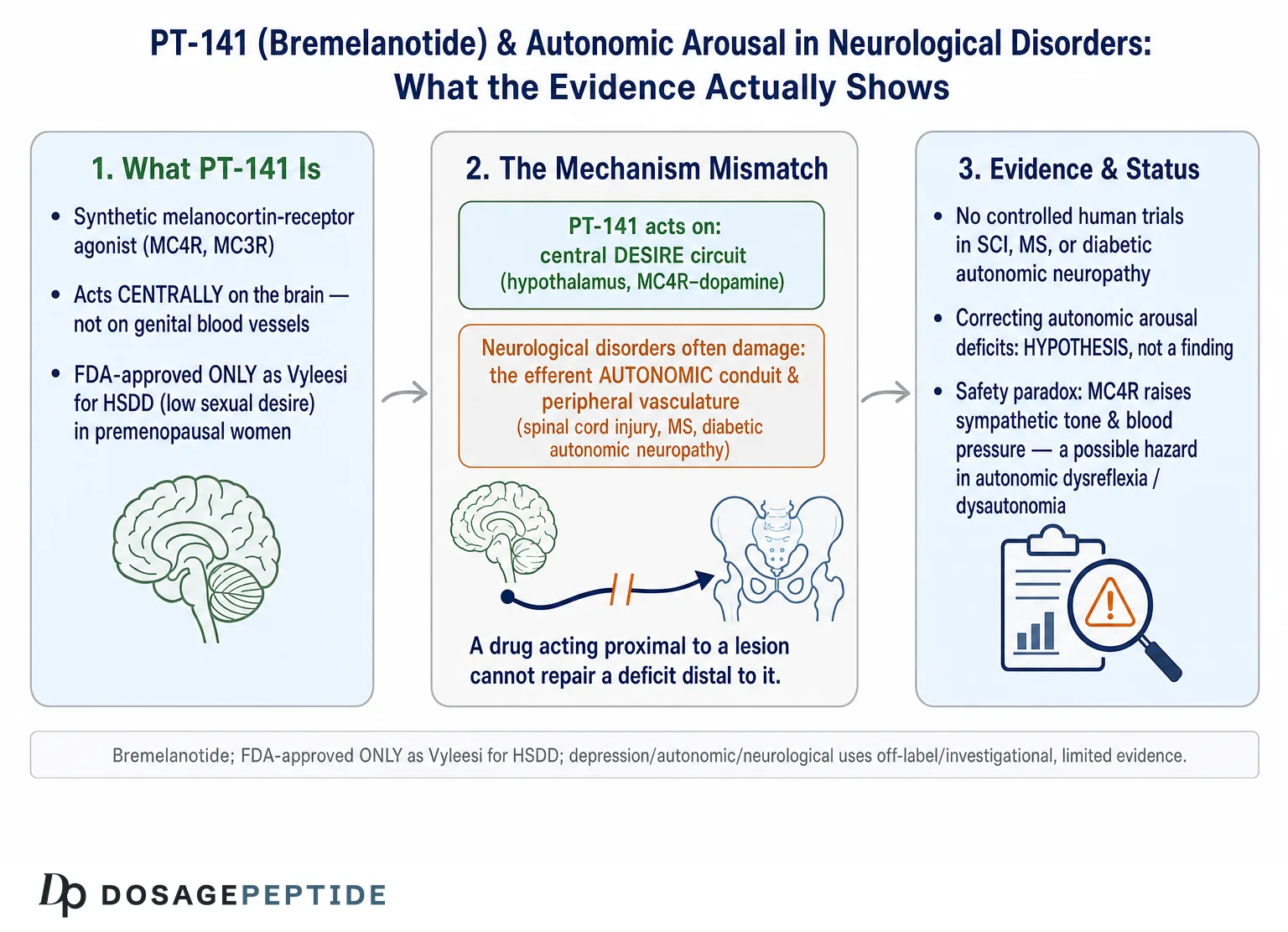
To evaluate any claim about PT-141 and autonomic arousal, one has to be precise about where and how the drug is thought to act. The consensus mechanism, built largely from rodent work and supported by human pharmacology, is that bremelanotide activates MC4Rs on neurons in hypothalamic and limbic circuits that govern sexual motivation — most prominently the medial preoptic area (mPOA) of the hypothalamus.25
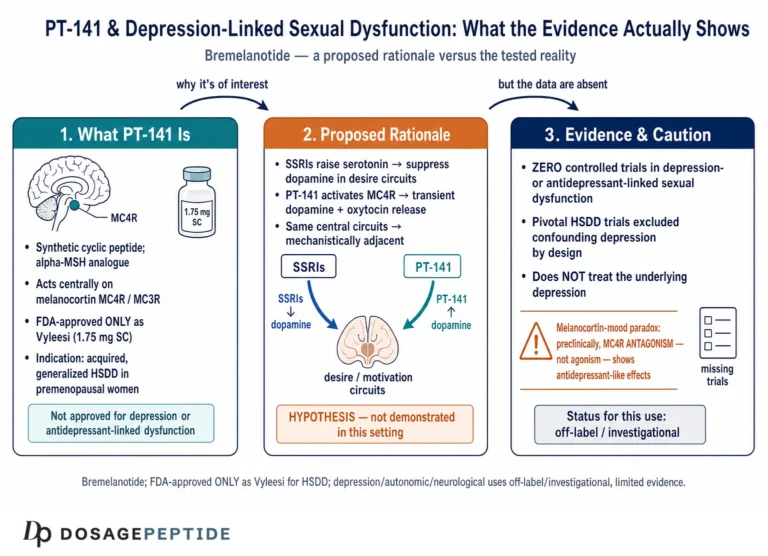
The most instructive preclinical data come from female-rat studies. Bremelanotide, whether given subcutaneously or infused directly into the lateral ventricles or the mPOA, selectively increased appetitive or “solicitational” sexual behaviors — the anticipatory approach and courtship behaviors that index desire — without much altering the consummatory reflexes of copulation itself.5 Infusion into the ventromedial hypothalamus did not reproduce the effect, localizing the action to the mPOA. Microdialysis experiments then supplied the neurochemical link: MC4R activation in the mPOA increased extracellular dopamine, and pharmacologically blocking dopamine receptors abolished the behavioral response.25 The working model, therefore, is that PT-141 engages a melanocortin-to-dopamine relay in a motivational hub of the brain, tilting the balance between excitatory and inhibitory tone toward arousal.
This central mechanism is the drug’s defining feature and the reason it has been described as the first “on-demand” centrally acting agent for sexual dysfunction.2 It is categorically different from the phosphodiesterase-5 (PDE5) inhibitors — sildenafil, tadalafil, and their relatives — which act peripherally on penile or clitoral smooth muscle by potentiating the nitric-oxide/cyclic-GMP pathway to permit vasocongestion. PDE5 inhibitors enable a genital hardware response; PT-141 is proposed to modulate the central software of desire. The distinction is not merely academic. It determines which kinds of dysfunction a drug could conceivably help and which it cannot, and it is central to the neurological question this article asks.
It is worth pausing on the pharmacokinetic character of the molecule, because it shapes what kind of effect is even possible. Bremelanotide has a rapid onset and a short elimination half-life on the order of roughly two hours, which is why it is dosed on demand rather than continuously.7 A short-acting, pulse-dosed agent is well suited to acutely biasing a motivational state in the run-up to sexual activity; it is poorly suited to the sustained neuromodulation or trophic effect that would be needed to remodel a chronically impaired autonomic circuit. Whatever the drug does, it does briefly and then clears. This temporal profile is another reason to be skeptical of framings that imply PT-141 could “correct” a structural or degenerative autonomic deficit: correcting such a deficit is a chronic, restorative task, whereas the drug’s pharmacology is that of an acute, transient nudge to an existing circuit.
There is, however, a second and less-discussed dimension to melanocortin action that becomes unavoidable once the nervous system is the subject: the same MC4R that sits atop the desire circuit also sits atop the autonomic outflow that controls blood pressure, heart rate, and the sympathetic–parasympathetic balance of the pelvis. That dual role is what makes the “autonomic arousal” framing genuinely complicated, and it is the subject of a later section. For now, the key point is narrow and firm: the well-characterized proerectile and pro-desire effects of PT-141 are central and motivational, mediated by MC4R-linked dopamine signaling in the hypothalamus, and demonstrated chiefly in animals and in desire-defined human populations — not in the peripheral autonomic circuitry that neurological disease disrupts.
What “Autonomic Arousal” Means — and How Neurological Disease Disrupts It
The phrase “autonomic arousal deficit” needs a working definition, because the physiology of sexual arousal is layered and the layers fail independently. Genital arousal — erection in men, engorgement and lubrication in women — is fundamentally an autonomic vascular event. It depends on a coordinated shift in the pelvis: parasympathetic (and nitrergic) activation that relaxes vascular smooth muscle and drives inflow, balanced against sympathetic tone that otherwise keeps the tissue detumescent. Neuroanatomically, this is orchestrated at several levels: sacral parasympathetic outflow (roughly S2–S4), thoracolumbar sympathetic outflow (roughly T11–L2), somatic pudendal pathways, and supraspinal control descending from the hypothalamus and brainstem.13
Physiologists distinguish two routes to genital arousal. Psychogenic arousal originates centrally — from thoughts, imagery, or sensory cues — and descends through the thoracolumbar and sacral pathways. Reflexogenic arousal originates peripherally, from direct genital stimulation, and can be generated by a sacral spinal reflex arc that operates even without input from the brain.13 This division is what makes the level and completeness of a neurological lesion so decisive. A person with a complete upper spinal cord injury may retain reflexogenic erections driven by the intact sacral arc while losing psychogenic arousal entirely, because the descending signal can no longer cross the lesion. Someone with a lower (sacral) lesion may show the opposite pattern.
Against that framework, the major neurological causes of sexual dysfunction map onto specific failure points:
- Spinal cord injury interrupts the conduits between brain and pelvis; the resulting picture depends on lesion level and completeness, and is complicated by the risk of autonomic dysreflexia in high lesions.13
- Multiple sclerosis demyelinates central and spinal pathways; sexual dysfunction in MS correlates strongly with spinal cord involvement and coexists with bladder and lower-limb signs, though fatigue, mood, and cognitive factors contribute independently.13
- Diabetic autonomic neuropathy damages the peripheral autonomic nerves and vasculature directly, producing erectile and ejaculatory dysfunction alongside broader autonomic failure.13
- Parkinson’s disease and multiple system atrophy combine central dopaminergic changes with autonomic degeneration, again yielding mixed deficits.
It is also worth naming a further complication specific to desire disorders versus arousal disorders, because the title conflates them under “arousal.” In sexual medicine, desire (libido, the motivational wish for sexual activity) and arousal (the physiological genital response) are distinct, dissociable constructs, even though everyday language merges them. PT-141’s approved indication and strongest evidence concern desire. The phrase “autonomic arousal deficit” points instead at the arousal construct — and specifically its autonomic, vascular substrate. A person can have intact desire but absent genital arousal (the classic neurogenic pattern, where the wish is present but the pelvic response cannot be generated), or blunted desire with mechanically intact arousal capacity. Because these are separable, evidence that a drug raises desire does not transfer to a claim that it restores autonomic genital arousal, and vice versa. The crucial analytical move is to ask which layer a given deficit occupies and which layer a candidate drug addresses. PT-141’s demonstrated action is on the central, motivational layer — the hypothalamic desire circuitry. Many neurological sexual disorders, by contrast, are failures of the efferent autonomic conduit or the peripheral end-organ: the signal cannot reach the pelvis, or the pelvic vasculature can no longer respond. A drug that heightens central desire does nothing to repair a severed or demyelinated pathway between that desire and the genitals. This mismatch, more than any single missing trial, is the reason the article’s premise has to be handled with caution. It is discussed further in the site’s companion piece on whether PT-141 can improve fatigue and libido dysregulation in chronic illnesses, which examines the same central-versus-peripheral distinction in a different clinical context.
The Melanocortin System and the Autonomic Nervous System
Here the story becomes genuinely interesting, and genuinely double-edged. The melanocortin system is not only a modulator of sexual motivation; it is a central regulator of autonomic outflow. This is where a naive reading of the title — “PT-141 improves autonomic arousal” — runs into a wall of inconvenient physiology.
A body of neuroscience work has established that MC4Rs are expressed on autonomic control neurons and that their activation shapes the balance between sympathetic and parasympathetic outflow. In an elegant electrophysiological study, MC4R activation was shown to reciprocally regulate the two arms of the autonomic nervous system: it excited sympathetic preganglionic neurons in the spinal cord while inhibiting parasympathetic preganglionic neurons in the brainstem.10 Melanocortin signaling in the hypothalamic paraventricular nucleus increases renal sympathetic nerve activity and raises mean arterial pressure,11 and the brain melanocortin system is now recognized as a key driver of the sympathetic activation that underlies obesity-associated hypertension.12
Consider what that means for sexual physiology specifically. Genital vascular arousal is favored by parasympathetic and nitrergic activity and opposed by sympathetic tone. Yet the melanocortin action just described — increase sympathetic drive, decrease parasympathetic drive — is, in the pelvic context, the anti-arousal autonomic configuration. If one were designing a molecule purely to enhance the autonomic (vascular) component of genital arousal, boosting central sympathetic outflow would be a peculiar way to do it. This is the paradox at the heart of the question: the melanocortin pathway that promotes sexual desire centrally is intertwined with an autonomic pathway that, if anything, biases the periphery away from vasocongestion.
The resolution to the paradox — to the extent one exists — lies in appreciating that melanocortin effects are region- and circuit-specific. Preclinical work on erection indicates that melanocortin agonists can also engage spinal pro-erectile circuitry: intrathecal delivery of melanotan II to the lumbar cord dose-dependently increased spontaneous erections in rats, an effect blocked by melanocortin antagonists, and the facilitator component depended on the lumbar sympathetic chain.9 So the melanocortin system touches erection at multiple levels — hypothalamic, spinal, and peripheral autonomic — and the net effect of a systemic agonist is a composite that has never been cleanly dissected in humans, let alone in humans with damaged autonomic circuitry.
| Melanocortin (MC4R) action | Documented autonomic effect | Implication for sexual arousal |
|---|---|---|
| Sympathetic preganglionic neurons (spinal cord) | Excitation10 | Sympathetic tone generally opposes genital vasocongestion |
| Parasympathetic preganglionic neurons (brainstem) | Inhibition10 | Parasympathetic drive is pro-erectile; inhibiting it is unfavorable peripherally |
| Paraventricular nucleus (hypothalamus) | ↑ renal sympathetic activity, ↑ blood pressure11 | Raises systemic pressure; relevant to autonomic-dysreflexia risk |
| Medial preoptic area (hypothalamus) | ↑ dopamine release25 | Central pro-desire / pro-motivation signal (the therapeutic target) |
| Lumbar spinal cord (intrathecal, rodent) | ↑ spontaneous erections9 | Suggests a spinal pro-erectile component, route-dependent |
The honest reading of this table is that the melanocortin system’s relationship to autonomic arousal is not a simple “more is better” dial. It is a network of opposing and region-dependent effects whose behavior in an intact nervous system is only partly understood and whose behavior in a damaged nervous system is essentially unstudied. That is a poor foundation for any confident claim that PT-141 “improves autonomic arousal deficits.”
What the Human Evidence Actually Shows
Because the fairest way to gauge a drug’s demonstrated capabilities is its actual clinical record, it is worth laying that record out precisely — and noting what population each study addressed.
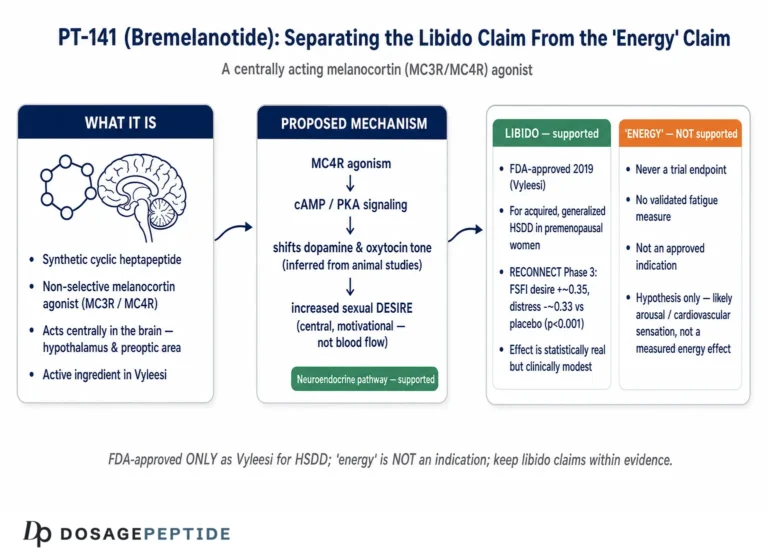
The pivotal evidence is the RECONNECT program: two identical Phase 3, randomized, double-blind, placebo-controlled, multicenter trials that together enrolled roughly 1,247 premenopausal women with acquired, generalized HSDD. Participants self-administered 1.75 mg of bremelanotide or placebo subcutaneously, on demand, over 24 weeks. Both trials met their co-primary endpoints: statistically significant improvements in a validated measure of sexual desire and significant reductions in the distress associated with low desire, relative to placebo.3 On the strength of these results, the FDA approved Vyleesi in June 2019 for premenopausal women with acquired, generalized HSDD not attributable to a coexisting medical or psychiatric condition, relationship problems, or medication effects.4
Two caveats belong alongside that approval, and the sexual-medicine literature has voiced both. First, while the improvements were statistically significant, their magnitude was modest, and the co-primary endpoints captured desire and distress rather than a completed, satisfying sexual event count — a nuance that matters when translating trial results to lived benefit. Second, and decisively for this article, the RECONNECT population was defined by low desire, screened to exclude those whose dysfunction stemmed from a medical or neurological cause. The trials therefore say a great deal about desire in otherwise healthy premenopausal women and nothing about arousal deficits produced by neurological disease.
The earlier human evidence points the same way. In men, intranasal PT-141 produced dose-dependent increases in erectile response in healthy volunteers and in men with mild-to-moderate erectile dysfunction — but “mild-to-moderate” erectile dysfunction of unspecified or vasculogenic/psychogenic origin, not neurogenic erectile failure.7 A small proof-of-concept study in premenopausal women with female sexual arousal disorder found that more women reported moderate-to-high desire and satisfaction with arousal after intranasal bremelanotide than after placebo; notably, objective vaginal vasocongestion measured by photoplethysmography during erotic videos did not differ significantly from placebo.6 That dissociation — subjective desire and satisfaction moved, objective genital vasocongestion did not — is exactly what one would predict for a centrally acting, motivation-focused drug, and it is a quiet but important signal that PT-141’s strength lies upstream of the peripheral vascular event.
The historical melanocortin data in men reinforce the central-desire theme. The University of Arizona study of melanotan II in men with organic-risk-factor erectile dysfunction reported both erections and increased subjective sexual desire after subcutaneous dosing8 — again, a desire-and-erection signal in a general ED population, not a neurogenic one. The site’s overview of how PT-141 supports sexual desire in clinical trials and its discussion of whether PT-141 influences neuroendocrine pathways to enhance libido and energy catalog these same desire-focused findings.
| Use / population | Evidence level | Regulatory status |
|---|---|---|
| HSDD in premenopausal women | Two positive Phase 3 RCTs (RECONNECT, ~1,247 women)3 | FDA-approved (Vyleesi, 2019)4 |
| Erectile dysfunction (mild-moderate, general) | Early-phase human studies; dose-dependent erectile response78 | Not approved for ED |
| Female sexual arousal disorder | Small proof-of-concept; subjective > objective effect6 | Not approved for FSAD |
| Neurogenic sexual dysfunction (SCI, MS, diabetic autonomic neuropathy) | No controlled human trials | Not approved; investigational at best |
| “Autonomic arousal deficit” correction specifically | No direct evidence in any population | Hypothetical |
The pattern is unambiguous. Where PT-141 has been tested, it has generated its clearest signals on the axis of desire and central arousal, in populations selected to exclude neurological causes. The specific proposition in this article’s title — correction of autonomic arousal deficits in neurological disorders — sits in the bottom two rows of the table, where the evidence is absent.
The Gap: No Trials in Neurological Sexual Disorders
This section is deliberately short, because the honest answer is short. A search of the clinical literature and trial registries returns no completed randomized controlled trials of bremelanotide in spinal cord injury, multiple sclerosis, diabetic autonomic neuropathy, Parkinson’s disease, multiple system atrophy, or any other primarily neurological sexual disorder. There are no studies enrolling patients defined by autonomic failure, no measurements of PT-141’s effect on objective genital autonomic responses (penile rigidity by RigiScan, vaginal photoplethysmography) in neurogenic populations, and no data on whether the drug’s central action can bridge or bypass a damaged efferent pathway.
What exists instead is a mechanistic bridge that people are tempted to walk across without checking whether it bears weight. The reasoning runs: PT-141 acts centrally on arousal circuits; neurological sexual dysfunction involves those circuits; therefore PT-141 should help. Each premise is partly true, but the conclusion does not follow, for a reason already developed above. In many neurological sexual disorders the central desire circuitry is relatively intact and the failure is downstream — in the spinal conduit or the peripheral autonomic nerves. A patient with a complete spinal cord lesion can experience robust central desire and still be unable to translate it into genital arousal, because the descending signal cannot cross the injury. Amplifying the central signal, in that scenario, changes nothing about the blockade below it.
There is a narrow subset of neurological presentations where a central pro-desire and possibly spinal pro-erectile agent is at least mechanistically conceivable — for instance, incomplete lesions with preserved conduction, or mixed disorders where a diminished central drive is one contributor among several. The rodent finding that intrathecal melanocortin agonism triggers spinal erections9 hints that a spinal component is real in animals. But “mechanistically conceivable in a rat” is several orders of evidence away from “demonstrated to help patients,” and the intervening steps — validated animal models of neurogenic sexual dysfunction, then carefully monitored human trials in defined lesion types — have not been taken for bremelanotide.
The correct scientific posture, then, is neither dismissal nor endorsement but calibrated agnosticism: the hypothesis is untested, the mechanism cuts in more than one direction, and the safety profile (discussed next) raises specific concerns in exactly the populations the title contemplates. On the specific question of autonomic arousal deficits in neurological sexual disorders, PT-141 sits at evidence level zero — not weak evidence, not mixed evidence, but no direct evidence at all.
How PT-141 Compares With Approaches Studied in Neurogenic Sexual Dysfunction
Placing PT-141 beside the interventions that have been studied in neurological sexual dysfunction clarifies where it stands. The contrast is instructive not because PT-141 competes with these approaches — it has never entered the arena — but because it shows what an evidence-backed option looks like and which physiological layer each one addresses.
| Approach | Physiological layer targeted | Evidence in neurogenic sexual dysfunction |
|---|---|---|
| PDE5 inhibitors (sildenafil, tadalafil) | Peripheral genital vasculature (NO/cGMP) | Randomized trials in spinal cord injury and MS; established first-line for neurogenic ED13 |
| Intracavernosal / intraurethral prostaglandin | Peripheral end-organ (direct smooth-muscle relaxation) | Effective when neural signaling fails; used in SCI and diabetic ED13 |
| Vacuum erection devices / implants | Mechanical end-organ | Used across neurogenic ED regardless of nerve status13 |
| Vibratory / electroejaculation (fertility) | Reflex spinal arc | Established for anejaculation in SCI13 |
| PT-141 (bremelanotide) | Central desire/motivation (MC4R–dopamine, hypothalamus) | No trials in any neurogenic population |
Two lessons emerge. First, the established approaches to neurogenic sexual dysfunction cluster at the peripheral and reflex layers — precisely because those are the layers most often damaged, and because a peripheral fix can succeed even when central or conduit signaling is impaired. A PDE5 inhibitor or an intracavernosal agent can produce an erection in a man whose neural pathways are compromised, because it acts distal to the lesion. PT-141’s central mechanism sits on the wrong side of many neurological lesions to do the same.
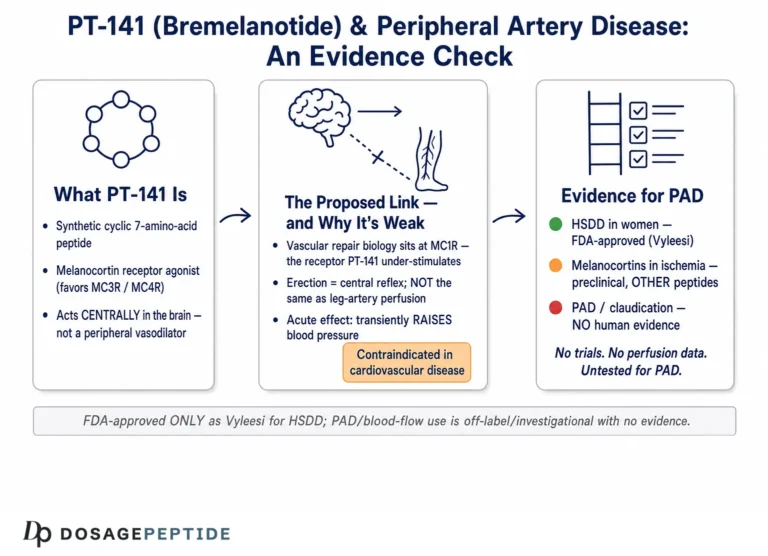
Second, the layer PT-141 does address — central desire — is real and clinically meaningful, and it is not addressed by the peripheral options. A person with a neurological condition can suffer both a conduit problem and a genuine loss of central desire (from fatigue, mood, medication, or the disease itself), and in principle a centrally acting agent could help with the latter component. But that is a hypothesis about the desire layer, not a demonstration that PT-141 corrects an autonomic arousal deficit, which lives at the vascular/efferent layer the drug does not reach. The related question of whether PT-141 can influence peripheral vascular function at all is examined separately in the site’s article on whether PT-141 can enhance blood flow in peripheral artery disease, which reaches similarly cautious conclusions.
Research Models and Methodology
Understanding how PT-141 has actually been studied clarifies what the data can and cannot support. The methodology falls into three tiers, and none of them was built to answer the neurological-autonomic question.
Rodent behavioral and neurochemical models. The foundational mechanistic work used female-rat sexual-behavior paradigms (solicitation, pacing, lordosis) combined with site-specific brain infusions and microdialysis to localize the effect to the mPOA and tie it to dopamine release.25 Male-rodent erection assays, including intrathecal and intracerebroventricular melanocortin delivery, characterized the pro-erectile component and its spinal contribution.9 These are powerful models for dissecting central and spinal melanocortin circuitry in an intact nervous system. Crucially, they are not models of neurological disease: no published work has run bremelanotide through a validated model of spinal cord injury, experimental autoimmune encephalomyelitis (the standard MS model), or diabetic autonomic neuropathy with sexual-function endpoints.
Human pharmacology and early-phase studies. Intranasal and subcutaneous formulations were characterized for pharmacokinetics, tolerability, and pharmacodynamic effect on erection (by RigiScan) or on subjective and objective female arousal measures.67 The pharmacology is well described: rapid onset, short half-life on the order of a couple of hours, on-demand dosing. But the participants were healthy volunteers or people with non-neurogenic sexual dysfunction.
Phase 3 efficacy trials. RECONNECT provided rigorous randomized, double-blind, placebo-controlled evidence with validated desire and distress instruments as endpoints.3 Its methodology was appropriate for an HSDD claim and inappropriate — by design, through its exclusion criteria — for any neurological question. It did not enroll patients with neurological disease, did not measure objective autonomic genital responses, and did not assess the physical-function or autonomic-safety endpoints a neurogenic study would require.
The methodological bottom line is that PT-141’s entire evidence architecture was constructed to answer a desire question in neurologically intact people. To answer the autonomic-neurological question honestly would require a new program: animal models of specific neurogenic sexual dysfunction with objective genital-autonomic readouts, careful human pharmacodynamic studies in defined lesion types with continuous blood-pressure and autonomic monitoring, and only then controlled efficacy trials. Until that work exists, any statement about PT-141 and autonomic arousal deficits is hypothesis, not finding. Researchers documenting the compound’s handling parameters can consult the site’s peptide glossary for standardized terminology used across these study types.
Safety and the Autonomic Paradox
Safety is not a footnote here; it is arguably the decisive consideration, because the very autonomic pharmacology that makes PT-141 interesting also makes it potentially hazardous in the populations the title contemplates.
In the HSDD trials, the most common adverse reactions were nausea (reported by roughly 40% of women, prompting antiemetics in about 13% and discontinuation in about 8%), flushing (around 20% versus <1% on placebo), injection-site reactions, headache, and vomiting.4 Nausea tended to improve with subsequent doses. Focal hyperpigmentation — including of the face, gums, and breasts — occurred in about 1% of women over up to eight monthly doses and did not reliably resolve after discontinuation, a predictable consequence of MC1R agonism.4
The cardiovascular signal is the one that matters most for the neurological question. Consistent with the melanocortin system’s role in sympathetic activation, bremelanotide transiently raises blood pressure and lowers heart rate after each dose — on the order of a 6 mmHg rise in systolic and 3 mmHg in diastolic pressure, generally resolving within about 12 hours.4 Because of this, the label contraindicates Vyleesi in patients with uncontrolled hypertension or known cardiovascular disease and advises against use in those at high cardiovascular risk.4 These effects are the clinical fingerprint of the same MC4R-driven sympathetic outflow documented in the mechanistic literature.101112
Now overlay that on the neurological populations in question. Several of them are precisely the populations in whom a drug-induced sympathetic surge is most dangerous:
- Spinal cord injury above T6 carries the risk of autonomic dysreflexia — a syndrome of paroxysmal, potentially life-threatening hypertension driven by unmodulated sympathetic outflow below the lesion. A systemically administered melanocortin agonist that increases sympathetic drive is, on its face, a concerning agent to introduce into a body already prone to dysreflexic hypertensive crises. This is not a demonstrated harm — no one has studied it — but it is a specific, mechanism-grounded hazard that would have to be excluded before any use, not assumed away.
- Diabetic autonomic neuropathy frequently coexists with cardiovascular autonomic neuropathy, orthostatic instability, and elevated cardiovascular risk — the exact profile the label warns against.
- Multiple system atrophy and advanced Parkinson’s disease involve dysautonomia with labile blood pressure, where a transient pressor effect could be poorly tolerated.
This is the crux of the “autonomic paradox.” The title imagines PT-141 correcting an autonomic deficit. The pharmacology suggests that in several neurological populations the more likely autonomic consequence of the drug is an unwanted sympathetic and pressor effect — one that is benign and transient in a healthy premenopausal woman but potentially serious in someone with a high spinal lesion or established dysautonomia. Absence of demonstrated benefit and presence of a mechanism-based hazard can coexist, and here they do. Any exploration of the compound in these settings would therefore demand intensive cardiovascular and autonomic monitoring and would begin from a posture of caution, not optimism. The interplay between melanocortin signaling and immune-autonomic function in disease states is explored further in the site’s discussion of whether PT-141 can modulate inflammatory responses in autoimmune disorders.
Limitations and the Human-Evidence Gap
Pulling the threads together, the limitations that bear on the autonomic-neurological question are severe and mutually reinforcing.
No indication-specific data. The largest limitation is the complete absence of controlled studies in any neurological sexual disorder. Every statement connecting PT-141 to autonomic arousal deficits in these conditions is inference, and much of that inference runs against the grain of the drug’s known biology.
Mechanistic mismatch at the wrong layer. PT-141’s demonstrated action is central and motivational. Many neurogenic sexual disorders are failures of the efferent autonomic conduit or the peripheral end-organ. A drug acting proximal to a lesion cannot repair a deficit distal to it. Where the two layers happen to overlap — incomplete lesions, mixed disorders with a genuine central-desire component — a role is conceivable but unproven.
Autonomic effects cut against the goal. The melanocortin system biases central autonomic outflow toward sympathetic activation, which in the pelvis is the anti-vasocongestion configuration and which systemically raises blood pressure.101112 This is a reason to expect the drug’s autonomic effects to be, at best, orthogonal to peripheral arousal and, at worst, hazardous in vulnerable neurological populations.
Modest, population-specific efficacy even where approved. In HSDD — the one indication with rigorous evidence — the effect size was modest and measured on desire and distress, not on autonomic genital response.3 A drug that produces a modest desire benefit in healthy women is a poor bet to correct a vascular-autonomic deficit in a damaged nervous system.
Product and access issues. Beyond the approved Vyleesi autoinjector, much PT-141 in circulation is sold as research chemical of variable purity through unregulated channels, introducing confounders of dose accuracy, sterility, and identity that make even informal observations unreliable.
The human-evidence gap here is not a narrow crack to be papered over with mechanism talk and rodent extrapolation. It is the whole story. Responsible communication means resisting the intuitive leap from “centrally acting arousal drug” to “fixes neurogenic autonomic arousal,” and stating plainly that the proposition is untested, mechanistically double-edged, and shadowed by a specific cardiovascular safety concern. For readers tracking how this and related evidence evolves, the compound’s neuroendocrine profile is followed in the site’s piece on whether PT-141 influences neuroendocrine pathways to enhance libido and energy.
Regulatory Status
PT-141’s regulatory picture is narrower than its reputation, and precision matters.
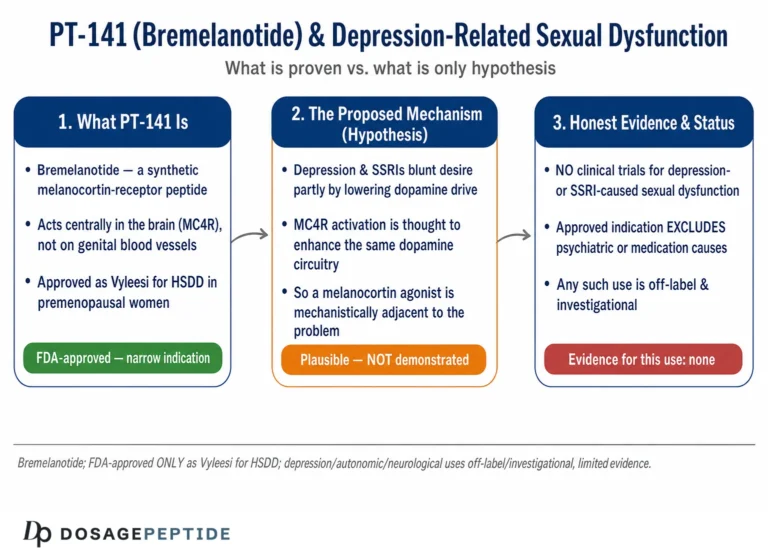
One approved indication. As Vyleesi, bremelanotide is approved by the FDA solely for acquired, generalized HSDD in premenopausal women, at a fixed 1.75 mg subcutaneous dose, on demand, no more than one dose per 24 hours and no more than eight per month.4 The approval is explicitly bounded: it excludes women whose low desire is better explained by a coexisting medical or psychiatric condition — which, by definition, would include neurologically driven sexual dysfunction.
Everything else is off-label or investigational. There is no approved indication for men, for postmenopausal women, for erectile dysfunction, for female sexual arousal disorder as such, or for any neurological sexual disorder. Use in those settings is off-label at best and, for the neurological-autonomic proposition at the center of this article, not even that — it is unstudied. No regulator anywhere has recognized a therapeutic role for bremelanotide in spinal cord injury, multiple sclerosis, diabetic autonomic neuropathy, or related conditions.
Research-chemical channels are not a sanctioned pathway. A great deal of PT-141 is marketed online as a “research peptide,” outside the regulated Vyleesi supply chain. Purchasing or using such material for human purposes falls outside any regulatory framework and carries the quality and safety risks noted above. The existence of a legitimate approved product for one narrow indication does not legitimize unapproved use for others.
The regulatory synthesis is straightforward: PT-141 is an approved drug for a single, tightly defined desire disorder in neurologically healthy premenopausal women, and it has no sanctioned or evidence-based role in neurological sexual disorders. Any legitimate investigation of the autonomic-neurological hypothesis should proceed through formal preclinical and clinical research under regulatory oversight — with particular attention to cardiovascular safety — rather than through off-label or informal use.
Frequently Asked Questions
Can PT-141 correct autonomic arousal deficits in neurological sexual disorders?
There is no direct evidence that it can. PT-141 (bremelanotide) is a centrally acting melanocortin-receptor agonist whose demonstrated effect is on sexual desire and motivation via MC4R–dopamine signaling in the hypothalamus.25 Autonomic arousal deficits in neurological disease are typically failures of the efferent autonomic conduit or peripheral vasculature — layers the drug does not act on. No controlled trials have tested bremelanotide in spinal cord injury, multiple sclerosis, diabetic autonomic neuropathy, or any other neurogenic sexual disorder, so any claim of benefit is hypothesis, not finding.
What is PT-141 actually approved for?
Only one thing: as Vyleesi, it is FDA-approved for acquired, generalized hypoactive sexual desire disorder (HSDD) in premenopausal women, based on the two Phase 3 RECONNECT trials.34 Its approval explicitly excludes low desire that is better explained by a medical, psychiatric, or neurological condition. Every other use — including for neurological sexual disorders — is off-label or investigational.
How is PT-141 different from Viagra (sildenafil)?
They act at opposite ends of the arousal pathway. PDE5 inhibitors such as sildenafil work peripherally, potentiating nitric oxide/cyclic-GMP signaling in genital smooth muscle to permit vasocongestion. PT-141 works centrally, modulating hypothalamic desire circuitry.2 This matters for neurological disease: a peripheral agent can produce a genital response even when neural signaling is impaired, whereas a central agent sits proximal to many neurological lesions and cannot bridge a damaged conduit.
Does the melanocortin system help or hurt autonomic arousal?
It does both, depending on the circuit. MC4R activation increases central sympathetic outflow and inhibits parasympathetic outflow,10 and raises blood pressure via the paraventricular nucleus.1112 In the pelvis, sympathetic tone generally opposes vasocongestion, so the systemic autonomic effect is, if anything, unfavorable for peripheral genital arousal — even as the central effect promotes desire. This region-dependent, double-edged pharmacology is why the “improves autonomic arousal” framing is misleading.
Is PT-141 safe for people with spinal cord injury or dysautonomia?
This has not been established, and there is a specific mechanism-based concern. Bremelanotide transiently raises blood pressure and is contraindicated in uncontrolled hypertension or known cardiovascular disease.4 In spinal cord injury above T6, where autonomic dysreflexia (dangerous paroxysmal hypertension) is a risk, and in conditions with labile blood pressure such as multiple system atrophy or diabetic cardiovascular autonomic neuropathy, a sympathetic pressor effect could be hazardous. No safety studies exist in these populations, so caution is warranted.
Has PT-141 been shown to increase genital blood flow objectively?
Not convincingly. In a proof-of-concept study in women with female sexual arousal disorder, subjective desire and arousal satisfaction improved after bremelanotide, but objective vaginal vasocongestion measured by photoplethysmography did not differ significantly from placebo.6 This dissociation is consistent with a drug that acts on central desire rather than on the peripheral vascular arousal response.
What does the animal research suggest about a spinal or autonomic component?
Rodent work shows melanocortin agonists can act at multiple levels: hypothalamic mPOA neurons (driving dopamine-dependent desire behaviors)5 and the lumbar spinal cord, where intrathecal melanotan II dose-dependently increased spontaneous erections.9 These findings establish that a spinal pro-erectile component exists in animals with intact nervous systems. They do not demonstrate benefit in a damaged nervous system, and no study has tested bremelanotide in a validated model of neurogenic sexual dysfunction.
Could PT-141 ever become a therapy for neurogenic sexual dysfunction?
It cannot be ruled out for narrow subsets — for example, incomplete lesions with preserved conduction, or mixed disorders where diminished central desire is a genuine contributor. But it would require an entirely new research program: disease-specific animal models with objective autonomic endpoints, then carefully monitored human trials in defined lesion types with continuous cardiovascular surveillance. Given the mechanism’s mixed autonomic effects and the pressor safety signal, this is a demanding path, and today the honest status is “untested.”
Is the PT-141 sold online the same as Vyleesi?
Not necessarily. Vyleesi is a specific, regulated 1.75 mg subcutaneous autoinjector product. Much of the PT-141 marketed online is sold as unregulated “research chemical” of variable purity and identity, outside any regulatory framework. Quality, sterility, and dose accuracy cannot be assumed, which is a safety concern independent of the molecule’s intrinsic pharmacology.
References
- Molinoff PB, Shadiack AM, Earle D, Diamond LE, Quon CY. PT-141: a melanocortin agonist for the treatment of sexual dysfunction. Ann N Y Acad Sci. 2003;994:96-102. PMID: 12851303. https://pubmed.ncbi.nlm.nih.gov/12851303/
- Pfaus JG, Sadiq A, Spana C, Clayton AH. The neurobiology of bremelanotide for the treatment of hypoactive sexual desire disorder in premenopausal women. CNS Spectr. 2022;27(3):281-289. PMID: 33455598. https://pubmed.ncbi.nlm.nih.gov/33455598/
- Kingsberg SA, Clayton AH, Portman D, et al. Bremelanotide for the Treatment of Hypoactive Sexual Desire Disorder: Two Randomized Phase 3 Trials. Obstet Gynecol. 2019;134(5):899-908. PMID: 31599840. PMCID: PMC6819021. https://pubmed.ncbi.nlm.nih.gov/31599840/
- U.S. Food and Drug Administration. VYLEESI (bremelanotide injection) Prescribing Information. 2019. https://www.accessdata.fda.gov/drugsatfda_docs/label/2019/210557s000lbl.pdf
- Pfaus J, Giuliano F, Gelez H. Bremelanotide: an overview of preclinical CNS effects on female sexual function. J Sex Med. 2007;4 Suppl 4:269-279. PMID: 17958619. https://pubmed.ncbi.nlm.nih.gov/17958619/
- Diamond LE, Earle DC, Heiman JR, Rosen RC, Perelman MA, Harning R. An effect on the subjective sexual response in premenopausal women with sexual arousal disorder by bremelanotide (PT-141), a melanocortin receptor agonist. J Sex Med. 2006;3(4):628-638. PMID: 16839319. https://pubmed.ncbi.nlm.nih.gov/16839319/
- Diamond LE, Earle DC, Rosen RC, Willett MS, Molinoff PB. Double-blind, placebo-controlled evaluation of the safety, pharmacokinetic properties and pharmacodynamic effects of intranasal PT-141, a melanocortin receptor agonist, in healthy males and patients with mild-to-moderate erectile dysfunction. Int J Impot Res. 2004;16(1):51-59. PMID: 14963471. https://pubmed.ncbi.nlm.nih.gov/14963471/
- Wessells H, Gralnek D, Dorr R, Hruby VJ, Hadley ME, Levine N. Effect of an alpha-melanocyte stimulating hormone analog on penile erection and sexual desire in men with organic erectile dysfunction. Urology. 2000;56(4):641-646. PMID: 11018622. https://pubmed.ncbi.nlm.nih.gov/11018622/
- King SH, Mayorov AV, Balse-Srinivasan P, Hruby VJ, Vanderah TW, Wessells H. Melanocortin Receptors, Melanotropic Peptides and Penile Erection. Curr Top Med Chem. 2007;7(11):1098-1106. PMID: 17584130. PMCID: PMC2694735. https://pmc.ncbi.nlm.nih.gov/articles/PMC2694735/
- Sohn JW, Harris LE, Berglund ED, et al. Melanocortin 4 Receptors Reciprocally Regulate Sympathetic and Parasympathetic Preganglionic Neurons. Cell. 2013;152(3):612-619. PMID: 23374353. PMCID: PMC3711728. https://pmc.ncbi.nlm.nih.gov/articles/PMC3711728/
- Li P, Cui BP, Zhang LL, Sun HJ, Liu TY, Zhu GQ. Melanocortin 3/4 receptors in paraventricular nucleus modulate sympathetic outflow and blood pressure. Exp Physiol. 2013;98(2):435-443. PMID: 22872662. https://pubmed.ncbi.nlm.nih.gov/22872662/
- da Silva AA, do Carmo JM, Wang Z, Hall JE. The Brain Melanocortin System, Sympathetic Control, and Obesity Hypertension. Physiology (Bethesda). 2014;29(3):196-202. PMID: 24789984. PMCID: PMC4046815. https://journals.physiology.org/doi/full/10.1152/physiol.00061.2013
- Fode M, Krogh-Jespersen S, Brackett NL, Ohl DA, Lynne CM, Sønksen J. Male sexual dysfunction and infertility associated with neurological disorders. Asian J Androl. 2011;14(1):61-68. PMID: 22138899. PMCID: PMC3735155. https://pmc.ncbi.nlm.nih.gov/articles/PMC3735155/
Educational and research-use disclaimer: This article is provided solely for scientific and educational purposes. PT-141 (bremelanotide) is approved by the FDA only as Vyleesi for acquired, generalized hypoactive sexual desire disorder in premenopausal women; it is not approved by the FDA, EMA, or any comparable regulator for the treatment, cure, or prevention of sexual dysfunction arising from spinal cord injury, multiple sclerosis, diabetic autonomic neuropathy, or any other neurological condition, and no human efficacy for correcting autonomic arousal deficits in such disorders has been demonstrated. Bremelanotide transiently raises blood pressure and is contraindicated in uncontrolled hypertension or known cardiovascular disease; its use may pose particular risks in populations prone to autonomic instability. Nothing here is medical advice or a recommendation for human use. Any legitimate investigation of this compound in neurological sexual disorders should occur within properly authorized clinical research under appropriate medical and regulatory oversight. Readers should consult qualified professionals and applicable regulations before making any decisions.