The question of how Melanotan II might influence erectile performance is, on its surface, a question about a mechanism. But it is important to frame it correctly from the outset, because the phrasing “how does it influence erectile performance” can quietly imply that Melanotan II is an established treatment for erectile difficulty. It is not. Melanotan II (MT-II) is an unapproved synthetic peptide, sold on the gray market as a “research chemical” and most often marketed for cosmetic tanning. No drug regulator anywhere has reviewed it, approved it, or established that it safely and reliably improves erectile function in humans. The more honest version of the title is therefore a research question: what do laboratory and early clinical studies suggest about the biological pathways through which a melanocortin agonist like MT-II can trigger penile erection, and how strong is that evidence?1
That reframing matters because the mechanistic story behind MT-II is genuinely interesting and reasonably well characterized in animal models, yet the human clinical record is thin, old, and small. The compound sits at the intersection of two very different bodies of literature. On one side is decades of neuropharmacology showing that the brain’s melanocortin system participates in the central control of erection. On the other side is a handful of small human studies from the late 1990s and early 2000s, plus a cautionary trail of case reports describing nausea, prolonged erections, cardiovascular effects, and changes in pigmented lesions among unregulated users.2,3
This article walks through the molecular mechanism as understood from preclinical work, describes exactly what the human data do and do not show, compares MT-II to its more selective pharmaceutical relative bremelanotide (Vyleesi), and is deliberately explicit about safety and regulatory status. Nothing here should be read as a protocol, an endorsement, or medical advice. It is an educational summary of the mechanistic literature for people trying to understand what the science actually says.
What Melanotan II Is and Where It Came From
Melanotan II is a synthetic cyclic heptapeptide analog of alpha-melanocyte-stimulating hormone (alpha-MSH), one of the body’s natural melanocortin peptides. Its structure was designed in the late 1980s and early 1990s by researchers at the University of Arizona, notably in work associated with Victor Hruby, Mac Hadley, and colleagues, who were trying to build a more potent and metabolically stable version of alpha-MSH. Natural alpha-MSH is a linear 13-amino-acid peptide that is rapidly broken down in the body. By cyclizing the core sequence through a lactam bridge and substituting a few key residues, the Arizona group produced a molecule with dramatically greater potency and a much longer duration of action than the native hormone.4,5
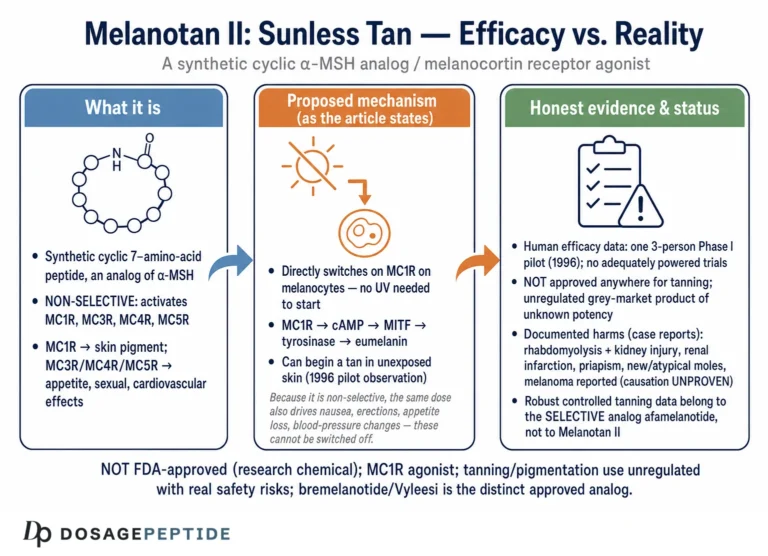
The original motivation was not sexual function at all. Melanocortins are best known for stimulating melanin production, and the driving idea was a “sunless tanning” agent that might darken skin and, in theory, reduce ultraviolet-related skin damage. The pilot human study that first tested MT-II, published by Dorr and colleagues in 1996, was designed to evaluate tanning and tolerability in a small group of male volunteers. It was in that context that an unexpected observation surfaced: several subjects experienced spontaneous penile erections. That serendipitous finding is what redirected part of the melanocortin field toward sexual function.2
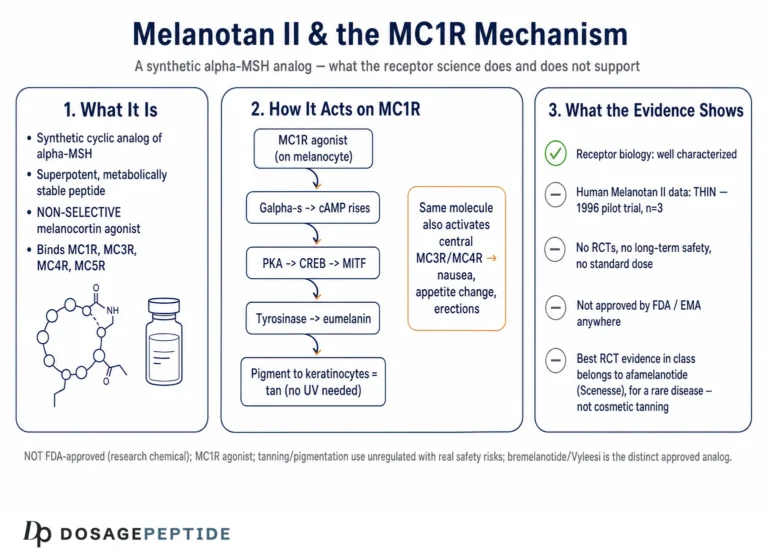
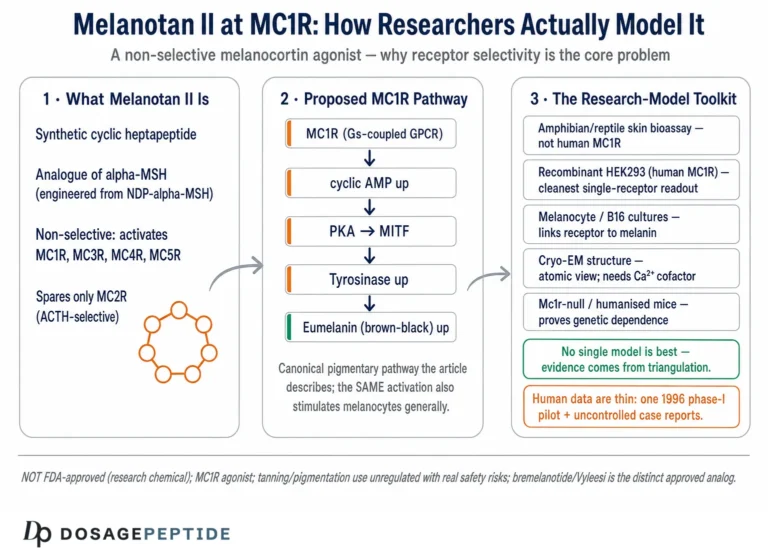
Chemically, MT-II is non-selective. It activates multiple melanocortin receptor subtypes rather than targeting just one. The melanocortin receptor family has five members, MC1R through MC5R, each with a different tissue distribution and role: MC1R governs pigmentation in the skin; MC2R responds to ACTH in the adrenal gland; MC3R and MC4R are heavily expressed in the central nervous system and are involved in energy balance, feeding, and sexual behavior; and MC5R has roles in exocrine glands. MT-II binds and activates MC1R, MC3R, MC4R, and MC5R without much discrimination between them. This broad activation is central to understanding both its erectogenic effects and its side-effect profile: the same non-selectivity that makes it darken skin (MC1R) and stimulate central erectile circuits (MC4R) also drives the nausea, flushing, and appetite changes that repeatedly limited dosing in early studies.2,6
It is worth distinguishing MT-II from two closely related names that often get confused with it. Melanotan I (afamelanotide) is a different, more MC1R-focused peptide that has actually achieved a narrow regulated approval for a rare photosensitivity disorder (erythropoietic protoporphyria) and is not a sexual-function agent. PT-141, or bremelanotide, is a deaminated derivative and likely metabolite of MT-II that was developed specifically as a sexual-function drug and eventually reached the market for a different indication. So MT-II is best understood as the non-selective parent compound: the molecule from which a pharmaceutical program branched, but which itself never completed formal development and remains unapproved. For readers comparing dosing conventions across these compounds in a purely educational frame, DosagePeptide.com maintains a Melanotan II reference page that lays out how the peptide is typically discussed in research contexts.6,7
The Molecular Mechanism: Melanocortin Receptors and Central Erectile Circuits
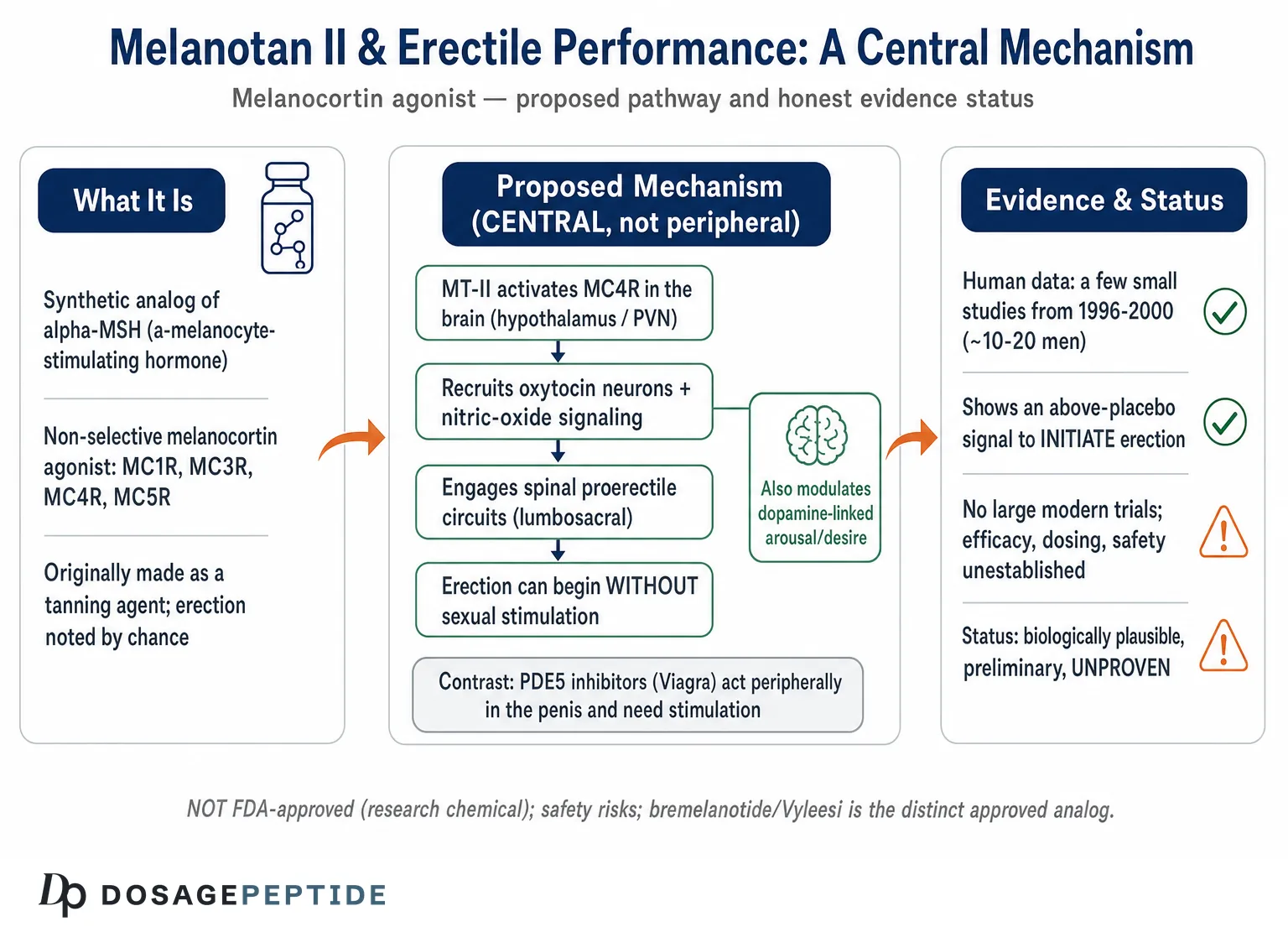
The most important conceptual point about MT-II and erection is that its proposed mechanism is central, not peripheral. PDE5 inhibitors like sildenafil work at the end of the erectile pathway, in the penis itself, by amplifying nitric-oxide-driven smooth-muscle relaxation in the corpus cavernosum. Melanocortin agonists appear to act earlier and higher up, in the brain and spinal cord, on the neural circuitry that initiates and coordinates erection. This is why MT-II has been reported to produce erections in the absence of direct sexual stimulation, a behavioral signature that distinguishes melanocortin agonists from peripheral vasodilators.3,8
The receptor believed to matter most for this effect is MC4R. MC4R is densely expressed in regions of the hypothalamus, brainstem, and spinal cord that regulate autonomic and sexual function. A particularly studied node is the paraventricular nucleus (PVN) of the hypothalamus, a region long known to be involved in the central control of erection. When melanocortin agonists activate MC4R in the PVN, downstream signaling is thought to engage oxytocinergic neurons. These oxytocin-releasing neurons project from the hypothalamus to extra-hypothalamic sites including the brainstem and the lumbosacral spinal cord, where the autonomic outflow that produces erection is organized. Oxytocin and nitric oxide signaling within this circuit have both been implicated as intermediate steps between MC4R activation and the eventual penile response in animal models.8,9
There is also a spinal component. Studies in rats have shown MC4R messenger RNA in the lumbar spinal cord and demonstrated that delivering MT-II directly into the spinal space (intrathecally) can dose-dependently increase spontaneous erections. This suggests the melanocortin system does not act at a single site but modulates erectile circuitry at multiple levels of the neuraxis: hypothalamic integration, descending oxytocinergic projections, and spinal proerectile centers. The convergence of these findings is why the melanocortinergic pathway has been described as a distinct, parallel route to erection that operates upstream of, and independently from, the peripheral PDE5 machinery.9,10
A further layer of the mechanism involves motivation and arousal rather than the mechanics of erection alone. Melanocortin signaling interacts with the brain’s dopaminergic reward circuitry. Animal work indicates that alpha-MSH-like signaling can modulate dopamine release in the mesolimbic system, including the ventral tegmental area and nucleus accumbens, effects that can be blocked by MC4R antagonists. This dopaminergic modulation is thought to underlie the “desire” or arousal-facilitating dimension attributed to melanocortin agonists, as opposed to the purely reflexive hydraulic effect of a PDE5 inhibitor. In other words, the proposed mechanism spans both the wiring that produces an erection and the neurochemistry that generates the drive toward sexual activity.8,10
A useful way to hold the whole mechanism in mind is as a cascade with several sequential and parallel steps. First, MT-II reaches central melanocortin receptors, principally MC4R, in the hypothalamus and spinal cord. Second, MC4R activation in the paraventricular nucleus recruits oxytocinergic projection neurons. Third, those descending oxytocin projections, together with nitric oxide as a downstream mediator, engage the sacral parasympathetic and thoracolumbar autonomic outflow that governs penile blood flow. Fourth, running alongside this, melanocortin tone influences mesolimbic dopamine signaling, biasing the brain toward sexual motivation. The eventual penile erection is thus the output of a distributed neural program rather than a single receptor event, which is precisely why blocking MC4R pharmacologically or genetically abolishes the effect in animal models while leaving peripheral erectile hardware intact.8,9,10
This multi-site, upstream character also explains a frequently misunderstood point: melanocortin agonists do not force blood into the penis directly the way an intracavernosal injection of a vasodilator would. They lower the threshold for, and can spontaneously trigger, the body’s own erectile reflex by acting on the neural command centers that normally initiate it in response to arousal. That is a more physiological point of intervention in principle, but it is also a less controllable one, because activating central circuits that are wired to appetite, autonomic tone, and reward inevitably produces collateral effects on all of those systems at once. The mechanism that makes MT-II interesting is inseparable from the mechanism that makes it side-effect-prone.6,8
The table below summarizes the principal receptor targets of MT-II and their relevance, keeping in mind that the compound activates all of them simultaneously because it is non-selective.
| Receptor | Main tissue / location | Relevance to MT-II effects |
|---|---|---|
| MC1R | Skin melanocytes | Drives pigmentation (tanning); the original target of interest |
| MC2R | Adrenal cortex | ACTH receptor; minimal MT-II activation, low relevance |
| MC3R | CNS, energy balance | Contributes to central effects; role in erection less defined than MC4R |
| MC4R | Hypothalamus, brainstem, spinal cord | Principal receptor linked to central proerectile and appetite effects |
| MC5R | Exocrine glands | Peripheral roles; limited relevance to erection |
What the Human Evidence Actually Shows (and Its Level)
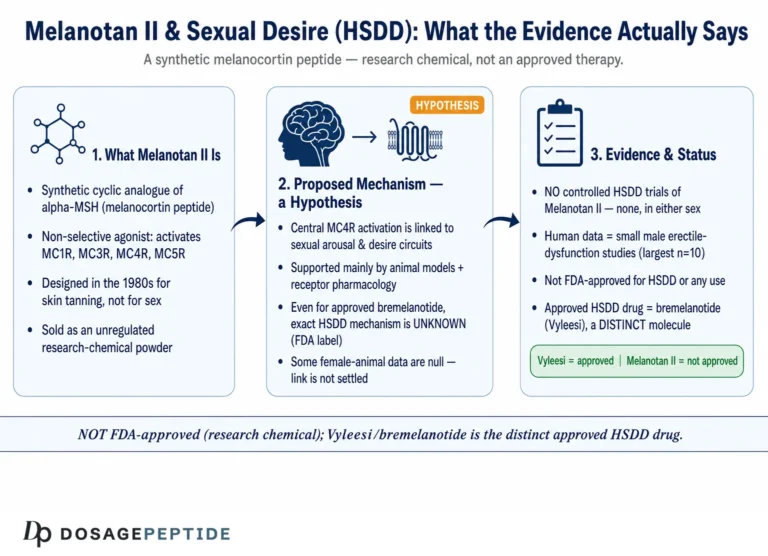
This is the section where honesty about evidence level matters most. The human clinical data on MT-II and erection consist of a very small number of studies conducted more than two decades ago, mostly involving single-digit to low-double-digit numbers of participants. They are proof-of-concept experiments, not the kind of large, replicated, modern trials that support an approved therapy.1,2,3
The foundational observation came from the Dorr 1996 pilot phase-I study, which was primarily a tanning-and-safety trial in three normal male volunteers with dose escalation. Spontaneous erections appeared as an unexpected adverse-effect-turned-signal, alongside dose-limiting nausea, flushing, and fatigue. This was not designed as an erectile-function study, so it establishes only that the effect exists, not how reliable or clinically useful it might be.2
The most cited erectile-specific human study is Wessells and colleagues, 1998, published in the Journal of Urology. This was a double-blind, placebo-controlled crossover study in ten men with psychogenic erectile dysfunction and no known organic cause. Eight of ten men developed clinically apparent erections after MT-II, and the mean duration of tip rigidity greater than 80 percent was about 38 minutes with MT-II versus about 3 minutes with placebo, a statistically significant difference. The authors concluded MT-II was a potent initiator of erection with “manageable” side effects at roughly 0.025 mg/kg. A follow-up Wessells study reported in 2000 used real-time RigiScan monitoring in men that included organic erectile dysfunction and found MT-II initiated subjectively reported erections in a majority of injections versus almost none with placebo, with erection onset ranging widely (minutes to hours) and intermittent activity over the monitoring window.3,11
Taken together, these studies provide a consistent, biologically plausible signal: in small controlled settings, MT-II can initiate erections, often without external sexual stimulation, at a rate clearly above placebo. That is a real finding. But the evidence level is low for any clinical claim, for several concrete reasons. The sample sizes are tiny (roughly 10 to 20 men across the key studies). The trials are old and were never scaled into the large phase-II and phase-III programs that would be needed to establish efficacy, optimal dosing, durability, and comparative benefit. Side effects, particularly nausea, were common enough to constrain dosing. And critically, the compound that actually advanced into larger development was not MT-II but its more selective derivative, PT-141/bremelanotide, meaning the pharmaceutical field effectively voted with its feet to abandon the non-selective parent molecule.6,12
It also helps to be explicit about what these studies did not measure, because the gaps define the evidence ceiling. None of them followed men over the months and years that a chronic treatment would require, so nothing is known about durability, tolerance, or receptor desensitization with repeated dosing. None enrolled the large, heterogeneous populations, older men, men with diabetes, hypertension, or vascular disease, that dominate real-world erectile dysfunction, so generalizability is unestablished. None were powered to detect uncommon but serious adverse events, which is exactly the category, priapism, cardiovascular effects, that matters most for a proerectile drug. And none compared MT-II head-to-head against an approved PDE5 inhibitor, so even its relative usefulness is unknown. A positive signal in a dozen men, absent all of that, is a starting point for research, not a foundation for clinical use.3,11
So the correct summary of the human evidence is this: there is early, small-scale, placebo-controlled human data indicating MT-II can trigger erection through a central mechanism, but there is no modern, adequately powered evidence establishing it as a safe or effective treatment, and it has never been approved for that or any other use. Anyone characterizing MT-II as a proven erectile therapy is overstating a genuinely preliminary literature. Readers who want to see how the surrounding compound class is organized can browse the broader peptide dosage reference index for context on how these molecules are cataloged.
How Melanotan II Compares to PT-141 (Bremelanotide) and PDE5 Inhibitors
Understanding MT-II is easier when it is placed alongside the two other categories people compare it to: its own pharmaceutical descendant, PT-141 (bremelanotide), and the standard-of-care oral drugs for erectile dysfunction, the PDE5 inhibitors.12,13
PT-141/bremelanotide is the most important comparison because it is chemically derived from MT-II. Bremelanotide is a cyclic heptapeptide that is a deaminated analog and likely metabolite of MT-II. The key difference is relative selectivity: bremelanotide is still a non-selective melanocortin agonist by its FDA label, but its development aimed to make it relatively more central MC3R/MC4R-directed than MT-II while reducing the pigmentary MC1R-driven tanning effect thought to be less relevant to sexual function. In effect, the pharmaceutical program tried to keep the central erectogenic and prosexual effects while shedding the tanning effect and, ideally, some of the tolerability problems. Bremelanotide went on to be developed by Palatin Technologies, and in June 2019 it received FDA approval under the brand name Vyleesi. Crucially, that approval is not for erectile dysfunction in men. It is for the treatment of acquired, generalized hypoactive sexual desire disorder (HSDD) in premenopausal women, administered as an on-demand subcutaneous autoinjector at least 45 minutes before anticipated activity. Its FDA label explicitly states that the mechanism by which it improves HSDD is not fully known, while identifying it as a non-selective melanocortin receptor agonist.12,13,14
This history is instructive for MT-II. The most rigorously studied, ultimately approved member of this chemical family reached market only for female low-desire disorder, after selectivity engineering, and even earlier male-erectile-dysfunction trials of intranasal PT-141 did not culminate in an ED approval. MT-II, the messier non-selective parent, never approached that bar. So while MT-II and bremelanotide share a mechanism, one is an unapproved gray-market chemical and the other is a narrowly approved prescription drug for a different indication in a different population.12,14
The comparison to PDE5 inhibitors highlights the mechanistic distinction rather than any efficacy claim. Sildenafil, tadalafil, vardenafil, and avanafil are oral drugs with large, robust trial evidence and formal approval for erectile dysfunction. They act peripherally by inhibiting phosphodiesterase type 5, prolonging the nitric-oxide/cGMP signal that relaxes penile smooth muscle, but they require sexual stimulation and adequate baseline nerve and endothelial function to work. Melanocortin agonists act centrally and can initiate erection without external stimulation, which is why they were historically of interest for men who do not respond to PDE5 inhibitors. But interest in a mechanism is not the same as proven benefit: MT-II has nothing resembling the evidence base of the PDE5 class.8,13
| Attribute | Melanotan II | Bremelanotide (PT-141 / Vyleesi) | PDE5 inhibitors |
|---|---|---|---|
| Site of action | Central (CNS) | Central (CNS) | Peripheral (penis) |
| Receptor selectivity | Non-selective melanocortin | More MC3R/MC4R-directed | PDE5 enzyme |
| Regulatory status | Unapproved research chemical | FDA-approved (2019) for HSDD in women | Approved for ED |
| Evidence base | Small, dated, preliminary | Phase III trials for approved use | Large, replicated |
| Needs sexual stimulation | Often no (central initiation) | Facilitates desire/arousal | Yes |
For readers who encounter these compounds discussed together, DosagePeptide.com hosts educational reference pages for PT-141 and for combined peptide stack conventions, again strictly as documentation of how the literature and research community describe them rather than as usage guidance.
Research Models and Methodology Used to Study Erectile Effects
The mechanistic confidence around melanocortins and erection comes far more from animal and receptor-level studies than from human trials, so it is worth understanding the methodological toolkit and its limits. Different models answer different questions, and each has caveats that constrain how far the findings translate to humans.8,9,10
At the most basic level are receptor pharmacology studies. Researchers express individual melanocortin receptor subtypes in cultured cells and measure how strongly a ligand like MT-II binds and activates each one, typically by tracking second-messenger responses such as cyclic AMP. These experiments established that MT-II is a potent, non-selective agonist across MC1R, MC3R, MC4R, and MC5R, and they are the foundation for attributing central sexual effects specifically to MC3R/MC4R. Their limitation is obvious: a receptor in a dish tells you nothing about behavior or whole-organism physiology.6
Next are in vivo animal models of erection, predominantly in rats. Investigators use several designs. In “ex copula” models, erectile responses are measured in the absence of a mate, sometimes under anesthesia, allowing researchers to isolate the drug’s direct proerectile effect on the nervous system. Studies of this type showed that MC4R activation increases erectile activity independent of a sexual partner. Other work uses site-specific injections: delivering MT-II directly into the paraventricular nucleus of the hypothalamus or intrathecally into the lumbar spinal cord to localize where in the neuraxis the effect originates. Pharmacological dissection with selective MC4R antagonists, and studies in MC4R-knockout animals, are used to confirm that a given behavioral effect really depends on that receptor rather than off-target activity. These approaches are powerful for establishing causal mechanism, but rat erectile neurophysiology, while broadly analogous, is not identical to human sexual response, and drug doses and delivery routes in these experiments do not map cleanly onto human exposure.9,10
Then there are the human studies, which are methodologically the most relevant but the weakest in quantity. The Wessells trials used objective instrumentation such as RigiScan, which continuously records penile rigidity and tumescence, combined with subjective visual-analog scales for arousal and desire, in randomized, double-blind, placebo-controlled crossover designs. Crossover design is a strength in small samples because each subject serves as his own control. But the samples were tiny, the populations specific (psychogenic ED, then organic ED), the follow-up short, and the studies were not powered to detect rare adverse events or to define a therapeutic dose range with confidence.3,11
A final and often-overlooked methodological issue is the gap between studied MT-II and gray-market MT-II. The published human data used pharmaceutical-grade peptide under controlled dosing. Products sold online as “melanotan II” are not manufactured or verified to those standards, and independent testing has found vial contents that deviate substantially from label claims. That means even the modest inferences one can draw from the clinical literature do not necessarily transfer to what an unregulated user is actually injecting. Methodological rigor in the source studies does not sanitize an unregulated supply chain.2,15
Safety and Tolerability Signals
Safety is where the case for caution is strongest, and it deserves emphasis precisely because the mechanistic story can make MT-II sound more benign or more “targeted” than it is. Because MT-II is non-selective and acts on multiple receptor systems throughout the body, its side-effect profile is broad, and because it circulates almost entirely through an unregulated market, real-world risk is compounded by product uncertainty.1,2
The most consistent, dose-related adverse effects seen even in the controlled studies were nausea, facial flushing, and reduced appetite, along with fatigue and yawning. Nausea in particular was frequently dose-limiting, meaning researchers could not push the dose higher without provoking it. This is a direct consequence of central melanocortin activation, the same system that regulates appetite and satiety. Spontaneous erections themselves were reported as an effect, but prolonged or painful erection (priapism) is a recognized risk of proerectile agents and has been described at higher exposures; priapism is a urological emergency because sustained erection can damage penile tissue.2,3
More serious harms appear in the case-report literature involving real-world users. A frequently cited 2012 report in Clinical Toxicology by Nelson and colleagues described a man who injected roughly six times a typical starting dose of internet-sourced MT-II and developed systemic toxicity with sympathomimetic features, rhabdomyolysis (severe muscle breakdown with a markedly elevated creatine kinase), and renal dysfunction requiring intensive care. Rhabdomyolysis and acute kidney injury are life-threatening. Because gray-market users self-select their own doses without medical supervision and without reliable knowledge of what a vial actually contains, overdose scenarios like this are a genuine hazard rather than a theoretical one.15
A distinct and important concern is dermatologic. MT-II drives pigmentation through MC1R, and clinicians have reported darkening and change in the appearance of moles, the emergence of new pigmented lesions, and case reports of melanoma in users. Dermatology sources and regulators have repeatedly flagged that stimulating melanocytes with an unregulated agent, in people who may already have significant sun exposure and multiple nevi, is worrying, and that changing moles can mask or mimic early melanoma. Regulatory bodies including the UK’s medicines authority and Australia’s TGA have issued warnings about melanotan products, citing adverse events that have included melanoma cases among reported harms. The pigmentary effect that made MT-II attractive as a “tanning” agent is inseparable from this oncologic concern.16,17
It is also worth noting that even the pharmaceutical, selectivity-optimized descendant of MT-II carries a formal cardiovascular caution. The approved bremelanotide label describes transient increases in blood pressure and decreases in heart rate after dosing and advises against use in people with uncontrolled hypertension or known cardiovascular disease. If a purpose-built, more selective molecule still warranted that warning, it is reasonable to infer that the non-selective parent compound, taken at self-chosen doses from an unverified source, poses at least comparable and plausibly greater cardiovascular concern. This is one more reason the mechanistic elegance of central melanocortin activation should not be mistaken for a clean safety profile.14
Cardiovascular and blood-pressure effects have also been noted, consistent with the sympathomimetic-type signs seen in toxicity reports, and injection-site reactions are common with any subcutaneous peptide. Layered on top of all of this is contamination and sterility risk: unregulated injectable products reconstituted and stored by end users without pharmaceutical controls can introduce infection. The overall safety picture is not one of a well-characterized drug with a defined risk profile; it is one of a non-selective, unapproved compound with several documented serious harms and an unquantified long-term risk, especially regarding skin cancer. The table below consolidates the main reported signals.
| Category | Reported effects | Notes |
|---|---|---|
| Common / dose-limiting | Nausea, flushing, appetite loss, fatigue, yawning | Seen even in controlled studies; often limited dosing |
| Urological | Prolonged or painful erection (priapism) | Priapism is a medical emergency |
| Systemic (overdose) | Rhabdomyolysis, renal dysfunction, sympathomimetic toxicity | Documented ICU-level case after high self-administered dose |
| Dermatologic | Mole darkening/change, new nevi, melanoma reports | Regulators have cited melanoma among adverse events |
| Other | Blood-pressure changes, injection-site reactions, infection risk | Compounded by unregulated, non-sterile supply |
Handling and Reconstitution in a Research Context
This section is included because handling questions come up constantly, but it must be prefaced clearly: describing how a lyophilized research peptide is generally reconstituted and stored in a laboratory setting is not an instruction to use MT-II in humans, and nothing here should be read as endorsing self-administration of an unapproved drug. MT-II is labeled “not for human consumption” for a reason, and the safety section above should weigh heavily on anyone reading this. What follows is purely descriptive of standard peptide-handling practice.1,7
Research peptides like MT-II are typically supplied as a lyophilized (freeze-dried) powder in a sealed vial, most commonly quoted in a 10 mg format for this compound. Lyophilized peptide is relatively stable when kept cold and dry, and standard practice is to store the unopened powder frozen, often at around minus 20 degrees Celsius or colder, protected from light and moisture. Reconstitution refers to dissolving the powder into a liquid so a measured volume can be drawn. The usual diluent described in the peptide literature is bacteriostatic water, which contains a small amount of benzyl alcohol as a preservative to inhibit microbial growth over the working life of the solution.7
The core of reconstitution is a simple concentration calculation. If a 10 mg vial is reconstituted with 2 mL of bacteriostatic water, the resulting concentration is 5 mg/mL, which equals 5,000 micrograms per milliliter. On a standard U-100 insulin syringe, where 100 “units” correspond to 1 mL, that means each unit contains 50 micrograms of peptide. Using a larger diluent volume lowers the concentration and increases the volume needed for the same mass; for example, reconstituting the same 10 mg vial with 3 mL yields about 3.33 mg/mL. These are arithmetic relationships, not dosing recommendations, and the general concentration math is the same for any peptide. DosagePeptide.com provides a broader peptide reconstitution guide and a reconstitution calculator that walk through these conversions in detail for educational purposes.7
Once reconstituted, a peptide solution is far less stable than the dry powder. Standard practice is to refrigerate it at roughly 2 to 8 degrees Celsius, avoid freezing the liquid, protect it from light, and label the vial with the compound name, concentration, and date of reconstitution. Reconstituted peptide is generally treated as having a short usable window measured in weeks, and any solution that becomes cloudy, discolored, or shows particulates should be discarded. Sterile technique during reconstitution and handling is emphasized in laboratory settings to avoid contamination.7
Even under ideal handling, none of this addresses the fundamental problems: the compound is unapproved, the human evidence is thin, gray-market product purity is unreliable, and the safety signals are serious. Good handling of a poorly characterized, unregulated drug does not make it safe. The handling details exist here only to complete the mechanistic picture and to correct the common misconception that reconstitution technique is the main variable that matters. It is not; the regulatory and safety context is.
Limitations and the Human-Evidence Gap
Every part of the MT-II erectile story has to be read against a large gap between mechanistic plausibility and clinical proof. It is easy to be impressed by the coherence of the mechanism, the central MC4R pathway, the PVN-oxytocin-spinal circuit, the dopaminergic arousal component, and to slide into treating that as evidence of clinical benefit. It is not. Mechanistic plausibility is a hypothesis-generator, not a demonstration that a compound helps real patients safely.1,8
The first limitation is the sheer smallness and age of the human data. The pivotal erectile studies involved roughly ten to twenty men and were published in 1996, 1998, and 2000. In the decades since, MT-II itself has not been advanced through the large, modern, randomized controlled trials that define efficacy and safety for an approved therapy. When a compound shows an early signal and then is not developed further, that absence is informative: it often reflects tolerability problems, commercial decisions to pursue a cleaner derivative, or both. Here it reflects both, since the field moved to the more selective bremelanotide.3,12
The second limitation is population and generalizability. The early studies enrolled specific groups (initially psychogenic ED, then some organic ED) in tightly controlled settings. They tell us little about durability of effect, repeat dosing over months, interactions with common medications, or effects in the older men and men with cardiovascular and metabolic disease who make up much of the real erectile-dysfunction population. The dopaminergic and central mechanism also raises unanswered questions about tolerance and receptor desensitization with repeated use that the short studies could not address.8,11
The third limitation is translational. Much of the mechanistic confidence rests on rodent studies. Rat erectile neurophysiology is a reasonable model, but species differences in receptor distribution, dosing, and behavior mean rodent results cannot be assumed to hold quantitatively in humans. The most human-relevant mechanistic claim, that melanocortin agonists initiate erection centrally and independently of PDE5, is supported by the human observation of erections without stimulation, but the finer details of the human circuit are extrapolated from animals.9,10
The fourth and most practically important limitation is the disconnect between the studied compound and the marketed one. Everything published used defined, pharmaceutical-grade peptide at controlled doses. The MT-II available to consumers is an unregulated chemical of uncertain identity, purity, and concentration, self-dosed without monitoring. Independent analyses have found gray-market vials whose measured peptide content diverged notably from the label. This means the already-limited clinical inferences are further eroded in the real world: a user is not reproducing the conditions of the studies, and cannot know what they are actually taking. The net conclusion is that the honest evidence status of MT-II for erectile performance is “biologically plausible, preliminarily suggested in small old studies, and unproven and unapproved as a therapy.”2,15
Regulatory Status
The regulatory status of Melanotan II is unambiguous and central to any responsible discussion of it: it is not an approved medicine anywhere for erectile dysfunction, sexual function, tanning, or any other use. It has not been reviewed and cleared by the U.S. Food and Drug Administration, the European Medicines Agency, or comparable authorities as a therapeutic product. Instead it circulates as a “research chemical,” typically labeled “not for human consumption,” a designation that lets it be sold while sidestepping drug regulation, but that also means it carries none of the manufacturing, purity, potency, or safety guarantees of an approved drug.1,16
In the United States, MT-II has never completed FDA approval, and the agency and courts have taken enforcement action in this space. Marketing an unapproved new drug for human use is unlawful, and there is a documented history of prosecution and debarment of parties who sold melanotan products in the U.S. The FDA has also generally scrutinized injectable peptides sold outside the approved-drug framework. Consumers should understand that “sold online” and “legal to sell as a research chemical” do not translate into “approved” or “safe.”16
Other regulators have gone further with active public warnings. In the United Kingdom, the medicines regulator has warned that melanotan products are unlicensed and should not be used, noting the injectable, unregulated nature of the products and safety concerns. Australia’s Therapeutic Goods Administration has similarly warned consumers about melanotan, and adverse-event reporting there has included serious harms among the reasons for concern, including melanoma cases. Across jurisdictions the recurring themes are the same: the product is unlicensed, its quality is unverified, and its risks, especially the pigmentary and oncologic concerns and the overdose-related systemic toxicity, are taken seriously by health authorities.16,17
It is worth restating the one genuine regulatory approval in this chemical family to avoid confusion, because it is frequently misrepresented as covering MT-II. Bremelanotide (Vyleesi), the more selective PT-141 derivative, was approved by the FDA in 2019, but only for acquired, generalized hypoactive sexual desire disorder in premenopausal women, and not for erectile dysfunction in men. That approval says nothing about the safety or efficacy of gray-market MT-II, which is a different, non-selective molecule that never reached approval. The existence of an approved cousin does not confer legitimacy on the unapproved parent.12,14
There is also a practical consumer-protection dimension to the regulatory picture that is easy to miss. Because MT-II is sold outside the drug framework, there is no required adverse-event reporting system, no batch recall mechanism, no enforced purity or potency standard, and no professional oversight of who is using it or why. When something goes wrong, as in the documented toxicity cases, it surfaces only through emergency-department case reports rather than a structured safety-monitoring pipeline. That absence of infrastructure means the true incidence of serious harm from MT-II is effectively unknowable, and published cases almost certainly undercount it. Regulatory non-approval is therefore not a paperwork technicality; it reflects the real-world reality that no one is systematically watching for harm.15,16
The bottom line for regulatory status is straightforward. Melanotan II is an unapproved, unregulated compound. Using it means using a product that no drug authority has vetted, that is often of unknown composition, and that multiple regulators have specifically warned against. That reality should be weighed at least as heavily as any mechanistic interest in how melanocortin agonists influence erectile circuits.
Frequently Asked Questions
Is Melanotan II an approved treatment for erectile dysfunction?
No. Melanotan II is not approved by the FDA, EMA, or any comparable regulator for erectile dysfunction or any other condition. It is sold as an unregulated “research chemical,” usually labeled not for human consumption. The early human studies on erection were small proof-of-concept experiments, not the basis for an approval, and the compound was never developed into a licensed medicine.1,16
How is Melanotan II thought to affect erection at the biological level?
The proposed mechanism is central, acting in the brain and spinal cord rather than directly on penile tissue. Melanotan II activates melanocortin receptors, especially MC4R, in regions like the hypothalamic paraventricular nucleus, engaging oxytocin and nitric oxide signaling and spinal proerectile pathways, and also modulating dopamine-linked arousal circuitry. This is why it has been observed to initiate erection without external sexual stimulation, distinguishing it mechanistically from PDE5 inhibitors.8,9
How strong is the human evidence?
It is weak in the sense that matters clinically. The key human studies (Dorr 1996; Wessells 1998 and 2000) involved only about ten to twenty men, are more than two decades old, and were never scaled into large modern trials. They show a real above-placebo signal for erection initiation, but they do not establish efficacy, optimal dosing, durability, or safety for treatment. The evidence is best described as preliminary and hypothesis-supporting, not conclusive.2,3,11
What is the difference between Melanotan II and PT-141 (bremelanotide)?
PT-141/bremelanotide is a deaminated derivative and likely metabolite of Melanotan II that was engineered to be more selective for the central MC3R/MC4R receptors and less active at the pigmentation receptor MC1R. Bremelanotide was developed as a pharmaceutical and received FDA approval in 2019, but only for hypoactive sexual desire disorder in premenopausal women, not for male erectile dysfunction. Melanotan II, the non-selective parent, remains unapproved.12,14
What are the main safety risks of Melanotan II?
Commonly reported effects include nausea, flushing, appetite loss, and fatigue, with nausea often dose-limiting. More serious documented harms include priapism (prolonged painful erection, a medical emergency), and, in an overdose case, rhabdomyolysis with renal dysfunction requiring intensive care. There are also significant dermatologic concerns, including darkening and change of moles, new pigmented lesions, and melanoma reports, plus infection and contamination risk from unregulated injectable products.2,15,17
Why is the gray-market product a special concern?
Even the limited positive findings came from pharmaceutical-grade peptide used at controlled doses. Products sold online are unregulated, and independent testing has found vial contents that differ substantially from the label. Users self-dose without medical supervision or knowledge of what they are actually injecting, which is exactly how overdose-related toxicity occurs. Good reconstitution technique does not fix an unverified, unapproved supply.2,15
Does Melanotan II work like Viagra?
No, the mechanism is different. PDE5 inhibitors such as sildenafil act peripherally in the penis and require sexual stimulation to work, while melanocortin agonists like Melanotan II act centrally and can initiate erection without stimulation. However, PDE5 inhibitors are approved and backed by large trials, whereas Melanotan II is unapproved with only small, dated human data, so a shared goal does not imply comparable evidence or safety.8,13
Is there any legitimate approved use of this compound class?
Within the broader melanocortin family, bremelanotide is approved for female HSDD, and the separate peptide afamelanotide (melanotan I) is approved narrowly for a rare photosensitivity disorder. Neither of those approvals applies to gray-market Melanotan II for erectile function. Melanotan II itself has no approved medical use.12,14
References
- Hadley ME. Discovery that a melanocortin regulates sexual functions in male and female humans. Peptides. 2005;26(10):1687-1689. PMID 15996790.
- Dorr RT, Lines R, Levine N, et al. Evaluation of melanotan-II, a superpotent cyclic melanotropic peptide in a pilot phase-I clinical study. Life Sciences. 1996;58(20):1777-1784. PMID 8637402.
- Wessells H, Fuciarelli K, Hansen J, et al. Synthetic melanotropic peptide initiates erections in men with psychogenic erectile dysfunction: double-blind, placebo controlled crossover study. Journal of Urology. 1998;160(2):389-393. PMID 9679884.
- Al-Obeidi F, Castrucci AM, Hadley ME, Hruby VJ. Potent and prolonged acting cyclic lactam analogues of alpha-melanotropin. Journal of Medicinal Chemistry. 1989;32(12):2555-2561.
- Hruby VJ, Lu D, Sharma SD, et al. Cyclic lactam alpha-melanotropin analogues of Ac-Nle4-cyclo. Journal of Medicinal Chemistry. 1995;38(18):3454-3461.
- King SH, Mayorov AV, Balse-Srinivasan P, et al. Melanocortin receptors, melanotropic peptides and penile erection. Current Topics in Medicinal Chemistry. 2007;7(11):1098-1106. PMC2694735.
- DosagePeptide.com. Melanotan II (10 mg vial) educational dosage and reconstitution reference. Accessed July 2026. https://www.dosagepeptide.com/single-peptide-dosages/melanotan-ii-10mg-vial-dosage-protocol/
- Giuliano F. Control of penile erection by the melanocortinergic system: experimental evidences and therapeutic perspectives. Journal of Andrology. 2004;25(5):683-691.
- Argiolas A, Melis MR. Central control of penile erection: role of the paraventricular nucleus of the hypothalamus. Progress in Neurobiology. 2005;76(1):1-21.
- Martin WJ, MacIntyre DE. Melanocortin receptors and erectile function. European Urology. 2004;45(6):706-713.
- Wessells H, Gralnek D, Dorr R, Hruby VJ, Hadley ME, Levine N. Effect of an alpha-melanocyte stimulating hormone analog on penile erection and sexual desire in men with organic erectile dysfunction. Urology. 2000;56(4):641-646. PMID 11018622.
- Molinoff PB, Shadiack AM, Earle D, Diamond LE, Quon CY. PT-141: a melanocortin agonist for the treatment of sexual dysfunction. Annals of the New York Academy of Sciences. 2003;994:96-102.
- Diamond LE, Earle DC, Rosen RC, Willett MS, Molinoff PB. Double-blind, placebo-controlled evaluation of the safety, pharmacokinetic properties and pharmacodynamic effects of intranasal PT-141 in healthy males and males with mild-to-moderate erectile dysfunction. International Journal of Impotence Research. 2004;16(1):51-59.
- U.S. Food and Drug Administration. VYLEESI (bremelanotide injection) Prescribing Information; Initial U.S. Approval 2019. Palatin Technologies / AMAG Pharmaceuticals.
- Nelson ME, Bryant SM, Aks SE. Melanotan II injection resulting in systemic toxicity and rhabdomyolysis. Clinical Toxicology. 2012;50(10):1169-1173. PMID 23121206.
- Langan EA, Nie Z, Rhodes LE. Melanotropic peptides: more than just “Barbie drugs” and “sun-tan jabs”. British Journal of Dermatology. 2010;163(3):451-455. See also Langan EA, et al. BMJ. 2009;338:b277.
- Therapeutic Goods Administration (Australia) and UK Medicines and Healthcare products Regulatory Agency (MHRA). Consumer safety warnings on melanotan (I and II) products. Accessed July 2026.
Educational and research-use disclaimer: This article is provided for educational and informational purposes only and describes the scientific literature on Melanotan II. It is not medical advice, and it does not recommend, endorse, or provide instructions for using Melanotan II in humans. Melanotan II is an unapproved, unregulated compound that no major drug authority has cleared as safe or effective for erectile function or any other use, and it carries documented safety risks. Nothing here should be interpreted as a claim that Melanotan II treats, cures, or prevents any disease or condition. Anyone with concerns about erectile function or sexual health should consult a licensed healthcare professional and rely on approved, evidence-based options.