Short answer: no — and it moves blood pressure the wrong way. There are no clinical trials of PT-141 (bremelanotide) in peripheral artery disease, claudication or limb ischaemia, and the compound is not a peripheral vasodilator. Ambulatory monitoring showed transient systolic rises of roughly 2.4–3.2 mmHg versus placebo in the hours after a dose, with peak elevations typically lasting under 15 minutes; the FDA label reports a mean daytime rise of about 1.9 mmHg systolic and 1.7 mmHg diastolic with once-daily dosing over eight days.13
That direction of effect is decisive here. Bremelanotide is approved, as Vyleesi, for one narrow indication — acquired, generalised hypoactive sexual desire disorder in premenopausal women — and is contraindicated in uncontrolled hypertension and known cardiovascular disease.1 Peripheral artery disease is itself a manifestation of systemic atherosclerosis and a marker of high cardiovascular risk, so the people a “blood-flow” claim would target overlap almost exactly with the people in whom the drug is contraindicated. The genuinely interesting vascular biology sits one layer removed, in the wider melanocortin receptor family and in preclinical work using other melanocortin peptides — which is what this page maps.
What PT-141 (Bremelanotide) Is and Where It Came From
PT-141 is the developmental name for bremelanotide, a synthetic cyclic heptapeptide, meaning a ring-shaped chain of seven amino acids. It belongs to the melanocortin family of signaling molecules and was engineered as an analog of alpha-melanocyte-stimulating hormone (alpha-MSH), one of the body’s natural melanocortin peptides. Structurally, bremelanotide is a close relative of an earlier compound called melanotan II; in fact, bremelanotide is a metabolite of melanotan II, differing by the removal of a C-terminal amide group. That small chemical difference matters: it shifts the molecule’s receptor preferences and biological effects away from pigmentation and toward central nervous system signaling.4
The origin story is worth telling because it explains why anyone connects this peptide to blood flow at all. In the late 1990s and 2000s, researchers noticed that melanocortin agonists could produce erections in animal models through a mechanism that appeared to be centrally mediated, that is, driven by the brain rather than by direct action on penile blood vessels. This was novel. The dominant erectile-dysfunction drugs of the era, the PDE5 inhibitors such as sildenafil (Viagra), work peripherally by potentiating the nitric-oxide/cGMP pathway in vascular smooth muscle to promote local vasodilation. PT-141 seemed to work “upstream,” on the neural circuitry of arousal and desire, which raised the possibility of helping people who did not respond to PDE5 inhibitors.4
Early clinical development used an intranasal formulation. A double-blind, placebo-controlled study in healthy men and men with mild-to-moderate erectile dysfunction characterized the pharmacokinetics and pharmacodynamics of intranasal PT-141 and reported enhanced erectile responses.4 A separate co-administration study found that intranasal PT-141 combined with a low dose of sildenafil produced greater erectile responses than sildenafil alone.12 However, the intranasal program ran into a problem that is central to this article’s topic: some men experienced dose-related increases in blood pressure. By around 2008 the manufacturer halted nasal-formulation trials for erectile dysfunction and repositioned the molecule as a subcutaneous injection, pursuing sexual desire disorder in women, where the dosing and exposure profile produced a more manageable cardiovascular signal.4
That pivot culminated in FDA approval in 2019 of Vyleesi (bremelanotide injection) for acquired, generalized HSDD in premenopausal women, delivered as a 1.75 mg subcutaneous dose taken on an as-needed basis, at least 45 minutes before anticipated sexual activity, with no more than one dose in 24 hours and no more than eight doses per month.1 “Acquired” means the low desire developed after a period of normal function, and “generalized” means it is not limited to certain situations or partners. Everything outside that indication, including any application to men, to postmenopausal women, and to non-sexual conditions such as vascular disease, fatigue, or autoimmune disease, is off-label or purely investigational.
The pharmacokinetics of the subcutaneous form help explain both its clinical use and its cardiovascular behavior. After a 1.75 mg subcutaneous dose, maximum plasma concentration is reached within roughly one hour (median time to peak of about 0.5–1.0 hours), subcutaneous bioavailability is essentially complete, and the elimination half-life is short, on the order of 2.7 hours, with metabolism through hepatic pathways and elimination largely within 24 hours.1 A short-acting, rapidly cleared peptide fits an as-needed dosing model for episodic sexual desire, but the same short exposure window is one reason the blood-pressure effect is transient rather than sustained. It also means that any hypothetical “perfusion” effect would be brief and pulsatile, not the kind of durable vascular modification that a chronic disease like PAD would require. Pharmacokinetics designed around momentary sexual receptivity are poorly matched to a condition defined by chronic, walking-limited ischemia.
It is worth being precise about the “PT-141” label often seen in the research-chemical marketplace. The peptide sold under that name is the same molecule, bremelanotide, but material offered for “research use only” is not the FDA-reviewed Vyleesi product. It has not passed the identity, purity, sterility, and potency controls that a regulated pharmaceutical undergoes, and buying or using it outside a clinical setting carries quality and legal uncertainties. DosagePeptide.com maintains an informational PT-141 (10 mg vial) dosage protocol that describes how the compound is typically handled in a research context, and that page, like this one, is educational rather than a recommendation to use the peptide for any disease.
Molecular Mechanism: A Central Melanocortin Agonist, Not a Peripheral Vasodilator
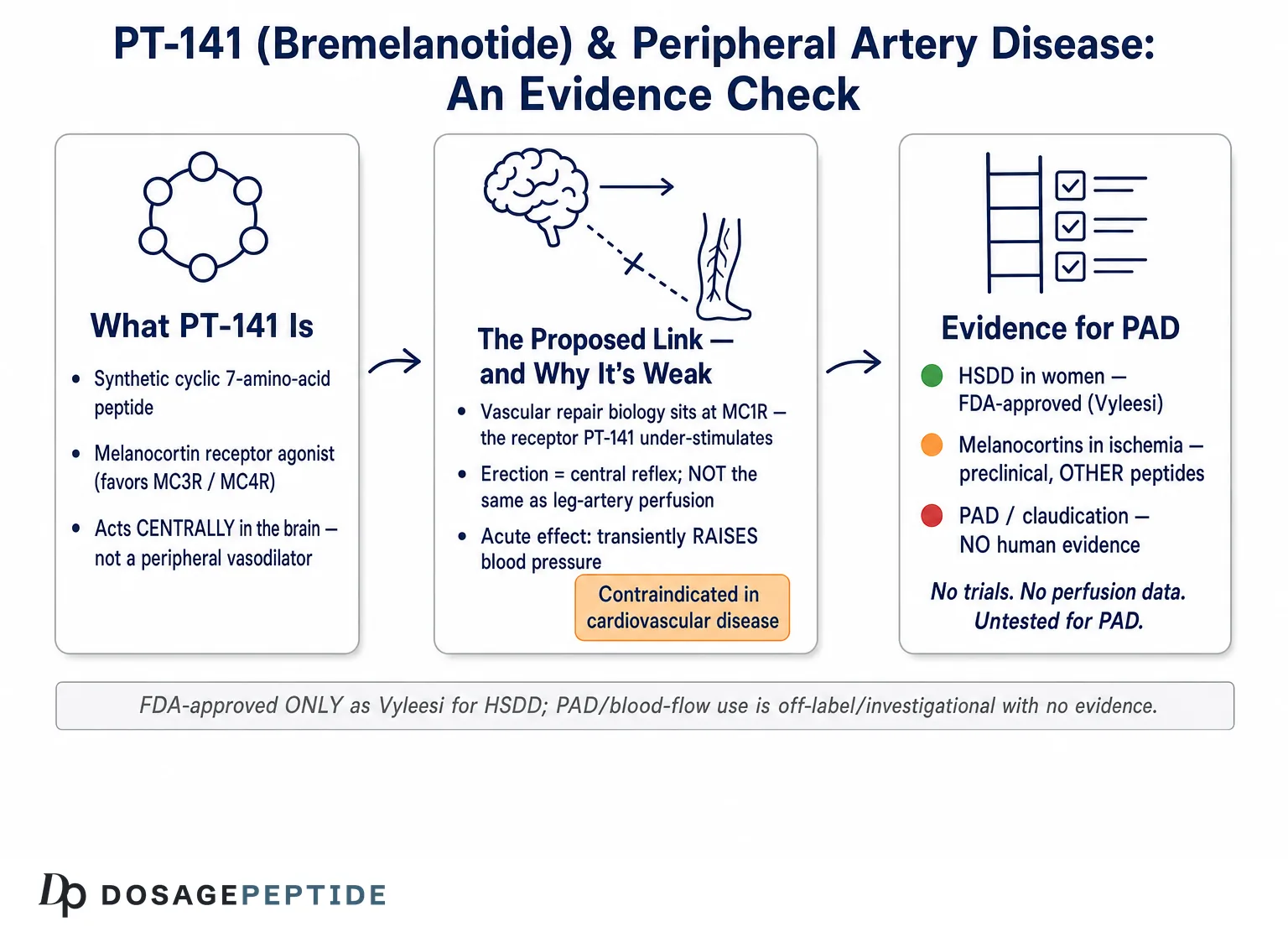
Understanding whether PT-141 could plausibly help PAD requires understanding exactly where and how it acts. The melanocortin system comprises five G-protein-coupled receptors, MC1R through MC5R, each with a distinct tissue distribution and function. MC1R is best known for skin and hair pigmentation and is also expressed in immune and vascular cells; MC2R responds to ACTH in the adrenal gland; MC3R and MC4R are concentrated in the central nervous system and regulate energy balance, appetite, and aspects of sexual function; MC5R has roles in exocrine gland function.7
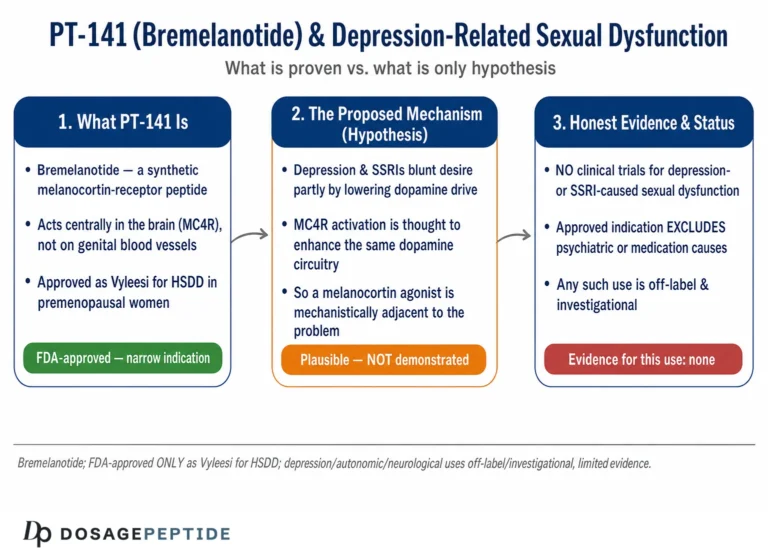
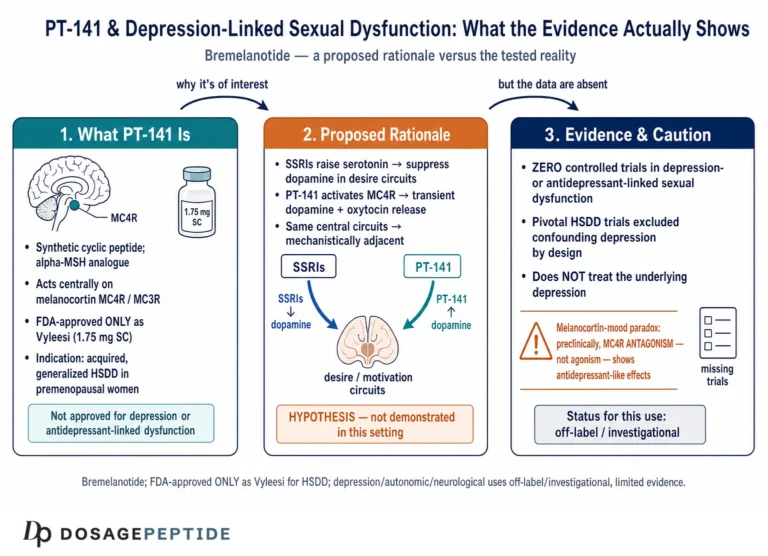
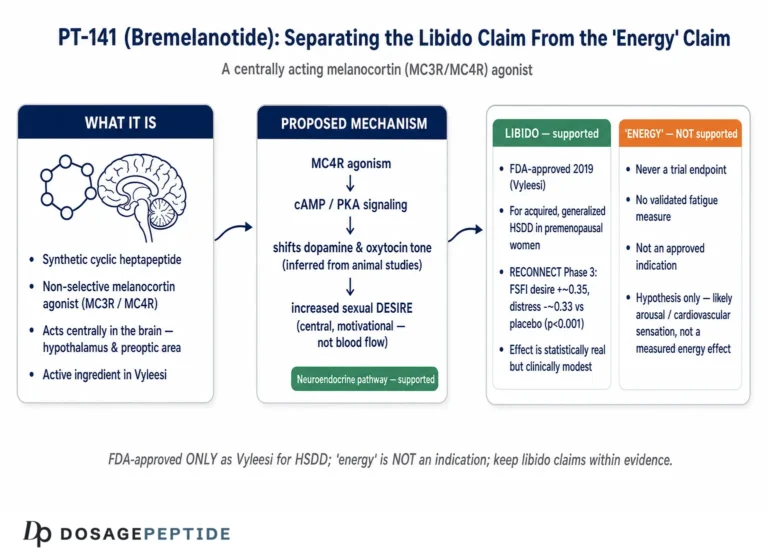
Bremelanotide is a non-selective agonist across several melanocortin receptors but with functional preference for MC3R and MC4R, and with activity biased away from MC1R relative to earlier analogs.1,4 This receptor profile is the crux of the matter. The therapeutic effect on sexual desire is attributed primarily to MC4R activation in the hypothalamus and limbic regions of the brain, structures involved in motivation and arousal. When bremelanotide engages MC4R, it couples to Gs proteins, activates adenylyl cyclase, and raises intracellular cyclic AMP, with downstream signaling that modulates neuronal circuits governing sexual response. The mechanism, in other words, is neural and central. It is not a direct relaxation of the smooth muscle in the walls of peripheral arteries.1,4
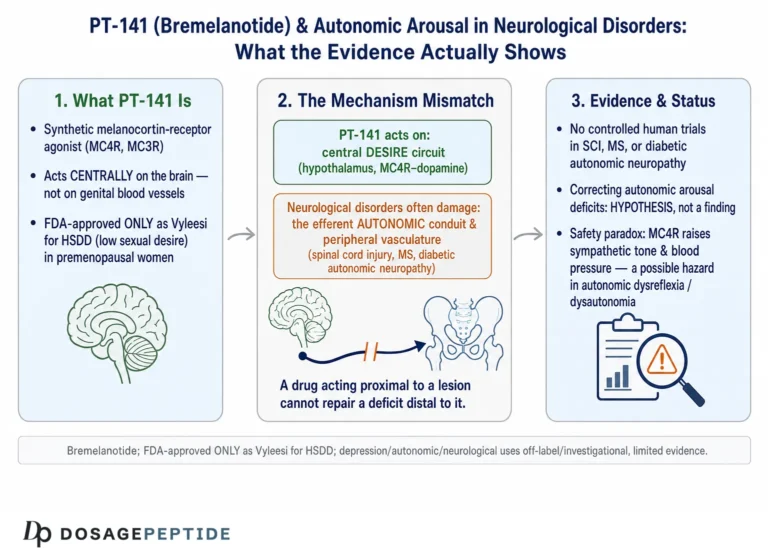
This distinction separates PT-141 from the drugs people usually associate with “improving blood flow.” PDE5 inhibitors act locally on the nitric-oxide/cGMP axis in vascular smooth muscle to cause vasodilation where the drug reaches the tissue. Bremelanotide does not primarily do that. If anything, its systemic hemodynamic footprint runs the other way. Melanocortin activation in the brainstem and periphery can increase sympathetic outflow, and clinically bremelanotide produces a transient rise in blood pressure accompanied by a reflex-like fall in heart rate, such that the rate-pressure product stays roughly unchanged.2,3 A molecule whose net acute effect is to nudge blood pressure up and heart rate down is not an obvious candidate for widening narrowed leg arteries.
There is a genuinely interesting counter-thread, and honesty requires presenting it. The melanocortin system does have vascular biology, but it lives largely at MC1R, the receptor bremelanotide is least geared toward. Arterial endothelial cells constitutively express functional MC1R. In cultured human aortic endothelial cells, a pulse of alpha-MSH accelerated cell migration and scratch-wound closure, suggesting a homeostatic, repair-promoting role for endothelial MC1R.8 Separately, mice and humans deficient in MC1R signaling show endothelial dysfunction and increased arterial stiffness, implying that intact MC1R signaling supports nitric-oxide availability and healthy vasodilator function.7 These findings make MC1R a legitimate object of vascular curiosity. But they do not transfer cleanly to bremelanotide, which is designed to under-stimulate MC1R precisely to avoid pigmentation side effects.
It also helps to distinguish two things the word “blood flow” can mean, because conflating them is the root of most confusion around this peptide. One meaning is a local, on-demand vasodilation event, such as the engorgement of erectile tissue, where a signal transiently relaxes vascular smooth muscle in a specific bed. The other is chronic tissue perfusion, the steady delivery of oxygenated blood to a limb over hours and days, which in PAD is throttled by fixed atherosclerotic narrowing and by limited collateral circulation. Improving the first does not imply improving the second. PT-141’s historical erectile signal, to the extent it is real, is a facilitation of a transient, centrally triggered arousal reflex. PAD is a problem of chronic structural obstruction. No mechanism attributed to PT-141 addresses plaque, arterial remodeling, or collateral vessel growth, which are the levers that actually govern limb perfusion.11
So the mechanistic bottom line is a set of mismatches. PT-141 acts centrally, PAD is a peripheral plumbing problem. PT-141 favors MC3R/MC4R, the vascular-repair signal sits at MC1R. PT-141 transiently raises blood pressure, PAD care generally wants better perfusion without a pressor effect. None of this proves PT-141 could never influence peripheral vessels through some indirect route, but the receptor pharmacology gives no strong reason to expect a clinically meaningful blood-flow benefit in diseased leg arteries.
What the Evidence Actually Shows (and Its Honest Level)
When evaluating a claim like “PT-141 enhances blood flow in PAD,” the useful question is not whether any related biology exists but whether direct, human, controlled evidence exists for the specific claim. For PAD, the answer is unambiguous: there is none. A search of the clinical literature and trial registries turns up no randomized trials, no cohort studies, and no case series testing bremelanotide or PT-141 as a treatment for peripheral artery disease, intermittent claudication, critical limb ischemia, or peripheral perfusion endpoints such as ankle-brachial index or walking distance. The evidence level for the title’s premise is therefore effectively zero, and everything below is either indirect or drawn from unrelated indications.
Where robust human evidence does exist is the approved indication. Bremelanotide’s efficacy for HSDD was established in two identically designed Phase 3 trials (the RECONNECT studies) and a dose-finding Phase 2b program, showing statistically significant but modest improvements in a validated desire score and in distress related to low desire versus placebo.5,13 A long-term open-label extension supported a consistent safety profile over up to a year of as-needed use.6 These are the data that earned approval, and they are about desire and distress, not about limb blood flow.
The next tier down is the historical erectile-dysfunction work in men, which is where the “blood flow” association originally arose. Intranasal PT-141 improved erectile response in early controlled studies and enhanced the effect of sildenafil.4 But an erection is a specialized neurovascular event orchestrated centrally and executed through a dedicated local vasodilatory pathway in erectile tissue. Demonstrating that a central melanocortin agonist can facilitate that reflex says essentially nothing about whether it can improve flow through an atherosclerotic femoral or popliteal artery. Extrapolating from “helps erections” to “treats PAD” is a category error, and it is exactly the kind of leap that marketing copy makes and that this article declines to make.
The most relevant indirect evidence, and the closest thing to a scientific rationale for melanocortins in ischemic vascular disease, comes from preclinical animal work using melanocortin peptides that are not bremelanotide. In rat models of myocardial ischemia and reperfusion, melanocortin peptides such as ACTH-(1–24) and NDP-MSH reduced infarct size, improved recovery of coronary and aortic flow, and attenuated inflammatory and arrhythmic responses, apparently through central MC3R-mediated mechanisms.9 Related work reported that NDP-MSH induces a preconditioning-like, anti-inflammatory phenotype in cardiac tissue.10 This is legitimately intriguing biology about melanocortins and ischemia, but three caveats keep it far from the PAD claim: the compounds studied are different molecules with different receptor profiles, the models are cardiac rather than peripheral-limb, and animal cardioprotection has a long history of failing to translate into human therapies.
It is also worth naming what a positive PAD signal would even look like, so readers can judge future claims. Credible evidence would report change in an objective perfusion or functional measure: the ankle-brachial index (the ratio of ankle to arm systolic pressure, the standard PAD diagnostic), maximal and pain-free treadmill walking distance, transcutaneous oxygen tension in the limb, or validated quality-of-life scores, ideally in a randomized, placebo-controlled design with adequate follow-up.11 None of the material circulating about PT-141 and blood flow reports anything of the kind for PAD. What is offered instead is mechanistic hand-waving, cross-indication analogy from erectile studies, and citation of melanocortin biology involving other molecules. Recognizing the difference between a real perfusion endpoint and a plausible-sounding mechanism is the single most useful habit a reader can bring to peptide claims.
Pulling these tiers together yields a clear hierarchy of confidence. Strong human evidence exists only for HSDD in premenopausal women. Moderate historical human evidence exists for erectile facilitation in men via a central route. Preclinical, mechanistic evidence exists for melanocortins broadly in ischemia and endothelial function, but using other peptides and other tissues. For PAD specifically, there is no direct evidence at all. Anyone stating that PT-141 “enhances blood flow in PAD” is asserting something the literature simply does not support.
| Claim or use | Directly relevant human evidence? | Honest evidence level |
|---|---|---|
| HSDD in premenopausal women | Yes (Phase 2b + two Phase 3 RCTs) | Established / FDA-approved1,5,6 |
| Erectile function in men | Yes, older/limited; not FDA-approved | Historical, off-label4 |
| Endothelial repair / vascular tone (MC1R) | No (cell and animal models; different peptides) | Preclinical, indirect7,8 |
| Ischemia-reperfusion protection | No (rat cardiac models; ACTH-(1–24)/NDP-MSH) | Preclinical, indirect9,10 |
| Peripheral artery disease / claudication | None | No evidence11 |
How PT-141 Compares to Actual PAD Interventions and to Other “Blood-Flow” Agents
To see why PT-141 is not a PAD therapy, it helps to place it beside the interventions that guidelines actually endorse. The 2024 multi-society (ACC/AHA and partners) guideline for lower-extremity PAD frames management around four pillars: structured exercise, risk-factor and medical therapy to prevent cardiovascular and limb events, symptom-directed drugs, and, when appropriate, revascularization.11 None of these involves a melanocortin agonist, and the contrast is instructive rather than merely rhetorical.
Supervised exercise therapy is first-line for intermittent claudication and repeatedly improves pain-free and maximal walking distance and quality of life; structured home-based programs are the fallback when supervised programs are unavailable.11 Its benefit works through collateral vessel development, improved endothelial function, and metabolic adaptation in muscle, not through an acute pressor peptide. Risk-factor control, especially smoking cessation, high-intensity statin therapy, blood-pressure and glucose management, and antiplatelet therapy, reduces the major adverse cardiovascular and limb events that drive the morbidity of PAD.11 For symptoms specifically, cilostazol is the drug with the best evidence for improving walking distance in claudication, and low-dose rivaroxaban plus aspirin reduces limb and cardiovascular events in selected patients. When perfusion is severely compromised, endovascular or surgical revascularization physically restores flow.11
Every one of these approaches either directly addresses the atherosclerotic obstruction, modifies the disease trajectory, or has controlled evidence for a perfusion or symptom endpoint. PT-141 does none of these. It does not reduce plaque, does not modify lipids or platelets, does not build collaterals, and has no claudication or perfusion data. Its acute hemodynamic effect, a small transient rise in blood pressure, is the opposite of what one would engineer for limb ischemia.2,3
The comparison people implicitly draw is usually to PDE5 inhibitors, because both PT-141 and drugs like sildenafil are linked in the public mind to erections and therefore to “blood flow.” But the mechanisms are almost mirror images. PDE5 inhibitors act peripherally to enhance local vasodilation via nitric oxide/cGMP; PT-141 acts centrally on melanocortin circuits.1,4 Notably, even PDE5 inhibitors, which are genuine peripheral vasodilators, are not standard PAD therapy; their vascular effects in claudication have been studied with mixed and unimpressive results. If a direct peripheral vasodilator has not become a PAD treatment, a central melanocortin agonist that raises blood pressure has an even weaker claim.
The table below summarizes the contrast. The point is not that PT-141 is uniquely useless, but that it operates on an entirely different axis of biology from the one PAD care targets.
| Intervention | Primary mechanism | Perfusion/claudication evidence | Role in PAD |
|---|---|---|---|
| Supervised exercise | Collaterals, endothelial & metabolic adaptation | Strong RCT evidence | First-line11 |
| Statins / antiplatelets / smoking cessation | Disease modification, event reduction | Strong outcome evidence | Core medical therapy11 |
| Cilostazol | PDE3 inhibition, vasodilation, antiplatelet | Improves walking distance | Symptom drug11 |
| Revascularization | Mechanical flow restoration | Direct for severe disease | Selected patients11 |
| PDE5 inhibitors | Peripheral NO/cGMP vasodilation | Weak/mixed in claudication | Not standard PAD therapy |
| PT-141 (bremelanotide) | Central MC3R/MC4R agonism; transient pressor | None | No established role1,2 |
Research Models and Methodology: How Melanocortin Vascular Questions Are Studied
Because the PAD question for PT-141 is entirely hypothetical, it is worth understanding how vascular effects of melanocortins are actually investigated, both to appreciate the existing indirect evidence and to see what a serious PAD investigation would demand. Vascular pharmacology of peptides proceeds through a familiar ladder of models, each answering a different question and carrying different limitations.
At the base are in vitro cell studies. Cultured endothelial cells, such as the human aortic endothelial cells used to show MC1R-driven migration and wound closure, let researchers confirm that a receptor is present and functional and that stimulating it changes a cell behavior relevant to vascular repair.8 These experiments are mechanistically clean but physiologically thin: a monolayer of cells in a dish lacks blood pressure, flowing blood, immune cells, and the three-dimensional architecture of a diseased artery. A positive result establishes plausibility, nothing more.
Next are ex vivo vascular preparations, such as isolated artery rings mounted in organ baths, where investigators measure how a compound changes vessel tension in response to constrictors and dilators. This is where claims about “vasodilation” or “endothelium-dependent relaxation” are quantified with precision, and where MC1R-deficient tissue was shown to have impaired vasodilator function.7 Then come whole-animal models: genetically modified mice to probe receptor function, and induced-disease models such as coronary occlusion for ischemia-reperfusion, or hindlimb-ischemia models used specifically to study peripheral perfusion and therapeutic angiogenesis. The melanocortin cardioprotection data come from rat myocardial ischemia models, which measure infarct size, coronary and aortic flow recovery, and arrhythmia burden.9,10
A crucial methodological point for the PAD question is that the most disease-relevant peripheral model, hindlimb ischemia, has, to date, been used to test therapeutic angiogenesis strategies rather than bremelanotide. The absence of PT-141 from this literature is itself informative: the peptide has not even been carried into the standard preclinical PAD model, let alone into humans with PAD. Any honest account must note that we are missing not just clinical trials but the foundational animal-model work that would normally precede them.
If a rigorous investigation of PT-141 in PAD were ever to be built, it would have to climb this entire ladder. It would start by confirming which melanocortin receptors are engaged in peripheral arterial endothelium and smooth muscle at achievable concentrations, move to ex vivo vasomotor studies in human peripheral vessels, then to a hindlimb-ischemia model measuring collateral formation and tissue perfusion, and only then to carefully controlled human trials with hard endpoints, ankle-brachial index, treadmill walking distance, and quality-of-life measures. At each rung the transient pressor effect and the central mechanism would raise design and safety questions that do not arise for locally acting vasodilators. This is a long, expensive road that no one has meaningfully started down, which is precisely why claims of PAD benefit are premature.
Methodology also cautions against over-reading the cardioprotection literature. Reducing infarct size in a rat’s acutely occluded coronary artery is mechanistically distinct from improving chronic walking-limited perfusion in a human leg with decades of atherosclerosis. The two conditions differ in time course, vascular bed, disease biology, and the endpoints that matter. Translational failure between animal cardioprotection and human benefit is one of the most well-documented disappointments in cardiovascular pharmacology, which is why a cautious reader treats promising melanocortin ischemia data as a reason for further study, not as a basis for use.
Safety and Tolerability: The Cardiovascular Profile That Undercuts the Premise
Safety data for bremelanotide are unusually informative for this article because the very effects that make it problematic for people with vascular disease are the effects a “blood-flow enhancer” narrative would need to explain away. The clinical development program spanned more than 3,500 subjects across 43 studies, giving a reasonably clear tolerability picture within the studied population, premenopausal women receiving as-needed subcutaneous dosing.2
The most common adverse effects are nausea (notably frequent, sometimes leading to discontinuation), flushing, headache, injection-site reactions, and, in a minority of users, transient darkening of the skin or gums (hyperpigmentation) with repeated dosing, a reminder that even a MC1R-sparing melanocortin retains some pigmentary activity.1,6 Most of these are self-limited, but nausea in particular is common enough to matter.
The cardiovascular signal is the decisive one for any vascular claim. Ambulatory blood-pressure monitoring studies showed that bremelanotide transiently increases blood pressure after dosing. In one dedicated study in normotensive and controlled-hypertensive premenopausal women, systolic increases versus placebo of roughly 2.4–3.2 mmHg and comparable diastolic increases occurred in the first hours after dosing, with peak elevations typically lasting under 15 minutes, accompanied by a reduction in heart rate.3 The FDA label similarly notes a mean rise of about 1.9 mmHg systolic and 1.7 mmHg diastolic in daytime blood pressure with once-daily dosing over eight days.1 The rise is modest and transient in healthy users, and the accompanying heart-rate reduction keeps the rate-pressure product roughly flat, but the direction of the effect is unmistakably pressor.2,3
Because of this, the prescribing information carries explicit cardiovascular restrictions. Vyleesi is contraindicated in patients with uncontrolled hypertension or known cardiovascular disease, and it should not be used in those at high cardiovascular risk.1 This is the heart of the honesty problem with the article’s title. Peripheral artery disease is itself a manifestation of systemic atherosclerosis and a marker of high cardiovascular risk; people with PAD very frequently also have coronary disease, hypertension, and diabetes. The population that a “PAD blood-flow” claim would target overlaps heavily with the exact population in whom bremelanotide is contraindicated. A compound cannot be simultaneously a sensible therapy for a high-cardiovascular-risk vascular disease and contraindicated in cardiovascular disease.
There is a subtle but important nuance in how the blood-pressure and heart-rate changes offset each other. Because the pressor effect is accompanied by a fall in heart rate, the rate-pressure product, a rough index of cardiac workload, stays roughly constant in the studied healthy women.2,3 This is reassuring for that population, but it should not be read as evidence that the drug is hemodynamically neutral in everyone. In a person with autonomic dysfunction, stiff atherosclerotic arteries, or baroreflex impairment, all common in older vascular patients, the compensatory heart-rate reduction may be blunted or the pressor response exaggerated, and the tidy offset seen in young healthy women cannot be assumed. This is exactly why extrapolation across populations is unsafe and why the contraindication in cardiovascular disease exists rather than a simple dose adjustment.
Other labeled cautions reinforce the point. Bremelanotide can slow gastric emptying, so it is not recommended with oral medications that depend on gastric-emptying thresholds; it should be limited to no more than one dose per 24 hours and eight per month; and it has not been studied in, and is not intended for, older adults, in whom PAD prevalence is highest.1 Reassuringly, across the large development program only two serious cardiovascular events occurred and neither was judged treatment-related by investigators, so the acute risk in the studied young, screened, cardiovascularly healthy women appears low.2 But that safety reassurance is specific to that population. It cannot be extended to older adults with established atherosclerotic disease, and it certainly cannot be used to argue for benefit in PAD.
Handling and Reconstitution in a Research Context
Because PT-141 is discussed in the peptide-research community and sold as a lyophilized (freeze-dried) powder for “research use only,” a brief, strictly educational note on handling is warranted, with the firm caveat that none of this endorses using the peptide to treat PAD or any other condition, and that the only human-authorized form of bremelanotide is the FDA-approved Vyleesi prefilled autoinjector used under prescription for HSDD.
In research settings, lyophilized peptides are reconstituted by adding a sterile diluent, most commonly bacteriostatic water for injection (BAC water), which contains 0.9% benzyl alcohol as a preservative to inhibit microbial growth over a short storage window. The diluent is added slowly down the inside wall of the vial rather than sprayed directly onto the peptide cake, and the vial is swirled gently rather than shaken, because vigorous agitation can shear and denature delicate peptide chains. The general mechanics, choosing a diluent volume, drawing it into a syringe, and mixing without foaming, are covered in DosagePeptide.com’s peptide reconstitution guide.
The arithmetic of concentration is where most handling errors occur, and the underlying principle is simple: concentration equals the mass of peptide divided by the volume of diluent. A 10 mg vial reconstituted with 2 mL of BAC water yields a concentration of 5 mg/mL, so any desired mass converts to a volume by division, and that volume converts to insulin-syringe units by multiplying milliliters by 100 (since a U-100 syringe marks 1 mL as 100 units). DosagePeptide.com’s dosage calculator automates this conversion, and the general framework applies to any peptide, not just PT-141. A broader index of compound-specific handling pages is available on the site’s dosages directory.
Storage practices reflect peptide fragility. Lyophilized powder is generally kept refrigerated or frozen and protected from light; once reconstituted, the solution is refrigerated and used within a limited number of weeks, with the benzyl-alcohol preservative and cold storage together limiting degradation and contamination. Repeated freeze-thaw cycles are avoided because they promote aggregation. Sterile technique, alcohol-swabbing every vial septum and using new needles, matters because reconstituted peptide solutions offer no meaningful defense against introduced microbes beyond the modest bacteriostatic effect of the preservative.
None of these mechanical details should be mistaken for clinical guidance. Correct reconstitution technique does not make an unapproved use safe or effective. A perfectly prepared vial of PT-141 is still a compound with no PAD evidence, a pressor cardiovascular profile, and a contraindication in cardiovascular disease. Handling knowledge answers “how is this material physically prepared in a lab,” not “should a person with PAD use it,” and the answer to the second question, based on current evidence, is that there is no basis to do so.
Limitations and the Human-Evidence Gap
The central limitation is the simplest to state and the most important to internalize: there is no direct human evidence that PT-141 does anything beneficial in peripheral artery disease. Not a single randomized trial, cohort study, or even a published case report tests bremelanotide against a PAD-relevant endpoint. When the evidence base for a specific claim is empty, the honest description is “unknown and untested,” not “promising” or “emerging.” Emerging implies a trajectory; here there is no trajectory at all.
A second limitation is the chain of inference that any optimistic reading must rely on. To get from established facts to a PAD benefit, one has to string together several unproven links: that melanocortin vascular biology seen at MC1R applies to a compound that deliberately under-stimulates MC1R; that endothelial-migration effects in a cell dish translate to perfusion in a diseased human leg; that cardioprotection with a different peptide in a rat’s heart transfers to a human’s peripheral limb; and that a centrally acting, pressor peptide can somehow improve flow through atherosclerotic arteries. Each link is individually weak, and multiplying weak links yields a very weak overall inference. Sound reasoning does not let a stack of “maybes” become a “probably.”
Third, the safety data, though reassuring, are population-bound. The favorable cardiovascular experience comes from thousands of young, screened, largely healthy premenopausal women taking occasional as-needed doses.2,3 PAD patients are typically older, frequently hypertensive and diabetic, and often have coexisting coronary or cerebrovascular disease, the very profile excluded from the trials and named in the contraindications.1 There is no dataset describing what repeated bremelanotide dosing does to blood pressure, heart rate, or events in older adults with established atherosclerosis, because such people were not studied. Extrapolating safety across that gap is not warranted.
Fourth, the mechanistic direction of travel is a limitation, not just a neutral fact. For most hypothetical off-label uses, the worst case is “probably ineffective.” Here the concern is sharper: the compound’s known acute effect, raising blood pressure and increasing sympathetic tone, runs counter to what a vascular patient needs and is explicitly flagged as a contraindication in cardiovascular disease.1,2 An intervention whose only documented systemic vascular effect points the wrong way, in a population where it is contraindicated, is not a near-miss awaiting confirmation; it is a poor fit on first principles.
A further limitation is publication and interpretation bias in how these questions reach the public. The optimistic framing usually originates from vendor pages and wellness blogs that have a commercial interest in expanding the perceived uses of a peptide, and it tends to cite the most favorable preclinical fragment while omitting the contraindications and the absence of PAD data. Primary sources, the FDA label, the safety pooled analyses, and the guideline documents, tell a far more restrained story.1,2,11 When secondary summaries and primary sources disagree this sharply, the primary sources should win, and the reader should be suspicious of any account that reaches a confident PAD conclusion without a single perfusion endpoint to stand on.
Finally, there is the quality-and-source limitation that attends all “research-only” peptide use. Material bought outside the regulated supply chain has uncertain identity, purity, and sterility, so even a user who accepted the theoretical risks would be dosing an unverified product. This compounds every other uncertainty. The prudent reading of all these limitations together is that PT-141 should be regarded, with respect to PAD, as an untested compound with a discouraging mechanistic and safety fit, and that the appropriate stance is watchful skepticism rather than experimentation. Readers seeking foundational vocabulary for evaluating such claims may find the site’s peptide glossary useful for interpreting the receptor and pharmacology terms used throughout this article.
Regulatory Status
The regulatory picture is clear and worth stating precisely because it anchors everything else. In the United States, bremelanotide is approved by the FDA only as Vyleesi, a subcutaneous injection indicated for the treatment of acquired, generalized hypoactive sexual desire disorder in premenopausal women, first approved in June 2019.1 That is the entire scope of its approval. The label defines the eligible population, the 1.75 mg as-needed dose, the frequency limits, the contraindications (including uncontrolled hypertension and known cardiovascular disease), and the warnings.1
Everything else is off-label or investigational. Use in men, use in postmenopausal women, use for erectile dysfunction, and use for any non-sexual indication, including anything vascular, metabolic, cosmetic, or autoimmune, falls outside the approved indication. There is no approved use of bremelanotide for peripheral artery disease, claudication, limb ischemia, or blood-flow enhancement anywhere in the world, and no regulator has reviewed it for such a purpose. The historical erectile-dysfunction development in men did not result in approval, and the intranasal formulation was discontinued in part because of blood-pressure effects.4
The “research use only” PT-141 sold as lyophilized powder occupies a different regulatory category entirely. Such material is not an approved drug, is not manufactured or tested to pharmaceutical standards, and is explicitly not intended for human consumption under the terms of its sale. Purchasing, possessing, or administering it for a medical purpose is not a sanctioned use, and it bypasses every quality and oversight safeguard that the Vyleesi approval represents. That distinction, between a reviewed prescription product used within its label and an unregulated chemical used off-label, is not a technicality; it is the difference between a known, controlled risk-benefit profile and an unknown one.
For a condition as consequential as PAD, regulatory status carries a practical message. PAD is associated with elevated risk of heart attack, stroke, and limb loss, and it has genuinely effective, guideline-endorsed treatments, exercise, risk-factor control, symptom drugs, and revascularization, that are supported by strong evidence and are appropriately supervised by clinicians.11 Substituting or supplementing those with an unapproved peptide that has no PAD evidence and a contraindication in cardiovascular disease would trade proven benefit for unproven hope. The regulatory boundaries here are not bureaucratic obstacles; they mark the edge of what has actually been shown to be safe and effective.
Frequently Asked Questions
Does PT-141 improve blood flow in peripheral artery disease?
There is no evidence that it does. No clinical trials, cohort studies, or case reports have tested PT-141 (bremelanotide) in PAD, claudication, or limb ischemia. PT-141 acts centrally on brain melanocortin receptors rather than dilating peripheral arteries, and its documented acute effect is a transient increase in blood pressure, which is the opposite of what a peripheral-perfusion therapy would aim for.1,2,3
Why do people associate PT-141 with blood flow at all?
The association comes from its early development for erectile function. PT-141 was studied for erectile dysfunction in men and can facilitate erections through a central neural mechanism.4 But an erection is a specialized, centrally triggered neurovascular reflex, and facilitating it says nothing about flow through atherosclerotic leg arteries. The link between “erections” and “treats PAD” is a marketing leap, not a scientific one.
Isn’t there real research on melanocortins and blood vessels?
Yes, but it mostly involves a different receptor and different peptides. MC1R, expressed on arterial endothelial cells, supports endothelial repair and healthy vasodilator function in cell and animal studies, and melanocortins like alpha-MSH show cardioprotection in rat ischemia models.7,8,9,10 The problem is that bremelanotide is biased toward MC3R/MC4R and away from MC1R, the models are cardiac rather than peripheral-limb, and none of this has been tested in humans with PAD.
What is PT-141 actually approved to treat?
In the United States, bremelanotide is approved only as Vyleesi, for acquired, generalized hypoactive sexual desire disorder (HSDD) in premenopausal women, given as a 1.75 mg subcutaneous injection as needed.1 Every other use, including anything related to blood flow or vascular disease, is off-label or investigational.
Could PT-141 be dangerous for someone with PAD?
Potentially, yes. Vyleesi is contraindicated in people with uncontrolled hypertension or known cardiovascular disease because it transiently raises blood pressure.1 PAD is a marker of systemic atherosclerosis, and most people with PAD have exactly the cardiovascular risk profile the label warns against. The safety data that look reassuring were collected in young, healthy, screened premenopausal women, not in older vascular patients.2,3 This is educational information, not medical advice; any decision should involve a qualified clinician.
What treatments actually work for PAD and claudication?
Guideline-endorsed care includes supervised exercise therapy as first-line for claudication, aggressive risk-factor control (smoking cessation, statins, blood-pressure and glucose management, antiplatelet therapy), the symptom drug cilostazol, and revascularization when perfusion is severely compromised.11 These have strong evidence for improving walking ability and reducing cardiovascular and limb events, which PT-141 does not.
How is PT-141 handled in a research context?
Research-grade PT-141 comes as a lyophilized powder reconstituted with bacteriostatic water, mixed gently to avoid degrading the peptide, and stored cold and protected from light. Concentration equals peptide mass divided by diluent volume, and tools like the site’s reconstitution guide and dosage calculator cover the arithmetic. Correct handling does not make an unapproved use safe or effective; it only describes how the material is physically prepared in a laboratory setting.
Is the “research use only” PT-141 the same as Vyleesi?
It is the same molecule chemically, but not the same product. Vyleesi is an FDA-reviewed prescription medicine manufactured and tested to pharmaceutical standards for a specific indication. “Research use only” PT-141 is an unregulated chemical of uncertain identity, purity, and sterility, sold not for human use.1 They are not interchangeable in safety or quality terms.
References
- U.S. Food and Drug Administration. Vyleesi (bremelanotide injection) Prescribing Information, initial U.S. approval 2019. accessdata.fda.gov/drugsatfda_docs/label/2019/210557s000lbl.pdf
- Clayton AH, Kingsberg SA, Portman D, Sadiq A, Krop J, Jordan R, Lucas J, Simon JA. Safety Profile of Bremelanotide Across the Clinical Development Program. J Womens Health (Larchmt). 2022. journals.sagepub.com/doi/full/10.1089/jwh.2021.0191
- Usefulness of ambulatory blood pressure monitoring to assess the melanocortin receptor agonist bremelanotide. PMC5338879 (2017). pmc.ncbi.nlm.nih.gov/articles/PMC5338879
- Diamond LE, Earle DC, Rosen RC, et al. Double-blind, placebo-controlled evaluation of the safety, pharmacokinetic properties and pharmacodynamic effects of intranasal PT-141, a melanocortin receptor agonist, in healthy males and patients with mild-to-moderate erectile dysfunction. Int J Impot Res. 2004. pubmed.ncbi.nlm.nih.gov/14963471
- Clayton AH, Althof SE, Kingsberg S, et al. Bremelanotide for Female Sexual Dysfunctions in Premenopausal Women: A Randomized, Placebo-Controlled Dose-Finding Trial. Womens Health (Lond). 2016. journals.sagepub.com/doi/full/10.2217/whe-2016-0018
- Simon JA, Kingsberg SA, Portman D, et al. Long-Term Safety and Efficacy of Bremelanotide for Hypoactive Sexual Desire Disorder. Obstet Gynecol. 2019. pmc.ncbi.nlm.nih.gov/articles/PMC6819023
- Rinne P, et al. Deficiency in Melanocortin 1 Receptor Signaling Predisposes to Vascular Endothelial Dysfunction and Increased Arterial Stiffness in Mice and Humans. Arterioscler Thromb Vasc Biol. 2015. pubmed.ncbi.nlm.nih.gov/25931512
- Melanocortin-1 Receptor Positively Regulates Human Artery Endothelial Cell Migration. Cell Physiol Biochem. 2019. pubmed.ncbi.nlm.nih.gov/31050282
- Bazzani C, Guarini S, et al. Protective Effect of Melanocortin Peptides in Rat Myocardial Ischemia. J Pharmacol Exp Ther / related. 2001. pubmed.ncbi.nlm.nih.gov/11356932
- The peptide NDP-MSH induces phenotype changes in the heart that resemble ischemic preconditioning. Eur J Pharmacol. 2009. pubmed.ncbi.nlm.nih.gov/19799952
- Gornik HL, Aronow HD, et al. 2024 ACC/AHA/AACVPR/APMA/ABC/SCAI/SVM/SVN/SVS/SIR/VESS Guideline for the Management of Lower Extremity Peripheral Artery Disease. Circulation. 2024. ahajournals.org/doi/10.1161/CIR.0000000000001251
- Diamond LE, Earle DC, Garcia WD, Spana C. Co-administration of low doses of intranasal PT-141, a melanocortin receptor agonist, and sildenafil to men with erectile dysfunction results in an enhanced erectile response. Urology. 2005. pubmed.ncbi.nlm.nih.gov/15833522
- Kingsberg SA, Clayton AH, Portman D, et al. Bremelanotide for the Treatment of Hypoactive Sexual Desire Disorder: Two Randomized Phase 3 Trials. Obstet Gynecol. 2019. pubmed.ncbi.nlm.nih.gov/31599840
Educational and research-only disclaimer: This article is provided for educational and informational purposes in a research context and does not constitute medical advice, diagnosis, or treatment, nor an endorsement of any use of PT-141 (bremelanotide) outside its approved indication. Bremelanotide is FDA-approved solely as Vyleesi for acquired, generalized hypoactive sexual desire disorder in premenopausal women; it is not approved for peripheral artery disease or any blood-flow or vascular condition, and no clinical evidence supports such use. Nothing here should be interpreted as a claim that PT-141 treats, cures, or prevents any disease. Peripheral artery disease is a serious condition requiring professional evaluation and evidence-based care. Always consult a qualified healthcare provider before making any medical decision.