No trial has ever tested cagrilintide in prediabetes, so the honest answer is that nobody knows yet. What does exist is indirect and reasonably strong: cagrilintide is a long-acting amylin analogue that produces substantial weight loss in phase 2 obesity trials, and weight loss of that magnitude is one of the best-established ways to slow progression from prediabetes to type 2 diabetes. Whether the amylin mechanism adds anything beyond the weight it removes is exactly the question no study has answered. Below we cover amylin biology, how cagrilintide is built, what the phase 2 and CagriSema data actually show, how a prediabetes trial would have to be designed to settle it, and the safety picture so far. Dosing conventions used in research are collected in our cagrilintide 5 mg vial protocol.
Dosage Peptide highlights the importance of peptide purity, analytical validation, batch consistency, and methodological rigor in metabolic research. These principles support reproducible laboratory investigations, helping researchers better understand stability, pharmacokinetic evaluation, and assay consistency in controlled studies of peptide-based compounds.
An important framing note before going further: cagrilintide is an investigational compound. It is not approved by the U.S. Food and Drug Administration or any comparable regulator for the treatment or prevention of prediabetes, type 2 diabetes, obesity, or any other indication. There are, at the time of writing, no completed clinical trials that enrolled a prediabetes population and measured whether cagrilintide reduces conversion to diabetes as a primary endpoint. Everything discussed here about a possible role in prediabetes is inference drawn from weight-management data, from the pharmacology of amylin, and from separate lifestyle and pharmacologic prevention research. The discussion is educational and describes research; it is not medical guidance and does not recommend dosing or use in humans.
What Is Cagrilintide, and Why Is It Being Studied in the Context of Prediabetes?
Cagrilintide (developmental code AM833) is a synthetic, long-acting analogue of the human hormone amylin. Amylin is a peptide co-secreted with insulin by the beta cells of the pancreatic islets in response to nutrient intake, and it contributes to the physiological control of appetite, the rate at which the stomach empties, and the suppression of inappropriate glucagon release after meals. Cagrilintide was engineered to reproduce and prolong those satiety- and metabolism-related effects, which is why it entered clinical development primarily as a candidate for chronic weight management—both as a stand-alone agent and, more prominently, in a fixed combination with the GLP-1 receptor agonist semaglutide known as CagriSema.
The reason cagrilintide keeps surfacing in conversations about prediabetes is indirect but logical. Prediabetes is tightly linked to excess adiposity, particularly visceral fat, and to the insulin resistance that accompanies it. Interventions that produce meaningful, durable weight loss have repeatedly been shown to lower the rate at which high-risk people develop type 2 diabetes. Because cagrilintide produces substantial weight loss in trials of people with overweight and obesity,[3] and because weight loss of that magnitude is associated with reduced diabetes incidence,[2] it is reasonable to hypothesize that cagrilintide might slow progression along the prediabetes-to-diabetes trajectory. That hypothesis is biologically plausible. It is not, however, the same thing as a demonstrated prediabetes benefit, and the distinction is the central theme of this article. Researchers who want to explore cagrilintide as a compound often begin with foundational context such as the cagrilintide reconstitution and handling reference and general peptide terminology resources before interpreting the primary literature.
Investigational Status in Plain Terms
To be unambiguous: as of this writing, cagrilintide monotherapy has completed early- and mid-phase clinical evaluation, and the CagriSema combination has advanced into large late-phase trials for weight management, with some of that late-phase work published in peer-reviewed journals. None of that program was designed to answer the prediabetes prevention question directly. Regulatory approval for cagrilintide as a marketed product had not been granted at the time this article was prepared. Any statement that cagrilintide “prevents,” “reverses,” or “treats” prediabetes would overstate the evidence. The accurate framing is narrower and more honest: cagrilintide is an investigational amylin analogue whose weight-lowering properties generate a testable hypothesis about diabetes-risk modification that has not yet been tested in a dedicated prediabetes trial.
What Is Prediabetes, and Why Does It Matter Metabolically?
Prediabetes is not a single laboratory value but a category defined by any of several overlapping abnormalities of glucose handling. In the framework most widely used in North America, prediabetes is identified by impaired fasting glucose (IFG), impaired glucose tolerance (IGT), or an intermediate glycated hemoglobin (HbA1c) result.[8] Each captures a slightly different physiological defect: fasting glucose reflects hepatic glucose output and basal insulin action, the two-hour value on an oral glucose tolerance test (OGTT) reflects the body’s ability to dispose of a glucose load, and HbA1c integrates average glycemia over roughly the preceding two to three months. Because these tests measure different facets of glucose regulation, a person can meet one criterion without meeting another, and the underlying pathophysiology may differ between someone with isolated IFG and someone with isolated IGT.
The commonly cited diagnostic ranges are summarized below. These thresholds are widely used in clinical research to enroll and stratify prediabetes cohorts, and they matter for cagrilintide discussions because any future prediabetes trial would have to define its population using exactly these kinds of cutoffs.
| Glycemic marker | Normal | Prediabetes range | Physiology probed |
|---|---|---|---|
| Fasting plasma glucose (FPG) | <100 mg/dL | 100–125 mg/dL (IFG) | Hepatic glucose output; basal insulin action |
| 2-hour OGTT glucose (75 g) | <140 mg/dL | 140–199 mg/dL (IGT) | Post-load glucose disposal; peripheral insulin sensitivity |
| HbA1c | <5.7% | 5.7%–6.4% | Integrated average glycemia over ~2–3 months |
Ranges reflect the widely used North American classification of prediabetes.[8] Values at or above 126 mg/dL fasting, 200 mg/dL on the two-hour OGTT, or an HbA1c of 6.5% or higher fall into the diabetes range and are outside the scope of this discussion.
The Pathophysiology Beneath the Numbers
Prediabetes is best understood as a state in which two defects coexist and reinforce each other: insulin resistance and a subtle but progressive decline in beta-cell function. In insulin resistance, muscle, liver, and adipose tissue respond less efficiently to insulin, so more insulin is needed to keep glucose in range. For a time, the beta cells compensate by secreting more insulin, and glucose stays near normal. Prediabetes emerges when that compensation begins to fail—when beta-cell secretory capacity can no longer fully offset the resistance. This is why prediabetes is considered a warning stage rather than a benign one: it signals that beta cells are under strain and that their functional reserve is eroding.
Several interlocking factors drive this process. Visceral adiposity—fat stored around the abdominal organs—is metabolically active and releases free fatty acids and signaling molecules that worsen insulin resistance. Ectopic fat, meaning fat deposited in the liver and muscle where it does not belong, interferes directly with insulin signaling. Chronic low-grade inflammation, characterized by elevated inflammatory mediators from expanded adipose tissue, further blunts insulin action and may contribute to beta-cell stress. Because these drivers are so closely tied to excess and misplaced fat, weight loss—particularly loss of visceral and ectopic fat—sits at the mechanistic center of prediabetes reversal. That single fact is what makes any effective weight-lowering agent, cagrilintide included, worth examining through a prediabetes lens.
Why the IFG Versus IGT Distinction Matters for an Amylin Agent
The two main prediabetes phenotypes are not interchangeable, and the distinction is directly relevant to how an amylin analogue might be expected to behave. Isolated impaired fasting glucose (IFG) is dominated by defects in basal hepatic glucose output and, to a degree, early-phase insulin secretion, whereas isolated impaired glucose tolerance (IGT) reflects primarily impaired peripheral glucose disposal and exaggerated post-load excursions. An agent whose mechanism includes slowing gastric emptying and blunting the postprandial glucose spike—both amylin-class effects—would, on paper, be expected to influence the post-meal (IGT-type) abnormality more readily than the fasting (IFG-type) abnormality. This is a mechanistic prediction, not a demonstrated result for cagrilintide, but it illustrates why a serious prediabetes trial would need to stratify participants by phenotype: an intervention could show a real benefit in one subgroup that is diluted or masked when phenotypes are pooled. Failing to account for this heterogeneity is one way that a genuine signal could be missed or a null result misinterpreted.
What Is Amylin, and What Does It Do in Normal Physiology?
To evaluate cagrilintide fairly, it helps to start with the hormone it imitates. Amylin, also called islet amyloid polypeptide (IAPP), is a 37-amino-acid peptide hormone stored and released by pancreatic beta cells alongside insulin. When glucose and other nutrients stimulate the beta cell, insulin and amylin are secreted together, in an approximate 20-to-1 molar ratio of insulin to amylin.[7] This co-secretion is the key conceptual point: amylin is not a stress hormone or a backup system but a routine, meal-associated partner to insulin, and the two hormones together shape the body’s response to eating. Insulin promotes glucose uptake and storage; amylin acts largely as a satiety and glucose-appearance regulator, coordinating how quickly nutrients enter the bloodstream and how much food is consumed.
Amylin exerts its effects through a distinctive receptor arrangement. There is no dedicated stand-alone amylin receptor gene; instead, functional amylin receptors are formed when the calcitonin receptor (CTR) associates with one of three receptor activity-modifying proteins (RAMP1, RAMP2, or RAMP3). These pairings generate the amylin receptor subtypes designated AMY1, AMY2, and AMY3, corresponding to CTR combined with RAMP1, RAMP2, and RAMP3 respectively.[7] This modular design matters pharmacologically, because a synthetic amylin analogue’s behavior depends on which of these complexes it engages and where those complexes are concentrated in the brain.
Satiety and Appetite Regulation
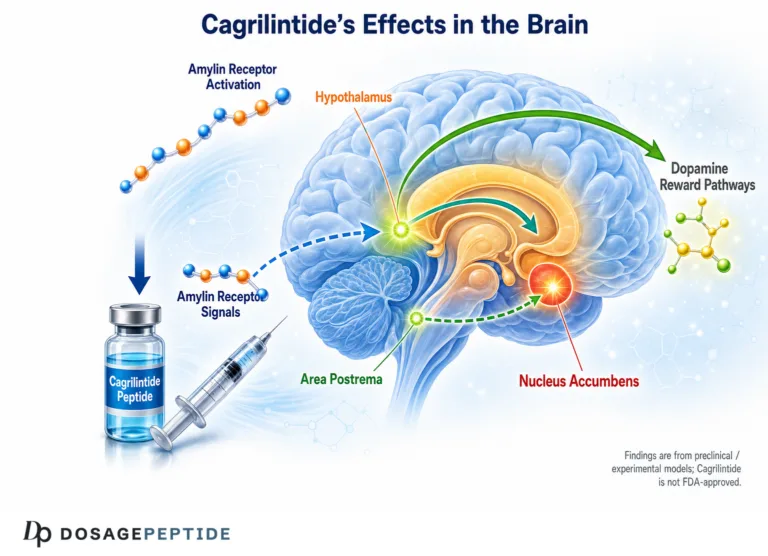
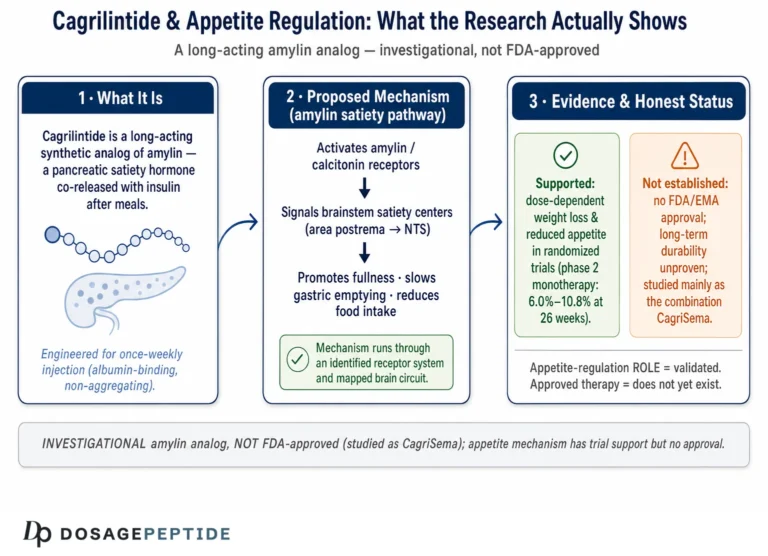
One of amylin’s central physiological roles is the induction of satiety—the sensation of fullness that ends a meal. It acts on receptor populations in the hindbrain, particularly the area postrema, a region positioned to sense circulating signals and relay them into appetite-regulating circuits. By reinforcing meal-ending signals, amylin helps limit portion size and total caloric intake. This centrally mediated appetite effect is the property that drug developers most wanted to capture and prolong, because reduced energy intake is the proximate driver of the weight loss seen with amylin-based compounds.
Slowing of Gastric Emptying
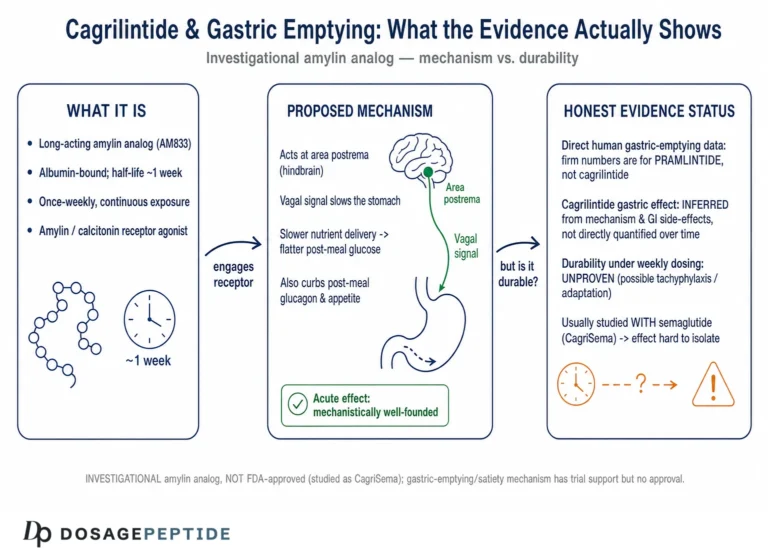
Amylin slows the rate at which the stomach delivers its contents to the small intestine. Because the speed of gastric emptying is a major determinant of how quickly glucose appears in the bloodstream after a meal, slowing it flattens the post-meal glucose spike. In the context of prediabetes, where post-load glucose excursions (the IGT phenotype) are a defining abnormality, this mechanism is directly relevant in principle. The synthetic amylin analogue pramlintide, which is approved as an adjunct to insulin in diabetes, demonstrably reduces gastric emptying and postprandial glucose, illustrating that the mechanism is real and clinically measurable in amylin-based agents.[6]
Suppression of Postprandial Glucagon
After a meal, glucagon secretion should fall so that the liver does not add glucose to an already-fed bloodstream. In many people with impaired glucose regulation, this suppression is blunted, and inappropriate glucagon drives up hepatic glucose production. Amylin, and the amylin analogue pramlintide, suppress inappropriate postprandial glucagon, thereby reducing hepatic glucose output after eating.[6] This is a glucose-regulatory action distinct from appetite suppression, and it is one reason amylin biology is theoretically interesting for glycemic endpoints—though, as discussed later, it has not been specifically quantified for cagrilintide in a prediabetes population.
Native Amylin Versus Pramlintide Versus Cagrilintide
Understanding the differences among these three molecules prevents a common error: treating pramlintide data as if it were cagrilintide data. They share a mechanistic family but differ substantially in structure, pharmacokinetics, and the populations in which they have been studied. Native human amylin is chemically unstable and prone to aggregation, which is why it is unsuitable as a drug in its own form. Pramlintide is a stabilized short-acting analogue used with insulin at mealtimes. Cagrilintide is a long-acting analogue engineered for once-weekly administration and studied for weight management. The table below summarizes the contrasts.
| Property | Native amylin (IAPP) | Pramlintide | Cagrilintide |
|---|---|---|---|
| Origin | Endogenous beta-cell hormone | Stabilized synthetic analogue | Long-acting synthetic analogue (AM833) |
| Stability in solution | Poor; aggregation-prone | Improved vs native | Engineered for stability and long duration |
| Typical action duration | Minutes (physiological) | Short-acting; per-meal dosing | Long-acting; once-weekly in trials |
| Primary studied use | Not a drug | Adjunct to insulin in diabetes (approved) | Weight management (investigational) |
| Prediabetes-specific outcome trials | Not applicable | Not the primary focus | None to date |
Throughout this article, where pramlintide evidence is invoked, it is used only to illustrate that the amylin mechanism can measurably affect gastric emptying, glucagon, and postprandial glucose. It is not offered as evidence about cagrilintide’s specific effects, and it is certainly not evidence about prediabetes prevention.
How Is Cagrilintide Designed at the Molecular Level?
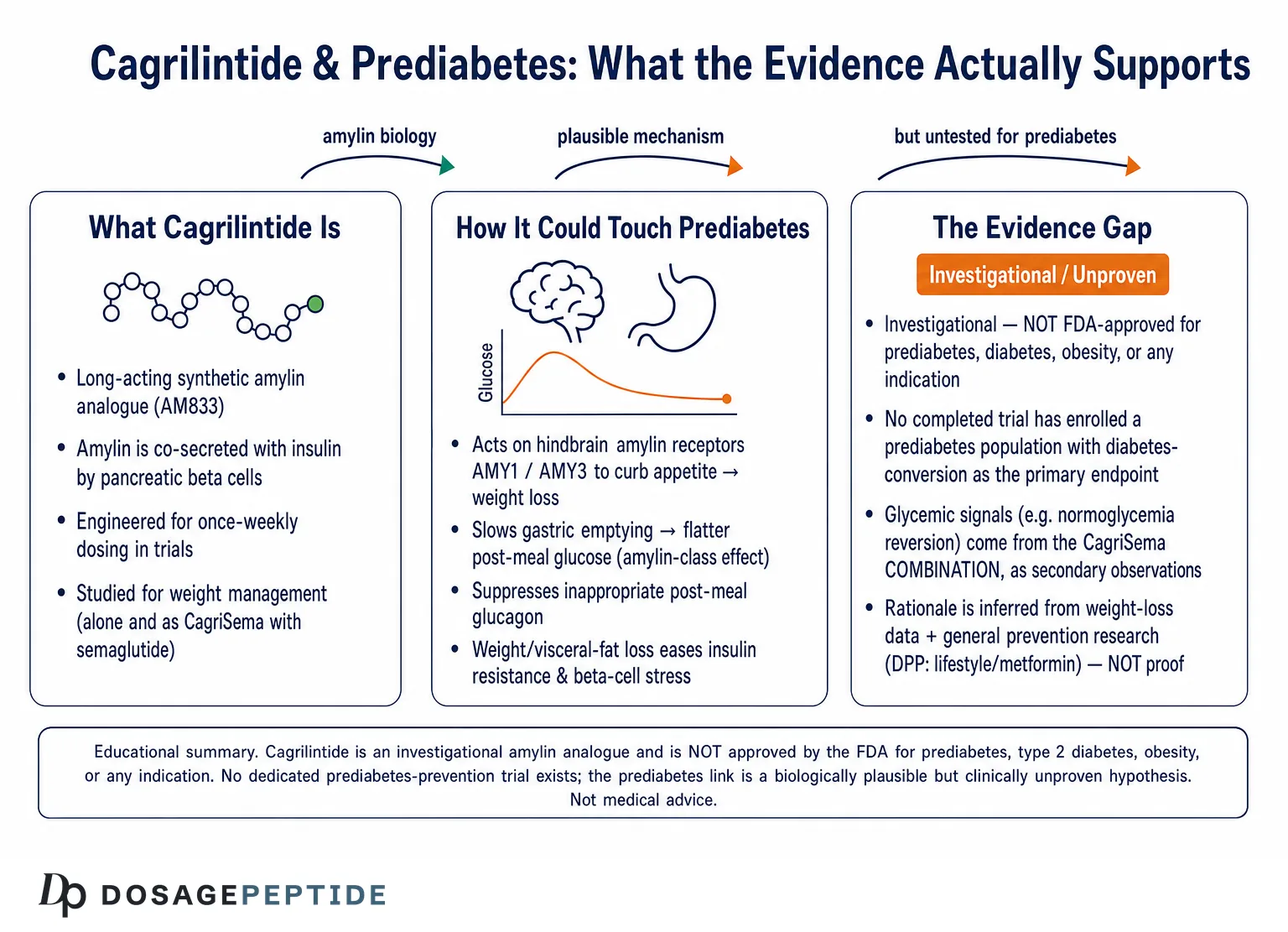
Cagrilintide’s defining engineering feature is its extended duration of action, which allows once-weekly administration in research settings rather than the multiple daily doses that a short-acting amylin analogue requires. This longevity is achieved through lipidation: a fatty-acid moiety is attached to the peptide backbone, enabling reversible binding to circulating albumin. Albumin is an abundant, long-lived plasma protein, and by binding to it, cagrilintide is protected from rapid renal clearance and enzymatic breakdown. The bound peptide acts as a slowly released reservoir, and the free fraction remains available to engage its receptors. The practical consequence is a prolonged half-life and sustained receptor engagement across a weekly interval—the same albumin-binding strategy that underlies several other long-acting peptide therapeutics.
Beyond duration, what matters is which receptors cagrilintide engages and how that engagement produces weight loss. Preclinical work by Carvas and colleagues, published in eBioMedicine, directly addressed this by testing where cagrilintide acts. The study found that cagrilintide’s body-weight-lowering effect depends on amylin receptors 1 and 3 in the brain: when AMY1 and AMY3 signaling in the hindbrain was absent, the weight-loss effect was largely eliminated, and hindbrain neuronal activation in response to cagrilintide was substantially diminished.[1] Because AMY1 and AMY3 are calcitonin-receptor-plus-RAMP complexes, this finding ties cagrilintide’s efficacy specifically to the CTR/RAMP1 and CTR/RAMP3 machinery in appetite-regulating brain regions. It is a mechanistic result about how cagrilintide reduces weight—not a result about glucose endpoints in prediabetes—and it should be read that way.
Why the Design Details Matter for Interpreting Claims
The molecular design explains both cagrilintide’s promise and the limits of what can be claimed. The albumin-binding, long-acting profile supports the kind of steady, once-weekly appetite regulation that could, in principle, sustain the weight loss on which any prediabetes benefit would depend. At the same time, the demonstrated mechanism is fundamentally an appetite-and-energy-balance mechanism operating through central amylin receptors. Any downstream improvement in glucose regulation would therefore be expected to flow largely from weight loss and its metabolic consequences, plus whatever direct amylin-class effects on gastric emptying and glucagon apply—not from a novel, glucose-specific pathway unique to cagrilintide. Keeping the mechanism straight guards against the temptation to describe cagrilintide as a direct glucose-lowering drug, which the current evidence does not support. Researchers comparing the compound’s handling characteristics with those of related agents sometimes consult a general peptide reconstitution guide for standardized laboratory context.
How Might Cagrilintide Mechanistically Intersect With Prediabetes Pathophysiology?
This section maps cagrilintide’s known and plausible actions onto the defects that define prediabetes, while flagging clearly which links are demonstrated and which are inferred. The cagrilintide-prediabetes rationale rests on a chain of reasoning, and each link in that chain has a different strength of evidence. Being explicit about those strengths is what separates responsible mechanistic discussion from marketing.
The first and best-supported link is weight loss. Cagrilintide reduces body weight in trials of people with overweight and obesity,[3] and its weight-lowering mechanism through central AMY1/AMY3 receptors is established preclinically.[1] The second link—that weight loss reduces insulin resistance, visceral and ectopic fat, and inflammatory drivers of beta-cell stress—is well established in metabolic physiology generally. The third link—that reduced diabetes progression follows from sustained weight loss in high-risk people—is supported by prevention research such as the Diabetes Prevention Program,[2] though that research studied lifestyle change and metformin, not cagrilintide. The fourth and weakest link—that cagrilintide specifically reduces prediabetes-to-diabetes conversion—has not been tested. The chain is plausible end to end, but it is only as strong as its untested final link.
Amylin Versus GLP-1 Versus Dual Mechanisms
Because cagrilintide is frequently discussed alongside GLP-1 receptor agonists such as semaglutide, and because the combination (CagriSema) is a major focus of the development program, it helps to contrast the mechanisms. Amylin analogues and GLP-1 agonists both reduce appetite and slow gastric emptying, but they act through different receptors and partly different brain circuits, which is the rationale for combining them. The table below organizes the comparison; entries describe class-level mechanisms rather than head-to-head clinical superiority for any specific endpoint.
| Feature | Amylin analogue (cagrilintide) | GLP-1 receptor agonist (semaglutide) | Dual approach (CagriSema) |
|---|---|---|---|
| Primary receptor target | AMY1/AMY3 (CTR + RAMP1/RAMP3) | GLP-1 receptor | Both receptor systems engaged |
| Appetite/satiety effect | Yes, via hindbrain circuits | Yes, via GLP-1 circuits | Complementary appetite signaling |
| Gastric emptying | Slows (amylin-class effect) | Slows | Slows |
| Postprandial glucagon | Suppresses (amylin-class effect) | Glucose-dependent suppression | Combined glucagon effects |
| Direct incretin/insulin-secretion effect | Not a primary mechanism | Yes, glucose-dependent insulin secretion | Present via GLP-1 component |
The takeaway from this comparison is that amylin and GLP-1 pathways are complementary rather than redundant, which is precisely why the combination has been pursued. For prediabetes specifically, however, the same caveat applies to all three columns: mechanistic complementarity is a reason to study these agents for glucose-risk endpoints, not evidence that any of them prevents diabetes in a prediabetes population. Readers exploring the combination can review the related cagrilintide–semaglutide blend reference and the semaglutide reference for context on each component.
What Do the Phase 2 Clinical Data on Cagrilintide Show?
The most substantial published clinical dataset on cagrilintide monotherapy comes from the dose-finding phase 2 trial reported by Lau and colleagues in The Lancet in 2021. This was a multicentre, randomised, double-blind, placebo-controlled and active-controlled study in people with overweight and obesity, designed to identify how once-weekly cagrilintide performs across a range of doses.[3] The trial evaluated once-weekly doses spanning from 0.3 mg up to 4.5 mg over a 26-week treatment period, with liraglutide 3.0 mg included as an active comparator and placebo as a control. The primary interest was the dose–response relationship for body-weight reduction, and the results showed a progressive, dose-dependent effect: higher doses produced greater weight loss, with the top dose achieving a mean reduction of roughly 10.8% over the 26 weeks.[3]
Two features of this trial deserve emphasis for the prediabetes discussion. First, the population was defined by overweight and obesity, not by prediabetes; the study was a weight-management trial, and its endpoints were weight-centric. Second, glycemic parameters in the non-diabetic participants remained stable, and clinically significant hypoglycemia was not a feature—an expected finding for an appetite-and-satiety agent that does not force insulin secretion. In other words, the trial demonstrated substantial weight loss without destabilizing glucose control, which is reassuring but is not the same as demonstrating a reduction in diabetes risk. The following table summarizes the dose–response pattern conceptually.
| Trial parameter | Detail (Lau et al., 2021) |
|---|---|
| Design | Phase 2, multicentre, randomised, double-blind, placebo- and active-controlled, dose-finding |
| Population | Adults with overweight and obesity (not prediabetes-defined) |
| Dose range | Once-weekly cagrilintide, 0.3 mg up to 4.5 mg |
| Comparators | Placebo; liraglutide 3.0 mg (active control) |
| Duration | 26 weeks |
| Top-dose weight change | ~10.8% mean reduction at 4.5 mg |
| Dose–response | Progressive, dose-dependent weight loss |
| Glucose safety signal | Stable glycemia; no clinically significant hypoglycemia in non-diabetic participants |
Values reflect the phase 2 dose-finding trial as reported.[3] The trial establishes cagrilintide as an effective weight-lowering agent across a dose range; it does not establish any prediabetes-specific outcome, because no prediabetes endpoint was studied.
What Does the CagriSema Combination Evidence Add?
Much of cagrilintide’s later clinical development has centered on CagriSema, the fixed combination of cagrilintide with semaglutide. This body of work is directly relevant to a prediabetes conversation, but it must be read carefully, because these are combination studies—their results reflect cagrilintide plus a GLP-1 agonist, not cagrilintide alone—and several were conducted in people who already had type 2 diabetes rather than prediabetes.
A phase 2 trial reported by Frias and colleagues in The Lancet evaluated co-administered once-weekly cagrilintide 2.4 mg with once-weekly semaglutide 2.4 mg in adults with type 2 diabetes and overweight or obesity. In that study, the combination produced greater weight loss than either component alone—on the order of a 15.6% body-weight reduction with CagriSema versus about 5.1% with semaglutide alone and 8.1% with cagrilintide alone over the trial period—alongside clinically relevant improvements in glycemic control.[4] This is genuine glycemic data, but it comes from a type 2 diabetes population and from the combination product, so it speaks to what cagrilintide-plus-semaglutide can do in established diabetes—not to what cagrilintide alone does in prediabetes.
At the late-phase level, the REDEFINE 1 trial, published in the New England Journal of Medicine, tested CagriSema in adults with overweight or obesity (with a weight-related complication) but without diabetes. It reported substantial weight loss—roughly a 20.4% mean reduction at 68 weeks, rising to about 22.7% under full adherence analysis—compared with smaller reductions for the individual components and placebo.[5] Notably for this discussion, the trial also reported that a large majority of participants who had prediabetes at baseline returned to normoglycemia during the study.[5] That is an encouraging, glycemically meaningful observation—but two honest caveats are essential: it reflects the CagriSema combination, not cagrilintide monotherapy, and normoglycemia reversion was a secondary observation within a weight-management trial, not the result of a trial designed prospectively to test prediabetes prevention as its primary endpoint. It is supportive, hypothesis-strengthening evidence for the general strategy of weight loss in prediabetes—not proof that cagrilintide by itself prevents diabetes.
| Study | Population | Intervention | Key weight/glycemic finding | Relevance to cagrilintide + prediabetes |
|---|---|---|---|---|
| Lau 2021 (Lancet)[3] | Overweight/obesity, non-diabetic | Cagrilintide monotherapy | Up to ~10.8% weight loss at 4.5 mg; stable glycemia | Monotherapy weight data; no prediabetes endpoint |
| Frias 2023 (Lancet)[4] | Type 2 diabetes + overweight/obesity | CagriSema vs each component | ~15.6% weight loss vs 5.1% (sema) / 8.1% (cagri); improved glycemia | Combination + established diabetes; not prediabetes |
| REDEFINE 1 (NEJM)[5] | Overweight/obesity without diabetes | CagriSema vs components/placebo | ~20.4%–22.7% weight loss; most with prediabetes returned to normoglycemia | Combination; normoglycemia was secondary, not primary prediabetes endpoint |
Read together, these studies show a consistent, plausible picture: amylin-based therapy—especially combined with a GLP-1 agonist—produces large weight loss and favorable movement in glucose metrics. What they do not include is a trial in which cagrilintide alone was given to a prediabetes cohort and diabetes conversion was the pre-specified outcome. That gap is the crux of an honest assessment.
Why Does Weight Loss Reduce Progression From Prediabetes to Type 2 Diabetes?
The rationale for studying any weight-lowering agent in prediabetes rests on decades of prevention research, and the landmark reference is the Diabetes Prevention Program (DPP). It is essential to be precise about what the DPP was and was not: it was a lifestyle-and-metformin prevention study, not a cagrilintide study, and it is cited here strictly as background evidence that weight loss and lifestyle change reduce diabetes incidence in high-risk people. It says nothing about cagrilintide directly.
In the DPP, more than 3,000 non-diabetic adults with elevated fasting and post-load glucose—an operational definition of high diabetes risk—were randomly assigned to placebo, metformin, or an intensive lifestyle program aimed at achieving at least 7% weight loss and at least 150 minutes of physical activity per week. Over an average follow-up of about 2.8 years, the lifestyle intervention reduced the incidence of type 2 diabetes by 58% and metformin reduced it by 31%, both relative to placebo, with lifestyle change significantly outperforming metformin.[2] The magnitude of that lifestyle effect—a majority reduction in new diabetes—established the principle that the prediabetes-to-diabetes transition is not inevitable and that weight-centered interventions can bend the curve.
The logical bridge from the DPP to cagrilintide is this: if achieving and sustaining roughly 7% weight loss through lifestyle can cut diabetes incidence by more than half, then an agent that reliably produces weight loss of comparable or greater magnitude might, in principle, deliver a similar risk reduction. But “in principle” is doing real work in that sentence. The DPP’s benefit came from a specific intervention in a specific trial with diabetes incidence as its endpoint. Transferring that benefit to cagrilintide is an extrapolation across both the intervention (lifestyle/metformin versus an amylin analogue) and the endpoint (measured diabetes incidence versus inferred risk from weight change). The extrapolation is reasonable enough to justify a dedicated trial; it is not a substitute for one.
How Do Visceral Fat and Inflammation Link Weight Loss to Glucose Improvement?
To judge whether cagrilintide-driven weight loss could plausibly translate into reduced prediabetes risk, it helps to trace the tissue-level mechanisms that connect fat loss to improved glucose regulation. These pathways are general metabolic physiology—they are not unique to cagrilintide—but they are the mechanistic reason any effective weight-loss agent is a candidate worth studying in prediabetes.
Visceral adipose tissue, the fat surrounding abdominal organs, is metabolically distinct from subcutaneous fat. When expanded, it releases free fatty acids directly into the portal circulation and secretes pro-inflammatory signaling molecules. The excess fatty-acid flux promotes ectopic fat accumulation in the liver and skeletal muscle, where lipid intermediates interfere with insulin signaling cascades and blunt glucose uptake—a core mechanism of insulin resistance. In the liver specifically, fat accumulation is associated with increased and less well-suppressed hepatic glucose production, which contributes to the elevated fasting glucose seen in IFG. Loss of visceral and ectopic fat reverses much of this: hepatic and peripheral insulin sensitivity improve, fasting and post-load glucose tend to fall, and the metabolic demand placed on the beta cells eases.
The inflammatory dimension is equally important. Expanded, stressed adipose tissue recruits immune cells and raises circulating inflammatory mediators, and this chronic low-grade inflammation both worsens insulin resistance and may contribute to beta-cell dysfunction. Because inflammatory activity tends to decline as adipose mass—especially visceral mass—shrinks, weight loss can attenuate this inflammatory drive. The relief of beta-cell stress is particularly consequential in prediabetes, where the central problem is that beta cells are struggling to compensate. If weight loss reduces the workload and the inflammatory and lipotoxic pressures on those cells, it may help preserve the functional reserve whose decline defines progression to diabetes. This is the mechanistic bridge that makes the cagrilintide-prediabetes hypothesis coherent: cagrilintide reliably produces weight loss, and weight loss engages exactly these fat- and inflammation-related pathways. What remains unproven is whether, in a prediabetes population specifically, cagrilintide-induced weight loss translates into fewer diagnoses of diabetes over time—the outcome that would actually validate the chain.
What Is the Evidence Gap? Are There Prediabetes-Specific Cagrilintide Trials?
The honest, direct answer is no. At the time of writing, there are no completed clinical trials that enrolled a prediabetes population and tested whether cagrilintide—whether as monotherapy or as the sole intervention—reduces the rate of conversion to type 2 diabetes as a primary endpoint. The evidence base consists of weight-management trials in people with overweight and obesity, combination (CagriSema) trials including some in established type 2 diabetes, and preclinical mechanistic work. Prediabetes-relevant glycemic findings that do exist, such as normoglycemia reversion in REDEFINE 1, come from the combination product and were secondary observations rather than the trials’ central purpose.[5]
This gap does not mean the prediabetes hypothesis is wrong. It means the hypothesis is untested with the specific design that would be required to confirm it. There is a meaningful difference between “an intervention that produces weight loss, and weight loss reduces diabetes risk” and “this specific intervention has been shown to reduce diabetes risk in prediabetes.” The first is a mechanistic argument; the second is a clinical outcome. Only a properly designed and powered trial—prediabetes population, glycemic and conversion endpoints, adequate duration—can convert the mechanistic argument into a clinical outcome. Until that trial exists and reports, the accurate statement is that cagrilintide is a biologically plausible but clinically unproven candidate for prediabetes risk reduction.
What Would Count as Adequate Evidence?
Adequate evidence would be a randomised controlled trial that enrolls participants meeting prediabetes criteria (IFG, IGT, or intermediate HbA1c), assigns them to cagrilintide or an appropriate comparator, and follows them long enough to capture the outcome that actually matters—progression to type 2 diabetes, or its absence—rather than a surrogate. Weight loss, HbA1c change, and improved insulin sensitivity would be valuable secondary measures, but the primary question in prevention is whether fewer people develop diabetes. Because prediabetes progresses over years, such a trial would need extended follow-up, likely well beyond a single year, to be persuasive. None of the current cagrilintide literature meets that standard, and readers should treat any source that implies otherwise with skepticism.
How Would Prediabetes-Focused Cagrilintide Research Be Designed?
If investigators were to pursue the prediabetes question rigorously, the study design would revolve around a set of well-validated glycemic and metabolic biomarkers. Understanding these measures also helps readers interpret the existing weight-management literature, because it clarifies exactly which questions those trials did and did not answer.
Core Glycemic Endpoints
Fasting plasma glucose (FPG) and HbA1c are the practical anchors of any prediabetes trial. FPG reflects basal glucose handling and hepatic output, while HbA1c integrates glycemia over months and is convenient because it does not require fasting. The oral glucose tolerance test (OGTT) adds a dynamic dimension, revealing how efficiently the body clears a defined glucose load; the two-hour OGTT value is the marker that defines impaired glucose tolerance and is often the earliest abnormality in prediabetes. A serious prediabetes trial would track all three, because an agent could plausibly move one more than another depending on whether its dominant effect is on fasting or postprandial physiology.
Insulin Resistance and Beta-Cell Function Indices
Because prediabetes is jointly driven by insulin resistance and declining beta-cell function, a mechanistic trial would quantify both. HOMA-IR, a calculation based on fasting glucose and fasting insulin, provides an accessible estimate of insulin resistance. Beta-cell function can be estimated through measures such as HOMA-B or, more rigorously, through the disposition index (DI)—a composite that expresses insulin secretion relative to prevailing insulin sensitivity. The disposition index is particularly informative because it captures whether the beta cells are keeping pace with the body’s demand; a falling DI is an early signature of the transition toward diabetes. Demonstrating that an intervention preserves or improves DI would be a strong mechanistic argument, though still secondary to actual diabetes-incidence outcomes.
| Biomarker / index | What it measures | Why it matters in prediabetes research |
|---|---|---|
| FPG | Fasting glucose level | Defines IFG; reflects basal glucose handling |
| 2-hour OGTT | Post-load glucose disposal | Defines IGT; often the earliest abnormality |
| HbA1c | Integrated average glycemia | Convenient, non-fasting overall control marker |
| HOMA-IR | Estimated insulin resistance | Tracks a core prediabetes driver |
| HOMA-B | Estimated beta-cell secretory function | Gauges compensatory capacity |
| Disposition index (DI) | Insulin secretion relative to sensitivity | Sensitive early signal of progression risk |
Research Models and Study Structure
Preclinical models—including receptor-knockout systems of the kind used to establish cagrilintide’s dependence on AMY1 and AMY3[1]—are valuable for clarifying mechanism but cannot answer clinical prevention questions. A definitive human program would layer mechanistic substudies (detailed OGTT-derived indices, measures of hepatic and peripheral insulin sensitivity, inflammatory markers) on top of a randomised outcome trial with diabetes conversion as the endpoint. Standardized reconstitution and dosing calculations are part of the practical infrastructure of such research; tools like a reconstitution and dosage calculator illustrate the kind of methodological rigor that reproducible peptide studies require, though they are laboratory aids rather than clinical recommendations.
Choosing Comparators and Interpreting Surrogate Endpoints
Two design choices would heavily shape how convincing any future cagrilintide prediabetes trial turned out to be. The first is comparator selection. A placebo comparison would show whether cagrilintide beats no treatment, but a more informative design would also include an established preventive standard—such as an intensive lifestyle program modeled on the Diabetes Prevention Program—so that cagrilintide’s effect could be judged against the reference intervention that already reduces diabetes incidence by a majority in high-risk people.[2] Without an active comparator, a positive trial answers a narrower question than clinicians usually want answered.
The second choice concerns surrogate versus true endpoints. Weight change, HbA1c, and improved insulin sensitivity are surrogate markers: they are plausibly on the causal path to diabetes prevention, and they move in encouraging directions in the existing cagrilintide and CagriSema literature. But surrogates can mislead. A drug can improve a laboratory number without changing the clinical outcome that matters, and history offers cautionary examples across metabolic medicine. The only endpoint that definitively establishes prevention is a reduction in the number of people who actually develop type 2 diabetes over a meaningful follow-up. This is why the honest conclusion throughout this article rests on outcome logic rather than surrogate enthusiasm: cagrilintide moves the surrogates favorably, but the outcome trial that would confirm prevention has not been done. Distinguishing correlation from causation—and surrogate from outcome—is the discipline that separates a defensible research summary from an overstated marketing claim.
What Is Known About Cagrilintide’s Safety and Tolerability?
The safety picture for cagrilintide, to the extent it can be characterized from weight-management trials, is broadly consistent with the amylin and gut-hormone class. The most commonly reported adverse effects are gastrointestinal—nausea in particular, along with related symptoms—and these tend to be mild to moderate and transient, often diminishing as treatment continues. This pattern is unsurprising given that amylin-class agents slow gastric emptying and act on hindbrain regions involved in nausea signaling; the same class effect is well documented for the short-acting amylin analogue pramlintide, for which nausea is the most common side effect.[6]
From a glycemic-safety standpoint, an important and reassuring observation from the cagrilintide monotherapy trial was the absence of clinically significant hypoglycemia in non-diabetic participants, with glucose control remaining stable.[3] This is the expected behavior of an agent that works through satiety and gastric-emptying mechanisms rather than by forcing insulin release, and it is a favorable property for any compound one might imagine using in a prediabetes context, where inducing hypoglycemia would be undesirable. That said, safety in a weight-management trial population over months is not the same as long-term safety in a prevention population followed for years. A prediabetes prevention program would need to characterize sustained gastrointestinal tolerability, nutritional adequacy under prolonged appetite suppression, cardiovascular safety, and pancreatic safety before the risk–benefit balance for prevention could be judged. Those data do not yet exist for a prediabetes indication.
How Should the Evidence Be Weighed by Study Type?
A recurring pitfall in peptide discussions is treating all supporting citations as equally strong. They are not. Preclinical mechanism studies, weight-management trials, combination trials in diabetes, and background prevention research each carry different weight for the specific claim “cagrilintide reduces prediabetes risk.” Sorting them honestly is the single most useful thing a reader can do.
Preclinical receptor studies, such as the AMY1/AMY3 dependence work,[1] establish how cagrilintide works but cannot establish clinical benefit. Weight-management trials in humans[3] establish that cagrilintide reliably reduces weight, which is the pre-condition for any downstream metabolic benefit—but they measured weight, not diabetes prevention. Combination trials[4][5] provide glycemically meaningful data, including normoglycemia reversion, but for the combination product and often in populations other than isolated prediabetes. Prevention research like the DPP[2] proves the principle that weight loss lowers diabetes incidence—but for lifestyle and metformin, not cagrilintide. Pramlintide pharmacology[6] and amylin physiology[7] confirm the mechanistic plausibility of amylin-based glucose effects but describe the class, not cagrilintide-in-prediabetes specifically. When these strands are combined, the honest conclusion is a coherent, plausible hypothesis supported by indirect evidence—not a proven prevention effect.
What Are the Limitations and Future Directions?
The limitations of the current evidence are substantial and should be stated plainly. First and most important, there is no dedicated prediabetes outcome trial for cagrilintide. Second, the strongest glycemic signals—such as reversion to normoglycemia—come from the CagriSema combination, so they cannot be attributed to cagrilintide alone; the GLP-1 component is a powerful glucose-active agent in its own right. Third, several key trials were conducted in populations (overweight/obesity without prediabetes stratification, or established type 2 diabetes) that differ from the isolated prediabetes population the hypothesis concerns. Fourth, follow-up durations in the available trials are short relative to the multi-year timescale over which prediabetes progresses, so durability of any glycemic benefit is unestablished. Fifth, cagrilintide remains investigational and unapproved, meaning its long-term safety profile in a prevention setting is not defined.
Future directions follow directly from these gaps. The decisive next step would be a randomised controlled trial in a well-characterized prediabetes cohort, using diabetes conversion as the primary endpoint, with mechanistic substudies capturing FPG, OGTT-derived indices, HbA1c, HOMA-IR, and disposition index over an extended follow-up. Comparative work could clarify whether cagrilintide monotherapy, semaglutide monotherapy, and the combination differ meaningfully for prediabetes-specific outcomes, and whether baseline phenotype (isolated IFG versus IGT, degree of insulin resistance, extent of visceral adiposity) predicts response. Biomarker-guided or precision approaches could then identify who benefits most. Until such research is completed, cagrilintide’s role in prediabetes should be described exactly as it is: a promising, biologically grounded, but unproven investigational hypothesis. Researchers building foundational knowledge often start with core compound references such as the cagrilintide handling reference alongside the primary literature cited here.
Frequently Asked Questions
Is cagrilintide approved or proven to prevent prediabetes?
No. Cagrilintide is an investigational amylin analogue that is not approved for prediabetes, diabetes, or any indication. There are no completed clinical trials that enrolled a prediabetes population and tested whether cagrilintide reduces conversion to type 2 diabetes as a primary endpoint. The prediabetes rationale is inferred from weight-loss data and general prevention research, not demonstrated in a dedicated trial. Any claim of proven prevention would overstate the evidence.
What is cagrilintide, and how does it work?
Cagrilintide is a long-acting synthetic analogue of amylin, a hormone co-secreted with insulin by pancreatic beta cells. It is lipidated to bind albumin, extending its half-life to support once-weekly dosing in research. It reduces body weight primarily by activating amylin receptors 1 and 3 in the brain, which enhance satiety and reduce food intake. Its dominant demonstrated action is on appetite and energy balance, not direct glucose lowering.
Why is cagrilintide discussed in the context of prediabetes at all?
Because prediabetes is closely tied to excess weight and insulin resistance, and because sustained weight loss reduces progression to type 2 diabetes. Cagrilintide produces substantial weight loss in trials, so it is reasonable to hypothesize a diabetes-risk benefit. This is a mechanistic inference built on weight-loss and prevention data—not a result from a cagrilintide prediabetes trial, which has not been conducted.
Does cagrilintide directly lower blood glucose?
Cagrilintide acts mainly through appetite suppression, satiety, and slowed gastric emptying rather than by forcing insulin secretion. Any improvement in glucose metrics is expected to arise largely from weight loss and amylin-class effects on gastric emptying and glucagon. In its monotherapy trial, glycemia remained stable with no clinically significant hypoglycemia in non-diabetic participants. Dedicated prediabetes trials measuring glucose endpoints would be needed to quantify direct glycemic effects.
How is the CagriSema data different from cagrilintide-alone data?
CagriSema is cagrilintide combined with the GLP-1 agonist semaglutide, so its results reflect both drugs, not cagrilintide alone. CagriSema trials showed large weight loss and favorable glucose changes, including many participants with prediabetes returning to normoglycemia in a late-phase study—but those were secondary observations in weight-management trials, and the glucose-active semaglutide component contributes substantially. Combination data cannot be attributed to cagrilintide monotherapy.
How does the Diabetes Prevention Program relate to cagrilintide?
It relates only as background. The Diabetes Prevention Program studied lifestyle change and metformin—not cagrilintide—and showed that lifestyle intervention cut diabetes incidence by 58% and metformin by 31% in high-risk people. It establishes the principle that weight loss reduces diabetes progression, which is why weight-lowering agents are worth studying for prevention. It provides no direct evidence about cagrilintide and should never be cited as cagrilintide data.
What biomarkers would a proper cagrilintide prediabetes study measure?
A rigorous trial would track fasting plasma glucose, two-hour OGTT glucose, and HbA1c as core glycemic endpoints, plus HOMA-IR for insulin resistance and beta-cell measures such as HOMA-B and the disposition index. Most importantly, it would use progression to type 2 diabetes as the primary outcome, with extended follow-up over years, since surrogate markers alone cannot confirm true prevention.
What are the main safety considerations with cagrilintide?
The most common reported effects are gastrointestinal—especially nausea—typically mild to moderate and transient, consistent with the amylin class. Reassuringly, non-diabetic participants in the monotherapy trial did not experience clinically significant hypoglycemia. However, long-term safety in a prevention population followed for years—covering nutrition, cardiovascular, and pancreatic outcomes—has not been established, because cagrilintide remains investigational and has not been tested for a prediabetes indication.
References
- Carvas, A. O., et al. (2025). Cagrilintide lowers bodyweight through brain amylin receptors 1 and 3. eBioMedicine, 118, 105836.
- Diabetes Prevention Program Research Group. (2002). Reduction in the incidence of type 2 diabetes with lifestyle intervention or metformin. New England Journal of Medicine, 346(6), 393–403. (Background: lifestyle/metformin prevention study, not a cagrilintide study.)
- Lau, D. C. W., et al. (2021). Once-weekly cagrilintide for weight management in people with overweight and obesity: a multicentre, randomised, double-blind, placebo-controlled and active-controlled, dose-finding phase 2 trial. The Lancet, 398(10317), 2160–2172.
- Frias, J. P., et al. (2023). Efficacy and safety of co-administered once-weekly cagrilintide 2·4 mg with once-weekly semaglutide 2·4 mg in type 2 diabetes: a multicentre, randomised, double-blind, active-controlled, phase 2 trial. The Lancet, 402(10403), 720–730. (Combination [CagriSema] in type 2 diabetes; not cagrilintide monotherapy in prediabetes.)
- Coadministered cagrilintide and semaglutide (CagriSema) in adults with overweight or obesity (REDEFINE 1). (2025). New England Journal of Medicine. (Combination weight-management trial; normoglycemia reversion reported as a secondary observation.)
- Pramlintide, the synthetic analogue of amylin: physiology, pathophysiology, and effects on glycemic control, body weight, and selected biomarkers of vascular risk. Vascular Health and Risk Management. (Amylin-class mechanism reference.)
- Islet amyloid polypeptide, islet amyloid, and diabetes mellitus. Physiological Reviews. (Amylin/IAPP physiology and calcitonin-receptor/RAMP biology.)
- Factors correlated with targeted prevention for prediabetes classified by impaired fasting glucose, impaired glucose tolerance, and elevated HbA1c. (Prediabetes classification and diagnostic thresholds.)