
Palmitoyl Tetrapeptide-7 (200mg Vial) Dosage Protocol
A cosmetic lipopeptide (Rigin, Pal-GQPR) sold as a 200 mg powder but used in finished products at parts-per-million concentrations. This page converts the documented use levels into vial arithmetic and states plainly how thin the published evidence is. Research and educational reference only.

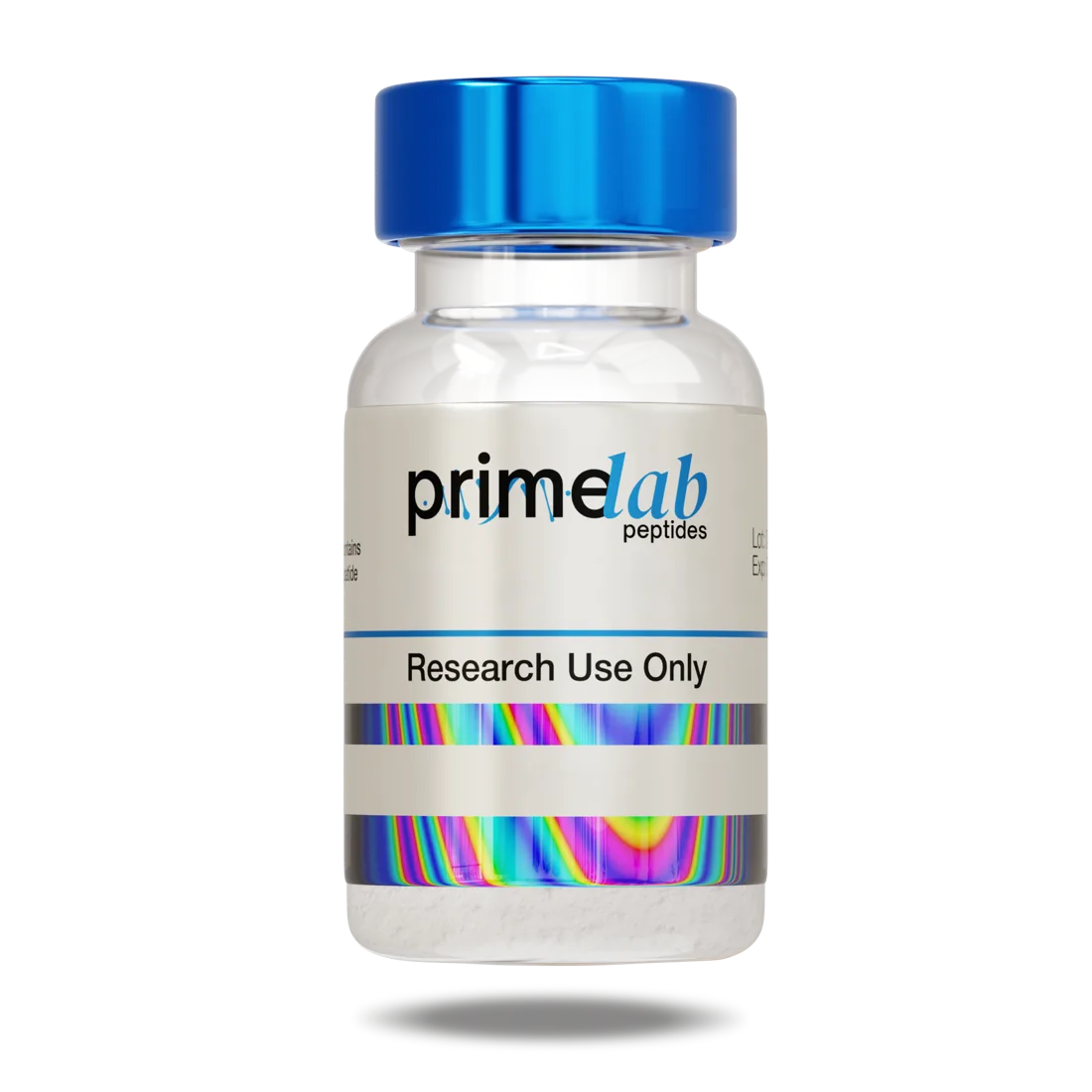
A palmitoylated GQPR tetrapeptide — a fragment sequence of natural IgG immunoglobulins — marketed as a signal peptide for the appearance of ageing skin.
A formulation concentration, not a dose. Industry reports 0.00001–0.0015% in leave-on products; the maximum on record is 0.0015%.
Topical only. Sold as a 200 mg lyophilized powder; the trade materials it is copied from are pre-diluted solutions, not powder.
Keep the powder cool, dry, dark and tightly closed. Lipopeptides degrade with heat, light and oxidation; follow the finished product’s own expiry.
Quickstart Highlights
Palmitoyl Tetrapeptide-7 is a four-amino-acid sequence — glycine–glutamine–proline–arginine (Pal-GQPR) — with a sixteen-carbon palmitic acid chain attached to its N-terminus. PubChem lists it as C34H62N8O7, molecular weight 694.9 g/mol[1]. The tetrapeptide portion is described by the Cosmetic Ingredient Review panel as “a fragment of the natural IgG immunoglobulins”[2] — the same family the immune peptide tuftsin comes from — and the palmitoyl tail is a delivery device, added to make a small water-loving peptide able to cross a lipid-rich stratum corneum.
It is better known by its trade name Rigin, developed by Sederma, and it was previously listed under the INCI name Palmitoyl Tetrapeptide-3 — same molecule, renamed. Most people meet it without knowing: it is one of the two peptides in Matrixyl 3000, alongside palmitoyl tripeptide-1. That matters more than it sounds, because almost everything published about this peptide was measured on the blend, not on the peptide[3][4], and the percentage most people quote for it belongs to the blend as well.
Supplies Needed
Palmitoyl Tetrapeptide-7 ships as a lyophilized powder in a sealed vial — Core Peptides lists a 200 mg vial at >99% purity[8], and the same 200 mg presentation appears across several other suppliers under both the INCI name and the Rigin trade name. Because everything documented about this ingredient happens at parts-per-million, accurate small-volume measurement matters far more than any applicator.
Protocol Overview
The claim attached to this peptide is a signal-peptide claim: that the GQPR sequence, derived from an IgG fragment[2], modulates the inflammatory and matrix-remodelling behaviour of ageing dermal fibroblasts, and that the palmitoyl tail lets it reach them. The mechanism most often quoted in marketing copy is a reduction in interleukin-6 secretion by aged fibroblasts. It is a coherent story. What is missing is independent measurement of it.
PubMed indexes no study of palmitoyl tetrapeptide-7 on its own (checked 5 August 2026). Four indexed papers mention it at all, and each one tests it inside something else: a blend[4], a four-component “active complex”[5], and a chitosan hydrogel loaded with stem cells[6]. That is not a technicality. When an effect is measured on a mixture, the effect belongs to the mixture.
The most-cited support — a 2015 study in the Journal of Cosmetic Dermatology reporting that a blend of palmitoyl oligopeptide and palmitoyl tetrapeptide-7 improved extracellular-matrix structure versus placebo[4] — was authored from SEDERMA, the company that developed the ingredient, and was explicitly a methodology-development study whose own conclusion was that “further studies will be conducted”. The 2024 randomised eye-cream trial that also features the peptide[5] comes from the manufacturer of the cream and tests a complex of four actives, so no result in it can be assigned to the peptide.
The most useful independent voice is a 2021 review in Pharmaceuticals that catalogued the peptides used in 88 facial cosmetics for sensitive skin, palmitoyl tetrapeptide-7 among them, and looked for the evidence behind each. Its finding, stated plainly by the authors, is that the available data are “mostly found in patents and supplier brochures, and not in randomized placebo-controlled studies”[3]. That sentence is the honest summary of this ingredient’s evidence base, and it comes from academics with nothing to sell.
Dosing Protocol
Reference conversions only. Each row takes a concentration in the finished product and works out how much pure peptide that needs, and how far a 200 mg vial goes. The first four rows are inside the range industry actually reported to the Cosmetic Ingredient Review[2]. The last row is the mistake this page exists to prevent — the trade-blend percentage applied to raw powder.
| Concentration in finished product | Peptide per 30 g | A 200 mg vial makes |
|---|---|---|
| 0.00001% (0.1 ppm) — low end reported[2] | 0.003 mg (3 mcg) | ≈2,000 kg |
| 0.0001% (1 ppm) | 0.03 mg (30 mcg) | ≈200 kg |
| 0.001% (10 ppm) | 0.3 mg (300 mcg) | ≈20 kg |
| 0.0015% (15 ppm) — maximum reported[2] | 0.45 mg | ≈13 kg (≈440 jars of 30 g) |
| 3% — the trade-blend figure misapplied to powder | 900 mg | ≈6.7 g — ≈2,000× the maximum reported use level |
Why Palmitoyl Tetrapeptide-7 draws research interest
These are the directions researchers and the peptide community most often explore Palmitoyl Tetrapeptide-7 for — so you know you’re in the right place. They describe what is being studied, not proven benefits, approved uses, or promised results.
The percentage trap
The familiar 3–10% figure belongs to a pre-diluted trade blend, not to raw powder, and the gap is thousandfold.
What a vial covers
At the highest concentration industry reports in cosmetics, one 200 mg vial holds enough peptide for thirteen kilograms of cream.
Evidence is supplier-led
An independent review found the data sit mostly in patents and supplier brochures rather than in controlled placebo trials.
Never tested alone
Every published study applied it inside a blend or a composite material, so no result belongs to this peptide alone.
Evidence ranges from early laboratory work to clinical trials depending on the use — the sections below cover the actual data and sources.
Documented cosmetic use is 0.00001–0.0015% in leave-on products, maximum 0.0015%[2] — parts per million, not percent.
Enough peptide for about 13 kg of product at that maximum, or roughly 440 jars of 30 g at 0.45 mg each.
That figure describes the Matrixyl 3000 trade solution, which is already dilute. It is not a percentage for raw powder.
Cosmetic. No PubMed paper studies this peptide alone, and no clinical trial registers it as an intervention[3].
Dosing & Application
Palmitoyl Tetrapeptide-7 is a cosmetic ingredient applied to intact skin in a finished formulation. It is not injected, not taken orally, and there is no milligram “dose” anywhere in its documentation — the only quantity that has ever been recorded is how much of it sits in a product, and the Cosmetic Ingredient Review panel collected exactly that from industry[2].
Standard / Gradual Approach
The reported figures are worth reading slowly. In leave-on products the concentrations industry reported were 0.00001% to 0.0015%; in rinse-off products, 0.000005% to 0.0007%[2]. Written as parts per million, the whole documented range is about 0.1 ppm to 15 ppm. The panel concluded the ingredient is safe “in the present practices of use and concentration described in this safety assessment”[2] — a conclusion that is bounded by those numbers and says nothing about a homemade preparation that exceeds them.
The percentage confusion is the single most consequential thing on this page. The figure people carry over — 3% to 10% — comes from Matrixyl 3000, which is a trade solution: a glycol-and-water carrier in which the two peptides are already present at trace levels. Using 3–10% of that solution in a serum is normal. Using 3–10% of pure powder would put roughly 30,000–100,000 ppm of peptide into a product whose documented ceiling is 15 ppm — about 2,000 to 7,000 times more. Our own Matrixyl 3000 protocol page uses the 3–10% figure correctly, because that page is about the blend.
A practical consequence follows from the arithmetic: the quantities involved are below what an ordinary scale can weigh. A 30 g jar at the documented maximum needs 0.45 mg — a jeweller’s scale reading to 1 mg cannot resolve it, and a 0.1 g kitchen scale is off by more than two orders of magnitude. In a laboratory this is handled with a stock solution: 200 mg taken up in 20 mL gives 10 mg/mL, and 45 µL of that stock carries 0.45 mg. No vendor page checked on 5 August 2026 publishes a solvent or a solubility figure for this peptide, which is a real gap: the palmitoyl chain that makes it skin-compatible also makes it a poor fit for plain water, and the commercial trade materials are supplied already in solution rather than as powder.
Storage Instructions
Keep the lyophilized powder cold, dry, dark and tightly closed, and follow the supplier’s handling guidance for the specific batch. Lipopeptides are sensitive to heat, light and oxidation, and repeated warming of an opened vial invites both moisture uptake and degradation.
Any solution made from the powder should be treated as the fragile part. Store it cold and protected from light, label it with its concentration and date, and discard it if it changes appearance. Because no supplier publishes a validated solvent or a stability window for this peptide, an in-house solution has no documented shelf life — it should be treated as short-lived rather than assumed stable.
In a finished cosmetic the relevant expiry is the product’s own. The CIR safety conclusion applies to the ingredient as used at the concentrations reported by industry[2], in properly preserved formulations — not to an unpreserved homemade mixture.
Important Notes
The points below are the ones that change how the record on this ingredient should be read. Several of them are not caveats attached to a positive story — they are the story.
- ▪PubMed indexes zero studies of this peptide on its own (checked 5 August 2026). The four papers that name it all test it as part of something else: a two-peptide blend[4], a four-ingredient eye-cream complex[5], and a chitosan hydrogel carrying stem cells in diabetic mouse wounds[6]. No published result can be attributed to Palmitoyl Tetrapeptide-7 alone.
- ▪Two of the four are authored by a party with a commercial interest. The 2015 blend study lists SEDERMA — the developer of Rigin and Matrixyl 3000 — as the affiliation of six of its nine authors[4], and the 2024 eye-cream trial is authored from the cream manufacturer’s R&D centre[5]. Industry-authored work is not automatically wrong; it is simply not independent, and here there is no independent counterpart.
- ▪No clinical trial registers this peptide as an intervention. A search of ClinicalTrials.gov on 5 August 2026 returned a single record mentioning it at all — a Phase 4 open-label study of a HydraFacial device[7] — in which the intervention is the device, not the peptide.
- ▪The IL-6 mechanism is a supplier claim, not a published finding. The reduction in interleukin-6 secretion by aged fibroblasts that appears in nearly every product description does not trace to an indexed peer-reviewed paper. The 2021 independent review reached the same conclusion about this class of ingredient: the data live in “patents and supplier brochures”[3].
- ▪“Palmitoyl Tetrapeptide-3” and “Rigin” are the same molecule. The INCI name changed; the compound did not. Product listings and older literature use all three names interchangeably, which makes the evidence base look larger than it is.
- ▪What the safety conclusion actually covers. The CIR panel judged the ingredient safe “in the present practices of use and concentration described in this safety assessment”[2] — that is, at 0.0015% and below. A safety conclusion drawn at parts-per-million does not transfer to a preparation made at percent.
- ▪Cosmetic tier, not drug tier. This is a cosmetic ingredient. It is not an approved drug, it is not a treatment for any condition, and nothing about it should be framed as an alternative to a prescription treatment or an injectable procedure.
How This Works
The proposed mechanism starts from where the sequence comes from. GQPR is a fragment sequence of IgG immunoglobulins[2], the same protein family that gives rise to tuftsin, a short peptide with documented immune-signalling activity. The cosmetic argument is that a fragment of an immune-signalling protein might modulate the low-grade inflammatory tone of ageing skin — the state usually summarised as ageing-associated inflammation — and so indirectly favour matrix repair over matrix breakdown.
The palmitoyl group is a delivery solution, not an active part. A bare tetrapeptide is small, charged and water-loving, and the stratum corneum is a lipid barrier built to keep exactly that kind of molecule out. Attaching a C16 fatty acid makes the molecule amphiphilic, so it can partition into skin lipids. The same design is used across this whole ingredient family — palmitoyl tripeptide-1, palmitoyl oligopeptide, palmitoyl pentapeptide-4 — and it is why they are grouped together in the Cosmetic Ingredient Review assessments[2].
The downstream story told in product literature is a reduction in interleukin-6 output by senescent dermal fibroblasts, with better collagen, elastin and fibronectin balance as a consequence. That chain has not been demonstrated in an indexed, independent publication for this peptide alone. The nearest published support tests the two-peptide blend and reports structural improvements in the dermal extracellular matrix and the epidermal–dermal junction versus placebo[4] — a real result, but one that belongs to the blend and comes from the ingredient’s developer.
One recent paper does something different and is worth knowing about for what it is not. In 2025 a group grafted the peptide onto chitosan to build an injectable hydrogel, loaded it with stem cells from human deciduous teeth, and reported faster closure of diabetic wounds in mice with lower TNF-α and IL-6[6]. It is genuine work on a genuine composite material. It is not evidence that a peptide dissolved into a face cream does any of those things.
Lifestyle Factors
Because this ingredient works — if it works — at the surface, the formulation around it matters more than the peptide count. Penetration depends on the vehicle: the commercial trade materials are supplied in glycol-based solutions precisely because a lipidated peptide does not simply disperse in water, and a poorly formulated homemade mixture can leave the active sitting on top of the skin or falling out of suspension entirely.
The ordinary, well-evidenced measures for the appearance of ageing skin are unglamorous and they are also the ones with real trial data behind them: daily broad-spectrum sun protection, not smoking, adequate sleep, and a barrier-supporting moisturiser. It is honest to say that these have far stronger evidence than any cosmetic peptide, this one included.
Preservation deserves a specific mention. Water-containing preparations made at home are a microbial risk, and the CIR safety conclusion assumes properly formulated, preserved cosmetic products[2]. An unpreserved mixture is a hazard that has nothing to do with the peptide in it.
Potential Benefits & Side Effects
What follows is what the published work actually reported, stated at the level it was done — on blends and composites, largely by the parties selling the material — alongside the risks that follow from an evidence base this thin. Nothing here has been demonstrated for Palmitoyl Tetrapeptide-7 on its own.
Reported Effects
- ▪Extracellular-matrix structure — blend, manufacturer-authored: a two-peptide blend of palmitoyl oligopeptide and palmitoyl tetrapeptide-7 reduced the thickness of the subepidermal low-echogenic band and improved its density on ultrasound, and improved matrix structure versus placebo on in-vivo confocal microscopy[4]. The study was a methodology-development study authored from SEDERMA.
- ▪Periorbital skin measures — four-ingredient complex: a 12-week randomised trial of an eye cream containing the peptide alongside three other actives reported improvements in hydration (28.1%), elasticity (18.8%) and collagen density (55.0%)[5]. The peptide is one of four actives; the result belongs to the formula.
- ▪Wound closure — mice, composite material: the peptide grafted onto chitosan and loaded with stem cells produced over 95% wound closure in streptozotocin-induced diabetic mouse wounds, with reduced TNF-α and IL-6 and increased IL-10[6]. This is an injectable hydrogel in animals, not a cosmetic use.
- ▪Safety at cosmetic concentrations — documented: the CIR Expert Panel reviewed the available safety data and concluded the ingredient is safe as used in cosmetics at the reported concentrations, noting that the low use levels and negative safety testing address the concerns it considered[2].
Common Side Effects
- ▪The efficacy evidence for this peptide alone is absent, not merely weak. No indexed study tests it on its own, and an independent review of this ingredient class found the supporting data sit in patents and supplier brochures rather than randomised placebo-controlled studies[3].
- ▪Concentration error is the realistic hazard here. The gap between the documented maximum (0.0015%) and the trade-blend percentage people transfer to powder (3–10%) is roughly three orders of magnitude. Nothing in the safety record speaks to exposure at that level, because no one has reported using it that way.
- ▪Homemade formulation risks are real and separate from the peptide: inadequate preservation, contamination, unmeasurable quantities and unknown solvent compatibility. These are the failure modes that actually cause harm with DIY cosmetic peptides.
- ▪Skin reactions remain possible even at cosmetic levels. Any leave-on ingredient can irritate or sensitise an individual; a positive panel safety conclusion is a population statement, not a personal guarantee. Irritation, redness or rash is a reason to stop and seek advice.
- ▪It is not a drug and not a procedure. Palmitoyl Tetrapeptide-7 is not approved to treat any condition, and should not be presented as an alternative to prescription dermatology or to injectable aesthetic treatments.
How to Apply
The workflow below documents how a cosmetic-grade lipopeptide of this kind is handled, with the documented concentrations stated for reference. It is educational. It is not a recommendation to compound an unregulated preparation, and it is not formulation or medical advice.
Skin Preparation
- ▪Confirm what was actually shipped: ask for a certificate of analysis. The identity to check is Pal-Gly-Gln-Pro-Arg (Pal-GQPR), C34H62N8O7, MW 694.9[1]; listings under “Rigin” or “Palmitoyl Tetrapeptide-3” refer to the same molecule.
- ▪Patch test before any facial use and introduce one new preparation at a time, so that a reaction can be attributed to something.
- ▪Apply to clean, dry, intact skin only. Nothing in this ingredient’s record involves broken skin, microneedling or any barrier-breaching step, and the safety assessment behind it covers ordinary cosmetic use[2].
Applying the Product
- ▪Start from the documented range, not from a blend percentage: leave-on use reported to the CIR is 0.00001–0.0015%, maximum 0.0015%[2]. Anything quoted in whole percent describes a pre-diluted trade solution, not powder.
- ▪Do the arithmetic before opening anything: 30 g of product at 0.0015% needs 0.45 mg of peptide; a 200 mg vial covers roughly 13 kg of product, or about 440 such jars.
- ▪Accept that the quantities are unweighable on ordinary equipment: 0.45 mg is below the resolution of a 1 mg jeweller’s scale. In practice a stock solution is used — 200 mg in 20 mL gives 10 mg/mL, and 45 µL of that carries 0.45 mg — which requires a micropipette, not a dropper.
- ▪The solvent is an open question, and that is a finding, not an omission: no vendor page checked on 5 August 2026 publishes a solubility figure or a validated solvent for this peptide, and the C16 palmitoyl chain makes plain water an unlikely fit. Commercial trade materials come already in solution for this reason.
- ▪Preservation is not optional in a water-containing preparation: the safety conclusion the CIR reached applies to properly formulated cosmetic products[2]. An unpreserved homemade emulsion is a microbiological problem regardless of what peptide is in it.
After Application
- ▪Judge it against the honest baseline: the documented independent evidence for this peptide alone is nil[3], so expectations should be set accordingly — and sun protection, sleep and a good moisturiser remain the interventions with real trial data behind them.
- ▪Store and label: powder cold, dry and dark; any solution cold, dated, labelled with its concentration, and discarded if it changes appearance. No published stability window exists for an in-house solution.
- ▪Stop on any reaction: irritation, redness, swelling or rash is a reason to discontinue and seek medical advice rather than to persist.
- ▪Keep the framing straight: Palmitoyl Tetrapeptide-7 is a cosmetic ingredient with supplier-led evidence — not a treatment, not a drug, and not a substitute for dermatological care.
Recommended Source
For high-purity research peptides, we point researchers to Prime Lab Peptides for Palmitoyl Tetrapeptide-7 (200 mg).
Why Prime Lab Peptides?
- ▪Top-rated on Trustpilot: Independently reviewed as the highest-rated peptide lab on Trustpilot — making it the best current source in the USA.
- ▪Third-party tested: Every batch ships with a Certificate of Analysis (COA) confirming purity and composition.
- ▪Consistent quality: ISO-aligned manufacturing and handling keep product integrity reliable batch to batch.
- ▪Cold-chain integrity: Temperature-controlled shipping and storage across the whole fulfilment chain.
- ▪Research-grade purity: Fit for educational and research use that demands high-quality peptides.
Note: Product availability and specifications subject to change. Verify current product details on supplier website.
References
- 1
PubChem CID 10078408 — Palmitoyl tetrapeptide-7 (Pal-GQPR). National Center for Biotechnology Information.Primary chemical record: molecular formula C34H62N8O7, molecular weight 694.9 g/mol, and a structure corresponding to palmitoyl-Gly-Gln-Pro-Arg with a free acid C-terminus.
- 2
Johnson W, Bergfeld WF, Belsito DV, et al. Safety Assessment of Tripeptide-1, Hexapeptide-12, Their Metal Salts and Fatty Acyl Derivatives, and Palmitoyl Tetrapeptide-7 as Used in Cosmetics. Int J Toxicol. 2018;37(3_suppl):90S–102S.The authoritative source for the real use levels. Reports palmitoyl tetrapeptide-7 in leave-on products at 0.00001–0.0015% and rinse-off at 0.000005–0.0007%, with 0.0015% the maximum; describes the GQPR tetrapeptide as “a fragment of the natural IgG immunoglobulins”; and concludes the ingredient is safe “in the present practices of use and concentration described in this safety assessment”.
- 3
Resende DISP, Ferreira MS, Sousa-Lobo JM, Sousa E, Almeida IF. Usage of Synthetic Peptides in Cosmetics for Sensitive Skin. Pharmaceuticals (Basel). 2021;14(8):702.Independent academic review of the peptides used in 88 facial cosmetics for sensitive skin, palmitoyl tetrapeptide-7 among them. Its key finding: only five of the seven peptides had any evidence supporting their use, and the available data are “mostly found in patents and supplier brochures, and not in randomized placebo-controlled studies”.
- 4
Mondon P, Hillion M, Peschard O, et al. Evaluation of dermal extracellular matrix and epidermal-dermal junction modifications… effect of age and peptide applications. J Cosmet Dermatol. 2015;14(2):152–60.The most-cited support, read accurately. A methodology-development study in which anti-ageing evaluation was performed with a blend of palmitoyl oligopeptide and palmitoyl tetrapeptide-7 — not the peptide alone — authored from SEDERMA, the ingredient’s developer, and concluding that further studies would be needed.
- 5
Yang F, Zhang X, Wang H, et al. Comprehensive evaluation of the efficacy and safety of a new multi-component anti-aging topical eye cream. Skin Res Technol. 2024;30(7):e13790.A 12-week randomised trial of an eye cream whose active complex contains yeast/rice fermentation filtrate, N-acetylneuraminic acid, palmityl tripeptide-1 and palmitoyl tetrapeptide-7. Reported hydration +28.1%, elasticity +18.8%, collagen +55.0% — results that belong to the four-component formula, from authors at the manufacturer’s R&D centre.
- 6
Xing C, Hou L, Sun C, et al. Injectable polypeptide/chitosan hydrogel with loaded stem cells and rapid gelation promoting angiogenesis for diabetic wound healing. Int J Biol Macromol. 2025;306(Pt 2):141578.Palmitoyl tetrapeptide-7 grafted onto chitosan to form an injectable hydrogel, loaded with stem cells from human exfoliated deciduous teeth. Over 95% wound closure in diabetic mice with TNF-α down ~75% and IL-6 down ~81%. A composite biomaterial in animals — not a cosmetic result.
- 7
ClinicalTrials.gov — search for Palmitoyl Tetrapeptide-7 / Rigin / Matrixyl 3000 as an intervention (checked 5 August 2026).One record mentions these terms at all: NCT05932732, a Phase 4 open-label study of HydraFacial device treatments. No registered trial has this peptide as its intervention.
- 8
Core Peptides — Palmitoyl Tetrapeptide-7 (200mg) product listing (checked 5 August 2026).Vendor record for the presentation this page is built around: a 200 mg vial, >99% purity, lyophilized powder. The same 200 mg size is listed by other suppliers under the Rigin trade name. No supplier page checked states a solvent, a solubility figure, or a formulation percentage for the raw powder.
How to apply Palmitoyl Tetrapeptide-7
- 1Blend Palmitoyl Tetrapeptide-7 into a clean, water-based serum or cream base at the intended percentage (commonly 3 to 10 percent).
- 2Patch-test on a small area of skin first to check tolerability.
- 3Apply a thin layer to clean, dry skin as documented in cosmetic research (often once or twice daily).
- 4Store the raw powder and the finished serum sealed, cool and away from light; refrigerate water-based serums.
Palmitoyl Tetrapeptide-7 — frequently asked questions
How is Palmitoyl Tetrapeptide-7 used?
Palmitoyl Tetrapeptide-7 is a topical cosmetic peptide applied to the skin as part of a serum or cream — not injected or taken by mouth. It is blended into a water-based base at a chosen percentage and applied to clean skin.
What concentration of Palmitoyl Tetrapeptide-7 is typical?
Cosmetic formulations commonly use roughly 3 to 10 percent. Higher is not necessarily better and can affect texture, stability and skin tolerability. The strength shown on this page is a formulation reference, not a dose to inject.
Do I need bacteriostatic water or syringes for Palmitoyl Tetrapeptide-7?
No. As a topical peptide, none of the injectable-peptide supplies (bacteriostatic water, insulin syringes, alcohol swabs) apply — it is dissolved into a serum or cream base and applied to the skin.
How should I store Palmitoyl Tetrapeptide-7?
Keep the raw powder sealed, cool, dry and away from light. A finished water-based peptide serum is best refrigerated and used within a few weeks, since peptides in solution degrade over time.
Is research-grade Palmitoyl Tetrapeptide-7 an approved drug?
No. Palmitoyl Tetrapeptide-7 is a cosmetic-grade ingredient for topical formulation and research, not an approved medicine; the evidence supports only modest topical, cosmetic effects. Everything here is research and educational information, not medical advice.
New protocols & dosing updates
Reconstitution charts, new peptide protocols and safety updates — straight to your inbox. No spam, unsubscribe anytime.