
PTD-DBM (5mg Vial) Dosage Protocol
A synthetic competitor peptide that blocks the CXXC5–Dishevelled interaction and so de-represses Wnt/β-catenin signalling, studied for hair regrowth and wound healing. All efficacy data are mouse data, applied topically at 100 µM, from a single laboratory; no human trial of PTD-DBM has ever been registered. Research and educational reference only.
Why PTD-DBM draws research interest
These are the directions researchers and the peptide community most often explore PTD-DBM for — so you know you’re in the right place. They describe what is being studied, not proven benefits, approved uses, or promised results.
Hair regrowth & follicle neogenesis
Mice regrew hair faster and formed new follicles in wounded skin when the CXXC5–Dishevelled brake was blocked; no human study has tested this.
Androgenetic alopecia mechanism
CXXC5 is reported as the link between DHT, prostaglandin D2 and hair loss, and is elevated in miniaturised follicles of balding human scalps.
Wound healing & scarring
The peptide was first described as a wound-healing agent, working best alongside valproic acid and, later, delivered from an adhesive hydrogel patch.
Wnt/β-catenin pathway activation
It is a pathway de-repressor rather than a growth factor, which is also why persistent activation deserves caution rather than enthusiasm.
Evidence ranges from early laboratory work to clinical trials depending on the use — the sections below cover the actual data and sources.
Quickstart Highlights
PTD-DBM is a laboratory-designed peptide whose name is its blueprint: a protein transduction domain (a cell-penetrating carrier) fused to the Dishevelled-binding motif of a protein called CXXC5[1]. CXXC5 is a negative feedback brake on Wnt/β-catenin signalling — it works by grabbing Dishevelled (Dvl) and holding it out of play. PTD-DBM is a decoy: it presents the same binding motif, competes CXXC5 away from Dvl, and lets Wnt/β-catenin signalling run[1][2]. That pathway drives hair-follicle cycling, which is why the compound reached the hair-loss community.
The framing this page insists on is the evidence tier. Every efficacy result for PTD-DBM comes from mice, applied to the skin, and essentially all of it comes from one laboratory — Kang-Yell Choi’s group at Yonsei University, together with its commercial spin-outs CK Biotechnology and CK Regeon[1][2][3][4]. A search of ClinicalTrials.gov on 4 August 2026 returns no registered clinical trial of PTD-DBM in any indication. It is not approved anywhere, it is sold as a research chemical, and nothing below is medical advice or a recommendation to apply an unapproved compound to a person.
The mouse studies applied 100 µM topically, daily[1]. At MW 3,080.7 that is ≈0.31 mg/mL — the single most useful number on this page, and one no vendor listing states.
Enough peptide for about 16 mL of a 100 µM solution. Reconstituted in 2 mL it is 2.5 mg/mL (≈810 µM) — roughly 8× the studied strength.
None established. No trial of PTD-DBM is registered on ClinicalTrials.gov (checked 4 August 2026), and no human efficacy or safety study has been published.
Dosing & Application
PTD-DBM is applied to the skin, not injected: every published in vivo experiment used topical application to mouse skin[1][2][3]. So the only meaningful “dose” question is what concentration, how often — and unusually for a research peptide, the literature answers the first half precisely.
Standard / Gradual Approach
The figure to hold onto is 100 µM, applied daily. In the original wound-healing study the peptide was applied topically to mouse wounds every day for eleven days at that concentration, alone and in combination with topical valproic acid (500 mM), a GSK-3β inhibitor that pushes the same pathway from the other side[1]. The hair papers that followed used the same topical approach in mice[2][3].
Converting that into vial arithmetic requires the molecular weight, and here vendors do publish something usable: two independent research-chemical listings give MW 3,080.7 g/mol and the formula C124H223N61O28S2, with the sequence R8–GGGG–RKTGHQICKFRKC — an octa-arginine transduction domain, a four-glycine linker, and the CXXC5-derived binding motif. At that mass, 100 µM = 0.308 mg/mL. One 5 mg vial therefore contains enough peptide to make about 16 mL of the concentration the mice actually received.
That number reframes the product. A 5 mg vial reconstituted in the customary 2 mL of bacteriostatic water is 2.5 mg/mL — approximately 810 µM, or eight times the studied strength. Nothing in the literature says a stronger solution is better; it simply means the stock is concentrated relative to the only concentration anyone has tested, and that the published condition corresponds to a diluted preparation (roughly one part stock to seven parts carrier).
None of this makes a human protocol. Frequency, vehicle, contact time, scalp penetration and safe duration have never been established in people for this peptide, and the mouse work used shaved dorsal skin and wounded skin — not intact human scalp. The arithmetic above exists so the scale is transparent, not so it can be followed.
How a vial of this kind is reconstituted, for reference: swab the vial stopper and the bacteriostatic-water stopper with fresh alcohol pads and let both air-dry; run 2 mL of bacteriostatic water down the inside wall of the vial rather than onto the powder, giving 2.5 mg/mL ≈ 810 µM; let it stand about 30 seconds and roll the vial between the palms — never shake it; then refrigerate at 2–8 °C, protected from light and never frozen. Discard anything cloudy or particulate. Before mixing, request a certificate of analysis: the catalogue identity is R8–GGGG–RKTGHQICKFRKC, MW 3,080.7, while the peptide described in the source papers additionally carried a fluorescein-tagged lysine for imaging[1] — published construct and catalogue product are not automatically the same material.
Supplies Needed
PTD-DBM ships as a lyophilized powder in a sealed vial, so the only genuinely necessary items are the vial itself, a sterile diluent and clean handling. Because the published concentration is far below a straight 2 mL reconstitution, accurate small-volume measurement matters more than any applicator.
Protocol Overview
PTD-DBM belongs to a small class of protein–protein interaction decoys. Rather than adding a growth signal, it removes a brake: CXXC5 normally binds Dishevelled and damps Wnt/β-catenin signalling, and the peptide competes for that interaction[1]. In mice lacking CXXC5 altogether, wounds close faster and hair regrows faster[1][2] — the genetic result the peptide is designed to imitate pharmacologically.
The hair story is the reason the compound is sold. In the 2017 report, CXXC5 was found upregulated in miniaturised hair follicles and arrector pili muscles of human balding scalps, it suppressed alkaline-phosphatase activity and proliferation in human dermal papilla cells, and disrupting the CXXC5–Dishevelled interaction with the competitor peptide accelerated hair regrowth and wound-induced hair follicle neogenesis in mice[2]. A 2023 follow-up placed CXXC5 downstream of DHT and prostaglandin D₂, and reported that PTD-DBM reversed the hair suppression that PGD₂ caused[3].
Two things temper that. First, the human observation is correlative — a protein is more abundant in balding scalp tissue — while every interventional result is in mice. Second, the strongest experiments repeatedly pair the peptide with something else: valproic acid in the wound and hair work[1][2], and by 2023 an adhesive hyaluronic-acid patch built specifically to deliver it[4]. A compound that needs a purpose-built patch to work in mouse skin is a compound with a delivery problem, and a bottle of reconstituted powder does not solve it.
The most revealing detail is what the originating programme did next. Having established the target, the same group moved to small molecules that block the same CXXC5–Dishevelled interaction — KY-02061 and KY-02327 for bone[5], KY19334 for metabolic disease[6] — because small molecules can be given orally and manufactured cheaply. Its spin-out’s only registered human study is a Phase 1 transdermal trial of CKR-051 (NCT05833906, 52 healthy men, completed January 2024, aimed at skin regeneration and no results posted) — a different agent, not this peptide.
Dosing Protocol
Reference conversions only, for a 5 mg vial reconstituted in 2 mL (2.5 mg/mL). These are not a dose ladder: no human dose of PTD-DBM has ever been established[1][2]. The final row is the one that matters — it shows what the published mouse concentration looks like next to a research vial.
| Reference amount | Volume at 2.5 mg/mL | Approx. concentration |
|---|---|---|
| 100 mcg | 0.04 mL | — |
| 250 mcg | 0.10 mL | — |
| 500 mcg | 0.20 mL | — |
| 1 mg | 0.40 mL | — |
| 5 mg — the whole vial | 2.00 mL | 2.5 mg/mL ≈ 810 µM |
| 5 mg diluted to the studied strength[1] | ≈16.2 mL | 0.31 mg/mL = 100 µM |
Storage Instructions
Lyophilized vials are kept refrigerated, dry and protected from light; follow the supplier’s handling guidance for the powder and do not freeze a vial once it has been reconstituted.
After reconstitution, store at 2–8 °C and use within the preservative’s window. The sequence contains two cysteine residues, so oxidation and disulfide scrambling are plausible degradation routes — another reason not to keep a working dilution sitting at room temperature, and a reason discoloured or cloudy solution should be discarded rather than used.
Important Notes
The points below are the ones that change how the published record should be read. They are not caveats bolted onto a positive story; several of them are the story.
- ▪PubMed indexes only four papers that mention PTD-DBM at all (checked 4 August 2026): the 2015 wound-healing paper that introduced it[1], the 2017 hair paper[2], the 2023 hydrogel-patch paper[4], and a 2025 review[7]. That is the entire literature, and the first three share an author.
- ▪The 2025 review overstates the case, and it is worth naming. An independent Columbia-authored review of hair-regrowth strategies describes “clinical efficacy” for pathway modulators including PTD-DBM[7]. No clinical trial of PTD-DBM exists on ClinicalTrials.gov, and no human efficacy study has been published — so that phrasing should not be read as evidence in people.
- ▪The peptide is rarely tested alone in the headline results. Valproic acid was co-applied in the wound and hair experiments[1][2], and the 2023 work combined it with both VPA and a delivery patch[4]. Community protocols that pair it with valproic acid are copying the papers — but they are copying a mouse combination whose human ratio, safety and absorption are unknown.
- ▪Activating Wnt/β-catenin is not a free action. Persistent activation of this pathway is a well-known driver in several cancers, which is precisely why the field pursues reversible, locally applied modulators. No study has examined long-term or repeated human exposure to this peptide on intact skin, so “no reported side effects” here means no one has looked.
- ▪An octa-arginine carrier is a general cell-penetrating tool, not a targeting device. The R8 domain helps the motif cross membranes wherever it lands; it does not aim the peptide at hair follicles. Selectivity in the published work came from where the solution was applied, not from the molecule.
- ▪Sourcing is unverified. PTD-DBM is sold as a research chemical with no pharmacopoeial standard. Without a certificate of analysis, sequence, purity, counter-ion and residual solvent are simply unknown — and a 25-residue peptide with two cysteines is not a trivial synthesis to get right.
How This Works
Wnt/β-catenin signalling controls whether hair follicles enter and sustain the growth (anagen) phase. When Wnt ligands engage their receptors, Dishevelled is recruited to the membrane, the destruction complex that degrades β-catenin is inhibited, and β-catenin accumulates and enters the nucleus to switch on target genes.
CXXC5 sits inside that loop as a negative feedback regulator: it is itself induced by the pathway, and it binds Dishevelled through a short motif, taking Dvl out of circulation and shutting the signal back down[1]. Structural work on the Dishevelled PDZ domain and its CXXC5 partner has since been used to design inhibitors of exactly that interface[8].
PTD-DBM is the blunt version of that idea: supply the binding motif on its own, in excess, attached to a carrier that gets it into cells, and CXXC5 loses its grip on Dishevelled. The result is not new signalling but de-repressed signalling — which is why the effect in mice looks like a restored growth phase rather than an artificial one, and why it depends on there being a Wnt signal to un-brake in the first place.
It also explains the valproic-acid pairing. VPA inhibits GSK-3β, another brake on β-catenin, so the two act at different points of the same axis; in the wound model the combination outperformed either agent alone[1]. Whether that additivity transfers to human scalp at tolerable exposures is untested.
Lifestyle Factors
Because every published application was topical, the surface matters more than anything systemic. In the mouse experiments the peptide was applied to shaved or wounded skin, where the barrier is thin or absent; intact human scalp with sebum, hair shafts and a full stratum corneum is a substantially harder barrier for a 3 kDa, highly charged peptide to cross.
That barrier problem is the honest reason microneedling appears in community protocols — it is an attempt to reproduce the compromised-barrier conditions of the studies. It is also an added risk: breaching the skin introduces infection and irritation hazards and changes what the peptide reaches, none of which has been studied for this compound.
The ordinary determinants of hair still apply, and they have far better evidence than this peptide does: iron and ferritin status, thyroid function, protein intake, medications, scalp inflammation and the two treatments that actually carry approvals for pattern hair loss. Anyone reading this page for hair reasons is better served by having those assessed first.
Potential Benefits & Side Effects
What follows is what the published experiments reported, stated at the level they were done — in mice, topically — alongside the risks that follow from the same evidence being this thin. Nothing here has been demonstrated in a human being.
Reported Effects
- ▪Faster hair regrowth — in mice: disrupting the CXXC5–Dishevelled interaction with the competitor peptide accelerated hair regrowth and wound-induced hair follicle neogenesis, and CXXC5-null mice regrew hair faster than wild-type animals[2].
- ▪Reversal of PGD₂-driven suppression — in mice: hair loss induced through the DHT → PGD₂ axis was restored by PTD-DBM treatment or by CXXC5 knockout, in both regrowth and neogenesis models[3].
- ▪Accelerated wound closure — in mice: the peptide activated β-catenin and collagen production in vitro, and co-treatment with valproic acid synergistically accelerated cutaneous wound healing[1].
- ▪Less scarring, with a delivery system — in mice: loaded into an adhesive hyaluronic-acid patch with valproic acid, it reduced myofibroblast markers and induced collagen III, the fetal-type collagen associated with regenerative rather than scar healing[4].
- ▪A human tissue observation, not a human result: CXXC5 protein was elevated in miniaturised follicles and arrector pili muscles of balding scalps and reduced in acute wounds[1][2] — which supports the target, not the treatment.
Common Side Effects
- ▪There is no human safety record at all. No registered trial, no published human exposure series, no dermal irritation study of this peptide. The absence of reported adverse effects is an absence of observation.
- ▪Pathway risk deserves stating plainly: sustained Wnt/β-catenin activation is oncogenic in several tissues. A locally applied, short-lived decoy is a lower-risk design than a systemic agonist, but “lower risk by design” is not the same as demonstrated safety over months of scalp use.
- ▪Barrier-breaching amplifies the unknowns: microneedling or applying to damaged skin increases absorption of an unapproved compound and adds infection and irritation risk on its own.
- ▪Combination risk: valproic acid is a real drug with real toxicity, and community protocols apply it topically at high concentrations because a mouse paper did. Its human topical safety at those strengths is not established.
- ▪Product risk: unverified sequence and purity, two oxidation-prone cysteines, and no standard for what “5 mg” contains once counter-ions and residual water are counted.
How to Apply
No human route, concentration, frequency or duration has been established for PTD-DBM. The workflow below documents how a lyophilized research peptide of this kind is handled in a laboratory setting, with the published concentration stated for reference. It is educational, and it is not a recommendation to apply an unapproved compound to a person.
Skin Preparation
- ▪Know the target concentration before mixing: the published mouse experiments used 100 µM, which is 0.31 mg/mL at MW 3,080.7[1] — roughly one part of a 2.5 mg/mL stock to seven parts carrier.
- ▪Confirm identity and purity: request a certificate of analysis; the catalogue sequence is R8–GGGG–RKTGHQICKFRKC and the published construct additionally carried a fluorescent tag[1].
- ▪Inspect the solution: it should be clear and free of particles; discard anything cloudy, discoloured or past its window.
Applying the Product
- ▪Understand there is no validated regimen: the table on this page gives conversions, not a protocol. No published study establishes a human amount, vehicle or frequency for this peptide[2].
- ▪The studied route is topical, to skin: mouse work applied it to shaved or wounded dorsal skin daily[1][2][3]. Intact human scalp is a different and much less permeable barrier.
- ▪Small volumes are the working scale: at 2.5 mg/mL, the amounts in the reference table are tenths of a millilitre, so measurement error is proportionally large.
- ▪Do not assume the combination is validated: the strongest mouse results used valproic acid alongside the peptide[1][2], at concentrations chosen for mice, not people.
After Application
- ▪Store and discard properly: keep reconstituted material at 2–8 °C, protected from light, never frozen, and discard anything that changes appearance.
- ▪Treat any reaction as a stop signal: with no human safety data, irritation, rash, or any systemic symptom is a reason to stop and seek medical advice rather than to persist.
- ▪Keep the evidence in perspective: PTD-DBM is a preclinical research peptide with mouse data from a single programme and no human trial — it is not a treatment for hair loss or for wounds.
Recommended Source
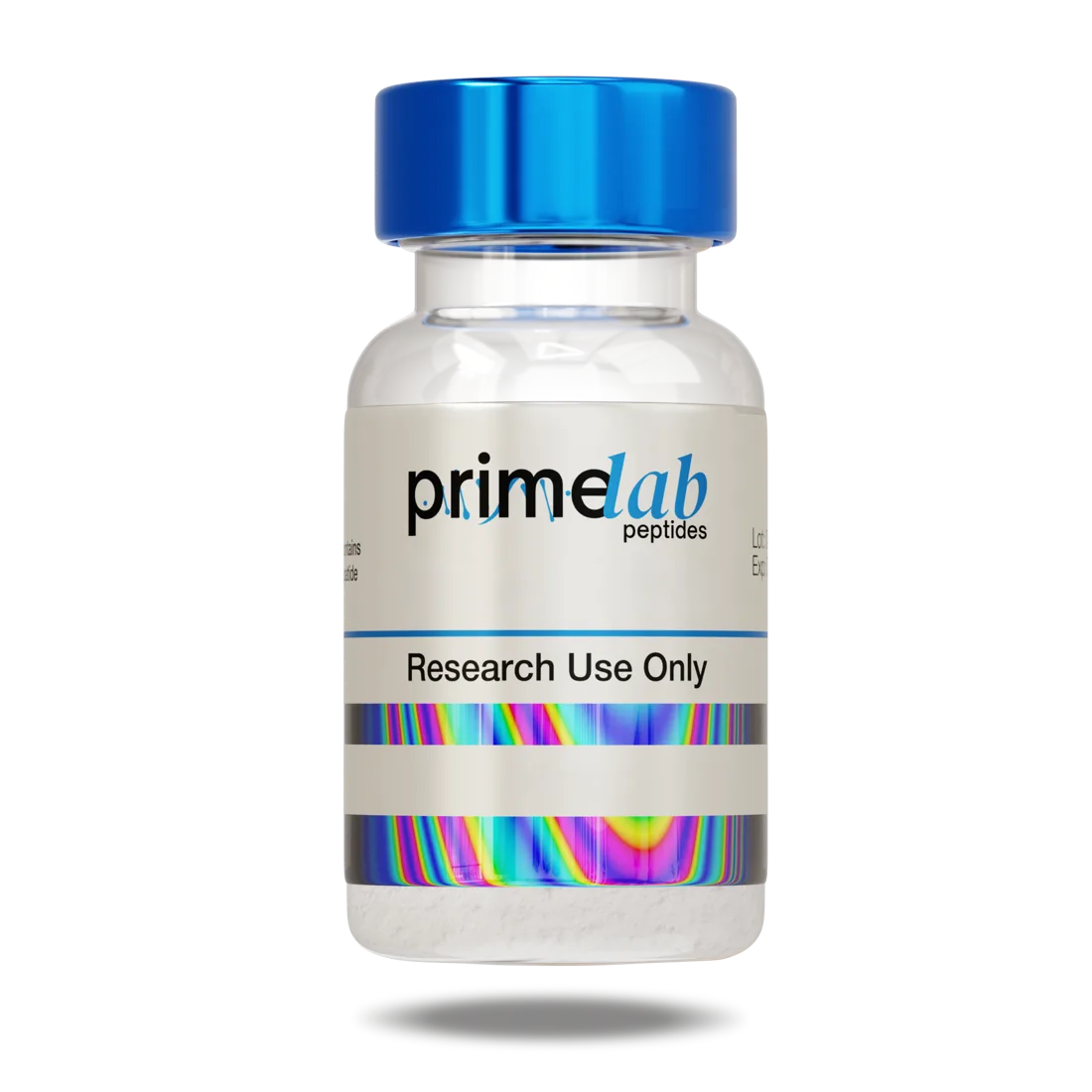
For high-purity research peptides, we point researchers to Prime Lab Peptides for PTD-DBM (5 mg).
Why Prime Lab Peptides?
- ▪Top-rated on Trustpilot: Independently reviewed as the highest-rated peptide lab on Trustpilot — making it the best current source in the USA.
- ▪Third-party tested: Every batch ships with a Certificate of Analysis (COA) confirming purity and composition.
- ▪Consistent quality: ISO-aligned manufacturing and handling keep product integrity reliable batch to batch.
- ▪Cold-chain integrity: Temperature-controlled shipping and storage across the whole fulfilment chain.
- ▪Research-grade purity: Fit for educational and research use that demands high-quality peptides.
Note: Product availability and specifications subject to change. Verify current product details on supplier website.
References
- 1
Lee SH, et al. The Dishevelled-binding protein CXXC5 negatively regulates cutaneous wound healing. J Exp Med. 2015;212(7):1061–80.The paper that introduced PTD-DBM. CXXC5 acts as a negative feedback regulator of Wnt/β-catenin through Dishevelled; CXXC5-null mice heal faster; the competitor peptide was applied topically at 100 µM daily for 11 days, and co-treatment with topical valproic acid (500 mM) synergistically accelerated wound healing in mice.
- 2
Lee SH, et al. Targeting of CXXC5 by a competing peptide stimulates hair regrowth and wound-induced hair neogenesis. J Invest Dermatol. 2017;137(11):2260–2269.The hair paper. CXXC5 was upregulated in miniaturised hair follicles and arrector pili muscles of human balding scalps and inhibited proliferation in human dermal papilla cells; disrupting the CXXC5–Dishevelled interaction with the competitor peptide accelerated hair regrowth and wound-induced follicle neogenesis in mice.
- 3
Ryu YC, et al. CXXC5 mediates DHT-induced androgenetic alopecia via PGD2. Cells. 2023;12(4):555.Places CXXC5 downstream of dihydrotestosterone and prostaglandin D₂. PGD₂-induced hair loss was restored by CXXC5 knockout or by PTD-DBM treatment, in both regrowth and wound-induced neogenesis models — again entirely in mice, from the same laboratory.
- 4
Lee SH, et al. Adhesive hydrogel patch-mediated combination drug therapy induces regenerative wound healing. Adv Healthc Mater. 2023;12(18):e2203094.A pyrogallol-functionalised hyaluronic-acid patch was built to deliver PTD-DBM with valproic acid; it suppressed α-smooth-muscle actin, induced stem-cell markers and collagen III, and reduced scarring in mice. The need for a purpose-built delivery patch is itself informative about the free peptide.
- 5
Kim HY, et al. Small molecule inhibitors of the Dishevelled-CXXC5 interaction are new drug candidates for bone anabolic osteoporosis therapy. EMBO Mol Med. 2016;8(4):375–87.The same programme screening small molecules against the identical target. KY-02061 and its analogue KY-02327 activated the pathway and rescued bone loss in ovariectomised mice, given orally — the translational route the group actually pursued.
- 6
Seo SH, et al. Inhibition of CXXC5 function reverses obesity-related metabolic diseases. Clin Transl Med. 2022;12(4):e742.KY19334, another small-molecule inhibitor of the CXXC5–Dishevelled interaction, reversed metabolic dysregulation in high-fat-diet mice. Included here because it shows the target is being developed with small molecules rather than with the peptide.
- 7
Mehta A, et al. Revolutionary approaches to hair regrowth: follicle neogenesis, Wnt/β-catenin signaling, and emerging therapies. Cells. 2025;14(11):779.An independent review (Columbia University) covering follicle neogenesis and pathway modulation, and naming PTD-DBM among the peptide approaches. Its wording implies clinical efficacy; no clinical trial of PTD-DBM is registered, so the review should be read as an overview of preclinical promise.
- 8
Ma S, et al. Discovery of a small-molecule inhibitor of Dvl-CXXC5 interaction by computational approaches. J Comput Aided Mol Des. 2018;32(5):643–655.Structure-based work on the Dishevelled PDZ domain in complex with the CXXC5 peptide, used to design interface inhibitors. It documents the binding site that PTD-DBM is meant to occupy, and is the clearest published description of the interaction the peptide competes for.
How to apply PTD-DBM
- 1Blend PTD-DBM into a clean, water-based serum or cream base at the intended percentage (commonly 3 to 10 percent).
- 2Patch-test on a small area of skin first to check tolerability.
- 3Apply a thin layer to clean, dry skin as documented in cosmetic research (often once or twice daily).
- 4Store the raw powder and the finished serum sealed, cool and away from light; refrigerate water-based serums.
PTD-DBM — frequently asked questions
How is PTD-DBM used?
PTD-DBM is a topical cosmetic peptide applied to the skin as part of a serum or cream — not injected or taken by mouth. It is blended into a water-based base at a chosen percentage and applied to clean skin.
What concentration of PTD-DBM is typical?
Cosmetic formulations commonly use roughly 3 to 10 percent. Higher is not necessarily better and can affect texture, stability and skin tolerability. The strength shown on this page is a formulation reference, not a dose to inject.
Do I need bacteriostatic water or syringes for PTD-DBM?
No. As a topical peptide, none of the injectable-peptide supplies (bacteriostatic water, insulin syringes, alcohol swabs) apply — it is dissolved into a serum or cream base and applied to the skin.
How should I store PTD-DBM?
Keep the raw powder sealed, cool, dry and away from light. A finished water-based peptide serum is best refrigerated and used within a few weeks, since peptides in solution degrade over time.
Is research-grade PTD-DBM an approved drug?
No. PTD-DBM is a cosmetic-grade ingredient for topical formulation and research, not an approved medicine; the evidence supports only modest topical, cosmetic effects. Everything here is research and educational information, not medical advice.
New protocols & dosing updates
Reconstitution charts, new peptide protocols and safety updates — straight to your inbox. No spam, unsubscribe anytime.