Tirzepatide’s trial programme no longer stops at glucose and body weight. Separate randomised studies have tested it in heart failure with preserved ejection fraction, in obstructive sleep apnea, on kidney and liver endpoints, and against an active comparator for cardiovascular safety. Some of those trials reported clear effects; others answered narrower questions than the headlines suggest. This page summarises what each one measured, what it found, and how firm the result is — along with the side effects that showed up consistently across the whole programme.
That distinction matters. Tirzepatide the licensed pharmaceutical (marketed as Mounjaro for type 2 diabetes and Zepbound for chronic weight management) is a very different object from the “research-grade” lyophilized powder sold to laboratories and hobbyists under the same chemical name. The trials discussed below studied a characterized, GMP-manufactured product administered under medical supervision with defined dose-escalation schedules. Nothing in that body of evidence transfers automatically to unregulated material of unknown purity, and none of it constitutes medical advice. This page is an evidence-education resource for people who want to understand what the published record actually says—and, just as importantly, what it does not.
What Tirzepatide Is and Where It Came From
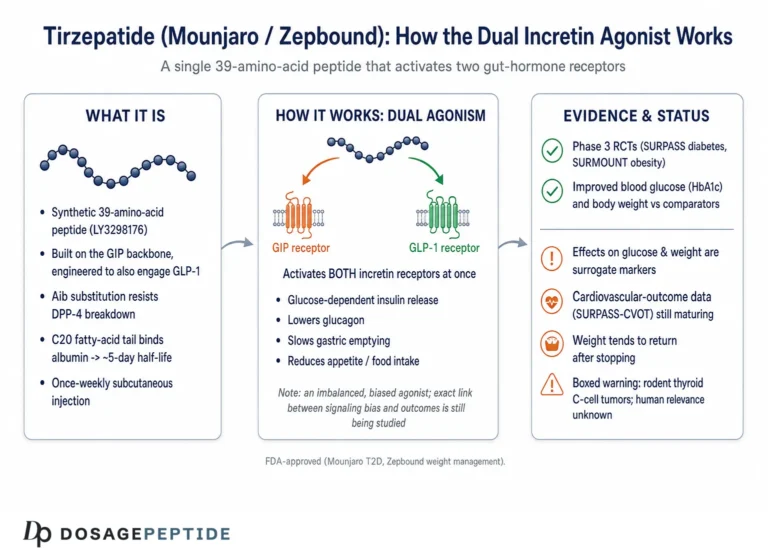
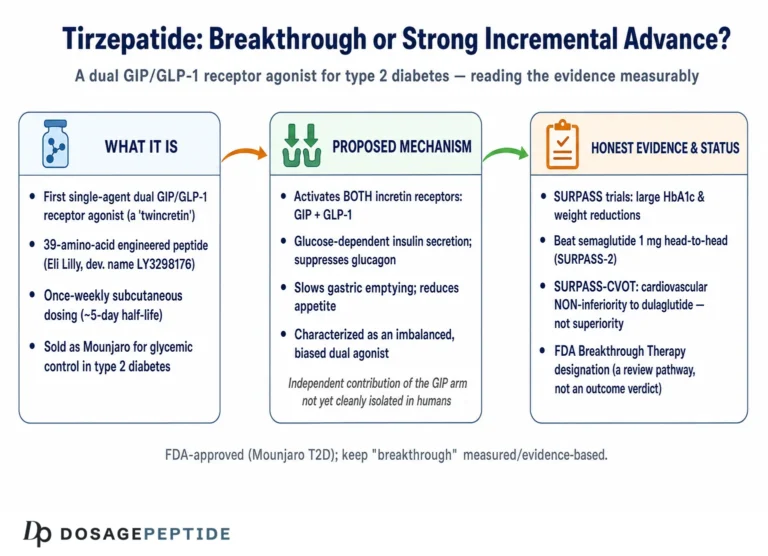
Tirzepatide (development code LY3298176) is a synthetic 39-amino-acid peptide engineered by Eli Lilly. Structurally it is built on the backbone of glucose-dependent insulinotropic polypeptide (GIP), one of the body’s two principal incretin hormones, but it has been deliberately modified so that a single molecule activates two receptors at once: the GIP receptor and the glucagon-like peptide-1 (GLP-1) receptor.3 This makes it the first-in-class “twincretin” or dual GIP/GLP-1 receptor agonist to reach the market.
The engineering problem the Lilly team solved was durability and balance. Native GIP and GLP-1 are broken down within minutes by the enzyme dipeptidyl peptidase-4 (DPP-4), which is why the natural hormones cannot be used as weekly drugs. Tirzepatide carries amino-acid substitutions that resist DPP-4 cleavage, plus a C20 fatty di-acid (a 20-carbon lipid chain) attached through a linker. That lipid moiety binds reversibly to circulating albumin, dramatically slowing renal clearance and extending the elimination half-life to roughly five days—long enough to support once-weekly subcutaneous dosing.3 In pharmacological terms the molecule is a lipidated, protease-stabilized peptide agonist, conceptually similar to how semaglutide extends GLP-1 activity, but with the added GIP arm.
The rationale for combining the two incretin pathways came from decades of physiology. GLP-1 receptor agonists alone (exenatide, liraglutide, dulaglutide, semaglutide) had already proven that amplifying incretin signaling lowers blood glucose and body weight. GIP’s role was historically murkier—in people with type 2 diabetes the insulin response to GIP is blunted—but preclinical work suggested that combining GIP agonism with GLP-1 agonism could produce additive or synergistic effects on insulin secretion, appetite, and energy balance while potentially improving gastrointestinal tolerability relative to a GLP-1 agonist pushed to an equivalent dose.3 Tirzepatide was designed to test that hypothesis in humans.
The clinical program advanced with unusual speed. After phase 1 and phase 2 dose-ranging studies established the 5 mg, 10 mg, and 15 mg once-weekly doses, the pivotal SURPASS series (in type 2 diabetes) and SURMOUNT series (in obesity and overweight) enrolled tens of thousands of participants. The U.S. Food and Drug Administration approved tirzepatide for type 2 diabetes in May 2022 under the brand Mounjaro, and the European Commission followed in September 2022.11,12 A separate obesity indication (Zepbound) and, later, an obstructive-sleep-apnea indication followed. In other words, the “latest trials” discussed here are not early-stage curiosities—they are the confirmatory and outcome studies that follow an already-approved drug into new populations and endpoints.
For readers coming from a peptide-research angle, it is worth restating what tirzepatide is not. It is not an experimental research chemical without human data, and it is not interchangeable with the unlabeled powders that circulate outside pharmacy channels. The published trials used a defined product; the sections below describe what that product did under controlled conditions. DosagePeptide.com maintains separate reference pages on the tirzepatide 5 mg vial format and other vial sizes for those researching handling parameters, but the compound’s legitimacy as a medicine rests entirely on the trial record summarized here rather than on any single protocol.
How Tirzepatide Works: The Dual-Incretin Mechanism
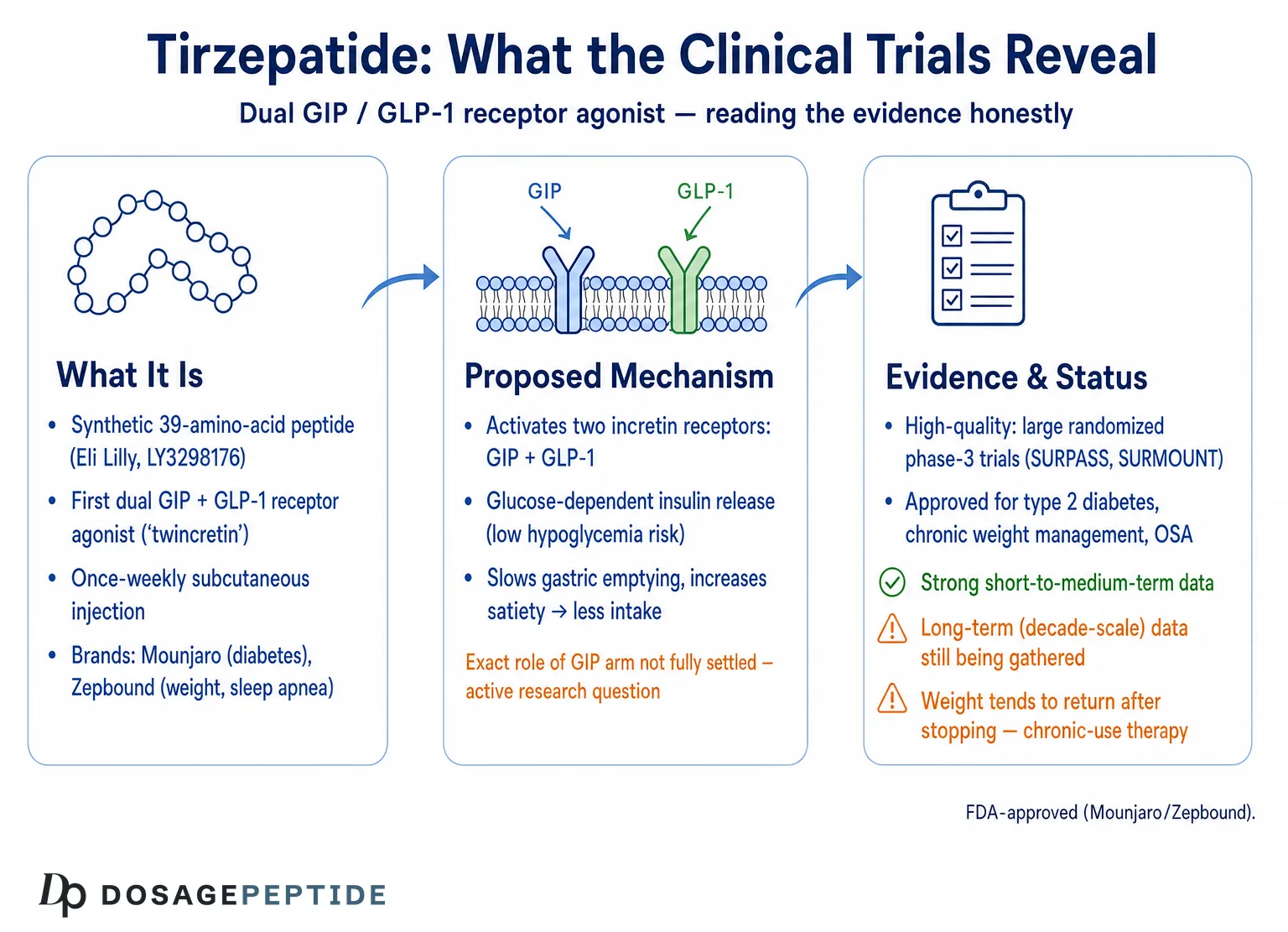
At the receptor level, tirzepatide is best understood as an imbalanced dual agonist. Detailed pharmacology shows it binds the GIP receptor with an affinity comparable to native GIP, while its binding affinity for the GLP-1 receptor is roughly 5-fold weaker than native GLP-1 (a difference that translates into about 20-fold lower potency in cAMP accumulation at that receptor).4 It is also “biased” in its signaling at the GLP-1 receptor, favoring cyclic-AMP generation over the beta-arrestin recruitment that drives receptor internalization—a property that may keep the receptor available at the cell surface for longer. These are not trivia; they are the molecular fingerprints that distinguish tirzepatide from a simple GLP-1 drug and that structural-biology studies have since visualized directly using cryo-electron microscopy of the ligand bound to each receptor.14
Downstream of those receptors, several complementary effects combine to produce the observed clinical outcomes:
- Glucose-dependent insulin secretion. Activation of both incretin receptors on pancreatic beta cells enhances insulin release specifically when blood glucose is elevated. Because the effect is glucose-dependent, the intrinsic risk of hypoglycemia from the incretin action itself is low—a point the trials bear out, where serious hypoglycemia was uncommon except in combination with insulin or sulfonylureas.2
- Glucagon suppression. GLP-1 receptor signaling restrains inappropriate glucagon secretion from pancreatic alpha cells, reducing hepatic glucose output and helping to lower fasting glucose.
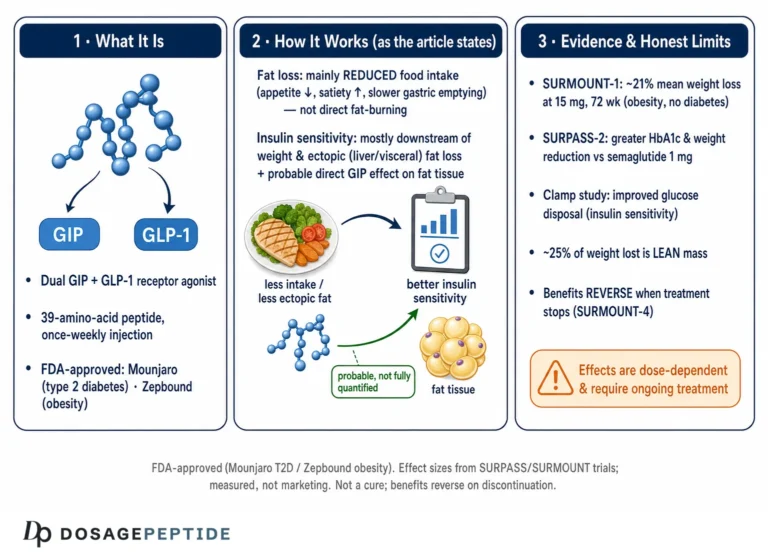
- Slowed gastric emptying and enhanced satiety. Incretin signaling in the gut and brain slows the rate at which the stomach empties and increases feelings of fullness, reducing caloric intake. This central appetite effect is thought to be the dominant driver of weight loss.
- Effects on energy balance and adipose tissue. The GIP arm is hypothesized to contribute additional effects on lipid handling and energy expenditure, though the exact human contribution of GIP versus GLP-1 remains an active research question.
A recurring scientific debate concerns how GIP agonism helps. Paradoxically, both GIP receptor agonists and GIP receptor antagonists have shown weight-lowering effects in different experimental settings, and researchers have not fully resolved whether tirzepatide’s benefit comes from sustained GIP-receptor activation, from functional desensitization that mimics antagonism, or from central-nervous-system GIP signaling that modulates appetite and nausea.3,4 The honest position is that the mechanism is better characterized than most peptides but not completely settled; the clinical effects are robust even while the mechanistic bookkeeping continues.
It is also worth situating the incretin mechanism within normal physiology to appreciate why it is so effective. After a meal, GIP and GLP-1 are secreted by enteroendocrine cells in the gut and account for a large share of the insulin response to oral versus intravenous glucose—the so-called incretin effect. In type 2 diabetes this effect is impaired. Tirzepatide does not simply restore normal incretin tone; it supplies a supraphysiologic, long-acting agonist signal at both receptors continuously across the week. That sustained pharmacologic stimulation, rather than meal-timed pulses, is what separates the drug’s effect from the body’s native hormones and explains both its potency and its characteristic gastrointestinal footprint. The receptors involved are expressed not only in the pancreas and gut but also in the hypothalamus and hindbrain regions that govern appetite and nausea, which is why central effects on food intake feature so prominently.
One practical consequence of the dual mechanism deserves emphasis. Because appetite suppression and delayed gastric emptying are on the causal path to weight and glucose improvement, the same mechanism also generates the drug’s most common side effects—nausea, diarrhea, and vomiting—particularly during dose escalation. Mechanism and adverse-effect profile are two sides of the same physiology, which is why every trial protocol used gradual titration starting at a sub-therapeutic 2.5 mg dose. Readers modeling reconstitution math for research purposes can consult the site’s peptide reconstitution guide, but the mechanistic point stands: the effects and the tolerability burden share a single biological origin.
What the Latest Trials Actually Reveal: The Core Efficacy Evidence
The strongest and most mature evidence for tirzepatide comes from two large randomized phase 3 programs: SURPASS in type 2 diabetes and SURMOUNT in obesity. These are the trials that define what the compound does, and their results are consistent enough that the overall picture is not in serious scientific dispute.
Glycemic control (SURPASS). In the SURPASS program, tirzepatide produced large reductions in glycated hemoglobin (HbA1c). In SURPASS-2, a 40-week head-to-head trial of 1,879 people with type 2 diabetes, mean HbA1c reductions from baseline were 2.01% (5 mg), 2.24% (10 mg), and 2.30% (15 mg), versus 1.86% for semaglutide 1 mg—a statistically significant superiority for tirzepatide at all three doses.2 Body-weight reductions in the same trial reached roughly 11-12 kg at the higher doses. Across the SURPASS trials, a substantial fraction of participants achieved HbA1c below 5.7%—a value in the non-diabetic range—something rarely seen with older glucose-lowering drugs.
Weight reduction (SURMOUNT). The obesity program produced the numbers that captured public attention. SURMOUNT-1 randomized 2,539 adults with obesity (or overweight plus a weight-related complication) but without diabetes to weekly tirzepatide or placebo for 72 weeks alongside lifestyle counseling. Mean weight reduction was approximately 15.0% at 5 mg, 19.5% at 10 mg, and 20.9% at 15 mg, compared with about 3.1% for placebo.1 A large share of participants on the highest dose lost at least 20% of their body weight—a magnitude previously associated mainly with bariatric surgery.
| Trial | Population | Duration | Comparator | Headline result (15 mg) |
|---|---|---|---|---|
| SURPASS-22 | T2D on metformin | 40 wk | Semaglutide 1 mg | HbA1c −2.30% vs −1.86% |
| SURMOUNT-11 | Obesity, no diabetes | 72 wk | Placebo | Weight −20.9% vs −3.1% |
| SURMOUNT-59 | Obesity, no diabetes | 72 wk | Semaglutide 2.4 mg | Weight −20.2% vs −13.7% |
| SYNERGY-NASH5 | MASH, F2–F3 fibrosis | 52 wk | Placebo | MASH resolution 73.3% vs 13.2% |
| SURMOUNT-OSA6 | Obesity + moderate-severe OSA | 52 wk | Placebo | Large AHI reduction vs placebo |
The consistency across the SURPASS and SURMOUNT families is itself part of the evidence. SURPASS-1 tested tirzepatide as monotherapy; SURPASS-3 compared it against titrated insulin degludec; SURPASS-4 studied a high-cardiovascular-risk diabetes population against insulin glargine; and SURPASS-5 examined it as an add-on to insulin glargine. Across these different backgrounds and comparators the direction and rough magnitude of the HbA1c and weight effects held steady, which is exactly the reproducibility one wants before trusting a result. The obesity program showed the same internal coherence: SURMOUNT-2 confirmed the weight effect specifically in people who also had type 2 diabetes (where weight loss is typically harder to achieve), SURMOUNT-3 layered tirzepatide on top of an intensive lifestyle lead-in, and SURMOUNT-4 tested what happens on withdrawal. A drug whose effect appears only under one narrow set of conditions is fragile; tirzepatide’s did not behave that way.
How should the level of evidence be graded? By any reasonable standard it is high for the approved indications: multiple large, randomized, double-blind, placebo- or active-controlled phase 3 trials with pre-registered endpoints, published in leading peer-reviewed journals, and replicated across diverse populations. This is the top tier of clinical evidence, and it is why regulators approved the drug. That said, high evidence is not the same as unlimited evidence. The pivotal weight-loss trials ran 72 weeks; lifelong efficacy and safety are still being characterized. Weight regain after discontinuation was demonstrated in SURMOUNT-4, where participants who switched from tirzepatide to placebo regained a substantial portion of lost weight, indicating that—like other obesity pharmacotherapy—benefits depend on continued treatment.13 The trials reveal a genuinely effective agent for glucose and weight; they do not reveal a cure, and the distinction is central to reading them honestly.
Head-to-Head and Indirect Comparisons
Because tirzepatide entered a field already occupied by potent GLP-1 receptor agonists, the most useful trials are those that compare it directly against an active competitor rather than placebo. Two direct comparisons anchor the discussion.
SURPASS-2 (vs semaglutide 1 mg, in diabetes). As noted above, tirzepatide was superior to the then-standard 1 mg dose of semaglutide for both HbA1c and weight in people with type 2 diabetes.2 A frequent and fair criticism is that the trial used semaglutide 1 mg—the diabetes dose available when the trial was designed—rather than the higher 2 mg diabetes dose or the 2.4 mg obesity dose. That limitation is exactly why the next trial mattered.
SURMOUNT-5 (vs semaglutide 2.4 mg, in obesity). Published in 2025, this was the first head-to-head trial pitting tirzepatide against the maximal obesity dose of semaglutide (2.4 mg) in 751 adults with obesity and without diabetes over 72 weeks. Tirzepatide produced a mean weight reduction of about 20.2% versus 13.7% for semaglutide—roughly 50% greater relative weight loss—and a larger reduction in waist circumference (−18.4 cm vs −13.0 cm).9 Notably, gastrointestinal adverse events leading to discontinuation were numerically lower with tirzepatide (2.7%) than semaglutide (5.6%), countering the intuition that a more potent agent must be less tolerable.
These results establish tirzepatide as, on average, the more effective of the two agents for weight and glucose outcomes in the populations studied. But two cautions keep this from being a simple “winner.” First, cardiovascular outcome evidence has historically been more mature for semaglutide, whose SELECT, SUSTAIN-6, and PIONEER-6 trials demonstrated reductions in major adverse cardiovascular events in defined populations years before comparable tirzepatide data existed.8 Second, group averages conceal wide individual variation: some people respond dramatically to semaglutide and modestly to tirzepatide, and trial means cannot predict an individual result.
Beyond the head-to-head randomized trials, 2025 saw large real-world comparative-effectiveness and target-trial-emulation analyses drawn from healthcare databases. These observational studies—while susceptible to confounding that randomization eliminates—broadly reinforced the pattern of greater weight and glycemic effect with tirzepatide, while emphasizing that cardiovascular comparisons remain an area where dedicated trials are still catching up.8 The methodological point is important for any careful reader: a randomized head-to-head trial (SURMOUNT-5) carries more weight than a database emulation, which in turn carries more weight than an uncontrolled case series. When trials and observational data agree, confidence rises; when they diverge, the randomized evidence should generally lead.
For the diabetes-versus-obesity distinction specifically, it helps to remember that Mounjaro and Zepbound are the same molecule at the same doses; the comparative trials therefore inform both uses even when a given study was labeled for one indication. Readers cross-referencing the various vial presentations can review the site’s 15 mg format reference, which corresponds to the maximum dose used in most pivotal trials.
Beyond Weight and Glucose: Cardiovascular, Kidney, Liver, and Sleep-Apnea Trials
The most interesting recent development is that tirzepatide’s trial program has expanded well past its original glucose-and-weight remit into hard cardiovascular, renal, hepatic, and respiratory endpoints. This is where the “latest trials” genuinely change the picture.
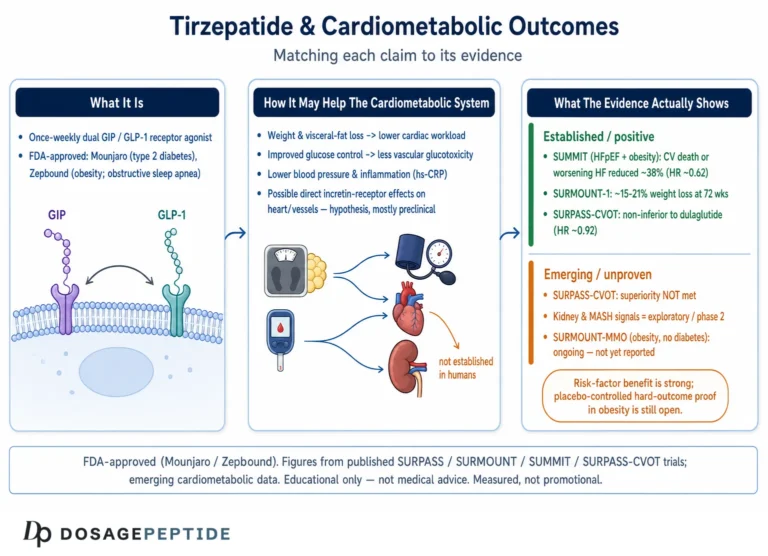
Cardiovascular outcomes (SURPASS-CVOT). The dedicated cardiovascular outcome trial randomized more than 13,000 people with type 2 diabetes and established atherosclerotic cardiovascular disease to tirzepatide or dulaglutide (an active GLP-1 comparator already proven to reduce cardiovascular events). Over a median follow-up of about four years, three-point major adverse cardiovascular events (cardiovascular death, myocardial infarction, or stroke) occurred in 12.2% of the tirzepatide group versus 13.1% of the dulaglutide group (hazard ratio approximately 0.92), meeting the pre-specified criterion for non-inferiority against an active drug that itself beats placebo.8 Secondary analyses reported a reduction in all-cause mortality and improvements across weight, blood pressure, lipids, and renal measures. The careful reading: tirzepatide was shown to be at least as good as an established cardioprotective agent, which is a meaningful reassurance about cardiovascular safety, rather than a placebo-controlled proof of a large event reduction.
Heart failure and kidney (SUMMIT). The SUMMIT trial studied 731 patients with heart failure with preserved ejection fraction (HFpEF) and obesity. Tirzepatide reduced the composite of cardiovascular death or worsening heart failure by roughly 38% versus placebo and improved health-status and functional measures.7 Roughly 60% of participants also had chronic kidney disease, and the benefit was consistent regardless of kidney status; markers of renal function improved as well—though investigators cautioned that changes in body composition can distort creatinine- and cystatin-C-based estimates of kidney function in this setting.7
Liver (SYNERGY-NASH). In a phase 2 trial of 190 participants with biopsy-confirmed metabolic dysfunction-associated steatohepatitis (MASH) and moderate-to-severe (F2–F3) fibrosis, resolution of MASH without worsening fibrosis at 52 weeks reached 51.8%, 62.8%, and 73.3% at the 5, 10, and 15 mg doses, versus 13.2% for placebo.5 Roughly half of tirzepatide-treated participants also achieved at least one stage of fibrosis improvement. This is promising, but it is phase 2 evidence using histologic surrogate endpoints, not a phase 3 outcome trial with clinical liver events—an important gradation of certainty.
Sleep apnea (SURMOUNT-OSA). In two linked trials of adults with obesity and moderate-to-severe obstructive sleep apnea (with and without positive-airway-pressure therapy), tirzepatide produced large reductions in the apnea-hypopnea index alongside improvements in body weight, hypoxic burden, high-sensitivity C-reactive protein, and systolic blood pressure.6 These results supported a distinct FDA indication for OSA in December 2024—the first drug therapy approved for this condition—and illustrate how the trial program keeps extending into conditions mechanistically tied to obesity.
A further strand of the expanding program concerns diabetes prevention. The three-year extension of SURMOUNT-1 examined whether sustained treatment in people with obesity and prediabetes reduced progression to overt type 2 diabetes, and reported a markedly lower rate of new-onset diabetes on tirzepatide than placebo over the treatment period—though, consistent with the mechanism, the protective signal attenuated after the drug was stopped. Post-hoc analyses of SURMOUNT-1 also probed improvements in beta-cell function and insulin sensitivity, offering a mechanistic bridge between the weight effect and the metabolic benefit. As always with extension and post-hoc work, these findings are hypothesis-strengthening rather than definitive, because the longer a trial runs the more participants drop out and the more the analysis relies on statistical modeling of incomplete data.
The through-line across these studies is that tirzepatide’s benefits appear to travel with the weight and metabolic improvements it produces, showing up in organ systems—heart, kidney, liver, airway—where excess adiposity and dysglycemia do their damage. That coherence strengthens confidence in the findings. It does not, however, license the claim that tirzepatide “treats” heart failure or liver disease in a curative sense; the trials show risk-and-marker improvement over defined periods in selected populations.
Research Models and Trial Methodology
Understanding how these trials were built is essential to weighing what they reveal. Tirzepatide’s evidence base rests overwhelmingly on randomized controlled trials (RCTs), the design that most effectively isolates a drug’s causal effect from confounding.
The pivotal trials shared a common architecture. They were randomized (participants assigned to tirzepatide or comparator by chance, balancing known and unknown confounders), double-blind where feasible (neither participant nor investigator knew the assignment, limiting placebo and observer bias), and multicenter and international (improving generalizability). Endpoints were pre-registered on public registries such as ClinicalTrials.gov before unblinding, which guards against the selective reporting that plagues weaker evidence. Sample sizes ran from several hundred (SUMMIT, SYNERGY-NASH) to several thousand (SURPASS-2, SURMOUNT-1) to over thirteen thousand (SURPASS-CVOT), with the largest reserved for the rare-event cardiovascular outcomes that require enormous statistical power.
Several methodological choices deserve scrutiny:
- Comparator selection. Placebo-controlled trials (SURMOUNT-1) answer “does it work at all?” while active-controlled trials (SURPASS-2 vs semaglutide 1 mg; SURPASS-CVOT vs dulaglutide) answer the more clinically useful “is it better than what we already have?” The choice of comparator dose—semaglutide 1 mg rather than 2.4 mg in the early diabetes trial—materially shapes how impressive a superiority result looks, which is why SURMOUNT-5’s use of the maximal semaglutide dose was so scientifically valuable.
- Estimands and missing data. Modern obesity trials report results under different “estimands”—for example, the effect assuming everyone adhered (efficacy estimand) versus the effect regardless of adherence or rescue therapy (treatment-policy estimand). Headline percentages can differ by several points depending on which is quoted, so responsible reading checks the analysis definition, not just the number.
- Endpoint type. Some endpoints are hard clinical events (death, myocardial infarction, hospitalization for heart failure); others are surrogate or histologic markers (HbA1c, percent weight change, biopsy-defined MASH resolution). Surrogates predict but do not guarantee clinical benefit, which is precisely why SYNERGY-NASH’s biopsy endpoint counts as weaker evidence than an event-driven outcome trial.
- Titration and run-in. Every trial used forced or maximally-tolerated dose escalation starting at 2.5 mg weekly and increasing at four-week intervals. This design both mirrors real prescribing and complicates interpretation, because tolerability and efficacy at the “15 mg” label reflect a population that reached that dose gradually.
It is worth stating plainly that essentially all of this evidence comes from studies sponsored by the manufacturer. Industry sponsorship does not invalidate results—the trials were run to regulatory standards, monitored by independent committees, and published after peer review—but it is a structural feature that argues for continued independent replication, including the real-world and academic analyses now appearing.8 None of the pivotal work involved “research-grade” peptide from unregulated suppliers; it used pharmaceutical-quality tirzepatide with documented identity and purity, a fact that should temper any inference from the trials to material of unknown provenance.
Safety and Tolerability in the Trial Record
Across the trial program the safety signal is dominated by gastrointestinal effects, and their pattern is remarkably consistent. In the SURPASS diabetes trials (roughly 6,263 tirzepatide-treated participants), the most common adverse events were nausea (about 12–24%), diarrhea (about 12–22%), and vomiting (about 2–13%), with frequency rising at higher doses.10 The SURMOUNT obesity trials showed a similar or somewhat higher burden—for example, in SURMOUNT-4, nausea around 35%, diarrhea around 21%, constipation around 21%, and vomiting around 16%.13
Three features of this signal matter for interpretation. First, the events were predominantly mild to moderate in severity. Second, they were concentrated during dose escalation and tended to subside once a stable dose was reached. Third, they led to relatively few discontinuations: pooled analyses of SURMOUNT-1 through -4 put treatment discontinuation due to gastrointestinal events in the low single-digit to low double-digit percentage range depending on dose and population.13 These characteristics are why gradual titration is not optional cosmetic guidance but a core part of how the drug is meant to be used.
| Adverse effect | Typical trial frequency | Character |
|---|---|---|
| Nausea | ~12–35% | Mostly mild–moderate; peaks during escalation |
| Diarrhea | ~12–22% | Mostly mild–moderate |
| Vomiting | ~2–16% | Dose-related |
| Constipation | ~7–21% | Common in obesity trials |
| Hypoglycemia | Uncommon alone; higher with insulin/sulfonylurea2 | Mechanism is glucose-dependent |
Beyond the common gastrointestinal events, the trials and post-marketing surveillance flagged less frequent but clinically important considerations. Rates of acute pancreatitis were rare and, in pooled trial analyses, not significantly elevated above control—but pancreatitis is a recognized labeled warning and remains under monitoring.10 Gallbladder-related events (cholelithiasis, cholecystitis) occur, as with rapid weight loss generally. The FDA label carries a boxed warning regarding thyroid C-cell tumors based on rodent data with GLP-1-class agents; a human causal link has not been established, but the drug is contraindicated in people with a personal or family history of medullary thyroid carcinoma or multiple endocrine neoplasia syndrome type 2.11 Diabetic retinopathy, injection-site reactions, and rare hypersensitivity have also been reported. FDA adverse-event-reporting-system (FAERS) analyses have examined real-world signals including gastrointestinal and, in some subgroup work, sex-specific patterns, though such spontaneous-report data cannot establish causation or incidence.
Investigators have also studied strategies to blunt the gastrointestinal burden without sacrificing efficacy. The pooled tolerability analyses consistently point to slower dose escalation, dietary adjustments (smaller, lower-fat meals), and, where needed, temporary symptomatic medication as ways to carry patients through the titration window during which nausea and vomiting peak.13 Importantly, the trials found that the degree of weight loss was not tightly coupled to whether an individual experienced nausea—meaning the side effects are not a required “price” of the benefit and people who tolerate the drug well still lose substantial weight. This decoupling argues against the folk belief that the drug “only works if it makes you sick.”
The honest safety summary is that tirzepatide has a well-characterized, mostly manageable tolerability profile in supervised use, driven by predictable and largely transient gastrointestinal effects, with a small number of serious but uncommon warnings that require clinical screening. Crucially, this profile was established with a defined pharmaceutical product, standardized dosing, and medical oversight—none of which apply to unregulated material self-administered outside clinical care, where purity, dosing accuracy, and monitoring cannot be assumed.
Handling and Reconstitution in a Research Context
The licensed products (Mounjaro, Zepbound) are supplied as ready-to-use solutions in single-dose pens or vials that require no mixing. The reconstitution question arises only for lyophilized (freeze-dried) tirzepatide powder encountered in laboratory and research settings, and it is included here strictly as educational context—not as an endorsement of self-administration of non-pharmaceutical material.
Tirzepatide, like most peptides, is supplied for research as a white lyophilized powder that is reconstituted with bacteriostatic water (sterile water containing 0.9% benzyl alcohol) before use in a laboratory model. The general handling principles that appear throughout the peptide literature apply: the diluent is directed slowly against the vial wall rather than injected forcefully onto the powder cake; the vial is gently swirled rather than shaken, because vigorous agitation can shear and denature peptide chains; and reconstituted solution is kept refrigerated and protected from light, with the lyophilized powder itself stored frozen for long-term stability. Benzyl alcohol’s mild antimicrobial action is what allows multi-day storage of a reconstituted vial in a research context.
The arithmetic of concentration is where errors most often occur, because tirzepatide’s active doses are small and the difference between vial sizes is easy to misjudge. Concentration is simply the total peptide mass divided by the volume of diluent added. Adding 2 mL of bacteriostatic water to a 10 mg vial yields 5 mg/mL; adding 1 mL to the same vial yields 10 mg/mL. A U-100 insulin syringe reads in “units,” where 100 units equals 1 mL, so translating a target mass into syringe units depends entirely on the concentration chosen at reconstitution. Small volume errors translate into large proportional dose errors at these low masses—a structural reason why the clinical product is pre-formulated and why research handling demands care. The site’s dosage calculator and reconstitution guide walk through this math in detail for educational modeling.
Two research-context cautions bear repeating. First, purity and identity of unregulated powder cannot be assumed; without a certificate of analysis and independent third-party testing, the actual peptide content, water content, and impurity profile of a given vial are unknown, and none of the trial safety data apply to material that does not match pharmaceutical specifications. Second, the clinical trials achieved their tolerability by titrating slowly from 2.5 mg with medical supervision; the escalation schedule is part of the evidence, not an incidental detail. Nothing in this section should be read as guidance to replicate clinical dosing outside of medical care. Different vial presentations—for instance the larger 30 mg format—change the reconstitution math but not these underlying principles.
Limitations and the Remaining Evidence Gaps
For all its strengths, the tirzepatide trial record has real boundaries that responsible readers should hold in view. Enumerating them is not skepticism for its own sake; it is what separates evidence-based understanding from hype.
Duration. The pivotal weight-loss trials ran 72 weeks, and the longest outcome trials a handful of years. Obesity and type 2 diabetes are lifelong conditions. We have strong short-to-medium-term data and growing multi-year cardiovascular data, but decade-scale efficacy and safety are still being assembled. The demonstrated weight regain after stopping treatment in SURMOUNT-4 underscores that these are chronic-use therapies, not time-limited cures.13
Surrogate versus hard endpoints. Much of the newer “beyond diabetes” evidence rests on surrogate or histologic markers—percent weight change, HbA1c, biopsy-defined MASH resolution, apnea-hypopnea index. These predict clinical benefit imperfectly. The liver evidence in particular is phase 2 and histologic; whether tirzepatide reduces hard outcomes like cirrhosis, liver failure, or hepatic mortality awaits phase 3 event trials.5
Comparator and sponsorship structure. Early superiority claims used a sub-maximal semaglutide dose, and nearly all pivotal data are manufacturer-sponsored. The independent, academic, and real-world analyses now emerging are essential to confirm that trial results hold in unselected populations and over longer horizons.8
Population generalizability. Trial participants are selected: they meet inclusion criteria, tolerate a run-in, and receive structured support. Older adults, people with multiple comorbidities, pregnant individuals (in whom the drug is not recommended), and other groups are under-represented or excluded. Effects in these populations are extrapolated, not directly demonstrated.
Mechanistic uncertainty. As discussed, the precise contribution of GIP-receptor agonism—and whether sustained activation, desensitization, or central signaling drives the benefit—remains incompletely resolved.3,4 This does not undermine the clinical results but it means the drug is not fully “understood” even where it is well characterized.
Head-to-head breadth. Although SURMOUNT-5 provided a landmark direct comparison against maximal-dose semaglutide for weight, the field still lacks head-to-head randomized trials pitting tirzepatide against the newest and most potent agents now in late-stage development—including triple GIP/GLP-1/glucagon agonists such as retatrutide and oral small-molecule incretin mimetics. Indirect and network comparisons attempt to fill this gap, but they are statistically fragile and cannot substitute for a randomized contest. As the class becomes more crowded, tirzepatide’s relative position will need continual re-evaluation rather than being settled once and for all by the trials completed to date.
The single largest gap for the audience of a peptide-education site is the chasm between the clinical evidence and unregulated research material. Every efficacy and safety figure quoted in this article was generated with pharmaceutical-grade tirzepatide, standardized dosing, and medical monitoring. There is no clinical-trial evidence for the safety, purity, or efficacy of lyophilized tirzepatide obtained outside regulated pharmacy channels, self-reconstituted, and self-administered without supervision. The trials reveal what a defined drug does under controlled conditions; they reveal nothing that would justify treating an unlabeled powder as equivalent.
Regulatory Status
Tirzepatide is a fully approved medicine, and its regulatory history is one of rapid, indication-by-indication expansion—each step tied to a specific trial result.
In the United States, the FDA approved tirzepatide for type 2 diabetes under the brand name Mounjaro in May 2022, on the strength of the SURPASS program. In November 2023 the same molecule was approved for chronic weight management under the brand name Zepbound, based on SURMOUNT, for adults with obesity (BMI 30 or higher) or overweight (BMI 27 or higher) with at least one weight-related condition. In December 2024, Zepbound gained an additional indication for moderate-to-severe obstructive sleep apnea in adults with obesity—the first drug ever approved for OSA—on the basis of SURMOUNT-OSA.6,11 The FDA label specifies a starting dose of 2.5 mg once weekly (a non-maintenance initiation dose), escalation to 5 mg after four weeks, and further increases in 2.5 mg increments no more often than every four weeks up to a maximum of 15 mg weekly.11 The label also carries the class boxed warning regarding thyroid C-cell tumors and the associated contraindications.
In Europe, the European Commission granted marketing authorization for Mounjaro in September 2022, initially for type 2 diabetes, with the indication subsequently broadened to include weight management and extended in some markets to adolescents and children aged 10 and older with type 2 diabetes.12 The European Medicines Agency later concluded that the obesity authorization already encompasses the sleep-apnea benefit, so a separate OSA indication was not required in the EU.12 Regulatory review of heart-failure and other expanded uses has continued in parallel with the trial readouts.
Two regulatory realities are worth underscoring for readers of a research-education resource. First, approval status attaches to the specific manufactured product with its documented quality controls—not to the chemical name in the abstract. Lyophilized tirzepatide powder sold for “research use only” is not an approved medicine, is not manufactured or tested to pharmaceutical standards, and is not legal to market or sell for human use; its distribution occupies a regulatory gray zone that varies by jurisdiction and is the subject of active enforcement attention. Second, because tirzepatide has been in high demand, compounded and counterfeit versions have circulated, prompting explicit regulator warnings; the trial evidence that makes tirzepatide credible does not extend to any of these unapproved forms. In short, the regulatory record confirms that tirzepatide is a legitimate, evidence-backed therapeutic—and simultaneously draws a bright line between the approved product studied in the trials and everything else that shares its name.
Frequently Asked Questions
Is tirzepatide FDA-approved, or still experimental?
Tirzepatide is fully FDA-approved. It is licensed for type 2 diabetes (as Mounjaro), for chronic weight management (as Zepbound), and for moderate-to-severe obstructive sleep apnea in adults with obesity (also Zepbound), and it is authorized in the European Union and many other regions.11,12 The trials described here are the confirmatory and outcome studies that follow an approved drug into new endpoints—not early experimental work. Approval applies to the specific pharmaceutical product, not to unregulated “research-grade” powder.
How much weight did people lose in the trials?
In SURMOUNT-1, adults with obesity and without diabetes lost on average about 15.0%, 19.5%, and 20.9% of body weight at the 5, 10, and 15 mg doses over 72 weeks, versus about 3.1% on placebo.1 In the head-to-head SURMOUNT-5 trial, tirzepatide produced roughly 20.2% weight loss versus 13.7% for maximal-dose semaglutide.9 These are group averages; individual results vary widely, and weight tends to return after stopping treatment.13
Is tirzepatide better than semaglutide?
For weight loss and glycemic control, direct trials (SURPASS-2 and SURMOUNT-5) showed tirzepatide produced greater average reductions than semaglutide, including against semaglutide’s maximal obesity dose.2,9 However, semaglutide has a longer track record of dedicated cardiovascular-outcome evidence, and individual responses differ. “Better on average in these trials” is not the same as “better for every person or every outcome.”8
What are the most common side effects seen in trials?
Gastrointestinal effects dominate: nausea, diarrhea, vomiting, and constipation, most frequent during dose escalation and usually mild to moderate.10,13 Serious but uncommon considerations include pancreatitis (a labeled warning), gallbladder events, and a boxed warning about thyroid C-cell tumors based on rodent data, with contraindications for certain thyroid-cancer histories.11 These profiles come from supervised use of the licensed product.
Does tirzepatide help the heart, kidneys, or liver?
Recent trials suggest benefits tied to its metabolic effects. SURPASS-CVOT showed cardiovascular non-inferiority versus an active comparator that itself reduces events;8 SUMMIT reduced a heart-failure composite in obesity-related HFpEF and improved renal markers;7 and the phase 2 SYNERGY-NASH trial improved liver histology in MASH.5,7 These are meaningful but should not be read as curative claims—several rest on surrogate endpoints or shorter follow-up.
Why does dosing start so low at 2.5 mg?
Every trial used gradual titration beginning at a sub-therapeutic 2.5 mg once weekly, increasing at four-week intervals, to limit gastrointestinal side effects that share the same mechanism as the drug’s benefits.11 The escalation schedule is part of how tolerability was achieved in the evidence, not an optional detail—which is one reason the clinical product is standardized and supervised.
Is “research-grade” tirzepatide the same as Mounjaro or Zepbound?
No. The trial evidence was generated with GMP-manufactured, quality-controlled pharmaceutical tirzepatide. Lyophilized powder sold for research use is not manufactured or tested to those standards, may vary in purity and content, and is not an approved medicine for human use. None of the safety or efficacy data in this article transfer to unregulated material.
How strong is the overall evidence?
For the approved indications it is high—multiple large, randomized, double-blind, pre-registered phase 3 trials published in leading journals and replicated across populations.1,2,9 The main caveats are limited very-long-term data, reliance on surrogate endpoints for some newer uses, and predominantly manufacturer-sponsored trials, which is why independent and real-world confirmation continues.8
References
- Jastreboff AM, Aronne LJ, Ahmad NN, et al. Tirzepatide once weekly for the treatment of obesity (SURMOUNT-1). New England Journal of Medicine. 2022;387(3):205–216.
- Frías JP, Davies MJ, Rosenstock J, et al. Tirzepatide versus semaglutide once weekly in patients with type 2 diabetes (SURPASS-2). New England Journal of Medicine. 2021;385(6):503–515.
- Coskun T, Sloop KW, Loghin C, et al. LY3298176, a novel dual GIP and GLP-1 receptor agonist: mechanism of action and preclinical characterization. Molecular Metabolism. 2018;18:3–14.
- Willard FS, Douros JD, Gabe MB, et al. Tirzepatide is an imbalanced and biased dual GIP and GLP-1 receptor agonist. JCI Insight. 2020;5(17):e140532. PMC7526454.
- Loomba R, Hartman ML, Lawitz EJ, et al. Tirzepatide for metabolic dysfunction-associated steatohepatitis with liver fibrosis (SYNERGY-NASH). New England Journal of Medicine. 2024;391(4):299–310.
- Malhotra A, Grunstein RR, Fietze I, et al. Tirzepatide for the treatment of obstructive sleep apnea and obesity (SURMOUNT-OSA). New England Journal of Medicine. 2024;391(13):1193–1205.
- Packer M, Zile MR, Kramer CM, et al. Tirzepatide for heart failure with preserved ejection fraction and obesity (SUMMIT). New England Journal of Medicine. 2025; and JACC secondary analysis on chronic kidney disease interplay, 2025.
- SURPASS-CVOT investigators. Cardiovascular outcomes with tirzepatide versus dulaglutide in type 2 diabetes with atherosclerotic cardiovascular disease. New England Journal of Medicine. 2025. See also Nature Medicine real-world emulation, November 2025.
- Aronne LJ, Horn DB, le Roux CW, et al. Tirzepatide versus semaglutide for the treatment of obesity (SURMOUNT-5). New England Journal of Medicine. 2025.
- Patel H, et al. Gastrointestinal adverse events and weight reduction in people with type 2 diabetes treated with tirzepatide in the SURPASS clinical trials. Diabetes, Obesity and Metabolism. 2024;26(2). doi:10.1111/dom.15333.
- U.S. Food and Drug Administration. ZEPBOUND (tirzepatide) injection, prescribing information. Accessdata.fda.gov, 2024/2025 revisions.
- European Medicines Agency. Mounjaro (tirzepatide) EPAR – product information and overview. Date of authorisation 15 September 2022, subsequent revisions. ema.europa.eu.
- Rubino D, et al. Gastrointestinal tolerability and weight reduction with tirzepatide across the SURMOUNT-1 to -4 trials. Diabetes, Obesity and Metabolism. 2025. doi:10.1111/dom.16176.
- Sun B, Willard FS, Feng D, et al. Structural determinants of dual incretin receptor agonism by tirzepatide. Proceedings of the National Academy of Sciences. 2022;119(13):e2116506119. PMC9060465. doi:10.1073/pnas.2116506119.
Educational and research-use disclaimer: This article is provided for scientific and educational purposes only. It summarizes published clinical-trial literature and does not constitute medical advice, a treatment recommendation, or a substitute for consultation with a qualified healthcare professional. Tirzepatide is a prescription medicine; decisions about its use belong to licensed clinicians and their patients. References to reconstitution or handling describe laboratory-research practices and are not instructions for human self-administration. Unregulated “research-grade” peptide material is not equivalent to approved pharmaceutical products, has not been evaluated in the trials described above, and may differ in purity, identity, and safety. Always defer to current regulatory labeling and professional medical guidance.