Pinealon is a synthetic tripeptide — glutamic acid–aspartic acid–arginine (Glu-Asp-Arg, abbreviated EDR) — that emerged from the Russian “peptide bioregulator” school associated with Vladimir Khavinson and the St. Petersburg Institute of Bioregulation and Gerontology. The central research question this article examines is deceptively simple: what is Pinealon, how is it theorized to act on neurons at the molecular level, and — most importantly — what does the actual published evidence show once you separate the marketing narrative from the laboratory data? The honest answer is that Pinealon is an investigational research compound with an almost entirely preclinical evidence base, produced by a narrow cluster of mostly single-school laboratories, and it is not an approved drug for any indication in any country.
This is a reference explainer for scientists, students, and informed readers who want the mechanism, the models, and the caveats in one place. Nothing here is medical advice, a therapeutic claim, or a usage protocol. Pinealon sold as “research grade” is a research-use-only material, not an approved product for human consumption.
Research Context: The Khavinson Bioregulator Framework
To understand Pinealon you first have to understand the intellectual tradition it comes from, because that tradition shapes both the claims made about the peptide and the way it has been studied. Beginning in the 1970s and 1980s, a group of Soviet (later Russian) researchers led by Vladimir Khavinson developed a class of substances they called “peptide bioregulators.” The original bioregulators were polypeptide extracts — complex mixtures purified from animal organs such as the thymus (Thymalin), the pineal gland (Epithalamin), and the brain cortex (Cortexin). The founding hypothesis was that each tissue produces short signaling peptides that regulate the functional activity and gene expression of the cells in that same tissue, and that supplying these peptides could restore age-diminished function.
Over subsequent decades, the group moved from crude extracts to defined synthetic short peptides — di-, tri-, and tetrapeptides — claimed to reproduce the “active core” of the natural extracts. Epitalon (Ala-Glu-Asp-Gly), a synthetic tetrapeptide, was positioned as the active principle of pineal Epithalamin. Pinealon (Glu-Asp-Arg) belongs to this second generation of short synthetic peptides and is marketed as a brain/cortex-oriented bioregulator. If you want the broader background on this family — the terminology, the recurring mechanistic claims, and the reasons the field remains controversial — our companion overview on peptide bioregulators and Khavinson short-peptide research is the pillar reference for this cluster.
Why the origin story matters for evidence interpretation
The bioregulator framework is important context for a specific reason: it means that most of what has been published about Pinealon comes from a relatively small, interconnected network of authors, journals, and institutions. A large share of the primary literature appears in journals such as Advances in Gerontology (Uspekhi Gerontologii), Bulletin of Experimental Biology and Medicine, Biochemistry (Moscow), and Rejuvenation Research, frequently with overlapping author lists that include Khavinson, Linkova, and their collaborators.[9] This is not an accusation of misconduct — pioneering work often concentrates in the lab that invented the field. But from an evidence-quality standpoint, a body of literature dominated by a single school, with limited independent replication and few rigorous randomized human trials, is inherently weaker than a claim supported by diverse, adversarial, independently funded groups. Keep that lens on for the rest of this article.
What Is Pinealon? Structure, Naming, and the EDR Sequence
Pinealon is a linear tripeptide composed of three amino acid residues in the sequence L-glutamyl-L-aspartyl-L-arginine. Using the standard single-letter amino-acid code, glutamate is E, aspartate is D, and arginine is R — hence the common shorthand EDR. You will also see it written as Glu-Asp-Arg. Its approximate molecular formula is C₁₅H₂₅N₅O₈ with a molecular weight in the region of 418 daltons, placing it firmly in the “ultrashort peptide” range.
What the sequence tells us
Two of the three residues (glutamate and aspartate) carry negatively charged carboxylate side chains at physiological pH, while arginine carries a positively charged guanidinium group. This gives the molecule a distinctive charge distribution — two acidic residues and one strongly basic residue — that is central to the mechanistic hypotheses discussed later, particularly the idea that such peptides can interact electrostatically with the phosphate backbone and specific bases of DNA. It is worth stating plainly that a defined charge pattern does not by itself prove a biological function; it merely makes certain interactions chemically plausible and gives researchers a hypothesis to test.
Naming conventions and points of confusion
The name “Pinealon” is a trade/research designation, not an internationally recognized generic drug name (there is no INN). This creates several avoidable confusions that recur in vendor copy and forum discussion:
- Pinealon is not melatonin. The name evokes the pineal gland, but Pinealon is a tripeptide, not the indoleamine hormone melatonin. Any implication that it “is” a pineal hormone is incorrect.
- Pinealon is not Epithalamin. Epithalamin is the original crude pineal polypeptide extract; Pinealon is a single defined synthetic tripeptide.
- Pinealon is not Epitalon. This is the most common mix-up and is addressed in detail in the next section.
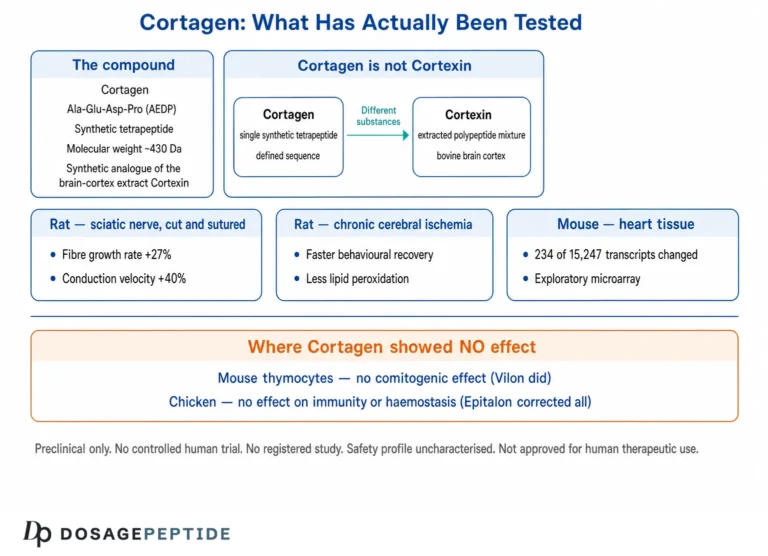
- “Cortex” framing. Because EDR has been described in the context of brain-cortex peptides and studied in cortical/cerebellar neuron cultures, it is sometimes grouped with cortex-oriented bioregulators, but the specific EDR sequence should not be conflated with the polypeptide extract Cortexin.
For precise, consistent definitions of these terms and the abbreviations used across the bioregulator literature, our peptide research glossary disambiguates the family names and sequences.
Pinealon vs Epitalon: How Does It Relate to the Pineal Peptide Family?
The Pinealon vs Epitalon comparison is worth its own section because the two are constantly confused, yet they are structurally distinct molecules studied for overlapping but not identical hypotheses.
| Feature | Pinealon | Epitalon (Epithalon) |
|---|---|---|
| Amino-acid sequence | Glu-Asp-Arg (EDR) | Ala-Glu-Asp-Gly (AEDG) |
| Length | Tripeptide (3 residues) | Tetrapeptide (4 residues) |
| Positioned as core of | Cortex/brain-oriented peptide research | Pineal Epithalamin |
| Most-cited claimed effect | Neuronal antioxidant / anti-apoptotic protection | Telomerase induction, circadian/melatonin axis |
| Signature in-vitro finding | Reduced ROS & caspase-3 in neuron cultures | Telomerase activation & telomere elongation in somatic cells |
| Evidence tier | Preclinical, single-school-dominated | Preclinical, single-school-dominated |
They share a family resemblance — both are short, acidic-residue-rich synthetic peptides from the same research tradition, both are proposed to enter cells and influence gene expression, and both are marketed with anti-aging framing. But they are different sequences with different signature experiments. Epitalon’s most famous result is the claim that it induces telomerase activity and telomere elongation in cultured human somatic cells,[14] a longevity-oriented hypothesis, and even that result comes from the originating school and has seen limited independent replication. Pinealon’s most-cited results are instead about acute neuronal protection against oxidative and hypoxic stress. For a full treatment of the tetrapeptide, see our explainer on Epithalon and telomerase aging research. The practical takeaway: do not treat findings about one as evidence for the other. They must be evaluated separately.
Mechanisms Being Studied: The Cell-Penetrating, Gene-Regulating Hypothesis

The Pinealon mechanism proposed by its originating researchers is more ambitious than a conventional receptor-ligand story. It is worth laying out the full hypothesis, then noting which parts have any direct experimental support and which remain speculative extrapolation.
Step 1: Cell and nuclear penetration
The foundational claim is that ultrashort peptides like EDR can cross the plasma membrane and even enter the nucleus. This is not entirely fanciful for a small, charged molecule, and it has some direct support: Fedoreyeva and colleagues used fluorescently labeled short peptides (including EDR) and reported that they penetrated into the cytoplasm and nucleus of HeLa cells, and that in vitro the peptides interacted specifically with deoxyribo-oligonucleotides and DNA.[5] That study is the most concrete piece of evidence for the “peptide gets into the nucleus and can touch DNA” premise. Note the caveats: it is a cell-line/in-vitro system, fluorescent labels can alter a small peptide’s behavior, and “interacts with DNA in a tube” is a long way from “regulates a specific gene in a living brain.” The HeLa system is also a cervical-carcinoma line, not a neuron, so any extrapolation to cortical or cerebellar neurons is an additional inferential leap that the data themselves do not close.
Step 2: Sequence-specific DNA binding
The next layer of the hypothesis is that these peptides do not bind DNA randomly but recognize specific sequences, effectively acting as tiny transcription-factor-like elements. Khavinson, Lin’kova, and Tarnovskaya have published binding models attempting to map how a panel of short peptides could dock into the major or minor groove of particular promoter sequences.[7] These are largely computational/modeling arguments and low-throughput biochemistry rather than genome-wide functional demonstrations, and they should be read as mechanistic conjecture supported by suggestive data, not as settled molecular biology. A docking pose that identifies a complementary hexanucleotide motif is a hypothesis about where a peptide might bind; it is not a measurement of occupancy in a living cell, nor a demonstration that binding at that site changes transcription of the adjacent gene. In mainstream molecular biology, claims of sequence-specific DNA recognition are normally supported by orthogonal biophysical and functional assays — electrophoretic mobility shift assays, footprinting, chromatin immunoprecipitation, and reporter constructs with mutated binding sites — and that battery of confirmation is largely absent from the EDR literature.
Step 3: Epigenetic and gene-expression modulation
The capstone claim is that by binding DNA (and possibly influencing methylation status or the accessibility of specific promoters), these peptides tissue-specifically shift gene expression — up-regulating protective genes and down-regulating others — and that this is the ultimate source of their claimed anti-aging and neuroprotective effects. Reviews from the group frame this as an “epigenetic” mode of action, with reports that related peptides alter DNA-methylation patterns of specific gene promoters in aging cell cultures and change expression of transcription-factor genes.[8] Broader systematic reviews from the same school catalog dozens of proposed peptide–gene relationships across multiple species.[9] It is important to note that much of the specific promoter-methylation work was performed with related peptides (for example the dipeptide and tripeptide sequences KE, KED, AED and the tetrapeptides) in pancreatic and bronchial epithelial cultures rather than with EDR in neurons, so applying those conclusions to Pinealon specifically is an inference across both sequence and tissue.
What this mechanism does and does not establish
Laid end to end, the hypothesis is internally coherent: small charged peptide → enters nucleus → binds specific DNA → changes gene expression → protective phenotype. The problem is the strength of each link. The penetration and in-vitro DNA-interaction steps have direct data. The sequence-specific regulation step relies heavily on modeling and on studies from the originating group. And crucially, no independent, mechanism-resolving study has traced a full causal chain from “EDR entered this neuron’s nucleus” to “therefore this specific gene changed and that produced the measured protection” in a rigorously controlled, replicated fashion. The mechanism is a plausible and testable hypothesis, not a proven pathway. That distinction is the single most important thing to carry away from this section. Reviews on peptide-driven cell differentiation and gene regulation from the group provide the fullest articulation of the model for readers who want the primary framing.[10] A useful discipline when reading this literature is to ask, for every mechanistic sentence, whether the underlying experiment measured the thing being claimed or merely a proxy consistent with it — the two are frequently conflated in secondary and vendor writing.
What Do the Antioxidant and Anti-Apoptotic Studies Actually Show?
The most reproducible and specific experimental signature attributed to Pinealon is at the level of oxidative stress and programmed cell death in neuronal cultures. This is where the primary data are strongest — which, given the overall picture, is a relative statement.
The core cell-culture result
The anchor study is Khavinson and colleagues’ report that Pinealon increases cell viability by suppressing free-radical levels and activating proliferative processes.[2] Working primarily with cultured rat cerebellar granule cells and cortical neurons (and, in the same paper, neutrophils and PC12 pheochromocytoma cells), the group reported that EDR reduced the accumulation of reactive oxygen species (ROS) provoked by several distinct stressors, in a dose-dependent manner, and decreased necrotic cell death as measured by the propidium iodide test. The stressors are worth naming because they represent mechanistically different insults:
- Hydrogen peroxide (H₂O₂) — a direct, receptor-independent oxidant.
- Homocysteine — a metabolite linked to excitotoxic and oxidative neuronal injury, relevant to the hyperhomocysteinemia model below.
- Ouabain — a Na⁺/K⁺-ATPase inhibitor used to trigger receptor-associated oxidative signaling.
Because the peptide reportedly blunted ROS from both receptor-dependent and receptor-independent triggers, the authors argued for a fairly general antioxidant/cytoprotective action rather than a single narrow receptor mechanism. Associated reports in the family describe reduced caspase-3 activation (a central executioner protease of apoptosis) and modified inflammatory signaling under stress.[4] These readouts are meaningful within their systems, but it is worth noting a comparison the originating authors themselves reported: in at least one aged-rat model, the polypeptide extract Cortexin exerted a more pronounced effect on free-radical processes and caspase-3 activity in the brain than Pinealon did,[3] which is a candid detail that argues against overstating the tripeptide’s potency.
The proposed antioxidant-enzyme angle
Beyond simply mopping up radicals, part of the literature proposes that EDR up-regulates the cell’s own antioxidant defenses — for example enzymes such as manganese superoxide dismutase (SOD2) and catalase — which would be consistent with the gene-expression mechanism described earlier. This is an attractive story because it links the molecular hypothesis (gene regulation) to the phenotype (less oxidative damage). But readers should note that measuring an enzyme or transcript increase in a stressed culture does not prove the peptide caused it through direct promoter binding rather than through a general reduction in stress that secondarily normalized expression. Cause and correlation are genuinely hard to separate in these systems. An orderly way to distinguish the two would be to block the proposed transcriptional step (for instance by inhibiting transcription or knocking down the candidate gene) and show that the protection disappears; that kind of loss-of-function control, which is standard in mechanistic pharmacology, is not a prominent feature of the published EDR work.
Honest appraisal of the antioxidant evidence
What can we responsibly say? In specific rodent-neuron culture systems, from a defined set of laboratories, EDR has been repeatedly reported to reduce oxidative-stress markers and apoptotic signaling and to improve cell survival under insult. That is a real, if narrow, body of in-vitro data. What we cannot say is that this constitutes established “neuroprotection” in any clinical sense, that the effect sizes are large or dose-defined for human relevance, or that it has been independently reproduced by adversarial groups outside the founding school. “Antioxidant in a dish” is one of the most common findings in all of preclinical pharmacology and one of the least predictive of human benefit; the history of neuroprotection research is littered with compounds that looked excellent in oxidatively stressed cultures and then failed comprehensively in rigorous animal and human testing. Pinealon has not yet earned an exemption from that base rate.
Hypoxia and Ischemia Rodent Models: The In-Vivo Evidence
Moving from cell culture to whole animals, the most cited Pinealon experiments involve models of oxygen deprivation and related metabolic stress. These are more informative than pure culture work because they test the peptide in an intact organism with a blood–brain barrier, real pharmacokinetics, and behavioral readouts — but they remain animal studies with the usual translational limits.
Prenatal hyperhomocysteinemia and prenatal hypoxia
A frequently referenced in-vivo study is Arutjunyan and colleagues’ report that Pinealon protects rat offspring from prenatal hyperhomocysteinemia.[1] In this design, pregnant rats were subjected to elevated homocysteine through dietary methionine loading (a model of intrauterine oxidative/excitotoxic stress), and maternal peptide administration was assessed for effects on the offspring. The authors reported that offspring in the peptide group showed better spatial orientation and learning, cerebellar neurons more resistant to oxidative stress, reduced ROS accumulation, and fewer necrotic cells compared with untreated prenatally stressed controls. This study is notable because it couples a molecular readout (neuronal ROS/necrosis) with a behavioral one (learning), which is the kind of convergent evidence that strengthens a preclinical claim. Even so, it is a single-laboratory study in one species with a specific artificial stressor, published in a journal outside the neuroscience mainstream, and it has not been independently reproduced; those are exactly the conditions under which promising preclinical effects most often shrink or vanish on replication.
Acute hypoxic hypoxia in aged animals
A second in-vivo thread examines older animals under acute oxygen deprivation. Mendzheritsky and colleagues studied Pinealon and Cortexin in roughly 18-month-old rats subjected to hypoxia and hypothermia, reporting effects on behavior and neurochemical processes,[3] and a related paper examined serum cytokine content and brain caspase-3 activity in a model of sharp hypoxic hypoxia.[4] The recurring narrative is that peptide-treated animals show attenuated markers of neuronal apoptosis (lower caspase-3) and modified inflammatory signaling after the hypoxic insult, alongside behavioral differences. As with the culture work, sample sizes are small, blinding and randomization are not always clearly reported, and the studies come from the same institutional cluster, so they should be read as internally consistent within one school rather than as independently corroborated findings.
How this compares to established neuroprotective research tools
It is instructive to contrast Pinealon’s evidence base with other agents studied for post-ischemic or hypoxic neuronal support. Peptide-preparation neuroprotection has a long research history — for example, the porcine-brain-derived preparation studied for post-stroke and cognitive indications that we cover in our Cerebrolysin dosage protocol reference has been through multiple human randomized trials and Cochrane-level scrutiny, and even there the clinical picture is contested. Pinealon has nothing remotely comparable in terms of human trial volume or independent replication. When a compound with a handful of single-school animal studies is discussed in the same breath as agents that have run large human trials, that is a category error worth flagging — the two are separated by several tiers of evidence, and conflating them is one of the most common ways vendor copy inflates a preclinical compound’s standing.
Aging and Cognition Rodent Models: Behavior, Memory, and Longevity Claims
Because Pinealon comes from a gerontology institute, a large part of its narrative is about aging and cognition rather than acute injury alone. Here the claims become broader and, correspondingly, the evidence becomes thinner and more susceptible to interpretation bias.
Spatial memory and behavioral testing
The behavioral case rests on standard rodent cognition paradigms. The Morris water maze — in which a rodent learns to locate a hidden platform in opaque water using spatial cues, with escape latency and probe-trial performance as readouts — is the workhorse for “spatial learning and memory.” Passive-avoidance and open-field tests are also used to probe memory and anxiety-like behavior. Reports in this literature describe peptide-treated animals (often prenatally stressed, aged, or hypoxia-exposed) outperforming untreated controls on such tasks.[1] Reviews from the group also aggregate claims of “neuroprotective effects of peptide bioregulators” across age groups.[6] It is worth being explicit that a review authored by the originating group, aggregating that group’s own primary studies, does not add an independent layer of confirmation — it repackages the same underlying data, and its conclusions can only be as strong as the primary work beneath it.
The serotonin and neurotransmitter angle
Some mechanistic-behavioral work proposes that short peptides including EDR influence neurotransmitter systems — for instance reports that Glu-Asp-Arg and related peptides stimulate serotonin expression in brain cortex cells in culture, with molecular-docking arguments about the tryptophan-hydroxylase gene promoter.[11] This is sometimes used to bridge from “molecular effect” to “mood/cognition” claims, but the leap from a serotonin transcript change in cultured cortical cells to any behavioral or affective outcome in an intact animal — let alone a human — is enormous and unproven. No controlled study has shown that Pinealon changes mood, affect, or a validated behavioral measure of serotonergic tone in a living organism, and it would be a serious misreading to present the culture finding as evidence that it does.
Longevity framing and its limits
Within the bioregulator tradition, cognitive preservation is often folded into a wider “geroprotection” narrative: the same epigenetic/gene-expression mechanism proposed for neuroprotection is proposed to slow cellular aging generally, sometimes with reports of altered IGF1 or other gene expression in aging cell models.[12] Readers should treat these longevity extrapolations with particular caution. It is also worth noting that the IGF1 study used the peptides AED, KED and KE in mesenchymal stem-cell cultures rather than EDR in neurons, so it is family-level evidence, not direct Pinealon data. Lifespan and “anti-aging” claims are notoriously difficult to substantiate, are highly sensitive to study design and animal husbandry, and have a poor track record of replication across independent labs. A gene-expression change in a culture dish is many, many steps removed from a validated effect on organismal aging, and no rigorous lifespan study of EDR in any mammal has established such an effect.
Delivery, Stability, and Pharmacokinetic Unknowns
A recurring blind spot in the Pinealon literature — and in most short-peptide bioregulator discussion — is pharmacokinetics. For a compound whose entire mechanism depends on reaching neuronal nuclei in the brain, the delivery questions are not a footnote; they are central to whether the mechanism can operate at all in vivo.
The oral and enzymatic-stability problem
Peptides are, in general, poor oral drugs. The gastrointestinal tract is rich in proteases (pepsin, trypsin, chymotrypsin, aminopeptidases, carboxypeptidases) whose job is to cleave peptide bonds. A tripeptide like EDR is a natural substrate for these enzymes and would be expected to face substantial degradation and low, variable systemic absorption if taken orally. The bioregulator school sometimes argues that ultrashort peptides survive well enough and that even fragments retain activity, but rigorous, independent absorption/bioavailability data for oral EDR are essentially absent from the peer-reviewed record. This is why much of the primary research uses injection or direct application to cultured cells — routes that sidestep the gut entirely. The gap matters commercially as well as scientifically: many products are sold in oral or sublingual formats whose systemic delivery of intact peptide has never been demonstrated, so even the premise that a meaningful quantity of EDR enters the bloodstream by those routes is unestablished.
Blood–brain barrier and plasma half-life
Even assuming systemic exposure, a brain-targeted peptide must cross the blood–brain barrier (BBB) and do so before plasma peptidases clear it — and small peptides typically have half-lives measured in minutes. The claim that EDR penetrates cells and nuclei is supported by the in-vitro fluorescence work,[5] but cell-culture penetration is not the same as crossing an intact BBB in a living animal at a meaningful concentration. Quantitative CNS distribution studies (how much peptide actually reaches cortical neurons after a peripheral dose, and for how long) are not well established in the public literature. This is a genuine mechanistic gap: a beautiful nuclear-targeting story means little if the molecule cannot arrive at the target tissue intact. Until someone measures a dose–concentration–time curve for EDR in brain tissue after a peripheral dose, the in-vivo behavioral effects and the proposed nuclear mechanism remain formally disconnected — we have effects at one end and a molecular story at the other, without the pharmacokinetic bridge that would link them.
Reconstitution and handling as a research material
Practically, Pinealon is distributed as a lyophilized (freeze-dried) powder that is reconstituted with sterile or bacteriostatic water for laboratory use. General handling principles for such research peptides — gentle reconstitution to avoid shearing, cold storage, and protection from repeated freeze–thaw — are covered in our peptide reconstitution guide, and vial-specific handling notes appear on the Pinealon 20 mg vial protocol reference. To be unambiguous: those pages describe how the material is handled in a research context; they are not endorsements of human use, and Pinealon is not an approved product for consumption. None of this changes the fact that its clinical status is investigational-to-nonexistent.
Current Evidence Level: How Strong Is the Data Really?
This is the section that matters most for anyone deciding how much weight to give Pinealon claims. Let us grade the evidence explicitly, using a standard hierarchy from weakest to strongest.
| Evidence tier | Does Pinealon have it? | Notes |
|---|---|---|
| In-vitro / cell culture | Yes | ROS suppression, caspase-3 reduction, viability, nuclear penetration — mostly single-school |
| Animal / preclinical in vivo | Yes (limited) | Prenatal hyperhomocysteinemia, hypoxia, aged-rat behavior — small studies, few labs |
| Independent replication | Largely no | Little adversarial replication outside the originating network |
| Human observational data | Minimal / low quality | A few small, methodologically weak reports on peptide use in aging cohorts |
| Randomized controlled human trials | No | No rigorous, registered, independent RCTs of EDR specifically |
| Regulatory approval | No | Not an approved drug for any indication in any major jurisdiction |
Placing Pinealon honestly on the ladder
Pinealon sits in the preclinical, single-school-dominated tier. It has a coherent mechanistic hypothesis, a modest cluster of in-vitro results, and a handful of small in-vivo studies — and essentially nothing above that. The systematic reviews that appear impressive by volume[9] are themselves authored largely by the originating group and aggregate that group’s own primary work, so they do not add the independent confirmation that a true evidence pyramid requires. In evidence-based-medicine terms, this is roughly the same tier as thousands of promising-but-unvalidated preclinical compounds, the vast majority of which never demonstrate a benefit in rigorous human trials. To be concrete about what is missing: there is no registered clinical trial of Pinealon/EDR on ClinicalTrials.gov for a cognitive or neuroprotective endpoint, no dose-ranging human safety study, and no independent replication of the key rodent findings by a group unconnected to the originating institute.
Why “lots of papers” is not the same as “strong evidence”
A common rhetorical move in vendor and forum material is to point to a long reference list as proof of efficacy. Reference count is a poor proxy for evidence quality. What matters is independence (are diverse, unaffiliated groups reaching the same conclusion?), pre-registration and blinding (were the studies designed to be hard to fool?), effect size and dose-response (is the effect large and orderly?), and human relevance (were the models predictive?). On every one of these axes, Pinealon is weak. A dozen concordant papers from an interconnected network carry less epistemic weight than two or three rigorous, independent, pre-registered replications would — and those replications do not yet exist. This is not a comment on the sincerity of the original investigators; it is a structural feature of how evidence accrues. Fields mature when outsiders with no stake in the original hypothesis try hard to break it and fail. That adversarial phase has, for the most part, not happened for Pinealon.
Research Methods Used to Study Pinealon
Understanding the methods clarifies both what the studies can show and where they are fragile. The Pinealon literature leans on a fairly standard preclinical toolkit.
Cell-viability and oxidative-stress assays
In-vitro work typically uses primary rodent neuron cultures (cerebellar granule cells, cortical neurons). Cell viability is assessed with dye-based assays; ROS is measured with fluorescent probes such as dichlorofluorescein derivatives; apoptosis is inferred from caspase-3 activity, mitochondrial membrane-potential dyes, and nuclear-morphology/necrosis counts. These assays are informative but notoriously sensitive to artifacts — probe chemistry, culture conditions, and the exact stressor all shift results, which is one reason independent replication matters so much. The dichlorofluorescein family of ROS probes in particular is known to be prone to oxidation artifacts and to reporting signals that do not cleanly correspond to a single reactive species, so a reported “reduction in ROS” is best read as a reduction in a somewhat nonspecific fluorescent readout rather than a precise measurement of a defined radical.
Behavioral neuroscience paradigms
In-vivo cognitive claims rely on the Morris water maze (spatial learning/memory), passive-avoidance conditioning (associative memory), and open-field testing (locomotion and anxiety-like behavior). These are validated, widely used tools, but they are also easy to bias without blinding and randomization, and small sample sizes inflate the chance of false positives. The published Pinealon behavioral studies are generally small, and the reports do not always make clear whether experimenters were blinded to treatment group during scoring — an omission that matters greatly for subjective or semi-automated behavioral measures, where unconscious expectation can shape results.
Molecular and computational approaches
The gene-regulation hypothesis is investigated with expression assays (RT-PCR/qPCR for target transcripts), DNA-methylation analysis of specific promoters,[8] fluorescent-peptide localization to show nuclear entry,[5] and molecular-docking/modeling to propose peptide–DNA binding sites.[7] The modeling work is hypothesis-generating rather than confirmatory: a plausible docking pose is a starting point for experiments, not proof that the interaction drives a physiological outcome. Notably, the field has generally not deployed the modern, high-resolution tools that would most directly test the core claims — genome-wide chromatin-occupancy mapping to show where (if anywhere) the peptide actually binds in living cells, or CRISPR-based loss-of-function experiments to test whether a proposed target gene is necessary for the observed protection.
Comparators within the family
Studies frequently compare or combine EDR with other bioregulators — the cortex extract Cortexin, the tetrapeptide family members, and related tripeptides such as the one described in our Cortagen 20 mg vial protocol reference. Family-level comparisons help map structure–activity relationships within the school’s framework, but because the comparators share the same originating tradition, they do not provide external validation. They also introduce a subtle interpretive hazard: when a paper reports that “the peptides” did something, it is often the mixture or a related sequence, not EDR specifically, that produced the effect, and careless secondary writing then attributes the whole family’s reported activity to Pinealon alone.
Limitations & Open Questions
A responsible reading of Pinealon ends with an explicit list of what remains unknown or unsatisfactory. These are not minor quibbles; collectively they define why the compound must be regarded as investigational at best.
Publication concentration and independence
The dominant limitation is the narrowness of the evidence source. A field advanced almost entirely by one interconnected school, publishing substantially in a limited set of journals, with sparse adversarial replication, is structurally vulnerable to systematic bias — whether from shared assumptions, shared methods, or the file-drawer effect. Until independent laboratories with no stake in the bioregulator paradigm reproduce the key findings, all conclusions must be provisional. This is the single consideration that should most temper enthusiasm: it is not that the findings are known to be wrong, but that the normal machinery science uses to catch errors — independent replication by people motivated to find flaws — has largely not been applied.
Absence of rigorous human trials
There is no body of registered, randomized, placebo-controlled, adequately powered human trials of EDR for any neurological, cognitive, or anti-aging endpoint. The few human-adjacent reports in the aging literature are small, non-randomized, and methodologically weak. This means every human-relevant claim about Pinealon is an extrapolation from rodents and cell cultures, and such extrapolations fail far more often than they succeed — the translational attrition rate from promising rodent neuroprotection to demonstrated human benefit is well documented and severe. No amount of mechanistic elegance substitutes for a well-run human trial, and none exists here.
Pharmacokinetic black box
As detailed above, the ADME profile (absorption, distribution, metabolism, excretion) of EDR — especially oral bioavailability and quantitative brain penetration in vivo — is poorly characterized. A mechanism that requires nuclear delivery in cortical neurons cannot be evaluated properly without knowing how much intact peptide reaches those neurons, if any, after a realistic dose. This is arguably the most consequential open question, because if the answer is “essentially none by common routes,” then the entire nuclear-gene-regulation mechanism is moot in vivo regardless of how well it is documented in a dish.
Effect size, dose-response, and mechanism resolution
The reported effects are often described qualitatively (“reduced,” “improved”) rather than with clear, reproducible dose-response curves, and the causal chain from proposed molecular action to phenotype has not been closed with modern mechanism-resolving methods (e.g., genome-wide binding maps, genetic loss-of-function controls, or knock-in reporters). Without dose-response and mechanism resolution, it is hard to distinguish a specific pharmacological effect from a nonspecific stress-buffering artifact. A specific, saturable, dose-ordered effect with a defined molecular target behaves very differently from a diffuse antioxidant cushioning, and the current data do not cleanly separate the two.
Regulatory and quality status
Finally, Pinealon is not an approved medicine anywhere, and material sold as “research grade” is not manufactured or tested to pharmaceutical standards for human use. Identity, purity, endotoxin content, and sterility of such materials are not guaranteed. This is a compliance and safety reality independent of any efficacy question: an unapproved research chemical should be treated as exactly that. Even a hypothetical future in which the efficacy questions resolved favorably would not retroactively make today’s unregulated research powders safe or appropriate for human use.
For a neurotrophic peptide preparation studied (with genuinely mixed independent evidence) in stroke, dementia and TBI research, see What Is Cerebrolysin?
Frequently Asked Questions
What is Pinealon in simple terms?
Pinealon is a synthetic tripeptide with the amino-acid sequence Glu-Asp-Arg (EDR), developed within the Russian “peptide bioregulator” tradition associated with Vladimir Khavinson. It is studied as a brain-oriented short peptide hypothesized to protect neurons from oxidative and hypoxic stress. It is a research-use-only material, not an approved drug, and its evidence base is almost entirely preclinical (cell-culture and rodent studies).
Is Pinealon FDA-approved or a proven neuroprotective treatment?
No. Pinealon is not approved by the FDA or any comparable regulator, for any indication, in any country. “Neuroprotection” has been reported in specific rodent and cell-culture models, but it has not been demonstrated in rigorous, independent human clinical trials. Describing it as a proven neuroprotective treatment would misrepresent the evidence, which sits at the preclinical, single-school-dominated tier.
What is the difference between Pinealon and Epitalon?
They are different molecules from the same research school. Pinealon is the tripeptide Glu-Asp-Arg (EDR) and is studied mainly for neuronal antioxidant and anti-apoptotic effects. Epitalon (Epithalon) is the tetrapeptide Ala-Glu-Asp-Gly (AEDG) and is best known for claims of telomerase activation and telomere elongation in cultured cells. Findings about one should not be treated as evidence for the other.
How is Pinealon thought to work at the molecular level?
The proposed Pinealon mechanism is that this small, charged peptide penetrates the cell and nucleus, binds specific DNA sequences, and epigenetically modulates gene expression — up-regulating protective and antioxidant genes. In-vitro data support nuclear entry and DNA interaction, but sequence-specific gene regulation relies heavily on modeling and single-school studies. The full causal chain has not been independently confirmed, so the mechanism remains a hypothesis, not an established pathway.
Is there any human evidence for Pinealon?
There is very little, and what exists is low quality. A small number of non-randomized reports discuss peptide bioregulators in aging cohorts, but there are no rigorous, registered, placebo-controlled randomized trials of EDR specifically for cognitive, neurological, or anti-aging endpoints. Effectively all human-relevant claims are extrapolations from rodent and cell-culture experiments, which frequently fail to translate.
Why is the Pinealon evidence base considered weak?
Because it is dominated by one interconnected group of researchers publishing in a limited set of journals, with sparse independent replication, small sample sizes, poorly characterized pharmacokinetics, and no rigorous human trials. A large reference count does not equal strong evidence; independence, blinding, dose-response, and human relevance do — and Pinealon is weak on all of those axes.
Can Pinealon be taken orally?
Oral use is pharmacologically questionable and unproven. As a tripeptide, EDR is a natural substrate for digestive proteases and would be expected to face significant breakdown and low, variable absorption in the gut. Rigorous independent oral-bioavailability data are essentially absent, which is one reason most primary research uses injection or direct cell-culture application rather than oral dosing.
How is Pinealon studied in the laboratory?
Researchers use rodent neuron cultures with viability, ROS, and caspase-3 assays to probe antioxidant and anti-apoptotic effects; in-vivo hypoxia and prenatal-stress models with behavioral tests such as the Morris water maze; and molecular tools including expression assays, DNA-methylation analysis, fluorescent-peptide localization, and computational docking. These are standard methods, but small sample sizes and limited blinding weaken many of the individual studies.
Is research-grade Pinealon safe to use?
Its safety in humans has not been established, and material sold as “research grade” is not manufactured or tested to pharmaceutical standards, so identity, purity, and sterility are not guaranteed. It is an unapproved research chemical intended for laboratory research use only, not for human or veterinary consumption. Questions about personal use fall outside what this reference can responsibly address.
References
- Arutjunyan A, Kozina L, Stvolinskiy S, Bulygina Y, Mashkina A, Khavinson V. Pinealon protects the rat offspring from prenatal hyperhomocysteinemia. Int J Clin Exp Med. 2012;5(2):179–185. https://pmc.ncbi.nlm.nih.gov/articles/PMC3342713/
- Khavinson V, Ribakova Y, Kulebiakin K, Vladychenskaya E, Kozina L, Arutjunyan A, Boldyrev A. Pinealon increases cell viability by suppression of free radical levels and activating proliferative processes. Rejuvenation Res. 2011;14(5):535–541. https://pubmed.ncbi.nlm.nih.gov/21978084/
- Mendzheritsky AM, Karantysh GV, Ryzhak GA, Prokofiev VN. Pinealon and Cortexin influence on behavior and neurochemical processes in 18-month aged rats within hypoxia and hypothermia. Adv Gerontol. 2015;28(3):532–539. https://pubmed.ncbi.nlm.nih.gov/28509493/
- Mendzheritskiy AM, Karantysh GV, Ryzhak GA, Dem’yanenko SV. Regulation of cytokines in blood serum and caspase-3 activity in brains of old rats in a model of sharp hypoxic hypoxia with Cortexin and Pinealon. Adv Gerontol. 2014;27(1):94–97. https://pubmed.ncbi.nlm.nih.gov/25051764/
- Fedoreyeva LI, Kireev II, Khavinson VKh, Vanyushin BF. Penetration of short fluorescence-labeled peptides into the nucleus in HeLa cells and in vitro specific interaction of the peptides with deoxyribooligonucleotides and DNA. Biochemistry (Mosc). 2011;76(11):1210–1219. https://pubmed.ncbi.nlm.nih.gov/22117547/
- Umnov RS, Lin’kova NS, Khavinson VKh. Neuroprotective effects of peptide bioregulators in people of various age. Adv Gerontol. 2013;26(4):671–678. https://pubmed.ncbi.nlm.nih.gov/24738258/
- Khavinson VK, Lin’kova NS, Tarnovskaya SI. Short peptides regulate gene expression. Bull Exp Biol Med. 2016;162(2):288–292. https://pubmed.ncbi.nlm.nih.gov/27909961/
- Ashapkin VV, Linkova NS, Khavinson VKh, Vanyushin BF. Epigenetic mechanisms of peptidergic regulation of gene expression during aging of human cells. Biochemistry (Mosc). 2015;80(3):310–322. https://link.springer.com/article/10.1134/S0006297915030062
- Khavinson VK, Popovich IG, Linkova NS. Peptide regulation of gene expression: a systematic review. Molecules. 2021;26(22):7053. https://pubmed.ncbi.nlm.nih.gov/34834147/
- Khavinson V, Linkova N, Diatlova A, Trofimova S. Peptide regulation of cell differentiation. Stem Cell Rev Rep. 2020;16(1):118–125. https://pubmed.ncbi.nlm.nih.gov/31808038/
- Khavinson VKh, Lin’kova NS, Tarnovskaya SI, Umnov RS, Elashkina EV, Durnova AO. Short peptides stimulate serotonin expression in cells of brain cortex. Bull Exp Biol Med. 2014;157(1):77–80. https://pubmed.ncbi.nlm.nih.gov/24909721/
- Ashapkin V, Khavinson V, Shilovsky G, Linkova N, Vanyushin B. Gene expression in human mesenchymal stem cell aging cultures: modulation by short peptides. Mol Biol Rep. 2020;47(6):4323–4329. https://pubmed.ncbi.nlm.nih.gov/32399807/
- Khavinson VKh, Malinin VV, Vanyushin BF. Role of peptides in epigenetic regulation of gene activities in ontogeny. Bull Exp Biol Med. 2012;152(4):470–474. https://pubmed.ncbi.nlm.nih.gov/22803113/
- Khavinson VKh, Bondarev IE, Butyugov AA. Epithalon peptide induces telomerase activity and telomere elongation in human somatic cells. Bull Exp Biol Med. 2003;135(6):590–592. https://pubmed.ncbi.nlm.nih.gov/12937682/
Research-use-only disclaimer: This article is an independent educational reference and does not constitute medical advice, a therapeutic recommendation, or an endorsement of use. Pinealon (Glu-Asp-Arg / EDR) is an investigational research compound; it is not approved by the FDA or any comparable regulatory authority for the diagnosis, treatment, cure, or prevention of any disease, and the evidence discussed here is overwhelmingly preclinical and concentrated within a single research tradition. Any material sold as “research grade” is intended strictly for in-vitro laboratory research by qualified professionals and is not for human or veterinary consumption. Nothing above should be interpreted as guidance to acquire, administer, or use this compound.