The research question at the center of this article is narrow and worth stating plainly: what do the current data allow researchers to say about retatrutide and the neuroendocrine appetite dysregulation that characterizes binge eating disorder (BED)? Retatrutide is an investigational triple agonist that simultaneously stimulates the glucagon-like peptide-1 (GLP-1), glucose-dependent insulinotropic polypeptide (GIP), and glucagon receptors, and it is being tested in phase 2 and phase 3 programs for obesity, type 2 diabetes, and metabolic dysfunction–associated steatohepatitis. It is not approved for any indication, and—critically—there are no completed clinical trials of retatrutide in binge eating disorder. Everything connecting this compound to BED is a mechanistic rationale, not evidence of efficacy.
That distinction shapes the whole discussion. The phase 2 obesity trial reported in The New England Journal of Medicine[1] showed dose-dependent appetite suppression and weight reduction, and the eating-behaviour analyses that followed described reduced hunger and disinhibition—but those observations were made in people with obesity or type 2 diabetes, not in people diagnosed with BED. This article reviews the neurobiology of binge eating, the pharmacology of a triagonist, the actual trial endpoints, the translational and related-compound evidence, and—just as importantly—the boundaries of what remains unproven.
Dosage Peptide highlights the importance of peptide quality, consistency, and methodological rigor in laboratory research. Topics such as analytical characterization, documentation standards, batch reliability, and reproducibility help researchers address common experimental challenges and strengthen the reliability of controlled scientific investigations across diverse research fields.
What Is Binge Eating Disorder, And Why Does Its Neuroendocrine Appetite Dysregulation Matter?
Binge eating disorder is the most common eating disorder, defined by recurrent episodes of consuming an objectively large amount of food in a discrete period while experiencing a subjective loss of control, in the absence of the regular compensatory behaviours seen in bulimia nervosa. What makes BED biologically distinct from simple overeating is that the drive to eat appears uncoupled from homeostatic need: episodes are triggered by emotional and reward cues, they proceed despite fullness, and they are accompanied by impaired inhibitory control. Neuroscientists increasingly describe the condition as a disorder of overlapping systems—homeostatic appetite regulation, hedonic reward valuation, and top-down impulse control—rather than a single lesion.[6]
The phrase “neuroendocrine appetite dysregulation” captures the intersection where incretin pharmacology could, in principle, intersect with BED. Appetite is governed by hormonal signals—insulin, leptin, ghrelin, GLP-1, GIP, and others—that are read out by specific neuronal populations in the hypothalamus and brainstem and then modulated by the mesolimbic reward system. If a compound reliably shifts those hormonal set points and dampens reward-driven feeding, it becomes at least mechanistically plausible that it could influence the loss-of-control eating that defines BED. Plausibility, however, is not proof, and the sections below keep the two carefully separated.
How Is BED Defined Clinically, And What Is The Negative-Affect Pathway?
Diagnostically, BED requires recurrent binge episodes—eating an unusually large amount with a sense of loss of control—occurring, on average, at least weekly over three months, associated with marked distress and with features such as eating rapidly, eating past fullness, eating when not hungry, eating alone from embarrassment, and feeling disgust or guilt afterward. The absence of regular compensatory behaviour separates it from bulimia nervosa. This clinical picture is important for the retatrutide discussion because it makes clear that BED is defined behaviourally and psychologically, not by body weight: a person can meet full BED criteria across a wide range of body sizes, which is exactly why weight-based metabolic trials do not, by themselves, speak to BED.
Alongside the reward and homeostatic accounts, a third pathway is central to BED and largely orthogonal to appetite hormones: the negative-affect or emotion-regulation model. In this account, binge episodes function to down-regulate aversive emotional states—stress, anxiety, low mood—providing transient relief that negatively reinforces the behaviour. This matters for interpreting incretin data honestly, because a drug that reduces physiological hunger may leave the emotion-regulation driver of binges largely untouched. Reviews of BED mechanisms consistently stress that reward hypersensitivity, impaired inhibitory control, and affect-driven eating are partly separable, and that effective treatment may need to address more than one.[13]
Epidemiologically, BED is more prevalent than anorexia nervosa and bulimia nervosa combined, affects people across the weight spectrum and both sexes, and carries a heavy burden of psychiatric comorbidity—mood disorders, anxiety disorders, and substance-use disorders are all over-represented. That comorbidity load is not incidental to the pharmacology question: it shapes both the potential benefit (if a compound reduces reward-driven eating) and the potential risk (if an appetite-suppressing agent is introduced into a population vulnerable to disordered eating), and it is one reason any future retatrutide-in-BED research would demand psychiatric expertise in its design.
How Do Hypothalamic Melanocortin Circuits (POMC And NPY/AgRP) Govern Hunger And Satiety?
The arcuate nucleus of the hypothalamus contains two antagonistic neuronal populations that form the core of the melanocortin system. Pro-opiomelanocortin (POMC) neurons are anorexigenic: when activated, they release α-melanocyte-stimulating hormone (α-MSH), which stimulates melanocortin-4 receptors to suppress food intake and increase energy expenditure. Neuropeptide Y (NPY) and agouti-related peptide (AgRP) neurons are orexigenic: they drive food intake, and AgRP acts as an inverse agonist at the same melanocortin-4 receptors, effectively releasing the brake that POMC applies.[7]
These two populations are exquisitely sensitive to circulating hormones. In the fed state, leptin and insulin activate POMC neurons and inhibit NPY/AgRP neurons, biasing the circuit toward satiety. In the fasted state, ghrelin and falling leptin do the reverse, increasing AgRP/NPY firing and promoting food-seeking. Incretin-based agents intersect this system: incretin receptor agonism has been shown to rapidly inhibit AgRP neurons, and GLP-1 receptor signaling supports POMC activity, both of which tilt the melanocortin balance toward reduced intake.[8] In BED, the relevant hypothesis is not that these neurons are structurally abnormal, but that the hormonal and reward inputs that normally regulate them are chronically distorted—a state a multi-receptor agonist might, in theory, help recalibrate.
What Role Does The Dorsal Vagal Complex And Brainstem Play In Meal Termination?
Homeostatic appetite is not decided in the hypothalamus alone. The dorsal vagal complex in the brainstem—comprising the nucleus tractus solitarius (NTS), the area postrema, and the dorsal motor nucleus of the vagus—integrates rapid, meal-by-meal signals about gut distension and nutrient arrival. Vagal afferents carry mechanical and hormonal information from the gastrointestinal tract to the NTS, which then communicates with hypothalamic and forebrain regions to terminate a meal. Because peptide agonists such as retatrutide are large molecules with limited direct blood-brain barrier penetration, much of their central action is thought to be relayed through exactly these routes: vagal afferents and circumventricular organs like the area postrema that lack a complete blood-brain barrier.[2]
This matters for BED because loss-of-control eating is, in part, a failure of meal termination. If satiety signaling through the dorsal vagal complex is blunted or ignored, an episode continues past the point where fullness should stop it. Strengthening that signaling is one of the most consistent effects of GLP-1 receptor agonism, and it is a plausible—though unproven—point of leverage for correcting the disinhibited eating pattern seen in BED.
Which Peripheral Gut Hormones Feed Into These Circuits?
The central circuits do not operate in isolation; they are continuously informed by a suite of peripheral signals. Ghrelin, secreted mainly by the stomach, rises before meals and is the principal orexigenic hormone, activating AgRP/NPY neurons to promote food-seeking. Leptin, released from adipose tissue in proportion to fat mass, and insulin, from the pancreas, act as longer-term adiposity signals that bias the arcuate circuit toward satiety. Layered on top are the rapid meal-related hormones: cholecystokinin (CCK) from the small intestine signals fullness during a meal, peptide YY (PYY) rises after eating to reduce subsequent intake, and GLP-1 itself is released from intestinal L-cells in response to nutrients.[2]
This network is where pharmacological incretin agonism inserts itself. By supplying a sustained, supraphysiological GLP-1 receptor signal—and, in retatrutide’s case, GIP and glucagon receptor signals as well—the drug amplifies the satiety side of a system that, in binge eating, appears biased toward drive and reward. Whether any single hormonal axis is intrinsically abnormal in BED remains uncertain; studies of ghrelin, leptin, and PYY in binge eating have produced mixed results. The more defensible framing is that BED involves altered integration of these signals within reward and control circuits, rather than a clean deficiency of one hormone—which again cautions against assuming that boosting one axis will resolve the disorder.
How Does The Mesolimbic Dopamine Reward System (VTA To NAc) Drive Hedonic And Compulsive Eating?
Beyond homeostasis sits the hedonic system. Dopaminergic neurons in the ventral tegmental area (VTA) project to the nucleus accumbens (NAc), and this VTA→NAc pathway assigns motivational value—“wanting”—to food cues. In binge eating, this reward circuitry appears dysregulated: individuals show heightened anticipatory reward and cue reactivity to highly palatable, energy-dense foods, alongside altered dopamine D2/D3 receptor signaling. A recurring model describes a shift from ventral (reward-driven) toward dorsal (habit- and compulsion-driven) striatal control as binge patterns become entrenched, echoing the trajectory seen in substance-use disorders.[9]
The link to incretin pharmacology is direct because GLP-1 receptors are expressed within these reward regions, including the VTA and NAc. Preclinical work has shown that central GLP-1 receptor activation reduces food-motivated behaviour and the intake of highly palatable food, positioning GLP-1 signaling as a modulator of reward and not merely of homeostatic hunger.[4] This is the mechanistic bridge that makes a GLP-1–containing triagonist interesting for reward-driven eating disorders—while remaining a bridge that has not yet been walked in a BED trial.
Is Binge Eating A “Food Addiction,” And Where Does Impulse Control Fit?
The “food addiction” construct proposes that certain hyper-palatable foods engage reward and learning circuits in a manner resembling addictive substances, producing tolerance, craving, and continued use despite harm. BED shares features with this model—craving, cue-triggered relapse, and reward-system involvement—but it is not synonymous with it, and the construct remains debated. What is better established is that BED involves impaired inhibitory control: prefrontal circuits that normally exert top-down restraint over reward-driven impulses are less effective, so a craving that arises is less likely to be overridden. Contemporary treatment frameworks explicitly target both reward hypersensitivity and inhibitory-control deficits as separable mechanisms.[13]
The dopamine literature adds nuance to the “addiction” framing. Rather than a simple excess or deficit, binge eating appears to involve altered dopamine dynamics—heightened cue-triggered anticipatory “wanting” coupled, in some studies, with blunted consummatory “liking,” a dissociation that mirrors the incentive-sensitization model of addiction. Alterations in dopamine D2/D3 receptor availability and in striatal response to food cues have been reported, though findings are heterogeneous across studies and populations.[9] This heterogeneity is itself a caution: if the reward abnormality in BED is not uniform, a single pharmacological lever is unlikely to normalize it in every patient.
Framed this way, an incretin agent could plausibly act on the reward and craving side of the equation—reducing the salience of palatable food—without directly repairing prefrontal impulse control or the negative-affect drivers of bingeing. That is an important nuance: even in the most optimistic mechanistic reading, a triagonist would address part of the BED circuitry, not all of it, which sets a realistic ceiling on what mechanism alone can promise.
The following table summarizes the principal circuits implicated in BED and how incretin signaling intersects each. It is a map of hypotheses, not a claim of demonstrated retatrutide effects in BED.
| Brain region / circuit | Key neurons or signals | Normal role in appetite | Dysregulation implicated in BED | Where incretin signaling intersects |
|---|---|---|---|---|
| Arcuate nucleus (hypothalamus) | POMC vs. NPY/AgRP; leptin, insulin, ghrelin | Sets homeostatic hunger/satiety balance | Distorted hormonal set points, blunted satiety | GLP-1 supports POMC; incretin agonism inhibits AgRP |
| Dorsal vagal complex (brainstem) | NTS, area postrema, vagal afferents | Meal-by-meal satiety and meal termination | Failure to terminate episodes despite fullness | Peptide action relayed via vagus and area postrema |
| Mesolimbic pathway (VTA→NAc) | Dopamine; D2/D3 receptors | Assigns motivational value to food cues | Cue hyper-reactivity; ventral-to-dorsal shift | GLP-1 receptors in VTA/NAc reduce food-motivated behaviour |
| Prefrontal cortex | Executive/inhibitory networks | Top-down restraint over impulses | Impaired inhibitory control | No direct, established incretin effect |
What Is Retatrutide, And How Does Its Triple-Agonist Pharmacology Work?
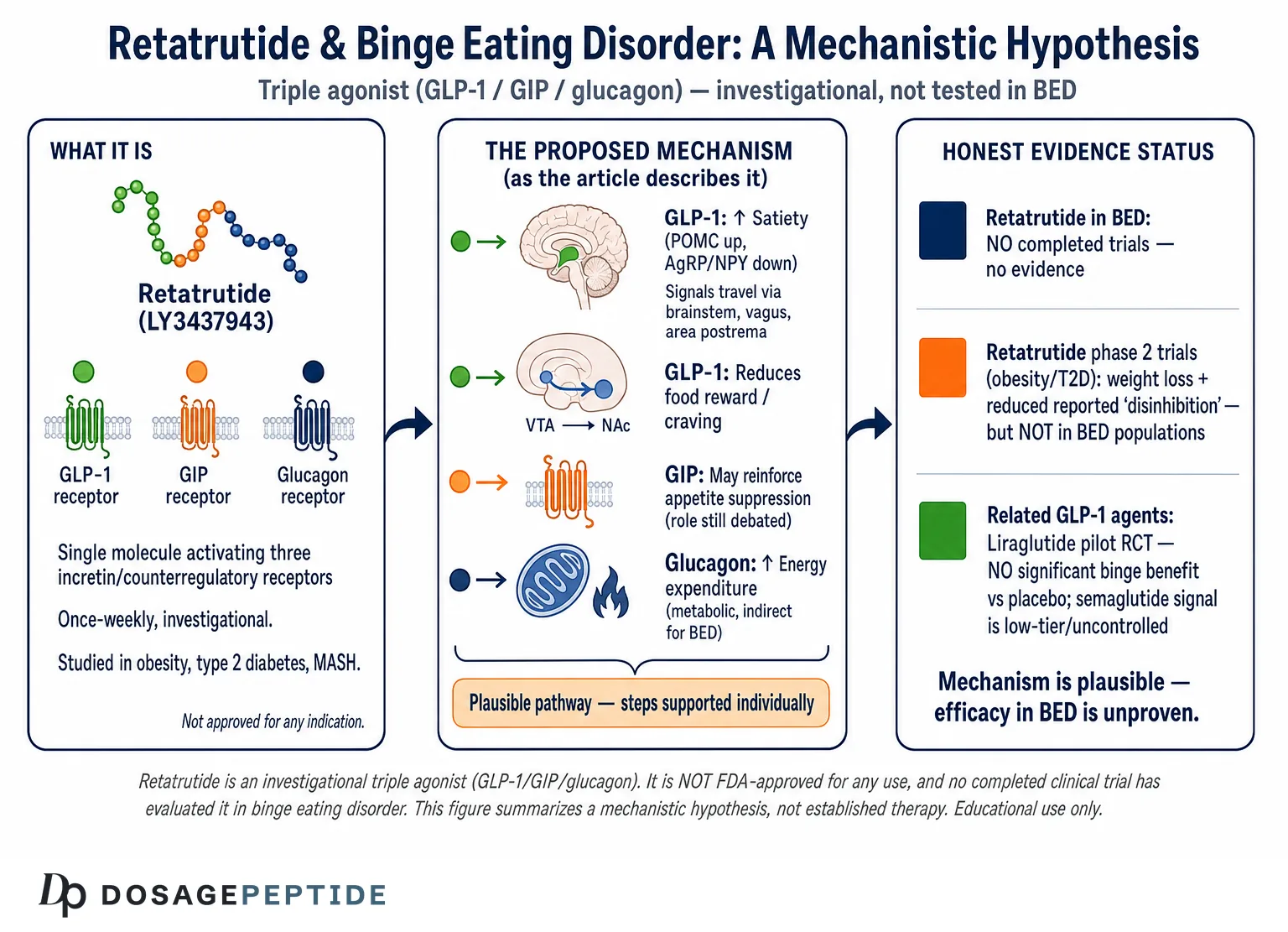
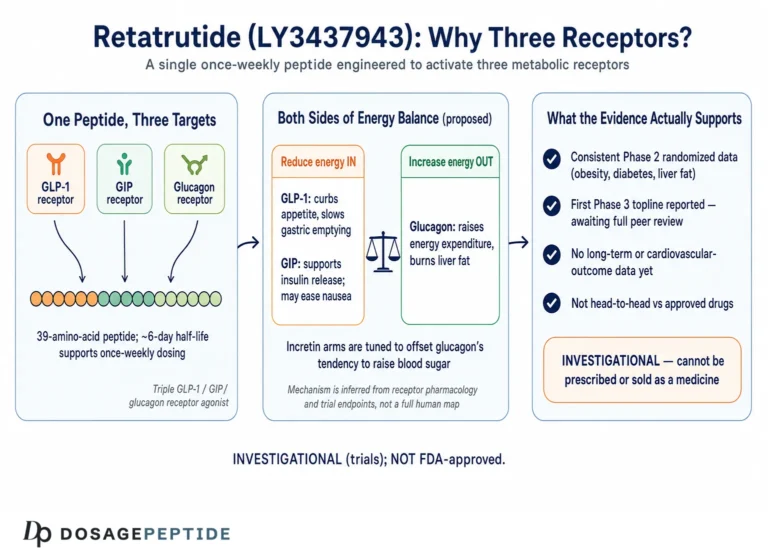
Retatrutide (development code LY3437943) is a once-weekly, single-molecule agonist engineered to activate three distinct receptors: the GLP-1 receptor, the GIP receptor, and the glucagon receptor. The design rationale is that these three incretin and counter-regulatory pathways influence energy balance through partly complementary mechanisms—appetite suppression, insulin secretion and nutrient handling, and energy expenditure—so that engaging all three might exceed what a single- or dual-receptor agonist achieves. Understanding the BED hypothesis requires understanding what each receptor contributes, and where the science is settled versus contested.
What Does GLP-1 Receptor Activation Contribute?
GLP-1 is the best-characterized of the three arms and the one most relevant to appetite and reward. Peripherally, GLP-1 stimulates glucose-dependent insulin secretion, suppresses glucagon, and slows gastric emptying, which prolongs the sense of fullness after a meal. Centrally, GLP-1 receptor signaling enhances satiety through hypothalamic and brainstem circuits and, as noted, modulates the mesolimbic reward system.[2] The comprehensive review by Müller and colleagues in Molecular Metabolism[2] documents GLP-1 receptor activity across hypothalamic and brainstem nuclei that regulate food intake, as well as its effects on reward behaviour and palatability. It is this dual homeostatic-plus-hedonic action that makes GLP-1 the mechanistic anchor of the BED rationale.
An important pharmacological detail is how the signal reaches the brain. Peptide agonists of this size do not cross the blood-brain barrier freely; instead they act on GLP-1 receptors in circumventricular organs such as the area postrema, on vagal afferent neurons that relay to the nucleus tractus solitarius, and on select hypothalamic populations accessible from the circulation. The net result is a sustained, pharmacological amplification of a satiety signal that the body normally produces only transiently after meals. In principle, that sustained tone could reduce both the frequency of eating occasions and the drive toward highly palatable food—the two features most relevant to binge eating—but the strength of this effect on genuine loss-of-control episodes, as opposed to ordinary appetite, is exactly what remains untested in BED.
Why Is GIP’s Central Role Contested?
GIP is the most paradoxical component. It is an incretin that potentiates insulin secretion, yet the field has not settled whether central GIP receptor agonism or antagonism is the route to weight benefit—strikingly, both approaches produce weight loss in preclinical models. Recent work suggests that GIP receptor signaling in central regions governing energy balance is important for appetite effects, and that combined GIP and GLP-1 receptor agonism inhibits AgRP neurons more potently than either alone.[8] For the BED hypothesis, GIP’s contribution should be treated as an area of active investigation rather than a defined appetite-suppressing mechanism—an honest reading is that the GIP arm may reinforce the GLP-1 effect on hypothalamic circuits, but the details remain unresolved.
Part of the puzzle is that GIP receptors are expressed both centrally and peripherally, and the same receptor may produce different net effects depending on context, chronicity of stimulation, and interaction with GLP-1 signaling. One influential idea is that prolonged GIP receptor agonism leads to functional desensitization that mimics antagonism, which could reconcile why both agonism and antagonism appear to lower weight in models. Whatever the resolution, the practical implication for a triagonist is modest humility: the GIP arm is a genuine part of retatrutide’s design and likely contributes to its metabolic potency, but its specific role in reward-driven or loss-of-control eating has not been isolated, and it should not be described as a proven appetite mechanism in the BED context.
What Does Glucagon Receptor Engagement Add?
The glucagon arm is what most distinguishes retatrutide from GLP-1 and GLP-1/GIP agents. Glucagon receptor activation increases hepatic fatty acid oxidation and raises energy expenditure, and it also contributes modestly to satiety. In a metabolic context, this arm is thought to drive part of the large weight reduction observed in trials by increasing the energy side of the balance rather than only reducing intake. It is also the basis for retatrutide’s investigation in metabolic dysfunction–associated steatohepatitis (MASH), because glucagon-driven hepatic lipid oxidation can reduce liver fat—a reminder that the glucagon component was engineered for whole-body metabolism, not for behaviour.
Its relevance to BED is therefore more indirect. By counteracting some of the metabolic adaptations—insulin resistance, altered substrate handling, and the leptin-signaling disruptions—that can accompany chronic binge cycles, the glucagon arm might contribute to metabolic stabilization that indirectly supports appetite regulation. But there is no established central pathway by which glucagon receptor agonism reduces the loss-of-control eating that defines BED. This is a supportive metabolic rationale, not a demonstrated behavioural mechanism for reducing binge episodes, and it should be presented as such. The distinctive glucagon arm is also why comparisons with GLP-1 and GLP-1/GIP agents are informative rather than interchangeable—the extra receptor changes the metabolic profile but not, by any known mechanism, the reward-circuit story that underlies the BED hypothesis.
The table below maps each receptor to its principal central site, peripheral role, and the appetite or reward-relevant effect that underlies the BED hypothesis.
| Receptor | Principal CNS involvement | Key peripheral role | Appetite / reward-relevant effect | Evidence status |
|---|---|---|---|---|
| GLP-1 receptor | Hypothalamus, NTS, VTA, NAc | Glucose-dependent insulin, slowed gastric emptying | Enhances satiety; dampens food reward and craving | Well established |
| GIP receptor | Central energy-balance regions; AgRP modulation | Potentiates insulin secretion; lipid handling | May reinforce appetite suppression (direction debated) | Contested / active research |
| Glucagon receptor | Limited direct central role | Hepatic fat oxidation; raises energy expenditure | Modest satiety; metabolic stabilization | Established peripherally; indirect for BED |
How does this triple design compare with the single- and dual-agonist compounds researchers already study? The contrast is summarized below. For deeper protocol-level references on the comparators, see the semaglutide 10 mg vial dosage protocol and the tirzepatide 10 mg vial dosage protocol, and the reward-focused amylin analogue in the cagrilintide 10 mg vial dosage protocol.
| Class | Representative compound | Receptors engaged | Primary mechanistic emphasis | Relevance to reward-driven eating |
|---|---|---|---|---|
| Single agonist | Semaglutide, liraglutide | GLP-1 | Satiety via GLP-1; slowed gastric emptying | Direct GLP-1 reward modulation; most BED-adjacent data |
| Dual agonist | Tirzepatide | GIP + GLP-1 | Added GIP arm; potent AgRP inhibition | Strong appetite suppression; GIP contribution debated |
| Triple agonist | Retatrutide | GIP + GLP-1 + glucagon | Adds energy-expenditure (glucagon) arm | Broadest metabolic reach; no BED-specific data |
What Do Retatrutide’s Phase 2 Obesity And Type 2 Diabetes Trials Actually Show?
Because the BED discussion rests entirely on extrapolation, it is worth being precise about what the trials measured and in whom. The pivotal phase 2 data come from two randomized, double-blind studies—one in obesity, one in type 2 diabetes—plus a subsequent analysis of eating behaviour. None of these enrolled participants on the basis of a BED diagnosis.
The Phase 2 Obesity Trial (Jastreboff Et Al., 2023)
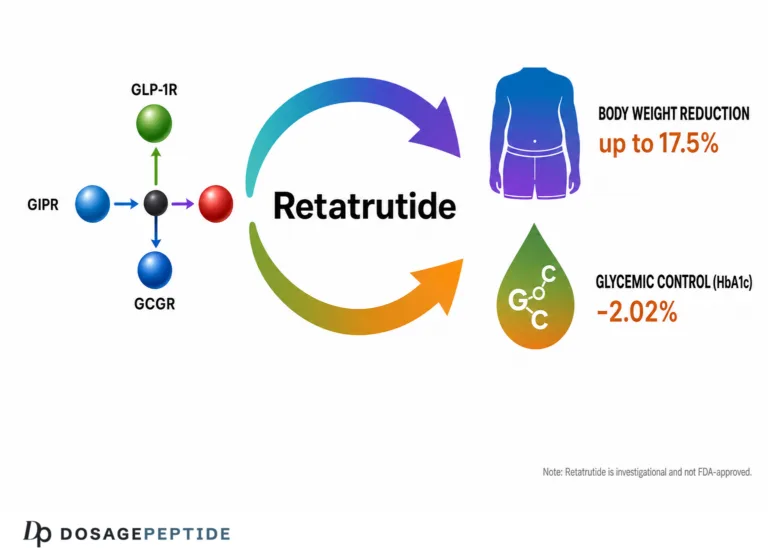
The obesity trial published in The New England Journal of Medicine was a phase 2, double-blind, randomized study in adults with obesity (and, in a subgroup, obesity with type 2 diabetes) that assigned participants to several ascending retatrutide dose groups or placebo, with gradual dose escalation to manage tolerability, over 48 weeks. At the highest dose evaluated, mean body-weight reduction reached approximately 24% from baseline—among the largest reductions reported for a pharmacological agent at the time—compared with a small change on placebo, and, notably, the weight-loss curves had not clearly plateaued by the end of the trial, leaving the maximal effect and its durability uncharacterized.[1]
The most common adverse events were gastrointestinal and dose-dependent, consistent with the incretin class, and were most frequent during dose escalation. Weight loss on this scale reflects strong central satiety signaling, which is the observation that seeds the BED hypothesis—while remaining, unambiguously, an obesity endpoint. It is worth stressing that the primary outcome was percentage change in body weight, not any eating-behaviour or psychiatric measure; behavioural readouts were secondary or came from separate analyses. Extrapolating from a weight endpoint to a claim about binge-episode frequency is precisely the leap this article is at pains to avoid.
| Endpoint (phase 2 obesity) | Observation | Interpretation for BED |
|---|---|---|
| Mean weight reduction (highest dose, 48 wk) | ~24% from baseline vs. small change on placebo | Indicates potent appetite suppression; not a BED measure |
| Dose-response | Progressive weight loss across ascending doses | Suggests titratable central effect |
| Weight-loss trajectory | Not yet plateaued at week 48 | Effect magnitude in longer term uncertain |
| Most common adverse events | Nausea, vomiting, diarrhoea (dose-dependent) | Tolerability relevant to any future BED study |
The Phase 2 Type 2 Diabetes Trial (Rosenstock Et Al., 2023)
The type 2 diabetes trial published in The Lancet randomized adults with inadequately controlled type 2 diabetes to retatrutide across a range of doses, with an active GLP-1 comparator and placebo, over 36 weeks.[3] Higher doses produced substantial reductions in glycated haemoglobin (HbA1c) alongside marked weight loss, with glycaemic improvements at the top doses exceeding the active comparator. A dose-related increase in heart rate was observed, and laboratory safety parameters were broadly stable across groups.[3] For the present purpose, the key takeaway is that the appetite and weight effects generalized beyond an obesity-only population to people with type 2 diabetes—but again, this is a metabolic population, not a psychiatric one. Nothing in the diabetes trial assessed binge eating, and the participants were selected for inadequate glycaemic control, a population with a very different clinical profile from a BED cohort. The trial strengthens confidence that the compound’s metabolic effects are robust; it says nothing directly about loss-of-control eating.
What Did The Eating-Behaviour Analysis (Kanu Et Al., 2025) Find, And In Whom?
The most eating-relevant dataset is a phase 2 analysis published in Diabetes, Obesity and Metabolism[5] examining appetite, eating attitudes, and eating behaviours during retatrutide treatment. Using the Appetite Visual Analogue Scale and the Eating Inventory in adults with type 2 diabetes, participants receiving retatrutide at doses of 4 mg or higher reported greater reductions in overall appetite, hunger, and prospective food consumption compared with placebo, along with changes in disinhibition—a construct describing loss of control over eating.[5]
This is the single most tempting result for the BED narrative, and precisely for that reason it demands care. “Disinhibition” on the Eating Inventory is a self-reported dimension of eating behaviour in a metabolic trial; it is not a diagnosis of binge eating disorder, and the participants were adults with type 2 diabetes, not people meeting BED criteria. The finding is genuinely interesting as a signal that retatrutide shifts self-reported control over eating—but it is a hypothesis-generating observation about a related construct in a different population, not evidence that retatrutide treats BED.
How Could Retatrutide Mechanistically Influence Neuroendocrine Appetite Pathways In Binge Eating?
Bringing the pharmacology and neurobiology together, the retatrutide binge eating hypothesis can be stated as a chain of individually supported steps whose combined endpoint—reduced binge frequency—has not been tested. The compound’s triagonist design integrates GLP-1–mediated satiety, GIP-related metabolic signaling, and glucagon-driven energy expenditure, and these actions could, in principle, recalibrate the disrupted appetite feedback loops implicated in BED. The key mechanistic steps are these:
- GLP-1 receptor activation enhances hypothalamic POMC signaling, suppresses NPY/AgRP activity, and slows gastric emptying. Collectively these effects strengthen satiety perception and could reduce the impulsive, cue-triggered food intake that characterizes binge episodes under controlled experimental conditions.
- GIP receptor modulation influences insulin secretion and nutrient sensing and appears to reinforce central appetite suppression, potentially adding a regulatory layer to the melanocortin circuit—though the precise direction and magnitude of the central GIP effect remain debated.
- Glucagon receptor engagement increases hepatic fatty acid oxidation and energy expenditure, which could counterbalance the metabolic adaptations associated with repeated binge cycles and support systemic metabolic stability.
- Reward-system modulation follows from GLP-1 receptor expression in the VTA and NAc, where activation reduces food-motivated behaviour—the step most directly relevant to the reward-driven component of BED.[4]
Every one of these steps is supported in isolation. The gap is the final link—that these mechanisms, combined in retatrutide, translate into fewer objective binge episodes in people diagnosed with BED—which no completed trial has evaluated. The primary keyword for this topic, retatrutide binge eating / neuroendocrine appetite regulation, therefore describes a research direction, not an established therapeutic use.
What Translational And Related-Compound Evidence Links GLP-1 Pathways To Binge Eating?
Since retatrutide itself has not been studied in BED, the closest available evidence comes from two sources: preclinical GLP-1 work, and clinical data on other GLP-1 receptor agonists. Both must be read as suggestive by analogy, not as retatrutide evidence.
What Does Preclinical GLP-1 Reward Research Show?
Preclinical studies provide the mechanistic backbone. Central GLP-1 receptor activation reduces the motivation to work for food and attenuates binge-like intake of highly palatable food in animal models, and endogenous GLP-1 signaling in reward regions modulates food and drug reward more broadly.[4] A body of animal work further indicates that dysregulation of the endogenous GLP-1 system is associated with binge-like eating, and that GLP-1 receptor agonists can suppress the overconsumption that occurs during such episodes.[11] These findings establish biological plausibility; they do not establish clinical efficacy, and species differences in reward circuitry are a real limitation.
It is also worth being clear about what “binge-like” means in preclinical work. Rodent paradigms typically model intermittent access to highly palatable food to induce bouts of rapid overconsumption, which capture some features of human bingeing—loss of behavioural control over a rewarding food, escalation with intermittent access—but omit others, particularly the emotional distress, the negative-affect trigger, and the loss-of-control experience that define the human disorder. A drug that reliably reduces palatable-food intake in a rodent can therefore look promising without necessarily addressing the affective and cognitive machinery of human BED. This translational gap is precisely why mechanistic plausibility, however elegant, cannot substitute for a controlled trial in diagnosed patients, and why the preclinical GLP-1 literature should be read as motivating hypotheses rather than settling them.
What Did The Liraglutide Pilot RCT For BED Find? (Related Compound)
The most directly BED-focused randomized evidence involves liraglutide, a GLP-1 receptor agonist—not retatrutide. In a pilot randomized controlled trial of liraglutide 3.0 mg for BED in adults with overweight or obesity, both the liraglutide and placebo groups reduced their objective binge episodes over the trial, and the between-group difference in binge reduction did not reach statistical significance, although weight loss was significantly greater with liraglutide.[10] This is a sobering and honest data point: even a dedicated GLP-1 agent, in a trial designed for BED, did not demonstrate a clear binge-specific benefit over placebo in this small study. It should temper any assumption that a triagonist would automatically succeed where mechanism predicts it might.
What Do Semaglutide Case Series And Cohorts Suggest? (Related Compound)
Semaglutide, another GLP-1 receptor agonist, has generated encouraging but low-tier BED signals. A retrospective cohort reported reductions in binge-eating symptoms during semaglutide treatment for obesity, and case reports have described symptom resolution.[12] These are hypothesis-generating observations from uncontrolled or retrospective designs—susceptible to confounding, selection, and expectation effects—and reviews of GLP-1 agents in eating disorders consistently caution that the evidence base remains preliminary, with a notable absence of large, adequately powered randomized trials in BED.[11] Researchers comparing incretin options may find the semaglutide 10 mg vial dosage protocol a useful reference point for the single-agonist comparator.
The table below grades this evidence by type—an essential discipline when the strongest-sounding claims come from the weakest designs.
| Evidence source | Compound | Design | BED-specific? | Strength |
|---|---|---|---|---|
| Skibicka 2013 and related preclinical | GLP-1 (central) | Animal / mechanistic | Binge-like models | Plausibility only |
| Allison 2023 | Liraglutide | Pilot RCT (small) | Yes (BED) | No significant binge benefit vs. placebo |
| Semaglutide cohort / case reports | Semaglutide | Retrospective / uncontrolled | Yes (BED symptoms) | Low; confounding-prone |
| Kanu 2025 | Retatrutide | Phase 2 secondary analysis | No (T2D; disinhibition construct) | Signal in related construct only |
| Retatrutide in BED | Retatrutide | None completed | — | No evidence |
How Would This Compare With Currently Established BED Pharmacotherapy?
Context matters: BED already has a small pharmacological toolkit, and any incretin candidate would eventually be judged against it. The one agent specifically approved for moderate-to-severe BED is lisdexamfetamine, a stimulant prodrug that reduces binge frequency partly through dopaminergic and noradrenergic effects on reward and impulse control. Beyond it, topiramate has evidence for reducing binge episodes but is limited by cognitive and tolerability issues, and certain antidepressants are used off-label, chiefly targeting comorbid mood symptoms. Crucially, these agents act on neurotransmitter systems—dopamine, noradrenaline, glutamate/GABA—rather than on the incretin-satiety axis.
That contrast frames why a GLP-1–containing triagonist is conceptually novel for BED: it would approach the disorder from the metabolic-satiety and food-reward side rather than the monoaminergic side. It also frames the uncertainty. The existing approved agent works substantially through the very dopamine and impulse-control circuitry that a satiety-focused incretin does not directly target, so it is entirely possible that retatrutide could reduce appetite and weight while producing a smaller effect on binge frequency than a mechanism-agnostic reading would predict—precisely the pattern the liraglutide pilot hinted at.[10] Only a head-to-head or placebo-controlled BED trial could resolve where a triagonist would sit relative to established options.
Why Does A Triagonist Remain An Unproven Hypothesis For Binge Eating Disorder?
It is worth stating the negative case as clearly as the positive one. First, there are no completed randomized controlled trials of retatrutide in a BED population; the compound remains investigational even for its lead metabolic indications and is not approved for anything. Second, the most BED-relevant randomized data for the drug class—the liraglutide pilot—did not show a statistically significant binge-specific advantage over placebo, which undercuts any assumption that GLP-1–based satiety automatically resolves loss-of-control eating.[10]
Third, BED is not obesity. The neurobiology of binge eating disorder differs from that of obesity, with a heavier weighting toward reward hypersensitivity and impaired inhibitory control—dimensions that a satiety-focused agent may only partially address.[13] A drug can reduce hunger and weight without repairing the prefrontal impulse-control deficits that sustain binge episodes. Fourth, there is a genuine safety consideration specific to eating-disorder populations: reviews have raised concern about the potential for GLP-1 agents to be misused for weight or shape control in vulnerable individuals, meaning that any BED research must be designed with eating-disorder-aware safeguards. In short, the mechanistic story is attractive, but attractiveness is not data.
What Research Models And Biomarkers Could Future BED Trials Use?
If the hypothesis is to be tested honestly, the design matters as much as the compound. A credible future BED trial would enrol participants meeting formal diagnostic criteria (rather than using weight as a proxy), randomize against placebo, and use validated eating-disorder endpoints as primary outcomes—objective binge-episode frequency and remission—rather than borrowing metabolic surrogates. Behavioural and neurocognitive measures of reward reactivity and inhibitory control would help separate a genuine effect on binge pathophysiology from a nonspecific appetite reduction.
On the biomarker side, translational studies could pair behavioural endpoints with neuroendocrine and metabolic markers to probe mechanism. Candidate measures include fasting insulin and HOMA-IR, leptin and ghrelin, and inflammatory cytokines, alongside functional-imaging readouts of VTA/NAc reactivity to food cues. The table below sketches how such a program might be structured; it is illustrative of research design, not a protocol.
| Domain | Candidate measure | What it probes |
|---|---|---|
| Primary behavioural endpoint | Objective binge-episode frequency; remission rate | Core BED pathology |
| Reward reactivity | Food-cue fMRI (VTA/NAc); craving scales | Hedonic drive component |
| Inhibitory control | Go/no-go, stop-signal tasks | Top-down restraint deficits |
| Neuroendocrine markers | Leptin, ghrelin, cortisol | Homeostatic set-point shifts |
| Metabolic markers | Fasting insulin, HOMA-IR, cytokines | Metabolic reinforcement of binge cycles |
| Safety / psychiatric | Mood, impulsivity, disordered-eating screens | Comorbidity and misuse monitoring |
A sensible research pathway would also be staged. An early proof-of-concept study might be a small, short-duration, placebo-controlled trial powered to detect a change in binge frequency and craving in a strictly diagnosed BED sample, with mechanistic imaging as a secondary aim. If a signal emerged, a larger and longer randomized trial could follow, ideally with an active comparator such as an established BED agent, stratification for comorbid mood disorder, and pre-specified analysis of who responds. Adaptive dose-finding could help separate the appetite-suppressing dose from any dose specifically associated with reduced loss-of-control eating. Throughout, blinding is a real challenge: the pronounced gastrointestinal effects and weight loss of incretin agents can unblind participants and inflate placebo-adjusted behavioural readouts, so functional unblinding must be measured and accounted for.
Equally important is what a trial would need to guard against. Confounding by weight loss is central—if binge frequency falls simply because participants are eating less overall, that is a different claim from correcting the underlying loss-of-control pathophysiology. Dropout driven by gastrointestinal intolerance can bias per-protocol analyses, and the eating-disorder setting raises the specific risk of the drug being used to pursue restriction or shape control. A rigorous design would therefore pre-register its primary behavioural endpoint, include eating-disorder-aware safety monitoring, and report both intention-to-treat and mechanism-focused analyses rather than leaning on metabolic surrogates.
Researchers designing such protocols often depend on accurate compound handling; general references such as the peptide reconstitution guide and the dosage calculator support the methodological consistency that behavioural protocols require, and the peptide research glossary standardizes terminology across interdisciplinary endocrinology-psychiatry teams.
What Is Known About Retatrutide’s Safety And Tolerability, And What Matters For Psychiatric Comorbidity?
Retatrutide’s safety profile in the phase 2 program was dominated by dose-dependent gastrointestinal effects. In the obesity trial, nausea, vomiting, and diarrhoea were the most frequently reported events, generally mild to moderate and most common during dose escalation.[1] No signal of significant hepatotoxicity emerged in the reported follow-up, and laboratory parameters were broadly stable in the type 2 diabetes trial as well.[3] A dose-related increase in heart rate was observed, consistent with other agents in the incretin space, warranting cardiovascular attention in study design.
For any BED-focused investigation, the psychiatric dimension is paramount. BED frequently co-occurs with depression, anxiety, and impulse-control difficulties, so a hypothetical trial would need careful monitoring of mood, suicidality, impulse regulation, and disordered-eating cognitions—both to protect participants and because those endpoints are themselves scientifically informative. There is also the class-level concern that appetite-suppressing agents can be misappropriated for weight or shape control in vulnerable individuals, which argues for eating-disorder-aware screening and safeguards. None of these considerations should be read as guidance for use; retatrutide is investigational, and this discussion is framed around research monitoring, not clinical administration.
How Do Tolerability Considerations Compare Across The Incretin Class?
The gastrointestinal and heart-rate effects of retatrutide broadly resemble those of single- and dual-receptor agonists, which is expected given the shared GLP-1 component. What is not yet characterized is whether adding the glucagon arm materially changes the tolerability picture over the long term, or how any of these effects would interact with the psychiatric comorbidity common in BED. Researchers examining comparator handling and titration frameworks can consult the tirzepatide 10 mg vial dosage protocol for the dual-agonist reference and the detailed retatrutide 6 mg vial dosage protocol for compound-specific research documentation.
How Should The Current Evidence Be Weighed, And What Are The Limitations?
Weighing the evidence by study type produces a clear hierarchy. At the top sit randomized, double-blind trials—but for retatrutide these exist only for obesity and type 2 diabetes, not BED. The eating-behaviour analysis is a secondary, self-report examination of a related construct (disinhibition) in a metabolic population.[5] The only randomized BED trial in the drug class used liraglutide and was null on the binge-specific endpoint,[10] while semaglutide’s BED support is retrospective and uncontrolled.[12] Preclinical work supplies mechanism but cannot substitute for clinical outcomes.[4]
The principal limitations are therefore straightforward. The retatrutide-to-BED inference relies on extrapolation from non-BED populations; the metabolic and psychiatric phenotypes differ; a related-compound BED trial was negative on binge frequency; and the BED-adjacent retatrutide signal comes from a self-reported secondary measure. There are additional generic weaknesses to acknowledge. The pivotal retatrutide data are phase 2, meaning sample sizes and follow-up are modest relative to what a definitive efficacy judgement requires; phase 3 programs are ongoing but were not designed to answer the BED question. Self-report instruments like the Eating Inventory and appetite visual analogue scales are useful but subjective, and are vulnerable to functional unblinding in a trial where the active drug produces obvious gastrointestinal effects and weight loss. Publication and reporting biases also favour positive metabolic findings, and much of the enthusiastic secondary commentary about incretins and eating behaviour outpaces the primary data.
The honest conclusion is that retatrutide presents a coherent, mechanistically grounded hypothesis for neuroendocrine appetite dysregulation in binge eating—GLP-1–driven satiety and reward modulation, reinforced by GIP and glucagon arms—and that this hypothesis is currently unproven. No completed trial has tested whether the compound reduces objective binge episodes in people with BED; the closest randomized evidence in the drug class was null on that endpoint; and the most eating-relevant retatrutide finding concerns a related construct in a metabolic population. Purpose-built, adequately powered, eating-disorder-aware randomized trials would be required before any efficacy claim in BED could be entertained. Until then, the appropriate framing is mechanistic interest and research priority, not therapeutic promise.
Frequently Asked Questions
Is Retatrutide Approved Or Used For Binge Eating Disorder?
No. Retatrutide is investigational and not approved for any indication, and there are no completed clinical trials of it in binge eating disorder. Its clinical program targets obesity, type 2 diabetes, and related metabolic disease. Any connection to BED is a mechanistic rationale drawn from its appetite and reward effects, not demonstrated efficacy for treating binge eating.
Why Do Researchers Consider A Triple Agonist Interesting For BED At All?
Because its GLP-1 component acts on both homeostatic satiety circuits and mesolimbic reward regions implicated in binge eating, while the GIP and glucagon arms add metabolic reach. Trials show potent appetite suppression and reduced self-reported disinhibition in metabolic populations. That combination makes it a plausible research candidate for reward-driven eating—but plausibility is not evidence of benefit in a diagnosed BED population.
Did The Retatrutide Trials Measure Binge Eating Directly?
Not directly. The eating-behaviour analysis measured appetite, hunger, prospective food consumption, and disinhibition using visual analogue scales and the Eating Inventory in adults with type 2 diabetes. “Disinhibition” is a related construct describing loss of control over eating, but it is not a diagnosis of binge eating disorder, and no retatrutide trial enrolled participants on the basis of BED criteria.
What Does The GLP-1 Evidence In Related Compounds Suggest About BED?
It is mixed and preliminary. A pilot randomized trial of liraglutide for BED did not show a statistically significant reduction in binge episodes versus placebo, while semaglutide data come from retrospective cohorts and case reports rather than controlled trials. Preclinical work supports biological plausibility. Overall, the drug-class evidence for BED remains inconclusive and cannot be transferred to retatrutide specifically.
Which Neural Circuits Are Most Relevant To BED Research?
The hypothalamic melanocortin system (POMC versus NPY/AgRP), the dorsal vagal complex in the brainstem, and the mesolimbic dopamine reward pathway (VTA to NAc) are central, together with prefrontal inhibitory-control networks. These circuits regulate hunger, satiety, reward valuation, and impulse control. Incretin receptor signaling interacts with several of them, which is why the mechanistic case for incretin agents in BED is drawn from this circuitry.
How Does Multi-Receptor Agonism Differ From Single GLP-1 Therapy?
Single GLP-1 therapy primarily enhances satiety and slows gastric emptying. A dual agonist adds a GIP arm that further inhibits appetite-driving neurons, and a triple agonist such as retatrutide adds a glucagon arm that raises energy expenditure. The triagonist therefore has broader metabolic reach, but broader mechanism does not automatically mean greater benefit for a psychiatric condition like BED, which no triagonist trial has tested.
What Biomarkers Might Future BED-Focused Trials Monitor?
Alongside validated behavioural endpoints such as objective binge frequency and remission, candidate biomarkers include fasting insulin and HOMA-IR, leptin, ghrelin, cortisol, and inflammatory cytokines, plus functional-imaging measures of food-cue reward reactivity and neurocognitive tests of inhibitory control. Pairing behavioural and neuroendocrine measures would help distinguish a genuine effect on binge pathophysiology from a nonspecific reduction in appetite.
What Safety Considerations Are Specific To Studying Retatrutide In BED Populations?
Dose-dependent gastrointestinal effects and a modest heart-rate increase are the main documented tolerability issues. Because BED often co-occurs with depression, anxiety, and impulse-control difficulties, any research would need close monitoring of mood, impulse regulation, and disordered-eating cognitions, plus eating-disorder-aware safeguards against misuse of an appetite-suppressing agent. These are research-monitoring considerations, not clinical guidance for use.
References
- Jastreboff, A. M., Kaplan, L. M., Hartman, M. L., et al. (2023). Triple–hormone-receptor agonist retatrutide for obesity: A phase 2 trial. The New England Journal of Medicine, 389(6), 514–526.
- Müller, T. D., Finan, B., Bloom, S. R., et al. (2019). Glucagon-like peptide 1 (GLP-1). Molecular Metabolism, 30, 72–130.
- Rosenstock, J., Frias, J., Jastreboff, A. M., et al. (2023). Retatrutide, a GIP, GLP-1 and glucagon receptor agonist, for people with type 2 diabetes: a randomised, double-blind, placebo and active-controlled, parallel-group, phase 2 trial conducted in the USA. The Lancet, 402(10401), 529–544.
- Skibicka, K. P. (2013). The central GLP-1: implications for food and drug reward. Frontiers in Neuroscience, 7, 181.
- Kanu, C., et al. (2025). Appetite, eating attitudes, and eating behaviours during treatment with retatrutide in adults with type 2 diabetes: Results of a phase 2 study. Diabetes, Obesity and Metabolism. doi:10.1111/dom.70097.
- Kessler, R. M., Hutson, P. H., Herman, B. K., & Potenza, M. N. (2016). The neurobiological basis of binge-eating disorder. Neuroscience & Biobehavioral Reviews, 63, 223–238.
- Anderson, E. J. P., et al. (2019). The melanocortin pathway and control of appetite—progress and therapeutic implications. Journal of Endocrinology, 241(1), R1–R33.
- Sanchez-Garrido, M. A., et al. (2025). The role of GIPR in food intake control. Frontiers in Endocrinology, 16, 1532076.
- Yohn, S. E., et al. (2022). A literature review of dopamine in binge eating. Journal of Eating Disorders, 10, 11.
- Allison, K. C., et al. (2023). A pilot randomized controlled trial of liraglutide 3.0 mg for binge eating disorder. Obesity Science & Practice, 9(2), 127–136.
- Aoun, L., et al. (2024). The emerging role of glucagon-like peptide-1 in binge eating. Journal of Endocrinology / PMC11156433.
- Richards, J., et al. (2023). Successful treatment of binge eating disorder with the GLP-1 agonist semaglutide: A retrospective cohort study. Obesity Pillars / PMC10661993.
- Reward and inhibitory control as mechanisms and treatment targets for binge eating disorder. (2024). Current Psychiatry Reports, 26.