No human trial has ever tested TB-500 in spinal cord injury. It is not an approved therapy for spinal cord injury — or for anything else — and it has never completed a controlled human trial in any neurological indication. The literature people point to when they connect thymosin beta-4 (Tβ4) to nerve repair is almost entirely preclinical, conducted in rats and cultured cells, and most of it used the full-length 43-amino-acid Tβ4 protein rather than the short synthetic peptide typically sold as “TB-500”.12
That matters because spinal cord injury is one of the most stubborn problems in regenerative medicine. The adult mammalian central nervous system does not spontaneously rebuild severed axon tracts, remyelinate stripped fibers, or replace lost neurons and oligodendrocytes in any clinically meaningful way. What follows is a calibration exercise, not a pitch: what Tβ4 and its fragment actually are, what the preclinical data genuinely show, and how wide the gap to human reality remains.
One more framing point before the details. Spinal cord injury recovery is not a single problem but several stacked problems: an initial mechanical insult that physically damages axons and cells; a “secondary injury” cascade over hours to weeks involving ischemia, inflammation, oxidative stress, and excitotoxicity that kills tissue the impact itself spared; and a chronic phase dominated by a growth-inhibitory glial scar and demyelination of surviving fibers. Any molecule proposed to “support regeneration” has to be evaluated against which of these problems it plausibly touches. As will become clear, the mechanistic case for Tβ4 is strongest as a modulator of the secondary phase — limiting inflammatory and ischemic damage and nudging remyelination — and weakest as a driver of true long-tract axon regeneration across a chronic scar. Keeping that distinction in mind prevents the common error of hearing “regeneration” and imagining severed cords rejoined.
What TB-500 Is and Where It Comes From
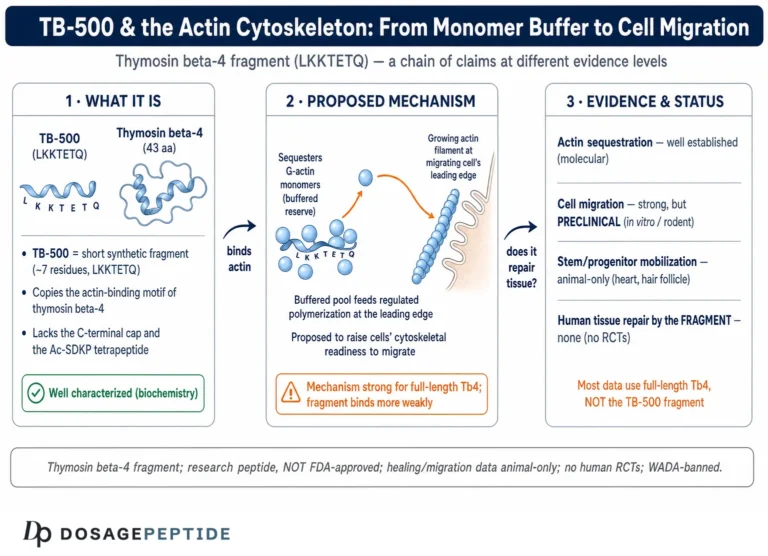
Thymosin beta-4 is a small, naturally occurring 43-amino-acid peptide first isolated from calf thymus tissue in the early 1980s by Allan Goldstein and colleagues, who were then cataloguing the “thymosins” — peptides originally believed to be thymic hormones.3 Tβ4 turned out to be far more ubiquitous than its name suggests: it is present in nearly every mammalian cell type and is one of the most abundant intracellular peptides, reaching high concentrations in platelets, neutrophils, and many other cells. Its dominant intracellular job is not hormonal at all — it is the principal actin-sequestering peptide of the cytoplasm, binding monomeric (globular, G-) actin and holding a reservoir of unpolymerized actin in reserve.4
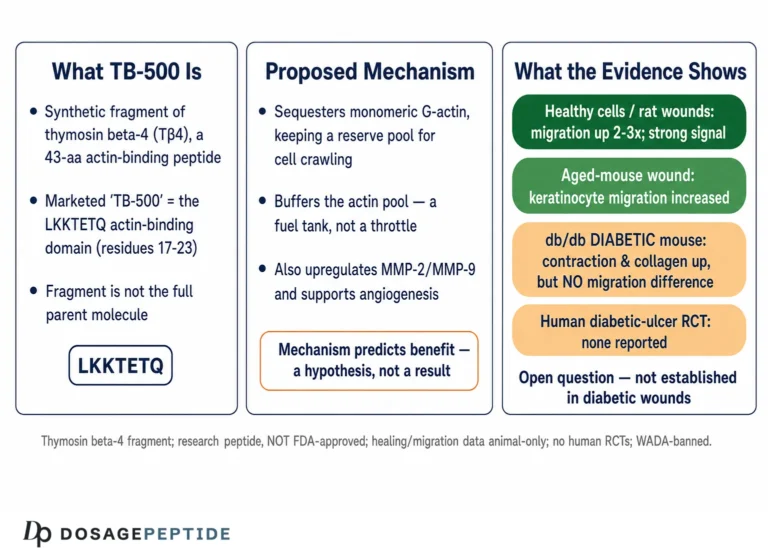
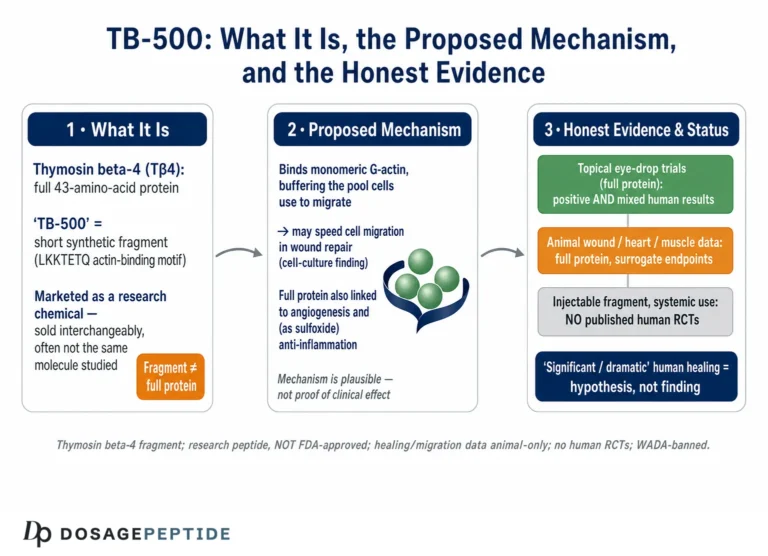
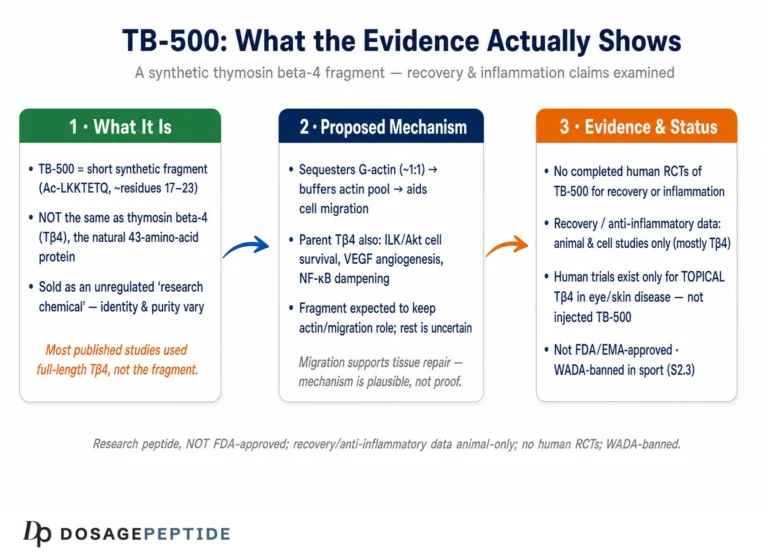
“TB-500” is where the terminology gets slippery, and this matters for anyone evaluating spinal-cord claims. In the research-peptide market, the label TB-500 is applied inconsistently. Chemically, the name most precisely refers to a short acetylated fragment built around the actin-binding motif of Tβ4 — commonly the sequence Ac-LKKTETQ, corresponding to residues 17–23 of the parent protein.5 The LKKTET hexapeptide within that region is the segment most often credited with actin binding and with pro-migratory, pro-angiogenic activity in cell studies. Confusingly, some vendors also sell the full 43-amino-acid Tβ4 molecule under the “TB-500” banner, and some sell an N-acetylated, C-amidated variant marketed as more stable. A buyer — or a reader interpreting a study — therefore cannot assume that “TB-500” in a blog post is the same molecule that was used in a given rat experiment.
This distinction is not pedantic. The overwhelming majority of the CNS and spinal-cord regeneration literature was performed with full-length Tβ4, not the short fragment.126 The full protein has documented functions — actin sequestration, promotion of angiogenesis, anti-inflammatory signaling, and interactions with pathways relevant to cell survival — that the isolated heptapeptide only partially reproduces. Fragment studies suggest LKKTET retains some wound-healing and angiogenic activity, but whether a seven-residue peptide recapitulates the broad, multi-tissue behavior of the intact 43-mer is an open question. So when someone reasons “Tβ4 helped rats after spinal cord injury, therefore TB-500 supports regeneration,” there are two silent leaps: from full-length molecule to fragment, and from rodent to human.
The peptide’s physical form in research is a lyophilized (freeze-dried) white powder, supplied by milligram (commonly 2, 5, or 10 mg per vial) and reconstituted with sterile or bacteriostatic water for laboratory use. On the dedicated TB-500 protocol reference, DosagePeptide characterizes it as an actin-sequestering research peptide studied for cell migration and tissue-repair signaling — explicitly framed for research and educational use rather than as a medicine. Understanding that framing is essential before interpreting any claim about the spinal cord.
The Proposed Molecular Mechanism
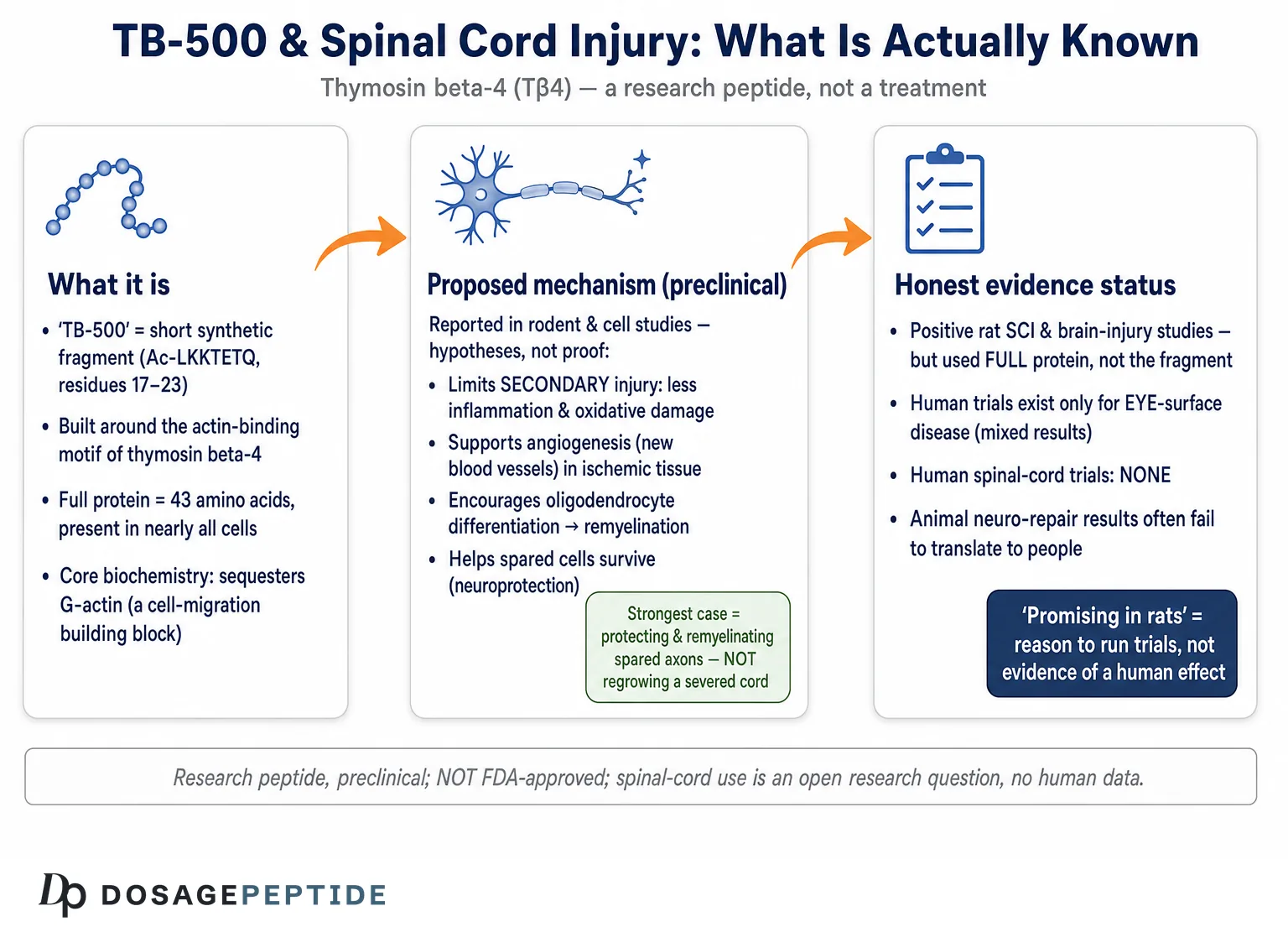
The mechanistic story behind Tβ4 begins with actin. Actin is the cytoskeletal protein whose rapid assembly (polymerization into filaments, or F-actin) and disassembly drives cell shape change, crawling, and the leading-edge dynamics of a migrating cell. Tβ4 binds monomeric G-actin with roughly 1:1 stoichiometry and a dissociation constant reported in the sub-micromolar range, and in doing so it inhibits nucleotide exchange and holds actin in a polymerization-incompetent, “sequestered” state.4 Cells use this buffered pool of monomeric actin to remodel their cytoskeleton on demand. Because directed cell migration — of endothelial cells, keratinocytes, immune cells, and potentially neural cells — underlies wound healing, this actin-buffering role is the proposed root of many downstream effects.
From that foundation, researchers describe several biological activities that would, in principle, be relevant to an injured spinal cord:
| Proposed activity | Suggested cellular basis | Why it might matter after SCI |
|---|---|---|
| Cell migration | Actin sequestration frees regulated cytoskeletal remodeling | Migration of repair cells into the lesion zone |
| Angiogenesis | Endothelial migration, tubule formation; reported VEGF upregulation | Revascularization of ischemic injured tissue |
| Anti-inflammation | Modulation of inflammatory signaling and reduced secondary damage | Limiting the destructive secondary injury cascade |
| Oligodendrogenesis / remyelination | Reported p38 MAPK-linked oligodendrocyte progenitor differentiation | Re-insulating spared but demyelinated axons |
| Cell survival | Reported anti-apoptotic and antioxidant signaling in stressed cells | Preserving neurons and glia in the injury penumbra |
Two of these deserve emphasis because they recur in the CNS literature. First, angiogenesis: Tβ4 has been reported to promote endothelial cell migration and new-vessel formation, in part through upregulation of vascular endothelial growth factor (VEGF), and the LKKTET motif specifically has been tied to this angiogenic activity in structure-function work.7 Because a spinal cord lesion is partly an ischemic, poorly perfused environment, revascularization is a plausible lever on recovery. Second, oligodendrocyte biology: cell and animal studies from Chopp and colleagues reported that Tβ4 promotes differentiation of oligodendrocyte progenitor cells — the cells that make myelin — via p38 MAPK signaling, and that it increased markers of myelination after CNS injury.6 Since much of the disability after an incomplete SCI comes from demyelination of surviving axons rather than complete transection, a remyelinating signal is mechanistically appealing.
An additional detail that CNS researchers cite is that full-length Tβ4, a small and abundant endogenous peptide, has been reported to cross the blood–brain barrier and is expressed within the brain itself, where it appears to participate in neurite outgrowth and neuroprotection.17 That pharmacological accessibility is part of why the molecule was tested systemically in rodent stroke and trauma models at all.
Beyond angiogenesis and oligodendrocyte biology, the anti-inflammatory dimension deserves its own note because secondary injury is where most treatable damage occurs. After a cord injury, activated microglia and infiltrating macrophages release cytokines and reactive oxygen species that expand the lesion well beyond the original mechanical footprint. Tβ4 has been reported to dampen this response — shifting inflammatory signaling and reducing markers of oxidative injury — and one cell-based study specifically implicated the TLR4/MyD88 pathway, a central hub of innate-immune signaling, in Tβ4’s protection of spinal cord-derived neural progenitor cells under oxidative stress.10 If a compound can shrink the secondary-injury penumbra, more neurons and glia survive to participate in whatever plasticity the cord retains. That is a more modest and more biologically credible framing than “regrowing” the cord, and it is the framing the primary literature best supports.
It is also worth being precise about what “regeneration” would mechanistically require and whether these pathways deliver it. True axonal regeneration means a severed axon regrowing a functional projection across the lesion to its original target — something the inhibitory adult CNS environment actively blocks, and something no Tβ4 study has demonstrated in a mammal. What the mechanisms above plausibly offer is neuroprotection (keeping cells alive), remyelination (re-insulating spared axons), and vascular and plasticity support. Those can improve functional outcomes without literal long-tract regeneration, which is exactly what the rodent behavioral improvements likely reflect. Conflating “better BBB score in a rat” with “the cord regenerated” is a category error the honest reader should avoid.
The crucial caveat is that these mechanisms are largely characterized in vitro and in animals, and predominantly with the full protein. A plausible mechanism is a hypothesis about how something could work, not proof that it does work in a human spinal cord. Actin sequestration is real biochemistry; “therefore it regenerates human spinal cords” is not a licensed conclusion from that biochemistry.
What the Evidence Actually Shows (and at What Level)
Here is the honest tier of evidence, from strongest to weakest as it applies to the spinal cord.
Direct spinal cord injury studies exist — but only in rodents. The most directly relevant work is a rat study reporting beneficial effects of Tβ4 on spinal cord injury. In a compression-injury model, Tβ4 (or saline control) was given by intraperitoneal injection starting 30 minutes, 3 days, or 5 days after injury. The Tβ4-treated animals showed improved locomotor recovery on the Basso–Beattie–Bresnahan (BBB) open-field scale and on footprint analysis, and histology at 7 days showed significantly more surviving neurons and oligodendrocytes than saline controls. Myelin basic protein, a marker of mature myelinating oligodendrocytes, was reported roughly 58% higher in treated animals.1 This is a real, peer-reviewed positive result — and it is a single-species, small-animal study using the full-length protein.
Adjacent CNS-injury studies reinforce a signal — still rodents, still full-length. In traumatic brain injury (TBI) models, Xiong, Mahmood, Chopp and colleagues reported that delayed Tβ4 treatment (6 mg/kg intraperitoneally, beginning at day 1 and repeated every 3 days, or initiated as late as 6 hours post-injury) improved neurological scores and spatial learning in the Morris water maze, did not change the raw lesion volume, but reduced hippocampal cell loss and enhanced angiogenesis, neurogenesis, and oligodendrogenesis.28 In an embolic stroke model, Tβ4 improved functional neurological outcome.9 Cell-culture work showed Tβ4 protecting spinal cord-derived neural stem/progenitor cells from oxidative-stress injury via the TLR4/MyD88 pathway, dose-dependently improving viability.10 A body of review literature summarizes these as a coherent “restorative/regenerative” hypothesis for neurological injury.7
Human data on Tβ4 exist — but not for the spinal cord. The furthest Tβ4 has advanced clinically is as an ophthalmic and dermal agent, not a neurological one. A formulation of full-length Tβ4 (RGN-259, developed by RegeneRx and partners) reached Phase 3 trials for eye-surface disease. One Phase 3 study in neurotrophic keratopathy reported a corneal-healing trend favoring RGN-259 that did not reach statistical significance (complete healing in 6/10 on RGN-259 vs 1/8 on placebo, p = 0.066),11 while a separate European Phase 3 trial (SEER-3) missed its primary endpoint, attributed partly to an unexpectedly strong placebo response.12 Across the ophthalmic development program the eye-drop was reported to be generally well tolerated.1112 None of this is spinal cord data, and none of it validates systemic injection of a fragment for nerve regeneration.
A useful way to visualize this is to rank each evidence source by how directly it bears on the title question — TB-500, fragment, human spinal cord — and note what each one is missing.
| Evidence source | Species | Molecule | Relevance to human SCI |
|---|---|---|---|
| Rat compression SCI study1 | Rat | Full-length Tβ4 | Directly on-target injury, but rodent + parent protein |
| TBI / stroke models289 | Rat | Full-length Tβ4 | Adjacent CNS injury, rodent + parent protein |
| Neural progenitor cell assays610 | Cultured cells | Full-length Tβ4 | Mechanism only; no organism outcome |
| Ophthalmic Phase 2–3 trials1112 | Human | Full-length Tβ4 (eye drop) | Human safety signal, but unrelated tissue; mixed efficacy |
| TB-500 fragment CNS trials | — | Ac-LKKTETQ | Do not exist |
So the honest evidence ladder for “TB-500 supports spinal cord regeneration” is: robust in-vitro mechanism → positive rodent SCI and CNS-injury studies (full-length Tβ4) → positive but tissue-unrelated human eye trials (also full-length, and mixed) → zero human spinal cord trials of either Tβ4 or the TB-500 fragment. Every rung people cite to build enthusiasm is one or two categories removed from the actual claim. That does not make the mechanism uninteresting; it makes the leap to human recommendation unsupported. The most defensible one-sentence summary a researcher can offer is: full-length thymosin beta-4 has produced encouraging but preliminary neuroprotective and remyelinating signals in rodent CNS-injury models, and whether those translate to humans — let alone to the marketed fragment — is entirely untested.
How TB-500 Compares to Related Approaches
Placing TB-500 next to its neighbors clarifies what is genuinely distinctive and what is shared marketing narrative.
TB-500 fragment vs. full-length thymosin beta-4. This is the most important comparison and the most frequently blurred. The full 43-amino-acid protein has the broadest documented activity and is the molecule used in essentially all the CNS studies above and in the clinical eye program. The Ac-LKKTETQ fragment is cheaper and easier to synthesize, retains actin-binding and some wound/angiogenic activity, but has not been shown to reproduce the parent molecule’s full repertoire — and has essentially no dedicated CNS-injury literature of its own.5 A reader who wants the strongest interpretation of the animal data should note that it does not directly apply to the fragment most people buy.
| Property | Full-length Tβ4 | “TB-500” fragment (Ac-LKKTETQ) |
|---|---|---|
| Length | 43 amino acids | ~7 amino acids (17–23 region) |
| Actin binding | Yes (native sequestering peptide) | Partial; retains LKKTET motif |
| CNS/SCI animal studies | Yes (rat SCI, TBI, stroke) | Minimal dedicated data |
| Human clinical program | Ophthalmic/dermal Phase 2–3 (mixed) | None |
| Synthesis cost/complexity | Higher | Lower |
TB-500 vs. BPC-157. In the research-peptide world these two are frequently paired, and DosagePeptide documents several blend and stack references such as the BPC-157 + TB-500 10 mg blend and the TB-500 5 mg + BPC-157 5 mg stack. BPC-157 is a synthetic peptide derived from a gastric protein studied for soft-tissue and gut repair in animals; TB-500 is the actin-pathway peptide. As the DosagePeptide blend explainer states plainly, the notion that the two act “synergistically” is a marketing hypothesis, not a claim validated in any human trial — and neither peptide is FDA-approved. For a spinal cord context specifically, both share the same fundamental limitation: preclinical only, no controlled human CNS evidence.
The DosagePeptide protocol references for these blends and stacks are presented explicitly as research-context reconstitution and handling information — not as clinical guidance for treating any condition — and they consistently foreground the unapproved, research-only status of both peptides. That framing is the appropriate one to carry into any spinal-cord discussion: pairing two preclinical peptides does not add up to an evidence-based therapy, and combining compounds can in principle multiply unknown risks rather than benefits, since interaction effects are themselves unstudied in humans.
TB-500 vs. established SCI research directions. Mainstream spinal cord regeneration science pursues strategies such as cell transplantation (neural stem cells, oligodendrocyte precursor cells, Schwann cells), biomaterial scaffolds, chondroitinase to digest the inhibitory glial scar, rehabilitation and epidural electrical stimulation, and neurotrophic factor delivery. These are themselves largely experimental, and even the most advanced are not routine cures. TB-500 is not a competitor to these programs so much as an early-stage mechanistic curiosity with far less SCI-specific data behind it. Positioning a research peptide as comparable to decades of dedicated regeneration research would badly overstate its standing.
Research Models and Methodology
Understanding how the supportive data were generated is essential to weighing them, because the models carry both the strength and the ceiling of the evidence.
Animal injury models. The rat SCI work used a compression/contusion-type injury — a controlled mechanical insult to the exposed cord — which reproduces some features of human blunt SCI but not the full heterogeneity of human accidents. Recovery was quantified with the BBB locomotor scale, a 0–21 open-field rating of hindlimb movement, joint coordination, and weight-bearing, supplemented by footprint (gait) analysis.1 TBI studies used controlled cortical impact and scored the modified neurological severity score (mNSS), foot-fault tests, and the Morris water maze for spatial learning.2 These are validated, standard endpoints — their weakness is not rigor but species: a rat cord is shorter, the injury is standardized, and rodents recover more robustly than humans, so effect sizes rarely translate one-to-one.
Dosing and timing. A recurring methodological point is that the animal studies used weight-normalized dosing (for example, 6 mg/kg intraperitoneally in the TBI work) on defined schedules, often beginning within hours to days and repeating every few days.28 These allometric doses cannot be naively converted to a human by multiplying by body weight; interspecies scaling, route differences (intraperitoneal in rats vs. subcutaneous in human research contexts), and pharmacokinetic differences all intervene. This is one reason the DosagePeptide protocol pages present ranges strictly as research-context reference figures rather than clinical recommendations.
Cell and molecular assays. Mechanistic claims rest on cultured-cell work: neural stem/progenitor cells or oligodendrocyte precursors exposed to oxidative or inflammatory stress, then treated with Tβ4, with readouts such as viability (MTT-type assays), lactate dehydrogenase release, intracellular calcium, myelin basic protein expression, and pathway markers (p38 MAPK, TLR4/MyD88).610 These experiments establish that Tβ4 can influence these cells and pathways under controlled conditions — they cannot establish clinical benefit.
What good methodology also reveals as gaps. The same literature that supports a signal also exposes its limits: small group sizes, short follow-up (histology at 7 days in the SCI study), single-laboratory results without large independent replication, use of the full protein rather than the marketed fragment, and no dose-ranging in humans at all. A methodologically literate reader treats the positive rodent findings as hypothesis-generating — a reason to run rigorous trials, not a substitute for them.
Blinding, controls, and effect size. The stronger rodent studies did include saline-treated controls and standardized scoring, which is what makes them worth citing at all. But several methodological features that would be mandatory in a definitive study are variable or absent across this literature: pre-registration, blinded outcome assessment stated explicitly, randomization procedures described in detail, a priori power calculations, and independent multi-center replication. The field’s own reform literature — developed precisely because so many neuroprotectants failed in translation — recommends all of these. Their inconsistent presence does not invalidate the Tβ4 findings, but it does mean the results should be read as encouraging early signals rather than as robust, translation-ready conclusions.
Route and formulation. Another methodological subtlety: the rodent studies typically dosed intraperitoneally, and the human eye program used a topical drop. Neither matches the subcutaneous injection route common in research-peptide use. Route affects absorption, peak concentration, distribution, and whether the peptide reaches the CNS at meaningful levels. A result obtained by intraperitoneal injection of full-length protein in a rat says little about the pharmacokinetics of a subcutaneously injected fragment in a human. These are not trivial details — they are the difference between a controlled experiment and an untested extrapolation.
Finally, a note on publication landscape: much of the accessible “evidence” a casual searcher encounters comes from vendor pages and wellness blogs rather than primary journals. Grounding any assessment in PubMed-indexed primary studies — and reading their methods sections — is the only way to avoid mistaking marketing for data. When a product page states an efficacy claim without a citation to a controlled study in the relevant tissue and species, that is a signal to discount, not to trust.
Safety and Tolerability
Safety discussion of TB-500 must separate three different evidence sources, because they are not interchangeable.
Full-length Tβ4 in controlled human trials. The best human safety information comes from the RegeneRx ophthalmic and dermal programs using the full protein. Across the RegeneRx ophthalmic development program using Tβ4 eye drops, investigators reported no clinically significant safety signals in the trials published to date,1112 and separate dermal and systemic (cardiac) exploratory studies reported the peptide was generally well tolerated. This is genuinely reassuring — but it describes a specific formulation, specific routes (topical ocular, dermal), and specific short durations, evaluated for eye and skin endpoints. It does not characterize the safety of self-administered, injected, research-grade fragment used over long periods for a musculoskeletal or neurological purpose.
The TB-500 fragment specifically. There is no controlled human safety database for the Ac-LKKTETQ fragment. Its tolerability profile in humans is essentially uncharacterized in the peer-reviewed clinical literature. Statements that TB-500 is “well tolerated” typically extrapolate from full-length Tβ4 studies or from animal work — a substitution that is not scientifically valid.
Theoretical and practical concerns. Several plausible concerns follow from the biology and the sourcing:
| Concern | Basis |
|---|---|
| Pro-angiogenic activity and cancer risk | A peptide that promotes new blood-vessel growth raises theoretical questions about occult or existing tumors, since angiogenesis supports tumor growth. This is a mechanistic caution, not a demonstrated human harm. |
| Product quality and contamination | Research-grade peptides are not manufactured to pharmaceutical GMP standards; endotoxin, residual synthesis reagents, and mislabeled identity/purity are real risks in the gray market. |
| Injection-related risk | Non-sterile technique or contaminated reconstitution water can cause local or systemic infection independent of the peptide itself. |
| Unknown long-term effects | No long-term human safety data exist for chronic fragment use. |
| Immunogenicity | As with any injected peptide, immune responses are possible and unstudied for this fragment. |
The pro-angiogenic concern deserves a moment of nuance rather than alarmism. Angiogenesis is a normal, essential part of healing, and there is no direct evidence that TB-500 causes cancer in humans. The concern is theoretical and mechanistic: because tumors depend on recruiting a blood supply, any systemically administered agent that promotes vessel growth invites the question of whether it could support the growth of an undetected malignancy. Responsible science treats that as an open question warranting caution and study, not as a settled danger — but equally not as a dismissable footnote. In a proper clinical program this is exactly the kind of theoretical risk that long-term safety monitoring is designed to resolve, and that monitoring has not occurred for this fragment.
The sourcing problem compounds every other concern. Because research peptides are sold outside pharmaceutical manufacturing standards, the buyer often cannot verify that the vial contains the labeled peptide at the labeled purity, free of endotoxin and synthesis byproducts. Independent analyses of gray-market peptides have repeatedly found under-dosing, over-dosing, wrong compounds, and contaminants. A safety discussion that assumes the product is what the label says is therefore optimistic; in practice, identity and purity are themselves uncertainties layered on top of the pharmacological unknowns.
The overarching, honest summary is that absence of reported adverse events in short ophthalmic trials of a different molecule is not evidence of safety for injected TB-500 fragment. “We have not seen harm in a narrow setting” and “this is safe” are very different statements, and the gap between them is exactly the space a real clinical safety program would fill. None of that program has been done for the spinal cord or for the fragment.
Handling and Reconstitution in a Research Context
Because TB-500 is handled as a laboratory reagent rather than a medicine, its physical handling is worth describing accurately — while stating clearly that describing handling is not an endorsement of human use. This section is educational, for those interpreting research protocols and product specifications.
TB-500 ships as a lyophilized powder under vacuum in a sealed vial, typically 2–10 mg. Lyophilized peptide is relatively stable and is generally stored refrigerated or frozen, protected from light and moisture; long-term storage at −20 °C or colder is standard for peptides in a research setting. The powder is reconstituted — dissolved — in an aqueous diluent, most commonly sterile water or bacteriostatic water (water containing ~0.9% benzyl alcohol, which retards microbial growth and permits multiple withdrawals over time). Once reconstituted, peptide solutions are far less stable than the dry powder and are kept refrigerated, with a limited usable window.
Concentration math is the core of reconstitution. The dissolved concentration is simply the mass of peptide divided by the volume of diluent added. For example, adding 2 mL of bacteriostatic water to a 10 mg vial yields 5 mg/mL (5000 mcg/mL); adding 1 mL to a 5 mg vial also yields 5 mg/mL. The diluent volume does not change the total amount of peptide — only how concentrated each unit of liquid is — so researchers choose a volume that makes their intended measured aliquots fall on convenient, readable marks of an insulin-style syringe. DosagePeptide’s protocol references walk through this arithmetic in the research context; the general framing on the TB-500 reference page and the 20 mg blend reference illustrates how vial size and diluent volume interact.
| Vial content | Diluent added | Resulting concentration | Volume for a 500 mcg aliquot |
|---|---|---|---|
| 5 mg | 1 mL | 5 mg/mL (5000 mcg/mL) | 0.10 mL (10 units) |
| 5 mg | 2 mL | 2.5 mg/mL (2500 mcg/mL) | 0.20 mL (20 units) |
| 10 mg | 2 mL | 5 mg/mL (5000 mcg/mL) | 0.10 mL (10 units) |
| 10 mg | 1 mL | 10 mg/mL (10000 mcg/mL) | 0.05 mL (5 units) |
Good laboratory handling practices include directing the diluent stream against the vial wall rather than blasting the powder (peptides can be shear-sensitive), swirling gently rather than shaking vigorously, allowing the powder to dissolve fully, and inspecting for complete clarity. Purity is a separate concern from handling: research-grade specifications typically claim identity by mass spectrometry and purity by HPLC, with reputable material described as ≥98–99% and total impurities under a couple of percent, as stated on a lot-specific certificate of analysis. None of this converts a research chemical into a validated therapy — it simply describes how the reagent is prepared and stored for laboratory work.
Two further handling realities are worth stating so the picture is complete. First, reconstituted peptide is chemically fragile: over days to weeks in solution, peptides can degrade, aggregate, or lose activity, and repeated freeze–thaw cycles accelerate this. Research protocols therefore favor small single-use aliquots kept frozen, thawed once, rather than a single vial punctured repeatedly. Second, a certificate of analysis (CoA) accompanying a research peptide reports on the specific tested lot, not necessarily the vial in hand, and CoAs can be copied or fabricated by disreputable sellers. Verifying identity and purity independently — where a laboratory has the means — is the only rigorous way to know what a sample actually contains. These are ordinary reagent-quality concerns in any lab, and they underscore, again, that a research chemical carries none of the guarantees of a manufactured medicine.
Limitations and the Human-Evidence Gap
This is the section that most directly answers the title, and it deserves to be blunt. The distance between “interesting preclinical signal” and “supports regeneration in human spinal cord injury” is enormous, and it is filled with well-documented reasons that promising animal neuro-repair results routinely fail to translate.
Species translation is the graveyard of neuroregeneration. The history of spinal cord and stroke research is littered with compounds that produced clean, reproducible benefits in rodents and then failed in humans — minocycline, riluzole variants, numerous neuroprotectants, and cell therapies among them. Rodent cords are smaller, injuries are standardized, and rodents show more spontaneous plasticity than primates. A BBB-scale improvement in a rat is a reason to investigate, never a promise of walking in a human.
The molecule tested is usually not the molecule sold. As emphasized throughout, the CNS-injury studies used full-length Tβ4, whereas most “TB-500” products are a short fragment. Extrapolating the parent protein’s rodent CNS results to a fragment sold for subcutaneous self-injection compounds the translational risk with a molecular-identity risk.
No human spinal cord data of any kind. There are no completed randomized controlled trials — indeed no controlled trials at all — of TB-500 or Tβ4 for spinal cord injury in humans. The human program that exists is for eye-surface and skin conditions, and even there the results are mixed, with at least one Phase 3 ophthalmic trial missing its primary endpoint.12 There is no human efficacy signal for the neurological claim, only mechanism and animal work.
Publication and enthusiasm bias. Positive animal studies are more likely to be published, replicated selectively, and amplified by vendors than negative or null studies. The online impression of a strong evidence base is partly an artifact of who is doing the summarizing. Primary literature is thinner and more cautious than the secondary ecosystem around it.
What would actually be needed. To responsibly claim TB-500 supports spinal cord regeneration in humans would require, at minimum: characterization of the fragment (not just the parent) in relevant models; large-animal (non-rodent) confirmation; formal pharmacokinetics and safety in humans; and then adequately powered, randomized, blinded, placebo-controlled clinical trials with objective neurological endpoints and long follow-up. None of these steps has been completed. Until they are, the correct scientific stance is curiosity paired with restraint — the mechanism is real and interesting; the human regeneration claim is unproven.
There is also an ethical dimension specific to spinal cord injury. It is a condition marked by profound, often permanent disability and by understandable urgency to find anything that helps — which makes it a setting where overstated hope can cause real harm, whether financial, physical, or the opportunity cost of pursuing an unproven injectable instead of evidence-based rehabilitation and care. The most respectful thing a research-education resource can do is refuse to inflate a preclinical signal into a promise. The mechanism is worth studying; the marketing that leaps from a rat’s BBB score to a human recovery narrative is not the science, and the two should never be conflated.
For anyone weighing this, the practical bottom line is that TB-500 for spinal cord injury is not a treatment. It is, at best, a preclinical hypothesis about a pathway that might one day be worth a proper trial — and people living with SCI deserve to have that stated plainly rather than dressed up as near-term hope.
Regulatory Status
The regulatory picture is unambiguous and worth stating precisely, because it constrains what can honestly be said and done.
Not FDA-approved. TB-500 is not approved by the U.S. Food and Drug Administration for any human medical use — not for spinal cord injury, not for musculoskeletal repair, not for anything.13 It has not gone through the investigational-new-drug and controlled-trial process that approval requires. Products sold as TB-500 are marketed as research chemicals “for laboratory research use only, not for human consumption,” and that labeling is a legal and scientific statement, not a formality. The full-length Tβ4 molecule has been an investigational drug in specific programs (e.g., RGN-259 eye drops), but investigational status is not approval, and those programs are unrelated to the spinal cord.
Compounding and FDA scrutiny. In recent years the FDA has increasingly scrutinized peptides marketed outside the approval pathway, and several popular research peptides have been flagged in the context of compounding-pharmacy regulation over safety and characterization concerns. The regulatory environment for this class is tightening, not loosening.
Prohibited in sport. TB-500 is banned in athletics. The World Anti-Doping Agency (WADA) lists it under Section S2 (Peptide Hormones, Growth Factors, Related Substances and Mimetics) of the Prohibited List, prohibited at all times — both in and out of competition — and this remains the case on the current 2026 list.14 The S2 class covers thymosin beta-4 and its fragments. Athletes subject to anti-doping testing face sanctions for its use, and detection windows of several weeks post-administration have been described. Military and tactical organizations have similarly cautioned against it.
Research-use-only labeling has legal meaning. The “for laboratory research use only, not for human consumption” language on peptide vials is not boilerplate a buyer can wave away. It marks these products as reagents that have never been evaluated or authorized for administration to people, and it places them outside the frameworks — manufacturing standards, purity guarantees, adverse-event reporting, physician oversight — that protect patients using approved drugs. Choosing to interpret a research chemical as a personal therapeutic means voluntarily stepping outside every one of those protections at once.
Legal-to-possess is not the same as safe or approved. The fact that research peptides can often be purchased does not imply medical legitimacy. It reflects a gap in enforcement around “research use only” sales, not a judgment about safety or efficacy. Nothing in the regulatory status supports using TB-500 as a therapy, and everything in it — no approval, active FDA scrutiny, sport prohibition — points toward caution. For a condition as serious and irreversible as spinal cord injury, that regulatory reality should carry particular weight: there is no oversight body that has judged this compound appropriate for such use, and the burden of proof for an unproven injectable in a vulnerable population is high and, here, entirely unmet.
Frequently Asked Questions
Is TB-500 an approved treatment for spinal cord injury?
No. TB-500 is not approved by the FDA or any comparable regulator for spinal cord injury or for any other human condition. There are no completed human clinical trials of TB-500 or thymosin beta-4 for spinal cord injury. The supportive research is preclinical — rodent and cell studies — and most of it used the full-length Tβ4 protein rather than the marketed fragment.113
Does the animal research prove TB-500 regenerates the spinal cord?
No. Rat studies reported improved locomotor recovery and more surviving neurons and oligodendrocytes after full-length Tβ4 treatment,1 which is a genuine but preliminary signal. Animal neuro-repair results frequently fail to translate to humans, the studies were small and short, and they used the parent protein, not the seven-amino-acid fragment most people buy. “Promising in rats” is a reason to run trials, not evidence of a human effect.
What is the difference between TB-500 and thymosin beta-4?
Thymosin beta-4 is the natural 43-amino-acid protein present in nearly all cells and used in the CNS and clinical studies. “TB-500” usually refers to a short synthetic fragment (Ac-LKKTETQ, residues 17–23) built around the actin-binding motif, though some vendors confusingly sell the full protein under the same name.5 The fragment retains some actin-binding and wound-healing activity but has essentially no dedicated spinal cord literature of its own.
How is TB-500 thought to work?
Its core biochemistry is actin sequestration: it binds monomeric G-actin and buffers a pool of unpolymerized actin, which supports regulated cell migration.4 Downstream, Tβ4 has been reported to promote angiogenesis (partly via VEGF), reduce inflammation, support cell survival, and encourage oligodendrocyte differentiation in laboratory models.67 These are proposed mechanisms, not proof of clinical benefit.
Is TB-500 safe?
There is no controlled human safety database for the injected TB-500 fragment. Reassuring tolerability data come mainly from short ophthalmic and dermal trials of full-length Tβ4, a different molecule and route.11 Theoretical concerns include the implications of a pro-angiogenic peptide for tumor biology, and practical risks from non-GMP product quality and non-sterile injection. Absence of harm in a narrow setting is not evidence of safety here.
Why is TB-500 combined with BPC-157?
In the research-peptide community the two are often paired for tissue-repair experiments, and DosagePeptide documents several blend and stack references. However, as its blend explainer notes, the idea that they act synergistically is a marketing hypothesis unvalidated in any human trial, and neither peptide is FDA-approved.
Is TB-500 banned in sports?
Yes. WADA prohibits TB-500 at all times under Section S2 (peptide hormones, growth factors, related substances and mimetics), a status that remains on the 2026 Prohibited List. Its use can trigger anti-doping sanctions, and detection windows of several weeks have been reported.14
Could TB-500 ever become a real spinal cord therapy?
Possibly, but only if it survives a long research pathway it has not yet entered: fragment-specific characterization, large-animal confirmation, human pharmacokinetics and safety, and adequately powered randomized controlled trials with objective neurological endpoints. Until those exist, any claim that it “supports regeneration” in human spinal cord injury is an open research question, not an established fact.
References
- Cheng P, et al. Beneficial effects of thymosin β4 on spinal cord injury in the rat. Neuropharmacology. 2014. ScienceDirect: https://www.sciencedirect.com/science/article/pii/S0028390814002263
- Xiong Y, Mahmood A, Chopp M, et al. Treatment of traumatic brain injury with thymosin β4 in rats. J Neurosurg. 2011. PubMed 20486893 / PMC2962722: https://pmc.ncbi.nlm.nih.gov/articles/PMC2962722/
- Goldstein AL, Hannappel E, Kleinman HK. Thymosin β4: actin-sequestering protein moonlights to repair injured tissues. Trends Mol Med. 2005;11(9):421–429.
- Safer D, Nachmias VT. Beta thymosins as actin-binding peptides. BioEssays. 1994;16(7):473–479. And Weber A, Nachmias VT, Pennise CR, Pring M, Safer D. Interaction of thymosin β4 with muscle and platelet actin: implications for actin sequestration in resting platelets. Biochemistry. 1992;31(27):6179–6185. (Primary characterization of actin sequestration with ~1:1 stoichiometry and sub-micromolar binding affinity.)
- TB-500 (Ac-LKKTETQ, residues 17–23) chemical characterization and research-purity specifications; TB-500 overview: https://en.wikipedia.org/wiki/TB-500
- Santra M, et al. Thymosin β4 mediates oligodendrocyte differentiation by upregulating p38 MAPK. Glia. 2012: https://onlinelibrary.wiley.com/doi/full/10.1002/glia.22400
- Sosne G, et al. Thymosin β4 as a restorative/regenerative therapy for neurological injury and neurodegenerative diseases. Expert Opin Biol Ther. 2015: https://www.tandfonline.com/doi/full/10.1517/14712598.2015.1005596
- Xiong Y, et al. Neuroprotective and neurorestorative effects of thymosin β4 treatment initiated 6 hours post-injury following traumatic brain injury in rats. J Neurosurg. 2012. PMC3392183: https://pmc.ncbi.nlm.nih.gov/articles/PMC3392183/
- Morris DC, et al. Thymosin β4 improves functional neurological outcome in a rat model of embolic stroke. Neuroscience. 2010. PMC2907184: https://pmc.ncbi.nlm.nih.gov/articles/PMC2907184/
- Thymosin β4 attenuates oxidative stress-induced injury of spinal cord-derived neural stem/progenitor cells through the TLR4/MyD88 pathway. Gene. 2019. PubMed 31054361: https://pubmed.ncbi.nlm.nih.gov/31054361/
- Sosne G, et al. 0.1% RGN-259 (thymosin β4) ophthalmic solution promotes healing in neurotrophic keratopathy: a randomized, placebo-controlled, double-masked Phase III trial. 2023. PMC9820614: https://pmc.ncbi.nlm.nih.gov/articles/PMC9820614/
- HLB Therapeutics misses primary endpoint in Phase 3 SEER-3 trial of RGN-259. Ophthalmology Times: https://www.ophthalmologytimes.com/view/hlb-therapeutics-misses-primary-endpoint-in-phase-3-seer-3-trial-of-rgn-259
- ThePeptideGuides — TB-500 regulatory-status summary (third-party overview, not an FDA publication; notes that TB-500 is not an FDA-approved drug and is sold for research use only): https://thepeptideguides.com/guides/tb-500-legal-status
- World Anti-Doping Agency. Prohibited List 2026, Section S2 (Peptide Hormones, Growth Factors, Related Substances and Mimetics): https://www.wada-ama.org/en/prohibited-list
Educational and research-use disclaimer: This article is provided for educational and informational purposes only and describes preclinical, laboratory, and research-context findings. TB-500 and thymosin beta-4 are not approved by the FDA or any comparable regulator to diagnose, treat, cure, or prevent spinal cord injury or any other disease, and nothing here should be interpreted as medical advice or as encouragement to use any research peptide in humans. Products sold as TB-500 are intended for laboratory research only. The evidence discussed is largely from animal and cell studies and does not establish safety or efficacy in people. Anyone with a spinal cord injury or other medical condition should consult a qualified, licensed healthcare professional.