Orforglipron (developmental code LY3502970, brand name Foundayo) is the first orally administered, small-molecule glucagon-like peptide-1 (GLP-1) receptor agonist to reach late-stage development and regulatory approval. Unlike every GLP-1 drug that came before it, orforglipron is not a peptide and requires no injection, no refrigeration, and no fasting window — it is a chemically synthesized pill that can be swallowed at any time of day with or without food or water. For a class of medicines defined for nearly two decades by needles and cold-chain logistics, that combination represents a genuine inflection point. This article explains what orforglipron is, how a non-peptide molecule can activate the same receptor as semaglutide and tirzepatide, what the pivotal ACHIEVE and ATTAIN phase 3 programs actually showed on weight and glycemia, how its gastrointestinal tolerability compares to injectable incretins, its regulatory status, and where it now sits in the crowded GLP-1 landscape. Everything below is written for a scientifically literate research audience — it is educational and is not medical advice.
What is orforglipron?
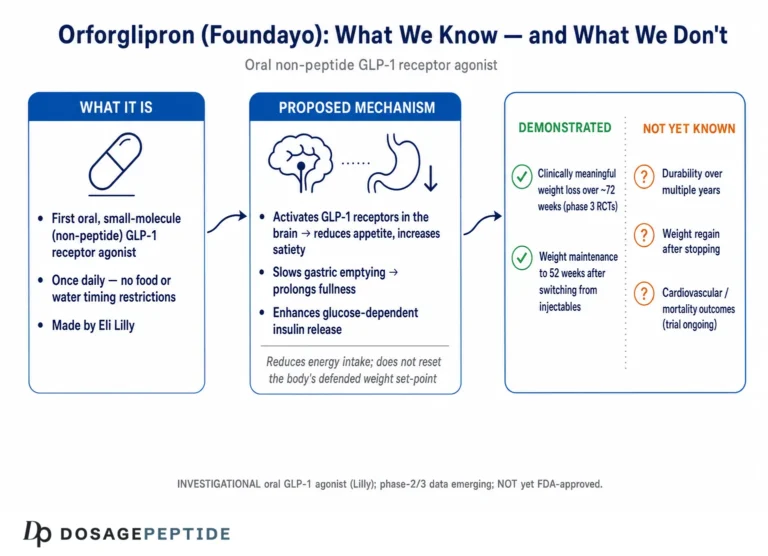
Orforglipron is an oral, once-daily, non-peptide small-molecule agonist of the GLP-1 receptor (GLP-1R). It was originally discovered by Chugai Pharmaceutical (as the internal candidate OWL833) and licensed to Eli Lilly in 2018, where it was redesignated LY3502970 and advanced through the clinic.[2] The molecule has the formula C48H48F2N10O5 and a molar mass of roughly 883 g/mol (882.97 g/mol) — small enough to be absorbed across the gut and formulated as a conventional tablet, yet structurally engineered to fit and activate a receptor whose natural ligand is a 30-amino-acid peptide hormone.[1]
That single fact — a drug-like small molecule hitting a peptide-hormone receptor — is the entire story. The GLP-1 receptor agonist class was built on peptides: exenatide, liraglutide, dulaglutide, semaglutide, and the dual GIP/GLP-1 agonist tirzepatide are all peptides or peptide analogues. Peptides are potent and selective, but they share two structural liabilities: they are rapidly degraded by digestive enzymes (so they generally cannot survive the gut and must be injected), and their large, flexible structures make oral bioavailability extraordinarily difficult. Orforglipron was rationally designed to sidestep both problems at once.[2]
If you are already familiar with the injectable peptides in this space, our protocol references for semaglutide reconstitution and dosing and tirzepatide reconstitution and dosing provide useful contrast: those compounds arrive as lyophilized powder that must be reconstituted and injected subcutaneously, whereas orforglipron is a finished oral solid. For definitions of the terms used throughout this article, our peptide and metabolic-health glossary is a helpful companion.
Peptide versus non-peptide: why the distinction matters
A “peptide” GLP-1 agonist is essentially a modified version of the human GLP-1 hormone — a chain of amino acids re-engineered to resist the enzyme dipeptidyl peptidase-4 (DPP-4) and to bind albumin for a longer half-life. Because it is a peptide, it behaves like one biologically: it is broken down in the stomach and small intestine, and only a tiny fraction would ever reach the bloodstream if swallowed. Novo Nordisk solved the oral problem for semaglutide by co-formulating it with the absorption enhancer SNAC (sodium N-[8-(2-hydroxybenzoyl)amino]caprylate) in Rybelsus, but the resulting product has very low and highly variable absorption and demands strict dosing conditions.
Orforglipron is a fundamentally different kind of chemical entity. It is a synthetic small molecule — the same category of drug as a statin or a blood-pressure pill — that happens to activate GLP-1R. It has no amino-acid backbone for digestive enzymes to cleave, so it survives the gut intact and is absorbed through ordinary passive and carrier-mediated mechanisms. This is why orforglipron can be manufactured by standard chemical synthesis (rather than complex, expensive biologic fermentation), stored at room temperature, and taken as a simple daily tablet.
The practical downstream of that molecular distinction is worth spelling out, because it shapes everything from cost of goods to global supply. Peptide drugs are built by solid-phase peptide synthesis or recombinant expression — multi-step processes that are expensive per gram and inherently difficult to scale to the tens of millions of patients now seeking GLP-1 therapy. Small molecules like orforglipron are assembled by conventional organic synthesis in standard chemical reactors, a manufacturing base that already produces the vast majority of the world’s prescription medicines at enormous scale. In a market that has been defined by supply shortages, that manufacturing difference is not a footnote — it is arguably as consequential as any efficacy number.
A brief history of the GLP-1 class
To appreciate why orforglipron matters, it helps to trace the arc of the class it belongs to. GLP-1 itself is an incretin hormone — a gut peptide secreted by intestinal L-cells after eating that amplifies insulin release. The first therapeutic exploitation of this biology was exenatide, a synthetic version of exendin-4 (a peptide isolated from the venom of the Gila monster), approved in 2005 as a twice-daily injection. Liraglutide followed as a once-daily injectable, then the once-weekly agents dulaglutide and semaglutide, each improving convenience by extending the dosing interval. Tirzepatide, approved for diabetes in 2022 and obesity thereafter, added a second incretin axis (GIP) to push efficacy higher still.
Every one of those milestones was a peptide, and every one — with the partial exception of oral semaglutide — was an injection. For twenty years the field advanced along two axes: greater efficacy and longer dosing intervals. Orforglipron represents a third axis entirely: eliminating the peptide and the needle. It is the first time the class has been reinvented at the level of the molecule rather than merely optimized in dose or schedule, which is why it is described as a breakthrough rather than an incremental advance.
How does a non-peptide molecule activate the GLP-1 receptor?
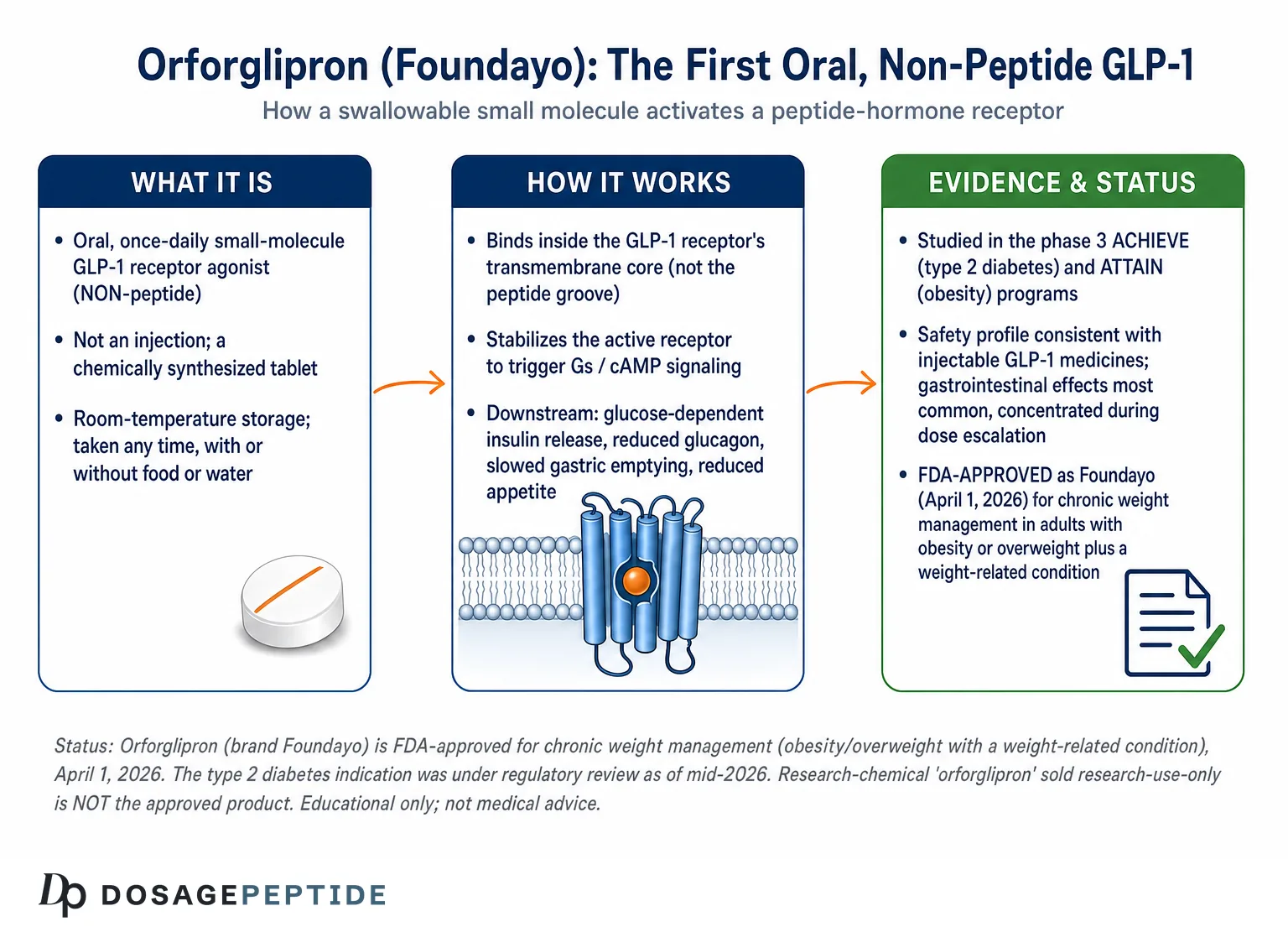
The GLP-1 receptor is a class B G-protein-coupled receptor (GPCR). Native GLP-1 and peptide analogues bind in a classic “two-domain” fashion: the C-terminus of the peptide docks into the large extracellular domain, and the N-terminus reaches down into the transmembrane core to trigger the conformational change that activates intracellular signaling. A small molecule cannot span both domains the way a 30-residue peptide does — so orforglipron works differently.
Binding within the transmembrane core
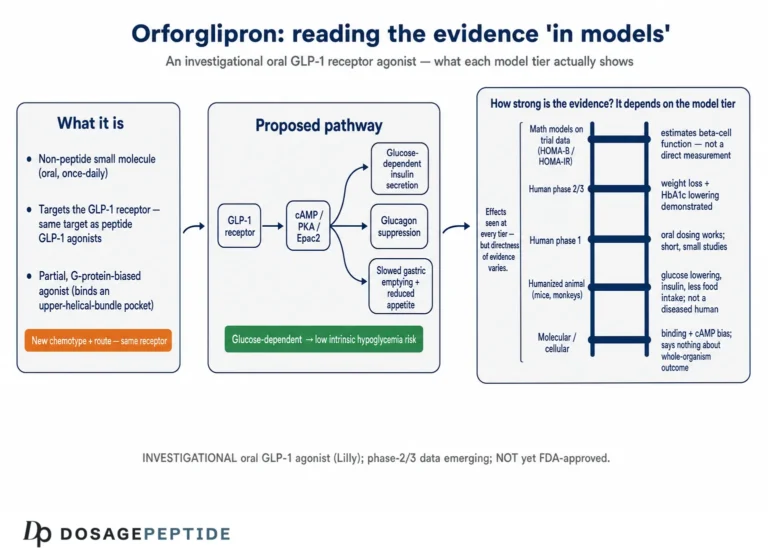
Structural and pharmacological studies show that orforglipron binds within a pocket formed by the receptor’s transmembrane helices (engaging regions of TM1, TM2, TM3, TM7 and extracellular loop 2), rather than occupying the extracellular peptide-binding groove.[2] From this position, the molecule stabilizes an active receptor conformation that couples to the stimulatory G protein (Gs). The dedicated mechanistic characterization of orforglipron’s non-peptide agonism was published in Science Translational Medicine and lays out how a compact molecule can reproduce the receptor activation normally driven by a peptide hormone.[3]
G-protein-biased (Gs-biased) signaling
One of the more interesting pharmacological features of orforglipron is that it behaves as a partial, G-protein-biased agonist. In cell systems expressing human GLP-1R, it strongly stimulates cyclic AMP (cAMP) production through the Gs pathway — the arm responsible for the receptor’s metabolic effects — while recruiting relatively little β-arrestin.[2] β-arrestin recruitment normally drives receptor internalization and desensitization. The theory behind biased agonism is that favoring the cAMP arm while limiting β-arrestin-mediated internalization may sustain signaling and preserve efficacy over time. Whether this bias translates into a meaningful clinical advantage in tolerability or durability versus balanced peptide agonists remains an open research question rather than a proven claim — the phase 3 safety profile, discussed below, tracks closely with the injectable peptides.
Downstream metabolic effects
Once GLP-1R is activated, the downstream physiology is the same regardless of whether the trigger was a peptide or a small molecule. In pancreatic beta cells, cAMP potentiates glucose-dependent insulin secretion — insulin is released when blood glucose is elevated, which is why GLP-1 agonists carry a low intrinsic risk of hypoglycemia. GLP-1R activation also suppresses inappropriate glucagon secretion from alpha cells, slows gastric emptying (blunting post-meal glucose spikes and prolonging satiety), and acts on GLP-1 receptors in the hypothalamus and hindbrain to reduce appetite and food intake. The combined effect is lower blood glucose plus meaningful weight loss — the two axes measured across orforglipron’s phase 3 program.
The four physiological levers, in detail
It is worth unpacking each of these effects, because together they explain both the efficacy and the tolerability of the entire class. First, glucose-dependent insulinotropic action: GLP-1R activation on beta cells increases intracellular cAMP, which amplifies the insulin-secretory response to a glucose stimulus. Crucially, when glucose is low the incretin signal produces little insulin release, so the system is self-limiting — the mechanistic basis for the class’s low hypoglycemia risk when used as monotherapy. Second, glucagon suppression: by restraining alpha-cell glucagon output in the fed state, GLP-1 agonists reduce hepatic glucose production, an independent contributor to lower fasting and post-prandial glucose. Third, delayed gastric emptying: slowing the rate at which the stomach empties flattens the post-meal glucose excursion and prolongs the sense of fullness. This same mechanism, however, is a principal driver of the early nausea and fullness that patients report during dose escalation. Fourth, and central to weight loss, central appetite regulation: GLP-1 receptors in appetite-regulating nuclei of the hypothalamus and brainstem reduce hunger and food-seeking behavior, lowering caloric intake over the long term.
The weight loss seen with GLP-1 agonists is overwhelmingly a consequence of that reduced energy intake rather than of increased energy expenditure. This is why the effect is durable while the drug is continued and why weight tends to be regained after discontinuation unless behavioral and dietary changes are sustained — a pattern consistent across the class and one that frames how maintenance strategies (including orforglipron’s) are designed.
Does biased agonism actually reduce nausea?
A recurring hypothesis in the small-molecule GLP-1 literature is that G-protein-biased signaling — favoring cAMP over β-arrestin — might decouple efficacy from the nausea and vomiting that limit dose escalation. The reasoning is that some of the GI liability of full, balanced agonism may be linked to signaling arms that a biased agonist recruits less strongly. Orforglipron’s in-vitro pharmacology is consistent with such bias.[2] However, the phase 3 tolerability data do not show orforglipron to be dramatically gentler than the injectable peptides — its GI adverse-event and discontinuation rates fall within the familiar class range. The honest read is that biased agonism is a mechanistically interesting property that has not, on current evidence, translated into a clearly superior tolerability profile. It remains an active area of research rather than an established clinical advantage, and readers should treat any claim that orforglipron is “easier on the stomach” than peptide agonists as unproven.
Why is an oral, non-peptide GLP-1 considered a breakthrough?
The clinical benefits of GLP-1 receptor agonists have been established for years. The barrier to their use has never been efficacy — it has been access, adherence, and manufacturing. Orforglipron attacks all three.
| Attribute | Injectable peptide GLP-1s (e.g., semaglutide, tirzepatide) | Oral peptide (semaglutide / Rybelsus) | Orforglipron (oral small molecule) |
|---|---|---|---|
| Chemical class | Peptide analogue | Peptide analogue + SNAC absorption enhancer | Non-peptide small molecule |
| Route | Subcutaneous injection | Oral tablet | Oral tablet |
| Dosing frequency | Once weekly (most) | Once daily | Once daily |
| Food/water timing | Not applicable (injected) | Fasting; ≤120 mL water; wait ~30 min before eating | None — any time, with or without food/water |
| Cold chain / storage | Refrigeration typically required | Room temperature | Room temperature |
| Manufacturing | Biologic synthesis (complex, capacity-limited) | Biologic synthesis + formulation | Standard chemical synthesis (scalable) |
The oral-versus-injectable adherence gap
Fear of needles, injection-site reactions, and the logistical friction of weekly self-injection all reduce initiation and long-term persistence with injectable therapies. A once-daily pill removes those barriers. While a daily tablet requires more frequent dosing than a weekly shot, most patients find swallowing a pill dramatically easier than injecting, and oral therapy fits existing chronic-disease prescribing habits for conditions like type 2 diabetes and obesity.
The Rybelsus problem — and how orforglipron solves it
Oral semaglutide (Rybelsus) already proved that a GLP-1 agonist can work as a pill, but at a steep convenience cost. Because absorption of the SNAC-enhanced peptide is so fragile, Rybelsus must be taken on an empty stomach, first thing in the morning, with no more than about 120 mL (4 ounces) of plain water, followed by a wait of roughly 30 minutes before eating, drinking, or taking other medications. Any deviation sharply reduces the already-low and variable drug exposure.
Orforglipron has no such requirement. Its absorption is only minimally affected by food, so it can be taken at any time of day, with or without meals and without a water restriction.[2] The FDA approval documentation and the manufacturer explicitly highlight that it is the first GLP-1 pill for weight management that can be taken any time of day without food or water restrictions.[4] For real-world adherence, that flexibility is arguably as important as the efficacy data.
Manufacturing scale and access
Peptide manufacturing is capacity-constrained and expensive; the well-publicized shortages of semaglutide and tirzepatide products stemmed partly from the difficulty of scaling biologic production. A small molecule made by conventional chemical synthesis can, in principle, be produced at far greater scale and lower unit cost. If that translates into broader availability and pricing, the public-health footprint of an oral small-molecule GLP-1 could be substantially larger than that of the injectables it complements.
What is the pharmacokinetic profile of orforglipron?
Orforglipron’s pharmacokinetics are what make once-daily oral dosing practical. Reported figures place its oral bioavailability at roughly 30–40%, its time to peak concentration (Tmax) at approximately 2–4 hours, and its elimination half-life in the range of roughly 29–49 hours in phase 1 dosing studies — long enough to support smooth once-daily dosing and to reach steady state over several days.[2][14] Metabolism is predominantly hepatic. Because exposure is not meaningfully altered by food, the dose can be taken without regard to meals.[15]
Why the long half-life matters for titration
A multi-day half-life means plasma levels rise gradually after a dose change and take time to plateau. This is why orforglipron — like the peptide GLP-1s — is introduced through a stepwise titration schedule rather than started at the full dose. Slow up-titration lets the gastrointestinal tract acclimate to progressively higher receptor activation, which is the single most effective strategy for minimizing the nausea and other GI effects characteristic of the class. Across the pivotal trials, dosing began at a low starting dose and escalated at roughly four-week intervals toward the assigned maintenance dose (commonly framed as a 3 mg start titrating up through 6, 12, and 36 mg targets, depending on the study arm).
For readers modeling oral titration curves or comparing them to the milligram-per-week ramps used with injectable peptides, our dosage calculator and general reconstitution and dosing guide illustrate the arithmetic behind stepwise escalation, even though orforglipron itself is a finished tablet that requires no reconstitution.
Metabolism, drug interactions, and special populations
Orforglipron is cleared predominantly by hepatic metabolism rather than renal excretion, which has implications for how it behaves in patients with kidney impairment versus liver impairment.[2] As with all GLP-1 agonists, the drug’s most clinically relevant pharmacodynamic interaction is the slowing of gastric emptying, which can in theory alter the rate — though usually not the overall extent — of absorption of co-administered oral medications, particularly early in treatment before the gastric effect attenuates. For most concomitant drugs this is not clinically important, but agents with narrow therapeutic windows warrant attention. When orforglipron is combined with insulin or insulin secretagogues such as sulfonylureas, the additive glucose-lowering effect raises hypoglycemia risk, so down-titration of the background agent is the standard mitigation. Because absorption is minimally food-dependent, there is no meal-timing interaction of the kind that constrains oral semaglutide.
Why titration is the key to tolerability
The single most important practical lesson from the entire GLP-1 class — and one clearly borne out in orforglipron’s trials — is that how the dose is escalated matters as much as the target dose itself. Starting low and stepping up slowly allows the gut and central nausea pathways to adapt, dramatically reducing the intensity and duration of GI symptoms. In the phase 3 program, GI adverse events clustered in the escalation windows and tapered once patients reached a stable maintenance dose. This is why the label and trial protocols specify multi-week intervals between dose increases rather than jumping to the top dose. Patients or researchers who compress the titration schedule to reach the maximal dose faster reliably trade tolerability for speed — a poor bargain given that weight and glycemic benefits accrue over months regardless.
What did the ACHIEVE program show in type 2 diabetes?
The ACHIEVE phase 3 program tested orforglipron as a treatment for type 2 diabetes across multiple trials and comparators. The anchor study, ACHIEVE-1, was published in the New England Journal of Medicine and evaluated orforglipron in adults with early type 2 diabetes managed on diet and exercise alone.[5]
ACHIEVE-1: design and glycemic results
ACHIEVE-1 was a 40-week, double-blind, placebo-controlled trial that randomized roughly 559 adults with early type 2 diabetes to orforglipron 3 mg, 12 mg, or 36 mg once daily, or placebo. The primary endpoint was the change in hemoglobin A1c (HbA1c). At 40 weeks, HbA1c fell by approximately 1.24% (3 mg), 1.47% (12 mg), and 1.48% (36 mg), compared with a 0.41% reduction on placebo — all statistically significant (p<0.001).[6] Final average HbA1c values in the treated arms landed in the 6.5–6.7% range, meaning many participants approached or crossed below the 7% treatment target and, in a substantial fraction, below the 6.5% threshold sometimes used to define diabetes remission-adjacent control.
ACHIEVE-1: weight loss
Weight loss was a key secondary endpoint. Body weight declined in a dose-dependent manner: about −4.5% (3 mg), −5.8% (12 mg), and −7.6% (36 mg), versus −1.7% with placebo.[6] Importantly, weight loss in these trials had not fully plateaued at the study endpoint, suggesting the numbers may understate the ceiling achievable with longer treatment.
ACHIEVE-3: head-to-head against oral semaglutide
Perhaps the most commercially significant diabetes readout was ACHIEVE-3, the first head-to-head phase 3 comparison of orforglipron against oral semaglutide (Rybelsus). This 52-week, open-label, non-inferiority trial randomized 1,698 adults with type 2 diabetes inadequately controlled on metformin to orforglipron 12 mg or 36 mg or oral semaglutide 7 mg or 14 mg, and was published in The Lancet on 26 February 2026.[7] Orforglipron delivered superior glycemic control and greater weight loss than oral semaglutide across the primary and key secondary endpoints. HbA1c fell by approximately −1.9% (12 mg) and −2.2% (36 mg) with orforglipron, versus −1.1% (7 mg) and −1.4% (14 mg) with oral semaglutide; body weight declined by about −6.7% (12 mg) and −9.2% (36 mg) with orforglipron versus −3.7% (7 mg) and −5.3% (14 mg) with semaglutide.[7] A greater proportion of orforglipron-treated participants reached the guideline HbA1c targets of below 7%, below 6.5%, and below 5.7% than those on either dose of oral semaglutide. This is a notable result: an orally convenient small molecule beating the established oral peptide on its home turf. One trade-off flagged in the trial is that gastrointestinal adverse events were somewhat more frequent with orforglipron than with oral semaglutide.
| ACHIEVE-1 outcome (40 weeks) | Placebo | Orforglipron 3 mg | Orforglipron 12 mg | Orforglipron 36 mg |
|---|---|---|---|---|
| HbA1c reduction | −0.41% | −1.24% | −1.47% | −1.48% |
| Body-weight reduction | −1.7% | −4.5% | −5.8% | −7.6% |
Additional ACHIEVE trials rounded out the diabetes picture: ACHIEVE-2 and ACHIEVE-5 tested orforglipron against other comparators and as an adjunct to basal insulin, consistently demonstrating statistically significant HbA1c reductions with a safety profile in line with injectable GLP-1 medicines.[8] The consistency across a program spanning early diet-and-exercise-controlled diabetes (ACHIEVE-1), comparisons against active oral therapy, and add-on to background insulin is meaningful: it demonstrates that orforglipron’s glycemic efficacy is not an artifact of one narrow population but holds across the spectrum of type 2 diabetes management, from newly diagnosed to insulin-treated.
Interpreting the diabetes data
Two features of the ACHIEVE results deserve emphasis for a research-literate reader. First, the HbA1c reductions of roughly 1.2–1.5% in ACHIEVE-1 are clinically substantial — a 1% absolute reduction in HbA1c is associated in epidemiologic data with meaningful reductions in microvascular complications, and the treated arms brought average HbA1c down toward or below the 6.5% threshold. Second, the diabetes weight-loss numbers (up to ~7.6% in ACHIEVE-1) are notably smaller than the obesity-trial numbers (~11% in ATTAIN-1). This is expected: people with established type 2 diabetes characteristically lose less weight on incretin therapy than people without diabetes, a pattern seen across the entire GLP-1 class and attributable to differences in metabolic physiology and, in some cases, concurrent glucose-lowering therapy. The gap between ACHIEVE and ATTAIN weight numbers is therefore a feature of the populations, not a sign of inconsistency in the drug.
What did the ATTAIN program show in obesity?
The ATTAIN phase 3 program tested orforglipron as a chronic weight-management therapy. Two studies anchor the obesity dataset: ATTAIN-1 in adults with obesity (or overweight with complications) without diabetes, and ATTAIN-2 in adults with obesity plus type 2 diabetes.
ATTAIN-1: the pivotal obesity trial
ATTAIN-1 was a 72-week, double-blind, placebo-controlled trial that randomized 3,127 adults with obesity, or overweight with a weight-related complication such as hypertension, to once-daily orforglipron 6 mg (n≈723), 12 mg (n≈725), or 36 mg (n≈730), or placebo (n≈949), all on top of diet and physical activity. Results were published in the New England Journal of Medicine.[9]
At 72 weeks, mean weight loss was dose-dependent: −7.5% (6 mg), −8.4% (12 mg), and −11.2% (36 mg), versus −2.1% with placebo (p<0.001 for all comparisons).[10] At the top dose, that translated to an average reduction of more than 27 pounds. The categorical responder analysis at 36 mg was clinically meaningful: about 55% of participants achieved at least 10% weight loss, 36% achieved at least 15%, and 19% achieved at least 20%, compared with 13%, 6%, and 3% respectively on placebo.[10]
ATTAIN-1: cardiometabolic effects
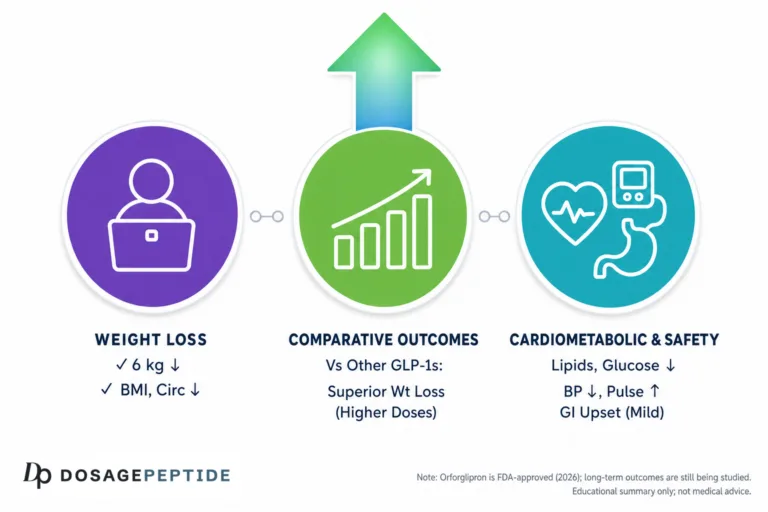
Beyond the scale, orforglipron significantly improved every measured cardiometabolic risk factor versus placebo, including waist circumference, systolic blood pressure, and lipid and glycemic parameters.[10] These are the kinds of downstream benefits — blood pressure, lipids, glucose — that, over time, drive reductions in cardiovascular events, and they mirror what has been observed with the injectable incretins.
ATTAIN-2: obesity with type 2 diabetes
ATTAIN-2 extended the obesity program to the harder-to-treat population of adults who have both obesity and type 2 diabetes — a group in which weight loss is typically blunted compared with people without diabetes. This 72-week, phase 3, double-blind, placebo-controlled trial enrolled 1,613 adults across 136 sites in ten countries and was published in The Lancet.[11] At the 36 mg dose, participants lost an average of about 10.5% of body weight (roughly 22.9 lb) versus 2.2% on placebo on the efficacy estimand (the effect assuming full adherence; the more conservative treatment-regimen estimand used for regulatory purposes was closer to 9.6%), and HbA1c fell by up to 1.78 percentage points versus 0.14 with placebo.[11] Non-HDL cholesterol, systolic blood pressure, and triglycerides all improved. That degree of weight loss in a co-morbid diabetic population is consistent with what injectable GLP-1 therapies achieve, reinforcing that the oral small molecule is competitive on efficacy — not merely on convenience.
| Trial | Population | N | Duration | Top-dose weight loss | Placebo weight loss |
|---|---|---|---|---|---|
| ATTAIN-1 | Obesity, no diabetes | 3,127 | 72 wk | −11.2% (36 mg) | −2.1% |
| ATTAIN-2 | Obesity + type 2 diabetes | 1,613 | 72 wk | −10.5% (36 mg) | −2.2% |
| ACHIEVE-1 | Early type 2 diabetes | 559 | 40 wk | −7.6% (36 mg) | −1.7% |
Maintaining loss after switching from injectables
A distinctive phase 3b study, ATTAIN-MAINTAIN, tested whether patients who had already lost weight on high-dose injectable incretins (semaglutide or tirzepatide) could transition directly to oral orforglipron and hold that loss. Published in Nature Medicine, it reported that orforglipron effectively maintained the weight reduction achieved on injectables — a clinically important finding, because it suggests a convenient oral “maintenance” option after an injectable induction phase.[12]
Why the “not yet plateaued” caveat matters
A recurring observation across both the ACHIEVE and ATTAIN programs is that weight-loss curves had generally not fully flattened by the end of the trial window. In practical terms, the 72-week mean of ~11% in ATTAIN-1 may understate the loss achievable with continued treatment, because participants were still trending downward when the trial ended. This is a familiar feature of GLP-1 obesity trials and means head-line efficacy numbers should be read as time-anchored snapshots rather than definitive ceilings. It also underscores that GLP-1 therapy for chronic weight management is conceived as a long-term intervention: benefits accrue over many months, and the physiological drivers of weight regain reassert themselves if treatment stops.
The responder distribution, not just the mean
Averages can obscure the clinically important spread of outcomes. In ATTAIN-1, the 36 mg categorical responder data — roughly 55% reaching ≥10%, 36% reaching ≥15%, and 19% reaching ≥20% weight loss — reveal that a meaningful minority of participants achieved loss approaching what the strongest injectables deliver, while others responded more modestly.[10] This heterogeneity of response is typical of the class and is one reason clinicians titrate to effect and reassess: the population-mean figure describes the average patient, not the range of individual trajectories that a real-world cohort will display.
How does orforglipron compare with injectable GLP-1 and dual agonists?
On paper, orforglipron’s weight-loss efficacy sits below the ceiling of the most potent injectables but comfortably within the clinically meaningful range. Injectable semaglutide 2.4 mg (Wegovy) produced roughly 15% mean weight loss in its pivotal obesity trial, and tirzepatide — a dual GIP/GLP-1 agonist — reached the low-to-mid 20% range at its top dose. Orforglipron’s ~11–12% at 36 mg is therefore closer to injectable semaglutide’s magnitude than to tirzepatide’s, and modestly below Wegovy.
The right way to read that is not “orforglipron is weaker” but “orforglipron trades a few percentage points of peak efficacy for the enormous practical advantages of an oral, room-temperature, chemically manufactured, flexibly dosed pill.” For many patients — especially those who will never accept an injection, or for whom cold-chain access is a barrier — a pill delivering double-digit weight loss is transformative even if it does not match the strongest injectable. And in the ACHIEVE-3 diabetes head-to-head against oral semaglutide, orforglipron actually came out ahead.[7]
| Compound | Class | Route | Approx. peak mean weight loss |
|---|---|---|---|
| Orforglipron | Non-peptide small-molecule GLP-1 RA | Oral daily | ~11–12% |
| Semaglutide (Wegovy) | Peptide GLP-1 RA | Injectable weekly | ~15% |
| Oral semaglutide (Rybelsus) | Peptide GLP-1 RA + SNAC | Oral daily (fasting) | Lower than orforglipron in head-to-head |
| Tirzepatide | Dual GIP/GLP-1 peptide RA | Injectable weekly | ~20%+ |
The comparison figures for the injectable peptides above are drawn from their own pivotal programs and are provided for context; the numbers cited with references throughout this article are specific to orforglipron’s trials. For dosing detail on the injectable comparators, see our semaglutide protocol reference and tirzepatide protocol reference.
What is the safety and gastrointestinal tolerability profile?
Across the entire phase 3 program, orforglipron’s safety profile was described as consistent with injectable GLP-1 medicines — which is exactly what pharmacology predicts, since the receptor and downstream biology are shared.[6]
Gastrointestinal adverse events
The most common adverse events were gastrointestinal — nausea, vomiting, diarrhea, and constipation — and were typically mild to moderate, dose-dependent, and concentrated during the up-titration period. This mirrors the class-wide experience: GI effects are driven by GLP-1R activation in the gut and central nausea pathways, and they tend to attenuate as the body adapts. Because of this, gradual titration is central to tolerability, and starting at the lowest dose with slow escalation is the standard mitigation strategy.
Discontinuation rates
In ATTAIN-1, adverse events leading to discontinuation occurred in roughly 5–10% of orforglipron participants versus about 3% on placebo.[10] In ATTAIN-2, treatment discontinuations due to adverse events (mainly GI) ran about 6.1–9.9% for orforglipron versus 4.1% for placebo.[11] These figures are in the same territory as the injectable GLP-1 agonists and do not signal a meaningfully worse tolerability burden for the oral small molecule.
Hypoglycemia and class-effect considerations
Because GLP-1R agonists stimulate insulin only when glucose is elevated, the intrinsic risk of hypoglycemia is low; severe hypoglycemia was not a prominent signal except in the context of concomitant insulin or sulfonylureas, where dose adjustment of the background agent is the standard precaution. As with the entire class, the label carries the customary class warnings and precautions. The peptide GLP-1 agonists carry a boxed warning regarding rodent thyroid C-cell tumors (medullary thyroid carcinoma) and a contraindication in patients with a personal or family history of medullary thyroid carcinoma or MEN 2; clinicians and researchers should consult orforglipron’s official prescribing information for its specific warnings, contraindications, and monitoring guidance rather than assuming they are identical. The best available human evidence has not demonstrated that GLP-1 receptor agonists cause the common thyroid cancers, but the labeled precaution reflects the rodent findings and remains part of prescribing practice.[4]
Other class-associated considerations
Beyond GI effects and the thyroid precaution, several other class-level considerations apply to GLP-1 receptor agonists and are relevant context when evaluating orforglipron. Because these drugs slow gastric emptying and can be associated with gallbladder-related events (cholelithiasis and cholecystitis), rapid weight loss of any cause increases gallstone risk, and this has been observed across the class. Acute pancreatitis has been reported with GLP-1 agonists, though a clear causal signal at population scale has been difficult to establish; the conservative approach is to discontinue and evaluate if pancreatitis is suspected. There has also been research interest in the anesthetic implications of delayed gastric emptying — the possibility of retained gastric contents during sedation or surgery — which has prompted evolving peri-procedural guidance for the class as a whole. None of these are unique to orforglipron; they are the shared safety context of GLP-1R agonism, and the definitive, product-specific list of warnings resides in the approved prescribing information.
Cardiovascular and long-term outcome data
The phase 3 program demonstrated improvements in surrogate cardiometabolic markers — systolic blood pressure, non-HDL cholesterol, triglycerides, waist circumference, and glycemia — across the ATTAIN and ACHIEVE trials.[10] These are the intermediate variables through which the injectable GLP-1 agonists have, in dedicated outcome trials, ultimately shown reductions in major adverse cardiovascular events. It is important to be precise about what is and is not yet established for orforglipron: the improvement in risk factors is documented, but long-term cardiovascular-outcome data of the kind that anchors the injectable peptides’ cardiovascular indications accrue over years and were not the endpoint of the weight-and-glycemia registration trials. Whether orforglipron produces comparable hard-outcome benefit is a reasonable expectation given shared mechanism, but it is a hypothesis awaiting dedicated long-term data rather than a proven claim.
What is the regulatory status of orforglipron?
Orforglipron progressed from a fully investigational compound to an approved medicine over the course of 2025–2026. On the strength of the ATTAIN obesity data, the U.S. Food and Drug Administration approved orforglipron under the brand name Foundayo on April 1, 2026, for chronic weight management in adults with obesity, or overweight with at least one weight-related medical problem, alongside a reduced-calorie diet and increased physical activity.[4] The approval was notable both for the indication and for the language emphasizing that Foundayo is the only GLP-1 pill for weight loss that can be taken any time of day without food or water restrictions.[13]
Obesity approved; diabetes and other indications advancing
As of mid-2026, the approved indication is chronic weight management (obesity/overweight). The type 2 diabetes indication — supported by the ACHIEVE program — was under regulatory review following global submissions, and orforglipron is additionally being studied for related conditions such as obstructive sleep apnea and osteoarthritis associated with obesity.[4] Researchers should verify the current, specific approved indications and labeling in the FDA-approved prescribing information, as regulatory status continues to evolve and varies by country.
A note on research-use material
Separate from the FDA-approved finished pharmaceutical, orforglipron is offered by research-chemical suppliers — including Prime Lab — strictly as a research-use-only material for laboratory investigation, not for human consumption. Research-use compounds are not manufactured, tested, or labeled to pharmaceutical standards, and are not interchangeable with the approved product. Any laboratory work should be conducted under appropriate institutional oversight and in compliance with applicable regulations. Our orforglipron 6 mg research dosage protocol reference documents the milligram-scale handling parameters used in a research context for those studying the compound.
Where does orforglipron fit in the GLP-1 landscape?
Orforglipron does not render injectable GLP-1 and dual agonists obsolete — the most potent injectables still achieve greater peak weight loss. Instead, it widens the top of the funnel. It offers an oral, needle-free, cold-chain-free, chemically scalable entry point into GLP-1 therapy, which is likely to expand the treated population well beyond those willing or able to use injectables. In practice, the landscape is fragmenting into tiers: small-molecule oral agents (orforglipron) for convenience and breadth of access; injectable single agonists (semaglutide) for higher efficacy; and dual or triple agonists (tirzepatide, and next-generation candidates) for the greatest weight loss. The ATTAIN-MAINTAIN result even suggests a sequencing strategy — injectable induction followed by oral maintenance.[12]
The broader significance is proof of concept. Orforglipron is the first clinical validation that a drug-like small molecule can activate the GLP-1 receptor with peptide-comparable metabolic efficacy. That opens the door to an entire generation of oral small-molecule incretin agents — including small-molecule GIP and glucagon-receptor agonists, and eventually oral combinations — that could deliver the metabolic benefits of the incretin class in a form as ordinary and accessible as a daily tablet. For a class that began with twice-daily injections in 2005, that is a remarkable trajectory.
What orforglipron does and does not change
It is worth being disciplined about the claim. Orforglipron does not out-perform the best injectables on peak weight loss, and it does not eliminate the GI tolerability profile that defines the class. What it changes is the form factor and the manufacturing base — and in a public-health sense those may matter more than a few percentage points of efficacy. A therapy that is a chemically synthesized, room-temperature, no-restriction daily pill can reach populations that injectables never will: people who refuse needles, health systems without reliable cold chains, and markets where biologic manufacturing cost places the injectables out of reach. The story of orforglipron is less about beating tirzepatide on the scale and more about democratizing access to the incretin class.
The competitive small-molecule pipeline
Orforglipron is the first oral small-molecule GLP-1 agonist to reach approval, but it will not be the last. Multiple pharmaceutical developers have oral small-molecule GLP-1 candidates in clinical development, and the mechanistic proof orforglipron provides — that non-peptide agonism of a class B GPCR is clinically viable — has intensified interest across the sector. The logical next steps are oral small-molecule agonists of the complementary incretin receptors (GIP, glucagon) and, ultimately, oral combination regimens that could approach the efficacy of injectable dual and triple agonists without a needle. Whether any of these match orforglipron’s convenience while pushing efficacy higher is the central question that will shape the oral metabolic-therapy market over the coming years.
Positioning for research and education
For the scientifically literate reader tracking this space, orforglipron is best understood as a landmark rather than an endpoint. It settles a long-standing question — can a small molecule replace a peptide at the GLP-1 receptor with real clinical efficacy — decisively in the affirmative. It simultaneously reframes the strategic map of metabolic medicine, where the axes of competition now include not just efficacy and dosing interval but molecular class, route, manufacturing scalability, and dosing convenience. As the ACHIEVE and ATTAIN datasets mature and additional indications are studied, orforglipron will serve as the reference case against which every subsequent oral incretin agent is measured.
Frequently Asked Questions
Is orforglipron a peptide?
No. Orforglipron is a non-peptide, small-molecule GLP-1 receptor agonist with the formula C48H48F2N10O5 (about 883 g/mol). This is the defining feature that separates it from semaglutide, tirzepatide, and every other GLP-1 drug, which are peptides or peptide analogues. Because it lacks an amino-acid backbone, it resists digestive enzymes and can be absorbed as an oral tablet without needing injection or a special absorption enhancer.
How is orforglipron different from oral semaglutide (Rybelsus)?
Both are oral GLP-1 pills, but they work very differently. Rybelsus is a peptide co-formulated with the absorption enhancer SNAC and must be taken fasting, first thing in the morning, with a small sip of water and a 30-minute wait before eating. Orforglipron is a small molecule whose absorption is minimally affected by food, so it can be taken any time of day with or without food or water. In a head-to-head diabetes trial, orforglipron delivered superior glycemic control and weight loss.
How much weight loss did orforglipron produce in trials?
In the pivotal ATTAIN-1 obesity trial (72 weeks, 3,127 adults), the 36 mg dose produced about 11.2% mean weight loss versus 2.1% on placebo, with roughly 55% of top-dose participants losing at least 10% of body weight. In ATTAIN-2 (obesity plus type 2 diabetes), the 36 mg dose achieved about 10.5% weight loss. Diabetes-focused ACHIEVE-1 showed up to 7.6% weight loss at 40 weeks.
Is orforglipron FDA-approved?
Yes, for chronic weight management. The FDA approved orforglipron under the brand name Foundayo on April 1, 2026, for adults with obesity or overweight with at least one weight-related medical problem, alongside diet and exercise. The type 2 diabetes indication supported by the ACHIEVE program was under regulatory review as of mid-2026. Approval status evolves and varies by country, so always confirm current labeling in the official prescribing information.
What are the main side effects of orforglipron?
The most common adverse events are gastrointestinal — nausea, vomiting, diarrhea, and constipation — which are usually mild to moderate, dose-dependent, and concentrated during the dose-escalation period. Discontinuation due to adverse events ran roughly 5–10% across the ATTAIN trials versus about 3–4% on placebo. Hypoglycemia risk is intrinsically low because GLP-1 agonists stimulate insulin only when glucose is elevated, though caution is needed when combined with insulin or sulfonylureas.
Why does orforglipron cause fewer dosing restrictions than other GLP-1 pills?
Because it is a stable small molecule rather than a fragile peptide. Peptide-based oral GLP-1 drugs need an absorption enhancer and strict fasting conditions because their bioavailability is very low and easily disrupted by food. Orforglipron is absorbed through ordinary mechanisms and its exposure is only minimally affected by food, so no fasting window, water limit, or timing rule is required. This flexibility is a major driver of its expected real-world adherence advantage.
How does orforglipron compare with tirzepatide?
Tirzepatide is a weekly-injectable dual GIP/GLP-1 peptide agonist that produces greater peak weight loss (low-to-mid 20% range) than orforglipron’s ~11–12%. Orforglipron trades some peak efficacy for the practical advantages of an oral, room-temperature, flexibly dosed small molecule. They occupy different tiers: tirzepatide for maximum efficacy, orforglipron for oral convenience and broad access. A phase 3b trial even showed orforglipron can maintain weight loss after switching from tirzepatide.
Can orforglipron be reconstituted like an injectable peptide?
No — orforglipron is a finished oral tablet and requires no reconstitution. Reconstitution applies to lyophilized injectable peptides such as semaglutide and tirzepatide, which arrive as powder that must be mixed with bacteriostatic water before subcutaneous injection. If you are studying those injectable comparators, our reconstitution guide and dosage calculator cover the relevant arithmetic, but they do not apply to the orforglipron oral form.
References
- Orforglipron (LY3502970; OWL833), CID 137319706 — molecular formula C48H48F2N10O5, molar mass 882.97 g/mol, CAS 2212020-52-3. PubChem, National Library of Medicine.
- Orforglipron: A Comprehensive Review of an Oral Small-Molecule GLP-1 Receptor Agonist for Obesity and Type 2 Diabetes. PMC (PMC12898445).
- The pharmacological basis for nonpeptide agonism of the GLP-1 receptor by orforglipron. Science Translational Medicine.
- FDA Approves Orforglipron, First GLP-1 Pill Without Time, Food, or Water Restrictions. Pharmacy Times, April 2026.
- Orforglipron, an Oral Small-Molecule GLP-1 Receptor Agonist, in Early Type 2 Diabetes (ACHIEVE-1). New England Journal of Medicine (DOI:10.1056/NEJMoa2505669).
- Lilly: orforglipron demonstrated statistically significant efficacy and a safety profile consistent with injectable GLP-1 medicines (ACHIEVE-1).
- Efficacy and safety of once-daily oral orforglipron compared with oral semaglutide in adults with type 2 diabetes (ACHIEVE-3): a multinational, multicentre, non-inferiority, open-label, randomised, phase 3 trial. The Lancet 2026;407:1147–1160 (published 26 Feb 2026).
- Lilly: orforglipron demonstrated superior glycemic control in two successful Phase 3 trials (ACHIEVE-2 and ACHIEVE-5).
- Orforglipron, an Oral Small-Molecule GLP-1 Receptor Agonist for Obesity Treatment (ATTAIN-1). New England Journal of Medicine (DOI:10.1056/NEJMoa2511774).
- ATTAIN-1: Oral Orforglipron Significantly Reduces Weight, Cardiometabolic Risk. American College of Cardiology journal scan.
- Orforglipron for the treatment of obesity in people with type 2 diabetes (ATTAIN-2): a phase 3 randomised trial. The Lancet.
- Orforglipron for maintenance of body weight reduction: the phase 3b ATTAIN-MAINTAIN trial. Nature Medicine.
- FDA approves Lilly’s Foundayo (orforglipron), the only GLP-1 pill for weight loss that can be taken any time of day without food or water restrictions.
- Pratt E, et al. Orforglipron (LY3502970), a novel, oral non-peptide GLP-1 receptor agonist: a Phase 1a, blinded, placebo-controlled, randomized, single- and multiple-ascending-dose study in healthy participants. Diabetes Obes Metab 2023 (DOI:10.1111/dom.15184) — pharmacokinetics, half-life ~29–49 h.
- Effect of Food Consumption on the Pharmacokinetics, Safety, and Tolerability of Once-Daily Orally Administered Orforglipron (LY3502970), a Non-peptide GLP-1 Receptor Agonist. PMC10951152 — no clinically relevant food effect on exposure.