Melanotan II does activate MC1R, and that is genuinely how the pigment shift happens: the receptor pushes melanocytes from red-yellow pheomelanin toward dark eumelanin. The catch is that Melanotan II is a non-selective melanocortin agonist, it has never been approved by any major regulator for tanning or anything else, and its unregulated use carries documented harms ranging from nausea and blood-pressure changes to the darkening and eruption of melanocytic nevi.112 This article walks through the receptor mechanism, what the human pigmentation studies actually measured, how Melanotan II differs from afamelanotide and bremelanotide, and why the mole-monitoring concern is the one dermatologists raise first. Handling conventions are summarised in our Melanotan II 10 mg vial protocol.
So this piece treats the title as a mechanistic research question rather than a product endorsement. We will build the MC1R signaling cascade from the receptor up, examine exactly where Melanotan II plugs into it and how potent that engagement is, and then confront the two facts that most cosmetic framing glosses over: first, that the pigmentation evidence in humans is thinner and older than the confident marketing implies; and second, that the receptor Melanotan II hits hardest for tanning is only one of several melanocortin receptors it binds, which is precisely why its use produces off-target effects. Along the way we will draw the crucial distinction between Melanotan II and its regulated relatives — afamelanotide (Melanotan I, marketed as Scenesse), a selective MC1R agonist approved for a rare photodermatosis, and bremelanotide (Vyleesi), an FDA-approved melanocortin analog that works mainly through a different receptor for a completely different indication.68
The guiding principle throughout is honesty about evidence level. Where the receptor biology is well characterized, we will say so. Where the human pigmentation data are limited to small early trials, we will say that too. And where the compound’s non-approval, quality problems, and safety signals matter, we will not soften them. Nothing here is a recommendation to use Melanotan II; it is an attempt to explain, accurately, what the MC1R science does and does not support.
What Melanotan II Is
Melanotan II is a synthetic cyclic heptapeptide analog of α-MSH, the endogenous 13-amino-acid hormone that is the natural agonist of the melanocortin-1 receptor. The design lineage matters. In the 1980s and 1990s, peptide chemists at the University of Arizona — notably Victor Hruby and Mac Hadley — set out to build α-MSH analogs that were more potent and more metabolically stable than the fragile native hormone, which is rapidly degraded in the body. Two design moves defined this effort. The first, shared with the linear analog Melanotan I, was the substitution of norleucine for methionine at position 4 and D-phenylalanine for L-phenylalanine at position 7, producing the “superpotent” core sequence [Nle4-D-Phe7]-α-MSH.2 The second, unique to Melanotan II, was to cyclize the molecule through a lactam bridge, locking the peptide into a constrained ring conformation. That cyclization dramatically increased potency and stability but, importantly, also broadened the molecule’s receptor promiscuity.1
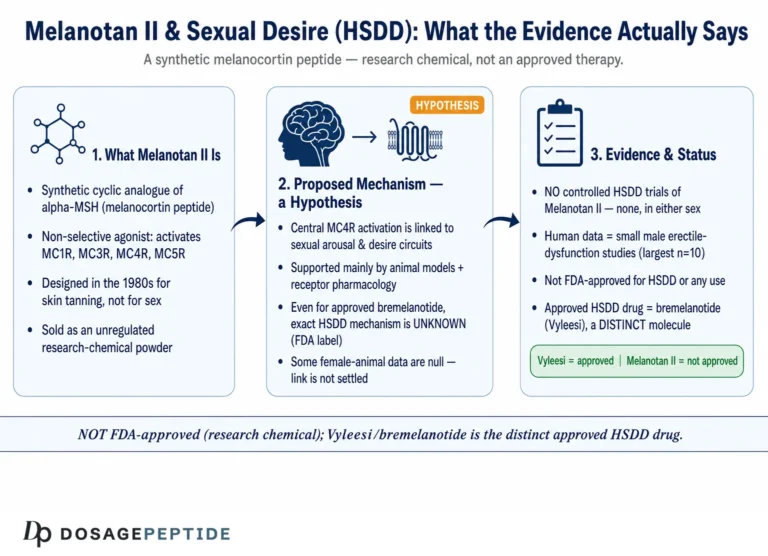
The consequence of that structural choice is the single most under-appreciated fact about Melanotan II: it is a non-selective melanocortin receptor agonist. It binds and activates not only MC1R (the pigmentation receptor) but also MC3R and MC4R (central receptors involved in appetite, sexual function, and autonomic tone) and MC5R.1 This distinguishes it sharply from afamelanotide/Melanotan I, which is a linear analog with far greater selectivity for MC1R.4 A useful way to hold this in mind is that Melanotan II was originally advanced in clinical research not as a tanning agent at all, but out of interest in its central effects — and its best-known offshoot, bremelanotide, was developed specifically for the sexual-desire pathway that runs through MC4R, not for skin.8 Tanning is one output of a molecule that broadcasts across the whole melanocortin system.
Melanotan II is typically encountered as a lyophilized (freeze-dried) white powder in a sealed vial, sold through unregulated online channels as a “research chemical.” It is not a licensed medicine anywhere. Because it is manufactured and distributed outside any pharmaceutical quality framework, real-world material varies in purity, identity, and sterility — a point we will return to, because it turns many reported harms into a problem of sourcing as much as of pharmacology.12 Readers exploring the compound’s other proposed effects will find the site’s companion articles on how Melanotan II influences erectile performance mechanistically and whether it could play a role in hypoactive sexual desire disorder useful for understanding the central, MC4R-driven side of the same molecule.
The MC1R Receptor: Structure and Signaling
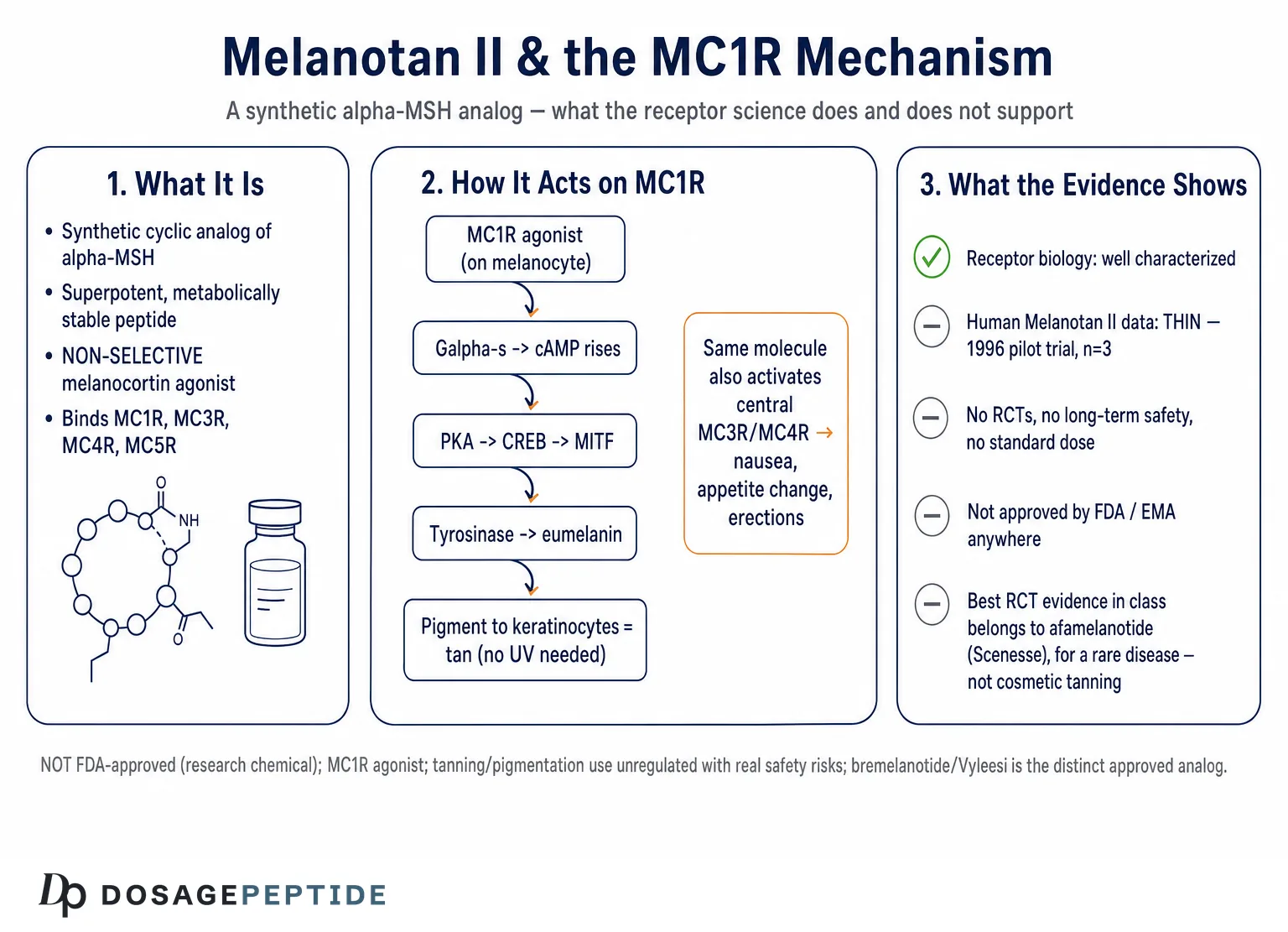
To understand what Melanotan II does, you have to understand the receptor it acts on. The melanocortin-1 receptor is a class A (rhodopsin-like) G-protein-coupled receptor (GPCR) expressed most prominently on the surface of melanocytes — the pigment-producing cells resident in the basal layer of the epidermis and in hair follicles. It is a relatively small GPCR, with the canonical seven transmembrane-spanning helices, and it is encoded by the highly polymorphic MC1R gene on chromosome 16.3 That polymorphism is central to human pigmentation biology and, as we will see, is one reason a single dose of a melanotropic peptide does not produce the same result in every person.
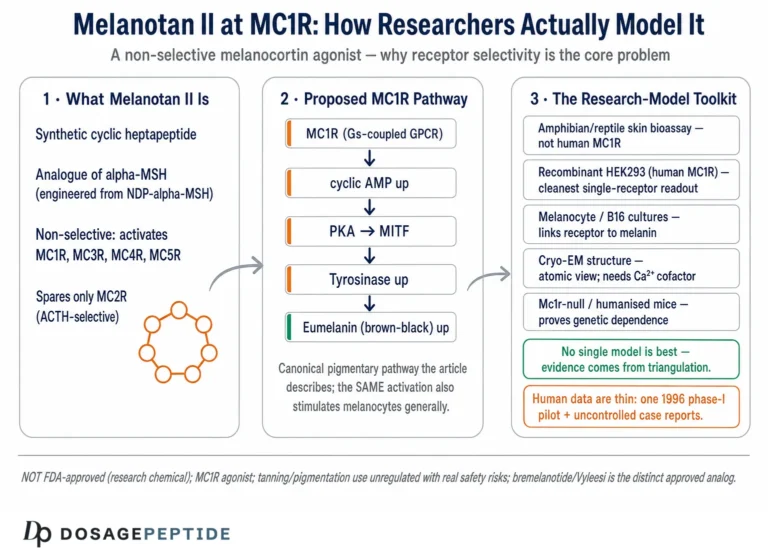
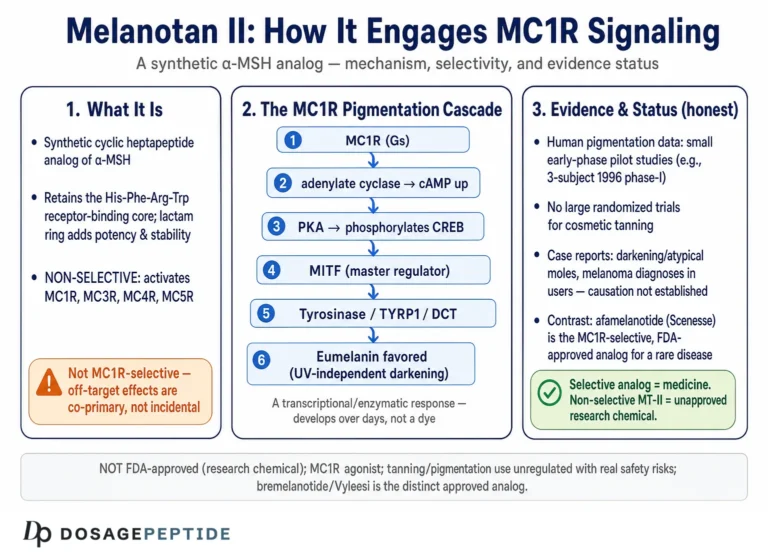
The downstream signaling is one of the best-characterized cascades in skin biology. When an agonist — endogenously α-MSH or adrenocorticotropic hormone (ACTH), pharmacologically an analog such as Melanotan II — binds MC1R, the receptor changes conformation and activates the stimulatory G protein, Gαs. The Gαs subunit dissociates and stimulates adenylyl cyclase, which converts ATP into the second messenger cyclic AMP (cAMP). Rising intracellular cAMP activates protein kinase A (PKA), which phosphorylates the transcription factor CREB (cAMP-response-element-binding protein). Phosphorylated CREB, in turn, drives expression of MITF, the microphthalmia-associated transcription factor, which is the master regulator of the melanocyte lineage.35
MITF then upregulates the enzymatic machinery of melanin synthesis: tyrosinase (TYR), the rate-limiting enzyme of the pathway, along with tyrosinase-related protein 1 (TYRP1) and dopachrome tautomerase (DCT/TYRP2). These enzymes, housed inside specialized organelles called melanosomes, convert the amino acid tyrosine through a series of oxidation steps into melanin pigment. The mature, pigment-laden melanosomes are then transferred from melanocytes to surrounding keratinocytes, where they accumulate in a supranuclear cap that physically shields DNA from ultraviolet radiation. This is the biological logic of a tan: pigment is deposited over the cell nucleus as a UV shield.35 The following table lays out the cascade step by step.
| Step | Molecular event | Functional result |
|---|---|---|
| 1. Ligand binding | α-MSH or analog (e.g., Melanotan II) binds MC1R | Receptor conformational change |
| 2. G-protein coupling | Gαs dissociates, activates adenylyl cyclase | Signal transduction begins |
| 3. Second messenger | Adenylyl cyclase generates cAMP | Intracellular cAMP rises |
| 4. Kinase activation | cAMP activates protein kinase A (PKA) | PKA phosphorylates CREB |
| 5. Transcription | Phospho-CREB drives MITF expression | Master melanocyte regulator activated |
| 6. Enzyme induction | MITF upregulates tyrosinase, TYRP1, DCT | Melanogenic machinery built |
| 7. Pigment synthesis | Tyrosine oxidized to eumelanin in melanosomes | Brown-black pigment produced |
| 8. Pigment transfer | Melanosomes delivered to keratinocytes | UV-shielding cap over nuclei (visible tan) |
Two features of this cascade are worth emphasizing because they shape everything about melanotropic pharmacology. First, the pathway is UV-independent at the receptor level: an agonist can switch on melanogenesis without any sun exposure, which is exactly why an MC1R agonist can, in principle, darken skin in the absence of UV. Second, MC1R signaling does more than make pigment. The same α-MSH/MC1R axis modulates the DNA-damage response, antioxidant defenses, and inflammatory signaling in melanocytes and keratinocytes, which is why the receptor is now studied as a node in skin-cancer susceptibility rather than as a simple “tanning switch.”45 These non-pigmentary roles are part of why the receptor is scientifically interesting and also why crude pharmacological activation of it is not obviously benign.
How Melanotan II Engages MC1R
Against that receptor background, Melanotan II’s action is straightforward to state and important to qualify. As an α-MSH analog, Melanotan II functions as an agonist at MC1R: it binds the receptor and activates the same Gαs–cAMP–PKA–CREB–MITF cascade described above, driving tyrosinase induction and eumelanin synthesis independently of ultraviolet light.1 The structural modifications that define the molecule — the Nle4/D-Phe7 core plus cyclization — make it far more potent and far more resistant to enzymatic degradation than native α-MSH, which is why it is described as “superpotent” and why the doses required to produce visible pigmentation are small.12
It is worth being precise about what “superpotent” means and does not mean here. Potency describes the concentration needed to produce a given effect, not the ceiling of that effect; the practical significance of the Nle4/D-Phe7/cyclic design is prolonged receptor activation from a stable molecule, not a qualitatively different signal. The pigment produced is ordinary eumelanin generated through the ordinary pathway. Where the marketing language tends to overreach is in implying that this receptor activation is both reliably controllable and confined to the skin. Neither is well supported. The dose-response relationship in humans is poorly characterized outside a handful of small early studies, and — as the next sections make clear — the same molecule is simultaneously activating central melanocortin receptors that have nothing to do with pigmentation.
A common commercial claim is that Melanotan II binds MC1R with high affinity and thereby “guarantees” a tan. The honest version is more measured. Melanotan II is a potent MC1R agonist, yes, but the magnitude and durability of pigmentation in any given person depend heavily on that person’s MC1R genotype, baseline melanocyte density and activity, and skin phototype. In individuals carrying loss-of-function MC1R variants — the same variants associated with red hair and fair, poorly tanning skin — even a potent agonist has a compromised receptor to work through, so the pigmentation response can be blunted.5 The receptor, not the ligand alone, sets the ceiling. This is a genuinely important, evidence-based nuance that cosmetic framing routinely omits.
There is a further layer of receptor biology that bears on the durability of the effect and is almost never discussed in cosmetic contexts: agonist-induced receptor regulation. Like most G-protein-coupled receptors, MC1R is subject to desensitization and internalization after sustained agonist exposure — the cell dampens its own responsiveness through receptor phosphorylation, β-arrestin recruitment, and trafficking of receptors away from the surface. A stable, long-acting agonist such as Melanotan II drives prolonged occupancy, which is part of what makes it effective, but prolonged occupancy is also the stimulus for adaptive down-regulation. This is one plausible reason that real-world users describe needing repeated dosing to maintain pigmentation and report variable, sometimes diminishing, responses over time. Because no controlled pharmacodynamic study has characterized MC1R desensitization kinetics for Melanotan II in human skin, this remains a mechanistically grounded expectation rather than a quantified finding — another example of how the receptor science outruns the human data.
It is also worth being explicit about the difference between a melanotan-induced tan and a UV-induced tan at the tissue level, because the two are often conflated. A UV tan is a stress response: ultraviolet radiation damages keratinocyte DNA, keratinocytes secrete α-MSH and other factors, and MC1R signaling is engaged secondarily as part of a coordinated protective program that also mobilizes DNA-repair and antioxidant defenses. A melanotan tan short-circuits this by activating MC1R directly, without the upstream DNA damage. That sounds advantageous — pigment without the initial genotoxic insult — and in isolation it may be. But it also means the pigment is produced without the accompanying repair-and-defense context, and, more importantly in practice, that the resulting tan is frequently used as a platform for additional UV exposure rather than as a substitute for it. The net effect on cumulative UV dose in a given person is unknown and could plausibly be adverse.
Eumelanin, Pheomelanin, and the MC1R “Switch”
One of the most scientifically interesting aspects of MC1R biology — and the one most relevant to any honest discussion of pigmentation and skin-cancer risk — is that the receptor governs not just the amount of pigment but its type. Melanocytes can synthesize two chemically and functionally distinct classes of melanin: eumelanin, the brown-black pigment that is photoprotective and efficiently absorbs and dissipates UV energy; and pheomelanin, the red-yellow, sulfur-containing pigment that is far less photoprotective and can, under UV exposure, actually generate reactive oxygen species that damage DNA.5
MC1R sits at the fork between these two outputs. When MC1R signaling is strong and cAMP levels are high — the state a potent agonist would drive — melanocytes are biased toward eumelanin production. When MC1R signaling is weak, whether because of loss-of-function receptor variants or because the antagonist agouti signaling protein (ASIP) is competing at the receptor, cAMP stays low and the default output shifts toward pheomelanin.35 This is the molecular basis of the “red-hair, fair-skin” phenotype: people with two loss-of-function MC1R alleles produce predominantly pheomelanin, tan poorly, burn easily, and carry a substantially elevated lifetime melanoma risk that is only partly explained by their UV sensitivity.5
Because Melanotan II is an MC1R agonist, its pharmacological logic is to push the switch toward eumelanin, and the one human study that specifically examined pigment quality with the closely related superpotent melanotropin [Nle4-D-Phe7]-α-MSH reported increased eumelanin expression alongside visible tanning.2 On its face, biasing toward the photoprotective pigment sounds unambiguously good. But there are two honest caveats. First, the increment in photoprotection from induced pigmentation is modest — a melanotan-induced tan does not confer anything like the protection of sunscreen or sun avoidance, and it can create a false sense of security that leads to more UV exposure, not less. Second, in people with poorly functioning MC1R variants, the receptor’s reduced signaling capacity limits how much a pharmacological agonist can shift the eumelanin/pheomelanin balance in the first place. The very individuals who would benefit most from more eumelanin are the ones whose receptors respond least. This receptor-level reality is why claims that Melanotan II offers meaningful skin-cancer protection are not supported by evidence, a topic examined in more depth in the companion piece on what current scientific evidence says about Melanotan II preventing dermatologic disease.
What the Human Pigmentation Studies Actually Show
The confident tone of Melanotan II marketing sits atop a surprisingly thin clinical foundation. It is fair to say the receptor mechanism is well established and the “proof of concept” that a melanotropic peptide can darken human skin without UV is real — but the human data specific to Melanotan II are limited to small, early-phase work, and much of the higher-quality pigmentation evidence actually comes from the more selective analog, Melanotan I (afamelanotide).
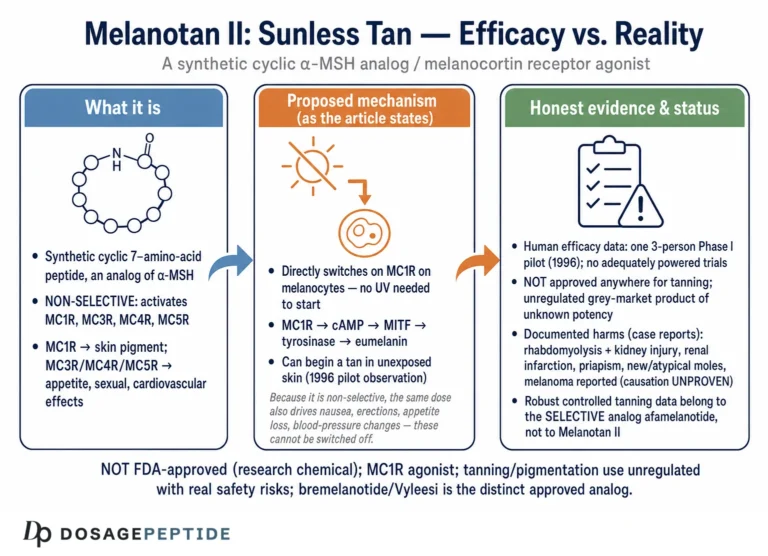
The foundational human study of Melanotan II itself was a pilot phase-I trial reported by Dorr and colleagues in 1996. It was tiny: three healthy male volunteers received subcutaneous injections of Melanotan II or saline on alternating schedules over roughly two weeks, with doses escalated in the range of 0.01–0.03 mg/kg. The study documented that Melanotan II produced tanning and confirmed the compound’s bioactivity in humans — but it also recorded dose-related side effects, most consistently nausea, along with facial flushing and, notably, spontaneous penile erections, an early and unmistakable signal of the compound’s central, MC4R-mediated activity.1 This is a critical point for anyone reading the pigmentation literature: from the very first human study, tanning and off-target central effects appeared together, because they are two outputs of the same non-selective molecule.
The most rigorous demonstration that a superpotent melanotropin increases eumelanin and tanning in humans used [Nle4-D-Phe7]-α-MSH (the Melanotan I core). In a placebo-controlled study in fair-skinned volunteers, Barnetson and colleagues reported that the peptide significantly increased skin pigmentation and, importantly, was associated with a reduction in a marker of UV-induced DNA damage — direct human evidence that MC1R-driven pigmentation carries some photoprotective value.2 This is the single best piece of proof-of-concept in the field, and it is worth taking seriously. But two qualifications keep it honest: it used the more selective linear analog rather than Melanotan II, and a reduction in a DNA-damage biomarker under controlled conditions is not the same as a demonstrated reduction in real-world skin-cancer incidence, which no melanotropic peptide has ever shown.
The highest-quality clinical evidence in the entire melanocortin-pigmentation field belongs to afamelanotide, which was studied in randomized, double-blind, placebo-controlled trials — but for a medical photoprotection indication, not cosmetic tanning, as detailed in the next section.6 For Melanotan II specifically, there is no large randomized trial, no long-term controlled pigmentation study, and no dose-standardization work of the kind that would let anyone state a reliable, safe, effective dose. It is a sobering illustration of the gap between mechanism and clinical evidence: we can write out the MC1R cascade with textbook confidence and simultaneously admit that we cannot state, from controlled human data, what dose of Melanotan II produces what degree of tanning with what safety margin. The table below summarizes the honest state of the human evidence.
| Evidence element | Melanotan II (cosmetic tanning) |
|---|---|
| Foundational human data | Pilot phase-I trial, n=3 (Dorr 1996); tanning confirmed with dose-related side effects1 |
| Randomized controlled trials | None for cosmetic tanning |
| Long-term safety studies | None |
| Dose standardization | Absent; internet-recommended doses lack clinical basis12 |
| Regulatory approval | None, any jurisdiction11 |
| Best pigmentation RCT evidence in the class | Belongs to afamelanotide (MC1R-selective), for photoprotection in EPP6 |
The takeaway is not that Melanotan II “doesn’t work” — the receptor pharmacology and the pilot data indicate it does induce pigmentation — but that the depth of human evidence is far shallower than the marketing implies, and that the strongest data in the field come from a different, more selective, and actually-regulated molecule.
Melanotan II vs. Afamelanotide vs. Bremelanotide: The Distinctions That Matter
Few areas of peptide science are muddier in public discussion than the relationship among the three melanocortin analogs that share a common ancestor in α-MSH. Getting them straight is essential to answering the title’s question honestly, because two of the three are regulator-approved and one is not, and they are approved for reasons that have little or nothing to do with cosmetic tanning.
Afamelanotide (Melanotan I, Scenesse). This is a linear α-MSH analog that is comparatively selective for MC1R. It is delivered as a controlled-release 16 mg subcutaneous implant, not a self-injected solution. Its approval is narrow and specific: to increase pain-free light exposure in adults with erythropoietic protoporphyria (EPP), a rare inherited photodermatosis in which sunlight triggers excruciating phototoxic reactions. In two multicenter, randomized, double-blind, placebo-controlled trials involving patients in the European Union and United States, afamelanotide increased the duration of pain-free sun exposure and improved quality of life, with an acceptable safety profile; common adverse effects were headache and implant-site reactions.67 It received EMA approval and, in 2019, FDA approval — the first-ever approval of a melanocortin agonist that works through the pigmentation receptor.11 Crucially, it is approved for a medical photoprotection indication in a rare disease, not for cosmetic tanning in healthy people.
Bremelanotide (Vyleesi). This is a cyclic heptapeptide that is actually a metabolite/derivative in the same structural family as Melanotan II, but it was developed for an entirely different purpose. The FDA approved it in June 2019 for acquired, generalized hypoactive sexual desire disorder (HSDD) in premenopausal women, administered as a 1.75 mg on-demand subcutaneous injection. Its clinical action runs primarily through MC4R in the central nervous system, modulating the neural circuitry of sexual desire; it does not act on vascular smooth muscle the way PDE5 inhibitors do. In the two phase-3 RECONNECT trials (over 1,200 women), it produced statistically significant improvements in desire scores and reductions in desire-related distress versus placebo, though the absolute effect sizes were modest and nausea was extremely common (affecting roughly 40% of treated participants).8 Bremelanotide is the FDA-approved melanocortin analog most often confused with Melanotan II — but its approved use is sexual, central, and MC4R-mediated, not pigmentary.
Melanotan II. The cyclic, non-selective analog marketed for tanning is the odd one out: it is not approved anywhere, is sold as an unregulated research chemical, and is non-selective across MC1R, MC3R, MC4R, and MC5R.112 Its breadth of receptor activity is why a single injection can simultaneously darken skin (MC1R), cause nausea and appetite suppression (central MC3R/MC4R), and produce erections (MC4R) — the very same effects that, isolated and controlled, became the basis of the two approved drugs. The comparison table makes the pattern explicit.
| Feature | Melanotan II | Afamelanotide (MT-I) | Bremelanotide (Vyleesi) |
|---|---|---|---|
| Structure | Cyclic heptapeptide analog | Linear α-MSH analog | Cyclic heptapeptide analog |
| Receptor selectivity | Non-selective (MC1/3/4/5R) | Relatively MC1R-selective | Primarily MC4R (central) |
| Primary effect exploited | Pigmentation (+ central effects) | Pigmentation / photoprotection | Sexual desire |
| Delivery | Self-injected solution (unregulated) | Controlled-release implant | On-demand subcutaneous injection |
| Regulatory status | Not approved anywhere11 | EMA + FDA approved for EPP6 | FDA approved for HSDD (2019)8 |
| Evidence base | Small phase-I + case reports1 | Randomized controlled trials6 | Phase-3 RECONNECT trials8 |
The lesson embedded in this comparison is that the melanocortin system has yielded genuine, approved therapies — but only when a specific receptor effect was isolated, delivered in a controlled formulation, and tested in rigorous trials for a defined indication. Melanotan II is the un-isolated, un-controlled, un-tested version of the same biology. For readers tracing the central-receptor side of this family, the site’s coverage of PT-141/bremelanotide and libido dysregulation is a useful companion.
Receptor Non-Selectivity: Why the Off-Target Effects Are Predictable
If there is one concept that reframes the whole Melanotan II safety discussion, it is this: the compound’s side effects are not mysterious idiosyncrasies but the predictable consequence of activating multiple melanocortin receptors at once. The five melanocortin receptors (MC1R through MC5R) are distributed across different tissues and mediate different physiology, and a non-selective agonist hits several of them together.14 The table below maps the receptors to their principal roles and to the corresponding real-world effects of Melanotan II.
| Receptor | Main location / role | Corresponding Melanotan II effect |
|---|---|---|
| MC1R | Melanocytes; pigmentation | Tanning (the intended cosmetic effect) |
| MC2R | Adrenal cortex; responds to ACTH, not α-MSH analogs | Minimal direct effect |
| MC3R | CNS; energy balance, inflammation | Appetite/metabolic modulation |
| MC4R | CNS; appetite, sexual function, autonomic tone | Nausea, appetite suppression, erections, blood-pressure changes |
| MC5R | Exocrine glands, sebaceous tissue | Possible sebaceous/glandular effects |
Read against this map, the classic Melanotan II adverse-effect profile becomes almost self-explanatory. Nausea — the most consistently reported side effect, present from the first phase-I study onward — is a central melanocortin effect.1 Spontaneous erections and heightened sexual arousal are MC4R effects; indeed, they are the very effect that was deliberately developed into bremelanotide.8 Appetite suppression reflects central MC3R/MC4R signaling on energy balance. Facial flushing and blood-pressure changes reflect the autonomic reach of central melanocortin activation.12 A person injecting Melanotan II for a tan is, whether they intend it or not, dosing their central nervous system’s appetite and sexual-function circuitry at the same time. The tanning and the “side effects” are not separable, because a single non-selective molecule produces all of them. This is exactly why the pharmaceutical industry spent years engineering selective analogs: to capture one receptor effect while leaving the others alone.
Melanocytic Nevi, Melanoma Monitoring, and the Dermatologic Concern
The most serious concern in the dermatology literature is not nausea or flushing but the effect of Melanotan II on melanocytic lesions — moles — and the theoretical relationship to melanoma. This deserves careful, non-alarmist but non-dismissive treatment, because the evidence is real but its interpretation requires precision.
What is well documented in case reports and small case series is that Melanotan use is associated with darkening of existing moles, changes in their size and appearance, and the eruption of new melanocytic nevi — including dysplastic (atypical) nevi — sometimes within weeks of starting injections.9 One reported case described a young man who developed multiple new nevi and rapid change in existing ones, with histopathology confirming dysplastic melanocytic nevi with severe atypia, shortly after a course of subcutaneous Melanotan.9 A particularly instructive case involved a teenager with familial atypical multiple mole–melanoma (FAMMM) syndrome who developed eruptive dysplastic nevi after combining Melanotan injections with tanning-bed use.10 Several case reports have also described melanomas diagnosed during or shortly after Melanotan use, though causation in an individual case is impossible to establish.12
Here is the honest mechanistic reasoning. There is no good evidence that Melanotan II initiates melanoma de novo — the case reports cannot establish that, and the biology does not clearly predict it. The concern that dermatologists articulate is subtler and more plausible: that a potent MC1R agonist provides a proliferative, pro-melanogenic stimulus to melanocytes, which could, in theory, promote the growth or accelerate the progression of melanocytes that have already accumulated early oncogenic mutations — and could, at minimum, alter the clinical and dermoscopic appearance of nevi enough to make early melanoma detection harder.59 A mole that changes color and size because of a pharmacological pigment stimulus looks, superficially, like the very change that signals malignancy, muddying the single most important tool of early melanoma diagnosis: recognizing a changing lesion. That is a genuine clinical harm independent of whether the compound is directly carcinogenic.
There is also a specific mechanistic thread worth naming, because it connects the pigmentation biology to the oncologic concern. MC1R is not merely a pigmentation receptor; through the same cAMP pathway it participates in melanocyte proliferation and survival signaling, and the receptor’s activity intersects with the DNA-damage response. Sustained pharmacological activation of a proliferation- and survival-linked receptor in a cell population (melanocytes) already known for its malignant potential is not a reassuring combination, even in the absence of proof of harm. The same α-MSH/MC1R signaling that is protective in the context of a coordinated UV response may behave differently when driven chronically and in isolation by an exogenous agonist. This is precisely the kind of question that would need dedicated long-term study to resolve — study that does not exist for Melanotan II — and its absence is why responsible dermatologic commentary lands on caution rather than reassurance.45
The prudent, evidence-based reading is therefore: Melanotan II is not proven to cause melanoma, but it demonstrably changes melanocytic lesions in ways that raise legitimate monitoring concerns, and it is especially inadvisable in anyone with a personal or family history of melanoma, many atypical moles, or a syndrome such as FAMMM.10 Anyone who has used it should have suspicious or changed lesions evaluated by a dermatologist rather than assuming the change is “just the tan.”
Research Models and Methodology
Understanding how MC1R and its agonists are studied clarifies what the evidence can and cannot support. The methodology spans several tiers, each answering a different question.
Receptor and cell-based pharmacology. The MC1R signaling cascade has been dissected using cloned human MC1R expressed in cell lines, radioligand binding assays to measure agonist affinity, and cAMP-accumulation assays to quantify functional activation — the standard toolkit for characterizing a GPCR agonist.3 Cultured human melanocytes are used to measure downstream tyrosinase activity, melanin content, and the eumelanin/pheomelanin ratio in response to agonists. This tier established that α-MSH analogs including the Melanotan compounds are bona fide MC1R agonists that raise cAMP and induce melanogenesis, and it is where receptor selectivity (or the lack of it) is quantified across MC1–MC5R.14
Genetic and structural work. Because MC1R is highly polymorphic, human genetics has been indispensable: population studies linking specific loss-of-function MC1R variants to red hair, fair skin, poor tanning, and elevated melanoma risk are what tie the receptor to real pigmentation phenotypes and to cancer susceptibility.5 More recently, structural biology has begun to resolve how agonists dock into the MC1R binding pocket and how the receptor couples to its G protein, refining the mechanistic picture beyond the classic cascade.4
Human clinical studies. The clinical methodology divides sharply by molecule. For afamelanotide, the field has proper randomized, double-blind, placebo-controlled trials with pre-specified endpoints (pain-free light exposure, quality-of-life instruments) in a defined patient population.6 For bremelanotide, there are two large phase-3 randomized trials with validated sexual-function outcome measures.8 For Melanotan II used cosmetically, by contrast, the human record is essentially a small phase-I pilot plus an accumulation of case reports and case series documenting harms — a methodology adequate for signaling danger but wholly inadequate for establishing safe, effective dosing.1912 The asymmetry is the point: the receptor science is shared across all three, but the clinical evidence quality tracks regulatory development, and cosmetic Melanotan II sits at the bottom of that hierarchy. Readers who want to build fluency in the underlying terminology can consult the site’s peptide research glossary.
Safety, Sourcing, and the Unregulated-Product Problem
A rigorous safety discussion has to separate two distinct sources of risk: the intrinsic pharmacology of the molecule, and the fact that virtually all Melanotan II in circulation comes from unregulated sources of unknown quality.
On the pharmacology side, the documented adverse effects follow directly from the non-selectivity described earlier: nausea (very common), facial flushing, appetite suppression, spontaneous erections, and blood-pressure and autonomic changes.112 Beyond these expected effects, the case-report literature includes more serious events temporally associated with Melanotan use: priapism requiring medical intervention, rhabdomyolysis and systemic toxicity, renal infarction, and posterior reversible encephalopathy syndrome (PRES), along with the melanocytic-lesion changes already discussed.912 These are individual reports, not incidence data, and causality is often uncertain — but they establish that the harm ceiling is not trivial.
On the sourcing side, the problem may be even larger in practice. Melanotan II sold online is manufactured without good-manufacturing-practice oversight, quality control, or verified purity; products have been found to vary in content and to carry contamination and sterility risks, and self-injection with non-sterile technique adds infection risk on top of everything else.12 Regulators including the FDA and multiple European agencies have issued explicit warnings against the sale and use of these unlicensed injectable tanning products.1112 A meaningful fraction of reported “Melanotan harms” are therefore attributable to what is in the vial and how it was handled, not solely to the peptide’s receptor pharmacology. This is a recurring theme across unregulated research peptides and is discussed in general terms in the site’s peptide reconstitution and handling guide, which frames such practices strictly for laboratory and educational reference rather than as endorsement of human use.
It is worth pausing on why the safety literature is structured the way it is. Almost everything known about Melanotan II harm comes from case reports and small case series — a study design that is excellent at flagging that something can happen but useless for estimating how often it happens. There is no denominator: no one knows how many people used Melanotan II uneventfully for every priapism or eruptive-nevi case that reached publication. This cuts both ways. It means the serious events are almost certainly under-reported, since users who buy an unlicensed product online rarely present to formal medical care, and it also means the frightening case reports cannot be translated into a per-user risk. The honest scientific position is that Melanotan II carries documented, mechanistically coherent hazards of unknown frequency, studied in an unmonitored population using material of unverified quality — a combination that should lower, not raise, anyone’s confidence about its safety.12
The balanced conclusion is that Melanotan II has a genuinely mixed and, in places, concerning safety picture: predictable and common central side effects, a tail of serious case reports, real dermatologic monitoring concerns, and a pervasive product-quality problem — against a backdrop of no controlled long-term safety data whatsoever. “It gave me a tan without obvious harm” is not evidence of safety; it is an anecdote from a population that is not being systematically monitored.
Regulatory Status
The regulatory picture is the cleanest part of this whole discussion, and it is unambiguous: Melanotan II is not an approved product anywhere. It has never received marketing authorization from the FDA, the European Medicines Agency, or any comparable regulator for tanning or for any other indication. It is sold as an unlicensed “research chemical,” and health authorities in the United States, the United Kingdom, Australia, and across the EU have issued consumer warnings specifically against buying or injecting it.1112
The contrast with its regulated relatives is instructive. Afamelanotide (Scenesse), the more MC1R-selective analog, is approved by the EMA and by the FDA (2019) — but only for the narrow indication of increasing pain-free light exposure in adults with erythropoietic protoporphyria, delivered as a physician-administered controlled-release implant, and explicitly not for cosmetic tanning.611 Bremelanotide (Vyleesi) is FDA-approved (2019) for hypoactive sexual desire disorder in premenopausal women, working through the central MC4R pathway.8 In other words, the melanocortin system has produced two approved drugs, and neither of them is a cosmetic tanning agent; the tanning-marketed molecule is precisely the one that failed to become, or was never developed into, an approved product.
A recurring source of public confusion deserves explicit correction: the existence of an approved “melanotan” drug (afamelanotide) is sometimes cited as though it legitimizes the injectable tanning peptide. It does not. Afamelanotide is a different molecule (linear, more selective), a different formulation (implant), and a different indication (a rare disease), approved on the strength of randomized controlled trials. Its approval says nothing about the safety or efficacy of self-injected Melanotan II for cosmetic tanning, which remains untested to any regulatory standard.611 For readers who want to follow how the broader peptide evidence base evolves, the site’s ongoing research coverage tracks new literature as it appears.
Frequently Asked Questions
How does Melanotan II actually cause tanning through MC1R?
Melanotan II is a synthetic α-MSH analog that acts as an agonist at the melanocortin-1 receptor on melanocytes. Binding activates the Gαs–adenylyl-cyclase–cAMP–PKA–CREB–MITF cascade, which upregulates tyrosinase and the other enzymes of melanin synthesis, driving eumelanin production and its transfer to keratinocytes — a visible tan — without requiring UV light.13 The mechanism is well characterized; what is far less well established is safe, effective dosing in humans.
Is Melanotan II the same as the FDA-approved “melanotan” drug?
No. The approved drug is afamelanotide (Melanotan I, Scenesse), a linear, more MC1R-selective analog delivered as a controlled-release implant and approved only for a rare photosensitivity disease (erythropoietic protoporphyria), not for cosmetic tanning.611 Melanotan II is a different, cyclic, non-selective molecule that is not approved anywhere and is sold as an unregulated research chemical.12
Why does Melanotan II cause nausea and erections if it’s a “tanning” peptide?
Because it is non-selective. In addition to MC1R (pigmentation), it activates central MC3R and MC4R, which govern appetite, autonomic tone, and sexual function.1 Nausea is a central melanocortin effect, and the erectile effect is an MC4R effect — the same one that was deliberately isolated and developed into the FDA-approved drug bremelanotide.8 The tanning and the “side effects” are inseparable outputs of one non-selective molecule.
Does Melanotan II cause melanoma?
There is no proof that it initiates melanoma de novo, and case reports cannot establish causation. What is documented is that it darkens existing moles and can trigger eruption of new and dysplastic nevi,910 and several melanomas have been reported during or after use.12 The main dermatologic concerns are that a potent pro-melanogenic stimulus could accelerate already-mutated melanocytes and that drug-induced changes in moles can mask the early signs of melanoma. It is considered especially inadvisable for anyone with a personal or family history of melanoma or many atypical moles.
Is a Melanotan II tan protective against skin cancer?
Not meaningfully. While MC1R activation biases toward photoprotective eumelanin, the increment in protection from an induced tan is modest — far less than sunscreen or sun avoidance — and it can create false confidence that leads to more UV exposure.5 In people with loss-of-function MC1R variants (fair, poorly tanning skin), the receptor’s reduced signaling limits how much any agonist can help. Claims of skin-cancer protection are not supported by evidence.
How strong is the human evidence for Melanotan II specifically?
Thin. The foundational human data are a 1996 pilot phase-I study in just three volunteers, which confirmed tanning but also dose-related nausea, flushing, and erections.1 There are no randomized controlled trials of cosmetic Melanotan II and no long-term safety studies. The high-quality randomized evidence in this drug class belongs to the more selective afamelanotide, studied for photoprotection in a rare disease.6
What is the difference between eumelanin and pheomelanin, and why does MC1R matter?
Eumelanin is the brown-black, photoprotective pigment; pheomelanin is the red-yellow pigment that is far less protective and can generate DNA-damaging reactive oxygen species under UV.5 Strong MC1R signaling (high cAMP) favors eumelanin; weak signaling — from loss-of-function receptor variants or agouti-protein antagonism — favors pheomelanin. MC1R is the molecular switch between the two, which is why receptor genotype largely determines how a person tans and their baseline melanoma risk.35
Is Melanotan II legal or safe to buy online?
It is not an approved product in any major jurisdiction, and the FDA and European regulators have specifically warned against buying or injecting it.1112 Beyond the compound’s intrinsic risks, online material is manufactured without quality control, so purity, identity, and sterility are unverified, and self-injection adds infection risk. “Available to buy” is not the same as legal, regulated, or safe.
References
- Dorr RT, Lines R, Levine N, Brooks C, Xiang L, Hruby VJ, Hadley ME. Evaluation of melanotan-II, a superpotent cyclic melanotropic peptide in a pilot phase-I clinical study. Life Sci. 1996;58(20):1777-1784. PMID: 8637402. https://pubmed.ncbi.nlm.nih.gov/8637402/
- Barnetson RS, Ooi TK, Zhuang L, et al. [Nle4-D-Phe7]-α-melanocyte-stimulating hormone significantly increased pigmentation and decreased UV damage in fair-skinned Caucasian volunteers. J Invest Dermatol. 2006;126(8):1869-1878. PMID: 16763547. https://pubmed.ncbi.nlm.nih.gov/16763547/
- Wolf Horrell EM, Boulanger MC, D’Orazio JA. Melanocortin 1 Receptor: Structure, Function, and Regulation. Front Genet. 2016;7:95. PMID: 27303435. PMCID: PMC4922069. https://www.frontiersin.org/articles/10.3389/fgene.2016.00095/full
- Herraiz C, Martínez-Vicente I, Maresca V. The α-melanocyte-stimulating hormone/melanocortin-1 receptor interaction: a driver of pleiotropic effects beyond pigmentation. Pigment Cell Melanoma Res. 2021;34(4):748-761. PMID: 33884728. https://onlinelibrary.wiley.com/doi/full/10.1111/pcmr.12980
- García-Borrón JC, Abdel-Malek Z, Jiménez-Cervantes C. MC1R, the cAMP pathway, and the response to solar UV: extending the horizon beyond pigmentation. Pigment Cell Melanoma Res. 2014;27(5):699-720. PMCID: PMC4299862. https://pmc.ncbi.nlm.nih.gov/articles/PMC4299862/
- Langendonk JG, Balwani M, Badminton MN, et al. Afamelanotide for Erythropoietic Protoporphyria. N Engl J Med. 2015;373(1):48-59. PMID: 26132941. https://www.nejm.org/doi/full/10.1056/NEJMoa1411481
- Minder EI, Barman-Aksoezen J, Schneider-Yin X. Pharmacokinetics and Pharmacodynamics of Afamelanotide and its Clinical Use in Treating Dermatologic Disorders. Clin Pharmacokinet. 2017;56(8):815-823. PMID: 28063031. https://pubmed.ncbi.nlm.nih.gov/28063031/
- Kingsberg SA, Clayton AH, Portman D, et al. Bremelanotide for the Treatment of Hypoactive Sexual Desire Disorder: Two Randomized Phase 3 Trials. Obstet Gynecol. 2019;134(5):899-908. PMID: 31599840. https://pubmed.ncbi.nlm.nih.gov/31599840/
- Cousen P, Colver G, Helbling I. Eruptive melanocytic naevi following melanotan injection. Br J Dermatol. 2009;161(3):707-708. PMID: 19575725. https://pubmed.ncbi.nlm.nih.gov/19575725/
- Sivyer GW. Changes of melanocytic lesions induced by Melanotan injections and sun bed use in a teenage patient with FAMMM syndrome. Dermatol Pract Concept. 2012;2(3):0203a10. PMID: 23785612. https://pmc.ncbi.nlm.nih.gov/articles/PMC3663356/
- U.S. Food and Drug Administration. SCENESSE (afamelanotide) implant, NDA 210797 — approval letter (October 8, 2019); basis for FDA/consumer warnings distinguishing the approved implant from unapproved injectable “melanotan” tanning products. https://www.accessdata.fda.gov/drugsatfda_docs/appletter/2019/210797Orig1s000ltr.pdf
- Brennan R, Wells JSG, Van Hout MC. An unhealthy glow? A review of melanotan use and associated clinical outcomes. Perform Enhanc Health. 2015;3(2):78-92. https://www.sciencedirect.com/science/article/abs/pii/S2211266915000055
- Habbema L, Halk AB, Neumann M, Bergman W. Risks of unregulated use of alpha-melanocyte-stimulating hormone analogues: a review. Int J Dermatol. 2017;56(10):975-980. PMID: 28266027. https://pubmed.ncbi.nlm.nih.gov/28266027/
Educational and research-use disclaimer: This article is provided solely for scientific and educational purposes. Melanotan II is not approved by the FDA, the EMA, or any comparable regulator for tanning, skin-cancer prevention, or any other use, and it is sold only as an unregulated research chemical of variable and unverified quality. Its cosmetic use has been associated with real safety concerns, including nausea, blood-pressure and autonomic changes, and darkening or eruption of melanocytic nevi that can complicate melanoma detection. Nothing here is medical advice or a recommendation for human use. The FDA-approved melanocortin analogs afamelanotide (Scenesse) and bremelanotide (Vyleesi) are distinct molecules approved for specific medical indications and are not interchangeable with Melanotan II. Any legitimate investigation of these compounds should occur within properly authorized clinical or research settings, and individuals with concerns about moles, skin cancer, or peptide use should consult a qualified physician.