Kisspeptin is the switch that starts puberty. Encoded by the KISS1 gene and acting through the GPR54 receptor (now called KISS1R), it sits at the very top of the hormonal cascade that drives GnRH, LH, FSH and ultimately fertility. The proof is genetic and unusually clean: in 2003, two independent groups found that people carrying loss-of-function mutations in GPR54 never enter puberty, and receptor-knockout mice show the same phenotype. This article covers what the peptide does, how the KISS1/GPR54 system is wired into the reproductive axis, where human research stands in fertility and IVF, and which parts of the story remain early-stage.
The honest headline is this: the physiology of kisspeptin signaling through its receptor is one of the best-validated stories in reproductive science, confirmed by human genetics and controlled administration studies. The therapeutic uses, by contrast, are still investigational. As of 2026, kisspeptin is not an approved drug for any indication. Keeping those two categories separate is the whole point of what follows.
What is kisspeptin?
Kisspeptin refers to a family of peptides produced from a single precursor protein encoded by the KISS1 gene. The precursor is enzymatically cleaved into fragments of different lengths that share a common, biologically active C-terminal region. The longest naturally occurring human fragment is 54 amino acids long, commonly called kisspeptin-54. Shorter fragments — kisspeptin-14, kisspeptin-13, and the decapeptide kisspeptin-10 — retain the essential C-terminal sequence and remain capable of activating the receptor. Because that shared C-terminal decapeptide is the part that binds and activates the receptor, kisspeptin-10 is, on a per-molecule basis, a fully active agonist despite being much smaller.
This “same business end, different tail” structure is more than a piece of trivia. It means that the various kisspeptin fragments are not different drugs so much as different delivery formats of the same signal: they all speak the same molecular language to the receptor, but they differ in how they are handled by the body — how quickly they are broken down, how long they persist, and how a dose translates into a hormone response over time. Much of the practical difference between kisspeptin-54 and kisspeptin-10 in research settings comes down to these handling properties rather than to any difference in the fundamental signal, a theme this article returns to in detail.
Discovery as a metastasis suppressor: the “metastin” story
Kisspeptin’s origin story is unusual for a reproductive hormone. The KISS1 gene was first identified in the 1990s as a suppressor of tumor metastasis — hence the “KiSS” naming (a nod to Hershey, Pennsylvania, home of Hershey’s Kisses, where the work was done). Its role as a hormone came later. In 2001, a landmark paper in Nature reported that the KISS1 gene product is a 54-amino-acid peptide that acts as the natural ligand for a previously “orphan” G-protein-coupled receptor; the authors isolated it from human placenta and named it metastin, reflecting its anti-metastatic activity.[1] In the same year, a separate group independently demonstrated that the KiSS-1 gene encodes kisspeptins that are the natural ligands of the orphan receptor GPR54.[2] At that moment, the peptide’s reproductive role was not yet suspected; it would take genetic discoveries in human patients to reveal it.
It is worth pausing on how counterintuitive this history is. A gene named and studied for its ability to suppress cancer spread turned out to encode the master upstream regulator of the entire reproductive axis. The two functions — tumor-metastasis suppression and control of puberty — seemed unrelated, and the connection only became clear once the receptor’s role in humans was uncovered. This is a good reminder that a molecule’s first-discovered function is not necessarily its most important one, and that naming conventions in biology often preserve the accident of discovery rather than the eventual significance. The name “metastin” survives in the literature, but for most researchers today kisspeptin is, first and foremost, a reproductive neuropeptide.
The receptor: KISS1R (GPR54)
Kisspeptins act through a single receptor known as KISS1R, still widely referred to by its original orphan-receptor name, GPR54. It is a seven-transmembrane, G-protein-coupled receptor that couples primarily to the Gq/11 pathway, activating phospholipase C and downstream intracellular calcium signaling when kisspeptin binds. Critically, this receptor is expressed on gonadotropin-releasing hormone (GnRH) neurons in the hypothalamus. That single anatomical fact — kisspeptin receptors sitting directly on the neurons that release GnRH — is the structural basis for kisspeptin’s role as a master switch for reproduction.[3]
If you are new to peptide terminology, the peptide research glossary defines many of the terms used here, and the broader context of how peptides are studied is covered in this evidence-based guide to peptides.
Where is kisspeptin produced in the brain?
Kisspeptin-expressing neurons are concentrated in two main hypothalamic regions, and this anatomical detail turns out to matter for function. One population sits in the arcuate nucleus (in humans, the infundibular nucleus); these are the KNDy neurons discussed below, and they are thought to generate the tonic, pulsatile output that paces GnRH throughout reproductive life. A second population sits more rostrally, in the region of the anteroventral periventricular nucleus (AVPV) in rodents, and is implicated in the pre-ovulatory LH surge that triggers ovulation in females. In broad terms, one kisspeptin population handles the steady “pulse” mode and another handles the “surge” mode. This division of labor helps explain how a single peptide can support both the moment-to-moment pacing of the axis and the large, timed hormone surge required for ovulation.[3]
How does kisspeptin fit among other reproductive signals?
Kisspeptin does not act in isolation. It integrates and relays a broad set of upstream inputs. Sex steroids — estrogen, progesterone, testosterone — feed back onto kisspeptin neurons, which is a major route by which the gonads regulate their own upstream drive. Kisspeptin neurons also respond to metabolic and nutritional signals, positioning kisspeptin as a node that couples energy status to fertility. This is not a peripheral curiosity: it is likely part of why states of low energy availability, such as those seen in some athletes or in restrictive eating, can suppress the reproductive axis. Kisspeptin appears to be one of the relays through which the brain “decides” whether the body’s circumstances are permissive for reproduction.
How does kisspeptin control reproduction?
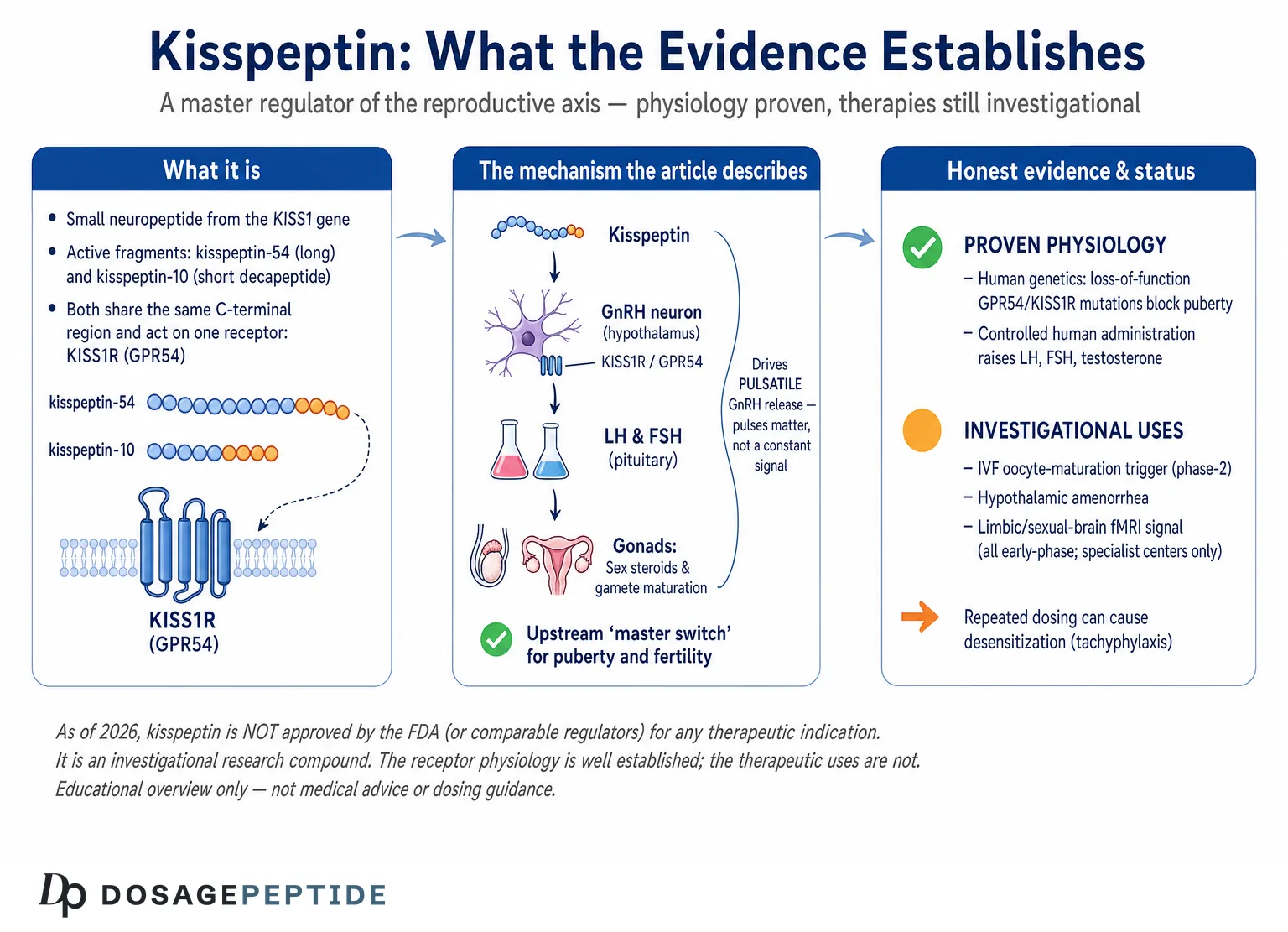
To understand kisspeptin’s function, it helps to picture the hypothalamic-pituitary-gonadal (HPG) axis as a chain of command. GnRH neurons in the hypothalamus release GnRH in discrete pulses. Those pulses travel to the pituitary gland, which responds by secreting the gonadotropins luteinizing hormone (LH) and follicle-stimulating hormone (FSH). LH and FSH then act on the gonads — testes or ovaries — to drive the production of sex steroids (testosterone, estradiol) and the maturation of sperm or eggs. The pulsatility of GnRH release is not a detail; it is essential. Continuous, non-pulsatile GnRH signaling actually shuts the axis down, which is why the timing of upstream signals matters so much.
Kisspeptin as the master regulator of GnRH pulses
Kisspeptin sits one level above GnRH. Rather than acting on the pituitary directly, it drives the GnRH neurons themselves. When kisspeptin binds KISS1R on GnRH neurons, it produces a powerful, long-lasting depolarization and increased firing, prompting GnRH release. In this sense kisspeptin is a gatekeeper: it translates internal signals — sex-steroid feedback, nutritional status, circadian and seasonal cues — into the pattern of GnRH pulses that ultimately sets reproductive tone.[3]
KNDy neurons and the pulse generator
A particularly influential concept in this field is the KNDy neuron. In the arcuate nucleus of the hypothalamus, a population of neurons co-expresses three signaling molecules: Kisspeptin, Neurokinin B, and Dynorphin — hence “KNDy.” These cells are widely regarded as a core component of the hypothalamic “GnRH pulse generator.” In the prevailing model, neurokinin B acts as a start signal that synchronizes and excites the network, kisspeptin is the output that drives GnRH neurons, and dynorphin acts as a stop signal that terminates each pulse. The rhythmic interplay of these three produces the pulsatile kisspeptin output that paces GnRH, and through it, LH.[4] This model is well supported by animal work and by the human genetics of neurokinin B and its receptor, though many mechanistic details are still being refined.
The human-genetics support is worth spelling out because it reinforces the whole framework. Just as loss-of-function mutations in the kisspeptin receptor cause failure of puberty, mutations affecting neurokinin B or its receptor (the TAC3 and TACR3 genes, the latter encoding the NK3 receptor) were also found to cause hypogonadotropic hypogonadism in humans. In other words, three of the molecular pieces of the proposed pulse generator — kisspeptin signaling, neurokinin B signaling, and GnRH itself — each have human mutations that break puberty when they fail. That convergence, where independent genetic lesions in the same circuit produce the same reproductive phenotype, is a strong reason the KNDy model is taken seriously rather than treated as a mere hypothesis.[4]
Why does pulsatility matter so much?
A recurring theme in this field is that how a signal arrives is as important as the signal itself. The reproductive axis is tuned to respond to pulses of GnRH, not to a constant flood of it. Continuous, unremitting GnRH stimulation paradoxically shuts the axis down by desensitizing the pituitary — a phenomenon that is actually exploited clinically by long-acting GnRH agonists used to suppress hormones in conditions such as prostate cancer or endometriosis. Because kisspeptin drives GnRH pulses, the same logic applies one level up: sustained, non-physiological kisspeptin exposure can blunt the very response it is meant to produce. This single principle explains several otherwise puzzling observations in the human kisspeptin literature, including the desensitization seen with frequent repeated dosing, discussed later in this article.
The puberty discovery: loss of GPR54 function
The turning point that revealed kisspeptin’s reproductive role came in 2003, from human genetics. Two groups, working independently, studied families and patients with idiopathic hypogonadotropic hypogonadism — a condition in which puberty fails to begin because the HPG axis does not activate. Both found loss-of-function mutations in GPR54 (KISS1R). De Roux and colleagues reported this in the Proceedings of the National Academy of Sciences,[5] and Seminara and colleagues reported it in the New England Journal of Medicine, framing GPR54 as a gatekeeper of puberty.[6] Mice engineered to lack the receptor showed the same phenotype: they failed to undergo puberty and had immature reproductive organs with low gonadotropins and sex steroids. This convergence of human and mouse genetics is what elevated kisspeptin from a curiosity to a master regulator — the axis simply cannot start without functioning receptor signaling.
What does human research show when kisspeptin is administered?
Genetics told us the receptor is necessary. The next question was whether giving kisspeptin to humans would stimulate the axis in a controlled, measurable way. Here the evidence is genuinely strong for a peptide of this kind, and much of it comes from the group led by Professor Waljit Dhillo at Imperial College London, along with collaborators including Channa Jayasena and Ali Abbara.
The first human administration studies
In 2005, Dhillo and colleagues published the first-in-human demonstration that intravenous kisspeptin-54 raises reproductive hormones in healthy men. In a placebo-controlled study, a 90-minute infusion of kisspeptin-54 significantly increased plasma LH, FSH, and testosterone compared with saline.[7] This was proof of concept in humans: exogenous kisspeptin engages the same axis that genetics had implicated.
The decapeptide was characterized next. In 2011, George and colleagues reported in the Journal of Clinical Endocrinology & Metabolism that kisspeptin-10 is a potent stimulator of LH in men. Intravenous boluses evoked rapid, pronounced LH secretion — in one dose, mean LH rose from roughly 4 IU/L at baseline to a peak near 12 IU/L at 30 minutes — and continuous infusion increased mean LH, LH pulse frequency, pulse size, and testosterone.[8] The finding that kisspeptin-10 can raise LH pulse frequency is consistent with its role as a driver of the pulse generator, not merely a one-off stimulant.
Sex differences in the response
An important nuance from the human work is that the response to kisspeptin is not identical in men and women, and in women it varies across the menstrual cycle. The sensitivity of the axis to kisspeptin depends heavily on the prevailing sex-steroid environment, which differs between the sexes and shifts dramatically between the follicular and luteal phases in women. This is not a flaw in the studies; it is a reflection of the biology. Kisspeptin neurons are a major site where sex-steroid feedback is integrated, so it is expected that the same dose produces different gonadotropin responses depending on the hormonal backdrop. For anyone reading a single number from a single study, this is a reminder that context — sex, cycle phase, baseline hormonal state — is inseparable from the result.
Kisspeptin as a diagnostic probe
Beyond stimulating the axis, kisspeptin has been investigated as a diagnostic tool. Because a kisspeptin challenge tests whether the hypothalamic GnRH neurons can be roused, the LH response to kisspeptin can, in principle, distinguish patients whose reproductive failure lies at the level of the hypothalamus from those whose problem is elsewhere. Researchers have explored kisspeptin-54 as a way to probe GnRH-neuronal function in men with congenital hypogonadotropic hypogonadism, and as a potential predictor of pubertal outcome in adolescents with delayed puberty. This diagnostic use is conceptually distinct from using kisspeptin as a therapy: here the peptide is a physiological “stress test” of the axis rather than a treatment intended to produce a lasting change.
What these studies do and do not show
These are careful, controlled human experiments, and they establish a clear pharmacological relationship: administered kisspeptin reliably increases gonadotropins and, downstream, sex steroids in healthy volunteers. That said, they are mechanistic and early-phase in nature — small samples, short durations, hospital settings, and physiological (not clinical-outcome) endpoints such as hormone concentrations. They demonstrate that the axis responds; they do not, by themselves, establish that kisspeptin is a safe or effective long-term treatment for any condition. Readers interested in another peptide that acts higher in a hormonal axis can compare kisspeptin’s mechanism with how sermorelin stimulates the growth-hormone axis, which follows a conceptually similar “upstream signal” logic in a different system.
Kisspeptin in hypothalamic amenorrhea and disordered reproduction
One of the most studied investigational applications is hypothalamic amenorrhea (HA) — the loss of menstrual periods that can follow low energy availability, excessive exercise, or psychological stress. In HA, GnRH pulsatility is suppressed even though the pituitary and ovaries are structurally capable of responding. Because kisspeptin sits upstream of GnRH, researchers reasoned it might reawaken the dormant pulse generator.
What the trials found
Jayasena and colleagues showed that intravenous infusion of kisspeptin-54 could increase LH pulsatility in women with hypothalamic amenorrhea, effectively restoring a more normal pattern of gonadotropin release.[9] Twice-weekly kisspeptin-54 administration over eight weeks was also reported to stimulate reproductive-hormone release in this population.[10]
The desensitization caveat
An important, honestly reported limitation emerged from this work: the axis can become desensitized. When kisspeptin-54 was given subcutaneously twice daily, the acute stimulation gave way to tachyphylaxis — a diminishing response with repeated dosing — over a two-week period.[11] This is a recurring theme in HPG-axis pharmacology: how a signal is delivered (its pulsatility, frequency, and dose) can matter as much as the molecule itself. It is one reason kisspeptin has not translated into a simple “take it and restore fertility” therapy, and why dosing regimens remain an active research question rather than a settled one.
Acute stimulation versus lasting benefit
It is important not to over-read the hypothalamic-amenorrhea findings. What the trials show clearly is that kisspeptin can acutely re-engage a suppressed axis and, over some weeks, raise reproductive hormones. What they do not show is that kisspeptin is a durable cure for HA. HA is often driven by an underlying cause — energy deficit, over-training, or psychological stress — and addressing that root cause remains central to management in clinical practice. Kisspeptin is being studied as a tool to interrogate and potentially support the axis, not as a substitute for treating why the axis shut down in the first place. The desensitization data underline the point: simply flooding the system with more signal is not the answer, and the physiology pushes back.
Kisspeptin as an IVF trigger: a genuine translational highlight
The clearest example of kisspeptin moving from mechanism toward the clinic is its use as an oocyte-maturation trigger in in-vitro fertilization (IVF). This is worth understanding in detail because it is both a real translational achievement and a still-experimental one.
The problem kisspeptin might solve
In conventional IVF, after the ovaries are stimulated to grow multiple follicles, a “trigger” is given to induce the final maturation of eggs before retrieval. The traditional trigger, human chorionic gonadotropin (hCG), has a long duration of action that can over-stimulate the ovaries and precipitate ovarian hyperstimulation syndrome (OHSS), a potentially serious complication. The idea behind a kisspeptin trigger is elegant: kisspeptin causes the woman’s own pituitary to release a short, physiological surge of LH to mature the eggs, avoiding the sustained stimulation that drives OHSS.
What the trials showed
In a 2014 proof-of-concept study published in the Journal of Clinical Investigation, Jayasena and colleagues showed that a single injection of kisspeptin-54 could trigger egg maturation in women undergoing IVF: eggs were fertilized and embryos transferred in the great majority of treated patients, and the procedure led to clinical pregnancies (a clinical pregnancy rate of roughly one in four).[12] A subsequent phase-2 trial by Abbara and colleagues focused specifically on women at high risk of OHSS. Across 60 such women, oocyte maturation occurred in 95%, and — notably — no woman developed moderate, severe, or critical OHSS; only a few mild cases were reported, none requiring intervention.[13] A follow-up phase-2 randomized study reported that a second dose of kisspeptin-54 could further improve oocyte maturation in high-risk women.[14]
Why the mechanism is so appealing here
The elegance of the kisspeptin trigger is that it recruits the patient’s own physiology. A traditional hCG trigger is essentially an external, long-lasting LH-mimic that keeps driving the ovary well after egg maturation is achieved — and that prolonged drive is a key contributor to OHSS. Kisspeptin instead prompts the pituitary to release a self-limiting surge of the woman’s own LH, which then falls back naturally. The result is enough of a signal to mature the eggs but not the sustained over-stimulation that fills the abdomen with fluid and endangers the patient in severe OHSS. Because kisspeptin acts one step upstream of the pituitary, it borrows the body’s own regulatory brakes rather than overriding them — a design principle that is genuinely attractive for a fertility trigger.
What still has to be proven
Enthusiasm should be tempered by what remains unanswered. The published trials, while encouraging, involve limited numbers of patients at specialist units, and live-birth rates — the outcome that ultimately matters — must be confirmed to be at least as good as with established triggers in larger, definitive studies before kisspeptin could become routine. Direct head-to-head comparisons against standard-of-care triggers across diverse clinics, and reproducibility outside the originating centers, are the kind of evidence that would move kisspeptin from “promising” to “established.” Until then, the accurate description is a well-motivated, positively trending investigational approach — not a proven, approved one. Product-specific handling details for research use are described on the kisspeptin vial protocol page, which addresses laboratory context only.
Honest framing of the stage
This is the strongest translational story kisspeptin has, and it is legitimately promising: a mechanistically rational way to reduce a real IVF complication. But it remains investigational. These are early-phase and phase-2 trials, conducted at specialist academic centers, not large phase-3 programs that have led to regulatory approval and routine clinical use. Kisspeptin is not a standard-of-care IVF trigger. The results justify continued study; they do not (yet) justify treating kisspeptin as an established therapy.
Kisspeptin and the brain: sexual and emotional processing
Kisspeptin receptors are not confined to GnRH neurons. They are also expressed in limbic brain regions — areas involved in emotion, reward, and sexual processing — which raised the question of whether kisspeptin does more than regulate hormones. This is an area where marketing frequently outruns the science, so precision matters.
What the fMRI study actually found
In 2017, Comninos and colleagues published a randomized, double-blind, placebo-controlled functional MRI study in the Journal of Clinical Investigation, examining 29 healthy young men. Kisspeptin administration enhanced activity in specific limbic regions — including the cingulate cortex and amygdala — in response to sexual and couple-bonding imagery, and these brain changes correlated with psychometric measures of reward, drive, and reduced sexual aversion; the study also reported an attenuation of negative mood.[15] Importantly, the effects showed specificity: kisspeptin did not simply light up the whole brain, and it did not alter responses to neutral or non-sexual emotional stimuli in the same way.
Why this is not an “aphrodisiac” claim
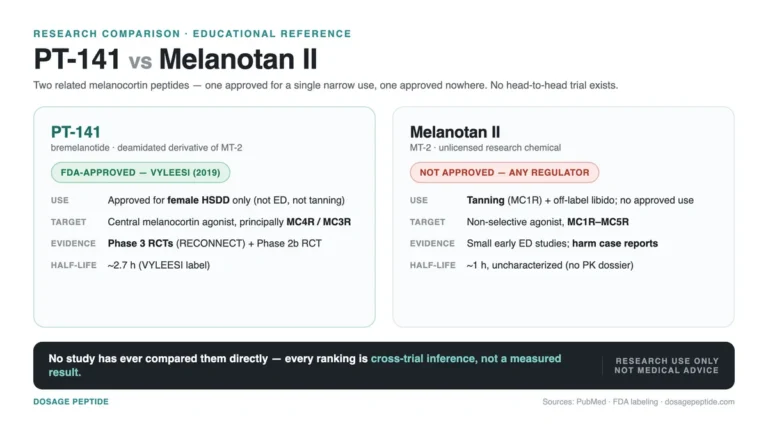
It is tempting to translate “modulates sexual brain processing” into “increases libido” or “aphrodisiac,” but that leap is not warranted by this evidence. The study measured brain activation and self-reported psychometric responses to images in a controlled setting — not real-world sexual desire, function, or clinical outcomes, and it was conducted in a small, specific population of healthy young men. What it establishes is that kisspeptin can influence limbic circuits relevant to sexual and emotional processing, a genuinely interesting neuroscience finding that motivates further research into conditions such as low sexual desire. It does not establish kisspeptin as a treatment for any sexual-health condition. A different, better-studied pathway for the neurobiology of sexual desire is discussed in this overview of PT-141 and sexual-health research, which acts through melanocortin rather than kisspeptin signaling.
Why the brain-and-behavior work is biologically plausible
The behavioral findings are not a surprise from an evolutionary standpoint. Across a striking range of species — from fish to rodents to primates — kisspeptin signaling has been linked to behaviors that support reproduction, including aspects of olfactory processing, arousal, and mating behavior. That kisspeptin receptors are present in human limbic regions such as the amygdala and cingulate cortex provides a plausible substrate for it to influence emotional and sexual processing in people, not just to regulate hormones. So the direction of the human fMRI findings fits a coherent, cross-species picture. The caution is not about plausibility; it is about the gap between “kisspeptin modulates a brain network relevant to sex” and “kisspeptin treats a sexual disorder.” Only the first has been shown. The second would require dedicated clinical trials with real-world functional endpoints, which is exactly the kind of research the mechanistic findings are meant to justify.
Kisspeptin-10 vs kisspeptin-54: half-life and handling in research settings
Researchers choose between kisspeptin fragments largely on the basis of pharmacokinetics. Both activate the same receptor through the same shared C-terminal sequence, but they behave differently in the body.
The pharmacokinetic difference
The key distinction is plasma half-life. Kisspeptin-10, the decapeptide, is cleared very rapidly — its circulating half-life in humans is on the order of only a few minutes, roughly several-fold shorter than that of the larger kisspeptin-54. The longer 54-residue peptide persists in the circulation substantially longer, which allows it to sustain LH release from a single administration.[16] Interestingly, the difference is not purely about clearance: mechanistic work suggests the two fragments differ in how effectively they engage the axis in vivo, not simply in how long they linger. One instructive observation from that work is that repeated boluses of the short-acting kisspeptin-10, given frequently to try to mimic the sustained exposure of a single kisspeptin-54 injection, did not fully reproduce the durable LH rise — implying a genuine difference in how the longer peptide drives the axis, not merely a difference in how long it survives in the blood.
Longer-acting analogs on the horizon
The short half-life of the natural peptides is a practical obstacle for any sustained-therapy application, and it has spurred efforts to engineer longer-acting kisspeptin analogs. The goal is to retain the receptor-activating C-terminal sequence while modifying the molecule to resist rapid enzymatic breakdown, so that a physiologically useful signal can be maintained with less frequent administration. This is an active area of preclinical and early research. It is worth flagging as a research direction rather than a finished product: no such analog is an approved therapy, and how to deliver a durable signal without triggering the desensitization that the axis imposes on continuous stimulation remains a central design challenge.
| Feature | Kisspeptin-10 (KP-10) | Kisspeptin-54 (KP-54 / metastin) |
|---|---|---|
| Length | 10 amino acids (decapeptide) | 54 amino acids |
| Active region | Shared C-terminal decapeptide | Same shared C-terminal decapeptide |
| Receptor | KISS1R (GPR54) | KISS1R (GPR54) |
| Plasma half-life (human) | Very short (a few minutes) | Longer than KP-10 |
| Typical study use | Acute LH stimulation, pulse-frequency studies | Sustained LH response; IVF-trigger and HA trials |
Practical implications for research
Because kisspeptin-54’s longer duration lets a single dose sustain a hormone response, it has been the workhorse of the IVF-trigger and hypothalamic-amenorrhea trials, where a durable LH surge is desirable. Kisspeptin-10’s brief action makes it useful for probing the acute dynamics of the axis and pulse frequency. Neither fragment is an approved product; both are used as investigational research tools. General principles of how peptides are prepared and reconstituted for laboratory study are outlined in the peptide reconstitution guide and the accompanying dosage calculator, and product-specific handling information appears on the kisspeptin vial protocol page. These resources describe research-context handling only, not human dosing recommendations.
Does kisspeptin do anything outside reproduction?
Although kisspeptin is best understood as a reproductive regulator, both the peptide and its receptor are found in tissues beyond the hypothalamic-pituitary-gonadal axis, and research into these roles is ongoing. Remembering its origin story, kisspeptin was first characterized as a metastasis suppressor — the KiSS-1 gene product was originally isolated and named for that anti-metastatic activity[2] — and the relationship between kisspeptin signaling and cancer biology remains an area of study, with the reported picture described as complex across different tumor types rather than uniformly suppressive. Kisspeptin and its receptor have also been identified in the placenta, where they are expressed at high levels during pregnancy, and in other peripheral tissues, prompting investigation into possible roles in placental function and metabolism.
The honest framing here is that these peripheral roles are less well established than the core reproductive function. The reproductive story rests on human genetics plus controlled administration studies — a high bar of evidence. The peripheral and behavioral roles are supported by expression data, animal work, and early human studies, which is a genuine but weaker foundation. It would be a mistake to present kisspeptin as a proven multi-system therapeutic; the accurate statement is that its non-reproductive biology is scientifically interesting and under active investigation.
Safety, tolerability, and limitations of the evidence
Across the published human administration studies, kisspeptin has generally been reported as well tolerated in the short-term, hospital-based settings in which it was given, without the frequent serious adverse events one might associate with a novel peptide hormone. A systematic review of kisspeptin’s clinical status summarized it as showing relatively few side effects, plausibly because it acts by mimicking a normal physiological signal rather than overriding the system.[17] That is an encouraging signal, but it must be read with several strong caveats.
Why the safety picture is incomplete
- Small, short studies. Most human data come from trials of dozens of participants, over hours to weeks, under close medical supervision. This cannot detect uncommon or long-term risks.
- Desensitization is real. As noted, repeated dosing can blunt the response through tachyphylaxis, complicating any chronic-use scenario.[11]
- Selected populations. Participants were typically healthy volunteers or carefully screened patients at specialist centers, not the general population.
- Physiological endpoints, not outcomes. Many studies measured hormone levels or brain activation, which are informative but are not the same as demonstrating clinical benefit and safety at scale.
- Purity and source. Findings from clinical-grade peptide used under research protocols do not transfer to unregulated material of unknown identity or purity.
The gap between clinical-grade and unregulated material
This last point deserves emphasis because it is where the science is most often misapplied. Every human safety observation cited above comes from peptide manufactured to pharmaceutical standards, administered under medical supervision, in a controlled trial. Material sold outside that context can differ in identity, sequence fidelity, purity, endotoxin content, and stability — and none of those attributes is visible to the buyer. A tolerability signal generated with clinical-grade kisspeptin simply cannot be assumed to apply to a product of unknown provenance. This is a general truth for research peptides, not a claim specific to kisspeptin, and it is one reason why the distinction between “studied in a trial” and “available” matters so much for readers trying to interpret the literature honestly.
Reported effects at high or non-physiological exposure
The controlled human studies also remind us that more is not automatically better. The desensitization phenomenon means that pushing the axis harder or more frequently can produce a smaller response, not a larger one — the opposite of the intuition that a higher dose yields a bigger effect. This is a direct consequence of the pulsatility principle discussed earlier: the reproductive axis is engineered to respond to intermittent signals, and it defends itself against continuous over-stimulation. Any accurate account of kisspeptin’s effects therefore has to describe not just what a single well-timed dose does, but how the system’s response changes with the pattern of exposure over time.
What is kisspeptin’s regulatory status, and where are the research gaps?
As of 2026, kisspeptin is not approved by the US Food and Drug Administration (or comparable regulators) as a therapeutic drug for any indication. It remains investigational. Its human use to date has occurred predominantly within academic clinical-trial and diagnostic protocols — for example, at Imperial College London and Hammersmith Hospital in the UK and at centers in the United States — and multiple clinical trials in reproductive disorders, hypogonadism, and hypothalamic amenorrhea remain ongoing.[17] Kisspeptin is also being explored as a diagnostic tool — a way to probe whether a patient’s GnRH neurons are functional — which is a distinct use from therapy.
Open questions
The most important gaps are practical. How can the desensitization problem be managed so that kisspeptin signaling can be sustained where that is the goal? What dosing patterns best mimic the physiological pulse? Will the promising IVF-trigger results hold up in larger, definitive trials and lead to approval? Can the limbic/behavioral findings be extended, responsibly, to conditions such as hypoactive sexual desire — and if so, in whom? Longer-acting engineered kisspeptin analogs are also under investigation in an effort to overcome the short half-life of the natural peptides. None of these questions is settled, and the gap between “the physiology is well understood” and “here is an approved treatment” is exactly where honest reporting has to sit.
Context is decisive for interpreting the research
For readers approaching kisspeptin as a research compound, the practical corollary of everything above is that context is decisive. The peptide’s behavior depends on which fragment is used, how it is prepared, the pattern and timing of exposure, and the hormonal state of the model — variables that a study documents carefully and that are easy to lose sight of in casual summaries. General principles of preparing peptides for laboratory study, including reconstitution and concentration math, are covered in the reconstitution guide, the dosage calculator, and, for this specific compound, the kisspeptin vial protocol. These resources describe research-context handling; they are not human dosing recommendations, and nothing in this article should be read as clinical advice.
The bottom line
Kisspeptin is a rare case where the fundamental biology is beautifully established — human genetics, receptor pharmacology, and controlled administration studies all point the same way — while the therapeutic applications remain firmly experimental. It is genuinely a master regulator of reproductive hormone signaling; it is genuinely not an approved therapy. Both of those statements are true at once, and any accurate account of kisspeptin has to hold them together.
Frequently Asked Questions
Is kisspeptin an FDA-approved drug?
No. As of 2026, kisspeptin is not approved by the FDA or comparable regulators for any therapeutic indication. It is investigational, studied within academic clinical-trial and diagnostic protocols. The receptor physiology is well established through human genetics and controlled administration studies, but that scientific validation is separate from regulatory approval for treating any condition.
What is the difference between kisspeptin-10 and kisspeptin-54?
Both are fragments of the same KISS1 gene product and activate the same receptor through an identical C-terminal sequence. Kisspeptin-54 is the full 54-amino-acid peptide originally called metastin; kisspeptin-10 is a 10-amino-acid fragment. The main practical difference is pharmacokinetic: kisspeptin-10 is cleared within minutes, while kisspeptin-54 persists longer and can sustain a hormone response from a single dose.
How does kisspeptin control puberty and fertility?
Kisspeptin acts on receptors located directly on GnRH neurons in the hypothalamus, driving the pulsatile release of GnRH. GnRH pulses then prompt the pituitary to secrete LH and FSH, which act on the gonads. Because the axis cannot activate without functional kisspeptin receptor signaling, kisspeptin functions as a master switch that gates the onset of puberty and ongoing reproductive function.
What did the puberty gene discovery reveal?
In 2003, two independent research groups found that people with loss-of-function mutations in the GPR54 (KISS1R) receptor failed to enter puberty, a condition called idiopathic hypogonadotropic hypogonadism. Mice lacking the receptor showed the same phenotype. This human and animal genetic evidence established that kisspeptin receptor signaling is essential for reproductive axis activation.
Does kisspeptin increase libido or act as an aphrodisiac?
The evidence does not support that marketing framing. A controlled fMRI study in healthy young men found that kisspeptin modulated activity in limbic brain regions involved in sexual and emotional processing and correlated with certain psychometric measures. But this measured brain activation and self-reported responses to images, not real-world sexual desire or clinical outcomes, and it was a small, specific study. It is a neuroscience finding, not proof of an aphrodisiac effect.
Why is kisspeptin being studied in IVF?
Kisspeptin can trigger a woman’s own pituitary to release a short, physiological LH surge that matures eggs before retrieval. Because this surge is brief, it may reduce the risk of ovarian hyperstimulation syndrome compared with the longer-acting traditional trigger. Phase-2 trials reported high oocyte-maturation rates and no moderate-to-severe OHSS in high-risk women, though this use remains investigational rather than standard care.
What are the main limitations of kisspeptin research?
Most human studies are small, short, and conducted at specialist centers using physiological endpoints such as hormone levels rather than long-term clinical outcomes. Repeated dosing can cause desensitization (tachyphylaxis), which limits chronic use. Long-term safety, effectiveness in larger populations, and optimal dosing strategies remain unresolved, and findings from clinical-grade peptide do not transfer to unregulated material.
Is kisspeptin the same as GnRH?
No, but they work together in sequence. GnRH is the hormone released by hypothalamic neurons that directly stimulates the pituitary. Kisspeptin sits one level upstream: it acts on those GnRH neurons to trigger GnRH release. In other words, kisspeptin is a key controller of GnRH secretion, translating feedback and metabolic signals into the pulse pattern that GnRH then relays to the pituitary.
References
- Ohtaki T, et al. Metastasis suppressor gene KiSS-1 encodes peptide ligand of a G-protein-coupled receptor. Nature. 2001. https://www.nature.com/articles/35079135
- Kotani M, Muir AI, et al. The metastasis suppressor gene KiSS-1 encodes kisspeptins, the natural ligands of the orphan G protein-coupled receptor GPR54. 2001. https://pubmed.ncbi.nlm.nih.gov/11457843/
- The Role of Kisspeptin in the Control of the Hypothalamic-Pituitary-Gonadal Axis and Reproduction. Front Endocrinol. https://pmc.ncbi.nlm.nih.gov/articles/PMC9273750/
- Role of KNDy Neurons Expressing Kisspeptin, Neurokinin B, and Dynorphin A as a GnRH Pulse Generator Controlling Mammalian Reproduction. https://www.ncbi.nlm.nih.gov/pmc/articles/PMC8458932/
- de Roux N, et al. Hypogonadotropic hypogonadism due to loss of function of the KiSS1-derived peptide receptor GPR54. PNAS. 2003. https://www.pnas.org/doi/10.1073/pnas.1834399100
- Seminara SB, et al. The GPR54 gene as a regulator of puberty. N Engl J Med. 2003. https://www.nejm.org/doi/full/10.1056/NEJMoa035322
- Dhillo WS, et al. Kisspeptin-54 stimulates the hypothalamic-pituitary gonadal axis in human males. J Clin Endocrinol Metab. 2005. https://academic.oup.com/jcem/article-abstract/90/12/6609/2837183
- George JT, et al. Kisspeptin-10 Is a Potent Stimulator of LH and Increases Pulse Frequency in Men. J Clin Endocrinol Metab. 2011. https://academic.oup.com/jcem/article/96/8/E1228/2833644
- Jayasena CN, et al. Increasing LH Pulsatility in Women With Hypothalamic Amenorrhoea Using Intravenous Infusion of Kisspeptin-54. J Clin Endocrinol Metab. https://pmc.ncbi.nlm.nih.gov/articles/PMC4207927/
- Jayasena CN, et al. Twice-Weekly Administration of Kisspeptin-54 for 8 Weeks Stimulates Release of Reproductive Hormones in Women With Hypothalamic Amenorrhea. Clin Pharmacol Ther. 2010. https://ascpt.onlinelibrary.wiley.com/doi/abs/10.1038/clpt.2010.204
- Jayasena CN, et al. Subcutaneous Injection of Kisspeptin-54 Acutely Stimulates Gonadotropin Secretion in Women with Hypothalamic Amenorrhea, But Chronic Administration Causes Tachyphylaxis. J Clin Endocrinol Metab. https://academic.oup.com/jcem/article-abstract/94/11/4315/2596518
- Jayasena CN, et al. Kisspeptin-54 triggers egg maturation in women undergoing in vitro fertilization. J Clin Invest. 2014. https://www.jci.org/articles/view/75730
- Abbara A, et al. Efficacy of Kisspeptin-54 to Trigger Oocyte Maturation in Women at High Risk of Ovarian Hyperstimulation Syndrome (OHSS) During IVF Therapy. J Clin Endocrinol Metab. 2015. https://academic.oup.com/jcem/article/100/9/3322/2836046
- Abbara A, et al. A second dose of kisspeptin-54 improves oocyte maturation in women at high risk of ovarian hyperstimulation syndrome: a Phase 2 randomized controlled trial. https://pmc.ncbi.nlm.nih.gov/articles/PMC5850304/
- Comninos AN, et al. Kisspeptin modulates sexual and emotional brain processing in humans. J Clin Invest. 2017. https://www.jci.org/articles/view/89519
- Mechanistic insights into the more potent effect of KP-54 compared to KP-10 in vivo. https://pmc.ncbi.nlm.nih.gov/articles/PMC5413024/
- Velmurugan G, et al. Kisspeptin and its Current Clinical Status – A Systematic Review. Curr Med Chem. 2025. https://pubmed.ncbi.nlm.nih.gov/38265397/