The question in the title is worth taking apart before we answer it, because the phrase “clinical research” carries a specific weight. It implies controlled studies in human beings, with defined endpoints, that tell us whether a compound does what it is claimed to do. When applied to GHK-Cu and hair growth, that standard immediately exposes a gap between what is marketed and what has actually been demonstrated. GHK-Cu — glycyl-L-histidyl-L-lysine complexed with copper(II), known in cosmetic labeling as copper tripeptide-1 — is a genuinely interesting molecule with decades of laboratory pedigree. It is also, in the specific arena of stimulating scalp hair growth, a compound whose human clinical record is thin, indirect, and easily overstated by the wellness market that surrounds it.
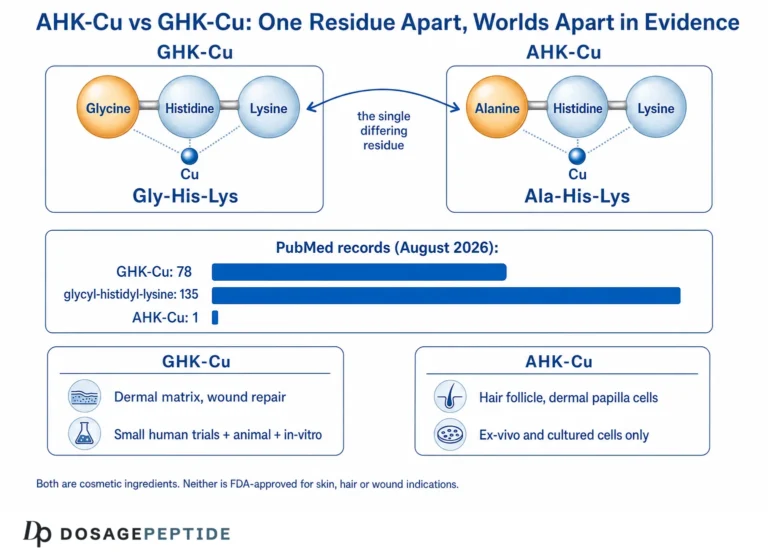
This article treats the title as an honest research question rather than a foregone conclusion. GHK-Cu is not a drug approved by any major regulator for treating hair loss. It is a cosmetic ingredient. The bulk of the hair-relevant data is in vitro (cells in dishes) or ex vivo (isolated follicles in culture), and—as we will see—a large share of the most-cited follicle-elongation evidence used a closely related but distinct peptide, AHK-Cu, not GHK-Cu itself. The mechanistic story is plausible and, in places, elegant. But plausibility is not proof, and a mechanism observed in a culture dish is not a clinical outcome measured on a human scalp.12
What follows is a careful map for researchers and educated readers: what GHK-Cu is and where it came from, why the scalp might respond to it in principle, what the laboratory and human evidence actually shows, which popular claims fail to survive scrutiny, how the compound compares to the two therapies that do have pivotal human trials behind them, and where the honest bottom line sits. Throughout, the guiding discipline is restraint. Nothing here should be read as suggesting GHK-Cu treats, cures, or reverses androgenetic alopecia or any other hair-loss disorder.
What GHK-Cu Actually Is: A Cosmetic Copper Tripeptide, Not a Hair Drug
GHK-Cu is one of the most studied small peptides in the skin sciences, and its origin story is worth knowing because it frames everything that follows. In 1973, Loren Pickart and Margaret Thaler reported that a small factor in human serum could prolong the survival of normal liver cells and modulate growth in liver tissue, and that plasma from younger donors was more active than plasma from older donors.3 The active molecule turned out to be a tripeptide with the sequence glycine-histidine-lysine (Gly-His-Lys), which has a strong natural affinity for copper(II) ions.3 When that tripeptide binds copper, it becomes GHK-Cu — the form in which most of its biological activity is expressed.2
Two facts about GHK-Cu matter for a hair-growth discussion. First, it is an endogenous molecule: it circulates in human plasma at a concentration of roughly 200 ng/mL around age 20, declining to about 80 ng/mL by age 60, a fall that has been linked, at least associatively, to the general decline in tissue regenerative capacity with age.2 Second, its copper-carrying chemistry is not incidental. Copper is a required cofactor for enzymes involved in connective-tissue crosslinking, angiogenesis, and antioxidant defense, and GHK appears to function partly as a copper-delivery vehicle that makes the metal bioavailable to cells in a controlled way.24
From a regulatory standpoint, GHK-Cu sits firmly in the cosmetic and research categories, not the pharmaceutical one. Under the International Nomenclature of Cosmetic Ingredients it is “copper tripeptide-1,” and it appears in serums, creams, and scalp products marketed for skin and hair appearance. It is not an FDA-approved active for the treatment of any hair-loss condition, and it has never been through the drug-approval pathway for such an indication. That is a crucial distinction: cosmetic ingredients are regulated primarily for safety in their intended cosmetic use, not for demonstrated therapeutic efficacy. A product can be lawfully sold as a copper-peptide hair serum without a single controlled trial proving it grows hair.
Much of the modern enthusiasm for GHK-Cu traces to a body of gene-expression work suggesting the peptide can influence the activity of a very large number of human genes, with reviews describing modulation of thousands of gene sets involved in tissue remodeling, inflammation, and repair.25 This research is real and interesting, and it is the intellectual engine behind claims that GHK-Cu “resets” cells toward a healthier, more youthful pattern.5 But gene-expression breadth is not the same as clinical hair regrowth, and the leap from “alters expression of repair-associated genes in cultured cells” to “regrows hair on a balding scalp” is exactly the leap this article is written to examine rather than assume. For readers interested in the broader regenerative-signaling case, the site’s discussion of GHK-Cu’s role in tissue-repair signaling catalogs that literature in more depth.
Why the Scalp Might Respond: The Biological Rationale
To judge whether GHK-Cu could plausibly stimulate hair growth, it helps to understand what actually governs the hair cycle, because the marketing language often skips this step and jumps straight to conclusions.
A hair follicle is not a static structure. It cycles through phases: anagen (active growth, which can last years on the scalp), catagen (a brief regression), and telogen (rest), before the old hair is shed and a new anagen begins. The pace and quality of this cycle are orchestrated largely by the dermal papilla, a cluster of specialized mesenchymal cells at the base of the follicle that signals to the surrounding matrix and stem-cell compartment.6 In androgenetic alopecia (pattern hair loss), susceptible follicles progressively miniaturize: the anagen phase shortens, follicles shrink, and terminal hairs are replaced by fine vellus hairs. The androgen receptor sits in the dermal papilla, and dihydrotestosterone (DHT) binding there is a central driver of this miniaturization.78
Against that backdrop, several of GHK-Cu’s documented cellular actions look, on paper, like they could favor hair growth:
- Dermal papilla support. Copper-tripeptide complexes have been shown to stimulate the proliferation of dermal papilla cells in culture — and because dermal papilla vitality is tied to a follicle’s ability to sustain anagen, anything that keeps these cells proliferating and alive is at least directionally favorable.16
- Angiogenesis and blood supply. GHK-Cu and related copper peptides upregulate vascular endothelial growth factor (VEGF), which promotes the formation of new blood vessels. Because the anagen follicle is metabolically demanding and richly vascularized, improved perifollicular microcirculation is a plausible contributor to a healthier growth phase.12
- Suppression of a catagen signal. In dermal fibroblasts, tripeptide-copper complexes decreased secretion of transforming growth factor-beta1 (TGF-β1), a cytokine that helps push follicles out of anagen and into regression. Dialing down a catagen-promoting signal is, again, directionally consistent with prolonging growth.1
- Anti-apoptotic tilt. Copper tripeptide raised the Bcl-2/Bax ratio and reduced apoptosis markers in dermal papilla cells, biasing these cells toward survival rather than programmed death.1
- Anti-inflammatory and antioxidant actions. GHK-Cu’s broader profile includes dampening of inflammatory signaling and support of antioxidant defenses; since chronic perifollicular micro-inflammation and oxidative stress are thought to contribute to follicle decline, these actions are theoretically supportive.2
There is also a much-discussed link to the Wnt/β-catenin pathway, which is a genuine master regulator of the hair cycle: active β-catenin signaling in the dermal papilla drives follicles into anagen and enhances their hair-inducing capacity, while reduced signaling is associated with regression and miniaturization.9 Some secondary and cosmetic-science sources assert that GHK-Cu activates Wnt/β-catenin in dermal papilla cells. That is a mechanistically attractive claim, and the pathway itself is unquestionably central to hair biology — but the strength of the direct evidence tying GHK-Cu specifically to Wnt activation in human follicles is weaker than the confident phrasing online implies, and much of it is filtered through commercial rather than primary literature. The honest framing is that GHK-Cu’s actions overlap with pathways known to matter for hair, not that GHK-Cu has been proven to switch those pathways on in a balding human scalp.
So the biological rationale is real and multi-pronged. But notice what it is: a collection of plausible, mechanism-level reasons why the scalp might respond. The next sections ask whether that plausibility has been converted into actual evidence — and whether that evidence rises to the level the word “clinical” demands.
The In Vitro and Ex Vivo Hair Evidence — and a Crucial Caveat
The single most-cited experimental study behind copper-peptide hair claims is a 2007 report by Pyo and colleagues in Archives of Pharmacal Research.1 It is a good paper, and it is worth reading carefully — precisely because it says something more specific than the marketing that invokes it.
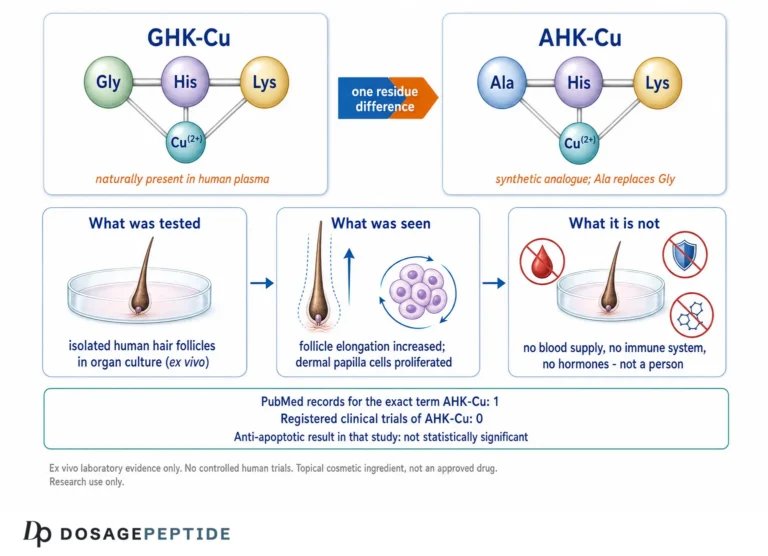
The study tested a copper-tripeptide complex on human hair follicles cultured outside the body (ex vivo) and on cultured human dermal papilla cells (in vitro). At concentrations spanning roughly 10⁻¹² to 10⁻⁹ M, the peptide-copper complex stimulated elongation of the isolated hair follicles and promoted proliferation of dermal papilla cells.1 Mechanistically, treatment raised the Bcl-2/Bax ratio and reduced apoptosis markers (cleaved caspase-3 and PARP) in the dermal papilla cells, elevated VEGF production, and decreased TGF-β1 secretion from dermal fibroblasts.1 Taken together, the authors proposed that the complex promotes hair-follicle growth by keeping dermal papilla cells proliferating and alive while nudging the surrounding signaling environment toward growth.
Here is the caveat that most consumer articles omit: the tripeptide in that landmark study was AHK-Cu — L-alanyl-L-histidyl-L-lysine copper, sometimes labeled copper tripeptide-3 — not GHK-Cu.1 AHK-Cu and GHK-Cu are close chemical cousins (they differ in the first residue, alanine versus glycine), and they share the copper-binding motif that gives the family its character. But they are not identical molecules, and rigor requires acknowledging that the cleanest ex vivo human-follicle-elongation data in this space were generated with AHK-Cu. Extrapolating that result wholesale to GHK-Cu is a reasonable hypothesis, not an established fact. This is exactly the kind of substitution that inflates the apparent evidence base: a study on one copper peptide gets quietly relabeled as proof for another.
What about GHK-Cu specifically? Its hair-relevant evidence is largely mechanistic and indirect, drawn from the same properties documented in its extensive skin and wound-healing literature — VEGF upregulation, angiogenesis, anti-inflammatory and antioxidant effects, stimulation of fibroblasts and extracellular-matrix synthesis, and broad gene-expression modulation.25 These are properties one can reasonably argue should help a follicle, but they were mostly characterized in skin models, wound models, and gene-expression assays, not in controlled hair-growth experiments on human scalps. For the mechanistic, stem-cell-level version of this discussion, the companion piece on how GHK-Cu affects hair-follicle stem cells and hair growth examines the cellular pathways in detail; this article’s job is to weigh how far that cell-level story has actually been tested in people.
A detail in the 2007 data deserves emphasis because it is routinely lost in translation: the active concentrations were extraordinarily low, on the order of 10⁻¹² to 10⁻⁹ molar — picomolar to nanomolar.1 This matters in two directions. On one hand, activity at such vanishingly small concentrations is consistent with GHK-Cu’s proposed role as a physiological signaling molecule rather than a blunt pharmacological agent, which is genuinely intriguing. On the other hand, dose-response relationships for these peptides are often biphasic or bell-shaped, meaning that more is not better and that higher concentrations can lose the effect or even reverse it. A consumer product slathering on a high concentration of copper peptide is not obviously delivering the follicle to the narrow window where the ex vivo effect appeared, and the relationship between an optimal in-culture concentration and an optimal topical dose reaching the papilla through intact skin is entirely uncharacterized. The precision that makes the laboratory result elegant is precisely what makes naive extrapolation to a bottled serum unreliable.
It is also worth situating the dermal-papilla model itself. Cultured dermal papilla cells are the standard first-line screening system for candidate hair actives, and a great many compounds — natural extracts, growth factors, small molecules — show proliferative or pro-anagen signals in that dish.6 The screening model is valuable precisely because it is sensitive, but that sensitivity is also its limitation: many agents that look promising on dermal papilla cells never translate into clinically meaningful regrowth, because a follicle in a dish is insulated from the hormonal, vascular, immune, and mechanical realities of a living scalp.6 A positive dermal-papilla result is a reason to run a trial, not a substitute for one.
What “Clinical Research” Actually Exists in Humans
This is the heart of the matter, and honesty requires being blunt: there is no robust, well-powered, independently replicated randomized controlled trial demonstrating that GHK-Cu monotherapy regrows hair in humans with androgenetic alopecia. The compound’s clinical file for hair, in the strict sense of controlled human efficacy trials, is close to empty.
What does exist falls into a few categories, none of which meets the bar that the word “clinical” ordinarily sets:
Historical and patent-era work. Copper-peptide complexes were investigated for hair growth by ProCyte and others in the 1990s, and a United States patent describes stimulation of hair growth by peptide-copper complexes.11 A patent is a legal instrument, not a peer-reviewed clinical trial; it documents a claimed invention and supporting examples, but it does not undergo the independent scrutiny, pre-registration, blinding, and statistical reporting that define credible clinical evidence. Citing a patent as if it were a trial is a common sleight of hand in this field.
Small, old, or combination studies. Much of the human signal that circulates online comes from small studies, uncontrolled observations, or products that combine a copper peptide with other actives — minoxidil, botanical extracts, procedural microneedling, or growth-factor cocktails. When a copper peptide is one ingredient among several, any observed benefit cannot be attributed to the peptide alone. Combination results are frequently repackaged as evidence for the copper peptide specifically, which is not a valid inference.
Mechanistic and gene-expression human data. There is credible human and human-cell data on GHK-Cu’s skin effects — improvements in skin appearance, collagen-related markers, and gene expression — but these speak to skin, not to counted hair regrowth.2 The site’s overview of GHK-Cu in skin health and collagen synthesis is the appropriate home for that evidence; importing it into a hair-growth argument is a category error.
The following table summarizes the evidence landscape honestly, tier by tier.
| Evidence tier | What exists for copper peptides / GHK-Cu in hair | What it can and cannot support |
|---|---|---|
| In vitro (dermal papilla cells) | Proliferation, raised Bcl-2/Bax, VEGF up, TGF-β1 down (largely AHK-Cu; GHK-Cu inferred)1 | Shows plausible pro-anagen cell biology; cannot show scalp regrowth |
| Ex vivo (isolated human follicles) | Follicle elongation with copper tripeptide (AHK-Cu)1 | Suggests direct follicular effect; isolated from scalp physiology |
| Gene expression / skin studies | Broad gene modulation; skin repair and collagen effects for GHK-Cu25 | Supports regenerative profile; not hair-count evidence |
| Patents | US patent on peptide-copper complexes for hair growth11 | Documents claimed invention; not peer-reviewed efficacy |
| Randomized controlled trials (GHK-Cu monotherapy, hair) | No robust, replicated RCT identified | The decisive tier — and it is essentially absent |
The pattern is unmistakable: the evidence is deepest where it matters least for a clinical claim (cell dishes, gene assays, patents) and thinnest exactly where it would matter most (controlled human trials with counted hair as the endpoint). That inversion is the central honest finding of this article.
Popular Claims That Do Not Survive Scrutiny
Because GHK-Cu is heavily marketed, a set of confident-sounding claims recirculates across product pages and blogs. Several deserve explicit correction, because a researcher encountering them should know how weak their foundations are.
“Comparable to minoxidil.” The frequently repeated assertion that a copper peptide performed comparably to 2% or 5% minoxidil in controlled trials traces, on inspection, to small or old studies, secondary summaries, and in some cases products that combined the peptide with other agents. A genuine head-to-head, adequately powered, randomized comparison of GHK-Cu monotherapy against minoxidil, published in the peer-reviewed literature and independently replicated, is not something the primary record supports. Treat “comparable to minoxidil” as an unverified marketing claim, not an established finding.
“7.4× increase in hair count.” Striking multipliers like this appear repeatedly online. When chased to a source, such figures generally attach to small studies, non-standard endpoints, or combination protocols (for example, a peptide paired with a photosensitizer or a procedure), and they do not represent GHK-Cu monotherapy in a rigorous trial. A dramatic number with a fragile or combination provenance is worse than no number, because it manufactures false confidence.
“Blocks DHT like finasteride.” Some sources claim copper or copper peptides inhibit 5-alpha-reductase, the enzyme that generates DHT. There are in vitro observations that copper ions can inhibit the enzyme under specific laboratory conditions, but extrapolating this to a clinically meaningful, finasteride-like local DHT blockade on a human scalp is not supported by controlled human data. GHK-Cu is not a proven anti-androgen, and framing it as a “natural finasteride” overstates the biology considerably.
“Reverses baldness / regrows lost hairlines.” No credible clinical evidence supports claims that GHK-Cu reverses established androgenetic alopecia or regenerates fully miniaturized follicles. Even the pharmaceutical standards of care are better at slowing loss and partially thickening existing hair than at raising the dead; a cosmetic peptide with far less evidence cannot reasonably be held to a higher standard of promise.
The through-line in all of these is a familiar mechanism of hype: a real but limited laboratory observation is amplified, stripped of its qualifiers, sometimes attributed to the wrong molecule (AHK-Cu results claimed for GHK-Cu), and then presented with a precise-sounding statistic that implies clinical certainty. Recognizing that pattern is more useful to a researcher than any single data point, because it recurs across the entire consumer-peptide landscape.
GHK-Cu Versus the Proven Standards of Care
The fairest way to calibrate GHK-Cu’s evidence is to set it beside the two agents that actually cleared the regulatory bar for androgenetic alopecia. The contrast is not meant to disparage GHK-Cu; it is meant to show what “clinical research indicates” looks like when the answer is genuinely established.
Minoxidil is FDA-approved as a topical treatment (2% and 5%) for pattern hair loss in men and women. Its mechanism is understood as potassium-channel opening and vasodilation, with prolongation of the anagen growth phase; decades of controlled trials support a real, if modest, benefit in a substantial fraction of users.8 Finasteride is an oral 5-alpha-reductase inhibitor approved for male pattern hair loss; by lowering DHT it directly targets the hormonal driver of miniaturization, and large trials document meaningful maintenance and partial regrowth over time.78 Both drugs have known limitations and side-effect profiles, and neither “cures” the condition — benefits generally require continued use. But both rest on a foundation of pivotal, replicated human trials that GHK-Cu simply does not have for this indication.
| Attribute | Minoxidil | Finasteride | GHK-Cu (copper tripeptide-1) |
|---|---|---|---|
| Regulatory status for AGA | FDA-approved (topical) | FDA-approved (oral, men) | Cosmetic ingredient; not approved for hair loss |
| Primary mechanism | K⁺ channel opening, vasodilation, anagen prolongation8 | 5-α-reductase inhibition → lower DHT7 | Dermal papilla support, VEGF/angiogenesis, anti-inflammatory (mechanistic)12 |
| Highest evidence tier | Multiple RCTs | Multiple RCTs | In vitro / ex vivo; no robust monotherapy RCT |
| Human hair-count data | Extensive | Extensive | Sparse, indirect, often combination-based |
| Targets DHT pathway? | No (downstream) | Yes (directly) | Not convincingly in humans |
| Honest positioning | Proven, modest, ongoing use | Proven, hormonal, ongoing use | Plausible adjunct; unproven as a standalone therapy |
The comparison clarifies GHK-Cu’s realistic place. It is not a competitor to minoxidil and finasteride on the evidence; it is, at best, a mechanistically reasonable adjunct whose independent contribution has not been quantified in controlled human trials. A researcher or clinician who understands this will neither dismiss the peptide outright nor promote it as a proven therapy — both errors ignore where the data actually sit.
Mechanisms in Depth: What GHK-Cu Does at the Cellular Level

Even though the clinical case is unproven, the mechanistic biology is substantive and deserves a careful treatment, both because it explains the enthusiasm and because it defines what a future trial would be testing.
Dermal papilla proliferation and survival. The dermal papilla is the follicle’s command center, and its cell number and vitality correlate with a follicle’s capacity to produce a robust terminal hair; papilla shrinkage accompanies miniaturization.7 Copper-tripeptide complexes stimulate dermal papilla cell proliferation and shift these cells toward survival by raising the Bcl-2/Bax ratio and reducing apoptosis markers.1 If GHK-Cu shares this action — plausible given the family’s chemistry — it would help preserve the cellular substrate on which anagen depends. But “helps preserve the substrate” is a long way from “reverses pattern loss.”
VEGF and angiogenesis. GHK-Cu is a well-documented pro-angiogenic agent that upregulates VEGF and supports new vessel formation, a property central to its wound-healing reputation.2 The anagen follicle sits within a dense vascular network, and perifollicular angiogenesis accompanies the growth phase. Improving blood supply is therefore a rational lever — and, notably, it partially overlaps with how minoxidil is thought to help. This overlap is one reason the mechanistic story feels compelling. The gap is that angiogenic capacity demonstrated in skin and wound models has not been shown to translate into counted regrowth on a scalp.
Modulation of catagen and inflammatory signals. TGF-β1 is a catagen-inducing cytokine; reducing it, as copper tripeptide does in fibroblasts, would be expected to lengthen the growth phase.1 Separately, GHK-Cu’s broad anti-inflammatory and antioxidant profile is relevant because chronic perifollicular micro-inflammation and oxidative stress are implicated in follicle decline.2 The compound’s antioxidant behavior is documented well enough that the site devotes a separate discussion to GHK-Cu and oxidative stress; in a hair context, that antioxidant tilt is a plausible contributor rather than a demonstrated cause of regrowth.
Extracellular matrix and the follicular niche. GHK-Cu stimulates fibroblasts and the synthesis of collagen, elastin, glycosaminoglycans, and other matrix components, and it supports the copper-dependent enzymes that crosslink connective tissue.2 A healthy follicle is embedded in a well-organized dermal niche, and remodeling that niche could, in principle, create a more hospitable environment for follicular function. This is the most speculative of the mechanistic arguments as applied to hair, since matrix remodeling in skin does not automatically translate to changes in the hair cycle.
Wnt/β-catenin overlap. As noted, the Wnt/β-catenin pathway is a genuine master switch for anagen: stabilizing β-catenin in dermal papilla cells accelerates hair growth in experimental models, and the pathway’s activity distinguishes hair-inducing from non-inducing papilla cells.9 GHK-Cu’s gene-expression breadth means its effects likely intersect this pathway, and secondary sources routinely claim direct activation. The measured position is that the pathway is important and GHK-Cu is pleiotropic, so overlap is likely — but a clean, primary demonstration that GHK-Cu drives Wnt-dependent anagen in human follicles is not something the record firmly establishes.
There is one more mechanistic thread worth naming because it is often invoked loosely: the copper itself. Copper is a required cofactor for lysyl oxidase (connective-tissue crosslinking), for superoxide dismutase (antioxidant defense), and for enzymes that support angiogenesis, so a molecule that delivers copper in a controlled, cell-usable form has a coherent reason to influence tissue remodeling and vascular biology.24 But copper is a double-edged element: free or poorly chaperoned copper participates in redox reactions that generate reactive oxygen species, which is exactly why the body binds it so tightly to carriers. GHK’s value is partly that it holds copper in a form that is bioavailable yet less prone to indiscriminate oxidative chemistry.2 For hair, this means the “copper delivers benefit” argument and the “copper can cause oxidative stress” caution are two faces of the same chemistry, and which one dominates depends on formulation, concentration, and context — another reason blanket claims about copper peptides growing hair are premature.
The honest synthesis of the mechanism section is that GHK-Cu touches many of the right levers — papilla vitality, vascularity, catagen and inflammatory signals, matrix, and possibly Wnt — which is why it is a reasonable candidate. But touching the right levers in a dish is a hypothesis generator, not an efficacy result. Every one of these mechanisms is a reason to run a proper trial; none is a substitute for having run one.
Delivery, Formulation, and Why It Complicates the Evidence
A frequently overlooked reason the GHK-Cu hair literature is so muddled is that outcomes depend heavily on how the peptide is delivered — and delivery varies enormously across the products and studies that generate claims.
GHK-Cu is a small, charged, water-soluble molecule. Getting it from the surface of the scalp down to the dermal papilla, which sits well below the epidermis, is a nontrivial pharmaceutical problem. A topically applied peptide must survive on the skin surface, penetrate the stratum corneum barrier, and reach the follicular target at a biologically relevant concentration. Formulation choices — vehicle, pH, penetration enhancers, concentration, and whether the peptide is stabilized against degradation — can make the difference between a product that delivers an active dose and one that mostly sits on the surface. Two serums with identical GHK-Cu labeling can behave completely differently.
This is compounded by procedural delivery. Much of the human hair signal attributed to copper peptides comes from protocols that pair them with microneedling or intradermal delivery, which bypass the barrier and can independently stimulate hair growth through wound-healing and growth-factor release. When a study microneedles a copper-peptide solution into the scalp and observes regrowth, the needling itself is a confound: some or all of the benefit may come from the mechanical stimulus rather than the peptide. Disentangling the two requires a needling-plus-vehicle control arm, which many reports lack.
Stability is a further wrinkle. Copper peptides can be sensitive to formulation conditions, and the copper that gives the molecule its activity can also participate in oxidative chemistry if a product is poorly formulated. For anyone handling research-grade material, the general principles of peptide reconstitution and storage — gentle handling, appropriate diluents, cool and dark storage, avoidance of repeated freeze-thaw — apply, and the site’s peptide reconstitution guide lays out that standard laboratory practice. The relevance here is evidential, not procedural: because delivery and stability vary so much, comparing results across products and studies is genuinely difficult, and that heterogeneity is one reason a clean answer to the title question has been so slow to emerge.
The practical upshot for interpreting claims is skepticism about generalization. A benefit reported for a microneedled, well-formulated, stabilized preparation says little about a generic over-the-counter copper-peptide serum, and vice versa. “GHK-Cu grows hair” is not a single testable claim; it is a family of claims that depend on dose, vehicle, and route — most of which have not been rigorously compared.
Safety, Tolerability, and Regulatory Status
If there is a genuinely reassuring dimension to GHK-Cu, it is its safety record in cosmetic use. As an endogenous human tripeptide used topically for decades in skincare, GHK-Cu is generally regarded as well tolerated, with the most common issues being local irritation, redness, or contact sensitivity in susceptible individuals.2 This favorable tolerability is often cited as a reason to try it, and within the honest limits of cosmetic use that argument has some merit — a low-risk adjunct is a different proposition from a high-risk one.
But safety and efficacy are independent questions, and conflating them is a persistent error. “It is unlikely to hurt” is not evidence that “it works.” A well-tolerated ingredient with no proven hair-growth efficacy is exactly that: safe and unproven. Several caveats also temper even the safety picture:
- Copper exposure. The copper that makes GHK-Cu active is a reactive metal. In sensible cosmetic concentrations this is not a general concern, but it argues against casual escalation of dose or concentration in the belief that more is better.
- Product quality. Material sold outside regulated cosmetic channels as “research” peptide varies in purity and provenance. Impurities and mislabeling are real risks tied to sourcing rather than to the molecule itself, and they can affect both safety and any hoped-for activity.
- Population and duration. Cosmetic tolerability data come from general skin use, not from long-term high-frequency scalp application in people with hair loss; the specific chronic-use scenario implied by hair regimens is less characterized.
On regulatory status, the picture is straightforward and important. GHK-Cu (copper tripeptide-1) is a cosmetic ingredient. It is not approved by the FDA, EMA, or comparable regulators as a drug for treating androgenetic alopecia, telogen effluvium, or any other hair-loss condition. Products containing it may be sold as cosmetics for hair and scalp appearance, but they may not lawfully claim to treat or cure a hair-loss disease without crossing into drug-regulation territory. The two genuinely approved options for pattern hair loss remain minoxidil and finasteride, whose approvals rest on the controlled trials GHK-Cu lacks.78 Any decision to use GHK-Cu for hair should be made with that regulatory reality clearly in view, and ideally in consultation with a qualified clinician who can assess the underlying cause of hair loss — because using an unproven cosmetic in place of an evaluated diagnosis and a proven therapy carries its own opportunity cost.
Research Models and What a Convincing Trial Would Require
Understanding why the answer to the title remains “indicative, not proven” is easier once you see how the compound has been studied and what a definitive study would demand.
The existing hair-relevant methodology is dominated by two tiers. The first is cultured dermal papilla cells, the field’s standard screening system, used to measure proliferation, apoptosis markers, and secreted factors like VEGF and TGF-β1.16 The second is ex vivo human hair-follicle organ culture, in which isolated follicles are kept alive in a dish and their elongation measured over days.1 Both are informative and both were used in the AHK-Cu work; both are also, by construction, divorced from the systemic environment of a real scalp — no circulating androgens, no immune system, no vascular remodeling, no long-term cycling.
What is largely missing is the tier that decides clinical questions: randomized, controlled, blinded human trials with objective endpoints. For hair growth, the credible endpoints are well established — standardized global photography assessed by blinded evaluators, and target-area hair counts and density measured by trichoscopy or phototrichogram at fixed scalp sites over a sufficient duration (typically 24 weeks or more, because the hair cycle is slow). A convincing GHK-Cu trial would need:
- GHK-Cu monotherapy, not a combination product, so the effect can be attributed to the peptide.
- A vehicle-only control arm, and if a procedure like microneedling is used, a needling-plus-vehicle arm to separate the peptide’s effect from the procedure’s.
- Adequate power and duration, enough participants and enough months to detect a real change against the noisy background of natural hair variation.
- Pre-registration and blinded assessment, to guard against the selective reporting and evaluator bias that plague small cosmetic studies.
- Independent replication, because a single positive trial — even a good one — is a beginning, not a conclusion.
Until studies of that design exist and agree, statements about GHK-Cu and hair growth remain at the level of “mechanistically plausible and worth testing,” which is precisely how a careful reader should hold them. The dermal papilla model that has generated the optimism is a screening tool whose very sensitivity means many hopefuls pass it and later fail in people; GHK-Cu has passed the screen but not yet faced the exam.6
Limitations and the Honest Bottom Line
Pulling the threads together, the limitations bearing on the title question are specific and, importantly, they reinforce one another rather than sitting in isolation.
The clinical tier is essentially empty. The decisive evidence — controlled human trials with counted hair as the endpoint — does not robustly exist for GHK-Cu monotherapy. Everything below that tier (cell dishes, ex vivo follicles, gene assays, patents) is supportive at best and cannot substitute for it.
The strongest follicle data used a different peptide. The cleanest ex vivo human-follicle-elongation evidence came from AHK-Cu, not GHK-Cu, and applying it to GHK-Cu is inference, not demonstration.1 This single fact undercuts a large fraction of the confident claims in circulation.
Human signal is contaminated by combinations and procedures. Much of the apparent human benefit comes from products or protocols that pair copper peptides with minoxidil, botanicals, growth factors, or microneedling, none of which can be attributed to the peptide alone.
Delivery heterogeneity blocks generalization. Because outcomes depend so heavily on formulation, concentration, and route, results from one preparation say little about another, and the field lacks the standardized comparisons that would let evidence accumulate coherently.
Safety is favorable but irrelevant to efficacy. GHK-Cu’s good tolerability is a real point in its favor as a low-risk adjunct, but it is not, and cannot be, evidence that the peptide grows hair.
So what does clinical research indicate about GHK-Cu in hair-growth stimulation? Indicatively and honestly: GHK-Cu is a well-characterized cosmetic copper tripeptide with a genuinely plausible, multi-pathway rationale for supporting hair follicles — dermal papilla vitality, angiogenesis, suppression of a catagen signal, and an anti-inflammatory, antioxidant tilt — supported by in vitro and ex vivo data (much of it from the related peptide AHK-Cu) and by an extensive skin-regeneration literature. What it lacks is the thing the word “clinical” demands: robust, replicated, controlled human trials showing that GHK-Cu by itself regrows or meaningfully thickens hair. It is a promising adjunct hypothesis, not a proven therapy, and it is not a substitute for the two agents — minoxidil and finasteride — that have actually earned regulatory approval on the strength of pivotal trials.78 For readers who want to keep following how this evidence base develops across the peptide field, the site’s research and dosage index catalogs GHK-Cu alongside related compounds for educational reference.
Frequently Asked Questions
Does clinical research prove GHK-Cu grows hair?
No. There is no robust, replicated randomized controlled trial demonstrating that GHK-Cu monotherapy regrows or meaningfully thickens hair in humans with androgenetic alopecia. The evidence that exists is largely in vitro (dermal papilla cells) and ex vivo (isolated follicles), plus mechanistic and gene-expression data and patents.12 These support biological plausibility but do not meet the standard of clinical proof. GHK-Cu is a cosmetic ingredient, not an approved hair-loss drug.
Is GHK-Cu as good as minoxidil or finasteride?
The evidence does not support that claim. Minoxidil and finasteride are FDA-approved for pattern hair loss on the basis of multiple controlled human trials, with well-characterized (if modest) benefits.78 GHK-Cu has no comparable trial base for hair growth. Assertions that a copper peptide is “comparable to minoxidil” trace to small, old, or combination studies rather than to rigorous head-to-head trials, and should be treated as unverified marketing rather than established fact.
Wasn’t there a study showing copper peptide grows hair follicles?
Yes — the most-cited one is a 2007 study in Archives of Pharmacal Research showing that a copper tripeptide stimulated human hair-follicle elongation ex vivo and dermal papilla cell proliferation in vitro.1 Two caveats matter: the peptide tested was AHK-Cu (copper tripeptide-3), a close cousin of GHK-Cu but not the same molecule, and the work was in cultured follicles and cells, not on human scalps. It is strong preclinical evidence, not clinical proof, and it is often mis-cited as being about GHK-Cu specifically.
Does GHK-Cu block DHT like finasteride?
Not in any clinically demonstrated way. Some sources note that copper ions can inhibit 5-alpha-reductase under laboratory conditions, but there is no controlled human evidence that GHK-Cu produces a finasteride-like, clinically meaningful reduction in scalp DHT. Calling it a “natural finasteride” overstates the biology. Its plausible hair-relevant actions are on the follicle and its environment (papilla, vasculature, inflammation), not proven anti-androgen activity.12
Why do some products report dramatic results with copper peptides?
Dramatic figures usually come from combination protocols — a copper peptide paired with minoxidil, botanicals, growth factors, or microneedling — or from small, uncontrolled studies. When multiple actives or a procedure are involved, any benefit cannot be attributed to the peptide alone, and microneedling itself independently stimulates hair growth. Such results are not evidence for GHK-Cu as a standalone treatment.
Is GHK-Cu safe to use on the scalp?
As an endogenous human tripeptide used in cosmetics for decades, GHK-Cu is generally well tolerated, with occasional local irritation or contact sensitivity.2 However, safety is a separate question from efficacy: being unlikely to cause harm is not evidence that it grows hair. Product quality varies outside regulated cosmetic channels, and long-term high-frequency scalp use is less characterized than general skincare use. Anyone with significant hair loss should seek a proper diagnosis rather than relying on an unproven cosmetic.
How is GHK-Cu different from its skin benefits?
GHK-Cu’s best-supported human data concern skin — appearance, collagen-related markers, and wound repair — not hair counts.2 Because skin and hair follicles share some biology, it is tempting to assume skin benefits transfer to hair, but that is an assumption, not a finding. The site’s separate discussion of GHK-Cu in skin health and collagen synthesis covers the dermatologic evidence; it should not be read as hair-growth evidence.
What would it take to actually prove GHK-Cu works for hair?
A randomized, controlled, blinded human trial of GHK-Cu monotherapy, with a vehicle-only control (and a needling-plus-vehicle arm if a procedure is used), objective endpoints such as blinded global photography and target-area hair counts over at least several months, adequate statistical power, pre-registration, and independent replication. Until studies of that quality exist and agree, GHK-Cu remains mechanistically plausible and worth testing rather than clinically proven for hair growth.6
References
- Pyo HK, Yoo HG, Won CH, Lee SH, Kang YJ, Eun HC, Cho KH, Kim KH. The effect of tripeptide-copper complex on human hair growth in vitro. Arch Pharm Res. 2007;30(7):834-839. PMID: 17703734. https://pubmed.ncbi.nlm.nih.gov/17703734/
- Pickart L, Margolina A. Regenerative and Protective Actions of the GHK-Cu Peptide in the Light of the New Gene Data. Int J Mol Sci. 2018;19(7):1987. PMID: 29986520. PMCID: PMC6073405. https://www.ncbi.nlm.nih.gov/pmc/articles/PMC6073405/
- Pickart L, Thaler MM. Tripeptide in human serum which prolongs survival of normal liver cells and stimulates growth in neoplastic liver. Nat New Biol. 1973;243(124):85-87. PMID: 4349963. https://pubmed.ncbi.nlm.nih.gov/4349963/
- Pickart L, Vasquez-Soltero JM, Margolina A. GHK Peptide as a Natural Modulator of Multiple Cellular Pathways in Skin Regeneration. Biomed Res Int. 2015;2015:648108. PMID: 26236730. PMCID: PMC4508379. https://www.ncbi.nlm.nih.gov/pmc/articles/PMC4508379/
- Pickart L, Vasquez-Soltero JM, Margolina A. GHK and DNA: Resetting the Human Genome to Health. Biomed Res Int. 2014;2014:151479. PMID: 25302294. PMCID: PMC4180391. https://www.ncbi.nlm.nih.gov/pmc/articles/PMC4180391/
- Madaan A, Verma R, Singh AT, Jaggi M. Review of Hair Follicle Dermal Papilla cells as in vitro screening model for hair growth. Int J Cosmet Sci. 2018;40(5):429-450. PMID: 30144361. https://onlinelibrary.wiley.com/doi/10.1111/ics.12489
- Chen S, Li L, Ding W, Zhu Y, Zhou N. Androgenetic Alopecia: An Update on Pathogenesis and Pharmacological Treatment. Drug Des Devel Ther. 2025;19:7161-7185. PMCID: PMC12380480. https://pmc.ncbi.nlm.nih.gov/articles/PMC12380480/
- Using the Mechanisms of Action Involved in the Pathogenesis of Androgenetic Alopecia to Treat Hair Loss. Int J Mol Sci. 2025;26(21):10712. PMCID: PMC12608207. https://pmc.ncbi.nlm.nih.gov/articles/PMC12608207/
- Zhou L, Xu M, Yang Y, Yang K, Wickett RR, Andl T, Millar SE, Zhang Y. Activation of β-Catenin Signaling in CD133-Positive Dermal Papilla Cells Drives Postnatal Hair Growth. PLoS One. 2016;11(7):e0160425. PMID: 27467578. PMCID: PMC4966972. https://www.ncbi.nlm.nih.gov/pmc/articles/PMC4966972/
- Keerti A, Madke B, Keerti A, Lopez MJC, Lirio FS. Topical Finasteride: A Comprehensive Review of Androgenetic Alopecia Management for Men and Women. Cureus. 2023;15(9):e44949. PMCID: PMC10561660. https://pmc.ncbi.nlm.nih.gov/articles/PMC10561660/
- Stimulation of hair growth by peptide copper complexes. United States Patent US 5,538,945 (peptide-copper complexes for hair growth). https://patents.google.com/patent/US5538945A/en
Educational and research-use disclaimer: This article is provided solely for scientific and educational purposes. GHK-Cu (copper tripeptide-1) is a cosmetic ingredient and is not approved by the FDA, EMA, or any comparable regulator for the treatment, cure, or prevention of androgenetic alopecia, telogen effluvium, or any other hair-loss condition. The hair-relevant evidence discussed here is predominantly in vitro or ex vivo, and much of the most-cited follicle data was generated with the related peptide AHK-Cu rather than GHK-Cu; no robust, replicated randomized controlled trial has demonstrated that GHK-Cu monotherapy stimulates human hair growth. Nothing here is medical advice or a recommendation for use, and GHK-Cu is not a substitute for evaluated therapies such as minoxidil or finasteride. Readers experiencing hair loss should consult a qualified clinician for diagnosis and evidence-based management.