
Tesofensine (0.5 mg) Dosage Protocol
Tesofensine (NS2330) is an investigational oral triple monoamine reuptake inhibitor — not a peptide and not FDA-approved — studied in Phase II trials for obesity and weight loss.
Triple monoamine reuptake inhibitor — blocks reuptake of noradrenaline, dopamine and serotonin. A small-molecule CNS agent, not a peptide.
Phase II obesity trials studied 0.25, 0.5 and 1.0 mg once daily oral. The 0.5 mg dose was carried forward as the tolerability/effect balance point.
Oral capsule taken once daily. Long plasma half-life (~9 days) means steady-state accumulates over roughly 4–5 weeks.
Store sealed, dry, away from light and heat; follow the specific supplier's stability data. Keep out of reach of others.
Quickstart Highlights
Tesofensine (developmental code NS2330) is an orally active triple monoamine reuptake inhibitor — a central-nervous-system small molecule of the phenyltropane class, not a peptide, that blocks the reuptake of noradrenaline, dopamine and serotonin at once[4]. Originally developed for neurodegenerative disease and later repurposed toward metabolism, it is investigated in the published literature primarily for appetite suppression and body-weight reduction, with the pivotal data coming from a 24-week Phase II obesity trial[1].
The doses and figures below reflect published Phase II research conventions and are provided strictly for research and educational reference — not medical advice, not a dosing recommendation, and not a claim that tesofensine is safe or effective for human use.
Supplies Needed
Tesofensine is an oral small molecule, so there is no reconstitution, bacteriostatic water or injection involved — the reconstitution calculator that accompanies injectable protocols does not apply here. What a documented research context relies on is accurate measurement and clean, well-labelled storage; because the doses are so small, measurement is the hard part, not any exotic tool.
Protocol Overview
At one 0.5 mg capsule per day, a 30-count pack of 0.5 mg capsules covers about a month of the most-cited reference dose. Because steady state is not reached for four to five weeks, a single month barely spans the period over which blood levels are still climbing[5].
Working below a milligram is far under the resolution of ordinary kitchen or jewellery scales, so in any legitimate research setting these doses are handled as pre-formulated capsules or prepared analytically rather than weighed by hand — at these masses a small absolute error becomes a large relative error.
Dosing Protocol
The once-daily oral doses studied in the TIPO-1 Phase II trial, presented as reference data describing what was investigated — not a schedule to follow.
| Studied Dose Arm | Daily Dose | Notes / Timing |
|---|---|---|
| Lowest active arm | 0.25 mg (1× daily, oral) | Smallest reported weight effect; generally the best-tolerated active dose[1] |
| Balance-point dose | 0.5 mg (1× daily, oral) | Described by investigators as balancing measured effect against tolerability[1] |
| Highest arm | 1.0 mg (1× daily, oral) | Largest reported weight effect but clearest heart-rate, blood-pressure and mood signal[1] |
Why Tesofensine draws research interest
These are the directions researchers and the peptide community most often explore Tesofensine for — so you know you’re in the right place. They describe what is being studied, not proven benefits, approved uses, or promised results.
Obesity & weight loss
The most-studied research area — investigated in Phase II obesity trials where higher doses produced dose-dependent weight reduction. Investigational, not FDA/EMA-approved.
Appetite & energy balance
Studied for effects on appetite sensations, satiety and energy expenditure as a proposed mechanism behind observed weight change. Early-clinical and preclinical only.
Hypothalamic & syndromic obesity
Investigated (as the combination Tesomet) for hypothalamic obesity and Prader-Willi syndrome. Early-stage, unapproved.
Neurodegenerative disease (original use)
Originally developed and studied for Parkinson's and Alzheimer's disease, where trials did not meet primary endpoints before repurposing toward obesity.
Evidence ranges from early laboratory work to clinical trials depending on the use — the sections below cover the actual data and sources.
Studied at 0.25 – 1.0 mg once daily; 0.5 mg is the most-cited balance-point dose[1].
Once daily, oral. The long (~9-day) half-life means levels accumulate to steady state over roughly 4–5 weeks[5].
Taken once daily at a consistent time in the studied protocols; not titrated rapidly because concentrations build slowly.
Investigational / Phase II — real randomised human data, but no completed Phase III and not FDA/EMA-approved.
Oral Dosing Guide
The doses below reproduce the oral once-daily figures that appear in the published human research. They describe what was studied — not a protocol to follow, a recommendation, or any suggestion that these doses are safe for a person to take[1].
Standard / Gradual Approach
Unlike short-acting drugs, tesofensine cannot be titrated quickly. Its plasma half-life is reported on the order of about nine days, so concentrations accumulate for roughly four to five weeks before reaching steady state and any dose change takes a long time to fully reflect in blood levels[5].
In the Phase II research the studied range spanned only 0.25–1.0 mg once daily — a fourfold window measured in fractions of a milligram — and the cardiovascular and psychiatric signal grew clearly with dose, which is why investigators framed 0.5 mg as the practical balance point rather than the 1.0 mg maximum[1].
Storage Instructions
As a light- and moisture-sensitive small molecule, tesofensine should be kept sealed, dry, cool and out of direct light — with a desiccant — following the specific supplier’s documented stability data.
Keep it clearly labelled and out of reach of anyone who might mistake it for something else. Purity and identity cannot be assumed for material obtained outside a regulated supply chain, and mislabelling is a real-world risk with any grey-market compound.
Important Notes
Practical context for interpreting the numbers — none of it is an instruction to dose.
- ▪Narrow, potent window: the studied doses differ by only a factor of four, measured in fractions of a milligram, and the safety picture shifts materially across that range[1].
- ▪Long half-life cuts both ways: once-daily dosing is convenient, but the ~9-day half-life means that if a problem develops the compound clears slowly and cannot simply be ‘washed out’ quickly[5].
- ▪Cardiovascular signal is the headline risk: dose-related increases in heart rate and blood pressure are the clearest and most consistent finding across the human data — prominent enough that a later combination product (Tesomet) added a beta-blocker specifically to counter them[1][8].
- ▪Psychiatric considerations are real: because it raises dopamine, noradrenaline and serotonin tone, reported effects include mood changes, sleep disturbance and agitation-type symptoms, and an abuse-liability study found stimulant-like subjective effects in recreational stimulant users[6].
- ▪Not approved, no long-term data: tesofensine has not cleared Phase III and there is no cardiovascular-outcome or long-term safety trial; a favourable regional regulatory opinion elsewhere does not establish safety in the FDA/EMA jurisdictions most readers operate in.
How This Works
The defining feature of tesofensine is that it inhibits the reuptake of three monoamine neurotransmitters at once — noradrenaline, dopamine and serotonin. By blocking the transporters that clear these neurotransmitters from the synapse, it raises their extracellular concentrations and prolongs their signalling, which is why it is grouped with stimulant-like agents rather than with metabolic hormones[4].
In body-weight research the leading hypothesis is that this heightened monoamine tone acts on hypothalamic and reward circuits to reduce appetite and increase satiety, with a possible secondary contribution from a modest rise in energy expenditure; human studies reported reduced hunger and altered appetite sensations versus placebo[2][3]. The same mechanism is inseparable from the risk profile: the elevated noradrenergic and dopaminergic signalling being studied for weight change is exactly what drives increases in heart rate, blood pressure, arousal and mood changes.
Lifestyle Factors
In the trials that define this molecule, tesofensine was studied alongside a hypocaloric diet rather than as a standalone intervention — the reported weight change reflects the drug plus dietary restriction, not the drug in isolation[1].
Because the mechanism is central and stimulant-like, sleep, stress and cardiovascular status are the daily factors most relevant to how the compound’s documented effects would present — and they are precisely the parameters that supervised research monitors and that are absent in unsupervised settings.
Potential Benefits & Side Effects
What the controlled human literature reports for the studied obesity indication. This is mid-stage Phase II evidence, drawn largely from a single 24-week trial — not settled fact, and not equivalent to an approved, supervised treatment[1].
Reported Effects
- ▪Weight reduction: the 24-week TIPO-1 Phase II trial reported dose-dependent, placebo-subtracted weight loss across the 0.25–1.0 mg arms in obese adults on a hypocaloric diet[1].
- ▪Appetite suppression: mechanistic sub-studies reported reduced hunger ratings and altered appetite sensations on tesofensine versus placebo[3].
- ▪Energy metabolism: metabolic-chamber work examined its effect on energy expenditure and substrate metabolism as a proposed secondary contributor to weight change[2].
- ▪Dose-response: the highest (1.0 mg) arm produced the largest measured weight effect but also the clearest adverse-effect signal, which is why 0.5 mg is the most-cited reference dose[1].
Common Side Effects
- ▪Cardiovascular: dose-related increases in heart rate and blood pressure are the most consistent safety signal across the human data[1].
- ▪Psychiatric / mood: mood changes, sleep disturbance and agitation-type symptoms are reported, consistent with elevated monoamine signalling[1].
- ▪Stimulant-like liability: a dedicated abuse-liability study found tesofensine produced stimulant-like subjective effects in recreational stimulant users[6].
- ▪Interaction risk: combining monoamine-active substances — other serotonergic or stimulant agents — can in principle raise the risk of serotonin excess, a reason cardiac, psychiatric and medication screening accompany these drugs in supervised research.
- ▪Class history: centrally-acting appetite suppressants carry a long, cautionary regulatory record for cardiovascular and psychiatric harms, and tesofensine has not been shown exempt from those class concerns.
Oral Administration
There is no injection or reconstitution. In the studied protocols tesofensine was taken orally, once daily, as a measured capsule — the points below are handling context, not a use guide.
Before You Dose
- ▪Confirm the exact strength and identity of the material against its documentation — at fractions of a milligram, label accuracy is everything.
- ▪Because the studied doses sit near or below the accuracy limit of ordinary scales, research settings rely on pre-formulated capsules rather than hand-weighing[5].
- ▪Note the timing: the long half-life means the compound accumulates over weeks, so consistency matters far more than any single dose[5].
Taking Your Dose
- ▪In the studied protocols a single once-daily oral dose was taken at a consistent time of day.
- ▪The dose is not escalated quickly; steady state is only reached after roughly four to five weeks, so effects and side effects build gradually[5].
- ▪Water and normal swallowing are all that is involved — there is no special vehicle or route beyond oral administration.
After Dosing
- ▪Reseal and return the capsules to dry, cool, dark storage with desiccant promptly.
- ▪Keep a clear record of dose and date; because levels accumulate, day-to-day inconsistency compounds into meaningful exposure differences over time[5].
- ▪The parameters worth watching in supervised research — heart rate, blood pressure and mood — are exactly those the drug’s mechanism affects[1].
Recommended Source
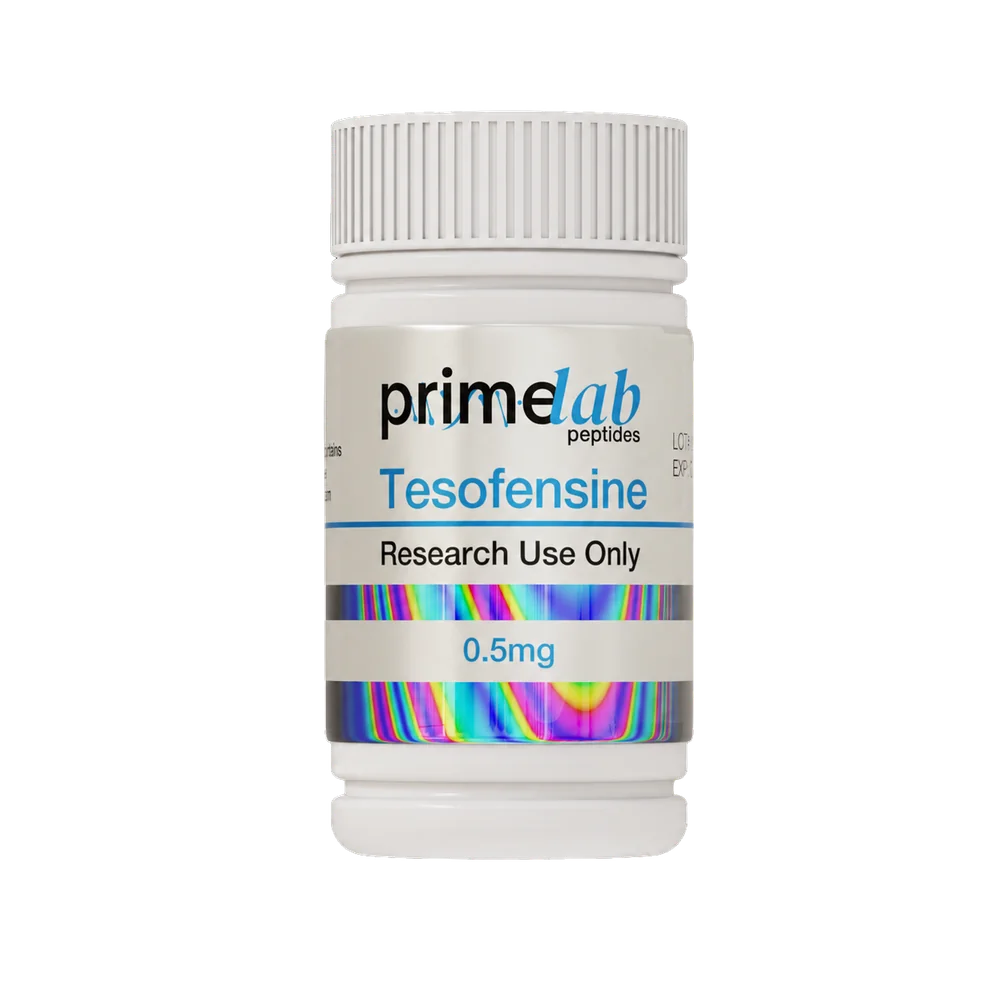
For high-purity research peptides, we point researchers to Prime Lab Peptides for Tesofensine (0.5 mg Capsules).
Why Prime Lab Peptides?
- ▪Top-rated on Trustpilot: Independently reviewed as the highest-rated peptide lab on Trustpilot — making it the best current source in the USA.
- ▪Third-party tested: Every batch ships with a Certificate of Analysis (COA) confirming purity and composition.
- ▪Consistent quality: ISO-aligned manufacturing and handling keep product integrity reliable batch to batch.
- ▪Cold-chain integrity: Temperature-controlled shipping and storage across the whole fulfilment chain.
- ▪Research-grade purity: Fit for educational and research use that demands high-quality peptides.
Note: Product availability and specifications subject to change. Verify current product details on supplier website.
References
- 1
The Lancet — TIPO-1 (Astrup et al., 2008)Astrup et al. — 24-week randomised, double-blind, placebo-controlled Phase II trial of tesofensine 0.25/0.5/1.0 mg for bodyweight loss in obese patients; the pivotal dose-response data.
- 2
International Journal of Obesity (PubMed)Sjödin et al. — effect of the triple monoamine reuptake inhibitor tesofensine on energy metabolism and appetite in overweight and moderately obese men.
- 3
Obesity (Silver Spring) — appetite sensations (PubMed)Gilbert et al. — the effect of tesofensine on appetite sensations, supporting the proposed satiety/appetite-suppression mechanism.
- 4
Current Opinion in Investigational Drugs (PubMed)Bello & Zahner — review of tesofensine as a monoamine reuptake inhibitor for obesity, covering mechanism, development history and the dose-dependent cardiovascular signal.
- 5
British Journal of Clinical Pharmacology (PubMed)Lehr et al. — population pharmacokinetic modelling of NS2330 (tesofensine) and its major metabolite, describing the long half-life and slow accumulation to steady state.
- 6
Clinical Pharmacology & Therapeutics (Wiley)Schoedel et al. — subjective and objective effects of the triple reuptake inhibitor tesofensine in recreational stimulant users; the abuse-liability study documenting stimulant-like effects.
- 7
Movement Disorders (Wiley)Hauser et al. — randomised trial of the triple monoamine reuptake inhibitor NS 2330 (tesofensine) in early Parkinson’s disease, part of the neurodegeneration programme that preceded the obesity work.
- 8
ClinicalTrials.gov — Tesomet (tesofensine + metoprolol)Registered studies of the tesofensine-plus-beta-blocker combination, including hypothalamic obesity and Prader-Willi syndrome, developed to blunt the cardiovascular effects.
How to take Tesofensine
- 1Confirm the capsule strength and your target dose from the schedule on this page (each capsule is a fixed strength).
- 2Take the required number of Tesofensine capsules by mouth once daily, swallowed whole with water, with or without food.
- 3Keep the daily dose consistent and follow any documented gradual 4-week escalation steps.
- 4Store the capsules sealed at room temperature, dry and away from light — no mixing or refrigeration needed.
Tesofensine — frequently asked questions
How is Tesofensine taken?
Tesofensine is taken by mouth as one or more capsules once daily, swallowed whole with or without food. There is no mixing, reconstitution, or injection — it is an oral small-molecule compound, not an injectable peptide.
Do I need bacteriostatic water or syringes for Tesofensine?
No. Because Tesofensine is an oral capsule, none of the injectable-peptide supplies (bacteriostatic water, insulin syringes, alcohol swabs) apply — you simply take the capsule(s) by mouth.
How many capsules make up each dose?
Each capsule is a fixed strength, so a target dose is reached by taking the matching number of capsules at that strength. The dosing table on this page lists the reference dose for each step of a documented research schedule — match your capsule strength to it rather than assuming a fixed number.
How should I store Tesofensine?
Keep the capsules in their original sealed container at controlled room temperature, dry and away from heat, light and moisture, and follow the specific storage guidance supplied with your product. No refrigeration or reconstitution is required.
How does Tesofensine differ from injectable peptide protocols?
The main practical difference is the route of administration: Tesofensine is swallowed as a capsule, so there is no reconstitution, bacteriostatic water, or sterile injection technique involved. Its specific mechanism of action and the research behind it are described in the "How This Works" section on this page.
Is the research-grade Tesofensine sold here approved for human use?
No. Research-grade Tesofensine is supplied strictly for laboratory and research purposes and is not an approved medicine for human use — regardless of whether an approved pharmaceutical product containing this ingredient exists. Everything here is research information, not medical advice; consult a licensed healthcare professional and the approved product labeling before any use.
New protocols & dosing updates
Reconstitution charts, new peptide protocols and safety updates — straight to your inbox. No spam, unsubscribe anytime.