
GDF-8 / Myostatin (1 mg) Dosage Protocol
GDF-8 is myostatin itself — the body’s brake on muscle growth, not a muscle builder. Giving it to adult mice causes muscle and fat loss. It is a laboratory reference protein, and this page is an educational reference and a warning, not a dosing recommendation.
Myostatin is secreted as a latent complex, held inactive by its own N-terminal propeptide until that propeptide is cleaved. Once free, the mature C-terminal dimer binds the activin type II receptors (chiefly ActRIIB), triggering downstream signalling that suppresses muscle growth. Knocking out the gene, or blocking the ligand with follistatin, the propeptide or a soluble receptor, produces dramatic muscle increases.
A research-use-only laboratory reagent, not a drug and not a therapy. It has no approved use, no human dose, and no rationale for administration to a healthy person. In the lab it is used as a reference ligand for receptor-binding assays, cell-signalling experiments and screening candidate myostatin inhibitors, generally at nanogram-per-millilitre concentrations in culture.
The biology is exceptionally well established, and it points one way. Gene knockout produces two-to-three-fold heavier muscles; blocking the ligand with follistatin, the propeptide or a dominant-negative receptor reproduces that effect; and systemically raising myostatin in adult mice produces muscle and fat wasting. Every line of evidence identifies GDF-8 as a muscle-limiting factor.
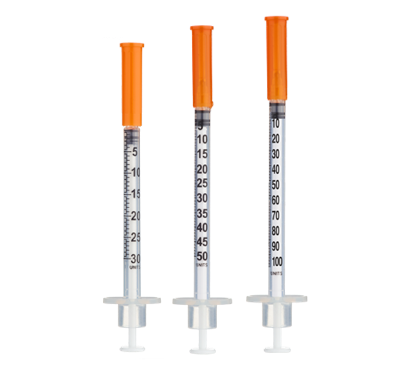
Pre-filled with this protocol’s recommended BAC water and documented starting dose — edit any field to run your own numbers. Reconstitution math only — not dosing advice. U-100 syringe: 100 units = 1 mL. Full reconstitution guide → · Advanced calculator →Mix & measure GDF-8 / Myostatin · 1 mg
Dosing & Reconstitution Guide
GDF-8 has no dose for humans, and this page does not supply one — not because the figure is unknown, but because there is no purpose for which administering myostatin to a person would be beneficial. The compound is a laboratory reference protein. The reconstitution figures below are the arithmetic of turning a lyophilized vial into a known concentration for laboratory measurement.
Standard / Gradual Approach
In research use, recombinant GDF-8 is a reference ligand in cell-based work, not something administered to an organism for benefit. It is applied to cultured cells at concentrations in the nanogram-per-millilitre range to measure receptor binding, activate downstream signalling in reporter assays, or provide the target against which candidate inhibitors are screened. Reconstituted at 1 mg/mL, a single 1 mg vial is a stock of 1,000,000 ng/mL — enough reagent for a very large number of culture experiments after dilution. That arithmetic alone shows what the vial is scaled for.
The animal literature makes the direction of effect unambiguous. Zimmers and colleagues showed that myostatin circulates in adult mice in a latent form that can be activated, and that systemic overexpression of myostatin in adult mice induced profound muscle and fat loss analogous to human cachexia syndromes[2]. The authors framed myostatin as a useful pharmacological target — something to block in wasting conditions — not as an agent to give. That is the entire clinical logic of the field: every muscle-pathway drug built on this biology, from follistatin to soluble ActRIIB traps, works by removing myostatin[3][4].
So the honest statement is not “the dose is unknown” but “there is no dose, because there is no beneficial use.” Anyone who has purchased a “GDF-8” vial in the belief that it is a muscle-building compound has the biology inverted, and the reconstitution table below should be read only as a laboratory concentration reference — never as a schedule for administration.
| Reference amount | Volume at 1 mg/mL | U-100 units |
|---|---|---|
| 50 mcg | 0.05 mL | 5 units |
| 100 mcg | 0.10 mL | 10 units |
| 250 mcg | 0.25 mL | 25 units |
| 500 mcg | 0.50 mL | 50 units |
| 1 mg (whole vial) | 1.00 mL | 100 units |
Why GDF-8 / Myostatin draws research interest
These are the directions researchers and the peptide community most often explore GDF-8 / Myostatin for — so you know you’re in the right place. They describe what is being studied, not proven benefits, approved uses, or promised results.
Muscle mass regulation
GDF-8 IS myostatin, the brake on muscle growth — administering it does the opposite of what most buyers expect.
Myostatin inhibition
The compounds that increase muscle are its blockers — follistatin, ACE-031, the propeptide — not this ligand itself.
Laboratory reference reagent
The legitimate use: pure myostatin as a reference ligand for testing inhibitors in binding and reporter assays, at nanograms per millilitre.
Muscle wasting & cachexia
Studied because systemic myostatin in adult mice caused profound muscle and fat loss resembling human cachexia.
Evidence ranges from early laboratory work to clinical trials depending on the use — the sections below cover the actual data and sources.
Quickstart Highlights
GDF-8 — growth/differentiation factor 8 — is simply another name for myostatin. It is a TGF-β-family protein made by skeletal muscle that circulates in the blood and acts back on muscle to limit its growth[1][5]. It was identified in 1997 by disrupting the gene in mice: the knockout animals were markedly larger, with individual muscles weighing two to three times normal from a combination of more fibres and bigger fibres[1]. Cattle breeds with naturally inactivating myostatin mutations show the same “double-muscled” phenotype.
That history is the reason this page opens with a warning rather than a protocol. Because myostatin restrains muscle, an entire drug class — follistatin, soluble ActRIIB traps such as ACE-031, anti-myostatin antibodies — exists to block it. GDF-8 is the thing those drugs are designed to remove. Administering the protein itself is the pharmacological opposite of taking a myostatin inhibitor: when myostatin was raised systemically in adult mice, the animals developed profound muscle and fat loss resembling human cachexia[2]. GDF-8 is sold as a research-use-only laboratory reagent, and this page is an educational reference on what it is and how a lyophilized vial is reconstituted — not medical advice, and not a protocol to administer it.
The myostatin protein itself (GDF-8), a TGF-β-family ligand made by muscle that circulates and acts back on muscle to limit growth[1][5]. A laboratory reference protein, not a therapeutic.
It reduces muscle, it does not build it. Systemic elevation in adult mice caused profound muscle and fat loss resembling cachexia[2]. Myostatin inhibitors are what increase muscle.
1 mL bacteriostatic water per 1 mg vial → 1 mg/mL. A laboratory-handling reference only; this site provides no dose for administration.
Some vendors list a 1 mg vial as “GDF-8 (Myostatin Propeptide)”. The propeptide is the opposite molecule — it blocks myostatin[3]. The two are not interchangeable.
Reconstitution Steps
A research vial is lyophilized powder that must be reconstituted before it can be measured accurately. Using 1 mL for a 1 mg vial gives 1 mg/mL — a stock that is then diluted enormously for cell-culture work. This is a laboratory-handling step; it is not preparation for administering the compound.
- ▪Check what is actually in the vial first: confirm from the certificate of analysis whether the material is mature myostatin or the myostatin propeptide — these have opposite biological activity[3] and are sometimes sold under the same “GDF-8” name.
- ▪Sanitize: swab the vial stopper and the diluent stopper with fresh alcohol pads and let them air-dry.
- ▪Add 1 mL slowly: let the diluent run down the inside wall of the vial rather than directly onto the powder. This yields 1 mg/mL. Mature myostatin is a disulfide-linked dimer [3] — add the diluent gently.
- ▪Dissolve gently: let it stand, then swirl or roll the vial between your palms. Do not shake (shaking can denature a folded protein). Discard it if the solution stays cloudy or holds particles.
- ▪Refrigerate and aliquot: store at 2–8 °C for short-term use, protected from light. For laboratory work, small single-use aliquots avoid repeated freeze-thaw damage.
Supplies Needed
The generic reconstitution kit below is what a laboratory would use to bring a lyophilized vial into solution for measurement and storage. Listing it does not imply the compound should be injected — GDF-8 is a research reference protein whose biological action is to limit muscle growth, and there is no context in which administering it to a person is appropriate.


Protocol Overview
The practical picture for GDF-8 is unusually simple, and it is not a protocol. This is the myostatin protein itself, sold as a research reagent. In the laboratory it is reconstituted to a known concentration and diluted into culture medium as a reference ligand. There is no approved use, no human dose, and no scenario in which giving it to a person would be desirable — the protein’s established function is to restrain muscle growth[1][5].
What makes it scientifically important is precisely what makes it inappropriate to administer. Myostatin is one of the best-characterised regulators of tissue size in biology — a circulating, muscle-specific growth inhibitor, described in a recent review as a textbook example of a chalone[5]. Knock it out and muscles double or triple in weight[1]; block it with follistatin, its propeptide or a dominant-negative receptor and you reproduce that effect[3]; raise it in an adult animal and you get wasting[2]. Every arrow points the same way.
Dosing Protocol
The table is a concentration–volume reference only for a 1 mg vial reconstituted in 1 mL (→ 1 mg/mL). It converts an amount into a volume for laboratory measurement and dilution. It is not a dose recommendation. This site does not recommend administering GDF-8 in any amount — it is myostatin, and its biological action is to limit muscle growth.
Storage Instructions
Lyophilized vials are stable refrigerated and should be protected from light; follow the supplier’s handling guidance for the unreconstituted powder. Mature myostatin is a disulfide-linked dimer of C-terminal fragments[3], so correct folding matters for activity — a denatured preparation may be inert in an assay even if the mass is present.
After reconstitution, store at 2–8 °C and, for laboratory use, divide into small single-use aliquots rather than repeatedly freezing and thawing the whole stock. Discard any vial whose contents turn cloudy or particulate; aggregation is a common failure mode for recombinant proteins.
Important Notes
The points below are the ones that matter most for anyone encountering GDF-8, and the first is by far the most important.
- ▪GDF-8 is myostatin — it limits muscle, it does not build it: the protein was identified as a negative regulator of skeletal muscle growth[1][5], and systemic elevation in adult mice produced muscle and fat loss resembling cachexia[2]. Any framing of GDF-8 as a muscle-building compound is backwards.
- ▪The myostatin drugs work by blocking it: follistatin, the myostatin propeptide and soluble ActRIIB decoys all increase muscle by preventing myostatin from signalling[3]. GDF-8 is their target, not a member of their class.
- ▪“GDF-8” on a label is ambiguous: some vendors sell a 1 mg vial described as “GDF-8 (Myostatin Propeptide)”. The propeptide is the natural inhibitor that keeps myostatin latent[3][4] — the opposite pharmacology under the same name. Without a certificate of analysis identifying the fragment, the contents are genuinely uncertain.
- ▪It is a reagent, not a therapy: recombinant GDF-8 exists so that laboratories can study the pathway — receptor binding, reporter assays, inhibitor screening — at nanogram-per-millilitre culture concentrations. It has no approved use and no human dose.
- ▪Latency matters for interpretation: circulating myostatin is held inactive by its propeptide and requires proteolytic cleavage, by BMP-1/tolloid metalloproteinases among others, to become active[4]. The activity of any given preparation therefore depends on which form it contains and how it was produced.
- ▪Research vials are unverified: grey-market GDF-8 carries the usual research-chemical hazards of uncertain identity, purity and folding — compounded here by the propeptide/mature ambiguity and by the fact that the correctly identified product has no beneficial use in a person.
How This Works
Myostatin was discovered in 1997 by screening for new TGF-β-superfamily members. The gene, GDF-8, proved to be expressed almost exclusively in skeletal muscle — in the myotome of developing somites in the embryo, and throughout the musculature in adults. When the gene was disrupted in mice, the animals were significantly larger, with individual muscles weighing two to three times those of wild-type animals through a combination of hyperplasia (more fibres) and hypertrophy (bigger fibres)[1]. The conclusion was immediate and has never been overturned: GDF-8 functions as a negative regulator of skeletal muscle growth.
The molecular detail explains both how it works and why vial labelling matters. Myostatin is synthesised as a precursor and processed into an N-terminal propeptide and a disulfide-linked dimer of C-terminal fragments. The two remain associated in a non-covalent latent complex that circulates in blood in an inactive state[2][3]. Once liberated — in vivo through cleavage of the propeptide by BMP-1/tolloid metalloproteinases[4] — the mature dimer binds the activin type II receptors, chiefly ActRIIB and to a lesser extent ActRIIA, to signal muscle-growth suppression[3]. Follistatin and, at higher concentrations, the propeptide itself both block that binding; transgenic mice overexpressing follistatin, the propeptide or a dominant-negative ActRIIB in muscle show dramatic muscle increases comparable to myostatin knockouts[3]. A cleavage-resistant propeptide injected into adult mice likewise increased muscle mass[4].
Put together, this is a closed loop: myostatin is made by muscle, circulates, and acts back on muscle to limit its size — the defining behaviour of what a recent review calls a chalone, a circulating tissue-specific growth inhibitor that sets organ size by negative feedback[5]. Every intervention that removes myostatin increases muscle; the one experiment that added it systemically to adult animals produced muscle and fat wasting[2]. There is no reading of this literature in which giving a person GDF-8 is a way to build muscle.
Lifestyle Factors
There is no “stacking” or training context for GDF-8, and constructing one would be actively misleading. It is not a supplement, not a recovery aid and not an anabolic compound — it is the muscle-limiting factor that anabolic myostatin-pathway drugs are designed to neutralise[1][3]. Anyone who bought it alongside follistatin or an ActRIIB trap expecting a complementary effect has bought the antagonist of their own stack.
The responsible context is educational: understand the myostatin pathway, recognise why blocking it has been an attractive drug target for three decades, and note that the two most advanced attempts at blockade in this catalogue — ACE-031, whose Duchenne trial was halted for safety, and follistatin, which remains preclinical for this purpose — illustrate how difficult the pathway has been to drug safely. For muscle loss from ageing or illness, resistance training, adequate protein intake and medical evaluation of the underlying cause are the evidence-based routes.
Potential Benefits & Side Effects
Evidence tier: extensive and well-replicated animal and molecular biology — all of it identifying GDF-8 as a muscle-limiting factor. The findings below describe what the protein does; none of them is a benefit to be sought from administering it. GDF-8 has no approved use, no human dose, and no beneficial application in a person.
Reported Effects
- ▪Loss of GDF-8 dramatically increases muscle: knockout mice show a large, widespread increase in skeletal muscle mass, with individual muscles weighing 2–3 times normal through both hyperplasia and hypertrophy[1]. This is the effect of removing the protein.
- ▪Adding it systemically causes wasting: systemic overexpression of myostatin in adult mice induced profound muscle and fat loss analogous to human cachexia syndromes[2]. This is the effect of adding the protein, and it is the finding that matters most here.
- ▪Blocking it reproduces the knockout: transgenic overexpression of follistatin, the myostatin propeptide, or a dominant-negative ActRIIB in skeletal muscle produced muscle increases comparable to myostatin knockout mice[3].
- ▪It circulates in a latent form: myostatin is present in adult blood as an inactive complex with its propeptide, activated by acid in vitro and by BMP-1/tolloid metalloproteinases in vivo[2][4].
- ▪It signals through activin type II receptors: the mature C-terminal dimer binds ActRIIB and, less strongly, ActRIIA — the binding event that follistatin and soluble-receptor drugs are built to prevent[3].
- ▪What is not established, and never will be from this literature: any benefit from administering GDF-8 to a human being. The consistent finding across three decades is that muscle benefit comes from blocking it.
Common Side Effects
- ▪Muscle and fat loss is the expected pharmacological effect: the direct experiment — systemically raising myostatin in adult mice — produced cachexia-like wasting[2]. This is not an idiosyncratic adverse reaction; it is what the protein does.
- ▪Uncharacterised human safety: GDF-8 has never been administered to humans as a therapeutic and has no clinical safety data of any kind. Nothing about its human dose-response, immunogenicity or systemic effects is known.
- ▪Identity ambiguity is itself a risk: a vial labelled “GDF-8” may contain the mature ligand or the propeptide, which have opposite activity[3]. Neither is appropriate to administer, but the uncertainty means the buyer does not know which pharmacology they hold.
- ▪Protein-specific hazards: as a recombinant disulfide-linked protein it can aggregate or misfold if mishandled, and could in principle provoke immune responses — risks compounded by unverified grey-market material.
- ▪Unverified purity and endotoxin status: research-grade recombinant proteins vary widely in purity and endotoxin content, and grey-market vials carry no assurance on either.
Injection Technique
The section below documents the generic reconstitution-and-handling workflow used across this site for completeness. It is not a recommendation to inject GDF-8, and this page recommends against it explicitly. GDF-8 is myostatin — the protein that limits muscle growth — and the one experiment that raised it systemically in adult animals produced muscle and fat wasting[2]. It should be handled only as a laboratory reagent, in appropriate laboratory settings.
Pre-Injection Preparation
- ▪Understand there is no endorsed use: this protein is not intended for administration to people. The steps here describe generic protein handling for laboratory work, not a treatment, and the compound’s established action is to suppress muscle growth.
- ▪Identify the fragment: confirm from the certificate of analysis whether the vial contains mature myostatin or the propeptide[3]. They are sold under the same name and have opposite activity.
- ▪Confirm the concentration: the reference volumes assume 1 mg/mL (1 mg in 1 mL). For cell-culture work this stock is diluted by orders of magnitude to nanogram-per-millilitre working concentrations.
Injection Procedure
- ▪Laboratory handling only: recombinant GDF-8 belongs in a controlled research setting. It is applied to cultured cells after dilution, not administered to an organism for benefit.
- ▪Measure by concentration: a research amount is the intended microgram figure converted at 1 mg/mL — for example 0.10 mL (10 units) for 100 mcg — used for accurate laboratory measurement and dilution, not administration.
- ▪Do not self-administer: there is no amount of myostatin that is a reasonable thing to inject into a person. The expected effect is the opposite of the one most buyers are seeking.
Post-Injection Care
- ▪Store securely: refrigerate the reconstituted solution at 2–8 °C, protect it from light, and aliquot for laboratory use rather than repeatedly freezing and thawing.
- ▪Dispose responsibly: discard unused or degraded protein solution safely.
- ▪Seek medical care for muscle loss: sarcopenia, cachexia and muscle-wasting disorders require medical evaluation of the underlying cause — and, notably, the therapeutic strategy under investigation for them is to block myostatin, not to supply it[2].
Recommended Source
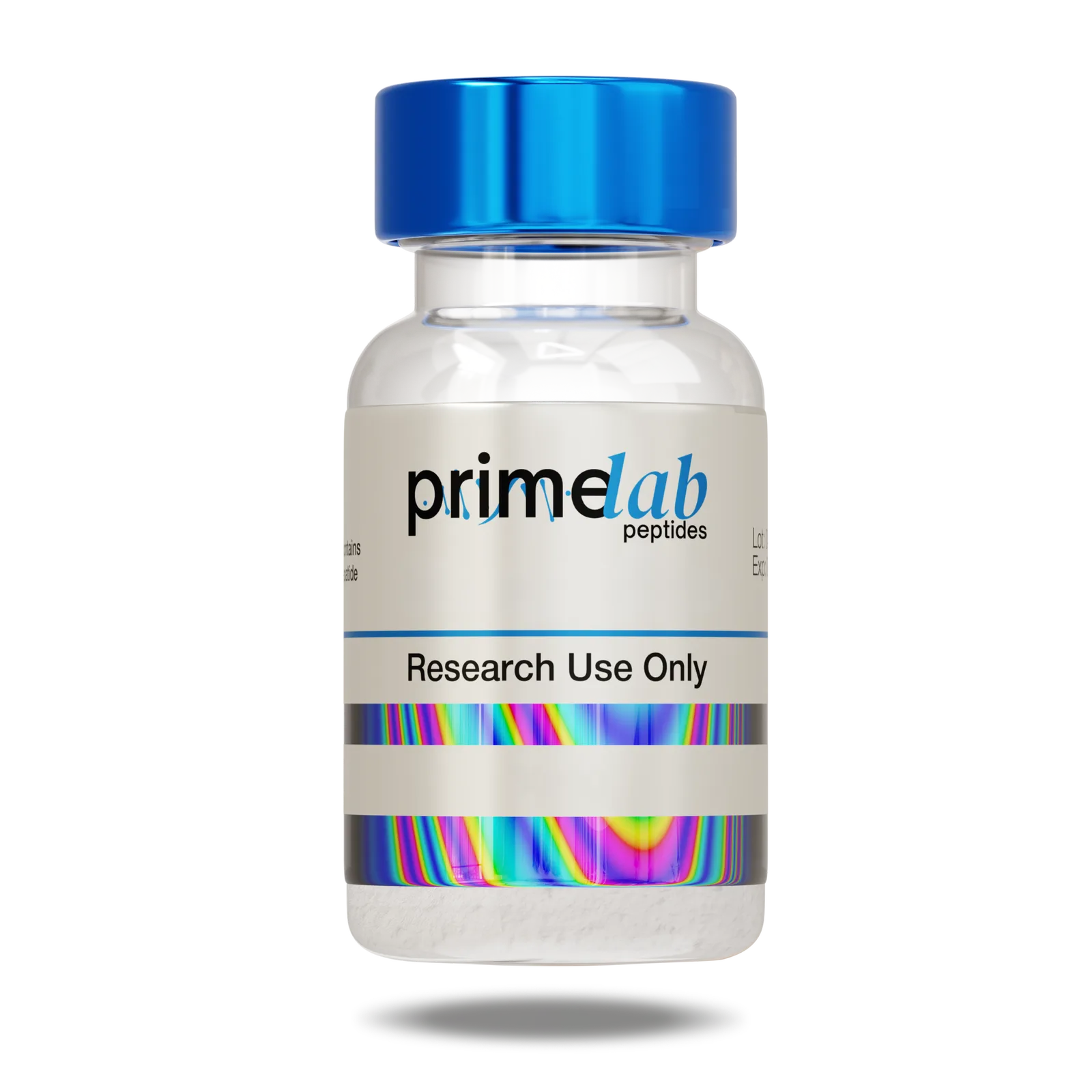
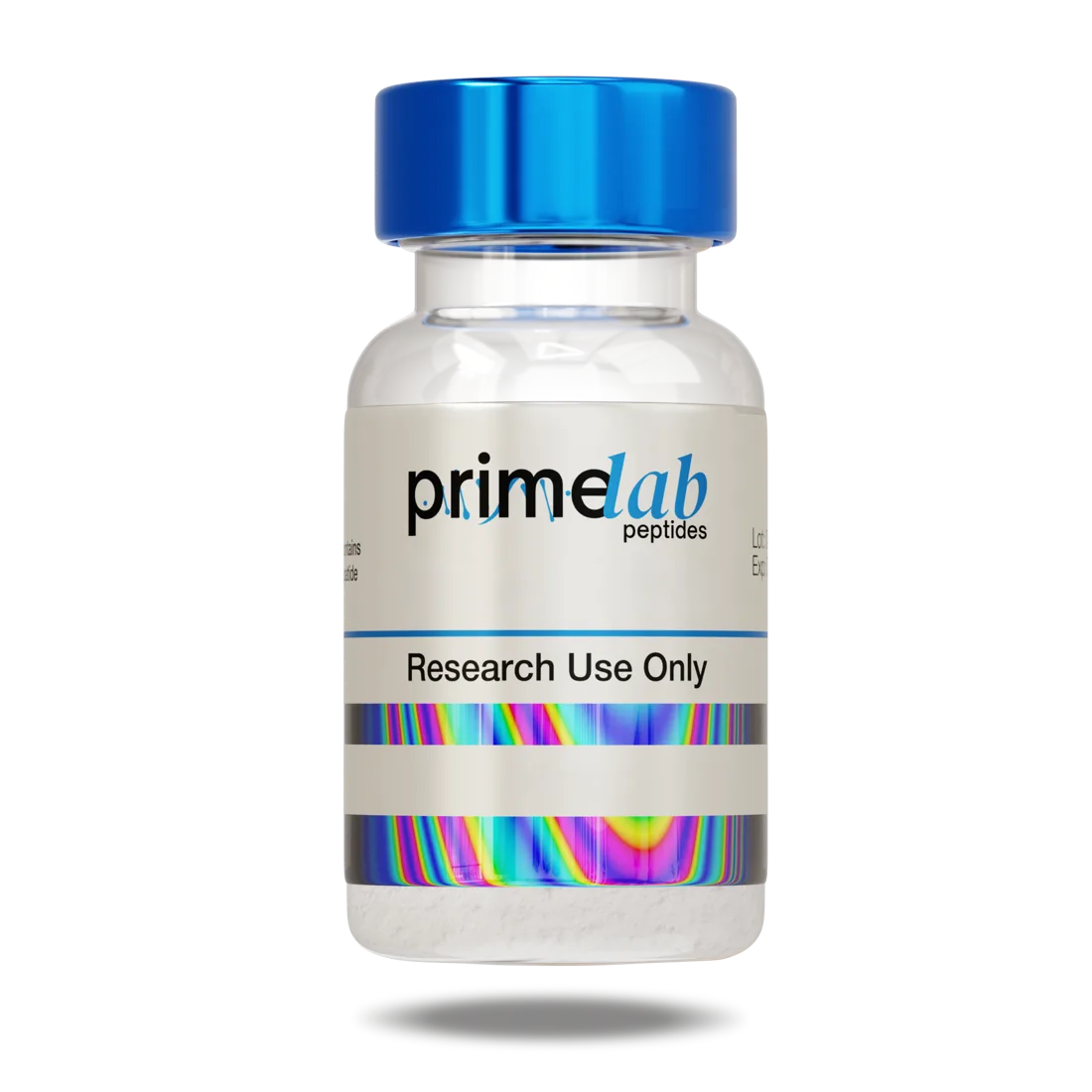
For high-purity research peptides, we point researchers to Prime Lab Peptides for GDF-8 (Myostatin) (1 mg Vial).
Why Prime Lab Peptides?
- ▪Top-rated on Trustpilot: Independently reviewed as the highest-rated peptide lab on Trustpilot — making it the best current source in the USA.
- ▪Third-party tested: Every batch ships with a Certificate of Analysis (COA) confirming purity and composition.
- ▪Consistent quality: ISO-aligned manufacturing and handling keep product integrity reliable batch to batch.
- ▪Cold-chain integrity: Temperature-controlled shipping and storage across the whole fulfilment chain.
- ▪Research-grade purity: Fit for educational and research use that demands high-quality peptides.
Note: Product availability and specifications subject to change. Verify current product details on supplier website.
References
- 1
Nature (1997) — Regulation of skeletal muscle mass in mice by a new TGF-beta superfamily memberMcPherron, Lawler & Lee (PMID 9139826). The paper that identified GDF-8 (myostatin). Expressed specifically in developing and adult skeletal muscle; GDF-8 null mice were significantly larger with a widespread increase in muscle mass, individual muscles weighing 2–3 times wild-type through both hyperplasia and hypertrophy — establishing GDF-8 as a negative regulator of skeletal muscle growth. DOI: 10.1038/387083a0.
- 2
Science (2002) — Induction of cachexia in mice by systemically administered myostatinZimmers, Davies, Koniaris, Haynes, Esquela, Tomkinson, McPherron, Wolfman & Lee (PMID 12029139). The decisive experiment on direction of effect: myostatin circulates in adult mouse blood in a latent form activatable by acid, and systemic overexpression in adult mice induced profound muscle and fat loss analogous to human cachexia syndromes. The authors position myostatin as a target to be blocked in wasting states, not an agent to administer. DOI: 10.1126/science.1069525.
- 3
PNAS (2001) — Regulation of myostatin activity and muscle growthLee & McPherron (PMID 11459935). Purified myostatin consists of a non-covalent complex of the N-terminal propeptide and a disulfide-linked dimer of C-terminal fragments; the mature dimer binds ActRIIB and, less strongly, ActRIIA, and this binding is inhibited by follistatin and, at higher concentrations, by the propeptide. Transgenic mice overexpressing the propeptide, follistatin or a dominant-negative ActRIIB in muscle showed dramatic muscle increases comparable to myostatin knockouts — the basis for the propeptide being an inhibitor, not an agonist. DOI: 10.1073/pnas.151270098.
- 4
PNAS (2003) — Activation of latent myostatin by the BMP-1/tolloid family of metalloproteinasesWolfman, McPherron, Pappano, Davies, Song, Tomkinson, Wright, Zhao, Sebald, Greenspan & Lee (PMID 14671324). BMP-1/tolloid metalloproteinases cleave the myostatin propeptide within the latent complex and thereby activate myostatin; a cleavage-resistant propeptide mutant caused significant increases in muscle mass when injected into adult mice. Establishes how latency is maintained and released. DOI: 10.1073/pnas.2534946100.
- 5
Annual Review of Physiology (2022) — Myostatin: a skeletal muscle chaloneLee (PMID 36266260). A 25-year retrospective by the scientist who discovered myostatin: it is made by skeletal myofibres, circulates in the blood, and acts back on myofibres to limit growth — the defining properties of a chalone, a circulating tissue-specific growth inhibitor that regulates organ size by negative feedback. DOI: 10.1146/annurev-physiol-012422-112116.
GDF-8 / Myostatin — frequently asked questions
How do I reconstitute a 1 mg vial of GDF-8 / Myostatin?
Wipe the stopper with an alcohol swab, then inject your bacteriostatic water slowly down the inside wall of the vial. Let it sit and gently swirl until dissolved — never shake. Store the mixed vial in the refrigerator and draw doses with an insulin syringe. Use the calculator above to turn any dose into syringe units.
How much bacteriostatic water should I add to GDF-8 / Myostatin?
There is no single correct amount — more water simply spreads the same 1 mg of peptide across a larger volume, which makes small doses easier to measure accurately. 1 to 3 mL per vial is typical. Enter your chosen volume in the calculator above to see the resulting concentration and syringe units.
What do the "units" on an insulin syringe mean?
On a U-100 insulin syringe, 100 units equal 1 mL, so 1 unit equals 0.01 mL. The calculator above converts your draw volume into these units automatically so you can measure without doing the math by hand.
How should I store GDF-8 / Myostatin after mixing?
Keep the reconstituted vial refrigerated at roughly 2 to 8 degrees Celsius, away from light, and avoid freezing it. Reconstituted research peptides are generally used within a few weeks. Always follow the specific guidance supplied with your product.
How many doses does a 1 mg vial of GDF-8 / Myostatin provide?
Divide the vial strength of 1 mg by the amount you use per injection. The calculator above reports this as "doses per vial" the moment you enter a dose.
Is GDF-8 / Myostatin approved for human use?
No. GDF-8 / Myostatin is sold strictly for laboratory and research purposes and is not approved by the FDA or other regulators for human use. Everything on this page is research information, not medical advice — consult a licensed healthcare professional before any use.
New protocols & dosing updates
Reconstitution charts, new peptide protocols and safety updates — straight to your inbox. No spam, unsubscribe anytime.