

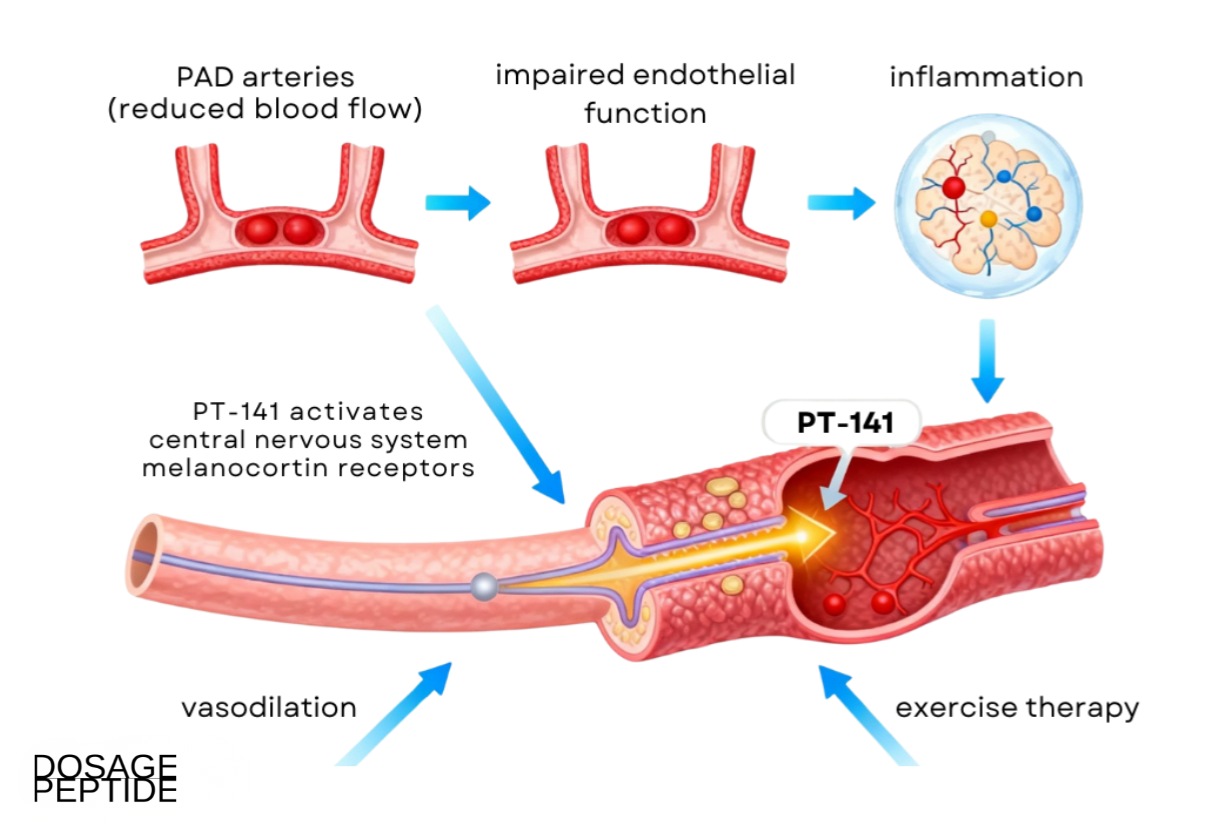
As reported in a Yale University study[1], peripheral artery disease (PAD) affects over 230 million adults worldwide, causing arterial blockages that restrict blood flow to the limbs. Interestingly, PT-141 (bremelanotide), a drug originally developed for sexual dysfunction, may enhance circulation by activating melanocortin receptors, potentially improving endothelial and neurovascular function in PAD patients. Ongoing investigations continue to explore its therapeutic potential for restoring healthy vascular performance.
At Dosage Peptide, we support peptide research through scientifically focused discussions involving compounds such as PT-141 and their potential relevance in vascular signaling, neuroendocrine pathways, hormonal regulation, and recovery-related mechanisms. Our research-driven approach emphasizes formulation consistency, purity standards, and evidence-based scientific exploration to support controlled laboratory investigations and ongoing advancements in peptide and biomedical research.
What Is Peripheral Artery Disease (PAD) and Why Does Blood Flow Matter?
Peripheral artery disease (PAD) restricts blood flow by narrowing arteries that carry oxygen-rich blood to the limbs. According to a review in MDPI’s Journal[2] of Vascular Diseases, this atherosclerotic narrowing limits muscle perfusion, causing ischemia. Consequently, reduced circulation heightens the risk of ulcers, tissue damage, and functional decline.
Several key factors clearly define the impact of PAD:
- Reduced blood flow causes leg pain during walking (claudication).
- A low ankle-brachial index (ABI < 0.9) indicates poor circulation.
- Endothelial dysfunction reduces nitric oxide, leading to vessel constriction.
Ultimately, PAD disrupts normal vascular function and slows tissue repair. By understanding how agents like PT-141 affect vascular signaling, researchers can explore innovative, non-invasive ways to restore healthy blood flow and improve overall limb perfusion.
How Does Impaired Circulation Contribute to PAD Symptoms and Disease Progression?
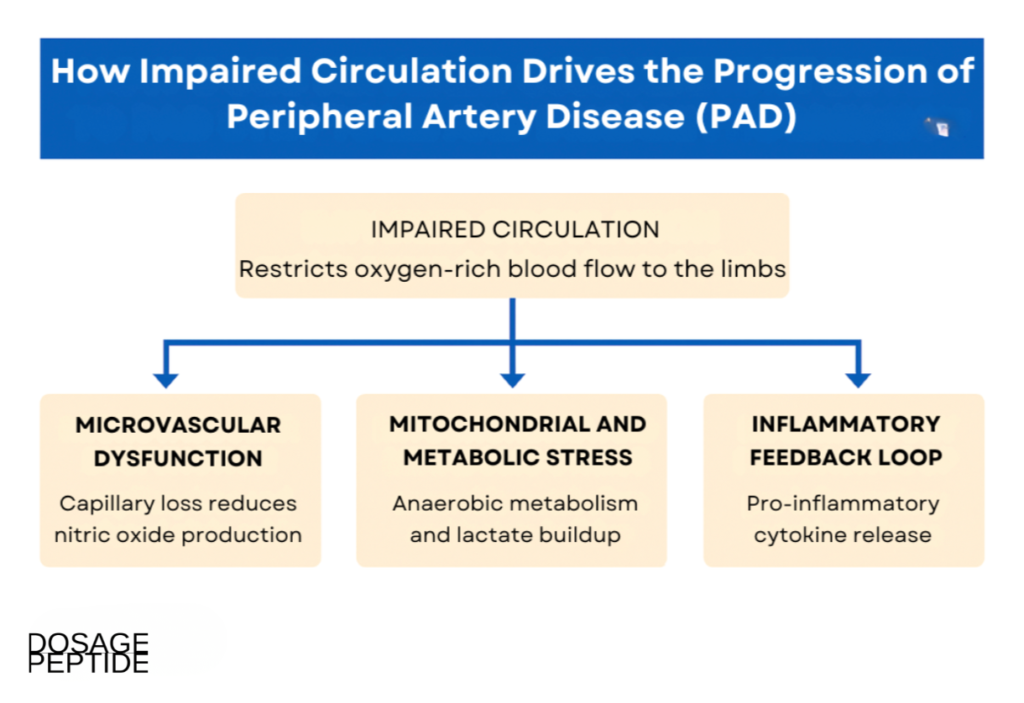
Impaired circulation contributes to PAD symptoms and disease progression by limiting the flow of oxygen-rich blood to the limbs. Research from Harvard University[3] explains that arterial blockages reduce oxygen delivery to muscles, leading to ischemia and chronic pain. Consequently, this poor circulation slows tissue repair and causes a gradual decline in limb function over time.
This poor circulation triggers several destructive biological responses:
1. Microvascular Dysfunction
Microvascular dysfunction limits oxygen delivery to muscles by reducing capillary density and nitric oxide production. This prevents proper vessel dilation, worsening circulation, and accelerating vascular decline in PAD patients.
2. Mitochondrial and Metabolic Stress
With reduced oxygen, muscles rely on anaerobic metabolism, which produces excess lactate and contributes to fatigue. Over time, mitochondrial efficiency drops, making even simple movements painful and exhausting for PAD patients.
3. Inflammatory Feedback Loop
Ischemic tissues release inflammatory cytokines that further injure blood vessels and destabilize plaques. This ongoing inflammation creates a vicious cycle that amplifies ischemia and drives disease progression.
How Does PT-141 Compare to Exercise or Pharmacological Therapies for PAD?
PT-141 compares to exercise and pharmacological therapies for PAD by primarily acting on the central nervous system through melanocortin receptor stimulation rather than directly targeting blood vessels. Interestingly, research from Northwestern University’s Feinberg School of Medicine[4] found that high-intensity exercise, causing ischemic leg pain, can enhance walking ability in PAD patients, emphasizing the importance of neurological motivation. Therefore, PT-141’s central mechanism may help improve consistency in physical activity, indirectly supporting circulation and overall vascular health.
Moreover, findings from the Asian Journal of Medicine and Health indicate[5] that exercise improves endothelial function and nitric oxide production, enhancing limb perfusion and endurance. Similarly, pharmacological treatments such as cilostazol and pentoxifylline improve vascular performance by inducing vasodilation. When combined with PT-141’s neurological regulation of vascular tone, these approaches could offer a more comprehensive and effective PAD management strategy.
Can PT-141’s Mechanism Support Blood Flow Restoration in PAD Patients?
Yes, PT-141 may support blood flow restoration in PAD patients through its combined effects on central and vascular pathways. Moreover, it enhances neuroendocrine signaling that regulates vascular tone and boosts nitric oxide production. Consequently, research from the University of Groningen highlights[6] its potential for advancing vascular health and PAD therapy.
Several biological mechanisms may explain PT-141’s vascular potential:
- Central Modulation of Autonomic Tone: PT-141 activates hypothalamic neurons that regulate vascular control, shifting autonomic balance toward vasodilation. This improved signaling could enhance microcirculation and oxygen delivery in limbs affected by PAD.
- Dopaminergic and Oxytocinergic Signaling: By boosting dopamine and oxytocin release, PT-141 promotes vasodilation and nitric oxide production, helping maintain blood pressure balance and improve overall vascular response.
- Endothelial Function Enhancement: Preclinical studies have shown that melanocortin agonists, such as PT-141, increase nitric oxide availability and reduce inflammation, thereby improving endothelial health and supporting blood flow restoration in ischemic tissues.
Exploring PT-141 Research in Circulation and Vascular Function with Dosage Peptide
Peripheral artery disease can silently disrupt mobility and quality of life. Patients struggle with constant leg pain, fatigue, and slow wound healing due to restricted blood flow. Despite medications and exercise therapies, many still face limited improvement and frustration with inconsistent results, leading to reduced confidence in conventional treatment options.
At Dosage Peptide, we support peptide research through scientifically focused discussions involving PT-141 and its potential relevance in vascular signaling, endothelial function, and neuroendocrine pathway research. Our research-driven approach emphasizes formulation consistency, purity standards, and evidence-based scientific exploration to support accurate, reproducible laboratory investigations and ongoing advancements in peptide and biomedical research.
FAQs
How does PT-141 help improve vascular function?
PT-141 helps improve vascular function by activating central melanocortin receptors that boost nitric oxide production, enhancing vascular tone and oxygen delivery. This action supports endothelial health and promotes vascular repair in PAD research.
What is PT-141’s role in managing PAD symptoms?
PT-141 manages PAD symptoms by acting through the central nervous system to boost motivation and physical activity. This neurological effect indirectly improves blood flow, complementing traditional therapies for better symptom control and vascular support.
In what ways does PT-141 differ from conventional PAD therapies?
PT-141 differs from conventional PAD therapies by targeting brain pathways that regulate vascular tone, rather than directly dilating blood vessels. This central mechanism offers a gentler, complementary approach to enhancing circulation and vascular health.
Can PT-141 increase nitric oxide levels in blood vessels?
PT-141 increases nitric oxide levels by activating melanocortin receptors, causing blood vessel relaxation and improved microcirculation. This enhanced oxygen delivery supports vascular recovery, positioning PT-141 as a promising peptide for endothelial health research.
References
- Yale School of Medicine. (2023, September 8). Peripheral artery disease is poorly understood, and Yale researchers are striving for answers. Yale School of Medicine. https://medicine.yale.edu/news-article/peripheral-artery-disease-is-poorly-understood-and-yale-researchers-are-striving-for-answers/
- Hayden, M. R. (2025). Peripheral artery disease: Atherosclerosis, decreased nitric oxide, and vascular arterial stiffening. Journal of Vascular Diseases, 4(2), 21. https://doi.org/10.3390/jvd4020021
- Harvard Health Publishing. (2025, July 1). Peripheral artery disease: An update. Harvard Health Publishing. https://www.health.harvard.edu/heart-health/peripheral-artery-disease-an-update/ (health.harvard.edu)
- Northwestern University Feinberg School of Medicine. (2021, April 7). No pain, no gain in exercise for peripheral artery disease. Northwestern Now. https://news.northwestern.edu/stories/2021/04/no-pain-no-gain-in-exercise-for-peripheral-artery-disease/ (news.northwestern.edu)
- Suthar, J., Shah, B., & Ranjan, R. (2022, September 3). A combined treatment effect of cilostazol and pentoxifylline in the treatment of peripheral vascular disease. Asian Journal of Medicine and Health, 20(11), 74–80. https://doi.org/10.9734/ajmah/2022/v20i1130528
- Morsink, R. E. J. (2023). Exploring the role of endothelial dysfunction in peripheral artery disease [Doctoral dissertation, University of Groningen]. University of Groningen Research Portal. https://pure.rug.nl/ws/portalfiles/portal/259626797/Complete_thesis.pdf