

Every year, over 18.6 million people worldwide[1] are affected by diabetic foot ulcers (DFUs). Moreover, in the United States alone, 1.6 million individuals struggle with this serious complication of diabetes. These ulcers not only cause chronic pain and reduced mobility but also account for nearly 80% of diabetes-related lower-limb amputations. Therefore, emerging therapies like AOD 9604, with its regenerative potential, offer renewed hope for improved DFU outcomes.
At Dosage Peptide, we are committed to advancing peptide research through scientifically focused discussions involving compounds such as AOD9604 and their potential relevance in metabolic regulation, tissue repair, and cellular signaling pathways. Our research-driven approach emphasizes purity standards, formulation consistency, and evidence-based scientific exploration to support experimental studies and contribute to credible advancements within peptide and biomedical research.
What Is AOD-9604 and How Does It Work at the Cellular Level?
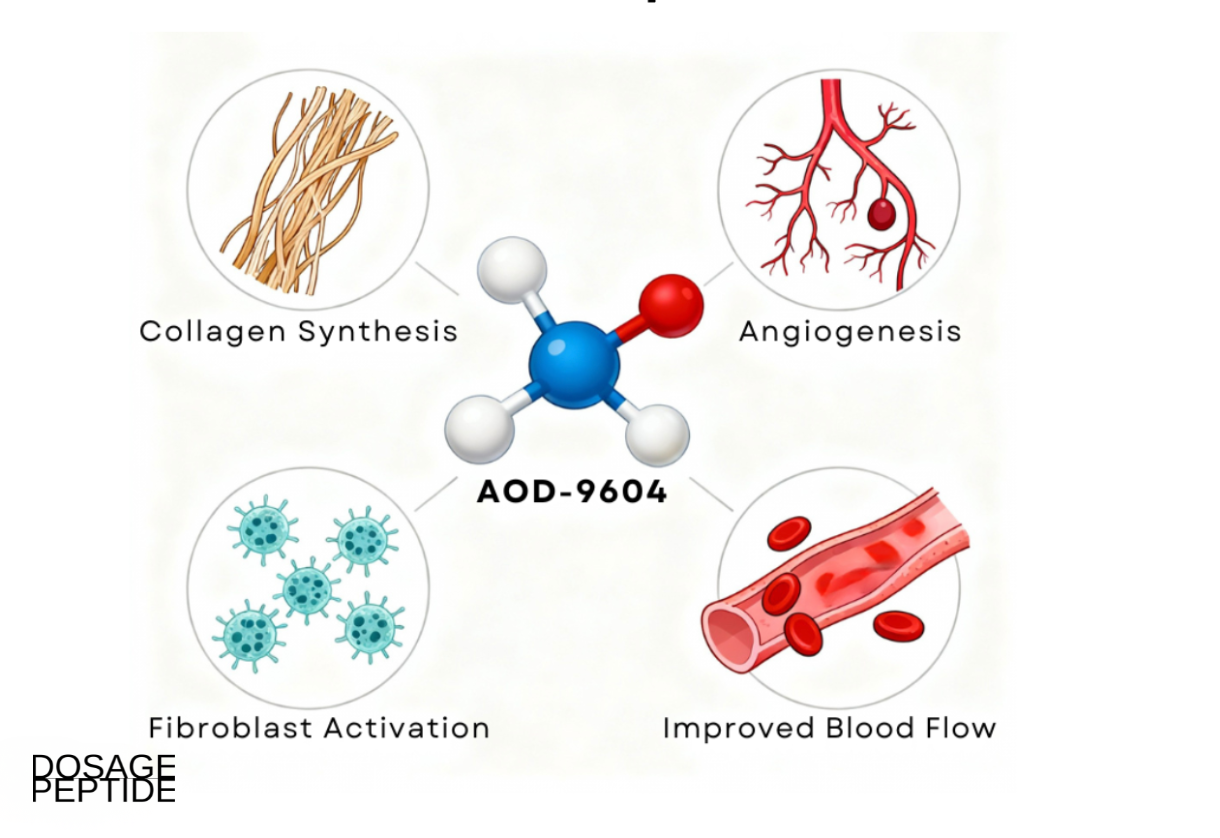
AOD-9604 is a synthetic C-terminal fragment of human growth hormone (176–191) that has been explored for its influence on lipid oxidation and cellular metabolism in experimental models. Moreover, research from Monash University[2] reveals its activation of lipolytic pathways independent of IGF-1 activity, thereby highlighting its distinct and targeted metabolic signaling profile.
At the cellular level, its actions include:
- Activates AMP-activated protein kinase (AMPK), improving cellular energy regulation in lab environments.
- Promotes fibroblast migration, a mechanism relevant to simulated tissue repair.
- Modulates extracellular matrix (ECM) remodeling, enhancing collagen-related protein synthesis in vitro.
Overall, current research suggests that the biological activities of AOD-9604 are currently limited to experimental models. Its mechanisms are being explored for understanding cellular metabolism, not for therapeutic or clinical purposes.
How Does the Wound Healing Process Fail in Diabetes?
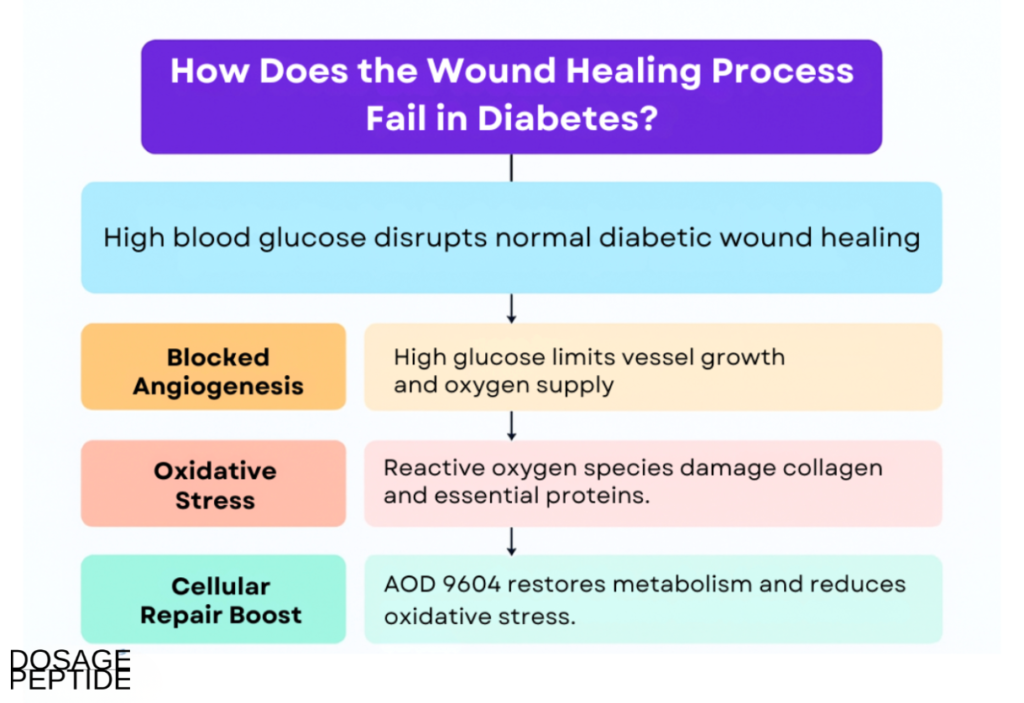
Wound healing often fails in diabetes because persistent high blood glucose disrupts standard repair mechanisms. As a result, angiogenesis and fibroblast activity become impaired, reducing oxygen supply and collagen production. According to research summarized by PubMed[3], this imbalance delays wound closure and increases susceptibility to chronic infection.
Here’s what drives this healing resistance:
1. Blocked Angiogenesis
High glucose levels restrict new blood vessel growth, thereby reducing the oxygen and nutrient supply to the wound site. As a result, tissue regeneration slows, and healing becomes chronically delayed.
2. Oxidative Stress
Excess reactive oxygen species (ROS) damage collagen and cellular proteins. This oxidative imbalance weakens structural repair and traps wounds in a persistent inflammatory and non-healing phase.
3. Cellular Repair Boost
Regenerative peptides, such as AOD 9604, help restore metabolic balance and reduce oxidative stress in diabetic wounds. They also reactivate fibroblast activity, promoting faster wound closure and healthier tissue regeneration.
Is There Evidence That AOD-9604 Could Support Diabetic Wound Healing?
Yes, emerging scientific evidence indicates that AOD 9604 may significantly support diabetic wound healing. It promotes collagen deposition, angiogenesis, and tissue integration, leading to faster epithelialization. According to research published in Hormone Research[4] (Karger), AOD-9604 demonstrated measurable activity in regulating lipid metabolism. Moreover, it promoted cellular signaling independent of IGF-1, suggesting its potential relevance in experimental models focused on metabolic regulation and tissue repair processes.
Further preclinical findings highlight that AOD-9604 may enhance collagen synthesis, fibroblast activity, and vascular development under controlled research conditions. Moreover, these outcomes provide valuable insight into how peptide signaling could intersect with wound-healing mechanisms impaired by metabolic dysfunction. However, all findings remain within research settings, and AOD-9604 continues to be studied solely for scientific exploration, not for clinical or therapeutic application.
How Does AOD-9604 Compare with Other Therapeutic Peptides for DFU Repair?
AOD-9604 differs from other therapeutic peptides for diabetic foot ulcer (DFU) repair by exhibiting a dual research potential in metabolic and regenerative pathways. According to the Journal of Endocrinology and Metabolism[5], it activates lipid metabolism mechanisms independently of IGF-1 or insulin signaling, thereby improving cellular energy efficiency, collagen synthesis, and tissue remodeling under controlled experimental conditions.
Here’s how it stands against other leading peptides:
- AOD 9604: Offers both metabolic and regenerative advantages by improving lipid metabolism, activating AMPK pathways, and stimulating fibroblast and ECM synthesis for optimal wound healing.
- BPC 157: gut-derived peptide known for its powerful regenerative effects. It reduces inflammation, accelerates angiogenesis, and improves microcirculation, allowing faster tendon and soft tissue repair through efficient growth factor modulation and cellular recovery.
- GHK Cu: A skin-focused peptide that boosts collagen, elastin, and capillary formation, leading to improved skin texture, oxygen delivery, and structural tissue resilience.
Exploring AOD-9604 Research in Diabetic Wound Healing and Tissue Repair with Dosage Peptide
Chronic diabetic wounds are a key research concern because impaired circulation, inflammation, and reduced cellular regeneration hinder recovery. Consequently, these wounds heal slowly and face higher infection risks, creating major clinical and economic challenges. Therefore, researchers are exploring peptide-mediated molecular pathways to better understand and improve tissue repair mechanisms in diabetic conditions.
At Dosage Peptide, we are committed to supporting peptide research through scientifically focused discussions involving compounds such as AOD-9604 and their potential relevance in metabolic activity, angiogenesis, collagen synthesis, and tissue repair pathways. Our research-driven approach emphasizes purity standards, formulation consistency, and evidence-based scientific exploration to support controlled laboratory investigations and ongoing advancements in peptide science.
FAQs
Why is AOD-9604 Different?
AOD-9604 differs from other research peptides because it combines metabolic regulation with regenerative potential. According to experimental studies, it enhances energy utilization and collagen production without affecting IGF-1 or insulin pathways, offering distinct value for metabolic and tissue-repair research.
How Does AOD-9604 Function in Wound Research?
AOD-9604 functions by activating metabolic and regenerative pathways under laboratory conditions. Furthermore, it supports fibroblast activity and extracellular matrix formation, improving structural organization and oxygen flow in experimental wound models, thereby providing insights into cellular mechanisms behind diabetic tissue repair.
Is AOD-9604 Safe for Long-Term Study Use?
Yes, AOD-9604 has shown a strong safety profile in controlled research environments. Preclinical findings reveal no alteration in IGF-1 or insulin sensitivity, allowing its continued use in long-term metabolic and regenerative studies without hormonal disruption.
Can AOD-9604 Be Used in Diabetic Foot Ulcer Research?
Yes, AOD-9604 is studied for its potential influence on metabolic and cellular repair mechanisms related to diabetic foot ulcers. Moreover, it helps researchers explore oxidative stress modulation and tissue regeneration processes, though its use remains confined to non-clinical, experimental research.
References
- Armstrong, D. G., Tan, T.-W., Boulton, A. J. M., & Bus, S. A. (2023). Diabetic foot ulcers: A review. JAMA, 330(1), 62–75. https://doi.org/10.1001/jama.2023.10578
- Heffernan, M., Summers, R. J., Thorburn, A. W., Ogru, E., Gianello, R., Jiang, W.-J., & Ng, F. M. (2001). The effects of human GH and its lipolytic fragment (AOD9604) on lipid metabolism following chronic treatment in obese mice and β₃-AR knock-out mice. Endocrinology, 142(12), 5182–5189.
- Jeffcoate, W. J., Price, P., & Harding, K. G.; International Working Group on Wound Healing and Treatments for People with Diabetic Foot Ulcers. (2004). Wound healing and treatments for people with diabetic foot ulcers. Diabetes/Metabolism Research and Reviews, 20, S78–S89.
- Ng, F. M., Sun, J., Sharma, L., Libinaka, R., Jiang, W. J., & Gianello, R. (2000). Metabolic studies of a synthetic lipolytic domain (AOD9604) of human growth hormone. Hormone Research, 53(6), 274-278.
- Moré, M. I. & Kenley, D. (2014). Safety and metabolism of AOD9604, a novel nutraceutical ingredient for improved metabolic health. Journal of Endocrinology & Metabolism, 4 (1-2), 7-15.