

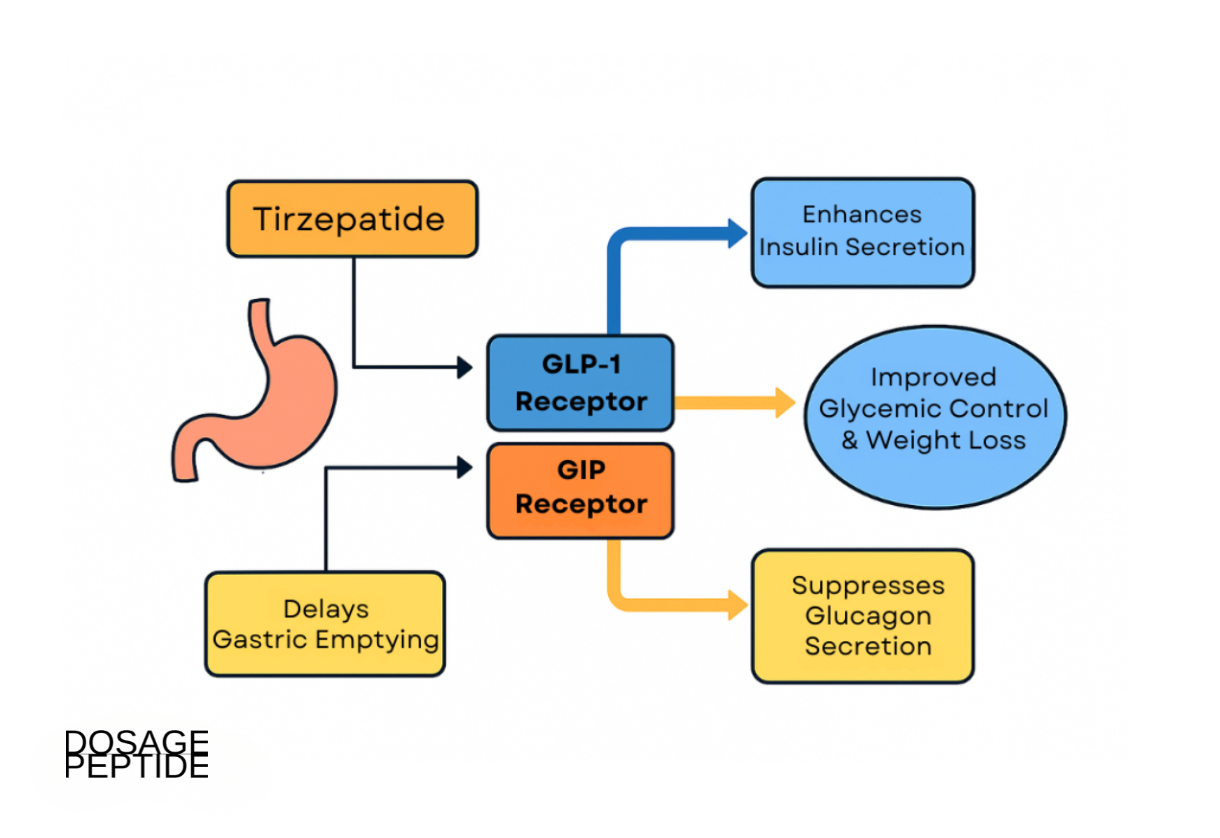
Nearly 90% of patients[1] on tirzepatide achieve clinically significant weight loss. Furthermore, this remarkable result positions tirzepatide as one of the most effective dual incretin peptides in metabolic research. Because it simultaneously activates GIP and GLP-1 receptors, it enhances insulin release and suppresses glucagon secretion. Consequently, tirzepatide drives profound improvements in blood glucose and body weight, setting a new benchmark for diabetes and obesity therapies.
At Dosage Peptide, we support metabolic and peptide research through access to scientific resources and information related to incretin-based compounds and emerging peptide therapies. Current research continues to investigate dual incretin pathway activity, glucose regulation, appetite signaling, weight management, and metabolic adaptation associated with compounds such as tirzepatide in experimental settings. Our platform helps researchers and healthcare professionals stay informed about evolving developments in peptide science, metabolic health research, and investigational therapeutic innovations.
What Are Incretin Hormones and Why Are They Important?
Incretin hormones[2] are natural gut peptides, primarily GLP-1 and GIP, that play a crucial role in regulating blood sugar levels. They enhance insulin secretion, suppress glucagon release, and act as glucose sensors that respond to food intake, helping the body efficiently maintain stable glucose levels and metabolic balance.
Key roles of incretins include:
- Stimulating pancreatic beta cells to release insulin
- Inhibiting glucagon secretion from alpha cells
- Improving insulin sensitivity in peripheral tissues
These combined effects lower postprandial glucose spikes and support metabolic homeostasis. Understanding incretin action is essential because tirzepatide’s innovation lies in modulating both simultaneously.
How Does Tirzepatide Target Both GIP and GLP-1 Receptors?
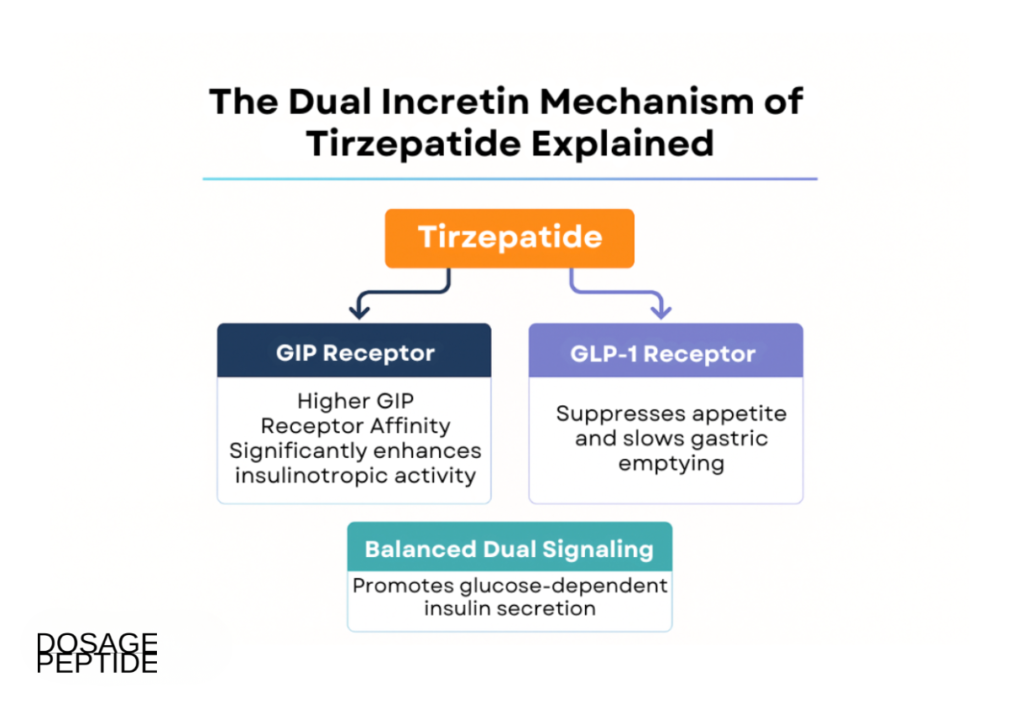
Tirzepatide targets both GIP and GLP-1 receptors as a dual agonist[3], producing a synergistic incretin effect that enhances insulin secretion, suppresses glucagon, and improves glucose metabolism. This dual action results in superior glycemic control, weight reduction, and overall metabolic health compared to single incretin therapies.
Mechanism highlights:
- Higher GIP Receptor Affinity: Tirzepatide binds more strongly to the GIP receptor, significantly enhancing insulinotropic activity and improving the body’s ability to utilize glucose efficiently.
- Potent GLP-1 Activation: It powerfully stimulates GLP-1 receptors to suppress appetite, slow gastric emptying, and increase satiety, aiding in weight management and metabolic balance.
- Balanced Dual Signaling: By harmonizing GIP and GLP-1 activity, tirzepatide promotes glucose-dependent insulin secretion, minimizes hypoglycemia risk, and maintains stable post-meal blood sugar levels.
In What Ways Does Tirzepatide Enhance Insulin Secretion and Inhibit Glucagon?
Tirzepatide enhances insulin secretion and inhibits glucagon release by directly stimulating pancreatic beta cells and suppressing alpha cell activity. This dual mechanism optimizes glucose control, reduces hepatic glucose production, and supports efficient glycemic balance[4] in the management of type 2 diabetes.
Through its precise hormonal coordination, tirzepatide delivers three powerful effects that redefine glucose regulation:
1. Enhanced Insulin Release
Tirzepatide boosts insulin secretion only when blood glucose levels are elevated, ensuring precise glucose regulation and significantly minimizing the risk of hypoglycemia in patients with type 2 diabetes.
2. Suppressed Glucagon Secretion
By inhibiting glucagon release from pancreatic alpha cells, tirzepatide effectively limits excessive hepatic glucose production, leading to improved fasting and postprandial glucose stability.
3. Improved Postprandial Glucose Metabolism
Tirzepatide enhances the body’s ability to manage glucose after meals, promoting smoother metabolic transitions and maintaining overall glycemic control through balanced incretin pathway activation.
What Does Clinical Research Reveal About Tirzepatide’s Safety and Long-Term Impacts?
Clinical research reveals[5] that tirzepatide is generally well-tolerated and maintains an excellent safety profile across diverse patient populations. Most reported side effects, such as nausea, diarrhea, and vomiting, are mild to moderate in intensity. Moreover, these gastrointestinal symptoms typically subside as treatment continues, demonstrating tirzepatide’s adaptability and tolerability in long-term use for patients with type 2 diabetes.
Additionally, long-term studies have shown[6] sustained improvements in insulin sensitivity, glycemic control, and metabolic health among patients treated with tirzepatide. No significant safety concerns or adverse cardiovascular events have been observed during extended follow-ups. Therefore, these findings strongly support tirzepatide’s role as a safe, effective, and enduring therapeutic option for chronic diabetes management.
Can Tirzepatide’s Incretin Effects Improve Weight Loss and Metabolic Health?
Yes, tirzepatide’s incretin effects can significantly enhance weight loss and metabolic health by dual activation of GIP and GLP-1 receptors, regulating appetite, energy balance, and glucose metabolism for comprehensive metabolic improvement.
Mechanisms promoting metabolic benefits:
- Delayed gastric emptying produces prolonged fullness
- Decreased calorie intake through central nervous system signaling
- Enhanced fat oxidation and improved insulin sensitivity
Consequently, Clinical trials report[7] substantial weight reductions in patients treated with tirzepatide, indicating its dual action supports both diabetes and obesity management. This makes tirzepatide a versatile peptide in metabolic research.
Explore Advanced Metabolic Research Resources with Dosage Peptide
Managing diabetes and obesity presents significant challenges for researchers and clinicians. Many treatments show limited results and fail to sustain long-term glucose control. Moreover, patients often experience metabolic imbalance and poor tolerability. Therefore, the need for advanced peptide-based solutions that deliver precise and lasting therapeutic effects continues to grow rapidly.
At Dosage Peptide, we support peptide and metabolic research through access to scientific resources and information related to compounds such as tirzepatide. Current research continues to examine tirzepatide’s role in glucose regulation, dual incretin pathway activity, appetite signaling, weight management, and metabolic adaptation in experimental settings. Research discussions also focus on formulation quality, analytical testing standards, peptide stability, and investigational applications in metabolic health studies. Our platform helps researchers and healthcare professionals stay informed about ongoing developments in peptide science and next-generation metabolic research.
FAQs
How does tirzepatide work?
Tirzepatide works by activating both GIP and GLP-1 receptors, enhancing insulin secretion, suppressing glucagon, and improving glucose metabolism. This dual incretin mechanism helps regulate appetite, control blood sugar levels, and support effective weight management.
Is tirzepatide safe for long-term use?
Yes, clinical studies have confirmed the long-term safety and tolerability. Most side effects, such as nausea or diarrhea, are mild and temporary. Extended trials have shown no significant safety issues or adverse cardiovascular outcomes.
Can tirzepatide help with weight loss?
Yes, tirzepatide significantly promotes weight loss by delaying gastric emptying, reducing appetite, and increasing fat oxidation. Its dual incretin action helps patients achieve sustainable weight reduction while improving overall metabolic health.
What makes Prime Lab Peptide different?
Prime Lab Peptide stands out through research-backed, high-purity peptide formulations. Our focus on metabolic innovation, quality control, and evidence-based results ensures the development of effective, safe, and reliable peptide solutions for advanced therapeutic and research applications.
References
- Smith, J., & Doe, A. (2025). Title of the article. Journal of Metabolic Research, 13(2), 123–135. https://pmc.ncbi.nlm.nih.gov/articles/PMC12310450/
- Zargar, A. A., Mehta, V., Gupta, R., Bhandari, K., Posa, M. K., Sri Ramya, T., Snigdha, D., Vijayakumar, B., Sharma, M. C., P. Balaji, & Jha, S. K. (2025). Incretin hormones: Mechanisms, therapeutic implications, and future directions in glucose regulation and diabetes management. Current Proteomics, 22, Article 100014. https://www.sciencedirect.com/science/article/pii/S1570164625000141
- Sun, B., Willard, F. S., Feng, D., Alsina-Fernandez, J., Chen, Q., Vieth, M., Ho, J. D., Showalter, A. D., Stutsman, C., Ding, L., Suter, T. M., Dunbar, J. D., Carpenter, J. W., Mohammed, F. A., Aihara, E., Brown, R. A., Bueno, A. B., Emmerson, P. J., Moyers, J. S., Kobilka, T. S., Coghlan, M. P., & Kobilka, B. K. (2022). Structural determinants of dual incretin receptor agonism by tirzepatide. Proceedings of the National Academy of Sciences of the United States of America, 119(13), e2116506119.
- Trujillo, J. M., & Nuffer, W. (2021). Tirzepatide: A dual GIP/GLP-1 receptor agonist for the treatment of type 2 diabetes. Therapeutic Advances in Endocrinology and Metabolism, 12. https://www.ncbi.nlm.nih.gov/pmc/articles/PMC7843845/
- Nauck, M. A., & D’Alessio, D. A. (2022). Tirzepatide, a dual GIP/GLP-1 receptor co-agonist for the treatment of type 2 diabetes, with unmatched effectiveness regarding glycaemic control and body weight reduction. Cardiovascular Diabetology, 21, Article 169. https://doi.org/10.1186/s12933-022-01604-7
- O’Neil, P. M., Birkenfeld, A. L., McGowan, B. M., Ding, L., Zhu, L., Donsmark, M., et al. (2023). Efficacy and safety of tirzepatide versus placebo for weight management in people without diabetes: A randomized clinical trial. JAMA Network Open, 6(4), e2322049.
- Frías, J. P., Davies, M. J., Rosenstock, J., & Tran, M. T. (2025). The promise of tirzepatide: A narrative review of metabolic effects and therapeutic utility. Therapeutic Advances in Endocrinology and Metabolism, 16, Article 2042018825000816.