
B12 (10mg Vial) Dosage Protocol
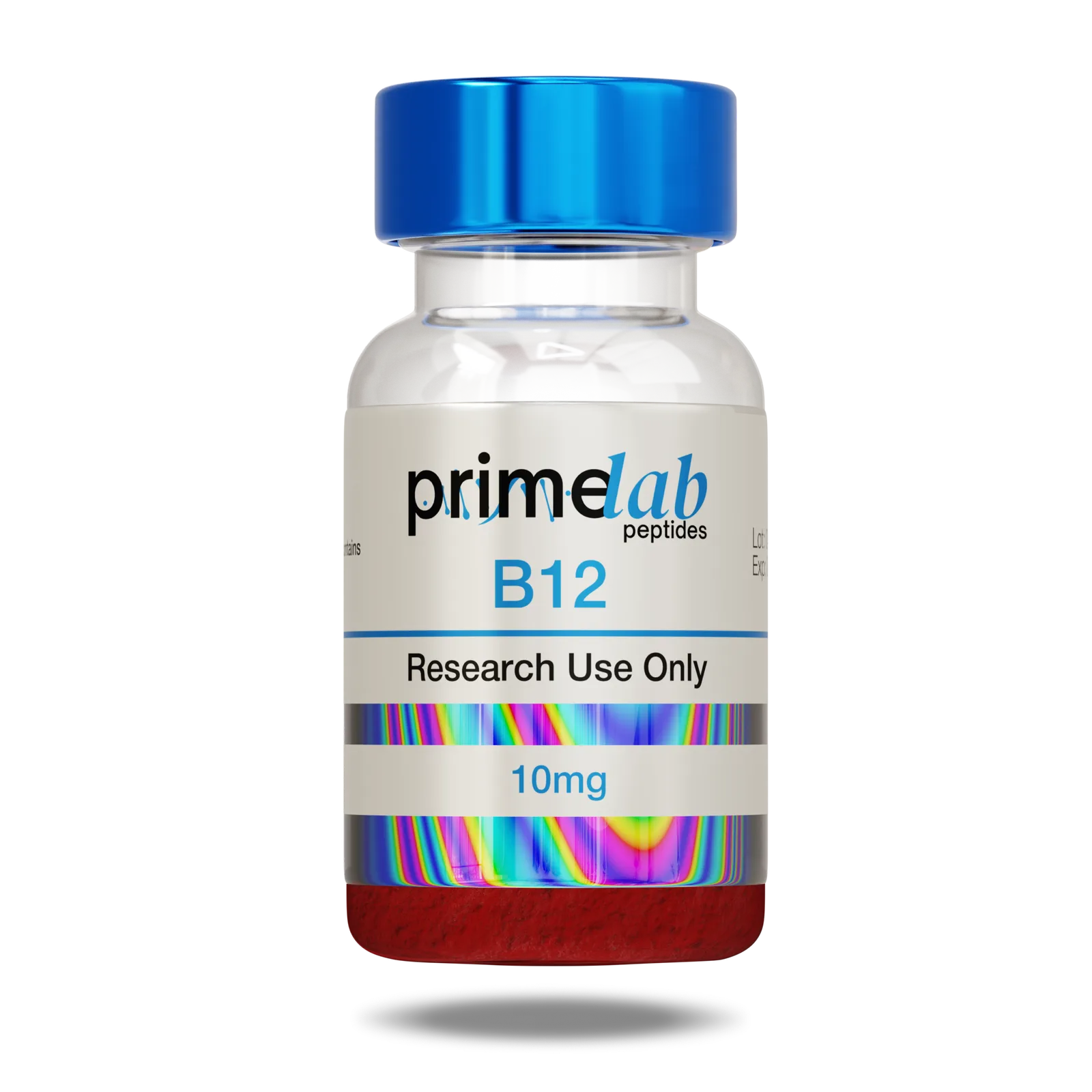
Vitamin B12 (cyanocobalamin) — a water-soluble methylation and energy-metabolism cofactor; presented for research and educational use.

Pre-filled with this protocol’s recommended BAC water and documented starting dose — edit any field to run your own numbers. Reconstitution math only — not dosing advice. U-100 syringe: 100 units = 1 mL. Full reconstitution guide → · Advanced calculator →Mix & measure Vitamin B12 · 10 mg
Dosing & Reconstitution Guide
A single practical dilution with once-weekly maintenance dosing, step by step
Standard Approach (2 mL = 5 mg/mL)
Reconstitute: Add 2.0 mL bacteriostatic water to one 10 mg vial → final concentration 5 mg/mL (5,000 mcg/mL).
Typical range: 1,000 mcg (1 mg) per dose, once weekly for maintenance, after an optional 1–2 week loading phase.
Easy measuring: At 5 mg/mL, 1 unit = 0.01 mL = 50 mcg on a U-100 syringe, so units = mcg ÷ 50. A 1,000 mcg dose equals 20 units (0.20 mL).
Storage: Lyophilized: store cool, dry and dark; after reconstitution, refrigerate at 2–8 °C (35.6–46.4 °F) protected from light — B12 is light-sensitive — and do not freeze the mixed solution.
Why Vitamin B12 draws research interest
These are the directions researchers and the peptide community most often explore Vitamin B12 for — so you know you’re in the right place. They describe what is being studied, not proven benefits, approved uses, or promised results.
Energy metabolism
Investigated for its role as a cofactor in cellular energy production; cyanocobalamin is FDA-approved for correcting vitamin B12 deficiency.
Methylation support
Studied for its function as a cofactor in one-carbon methylation cycles and in homocysteine metabolism.
Nervous system function
Explored in research on myelin maintenance and nerve function, where deficiency is linked to peripheral neuropathy.
Red blood cell formation
Cyanocobalamin is FDA-approved for treating pernicious anemia and megaloblastic anemia caused by B12 deficiency.
Evidence ranges from early laboratory work to clinical trials depending on the use — the sections below cover the actual data and sources.
Quickstart Highlights
Vitamin B12 (cyanocobalamin) is a water-soluble cobalamin that the body uses as an essential cofactor for methylation and mitochondrial energy metabolism[1][5]. This educational page outlines a subcutaneous or intramuscular reconstitution and dosing approach for a 10 mg (10,000 mcg) vial. Cyanocobalamin injection is an established, approved form of B12 used clinically for deficiency (such as pernicious anemia); this research vial is nonetheless presented for research and educational use only.
Add 2.0 mL bacteriostatic water to one 10 mg vial → 5 mg/mL (5,000 mcg/mL). On a U-100 syringe, 1 unit = 0.01 mL = 50 mcg.
1,000 mcg (1 mg) subcutaneously or intramuscularly, once weekly for maintenance, with an optional short loading phase. Figures follow common reference protocols.
At 5 mg/mL, 1 unit = 50 mcg: 1,000 mcg = 20 units (0.20 mL) on a U-100 syringe. Simply, units = mcg ÷ 50.
Lyophilized: store cool, dry and dark. Once reconstituted, refrigerate at 2–8 °C (35.6–46.4 °F) and keep protected from light — B12 is light-sensitive; do not freeze the solution.
Important: Start with the Prep & Injection Guide — it covers the preparation and safety basics every protocol on this site assumes.
Frequency: a single weekly maintenance injection (subcutaneous or intramuscular), with an optional loading phase of one dose every 1–2 days for the first 1–2 weeks. Verify each dose with units = mcg ÷ 50 (e.g., 1,000 mcg = 20 units)[3][4]. B12 is renally cleared and has a wide safety margin; these figures reflect common reference protocols, not personalized medical dosing.
Reconstitution Steps
Draw 2.0 mL of bacteriostatic water into a sterile syringe.
Release it slowly down the vial’s inner wall to limit foaming.
Swirl or roll gently until fully dissolved — don’t shake.
Label with the date and concentration, then refrigerate at 2–8 °C (35.6–46.4 °F), shielded from light.
The 2.0 mL dilution gives a clean 5 mg/mL (5,000 mcg/mL), so a 1,000 mcg dose reads as exactly 20 units (0.20 mL); units = mcg ÷ 50. Avoid freezing the reconstituted solution and keep it protected from light — B12 (cyanocobalamin) is light-sensitive.
Supplies Needed
Quantities below assume roughly 14 injections — a short 1–2 week loading phase plus a 12-week once-weekly maintenance course.
At 1,000 mcg per dose, one 10 mg (10,000 mcg) vial supplies 10 doses — roughly 10 weeks of once-weekly maintenance.
- Loading + 12 weeks weekly: ~14 doses
- One 10 mg vial: ~10 doses
- 12-week course: ~2 vials
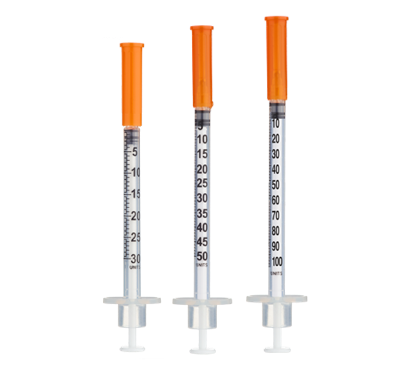
- Per injection: 1 syringe
- 12-week course: ~14 syringes
- With extra loading: ~20 syringes
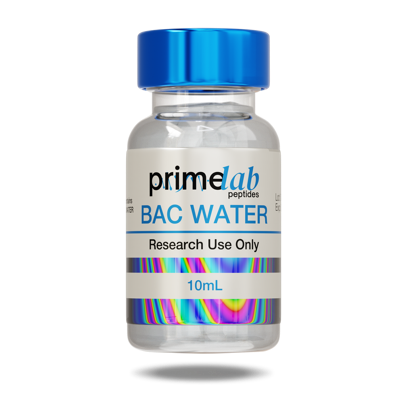
Use 2.0 mL per 10 mg vial for reconstitution.
- Per 10 mg vial: 2 mL
- 12-week course (~2 vials): ~4 mL → 1 bottle
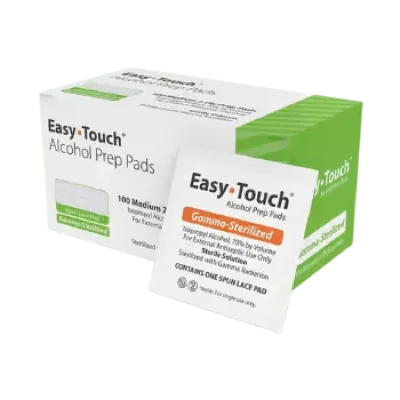
One for the vial stopper + one for the injection site each session.
- Per injection: 2 swabs
- 12-week course: ~28–40 swabs → 1 box
Protocol Overview
A concise summary of the once-weekly maintenance regimen, drawn from common reference protocols.
- ▪Goal: Supply Vitamin B12 (cyanocobalamin), an essential cofactor for methylation (homocysteine remethylation) and mitochondrial energy metabolism that supports red-cell formation and neurological maintenance[5][6].
- ▪Schedule: One subcutaneous or intramuscular injection per week for maintenance, after an optional 1–2 week loading phase.
- ▪Dose Range: 1,000 mcg (1 mg) per dose — every 1–2 days during optional loading, then once weekly; units = mcg ÷ 50.
- ▪Reconstitution: 2.0 mL bacteriostatic water per 10 mg vial gives 5 mg/mL (1 unit = 50 mcg).
- ▪Storage: Keep the dry vial cool, dry and dark; once mixed, refrigerate at 2–8 °C protected from light — B12 is light-sensitive — and do not freeze the solution.
Dosing Protocol
A suggested approach based on common reference figures for cyanocobalamin; adjust to individual context.
- ▪Loading (optional): During weeks 1–2, give 1,000 mcg (20 units, 0.20 mL) every 1–2 days to replete stores.
- ▪Maintenance: Move to 1,000 mcg (20 units, 0.20 mL) once weekly once the loading phase is complete.
- ▪Target: Maintain 1,000 mcg once weekly for ongoing support.
- ▪Cycle Length: Ongoing weekly maintenance; a 12-week block is a convenient review point.
- ▪Timing: Inject on a consistent day each week and rotate injection sites systematically.
Storage Instructions
Correct storage is what preserves the vitamin’s stability and activity.
- ▪Lyophilized: Hold the dry vial cool, dry and dark, limiting moisture and light exposure — cyanocobalamin is light-sensitive[7].
- ▪Reconstituted: Refrigerate at 2–8 °C (35.6–46.4 °F) protected from light and use within about 28 days; do not freeze the mixed solution, and keep it shielded from light to prevent degradation[8].
- ▪Handling: Let frozen vials warm to room temperature before opening so condensation won’t form, and keep the solution clear of heat and direct light.
- ▪Freeze–thaw: Avoid repeated freeze–thaw cycles and prolonged light exposure of the reconstituted solution.
Important Notes
Practical points that keep each injection session safe and consistent.
- ▪Sterile technique: Use a fresh sterile U-100 insulin syringe each time and drop it straight into a puncture-proof sharps container afterward.
- ▪Site rotation: Move between abdomen, thighs and upper arms to reduce local irritation and lipohypertrophy[9].
- ▪Slow injection: Push the plunger slowly and pause a few seconds before withdrawing the needle to prevent backflow.
- ▪Recordkeeping: Log each dose, injection site and any observations to keep the protocol consistent.
- ▪Regulatory note: Cyanocobalamin injection is an established, FDA-approved form of B12 used clinically for deficiency (such as pernicious anemia). This particular vial, however, is supplied as a research product and is presented for research and educational use only, not as a prescription medicine[10].
How This Works
Vitamin B12 (cyanocobalamin) is a water-soluble cobalamin built around a cobalt-centered corrin ring[1][2]. In the body it is converted to its active coenzyme forms, methylcobalamin and adenosylcobalamin, which drive its enzymatic roles.
B12 serves as a cofactor for two key enzymes: methylcobalamin supports methionine synthase, which remethylates homocysteine to methionine and feeds one-carbon and methylation metabolism, while adenosylcobalamin supports methylmalonyl-CoA mutase in mitochondrial energy metabolism[5][6].
Through these two reactions, B12 supports healthy red-cell formation and neurological maintenance. Injectable delivery bypasses the intestinal intrinsic-factor absorption step, which is why it is used clinically when absorption is impaired[11][12].
Important caveat: supplemental B12 corrects deficiency, but claims that extra B12 boosts energy, mood, or metabolism in people who are not deficient are not well supported by evidence. B12 has a wide safety margin — excess is largely cleared by the kidneys — but more is not necessarily better, and benefit beyond repletion should be read as unproven.
Cyanocobalamin injection is an established, approved form of B12 for treating deficiency clinically; this research vial, however, is presented here for research and educational purposes only and is not a substitute for medical care.
Lifestyle Factors
Habits that support healthy B12 status and methylation alongside the protocol.
- ▪Nutrition: Animal-source foods (meat, fish, eggs, dairy) and adequate folate and B6 support B12 status and one-carbon metabolism.
- ▪Activity & rest: Regular moderate exercise supports overall energy metabolism; balance it with adequate recovery.
- ▪Sleep: Aim for 7–9 hours to support the body’s natural energy and repair processes.
- ▪Stress: Manage stress and limit heavy alcohol use, which can impair B12 absorption and status over time.
Potential Benefits & Side Effects
What the literature discusses; benefits are clearest in true B12 deficiency, and individual results vary.
Potential Benefits
- ▪Blood formation (established): B12 is required for normal red-cell production; correcting deficiency resolves megaloblastic anemia[5][6].
- ▪Neurological maintenance (established): B12 supports myelin and nerve function; repletion can improve deficiency-related neurological symptoms[11].
- ▪Energy claims (context-dependent): B12 supports energy metabolism, but a benefit in people who are not deficient is not well supported by evidence.
- ▪Note on humans: Benefits are clearest when treating documented deficiency; routine supplementation in replete individuals has limited proven benefit[13].
Common Side Effects
- ▪Injection-site reactions: Mild redness, tenderness or soreness can occur; rotating sites helps. The small 0.20 mL volume is usually well tolerated.
- ▪Allergic reactions (uncommon): Rare hypersensitivity to cyanocobalamin or to cobalt can occur; discontinue and seek advice if a reaction develops.
- ▪Wide safety margin: B12 is water-soluble and renally cleared, so toxicity is rare; nonetheless this is a research vial, not a substitute for medical care.
Injection Technique
General subcutaneous technique, following established clinical best-practice guidance[14][15].
Pre-Injection Preparation
- ▪Wash your hands well with soap and water.
- ▪Wipe the vial stopper with an alcohol swab and let it air-dry.
- ▪Choose a site (abdomen, thigh, or upper arm) and clean it with a fresh alcohol swab, letting it dry fully[15].
- ▪Draw the intended dose, then check for air bubbles and push any out.
Injection Procedure
- ▪Pinch a skinfold at the chosen site between thumb and forefinger.
- ▪Insert the needle into the pinch at a 45–90-degree angle (use 45 degrees if the fat layer is thin)[14].
- ▪Skip aspiration for subcutaneous shots — it isn’t needed[14].
- ▪Press the plunger slowly and steadily until it’s fully down.
- ▪Wait 5–10 seconds, then pull the needle straight out to prevent leakage.
Post-Injection Care
- ▪Drop the used syringe straight into a puncture-proof sharps container — never recap a needle.
- ▪Return the reconstituted vial to the fridge right away.
- ▪Rotate the injection site each session to prevent irritation and lipohypertrophy[9].
- ▪Watch the site for excess redness, swelling, or signs of infection.
Recommended Source
For high-purity research peptides, we point researchers to Prime Lab Peptides.
Why Prime Lab Peptides?
- ▪Top-rated on Trustpilot: Independently reviewed as the highest-rated peptide lab on Trustpilot — making it the best current source in the USA.
- ▪Third-party tested: Every batch ships with a Certificate of Analysis (COA) confirming purity and composition.
- ▪Consistent quality: ISO-aligned manufacturing and handling keep product integrity reliable batch to batch.
- ▪Cold-chain integrity: Temperature-controlled shipping and storage across the whole fulfilment chain.
- ▪Research-grade purity: Fit for educational and research use that demands high-quality peptides.
Note: Product availability and specifications subject to change. Verify current product details on supplier website.
References
- 1
PubChem / NCBIVitamin B12 (cyanocobalamin): structure of the cobalt-centered corrin ring and its biological roles.
- 2
NIH Office of Dietary SupplementsVitamin B12 Fact Sheet: forms, coenzyme functions, and role in one-carbon metabolism.
- 3
U.S. Food & Drug AdministrationFDA-approved prescribing information for cyanocobalamin injection (label): indications, dosing and administration.
- 4
Cleveland Clinic (Patient Education)Vitamin B12 injections: how they are given, who benefits, and what to expect.
- 5
Blood / Hematology (PubMed)Vitamin B12 and methionine synthase in red-cell formation; deficiency and megaloblastic anemia.
- 6
Journal of Biological Chemistry (PubMed)Adenosylcobalamin as a cofactor for methylmalonyl-CoA mutase in mitochondrial energy metabolism.
- 7
Peptide Storage GuideBest practices for storing lyophilized peptides (temperature, humidity and light protection).
- 8
Bacteriostatic Water GuidanceBacteriostatic water for injection: multi-dose vial stability and handling.
- 9
NCBI BookshelfBest practices for subcutaneous injection: aseptic technique and site rotation.
- 10
MedlinePlus (NIH)Cyanocobalamin injection: uses, dosing, storage and safety information for patients.
- 11
New England Journal of Medicine (PubMed)Vitamin B12 deficiency: neurological manifestations and response to parenteral repletion.
- 12
American Journal of Clinical Nutrition (PubMed)Parenteral versus oral vitamin B12: absorption, dosing intervals and repletion of body stores.
- 13
ClinicalTrials.govTrial registry for vitamin B12 (cyanocobalamin); studies of injectable B12 in deficiency and related conditions.
- 14
Centers for Disease Control and Prevention (CDC)Subcutaneous injection technique: angle, site and no-aspiration guidance.
- 15
Subcutaneous Injection Technique (Patient Education)How to administer a subcutaneous injection: clinical technique guidelines.
- 16
Prime Lab PeptidesResearch-grade peptides supplier — purity specifications and certificates of analysis.
Vitamin B12 — frequently asked questions
How do I reconstitute a 10 mg vial of Vitamin B12?
Wipe the stopper with an alcohol swab, then inject your bacteriostatic water slowly down the inside wall of the vial. Let it sit and gently swirl until dissolved — never shake. Store the mixed vial in the refrigerator and draw doses with an insulin syringe. Use the calculator above to turn any dose into syringe units.
How much bacteriostatic water should I add to Vitamin B12?
There is no single correct amount — more water simply spreads the same 10 mg of peptide across a larger volume, which makes small doses easier to measure accurately. 1 to 3 mL per vial is typical. Enter your chosen volume in the calculator above to see the resulting concentration and syringe units.
What do the "units" on an insulin syringe mean?
On a U-100 insulin syringe, 100 units equal 1 mL, so 1 unit equals 0.01 mL. The calculator above converts your draw volume into these units automatically so you can measure without doing the math by hand.
How should I store Vitamin B12 after mixing?
Keep the reconstituted vial refrigerated at roughly 2 to 8 degrees Celsius, away from light, and avoid freezing it. Reconstituted research peptides are generally used within a few weeks. Always follow the specific guidance supplied with your product.
How many doses does a 10 mg vial of Vitamin B12 provide?
Divide the vial strength of 10 mg by the amount you use per injection. The calculator above reports this as "doses per vial" the moment you enter a dose.
Is Vitamin B12 approved for human use?
No. Vitamin B12 is sold strictly for laboratory and research purposes and is not approved by the FDA or other regulators for human use. Everything on this page is research information, not medical advice — consult a licensed healthcare professional before any use.
New protocols & dosing updates
Reconstitution charts, new peptide protocols and safety updates — straight to your inbox. No spam, unsubscribe anytime.