
Sermorelin 5mg + Ipamorelin 5mg (10mg Blend Vial) Dosage Protocol
GH-axis blend — one 10 mg vial pairing sermorelin, the GHRH(1–29) fragment, with ipamorelin, a selective ghrelin-receptor agonist. Neither is an approved product today.
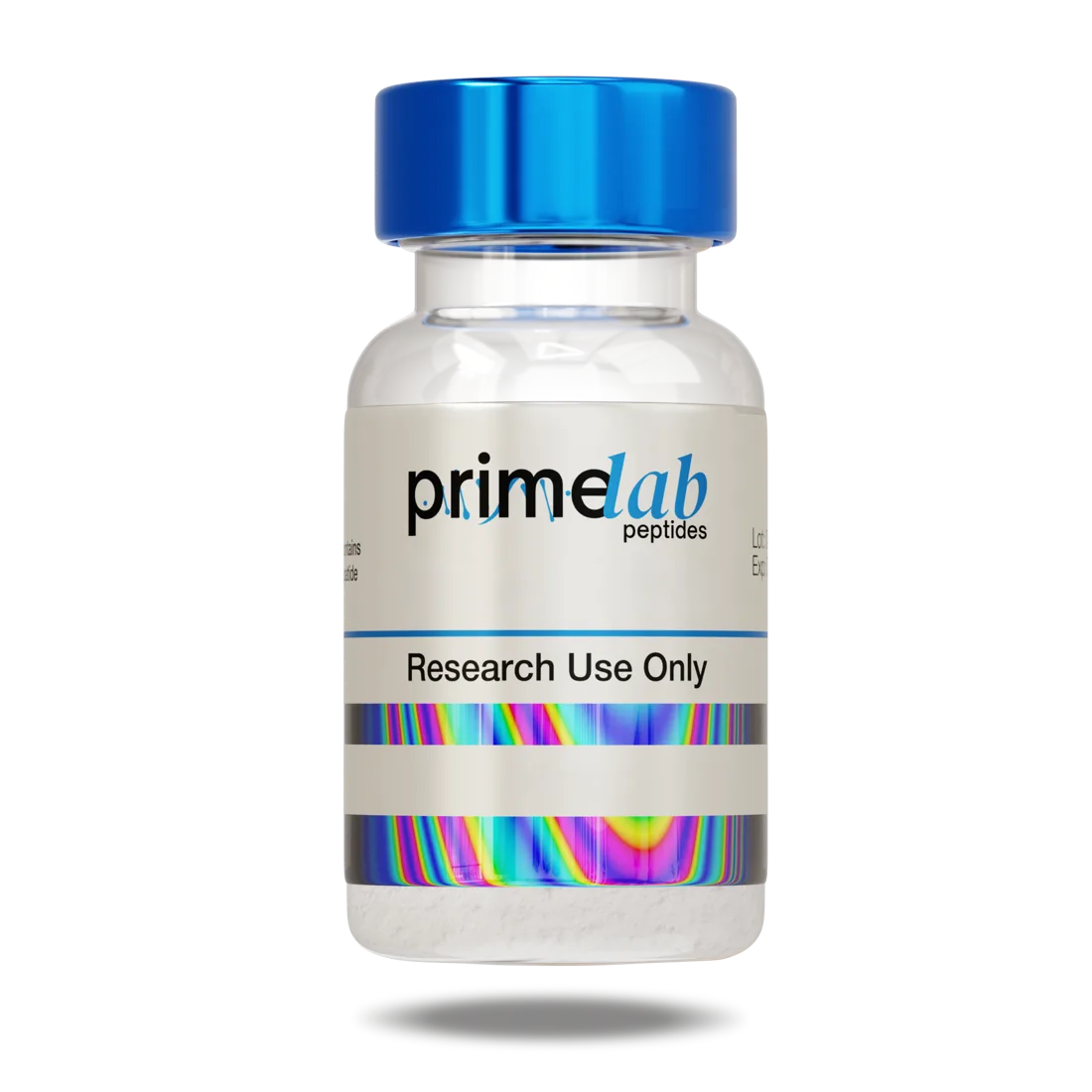
Fixed ratio: Sermorelin 5 mg + Ipamorelin 5 mg — a 1:1 blend (50% / 50%). The split is the supplier’s stated composition, not something printed on the vial, and every withdrawal keeps that ratio, so the two components cannot be dosed independently.
Pre-filled with this protocol’s recommended BAC water and documented starting dose — edit any field to run your own numbers. Reconstitution math only — not dosing advice. U-100 syringe: 100 units = 1 mL. Full reconstitution guide → · Advanced calculator →Mix & measure Sermorelin + Ipamorelin · 10 mg
Sermorelin + Ipamorelin Dosage Chart & Reconstitution Guide
One combined 10 mg blend vial — two dilution options for once-daily total-blend dosing. All doses below are stated as total blend; because both peptides share the vial, you cannot draw one component on its own.
Standard / Gradual Approach (3 mL = 3,333 mcg/mL)
- ▪Reconstitute: Add 3.0 mL bacteriostatic water to the 10 mg combined vial → 3,333 mcg/mL of total blend (about 1,667 mcg/mL of each peptide).
- ▪Typical daily range: 300–600 mcg of total blend once daily, raised gradually across the cycle, commonly on a 5-days-on / 2-days-off pattern.
- ▪Easy measuring: At 3,333 mcg/mL, 1 unit on a U-100 syringe is about 33.3 mcg of total blend (units = mcg ÷ 33.33).
- ▪The 1:1 split: 300 mcg total = 150 mcg sermorelin + 150 mcg ipamorelin; 600 mcg total = 300 mcg of each.
- ▪Vial arithmetic: At 500 mcg per day a 10 mg vial holds about 20 days of material; on a 5-on / 2-off week that is roughly four weeks per vial.
| Phase / Week(s) | Total Blend Dose & Frequency | Volume (U-100 units / mL) |
|---|---|---|
| Weeks 1–4 | 300 mcg total (1× daily) | 9 units (0.09 mL) |
| Weeks 5–8 | 500 mcg total (1× daily) | 15 units (0.15 mL) |
| Weeks 9–12 | 600 mcg total (1× daily) | 18 units (0.18 mL) |
Why Sermorelin + Ipamorelin draws research interest
These are the directions researchers and the peptide community most often explore Sermorelin + Ipamorelin for — so you know you’re in the right place. They describe what is being studied, not proven benefits, approved uses, or promised results.
GH & IGF-1 support
Studied for stimulating pulsatile growth hormone release through two separate receptors; the combination itself has never been tested in a trial.
Selective GH pulse
Ipamorelin was the first GHS-R1a agonist shown to release GH without raising ACTH or cortisol.
Body composition
Explored in research on how growth hormone secretagogues influence fat breakdown and lean mass.
Sleep & recovery
Investigated for the link between growth hormone secretagogues and slow-wave sleep; not established.
Evidence ranges from early laboratory work to clinical trials depending on the use — the sections below cover the actual data and sources.
Quickstart Highlights
This page covers a single 10 mg blend vial holding sermorelin 5 mg + ipamorelin 5 mg. Sermorelin is GHRH(1–29)NH2, the shortest fragment of growth-hormone-releasing hormone that keeps the biological activity of the parent molecule; it acts on pituitary GHRH receptors and was used clinically under that name[1]. Ipamorelin is a selective pentapeptide agonist of the ghrelin receptor GHS-R1a[5]. Putting them in one vial is meant to push the growth-hormone axis through two different receptors in a single injection.
Two things are worth knowing before any dose chart. First, sermorelin was an approved drug: GEREF was approved for idiopathic growth hormone deficiency in children with growth failure, its maker discontinued it in 2008, and the FDA withdrew the approvals effective 18 June 2009 — a determination published in 2013 states plainly that GEREF was not withdrawn for reasons of safety or effectiveness[2]. Second, ipamorelin was never approved anywhere and has a single published human study, an intravenous pharmacokinetic trial[6]. No trial has ever tested sermorelin and ipamorelin together, in this 1:1 ratio or any other. Everything below is a research and educational reference, not medical guidance.
One 10 mg combined vial. Add 3.0 mL bacteriostatic water → 3,333 mcg/mL (Standard), or 2.0 mL → 5,000 mcg/mL (Advanced).
300–1,000 mcg of total blend once daily, commonly on a 5-days-on / 2-days-off schedule across an 8–12 week cycle; each dose splits 50% sermorelin / 50% ipamorelin.
Doses are total blend. At 3,333 mcg/mL, 1 unit on a U-100 syringe is about 33.3 mcg; at 5,000 mcg/mL, 1 unit is exactly 50 mcg.
Lyophilized: store at −20 °C (−4 °F). Once reconstituted, refrigerate at 2–8 °C (35.6–46.4 °F) and do not freeze the solution.
Advanced / Aggressive Approach (2 mL = 5,000 mcg/mL)
- ▪Reconstitute: Add 2.0 mL bacteriostatic water to the 10 mg combined vial → 5,000 mcg/mL of total blend (2,500 mcg/mL of each peptide). The smaller volume keeps higher doses comfortably above 10 units.
- ▪Typical daily range: 600–1,000 mcg of total blend once daily.
- ▪Easy measuring: At 5,000 mcg/mL, 1 unit is exactly 50 mcg of total blend (units = mcg ÷ 50) — the tidiest arithmetic available on a 10 mg vial.
- ▪The 1:1 split: 1,000 mcg total = 500 mcg sermorelin + 500 mcg ipamorelin.
- ▪Vial arithmetic: At 1,000 mcg per day a 10 mg vial covers about 10 days.
One comparison belongs here, because it is the single most useful number on this page. The only sermorelin dose ever established in humans is weight-based and pediatric: 30 mcg/kg once daily by subcutaneous injection at bedtime, the regimen used in the GEREF multicentre study of 110 growth-hormone-deficient children[1]. For a 70 kg adult that arithmetic gives about 2,100 mcg of sermorelin per day — roughly fourteen times the 150 mcg of sermorelin inside a 300 mcg blend dose, and about four times the sermorelin share at the top of this column. Blend charts are therefore not scaled-down versions of the approved regimen; they are a separate convention, and nobody has shown which one is right for the questions researchers ask of this vial.
| Phase / Week(s) | Total Blend Dose & Frequency | Volume (U-100 units / mL) |
|---|---|---|
| Weeks 1–4 | 600 mcg total (1× daily) | 12 units (0.12 mL) |
| Weeks 5–8 | 800 mcg total (1× daily) | 16 units (0.16 mL) |
| Weeks 9–12 | 1,000 mcg total (1× daily) | 20 units (0.20 mL) |
Reconstitution Steps
Both peptides are lyophilized together in one vial, so a single reconstitution fixes the concentration of both at once.
- ▪Draw 3.0 mL (Standard) or 2.0 mL (Advanced) of bacteriostatic water into a sterile syringe.
- ▪Release it slowly down the vial’s inner wall so the powder is wetted without foaming.
- ▪Swirl or roll the vial gently until both peptides fully dissolve — never shake it.
- ▪Label the vial with the date and the total concentration, then refrigerate at 2–8 °C (35.6–46.4 °F), shielded from light.
- ▪Write the split on the label too (50% sermorelin / 50% ipamorelin) — on a blend vial the total concentration alone does not tell you how much of each peptide a given volume contains.
Supplies Needed
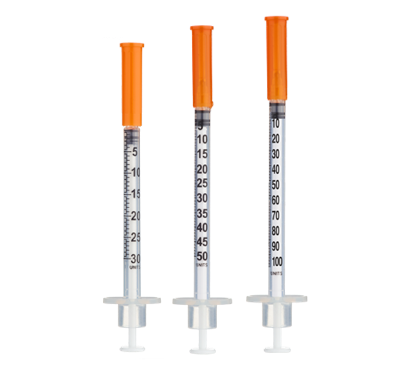
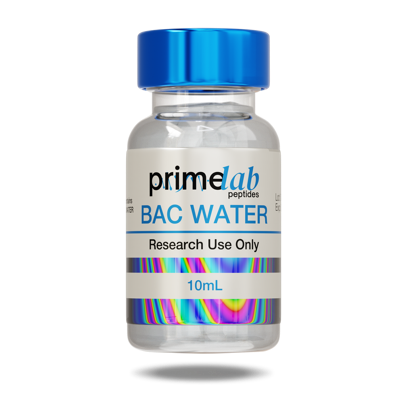
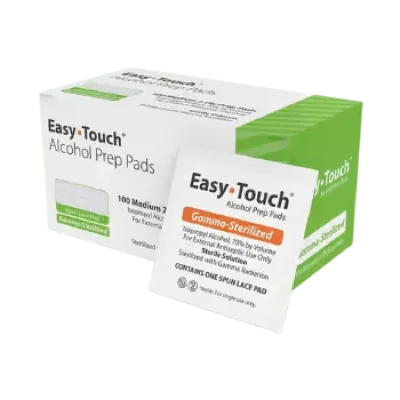
Quantities below assume an 8–12 week course of once-daily injections (5 on / 2 off) drawn from the combined 10 mg blend vial. At 500 mcg per day on a 5-on / 2-off week, one vial covers roughly four weeks.
Protocol Overview
A concise summary of the once-daily regimen for the 10 mg 1:1 blend, drawn from commonly cited reference protocols rather than from any approved dosing of this vial.
- ▪Goal: Amplify the body’s own pulsatile GH release by pairing a GHRH fragment (sermorelin) with a ghrelin-receptor agonist (ipamorelin) — a class-level rationale, not a validated outcome for this pairing.
- ▪Schedule: Once daily, commonly 5 days on / 2 days off, across an 8–12 week cycle.
- ▪Dose range: 300–600 mcg of total blend per day on the 3 mL dilution, or 600–1,000 mcg on the 2 mL dilution; every dose stays locked at 50% sermorelin / 50% ipamorelin.
- ▪Reconstitution: 3.0 mL (3,333 mcg/mL) for the Standard column or 2.0 mL (5,000 mcg/mL) for the Advanced one, per 10 mg blend vial.
- ▪Storage: Keep the dry vial at −20 °C (−4 °F); once mixed, refrigerate at 2–8 °C and do not freeze.
Dosing Protocol
A titration shape for the combined blend, based on the reference doses circulated for the 1:1 10 mg vial format. The ratio is fixed by the manufacturer, so the only variable a researcher controls is the total volume drawn.
- ▪Start: Begin at about 300 mcg of total blend once daily (Standard column) to gauge tolerability.
- ▪Titrate: Step up gradually every few weeks — 300 → 500 → 600 mcg on the 3 mL dilution, or 600 → 1,000 mcg on the 2 mL one.
- ▪Cycle length: Typically 8–12 weeks, followed by a rest period, then reassess.
- ▪Timing: Reference protocols inject at a consistent time each day, usually at night on an empty stomach. That convention has a real basis for the sermorelin half — the GEREF study dosed at bedtime[1] — but no timing comparison has ever been run for this blend.
- ▪What a GHRH peptide actually does to a pulse: in healthy volunteers, continuous GHRH(1–29)NH2 amplified peak GH concentrations (median 21.1 → 62.0 mU/L) while leaving the timing of the pulses unchanged[4]. It raises the height of the pulse, not its schedule.
- ▪Site rotation: rotate injection sites through the cycle to limit irritation.
Storage Instructions
Correct storage is what preserves the stability and activity of both peptides in the vial.
- ▪Lyophilized: Hold the dry blend vial at −20 °C (−4 °F) in dry, dark conditions and limit moisture exposure.
- ▪Reconstituted: Refrigerate at 2–8 °C (35.6–46.4 °F) and use within about 28 days; do not freeze the mixed solution.
- ▪Match the dilution to the schedule: at 300 mcg per day the 10 mg vial holds roughly 33 days of material, which already runs past the ~28-day window commonly used for a reconstituted vial. Plan the dilution around how long the solution stays good, not only around how much powder is in the vial.
- ▪Handling: Let a frozen vial reach room temperature before opening so condensation does not form, and keep the solution away from heat and direct light.
- ▪Freeze–thaw: Avoid repeated freeze–thaw cycles of the reconstituted solution.
Important Notes
Practical and safety points that matter specifically for this fixed-ratio blend vial.
- ▪You cannot separate the components: raising the sermorelin exposure necessarily raises the ipamorelin exposure by the same amount, because the split is 1:1. If a protocol calls for adjusting one peptide independently, a blend vial is the wrong format for it.
- ▪The 5+5 split is the supplier’s claim, not a label: vendors describe this vial as sermorelin 5 mg + ipamorelin 5 mg, but the per-component amount is not printed on the vial and no independent assay accompanies it. Re-derive the split from the vial actually in hand before using any chart, including this one, and treat a differently-split vial as a different product.
- ▪Sermorelin is not CJC-1295 no DAC: the two are often shelved together, but CJC-1295 no DAC (mod-GRF 1–29) carries a D-Ala2 substitution specifically because plain GHRH(1–29)NH2 is cleared so quickly. In the study that measured both side by side in normal men, the D-Ala2 analog had a disappearance half-time of 6.7 minutes against 4.3 minutes for GHRH(1–29)NH2, with metabolic clearance roughly halved[3]. A dose chart written for one is not automatically right for the other.
- ▪Volume tracking: the reconstitution volume alone sets the mcg per unit; record it on the vial so the total-blend dose stays accurate for the whole cycle.
- ▪Small volumes need care: on the 3 mL dilution the starting dose is about 9 units. If your syringe markings make that hard to read accurately, the 2 mL dilution gives a rounder 50 mcg per unit.
- ▪IGF-1 and glucose: anything that raises growth hormone raises IGF-1 downstream, and GH-axis work is conventionally monitored for fluid retention, joint symptoms and glucose handling. Those are the parameters worth tracking in any study design involving this vial.
- ▪Sterile technique: use a fresh sterile U-100 insulin syringe each time and place it straight into a puncture-proof sharps container afterward.
- ▪Regulatory note: there is no FDA-approved sermorelin product on the market today and ipamorelin has never been approved anywhere. Growth-hormone-releasing hormones and their analogs, and growth hormone secretagogues, are prohibited at all times under WADA class S2[10]. This blend is not approved for human use.
How This Works
Sermorelin is GHRH(1–29)NH2 — the first 29 amino acids of growth-hormone-releasing hormone, amidated at the C-terminus. It binds the pituitary GHRH receptor and drives the somatotrophs to release growth hormone in the body’s own pulsatile pattern rather than replacing it. The cleanest demonstration of what that means in practice comes from a clamp study in healthy volunteers: continuous GHRH(1–29)NH2 raised median peak GH from 21.1 to 62.0 mU/L, while the timing of the pulses stayed exactly where it was[4]. A GHRH peptide sets the amplitude; the hypothalamic somatostatin rhythm still sets the clock.
Ipamorelin comes through a different door. It is a pentapeptide (Aib-His-D-2-Nal-D-Phe-Lys-NH2) that activates the GHRP / GHS-R1a receptor, and it was the first compound in that class shown to release growth hormone with a selectivity comparable to GHRH itself — in swine it moved neither ACTH nor cortisol even at doses more than 200 times the ED50 for GH release, and it left FSH, LH, prolactin and TSH alone[5]. That selectivity, not raw potency, is the argument for putting it in a blend.
The case for combining a GHRH peptide with a GHS is genuinely strong at the class level, and it has a measured shape. In healthy men, GHRH alone produced a GH area under the curve of 484, GHRP-6 alone 1,435, and the two together 3,772 — significantly more than the arithmetic sum of the separate responses[7]. The synergy holds for GHRH(1–29)NH2 specifically: paired with a GHRP it stayed potently GH-releasing even under a high-dose somatostatin infusion[9], and reviews of the secretagogue class describe the same interaction[8]. But the first of those studies also carries the caveat that matters most here: in twelve patients whose pituitary was functionally disconnected from the hypothalamus, the GHRP response was abolished and the synergy disappeared entirely[7]. The amplification is not a property of the two molecules meeting in a vial; it depends on an intact hypothalamic circuit.
What has never been done is testing this pairing. There is no completed trial of sermorelin plus ipamorelin, no published pharmacokinetics for the combination, and no evidence that a 1:1 ratio is better or worse than any other. The synergy framing is carried over from GHRP-6, hexarelin and GHRH, and it should be read as a hypothesis about related molecules rather than a result for this vial.
The human record for each half is uneven, and the difference is worth stating plainly. Sermorelin has real clinical data: in an open-label multicentre study, 110 previously untreated prepubertal children with growth hormone deficiency received 30 mcg/kg daily by subcutaneous injection at bedtime, and mean height velocity rose from 4.1 cm/year at baseline to 8.0 cm/year at six months and 7.2 cm/year at twelve months, with 74% of the children judged good responders and no adverse changes in fasting glucose or excessive IGF-1 generation[1]. Ipamorelin has one published human study of any kind: a dose-escalation trial in which healthy men received 15-minute intravenous infusions at five dose levels, showing a terminal half-life of about two hours, a clearance of 0.078 L/h/kg and a single episode of GH release peaking near 40 minutes[6]. Subcutaneous, once-daily, multi-week ipamorelin use is an extrapolation from that single study, not a documented regimen.
Approval status, stated plainly. Sermorelin was approved in the United States as GEREF — NDA 20-443 for the treatment of idiopathic growth hormone deficiency in children with growth failure, and NDA 19-863 for evaluating the pituitary’s ability to secrete growth hormone. The manufacturer notified the FDA of discontinuation in 2008, approval was withdrawn effective 18 June 2009, and the agency later determined that the products were not withdrawn for reasons of safety or effectiveness[2]. That is an honest but limited endorsement: it means the withdrawal was commercial, not that any current sermorelin product carries FDA approval. None does. Ipamorelin has never been approved in any jurisdiction. A grey-market blend vial is not a former GEREF vial, and this page exists for research and educational use only.
Lifestyle Factors
Sleep: aim for 7–9 hours. The largest natural GH pulses occur during slow-wave sleep, and short sleep blunts them — which is also why the one established sermorelin regimen dosed at bedtime[1].
Nutrition: keep protein intake adequate and total calories aligned with the body-composition endpoint being studied; GH-axis work does not override energy balance.
Activity and rest: pair resistance training with genuine recovery time, since growth-hormone effects track with both the stimulus and the rest that follows it.
Timing around carbohydrate: many reference protocols inject away from large carbohydrate meals, on the reasoning that elevated insulin dampens the GH pulse. This is a convention rather than a tested rule for this blend.
Glucose awareness: the GEREF study found no adverse change in fasting glucose at the pediatric dose[1], but GH-axis stimulation is monitored for glucose handling as a matter of course, and diet quality and activity interact directly with that parameter.
Potential Benefits & Side Effects
What each half of the vial is known for, and what the combination has not been shown to do. Effects of the blend itself are not clinically established and individual response varies widely.
The two halves of this vial act on different receptors. For what separates them on duration, appetite, cortisol and depth of human evidence, see sermorelin vs ipamorelin compared.
Reported Effects
- ▪Pulsatile GH release (sermorelin): continuous GHRH(1–29)NH2 raised median peak GH from 21.1 to 62.0 mU/L in healthy volunteers without shifting pulse timing[4].
- ▪Growth in deficient children (sermorelin): height velocity rose from 4.1 to 8.0 cm/year at six months on 30 mcg/kg daily — in growth-hormone-deficient children only[1].
- ▪Selective GH pulse (ipamorelin): GH release with no measurable rise in ACTH or cortisol, and no effect on FSH, LH, prolactin or TSH, in the original characterization[5].
- ▪Class-level dual-axis synergy: a GHRH peptide plus a GHRP produced more GH than the sum of the two given separately[7][9], but this was never demonstrated for sermorelin and ipamorelin together.
Common Side Effects
- ▪Injection-site and hypersensitivity reactions: injection-site reactions and urticaria are the adverse effects documented for sermorelin in clinical use[11]; rotating sites helps.
- ▪GH-typical effects: fluid retention, joint symptoms and headache are the adverse events conventionally associated with raising the growth-hormone axis, and are what GH-axis protocols monitor.
- ▪Glucose and IGF-1 monitoring: sustained GH stimulation raises IGF-1 downstream; the pediatric sermorelin study specifically reported no excessive IGF-1 generation at its dose[1], which is a reason to monitor rather than to assume.
- ▪No safety record for the combination: the blend has never been studied, so its adverse event profile is inferred from the two components separately and from the GH-axis class.
- ▪Almost no human safety data for ipamorelin: total published human exposure is one intravenous dose-escalation study[6]. Nothing establishes the safety of daily subcutaneous use over weeks.
- ▪Sport restriction: both peptides fall under WADA class S2 and are prohibited at all times[10].
Injection Technique
General subcutaneous technique. Nothing here is specific to the blend beyond one point: draw the total-blend volume, because the two peptides cannot be measured separately.
Pre-Injection Preparation
- ▪Wash your hands thoroughly with soap and water.
- ▪Wipe the vial stopper with an alcohol pad and let it air-dry.
- ▪Choose a site (abdomen, thigh or upper arm) and clean it with a fresh alcohol pad, letting it dry fully.
- ▪Draw the intended total-blend volume, then check for air bubbles and push them out.
Injection Procedure
- ▪Pinch a skinfold at the chosen site between thumb and forefinger.
- ▪Insert the needle into the pinch at a 45–90-degree angle (use 45 degrees where the fat layer is thin).
- ▪Aspiration is not needed for subcutaneous injections.
- ▪Press the plunger slowly and steadily until it is fully down.
- ▪Wait 5–10 seconds, then withdraw the needle straight out to prevent leakage.
Post-Injection Care
- ▪Place the used syringe directly into a puncture-proof sharps container — never recap a needle.
- ▪Return the reconstituted vial to the refrigerator right away.
- ▪Rotate the injection site each day to limit irritation and lipohypertrophy.
- ▪Watch the site for excess redness, swelling or any sign of infection.
Recommended Source
For high-purity research peptides, we point researchers to Prime Lab Peptides for Sermorelin + Ipamorelin (5+5 mg Vial).
Why Prime Lab Peptides?
- ▪Top-rated on Trustpilot: Independently reviewed as the highest-rated peptide lab on Trustpilot — making it the best current source in the USA.
- ▪Third-party tested: Every batch ships with a Certificate of Analysis (COA) confirming purity and composition.
- ▪Consistent quality: ISO-aligned manufacturing and handling keep product integrity reliable batch to batch.
- ▪Cold-chain integrity: Temperature-controlled shipping and storage across the whole fulfilment chain.
- ▪Research-grade purity: Fit for educational and research use that demands high-quality peptides.
Note: Product availability and specifications subject to change. Verify current product details on supplier website.
References
- 1
J Clin Endocrinol Metab — Thorner et al., 1996 (GEREF International Study Group)110 previously untreated prepubertal GH-deficient children on 30 mcg/kg GHRH(1-29) subcutaneously at bedtime: mean height velocity 4.1 to 8.0 cm/year at 6 months and 7.2 at 12 months, 74% good responders, no adverse fasting-glucose change and no excessive IGF-1 generation.
- 2
Federal Register — FDA determination on GEREF (sermorelin acetate), 4 March 2013GEREF was approved under NDA 20-443 (idiopathic GHD in children with growth failure) and NDA 19-863 (pituitary GH-secretion test); discontinued by the sponsor in 2008, approvals withdrawn effective 18 June 2009, and the agency determined the products were NOT withdrawn for reasons of safety or effectiveness.
- 3
J Clin Endocrinol Metab — Soule et al., 1994 (GHRH(1-29)NH2 clearance)Constant intravenous infusion in 10 normal men: GHRH(1-29)-NH2 had a disappearance half-time of 4.3 minutes and a metabolic clearance rate of 39.7 mL/kg/min, against 6.7 minutes and about 21 mL/kg/min for the D-Ala2 analog measured in the same study.
- 4
Clin Endocrinol — Achermann et al., 1999 (GHRH(1-29)NH2 pulse clamp)Continuous GHRH(1-29)NH2 in healthy volunteers amplified median peak GH from 21.1 to 62.0 mU/L while pulse timing remained unaffected.
- 5
Eur J Endocrinol — Raun et al., 1998 (ipamorelin characterization)Ipamorelin described as the first selective growth hormone secretagogue: a pentapeptide acting at the GHRP receptor that released GH without raising ACTH or cortisol even above 200 times the ED50, and without moving FSH, LH, prolactin or TSH.
- 6
Pharm Res — Gobburu et al., 1999 (ipamorelin human PK/PD)Dose-escalation trial in healthy male volunteers, five 15-minute intravenous infusion rates: terminal half-life about 2 hours, clearance 0.078 L/h/kg, and a single GH release episode peaking near 0.67 hours.
- 7
J Clin Endocrinol Metab — Popovic et al., 1995 (GHRH + GHRP synergy and its limit)In normal subjects GH area under the curve was 483.7 after GHRH, 1434.8 after GHRP-6 and 3771.5 after both together, more than the arithmetic sum; in patients with hypothalamo-pituitary disconnection the GHRP response was blocked and the synergy disappeared.
- 8
Ann Med — Ghigo et al., 1998 (GH secretagogue review)Review of growth hormone secretagogues, including the finding that their effect on GH release is synergistic with that of GHRH.
- 9
Clin Endocrinol — Massoud et al., 1997 (GHRH(1-29)NH2 plus a GHRP under somatostatin)Human study in 12 healthy adult males: a GHRP combined with GHRH-(1-29)-NH2 remained synergistic and potently GH-releasing even during a high-dose somatostatin infusion.
- 10
WADA — Prohibited List (class S2, peptide hormones and growth factors)Growth hormone-releasing hormones and their analogs, and growth hormone secretagogues including ghrelin / GHS-R1a agonists, are prohibited at all times under class S2.
- 11
Med Lett Drugs Ther — Growth-hormone-releasing factor for growth hormone deficiency, 1999Independent drug-bulletin review of sermorelin for GH deficiency; the indexed adverse effects are injection-site reactions, urticaria and dizziness.
Sermorelin + Ipamorelin — frequently asked questions
How do I reconstitute a 10 mg vial of Sermorelin + Ipamorelin?
Wipe the stopper with an alcohol swab, then inject your bacteriostatic water slowly down the inside wall of the vial. Let it sit and gently swirl until dissolved — never shake. Store the mixed vial in the refrigerator and draw doses with an insulin syringe. Use the calculator above to turn any dose into syringe units.
How much bacteriostatic water should I add to Sermorelin + Ipamorelin?
There is no single correct amount — more water simply spreads the same 10 mg of peptide across a larger volume, which makes small doses easier to measure accurately. 1 to 3 mL per vial is typical. Enter your chosen volume in the calculator above to see the resulting concentration and syringe units.
What do the "units" on an insulin syringe mean?
On a U-100 insulin syringe, 100 units equal 1 mL, so 1 unit equals 0.01 mL. The calculator above converts your draw volume into these units automatically so you can measure without doing the math by hand.
How should I store Sermorelin + Ipamorelin after mixing?
Keep the reconstituted vial refrigerated at roughly 2 to 8 degrees Celsius, away from light, and avoid freezing it. Reconstituted research peptides are generally used within a few weeks. Always follow the specific guidance supplied with your product.
How many doses does a 10 mg vial of Sermorelin + Ipamorelin provide?
Divide the vial strength of 10 mg by the amount you use per injection. The calculator above reports this as "doses per vial" the moment you enter a dose.
Is Sermorelin + Ipamorelin approved for human use?
No. Sermorelin + Ipamorelin is sold strictly for laboratory and research purposes and is not approved by the FDA or other regulators for human use. Everything on this page is research information, not medical advice — consult a licensed healthcare professional before any use.
New protocols & dosing updates
Reconstitution charts, new peptide protocols and safety updates — straight to your inbox. No spam, unsubscribe anytime.