

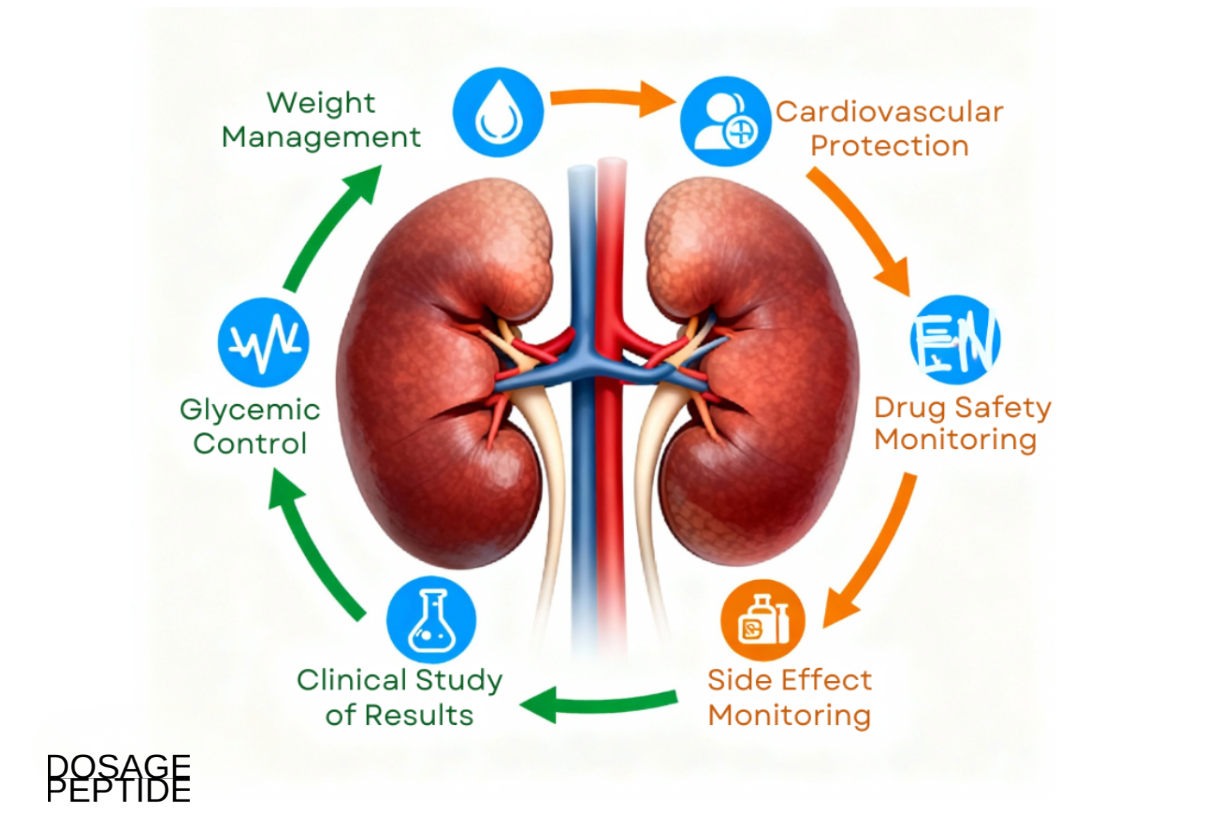
According to the Centers for Disease Control and Prevention (CDC)[1], chronic kidney disease affects over 14% of U.S. adults, which is about 35.5 million people. Many of these individuals also struggle with obesity, a condition that further worsens kidney function. As a result, finding safe and effective weight management therapies is crucial for this population. Cagrilintide has emerged as a promising option, with early studies suggesting it is generally well tolerated in CKD patients.
At Dosage Peptide, we are committed to advancing peptide research through scientifically focused and research-grade formulations developed for purity, consistency, and analytical precision. Our educational content explores emerging peptides such as Cagrilintide and their potential relevance in metabolic regulation, obesity research, and renal health investigations. By supporting evidence-based scientific exploration and maintaining high research standards, we aim to contribute valuable insights to the evolving field of peptide science.
What Is Cagrilintide and Why Is It Considered for CKD Patients?
Cagrilintide is a long-acting amylin analogue designed to regulate appetite and promote weight loss[2], which is crucial since obesity exacerbates CKD progression. It mimics amylin, a hormone that slows gastric emptying and reduces food intake, contributing to sustainable weight reduction.
Here’s how Cagrilintide works and benefits CKD patients:
- Activates amylin receptors to boost fullness and curb appetite.
- Developed for obesity and diabetes to enhance metabolic health.
- Supports kidney health by improving weight, glucose, and heart function.
Because obesity and CKD frequently coexist, targeting weight through Cagrilintide may improve outcomes. Ongoing trials are assessing its potential specifically in CKD populations with or without diabetes, highlighting its growing relevance.
How Does Chronic Kidney Disease Affect Drug Safety and Metabolism?
Chronic kidney disease (CKD) directly affects how the body processes and eliminates drugs, making medication safety and dosing critical concerns for patients with reduced kidney function. Impaired filtration and metabolic changes can alter a drug’s clearance, increasing the risk of toxicity.
To better understand this impact, let’s look at the key factors involved.
- CKD reduces the glomerular filtration rate (GFR), slowing the removal of waste and medications from the bloodstream, which can lead to prolonged drug activity and potential buildup in the body.
- Drug accumulation may trigger harmful side effects, as the kidneys are unable to efficiently eliminate excess substances, increasing the likelihood of adverse reactions and toxicity with repeated or high-dose use.
- Dose adjustments are crucial for CKD patients, since lower kidney function requires tailored medication levels to maintain therapeutic effects while minimizing potential harm or complications from drug accumulation.
Hence, medications like Cagrilintide must be carefully evaluated for potential alterations in pharmacokinetics[3]. Clinical trials monitor kidney function and side effects to ensure both safety and effectiveness in CKD patients.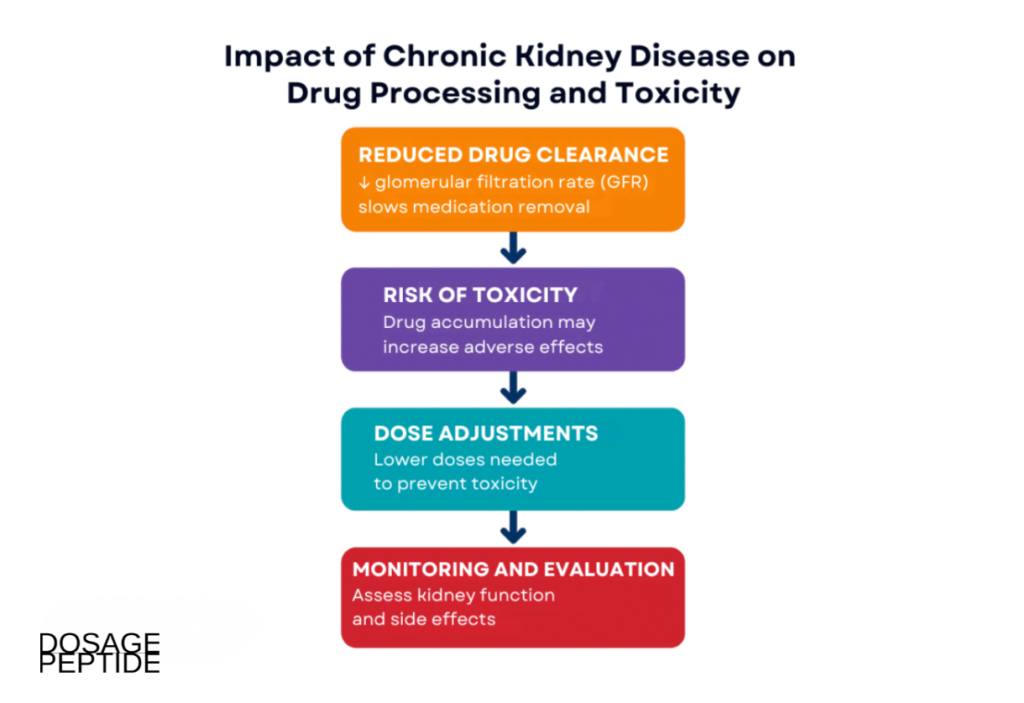
What Do Clinical Studies Say About Cagrilintide Use in CKD?
Clinical evidence suggests[4] that Cagrilintide is both safe and effective for weight management in patients with chronic kidney disease (CKD), including those with type 2 diabetes. Several phase 2 clinical trials have reported favorable tolerance, with no unexpected kidney-related side effects. Moreover, the treatment demonstrated comparable safety to GLP-1 receptor agonists while producing meaningful and sustained weight loss, a key factor in improving kidney health outcomes.
Furthermore, ongoing phase 2 randomized controlled[5] trials are exploring Cagrilintide’s safety in CKD patients with an estimated glomerular filtration rate (eGFR) above 15 ml/min/1.73 m². Notably, combination therapies such as Cagrisema (Cagrilintide plus Semaglutide) are also being investigated, showing promise for superior kidney protection, enhanced metabolic control, and potentially better long-term outcomes for patients with obesity-related kidney impairment.
Can Cagrilintide Help Manage CKD-Related Comorbidities?
Yes, Cagrilintide can help manage CKD-related comorbidities[6] such as obesity, diabetes, and cardiovascular disease. Improving weight, glucose balance, and heart health supports overall metabolic stability and may indirectly slow the progression of CKD when combined with standard treatment.
To understand these benefits more clearly, let’s explore its key therapeutic effects:
1. Weight Management
Cagrilintide promotes healthy and sustained weight loss by reducing appetite and calorie intake. This decrease in body weight helps minimize obesity-related kidney strain and disease progression.
2. Glycemic Control
It enhances insulin sensitivity and stabilizes blood sugar levels, which is critical for CKD patients with diabetes, helping prevent additional kidney damage and metabolic complications.
3. Cardiovascular Protection
Cagrilintide supports heart health by lowering blood pressure and improving cholesterol balance. These effects reduce cardiovascular risk, a major concern for patients living with chronic kidney disease.
Explore Research-Driven Peptide Solutions with Dosage Peptide
Researchers studying chronic kidney disease and metabolic disorders often face major challenges, including limited access to high-purity compounds, inconsistent peptide quality, and unreliable data reproducibility. These issues hinder experimental accuracy and delay innovation, making it difficult to draw clear, validated conclusions in highly sensitive clinical or preclinical studies.
At Dosage Peptide, we support peptide research by providing scientifically focused formulations developed with strict quality standards and research consistency in mind. Our educational content and research discussions surrounding compounds such as Cagrilintide explore topics related to metabolic regulation, obesity research, and renal health pathways. By emphasizing purity, stability, and evidence-based scientific exploration, we aim to support researchers seeking reliable insights and reproducible outcomes in peptide-related studies.
FAQs
Is Cagrilintide safe for CKD patients?
Yes, Cagrilintide is generally safe for CKD patients. Clinical studies show it’s well-tolerated, with mild gastrointestinal effects. However, kidney function and hydration levels should be closely monitored during treatment.
How does Cagrilintide help CKD management?
Cagrilintide aids CKD management by promoting weight loss, improving blood sugar control, and supporting cardiovascular health. These combined benefits help reduce metabolic strain and may slow the progression of kidney damage.
Can Cagrilintide be combined with other medications?
Yes, it can be combined with other diabetes or obesity medications under supervision. Healthcare providers adjust doses carefully to prevent side effects like hypoglycemia or dehydration in patients with reduced kidney function.
What are the most common side effects of Cagrilintide?
The most common side effects include nausea, vomiting, diarrhea, and mild dehydration. These symptoms typically lessen over time and can be managed with gradual dose adjustments and proper hydration.
Refrences
- Centers for Disease Control and Prevention. (2023, May 15). Chronic kidney disease in the United States, 2023. U.S. Department of Health and Human Services. https://www.cdc.gov/kidney-disease/php/data-research/index.html
- D’Ascanio, A. M., Mullally, J. A., & Frishman, W. H. (2024). Cagrilintide: A long-acting amylin analog for the treatment of obesity. Cardiology Review, 32(1), 83-90. https://doi.org/10.1097/CRD.0000000000000513
- Lea-Henry, T. N., Carland, J. E., Stocker, S. L., Sevastos, J., & Roberts, D. M. (2018). Clinical pharmacokinetics in kidney disease: Fundamental principles. Clinical Journal of the American Society of Nephrology, 13(7), 1085-1095. https://doi.org/10.2215/CJN.003401184.
- Davies, M. J., Broholm, C., Kildemoes, D., & et al. (2025). Cagrilintide-Semaglutide in adults with overweight or obesity and type 2 diabetes: A phase 3a randomized controlled trial. The New England Journal of Medicine, 392(15), 1365-1378. https://doi.org/10.1056/NEJMoa2502082
- Frias, J. P., Deenadayalan, S., Erichsen, L., Knop, F. K., Lingvay, I., et al. (2023). Efficacy and safety of co-administered once-weekly cagrilintide 2·4 mg with once-weekly semaglutide 2·4 mg in type 2 diabetes: A multicentre, randomised, double-blind, active-controlled, phase 2 trial. The Lancet. Advance online publication. https://doi.org/10.1016/S0140-6736(23)01163-7
- Abasheva, D., Ortiz, A., & Fernandez-Fernandez, B. (2024). GLP-1 receptor agonists in patients with chronic kidney disease and either overweight or obesity. Clinical Kidney Journal, 17(Suppl 2), 19-35. https://doi.org/10.1093/ckj/sfae296