
Pemvidutide (5 mg) Dosage Protocol
An investigational GLP-1/glucagon dual agonist (ALT-801, Altimmune) dosed weekly and studied for MASH, liver fat and weight. Its MASH-resolution endpoint was met and its fibrosis endpoint failed — and Altimmune has stopped developing it for obesity, the use it is marketed for.
A lipid-conjugated peptide agonizing both the GLP-1 receptor (appetite suppression) and the glucagon receptor (direct hepatocyte fatty-acid oxidation and energy expenditure). The EuPort alkyl-plus-saccharide conjugation binds it to albumin and is what makes weekly dosing possible.
1.2, 1.8 and 2.4 mg once weekly subcutaneously in trials. The MASH programme used only 1.2 and 1.8 mg with no titration at all and dropped 2.4 mg: 1.8 mg was the maximal-response dose for liver fat, and going higher cost tolerability without adding benefit.
Investigational, not approved anywhere. The MASH and liver-fat data are peer-reviewed in the Lancet and Journal of Hepatology; the 15.6% weight-loss figure and the entire lean-mass claim are company slide decks that have never been peer-reviewed.
Quickstart Highlights
Pemvidutide (development code ALT-801, Altimmune) is an investigational GLP-1 / glucagon (GCGR) dual receptor agonist — a lipid-conjugated peptide dosed once weekly by subcutaneous injection[1]. It is studied for metabolic dysfunction-associated steatohepatitis (MASH), liver fat and body weight, and it is best known in peptide circles for two headline numbers: 15.6% mean weight loss at 48 weeks and a claim that most of the weight lost was fat rather than muscle[4]. Both numbers are real. Neither has ever been peer-reviewed.
This page is an educational reference on how pemvidutide has been dosed in published trials. It is not medical advice. Pemvidutide is not approved in any jurisdiction, and the single most decision-relevant fact about it is one no vendor will mention: Altimmune has stopped developing it for obesity. Section 4 lays out what that means and how we verified it.
Pre-filled with this protocol’s recommended BAC water and documented starting dose — edit any field to run your own numbers. Reconstitution math only — not dosing advice. U-100 syringe: 100 units = 1 mL. Full reconstitution guide → · Advanced calculator →Mix & measure Pemvidutide · 5 mg
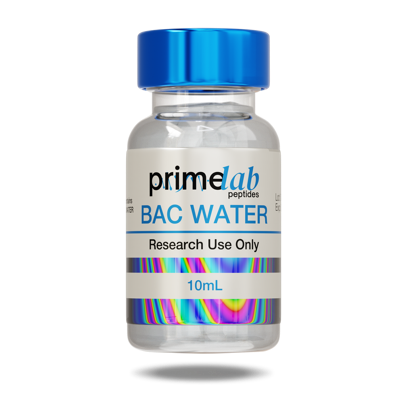
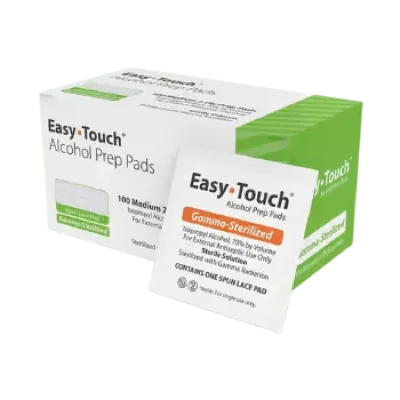
Supplies Needed
The generic reconstitution workflow used across this site. Note the identity caveat in section 4 — for this compound in particular, what is in the vial is not verifiable from the label on it.
Protocol Overview
At the site convention of 2.0 mL per 5 mg vial (2.5 mg/mL), a 5 mg vial holds two 1.8 mg weekly doses with a little left over, or roughly two weeks at the MASH programme’s higher dose. At 1.2 mg weekly it covers about four weeks.
That arithmetic is the easy part. The hard part is that the trials it is derived from ran for 24 to 48 weeks under medical supervision with biopsy or MRI endpoints[1][4], and there is no published human PK for a research-grade preparation to anchor any of it. The numbers below describe what was studied, not a schedule anyone should reproduce.
Dosing Protocol
Doses as actually used in published and company-reported trials, with volumes at the site’s generic 2.5 mg/mL reconstitution. Reference only — these reproduce trial arms, not a recommendation.
| Trial / Phase | Weekly Dose | Volume (U-100 units / mL) |
|---|---|---|
| IMPACT phase 2b MASH — low arm[1] | 1.2 mg weekly, no titration | 48 units (0.48 mL) |
| IMPACT phase 2b MASH — high arm[1] | 1.8 mg weekly, no titration | 72 units (0.72 mL) |
| MOMENTUM phase 2 obesity[4] | 1.2 / 1.8 / 2.4 mg weekly | 48 / 72 / 96 units (0.48–0.96 mL) |
| MASLD liver-fat studies[2][3] | 1.2 / 1.8 / 2.4 mg weekly — 1.8 mg maximal response | 48 / 72 / 96 units |
| RESTORE phase 2 (alcohol-associated liver disease)[5] | 2.4 mg weekly — currently recruiting | 96 units (0.96 mL) |
Why Pemvidutide draws research interest
These are the directions researchers and the peptide community most often explore Pemvidutide for — so you know you’re in the right place. They describe what is being studied, not proven benefits, approved uses, or promised results.
Its developer left the indication
The word “obesity” appears zero times in Altimmune's Q1 2026 quarterly report. The 48-week obesity trial finished in 2023 with positive data and a successful FDA meeting — then no phase 3, and no partner. The company now describes pemvidutide as a liver drug.
The fibrosis endpoint failed
The phase 2b trial met MASH resolution convincingly (58% and 52% vs 20%, p<0.0001) and missed fibrosis improvement at both doses (p=0.59 and p=0.27). An independent meta-analysis agrees the antifibrotic effect is unconfirmed.
The liver signal is the real one
Liver fat fell about 75% while weight fell only about 6% — far more than weight loss alone predicts, and the published rationale for direct hepatic glucagon action. That is the peer-reviewed part, and it is why the liver programme survived.
Evidence ranges from early laboratory work to clinical trials depending on the use — the sections below cover the actual data and sources.
Research vials only, and no published basis exists for a self-administered protocol. At 2.0 mL per 5 mg vial → 2.5 mg/mL, a 1.8 mg dose = 72 U-100 units (0.72 mL). The approved-product comparison does not exist — there is no approved product.
1.2–2.4 mg once weekly in trials[1][4]. MASH trials used 1.2 and 1.8 mg with no titration at all[1]; the obesity trial went to 2.4 mg and did not permit dose reduction[4].
Dosing & Reconstitution Guide
Pemvidutide’s dosing is unusually well documented for an investigational peptide — four completed phase 1 studies, a 391-patient phase 2 obesity trial and a 212-patient phase 2b MASH trial all used published, fixed weekly doses[1][4]. What does not exist is any published pharmacokinetic basis for reconstituting and self-administering a research vial.
Standard / Gradual Approach
The trials point the opposite way to grey-market “titrate up” logic. In the 48-week obesity study, weight loss rose with dose — 10.3% at 1.2 mg, 11.2% at 1.8 mg and 15.6% at 2.4 mg versus 2.2% on placebo[4]. But when Altimmune designed the MASH programme, it carried only 1.2 and 1.8 mg forward and dropped 2.4 mg entirely[1]. The 12-week liver-fat study had already shown 1.8 mg to be the maximal-response dose: liver fat fell 68.5% at 1.8 mg but only 57.1% at 2.4 mg[2]. The higher dose cost tolerability without adding benefit.
The MASH trials used no titration whatsoever — patients started at the assigned weekly dose and stayed there[1]. The obesity trial used no or rapid (4-week) titration from 0.6 mg and, importantly, did not permit dose reduction for intolerability[4], which inflates its discontinuation numbers relative to how a drug would be used in practice.
The dose paradox worth noting honestly: in the phase 2b MASH trial the lower 1.2 mg dose outperformed 1.8 mg on the primary endpoint — 58% vs 52% MASH resolution[1]. With 41 patients in the 1.2 mg arm this is most likely small-sample noise rather than a real inverse dose-response, but it does mean there is no clean dose-response curve to extrapolate from.
Reconstitution Steps
Stated plainly: there is no published reconstitution guidance for pemvidutide, because no product has ever been approved and no human PK study has been published in a peer-reviewed journal. The volumes below apply the site’s generic convention for a 5 mg research vial — they are arithmetic, not a protocol validated for this compound.
- ▪Sanitize: Swab the vial stopper and the bacteriostatic-water stopper with fresh alcohol pads and let them air-dry.
- ▪Add diluent slowly: Draw 2.0 mL bacteriostatic water and run it down the inside wall of the vial rather than jetting it onto the powder → 2.5 mg/mL.
- ▪Dissolve gently: Swirl until clear; never shake. Pemvidutide is a lipid-conjugated peptide, and shaking foams and shears peptide solutions.
- ▪Label honestly: Refrigerate at 2–8 °C and write the date and concentration on the vial. Note that the stability of any given research preparation is unknown — no manufacturer stability data exist in the public record for this compound.
Storage Instructions
No manufacturer storage or stability data exist in the public record for pemvidutide, because there is no marketed product. The generic convention for lyophilized research peptides applies: store the sealed vial refrigerated at 2–8 °C, protected from light, and avoid freeze-thaw cycles.
This is a real limitation rather than a formality. Pemvidutide’s weekly dosing depends on an intact lipid-and-saccharide conjugation at a specific non-terminal residue[6] — that conjugation is the long half-life. A degraded or differently-conjugated preparation would not simply be weaker; it would be a pharmacologically different molecule with different kinetics.
Important Notes
The points below are the ones that separate what the evidence shows from what pemvidutide is marketed as. For this compound the gap is unusually wide.
- ▪Its own developer has abandoned the obesity indication — and this is verifiable, not speculation: The word “obesity” appears zero times in Altimmune’s Q1 2026 quarterly report[6], and exactly once in its FY2025 annual report — there only as a comorbidity of alcohol-use-disorder patients, never as an indication. Altimmune now describes itself as developing pemvidutide “to address serious liver diseases”, listing MASH, alcohol use disorder and alcohol-associated liver disease[8]. The 48-week obesity trial completed in 2023 with positive results and a successful FDA end-of-phase-2 meeting; no phase 3 obesity trial was ever started and no partner was found[5]. The grey market sells pemvidutide as a weight-loss peptide for an indication the company that owns it walked away from.
- ▪The headline fibrosis claim is false — that endpoint failed: In the 212-patient phase 2b IMPACT trial, MASH resolution without worsening of fibrosis was met convincingly (58% at 1.2 mg and 52% at 1.8 mg vs 20% placebo, both p<0.0001). But fibrosis improvement without worsening of MASH was NOT met at either dose — 33% (p=0.59) and 36% (p=0.27) versus 28% on placebo[1]. An independent GRADE-assessed meta-analysis reaches the same conclusion, stating that larger and longer trials are needed to confirm any antifibrotic effect[7]. Any claim that pemvidutide reverses liver fibrosis is unsupported by its own trial.
- ▪The most-marketed numbers are the least-verified ones: The MASH and liver-fat data are peer-reviewed in the Lancet and the Journal of Hepatology[1][2][3]. The 15.6% weight loss and the entire lean-mass story are company slide decks and a conference abstract — never published, never peer-reviewed[4][9], and no results have been posted to ClinicalTrials.gov for any pemvidutide trial[5]. The strength of the evidence runs inversely to how loudly each number is repeated.
- ▪The lean-mass claim needs its caveats attached: The figure quoted — about 21.9% of weight lost as lean mass — comes from an MRI sub-study of 50 pemvidutide-treated subjects out of 391, presented at a conference[9]. Altimmune’s own release compared it only to diet and exercise; the comparisons to tirzepatide and semaglutide were made by press coverage, not by the data. Those drugs’ lean-mass figures come from DEXA in different trials — a cross-trial, cross-modality comparison, not a head-to-head. An FDA/SCWD workshop report on exactly this problem stresses the difficulty of distinguishing true skeletal muscle from fat-free tissue[10]. No head-to-head trial against any GLP-1 drug exists.
- ▪Tolerability at weight-loss doses was not benign: the clean safety profile people cite comes from the liver trials at lower doses, where discontinuation for adverse events was 1–2%[1]. In the obesity trial, drug-related discontinuations reached 16.2% at 1.8 mg and 15.5% at 2.4 mg, with nausea at 59.6% at 1.8 mg versus 11.3% on placebo[4]. Reassuringly, across 48 weeks and 391 patients there was no cardiac imbalance, no meaningful heart-rate increase and glucose homeostasis was maintained — but that trial excluded diabetics, so glycemic safety with glucagon agonism in type 2 diabetes is not established by it.
- ▪“ALT-801” is an ambiguous code — a genuine trap: Six clinical trials registered under ALT-801 belong to Altor BioScience and describe a completely unrelated IL-2/TCR fusion protein for cancer (bladder cancer, melanoma, AML), several of them terminated or withdrawn[5]. They have nothing to do with pemvidutide. Any listing or summary citing “ALT-801 terminated” oncology trials is conflating two different molecules.
- ▪Identity cannot be verified from a research vial: pemvidutide is not a plain peptide. It requires the patented EuPort conjugation — an alkyl chain plus a saccharide attached to a specific non-terminal amino acid, licensed from Mederis Diabetes[6]. Its full sequence has never been published. There is no way to confirm that material sold as “pemvidutide” is correctly conjugated, and no published identity or purity assurance exists for any grey-market preparation.
How This Works
Pemvidutide agonizes two receptors. The GLP-1 receptor arm is familiar: central and peripheral appetite suppression, the same mechanism that drives weight loss with semaglutide. The glucagon receptor arm is what differentiates it — glucagon acts directly on hepatocytes to stimulate fatty-acid oxidation, inhibit lipogenesis and increase energy expenditure[2]. Altimmune describes the molecule as a balanced roughly 1:1 glucagon-to-GLP-1 agonist, though the claim that this balance is uniquely favourable is the company’s own belief statement rather than an independently established fact[6]. Once-weekly dosing comes from the EuPort domain — a hydrophobic alkyl chain plus a hydrophilic saccharide conjugated to the peptide, binding it to albumin[6]. Independent pharmacokinetic review classifies pemvidutide among fatty-acid-conjugated peptides, explicitly distinguishing it from Fc-fusion and PEGylated constructs[11].
The strongest mechanistic argument in the file is also the peer-reviewed one. In the 24-week liver-fat study, liver fat fell by 75–76% while body weight fell only about 6.2%[3] — far more liver-fat reduction than the weight loss alone would predict. The authors attribute this to direct hepatic glucagon action, calling it a more potent mechanism for reducing liver fat than weight loss alone[3]. That is a genuine, published, mechanistically coherent finding, and it is why the liver programme survived while the obesity programme did not. The tradeoff glucagon agonism theoretically carries — hyperglycemia, raised heart rate and blood pressure, since glucagon opposes insulin — did not materialize over 48 weeks in non-diabetic subjects[4]. Survodutide is the same GLP-1/glucagon dual class and retatrutide adds a third (GIP) receptor; no head-to-head trial against either exists[12].
Lifestyle Factors
Every pemvidutide trial was run against a background of diet and lifestyle counselling, and the placebo arms moved: 2.2% weight loss at 48 weeks on placebo in the obesity study, and 20% MASH resolution on placebo in the phase 2b liver trial[1][4]. That placebo response is worth sitting with — one in five patients resolved MASH on background care alone. Drug effects here are measured against a moving baseline, not a static one.
For the liver indication specifically, alcohol is not a side issue: Altimmune’s current pipeline for pemvidutide includes trials in alcohol use disorder and alcohol-associated liver disease[5][8], and alcohol intake is a direct driver of the liver pathology the compound is being studied to reverse. Any research context that ignores it is measuring against noise.
Potential Benefits & Side Effects
Evidence tier: investigational, and split cleanly down the middle. The liver data are peer-reviewed and genuinely strong on one endpoint and negative on another. The weight and body-composition data — the reason most people are reading this page — have never been peer-reviewed at all. Both are marked below.
Reported Effects
- ▪MASH resolution — peer-reviewed and met: In the phase 2b IMPACT trial (n=212, biopsy-confirmed F2–F3, 24 weeks), MASH resolution without worsening of fibrosis reached 58% at 1.2 mg and 52% at 1.8 mg vs 20% on placebo (both p<0.0001)[1]. This earned FDA Breakthrough Therapy designation[8].
- ▪Fibrosis improvement — peer-reviewed and NOT met: 33% (p=0.59) and 36% (p=0.27) vs 28% on placebo[1]. Stated here because it is the endpoint that determines whether a MASH drug actually changes outcomes.
- ▪Liver-fat reduction — peer-reviewed and large: at 24 weeks, liver fat fell 75.2% at 1.8 mg vs 14.0% on placebo, with 53.8% of subjects at 1.8 mg normalizing liver fat[3]. At 12 weeks, 68.5% at 1.8 mg vs 4.4% placebo[2].
- ▪Weight loss — company-reported only: 15.6% at 2.4 mg at 48 weeks vs 2.2% placebo, with over 30% of subjects losing at least 20% of body weight[4]. Real numbers from a 391-patient randomized trial — but published only as a slide deck, never peer-reviewed, and for an indication now abandoned.
- ▪Lean-mass preservation — company-reported, small sub-study: about 78% of weight lost was fat (21.9% lean loss ratio) by MRI in 50 treated subjects[9]. See the caveats in section 4 before treating this as a class comparison.
Common Side Effects
- ▪Nausea — dose-dependent and common: 59.6% at 1.8 mg and 51.5% at 2.4 mg vs 11.3% on placebo in the 48-week obesity trial; vomiting 27–28%[4].
- ▪Discontinuation: drug-related discontinuations of 16.2% at 1.8 mg and 15.5% at 2.4 mg in the obesity trial — roughly one in six — though the trial did not allow dose reduction for intolerability, which inflates this[4]. By contrast the MASH trial, at lower doses, saw 1–2% discontinuation for adverse events[1].
- ▪Overall adverse-event rates in MASH: 78% (1.2 mg) and 81% (1.8 mg) vs 67% on placebo, mostly mild to moderate[1].
- ▪The theoretical glucagon risks did not appear — in the population studied: across 48 weeks and 391 non-diabetic subjects there was no MACE, no cardiac imbalance, no clinically meaningful heart-rate increase, blood pressure improved and glucose homeostasis was maintained[4]. The obesity trial excluded people with diabetes (HbA1c ≤6.5%), so this does not establish glycemic safety in type 2 diabetes.
- ▪Unknown unknowns: no long-term safety data beyond 48 weeks exist, no results have been posted to ClinicalTrials.gov for any pemvidutide trial[5], and none of the above applies to an unverified grey-market preparation whose conjugation cannot be confirmed.
Injection Technique
Every published and company-reported trial used subcutaneous injection once weekly[1][4]. The steps below describe that route generically; they do not constitute a validated protocol for a research preparation.
Pre-Injection Preparation
- ▪Know what you cannot know: unlike an approved drug, there is no label, no verified potency and no published sequence to check a research preparation against[6]. This is the honest starting point for this compound.
- ▪Inspect: the reconstituted solution should be clear and free of particles; discard it if cloudy or discoloured.
- ▪Rotate the site: alternate among abdominal quadrants and thighs to avoid repeated injection into the same tissue.
Injection Procedure
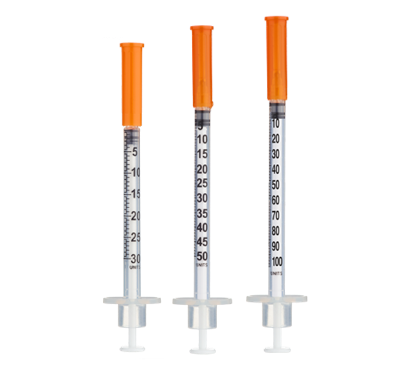
- ▪Draw the volume: at the site convention of 2.5 mg/mL, the trial doses correspond to 48 units (1.2 mg), 72 units (1.8 mg) or 96 units (2.4 mg) on a U-100 syringe.
- ▪Inject subcutaneously: pinch the skin, insert at the angle appropriate to the needle length, and deliver slowly into subcutaneous tissue.
- ▪Keep the day fixed: dosing is once weekly in every trial[1] — a fixed weekly day is what keeps exposure even across the interval.
Post-Injection Care
- ▪Refrigerate the remainder: 2–8 °C, protected from light. Note that no stability data exist for this compound in the public record.
- ▪Expect GI effects to dominate early: nausea affected roughly 60% of subjects at 1.8 mg in the obesity trial, and was the main driver of discontinuation[4].
- ▪Read the trials, not the marketing: the fibrosis endpoint failed[1], the weight data were never peer-reviewed[4], and the developer has moved on from obesity entirely[6]. Those three facts belong in any honest assessment of this compound.
Recommended Source
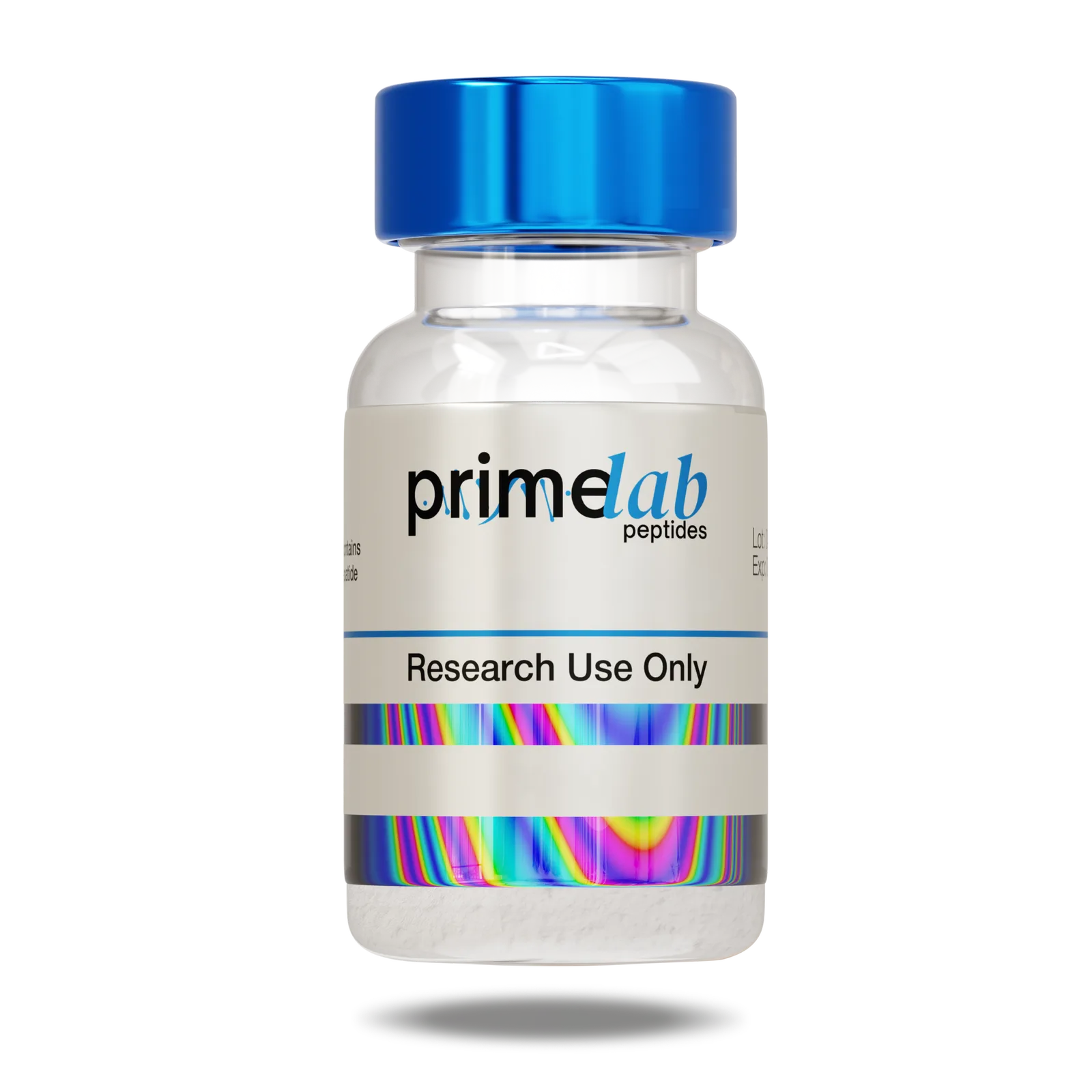
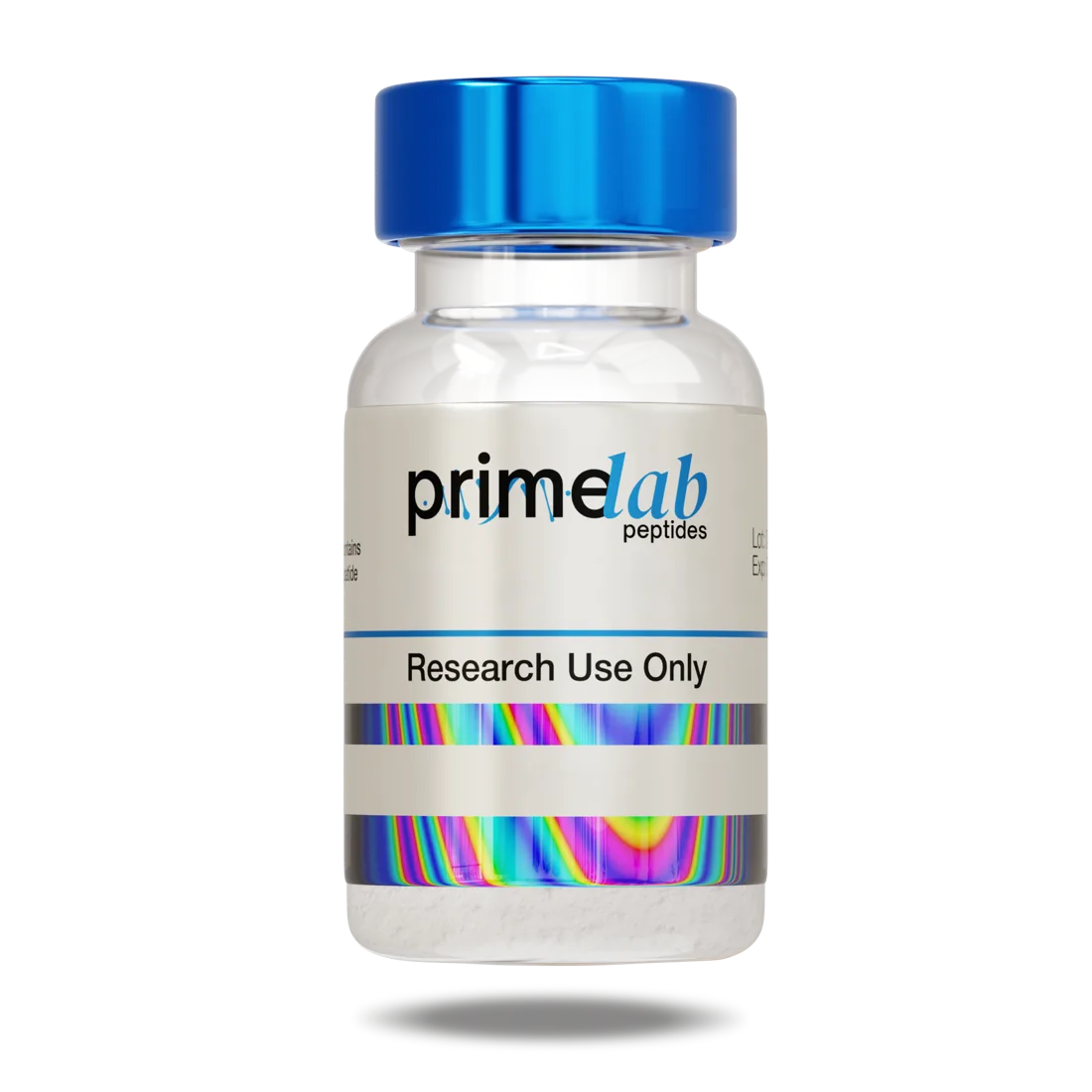
For high-purity research peptides, we point researchers to Prime Lab Peptides for Pemvidutide (5 mg Vial).
Why Prime Lab Peptides?
- ▪Top-rated on Trustpilot: Independently reviewed as the highest-rated peptide lab on Trustpilot — making it the best current source in the USA.
- ▪Third-party tested: Every batch ships with a Certificate of Analysis (COA) confirming purity and composition.
- ▪Consistent quality: ISO-aligned manufacturing and handling keep product integrity reliable batch to batch.
- ▪Cold-chain integrity: Temperature-controlled shipping and storage across the whole fulfilment chain.
- ▪Research-grade purity: Fit for educational and research use that demands high-quality peptides.
Note: Product availability and specifications subject to change. Verify current product details on supplier website.
References
- 1
The Lancet (2025) — Safety and efficacy of weekly pemvidutide versus placebo for metabolic dysfunction-associated steatohepatitis (IMPACT): 24-week results from a multicentre, randomised, double-blind, phase 2b studyPMID 41237796. The primary peer-reviewed evidence, n=212, biopsy-confirmed F2–F3, 1.2 and 1.8 mg weekly with no titration. MASH resolution met (58% and 52% vs 20% placebo, p<0.0001); fibrosis improvement NOT met at either dose (p=0.59 and p=0.27). Adverse-event and discontinuation rates. Altimmune-funded; 11 of 19 authors are company employees.
- 2
Journal of Hepatology (2025) — Effect of pemvidutide, a GLP-1/glucagon dual receptor agonist, on MASLD: a randomized, double-blind, placebo-controlled studyPMID 39002641. 12-week study, n=94, doses 1.2 / 1.8 / 2.4 mg weekly. Liver fat reduced 46.6% / 68.5% / 57.1% vs 4.4% on placebo (p<0.001) — establishing 1.8 mg, not 2.4 mg, as the maximal-response dose.
- 3
JHEP Reports (2025) — Safety and efficacy of 24 weeks of pemvidutide in metabolic dysfunction-associated steatotic liver disease: a randomized, controlled clinical trialPMID 41113119. 24-week extension, n=64. Liver fat down 75.2% at 1.8 mg vs 14.0% placebo against only ~6.2% weight loss; 53.8% normalized liver fat. Source of the direct-hepatic-glucagon rationale.
- 4
Altimmune — MOMENTUM phase 2 obesity trial, topline 48-week results (company presentation, 30 November 2023)COMPANY-REPORTED, NOT PEER-REVIEWED. n=391, 48 weeks. Weight loss 10.3% / 11.2% / 15.6% at 1.2 / 1.8 / 2.4 mg vs 2.2% placebo. Drug-related discontinuations 4.1% / 16.2% / 15.5%; nausea 59.6% at 1.8 mg vs 11.3% placebo; dose reduction not permitted. No MACE and glucose homeostasis maintained, in a trial that excluded diabetics. No peer-reviewed publication of this trial exists.
- 5
ClinicalTrials.gov — MOMENTUM (NCT05295875), IMPACT (NCT05989711), RESTORE (NCT07009860) and the pemvidutide trial registryThe registry record: MOMENTUM completed in 2023 with no successor obesity trial; IMPACT completed November 2025; RESTORE (alcohol-associated liver disease, 2.4 mg weekly) recruiting. No results are posted for any pemvidutide trial. Note that six further trials registered under the code ALT-801 belong to Altor BioScience and concern an unrelated IL-2/TCR fusion protein for cancer.
- 6
Altimmune — Form 10-Q, quarterly report for the period ended 31 March 2026 (U.S. Securities and Exchange Commission)The primary source for the abandonment of the obesity indication: the word ‘obesity’ appears zero times in this filing. Also the source for the EuPort delivery domain (an alkyl chain plus a saccharide conjugated to a non-terminal amino acid), licensed from Mederis Diabetes, and for the company’s balanced 1:1 agonism claim.
- 7
Naunyn-Schmiedeberg’s Archives of Pharmacology (2026) — Efficacy and safety of pemvidutide in metabolic dysfunction-associated steatohepatitis: a GRADE-assessed meta-analysis of randomized controlled trialsPMID 41879841. Independent GRADE-assessed meta-analysis concluding that larger, longer trials are warranted to confirm antifibrotic efficacy — third-party corroboration that the fibrosis benefit is unproven.
- 8
Altimmune — first-quarter 2026 results and business update (SEC Form 8-K, exhibit 99.1, 13 May 2026)COMPANY-REPORTED. Describes Altimmune as ‘a late clinical-stage biopharmaceutical company developing pemvidutide to address serious liver diseases’, listing MASH, alcohol use disorder and alcohol-associated liver disease — with obesity absent. Confirms FDA Breakthrough Therapy designation in MASH and the PERFORMA phase 3 programme initiating in the second half of 2026.
- 9
Altimmune — MRI-based body-composition sub-study presented at the 60th EASD Annual Meeting (corrected release, 10 September 2024)COMPANY-REPORTED, NOT PEER-REVIEWED. The origin of the lean-mass claim: 21.9% lean loss ratio by MRI in a sub-study of 67 subjects (50 pemvidutide-treated) out of 391; visceral adipose tissue −28.3%. This is the corrected release; the original misstated the adipose figures. Altimmune compared only to diet and exercise — not to tirzepatide or semaglutide.
- 10
Journal of Cachexia, Sarcopenia and Muscle (2025) — Muscle loss in obesity therapy as a therapeutic target: trial design and endpoints for regulatory discussionsPMID 41362110. An SCWD/FDA workshop report discussing pemvidutide among muscle-preserving candidates and stressing the challenges of distinguishing true skeletal muscle from fat-free tissue — the independent basis for treating cross-trial lean-mass comparisons cautiously.
- 11
Clinical Pharmacokinetics (2026) — Systemic pharmacokinetic principles of therapeutic peptidesPMID 41661442. Independent (AstraZeneca) review classifying pemvidutide among fatty-acid-conjugated peptides alongside tirzepatide and semaglutide, and explicitly excluding peptides conjugated to larger protein domains such as Fc regions — third-party confirmation of the molecular construct.
- 12
Drugs in Context (2025) — Emerging concepts in obesity management: focus on glucagon receptor agonist combinationsPMID 40734920. Reviews the GLP-1/glucagon dual-agonist class, placing pemvidutide alongside survodutide and mazdutide and against retatrutide’s triple agonism. No head-to-head trial between pemvidutide and any of them exists.
Pemvidutide — frequently asked questions
How do I reconstitute a 5 mg vial of Pemvidutide?
Wipe the stopper with an alcohol swab, then inject your bacteriostatic water slowly down the inside wall of the vial. Let it sit and gently swirl until dissolved — never shake. Store the mixed vial in the refrigerator and draw doses with an insulin syringe. Use the calculator above to turn any dose into syringe units.
How much bacteriostatic water should I add to Pemvidutide?
There is no single correct amount — more water simply spreads the same 5 mg of peptide across a larger volume, which makes small doses easier to measure accurately. 1 to 3 mL per vial is typical. Enter your chosen volume in the calculator above to see the resulting concentration and syringe units.
What do the "units" on an insulin syringe mean?
On a U-100 insulin syringe, 100 units equal 1 mL, so 1 unit equals 0.01 mL. The calculator above converts your draw volume into these units automatically so you can measure without doing the math by hand.
How should I store Pemvidutide after mixing?
Keep the reconstituted vial refrigerated at roughly 2 to 8 degrees Celsius, away from light, and avoid freezing it. Reconstituted research peptides are generally used within a few weeks. Always follow the specific guidance supplied with your product.
How many doses does a 5 mg vial of Pemvidutide provide?
Divide the vial strength of 5 mg by the amount you use per injection. The calculator above reports this as "doses per vial" the moment you enter a dose.
Is Pemvidutide approved for human use?
No. Pemvidutide is sold strictly for laboratory and research purposes and is not approved by the FDA or other regulators for human use. Everything on this page is research information, not medical advice — consult a licensed healthcare professional before any use.
New protocols & dosing updates
Reconstitution charts, new peptide protocols and safety updates — straight to your inbox. No spam, unsubscribe anytime.